Extension Candidates Rumors


Extension Candidate: Starling Marte

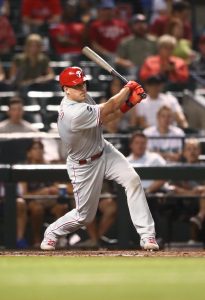
Starling Marte has arguably been the biggest key to the Pirates' 21-16 start, and at 24, the outfielder looks like an emerging star. This weekend on Twitter, Pirates bloggers and the Pittsburgh Tribune-Review's Travis Sawchik discussed the merits of a possible contract extension for Marte. Given Marte's skimpy big-league track record -- he has just 341 career plate appearances -- a long-term deal might seem a bit ambitious right now. But if Marte's productivity continues, the Pirates will surely consider offering an extension at some point, and there may be a case for offering one sooner rather than later.

According to MLBTR's Extension Tracker, there have been only three recent extensions for players with less than one year of service time: the Royals' 2012 pact with Salvador Perez, and the Rays' deals with Matt Moore in 2011 and Evan Longoria in 2008. All three contracts included three team options, and all gave their teams the rights to multiple free agent years. USATSI_7245576

There would be little point to the Pirates signing Marte to an extension without such team-friendly terms, since a good portion of Marte's value will likely come from his superior defense and baserunning, which aren't likely to win him huge arbitration salaries. Whether he'll continue to post gaudy offensive numbers is less certain. Marte could still be very productive without big counting stats, but without them, he isn't likely to make huge sums in arbitration.

Therefore, from the Pirates' perspective, the point of an extension would be to buy the rights to some of Marte's free agent years while ensuring that the prices of his arbitration-eligible seasons remain low. Any multi-year contract would set Marte for life, and Marte only received an $85K bonus as an amateur, so there would be reason for the Legacy Agency client to consider a deal, even at terms somewhat favorable to the Pirates.

Projecting what Marte might make in arbitration is just about impossible this early in his career. His current line of .336/.399/.517 is likely unsustainable, due to a .422 BABIP. But his speed and minor-league history (he batted .312 in his minor-league career) make him a good bet to continue hitting for average. Scouts also like his power potential. His Achilles heel, if he has one, will likely be his lack of plate discipline -- he has just 15 walks in 341 career plate appearances. Even if he struggles as National League pitchers begin to adjust to his tendency to swing at pitches outside the zone, he should provide plenty of value with his defense, but his career could still range anywhere from "superstar" to "Jeff Francoeur."

Nonetheless, an extension is a risk that the Pirates probably ought to consider. A speculative extension for a largely-unproven player has downside, as the Bucs are finding with their six-year, $15MM deal for now-fourth outfielder Jose Tabata. But it's difficult for the Pirates to find stars through other means, so it behooves them to lock up their best young players early and cheaply. It's no accident that the Royals and Rays, whose payrolls are typically somewhat similar to those of the Pirates, are the teams experimenting with early-career contracts for Perez, Longoria and Moore.

Perhaps the best precedent for a Marte extension, though, would be the Twins' five-year, $16.5MM deal with Denard Span. Span doesn't have Marte's power, but like Marte, he generates plenty of value through defense and baserunning. The Twins signed Span before the 2010 season, when he had one year and 111 days of service time. A five-year deal that begins in 2014, when Marte himself will be between one and two years of service time, would put Marte on a similar track. Marte's potential for big arbitration payouts might actually be somewhat higher than Span's, due to Marte's power, so a slightly higher dollar figure might be in order. Span's contract has one option year; the Pirates could attempt to wrangle at least one additional option year from Marte to help compensate for the risk of signing him so early in his career.

Photo courtesy of USA Today Sports Images.


Extension Candidate: Jordan Zimmermann

On Monday, it was reported that Nationals GM Mike Rizzo has approached Jordan Zimmermann's representatives at SFX about a potential contract extension. While we heard in the offseason that both sides were interested in such a deal, this is the first indication that the two sides have begun talks. 

Zimmermann entered the season with three years, 154 days of Major League service time and is controlled through the 2015 season. A Super Two player, the 26-year-old avoided arbitration for the second time this offseason by agreeing to a one-year deal worth $5.35MM.  Zimmermann

A look at MLBTR's Extension Tracker shows that few Super Two starters with three-plus years of service time have signed extensions, and none are particularly good comparables. Expanding the search to include non-Super-Two starters with three to five years of service gives a few more examples. Justin Verlander and Felix Hernandez signed five-year extensions worth roughly $80MM that included their final two years of arbitration. Dan Haren, Josh Johnson and Zack Greinke all signed four-year extensions in the neighborhood of $40MM that did the same.

In terms of overall value it seems the Greinke, Haren and Johnson extensions are too light. Zimmermann will likely earn more than $8MM via arbitration in 2014 and should see that salary climb well above $10MM in his final arb year. He doesn't have the track record that Hernandez and Verlander had at the time of their extensions, making $80MM seem rich.

Matt Harrison's five-year, $55MM contract could serve as a framework, but Zimmermann has considerably better numbers at this stage of his career than Harrison possessed when he signed his extension. Harrison's contract seems to be the floor for Zimmermann. Something in the range of $60-65MM over five years seems like a more reasonable target. Such a deal could pay Zimmermann $8MM in 2014, $12MM in 2015 and $14-15MM per free agent season.

Keep in mind, also, that the extensions for Verlander and Hernandez occured prior to the wave of new TV contracts that have left teams with far deeper pockets. Those contracts were also signed under the old CBA, when more players were hitting free agency. Today's game sees more and more good players sign extensions before hitting the open market, which is part of the reason that Zimmermann's case is unprecedented to some extent. Given the influx of cash in the game and the increasing imperative for teams to lock up home-grown talent, the $75-80MM range reached by Verlander and Hernandez in 2010 is probably no longer out of the question.

Photo courtesy of USA Today Sports Images.


Extension Candidate: Jason Heyward

Braves right fielder Jason Heyward is one of few star-caliber players currently going year-to-year.  Just 23 years old, Heyward is under the Braves' control as an arbitration eligible player through 2015.  What would a fair extension look like for the Excel Sports Management client?

Uspw_7123890

One comparable could be the Orioles' Adam Jones.  Jones signed a six-year, $85.5MM extension in May of last year, about three months after the salary for his second arbitration year was determined.  A Heyward extension, if it were done during this season, would include that second arb year.  Jones was closer to free agency than Heyward is, which generally gets the player more money.  Since Heyward has less service time than Jones did, perhaps the Braves could replace the fifth guaranteed free agent year with a club option.  That would put us around $75MM over six years (2014-19).  Even if the 2020 club option is exercised, Heyward would be able to enter free agency at age 31 and get another big contract.

The Braves, perhaps, could point to an older but more evenly matched Orioles outfielder extension, the one Baltimore did with Nick Markakis prior to the 2009 season.  At the three-year service point, Markakis compared favorably to Heyward in terms of OBP and SLG.  Both players had exactly 59 career home runs, but Markakis had 33% more RBIs and a superior platform year, one in which he posted a .406 OBP.  So even though that contract is four years old, the Braves could make a case against guaranteeing much more than the $63.1MM Markakis received covering his second arbitration year through his third free agent year (five years in total for that slice).  The Orioles did not get a club option on Markakis or Jones, however, so that will be a tough sell for Heyward.

One thing to note about Heyward, of which the Braves are surely aware, is that last year he derived a lot of value through defense, and that generally doesn't pay in arbitration.  Last year's high-water marks of 27 home runs and 82 RBIs are decent, but Heyward would have to take his offensive counting stats to another level to break the bank in arbitration.  In February there was talk of the Braves trying to buy out Heyward's arbitration years, but I don't see much reason for the club to do a two-year deal.  They haven't done a long arbitration year extension in general since Brian McCann in March 2007, according to our extension tracker, and Heyward has significantly more service time than McCann did.  If the Braves want to secure some of Heyward's free agent years, now might be the ideal time.  A five or six-year offer in the $63-75MM range would be fair.

Photo courtesy of USA Today Sports Images.


Extension Candidate: Michael Brantley

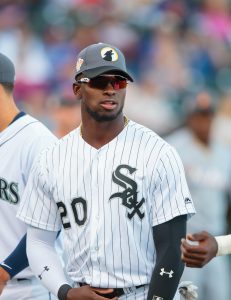
When the Indians signed Michael Bourn this offseason, the move was a response to Bourn's free agent price dropping (to the tune of four years and $48MM) and to an overall desire to upgrade their outfield.  Acquiring Bourn didn't mean the Indians were at all dissatisfied with incumbent center fielder Michael Brantley -- in fact, the Tribe aims to keep Brantley in the fold for a whiUspw_6608968le, as evidenced by the fact that the team is interested in a multiyear extension with the 25-year-old.

Brantley played in a career-high 149 games in 2012, hitting .288/.348/.402 with six homers, 60 RBI, 12 steals and 63 runs scored.  He swung at 7.9% more pitches inside the strike zone than he did in 2011 and cut his strikeout rate to a career-low 9.2%, so there is plenty of indication that Brantley is entering his prime as a hitter.  The UZR/150 metric doesn't like his defense in center field (-12.2 for his career as a CF) though he has a +3.3 UZR/150 as a left fielder, which will be his new position now that Bourn is in Cleveland.

As noted by FOX Sports' Ken Rosenthal in his original report, the Indians are looking to lock up Brantley and Jason Kipnis to contracts that cover their arbitration years and more than one of their free agent years.  In Brantley's case, that would be a minimum of a five-year commitment, as Brantley is arb-eligible for the first time this coming offseason and is scheduled to reach free agency after the 2016 season.

Brantley has two years and 131 days of Major League service time under his belt.  When looking at the deals signed by other outfielders with between two and three years of service time on the MLBTR Extension Tracker, the two comparables that jump out are Curtis Granderson's five-year, $30.25MM extension with the Tigers in February 2008 and Cameron Maybin's five-year, $25MM extension with the Padres from last March (both deals included an option year).  It's worth noting that both players were center fielders at the time of their extensions, so Brantley's shift from a premium defensive position will cost him and his representatives at the Legacy Agency a negotiating chip.

Maybin's deal covered a free agent year, three arb years and one year of pre-arbitration eligibility, so a five-year Brantley extension would be more expensive due to the extra free agent year.  I would guess that Brantley's deal would've been larger anyway given his superior offensive numbers to Maybin, though in Maybin's defense, he delivered 40 steals and a strong CF glove in 2011 and had his batting output dampened by Petco Park.  (Brantley, interestingly, also had trouble hitting at his home ballpark, posting a .682 OPS at Progressive Field and an .815 OPS on the road in 2012.)

Like Brantley, Granderson was also entering his first year of arbitration eligibility and signed a deal that covered his three arb years and first two free agent years, plus a 2013 option year that was picked up by the Yankees for $15MM after last season.  The difference was that Granderson was entering his age-27 season at the time of his extension (Brantley turns 26 in May) and Granderson was a much more proven hitter, coming off a 23-homer, .913 OPS season in 2007.  Though Granderson has been criticized for his strikeouts and declining glove, he still posted a .832 OPS and 160 homers over the five guaranteed years of that contract, making it a nice bargain for the Tigers and Yankees.

With all this in mind, I'll split the difference between the Maybin and Granderson extensions and predict that the Tribe will sign Brantley to a five-year, $27.5MM deal.  The contract will almost surely include at least one option year given that Cleveland GM Chris Antonetti had added club or vesting options to almost all of the team's recent major signings, save for Asdrubal Cabrera's two-year extension.  The deal gives Brantley a nice payday and cements another young building block in place for the Tribe as they look to be regular contenders in the AL Central.

Photo courtesy of David Richard/USA Today Sports Images


Extension Candidates: Milone & Parker

The Oakland Athletics have made a habit of extending pre-arbitration eligible starting pitching in the last decade or so. General manager Billy Beane has negotiated multiyear deals with many players, from Tim Hudson and Barry Zito ten-plus years ago, to Rich Harden and Dan Haren midway through the last decade, to current A's starter Brett Anderson.

Tommy Milone - A's (PW)

Here’s the template Beane has used most often: offer a promising, young starter a four-year contract covering his remaining pre-arbitration years and some arbitration years. The deals, typically valued in the $9-13MM range, tend to include club options for future arbitration and/or free agent seasons. The A’s take on the risk that the starters won’t be able to replicate their early-career successes in exchange for potentially discounted arbitration seasons and extended control of the players. Meanwhile, the players get substantial security in exchange for capping their earning potential for a period of four-plus seasons.

Should the A’s look to replicate past deals again this winter, the agents for Tommy Milone (pictured) and Jarrod Parker could soon be getting calls from Beane. Both starters were acquired in trades last offseason and both spent a full season at the MLB level for the first time in 2012, succeeding in prominent roles for the eventual AL West winners

Milone, a Praver/Shapiro client, pitched to a 3.74 ERA in 190 innings with Oakland in 2012. The 25-year-old left-hander struck out 6.5 batters per nine innings while walking 1.7 per nine and posting a 38.1% ground ball rate.

Parker, a 24-year-old Reynolds Sports Management client, posted a 3.47 ERA in 181 1/3 innings. A much harder thrower than Milone, Parker generated a few more strikeouts (6.9 K/9) and many more ground balls (44.3% ground ball rate) while allowing more walks (3.1 BB/9). 

Opposing hitters would tell you that the right-handed Parker is a different type of pitcher than Milone, and the two took markedly different paths on their way to the Oakland’s rotation. Still, they’re on track to be comparables in arbitration given their service time and basic statistics. In the context of extension talks that matters a great deal. Both pitchers are on track for arbitration eligibility after the 2014 season and free agency after the 2017 season.

As MLBTR's Extension Tracker shows, there's considerable precedent for contract extensions of four years or more for starting pitchers with between one and two years of MLB service. Anderson, Cory Luebke and Wade Davis all obtained $12-12.6MM for four-year deals that included multiple club options. Both A’s starters have more innings pitched than Luebke did at the time of his deal and better ERAs than Davis did at the time of his deal. Furthermore, both Milone and Parker have more innings and a better ERA than Anderson did at the time of his deal. It appears that Milone and Parker could obtain four-year deals worth more than $12.6MM, especially when taking inflation into account. In my view $14MM would be a more reasonable target for four guaranteed years.

To this point in the offseason, there haven’t been any rumors about the pair of A’s starters. But January, February and March tend to be active months for contract extensions, and Beane has shown repeated interest in extending successful young starters on multiyear deals. It won’t be surprising if the club discusses similar contracts with Milone and/or Parker in the coming months.

Photo courtesy of USA Today Sports Images.


Lijit Search


Enter your email address:

Delivered by FeedBurner


NAVIGATION

Site Map
Forums
Archives
Feeds by Team

MLBTR INFO

Advertise
About
Commenting Policy
Privacy Policy

CONNECT

Contact Us
Widget
Twitter
Facebook
Rss Feed


Partner of USA TODAY Sports Digital Properties. MLB Trade Rumors is not affiliated with Major League Baseball, MLB or MLB.com.