
12:15pm: The White Sox have formally announced the selection of Montgomery’s contract. Veteran outfielder Austin Hays moves from the 10-day IL to the 60-day IL to open a 40-man spot. Chicago also recalled lefty Joe Rock from Triple-A Charlotte and optioned Nishida and righty David Sandlin to Charlotte in a sequence of additional moves.
11:17am: The White Sox are calling up top outfield prospect Braden Montgomery, as first reported by Matt Snyder of CBS Sports. Chicago will have to open space on the 26-man and 40-man roster to accommodate Montgomery, who currently ranks 33rd on Baseball America’s top-100 prospect rankings.
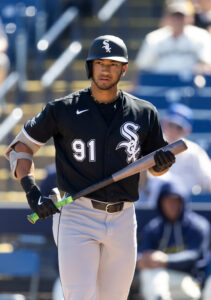
Selected No. 12 overall out of Texas A&M by the Red Sox in 2024, Montgomery landed with the White Sox as the co-headliner (alongside catcher Kyle Teel) of the blockbuster trade sending Garrett Crochet to Boston. The 23-year-old Montgomery opened the 2026 season in Double-A and has since been promoted to Triple-A, tormenting opposing pitchers at both levels. He’s appeared in 56 games this season, taken 258 plate appearances between those two levels, and turned in a stout .314/.422/.548 batting line (152 wRC+) with 10 homers, 13 doubles, three triples, five steals (albeit in 11 attempts), a huge 15.1% walk rate and a 24.8% strikeout rate.
Montgomery has been particularly productive at the dish as of late. After falling into a mini-slump that saw him go hitless for 16 plate appearances, he’s turned things around with a .474/.580/.711 batting line over his past 10 games. In that time, the switch-hitter has popped a pair of homers and three doubles while drawing 10 walks against seven strikeouts. The dip in strikeouts is notable, as the main knock on Montgomery for many scouts is a penchant for swinging and missing that leads to bearish grades on his hit tool; Baseball America pegged his hit tool at a 40 (on the 20-80 scale) heading into the season, while FanGraphs gave him a present-day 30 with a chance to get to a 40.
Even if Montgomery strikes out more than the Sox would prefer, he garners praise for elite bad speed, plus-plus raw power and a prodigious arm in right field. That latter element is to be expected for a former two-way star who ran his heater up to 96 mph as an amateur. Montgomery has focused solely on hitting and playing the outfield in pro ball, but the fact that he was a touted amateur pitcher as well only underscores his natural athleticism.
Montgomery is the latest promising young hitter to join an increasingly exciting White Sox core. The Sox have already called up Sam Antonacci and former first-rounder Jacob Gonzalez this season. They’re getting a full-fledged breakout from former top prospect Miguel Vargas. Former first-rounder Colson Montgomery has cemented himself as a potent source of power and claimed the long-term shortstop role. Chase Meidroth (also acquired alongside Montgomery and Teel) is light on power but has hit for average and gotten on base while staking a claim as the organization’s long-term second baseman. And, of course, the White Sox struck gold when they signed NPB slugger Munetaka Murakami to a two-year contract after the market failed to produce the type of long-term pact most envisioned for the 26-year-old. The aforementioned Teel has been out all season due to a knee injury but hit .273/.375/.411 in 78 games as a rookie last year.
For all that young potential, Chicago’s outfield is still pretty open. Antonacci has been a nice tablesetter in left field. Tristan Peters has hit well in center, but he’s a 26-year-old rookie whose production is buoyed by a .385 average on balls in play that he won’t sustain over a larger period. None of Derek Hill, Luisangel Acuna, Everson Pereira, Tanner Murray, Rikuu Nishida or veteran Andrew Benintendi has been a standout thus far; Pereira has hit reasonably well in 71 plate appearances but has a 30% strikeout rate and is out with a pectoral injury. Montgomery should have a path to regular at-bats in either center field or right field moving forward.
Based on the timing of Montgomery’s promotion, he’s not going to receive a full season of big league service unless he hits the ground running and finishes top-two in AL Rookie of the Year voting with a massive four-month finish to the season. Barring that unlikely event, the Sox will have six years of club control over him beyond the current season. He’s probably going to fall just a few days shy of Super Two eligibility, meaning he’ll be eligible for arbitration the standard three times rather than four, though that assumes he’s in the majors to stay. Whether that proves to be the case will hinge on how well he adjusts to big league opponents.
Nice to see Braden make the bigs. Saw him play in the minors and not surprised he was on the fast track for the ChiSox.
Future is now! Sox collecting Montgomerys . Can Pirates trade Mason to give Sox 3?
I’m sure there is a Montgomery Ward catalog in the clubhouse too.
He might be the best player of all time
Also might not be, no pressure young fella
The way I look at, there’s a 50/50 chance. Dice or no dice
Looks like you thoroughly covered all bases with that comment.
He’s either going to be Barry Bonds or Jordany Valdespin no in-betweens.
Let’s go!! I’m really curious what the team does now once Hays and Pereira come back soon as well, I thought Nishida and Hill would go when they come back, and I hate for Grichuk to lose his spot. I know Acuna needs to go but without him Antonacci is the only backup infielder
Gonzalez can play aa 4 IF spots
Yes but right now he’s the starting 1st baseman
trade grichuk to phillies.
Things are finally looking up for the White Sox they are 34-31 with a legit shot to make the playoffs after being so bad the last few years.
💩 Sox have a better shot at playoffs rhen red Sox as crazy as that sounds
Nobody would have expected this in April
In retrospect, we should have known this. If you trade with the Red Sox, you come away with much more talent than you give back. The Red Sox have the worst front office in all of baseball.
Angels?
Red Sox also make free agent gaffes like the Angels, but in addition, they trade their best players away for absolutely nothing in return. At least Angels fans get to see their stars stay with the team.
Murakami made a Jose Abreu type impact on that team. I don’t know if he’s made the leadership impact Abreu did but his arrival took so much pressure and attention off their young prospects and allows them to develop and grow without being under the spotlight.
He had 130 ks in 2025 in minors, that’s a lot. He will need to cut back to make it in the bigs. Or he is a trade chip. Him and Teel to the Os for Rutchsman and a relief pitcher. Sox will DFA Hill?
Need to trade for a TOR arm.
TEEL probably better then this version of Rutchsman
I still think Adley is a top 3 batting catcher if not the best in the game, and he has 6 years left, he is only 28.
Adley has 1 year left of control after this season.
That would be an idiotic trade for the Sox.
If he is a trade chip, I don’t think you expose him to MLB pitching. His value is high right now.
Unless he starts off his career en fuego! Then he is worth even more
If the Red Sox had a do over, I would keep Kyle Teel, Braden Montgomery, Chase Meidroth, and Wikelman Gonzalez instead of trading them for Crochet. The Red Sox can now produce good pitching, but those two first round picks were really good and can really hit.
They may have given up the wrong players. Should of just gave 1 of Montgomery/ Teel n tried to replace w some quantity
Nobody expected meirdoth to be useful starter
Showtime: It may have been Teel and Montgomery or no deal for Crochet.
Allin – Agreed! The Red Sox were not giving up Anthony, and the White Sox may not have wanted Mayer as the headliner.
WSox wanted Anthony. Teel was next target to headline. They didn’t want injury prone Mayer-now WSox have to hope Teel’s back-to-back injuries this year don’t become the norm.
What they going to do w Peters n Co when Hays( big money bat ) n Periera return ?
Whitesox need to put together the All-Montgomery Team
Neither Hays nor Pereiera have the credentials to oust Peters nor Sammy and they wouldn’t have brought up BM to sit the bench.
Interestingly, calling up Montgomery presents the Sox with a few difficult choices. How long has it been since that something like this has been an option?
Hindsight is 20/20 but this trade appears to be a win win for both teams red sox got a top ace beast who was and is controllable at a reasonable rate in mlb
.the white sox got a collection of young talent..this is how its supposed to work
Disagree- this has not been a win for the Red Sox. They need a young, reliable catcher who can hit. And the players that they might have traded instead of Teel and Montgomery have not lived up to potential, so they hung onto the wrong players.
Controllable? Yeah, he signed a six year extension.
CWS absolutely nailed that trade. Crochet was worth the haul but considering BOS position at the time (Mayer, Kristian Campbell, Roman Anthony untouchable), they could have made KC and Mayer issues, CWS issues. If they had a Time Machine Boston would still have the Catcher of the Future in Teel, traded Duran at his peak for Leo Di Vries, acquired Crochet, Mediroth at 2B until Arias comes up 2027, still be stuck with story but addressed stop gap SS elsewhere until LDV also comes up 2027, and be bringing up Montgomery right about now to a less crowded outfield, because Yoshida would have been DFA a year ago.
Boston Red Sox “ What Could’ve Been” Core
Kyle Teel C
Franklin Arias 2B/SS
Leo Di Vries SS/3B
Chase Meidroth 2B/INF
Romy Gonzalez INF
Roman Anthony LF/DH
Braden Montgomery LF/DH
Ceddanne Rafaela CF
Wilyer Abreu RF
Garrett Crochet SP
Payton Tolle SP
Connelly Early SP
Garrett Whitlock RP
No guarantees of course, but man that would have been a fun ride having had all premium positions covered by truly elite prospects
I’m completely convinced that that 2024 draft is going to go down as one of the very best ever, rivaling 2005 and 1985.
Yes, it was a super deep draft and the potential is there.
Good luck kid.
White Sox have pretty easy moves:
Bring Hayes and Montgomery up move the young Japanese kid to Charlotte DFA Hill
Teel up and move Romo to Charlotte
Bring Hagen Smith up Gilbert to Charlotte Freddie bullpen
Exciting team
#1 pick will be in majors by September
Hays went to the 60 day IL btw, and Roch won’t be in the majors by this September. Hagen Smith probably needs a month at minimum.
Teel is injured for the season
His injury isn’t season ending