
Extension Candidate: Corey Kluber
The Indians have been active in locking up top young players where possible, with Jason Kipnis, Michael Brantley, and Yan Gomes all receiving lengthy guarantees this spring in exchange for cost savings to the club. But the organization has been much stingier with promising dollars to pitchers. Most recently, the team declined to act on the seemingly reasonable demands of Justin Masterson over the past offseason (before ultimately dealing him away this summer). According to MLBTR’s Extension Tracker, the last time Cleveland promised future money to a big league hurler, Roberto Hernandez was still known as Fausto Carmona. Indeed, he was the last arm to receive an extension from the Indians, way back in April of 2008.
That track record suggests that, as aggressive as the Indians have been in making investments in position players, the club has been wary of doing so with inherently injury-prone pitchers. But whatever risk the team builds into its internal models, at some point it makes sense to pursue a deal. That is especially true when unique bargaining leverage might be had, as the player might be more inclined to take a relatively modest guarantee rather than rolling the dice on his own health.
The reason for that lengthy introduction? The team’s current ace, Corey Kluber. Where does the righty stand on the year? 2.46 ERA over 171 2/3 innings. 9.8 K/9 against 1.9 BB/9, 49.7% groundball rate. 2.43 FIP, 2.69 xFIP, 2.70 SIERA. 5.2 fWAR, 5.2 rWAR. 28 years old. Expected service time at end of 2014 season: 2.074, good for a first run at arbitration in 2016.

Put simply, these are the kinds of circumstances where an extension could make sense for both sides. Cleveland will no doubt be content letting Kluber go out and prove his worth year-to-year, comforted by the fact that he is controlled through his age-32 season. But arbitration can get expensive, and cost limits (as well as cost certainty) might be attractive. The club’s future commitments drop off after 2016, when the Nick Swisher and Michael Bourn deals are up, leaving plenty of space to add some guaranteed dollars. (As things stand, Cleveland has promised just $18.742MM of salary for 2017.)
Meanwhile, for Kluber, a substantial future guarantee would seem to represent a major attraction. As good as he’s been, he had thrown just over 200 MLB innings coming into the season. His strikeout and walk rates are each better now than they ever were over a full minor league season. As a fourth-rounder back in 2007, he was not a bonus baby. And he is still more than a full season away from being paid a fraction of his actual value through arbitration — let alone reaching the open market. And even then, his advanced age would be a major factor. (I looked at the situation of James Shields a few months back, concluding that he would struggle to reach five years at a $20MM AAV in free agency when he hits the market in advance of his age-33 season.) In many respects, Kluber’s situation is not unlike that of the late-blooming Josh Donaldson, with the major difference that Kluber’s earning capacity depends upon the health of a right arm that is subject to immense strain on a daily basis.
What kind of deal might make sense for team and player? It is difficult to find a direct comparable, given Kluber’s rather unique, suddenly-emergent excellence. Kluber’s value is undeniable: he landed at 42nd on Dave Cameron’s list of the game’s most valuable players. But even apart from his poor bargaining position, his age is a major limiting factor on his ability to command big dollars well into the future.
The most recent extension for a 2+ service time starting pitcher was given to Chris Sale of the White Sox before the 2013 season. Sale received a five-year, $32.5MM deal with two option years — the latest example of an oft-copied extension model. (Somewhat notably, Kluber is represented by Jet Sports Management, according to Baseball-Reference, the agency that negotiated Sale’s contract as well as the recent Charlie Morton extension.) More recently, Julio Teheran was able to command $32.4MM over six years from the Braves, while giving up one option year, despite being a year behind on service time.
Those deals guaranteed at least one free agent year, and Cleveland may not be interested in promising any cash for Kluber’s age-33 season. Might the Indians look to promise four years while obtaining two or even three options at a similar guarantee to those contracts? Could the team look to shave something off of the dollars in those packages, possibly in return for reduced future control? Presumably, the key motivation for the team would not be to extend control, but rather to achieve significant cost savings. There are plenty of possibilities, and creative strategies abound to create a fit.
As usual, a motivated club would be the key to striking a deal. Cleveland is in an enviable position with respect to Kluber, who is producing like an in-prime ace (with the peripherals to match) but doing so for a pittance. That situation also brings the temptation of reaching an even better bargain. And surely Kluber’s camp would have to listen hard to any possibilities of signing up for a life-setting payday that might otherwise require plenty more hard work and good luck to achieve. Needless to say, it would be an intriguing storyline to track if either side looks to kick-start offseason negotiations.
Royals Place Wilking Rodriguez On Release Waivers
7:08pm: Rodriguez has been placed on unconditional release waivers, tweets McCullough.
6:43pm: To clear a space for the just-acquired Josh Willingham, the Royals have removed Wilking Rodriguez from the 40-man roster, tweets Andy McCullough of the Kansas City Star. It is not yet clear precisely what transaction effected his removal, but presumably Rodriguez was designated for assignment.
The 24-year-old righty saw his first MLB action this year, throwing two scoreless innings of relief for Kansas City. After spending most of his time as a starter with the Rays organization, Rodriguez shifted to a pen role in the upper minors for the Royals after struggling with shoulder issues and joining the club as a minor league free agent. Over 26 2/3 frames at Double-A and Triple-A this year, he owns a 2.36 ERA with 9.1 K/9 against 4.0 BB/9.
Royals Acquire Josh Willingham
The Royals have acquired Josh Willingham from the Twins, according to Darren Wolfson of 1500 ESPN (on Twitter). The Twins will receive right-hander Jason Adam, per Andy McCullough of the Kansas City Star (Twitter link).
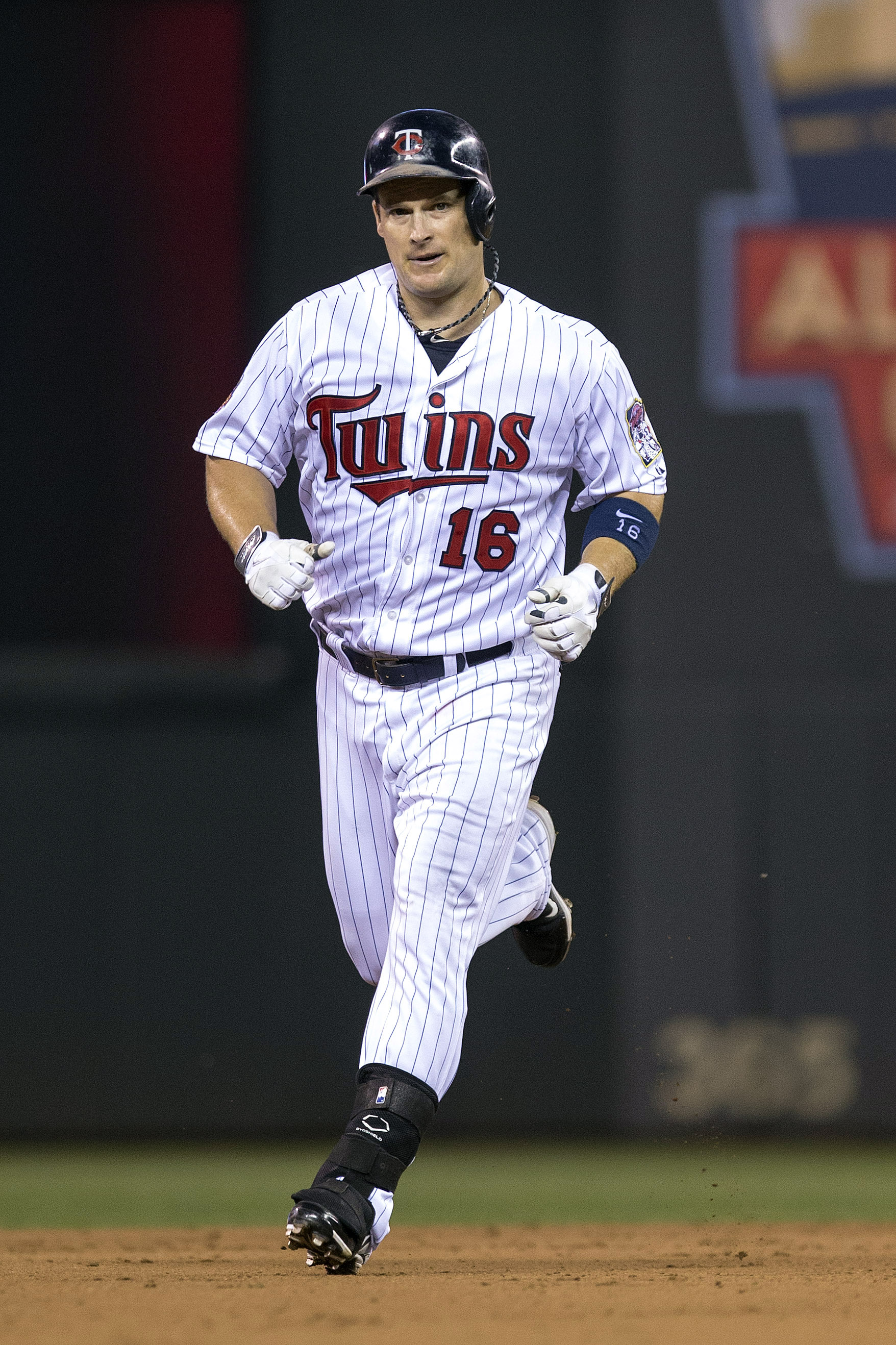
Willingham was claimed by Kansas City off revocable waivers, tweets Mike Berardino of the St. Paul Pioneer Press. The veteran outfielder is owed $1.836MM for the last 48 days of the season, Berardino further tweets.
The right-handed hitter, 35, is set to reach free agency following the season and will therefore be a pure rental for the Royals. He has posted a .210/.345/.402 slash with 12 home runs through 278 plate appearances on the season after spending time on the DL early on. His production has not matched up to his high-level numbers over 2006-12 (.847 OPS), but they are a step up over a disappointing 2013 campaign.
Willingham brings some much-needed pop to a Royals lineup that has struggled to score runs at times. He is expected to see many of his plate appearances out of the designated hitter spot, per a tweet from Andy McCullough of the Kansas City Star, sharing time with the lefty-swinging Raul Ibanez. Of course, Willingham is also capable of playing the corner outfield, though he has historically been regarded as a well-below-average performer on the field.
The return for Willingham is not insignificant, which is a fair achievement for Minnesota given that the pending free agent was claimed (leaving the Twins without leverage to deal with multiple trade partners). Adam, 23, was a fifth-round pick in 2010. He has scuffled somewhat in the upper minors as a starter (5.13 ERA in 242 1/3 Double-A innings), but has had some success at Triple-A this year in a relief role (2.35 ERA over 15 1/3 frames). Baseball America rated him Kansas City’s 9th-best prospect coming into the year, saying he has a solid heater and average slider but will need to develop a go-to third offering (change or curve) in order to succeed against lefties at the next level. MLB.com also rated him in the ninth slot among KC prospects entering the year, but dropped him to 16th in its mid-season update. Ultimately, Adam represents a controllable depth piece for a Minnesota club that already picked up young starter Tommy Milone earlier this summer.
Jeff Todd contributed to this post.
Photo courtesy of USA Today Sports Images.
Curtis Granderson, Jon Niese Clear Revocable Waivers
Mets outfielder Curtis Granderson and left-hander Jon Niese have cleared revocable waivers and are now eligible to be traded to any club, according to Jon Heyman of CBS Sports. ESPN’s Jayson Stark reported last week that Granderson had been placed on revocable waivers.
That the 33-year-old Granderson would clear isn’t surprising, as I mentioned following last week’s news that he was placed on waivers. He’s owed about $50MM from this point through the end of the 2017 season, making it unlikely that opposing teams would jump to add that type of money to their payroll. Still, Granderson has recovered from a woeful month of April to bat a respectable .258/.360/.447 with 14 homers in 88 games since. While he’s not looking like a 40-homer threat anymore, those numbers will play in any park, and they’re particularly impressive for a hitter that calls the spacious Citi Field his home.
It’s more surprising that Niese would clear waivers, as the 27-year-old is controlled through the 2018 season and is in the midst of his third consecutive campaign of a sub-3.75 ERA. Niese has posted a 3.41 ERA with 6.3 K/9, 2.4 BB/9 and a 48.4 percent ground-ball rate in 128 1/3 innings, and his annual salary commitments are rather modest. He’s earning $5MM in 2014 (of which roughly $1.34MM remains) plus $7MM in 2015 and $9MM in 2016. His contract contains a pair of more-than-reasonable club options ($10MM in 2017 and $11MM in 2018), both of which come with a mere $500K buyout.
That the Cubs were willing to place a claim on Cole Hamels and the remaining $100MM+ on his contract but elected to pass on Niese (along with every other pitching-hungry team in the game) seems puzzling. As Heyman notes, teams may simply have felt that there was no way the Mets would trade their controllable lefty, which is probably the correct assumption. GM Sandy Alderson has shown a reluctance to move any pieces — even those which could be free agents at season’s end or in a year’s time — without receiving something significant in return. Last year, he elected to hang onto LaTroy Hawkins at the trade deadline, and this season he showed virtually no inclination to move Daniel Murphy, despite his status as free agent following the 2015 campaign.
I’d imagine the asking price on Niese to be well beyond the comfort level of nearly any interested team, but those clubs will have the remainder of the month to kick around ideas and check in with Alderson. (Of course, a club could acquire Niese in September as well, though he’d be ineligible to pitch in the postseason if acquired after Aug. 31.)
Granderson and Niese are the second pair of NL East players to reportedly clear waivers this afternoon, as USA Today’s Bob Nightengale reported that both Ian Desmond and Gio Gonzalez cleared waivers as well. All four will be added to MLBTR’s list of players that have reportedly cleared revocable waivers.
Desmond, Gonzalez Clear Waivers; Strasburg, Harper Pulled Back After Claims
The Nationals are clearly in the process of running much of their roster through waivers, as USA Today’s Bob Nightengale reports that shortstop Ian Desmond and left-hander Gio Gonzalez have both cleared revocable trade waivers. Ace Stephen Strasburg and outfielder Bryce Harper were both claimed on waivers and subsequently pulled back, Nightengale adds (Twitter links).
That both Desmond and Gonzalez would clear waivers is a bit surprising, although even in the event that they had been claimed, it’s highly unlikely that the contending Nationals would’ve dealt away either key contributor. Desmond, 28, is in the midst of a down season at the plate but has still been valuable. He’s hitting .244/.296/.422 with 19 homers and 13 stolen bases. Defensive metrics such as Ultimate Zone Rating and Defensive Runs Saved are down on his typically strong glovework in 2014, however. Still, as a shortstop with pop that is owed just $1.74MM through season’s end in addition to $11MM in 2015, it wouldn’t have been a surprise for a club to place a claim.
Gonzalez, also 28, has struggled in 2014 as well (by his standards). The lefty has pitched to a 4.00 ERA with 9.5 K/9, 3.8 BB/9 and a 44.7 percent ground-ball rate. Though his ERA is higher than normal, ERA estimators such as FIP, xFIP and SIERA all feel that he’s having one of his better years. Gonzalez is controlled through 2016 ($11MM in 2015, $12MM in 2016) with a $12MM club option for 2017 and a $12MM vesting option for 2018. As noted before, it’s nearly impossible to imagine Desmond or Gonzalez being moved this month.
It’s hardly a surprise to see Harper and Strasburg claimed, but it’s even less surprising that the Nats promptly pulled them back. Harper is controlled through the 2018 season, and while he’s having a down season, he possesses a sky-high ceiling and was excellent in 2012-13 despite playing at the ages of 19 and 20. Strasburg is under control through 2016, and while his ERA is higher than normal, he’s sporting a 10.7 K/9 rate and an even 3.00 FIP. Both are Scott Boras clients, so while an extension is unlikely for either, they’re integral part of the Nationals’ plan in the coming seasons.
Both Desmond and Gonzalez will now be added to MLBTR’s growing list of players that have reportedly cleared revocable waivers.
Free Agent Stock Watch: Russell Martin
Russell Martin‘s current two-year, $17MM deal, which remains the largest free-agent contract in Pirates history, received mixed reviews when it was signed. Now, though, it’s clear the deal was a coup for the Bucs, and Martin’s impending free agency raises fascinating questions about how to balance his unusual skill set and the lack of impact catchers on next offseason’s free agent market against the worrisome aging patterns of backstops in their thirties.
Martin was a key to the Pirates’ breakout 94-win season in 2013. He hit a modest .226/.327/.377, but he still contributed 4.1 fWAR thanks to his exceptional defense, and he may have added a bit of value even beyond that thanks to his well regarded pitch framing. This season, he might be even more helpful despite missing time with a hamstring strain — his .417 OBP so far this season is an amazing 107 points above league average, and his defense again grades very well, with 9 Defensive Runs Saved above average so far.
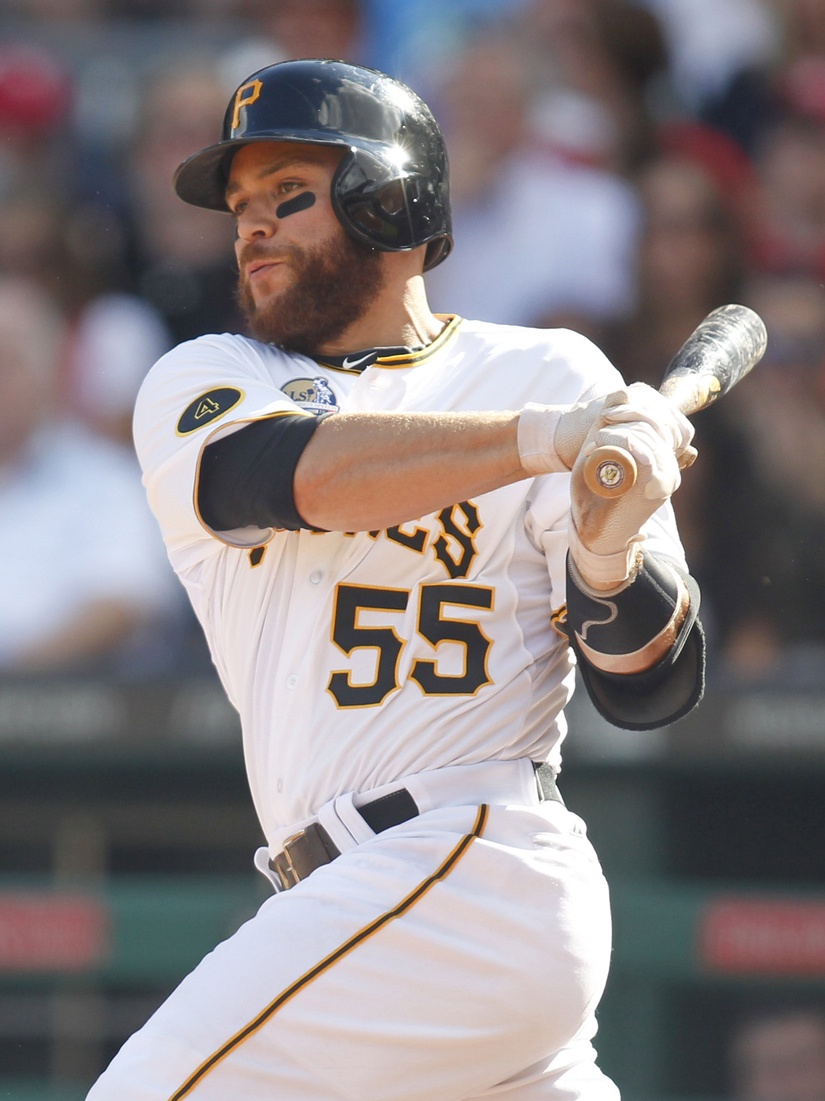 Martin’s excellent performance in 2014 couldn’t be better timed. Now that Kurt Suzuki has signed an extension with the Twins, there won’t really be any other starting catchers on the free agent market, unless one counts players like Geovany Soto or A.J. Pierzynski. Teams like the Dodgers, Rockies and possibly Blue Jays or Cubs would all make some degree of sense as potential suitors for Martin, and the Pirates would surely love to have him back at the right price, so the market for him should be robust.
Dollar figure and contract length are always important considerations for free agents, but in Martin’s case they’re even more crucial than usual. Neal Huntington has already implied that the cost-conscious Bucs aren’t likely to be serious bidders, even though it’s a steep drop from Martin to presumptive 2015 starting catcher Tony Sanchez. A team like the Rangers might be unwilling to block a terrific catching prospect in Jorge Alfaro by signing Martin to a lengthy contract, and therefore could simply settle on Robinson Chirinos until Alfaro is ready. The same goes for the Red Sox, who have Christian Vazquez at the big-league level and Blake Swihart on the way.
Then there’s the more general problem of how to value an aging catcher. Martin will be 32 in February, and aging patterns for catchers that age are brutal, to put it mildly. Recent history is full of good starting catchers who struggled to maintain their value into their thirties, like Kenji Johjima, Ramon Hernandez and former Pirate Jason Kendall. Others, like Charles Johnson and Michael Barrett, fell off the table at an even younger age than Martin is now. Brian McCann, who’s signed to a five-year contract and who’s even younger than Martin, might end up providing another cautionary tale. Martin is a unique player with good conditioning habits, and his defense should give him value even if his offense falters, but history isn’t on his side.
On top of that, Martin’s remarkable .290/.417/.391 2014 season likely wouldn’t be sustainable even if he were younger. After five straight years of a BABIP of .287 or lower, his BABIP is .354 this season. Martin’s excellent plate discipline is legitimate, but his batting average is more likely to be something like .240 or .250, rather than .290, going forward.
These warning signs will be perfectly clear to most teams, and it’s likely that whoever signs Martin will be hoping to get good value at the start of the contract, with that value declining sharply as the contract progresses. It’s tough to find precedents for a Martin deal, since few catchers sign long free-agent deals, but he should be able to receive at least three years, and perhaps four, at north of $10MM per season. Barring an injury down the stretch, he’ll surely be in line for more than the three years and $26MM Carlos Ruiz received from the Phillies last year, but far less than the five years and $85MM McCann got.
The Ruiz contract suggests Martin will get a hefty payday, although Jarrod Saltalamacchia‘s recent deal points in the other direction. Saltalamacchia posted 3.6 WAR last season before hitting the market as a 28-year-old and only got $21MM over three years, even though the Red Sox didn’t extend him a qualifying offer. For Martin, a three-year deal in the range of $12MM-13MM per season might make sense, or possibly a four-year contract worth slightly less per season. Martin could also try for a higher average annual value by taking a two-year deal, although, given his age, he probably has incentive to prefer more seasons and more guaranteed money, since he’s not likely to get another big contract after this offseason.
One can see, then, why a return to the Pirates appears so unlikely — the Bucs were unwilling to extend a $14.1MM qualifying offer to A.J. Burnett last season, explaining that their budget made it difficult to build a competitive team while committing so heavily to one player. It’s difficult, then, to see them committing to pay a similar annual salary to a player for three or four years, particularly when getting little from that player at the end of the contract could be disastrous for them. The Burnett situation also raises questions about whether the Pirates will extend Martin a qualifying offer after the season, potentially affecting his market. They will probably have a stronger incentive to do so with Martin than they did with Burnett, given that there’s less of a chance Martin would accept.
Less thrifty teams would likely have fewer concerns than the Pirates would, and might also be more inclined to pursue Martin because of his perceived value even beyond his peripherals — he’s widely regarded as a thoughtful player and leader who’s helpful with pitchers. The most likely outcome (although it’s far from certain at this point) is that Martin winds up with a three-year deal from a bigger-payroll team.
Photo courtesy of USA Today Sports Images.
Royals, Tigers Interested In Daniel Nava
Though Daniel Nava has yet to be placed on waivers, according to Nick Cafardo of the Boston Globe, he’s already begun to draw trade interest from the Royals and Tigers as the AL Central frontrunners each search for a bat to add to their lineup (Twitter link).
The 31-year-old Nava is hitting just .248/.327/.310 this season, but he carries a significant platoon split and would likely see his overall numbers improve were he to face only right-handed pitching. Nava is a switch-hitter by trade, but his lifetime .207/.287/.300 batting line as a right-handed hitter is unimpressive, to say the least. However, he boasts a .289/.384/.422 triple-slash in his career as a left-handed hitter and is slashing .276/.360/.346 from that side of the dish in 2014. Beyond that, Defensive Runs Saved is a fan of his career work at both outfield corners. Ultimate Zone Rating doesn’t like his glove in left field but has been positive regarding his work as a right fielder.
The Royals could look at Nava as a upgrade (both offensively and defensively) over veteran Raul Ibanez, who has batted a paltry .193/.233/.386 in 60 plate appearances since returning to the team. While Nava’s struggles from the right side make it seem counterintuitive to suggest that he could form a platoon with Nori Aoki, Kansas City could make such an alignment work. Nava could receive the bulk of playing time against right-handed pitching because Aoki, despite being a lefty swinger, has much better career numbers versus southpaws. He’s hit lefties at a .337/.410/.404 clip in 2014 and a .311/.363/.396 clip since jumping from Japan’s Nippon Professional Baseball to the Major Leagues.
Detroit’s interest in Nava isn’t entirely surprising, given the fact that Andy Dirks sustained a setback in his rehab from back surgery last week (as reported by MLB.com’s Jason Beck). Dirks reportedly strained his left hamstring, and the Tigers aren’t sure when exactly he will be able to get back into games. As such, Nava presents a solid option against right-handed hitters with solid corner outfield defense — a skill-set not dissimilar to that of Dirks. He could pick up some of Torii Hunter‘s at-bats against right-handed pitching, as the veteran outfielder has seen his numbers against right-handers decline (along with his once highly regarded defense). Hunter is hitting just .257 with a .294 OBP against righties this year, though his .438 slugging percentage and 181 isolated power mark against them are both plenty respectable.
As it stands, the Royals would have first crack at Nava on waivers, as they’re a half-game behind the Tigers in what has become a surprisingly tight AL Central race. Of course, there’s no guarantee that Nava would make it to either club, as he would first need to go unclaimed by the Rangers, Astros, Red Sox, Twins, White Sox, Rays, Indians, Yankees, Blue Jays and Mariners — in that order — to reach either AL Central contender. Nava will be arbitration eligible for just the first time this winter and is under control through the 2017 season, so it’s certainly possible that a different AL club would have interest in claiming him. The Indians, for example, who are just five and a half games back in the division, could claim Nava simply to block their rivals from acquiring him. There’d be little risk for Cleveland, given Nava’s modest $557K salary in 2014.
Padres Designate Jeff Francoeur For Assignment
The Padres have designated outfielder Jeff Francoeur for assignment to clear room for top prospect Rymer Liriano‘s promotion, tweets Marty Caswell of 1090 radio in San Diego.
The 30-year-old Francoeur recently joined the Friars’ big league club after spending much of the season with Triple-A El Paso, but he collected just a pair of hits and three walks in 28 trips to the plate. Frenchy hasn’t produced in the Majors since a surprising 20-20 campaign for the Royals back in 2011 — an effort that was impressive enough to net him a two-year. $13.5MM deal to remain in Kansas City.
That contract proved to be a misstep for Kansas City GM Dayton Moore, however, as Francoeur has batted just .226/.269/.346 since that time and was designated for assignment midway through the contract’s second season. The former top prospect and Rookie of the Year candidate did enjoy a nice season with El Paso this year, as he batted a healthy .294/.325/.465 with 15 homers in 416 plate appearances.
Liriano, 23, is batting a robust .291/.362/.473 with 14 homers and 20 steals between Double-A and Triple-A this season. He ranked sixth on MLB.com’s midseason list of the Top 20 Padres prospects. MLB.com’s Jim Callis and Jonathan Mayo noted that Liriano has plenty of raw power and above-average speed, but he’ll need to refine his approach at the plate because of his propensity to swing and miss. His bat profiles well at any outfield position, according to the MLB.com duo.
Rosenthal’s Latest: Tigers, Lester, Front Offices
The Tigers have “kicked around” the idea of trading for a hitter to bolster the back end of their lineup, FOX Sports’ Ken Rosenthal reports in his latest Full Count video. Finding a quality bat will be more difficult in the August waiver period, of course, and there also isn’t any position that Detroit would clearly be looking to upgrade. Rosenthal says the team is “pretty much set in the outfield,” though I’d argue that adding another outfielder to complement or even replace J.D. Martinez or Rajai Davis (both of whom were originally acquired to be part-timers) would help the Tigers down the stretch.
Here’s some more from Rosenthal’s video and a separate piece that examines which managers and general managers could be on the hot seat…
- Some of Jon Lester‘s former teammates believe the southpaw will sign with the Cubs this offseason. Lester, of course, has ties to Theo Epstein and Jed Hoyer, and the Cubs’ recent waiver claim of Cole Hamels indicates that the team is prepared to spend big money on a top-tier starting pitcher.
- Had the Padres hired Yankees assistant GM Billy Eppler, the return of Kevin Towers to the San Diego organization “would’ve been almost automatic.” (The two worked together in New York.) Between Tony La Russa’s hiring in Arizona and the firing of Josh Byrnes in San Diego, rumors have swirled for weeks that Towers would find himself back with the Friars given his friendship with Padres president/CEO Mike Dee. As Rosenthal notes, Towers could still return under new GM A.J. Preller, though rival executives are split as to whether Towers’ presence would be a positive or a negative for Preller as a first-time general manager.
- Bud Black “would be out of work for about five minutes” if Preller decided to make a managerial change. Mike Dee recently told Rosenthal that Preller would decide on Black’s future with the Padres, though the fact that Black’s removal was “never seriously considered” by upper management would seem to bode well for the long-time skipper.
- While Reds GM Walt Jocketty is in the final year of his contract, “there is no indication that Jocketty wants to leave, or that owner Bob Castellini wants him out.” Rosenthal speculates that a reunion between Jocketty and La Russa in Arizona could be a possibility, though Jocketty might prefer to stay with the contending Reds rather than face a rebuilding job with the D’Backs.
- Ruben Amaro’s future as the Phillies‘ GM has been in question given the team’s struggles, which could also mean that manager Ryne Sandberg’s continued employment could also be up in the air. The Hall-of-Famer has “at times looks overmatched, struggling in his communications with veterans and with his in-game management,” Rosenthal writes, though he points out that Sandberg hasn’t been given much to work with on the roster. Sandberg is under contract through the end of the 2016 season.
- Could Jeff Luhnow’s job actually be in jeopardy? Rosenthal isn’t sure, though he notes that “internal tension seems unavoidable” in Houston. The Astros have seen little improvement on the field this season and Luhnow’s front office was widely criticized for its handling of the Brady Aiken negotiations.
- Mike Maddux’s Rangers contract is up at the end of the season, and while extension talks probably won’t take place until then, both Maddux and the team seem eager to see the long-time pitching coach remain in Texas.
Pirates Claim Tommy Field Off Waivers
The Pirates have announced they have claimed infielder Tommy Field off waivers from the Angels. Field, who was designated for assignment Thursday, has been optioned to Triple-A Indianapolis.
The 27-year-old has spent the entire season at Triple-A Salt Lake slashing .285/.351/.440 in 382 plate appearances. Defensively, he is primarily a shortstop, but has also seen time at second and third base for the Bees. Field did appear in 15 games with the Angels in 2013 posting a line of .154/.185/.154 over 27 plate appearances – his most extensive action since making his MLB debut with the Rockies in 2011 (.271/.314/.271 in 51 plate appearances).
The Pirates’ 40-man roster is now full.