
Dodgers Extend Max Muncy
1:00pm: The Dodgers have announced Muncy’s contract extension.
11:20am: Muncy’s deal will be paid out in the form of a $4.5MM signing bonus and a $1MM salary in 2020, followed by salaries of $7.5MM in 2021 and $11.5MM in 2022, DiGiovanna tweets.
10:44am: The Dodgers and slugging infielder Max Muncy have agreed to a three-year, $26MM extension that contains a club option for a fourth season, Ken Rosenthal of The Athletic reports (via Twitter). The $26MM guarantee will cover all three of Muncy’s would-be arbitration seasons (2020-22), while the fourth-year option will give the Dodgers the chance to control a free-agent year for an additional $13MM or take a $1.5MM buyout, per Mike DiGiovanna of the L.A. Times (Twitter link). Muncy is represented by Hub Sports Management.
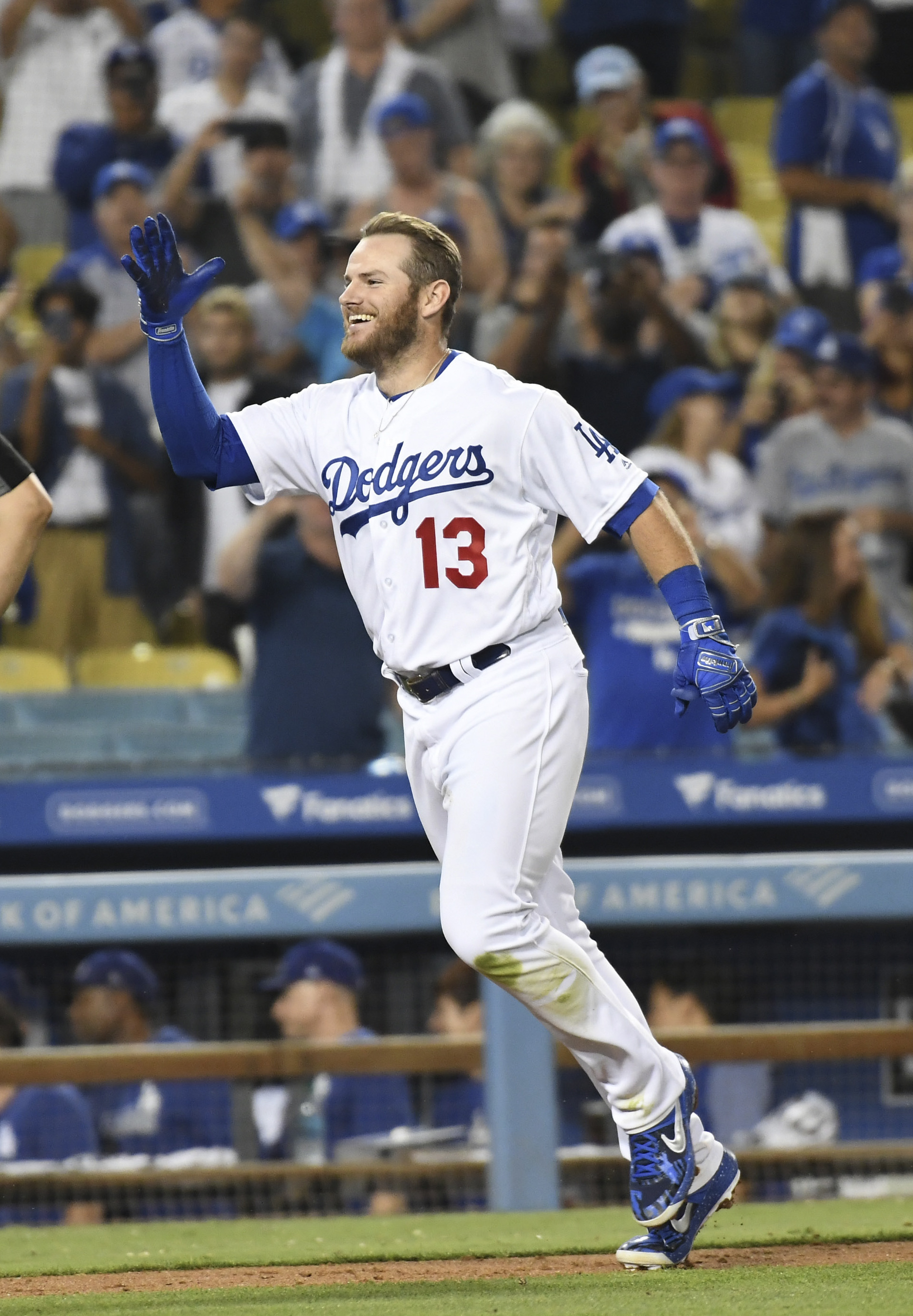
Muncy, 29, was eligible for arbitration for the first time this winter and had yet to settle on a salary for the upcoming season. His camp submitted a $4.675MM salary figure, while the Dodgers countered with a $4MM offer of their own (as shown in MLBTR’s Arbitration Tracker). Rather than go to a hearing, the two sides have instead agreed to a longer-term pact that’ll eliminate the need to ever deal with the arbitration process again while also prolonging the Dodgers’ control over the late-blooming slugger for an additional season.
Few took notice when Muncy was released by the Athletics at the end of Spring Training 2017 and quickly latched on with the Dodgers as a minor league free agent. But Muncy laid waste to Triple-A pitching in ’17 (.309/.414/.491) and found himself in the big leagues with the Dodgers early in 2018. Fast forward two seasons, and Muncy has turned in consecutive 35-homer campaigns while bashing big league pitching to the tune of a .256/.381/.545 slash with 70 home runs, 39 doubles and three triples in 1070 plate appearances (something to keep in mind when prepping the ever-clever “print the playoff tickets!” response to a minor league signing).
Not only has Muncy unexpectedly given the Dodgers a thunderous bat to add to the middle of an already deep and imposing lineup, he’s also proven to be at least a passable defender at each of first base, second base and third base, helping to give manager Dave Roberts some defensive versatility. And while he was initially used as more of a platoon player, the left-handed-hitting Muncy has seen increased opportunities against southpaws, crushing them at a .268/.365/.529 clip in 2019 and hitting a combined .263/.363/.529 in 259 plate appearances against same-handed opponents dating back to Opening Day 2018.
The guaranteed portion of Muncy’s contract runs through his age-31 season, and assuming he maintains anything close to this level of productivity, the $13MM option on his age-32 campaign will also be picked up. That’d position him to reach the open market at the relatively late age of 33, but for a player who didn’t solidify himself as a big leaguer until he’d already turned 27, it’s hardly a surprise to see a willingness to delay his path to free agency in exchange for that first enormous payday.
From the Dodgers’ vantage point, they’ll lock up a key asset on a deal that hardly breaks the bank for them, but it’s still worth noting that the extension could more than double Muncy’s luxury-tax price point in the short term. Muncy would’ve counted for either $4MM or $4.675MM against the luxury tax had he agreed to a one-year deal at one of the two submitted figures, but the average annual value of his extension ($8.667MM) will now be the figure that counts against that tax line.
Depending on how the chips fall in the yet-to-be-finalized trades centering around Mookie Betts, David Price and Joc Pederson, this extension could very well put the Dodgers slightly over the $208MM barrier. Adding Muncy’s extension, adding Betts/Price but subtracting the portion of Price’s contract paid by the Red Sox and subtracting Pederson’s salary would still place the Dodgers a couple million over the line, per the projections of Roster Resource’s Jason Martinez. Then again, the Dodgers would still have time to work to reduce that number if ownership’s goal is indeed to remain south of the tax ceiling. And, of course, as a first-time offender — the Dodgers didn’t exceed the tax threshold in 2019 — L.A.’s “penalty” would amount to a mere 20 percent slap on the wrist for every dollar north of $208MM.
Twins Win Arbitration Hearing Against Jose Berrios
The Twins have won their arbitration hearing against right-hander Jose Berrios, tweets MLB Network’s Jon Heyman. He’d filed for a $4.4MM salary but will now be paid at the $4.025MM figure submitted by Minnesota.
Berrios, 25, just wrapped up his first 200-inning season and turned in his third consecutive sub-4.00 ERA season, working to a career-best 3.68 ERA with 8.8 K/9, 2.3 BB/9 and 1.2 HR/9. The former No. 32 overall pick has emerged as Minnesota’s most effective starter since cementing himself as a big league regular, pitching to a combined 3.80 ERA with a strikeout per frame through 538 1/3 innings and earning a pair of All-Star bids along the way.
Berrios’ relatively affordable salary for the upcoming season only serves to underscore the difficulty that first-time-arbitration-eligible starters have had in moving the needle forward. Dallas Keuchel is still the only first-time-eligible starting pitcher to topple the $4.35MM benchmark set by Dontrelle Willis way back in 2006, and it took Keuchel winning a Cy Young Award to do so. Others starters who have been in position to best that mark (e.g. Clayton Kershaw, Tim Lincecum, Aaron Nola) have instead opted for multi-year deals.
That there’s only one example of a pitcher besting Willis’ mark — and that it took extraordinary circumstances — emphatically drives home the reason that teams are willing to go to hearings over what appear to be such trivial sums. The Twins, like other clubs that have drawn a hard line in comparable situations, surely care less about immediate cost savings than they do about preserving the standards that allow arbitration salaries to remain so manageable.
If the Twins (and every other club) simply conceded and met the player in the middle, those contractual agreements would be used as data points in future arbitration negotiations. Were it not for teams continually drawing a hard line, the Twins and Berrios would’ve been arguing over figures much greater than the ones discussed in today’s hearing. That’s not to suggest that teams are in the right or wrong to take such firm stances — even against their best players — but rather to point out that their motivation for doing so is rather obvious when considering the full breadth of the arbitration mechanism.
As for Berrios, he doesn’t hold any hard feelings toward the Twins organization, Darren Wolfson of SKOR North Radio tweets. Berrios has made it clear in the past that he’s keenly aware of the business side of the equation. He said as much when revealing last spring that he turned down an extension overture from the Twins, and it’s surely no coincidence that the number he filed would’ve bested the aforementioned Willis benchmark — even if only by a narrow margin of $50,000. Again, every slight step forward would factor into future negotiations for other first-time-eligible pitchers.
The Twins and Berrios can, of course, continue to discuss a long-term deal. Minnesota controls him through the 2022 season, leaving plenty of time to broker a deal. Given his previous quotes about the financial side of the game — “I have to manage my business, too. … We’re waiting for the best for both sides,” Berrios told Phil Miller of the Minneapolis Star Tribune last spring — it doesn’t seem likely that he’ll be signing on for a team-friendly discount.
Joc Pederson’s Arbitration Hearing Taking Place Today
As the baseball world — fans and the industry alike — await the resolution in the potential hangup on the Mookie Betts blockbuster and the finalization of the reported trade sending Joc Pederson and Ross Stripling to the Angels, Ken Rosenthal of The Athletic tweets one possible holdup in the latter of those two deals: Pederson’s arbitration hearing is taking place this morning.
It’s an extremely atypical set of circumstances leading into Pederson’s hearing, as the Dodgers are reportedly in agreement on the framework of a deal that’d send him up to Anaheim at a time when they’re also set to argue his salary with an arbitration panel.
Had the two sides agreed to a swap involving Pederson earlier in the winter, the Angels could’ve prepped for a case in spite of the fact that Pederson has never played a game for them. That type of situation isn’t ideal for clubs but also isn’t unprecedented. As then-Angels-assistant-GM Matt Klentak told MLBTR several years ago in regard to Matt Joyce, whom they’d acquired in an offseason trade (and fortunately signed before heading to an arbitration hearing): “I still haven’t met Matt Joyce. I’ve negotiated his contract with his agent, we’ve traded for him, but I’ve never personally met him. … I’d really have hated for the first time I met this guy to be wearing a suit, sitting across a table, arguing over a million dollars.”
Viewed through that lens and considering the timing of the trade agreement, it’s only logical that the Angels wouldn’t be tasked with making the the case against Pederson’s camp on such short notice. They haven’t had time to prepare an argument for said hearing or even to try to come to terms on a middle ground between Pedesron’s $9.5MM filing figure and the $7.75MM figure submitted by the Dodgers.
Of course, the ultimate price point will in some ways impact how the two teams value Pederson. It’s highly unlikely that the outcome of the hearing will torpedo the trade, but it could determine which secondary pieces the Angels send to the Dodgers to finalize the arrangement. Given that additional layer of complexity, Jeff Fletcher of the Orange County Register tweets that an exec with another club “suspects” that MLB is having a third-party lawyer present the other side of Pederson’s case, thus entirely removing the Dodgers and Angels from the equation.
Between Pederson’s hearing and the reported medical snag in the Betts/Price/Maeda blockbuster, there are clearly numerous balls in the air that need to be accounted for prior to the completion of this series of significant transactions. A ruling on Pederson’s case should be known in the near future — arbitration results are typically known within a day of the hearing — which could bring some clarity to one of the many wrinkles in the Dodgers’ ongoing and extremely complex trade negotiations.
Nick Hundley Intends To Play In 2020
Veteran catcher Nick Hundley turned 36 late in the 2019 season, but he’s not yet planning to call it a career. Hundley tells Susan Slusser of the San Francisco Chronicle that he’s spoken to a few teams this winter — presumably about minor league deals with non-roster invites to Spring Training (Twitter link).
Hundley’s 2019 season wasn’t exactly the finest of his 12-year career. The veteran backstop appeared in just 31 games with the Athletics, spent more than a month on the injured list with back spasms and was released by both the A’s and the Phillies. Notably for A’s fans, Hundley tells Slusser that Oakland isn’t one of the teams to which he’s spoken.
Last year’s poor showing notwithstanding, Hundley is only a season removed from hitting at a near-average clip with the Giants in 2018. That year saw him tally 305 plate appearances with a .241/.298/.408 slash (95 OPS+, 93 wRC+). Considering that the league-average catcher posted an 84 wRC+ in 2018, Hundley’s output was more than passable — particularly for a part-time/backup catcher. Overall, he’s a .247/.299/.405 lifetime hitter in the big leagues.
Hundley has never been considered a defensive standout, but his career 26 percent caught-stealing rate is only a hair below the league average. And while he’s rarely graded well in terms of pitch framing, Hundley typically posts quality marks in terms of blocking pitches in the dirt, per Baseball Prospectus. At 36 years of age, there’s little reason to expect a marked uptick in his defensive skills, but he’s generally been a capable bat relative to his positional peers, and as a depth pickup on a minor league deal, Hundley would make sense for several organizations that are still rather thin on options behind the plate.
Rockies Sign Ubaldo Jimenez, Tim Collins To Minor League Contracts
The Rockies announced a series of minor league signings Wednesday, most notably revealing a reunion with right-hander Ubaldo Jimenez, a new deal with righty Tim Melville and an agreement with veteran lefty reliever Tim Collins. They’ll all be in Major League camp with the Rockies during Spring Training, as will several other veterans whose signings have been previously reported (e.g. Chris Owings, Drew Butera, Elias Diaz).
It’s been more than two years since the now-36-year-old Jimenez appeared on a Major League mound and nearly a decade since he last donned a Rockies uniform. From 2008-10, Jimenez was a bona fide top-of-the-rotation arm for the Rox, pitching to a combined 3.43 ERA (3.42 FIP) with 8.2 K/9 against 3.9 BB/9 in 638 1/3 innings in Colorado. Given the hitter-friendly nature of Coors Field, Jimenez’s park-adjusted production was 37 percent better than that of a league-average pitcher (by measure of ERA+). Colorado eventually traded him to the Indians for a prospect packaged headlined by Drew Pomeranz.
After a rough year and a half in Cleveland, Jimenez peaked at the perfect time, tossing 182 2/3 innings of 3.30 ERA ball in his walk year with the Indians. He set out into free agency and landed a four-year, $50MM contract that quickly proved to be a misstep for the O’s. Jimenez gave Baltimore one season of league-average innings (184 innings, 4.11 ERA, 100 ERA+ in 2015) but was otherwise one of the least-effective starters in MLB throughout his time there. He hasn’t appeared in the Majors since throwing his final pitch for the Orioles in 2017.
Melville, meanwhile, started seven games for the Rockies just this past season, tallying 33 1/3 frames of 4.86 ERA ball with a 24-to-14 K/BB ratio. The 30-year-old journeyman was signed out of the independent Atlantic League and wound up making a combined 24 starts between Triple-A and the Majors, although his minor league numbers were rather unsightly. In 96 1/3 innings with Triple-A Albuquerque, Melville limped to a 5.42 ERA and yielded an average of 2.2 homers per nine innings pitched.
Collins, also 30, pitched 8 2/3 innings with the Cubs and surrendered three runs on nine hits and three walks with four strikeouts in that short time. His work in Triple-A similarly left plenty to be desired, as he walked 19 batters and served up seven homers in just 31 innings.
It’s of course worth noting that both the Triple-A International League and Pacific Coast League in 2019 were a nightmare for pitchers, as Triple-A hitters teed off on the same juiced ball that led to the massive home run spike we witnessed in the Majors. Collins, in particular, had a sharp Triple-A track record prior to 2019 and was at one point a quality reliever with the Royals (2011-14) before multiple Tommy John surgeries slowed his career.
Braves Win Arbitration Hearing Against Shane Greene
The Braves have won their arbitration hearing against right-handed reliever Shane Greene, the Associated Press reports. He’ll now earn the $6.25MM salary figure submitted by the Braves rather than the $6.75MM salary for which he filed.
Acquired in a deadline deal that sent prospects Joey Wentz and Travis Demeritte to the Tigers, Greene was unable to replicate the dominance he’d shown in Detroit in his new setting. The 1.18 ERA he posted in 38 innings as a Tiger last year never appeared close to sustainable, as it was largely predicated on a .178 average on balls in play and a sky-high 85.2 percent strand rate, but the extent to which Greene regressed in Atlanta was nevertheless a bit surprising.
That’s not to say that Greene wasn’t a useful bullpen piece, but he punched out 28.5 percent of the hitters he faced with Detroit, only to see that number plummet to 20.8 percent with the Braves. Greene still notched a respectable 4.01 ERA with 7.7 K/9 and 1.8 BB/9 in 24 2/3 innings with the Braves, adding in another run allowed in 2 2/3 postseason frames in the NLDS.
This will be the final trip through the arbitration process for Greene, who is set to become a free agent at season’s end. The $500K gap over which the two sides argued seems trivial to most fans but is viewed in a vastly different light by teams and agencies. Hearings such as this one serve as a reminder that the actual immediate cost savings are typically trivial; rather, it’s in teams’ best interest to try to fight for every last dollar rather than make concessions, as future arbitration cases for similar players are based upon the cases of today. Conversely, if an agency is able to even push a client’s salary forward by a couple hundred thousand dollars, that becomes a data point for future comparables. MLBTR spoke to several league execs about the intricacies of arbitration a few years back, and the points discussed still ring true in 2020.
James Paxton Out Three To Four Months Following Back Surgery
The Yankees announced Wednesday that left-hander James Paxton will be sidelined for an expected three to four months after undergoing a microscopic lumbar discectomy operation with the removal of a peridiscal cyst.
It’s a tough blow for the Yankees before their spring camp even opens, as Paxton will now be sidelined until at least early May and possibly into June. That represents something of a best-case scenario and assumes no substantial setbacks along the way for the 31-year-old lefty.
Paxton was perhaps the Yankees’ most effective starter in 2019, tossing 150 2/3 innings of 3.82 ERA ball over the life of 29 starts in his first season with the club. The longtime Mariners starter averaged 11.1 K/9, 3.3 BB/9 and 1.37 HR/9 after being acquired in the trade that sent lefty Justus Sheffield, right-hander Erik Swanson and outfielder Dom Thompson-Williams to Seattle in the preceding offseason.
The Yankees spent a good portion of the offseason exploring trade scenarios involving fellow left-hander J.A. Happ, but they’re now surely glad that no deal materialized. Happ now figures to be locked into a rotation spot behind Gerrit Cole, Luis Severino and Masahiro Tanaka. Paxton’s injury could also pave the way for left-hander Jordan Montgomery to break camp with the Yankees as a member of the starting staff in what will be his first full season back from 2018 Tommy John surgery.
The timing of the surgery is poor not only for the Yankees but for Paxton himself, as he’ll now miss a substantial portion of what will be his platform season for free agency. The left-hander avoided arbitration by agreeing to a $12.5MM salary earlier this winter and is slated to hit free agency next winter, where he’ll search for the first lucrative multi-year deal of his big league career. Today’s surgery doesn’t rule out the possibility of him cashing in, but there’s no getting around the fact that it’ll significantly alter his earning power on the open market.
Phillies Re-Sign Blake Parker
The Phillies have re-signed right-hander Blake Parker to a minor league contract with an invitation to Major League Spring Training, per a team announcement. The Phillies also confirmed their previously reported minor league agreements with veteran infielder Logan Forsythe and right-hander Anthony Swarzak.
Parker, 34, opened the 2019 season as the Twins’ closer but lost both his handle on that role and his roster spot in Minnesota after showing some troubles with his control — particularly when it came to his splitter. Parker notched a 4.21 ERA and 10 saves in 36 1/3 innings as a Twin but also turned in a lackluster 34-to-16 K/BB rate in that time. Beyond walking too many hitters, Parker also plunked a pair of batters and snapped off four wild pitches before being cut loose.
In some regards, things worsened in Philadelphia. Parker’s bottom-line run prevention numbers took a turn for the worse (5.04 ERA in 25 innings), and he proved to be more homer-prone with his second club of the year. On the other hand, Parker rediscovered the handle on his split and registered an impressive 31-to-6 K/BB ratio. His 90.8 mph average heater was down considerably from the 92.4 mph he averaged in Minnesota, but Parker did seem to have better control of his arsenal.
There’s little risk for the Phillies in taking another look at Parker this spring. He is, after all, a seven-year MLB veteran who has enjoyed his share of late-inning success — particularly in 2016-17 with the Angels. In all, Parker has 285 2/3 innings in the Majors, during which time he’s logged a 3.56 ERA and recorded 34 saves while averaging 10.1 K/9 against 2.8 BB/9. He becomes the latest in a dizzying slate of veterans to land non-roster invitations to Phillies Spring Training; also in camp will be Anthony Swarzak, Drew Storen, Francisco Liriano, Bud Norris, Neil Walker, Logan Forsythe, Josh Harrison, Ronald Torreyes and Phil Gosselin.
Phillies Claim Deolis Guerra, Designate J.D. Hammer
The Phillies announced this afternoon that they’ve claimed righty Deolis Guerra off outright waivers from the Brewers and designated fellow right-hander J.D. Hammer for assignment to open a spot on the 40-man roster. Philadelphia also announced that right-hander Trevor Kelley, who was designated for assignment late last week, cleared waivers and has been sent outright to Triple-A Lehigh Valley.
Guerra, 30, was dominant in the hitter-friendly Pacific Coast League in 2019, logging 66 2/3 innings with a 1.89 ERA, 11.9 K/9, 2.2 BB/9, 0.68 HR/9 and a 42.9 percent ground-ball rate for Milwaukee’s top affiliate. He pitched just two-thirds of an inning in the big leagues and only has a total of 95 2/3 MLB frames under his belt in all, but Guerra ranked in the 80th percentile in fastball spin rate during his last full MLB season with the Angels in 2017.
Milwaukee signed Guerra to a big league deal earlier this winter but opted to designate him for assignment last week after agreeing to a one-year deal with righty David Phelps. Guerra is out of minor league options, so he becomes a strong possibility to break camp with the Phillies, so long as he pitches reasonably well in Spring Training.
Hammer, 25, posted a 3.79 ERA in his big league debut in 2019, allowing eight runs on just 15 hits in 19 innings of work. However, he also issued 12 walks against just 13 strikeouts in that time, continuing some troublesome control issues that surfaced in Triple-A (15 walks in 15 2/3 innings there). Injuries have combined to limit Hammer to just 170 total innings between the big leagues and the minors since he was selected by the Rockies in the 24th round of the 2016 draft. That, paired with his recent control issues, apparently made him expendable to the Phillies, who now have a week to trade Hammer, release him or try to pass him through outright waivers.
The 26-year-old Kelley was also a waiver claim by the Phillies, coming over from the Red Sox organization in early December. He struggled in his MLB debut this past season (eight runs in 8 1/3 innings) but posted impressive minor league numbers in 2019 (1.79 ERA, 8.7 K/9, 2.9 BB/9 in 65 2/3 innings).
Taijuan Walker Works Out For Teams
Free-agent righty Taijuan Walker is one of the more intriguing options on the open market. The former top prospect is still just 27 years old, and in his last full season back in 2017, he tossed 157 1/3 innings of 3.49 ERA ball with 8.4 K/9, 3.5 BB/9, 0.97 HR/9 and a 48.9 percent ground-ball rate. Tommy John surgery and a strained shoulder capsule have limited him to 14 innings across the past two seasons, however, creating a good bit of uncertainty surrounding the talented but (recently) injury-plagued right-hander.
To that end, USA Today’s Bob Nightengale tweets that Walker threw for about 20 scouts earlier today, hoping to bolster his chances of landing a Major League contract as opposed to a minor league deal and a non-roster invite. (Presumably, several clubs would be interested in offering him the latter.) Walker’s fastball sat in the 85-88mph range, per Nightengale, which is a notable departure both from his 94 mph career average and the 93.3 mph he averaged in his lone inning of the 2019 season (which came in Arizona’s final game of the year).
That lack of velocity perhaps sheds some light on why Walker has yet to secure a big league deal this winter. Other injury bounceback candidates like Alex Wood and Jimmy Nelson have cashed in on big league guarantees with the Dodgers, after all, and both are older than Walker. Elsewhere, the Giants paid a combined $13MM to rebound candidates Kevin Gausman and Drew Smyly.
One February bullpen session certainly doesn’t mean that Walker won’t regain some life on his fastball with continued workouts and the benefit of a Spring Training regimen. But at least for contending clubs, some trepidation about guaranteeing a roster spot is understandable. A rebuilding club — particularly one like the Orioles or Pirates, who’ve both cut payroll this winter — would make for a rather logical pairing with Walker, though. To this point, he’s been linked to the Mariners and the Twins, although the presence of nearly two dozen scouts at his showcase suggests that a far broader number of teams are considering him.