
Phillies To Sign Second-Rounder Matt Imhof
The Phillies have agreed to terms with second-round choice Matt Imhof, reports Jon Heyman of CBSSports.com (via Twitter). He will receive a bonus that corresponds to the $1,187,900 slot allocation that came with the 47th choice.
Imhof, a 6’5 lefty out of Cal Poly, was not even drafted out of high school but has seen his stock rise steadily during his time in the college ranks. MLB.com’s Jonathan Mayo and Jim Callis rated him the 33rd best player available, citing his naturally cutting heater and opining that he could have some upside left to claim. Baseball America and ESPN.com’s Keith Law both had him in the 58th slot of their rankings.
Athletics Acquire Brad Mills
The A’s have acquired left-hander Brad Mills from the Brewers in exchange for cash considerations, the Brewers’ player development department announced (on Twitter). Milwaukee will receive only nominal consideration in return, reports Ken Rosenthal of FOX Sports (via Twitter).
The 29-year-old Mills recently had an opt-out date come and go in his contract, but reports indicated that he was able to opt out at any time in favor of a Major League opportunity. Instead, he will head to the A’s where he will presumably have a chance to crack the big league roster in some capacity.
Mills has been excellent at Triple-A Nashville this season, pitching to a 1.56 ERA with 9.2 K/9 and 2.2 BB/9 in 75 innings of work (14 appearances, 12 starts). He’s struggled in 53 1/3 innings at the Major League level in his career, however, posting a 7.76 ERA with a 51-to-31 K/BB ratio.
Indians Sign Bradley Zimmer
1:06pm: Zimmer and the Indians agreed to a $1.9MM bonus, Hoynes tweets.
12:52pm: The Indians have signed first-round pick Bradley Zimmer for an estimated $2MM signing bonus, reports Paul Hoynes of the Cleveland Plain Dealer (on Twitter). Zimmer’s draft slot, No. 21 overall, carried a value of $2,008,100, according to Baseball America. The Indians have announced the signing as well (also on Twitter).
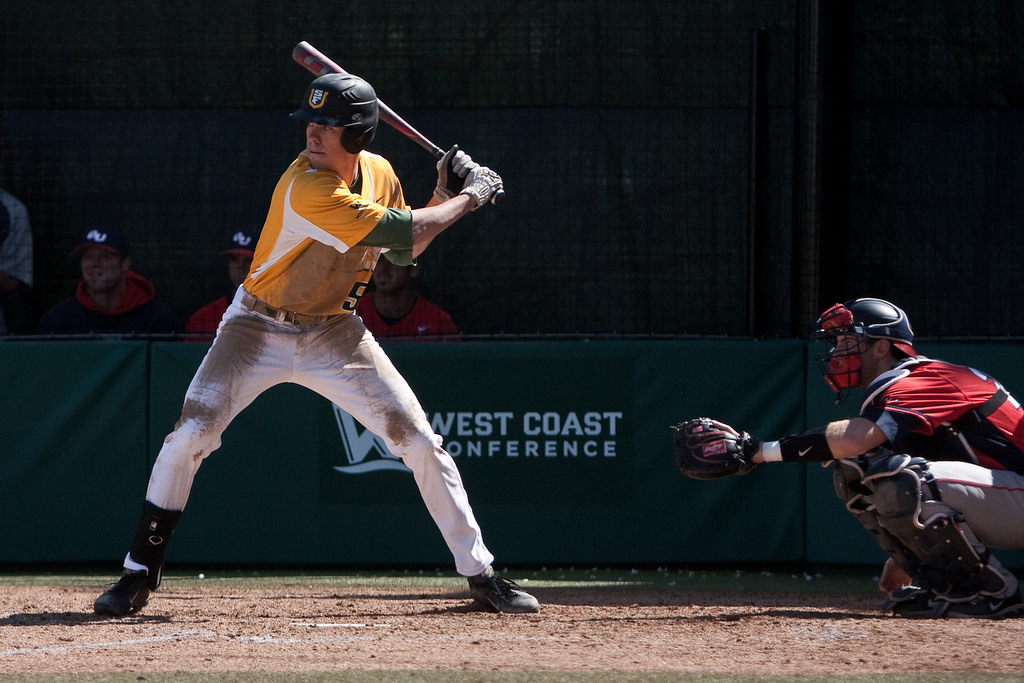
Zimmer, the younger brother of Royals prospect (and former No. 5 overall pick) Kyle Zimmer, was thought to be one of the best college bats in this year’s class. The University of San Francisco center fielder ranked 10th on MLB.com’s Top 200 list, 12th on the Top 100 of ESPN’s Keith Law and 14th on Baseball America’s Top 500 list. Zimmer batted a whopping .368/.461/.573 for the Dons this season, batting third early in the year and eventually batting leadoff. He hit seven homers, seven triples and 10 doubles, and he also stole 21 bases and walked nearly as often as he struck out (31 walks, 34 strikeouts).
Zimmer draws praise for his hit tool, above-average arm and athleticism, with many scouts expecting more power to come as he matures. While he’s played center field in college, some have wondered if his size — he’s listed at 6’5″, 205 pounds — will eventually push him to an outfield corner. Shortly before the draft, I had the opportunity to talk with Zimmer as part of MLBTR’s Draft Prospect Q&A series, and we discussed his approach at the plate, his growing power and who would win in a showdown between him and his brother.
Photo courtesy of the University of San Francisco Athletics department.
Pirates Sign Connor Joe, Jordan Luplow
10:13am: Luplow receives a $500K bonus, tweets Chris Cotillo of MLB Daily Dish. The Pirates save a bit of money on the signing, as it’s $24,300 under slot.
1:18am: The Pirates have signed Comp Round A pick Connor Joe and third-rounder Jordan Luplow, according to the players themselves (Twitter links, with a hat tip to John Dreker of Pirates Prospects). Financial terms of the deals are unclear at this time, but the pick with which Joe was selected, No. 39 overall, comes with a bonus pool value of $1,457,600, and Luplow’s pick value at No. 100 overall is $524,300. The Pirates have now agreed to terms with all their picks from the first ten rounds except ninth-rounder Kevin Krause, a catcher from Stony Brook.
Joe, a junior outfielder and catcher from the University of San Diego, was rated the No. 102 overall draft prospect by Baseball America and No. 110 overall by MLB.com. Baseball America praises his swing and plate discipline but suggests that his bat might not play well if he ends up at first base, where he frequently played in college.
MLB.com ranked Luplow the No. 94 prospect in the draft, while ESPN’s Keith Law put him at No. 95 Baseball America had him at No. 103. MLB.com notes that the Fresno State outfielder has a solid bat, and while his other tools aren’t exceptional, he could be a “solid all-around performer,” comparable to A.J. Pollock.
Orioles Sign Clay Rapada
Here are today’s minor moves from around the league…
- The Orioles have signed left-hander Clay Rapada to a minor league deal, reports David Hall of the Virginian-Pilot (Twitter link). The 33-year-old Rapada is among the most extreme left-handed specialists in the game, as he’s faced 257 lefties in the Majors and held them to a dazzling .164/.255/.231 batting line. However, he’s faced 138 right-handed hitters and experienced the polar opposite, yielding a .345/.464/.611 batting line. It’s been more of the same for him with the Mariners’ Triple-A affiliate in 2014, as he’s held lefties to a .431 OPS and surrendered a 1.175 OPS to righties. Overall, the sidearmer has a 4.06 ERA in 93 big league innings with the Tigers, Indians, Orioles, Yankees and Rangers. He’ll report to Triple-A Norfolk today, assuming he passes a physical, according to Hall.
Contextualizing The Jon Singleton Extension
Eyebrows were raised recently when the Astros agreed to an extension with first base prospect Jon Singleton that was reported simultaneously with his first promotion to the big leagues. Extensions have broken new ground in different ways of late, and this deal represented a heretofore unseen foray into long-term guarantees for young players who are completely untested at the MLB level. Let’s take a look …
Framing the Contract
The deal pays Singleton $1.5MM for this season and $2MM annually from 2015 to 2018. It also includes three club option years over 2019-2021, progressing as follows: $2.5MM ($500K buyout), $5MM ($250K buyout), $13MM ($250K buyout). Singleton is assured of earning $10MM for the next five years, would earn up to $30.5MM in base salary if the options are exercised, and could max out the deal with an additional $5MM in incentives.
Since Singleton had zero days of MLB service at the point the contract was agreed upon and was highly unlikely to reach Super Two status, the standard means of describing the contract would be as follows: it pays him an above-minimum MLB salary for his partial first season, guarantees his three pre-arbitration and first arb-eligible campaign, and gives the club options over his final two years of arbitration and first year of free agent eligibility.
But the notion that the deal gives the Astros control over Singleton through to his first free agent year is heavily dependent on a key assumption — namely, that Singleton will stay in the big leagues over the life of the deal. In actuality, it is far from a certainty that Singleton’s play (and/or the team’s impossible-to-predict circumstances) will actually warrant his continued presence on the team’s active roster through to 2021.
Testing the Criticism
Of course, it remains obvious that Singleton has cut off a good chunk of the upside he might have realized through arbitration, and has potentially even delayed his entry to the free agent market by a season. That is the major complaint that has been logged against the deal. Defenders, meanwhile, have generally focused on Singleton’s off-field issues, noting that he may have had valid non-pecuniary motivations for signing.
It strikes me, however, that something basic is being overlooked here. Singleton — a $200K bonus signee out of high school — not only got his cash up front, but has completely avoided the downside scenario. And it is not as if the contract is completely without upside. At worst, Singleton is a bust who walks away with $10MM. At best, he is a top-rate big leaguer who earns over $35MM through his age-22 through age-29 seasons and hits the open market as an attractive commodity at the reasonably youthful age of 30. (That is, if he has not already agreed to a new extension in the meantime.)
Likewise, it has largely been overlooked that the contract is significantly front-loaded. Singleton will earn $7.5MM before reaching arbitration eligibility, which is much greater than he’d expect to bring in at the league minimum rate (this year, $500K). That certainly increases its value.
The real issue, I think, relates to that simple, timeless maxim of which Baseball Prospectus is fond of reminding us: prospects will break your heart. Singleton is every bit a prospect, as he entered the year facing questions about his maturity and ability to hit left-handed pitching. He rose to 27th on Baseball America’s top-100 list last year, only to slide to 82nd before this season. He is a first baseman who will need to hit — a lot — to keep his place in the big leagues.
His situation, in other words, is highly variable — perhaps more so than many have acknowledged. Some observers have touched on the implications of this fact. BP’s Zachary Levine tackled the Singleton extension from an economics perspective, applying marginal value concepts and game theory to the deal, explaining how Singleton’s individual value-maximization strategy may not have aligned with that of the collective (i.e., other union members). Likewise, looking at it from a labor perspective, the Economist recently noted that the Astros “acquired all of Mr. Singleton’s upside without taking on any of his downside risk.”
I am not sure I agree with the Economist’s notion that the team has not added downside; if anything, it has done just that, albeit at a manageable level ($10MM and a relatively firm commitment of a roster spot for some time.) To my thinking, the team agreed to take on some risk from Singleton in exchange for some of Singleton’s upside. He can still achieve significant earnings above his guarantee, and Houston could ultimately be enticed to pay more through the options than it would have through arbitration if Singleton has injury or performance questions but still carries enough promise that the team wishes to retain him.
But that still leaves unanswered whether, based on the reasonably possible outcomes that a player in Singleton’s situation might look forward to, the deal represents a fair exchange of risk and upside. To help answer this, I think it worthwhile to look at some actual, real-world scenarios that have played out in the recent past.Read more