
Reds Sign Scott Feldman
TODAY: The structure of Feldman’s contract bonuses is broken down by Zach Buchanan of the Cincinnati Enquirer (Twitter link). The right-hander will earn an extra $100K when and if he makes his tenth start of the season, and he’ll earn either $100K or $200K as a bonus for each start thereafter, up to 25 starts. Feldman can also earn $100K for making 25 relief appearances, $200K for 30 and 35 relief appearances, and then $250K for 40, 45, 50 and 55 games pitched out of the bullpen.
THURSDAY: The deal is official, with Cincinnati announcing it.
WEDNESDAY: The Reds have agreed to a one-year deal with righty Scott Feldman, per Ken Rosenthal of FOX Sports (via Twitter). He will receive a $2.3MM guarantee and can earn another $2.2MM via incentives. With a physical already completed, it seems this agreement lacks only a club announcement to be official.
Soon to turn 34, Feldman is coming off of a somewhat curious 2016 campaign. After dealing with shoulder issues late in 2015, he was seen as a question mark heading into camp in the final year of his deal with the Astros. He ended up mostly being relegated to the bullpen, but provided Houston with 62 frames of 2.90 ERA pitching.
Though he seemed to have settled into a useful role for the Astros, Feldman ended up being a somewhat surprising trade deadline mover. He was shipped to the Blue Jays, who took on the $2.75MM or so he was still owed, in exchange for prospect Lupe Chavez. But things didn’t work out for Feldman in Toronto, as he was tagged for 14 earned runs on 23 hits over his 15 innings.
For Cincinnati, Feldman will be asked to provide a steadying presence to a rotation that just lost Dan Straily in a trade. Over 2013-15, the righty turned in 470 1/3 frames of 3.83 ERA ball, with 5.7 K/9 and 2.5 BB/9, and something approaching that kind of workmanlike production would be most welcome. If he’s not effective in a starting role, or a young arm proves worthy of an opportunity, then Feldman could also help deepen the bullpen.
Indians Claim Richie Shaffer, Designate Jesus Aguilar
The Indians have claimed corner infielder/outfielder Richie Shaffer off waivers from the Reds, per a club announcement. Presumably, he lost his roster spot in Cincinnati to clear space for the signing of righty Scott Feldman. Cleveland designated first baseman Jesus Aguilar to free its own 40-man spot for the claim.
Shaffer has made the rounds this winter, at least on paper. He entered the offseason with the Rays before bouncing to the Mariners, moving to the Phillies and then to the Reds before landing with Cleveland.
As ever, that sort of movement reflects the fact that there’s plenty of interest in the 25-year-old, but also questions about just what kind of contributions he’ll make in the near term in the majors. He owns a .213/.310/.410 batting line in his 142 MLB plate appearances, all of which came over the last two years in Tampa Bay. But the righty hitter owns a solid .243/.338/.445 slash with thirty long balls over 778 total Triple-A plate appearances.
The 26-year-old Aguilar hasn’t hit much in scattered MLB time over the past three years, and has burned through his options in the process. But he, too, has shown more in the upper minors. In his 1,647 trips to the plate at Triple-A, the right-handed-hitting Venezuelan carries a .271/.346/.472 batting line and has swatted 68 home runs.
Pitching Notes: Diekman, Imhof, Mets, Jays, Reds/Arroyo, Marquis, Urias, Nats, Harris
Rangers lefty Jake Diekman underwent successful surgery to remove his colon, with several more procedures to come as he battles ulcerative colitis. Evan Grant of the Dallas Morning News has the latest, including video diary entries from Diekman himself. It’s well worth a watch to learn more about the unfortunate affliction and Diekman’s fight. We hope to see him back on the mound as soon as possible.
There won’t be a return in the offing for Phillies lefty Matt Imhof, who lost his eye in a terrible accident involving exercise bands. As Imhof himself writes in a moving piece for ESPN.com, he’s returning to finish his degree at Cal Poly San Luis Obispo and will retire from the sport. He says it’s not just due to the injury, though; as he writes, “the truth is I need a change of pace after 20 years of doing the same thing.” You’ll want to give a full read to the southpaw’s powerful story of coming to grips with — and not being defined by — his injury.
As we wish the best to Diekman and Imhof, here’s the latest on the market for pitching:
- As the Mets look to bolster their bullpen, the team is still weighing a variety of free agents, per Ken Rosenthal of FOX Sports (via Twitter). In addition to keeping open the possibility of a reunion with lefty Jerry Blevins, the Mets are also considering righties Sergio Romo and Joe Smith.
- The Blue Jays are also keeping in touch with Blevins, according to Ben Nicholson-Smith of Sportsnet.ca. Toronto’s search for a southpaw reliever has also led it to consider Craig Breslow, per the report. The team was among those to check out his new mechanics recently.
- The Reds are exploring a reunion with former starter Bronson Arroyo, as Buster Olney of ESPN.com reports (Twitter links). Unsurprisingly, the team is not interested in guaranteeing him a roster spot, as Arroyo is two full years removed from appearing in the majors and has dealt with significant arm issues of late. GM Dick Williams confirms that the team has watched Arroyo throw and is weighing a signing, per MLB.com’s Mark Sheldon (Twitter links). Beyond a move on Arroyo or other candidates for minor-league deals, Cincinnati is done with its free-agent signings, Williams adds.
- Speaking of longstanding veterans weighing returns, righty Jason Marquis suggested in an appearance on MLB Network Radio on Sirius XM (Twitter link) that he’s open to reviving his career. The 38-year-old last appeared in a nine-start stint with Cincy in 2015, but he’s set to pitch for Team Israel in the upcoming World Baseball Classic.
- While Dodgers lefty Julio Urias showed plenty in 2016 to warrant a rotation spot in the coming season, innings considerations may hold him back to start the year. As Andy McCullough of the Los Angeles Times tweets, skipper Dave Roberts says that the organization may keep him in extended Spring Training at the beginning of the 2017 campaign. Such an approach would not only ensure that Urias is available for good once he does make it up, but would afford more opportunities for the organization to see what it has in its variety of interesting, injury-plagued arms. Over at Fangraphs, Craig Edwards takes a look at what’s shaping up to be a fascinating staff.
- There’s an argument to be made that the Nationals not only need to address their closer situation, but also ought to bolster their rotation depth, as Chelsea Janes of the Washington Post writes. While the team’s five-man starting unit is likely set, which perhaps limits their ability to promise opportunities to free agents, a swingman could make sense. Janes mentions Travis Wood as at least a hypothetical match, and he would indeed seem to make a sensible fit.
- 31-year-old Cardinals reliever Mitch Harris is hoping to join former teammate Seth Maness in bouncing back from a “primary repair” procedure to his right elbow, as Derrick Goold of the St. Louis Post-Dispatch reports. Harris last pitched competitively in 2015, but will be ramping up for a full spring after undergoing the surgery last summer. Because his surgeon was able to attempt that less-invasive approach, as opposed to a full UCL replacement, there’s a possibility of a much swifter return to the hill — though Harris will first need to earn his way into MLB camp after failing to receive an invite.
Bullpen Rumors: Badenhop, Lefties, Indians, Breslow, Colome, Twins
Former big league reliever Burke Badenhop is joining the Diamondbacks in an interesting new baseball operations position, as Nick Piecoro of the Arizona Republic tweets. In his new role, Piecoro writes, Badenhop will perform “acquisition-based pitching analysis/sports science work.” That sounds like a great way to start a new career path for the veteran hurler, though unfortunately it’ll mean sacrificing the fame and riches associated with his gig as an MLBTR contributor.
In all seriousness, MLBTR wishes Burke the very best in his new pursuit; be sure to check out his excellent work in the Player’s Perspective Series. Here’s the latest from the relief market:
- In his latest MLB Roundup column, ESPN’s Buster Olney writes that a game of musical chairs appears poised to begin in the next couple of days as the market for left-handed relievers begins to sort itself out (ESPN Insider subscription required). Per Olney, the Indians, Mets, Blue Jays, Phillies, Giants and Marlins are the teams most aggressively seeking left-handed bullpen help. FOX’s Ken Rosenthal also tweeted this morning that the Mets are still seeking bullpen help, though Olney notes that the team doesn’t have the payroll capacity to retain Jerry Blevins at his current asking price. There are a number of free-agent southpaws remaining on the market, including Blevins, Travis Wood, Boone Logan, J.P. Howell, Charlie Furbush (recovering from August shoulder surgery), Chris Capuano, Javier Lopez and Craig Breslow. Olney notes that Wood’s deteriorating swinging-strike rate has been a cause of concern for some teams.
- While the Indians are indeed most interested in a southpaw, the club is not limiting itself to left-handed relief options, Rosenthal notes (Twitter links). Among other possibilities, Cleveland is said to be “doing background work” on veteran righty Joe Blanton, though Rosenthal notes that it’s far from clear whether the organization will even give out any more MLB deals (which Blanton surely will require).
- Following a workout that was reportedly attended by about half the league, Breslow is drawing some level of interest from the Indians, Blue Jays, Dodgers, Rockies, Mets, Cubs, Twins and Reds, according to WEEI’s Rob Bradford (Twitter links). The 36-year-old’s altered arm angle has piqued the interest of teams to the point where some consider him a viable fallback to Jerry Blevins and Boone Logan.
- The Rays are still receiving trade interest in closer Alex Colome, tweets Rosenthal, but they’re not in any rush to move him. The 28-year-old Colome dominated opponents after taking over the ninth inning for the injured Brad Boxberger, tossing 56 2/3 innings of 1.91 ERA ball with 11.3 K/9, 2.4 BB/9 and a 47.1 percent ground-ball rate. Colome, though, is controllable for another four years and won’t even be arbitration-eligible until next winter, so the asking price on him would presumably be exceptionally high. While the Rays may not feel compelled to shop Colome, the team typically is willing to listen on nearly any player. I’d imagine any offer would need to include MLB-ready lineup help in addition to some prospect capital.
- The Twins are interested in Joe Smith, reports 1500 ESPN’s Darren Wolfson in his latest podcast (audio link, with bullpen talk beginning around 1:02:55). (Wolfson also noted interest in Greg Holland, but he’s now heading elsewhere.) Minnesota is “slow-playing” its search on the free-agent market as it attempts to wait out the market to secure a late value pickup or two, and with plenty of quality names left on the market, they’re probably not the only ones employing that approach. The Twins have previously been connected to both relievers, though that interest was first reported months ago, so it wasn’t exactly clear if they’d changed course at all. New Twins chief baseball office Derek Falvey knows Smith quite well, as the side-armer spent the 2009-13 seasons with the Indians, where Falvey was previously an assistant general manager.
Red Sox Claim Steve Selsky From Reds
The Red Sox announced on Wednesday that they’ve claimed first baseman/outfielder Steve Selsky off waivers from the Reds. Cincinnati had designated the 27-year-old Selsky for assignment last week. The waiver claim fills Boston’s 40-man roster.
The 2016 season marked the big league debut of Selsky, who picked up 54 plate appearances and batted a very solid .314/.340/.471 with a pair of home runs in his limited showing. Selsky’s pop has been a bit more limited in a larger sample of work at Triple-A, however, as the former 33rd-rounder has compiled a .283/.369/.425 batting line in 191 games with Cincinnati’s affiliate in Louisville.
Though he’s never ranked as one of the Reds’ best prospects, Selsky has a track record of production in the minors (.295/.379/.459 in his career) and will give the Sox a right-handed option to serve as a bench bat or a depth piece in Triple-A Pawtucket. Selsky does have minor league options remaining, so he can be stashed in Triple-A without needing to be re-exposed to waivers. Boston does, however, have one of the lowest waiver priority rankings in the league, meaning that most of the league passed on the chance to claim Selsky. Knowing that, the Sox could potentially feel confident that they can sneak Selsky back through waivers in the near future and re-open that slot on the 40-man roster (while retaining Selsky as a non-roster player).
You Only Get One MLB Debut
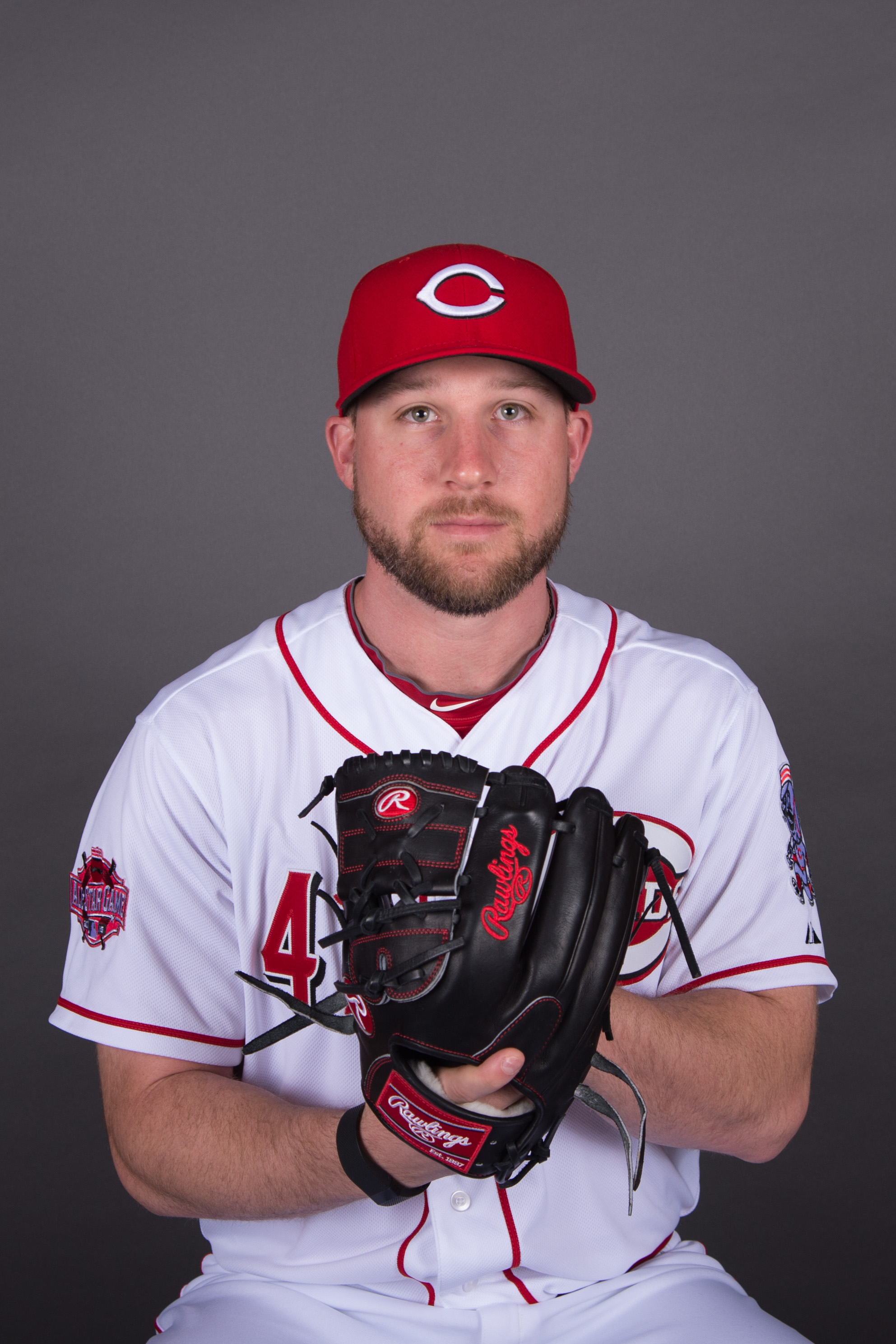
It’s been 342 professional appearances and nearly eight calendar years since Ryan Dennick was selected by the Royals out of Tennessee Technological University in 2009. We’re happy to welcome Ryan as the latest author to join our Player’s Perspective series here at MLBTR.
18,910. This is the number of players who have made a Major League debut in the history of the sport. In life, you only get a few true indelible moments. For those nearly 19,000 players, there is no doubt in my mind getting the call to the big leagues is one of them. Every single player that has been lucky enough to beat incredible odds to reach the game’s highest level can tell you in vivid detail where they were, when it happened, and the emotions that came with having a lifelong dream realized. My name is Ryan Dennick. I was a 22nd-round senior sign in the 2009 draft. Six seasons later, I became number 18,360. This was my indelible moment.
On August 31st, 2014, Jonathan Broxton was traded from the Cincinnati Reds to the Milwaukee Brewers. To most, this meant the Reds were shedding a little over $11MM in payroll commitment. For a team that was in desperate need of salary relief, it was a move they had to make. To the players in Triple-A Louisville’s clubhouse, this meant something completely different. There was an open 40-man roster spot.
When news of the trade broke, a bit of a buzz swept through the clubhouse. The move was completely unexpected and guys began to speculate who could fill the vacancy. With rosters in the big leagues expanding from 25 to 40 the next day, that roster spot wouldn’t be vacant very long. Each year, you can take a pretty good guess on who most of the September call-ups are going to be. Players already on the 40-man roster in the upper minors obviously have the inside track to get the call, since no roster move needs to be made. Prospects that require being protected from the Rule 5 draft the upcoming offseason could certainly find themselves in a Major League uniform come September.
Then there are players like me. The hardest call-ups to predict. The non-prospect, roster filler types that had their best statistical seasons. If a spot isn’t open on the 40-man, teams don’t often go out of their way to create an opening for a player who probably doesn’t fit into their long-term plans. Instead, these players will be sent into the offseason with a pat on the back for a job well done, and perhaps an invite to Major League Spring Training the next season. A team’s placement in the standings plays a factor as well. Without the added pressure of staying in contention late in the season, teams out of the race may be more willing to reward these players with a call-up, if a roster spot is available. The Reds were the perfect storm. Sitting with a record of 66-71, they were out of contention. When the Broxton trade happened, a roster spot opened up. Every player in our clubhouse not currently on the 40-man roster was hoping that spot had their name on it.
For a good majority of my minor league pitching career, I was quite mediocre statistically. I was never great, but never horrible either. I had always shown enough promise to warrant filling a minor league roster spot. But in the eyes of those in the front office, I probably didn’t have enough “stuff” to reach the Majors without great minor league numbers to force their hand. Of course, being left-handed helped me stick around, too. I always believed I would reach the Majors one day. Every minor leaguer does. We would be crazy to live the minor league lifestyle year after year if we didn’t think we could reach the carrot on the stick, even if it was just a nibble.
For whatever reason, a player can have a year where everything just goes right. Something just clicks. Pitchers see line drives hit right at fielders. Hitters have more bloopers fall in for hits. That was my 2014 season. I was having easily the best season of my life. Outing after outing, I was building my case to force the Reds to make a decision on me. A move from the starting rotation to the bullpen helped my fastball play up a little more and made my slider a little sharper. Every bit helps. By the end of the season, my 40-man roster spot résumé included an unblemished record, a team-low ERA, the league lead in appearances, and the league lead in holds. Seemingly every break went my way. I was hoping for one more.
On the morning of September 1, I rolled into Louisville Slugger Field a little later than I normally do. I had just finished a long breakfast with my mom and fiancé at one of the local spots in downtown Louisville. I tried all I could to get my mind off what could be waiting for me when I arrived. I failed. Expecting a call-up was an easy way to set yourself up for disappointment so I always tried to operate with the idea that if I was meant to be in the big leagues, somehow I would get there. But the Broxton trade cleared a path. That spot has to go to someone. Why not me?
As I walked through the clubhouse doors, to the left I already saw our manager, Jim Riggleman, in his office letting the members of the 40-man roster know they are getting the call back to the Majors. Since I was one of the last players to arrive in the clubhouse, I set my bag down at my locker and took a quick look around the room looking for unbridled happiness from a player who earned the right to fill the open roster spot.
It doesn’t matter if a player has been to the big leagues before or not, when a teammate gets called up for the first time, it’s a special moment in the clubhouse. Everyone stops what they are doing to offer handshakes and hugs in recognition of the hard work, dedication and sacrifice it takes to reach the game’s highest level. Major League jobs aren’t given away. Every single one of them is earned. However, no such excitement was taking place. I left my locker to head towards the players’ lounge to try to get in a game of spades before heading out to the field to do my throwing program. Right as I turned the corner, I was met by our pitching coach, Ted Power. “Where have you been?! Skip wants to see you! Now!”
When the manager wants to see you, it’s usually for one of three reasons. You’re either going up, going down, or going home. It’s not to chit-chat. As I made my way to Riggleman’s office, I passed another player who was just told he was returning to the big leagues. We didn’t say anything as we passed. He just shot me a wink, as if he already knew what I was about to walk into. “Have a seat, Ryan,” Jim said. I took a seat on the sofa in his office as I wondered if this was it.
“Am I going up? Is he letting me know they decided not to call me up but he’s thanking me for a great season?” My mind raced so fast that I didn’t realize he’d been talking for about ten seconds, and I didn’t hear anything he said. I snapped out of it and zoned back in to catch him say, “So you’re going up to Cincinnati to finish out the season. Do you have any questions?”
I sat in stunned silence, trying to process what has just been said to me. I’d waited my whole life to hear those words and now that I had, I didn’t know what to do. Years of low pay: validated. Years of sub-par housing: validated. Years of cramped 12-hour bus rides: validated. Years of eating more peanut butter and jelly than is recommended in a lifetime: validated. “…No,” I said. I could barely eek that out.
“OK, then get out of here, Jimmy (the trainer) has your itinerary.”
I left his office, and right around the corner was the player I passed on my way in. “Yeah??” he asked, referring to me being called up or not. I nodded my head. “Yeah…” He turned to go into the clubhouse and shouted,“We got a first-timer here!” Handshakes and hugs all around. I just became a 27-year-old rookie.
Photo courtesy of USA Today Sports Images.
Latest On Matt Wieters’ Market
Matt Wieters is still looking for a new team, and the catcher is short one more potential landing spot now that Braves have agreed to sign Kurt Suzuki. Atlanta had long been cited as a candidate to sign Georgia Tech alum Wieters; just under 30% of MLBTR readers predicted the Braves as Wieters’ next team in a poll last month.
ESPN.com’s Jerry Crasnick explored the Wieters market in a series of tweets (1, 2, 3, 4), including the news that there is some sentiment within the Orioles organization to re-sign Wieters to a one-year deal. Under this arrangement, Wieters would split time with Welington Castillo behind the plate while also getting some at-bats as a DH. While Wieters is popular with Baltimore’s on-field staff, however, Crasnick describes the O’s as “a long shot” for Wieters since the team’s analytics staff has reservations.
Wieters would certainly be an upgrade over current backup catcher Caleb Joseph, and a one-year deal would give the Orioles future flexibility at catcher — Castillo has a player option for 2018 and top prospect Chance Sisco is close to being ready for the big leagues. Wieters would still carry a not-insignificant price tag even on a one-year contract, and the Orioles might not be keen to spend that much on the catcher position when Joseph is still in the fold at a low price and could rebound from his dismal 2016 season.
A timeshare-esque situation in Baltimore also wouldn’t necessarily help Wieters’ chances at scoring his sought-after multi-year contract next winter, so he could prefer a clearer path to playing time. An MLB source with knowledge of the catching market tells Crasnick that the Angels, Rockies and perhaps the Reds seem to be the best fits for Wieters on a one-year deal. The Angels have reportedly had some internal talks about Wieters already, while the Rockies could use a more established catcher in lieu of their planned Tony Wolters/Tom Murphy platoon.
The Reds are a new name in the mix, and their interest in Wieters or any other established catcher hinges on Devin Mesoraco‘s health. Mesoraco underwent hip surgery last summer and was scheduled to begin catching drills around this point in January, so more should be known about his injury situation in the next few weeks. Since signing a four-year, $28MM extension after the 2014 season, Mesoraco has barely been able to get onto the field, playing just 39 games total in 2015-16 due to shoulder surgery and procedures on both his left and right hips. Tucker Barnhart handled most of the work last year in Mesoraco’s absence, hitting .257/.323/.379 in 420 PA and posting strong blocking numbers according to Baseball Prospectus, though both BP and StatCorner rank Barnhart as a below-average pitch framer. Rule 5 pick Stuart Turner is the only other catcher on Cincinnati’s 40-man roster.
The Diamondbacks and Nationals have both been linked to Wieters at various times this winter, though Crasnick echoes other recent reports in saying that the Nats don’t seem to have much interest in Wieters. After Washington acquired Derek Norris, there were rumors that the Nationals could sign Wieters and then flip Norris, though one would think that the Nats could’ve just signed Wieters rather than trade for Norris in the first place. It doesn’t seem like D.C. is a fit at the moment, though “you can never rule out the Nationals with Scott Boras clients,” Crasnick writes.
NL Notes: Straily, Marlins, Padres, Nationals/Wieters
Parting with righty Dan Straily wasn’t particularly easy for the Reds, who surely valued the cheap innings he might have provided, but as GM Dick Williams explains and MLB.com’s Mark Sheldon reports, the team finally found an offer it couldn’t say no to from the Marlins. Per Williams, the team “identified some of [the acquired prospects] as guys we were absolutely targeting,” informing Miami “that we wouldn’t go forward if we couldn’t get access to those guys.” While the Fish initially declined, says Williams, they steadily upped their offer over a span of several months. While the team wasn’t keen to give up Straily, Williams says it “just couldn’t pass on” the chance to add “impact talent” in the form of right-handers Luis Castillo and Austin Brice along with outfielder Isaiah White.
Here are a few more notes out of the National League:
- The Marlins‘ stockpiling of arms this winter — including, most recently, the acquisition of Straily — may result in atypical pitcher usage patterns, president of baseball operations Michael Hill says (via Tim Healey of the South Florida Sun-Sentinel, on Twitter). Miami may look to rely heavily on what it considers to be a deep pen, Hill suggested. “There may be situations where the starter is out in the fourth or the fifth, and a bridge guy takes you to the sixth, and you’ve got a setup man in the seventh and the eighth, and a closer in the ninth,” he explained, dubbing the expected approach “non-traditional.”
- Another team that has already added a few hurlers, the Padres, could still be in the market for more, according to AJ Cassavell of MLB.com (via Twitter). It’s not considered a major need, though, as the club intends to open up the team’s five rotation spots to as many as nine possible competitors this spring.
- It has long been debated whether the Nationals will (and should) pursue free-agent catcher Matt Wieters, whose market has seemingly languished. Chelsea Janes of the Washington Post updates the situation from the Nats’ perspective, noting that there may be some truth to the chatter that the front office hasn’t yet been given the green light to spend more heavily. But while there may be some posturing at play, it also seems that the team just isn’t all that interested in Wieters. Janes writes that “the Nationals have never been particularly high on Wieters internally … and harbor concerns about his defense and his health.”
Reds Designate Steve Selsky For Assignment
The Reds have designated outfielder Steve Selsky for assignment in order to clear a spot on the 40-man roster for the acquisitions of right-handers Luis Castillo and Austin Brice from the Marlins as part of today’s Dan Straily trade, tweets Zach Buchanan of the Cincinnati Enquirer.
Selsky, 27, made his Major League debut with the 2016 Reds and picked up 54 plate appearances in 24 games, batting an impressive .314/.340/.471 with a pair of home runs along the way. Selsky’s pop has been a bit more limited in a larger sample of work at Triple-A, however, as the former 33rd-rounder has compiled a .283/.369/.425 batting line in 191 games with Cincinnati’s affiliate in Louisville.
The right-handed-hitting Selsky has never rated among Cincinnati’s top-ranked prospects, but he has a history of producing strong batting average and on-base percentage marks in his minor league career. Since being drafted back in 2011, Selsky is a .295/.379/.459 hitter. He has more than 1000 minor league innings of experience in both outfield corners and at first base, in addition to some brief work in center field (136 total innings).
Marlins Acquire Dan Straily
11:45am: The Reds and Marlins have both announced the trade. Cincinnati has yet to announce a corresponding roster move, though they’ll need to make one shortly, as both Castillo and Brice are on the 40-man roster, pushing Cincinnati’s total to 41.
7:55am: The Marlins and Reds have reportedly agreed to a trade that will send right-hander Dan Straily from the Cincinnati to Miami in exchange for right-handed pitching prospects Luis Castillo and Austin Brice as well as outfield prospect Isaiah White.
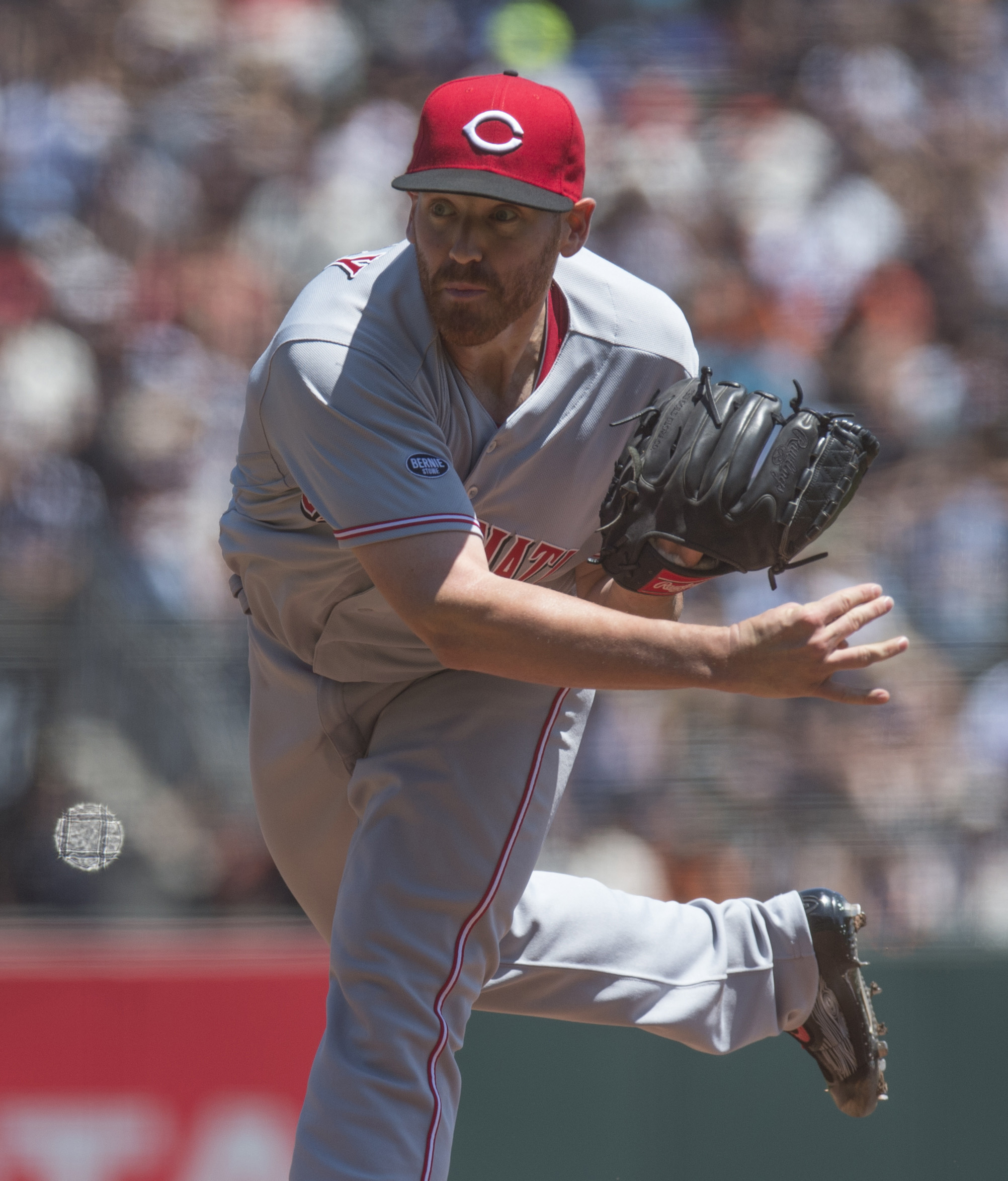
The trade represents a significant flip for the Reds, who acquired Straily free of cost when they claimed him off waivers from the Padres last spring. Cincinnati subsequently enjoyed a season in which Straily, who had bounced around the league following a promising 2012-13 debut with the A’s, logged 191 1/3 innings with a 3.76 ERA, 7.6 K/9, 3.4 BB/9 and a 32 percent ground-ball rate and reestablished himself as a Major League rotation piece.
[Related: Updated Miami Marlins Depth Chart and Cincinnati Reds Depth Chart]
Exactly how much of that strong season is repeatable remains up for debate; Straily has long been homer-prone and last year saw his fly-ball rate check in at 48 percent. A move to the much more spacious Marlins Park should help his cause, but he’ll also need to demonstrate that last season’s step forward in his control is sustainable. Straily’s BABIP was a lowly .239 as well, but fly-ball pitchers tend to maintain lower marks in that regard than their ground-ball counterparts, so the regression in that department may not be as sizable as one would assume upon first glance. (Straily’s career .255 BABIP in the Majors is considerably below the league average.)
The 28-year-old Straily finished out the year with two years, 126 days of Major League service time, meaning he fell just shy of Super Two designation. He’ll earn scarcely more than the league minimum this coming season and can be controlled by Miami for another four years in arbitration.
For the Reds, parting with Straily opens a spot in the rotation for one of the team’s many young arms. As it stands, Straily would’ve joined top starter Anthony DeSclafani, veteran Homer Bailey (if healthy) and left-hander Brandon Finnegan in Cincinnati’s starting five. A competition for the fifth spot in the deal would’ve likely included left-handers Cody Reed and Amir Garrett as well right-handers Robert Stephenson and Tim Adleman, though it’s now possible that two of those three could make the Opening Day rotation. Alternatively, the Reds could see the rotation vacancy as an opening to add a veteran arm that can provide some stability and leadership early in the season before possibly becoming a summer trade chip.
Straily joins a Marlins rotation that is also set to feature left-handers Wei-Yin Chen and Adam Conley, newly signed right-hander Edinson Volquez and longtime Marlins righty Tom Koehler. The addition of Straily seems likeliest to bump offseason signee Jeff Locke from the fifth slot in that rotation to the bullpen, which could have a trickle-down effect and bump an out-of-options player like Jose Urena off the roster.
Locke, however, would give Miami a much-needed southpaw option in the ‘pen, as Miami previously stood to potentially deploy an all-right-handed relief corps. A.J. Ramos, Kyle Barraclough, David Phelps, Brad Ziegler, Junichi Tazawa and Dustin McGowan all seem like locks to open the season in manager Don Mattingly’s bullpen. The former three constituted an outstanding late-inning trio in 2016, while the latter trio all signed Major League contracts this winter.
The price Miami is paying to acquire Straily is a steep one. Castillo, 24, rates as their No. 2 prospect according to Baseball America and their No. 5 prospect according to MLB.com. The hard-throwing righty is said to have a fastball that can touch triple digits and sits in the upper 90s, and he’s fresh off an excellent season with Miami’s Class-A Advanced affiliate in the Florida State League (plus a brief Double-A appearance late in the year). Castillo posted a scintillating 2.07 ERA with 7.0 K/9 against just 1.4 BB/9 in 117 2/3 innings in High-A, and he kicked in another 14 innings of 3.86 ERA ball at Double-A for good measure.
BA praised Castillo’s “easy velocity” and “smooth delivery” in their offseason scouting report on him, noting that he’s made the jump from power bullpen arm to potential mid-rotation starter. Per their write-up, his slider projects as an above-average offering, and he’s working to develop a changeup that still needs some fine-tuning. The Marlins originally landed him in the trade that sent Casey McGehee to the Giants, and his stock has risen quite a bit since that time.
However, it’s also worth noting that this is the second time the Marlins have agreed to trade the right-hander. Castillo was originally one of the prospects that went from Miami to San Diego in the Andrew Cashner/Colin Rea trade, but the Marlins reacquired him from the Padres after Rea suffered a UCL tear in his first start as a member of the Marlins. That, of course, doesn’t necessarily indicate that the Marlins have soured on him in any way, but Miami knows more about him than any other organization and seems comfortable parting ways with Castillo so long as it nets them a long-term rotation cog.
As for Brice, the 24-year-old gives the Reds an immediate, MLB-ready option to plug into their bullpen if he shows well in Spring Training. Brice made his Major League debut in 2016, and while he struggled to the tune of 11 earned runs in 14 innings, he also allowed only nine hits against five walks with 14 strikeouts. Add to that a composite 2.74 ERA in 102 minor league innings (93 1/3 frames at Double-A plus 8 2/3 in Triple-A), and there’s a chance that Brice could open the year in Cincinnati’s bullpen.
MLB.com’s Jonathan Mayo and Jim Callis rank Brice ninth among Miami farmhands, noting that he looked to improve upon his longstanding control problems in 2016. Per MLB.com’s free scouting report, he throws a “heavy” fastball in the low to mid 90s and boasts an above-average slider that was newly added to his repertoire. Their report notes that Brice does still have some upside as a potential starter but adds that he could have a quicker impact as a two-pitch reliever that can dominate same-handed opponents.
White, meanwhile, ranks 15th on MLB.com’s list of top 30 Marlins prospects. The 2015 third-rounder spent last season with Miami’s short-season Class-A affiliate, hitting .214/.306/.301 in 51 games and 201 plate appearances. While those numbers clearly aren’t eye-catching, Callis and Mayo call him a plus-plus runner (70-grade speed on the 20-80 scale) with the potential to be a premium defender in center field. White only just turned 20 years of age and is less than two calendar years removed from playing in high school, so he’s raw and represents something of a wild card for the Reds at this point. However, that’s not a bad third piece to add to a pair of more established arms that could conceivably impact the Cincinnati pitching staff within the next two years.
Jeff Passan of Yahoo Sports first reported that a Straily trade was close, adding that Castillo and Brice were involved (via Twitter). Jon Heyman of FanRag Sports tweeted that a deal was in place, pending medical reviews. Jim Bowden of ESPN and MLB Network Radio on SiriusXM reported that White was the third prospect in the deal (Twitter link).
Photo courtesy of USA Today Sports Images.