
C.J. Cron Having Thumb Injury Reevaluated
Twins first baseman C.J. Cron played through a thumb injury for much of the season’s second half, twice landing on the injured list, and he’ll now seek an outside opinion on the matter, chief baseball officer Derek Falvey revealed to reporters (link via Betsy Helfand of the St. Paul Pioneer Press). “There could be a potential for a procedure to help alleviate some of the stuff he’s been dealing with,” Falvey said.
Cron, 30 in January, posted a solid .266/.326/.495 slash with 17 homers through 77 games prior to the All-Star break. That production cratered as his thumb troubles cropped up, however; he hit just .229/.280/.420 in the second half as his walk rate nearly halved (from 6.9 percent to 3.6 percent) and his strikeout rate spiked (from 19.3 percent to 25.6 percent). In all, Cron’s first season with the Twins resulted in a .253/.311/.469 slash with 25 home runs. That was only a hair better than league-average production by measure of both wRC+ (101) and OPS+ (103) in 2019’s heightened offensive environment.
Cron’s health will be of particular interest given that he’s projected by MLBTR contributor Matt Swartz to receive a raise from this year’s $4.8MM salary up to $7.7MM in 2020. That’s a relatively steep price to pay a first baseman coming off league-average offensive output, although perhaps the Twins are confident that better health would’ve kept Cron productive and led to a second consecutive 30-homer season.
Still, the Rays cut Cron loose and ran him through outright waivers a year ago, when he had multiple seasons of club control remaining and was fresh off a .253/.323/.493 season (123 wRC+ and OPS+). Minnesota was 12th in waiver priority when Cron was claimed, meaning more than a third of the league was uninterested in picking up two years of control over him at a time when his projected arbitration salary was $5.2MM. If Cron was a borderline call for clubs at that point, that’s all the more true now with just one year of control remaining, another raise in the offing, a barking thumb and a year of diminished offense. Perhaps the two sides will cut some kind of deal at a lower price prior to the tender deadline, but Cron seems like a potential non-tender candidate this winter.
White Sox Name Frank Menechino Hitting Coach
The White Sox announced Thursday that they’ve named Frank Menechino as their new hitting coach, replacing the previously dismissed Todd Steverson.
Menechino, 48, played parts of seven seasons as an infielder with the Athletics and the Blue Jays from 1999 through 2005. He spent the 2019 season as the hitting coach for the White Sox’ Triple-A affiliate in Charlotte but has quite a bit of prior coaching experience. Menechino served as the Marlins’ assistant hitting coach from 2014-16 before being promoted to their lead hitting coach in 2017-18. He also spent five years as a hitting coach in the Yankees’ farm system before being added to the Marlins’ big league staff.
The White Sox opted not to bring back Steverson or assistant hitting coach Greg Sparks earlier this month, so they’ll likely be on the lookout for an assistant to Menechino as well. Chicago hitters posted the game’s third-highest strikeout rate (25.6 percent) and ranked dead last in terms of team walk rate (6.3 percent) in 2019.
Marlins Retain Stottlemyre, Hillman; Gonzalez To Explore Other Opportunities
11:10am: While Gonzalez is set to explore other opportunities, the Marlins have agreed to 2020 contracts with pitching coach Mel Stottlemyre Jr. and first base/infield coach Trey Hillman, per SiriusXM’s Craig Mish (Twitter links).
11:05am: Third base coach Fredi Gonzalez has informed the Marlins that he has decided to “explore other options,” MLB.com’s Joe Frisaro reports (via Twitter). The former Marlins/Braves skipper doesn’t have anything lined up at the moment, Frisaro adds, but rather appears ready for a change of scenery after three seasons in his current role. Gonzalez’s departure creates yet another vacancy on the Marlins’ staff; bench coach Tim Wallach also departed of his own volition, and it was reported earlier this month that neither catching coach Brian Schneider nor bullpen coach Dean Treanor will be back next season.
The 55-year-old Gonzalez should have no shortage of opportunities given his experience. In addition to four years managing the Marlins (2007-10) and six years managing the Braves (2011-16), Gonzalez has served as a minor league manager and spent a decade as a Major League third base coach between the Braves and multiple stints in Miami. It wouldn’t be a surprise to see Gonzalez, a Cuban-born and bilingual dugout veteran, emerge as a candidate in other managerial or coaching searches at a time of near-record turnover around the league. And with nearly 40 years of experience in pro ball dating back to his days as a minor league catcher in the 1980s, he could land in a variety of roles if he’s up for a new challenge.
In 10 seasons as a Major League manager, Gonzalez compiled a 710-692 record. He was at the helm of a 2012 Braves club that won 94 games and secured a Wild Card berth as well as a 2013 Braves team that won 96 games and captured the NL East title, although neither club advanced beyond its first round of play.
Phillies Fire Gabe Kapler
Changes are coming in Philadelphia. Gabe Kapler will not return as manager of the Phillies in 2020, the team announced on Thursday. His dismissal creates a nearly unprecedented eighth managerial vacancy around the Major Leagues.
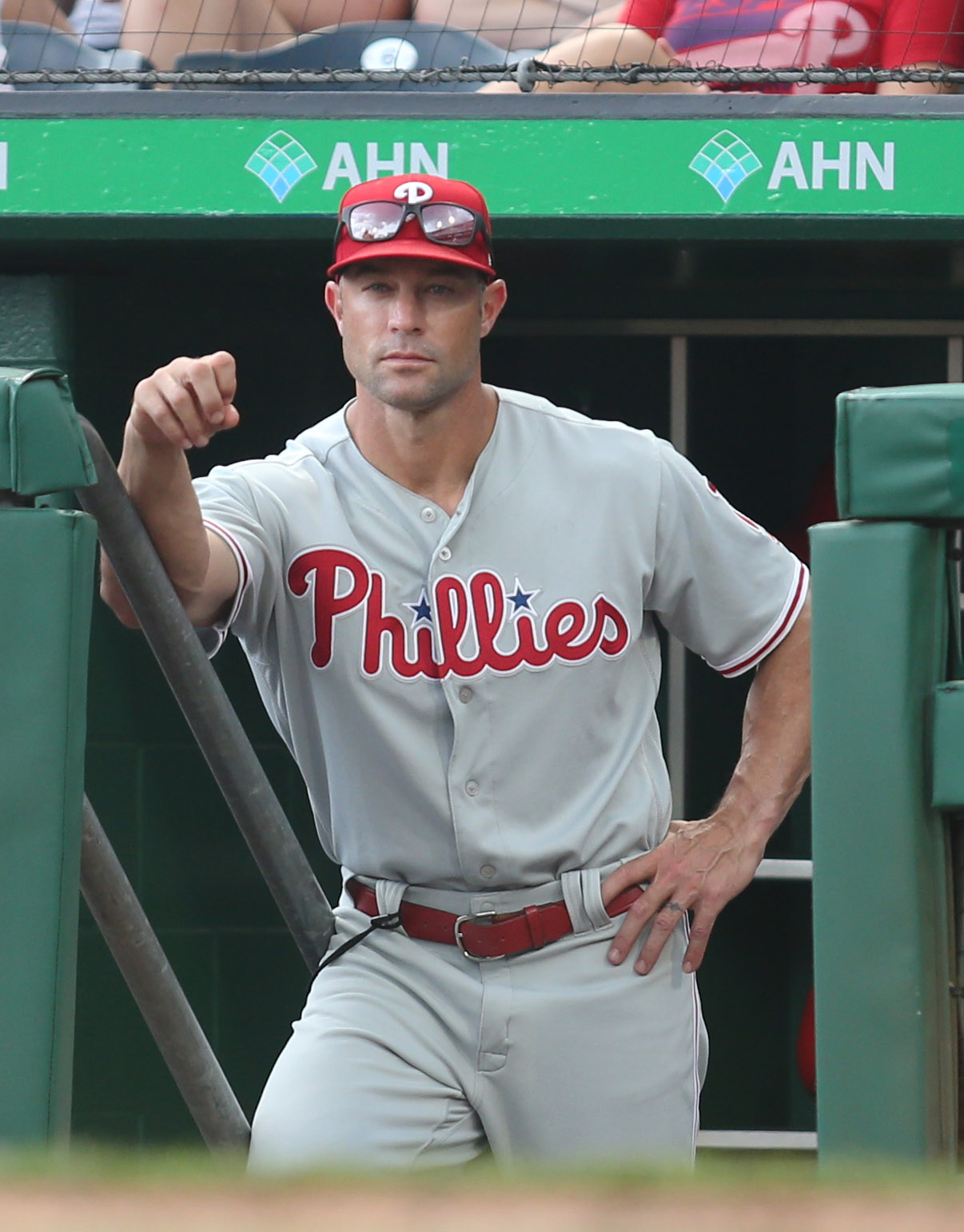
The Phillies also confirmed previous reports that Chris Young won’t return as the pitching coach in 2020 and announced that interim hitting coach and franchise legend Charlie Manuel will return to his role as a senior advisor to the GM.
Not only will the Phillies be looking for a new manager, pitching coach and hitting coach — they’ll also be looking to revamp their training staff, as neither head athletic trainer Scott Sheridan nor assistant athletic trainer Chris Mudd will have his contract renewed for 2020, per the club. The rest of the coaching staff has been invited back for next season, although it’s certainly possible that the change atop the dugout hierarchy could lead to eventual changes down the pecking order.
Phillies owner John Middleton offered the following statement on Kapler, who had been under contract through next season:
Several years ago, I promised our loyal fans that I would do everything in my power to bring a world championship team to our city. I will never waver from that commitment. During the second half of this season and continuing into this week, I have evaluated our organization extensively, a process that included talking to many people both internally and around the league. Reassuring to me was the endorsement that people outside the Phillies gave to the progress we have made recently, both organizationally and on the field. Nevertheless, with the knowledge that I have gained from my evaluation, combined with my personal reflection on the 2019 season, I have decided that some changes are necessary to achieve our ultimate objective. Consequently, we will replace our manager. I am indebted to Gabe for the steadfast effort, energy and enthusiasm that he brought to our club, and we are unquestionably a better team and organization as a result of his contributions. With [general manager Matt Klentak] leading our search for our next manager, I am confident that we will find the right person to lead us.
The Phillies organization debated the decision at great length. The Inquirer’s Matt Breen reported earlier this week that Middleton had been seeking opinions from players and front office execs alike as he seemed to genuinely wrestle with whether to bring Kapler back for the final contract of his season. Ultimately, the organization will go in a new direction after a pair of disappointing playoff misses in Kapler’s first two seasons at the helm.
Of course, team record is hardly the be-all and end-all in determining the fate of a manager these days. Managerial changes are also linked to how one maintains order in the clubhouse, aligns with the organization’s vision for the future, oversees the a coaching staff and incorporates input from a club’s front office/analytics department into game flow. The team’s lackluster records in both 2018 and 2019 surely played a role in the eventual decision but were surely just a few of the innumerable factors Middleton weighed in making today’s announcement.
Kapler, 44, played in parts of a dozen Major League seasons and managed in the Red Sox’ minor league system before embarking on a player development trajectory with the Dodgers (where, notably, he worked with current Giants president of baseball operations Farhan Zaidi, who is also on the hunt for a new manager). Kapler spent three seasons as the Dodgers’ director of player development prior to being hired by the Phillies — a role in which he placed great emphasis on analytics, player nutrition and mental wellness.
During his time with the Dodgers, Kapler was viewed as a fast-rising managerial candidate, and although things didn’t pan out in Philadelphia, he’ll quite likely garner consideration from other clubs. It’s hardly uncommon for rookie managers to be dismissed from one club before finding success with another — as A.J. Hinch can attest — and MLB Network’s Jon Heyman tweets that Kapler would like to continue his managerial career.
Bob Brookover of the Philadelphia Inquirer first broke the news of Kapler’s dismissal (via Twitter).
Twins Will Pursue “Impact” Pitching — And They Can Afford It
The Twins’ best season in nearly a decade ended with yet another first-round playoff exit, and the front office now has its focus shifted to the offseason. Chief baseball officer Derek Falvey and general manager Thad Levine met with reporters today and expressed a need to add some high-caliber pitching to the ranks (link via La Velle E. Neal III of the Minneapolis Star Tribune).
Specifically, Falvey indicated that the Twins will “target impact pitching” both in free agency and on the trade market. While the Twins haven’t typically been big spenders in free agency — Ervin Santana‘s four-year, $55MM contract is the largest they’ve ever issued to a free agent or to a pitcher in general — Levine voiced a need for him and Falvey to approach owner Jim Pohlad about “being a little more aggressive” in terms of spending.
Certainly, Minnesota figures to have the funds available to do so. Nelson Cruz‘s $12MM option is being picked up, but even with that sum added to the books, the Twins only have about $32MM in guaranteed money on next year’s ledger. That number shrinks to just shy of $11MM in 2021 when Cruz and Marwin Gonzalez come off the books.
A look at today’s just-released arbitration projections from MLBTR contributor Matt Swartz reveal another $46.2MM to 10 players, but Sam Dyson ($6.4MM) will surely be non-tendered following last week’s shoulder surgery and C.J. Cron is a non-tender candidate at $7.7MM as well. Subtracting that pair from the 10 arb-eligible players leaves the Twins with a projected $64.1MM on next season’s books at the moment. Exercising Martin Perez‘s option would tack on another $7.5MM, but Perez didn’t make the team’s ALDS roster and struggled down the stretch, so Minnesota could instead opt for a $500K buyout.
That theoretical $64.1MM baseline covers 12 players, and the Twins have several other pre-arbitration assets to help round out the roster. Luis Arraez could very well be the everyday second baseman next season, Mitch Garver will surely be the primary catcher and Zack Littell looks to have seized a bullpen spot. Jake Cave is a likely fourth outfield candidate, and the pitching staff will include some combination of pre-arbitration arms like Brusdar Graterol, Devin Smeltzer, Ryne Harper, Cody Stashak and Randy Dobnak — though perhaps not all to open the season.
Minnesota’s Opening Day payroll in 2019 weighed in at nearly twice that $64.1MM mark, and the Twins began the 2018 season with a $128MM payroll. There’s already ample room to spend fairly aggressively this winter even if they’re only comfortable returning to that previous $125-130MM threshold. If owner Jim Pohlad agrees with any assertion from Falvey and Levine that the team’s metaphorical window is open — Levine joked of “feeling a breeze” from said window today — then the available pool of resources will only grow.
As for where they’ll need to target that pitching, specifically, the answer clearly lies in the rotation. Jose Berrios is the only surefire candidate to return in 2020, as each of Jake Odorizzi, Michael Pineda, Kyle Gibson and Perez (depending on his option decision) are free agents this winter. Graterol, one of baseball’s top pitching prospects, could eventually find himself in the rotation but is still lacking in terms of overall experience.
The Twins have never made a major splash in free agency in the past. The most aggressive offer they’re reported to have put forth came to Yu Darvish prior to his six-year deal with the Cubs. Minnesota was said to have offered Darvish $100MM or more, though, so while they haven’t actually gotten such a deal done, they’ve at least expressed some willingness. They’d need to catapult themselves into another stratosphere to even get in the ballpark for Gerrit Cole, who could break David Price‘s $217MM record for a pitcher this offseason. But the next tier of arms features the likes of Stephen Strasburg (if he opts out the heavily deferred four years and $100MM remaining on his current deal), Madison Bumgarner and Zack Wheeler. Odorizzi, a qualifying offer candidate, could potentially return as well.
Outside of the eight-year, $184MM contract for hometown star Joe Mauer — who was the reigning AL MVP and a year from free agency as the Twins entered a new stadium when he inked that deal — Minnesota has never been considered to be a particularly big spender. At some point, however, that will inevitably change. Whether they’ll be able to convince a top-tier free agent to come to the Twin Cities this offseason and whether they’ll be willing to part with draft picks to sign pitchers who reject qualifying offers (i.e. Cole, Strasburg, Bumgarner, Wheeler) remains to be seen. But with a 101-win season fresh in the rear-view mirror, a relatively small number committed to the 2020 payroll and at least two teams in the division still rebuilding (Kansas City, Detroit), it would seem there’s plenty of reason to push the boundaries heading into 2020.
Giants’ Joey Bart Suffers Fractured Thumb In Arizona Fall League
8:40pm: The Giants further announced that Bart has been diagnosed with a non-displaced fracture that will not require surgery. He’s expected to be recovered within four to six weeks. That’ll put an end to his AFL run but should allow him a mostly normal offseason.
5:40pm: Top Giants catching prospect Joey Bart suffered a fractured right thumb during last night’s Arizona Fall League game, the Giants announced Wednesday. The injury came during Bart’s eighth game in the AFL, where he’d batted .400/.559/.920 with four homers and a double in 34 trips to the plate.
There’s no indication that the injury will impact Bart’s readiness for the 2020 season. He’s meeting with a specialist today, per the team’s announcement. But the broken thumb certainly figures to put an end to bring an early end to Bart’s 2019 Fall League stint and comes on the heels of a season that was shortened by a fracture in his other hand. Bart sustained a broken left hand back in April and missed nearly two months as a result of the injury. Both fractures were sustained when he was hit by a pitch.
The two hand fractures notwithstanding, the 2019 campaign has to be considered a success for Bart, whom the Giants selected with the No. 2 overall pick in the 2018 draft. The former Georgia Tech star reached Double-A as a 22-year-old, closing out the season with 22 games at that level and hitting .316/.368/.544. In a combined 338 plate appearances between Class-A Advanced and Double-A — both pitcher-friendly settings — Bart slashed .278/.328/.495 with 16 homers, 14 doubles and three triples.
Bart ranks prominently on most top prospect lists at this point, sitting 19th on MLB.com’s midseason update, 15th on Baseball America’s Oct. 1 update and 17th on Fangraphs’ latest rankings. A promotion late in the 2020 season doesn’t seem out of the question, though this season’s injuries have perhaps slowed his trajectory a bit. A 2021 arrival at the MLB level might be a safer bet. That would mark the final season of franchise icon Buster Posey‘s nine-year, $167MM contract and present Bart with ample opportunity to learn from one of the best backstops in recent memory.
Brian McCann Announces Retirement
Seven-time All-Star catcher Brian McCann is planning to retire this offseason, he announced to reporters following the conclusion of today’s NLDS loss to the Cardinals (Twitter link, with video, via FOX Sports Southwest). “It’s time to go,” said McCann when asked about his decision. “Fifteen years of catching — it’s sad, but it’s time. I knew about a month and a half ago.”
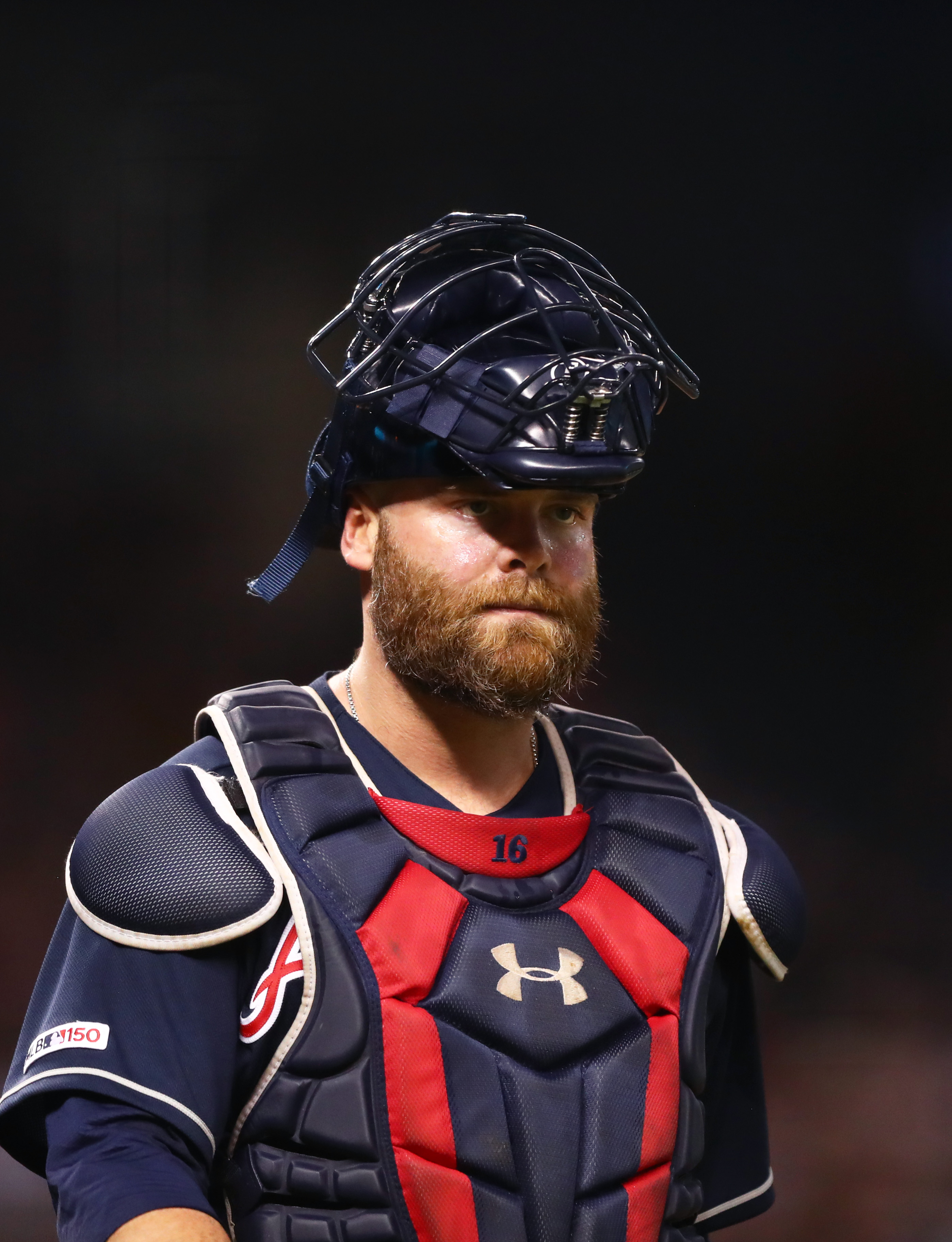
After spending three seasons with the Yankees and two with the Astros, the 35-year-old McCann returned to the Braves on a one-year deal this past offseason. It was homecoming in more ways than one, as the Athens, Ga. native and Duluth High School grad was the Braves’ second-round pick back in 2002. The opportunity to return to his hometown and suit up for one more ride with the next generation of Braves stars was a significant factor in his decision to sign with Atlanta in the winter, McCann added.
“That’s a big reason I wanted to come back,” he said. “I wanted to be a part of this again — put this uniform back on, play in front of my family every night. That was a big reason. … Fifteen years is a long time, catching every day. And I got to do it in my hometown.”
Following that 2002 draft, McCann quickly ascended to top prospect status and made his big league debut with the Braves in 2005. He’d ultimately go on to wear a Braves uniform for 10 of his 15 excellent MLB seasons. A six-time Silver Slugger winner, McCann enjoyed 10 seasons in which he tallied 20 or more home runs throughout his big league career. He’ll hang ’em up with a lifetime .262/.337/.452 batting line, 282 home runs, 1018 RBIs, 742 runs scored and 294 doubles.
McCann never won a Gold Glove but was considered a quality defender for much of his career, finishing at 297 of 1194 in throwing out base thieves (25 percent) and with a total of 26 Defensive Runs Saved. He never did much damage during the postseason but did manage a few key home runs, and he of course took home a World Series ring as the primary catcher for the 2017 World Series Champion Astros.
Former teammates have already begun to heap praise onto McCann — perceived by many onlookers as a gruff enforcer but widely beloved by the players with whom he shared a clubhouse. Lance McCullers Jr. (link) and Chipper Jones (link) are among those to offer heartfelt praise for the 15-year veteran’s contributions to their clubs.
McCann earned more than $128MM in salary over the course of his career and will be remembered as one of the finest and most durable catchers of his generation. His 282 career home runs trail only Mike Piazza, Johnny Bench, Carlton Fisk, Yogi Berra, Gary Carter, Lance Parrish and Ivan Rodriguez among catchers — all of whom other than Parrish have been enshrined in the Hall of Fame. Best wishes to “B-Mac” in his post-playing days.
Postseason Injury Notes: Chapman, Wacha, Diaz
Yankees closer Aroldis Chapman was seen with his left hand heavily bandaged during the team’s celebration last night, writes Dan Martin of the New York Post, but the lefty insisted that there was no serious injury at play. Rather, Chapman explained, he was hit with a bottle while jumping with teammates to celebrate the Yankees’ advancement to the American League Championship Series. There’s no indication that Chapman would need to miss New York’s forthcoming date with either the Astros or the Rays.
A few more injury situations to monitor around the league…
- Cardinals righty Michael Wacha will throw a bullpen session tomorrow, tweets Derrick Goold of the St. Louis Post-Dispatch. A mild shoulder strain kept Wacha off the Cardinals’ NLDS roster, but if he comes out of this ‘pen session well and the Cards manage to topple the Braves in tomorrow’s decisive Game 5, Wacha could reemerge as an option for the pitching staff in the next round. Of course, Wacha didn’t exactly cement himself as a crucial part of a postseason roster while struggling through one of his worst big league seasons. In 126 2/3 innings, he posted a 4.76 ERA with career-worst marks in K/9 (7.4), BB/9 (3.9) and HR/9 (1.85). He’ll be a free agent this winter, so if he doesn’t return for a potential NLCS berth, Wacha may have already tossed his last pitch as a Cardinal.
- Rays slugger Yandy Diaz is still on the team’s postseason roster despite exiting Monday’s game with an apparent foot injury, tweets Marc Topkin of the Tampa Bay Times. Though he’s not in tonight’s starting lineup — Joey Wendle gets the nod at third base, with Ji-Man Choi at first and Tommy Pham DH’ing — Diaz presumably remains available for pinch-hit duties or for a mid-game substitution. Wade Miley is the only lefty on Houston’s ALDS roster, but Diaz and his .314/.397/.588 slash against southpaws could quite likely emerge from the dugout if Miley makes his way to the mound.
MLBTR Chat Transcript
Click here to read a transcript of this week’s chat with MLBTR’s Steve Adams.
The Astros and the Luxury Tax
This week’s comments from Astros owner Jim Crane, wherein he expressed uncertainty about pursuing Gerrit Cole and stated a preference to remain south of the luxury tax, didn’t sit well with some of the team’s fans. Crane hardly issued a formal decree that Cole would sign elsewhere, but that’s long been the expectation based on Houston’s avoidance of doling out lengthy contracts to pitchers under the current regime. Rather, the Jeff Luhnow-led Astros have thrived at acquiring high-end pitching talent with multiple years of control while dodging the danger of six- and seven-year deals for pitchers.
Justin Verlander came to Houston with two years of club control remaining at a time when the Tigers desperately needed to shed money and replenish the farm. His subsequent extension the following year, while steep in annual value at $33MM, was only two years in length. Cole himself was acquired with two seasons of control remaining. This summer’s Zack Greinke trade was cut from the same cloth: pay up in young talent to add an elite arm without the inherent risk of committing six-plus years to said arm. Greinke is signed through 2021. In this regard (and many others), the Astros are the embodiment of the modern front office; pay a premium in annual value but eschew long-term commitments.
Recognizing that trend, the more interesting part of Crane’s comments was not that the Astros are unsure about pursuing a reunion with Cole but that the Astros prefer to remain under this year’s $208MM luxury barrier altogether. At first glance, that seems like an extraordinarily difficult task for the ‘Stros to manage.
Based on the luxury tax calculations of our friend Jason Martinez at Roster Resource, Houston already has $165MM worth of salary counting against the luxury tax. Cot’s Contracts has them at $163MM. You might think that leaves about $43-45MM with which to work, but those estimates only include guaranteed contracts and estimated player benefits. They do not include the forthcoming raises for arbitration-eligible players, nor do they include the small but certainly not negligible chunk of money that’ll go to the pre-arbitration players on Houston’s 2020 roster.
The dilemma that’ll face the Astros this offseason becomes immediately apparent just by looking at their highest-profile arbitration case. George Springer earned $12MM in 2019 as part of a two-year, $24MM contract. That multi-year deal bought out Springer’s second and third arbitration seasons, but as a Super Two player, he’ll be eligible a fourth and final time this winter. I asked MLBTR contributor Matt Swartz for an early peek at Springer’s arbitration projection, and Matt kindly and quickly got back to me with a projection of a $6.9MM raise for Springer.
As Matt further pointed out, Springer’s reps could even try to argue that his “base” for that raise should be higher than $12MM. He’d have earned more than that in 2019 had he gone year-to-year rather than sign that two-year deal, as the Astros filed at $8.5MM in 2018 and Springer at $10.5MM. The two-year deal was a compromise, but his camp could push for the raise to be based off a salary more reflective of what he might’ve earned in a more traditional arbitration setting. For instance, while the two sides agreed that his Arb-2 and Arb-3 years were worth a total of $24MM, Springer’s side could say that his 2018 season was worth roughly $9.5MM (the midpoint between their filing numbers), meaning 2019 was worth more like $14.5MM. Building a raise off that number would obviously push his salary higher than simply giving him a raise off his 2019 rate of $12MM.
Digression aside: Springer could very well cost Houston in the neighborhood of $20MM next season. Meanwhile, Roberto Osuna will be in line for a raise on this year’s $6.5MM salary, as will Carlos Correa ($5MM), Brad Peacock ($3.11MM), Jake Marisnick ($2.19MM), Aledmys Diaz ($2MM) and Joe Biagini ($900K). Lance McCullers Jr. won’t earn a raise after missing 2019 due to Tommy John surgery, but players who miss an entire year due to injury typically repeat the prior salary they’d earned in arbitration. That’d be another $4.1MM for McCullers. Chris Devenski has a club option that’d add another $2.825MM to the ledger if exercised. We know Aaron Sanchez is trending toward a non-tender thanks to his ill-timed shoulder procedure, but that does little to assuage the Astros’ mounting tax bill.
The Astros, as currently constructed, look to be a surefire luxury tax payor. It’s not just that signing an elite free agent would put them narrowly over the top; rather, doing so would send the Astros crashing through that ceiling and likely catapult them into the second tier of penalization by placing them more than $20MM over the initial threshold. If the goal is to avoid the tax entirely, the focus should be more on the current roster rather than any potential free agents.
So, what can the Astros do if the really are aiming to avoid penalization? They’ll be tasked with moving some existing contracts and perhaps be pushed into some additional non-tenders (or trades of lower-end arbitration-eligible assets). Josh Reddick and his four-year, $52MM contract come with a $13MM luxury hit. The Astros have an MLB-ready heir in right field with Kyle Tucker emerging late in 2019, so moving Reddick makes sense. It’d be difficult, however, for the Astros to find a taker without offsetting some of that salary — either by including cash in the deal or taking another (smaller) contract back in return. That’s a start, but it’s not going to do the job on its own.
How about Yuli Gurriel? He’s signed only through the 2020 season, and his $47.5MM contract comes with a $9.5MM annual luxury hit. He’ll turn 36 next June as well, so while he had a terrific 2019 season, it’s worth wondering whether this could’ve been his peak year. There’s also Osuna, who is only controlled through 2021 and could see his arbitration salary spike north of $10MM next year. The Astros have already locked in Ryan Pressly‘s salaries thanks to his spring extension, so they’ll have a late-game replacement should they shop Osuna.
Looking at the team’s list of arbitration-eligible players, it’s arguable that Houston doesn’t need to pay upwards of $4MM for a fourth outfielder such as Marisnick. Trading him would pare things back a bit further.
The problem for Houston is that even in an immensely hypothetical scenario where they make several of these moves, they’re still going to be hard-pressed to make their necessary additions while remaining under that luxury limit. For argument’s sake, let’s say the Astros non-tender Sanchez, manage to dump all of Reddick’s contract without taking any money back (unlikely) and then trade each of Osuna, Marisnick and Devenski.
Accomplish that set of hypothetical (and, again, unlikely) goals, and they could come in $10-15MM south of the tax line … before accounting for pre-arbitration players (i.e. league minimum, or close to it).
At that point, Houston’s rotation would consist of Verlander, Greinke, a returning McCullers and Jose Urquidy. They’d still need to add at least one starting pitcher. Behind the plate they’d be looking at Garrett Stubbs, who had a 79 wRC+ in Triple-A this season and will turn 27 next May. They’d still need to add a catcher. In the bullpen, perhaps they could piece things together with Pressly, Peacock, Biagini, Josh James, Bryan Abreu, Framber Valdez, Cionel Perez and other internal options, but it seems likely they’d want to add a reliever.
There are obviously ways to address those needs without spending heavily in free agency. Any of the speculative trade scenarios could net a reliever or a catcher. Houston could take a largely blocked prospect like Abraham Toro and trade him as part of a package to acquire some pitching help that, like Toro, has yet to reach arbitration. We know that Tucker and Forrest Whitley are effectively off limits in trade talks, but the Astros still possess other appealing minor leaguers, even if their farm system is nowhere near the powerhouse it once was (15th on Baseball America’s midseason rankings, outside the top 15 at MLB.com).
None of this is to say that the Astros can’t address their offseason needs and also check in below the $208MM luxury tax line. It’s possible, but it’ll take some creative maneuvering and perhaps require some moves that don’t go over well with fans. That’s the reality of fielding such a deep roster with high-end rotation talent (Verlander, Greinke) and paying to retain homegrown stars (Altuve, Alex Bregman) while others prosper in arbitration (Springer, Correa). On the plus side, that overwhelmingly talented core the Astros possess should make them division favorites again in 2020 regardless of what supplementary pieces are acquired this winter.
The question for the Astros, though, should be whether the necessary gymnastics to stay below the luxury line are worth it. Houston could cross the luxury barrier by less than $20MM in 2020 and pay a maximum of … $4MM in penalties. Even if they exceed the top tax line by $40MM, they’d see their penalties total about $10.4MM. Paying the luxury tax on a yearly basis comes with some consequences. Paying it once and dipping back under the threshold a year later (say, when Springer, Gurriel, Peacock and Michael Brantley are all off the books) shouldn’t amount to much more than a slap on the wrist.
One thing that’s constant throughout these scenarios: none of them involve Gerrit Cole. Unless the Astros make some shocking trades this winter or suddenly decide they’re comfortable living in the second or third luxury bracket for the next couple of seasons, his salary no longer fits into this complex puzzle.