
Phillies Acquire Clay Buchholz
The Phillies have officially struck a deal to acquire righty Clay Buchholz from the Red Sox, as Jon Heyman of Fan Rag first reported (via Twitter). Second baseman Josh Tobias will be the piece going to Boston in the swap, in which Philadelphia will pick up all the remaining obligations to Buchholz, as Matt Gelb of the Philadelphia Inquirer was first to report (via Twitter). Philadelphia designated just-acquired third baseman Richie Shaffer for assignment to clear roster space.
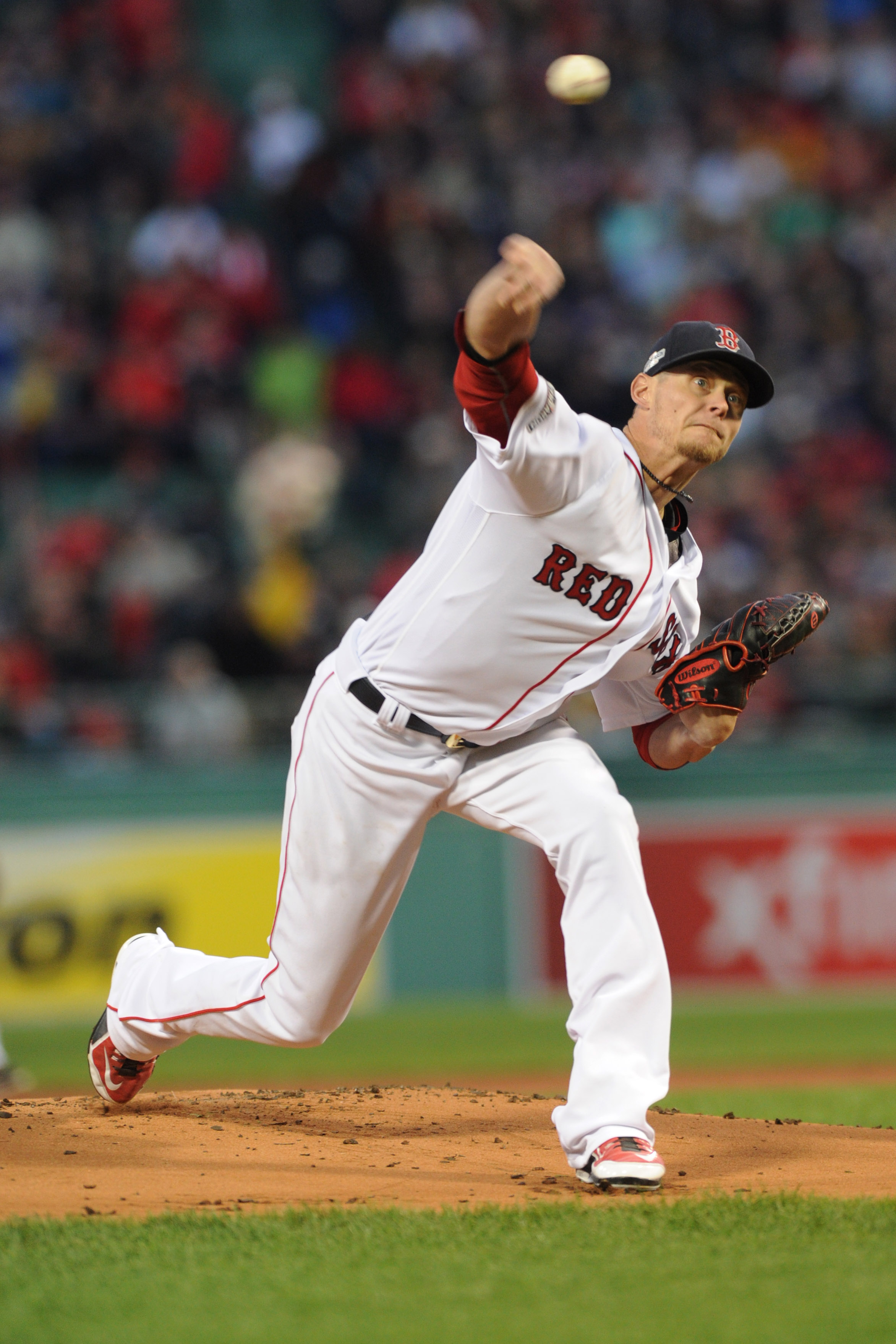
Buchholz, 32, has seemed like a fairly likely trade candidate ever since Boston struck its deal to acquire Chris Sale. That acquisition left the team with a somewhat over-stuffed depth chart in its rotation, with the luxury tax line also representing a possible factor. The Sox had previously picked up Buchholz’s $13.5MM option for the 2017 season, making him an expensive depth piece. He is slated to hit free agency after the upcoming campaign.
[RELATED: Updated Phillies & Red Sox Depth Charts]
For the Phils, the move represents a clear continuation of the strategy put in place this winter (and reflects much the same approach as that employed a year ago). After starter Jeremy Hellickson took his qualifying offer to remain in Philadelphia, the club went on to deal for veteran infielder/outfielder Howie Kendrick and reliever Pat Neshek, each of whom had one season left on their original free-agent contracts. And the organization also added late-inning man Joaquin Benoit and infielder Andres Blanco on single-season, MLB arrangements while picking up minor-league free agents such as Daniel Nava, Sean Burnett, and Pedro Florimon. While building out the roster with solid veterans who don’t tie up the payroll beyond the 2017 campaign, Philadelphia also made a value bet on center fielder Odubel Herrera, who inked a five-year extension.
All told, the new additions add $57.7MM to the books for Philadelphia in the coming season. Given that much of the rest of the roster will earn at or near the MLB minimum, it’s hardly a massive outlay for an organization that routinely placed among the game’s biggest spenders before embarking upon a rebuilding path (and has only recently begun a lucrative new TV deal). Importantly, none of these acquisitions cost the Phillies much in the way of future value. They’ll allow the club to field a more competitive product, reduce the pressure on younger players in the system, and, potentially, cash in some of the new assets for future value — either by trade-deadline swaps or even future qualifying offers.
In Buchholz, the Phils have added an enigmatic starter who has at times been rather excellent and still comes with his share of upside. In 2015, he worked to a 3.26 ERA over 113 1/3 frames with a strong 8.5 K/9 against 1.8 BB/9, representing one of several seasons in which he looked like a quality number 2 or 3 starter. But he dealt with elbow issues in 2015 and wasn’t able to repeat in his latest campaign. Buchholz was bumped from the rotation at one point and ended 2016 with 139 1/3 frames of 4.78 ERA pitching to go with 6.0 K/9 and 3.6 BB/9. While he has often generated grounders on about half of the balls put in play against him, he dipped to 41.2% last year.
Despite the struggles, Buchholz did carry a typical 92.1 mph average on his fastball and a 9.5% swinging-strike rate that’s right at league average for a starter. He also ended the year on a good note, posting a 2.86 ERA across the last 44 innings he’ll throw in a Red Sox uniform (barring, at least a surprise reunion at some point down the line). As Tim Britton of the Providence Journal detailed at the time and Buchholz himself discussed with David Laurila of Fangraphs, there were adjustments that may help explain the turnaround and could add some confidence to the Phillies’ hopes. Buchholz wasn’t able to work in the zone as much as he had in 2015 (though that was something of an outlier year), and also couldn’t maintain the 5.9% HR/FB rate that helped drive his success in the prior season.
As MLBTR’s Steve Adams posited at the outset of the winter, pitchers such as Buchholz and then-Cardinals starter Jaime Garcia could have their options picked up before being dealt. While neither brought back major hauls in their respective trades, their respective teams were able to hold onto them as depth to enhance their flexibility entering the offseason, then pivot to a trade when it was determined that their services wouldn’t be needed.
Certainly, the Cards seem to have earned more for Garcia (who came with a $12MM salary) than the Sox got out of Buchholz’s final season. The trio of youngsters shipped from the Braves for Garcia all had placed among the Atlanta organization’s top thirty prospects (per MLB.com), while Tobias has never received that kind of recognition. The 24-year-old split last year between the Class A and High-A levels, hitting well (.304/.375/.444) for much of the year at the former and struggling (.254/.324/.357) in 146 plate appearances after his promotion.
Photo courtesy of USA Today Sports Images.
Pirates Sign Daniel Hudson
WEDNESDAY: The deal is now official.
MONDAY 7:43pm: The deal is split into two $5.5MM annual salaries, Jon Heyman of Fan Rag tweets.
2:49pm: The Pirates have agreed to a two-year, $11MM contract with free agent right-hander Daniel Hudson, reports Jeff Passan of Yahoo Sports. Hudson, a client of Jet Sports, can earn up to $1.5MM of incentives per year based on games finished and could end up being a factor for the Pirates in the ninth inning on this new contract.
[Related: Updated Pittsburgh Pirates Depth Chart]
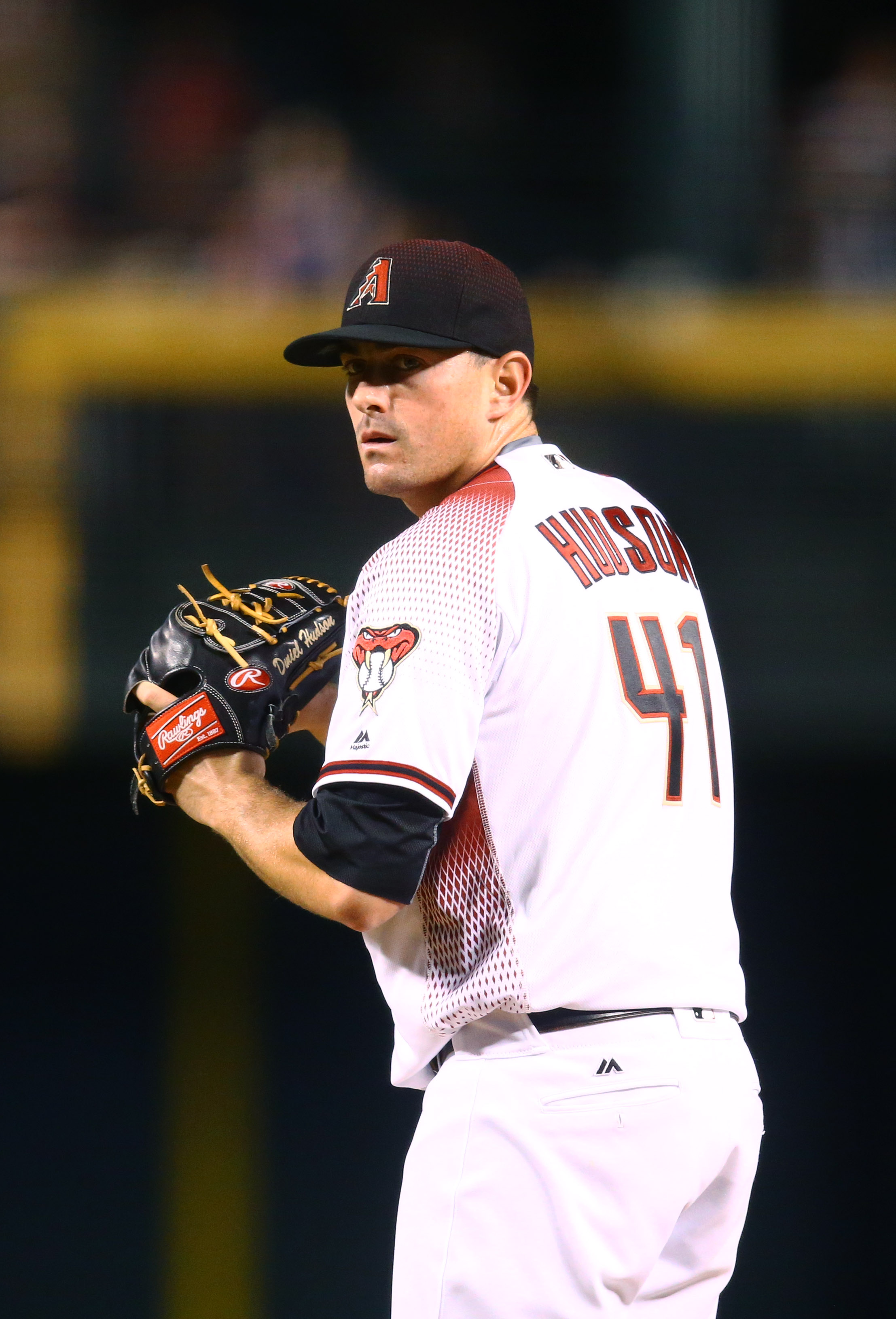
Hudson, 30 in March, posted an unsightly 5.22 ERA in 60 1/3 innings with the D-backs last season, but all of the damage done against him was confined to one dismal stretch over the summer. Hudson was sporting a 1.55 ERA as deep into the season as June 21, but he was rocked for 26 runs over his next 15 appearances (during which time he had a staggering .625 BABIP). To close out the season, Hudson allowed just four runs in 21 1/3 innings.
The Pirates are clearly banking that the dominant form with which Hudson bookended his 2016 campaign is a true representation of his talent. Since coming back from his second Tommy John surgery, Hudson has averaged about 96 mph on his fastball and looked the part of a potentially dominant late-inning presence, though his bottom-line results have yet to line up with that perception. The Pirates, though, have a history of success when it comes to turning pitchers’ careers around, and Hudson becomes the latest in a long line of arms to attempt to go that route.
While Hudson probably won’t be handed the closer’s role outright, he’ll compete with longtime setup man Tony Watson for that role. Watson stepped into the ninth inning following the trade of Mark Melancon last year and performed well, though Watson himself has been an oft-mentioned trade candidate and could be moved this winter or next summer, as he’s just a year from reaching free agency. Other late-inning options for manager Clint Hurdle include hard-throwers Felipe Rivero (acquired in the Melancon trade) and Juan Nicasio.
Photo courtesy of USA Today Sports Images.
Giants, Jimmy Rollins Agree To Minor League Deal
The Giants and shortstop Jimmy Rollins are in agreement on a minor league contract with an invite to big league Spring Training, reports Ken Rosenthal of FOX Sports (Twitter links). FanRag’s Jon Heyman tweets that Rollins’ contract comes with a $1MM base salary if he reaches the Major Leagues.
[Related: San Francisco Giants Depth Chart]
The 38-year-old Rollins is, of course, a franchise icon in Philadelphia, where he spent parts of 15 seasons and won the 2007 National League MVP (among many other accolades). At this stage of his career, however, Rollins is simply looking to make a Major League roster and contribute in a reserve capacity. San Francisco’s middle infield includes Brandon Crawford and Joe Panik, while Brandon Belt and Eduardo Nunez figure to shoulder the load at the infield corners. Rollins is a Bay Area native, though, so the idea of playing for the Giants even in a limited role likely carries some added appeal. He’ll try to beat out Kelby Tomlinson and Ehire Adrianza for a bench spot this spring.
Rollins opened the 2016 season with the White Sox and served as Chicago’s primary shortstop early in the year, but his bat didn’t bounce back from a rough 2015 campaign with the Dodgers. In 166 plate appearances with the White Sox last year, Rollins batted .221/.295/.329 with a pair of homers and five stolen bases. That lack of production ultimately led the White Sox to entrust the shortstop position to top prospect Tim Anderson, who turned in a solid rookie effort and positioned himself as Chicago’s long-term option moving forward.
Phillies Extend Odubel Herrera
SATURDAY: Heyman tweets that Herrera will receive a $1.75MM signing bonus, $1.25MM in 2017, $3MM in 2018, $5MM in 2019, $7MM in 2020, and $10MM in 2021.
FRIDAY: The options come with $2.5MM and $1MM buyouts, respectively, Jon Heyman of Fan Rag tweets.
THURSDAY: The Phillies have announced a five-year extension for center fielder Odubel Herrera, which comes with a $30.5MM guarantee, per Matt Gelb of the Philadelphia Inquirer (via Twitter). The deal includes club options for the 2022 and 2023 seasons, which are valued at $11.5MM and $12.5MM, respectively, per MLB.com’s Todd Zolecki (on Twitter). Herrera is represented by Victor Tranquillo.
With the move, the Phils will add control over three projected free-agent seasons over their present and future center fielder. Herrera entered the year with two full years of MLB service, meaning he would have expected to qualify for arbitration next winter and hit the open market in advance of the 2021 season.
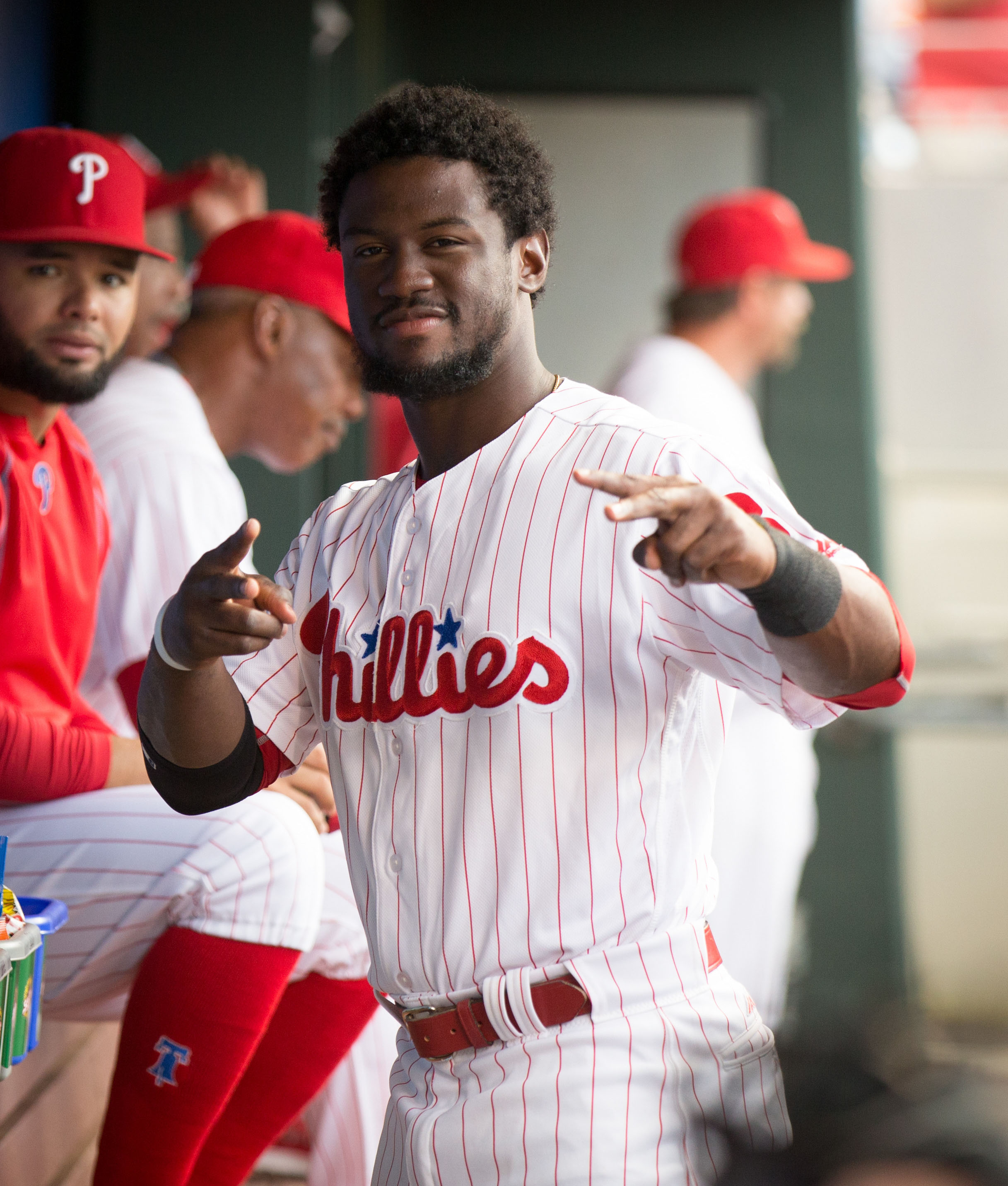
Instead, Herrera — who’ll soon turn 25 — will be under contract through at least his age-29 season. As Gelb notes on Twitter, it appears to be the first significant contract extension the team has struck with a player of such little experience.
Taken as a Rule 5 pick from the Rangers under the former regime, led by much-maligned GM Ruben Amaro Jr., Herrera immediately blossomed into a quality regular. In his first season in the majors, Herrera slashed .297/.344/.418 and contributed eight home runs and 16 steals (though he was also gunned down on eight other attempts). With high-quality, up-the-middle glovework and strong overall baserunning contributions factored in, Herrera was a four-WAR player right out of the gates.
Though his overall offensive output remained at about 10% better than league average in 2016, it’s certainly arguable that Herrera took a big step forward at the plate. He not only trimmed his strikeouts to a 20.4% rate that falls just below league average, but nearly doubled his walk rate to a strong 9.6%. Herrera also jumped to 15 home runs, though he’s still below-average in overall power (.134 ISO), and stole 25 bags (against seven times caught stealing). While both UZR and DRS were somewhat less enamored of his glovework in the sophomore campaign, he still rated comfortably above average in the field and also on the bases.
Even if Herrera’s batting average on balls in play comes back down to earth a bit — he carried a .387 mark in his first year and .349 in his second — he seems a solid bet to deliver at least average offensive work for the foreseeable future. And there’s perhaps room to grow still in the power department after showing some strides, which was especially promising given that it occurred along with the step forward in his plate discipline.
Though Herrera was less productive in the second half — his power and K/BB numbers dipped — the total package is quite appealing. That made this a rather easy deal to make for the Phillies, an organization with massive untapped spending capacity in the future. Even in a true downside scenario, there’s little chance that Herrera’s contract (which is worth only $6.1MM on an average basis annually) will significantly harm the team’s ability to add major league talent.
While a team in the Phillies’ situation doesn’t need to strike early to lock up talent, as the organization can afford to do so later, that doesn’t mean that such a move can’t yield huge dividends. Indeed, as the pre-2015 Adam Eaton extension shows — particularly in light of his recent trade to the Nationals — it’s possible to add quite a bit of value to player control rights by buying out arb years and picking up some options. The Herrera pact is structured identically (five guaranteed years plus two options), though his guarantee handily beats the $23.5MM that Eaton received. Of course, it also fell well shy of the $50MM+ promised to 2+ players such as Matt Carpenter and Andrew McCutchen.
That’s certainly not to say that the deal isn’t a fair one from Herrera’s perspective. He was not a major bonus recipient as an amateur free agent out of Venezuela — various internet reports suggest he was inked for a modest $160K — and had only earned at (and then just over) the MLB minimum in each of the last two seasons. While his current trajectory suggests there would’ve been big earnings to come, none of that was guaranteed, and Herrera’s skillset would not have been particularly lucrative in the arbitration process.
It remains to be seen whether Philadelphia will move to negotiate with any of its other younger assets, though none are quite as established as Herrera. Third baseman Maikel Franco is the other most likely candidate, perhaps, though he may have already secured his downside protection by striking a deal with Fantex. Pitchers such as Aaron Nola, Jerad Eickhoff, and Vince Velasquez could conceivably draw consideration as well, though there’s no rush in any of their cases and the club may allow things to play out before reaching any decisions. Looking further down the line, top talent J.P. Crawford and others could eventually be candidates for long-term deals — even, perhaps, before or just after they reach the majors — though we’ve heard nothing to suggest that any such aggressive moves are in the works.
Photo courtesy of USA Today Sports Images.
Marlins To Sign Brad Ziegler
The Marlins have struck a two-year, $16MM deal with reliever Brad Ziegler, according to Ken Rosenthal of FOX Sports (via Twitter). Ziegler can also earn $2MM through incentives, per SB Nation’s Chris Cotillo (via Twitter).
The agreement won’t be finalized until the veteran takes a physical, but he’s slated to earn $7MM for 2017 and $9MM in the following year, Jon Heyman of Fan Rag tweets. Ziegler’s total guarantee lands exactly where MLBTR’s Tim Dierkes predicted in rating Ziegler 27th in earning power among free agents.
[RELATED: Updated Marlins’ Depth Chart]
Ziegler, 37, will join the just-signed Junichi Tazawa in a revamped Marlins’ bullpen. That unit had lost Carter Capps to injury (and then trade) before watching Mike Dunn depart via free agency. While the hoped-for addition of Kenley Jansen did not come to pass, Tazawa and Ziegler will plug two quality arms into the late-inning mix on a much less onerous overall commitment. Just who’ll take what role remains unclear, but there are plenty of options (albeit, perhaps, still also an ongoing need for an additional left-hander).
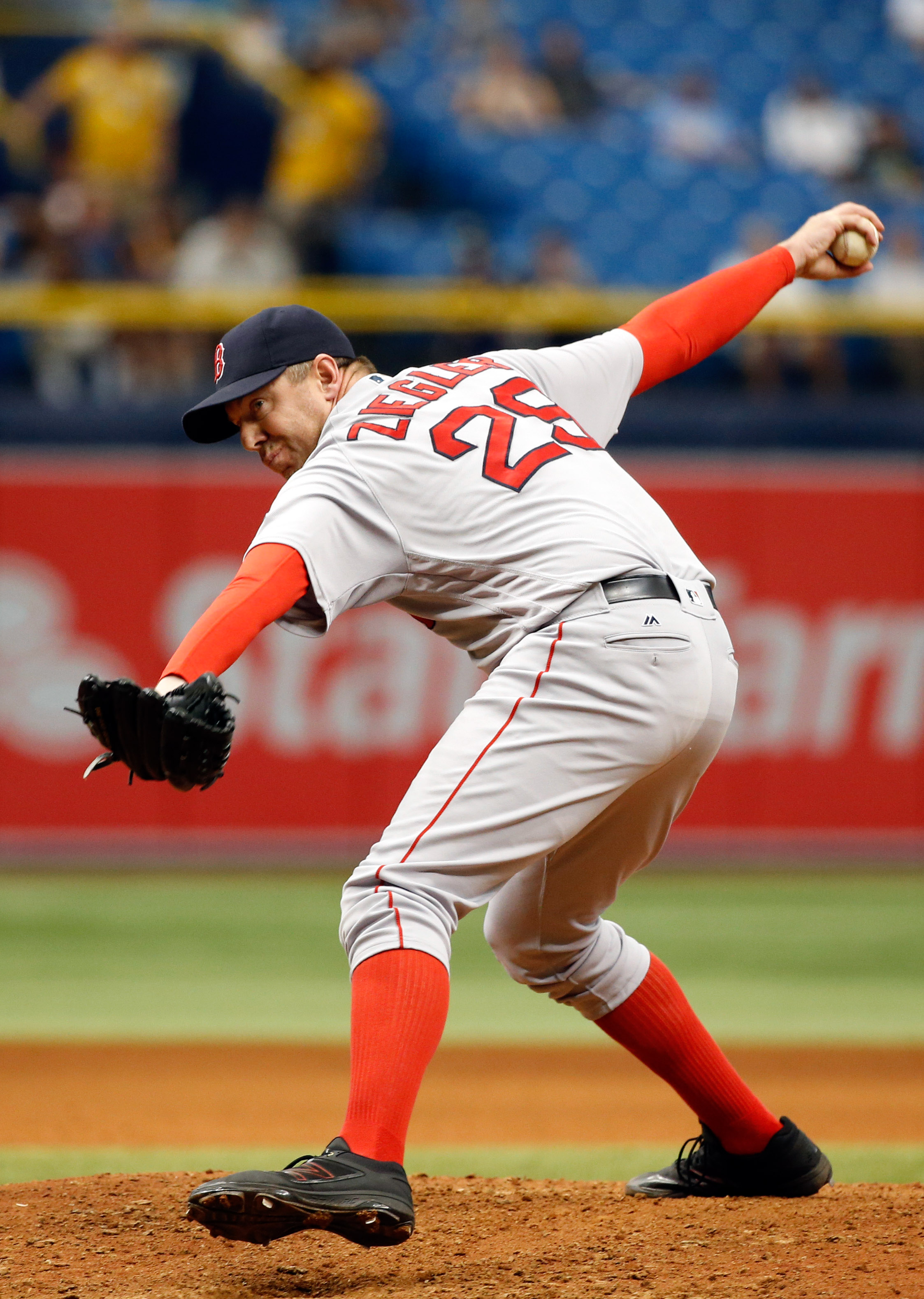
Though he didn’t reach the big leagues until he was 28 years of age, has long worked in the mid-eighties with his fastball, and has always posted pedestrian strikeout and walk numbers, Ziegler has still yet to end a single season having allowed over 3.5 earned runs per nine. In nearly 600 major league frames, he owns a stellar 2.44 ERA.
The reason? Ziegler’s submarine delivery has enabled him to draw groundballs on just under two out of every three balls put in play against him. He’s also exceedingly difficult to take out of the yard, having allowed just 0.35 HR/9 over his career. And despite his lack of velocity, Ziegler is basically impossible to run off of (17 stolen bases allowed lifetime) — which helps enhance the value of his groundball-inducing sinker, by keeping the double play in order when a runner does reach base. It’s an utterly unique profile, but one that has had undeniable success.
Whether Ziegler can continue his magic act is anyone’s guess, but he has shown no signs of slowing down and Miami won’t take on too big a risk in the contract. And there are some encouraging signs even beyond the still-dominant groundball and earned-run figures. Ziegler’s 11.7% swinging-strike rate in 2016 was a personal high, as he successfully baited hitters to offer and whiff at pitches out of the zone more than ever before.
Beyond age, and the lack of strikeouts, the biggest limitation in Ziegler’s package lies in the platoon department. He has dominated opposing righties while showing some vulnerability to lefties over his career. Hitters stepping in with the platoon advantage have hit .271/.365/.392 against Ziegler, drawing 121 walks against just 115 strikeouts.
Photo courtesy of USA Today Sports Images.
Orioles Sign Welington Castillo
Though recent reports had downplayed the possibility, the Orioles announced on Friday that they’ve signed free-agent backstop Welington Castillo to a one-year deal with an option for the 2018 season. That option is reportedly a player option, meaning Castillo will be guaranteed a total of $13MM but can opt out of the contract after the first season should he choose. The ACES client will earn $6MM in 2017 and $7MM in 2018 (if he opts into the second season of his deal).
Depending upon one’s perspective, then, that constitutes a two-year, $13MM pact with an opt-out after the first year. MLBTR contributor Matt Swartz had projected he’d earn $5.9MM via arbitration before he was non-tendered by Arizona earlier in the offseason. Instead, he’ll get just north of that figure in 2017 while adding the security of the player option.
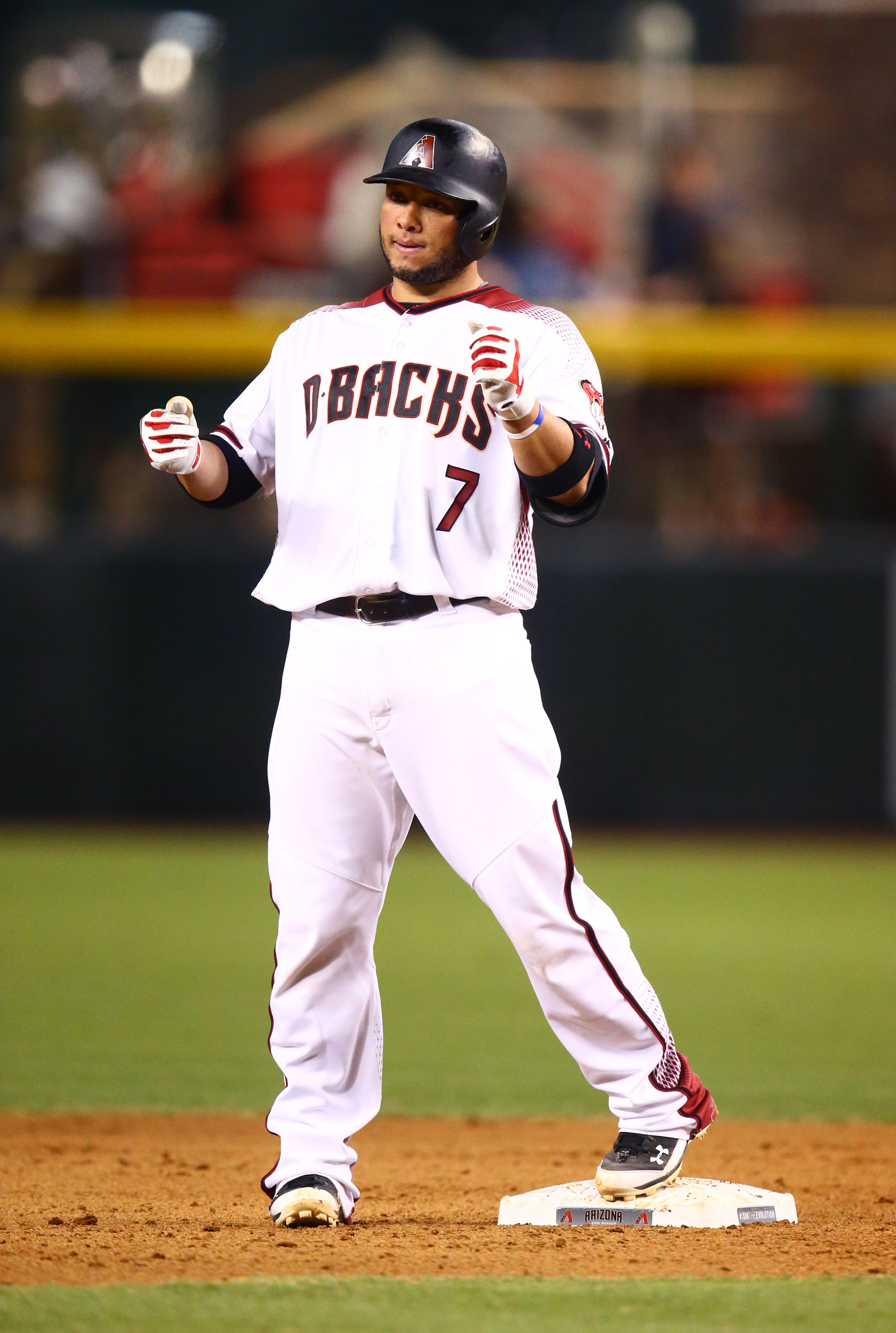
Assuming that the 29-year-old Castillo clears the Orioles’ medical check, he’ll step into the void left by fellow free agent Matt Wieters, who now seems all but certain to end up elsewhere. While it seems the contract will be framed as including a player option, it’s just the same as a two-year arrangement that includes an opt-out provision, as Baltimore will take the risk of a downturn in Castillo’s performance.
In Castillo, the Orioles will add one of the better power-hitting catchers in baseball. Since landing with the Diamondbacks in a mid-2015 trade, he has knocked 31 home runs in 760 plate appearances. Of course, the larger portion of the damage came in his first year in Arizona; Castillo fell back last year from a robust .216 isolated power mark to a roughly league-average level (.159).
Still, the overall offensive profile is a solid one for a receiver. All told, Castillo slashed .261/.320/.452 with the D-Backs. He does carry rather pronounced platoon splits, hammering lefties while operating at around a .700 OPS clip against same-handed pitchers. Presumptive reserve Caleb Joseph has more neutral numbers for his career, showing slightly more power against righties but reaching base much more frequently when operating without the platoon advantage.
While Castillo has brought more overall offensive production of late than the long-time starter he’ll replace, the O’s new leading man behind the dish isn’t much loved for his glove. StatCorner rated him as a slightly below-average framer last year, while Baseball Prospectus mostly panned his framing work. BP regarded his other measurable skills (blocking, throwing) at a roughly average rate.
Regardless of whether one prefers Castillo or Wieters, there’s no denying that the O’s will save some payroll space by taking this route — at least, that is, as against last year’s payout to Wieters, who accepted a $15.8MM qualifying offer. It remains to be seen what the 30-year-old switch hitter will end up with now that he’s a free agent for the first time, though the paucity of teams still seeking everyday options behind the plate does not necessarily bode well for any hopes of a large, lengthy contract.
Jon Heyman of FanRag Sports first reported the agreement (Twitter links) as well as the financial details of the deal (also via Twitter).
Photo courtesy of USA Today Sports Images.
Marlins To Sign Junichi Tazawa
The Marlins have agreed to a two-year deal with free-agent righty Junichi Tazawa, according to Ken Rosenthal of FOX Sports (Twitter links). He’ll earn $12MM in the contract, per Rosenthal, with $5MM in the first year and $7MM coming in the second, according to SB Nation’s Chris Cotillo (via Twitter).
[RELATED: Updated Marlins Depth Chart]
Tazawa, 30, has long carried strong strikeout-and-walk numbers, with a lifetime 8.9 K/9 against 2.0 BB/9, though he induces grounders on less than two of every five balls put in play against him. From 2012 through 2014, that steady backdrop allowed Tazawa to carry an excellent 2.62 ERA over 175 1/3 innings.
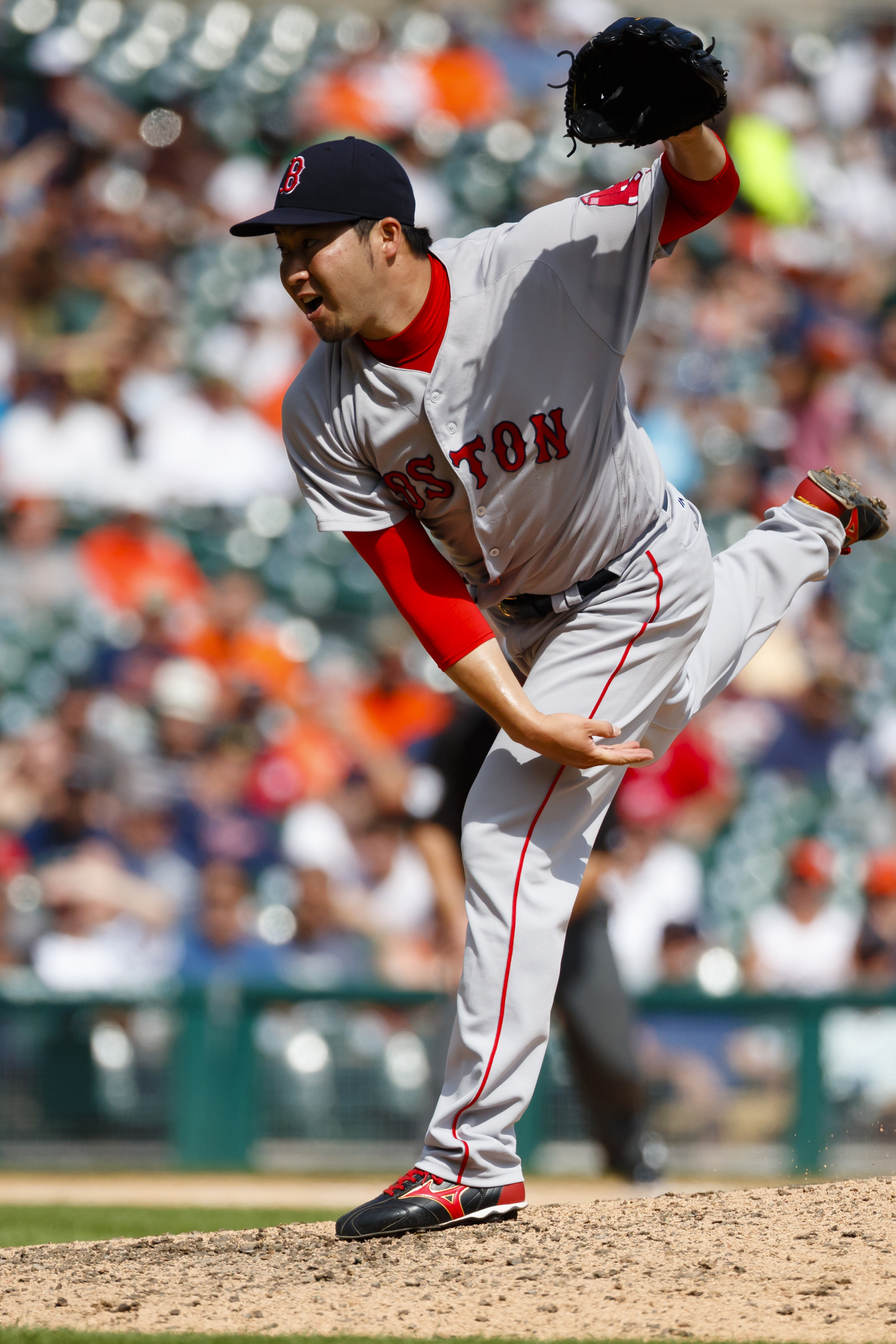
While the K/BB figures remained about the same over the ensuing two seasons, however, Tazawa has fallen off in the results department. Since the start of 2015, he has allowed 4.15 earned runs per nine. The main culprit in 2015, perhaps, was an elevated .349 batting average on balls in play against him. While that fell back to earth (.292) in 2016, Tazawa showed a new susceptibility to the long ball, allowing 1.63 homers per nine.
The Marlins could have a relative bargain on their hands if Tazawa’s earned-run dip is more fluke than fact. He was mostly dinged up last year in a six-appearance stretch in August, but finished strong and otherwise was much the same pitcher as usual. His average fastball velocity in 2016 (92.8 mph) was down slightly against prior years, but not drastically so (he had ranged between 92.2 and 93.9 over the prior four seasons). And Tazawa’s 13.0% swinging-strike rate was the second-best mark of his career.
Having missed on top-dollar closer Kenley Jansen, Miami will instead plug Tazawa — and, potentially, another as-yet-undetermined new acquisition — into the set-up corps. A solid unit is taking shape in front of presumptive closer A.J. Ramos, with Tazawa joining returning righties David Phelps and Kyle Barraclough, each of whom was excellent in 2016.
Of course, that’s not quite the potential super-pen that has been hypothesized as the Fish seemingly moved off of the idea of dealing for a high-quality starter, but there may be more yet to come from president of baseball operations Michael Hill and his staff. Having watched as former southpaw reliever Mike Dunn landed with the Rockies earlier today, it’s possible to imagine the Marlins turning their sights to the remaining market for lefty relievers.
Photo courtesy of USA Today Sports Images.
Rockies Sign Mike Dunn
At this week’s press conference to introduce Ian Desmond, Rockies GM Jeff Bridich stated that improving the bullpen was his next goal, and the Rockies made their first effort to do so on Wednesday, agreeing to a three-year deal with free-agent left-hander Mike Dunn. The contract, announced today by the Rockies, reportedly guarantees Dunn a hefty $19MM and is also said to come with a fourth-year club/vesting option worth $6MM. Dunn is a client O’Connell Sports Management.
Dunn will earn $4MM in 2017 and $7MM in both 2018 and 2019. The contract’s option comes with a $1MM buyout and will reportedly vest if he appears in 130 games from 2018-19 or pitches in 60 games in 2019 alone. Reports also indicate that he can earn up to $1MM of options each year if he becomes the team’s closer and finishes 55 games, and he’ll also receive a $500K assignment bonus if he’s traded. The incentives afford Dunn $100K each year for 30 and 35 games finished, $150K for reaching 40 and 45 games finished, $200K for finishing 50 games and $300K for finishing 55 games. While the Rockies haven’t said they plan on utilizing Dunn as their closer, the incentives represent the clear acknowledgment that it’s at least possible that Dunn surfaces in that role at some point over the next three years.
[Related: Updated Colorado Rockies Depth Chart]
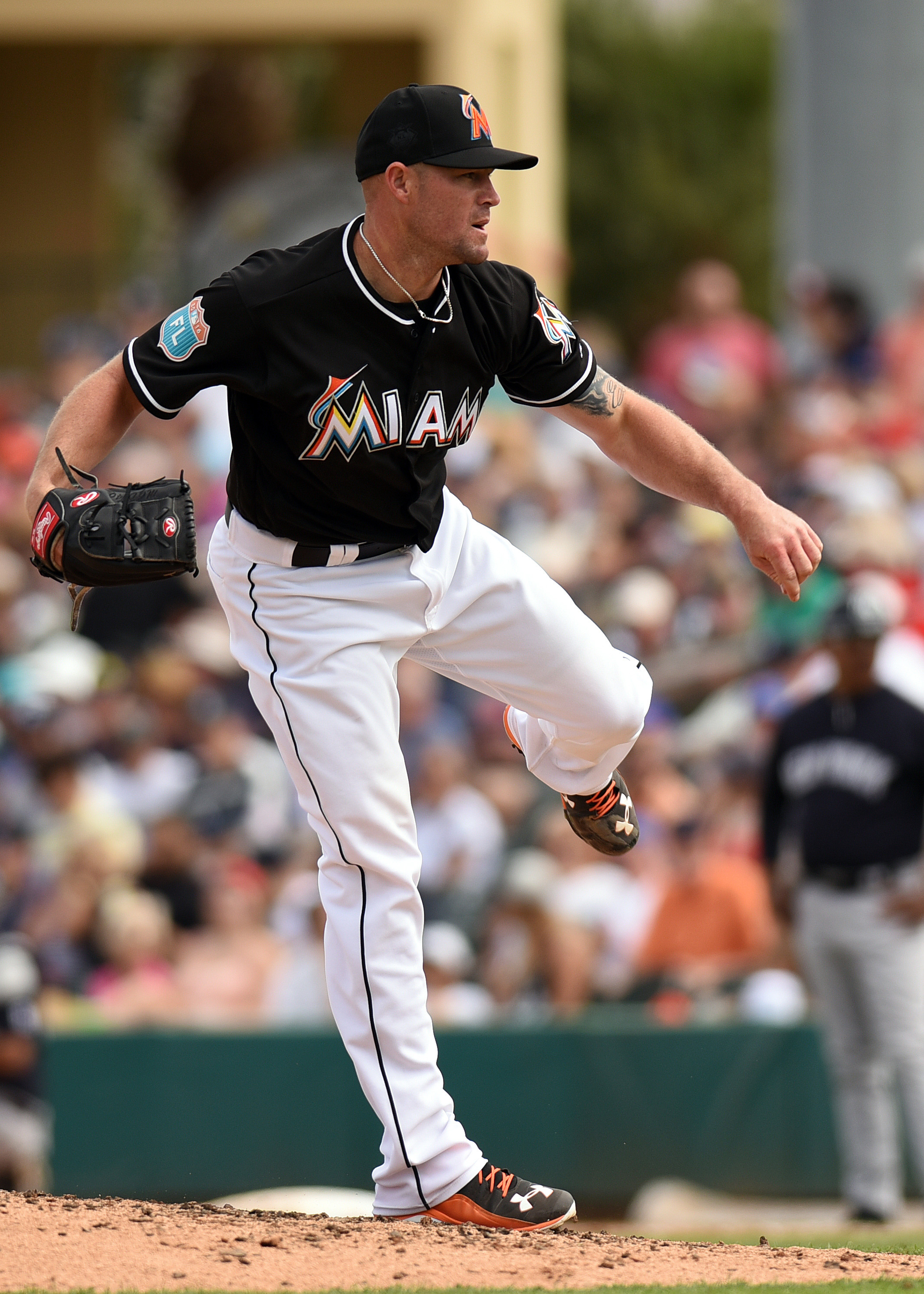
Dunn, 32 next May, has been a mostly steady bullpen piece for the Marlins over the past six seasons, pitching to a 3.59 ERA with 9.8 K/9, 4.1 BB/9 and a 35.7 percent ground-ball rate in 328 innings of relief. He missed the first two months of the 2016 season with a forearm strain but had never been on the Major League DL prior to that stint and pitched effectively upon returning, as he logged a 3.40 ERA with 8.1 K/9 and 2.4 BB/9 in 42 1/3 innings of work. That durability bodes somewhat well for his chances of reaching the aforementioned incentives, but Dunn will also be 34 in the final guaranteed year of the deal and relief pitchers are notoriously volatile.
The longtime Marlin has held opposing left-handers to a .226/.306/.336 batting line since cementing himself in the Miami bullpen back in 2011. Right-handed opponents fare better than lefties, though Dunn has improved in that regard in recent years, as he’s held righties to a .229/.322/.386 slash in the past four seasons.
Dunn will join a Rockies bullpen that ranked last in the Majors in ERA in 2016 (5.13), 24th in FIP (4.35) and 23rd in xFIP (4.27). He’ll join Jake McGee and Chris Rusin as left-handed options for first-year skipper Bud Black, who will also have right-handers Qualls, Motte, Adam Ottavino and Jordan Lyles at his disposal. Hard-throwing righties like Carlos Estevez and Miguel Castro, too, will be waiting in the wings, while Jairo Diaz could make his way back from Tommy John surgery in 2017 as well.
Bridich and his staff will hope that the Dunn signing plays out with better results than either of last year’s free-agent bullpen expenditures, as both Jason Motte and Chad Qualls performed poorly in their debut campaigns with the Rockies. Dunn has a lengthier and more consistent track record than that pair in recent years, but he’s also a fly-ball pitcher with some platoon issues that’ll be leaving the cavernous Marlins Park for the homer-happy confines of Coors Field. More troubling is the fact that Dunn’s fly-ball tendencies reached extreme levels in 2016; the southpaw turned in a career-low 27.9 percent ground-ball rate which was accompanied by a 42.6 percent fly-ball rate (21st among relievers with at least 40 innings pitched) and a 29.5 percent line-drive rate (highest in the Majors, same criteria).
The Rockies are clearly confident that Dunn can continue to be stingy in terms of the home-run ball, but he’s been a bit more susceptible to homers in the past two seasons and won’t be provided any favors by his new home setting. Nonetheless, it’s been an extremely favorable market to relief pitching this winter — especially those in the second and third tiers of free agency. While there were fairly widespread expectations that Aroldis Chapman, Kenley Jansen and (to a lesser extent) Mark Melancon would set new records for relief pitchers, the market has now seen Brett Cecil land four years ($30.25MM), Dunn secure a three-year pact and Marc Rzepczynski sign for two guaranteed years ($11MM).
Bob Nightengale of USA Today Sports first reported that the two sides were nearing a deal (on Twitter). FanRag’s Jon Heyman was the first to say there was an agreement in place (Twitter link). ESPN’s Buster Olney tweeted Dunn’s guarantee, while Nightengale chimed in with the remaining financial details (all Twitter links). Ken Davidoff of the New York Post tweeted word of the assignment bonus. MLB.com’s Thomas Harding reported the year-to-year salaries and incentives breakdown (all Twitter links).
Photo courtesy of USA Today Sports Images.
Cubs Sign Koji Uehara
After announcing the acquisition of Wade Davis from the Royals last week, the Cubs have struck again to further bolster their bullpen, announcing on Tuesday the signing of right-hander Koji Uehara to a one-year deal. Uehara, a client of ISE Baseball, will reportedly be guaranteed a total of $6MM with his new team. The Cubs had open space on their 40-man roster, which now stands at 37 players, so no corresponding 40-man move is necessary to finalize the latest addition.
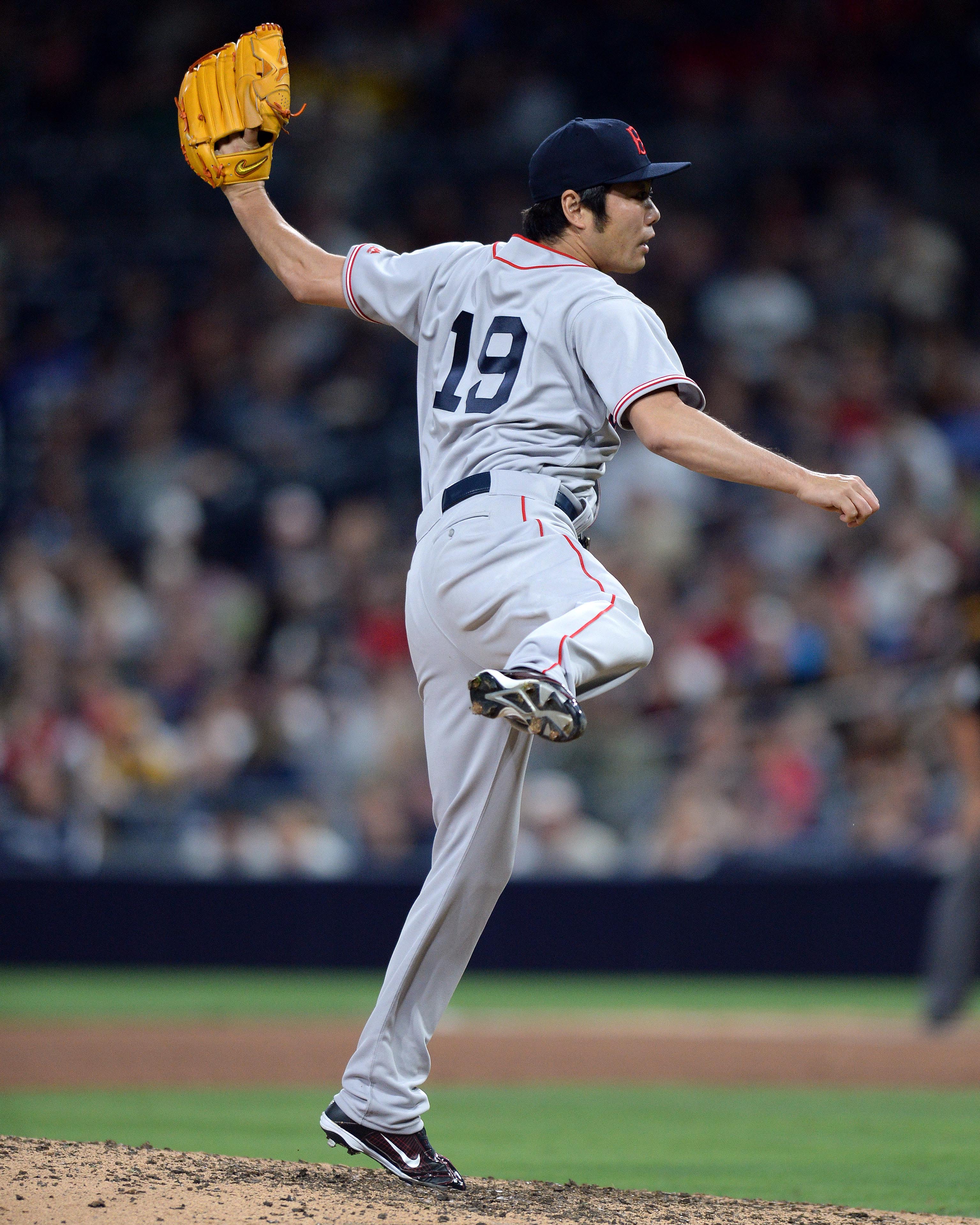
Uehara will join the Cubs after a strong four-year run at the back of Boston’s bullpen. At last check, the Red Sox looked likely to move on from Uehara — Alex Speier of WEEI.com tweeted last week that the Red Sox had made an offer, but Uehara wasn’t ready to respond, so the team acquired Tyler Thornburg instead — and Uehara now indeed lands with his fourth big league organization. The Cubs have been known to be looking for bullpen help even after their trade for Davis, and Uehara will deepen their relief corps and bring a highly experienced arm to manager Joe Maddon’s staff.
With Davis in tow, Uehara almost certainly won’t close for the Cubs, as he did for Boston in 2012-2014. But his presence provides some added peace of mind for the defending World Series champs, particularly since Davis dealt with forearm issues in 2016. Chicago now features a rather robust assortment of experienced, high-leverage righties in the pen. Both Hector Rondon and Pedro Strop — who spent much of 2016 as the team’s closer and top set-up option, respectively — remain on hand.
[Related: Updated Chicago Cubs Depth Chart]
As for Uehara, there’s a reason a pitcher of his repute was available on a modest contract. Most importantly, he’ll turn 42 near the start of the season. His fastball velocity also continued to dip in 2016, falling to an average of 86.7 MPH, generally dangerous territory for a righty. He also became incredibly fly-ball-prone, with a minuscule 21.4 GB%, and coughed up 1.53 homers per nine innings. Also, Uehara missed time in 2016 due to a pectoral injury, interrupting what had been a strong run of durability.
Still, Uehara remained very effective last season, posting a 3.45 ERA, 12.1 K/9 and 2.1 BB/9 over 47 innings. If the contract does turn out to be for $4.5MM, the Cubs’ risk is minimal, particularly for a pitcher who hasn’t yet had a bad season in eight years since arriving from Japan. For his U.S. career, Uehara has a terrific 2.53 ERA, 10.7 K/9 and 1.4 BB/9 over 437 2/3 innings.
Notably, too, Uehara has long dominated opposing hitters on both sides of the plate. While lefty hitters have been ever so slightly better in terms of strikeouts and walks when facing Uehara, they have produced less offensive than have righties. Since the ace reliever landed in the majors, 863 southpaw swingers have combined to hit an anemic .181/.220/.335 against him.
Evan Drellich of the Boston Herald first tweeted the connection between Uehara and the Red Sox. Jon Heyman of FanRag Sports tweeted that a deal was done. ESPNChicago.com’s Jesse Rogers reported the salary details (via Twitter).
Photo courtesy of USA Today Sports Images.
White Sox Sign Derek Holland
The White Sox have officially agreed to a one-year deal with free-agent starter Derek Holland that pays him a reported $6MM. The 30-year-old southpaw, a client of Martini Sports Management, can also earn $2MM in incentives, $1MM apiece upon reaching 150 and 200 innings pitched.
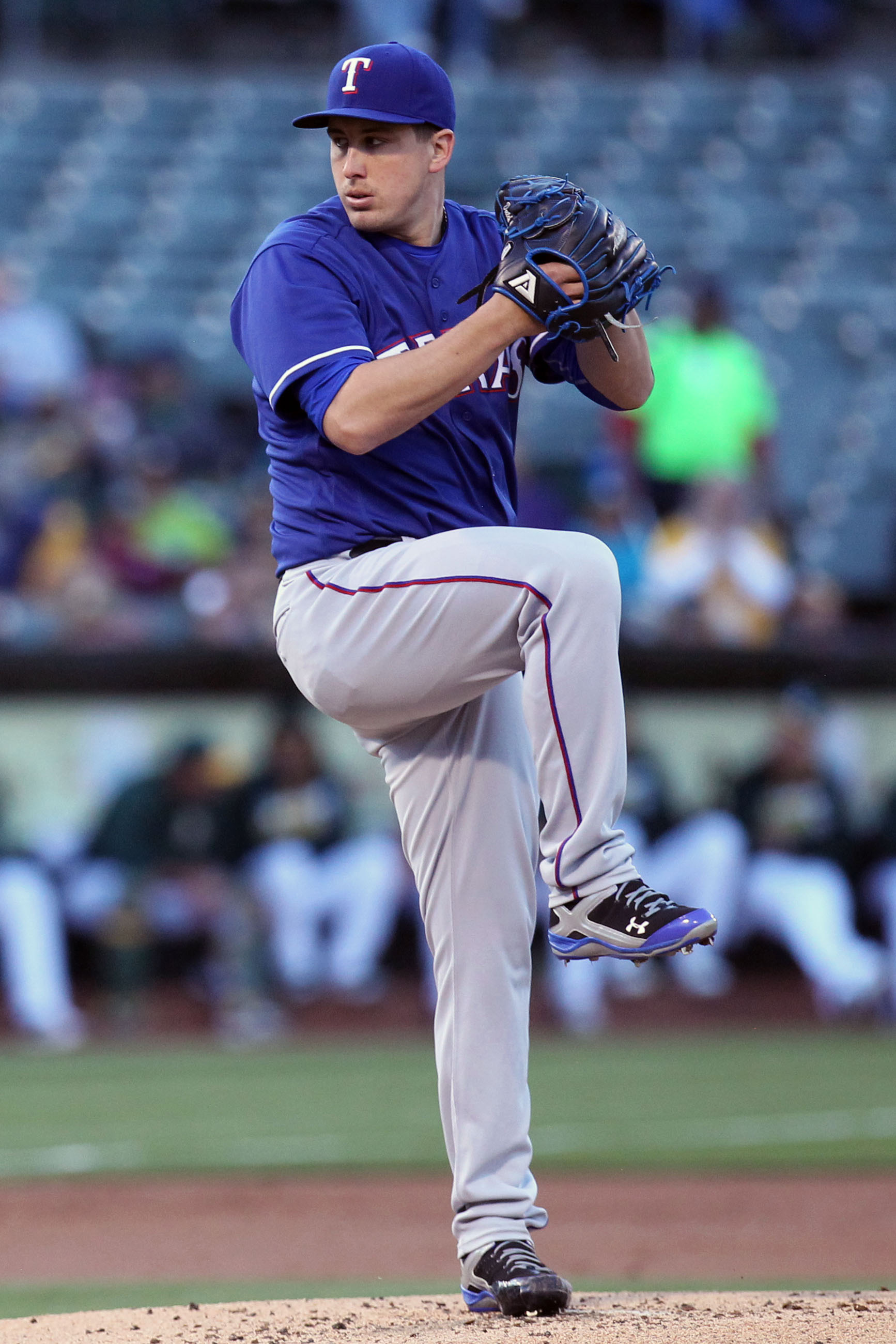
Holland hit the open market when the Rangers declined an $11MM club option, preferring instead to pay a $1.5MM buyout when trade talks did not result in a taker. Now, he’ll head to Chicago to function as a near-term rotation piece to step into the opening created when the team dealt ace Chris Sale to the Red Sox.
Certainly, Holland won’t be expected to produce anything like the output of Sale, one of the game’s best starters, but he offers a bit of upside in his own right. He’ll ultimately land the exact guarantee predicted by MLBTR’s Tim Dierkes, who listed Holland 50th in his pre-offseason ranking of free agents in terms of earning power.
It has been a tough and injury-riddled three-year run for Holland, who has managed to provide only 203 innings since the start of 2014. He hasn’t exactly been dominant when healthy, either, posting a 4.30 ERA with 5.9 K/9 against 2.5 BB/9 in that span.
That was certainly not what he or the Rangers hoped for when the sides came together on a five-year, $28.5MM deal in the spring of 2012. After a tough first campaign under the new pact, Holland came through in 2013 with a 213-inning, 3.42 ERA gem of a year in which he compiled 8.0 strikeouts against 2.7 free passes per nine innings pitched.
Things began to turn south in the following season, however, as knee and shoulder issues intervened. While Chicago can certainly hope for a bounceback, it will most likely be expecting some solid frames from the veteran hurler. In 2016, he sat nearly three full ticks below his peak average velocity (93.4 mph, in 2013), with a 7.8% swinging-strike rate that fell well below the ~10% mark he carried when at his best.
Given the limited commitment, and Holland’s positive clubhouse reputation, it seems to be a sensible acquisition for a White Sox organization that is hoping to remain somewhat competitive even as it deals away some of its best assets for upper-level prospects. If Holland can stay healthy and restore some of his prior luster on the hill, it’s conceivable that he could turn into a deadline trade piece or even a qualifying-offer candidate next fall.
MLB.com’s Scott Merkin reported that the deal was nearing finalization. MLB.com’s TR Sullivan reported that the deal was done (via Twitter). Evan Grant of the Dallas Morning News had the terms (links via Twitter), with Jon Heyman of Fan Rag adding the incentives breakdown on Twitter.
Photo courtesy of USA Today Sports Images.