
Brewers Claim Donnie Hart
The Brewers have claimed southpaw Donnie Hart off waivers from the Dodgers, per a club announcement. Milwaukee moved righty Bobby Wahl to the 60-day injured list to create roster space.
Hart was optioned to Triple-A to begin his tenure with the Brewers organization. He’ll wait there for an opportunity to arise. Hart had been claimed in the middle of camp by the Los Angeles organization but obviously wasn’t a key part of their plans.
Since breaking into the majors with an eye-opening 2016 debut — one earned run in 18 1/3 innings — Hart has seen his results decline. He managed a 3.71 ERA in 43 2/3 frames in the following season, but the peripherals weren’t terribly promising. Last year, he was knocked around in twenty appearances — a dozen earned runs on 31 hits with an ugly 13:12 K/BB ratio — and ended up spending most of the year at Triple-A.
Hart did continue dominate at the highest level of the minors. He has been tough on pre-MLB batters at all levels, but has been especially excellent at Triple-A, where he owns a 2.40 ERA with 10.4 K/9 and 1.9 BB/9 over 56 1/3 innings. If he can find a way to translate those K/BB numbers to the majors, and continue to generate groundballs as he has (52.6% in the big leagues), the soft-tossing 28-year-old could be an interesting pen piece.
Mac Williamson Clears Waivers
Giants outfielder Mac Williamson went unclaimed on outright waivers after being designated for assignment and will report to the club’s Triple-A affiliate in Sacramento, Ken Rosenthal of The Athletic reports (via Twitter).
The 28-year-old Williamson was long viewed as a potential regular by the previous Giants front office but has struggled to remain healthy and regularly been blocked at the MLB level by more established veterans (e.g. Hunter Pence, Andrew McCutchen). When healthy, Williamson has generally performed well in Triple-A (.269/.327/.533 last season), and he showed brief flashes of his power potential early in the 2018 season. A concussion last May cost him some playing time, though, and he ultimately landed back in Sacramento for much of the year. Williamson finished out the season with a meager .213/.295/.383 slash through 105 trips to the plate as a big leaguer.
It’s not terribly difficult to envision Williamson earning another look with the Giants down the road this season. Although San Francisco acquired Kevin Pillar from the Blue Jays earlier this week, their starting trio of Pillar, Steven Duggar and Gerardo Parra isn’t exactly an iron-clad collection of established producers. Parra has struggled in recent seasons and had to settle for a minor league pact this winter, while Pillar has generally provided premium defense but an inability to keep his OBP north of .300. Duggar has yet to log a full season in the Majors. Each of the three figures to have a reasonably long leash, but Williamson will at least have the opportunity to force the issue of a return to San Francisco now that he’s remaining in the organization.
Minor MLB Transactions: 4/4/19
We’ll keep track of the latest minor transactions from around the league here…
- Catcher Raffy Lopez cleared waivers and was sent outright to Triple-A Gwinnett by the Braves, per the league’s transactions log at MLB.com. Lopez, 31, was designated for assignment when Atlanta selected Matt Joyce and Josh Tomlin to their Opening Day roster. The journeyman catcher hit .176/.265/.284 in 117 plate appearances with the Padres last season and has never produced much in limited time at the MLB level. He is, however, a career .266/.340/.401 hitter in 1078 Triple-A plate appearances. The Braves acquired him from San Diego in exchange for cash back in early November, but he didn’t have a place on the active roster behind Tyler Flowers and Brian McCann.
- Blue Jays catching prospect Max Pentecost has opted to retire, MassLive.com’s Chris Cotillo reports (via Twitter). Sportsnet’s Shi Davidi reported late in camp that Pentecost was considering retirement as an option. The 26-year-old was the No. 11 pick of the 2014 draft but has undergone three different surgeries on his right shoulder since being selected. He missed the entire 2015 season as a result of those shoulder woes and has played in a total of just 260 minor league games (plus 11 more in the Arizona Fall League) since being drafted nearly five years ago. A healthy Pentecost showed a good bit of promise, particularly in 2016 when he hit .302/.361/.486 across two Class-A levels.
- Tigers right-hander Grayson Long announced on Twitter that, due to “continuous injury,” he’s hanging up the spikes and returning to college to finish his degree at Texas A&M. Detroit acquired Long, now 24 years old, in the 2017 trade that sent Justin Upton to the Angels. The 2015 third-round pick didn’t pitch in 2018 as he recovered from thoracic outlet surgery — a procedure that has become increasingly common among professional pitchers in recent years but comes with a middling success rate, at best. Long showed plenty of potential in his last healthy season, tossing 137 2/3 innings of 3.01 ERA ball with averages of 8.4 K/9, 2.8 BB/9 and 0.6 HR/9 in 137 2/3 innings of Double-A ball.
Cubs Extend David Bote
The Cubs announced Tuesday that they’ve agreed to a contract extension with infielder David Bote. The contract will cover the 2020-24 seasons and also contain a pair of club options.
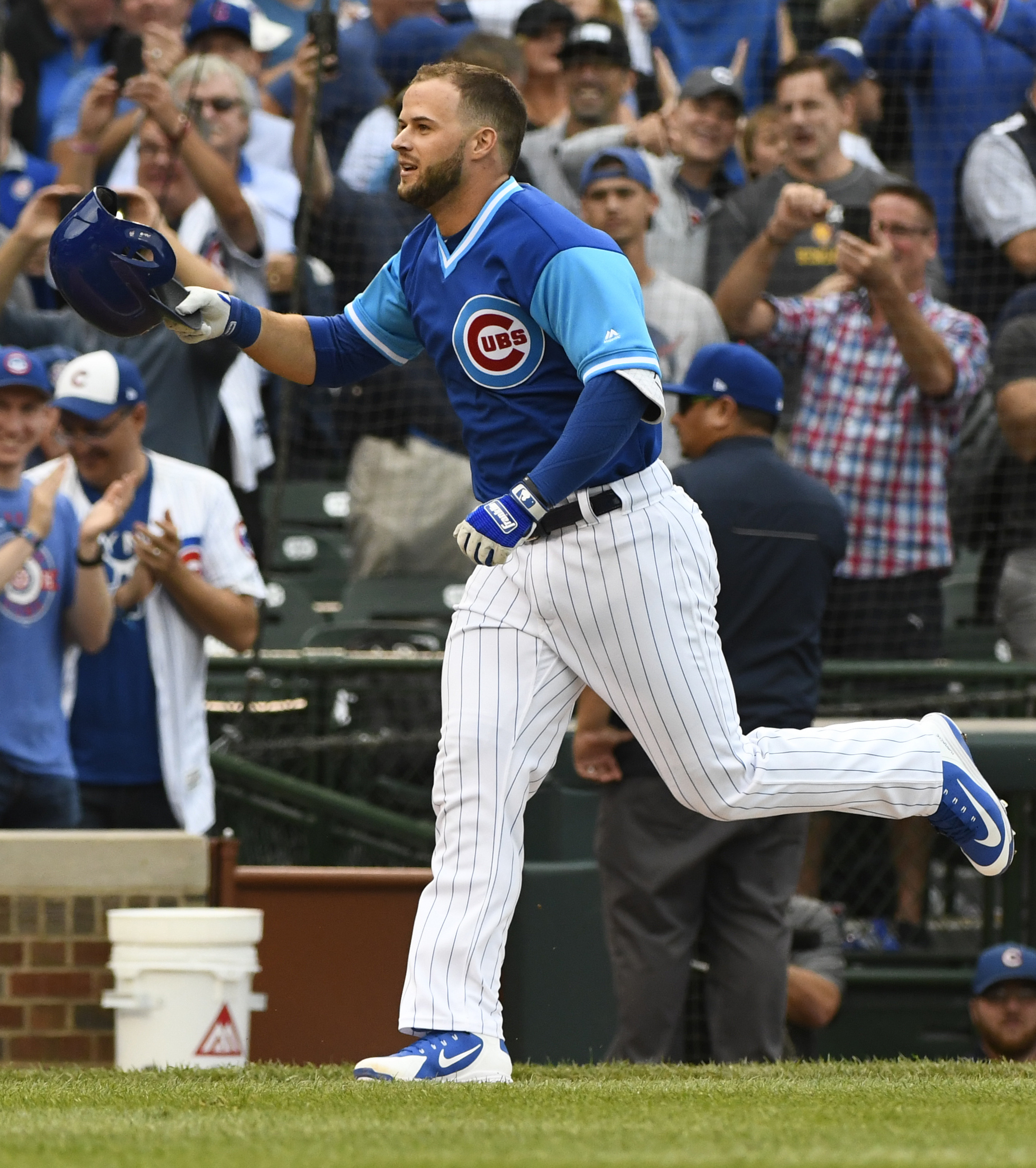
Bote will be guaranteed $15.003MM over that 2020-24 span, Gordon Wittenmyer of the Chicago Sun Times reports (on Twitter). MLB Network’s Jon Heyman tweets that the two option years are valued $7MM and $7.6MM. According to the Chicago Tribune’s Mark Gonzales (also on Twitter), Bote will receive a $50K signing bonus and earn $950K next season. He’ll then earn $1MM in 2021, $2.5MM in 2022, $4MM in 2023 and $5.5MM in 2024. The first option season comes with a $1MM buyout, and the second carries a $500K buyout.
Bote recently approached the Cubs to initiate the talks, president of baseball operations Theo Epstein tells reporters (Twitter link via ESPN Chicago’s Jesse Rogers). He was already under club control through the 2024 season, but the Cubs will now obtain some cost certainty and also secure control over what would have been his first two free-agent seasons.
Though he never rated as one of the organization’s top prospects, Bote made his way to the big leagues last season and now looks the part of a useful bench option capable of backing up at multiple infield spots and perhaps in the outfield corners. His primary positions have been third base and second base, but Bote also logged 10 innings at short in 2018 as well as seven in left field and two at first base. He’s a .246/.327/.410 hitter to this point in his big league career (223 plate appearances).
That defensive versatility surely appealed to the Cubs, as did the quality of Bote’s defense at his most frequent position: third base. In just 375 innings there last season, Bote was credited with +5 Defensive Runs Saved and a 4.4 Ultimate Zone Rating. Whether that type of rating is sustainable over a larger period remains to be seen; Fangraphs Eric Longenhagen wrote after the 2017 season that Bote lacked a true position, calling him a potential bat-first utility option if all panned out. Based on Bote’s .281/.355/.502 slash through 299 Triple-A plate appearances and last season’s small sample of exit velocity readings, perhaps he’ll live up to that billing.
Bote’s extension is a surprising move in that he isn’t viewed as any sort of key player for the Cubs at the moment. However, the modest price tag on the deal carries minimal risk — particularly for a large-market team like the Cubs — and the $15MM guarantee seems to suggest that the organization eventually feels Bote could take on a larger role. Generally, utility players don’t earn quite this much over the course of arbitration; Boston’s Brock Holt, for instance, will earn $3.575MM this season in his final year of arbitration eligibility and stands to reach free agency having earned a bit shy of $9MM.
The contract could prove to be a bargain if Bote can settle in as any sort of semi-regular contributor, though for a nearly 26-year-old former 18th-round pick who was never heralded as a top prospect and is still three years from arbitration, it’s easy to see the appeal of being guaranteed any financial security. Frankly, there’s little precedent for an extension along these lines. As shown in MLBTR’s Extension Tracker, extensions for players with under one year of service time have generally been reserved for players who’ve broken out as stars (e.g. Ronald Acuna) or quality regulars (e.g. Paul DeJong), or for top-tier prospects who are on the cusp of the Majors or very early on in their big league careers (e.g. Eloy Jimenez, Evan Longoria, Matt Moore, Scott Kingery). It’s possible that Bote’s deal will set something of a precedent for role players seeking some early-career stability — particularly given the deluge of long-term deals that have been signed during the recent “extension season.” Bote’s deal now stands out as the 27th multi-year contract extension signed by a player since mid-January.
Orioles Select Matt Wotherspoon, Designate Pedro Araujo
The Orioles announced today that they have selected the contract of righty Matt Wotherspoon. He’ll take the roster spot of fellow righty Pedro Araujo, who was designated for assignment.
Wotherspoon was picked up a few years back in exchange for international bonus pool money. He has been bypassed in the Rule 5 draft but will now get his first crack at the majors at 27 years of age. Last year, he pitched to a 4.60 ERA with 10.1 K/9 and 3.6 BB/9 over 94 Triple-A frames.
Araujo, a 2017 Rule 5 pick, only needed to be kept on the MLB roster briefly in 2019 for his rights to be permanently transferred to the O’s. But he’d still have required a 40-man spot that the Baltimore organization obviously wasn’t interested in committing. He’ll now be offered back to the Cubs if he clears waivers.
Royals Select Homer Bailey, Designate Chris Ellis
The Royals have selected the contract of righty Homer Bailey, who’ll slide into the club’s rotation. To create roster space, righty Chris Ellis was designated for assignment.
Bailey, who’s a month from his 33rd birthday, will try to resurrect his career in Kansas City. He earned the chance after turning in 13 1/3 innings of 4.05 ERA ball in camp, with 7.4 K/9 and 2.0 BB/9. Once a quality rotation piece with the Reds, Bailey has struggled to a 6.25 ERA in just 231 2/3 innings over the past four seasons while dealing with significant arm issues.
As for Ellis, the 26-year-old just made his first MLB appearance after winning a spot out of camp as a Rule 5 pick. He’ll be offered back to the Cardinals if he isn’t claimed. Ellis has spent most of his time in the minors as a starter. Last year, he pitched to a 3.93 ERA with 8.4 K/9 and 2.5 BB/9 over 132 2/3 innings with the Cards’ top two affiliates.
On the face of things, this transaction isn’t a terribly significant one. Rule 5 picks are dropped with quite some frequency, after all, and veteran starters such as Bailey are often tapped for innings. But the Royals evidently found something to like in Ellis, with skipper Ned Yost saying that the club wanted to “give it a full look” because they liked his stuff. (Via Lynn Worthy of the Kansas City Star, on Twitter.) If that’s truly the case, it’s a bit odd that the organization couldn’t find room for Ellis on a roster that includes several low-upside veteran pitchers and a bizarre bench mix featuring two first basemen/designated hitters (Lucas Duda and Frank Schwindel, who supplement Ryan O’Hearn and Jorge Soler) and an outfielder who’s known almost exclusively as a pinch runner and defensive replacement (Terrance Gore).
Indians Extend Terry Francona
The Indians have announced a two-year contract extension with skipper Terry Francona. He’ll be at the helm through the 2022 season.
Francona has already managed six full seasons in Cleveland, so he’ll have run the dugout for nine in total by the end of this contract. That would top his eight-season tenure with the Red Sox and four-year stint with the Phillies.
To this point, the arrangement has been quite successful. Under Francona’s leadership, the club has a .562 winning percentage — which is actually a bit shy of the .574 mark his charges in Boston managed during his run there.
The Indians haven’t yet gotten over the hump, but have come achingly close to a World Series under Francona. They’ve run off three-straight division titles and have been to the postseason four times in six seasons. The club pushed the Cubs to the brink in 2016, narrowly losing a memorable World Series.
Reds Outright Brandon Finnegan
The Reds announced Tuesday that left-hander Brandon Finnegan has cleared waivers and will be assigned outright to a minor league affiliate (which affiliate appears yet to be determined). He was designated for assignment last week when Cincinnati re-claimed righty Jose Lopez from the Giants.
Now 25 years old, Finnegan was a headlining piece sent from Kansas City to Cincinnati in the 2015 Johnny Cueto blockbuster. He’d been selected in the first round of the 2014 draft and debuted with seven innings of one-run ball that same season, also appearing on the Royals’ 2014 postseason roster. At the time, there were split opinions on whether Finnegan would be a starter or reliever, but to this point in his career he’s struggled in both roles.
Finnegan did give the Reds 172 innings of 3.98 ball out of the rotation in 2016, though with 7.6 K/9, 4.4 BB/9 and a .256 average on balls in play, that success looked difficult to sustain. Fielding-independent pitching metrics all pegged Finnegan near 5.00 that season. As it turns out, he didn’t even get a legitimate chance to build on that success in 2017, however, as a shoulder issue cost him the bulk of the season. Finnegan was sidelined by biceps issues for part of the 2018 season as well.
All in all, since that 2016 season, Finnegan has just 33 2/3 innings in the Majors with a 6.15 ERA and a 30-to-28 K/BB ratio. Finnegan’s work in the minors wasn’t any better last season, as he yielded a 7.05 ERA with 57 strikeouts and 40 walks in 67 2/3 innings (primarily as a reliever).
At the time of the trade, few could’ve predicted that Finnegan would pass through waivers unclaimed just over three years later, though injuries and last year’s struggles in the upper minors prompted teams to shy away from the once touted lefty. The Reds will now have the opportunity to try to get Finnegan back on track without dedicating a 40-man roster spot to him.
Blue Jays To Release Bud Norris
9:05pm: It doesn’t appear as though there’s an injury to Norris. Sportsnet’s Shi Davidi tweets that the Jays wanted Norris to continue building up arm strength in extended Spring Training despite having an open 40-man roster spot following today’s Kevin Pillar trade. Norris felt as though he’s ready to go, however, so the two sides will instead part ways.
7:42pm: The Blue Jays have released right-hander Bud Norris from his minor league contract, TSN’s Scott Mitchell reports (via Twitter). He’ll head back to the open market in search of a new opportunity.
Toronto slowed Norris, 34, down after a couple of spring appearances in what was said at the time to be an effort to allow him to build up strength after a late start to Spring Training. Norris was reportedly throwing 90-91 mph recently — well south of the 94.6 mph he averaged in 2018 — but that was chalked up to the fact that he didn’t sign until mid-March rather than any kind of legitimate injury concern. The Jays certainly didn’t seem concerned about his health, as they paid Norris a $100K retention bonus to keep him in the organization after informing him that he wouldn’t make the Opening Day roster.
Norris has had a pair of solid seasons with the Angels and Cardinals over the past two seasons. Over the life of 57 2/3 innings in St. Louis last year, the righty notched a 3.59 ERA with 10.5 K/9, 3.3 BB/9, 1.25 HR/9 and a 42.6 percent ground-ball rate. Fielding-independent metrics like FIP (3.99), xFIP (3.65) and SIERA (3.30) all felt that he was a generally solid bullpen piece with an ERA that was largely reflective of his overall performance. Last year was Norris’ second straight year with a swinging-strike rate of 12 percent or better — the first two such campaigns of his career — and he induced swings at pitches outside the strike zone at a career-best 35.9 percent clip as well, tying him for 18th among 151 qualified relievers.
The reasons for his release remain unclear, but assuming that Norris is indeed in good health and hasn’t been diagnosed with an injury that’d cause him to miss substantial time, he’ll likely latch on as a bullpen option with another club before long.
Blue Jays Extend Randal Grichuk
8:20pm: USA Today’s Bob Nightengale tweets that there are some escalators in the contract as well. Grichuk’s 2023 salary would jump by $1MM if he makes a combined 1200 plate appearances from 2021-22. It’ll increase by $1.5MM if Grichuk makes 1250 PAs over that same time period and by $2MM if he tallies 1300 PAs between those two seasons.
6:12pm: The Blue Jays and outfielder Randal Grichuk are in agreement on a five-year contract worth a guaranteed $52MM, Shi Davidi of Sportsnet reports. Toronto announced the extension shortly after that report. The deal increases Grichuk’s current salary from $5MM to $7MM and pays him a $5MM signing bonus as well. The 27-year-old will then earn $12MM in 2020 before scaling back to a $9.333MM annual salary from 2021-23. Grichuk is a client of Excel Sports Management.
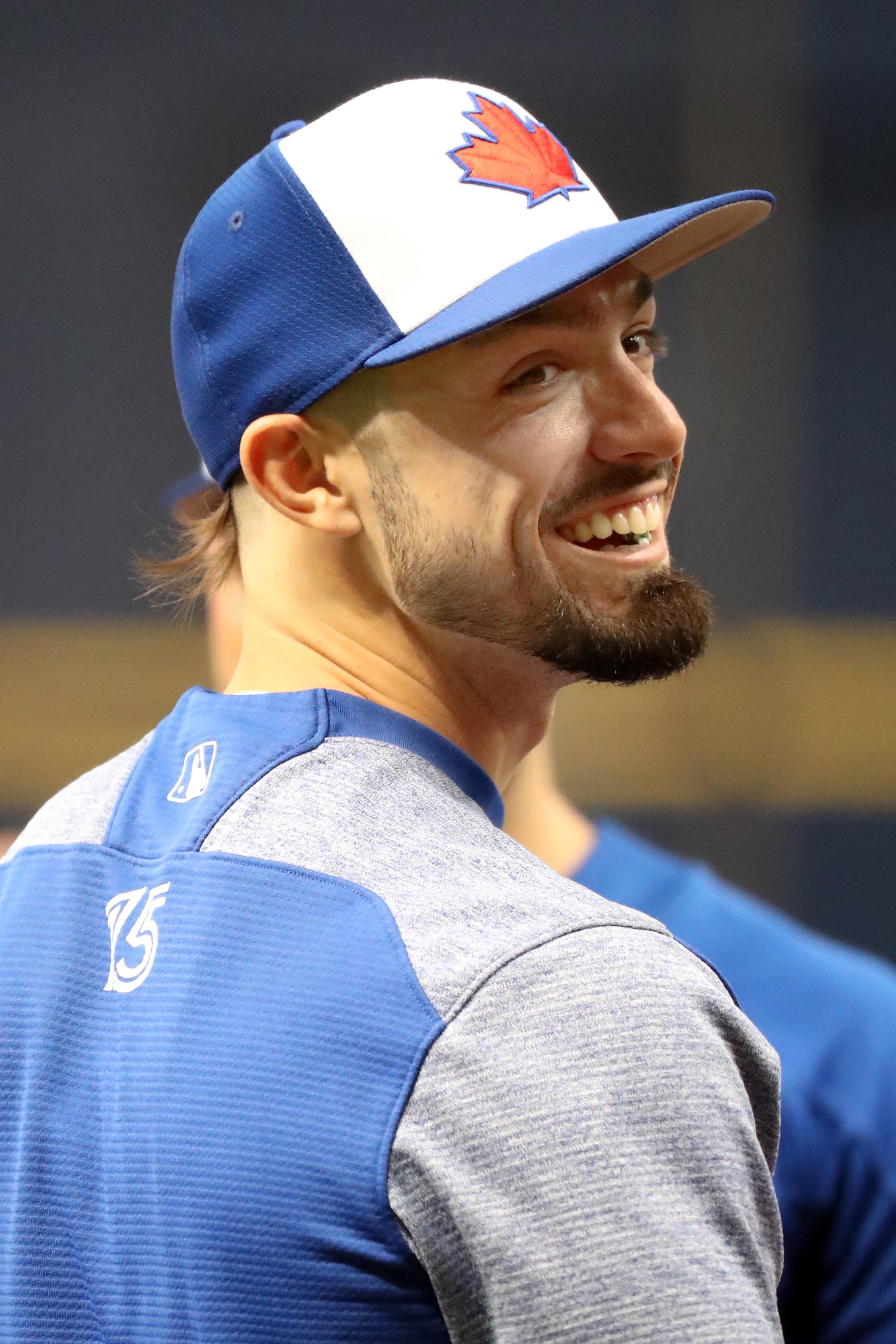
In all, Grichuk is securing a additional four years and $47MM in guaranteed money with the new arrangement. And while it’s impossible to know precisely what he’d have earned in his final season of arbitration eligibility in 2020, the $5MM base at which he was slated to play this season provides a reasonable window into what he might’ve earned.
If we put down a theoretical $3MM raise for what would’ve been Grichuk’s final arb year, the Blue Jays are effectively valuing his trio of free-agent seasons at about $39MM — a rough contract template that has been common among free agents in recent years (e.g. Jay Bruce, Zack Cozart, Mark Trumbo, Daniel Murphy pre-2016).
Grichuk would’ve been a free agent upon conclusion of his age-28 campaign in 2020 but will instead be signed through his age-31 season. He’ll presumably take over as Toronto’s primary center fielder for the next half decade now that the Jays have traded Kevin Pillar to the Giants (though he’s certainly capable of playing a corner as well). Other potential long-term pieces in the Toronto outfield include Teoscar Hernandez and Anthony Alford.
As a career .247/.297/.490 hitter, Grichuk may not immediately stand out as an extension candidate, but the Jays feel they have reason to be optimistic regarding his long-term value. Grichuk has a strong defensive track record according to each of Defensive Runs Saved, Ultimate Zone Rating and Outs Above Average, and he belted a career-best 25 home runs in just 462 plate appearances last season. Statcast ranks his sprint speed in the 88th percentile of active players, so Toronto surely feels that while Grichuk may never be an on-base threat, he’ll provide quality defense and plenty of power over the next five seasons.
That said, the deal carries more risk than some of the other extensions we’ve seen for players with less service time. Grichuk’s walk rate has hovered between 5.8 percent and 6.3 percent in each of his full MLB seasons, and his strikeout rate has never dipped lower than last year’s 26.4 percent. It’s possible that that mark was a prelude to future improvement, but it’s also worth noting that the improved contact rate didn’t necessarily lead to improved contact all the time; Grichuk popped up at a career-high rate in 2018, which largely counteracted the dropoff in strikeouts.
Unless he can find a way to boost his on-base percentage into league-average territory, Grichuk will have less margin for error with regards to his power and defensive proficiency. A step back in either of those categories at any point over the five-year deal would make it difficult for him to provide adequate value. Similarly, because his on-base skills lag well below the league average, his ceiling is curbed to the point that it’s difficult to envision this contract looking like a true bargain at any point.
The approximately $13MM rate at which this contract appears to value Grichuk’s would-be free-agent seasons has been the going rate for players older than him for awhile now. In addition to Bruce, Josh Reddick, Shane Victorino, Chase Headley and A.J. Pollock were all valued in that range on an annual basis on their own free-agent deals. It seems like the Blue Jays believe Grichuk to be capable of elevating his value beyond that $13MM price point in the coming two seasons, otherwise they wouldn’t have felt it necessary to commit this far in advance. If he can continue to barrel 14.4 percent of the balls he puts in play (as measured by Statcast), perhaps that is indeed the case.
However, the possibility also exists that the Blue Jays paid market prices for a player whose earning power isn’t likely to increase dramatically, and did so two seasons before they’d have been contractually forced to make the call. Having already made a trade to acquire Grichuk from the Cardinals, the Ross Atkins/Mark Shapiro-led Toronto front office clearly believes in the player, and today’s extension underscores that faith.
Grichuk’s contract, remarkably, is the 26th extension of the calendar year and the 25th that buys out what would have been free-agent seasons for the player signing the pact. He’ll now join Lourdes Gurriel Jr. as the only player on the Blue Jays’ roster who is guaranteed any money beyond the 2019 season. The Jays have as much payroll flexibility as anyone in the game moving forward, and the manner in which they leverage that advantage will help to determine how quickly they’re able to return to contention in a stacked American League East division.