
Yankees Place Nestor Cortes On Injured List
The Yankees announced Thursday that lefty Nestor Cortes has been placed on the 15-day injured list due to a strained left rotator cuff. That move is retroactive to June 5. Fellow lefty Matt Krook has been recalled from Triple-A Scranton/Wilkes-Barre in his place.
Manager Aaron Boone had already suggested earlier in the week that Cortes was likely to be placed on the injured list due to a shoulder strain, so today’s announcement shouldn’t come as a surprise. Boone noted at the time that Cortes has been having difficulty recovering between his starts due to ongoing discomfort in his shoulder. He underwent an MRI this week to determine the severity of the issue, though this is the first time the Yankees have formally disclosed his diagnosis. A concrete timeline has not been provided since Cortes underwent imaging.
Cortes has struggled this season, following up on his 2021-22 breakout with 59 1/3 frames of 5.16 ERA ball. His velocity hasn’t dropped off, but Cortes’s 23.4% strikeout rate and 7.5% walk rate are both noticeably worse than his respective 26.9% and 6.4% marks from 2021-22. He’s also seen his ground-ball rate, home-run rate, opponents’ chase rate, swinging-strike rate and average exit velocity all trend in the wrong direction.
Cortes has generally pitched well the first and second time through the batting order, holding opponents to a terrible .176/.242/.264 batting line on the first trip and an only marginally better .231/.286/.341 slash the second time around. He’s been utterly demolished by opponents when turning the lineup over for a third time, however: .447/.500/1.021 in 54 plate appearances. That marks a radical departure from 2022, when Cortes held opponents to a .189/.243/.283 batting line when facing them a third time.
With Cortes’ shoulder issue, the Yankees now have 60% of what they hoped would be their Opening Day rotation on the injured list. Neither Frankie Montas (shoulder surgery) nor Carlos Rodon (forearm strain, lower back injury) have thrown a pitch this season. Ace Gerrit Cole has been one of the best pitchers in baseball, while Domingo German has had a solid year (albeit a controversial one, including a 10-game ban for foreign substance usage).
The rest of the staff has been unable to pick up the slack. Clarke Schmidt is second on the team in innings pitched, but his 4.96 ERA isn’t exactly an impressive mark. He’s been solid over his past four turns, but the nine prior starts were fairly ugly. Rookie Jhony Brito has routinely been hit hard, evidenced by a 6.17 ERA in 35 frames. Luis Severino‘s return brought a much-needed influx of talent, and he’s given the Yankees a pair of good outings but one painful clunker at Dodger Stadium. Severino will get a chance to bounce back in the first game of today’s twin bill, while rookie Randy Vasquez will make his second start of the season in the the second game.
Tigers Acquire Joe Rizzo From Marlins
The Tigers have acquired minor league infielder Joe Rizzo from the Marlins in exchange for cash, per announcements from both clubs. The 25-year-old has been assigned to Triple-A Toledo.
Rizzo was a second-round pick of the Mariners back in 2016 but never advanced beyond the Double-A level in his original organization. He posted a solid .277/.343/.467 with Seattle’s Double-A affiliate last season, but the Mariners would’ve had to add him to add him to the 40-man roster in order to prevent him from reaching minor league free agency, and they opted not to do so. Rizzo signed a minor league deal with the Marlins in December.
The 2023 season hasn’t gone as well for Rizzo as the 2022 campaign. He returned to Double-A and posted a tepid .228/.298/.362 batting line through 142 plate appearances. Despite that below-average offense, he was bumped up to Triple-A Jacksonville, where he’s struggled to a .111/200/.139 output in 40 trips to the plate. Rizzo has primarily been a third baseman in his minor league career, with more than 4000 professional innings logged at the hot corner. He’s still seen notable action at both first base (724 innings) and second base (409 innings).
Baseball America ranked Rizzo 11th, ninth and 23rd among Mariners prospects on their respective 2017-19 rankings, but he’s since fallen off the prospect radar. He’s drawn praise for his bat-to-ball skills, raw power, throwing arm and makeup in those reports, but Rizzo’s on-field results have yet to align with the above-average rating he’s received on several tools and there are questions about his long-term defensive position. For now, he’ll get another change of scenery and fresh set of input from a new coaching and player development staff in hopes of taking his game to a new level and forcing his way into the big leagues.
Royals, Justin Anderson Agree To Minor League Deal
The Royals have agreed to a minor league contract with right-handed reliever Justin Anderson, per their transaction log at MLB.com. He’s been assigned to Triple-A Omaha.
Now 30 years old, the hard-throwing Anderson debuted with the Angels back in 2018 and spent the bulk of the 2018-19 seasons in a high-leverage role with the Halos. During that two-year stretch, he picked up five saves and 33 holds, pitching to an overall 4.75 ERA in 102 1/3 innings out of the bullpen. Averaging 96 mph with his heater (including 97.5 mph in his debut season), Anderson fanned 27.7% of his opponents but regularly battled command issues, evidenced by a woeful 15.7% walk rate (plus five hit batters and 13 wild pitches).
Despite his command struggles, Anderson had generally carved out a place in the Angels’ bullpen — but a Grade 2 oblique strain early in camp in 2020 followed by a torn ligament in his pitching elbow when ramping up for the shortened 2020 season changed that outlook. Anderson underwent Tommy John surgery in late July of 2020, and the Halos non-tendered him in the offseason rather than giving him a raise in arbitration while knowing he’d likely miss the entire 2021 season.
Anderson signed a two-year minor league contract with the Rangers that offseason — a deal clearly brokered with an eye toward the 2022 season. Anderson had a decent showing in spring training 2022 but didn’t crack the Opening Day roster in Texas. He never got much of a chance to earn a spot in their bullpen, either, as he was placed back on the injured list after just three Triple-A appearances and didn’t return to the mound last year.
Anderson likely has a ways to go before he’s considered a viable option for the Kansas City bullpen, but the Royals ought to be taking all the fliers they can, given the struggles of their relief corps in 2023. The Kansas City bullpen ranks 28th in the Majors with a 5.10 ERA. Aroldis Chapman, Scott Barlow and Taylor Clarke are all having nice seasons, and lefty Amir Garrett is touting a 3.00 ERA (even if he’s unlikely to sustain it thanks to a ghastly 17.7% walk rate).
The Royals have struggled to find solid performers beyond that bunch, and given their status as clear sellers this summer, they could soon be in need of even more bullpen help. Chapman and Barlow will be prime trade candidates, given that Chapman is playing on an affordable one-year deal and Barlow is controlled only through the 2024 season. Clarke could also draw interest, but he has another two seasons of club control remaining beyond the current one, so Kansas City might be a bit more inclined to hang onto him. Garrett, also a free agent at season’s end, could hold appeal as a hard-throwing lefty who can miss bats, but the aforementioned poor command is a longstanding issue that has escalated to new heights in 2023.
Dodgers Place Noah Syndergaard On Injured List
The Dodgers announced Thursday morning that struggling right-hander Noah Syndergaard has been placed on the 15-day injured list due to a blister on his right index finger. Fellow righty Tayler Scott has been recalled from Triple-A Oklahoma City to take Syndergaard’s spot on the roster.
The 2023 season has been an abject nightmare for Syndergaard. The former Mets powerhouse inked a one-year, $13MM contract with the Dodgers in hopes of rebounding from last year’s pedestrian showing between the Angels/Phillies and returning to the market in stronger standing. Instead, the 30-year-old righty has floundered through the worst season of his big league career. In 12 starts, Syndergaard has averaged just 4 2/3 innings per outing, sitting at a total of 55 1/3 frames on the year. In that span, he’s been rocked for a 7.18 ERA with a career-worst 15.4% strikeout rate.
Syndergaard averaged a career-low 94.5 mph on his heater in 2022, and though he voiced confidence in his ability to push that mark toward his pre-Tommy John Surgery levels of 97-99 mph upon signing with the Dodgers, his heater has continued to diminish. He’s sitting at an average of 92.8 mph in 2023 (93.3 mph over his three most recent starts). As that four-seamer has deteriorated, Syndergaard has added a new cutter and increasingly favored his sinker. Neither pitch has been effective, however. Opponents are hitting .366/.381/.537 against that freshly implemented cutter, while plate appearances ended with his sinker have produced a .309/.380/.529 slash. Per Statcast, the only of Syndergaard’s five pitches that has a better-than-average “expected” wOBA is his curveball — his least-used offering (12.2%).
Syndergaard’s walk rate remains elite, checking in at an outstanding 3.7% this season. That’s the fourth-best mark in MLB (min. 50 innings), trailing only George Kirby (2%), Zack Greinke (3.3%) and Zach Eflin (3.5%). However, Syndergaard’s 15.4% strikeout rate is tied for eighth-lowest in that same set of pitchers — a remarkable fall for a pitcher who fanned 26.5% of his hitters through his first five MLB seasons. Compounding the problem is that Syndergaard’s average of 1.95 homers allowed per nine innings pitched is the eighth-worst mark among the 98 pitchers with at least 50 innings in 2023.
Were the Dodgers healthier as a team, perhaps they might’ve already had their hand forced with regard to the struggling Syndergaard. They’ve been hit hard by injuries on the pitching side of the roster, however, with each of Julio Urias, Dustin May, Tony Gonsolin, Ryan Pepiot and Michael Grove requiring notable stints on the injured list. That’s perhaps bought Syndergaard some extra time, but Urias is expected to return this weekend. At that point, the Dodgers will have Clayton Kershaw, Urias and Gonsolin in their top three spots, with impressive rookie Bobby Miller tightening his hold on that fourth spot.
Syndergaard would join Grove and top prospect Gavin Stone as a candidate for that fifth spot, and at least for the time being, neither of those two younger options has seized the job. But with Pepiot and May expected back this summer and the trade deadline now about seven weeks away, there’s no certainty Syndergaard will have a long leash to prove himself as one of the team’s five best options.
Mariners Keeping Bryan Woo In Rotation For Now
Pitching prospect Bryan Woo‘s debut with the Mariners didn’t go as either he or the team hoped earlier this week, as the 23-year-old righty was tagged for six runs in two innings by a formidable Rangers offense. However, with Marco Gonzales (flexor strain) and Robbie Ray (Tommy John surgery) sidelined, Woo will remain in the rotation for the time being, general manager Justin Hollander said last night (Twitter links via Ryan Divish of the Seattle Times and Daniel Kramer of MLB.com).
Woo is one of the more touted prospects in the Mariners’ system and showed why over the course of the nine Double-A starts that preceded his call to the big leagues. In that time, he pitched to a sterling 2.05 ERA with a 34.3% strikeout rate, a 7% walk rate, a 12.3% swinging-strike rate and just 0.41 homers per nine frames. Though he didn’t storm out of the gates like fellow rookie Bryce Miller, who also made the jump right from Double-A to the Majors, Woo will continue to start every fifth day for the time being.
To some extent, that’s largely due to lack of quality alternatives. Ray is done for the season, and while Gonzales’ injury is less severe — Hollander told Divish, Kramer and others that there’s no concern over his ulnar collateral ligament — he won’t be back anytime soon, either. Gonzales likened the injury to one that cost him about five weeks of the 2021 season, per Hollander. If this is indeed similar, he’ll likely be out beyond the 15-day minimum and require a minor league rehab stint before returning late this month or in early July.
Veteran righty Chris Flexen was a key member of Seattle’s rotation for much of the 2021-22 seasons, but he’s struggling through one of the worst seasons of his professional career. Currently pitching in long relief after four rough starts early in the year, Flexen has been rocked for a 7.13 ERA in 35 1/3 frames. His 16.8% strikeout rate is below average but right in line with his 2021-22 levels. However, his walk rate has spiked to 9.3% — his worst as a Mariner — and he’s been rocked for an alarming 2.04 homers per nine innings pitched.
A .351 average on balls in play hasn’t helped Flexen’s cause, and his 20.5% homer-to-flyball rate figures to drop off, given his career 10.8% mark in that regard. Still, his performance of late hasn’t justified another look in the rotation. After beginning his time in the bullpen with eight shout innings, Flexen has yielded runs in three straight outings, yielding a combined seven runs on ten hits (three of them homers) and three walks in his past six frames.
Further depth options for Seattle are also banged up. Right-hander Easton McGee underwent Tommy John surgery last month, and Hollander noted that veteran Tommy Milone and journeyman Jose Rodriguez are both on the minor league injured list at the moment. The same is true of prospect Taylor Dollard, who hasn’t pitched in Triple-A since mid-April. Former first-rounder Emerson Hancock is healthy in Double-A but has been wildly inconsistent this season; he’s sitting on a 5.44 ERA, though nearly all of the damage against him has been done in three starts that have seen him yield nine, seven and six runs. He has a 1.45 ERA in his other eight appearances — including six shutout frames with seven strikeouts last night — but it’s understandable if the Mariners feel Woo’s Double-A consistency makes him the better option at the moment.
As things stand, Seattle’s rotation is still on generally solid ground. Luis Castillo, George Kirby and Logan Gilbert have ranged from good to dominant thus far, and the aforementioned Miller’s career began in historic fashion through five starts before he was clobbered in his sixth and seventh outings. The club can also harbor some optimism that Gonzales will be able to return in relatively short order, though the veteran lefty has had his own struggles with consistency in 2023, leading to a 5.22 ERA in 50 innings.
If there are further injuries and setbacks on the pitching staff, however, that could prove to impact the team’s direction at the trade deadline, which is now fewer than eight weeks away. The Mariners are currently sitting on a 30-30 record, placing them a hefty 10 games back of the first-place Rangers in the AL West but a more manageable five games out of a Wild Card spot. They’ve recently seen key bats like Julio Rodriguez, Ty France and Teoscar Hernandez come to life after extended slumps, but those surges have come in conjunction with alarming swoons from early contributors like Jarred Kelenic, Eugenio Suarez and Cal Raleigh.
Nationals To Designate Erasmo Ramirez For Assignment
The Nationals are designating veteran righty Erasmo Ramirez for assignment, reports Andrew Golden of the Washington Post. His spot on the roster will go to right-hander Cory Abbott, who is being recalled from Triple-A Rochester, as first reported by Talk Nats. Ramirez is the Nationals’ second reliever to be designated for assignment in as many days; righty Andres Machado was designated for assignment just yesterday.
It’s been a tough season for the veteran Ramirez, who has been tagged for a 6.33 ERA in 27 innings out of Davey Martinez’s bullpen. The 33-year-old right-hander is only a year removed from logging 86 innings of 2.92 ERA ball for the Nats, but after re-signing in D.C. over the winter, he’s seen his strikeout rate, walk rate, home-run rate, ground-ball rate and fastball velocity all trend in the wrong direction.
Ramirez’s 2022 season always appeared to have benefited from some degree good fortune. His .267 average on balls in play was well south of league average (and a bit shy of his own career mark), and an 81% strand rate is difficult to sustain over a larger sample — particularly with a below-average strikeout rate.
Still, the wheels have come off far more than last year’s numbers might have suggested. Ramirez’s 10.3% strikeout rate and 6% swinging-strike rate in 2023 rank as the third-lowest and fourth-lowest of any MLB pitcher (min. 20 innings pitched). After yielding just an 88.7 mph average exit velocity in 2022, he’s been torched for an average of 92.2 mph off the bat in 2023. Ramirez’s sinker sat at 93.1 mph last season but is down to 92.1 mph so far this year.
The Nats will have a week to trade Ramirez, pass him through outright waivers or release him. As a veteran with more than five years of big league service time, he can reject on outright assignment in favor of free agency without forfeiting the remainder of his $1MM guaranteed salary. Any team could sign him at that point, owing only the prorated league minimum for any time spent on the big league roster.
Abbott, 27, was with the Nationals earlier this season and tossed four innings of one-run ball across a pair of relief appearances. He also logged 48 innings for the 2022 Nats, yielding a 5.25 ERA. Abbott has been tagged for a 5.71 ERA across 41 Triple-A frames, operating exclusively as a starter in the minors. He’s likely ticketed for a bullpen role with the Nats, where he’ll replace Ramirez. In 69 1/3 career innings at the MLB level, Abbott has a 5.45 ERA with an 18.7% strikeout rate against a 12.1% walk rate.
Rangers To Release Rafael Ortega
The Rangers are granting veteran outfielder Rafael Ortega his release from their Triple-A club, MLBTR has learned. The 32-year-old will head back to the open market in search of a better opportunity with a clearer path to big league playing time.
Ortega, 32, drew some attention in Yankees camp this spring and was viewed as a candidate to make the Opening Day roster late in camp. That didn’t happen, as the Yankees pivoted and signed Franchy Cordero while releasing Ortega, who quickly caught on with Texas.
Through 44 games and 199 plate appearances with Triple-A Round Rock this season, Ortega is hitting .226/.333/.381 with five home runs, 11 doubles and eight stolen bases. After a poor first month of the season, he’s logged a more palatable .247/.349/.427 slash with more walks (14) than strikeouts (12) over the past month (107 plate appearances). Overall, Ortega has walked at a hefty 13.6% clip against a better-than-average 17.1% strikeout rate.
Even with that recent uptick, the overall results haven’t been strong enough to compel the Rangers to find room for Ortega on the big league roster. That’s understandable, given a huge performance from right fielder Adolis Garcia, a breakout year at the dish for center fielder Leody Taveras, and solid contributions from a combination of Robbie Grossman, Travis Jankowski, Josh H. Smith and Ezequiel Duran in left field.
Ortega’s overall performance this year in Triple-A doesn’t stand out much, but he had a productive 2021-22 run with the Cubs, batting a combined .265/.344/.408 with 18 home runs and 24 stolen bases in 701 Major League plate appearances. He paired that slash with a strong 10.6% walk rate and a 20.5% strikeout rate that clocked in a couple percentage points lower than the average MLB hitter.
Ortega has ample experience at all three outfield spots both in the big leagues and in the minors. He’s lined up in all three spots with Round Rock this season but most frequently slotted in as the center fielder for the Express. Metrics like Defensive Runs Saved, Outs Above Average and Ultimate Zone Rating agree that Ortega has been a solid corner option in recent seasons at the MLB level but was below average (-5 DRS, -2 OAA) in 944 innings of center field work.
D-backs GM Mike Hazen On Trade Deadline Needs
At 36-25, the Diamondbacks not only sit a surprising 11 games over .500 but also hold a one-game lead over the Dodgers for first place in the National League West. While the D-backs’ young core made them a popular sleeper pick heading into the 2023 season, few anticipated that more than two months into the year, they’d hold the fifth-best record in baseball and the second-best mark in the National League.
Huge performances by Rookie of the Year favorite Corbin Carroll, ace Zac Gallen, veteran righty Merrill Kelly, former top prospect Geraldo Perdomo, trade acquisition Lourdes Gurriel Jr., and underrated slugger Christian Walker have not only placed the D-backs among the upper echelon of teams in the National League — they’ve created an air of staying power. Arizona’s offense ranks in the top six of all MLB teams in terms of batting average, slugging percentage, runs scored and stolen bases.
If there’s an area the team is currently lacking, it’s likely on the pitching staff. General manager Mike Hazen acknowledged as much last night in an appearance on The Show podcast with Jon Heyman and Joel Sherman of the New York Post. Asked where his club might look to upgrade as we move past the “early” portion of the season and begin to inch closer to the annual summer trading bonanza, the seventh-year general manager spoke with relative candor.
“Certainly pitching,” said Hazen. “We’ve been playing very dramatic baseball lately. We either win it or lose it in the ninth inning, and that’s not a great way for a baseball team to go through life. We’d like it to be 6-0 in the seventh inning and then just ease on through the last six or nine outs of the game. That has not been happening to us, so we’re going to need to address the pitching, for sure. From a starting depth standpoint to get through the last four months of the season and/or to shore up our bullpen. We play good defense. I don’t know that our run-scoring is going to stay at the clip it’s staying at right now, which is going to put more pressure on our pitching staff. I think that’s an area that almost every contender will probably have to address, but it’s certainly one we’re going to need to address.”
For all the Diamondbacks’ offensive success, they’ve been a middle-of-the-pack unit in terms of pitching — both in the rotation (4.52 ERA, 17th in MLB) and in the bullpen (4.09 ERA, 19th in MLB). The rotation numbers are a bit skewed by some early struggles from the since-released Madison Bumgarner, but there’s no getting around the fact that the Snakes are relying on a top-heavy starting staff. Gallen and Kelly have been nothing short of brilliant, both sitting on sub-3.00 ERAs through more than 70 innings. However, they’re not just the team’s only two starters with a sub-3.00 ERA — they’re the only Arizona starting pitchers with an ERA shy of 4.50.
Young arms like Tommy Henry, Ryne Nelson, Drey Jameson and Brandon Pfaadt have not performed as well as hoped in the 2023 season. Bumgarner pitched to a calamitous 10.26 ERA before being released, and fellow veteran Zach Davies has made just four starts with a 5.40 ERA this season, owing to a left oblique strain that shelved him for more than six weeks. Each of Henry, Nelson, Pfaadt, Davies and Jameson have posted below-average strikeout and walk rates when pitching out of the rotation, and of that same bunch, only Davies has managed to keep the ball in the park at an acceptable rate (0.98 HR/9).
The bullpen situation isn’t nearly as dire. Offseason signees Andrew Chafin, Miguel Castro and Scott McGough have all performed well, with Chafin’s peripherals lending particular credence to his status as a top-notch reliever. Holdovers Kevin Ginkel and Kyle Nelson both have sub-3.00 ERAs, and the D-backs will soon welcome back one of their top 2022 relievers, as lefty Joe Mantiply is on a minor league rehab assignment after missing the past month with a hamstring strain. Mantiply has only thrown 7 2/3 frames this year due to that injury and a bout with shoulder inflammation, but he’s been effective in that brief time. Meanwhile, DFA pickup Jose Ruiz and minor league signee Austin Adams have each impressed (albeit through only 4 1/3 innings for the recently selected Adams).
That doesn’t rule out the possibility of Arizona deepening the relief corps, particularly if the supply of starting pitchers is scant and asking prices prove prohibitive. However, it also seems fair to expect that rotation depth will be the priority for Hazen and his staff.
The D-backs won’t simply go into cruise control with a strong offense, however. Arizona ranks fifth in MLB with a .431 slugging percentage, but much of that is due to the team’s high batting average and glut of singles. The Diamondbacks’ 69 home runs as a team rank just 14th in MLB, and their team ISO (slugging minus batting average) is tied for ninth at .170.
Given that context, it’s perhaps not surprising that Hazen also acknowledged that the D-backs will be on the lookout for a boost in the power department. Where in the lineup or at which position on the diamond that upgrade would come remains an open question, as Hazen noted that “one through nine, I think we have a fairly consistent lineup with good hitters.”
Still, adding “a bit of slug” to the lineup will be another priority, and Hazen figures to carry a fairly open mind toward that goal, given the versatility of a number of his current contributors. Ketel Marte, Josh Rojas and Perdomo all have experience at multiple positions, while both Jake McCarthy and Carroll are capable of playing all three outfield spots.
Of course, the deadline is still more than seven weeks away, and injuries and/or a downturn in any singular player’s performance could open a more glaring need in the lineup. As it stands, the focus could well be on production over position. It’s unlikely we’ll see many — if any — major trades in the month of June, but D-backs fans can be encouraged in hearing their baseball operations leader voicing a clear intent to improve the club in multiple areas as we get into the meat of the schedule.
Best Deadline Rental Returns In Recent History, #10: Mets Get A Bullpen Fixture For Duda
Yesterday we introduced a new series here at MLBTR where we’ll be running through the top returns teams have extracted when selling rental pieces at the summer trade deadline. It’s not an all-time list, but rather looking at recent history — specifically the 2017-21 deadlines — in an effort to contextualize just what sort of returns fans might be able to expect for their own teams this summer when marketing impending free agents to other clubs. Yesterday’s series intro included three honorable mentions as well as a handful of 2022 deadline swaps to keep an eye on in the coming years. (Broadly speaking, it’s too soon to gauge just which ’22 deals will yield the greatest dividends, hence their omission from the main list and highlighting in the Honorable Mentions portion.)
Kicking things off at No. 10 is a straight-up, one-for-one exchange between the Mets and Rays dating back to the 2017 deadline. On July 27, when this swap was formally announced, the Mets sat at 47-53 — six games below .500 and a hefty 14 games out of the race for the NL East title. The powerhouse NL West looked like a veritable lock to send three teams to the playoffs that year, with the Dodgers (71-31), D-backs (59-43) and Rockies (58-45) all holding commanding postseason odds. There were only two Wild Card spots at that point, leaving second- and third-place teams in other NL divisions with only one path to the playoffs. Given the Mets’ 14-game deficit behind the Nationals, they were clear candidates to sell.
And sell they did. While they made one forward-looking move by acquiring closer AJ Ramos from the Marlins in what ultimately amounted to a salary dump, the Mets traded off a pair of notable veterans and promoted then-top prospect Amed Rosario for his MLB debut. Shortly to follow Rosario would be fellow top prospect Dominic Smith, whose path to the Majors was carved out when the Mets sent slugger Lucas Duda to the Rays in exchange for a near-MLB-ready bullpen arm: right-hander Drew Smith.
After a disappointing and injury-marred 2016 season, Duda was in the midst of a strong 2017 campaign. In very Duda-esque fashion, he’d shown some platoon concerns and hit for a low average while sporting impressive on-base and slugging totals. In 291 trips to the plate, he was sitting on a .246/.347/.532 batting line with 17 home runs, 21 doubles, a 25.1% strikeout rate and a 12.7% walk rate. The Rays ate the remaining $2.6MM or so on Duda’s $7.25MM salary, perhaps hoping to lessen the cost of acquisition in the process.
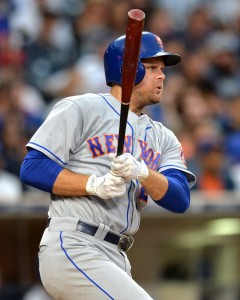
Things didn’t pan out that way, however — for multiple reasons. First and foremost, the Rays simply didn’t get the production they’d hoped out of Duda. At 31 years old, he seemed to still be in his prime, but the slugger mustered just a .175/.285/.444 slash down the stretch. Duda quite clearly still hit for power (13 homers, .269 ISO), but his strikeout rate soared to 31% with his new club.
Had he been a low-average slugger with plenty of pop and walks that slugged some key postseason homers, the Rays would probably have taken that outcome. But Tampa Bay played sub-.500 ball the rest of the way, finishing out the year at 80-82 and missing the playoffs entirely. Duda wouldn’t have been a likely qualifying offer candidate even if the Rays had been able to make one, but the midseason trade rendered him ineligible for a QO, so the Rays simply let him walk for no compensation following the season. Duda signed with the Royals that offseason. His stint with the Rays lasted all of 200 plate appearances.
As far as the Mets’ return goes, things have played out quite nicely. The hope at the time of the swap was surely that Smith would be a quick-to-the-Majors arm. He’d somewhat surprisingly been traded twice in a span of three months, first going from the Tigers — who’d selected him in the third round of the 2015 draft — to the Rays in exchange for Mikie Mahtook. The trade to the Mets came after Smith had climbed to Triple-A in the Rays’ system.
At the time of the deal, Smith was sporting a 1.60 ERA with a 40-to-9 K/BB ratio in 45 innings split between the High-A, Double-A and Triple-A affiliates between his two prior organizations. Baseball America ranked him 24th among Tigers farmhands entering that season, praising a fastball that could reach 97 mph and an impressive 12-to-6 curveball. With his strong start in ’17, he’d clearly bolstered his stock over the course of the season.
Just as the Mets hoped, Smith was in the Majors by 2018. He debuted in late June, less than a year after being acquired, on the heels of a sub-3.00 ERA in Triple-A, and went on to pitch 28 innings of 3.54 ERA ball out of the bullpen. Smith’s rookie season didn’t feature much swing-and-miss, but he walked just five percent of his opponents, kept the ball in the yard and sat at 96.3 mph with his heater. It was a promising start — at least, until injury struck.
One of the knocks on Smith as a prospect had been some injury concern, and he indeed fell to one of the most common and severe injuries that plague all professional pitchers: a torn ulnar collateral ligament in his pitching elbow. Smith missed the entire 2019 season after undergoing Tommy John surgery and was limited to just seven innings in the shortened 2020 season. His efforts to quickly establish himself as a long-term piece in the Mets’ bullpen were delayed — but ultimately not derailed.
Smith returned in 2021 with a slightly diminished fastball (95.3 mph average) but far more bat-missing abilities. He pitched 41 1/3 innings of 2.40 ERA ball in his first season back from Tommy John surgery, striking out 24.8% of his opponents — a major increase from his rookie season’s mark of 15%. His swinging-strike rate jumped from 9.4% in 2018 to a hearty 13.3% in 2021. Smith’s command wasn’t as sharp (9.7%), but that’s hardly uncommon for a pitcher returning from major elbow surgery and a year-long layoff.
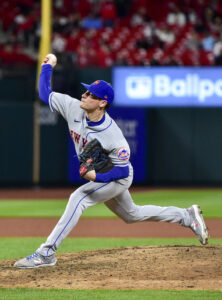
Little has changed in the two years since. Smith remains a fixture in the Mets’ stable of high-leverage options. He’s already picked up seven holds and two saves in 2023, and dating back to Opening Day 2021, he’s pitched 108 innings with an even 3.00 ERA, a 27% strikeout rate and a 9.3% walk rate. This year’s two saves are the first two of his career, and he’s now picked up 21 holds dating back to Opening Day 2022 (after spending much of ’21 in middle relief).
Smith isn’t a superstar by any stretch of the imagination, and he lost nearly two full seasons due to that Tommy John procedure. But he’s a consistent, steady presence in the Mets’ bullpen and is now up to 143 innings in his career, during which time he’s recorded a tidy 3.27 ERA. The Mets are using him in high-leverage spots more often, in part due to closer Edwin Diaz‘s knee injury, but regardless of the reason for it, Smith is answering the call nicely.
Smith is already in his second-to-last season of club control, but as it stands, the Mets look as though they’ll end up with about four and a half seasons worth of a quality middle relief/setup arm. Setting aside the 6.43 ERA he yielded in just seven innings during the shortened 2020 season in the immediate aftermath of his Tommy John procedure, Smith has posted a 3.54 ERA or better in all four of his years as a member of the Mets’ bullpen. He’s come largely as advertised, though he’s dropped that aforementioned curveball in favor of a slider as his favored secondary offering. Since being acquired, Smith ranks fifth among Mets relievers in total innings, fifth in RA9-WAR and eighth in ERA.
Getting several years of a quality reliever in exchange for two months of a defensively limited slugger with platoon issues isn’t the type of heist that fans will be talking about for generations to come, but it’s the sort of underappreciated move that has compounding value. Every year that the Mets entrust Smith with a spot in the bullpen is a year they don’t have to go out and pay free-agent prices to sign someone to do the same job. Free-agent middle relievers and setup men can range from $4-10MM in terms of average annual value, and the results are scattershot at best. And, if a veteran struggles after signing the type of two-year deal in the $12-18MM price range that’s common for free-agent relievers, said team may well have to further dip into the farm to solidify the bullpen come deadline season. Then-Mets GM Sandy Alderson and his staff have to be quite pleased with how things have played out, as does the current Billy Eppler-led baseball operations staff.
Dodgers Select Nick Robertson
The Dodgers have selected the contract of right-hander Nick Robertson from Triple-A Oklahoma City and optioned fellow righty Tayler Scott to Triple-A in a corresponding move, per a team announcement. It’ll be the big league debut for Robertson, a 24-year-old bullpen prospect, whenever he first takes the mound. The Dodgers already have an open 40-man spot, so they don’t need an additional move beyond optioning Scott.
Robertson, the Dodgers’ seventh-round pick in the 2019 draft, ranked 46th among Dodger prospects on the list of FanGraphs’ Eric Longenhagen back in January, where he was tabbed as a likely middle reliever despite going unselected in the Rule 5 Draft. He’s had an outstanding start to his season in OKC, pitching 25 1/3 innings with a 2.13 ERA that’s backed by an exceptional 37.4% strikeout rate and strong 7.1% walk rate. Robertson has kept the ball on the ground at a 48.1% clip and found success against both righties and lefties, the latter likely in large part due to heavy usage of an above-average changeup.
While he had a rough go in a couple stints of Double-A ball, Robertson has breezed through Triple-A pitching, both in a small sample of 11 1/3 innings last year and in this season’s 25 1/3 frames. He looks the part of a big league-ready bullpen piece, and the Dodgers will give him that opportunity as they look to stabilize what’s been a top-heavy unit. Dodgers relievers rank 26th in baseball with a 4.64 ERA, and the majority of their success has come from Evan Phillips, Brusdar Graterol and Caleb Ferguson. Robertson will get the chance to help smooth things out, although given the Dodgers’ habitual cycling of arms through the final few spots of their relief corps, it wouldn’t be a surprise to see Robertson optioned a few times even if he performs well.