
Marlins’ Dax Fulton To Undergo Elbow Surgery
Marlins pitching prospect Dax Fulton is expected to miss the remainder of the 2023 season due to elbow surgery, Barry Jackson and Craig Mish of the Miami Herald report. The 21-year-old Fulton will undergo a repair but not full reconstruction (i.e. Tommy John surgery) of the ulnar collateral ligament in his pitching elbow. Internal brace and primary repair procedures that are less invasive than a full replacement/reconstruction of the UCL have gained popularity in recent years, though such operations still require lengthy recovery periods.
Fulton becomes the latest in a deep crop of Marlins pitching prospects to incur a major injury setback, although given the sheer volume of quality pitching in Miami’s system and the general attrition rate of pitching prospects, injuries throughout the group were inevitable. Sixto Sanchez has had multiple shoulder surgeries, while Max Meyer and Jake Eder both underwent Tommy John surgery last year.
Fulton isn’t necessarily as touted as that trio, though Keith Law of The Athletic ranked him among the game’s top 100 prospects heading into the season. The former No. 40 overall draft pick pitched to a combined 3.80 ERA in 118 1/3 frames between High-A and Double-A in 2022 and opened the 2023 season back at Double-A. With a strong showing in Pensacola, a promotion to Triple-A was likely — and an eventual 2023 look in the big leagues likely wasn’t entirely off the table.
Fulton already had Tommy John surgery in high school. A second surgery to address the ulnar collateral ligament in his left elbow before he’s even turned 22 years old is an ominous development, but the Marlins are currently hopeful that he’ll be ready for spring training 2024, per the Herald report.
The Marlins placed Fulton on the minor league injured list last month. Prior to landing on the shelf, he’d made six starts and a relief appearance in Double-A Pensacola, pitching to a 5.18 ERA with a 26.4% strikeout rate against a rough 12.8% walk rate. Scouting reports on Fulton tout his plus breaking ball, and Law credits him with a plus changeup as well. Fulton isn’t a flamethrower by today’s standards, topping out at 96-97 mph with his heater and averaging a few ticks shy of that max output.
If Fulton is indeed back to full strength next spring, he could still reach Triple-A next year and be on the doorstep of the big leagues, though with just 33 innings pitched this year, his workload will figure to be monitored. He’s not yet on the 40-man roster and won’t be eligible for selection in the Rule 5 Draft until the 2024-25 offseason, so the Marlins don’t yet need to worry about exhausting his minor league options. The focus for now will be on getting the promising lefty back to full strength and ready for the ’24 campaign.
Best Deadline Rental Returns In Recent History, No. 4: Twins Get Baseball’s Hardest-Throwing Reliever
With the trade deadline now less than two months away, we at MLBTR are setting our sights backwards for a bit to highlight past trades of rental players to provide a loose guideline of what sort of returns fans can expect with their teams’ current rental players. With an arbitrary cutoff point of 2017-21, we’re counting down the top 10 returns that a team got when selling a rental player. We’ve already published some honorable mentions as well as entries No. 10, No. 9, No. 8, No. 7, No. 6 and No. 5. If you disagree with our rankings, let us know! It’s all part of the subjective fun! Onto No. 4…
The 2018 season marked the end of an era in Minnesota. Former No. 1 overall pick, six-time All-Star, three-time batting champion and American League MVP Joe Mauer was playing out the final season of his contract and of his career. That $184MM deal didn’t go at all as hoped, as a series of concussions forced Mauer from behind the plate to first base and surely contributed to a decline at the plate as well. The Twins hoped to bolster the roster with a series of what looked to be solid veteran pickups in the 2017-18 offseason, adding veterans Addison Reed, Lance Lynn, Jake Odorizzi, Zach Duke, Logan Morrison and Fernando Rodney via free agency and trade.
Any hopes of contending were dashed with a catastrophic start to the season, however. Minnesota started out with a solid 8-5 showing to begin the year but dropped 11 of the next 12 games, falling all the way to 9-16 on just May 1. By the time July rolled around, Minnesota was 10 games under .500 and nine games out of first place in the division.
Unsurprisingly, as the deadline approached, the Twins took the general position of sellers. Veterans Lynn, Brian Dozier and Ryan Pressly were traded away. Both Lynn and Dozier were rental players, but the returns on those deals proved negligible before long, and they were never under consideration for this series. There was one more veteran on an expiring contract that the Twins traded away, however: utilityman Eduardo Escobar.
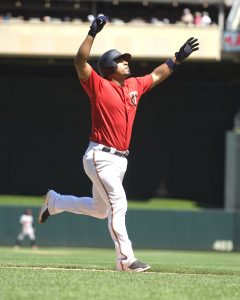
The affable switch-hitter, then 29 years old, was in the midst of a career-best season at the plate. The D-backs, needing an upgrade in the infield and eyeing Escobar’s .274/.338/.514 batting line and 15 homers, put together a package of three players that won the bidding for Escobar: 19-year-old outfielder Gabriel Maciel, 22-year-old outfielder Ernie De La Trinidad … and a 20-year-old righty named Jhoan Duran. Given the ages of the players acquired, the Twins knew this was a long-term play at best. Only De La Trinidad, the “third” piece in the deal, was anywhere close to contributing in the Majors, and even he was just in A-ball at the time of the trade.
The D-backs got what they were hoping for out of Escobar — and then some. He slashed a solid .268/.327/.444 in Arizona following the trade but also enjoyed his time there to the point that he opted to forgo a trip to the open market in favor of a three-year, $21MM extension just days before he was slated to officially become a free agent.
Escobar was again quite good with the Diamondbacks in 2019, popping a career-high 35 home runs, 29 doubles and an MLB-best 10 triples in what’s now commonly referenced as the juiced-ball season. He struggled in the shortened 2020 campaign but rebounded nicely in 2021 — earning the lone All-Star appearance of his career to date. The D-backs were out of contention themselves in ’21 and traded Escobar to the Brewers for catcher/outfielder Cooper Hummel and infielder/outfielder Alberto Ciprian. Hummel has since been flipped to the Mariners in exchange for oft-injured former Rookie of the Year Kyle Lewis.
Looking at the Twins’ side of the deal — just as with No. 7 entry Alex Lange and the Tigers, it’s taken a few years for the results to manifest. However, the Twins have to be thrilled with Duran’s emergence as a premium reliever. The flamethrowing righty is a human highlight reel thanks to a heater that can run up to 104 mph and a splitter/sinker hybrid (“splinker”) that averages 99.1 mph and regularly crosses the plate at triple-digit velocities. Unlike many of his flamethrowing counterparts, Duran has also shown strong command. This year’s walk rate is higher than his stellar rookie campaign, but overall Duran has walked a better-than-average 7.7% of his big league opponents.

Since making his debut with the Twins early last season, Duran owns a superlative 1.75 ERA with a 33.8% strikeout rate, that 7.7% walk rate and a massive 62.6% ground-ball rate. He’s baseball’s hardest-throwing reliever and ranks at or near the top of leaderboards in opponents’ chase rate, swinging-strike rate and “expected” batting average and wOBA (per Statcast). He’s tallied 18 holds and moved into the primary closer role for Minnesota, adding 16 saves since being given the lion’s share of opportunities.
Rather quickly, Duran has thrust himself into the conversation for baseball’s best reliever. He ranks sixth among all qualified MLB relievers in ERA dating back to the beginning of the 2022 season. His strikeout rate sits ninth in that same group, and his K-BB% is 13th. Only Clay Holmes and Andre Pallante have induced ground-balls at a higher rate. Only Edwin Diaz, Andres Munoz and the previously mentioned Lange induce swinging strikes at a higher rate than Duran’s 18.2%, and only six relievers have induced chases on pitches out of the strike zone at a higher clip than Duran’s 40.3%.
Duran is the only one of the three prospects acquired for Escobar who’s panned out, but he’s panned out in a massive way and is under club control all the way through the 2027 season. Neither Maciel nor De La Trinidad is in the Twins organization anymore — and neither even climbed as high as the Triple-A level in Minnesota’s system. Had either amounted to even a fourth outfielder at the big league level, the Escobar trade could well rank even higher in this series.
Instead, it can largely be viewed as a win for both clubs, even if the Snakes would surely love to have Duran in their bullpen at present. The D-backs got a productive couple months from Escobar, extended him for three more years at a reasonable rate, got some good production from him and eventually traded him for more minor league talent. The Twins keyed in on a series of high-upside but high-risk prospects rather than lower-upside players who might’ve been closer to the big leagues. We regularly see teams acquire low-level position players with loud tools or low-level pitchers with huge arms in rental trades. The success rate on players who are that far from the Majors is understandably quite a bit lower — but the Twins’ acquisition of Duran is the exact type of jackpot all teams are trying to hit in these scenarios.
Images courtesy of USA Today Sports.
Giants Promote Keaton Winn
The Giants have recalled right-hander Keaton Winn from Triple-A Sacramento and optioned fellow righty Tristan Beck to Sacramento in his place, per a team announcement. It’ll be the MLB debut for Winn whenever he takes the hill.
San Francisco has Logan Webb, Alex Cobb and Anthony DeSclafani lined up to start their respective games Monday through Wednesday this week, so there’s no immediate opening in the rotation. However, the Giants went with multiple bullpen games this past weekend, so there’s a need for some long relief in the event that one of the current rotation members has a short start or departs with an injury. Winn, who’s operated primarily as a starter in the minors, can give them just that.
The 25-year-old Winn has made a dozen appearances in Triple-A this year, all but three of them coming as a starter. The Giants have limited him on a per-outing basis, as Winn’s longest appearance of the season spanned just 4 1/3 frames and he has only 41 1/3 innings combined through those 12 outings. He’s pitched to a 4.35 ERA in that time, with a strong 27.1% strikeout rate and 50.9% ground-ball rate but an ugly 11.2% walk rate.
Baseball America ranks Winn 14th among Giants prospects, noting that he has a mid- to upper-90s heater, a newly adopted splitter and an average slider. There’s a chance for him to stick as a starter at the big league level, and perhaps even a vacancy at the moment with Sean Manaea in the ‘pen and veterans Alex Wood and Ross Stripling on the injured list due to back injuries. Then again, Evan Webeck of the San Jose Mercury News tweets that Wood threw a 50-pitch session over the weekend and could be ready for activation as soon as he’s eligible, on June 16.
Winn’s role in the short-term will likely be dependent on the health of his fellow pitchers and how late into the game they’re able to pitch in the coming days. He hasn’t pitched since June 4, so the Giants will surely want to get him some work sooner than later. Winn could be optioned back in the coming days if he’s called upon for a lengthy bullpen appearance and would be unavailable for a few days anyhow, but his first call to the big leagues puts him squarely on the radar when the team needs bullpen or rotation help moving forward.
Cardinals Place Ryan Helsley On Injured List
The Cardinals announced Monday that they’ve placed right-handed reliever Ryan Helsley on the 15-day injured list due a strained right forearm. Right-hander Jake Woodford has been recalled from Triple-A Memphis in his place. Helsley’s placement on the injured list is retroactive to June 10.
Helsley hasn’t pitched in a game since the middle of last week, despite the Cardinals playing in a pair of close games since then. Giovanny Gallegos received the team’s most recent save opportunity, last Friday, when the bullpen was at full strength following an off-day. Helsley’s dayslong absence from game activity now makes a bit more sense. He’ll be sidelined through at least the 25th of the month, though the team has yet to provide any real detail regarding his prognosis or potential recovery window.
Losing Helsley is a blow to an already reeling Cardinals club. While he hasn’t been quite as dominant as he was in 2022, the 28-year-old righty currently boasts a 3.24 ERA, 32% strikeout rate, 10.7% walk rate, a 43.1% grounder rate and seven saved in 25 innings out of the ‘pen. Since the calendar flipped to May, Helsley was carrying a 2.40 ERA and a 20-to-6 K/BB ratio in 15 frames.
With Helsley sidelined for at least the foreseeable future, save opportunities will likely fall to the aforementioned Gallegos. The pair had been tied in saves prior to Gallegos notching his eighth of the season Friday when Helsley was unavailable. With Gallegos likely assuming full-time closing duties, setup work will fall to a combination of Andre Pallante, Jordan Hicks, Drew VerHagen and Genesis Cabrera. VerHagen’s seven holds currently lead the Cardinals, though he’s surrendered runs in three of his past four outings.
Woodford, 26, has pitched primarily out of the rotation for the Cards in 2023 but struggled to a 5.40 ERA in 30 innings. The right-hander’s 13% strikeout rate is among the lowest in MLB, but he has a strong 8% walk rate and 53.8% ground-ball rate as well. He’ll likely give the Cardinals some bullpen depth for the time being, as the rotation is still five-deep even after moving veteran Steven Matz to the bullpen. Adam Wainwright, Jordan Montgomery, Miles Mikolas, Jack Flaherty and Matthew Liberatore figure to continue starting for St. Louis as the 27-39 Cardinals try to claw out of the NL Central cellar.
Royals Sign Matt Beaty, Jermaine Palacios To Minor League Deals
The Royals announced Monday that they’ve signed first baseman/outfielder Matt Beaty and infielder Jermaine Palacios to minor league contracts. Both will be active at the team’s Triple-A affiliate in Omaha this week.
Beaty, 30, returns to the Royals after spending all of 2023 spring training with them. The Giants acquired Beaty just prior to the start of the season and carried him on their Opening Day roster, but he was optioned in mid-April and designated for assignment at the end of May. Beaty cleared outright waivers and rejected a minor league assignment in favor of free agency.
The rebuilding Royals have now liked Beaty enough to ink him to a minor league deal twice in the past several months. He’ll rejoin the organization after batting .272/.406/.477 in 129 Triple-A plate appearances with the Giants’ Sacramento affiliate. Notably, Beaty’s return also aligns with some uncertainty regarding first baseman Vinnie Pasquantino. The 25-year-old Pasquantino was placed on the injured list due to shoulder soreness over the weekend, and he’s headed for an MRI today. Nick Pratto is likely to step in and take the bulk of the playing time at first base for however long Pasquantino is sidelined, but Beaty gives the Royals another lefty-swinging hitter who can fill a first base/corner outfield/designated hitter role.
Beaty struggled through a miserable showing with the Padres in 2022, though his .093/.170/.163 batting line came in a sample of just 47 plate appearances. It’s understandable enough why the Padres opted to quickly move on, but in 556 prior plate appearances with the Dodgers from 2019-21, he posted a solid .262/.333/.425 batting line.
Even if Pasquantino doesn’t end up missing much time at all, there’s a chance Beaty could play his way onto Kansas City’s big league roster. Veteran outfielder Jackie Bradley Jr. hasn’t hit whatsoever with the Royals, and catching/outfield prospect MJ Melendez has struggled mightily while playing primarily in the outfield. Utilityman Nate Eaton and outfielder Kyle Isbel have also struggled. Veteran corner options like Hunter Dozier and Franmil Reyes, meanwhile, have both been released. At present, Edward Olivares is the only full-time Royals outfielder who’s been at least average at the plate.
As for the 26-year-old Palacios, he was once a well-regarded prospect with the division-rival Twins, who traded him to the Rays in exchange for righty Jake Odorizzi several years ago. Palacios didn’t hit much in the Rays organization and returned to the Twins on a minor league deal prior to the 2021 season. He had a pair of solid minor league seasons in 2021-22 and even made his big league debut with the ’22 Twins. However, in 77 plate appearances he batted just .143/.184/.229.
Palacios hit .283/.341/.462 in 428 Triple-A plate appearances for the Twins a season ago, but he opened the year with the Tigers’ top affiliate and got out to just a .176/.232/.352 start in 138 plate appearances. Detroit released him just last week. He’s a quality defender who, in addition to that strong year with the Twins’ St. Paul affiliate in 2022, posted a huge showing in the Dominican Winter League this offseason (.400/.471/.633 in 138 plate appearances). He can play any of shortstop, second base and third base at an above-average level.
Astros GM: “Versatile” Left-Handed Bat Would Be “Ideal” Deadline Acquisition
There’s still seven weeks until this year’s Aug. 1 trade deadline, but teams are beginning to look ahead and identify their preferred areas of upgrade even with plenty of schedule left before that pivotal date. D-backs GM Mike Hazen candidly discussed some of his team’s needs last week, and Astros GM Dana Brown did the same over the weekend in an appearance with Robert Ford on Houston’s Sports Talk 790 AM (audio link). Specifically, Brown called a “versatile” left-handed bat who can play both the infield and outfield an “ideal” addition for his club.
“We’re having meetings about trade, and if we can add a bat, that would be outstanding,” says Brown. “We’re not opposed to adding another arm if it makes sense and if the deal is right, but I really feel like the pitching has carried us for the most part this season. If we can add a bat, that would be exciting. … A left-handed bat would be exciting, but any bat that can hit both sides, that’s actually good too. In terms of position, if you can get a guy that can play multiple positions, that would be great. You could give some guys some time in the outfield, give the first baseman a day, give the DH a day. Having a guy that’s versatile — that would be ideal.”
With Yordan Alvarez and Michael Brantley both on the injured list — Brantley has yet to even play this season — the only left-handed bat in Houston’s lineup is Kyle Tucker. The Astros also have a primarily right-handed bench, with only catcher Cesar Salazar offering a lefty stick. The disparity is plenty apparent when looking at the team’s splits. Astros hitters are batting a strong .260/.326/.437 against lefties in 2023 (111 wRC+, 10th in MLB) but have a .241/.310/.382 output against righties (94 wRC+, 18th in MLB).
Given the seven weeks remaining between now and the deadline, it’s impossible to say exactly who’ll be available that fits that description, though there are some names who seem likelier than others. For example, assuming he’s back from the injured list and at full strength by that time, former NL MVP Cody Bellinger could fit the bill. The Cubs are currently nine games under .500, and Bellinger is playing on a one-year contract.
More controllable names who speculatively meet that criteria include A’s slugger Seth Brown (controlled through 2026), Tigers utilityman Zach McKinstry (through 2027) and Jays infielder/outfielder Cavan Biggio (through 2025). Oakland’s Brown missed more than a month with an oblique strain and hasn’t gotten going so far in 2023, but he’s a career .240/.311/.483 hitter against righties. He can play first base and all three outfield spots, and the A’s are of course open to trading just about anyone. The Biggio name is royalty in Houston, but the versatile 28-year-old has been relegated to a seldom-used bench role in Toronto that leaves both him and the organization in a tough spot. The Tigers probably plan to keep McKinstry around given those additional four years of control, but they’ve lost nine straight and are now 11 games under .500, so there’s likely not much to which they’ll be completely closed off. If the Giants dip out of the race, LaMonte Wade Jr. would fit this bill perfectly, but San Francisco is only a half-game back from an NL Wild Card spot for the time being.
Of course, we’re still likely weeks away from serious trade talks percolating. Deals of significance in June are rare (albeit not unprecedented), making July a far likelier timetable for trade activity to pick up in earnest — particularly after the All-Star Game and MLB Draft are completed. As things stand, the Astros aren’t yet even fully sure as to when they can expect Alvarez and Brantley back. That pair of timetables will surely impact the urgency of this pursuit, but even with both at full strength, there’s plenty of room for Houston to add a lefty bat to manager Dusty Baker’s collection of hitters.
Pirates Outright Chase De Jong
Pirates righty Chase De Jong went unclaimed on outright waivers and was assigned to Triple-A Indianapolis, per the team’s transaction log at MLB.com. De Jong has been previously outrighted in his career, so he has the right to reject that assignment in favor of free agency.
De Jong, 29, was outstanding in Pittsburgh last season but has been unable to replicate his success in 2023. The journeyman right-hander delivered 71 2/3 frames of 2.64 ERA ball a year ago but has thus far been rocked for 17 earned runs in just 11 1/3 innings. De Jong’s 20.1% strikeout rate in 2022 was already below average, but that number has plummeted to 11.7% in this year’s smaller sample. He’s missed fewer bats while continuing to struggle with free passes, and opponents in 2023 have already tagged him for six home runs in just 60 plate appearances.
This is De Jong’s second DFA of the season in Pittsburgh. He had the right to reject an outright assignment last time around as well but opted to accept an assignment to Indianapolis after clearing waivers. He’s pitched 10 1/3 frames in Indy, recording a much sharper 1.74 ERA with a 22.9% strikeout that’s more than double his big league rate but also an alarming 16.9% walk rate. De Jong has a 5.42 ERA in 181 Major League innings and a similar 5.51 ERA in 217 1/3 Triple-A frames. That career ERA in Triple-A is skewed by some earlier struggles; he has a 2.70 mark there in 43 1/3 innings across the past three seasons.
Best Deadline Rental Returns In Recent History, #6: The Cubs’ Fire Sale
With the trade deadline now less than two months away, we at MLBTR are setting our sights backwards for a bit to highlight past trades of rental players to provide a loose guideline of what sort of returns fans can expect with their teams’ current rental players. With an arbitrary cutoff point of 2017-21, we’re counting down the top 10 returns that a team got when selling a rental player. We’ve already published some honorable mentions as well as entries No. 10, No. 9, No. 8 and No. 7. If you disagree with our rankings, let us know! It’s all part of the subjective fun! Onto No. 6…
The 2021 season marked a turning point in Cubs franchise history. Half a decade had elapsed since the team’s curse-breaking 2016 World Series run. The “dynasty” chatter that followed that seven-game victory over Cleveland never really manifested into reality. Chicago was a perennial contender, but that vaunted Cubs core never reached the World Series again and only won one game beyond the National League Division Series before the group was suddenly nearing the end of its time together.
Kris Bryant, Anthony Rizzo, Javier Baez, Willson Contreras, Kyle Schwarber, Jon Lester, Jake Arrieta and Kyle Hendricks was a sensational group of talent around which to build, but Hendricks was the only one of the bunch to put pen to paper on an extension. The group continued inching closer to free agency, and as Lester and Arrieta declined in their latter years in Chicago, some of the shine wore off. The Cubs were a good team, but year after year, the season ended with now-former president of baseball operations Theo Epstein making similar comments about how the “offense broke” or something else went wrong.
Following a 2020 season that saw the Cubs swept out of a three-game Wild Card series against the Marlins in the expanded playoff format, Epstein stepped down from his role as president and turned baseball autonomy over to Jed Hoyer. It was baptism by fire in every sense of the cliche, as Hoyer faced a series of unenviable decisions, beginning with Schwarber. Fresh off a .188/.308/.393 showing in 244 plate appearances in 2020, Schwarber was non-tendered rather than offered a raise heading into his final year of arbitration. Not four weeks later, Yu Darvish was traded to the Padres in a salary-motivated deal that has to date produced just one prospect of any note (Owen Caissie).
Decision time was only just beginning for Hoyer and his staff. The Cubs would need to determine how to proceed with the trio of Bryant, Rizzo and Baez, each of whom were slated to become free agents following the 2021 season. Prior extension talks had never resulted in a deal — though Baez was reportedly quite close to signing before baseball grinded to a halt with the Covid pandemic in 2020. Chicago made one final effort to extend Rizzo that spring, but he spurned their five-year, $70MM offer (and has since banked three years and $56MM in guaranteed money with the Yankees).
The Cubs could’ve traded any of the bunch that offseason, and Bryant’s name in particular echoed throughout the rumor mill as much as it ever had. Ultimately, all three stayed put, and thus the ensuing narratives that would dominate the 2021 Cubs season were set into motion. Would any of Bryant, Baez or Rizzo stay? Was the core finally breaking up? Was this the team’s last chance?
The lackluster offseason headlined by trading the prior season’s Cy Young runner-up should’ve answered that final question on its own, but the Cubs surprised plenty of onlookers by not only fielding a competitive team but vying for first place in the division for much of the first few months. As late into the season as June 24, the Cubs were eight games over .500 and in a first-place tie for the NL Central lead with the Brewers.
A subsequent 11-game losing streak — the first of two 11-game losing streaks for that year’s Cubs — removed all doubt, however. By July 8, the Cubs were below .500, and the surging Brewers had remained hot. They held a 9.5-game lead over the second-place Reds, with Chicago and St. Louis tied for third in the division. The fire sale was coming, and virtually everyone knew it.
Rizzo was the first to go. A July 29 deal sent him to the Yankees in exchange for 19-year-old outfielder Kevin Alcantara and 24-year-old righty Alexander Vizcaino. A day later, Baez was following Rizzo out of Wrigley. Traded alongside right-hander Trevor Williams, Baez went to the Mets in exchange for 19-year-old outfielder Pete Crow-Armstrong. For the next 24 hours, there were serious questions about whether a trade for Bryant would ultimately come together, but in a buzzer-beating deal, Bryant was shipped to the Giants in exchange for 21-year-old outfielder Alexander Canario and 24-year-old righty Caleb Kilian.
You can perhaps call the inclusion of Baez cheating a little bit for the purposes of this series, because Williams’ inclusion meant it wasn’t *technically* a rental. The Mets acquired two months of control over Baez and a year-plus of Williams in this swap. That extra year of control over Williams surely factored into the decision to part with Crow-Armstrong to an extent, but this was a trade about acquiring Baez first and foremost. Baez caught fire down the stretch for the Mets, too, posting a huge .299/.371/.515 slash in 186 plate appearances. The Mets still missed postseason, however, and the trade surely stings when looking at what’s become of the player they surrendered.
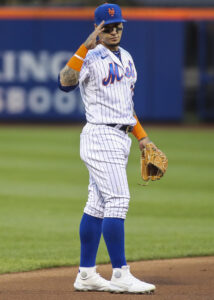
Fast forward less than two years, and “PCA” is regarded as one of the sport’s top outfield prospects. He’s ranked within the top-30 overall prospects in the sport on the most recent lists Baseball America, MLB.com, FanGraphs and Keith Law of The Athletic. ESPN’s Kiley McDaniel has the “low” ranking on Crow-Armstrong… at No. 39 in the game. Regarded as plus-plus defender in center field with plus speed, Crow-Armstrong has opened the season with a .278/.345/.513 showing in Double-A (131 wRC+). He’s knocked eight homers, seven doubles and three of triples while going 13-for-17 in steals.
Obviously, the Cubs haven’t yet gotten any big league value out of Crow-Armstrong, but it’s rare for a team to acquire a prospect in exchange for a rental and see him almost immediately ascend to the point that he’s regarded as one of the top 15 to 30 prospects in all of baseball. If the Cubs wanted to do so — they surely don’t, to be clear — they could use Crow-Armstrong as a headline piece to acquire just about any controllable veteran who hits the market this summer or next offseason. The likelier path for PCA is that he’ll be given every opportunity to become a franchise center fielder for a still-retooling Cubs club.
There’s no nitpicking with the other two swaps in this three-for-one entry. Rizzo and Bryant were shipped out as two-month mercenaries in exchange for a quartet of prospects, although Rizzo took to the Bronx quite nicely and is now locked in as a Yankee through the 2024 season. There was plenty for the Yankees to like, as Rizzo hit .249/.340/.428 (113 wRC+) down the stretch, swatting eight homers and seven postseason doubles before tacking on another dinger in that year’s Wild Card loss to the Red Sox. In parts of three seasons as a Yankee, Rizzo is a .245/.344/.468 hitter with 51 home runs.

I doubt the Yankees regret making this swap, but it’s worked out nicely for the Cubs as well. Alcantara, now 20 years old, isn’t as highly regarded as Crow-Armstrong, but he entered the season ranked No. 91 on Baseball America’s Top 100 prospect rankings. He’s dropped off that list after a slow start in High-A (.250/.281/.389), but he still sits at No. 75 at FanGraphs and is generally a very well regarded prospect.
It’s worth bearing in mind that those pedestrian High-A numbers have been posted against competition that is, on average, nearly two and a half years older than Alcantara. The towering 6’6″ toolbox is also just a season removed from a much heartier .273/.360/.451 showing in Class-A, where he was nearly two years younger than the league’s average player. He’s a ways off, but like Crow-Armstrong, Alcantara has significantly elevated his stock since that 2021 trade. If the Cubs were so inclined, he too could be a significant piece in any potential deadline trade for controllable big league help. That’s not likely to happen — granted, it’s a bit more plausible with Alcantara than with Crow-Armstrong — but Alcantara has become a reasonably high-profile prospect.
That’s not the case with the now-26-year-old Vizcaino, though the circumstances surrounding his departure from baseball remain unclear. The Cubs placed Vizcaino on the restricted list in 2022 after he failed to report to spring training. He spent the entire year on the restricted list. The Cubs non-tendered him last offseason, and he didn’t sign with another team. Details surrounding Vizcaino’s abrupt departure from the game are basically nonexistent. The obvious hope is that he’s happy and healthy wherever he’s at, but it’s a disappointing outcome for the Cubs.
As for the third and final chapter of this deadline trio, Bryant proved an important pickup for the Giants. True, San Francisco would’ve made the postseason regardless, evidenced by their MLB-best 107 wins that season, but they edged out the division-rival Dodgers for that NL West crown by a margin of just one game. Bryant’s solid .262/.344/.444 slash may not have been in line with his peak form, but he contributed a meaningful presence in the Giants’ lineup down the stretch. They’d go on to fall to those same Dodgers in the National League Division Series, but not through any fault of Bryant’s. He delivered an 8-for-17 performance in the NLDS, adding a homer and a walk with only three strikeouts in 18 total trips to the plate.

Unlike with the other two trades, Cubs fans have at least gotten a look at one element of this return, although the now-26-year-old Kilian’s big league work to date hasn’t been pretty. The 6’4″ righty is still widely regarded as one of the organization’s best pitching prospects, but he’s been tagged for 20 earned runs in 14 2/3 innings through a pair of very limited auditions. He’s pitched 148 Triple-A innings as a starter over the past two seasons, logging a 4.32 ERA with a 24.2% strikeout rate against an 11.1% walk rate.
Command wasn’t an issue for him prior to reaching Triple-A, but he struggled with walks last year. It’s encouraging that he’s walked just 6.8% of his opponents over his past seven Triple-A starts, pitching to a 3.09 ERA along the way, but Kilian has also plunked six hitters in that time so he’s not out of the woods with his shaky location just yet. He’s in the mix to come up and make some starts this year still, and depending on how he fares, Kilian could be a candidate for a rotation spot either later this season or in 2024.
As for Canario, he finished second among all minor leaguers with 37 home runs in 2022 and hit .252/.343/.556 across High-A, Double-A and Triple-A. He added 23 steals (in 26 tries) and walked at an 11% clip, though his 27.5% strikeout rate was more concerning. Baseball America calls him a potential low-average slugger with plenty of walks, above-average speed and above-average defense in right field. He hasn’t yet gotten a chance to build on last year’s breakout, as he dislocated his shoulder while playing in the Dominican Winter League.
We’re just shy of two years removed from the Cubs’ deadline fire sale, and while it’s still early to grade the overall strength of their return, things are looking promising. To trade three rental players and come away with a pair of top-100 prospects — including one who’s widely ranked in the top 25 — as well as a near-MLB starting pitcher and a strikeout-prone but prodigious slugging outfielder with power, speed and defensive upside is objectively impressive.
On the one hand, it’s a testament to the caliber of the players the Cubs were trading, but not all trades of star players result in this type of return. The Orioles have still barely gotten anything from the Manny Machado trade nearly five years after its completion. The Rangers’ trade of Darvish to the Dodgers netted them one immediate top prospect, but two years after the deal that prospect (Willie Calhoun) was already looking like a questionable big leaguer.
The tail-end of the development phase for the prospects acquired here — particularly Crow-Armstrong — will define this series of trades. But four of the five prospects acquired in this slate of trades have enhanced their stock since joining the Cubs, who now have a handful of near-MLB-ready talent and/or trade chips to show for parting with a trio of popular veterans. The 2021 trade deadline was a dark few days for Cubs fans, but there’s a good chance it’ll wind up leading to some brighter times ahead.
Images courtesy of USA Today Sports.
Nationals Claim Joe La Sorsa
The Nationals have claimed left-hander Joe La Sorsa off waivers from the Rays, the team announced Thursday. La Sorsa, who was designated for assignment by Tampa Bay earlier this week, been optioned to Triple-A Rochester. The Nats had multiple 40-man vacancies after this week’s DFAs of Andres Machado and Erasmo Ramirez, so a corresponding move is not necessary. Ari Alexander of KPRC 2 in Houston first reported the move.
La Sorsa, 25, made his big league debut with the Rays this month, pitching 4 1/3 innings of one-run ball with three hits and three walks with three strikeouts. He’s had a nice showing so far between Double-A (three innings) and Triple-A (21 innings) so far in 2023, pitching to a combined 3.38 ERA with a 7.5% walk rate. La Sorsa’s 14.2% strikeout rate is well below average, checking in at less than half the 31.7% clip he showed between High-A and Double-A just last season. It’s a generally small sample, though, and La Sorsa’s 13% swinging-strike rate in Triple-A certainly seems to portend an eventual uptick in the strikeout department.
While La Sorsa has never ranked as a top prospect, he’s a controllable lefty with a nice minor league track record who has all three minor league option years remaining. He’s pitched 203 2/3 innings of minor league ball with a 2.87 ERA, fanning nearly four and a half times as many hitters — about a quarter of his total opponents — as he’s walked in that time. For a Nationals club with little stability in the bullpen, he’s an interesting potential long-term pickup who could eventually carve out a regular role in the relief corps.
Padres, Blake Cederlind Agree To Minor League Deal
The Padres have agreed to a minor league contract with right-hander Blake Cederlind, reports Jason Mackey of the Pittsburgh Post-Gazette (Twitter link). The Pirates released Cederlind in late May after he struggled through six frames with their Class-A affiliate.
Cederlind, 27, was a fifth-round pick by Pittsburgh back in 2016 who pitched his way into prospect status with excellent 2018 and 2019 showings at the minor league level. The Bucs gave him his big league debut in the shortened 2020 season. The 6’3″ flamethrower with a power sinker pitched four solid innings across five games, allowing two runs on three hits and a walk with four strikeouts.
Unfortunately, that’s the last time Cederlind set foot on a big league mound. He underwent Tommy John surgery the following spring, wiping out his entire 2021 season and a portion of his 2022 campaign. During what was supposed to be his comeback year, Cederlind required a second surgery to remove loose bodies from his elbow. He didn’t throw a pitch in the majors or minors from 2021-22.
Despite Cederlind’s struggles this season — nine runs on six hits, six walks and two hit batters in six innings — the mere fact that he was able to take the mound is a sign of some encouragement. He fanned six of his 31 opponents in A-ball and kept the ball on the ground at a strong 50% clip. Obviously, there are some worrying command issues at play, but that’s not exactly unexpected on the heels of a two-year absence owing to multiple elbow surgeries.
Cederlind has a long road to get back to the Majors, but based on his history when healthy, it’s easy enough to see why the Padres are interested in taking a no-risk flier. Prior to his surgeries, Cederlind sat in the upper 90s with his sinker and was able to reach triple digits. He’s only had six innings of experience in Triple-A thanks to the canceled minor league season in 2020, but he overwhelmed Double-A opponents with a 1.77 ERA, 22.7% strikeout rate, 8.6% walk rate and 48.3% ground-ball rate. It’s not yet clear to which affiliate they’ll sign Cederlind.