
Brewers Claim Chi Chi Gonzalez
The Brewers have claimed right-hander Chi Chi Gonzalez off waivers from the Twins, per a club announcement. Right-hander Freddy Peralta was transferred from the 10-day injured list to the 60-day injured list to make room on the 40-man roster. Minnesota had both selected Gonzalez’s contract for a spot start and subsequently designated him for assignment over the weekend. He’d also been up for a start as a Covid-related replacement when the Twins were in Toronto.
The Twins signed Gonzalez to a minor league pact over the winter and got some decent innings out of him in Triple-A St. Paul, where he posted a 3.44 ERA with a 23.2% strikeout rate and 9.3% walk rate in 36 2/3 innings (five starts, three relief appearances). Gonzalez tallied seven total big league frames with the Twins but was tagged for six runs on the strength of a dozen hits, including two homers.
A former first-round pick of the Rangers back in 2013 (23rd overall), Gonzalez has now seen action in parts of six Major League seasons between Texas, Colorado and Minnesota but has never had much success. He posted a 3.90 ERA in 67 innings as a rookie in 2015, but he did so while walking more hitters (11.4%) than he struck out (10.7%), so that production never felt sustainable. Indeed, in 201 2/3 frames since that rookie showing, he’s pitched to a collective 6.29 ERA with just a 14.2% strikeout rate (albeit against a solid enough 8.4% walk rate).
Though he hasn’t had much in the way of Major League success, Gonzalez clearly showed enough with the Twins to pique the interest of a Milwaukee front office that has done well when it comes to coaxing new levels of performance from pitchers. The 2022 version of Gonzalez, notably, is a bit different than prior iterations, too. He’s entirely scrapped his curveball, going from a five-pitch mix to a more concise four-pitch mix: sinker, four-seamer, changeup, slider. Gonzalez had begun to move away from the sinker in 2019 upon signing with the Rockies, but he’s using it nearly a quarter of the time in 2022 and enjoying standout ground-ball rates both in Triple-A (55.7%) and the big leagues (55.6%) as a result. He’s also back to sitting at 92 mph with the sinker after seeing his average velocity dip to 90.6 mph in 2021.
Gonzalez doesn’t have any minor league options remaining, so the Brewers will try to elevate his game while he’s working at the big league level. There’s no immediate need in the rotation even with injuries to Peralta and Brandon Woodruff, as the Brewers are getting strong work from Corbin Burnes, breakout lefty Eric Lauer, rookie Aaron Ashby and quietly solid righty Adrian Houser. Rookie Jason Alexander has given them a handful of good starts, too, though like a younger Gonzalez, he’s walked more hitters than he’s fanned along the way. It’s possible Gonzalez will get a spot start for the Brewers, but he’ll otherwise likely be ticketed for a long relief role for now.
Mariners Outright Drew Steckenrider
The Mariners announced Tuesday that righty Drew Steckenrider, who’d been designated for assignment last week, has cleared outright waivers and been assigned to Triple-A Tacoma. He’ll remain with the club but will not hold a spot on the 40-man roster.
Steckenrider has enough service time to reject the assignment in favor of free agency, but doing so would require forfeiting the remainder of this year’s $3.1MM salary. Players gain the right to reject outright assignments beginning with three years of service time, but they can only reject an outright and retain the remainder of their salary once they have five-plus years of service. Steckenrider, 31, entered the season with four years and 94 days of service, meaning he needed another 78 days of service to reach five years. He’s still 10 days shy of reaching that five-year service milestone, so Steckenrider figures to accept the assignment so he can retain the $1.935MM yet to be paid out on his deal.
A minor league signee with the Mariners in Dec. 2020, Steckenrider was a revelation for Seattle’s bullpen in 2021 when he pitched to an even 2.00 ERA with a 21.7% strikeout rate and 6.4% walk rate over the life of a team-leading 67 2/3 bullpen innings. Steckenrider tallied seven holds and eventually got the nod as one of manager Scott Servais’ preferred ninth-inning option, going 14-for-17 in save opportunities. With that showing, Steckenrider looked to have shaken off an injury-marred 2019-20 stretch that saw him pitch to a 6.28 ERA in 14 1/3 innings with the Marlins, for whom he’d previously been a quality setup man.
However, the 2021 season has again been a struggle for the former eighth-rounder. Steckenrider appeared in 16 games with the Mariners this season, pitching to a 5.95 ERA with a dramatically reduced 14.7% strikeout rate against a slightly elevated (but still solid) 7.4% walk rate. His average fastball velocity hasn’t dropped (94.4 mph in 2022, 94.2 mph in 2021), but hitters have teed off on the pitch so far in 2022 after floundering against it a year ago. Opponents batted just .216/.275/.346 last year in plate appearances ending in a heater, whereas they hit .333/.415/.528 in 2022.
Steckenrider had already been optioned to Triple-A Tacoma and made four appearances, allowing three runs on five hits and three walks with three strikeouts. He’ll continue working to get back to his 2021 form with the Rainiers in hopes of an eventual return to the MLB roster. If he does make it back to the big leagues, he’d be arbitration-eligible for the final time this winter. If not, he’ll be able to become a free agent at season’s end (as is the right at the end of the season for any player with three-plus years of service who’s been outrighted and not added back to the 40-man roster).
Braves Select Phil Gosselin, Place Ozzie Albies On 60-Day Injured List
The Braves announced this morning that they’ve selected the contract of veteran infielder Phil Gosselin from Triple-A Gwinnett. Ozzie Albies, who suffered a fractured left foot in last night’s game, has been placed on the 60-day injured list to open a spot on the active and 40-man rosters.
It’s something of a homecoming for Gosselin, who was originally drafted by the Braves in the fifth round of the 2010 draft and made his big league debut with the team in 2013. Much has changed with the Braves since Gosselin was with the big league club from 2013-15, but he ought to be quite familiar with current manager Brian Snitker, a Braves organization lifer who has extensive experience coaching and managing throughout the Braves’ minor league system.
Gosselin returned to the Braves on a minor league deal this offseason and began the season with their Triple-A affiliate, where he’s slashed .297/.358/.473 through 204 plate appearances. He’s played more third base than any other position in the minors this year, but the Braves have also given Gosselin time at second base, first base and in the outfield corners. That’s nothing new for Gosselin, who has played every position other than catcher and pitcher in his professional career.
Since being traded from the Braves to the D-backs, Gosselin has bounced around the league and now seen time with seven teams. He’s settled in as a journeyman utility player, often filling a need but rarely sticking in any one place too long due in large part to a lack of offensive contributions. Gosselin sports a solid .261 batting average in 1122 career plate appearances, but he’s paired that with a below-average .314 on-base percentage and a very light .362 slugging percentage. For teams in need of a serviceable fill-in basically anywhere on the infield — just the situation in which the Braves currently find themselves — the 33-year-old has proven himself a fine role player.
Gosselin figures to see occasional action at second base in place of Albies, but Orlando Arcia is the likeliest option for regular work at the position while Albies mends. Acquired from the Brewers early in the 2021 campaign, Arcia is out to a .313/.393/.458 start in a small sample of 56 plate appearances this year. The former top prospect has a much more tepid .244/.296/.366 batting line in his overall big league career, however, so fans shouldn’t expect Arcia to continue hitting anywhere near that torrid pace.
Depending on Albies’ outlook and whether surgery is required, it’s possible the Braves could look to the trade market to add a more clear-cut starting option. If, however, Albies is expected back by season’s end, the Braves could opt for a piecemeal approach to their newfound second base shortage. Albies will technically be eligible to return on Aug. 13, but as of yet, the Braves have provided neither an update on how the injury will be treated nor on when Albies can be expected to return.
The Other Potential Trade Candidate In The Athletics’ Rotation
For much of the offseason, all talk on the Athletics centered on where the likes of Matt Olson, Matt Chapman, Chris Bassitt, Sean Manaea and Frankie Montas would head once the trade market picked up. We got answers to four of those five, with only Montas surviving the offseason teardown. That’s expected to be temporary, as Montas stands out as one of the most prominent trade targets on the summer market. Arguably the best arm who’ll be available this summer, Montas will dominate headlines over the next seven weeks. However, while Montas is understandably the highest-profile trade target on the Oakland roster, he’s not the only starter on whom the A’s will receive trade interest.
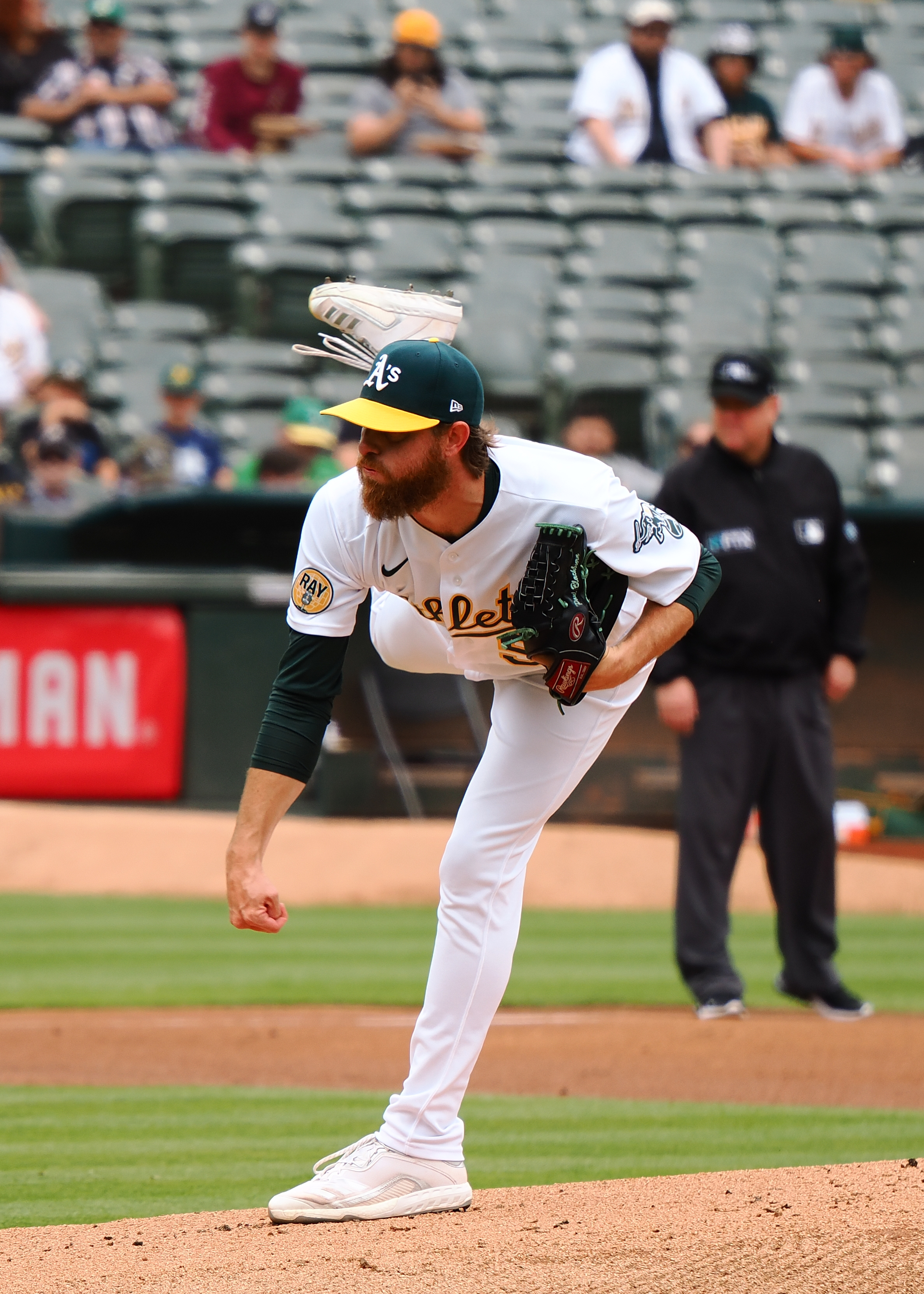
Fans would be forgiven if Paul Blackburn isn’t someone who’s been on their radar — or even if Blackburn is entirely unfamiliar. The 28-year-old right-hander came into the 2022 season with a 5.74 ERA in 138 career innings at the MLB level. He’d accrued two years of big league service already, but much of that was time spent on the injured list. Blackburn missed time in 2018 with a forearm strain and then with a tendon issue in his elbow (lateral epicondylitis). In his two years of service, he’s appeared in just 30 total games — 27 of them starts.
Blackburn, however, has come out of the gate strong so far in 2022. His 66 1/3 innings already represent a career-high in the big leagues, though he’s surpassed 140 total frames in a season several times when combining his Triple-A and Major League work, so workload management shouldn’t be a major concern. So far, in 12 starts, the former No. 56 overall draft pick (Cubs, 2012) has pitched to a sterling 2.31 ERA. Blackburn doesn’t miss many bats, evidenced by a sub-par 17.9% strikeout rate, but he’s also issued walks to just 5.7% of his opponents and induced grounders at an excellent 51.3% clip.
There’s surely some degree of good fortune at play for Blackburn, who’s currently benefiting from a .253 average on balls in play, an 80.5% strand rate and a tiny 6.0% homer-to-flyball ratio. Even with some expected regression on those marks, ERA alternatives like FIP (3.13), xFIP (3.64) and SIERA (3.91) all feel there’s some legitimacy to the idea that Blackburn has pitched like a capable mid-rotation starter thus far.
Statcast largely agrees, crediting Blackburn with a 3.36 “expected” ERA based on his lack of free passes and the generally poor quality of contact his opponents make. Hitters have posted an average exit velocity of just 87.4 mph against Blackburn (league average is 88.8 mph), and just 3.6% (seven total) of the balls hit against him have been considered “barrels” by Statcast — less than half the league average (7.7%).
It’s tempting to assume that Oakland’s cavernous home park has played a significant role in suppressing Blackburn’s ERA, and perhaps it has to an extent, but it’s not clearly reflected in his home/road splits. Blackburn’s two “worst” starts of the season (four runs apiece) have come at the Coliseum, in fact, and he’s sporting a 4.39 ERA at home against a nearly spotless 0.91 ERA in 39 2/3 innings on the road this season. Oakland’s spacious dimensions help any pitcher on the mound from time to time, but Blackburn isn’t the frequently seen case of a pitcher who excels at the Coliseum and is regularly hit hard on the road.
Blackburn doesn’t have overpowering stuff by any stretch of the imagination, but it’s at least worth pointing out that he’s made some velocity gains and altered his pitch usage so far in 2022, which certainly seems to have contributed to his improved results. The right-hander’s sinker sat at 90.4 mph from 2017-20 before climbing to an average of 91 mph in 2021, and it’s now up to 91.9 mph so far in 2022.
Blackburn is also throwing his curveball at a career-high 17.8% rate — and getting outstanding results. He’s thrown 172 curves this season (already a career high) and finished 44 plate appearances with the pitch; opponents have just three hits (all doubles) and 19 strikeouts (43.2%) in those 44 plate appearances. FanGraphs’ run values credit Blackburn with the fifth-most valuable hook in MLB this year (min. 50 innings pitched), trailing only Kyle Wright, Shane McClanahan, Corbin Burnes and Framber Valdez. Among pitchers in that subset who actually throw a curveball regularly, Blackburn’s has been the most valuable on a strictly per-pitch basis.
There’s an easy case to be made for the A’s simply hanging onto Blackburn even if (or when) they trade Montas. While both are controllable beyond the current season, Montas is a free agent after the 2023 campaign and will see his $5MM salary jump close to $10MM next year. His trade value won’t ever be higher than it is over the next few weeks. Blackburn, however, is controlled for three more years beyond the current campaign. The A’s may well decide that’s enough value to hang onto him — particularly if the offers aren’t all that aggressive given the right-hander’s lack of track record prior to the 2022 season.
At the same time, money was the general driving force behind Oakland’s offseason teardown, which stripped the payroll to just under $50MM — second-lowest in all of Major League Baseball ahead of only the rebuilding Orioles. The A’s don’t have a single guaranteed contract on the books for 2023, so payroll should be less of a concern than ever, but Blackburn will reach arbitration for the first time this winter and see his salary jump from its current $710K to somewhere north of $2MM. Oakland will have to spend at least some money on a few players, and Blackburn seems like a solid, affordable option to plug into the rotation at least for the next couple seasons. There’s also a bit of “found money” appeal to the idea of getting a potentially decent return for a starting pitcher who cleared waivers in Feb. 2021 and was barely on the big league radar prior to the 2022 season
It’s unlikely that the A’s will aggressively shop Blackburn, but controllable pitching is the most coveted resource at the trade deadline, so teams will at least inquire about the right-hander’s availability. And the A’s, in the midst of their most aggressive step-back in years, aren’t likely to take any player off the table unless they can control him for five or six more years. That’ll likely lead to some conversations about Blackburn and perhaps about lefty Cole Irvin as well — though Irvin is controllable for an extra year over Blackburn and has some more questionable secondary marks to go along with rather glaring home/road splits. Blackburn, of course, isn’t the ace that his rudimentary ERA currently suggests, but contending clubs need capable innings to round out the middle or back-end of their rotation as well, and he certainly appears capable of filling that role for the foreseeable future.
A’s Release Gabe Klobosits
June 14: The A’s have released Klobosits, per their transactions log at MLB.com.
June 8: The Athletics announced Wednesday that they’ve designated right-hander Gabe Klobosits for assignment and optioned righty Domingo Tapia to Triple-A Las Vegas. That pair of moves creates space for lefty Jared Koenig, whose contract has been formally selected. A’s skipper Mark Kotsay announced earlier this week that Koenig would be selected from Triple-A to start today’s game.
Acquired on a waiver claim from the Nationals back on April 11, Klobosits has spent the entire season with Las Vegas, where he’s posted an unsightly 7.59 ERA in 10 2/3 frames. The towering 6’8″ righty fanned nearly a quarter of his opponents but also issued a walk to 11.8% of the batters he faced.
Klobosits made his MLB debut with the Nats in 2021, pitching to a 5.56 ERA in a small sample of 11 1/3 innings. He averaged 94.8 mph on his heater during that time and induced chases on pitches outside the strike zone at a gaudy 35.6% clip. The former 36th-round pick also posted a 1.64 ERA with a 28.9% strikeout rate against a respectable 8.8% walk rate in a combined 38 1/3 innings between Double-A and Triple-A last year, so despite his struggles in a brief stint with the A’s, he’s had some success in the upper minors.
Notably, Klobosits does not appear on the minor league injured list but also hasn’t pitched in a game for the Aviators since mid-May. The reason for that layoff isn’t clear. Regardless, the A’s will have a week to trade Klobosits, attempt to pass him through outright waivers (assuming he is in good health; injured players cannot be outrighted) or release him.
Looking For A Match In A Willson Contreras Trade
This year’s Aug. 2 trade deadline is just over seven weeks away, and while some names won’t become obvious candidates to move until five or even six weeks from now, others have been evident for more than a year. That’s more true of Cubs catcher Willson Contreras than arguably any player in baseball. There may not be a likelier player to get traded this summer, and the writing has been on the wall for quite some time. The Cubs looked like probable deadline sellers heading into the 2021 season, and Contreras’ fate looked clear when Chicago sold off Javier Baez, Kris Bryant and Anthony Rizzo, among others. Some fans might’ve held out hope for an extension that would make Contreras the centerpiece of the next contending Cubs core, but no long-term deal came to fruition.
From both the player and team vantage point, Contreras’ current career year has come at the perfect time. He’s hitting .267/.394/.506 with 10 home runs, 10 doubles and a triple through 213 trips to the plate. By measure of wRC+, the only catcher who’s been more productive (min. 100 plate appearances) is Willson’s own brother, William, who is having a breakout campaign over in Atlanta. Willson’s 10 homers are tops among catchers, and he’s on pace for career-highs in several offensive categories. A pending free agent couldn’t ask for a much better walk year, and the Cubs have to be thrilled to see him producing like this at a time when league-wide catcher offense hasn’t been this bad since 2002.
Contreras has acknowledged that a trade appears to be his likely fate at this point, and it’s more a question of when and where than whether it’ll happen at all. Since a trade feels far likelier than not, let’s take some time and run through the possible landing spots for Contreras over the next several weeks.
Obvious Fits
Astros: The only team in Major League Baseball that has gotten worse production from behind the plate is the Orioles, who entered the year trying to lose and have since watched their top prospect struggle upon his initial call to the big leagues. Martin Maldonado has posted an awful .153/.225/.277 batting line, while backup Jason Castro has somehow been even worse at .102/.206/.136. Ken Rosenthal of The Athletic wrote this week that the Astros will likely stick with Maldonado despite the complete lack of offense, declining framing marks and increasingly frequent passed balls. The rationale appears to be that Maldonado’s leadership and game-planning skills are too valuable.
That piece, however, did not acknowledge the possibility that the Astros can still go ahead and acquire Contreras, pushing Maldonado to a backup role and jettisoning Castro from the roster. There’s no justification for a supposed World Series hopeful to trot out a pair of catchers that has combined to hit .141/.221/.241 this season. Houston has other needs, be they in center field or at first base where Yuli Gurriel‘s bat has cratered, but Astros catchers have been 63% worse than league-average at the plate (by measure of wRC+). Whatever intangible value Maldonado may be providing with his game-planning, he’s giving a lot of it back at the dish. And, again, it’s eminently possible to keep Maldonado on the roster and still install Contreras as the everyday catcher.
Mets: James McCann hasn’t lived up to his four-year, $40.6MM contract in the first place, and he’s currently on the injured list for the foreseeable future owing to a fractured hamate bone that’ll sideline him into July. McCann should be back in action by the time the trade deadline rolls around, but he’s hitting just .196/.266/.286 on the season anyhow and hamate injuries can have lingering effects on a hitter’s production even after they’re cleared to return.
It’s in the Mets’ best interest to get McCann sorted out at some point, but they have two years left to figure that out (or to find a way to unload the contract). Backups Tomas Nido (.245/.277/.274) and Patrick Mazeika (.186/.205/.326) haven’t provided any offense whatsoever in McCann’s absence. Taking on Contreras pushes McCann to a backup role and deepens the lineup considerably — both this summer as the Braves continue to heat up and climb in the standings and in the postseason, when they’ll be facing off against better pitching than they see during the regular season.
Giants: Buster Posey abruptly retired following a resurgent 2021 season, and former No. 2 overall pick Joey Bart hasn’t been able to seize the opportunity as the Giants’ new starter just yet. Optioned to Triple-A last after hitting .156/.296/.300 through 108 plate appearances, Bart could still eventually sort things out and solidify himself as the Giants’ catcher of the future. For now, however, they’re relying on career backup Curt Casali and journeyman Austin Wynns, whom they acquired from the Phillies last week.
The Giants are a deep-pocketed club with a $162MM payroll that’s nowhere near their franchise record and an improved farm system. General manager Scott Harris, formerly an assistant general manager with the Cubs, is plenty familiar with Contreras and all he can bring to the table.
Payroll Concerns
Rays: Only a hair better than the Astros in terms of their overall production, Tampa Bay catchers are batting a combined .169/.195/.305 this season. Mike Zunino‘s defense remains highly regarded, but he’s having the worst season of his career at the plate (.148/.195/.304). Backup Francisco Mejia has been a bit better at the plate but much worse behind it.
It’s an open question as to whether the Rays, whose current $83MM payroll sadly constitutes a franchise-record mark, would receive ownership support to take on Contreras and the remainder of his salary. The Cubs could perhaps be persuaded to include some cash to cover some or all of the salary, but doing so on their end would require the Rays to part with a steeper prospect package. The Rays, as always, have a deep system and could afford to make such a move. Perhaps they could sell the Cubs on taking back the remainder of the recently optioned Ryan Yarbrough‘s $3.85MM salary to help balance things out a bit. (Chicago could certainly use some more pitching depth.) Specific names aside, there aren’t many more obvious fits for Contreras than Tampa Bay.
Padres: Austin Nola and Jorge Alfaro have combined to bat .239/.298/.326 while logging every inning for the Padres at catcher this season. San Diego has top catching prospect Luis Campusano hitting well in Triple-A, so perhaps the most straightforward path to an upgrade is simply to promote him to the big league roster.
That, paired with the fact that the Friars are just inches below the new $230MM luxury-tax threshold, makes them a tough fit. There’s a clear on-paper need for the Padres to improve their production behind the dish, but the also have needs in the outfield corners and/or at first base, and the bandwidth to take on Contreras doesn’t seem to be there. The Cubs aren’t going to take on Eric Hosmer or another weighty contract in a deal like this, and asking Chicago to pick up all of the remaining tab on Contreras would only up the price.
Guardians: Austin Hedges is one of the best defensive players in baseball, regardless of position … but one of the sport’s worst hitters as well. Maybe Cleveland simply wouldn’t be interested in displacing Hedges and his potential Gold Glove, but it’s hard to look at his .175/.233/.283 batting line and not wonder how the Guardians’ lineup would look upon swapping that out for Contreras and his aforementioned .267/.394/.506 slash. And, as with the Astros, the Guards could certainly keep Hedges as a defensive-minded backup, pushing Bryan Lavastida back to Triple-A and probably pushing Luke Maile off the roster.
Cleveland’s payroll is just under $70MM right now, and one would think that leaves more than enough room to add veterans at the deadline. But payroll has been a major issue in recent seasons, and it’s not clear whether they’ll be close enough to a playoff spot to make a move like this — or whether they’d be willing to part with long-term value for a rental who’d immediately be their second-highest-paid player.
Wait and See
Yankees: The Yankees have received surprising production from trade acquisition Jose Trevino, who’s batted .309/.356/.505 and already matched his career-high five home runs in just 104 plate appearances. Trevino came to the Yankees as a lifetime .245/.270/.364 hitter, however, so it’s fair to be a bit skeptical of his ability to sustain this pace. He’s not striking out much but also isn’t making much in the way of hard contact, either. The trade deadline is still six weeks out, and if Trevino regresses toward his career levels of production, then the Yankees figure to be in this market, particularly with Kyle Higashioka again struggling at the plate.
Mariners: Seattle was getting career-best production from Tom Murphy before he landed on the injured list with a dislocated shoulder. He’s since suffered a setback, and it’s not clear when he’ll be ready to return. Prospect Cal Raleigh is doing his best Zunino impression in place of Murphy, striking out in a third of his plate appearances while showing good power and strong defensive marks. Raleigh, 25, has a .168/.252/.411 batting line with seven long balls in 107 plate appearances. If he can find some more consistency and/or if Murphy can get on track for a return, the Mariners might not feel the need to make this type of move. Beyond that, the M’s have cooled after a hot start and are 4.5 games back from a Wild Card position and six games under .500. They’re close enough to act as buyers right now, but that outlook could change in the coming weeks.
Marlins: Miami hoped to have addressed its catching need this winter when acquiring Jacob Stallings, but he’s hitting .206/.271/.255 in his first season with the Fish. Even more problematic is the team’s overall performance against southpaws: an MLB-worst .205/.280/.315. The Marlins are a fringe contender at the moment and probably have bigger needs even if they were to make a push at the deadline.
Longer Shots
White Sox: The Sox are already paying Yasmani Grandal $18.25MM, and while the resulting .185/.294/.237 batting line can’t sit well with the organization, there’s no indication to this point that they’re prepared to take on a notable veteran like Contreras and push Grandal into the role of MLB’s highest-paid backup. It’d be interesting to see another chapter entered into the story of crosstown Chicago blockbusters, though. The Sox didn’t get what they were hoping for when acquiring Craig Kimbrel last summer, but the prior North Side/South Side swap sent Dylan Cease and Eloy Jimenez to the Sox for Jose Quintana.
Twins: Minnesota’s focus at the trade deadline is going to rightly be pitching help — both in the bullpen and in the rotation — but their catchers have been a middle-of-the-pack unit, at best. Gary Sanchez leads the team in plate appearances at designated hitter and has hit better as a DH than as a catcher. But the Twins feel he’s been better than his reputation with the glove, and they’ve used the DH spot as a means of giving several players off — including Byron Buxton. Sure, the lineup would be deeper and better with Contreras catching, Sanchez at DH and Ryan Jeffers as a backup catcher, but this isn’t going to be a priority.
Red Sox: Christian Vazquez has posted a solid, if unremarkable .271/.315/.374 batting line in 168 plate appearances this season, but neither of Boston’s backup options (Kevin Plawecki, Connor Wong) have provided any offense at all. This doesn’t feel all that likely, as Boston probably has bigger needs to consider when the deadline rolls around — assuming they hang onto (or remain within striking distance of) their current No. 3 Wild Card spot in the American League.
—
Contreras has been the best all-around catcher in baseball this offseason, so you could make the argument that he can/should be shoehorned into just about any contender or fringe contender’s lineup. But when looking at the combination of legitimate playoff chances, pure need behind the plate and realistic ability to facilitate a trade of this nature (based on luxury tax, farm system, payroll), it’s hard to look past the Astros, Mets, Rays and Giants as the best fits for a short-term splash behind the plate.
Cubs Designate Sean Newcomb For Assignment
The Cubs announced Monday that left-hander Sean Newcomb has been designated for assignment. His spot on the roster will go to fellow southpaw Eric Stout, whose contract has been selected from Triple-A Iowa. Stout will be making his first big league appearance since 2018 if he gets into a game.
Chicago acquired Newcomb from the Braves in April, sending veteran righty Jesse Chavez back to Atlanta in the process. It was a buy-low bounceback flier for the North Siders, but the move didn’t pan out. Newcomb could make just three appearances before spraining his left ankle and missing three weeks. He returned to the active roster yesterday, but the Yankees teed off on him for five runs on six hits in just one inning of work. In the wake of that rough outing, the Cubs have decided to move on, joining the Braves in designating him for assignment this season.
It’s been a few seasons of struggles for Newcomb, who was also hit hard over three outings with Atlanta in April. He posted just a 4.73 ERA through 32 1/3 frames last year, largely negating a quality 28.7% strikeout rate by walking an unacceptable 18% of batters faced. The former first-round pick had been hit hard during four starts in the shortened 2020 season as well, so he hasn’t found a sustained run of MLB success since 2019.
Nevertheless, Newcomb caught the attention of the Cubs based on his early-career form. He threw 68 1/3 innings of 3.16 ERA ball three years ago, showing much better control and inducing grounders on nearly half the batted balls he allowed. While his strike-throwing has become particularly erratic in recent years, Newcomb continues to throw in the mid-90s and drew praise from prospect evaluators for his breaking stuff.
Newcomb is out of minor league option years, so the Cubs had to either keep him in the majors or take him off the 40-man roster. Now that they’ve chosen the latter course of action, they’ll have a week to deal him again or try to run him through waivers. Newcomb is making $900K this season, certainly not an exorbitant sum but a bit more than the league minimum salary.
Stout is a Chicago-area native who’s in line for his first MLB action in four years. His previous experience at the highest level consists of just three games with the 2018 Royals. A Butler University product, he’s spent parts of five seasons in Triple-A. Stout owns a modest 4.93 ERA over that time, but he’s sporting a 3.94 mark in 29 2/3 frames with Iowa this year.
This has been an atypical season for Stout, who was a pitch-to-contact control artist for much of his early professional career. Over the past couple seasons, though, he’s seen a dramatic spike in both his strikeouts and walks. Those trends have reached new heights this year, as he’s fanned an incredible 36.6% of batters faced in Iowa but also doled out free passes at a nearly 17% clip. That’s something of a similar profile to Newcomb, but Stout still has a pair of options remaining and can move on and off the active roster.
Twins Select Elliot Soto
The Twins announced Monday that they’ve selected the contract of infielder Elliot Soto from Triple-A St. Paul. Right-hander Cole Sands was optioned to St. Paul to make room on the active roster, while righty Cody Stashak was transferred from the 10-day IL to the 60-day IL to open a spot on the 40-man roster. Stashak underwent season-ending shoulder surgery recently.
Soto, a 32-year-old journeyman, made his big league debut with the Angels in 2020 and went 2-for-6 in a brief three-game cup of coffee. Originally a 15th-round pick by the Cubs back in 2010, he’s seen action with the Cubs, Marlins, Rockies, Angels, Dodgers and now Twins over a 12-year minor league career. He was never a top-ranked prospect with any of those teams, although Baseball America at one point rated him as the best defensive infielder in the Cubs’ system.
Thus far in 2022, Soto has appeared in 41 games with the Saints and posted a .213/.327/.331 batting line. He’s a career .262/.341/.371 hitter in 1680 plate appearances at the Triple-A level. The Twins recently lost Royce Lewis for the season when he re-tore the ACL in his surgically repaired knee, and a seemingly minor hamstring issue for Nick Gordon have thinned things out a bit further. Gordon exited Saturday’s game against the Rays early and didn’t start Sunday, though he entered the game in the eighth inning.
Even if Gordon is available to start, Minnesota had been playing with a short bench and a 14-man pitching staff prior to optioning Sands, so Soto will give manager Rocco Baldelli a bit more flexibility.
Phillies Designate James Norwood For Assignment
The Phillies announced Monday that right-hander James Norwood has been designated for assignment in order to open a spot on the roster for fellow right-hander Michael Kelly, whose contract has been selected from Triple-A Lehigh Valley. The Phils also reinstated catcher Rafael Marchan from the 60-day injured list and optioned him to Triple-A.
Acquired from the Padres in an offseason deal that sent minor league infielder Kervin Pichardo to San Diego, Norwood has pitched 17 1/3 innings of relief out of the Philadelphia bullpen but has been tagged for 17 earned runs in that time. The damage hasn’t been confined to one or two poor outings, either, as Norwood has yielded runs in eight of his 20 appearances on the season so far. Overall, he’s yielded 24 hits (two of them homers) and nine walks while punching out 22 batters.
Norwood is out of minor league options — a large reason he was designated by the Padres in the first place — so the Phils couldn’t send him down without first designating him for assignment. They’ll have a week to try to trade him or pass him through outright waivers now. The former seventh-rounder has a decent track record in Triple-A, a fastball that averages just under 97 mph and a splitter that gets him plenty of chases and whiffs. Add in a decent track record in the upper minors, and it’s not out of the question that another bullpen-needy club would want to speculate via waiver claim or perhaps a small trade.
As for the 29-year-old Kelly, he’ll make his big league debut whenever he steps onto the mound for the first time. It’s the culmination of a 11-year baseball odyssey for the 2011 No. 48 overall pick. Originally selected by the Padres, Kelly also spent time with the Orioles, Astros and the Southern Maryland Blue Crabs of the independent Atlantic League before joining the Phillies as a minor league free agent this winter. He’s pitched to a lackluster 5.00 ERA in 18 innings with the IronPigs so far, but Kelly has also punched out 33.8% of his opponents in that time.
The Marlins’ Underappreciated Slugger
The Marlins are 7-3 over their past ten games, though the resulting 27-31 record still lands them 11 games out of first place in the National League East and 5.5 games back of a Wild Card spot. Starting pitching, as one would expect for a team with this type of rotation talent, has helped to drive the recent surge. Arguably the biggest catalyst in Miami’s recent surge, however, has been the first baseman/outfielder who’s carried the offense of late: Garrett Cooper. The Marlins recently placed Cooper on the Covid-19-related injured list, but he was hitting .500/.548/.714 through 31 plate appearances amid their recent uptick in play.
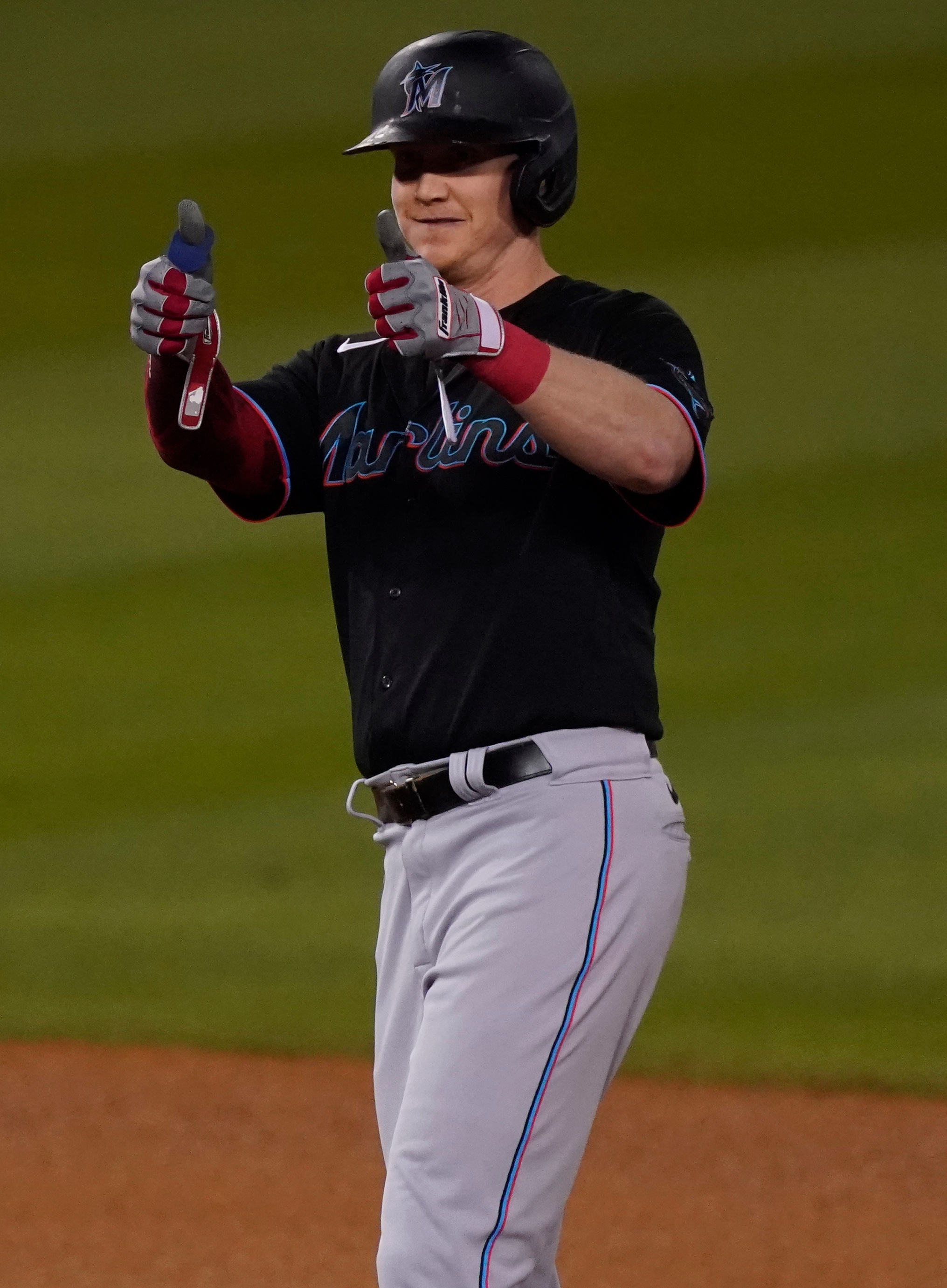
If Cooper’s production happened to be a complete anomaly, perhaps it wouldn’t bear much of a mention. Players go on hot streaks all the time, after all. But while Cooper can’t be expected to continue hitting .500 over any meaningful sample, the recent burst should help to shine a light on the fact that the 31-year-old is among the game’s most underrated bats and has been for some time now. Cooper’s sweltering June isn’t any sort of breakout from a slow start to the year; he entered the month hitting .277/.360/.426 and now, after a recent string of six consecutive multi-hit games, is up to .315/.389/.473 on the year.
By measure of wRC+, Cooper has been about 47% better than a league-average hitter so far in 2022 (after weighting for park and league) — his fourth year as a regular in the Marlins’ lineup and his fourth with above-average overall production. Cooper was a solid hitter back in 2019 (.281/.344/.446, 15 home runs, 111 wRC+), but that came in the juiced-ball season, making it easy to overlook the manner in which he established himself. Since that time, he’s maintained a solid walk rate while hitting for average and showing above-average power. The output has come during the shortened 2020 season and an injury-plagued 2021 campaign, which may have prevented it from getting the attention it should have, but Cooper has been one of baseball’s best hitters on a rate basis dating back to 2020.
In that time, Cooper ranks 20th among 265 big league hitters (min. 500 plate appearances) with a 138 wRC+. He’s hitting .295/.377/.476 during that stretch. Of the 19 hitters ranked above him, 17 are former All-Stars, with the exceptions being Kyle Tucker and Ty France — both likely (or at least deserving) 2022 All-Stars. The top 30 names on that leaderboard represent a veritable who’s who of baseball’s most notable bats, with Cooper quietly lumped into the middle of the group. However, it’s unlikely many would think of Cooper when trying to list off the game’s most productive hitters. He may not even be the first Marlin to spring to mind for most, not with Jazz Chisholm Jr.‘s outstanding showing so far in 2022.
The lack of recognition for Cooper may not be that difficult to explain. He plays for a Marlins team that struggles to draw fans to the park and has just one winning season since 2010 (when they reached the expanded playoffs with a 31-29 record in the shortened 2020 campaign). Cooper hasn’t produced at this level over the course of a full big league season yet — though his production since 2020 has come over the life of 594 plate appearances, which is nearly a full year’s worth of reps. He also missed time with both a lumbar strain and an elbow sprain last year and has only appeared in 100 games in a season once.
It’s tempting, then, to wonder whether Cooper’s production is fluky in nature or attributable to small sample sizes. That doesn’t appear to be the case. The league-average exit velocities over the past three seasons have been 88.4 mph, 88.8 mph and 88.7 mph, respectively. Cooper, in that time, has posted respective exit velos of 90.1 mph, 91.1 mph and 91.6 mph. His 47.2% hard-hit rate (the percentage of batted balls at 95 mph or more) trounces the league average of 38.3%. He’s “barreled” 10.7% of his batted balls in that time, per Statcast — handily topping the 7.8% MLB average.
There’s a platoon split of note with regard to Cooper, but that’s not to say he is or should be considered a platoon player. Rather, it’s just that since 2020, the right-handed-hitting Cooper has been a very good hitter against fellow righties (.279/.370/.437) and one of the very best in the game against lefties (.336/.398/.575). He’s been a legitimate middle-of-the-order presence regardless of opponent.
Although Cooper has only connected on four home runs through 211 plate appearances so far this season, one could still argue that the 2022 campaign has been his best yet. This year’s 23.2% strikeout rate is the lowest of his career, and his 15 doubles are one off the career-high 16 he smacked in 2019 — in more than twice as many trips to the plate. Cooper is sporting a .403 batting average on balls in play this year, and while that’s sure to regress to an extent, there’s no reason it should be expected to plummet to the .288 league average. Cooper entered the year with a career .362 BABIP, and even though it’s fair to be skeptical he can sustain quite that level, a player with Cooper’s hard-contact profile should carry a BABIP considerably greater than that of the average hitter. Statcast pegs his “expected” batting average in 2022 at .301 — only 14 points lower than its current mark.
Meanwhile, only 10.8% of Cooper’s fly-balls have left the yard for homers this year — a mark well shy of the 21.6% rate at which he entered the season. His 2022 rate will likely begin to move closer to that career level, meaning his slugging can reasonably be expected to tick upward even as his average likely moves south.
At 6’5″ and 235 pounds, Cooper’s defensive options are limited to first base and the outfield corners. He’s rated poorly on the grass (-4 Defensive Runs Saved, -5 Outs Above Average in 615 career innings), but defensive metrics view Cooper as a sound, if unspectacular option at first (4 DRS, 5 OAA, 2.9 Ultimate Zone Rating in 1157 innings). With Jesus Aguilar also on the roster, Miami has given Cooper plenty of time at designated hitter, too.
Aguilar has a 2023 mutual option and will likely be a free agent at season’s end — mutual options are rarely exercised by both parties — which at least ostensibly opens the door for Cooper to step in as the everyday first baseman in 2023 That could happen even sooner, if Aguilar is moved on this summer’s trade market. Then again, Cooper himself figures to see his name pop up in trade rumblings, at least if the Marlins aren’t able to further close the gap in the Wild Card standings.
Cooper himself is only controlled through the 2023 season, and with his 32nd birthday looming in December, he’s something of a late bloomer relative to other big leaguers. The Marlins would surely love to keep his bat in the lineup now that they’ve turned more toward a win-now approach, but Cooper’s bat should be a coveted attribute this summer as contending clubs look to beef up their lineups. Because of the time missed due to injury, Cooper’s arbitration price hasn’t built up too extensively; he’s earning an eminently reasonable $2.5MM in 2022. That makes him affordable for any team, and the advent of the universal designated hitter will only further broaden Cooper’s market.
There’s no guarantee the Marlins will seriously entertain offers on Cooper — or on any of their veteran players, for that matter. They’re by no means completely out of the playoff picture, and with 10 of their next 13 games coming against divisional opponents (three in Philadelphia and seven against the Mets), they have a very immediate opportunity to climb the NL East ladder and make things more interesting.
A poor showing, however, will have the opposite effect and will only magnify the pressure to at least listen on some short-term veterans. And while rental bats like Josh Bell, Nelson Cruz, Willson Contreras, Trey Mancini and Andrew Benintendi will draw more headlines as the trade deadline looms, Cooper might draw more actual trade interest, given his affordable salary, extra year of club control and comparable (if not superior) production.