
Rays Acquire Stuart Fairchild, Place Brandon Lowe On Injured List
The Rays announced Tuesday that they’ve acquired outfielder Stuart Fairchild from the Braves in exchange for cash. Tampa Bay also placed infielder Brandon Lowe on the 10-day injured list with tendinitis in his left ankle. Right-hander Manuel Rodriguez goes from the 15-day IL to the 60-day IL to open a spot for Fairchild on the 40-man roster.
Atlanta designated the 29-year-old Fairchild for assignment just yesterday morning. He’s primarily been a pinch-runner and late-inning defensive replacement in the Braves’ outfield. Fairchild has played in 28 games but only come to the plate 55 times this year. He’s hit .216/.273/.333 in that tiny sample and is a career .223/.305/.384 hitter in 670 major league plate appearances overall.
Fairchild, a former second-round pick, has totaled 277 major league games split between the Diamondbacks, Reds, Giants, Mariners and Braves. He has well above-average speed (87th percentile, per Statcast) and can handle all three outfield spots, which has led to him carving out a frequent role as a fourth outfielder. He’s a right-handed bat who offers slightly above-average production against lefties but has struggled considerably in right-on-right matchups. Fairchild is out of options, so the Rays will have to carry him on the big league roster or else designate him for assignment once again.
Lowe exited the Rays’ game on Saturday with what was described at the time as plantar fasciitis. He hasn’t appeared in a game since. As such, the move can be backdated to July 20. That leaves the veteran second baseman time to be reinstated prior to the July 31 trade deadline.
In 350 plate appearances this season, Lowe is hitting .269/.320/.480 with 19 home runs, 11 doubles, three stolen bases, a 6.9% walk rate and a 25.4% strikeout rate. He’s in the final guaranteed season of his contract, though Tampa Bay holds an $11.5MM club option (with a $500K buyout) that seems overwhelmingly likely to be exercised.
The Rays aren’t clear-cut sellers, but there’s always a possibility of them moving some veteran pieces whose club control is dwindling. In that sense, Lowe is a speculative trade candidate who’d presumably appeal to clubs with second base needs (e.g. Giants, Astros). He can be traded even if he’s on the injured list, and as already mentioned, there’s a chance he’s back before the deadline has passed. There’s no guarantee Rays brass will even make Lowe available, but they do have several infield alternatives on the roster (e.g. Jose Caballero, Ha-Seong Kim, Curtis Mead, Taylor Walls).
Rodriguez, 28, has been a key setup arm for Tampa Bay when healthy, tallying 11 holds and a 2.08 ERA in 30 1/3 innings this season. He landed on the injured list due to a forearm strain in early June, and president of baseball operations Erik Neander indicated last week (via Marc Topkin of the Tampa Bay Times) that Rodriguez isn’t expected back anytime soon. It’s still not entirely clear what his prognosis is, but the shift to the 60-day IL leaves him shelved into at least mid-August. Based on Neander’s comments and the fact that Rodriguez isn’t yet throwing, it’s fair to presume it’ll be a good bit longer than that.
Mariners, D-backs Have Discussed Eugenio Suárez
The Mariners are among the teams with interest in Diamondbacks third baseman Eugenio Suárez, reports Jon Heyman of the New York Post. Adam Jude of the Seattle Times further reports that Suárez is viewed as Seattle’s top target in its well-known search for a corner infield upgrade. Jude adds that the Mariners and D-backs have held “preliminary” discussions regarding Suárez, whom Seattle views as a preferable option to Arizona first baseman Josh Naylor.
[Related: Seattle Mariners Trade Deadline Outlook]
The 34-year-old Suárez has emerged as perhaps the most coveted bat on the trade market. He’s hitting .257/.328/.605 with 36 home runs on the season and has been among the sport’s elite power hitters dating back to his July renaissance in 2024. It’s easy to forget now, given how dominant Suárez has been at the plate over the past calendar year, but the beginning of the slugger’s time in Arizona was a disaster. He hit so poorly through the season’s first two-plus months that he began to lose playing time to young Blaze Alexander. That shift didn’t last long, as Suárez caught fire while Alexander stumbled.
Dating back to June 25 of last season, Suárez has come to the plate 751 times and slashed .281/.341/.605 with a whopping 60 home runs, 36 doubles and a triple. Only Aaron Judge and Shohei Ohtani have hit more home runs in that time (66 apiece). Suárez has bludgeoned left-handed and right-handed pitching alike. He’s being paid $15MM this season, with about $5.48MM of that sum yet to be paid out as of this writing. He’ll be a free agent at season’s end.
It’s not entirely clear yet that the Diamondbacks will trade Suárez at all, however. They swept the Cardinals in their first series coming out of the All-Star break, and though they lost to the Astros last night, they’re now just one game under .500 and 5.5 games back in the NL Wild Card chase. The Snakes have two more games against Houston before wrapping up their pre-deadline slate of games with three games in Pittsburgh and three games in Detroit.
Arizona general manager Mike Hazen has made clear that he hopes to avoid a sell-off and act as a buyer at this year’s deadline, but the team will have to perform well enough in this final push to justify that position. The Diamondbacks can also make a qualifying offer to Suárez if they hang onto him, so any trade return would need to eclipse the value of what would likely be a compensatory pick after the first-round of the 2026 draft.
[Related: Arizona Diamondbacks Trade Deadline Outlook]
If the Diamondbacks do end up seriously weighing offers for Suárez, a trade seems like a better outcome than that draft pick, however. The D-backs will likely take aim at contending again next season, and Suárez could net them some talent that can contribute either late this season or early next year. The draft selection would be a longer-term play, of course.
In theory, the Diamondbacks could even trade Suárez while still hoping to remain in contention this year. There’s no replacing his prodigious power output, but top prospect Jordan Lawlar could step into the everyday third base role down the stretch. Lawlar hasn’t hit at all in a tiny sample of 56 big league plate appearances, but he’s never been given any sort of regular playing time, either. He’s decimated Triple-A pitching this year, hitting .319/.410/.583 in 250 plate appearances. He’s currently on the minor league injured list with a hamstring strain but should return shortly after the deadline. Whether it’s this year or next, the 2021 No. 6 overall draft pick seems likely to get the opportunity to prove that he can be Arizona’s long-term option at the hot corner.
If the D-backs sell any veterans — Suárez or otherwise — they’re expected to focus on stockpiling young pitching. On the surface, that might sound like it makes Seattle a particularly appealing trade partner. However, the M’s aren’t going to trade an established starter like Logan Gilbert, Bryan Woo or George Kirby for a rental, and outside of young Logan Evans, most of their higher-end pitching prospects (e.g. Ryan Sloan, Jurrangelo Cijntje) are further down the pipeline.
That’s not to say the two sides can’t line up on a deal. At the end of the day, talent wins out, and if the Mariners offer a demonstrably better package than the Yankees, Cubs and other suitors, the positions of the prospects won’t be crucial. Arizona could look to flip some of those prospects for established big league arms in the offseason, after all. But if the D-backs are weighing two offers they deem to be comparable in value, it seems likely that they’d gravitate toward one that included some pitching talent that could be in the majors before terribly long.
The Diamondbacks lost Corbin Burnes to Tommy John surgery last month. He won’t pitch until late in the 2026 season, at the earliest. Zac Gallen and Merrill Kelly are free agents at season’s end. In-house arms like Blake Walston and Tommy Henry also had UCL surgeries earlier this season. Young righty Cristian Mena has been out since June with a shoulder strain. Top pitching prospect Yilber Diaz has had a disastrous season in the minors. Big league starters Brandon Pfaadt and Eduardo Rodriguez have both struggled. Adding some young arms is a sensible aim for the D-backs front office if they go the sell route in the coming week-plus.
The Mariners, of course, traded Suárez to the D-backs in the first place. That trade, following the 2023 season, was largely driven by a mandate from Seattle ownership to reduce payroll. The Mariners did come away from that swap with righty Carlos Vargas, who’s now a key member of the bullpen (47 innings, 3.83 ERA, 11 holds), but the front office surely would’ve preferred to hold onto the slugger and his vaunted clubhouse presence if not for those financial constraints. Mariners ownership is now reportedly willing to boost payroll, putting a reunion back on the table.
Twins More Seriously Listening To Offers On Rental Players
The Twins have stumbled out of the gate with a 1-3 record in the second half and are beginning to more seriously weigh trades of their short-term players, reports Jon Heyman of the New York Post. Utilityman Willi Castro, outfielder Harrison Bader and left-handed reliever Danny Coulombe are the team’s three most appealing free agents, but the Twins also have righty Chris Paddack, first baseman Ty France and backup catcher Christian Vazquez set to hit the market at season’s end.
[Related: Minnesota Twins Trade Deadline Outlook]
Of course, more of the focus for contending clubs will be on Minnesota’s more controllable and higher-profile talents. Top starter Joe Ryan and high-leverage relievers Jhoan Duran and Griffin Jax will draw widespread interest. Heyman notes that Twins brass won’t turn interested clubs away without hearing them out, but the they would understandably need to be bowled over to consider moving anyone from that group. All three pitchers are controlled for two additional seasons beyond the current campaign.
Among the rental players, Castro fits the broadest number of teams, given his versatility. The 28-year-old switch-hitter is enjoying a nice season at the plate, hitting .258/.350/.435 with 10 homers, 14 doubles, two triples, eight steals (ten attempts) and a career-best 10% walk rate. He’s been productive from both sides of the dish, has above-average speed (74th percentile, per Statcast) and is capable of playing second base, shortstop, third base and the outfield (although defensive metrics have panned his work at shortstop and in center). Castro is earning $6.4MM, making him affordable for virtually any contender.
Bader’s defensive excellence and bounceback year at the plate ought to garner plenty of interest as well. He’s hitting .249/.330/.438 as Minnesota’s primary left fielder, but he’s only in left because of Byron Buxton‘s presence in center. Bader still grades out brilliantly at any outfield slot, and while he’s typically showed notable platoon splits, he’s posted nearly identical numbers against righties and lefties alike in 2025. By measure of wRC+, Bader has been 15% better than average at the plate. He’s sporting his highest walk rate in a 162-game season since 2019 and hitting for more power than he has since 2021 (12 home runs, 11 doubles, .189 ISO in 282 plate appearances). He’s on a one-year, $6.25MM contract with a mutual option that obviously won’t be exercised by both parties.
Coulombe has been quietly terrific. He missed three weeks earlier in the season with a forearm strain but has shown no ill effects. His 0.65 ERA in 27 2/3 frames is the best in baseball among the 433 pitchers who’ve tossed at least 20 innings, and Coulombe has fanned 26.9% of his opponents against a 6.5% walk rate. He doesn’t throw hard (90.2 mph average fastball) and isn’t going to make it the whole season without surrendering a home run — he’s currently yet to do so — but there aren’t many better left-handed options on the market. He’s playing on a one-year, $3MM contract.
The rest of the Twins’ rental options have some track record but are in the midst of poor seasons. Paddack still has good command, but he’s sitting on a 5.14 ERA and career-worst 16.4% strikeout rate. He had a nice run from mid-April to mid-June, but Paddack has never really held up for a whole season under a starter’s workload and has been hit hard since mid-June. He looked impressive in relief when he came back from Tommy John surgery in 2023 and is making a relatively affordable $7.5MM this season, so perhaps a club might roll the dice on him as a bullpen option. Otherwise, his appeal as a fifth starter is fairly limited.
France had a nice start but has seen his role decrease and is now mired in an awful 5-for-41 slump that’s dropped his previously solid batting line to .245/.309/.348. He’s not striking out and has played a strong first base, but he’s a bat-first player who’s in his third straight down year at the plate. France’s $1MM salary is low enough that another club could well roll the dice on adding him to its bench, but he’s not going to net the Twins anything of substance in a trade.
The 34-year-old Vazquez is in the final season of a three-year, $30MM contract that hasn’t gone as hoped. He was always signed to be a glove-first catcher and remains a plus defender, but his once-passable offense has cratered and he’s been thoroughly outplayed by Ryan Jeffers, who has long since claimed the starting role in Minnesota. Vazquez’s .182/.249/.260 batting line in 159 plate appearances is among the least-productive in baseball. He’s still such a good defender that another club might take him on if the Twins ate most of the money he’s owed, but like France and Paddack, he’s not going to net a prospect of any real note.
There are other players the Twins could conceivably market. Right-handed reliever Justin Topa has pitched decently on a $1MM salary and has a cheap $2MM club option for the 2026 season. The aforementioned Jeffers is in his penultimate season of club control, but the Twins lack an heir apparent in the upper minors and starting catchers rarely change teams midseason. Trevor Larnach has been a roughly league-average bat at DH and in the outfield corners and is controlled two more seasons beyond the current one. Righty Brock Stewart has been excellent since the Twins signed him to a minor league deal a couple years back (2.44 ERA, 32.6 K% in 73 2/3 innings since 2022), but he’s frequently been injured. He’s being paid $870K and has two seasons of club control remaining. He could be a nice bullpen piece in future Twins seasons, but if a team is willing to make a decent offer, there could be some temptation to sell high as well.
One player clearly not going anywhere is Buxton. The 2025 All-Star is signed for three more seasons, has a full no-trade clause, and during last week’s All-Star break called himself a “Minnesota Twin for the rest of my life.”
Blue Jays Interested In Mitch Keller
The Blue Jays are among the teams to contact the Pirates about right-hander Mitch Keller, reports Noah Hiles of the Pittsburgh Post-Gazette. They’re the latest in a growing number of clubs reported to have interest in the 29-year-old righty, who’s also drawn looks from the Yankees, Mets and Cubs. Keller is signed through the 2028 season.
Keller’s fit with the Blue Jays is natural in many ways. Toronto will see right-handers Chris Bassitt and Max Scherzer reach free agency at season’s end, vacating two spots in the rotation. Kevin Gausman is signed for only one additional year and will be a free agent in the 2026-27 offseason. Right-hander Jose Berrios has an opt-out clause in his contract that allows him to reenter the free-agent market in the 2026-27 offseason as well. Fifth starter Eric Lauer, who’s been a godsend in Toronto after signing a minor league contract, is controllable via arbitration through 2026.
[Related: Toronto Blue Jays Trade Deadline Outlook]
Adding a steady arm like Keller, who’s in his prime and affordably signed for three additional seasons, has to hold appeal for the Blue Jays — particularly given the number of pitching injuries they’ve seen among their prospect class and other young arms in recent years.
Left-handers Ricky Tiedemann and Brandon Barriera and right-handers Jake Bloss, Landen Maroudis and T.J. Brock have all undergone UCL surgery within the past 15 months. Lefty Adam Macko had knee surgery in February and has been roughed up for 23 runs in 25 Triple-A innings upon returning. Former AL Cy Young finalist Alek Manoah is still on the mend from last year’s UCL procedure and is only controllable through the 2027 season. Bowden Francis has been unable to replicate last year’s late-season showing and has now been out more than a month due to a shoulder impingement.
The Jays still have some notable young arms. Right-handers Trey Yesavage and Khal Stephen, their top two picks in the 2024 draft, are enjoying strong years in their first full professional seasons, and several lower-level arms have made big strides in 2025 but might still be a few years away (e.g. 2022 19th rounder Gage Stanifer, 2020 international signee Kendry Rojas). On the whole, the pitching group has still been hit with a broad range of injuries.
Keller is being paid $15MM this season — just $500K less than the Jays paid to sign the 40-year-old Scherzer to a one-year deal in free agency this past offseason and the same amount secured by older starters Justin Verlander, Charlie Morton and Alex Cobb. Keller is then owed a combined $54.5MM from 2026-28. Added to the remainder of this year’s salary, Keller has almost exactly $60MM yet to be paid out for his three-plus seasons of club control. The Jays have $184MM on next year’s books, which is $70MM less than their current payroll level.
[Related: Pittsburgh Pirates Trade Deadline Outlook]
It’s an eminently affordable rate for a pitcher of Keller’s quality. While he’s not an ace, he’s a former second-round pick and top prospect who has blossomed into a steady mid-rotation arm and could be seen by some other clubs as a pitcher with a bit of yet-untapped potential. Several Pirates pitchers — Gerrit Cole, Tyler Glasnow, Joe Musgrove, Clay Holmes among them — have found new gears upon being traded to other organizations over the years, after all, and Keller is also enjoying his most successful season to date.
Through 20 starts and 119 innings, Keller has pitched to a career-best 3.48 earned run average. His 18.7% strikeout rate is a career-low, but his 5.5% walk rate is a career-best. There are some red flags, as Keller’s 93.9 mph average fastball is down a half-mile compared to last year and down 1.3 mph from his 2023 levels, but his heater has slowly gained a bit of life as the season has worn on. He’s also allowing a bit more hard contact than usual and experiencing pretty good fortune in terms of homer-to-flyball ratio; his 6.7% mark in that regard is well shy of the 11.8% he carried into the season.
Even with a bit of ERA regression, however, Keller would still be a solid value at his current price, and there’s always the chance that the change in scenery unlocks another gear as well. For a Jays club that could plausibly see every current member of its rotation come off the books by the end of the 2026 season, a July acquisition of Keller would not only fortify the current roster but also represent a bit of proactive shopping.
Toronto also has a number of near-MLB position prospects who could intrigue a Pirates team that’s bereft of quality young hitters — Alan Roden, Josh Kasevich, RJ Schreck, Jonatan Clase and Will Wagner among them. Not all of those names are of the caliber to be a headliner in a Keller deal, and the Bucs won’t necessarily focus solely on young hitters in a trade, but the two parties align on a potential Keller swap in many ways.
Trade Rumors Front Office Subscriber Chat Transcript
Steve Adams
- Good afternoon! Sorry to not get the queue up for advance questions a bit sooner. I'll get going at 3pm, but feel free to ask a question ahead of time if you prefer.
- Greetings! Let's get underway
Dodger Fan 1750
- Do you see a big trade splash happening soon with the Dodgers? Do you think Mason or Clause is possible for CP? If not pitching, what other trade do you see happening?
Steve Adams
- Everything deadline-wise, for every team, has to happen "soon" -- we're ten days out!But yeah, I think the Dodgers are going to add a reliever of note. I don't think Miller moves. Clase, I can see, but I wouldn't get my hopes up. If the Dodgers come away with Bednar or Helsley, that's still a notable upgrade. And I think both guys end up changing hands.
Coach
- Sandy Leon called up to ATL. Smoke = trade fire?
Steve Adams
- Leon just kind of reinforces the idea that Ozuna's not going to play a ton. His promotion in and of itself isn't a meaningful development so much as just one more piece of evidence to support what already felt inevitable: Ozuna will be traded.
Crusty Old Os Fan
- If a player has an option, and exercises it, is his current team allowed to submit a QO in order to recoup a draft pick?
Steve Adams
- I assume this is supposed to say "opt-out" and not "option"? Yes, a team can make a qualifying offer to a player if he triggers an opt-out in his contract and becomes a free agent
- Well -- as long as he hasn't received a QO in the past and spent the entire season on that club's major league roster/injured list.
Unqualified Reds Armchair GM
- Reds started Marte in right field yesterday. He seemed to handle it fine. Do they go bring back Eugenio to man 3b?

Unlock Subscriber-Exclusive Articles Like This One With a Trade Rumors Front Office Subscription
- Access weekly subscriber-only articles by Tim Dierkes, Steve Adams, and Anthony Franco.
- Join exclusive weekly live chats with Anthony.
- Remove ads and support our writers.
- Access GM-caliber tools like our MLB Contract Tracker
Royals To Select Rich Hill
Rich Hill is headed back to the majors for a 21st season. The Royals plan to select Hill’s contract from Triple-A Omaha, Robert Murray of FanSided reports, and he could pitch for them as soon as tomorrow. Hill signed a minor league contract with Kansas City back in May, and he’s been pitching with their Triple-A club all summer.
The Royals currently have Cole Ragans, Alec Marsh and Michael Lorenzen on the injured list. Marsh hasn’t pitched all season due to a shoulder impingement. Ragans has been out over a month due to a strained rotator cuff. Left-handed reliever Daniel Lynch IV is also on the 15-day injured list due to a nerve issue in his elbow. Hill has been working in Omaha’s rotation and could make a spot start, or he could give manager Matt Quatraro another left-handed relief option while Lynch is on the shelf.
Hill, 45, has had mixed results while pitching for the Storm Chasers. He’s posted a 5.36 ERA in 42 innings, though the bulk of the damage against him came in two rough outings. He’s had a pair of quality starts and another pair of solid five-inning efforts. Hill has allowed one run over his past seven innings and fanned 11 opponents in that time. Hill unsurprisingly isn’t throwing hard, but the 88.4 mph average on his four-seamer is up from last year’s 87.6 mph average during his Triple-A stint with the Red Sox.
Time will tell whether this latest promotion comes with any staying power, but it’s remarkable that Hill continues to pitch at a competitive enough level to get major league looks in his mid-40s. He made a brief return to the Red Sox last August, and once he toes the rubber for Kansas City, he’ll have appeared in 21 consecutive MLB seasons. Hill from 2010-14, totaling just 75 2/3 MLB frames in that five-year period, but he’s hung around to pitch at least 3 2/3 major league innings each season dating back to 2005.
Since Hill’s improbable resurgence with the 2015 Red Sox and 2016 A’s, he’s tacked another 938 innings of 3.66 ERA ball onto his unique career. Notably, the Royals will be the 14th team for which Hill has suited up at the MLB level. That ties him with right-hander Edwin Jackson for the most teams in major league history.
Braves Rumors: Ozuna, Johnson
Braves designated hitter Marcell Ozuna is one of the team’s most obvious trade candidates. He’s a 34-year-old impending free agent on an Atlanta club that is 12 games under .500 and plans to listen on rental veterans between now and the July 31 deadline. Ozuna has been mired in a dreadful slump, hitting just .165/.257/.271 over his past 153 trips to the plate. Ozuna is still hitting .235/.361/.390 on the season overall, good for a 115 wRC+, but he’s not doing his best work at the plate of late.
That’s led to the Braves shuffling up the lineup at the cost of Ozuna’s playing time. Atlanta started both Drake Baldwin and Sean Murphy — one at catcher, the other at DH — twice in their first series of the season’s unofficial second half. Manager Brian Snitker made clear to the team’s beat that said arrangement will be more frequent down the stretch (link via Mark Bowman of MLB.com).
Ozuna will still get starts but likely in more selective matchups. He started Sunday’s game against Marcus Stroman because he’d faced Stroman before (Murphy had not) and homered against him. Snitker noted that, “If [Ozuna] is going to be here, he’s not going to rot [on the bench].”
Still, it’s a clear indication that Ozuna’s days as a regular player in Atlanta have largely dried up. That fact is only reinforced by this morning’s move to designate outfielder Stuart Fairchild for assignment to get veteran catcher Sandy Leon onto the big league roster as a third catcher. Leon presumably won’t play much, but rostering him offers protection against a scenario where Baldwin or Murphy suffers an injury on a day when both have started.
Ozuna maintained an upbeat mentality, telling the Braves beat that he’ll just “[stay] positive and ready for when they give me the opportunity” (link via The Athletic’s David O’Brien). He noted that he works for the Braves and accepts any decisions they make, which are out of his control. He offered a similar outlook on any potential trades, stating that “my agent and [president of baseball operations Alex Anthopoulos], that’s what they’re working on.”
It’s a notable comment for multiple reasons. First and foremost, that seems to indicate that Ozuna is aware some trade talks have taken place. That’s been widely assumed anyhow, but Ozuna’s comments offer some additional support for that thinking. Secondly, Ozuna made no mention of invoking his no-trade protection even when asked whether he wanted to remain in Atlanta long-term. The veteran slugger has more than 10 years of service, including the past five with the same team, which gives him full veto power over any trade scenario. If Ozuna plans to be selective in his destination, he’s not tipping his hand. Given that he’s been effectively relegated to a bench role on a non-contending club, perhaps he’d welcome any opportunity that brought more playing time and greater chances of returning to postseason play.
Ozuna and closer Raisel Iglesias — both impending free agents — are viewed as Atlanta’s likeliest players to change hands. Reliever Rafael Montero is also a free agent at season’s end and could move. The Braves have a 2026 club option on righty Pierce Johnson and have reportedly been closed off to dealing players with club control beyond the current season, but USA Today’s Bob Nightengale reported yesterday that the Braves have let other clubs know Johnson is available as well.
Johnson, 34, is a notable addition to the summer bullpen market. He’s making $7MM this year and has a club option for 2026 that’s valued at the same amount. It comes with a $250K buyout. That’s an eminently reasonable price for the right-hander, who’s in the midst of a career-best season on the mound.
In 35 2/3 innings, Johnson has pitched to a 2.78 earned run average while punching out 27.9% of opponents. He’s also sporting a career-low 7.1% walk rate. He’s been lights-out lately, boasting a 1.80 ERA with a 16-to-5 K/BB ratio in 15 innings since the calendar flipped to June. Johnson has picked up eight holds and a save on the season. There’s still about $2.6MM of this year’s guaranteed salary left, plus that $250K buyout. Of course, if he continues pitching at this level, then a net $6.75MM option for the right-hander will be a fairly straightforward call to exercise.
Braves Designate Stuart Fairchild, Select Sandy Leon
The Braves announced Monday that they’ve designated outfielder Stuart Fairchild for assignment in order to open a spot for veteran catcher Sandy Leon, whose contract has been selected from Triple-A Gwinnett.
Fairchild, 29, has held a very limited role as a fourth outfielder with Atlanta this season. He’s appeared in 28 games and tallied only 55 plate appearances, during which he’s slashed .216/.273/.333. Manager Brian Snitker has typically used Fairchild as a late defensive replacement or pinch-runner. He’s tallied two or fewer plate appearances in 20 of his 28 games.
It’s a familiar role for the fleet-footed Fairchild. The former second-round pick has appeared in 277 big league games between the D-backs, Reds, Mariners, Giants and Braves, but he’s tallied only 670 plate appearances (about 2.4 per game) during that time. He’s capable of playing all three outfield spots at an average or better clip, sits in the 87th percentile of big leaguers in sprint speed, and offers slightly better-than-average production against left-handed pitching in his career. He’s a viable fourth outfielder, but he’s out of minor league options and the Braves have a comparable skill set on the roster in Eli White.
Leon joins Drake Baldwin and Sean Murphy as a third catcher on Atlanta’s roster. His promotion to the majors will prompt immediate trade speculation about both Murphy and designated hitter Marcell Ozuna. The Braves reportedly aren’t planning to trade Murphy — at least not during the season — but have been open to offers on Ozuna. Leon’s addition to the roster more freely allows Atlanta to start both Baldwin and Murphy in the same game (one at catcher, the other at designated hitter) without fear of losing the DH in the event of an injury.
The 36-year-old Leon has played for seven different clubs in the majors, primarily as a backup. The Braves will be his eighth. He has a long track record of quality defense and (with the exception of an outlier 2016 season) well below-average production with the bat. That’s not likely to change at age 36, particularly given Leon’s bleak .183/.250/.379 batting line in 169 Triple-A plate appearances this season.
A’s Listening On Jeffrey Springs, JP Sears
A’s righty Luis Severino is a known trade candidate after his struggles pitching at home in West Sacramento and his public criticism of the playing environment there, but he’s not the only A’s starter on the market this summer. The former Oakland club is also listening to offers on lefties Jeffrey Springs and JP Sears, Ken Rosenthal of The Athletic reports.
It’s not at all surprising that the A’s would listen on Springs, given the way the season has played out. The A’s acquired Springs and fellow lefty Jacob Lopez from the Rays in an offseason deal sending righty Joe Boyle, minor leaguers Jacob Watters and Will Simpson, and a Competitive Balance (Round A) draft pick the other direction. Springs, signed through 2026 with a 2027 club option, gave the A’s an immediate rotation upgrade while also coming with the allure of additional trade value if their season went south.
Things have indeed gone poorly for the A’s in their first season away from Oakland. After a decent start, the A’s dropped 11 straight games in late May, picked up one win, and then dropped another nine in a row. The Athletics are 17 games under .500 and nowhere close to the playoff picture. They’ll be surefire deadline sellers, and the two-plus years of control over a solid and affordable veteran like Springs — who sat at No. 7 on our list of the Top 40 deadline trade candidates earlier this month — should pique the interest of pitching-hungry organizations.
[Related: Athletics Trade Deadline Outlook]
Springs, 32, originally signed a four-year, $31MM extension with the Rays after a breakout showing in 2021-22. A 2023 Tommy John procedure wiped out most of the first two seasons of that deal, though the southpaw looked quite sharp in his first 33 innings back from surgery late last year. That was enough to convince the A’s to make the swap.
Springs hasn’t replicated his breakout form or last year’s late success, but he’s still been a solid arm for skipper Mark Kotsay. In 114 innings, he’s pitched to a 4.18 ERA. His 18.8% strikeout rate isn’t close to the 29% mark he showed with Tampa Bay from 2021-24, however. His 7.9% walk rate is better than average but still an increase over the 6.5% he turned in during that four-year stretch with the Rays. Springs’ 90.5 mph average four-seamer is also down from the 91.9 mph he averaged during his best seasons as a Ray.
Even with diminished stuff and results, Springs has been a source of solid innings who’s kept the A’s in the game most times he’s taken the field. He’s had the odd clunker here and there, but Springs has a dozen outings of at least six innings and three or fewer earned runs this season (not all technically “quality starts,” since two followed an opener). He’s had another three starts where he pitched into the sixth and yielded two or fewer runs but didn’t complete that sixth frame and get the quality start. At the end of the day, he’s been a respectable fourth starter.
Springs is being paid $10.5MM this year and next. His 2027 club option comes at a $15MM rate and contains a $750K buyout. There’s about $3.9MM of this year’s salary yet to be paid out, bringing the total guarantee on his one-plus seasons to about $15.15MM. If Springs can get back closer to peak form, that $15MM option will look eminently reasonable. Even if he continues on as a roughly league-average starter, it’s not an egregious price to pay, considering older veterans like Max Scherzer, Justin Verlander, Charlie Morton and Alex Cobb all received salaries of $15MM on one-year deals this past offseason ($15.5MM, for Scherzer).
Sears is a less-conventional trade candidate, as he’s controlled three years beyond the current season. He’s not performing up to past standards, due primarily to a huge spike in home runs that can be somewhat attributed to his new home park. In 101 2/3 innings, Sears has a 5.13 ERA. His 6% walk rate is a career-low mark, and this year’s 19.4% strikeout rate is up from last year’s 18.1% mark (but also down from 2023’s 21.9% rate).
The 29-year-old Sears has yet to reach arbitration eligibility but will do so for the first time this winter. He’s not a playoff-caliber starter but could solidify the back of a contending club’s rotation down the stretch — particularly if said club plays in a park that’s not quite so homer-friendly. Even more borderline contenders — the D-backs, for instance — could look at Sears as someone who can provide some durable innings at an affordable rate next season and beyond. Sears made 32 starts in both 2023 and 2024, and he’s never been on the major league injured list. He’s a fourth starter at his best, but he’ll likely earn under $4MM in his first trip through arbitration, making him a budget-friendly option.
Phillies Sign David Robertson
July 21: The Phillies announced that they’ve signed Robertson to a one-year deal. He’s consented to be optioned to Triple-A Lehigh Valley, where he’ll ramp up in preparation for his 2025 debut.
July 20: The Phillies and free agent reliever David Robertson are in agreement on a major league contract, reports Ken Rosenthal of The Athletic. The self-represented Robertson did not sign with a team over the winter but has stayed in shape and has been throwing for interested clubs recently. MLB.com’s Mark Feinsand reports that Robertson will be paid a prorated $16MM salary for the remainder of the season. That comes out to just over $6MM through season’s end ($6.021MM — assuming it becomes official tomorrow).
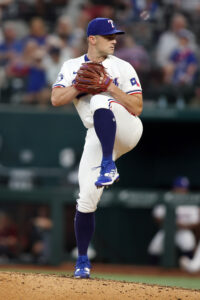
This is Robertson’s second free-agent deal with the Phillies and the third time overall that the Phils have acquired him. He inked a two-year, $23MM deal in the 2018-19 offseason that didn’t wind up paying off for the team, as the typically durable reliever wound up requiring Tommy John surgery and pitching only 6 2/3 total innings during the life of that contract. Philadelphia reacquired the righty in a 2022 trade that sent young righty Ben Brown back to the Cubs, and Robertson was excellent as the Phillies mounted a charge all the way to the World Series.
That Tommy John procedure came during Robertson’s age-34 season, and he didn’t return to a big league mound until the 2021 campaign. He’s emphatically silenced any concerns about his ability to restore his status as a high-end reliever. He’s now pitched 200 games and logged a 2.92 in 213 regular season innings since undergoing surgery. That includes a terrific 2024 season in Texas, where Robertson pitched 72 innings with a 3.00 ERA, a 33.4% strikeout rate, a 9.1% walk rate, two saves and 34 holds as the primary setup option to Kirby Yates.
Phillies president of baseball operations Dave Dombrowski was candid earlier this month in calling out bullpen help as his primary focus at this year’s trade deadline. Robertson is a potential major addition who helps on multiple levels. He’s obviously a decorated high-leverage arm coming off a strong season, and adding the lone marquee reliever on the free-agent market leaves the Phillies’ farm system intact as they look to pursue other bullpen upgrades. Beyond that, Robertson is a fresh arm who’s no stranger to pitching in the postseason — a key component for a Phillies club who lost lefty Jose Alvarado to an 80-game PED suspension earlier this year that renders him ineligible to pitch in the playoffs.
On the season, Philadelphia relievers rank 23rd with a 4.36 ERA. They’ve been better over the past month (3.89 ERA) but still have a top-heavy unit that’s been anchored by Matt Strahm, Tanner Banks and Orion Kerkering doing a disproportionate level of the heavy lifting. Offseason additions Jordan Romano (7.08 ERA) and Joe Ross (5.31 ERA) haven’t worked out as hoped.
Robertson will likely need a minor league tune-up before he’s ready to join the Phillies’ bullpen. It’s not clear what his precise timeline is, but it stands to reason that both he and Alvarado — eligible to return on Aug. 19 — will both be in the late-inning mix within the next month. The Phillies figure to remain active on the trade market as they look for a second reliever to add to the mix, and they could potentially seek an outfield upgrade as well.