
Francisco Lindor Reportedly Turned Down Roughly $100MM Extension
4:57pm: Lindor says that he could imagine reaching a long-term deal at some point, but that the time wasn’t right to do so over the winter, MLB.com’s Jordan Bastian tweets. The talks that did occur are “in the past,” says Lindor.
9:18am: There were reports during Spring Training that the Indians had attempted to work out a multi-year extension with star shortstop Francisco Lindor, but details on the talks never surfaced. This morning, Sports Illustrated’s Tom Verducci reports that Lindor turned down an offer that would’ve paid him “around $100 million.” Paul Hoynes of the Cleveland Plain Dealer adds that the Indians did indeed make a “substantial” offer to Lindor, though he wasn’t able to confirm the $100MM figure (Twitter links). Furthermore, Hoynes says that there are no active extension talks with Lindor or any other player at this time.
Lindor’s rejection of the reported $100MM figure — or anything even close to that figure, for that matter — means that the rising superstar turned down an extension that would’ve shattered the current record for a player in his service class. Lindor, 23, entered the year with just one year, 113 days of Major League service time. As MLBTR’s Extension Tracker shows, the previous record for an extension for any player in the one-plus years of service bracket is Andrelton Simmons‘ seven-year, $58MM contract, signed with the Braves prior to the 2014 season.
It’s certainly possible that the $100MM figure wasn’t entirely guaranteed and is including the value of some option years, but it does seem all but certain that such an offer would’ve set a new record. Also of note is that the years of the extension offer aren’t included in the Verducci report; a $100MM offer over a term of eight years would be considerably different than $100MM over the next 10 seasons, for instance. The number of free-agent years involved in the deal as well as option years and no-trade provisions all come into play when negotiating extensions, meaning a rough value of the overall package doesn’t provide enough context to fully judge the offer.
And while it’s undoubtedly difficult for Indians fans to stomach the fact that Lindor wouldn’t take what would’ve been far and away the largest contract in franchise history, it’s also not entirely stunning to hear that he rebuffed the team. Lindor did, after all, receive a healthy $2.9MM bonus as the No. 8 overall pick in the 2011 draft, so he started his career in a considerably better place than most of his peers. Beyond that, as Verducci notes in the heart of his column, the free-agent market is moving forward and figures to do so substantially between now and the time that Lindor reaches free agency in the 2021-22 offseason.
The 2018-19 free agent class is stocked with premium talent and figures to be headlined by Bryce Harper and Manny Machado. The common consensus is that each of those players could command at least $300MM, and the possibility of a $400MM contract for either, given that their youth — each will be 26 when entering free agency — will lead to contract offers of extreme length. Lindor won’t be quite so young when he reaches the open market, but he’ll hit free agency at the age of 27 as he heads into his age-28 campaign. That’s still quite young for a player to reach the open market, and Lindor of course figures to do quite well for himself in arbitration over the five years between now and the open market, though he won’t qualify for that process until the completion of the 2018 season.
Notably, Verducci did speak to Lindor’s agent, David Meter, and while Meter understandably didn’t get into any specifics on what was or wasn’t offered, he didn’t take a firm stance against ever agreeing to a long-term deal. “It’s just one of those things we’ll look at on a year-by-year basis,” Meter tells Verducci. “I don’t think it’s very productive to draw a line in the sand.”
While that lends some mild optimism about the possibility of an extension further down the road, it also likely means that the Indians will be required to substantially increase their offer if they’re to have any chances of getting an agreement in place. By the time next offseason rolls around, Lindor will be just one year removed from arbitration eligibility. And though he’d already established himself as one of the game’s elite young talents with a .306/.356/.454 batting line through his first 1122 plate appearances (accompanied by premium baserunning and defense), there are still signs that the best is yet to come. Lindor has already homered four times in 2017 after hitting 15 all of last year, and he’s off to a .351/.415/.684 start to his season through 66 plate appearances. It’s unlikely that he sustains that pace, but any improvement in his production, paired with the increasing proximity to arbitration, will only serve to further escalate the price tag on a Lindor extension.
Offseason In Review: Cleveland Indians
This is the latest entry in MLBTR’s Offseason In Review series. The full index of Offseason In Review posts can be found here.
After narrowly missing a World Series championship in one of the most entertaining Game 7s the sport has ever seen, the Indians entered the winter with a clear focus on returning to that stage.
Major League Signings
- Edwin Encarnacion, 1B/DH: Three years, $60MM (plus 2020 club option)
- Boone Logan, LHP: One year, $6.5MM (plus 2018 club option)
- Total spend: $66.5MM
Trades and Claims
- Acquired RHP Nick Goody from Yankees in exchange for PTBNL
- Acquired RHP Carlos Frias from Dodgers in exchange for cash
- Selected LHP Hoby Milner from Phillies in Rule 5 Draft (returned to Phillies)
- Claimed LHP Edwin Escobar off waivers from the D-backs (released to allow him to sign in Japan)
- Claimed 1B/3B/OF Richie Shaffer off waivers from the Reds (later outrighted to Triple-A)
- Claimed LHP Tim Cooney off waivers from the Cardinals (released, re-signed to minor league deal)
Notable Minor League Signings
- Austin Jackson, Michael Martinez, Erik Kratz, Chris Colabello, Steve Delabar, Kelvin De La Cruz, Adam Moore, Chris Narveson, Wily Mo Pena (since released), James Russell (since released)
Extensions
- Brandon Guyer, OF: Two years, $5MM (plus 2019 club option)
- Roberto Perez, C: Four years, $9MM (plus 2021-22 club options)
- Jose Ramirez, 3B/2B/OF: Five years, $26MM (plus 2022-23 club options)
Notable Losses
Indians depth chat | Indians payroll outlook
Needs Addressed
As one would expect of a team that took the Cubs to the limit in Game 7 of the World Series, the Indians entered the offseason with relatively few needs. The entire rotation was set to return, and the team also possessed some upper-level depth options in the minors. Replacing Mike Napoli at first base and finding a suitable left-handed relief option to join Andrew Miller in the bullpen were Cleveland’s top two priorities. President of baseball operations Chris Antonetti, GM Mike Chernoff and the rest of the Indians front office — minus now-former assistant GM Derek Falvey, who was hired away by the division-rival Twins as their new chief baseball officer — did so in a big way.
Cleveland waited out a surprisingly slow market for top slugger Edwin Encarnacion (more on that pursuit below) and, much as they did in acquiring Miller from the Yankees this past summer, surprised many by adding one of the marquee names on the market. The cost fell shy of expectations for Encarnacion but remains a relatively steep investment for the tight-budgeted Indians, who entered the 2017 season with a club-record $124MM payroll, thanks largely to Encarnacion. Though he’s off to a slow start, April has historically been Encarnacion’s worst month by a wide margin, and his bat should more than offset the loss of Napoli, who returned to Texas for a third stint with the Rangers.
It was a similar story with Logan, as the early market for left-handed relief pitching was extremely steep. After Brett Cecil landed four years and just over $30MM from the Cardinals and Mike Dunn scored $19MM over a three-year term with the Rockies, Logan and fellow southpaw Jerry Blevins looked to be in line for solid multi-year contracts. That never panned out, however, as each languished on the free agent market longer than expected. And while many believed the Indians to be tapped out after their signing of Encarnacion, ownership gave the green light to spend a bit more cash.
Logan was signed to a somewhat surprising one-year deal in February, further proving the point that it typically behooves players (especially relievers) to sign early in free agency. He can still take home a total of $12.5MM if the option is exercised, but waiting out the market and securing a quality ‘pen piece on a one-year deal was a nice move by the Tribe’s front office.
With some uncertainty surrounding the health of Michael Brantley as well as the departure of Rajai Davis — who signed back with the Athletics — Cleveland added some notable names on minor league contracts. Both Austin Jackson and Michael Martinez made the club and are serving as reserve pieces early in the season, though one has to imagine that the recently demoted Tyler Naquin will eventually resurface and challenge for one of their roster spots.
Finally, as has long been a hallmark of the cost-efficient Indians, Cleveland pursued extensions with a number of its young players. While efforts to lock up burgeoning superstar Francisco Lindor fell short, the team was successful in hammering out three multi-year deals. Brandon Guyer’s $5MM extension gives the club a quality outfield platoon option at a very reasonable rate through at least the 2018 season and possibly through 2019.
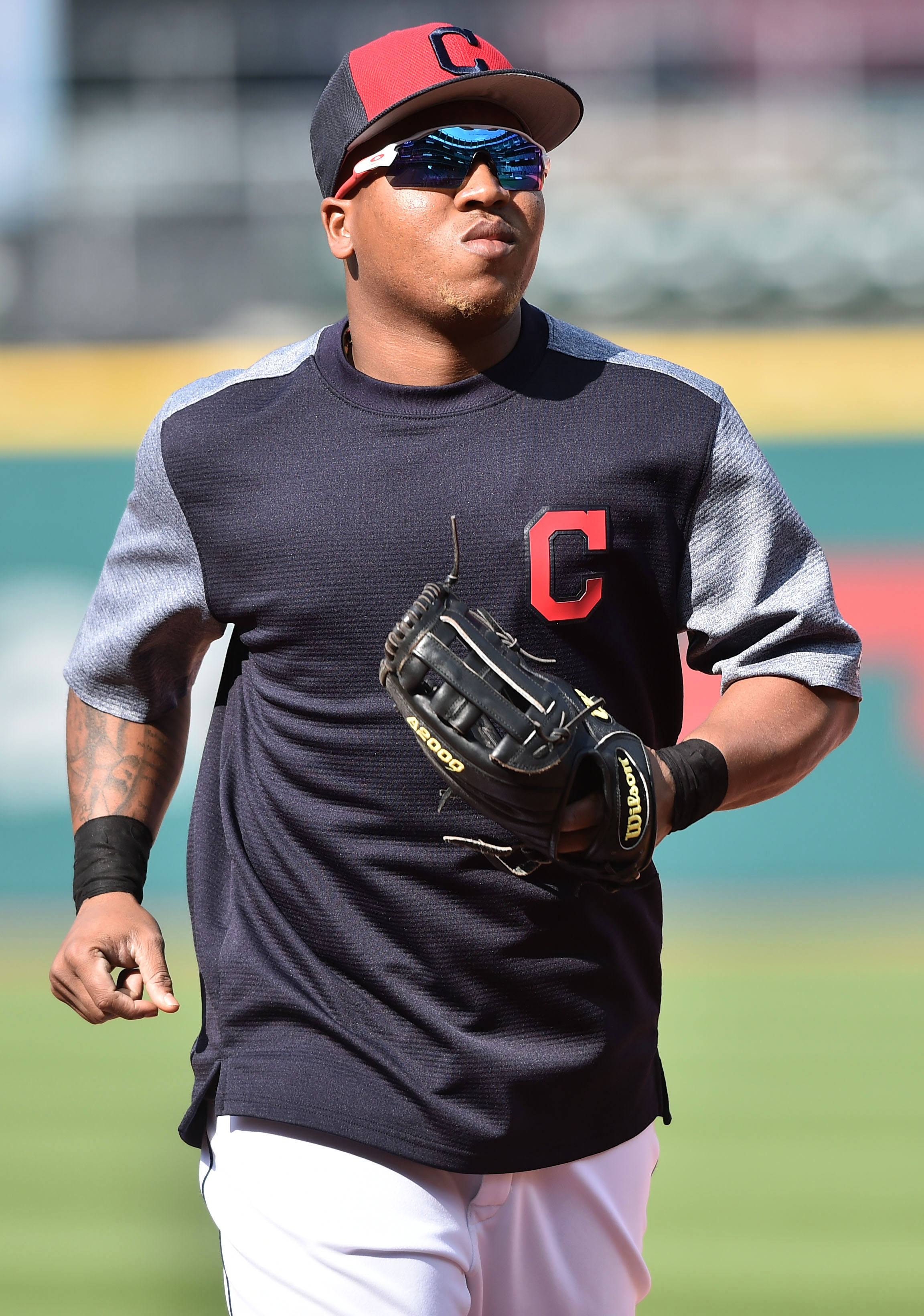
The Perez extension, too, bolsters the Cleveland bench for the foreseeable future. While some may raise an eyebrow at extending a pre-arb catcher that batted .183/.285/.294 in the preceding season, Perez is regarded as a superlative defensive backstop. He also flashed some offensive ability in 2015 when he hit .220/.348/.402 with seven homers in just 220 plate appearances. The price for catcher defense has continually risen in recent years, and Perez can likely justify the deal with his glove alone even if the bat never comes around. If it does, though, Cleveland should have a nice bargain on its hands.
The big move for Cleveland, though, was agreeing to terms on a long-term pact with perhaps its top breakout star of the 2016 campaign. Ramirez, still just 24 years of age, went from light-hitting utility man to Cleveland’s everyday third baseman last year with an excellent .312/.363/.462 batting line to accompany his 11 homers and 22 steals. He can play virtually anywhere on the diamond, as evidenced by his shift to second base this season in the early absence of Jason Kipnis. Ramirez struck out in just 10 percent of his plate appearances last year and continues to suggest that his power is still developing; he’s already homered four times in 2017.
Questions Remaining
As mentioned above, when a team comes within inches of winning the World Series and retains the vast majority of that roster, there aren’t going to be many questions. In Cleveland, the biggest unknown surrounding the team is simply health.
No one knows what to expect out of Brantley after he missed nearly the entire 2016 season due to a shoulder injury that has now required two surgeries. But the Indians made it to Game 7 last season despite receiving zero production from Brantley, arguably their best all-around player, so anything he’s able to contribute in 2017 is just a bonus. To date, he’s batted .289/.373/.489 through 12 games, reminding everyone what an excellent player he was prior to his injury.
In the rotation, Cleveland will hope for better health from Carlos Carrasco and Danny Salazar, each of whom suffered late-season injuries that compromised the team’s postseason pitching depth. Both right-handers have front-of-the-rotation upside if they’re able to stay on the field. Combining them with Corey Kluber makes for a lethal 1-2-3 atop Cleveland’s starting five. Trevor Bauer remains somewhat enigmatic both on and off the field, but his talent is undeniable even if his results are inconsistent. Josh Tomlin finished poorly in 2016 and is off to a worse start in 2017, so if there’s one potential need, it’s at the back of the rotation.
With Cody Anderson lost to Tommy John surgery, the top depth options in Cleveland are Mike Clevinger and Ryan Merritt (who achieved folk hero status with a tremendous spot start in Toronto during last year’s ALCS). If Cleveland is going to go outside the organization anywhere on the summer trade market, my bet would be on an effort to shore up the fifth spot in the rotation. Of course, both Bauer and Tomlin have had plenty of productive stretches, and each could quickly turn his season around.
Deal of Note
Entering the winter, Encarnacion was arguably the top bat available in free agency, and the notion of him signing with the Indians would’ve been little more than a pipe dream. Deep-pocketed clubs like the Red Sox, Yankees, Blue Jays and Rangers were all connected to the slugger, and the Astros, who have become increasingly more aggressive with their spending, were also prominently linked to Encarnacion. When Encarnacion reportedly rejected a four-year, $80MM offer from the Blue Jays, the assumption was that he’d top that guarantee by a fairly wide margin.
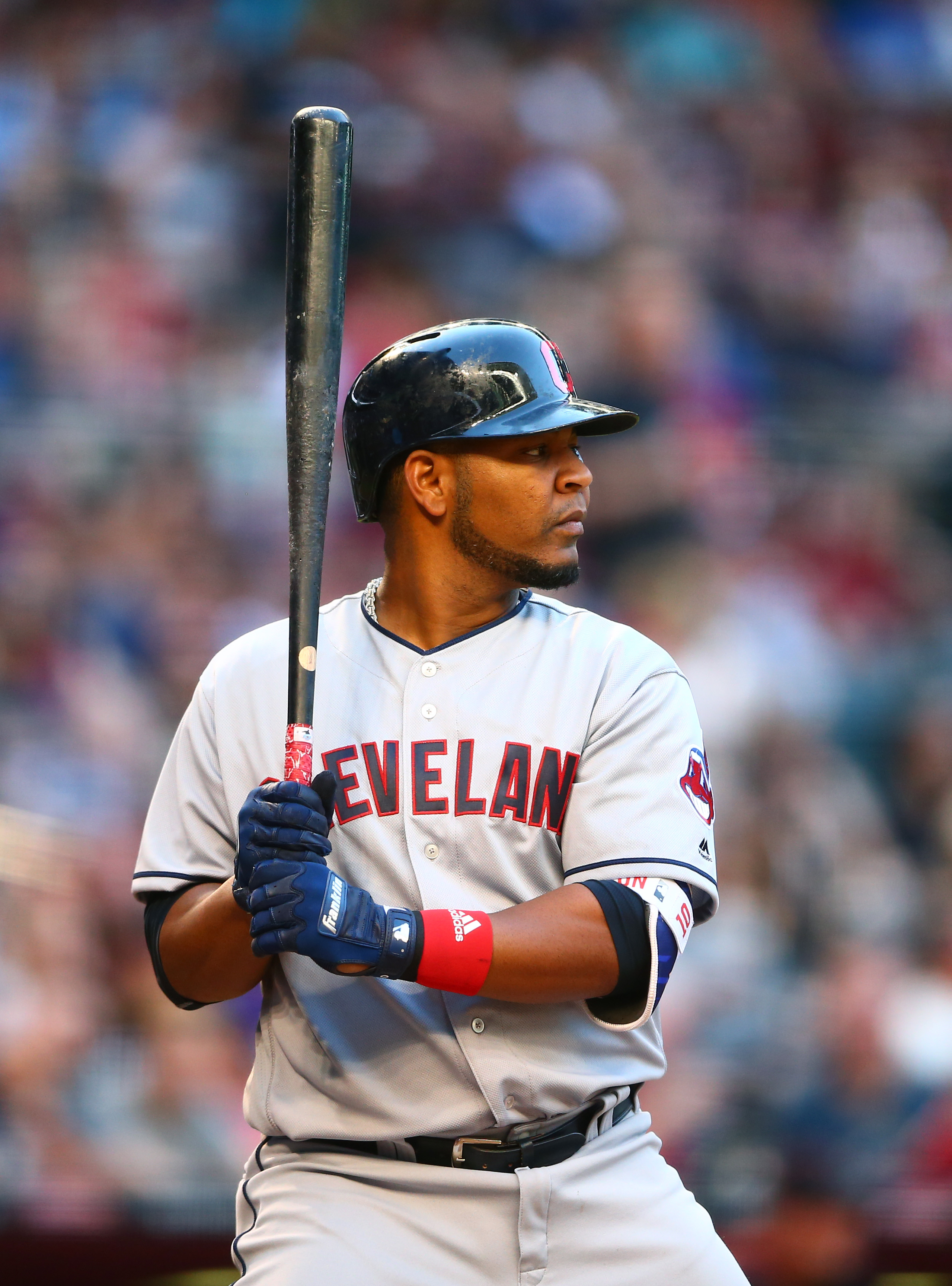
Instead, Encarnacion surprisingly saw his market shrivel in a hurry. The Blue Jays, like many other teams and most pundits, assumed that Encarnacion was gone once he said no to that $80MM figure and pivoted to switch-hitting slugger Kendrys Morales on a three-year, $33MM deal. Boston, instead of spending big in an effort to replace David Ortiz, signed a quality defensive first baseman (Mitch Moreland) and moved Hanley Ramirez into primary DH duties. The Yankees made sense and were often linked to Encarnacion, but they went short-term in picking up Matt Holliday. Ditto for the Astros, who in addition to bringing Carlos Beltran back to Houston, traded for Brian McCann.
With most of the big-spending clubs suddenly lacking a place to put Encarnacion, it became wholly unclear as to where he’d end up. The Rangers were a common thought, but Texas was continually said to be averse (or fiscally unable) to adding another high-priced multi-year contract to its payroll. There was speculation about the Rockies, who had gone outside the box to sign Ian Desmond to a five-year, $70MM deal as their primary first baseman, but the oft-suggested trade of an outfielder (which would’ve moved Desmond to the outfield and freed up a space for Encarnacion) never materialized.
In the end, the bidding war for Encarnacion came down to the Indians and Athletics — as unlikely a pairing as we’ve ever seen for two teams duking it out for one of the game’s top free agents. Cleveland pushed its offer to three years, and Encarnacion cited a winning organization and closer proximity to his family in the Dominican Republic as reasons for choosing the reigning AL champs over Oakland. Encarnacion’s contract is the largest in Indians franchise history — a testament to the unexpected nature of the match between the two sides and to Cleveland ownership’s desire to return to the Fall Classic. If Cleveland does succeed in bringing home its first World Series title in nearly 80 years, the Dolan family won’t complain one bit about their investment in Encarnacion.
Overview
The Indians entered the offseason with very few holes on what was one of the most complete rosters in Major League Baseball, and they addressed their top needs with some of the biggest upgrades possible. It’s still feasible that the back of the rotation could use some augmenting some June or July, but despite the team’s 7-7 start, the Indians are the clear favorite in the American League Central division. It’ll be a surprise if they don’t return to the postseason. And if they can in fact return, this time with a healthy trio of Kluber, Carrasco and Salazar, they’ll enter October with a good chance of becoming the second AL Central team in the past five years to manage back-to-back World Series appearances.
Let’s open it up for everyone to weigh in (link to poll for Trade Rumors app users)…
How would you grade the Indians' offseason?
-
A 51% (993)
-
B 34% (659)
-
C 9% (179)
-
F 3% (59)
-
D 2% (42)
Total votes: 1,932
Photos courtesy of USA Today Sports Images.
Quick Hits: Agency News, Robert, Hochevar, Thames, Lindor
The CSE Talent agency announced that it has purchased Arland Sports, with Arland founder Jason Wood taking over as the president of CSE’s baseball division. Arland Sports’ client list includes such notable big leaguers as Jake Odorizzi, Devon Travis, David Phelps and Andrew Benintendi. It isn’t known whether these players or any of Arland Sports’ other clientele will be joining Wood under the CSE umbrella, so stay tuned for any potential representation changes via MLBTR’s Agency Database. Here are some more news and notes from around the game…
- Early indications are that Cuban outfielder Luis Robert will be cleared for free agency during the current international signing period, Baseball America’s Ben Badler reports, though nothing has yet been finalized. If Robert is cleared before the stricter international bonus rules come into play during the next signing period (which opens on July 2), he stands to score a much larger payday than he would if his free agency isn’t granted until after the end of the current signing period on June 15. Robert had a private workout for the Astros in the Dominican Republic and he is scheduled for workouts with the Athletics and Reds next week; the Padres, Cardinals and White Sox are also expected to bring the 19-year-old in for workouts. Chicago is the only one of those six teams that hasn’t already exceeded its 2016-17 bonus pool limit, though Badler has reported that the White Sox may be the favorites to sign the highly-touted Robert.
- Luke Hochevar could potentially sign with a team in the second half of the season, though MLB.com’s Jeffrey Flanagan hears that “2017 is more than likely a wash for him.” Hochevar underwent thoracic outlet syndrome surgery last August and was originally projected to be ready when Spring Training camps opened in February. Hochevar’s surgery, however, was “much more complicated” than a similar procedure for Royals prospect Kyle Zimmer (who had his TOS surgery last July and is back pitching in the minors), and thus Hochevar is apparently facing an extended recovery time. The 33-year-old Hochevar already missed all of 2014 due to Tommy John surgery, though the former first overall draft pick posted strong numbers in 2013, 2015 and 2016 out of the Kansas City bullpen.
- Eric Thames is one of the early stars of the 2017 season, as the Brewers slugger is leading the league in homers (seven), runs (15), and slugging percentage (an even 1.000) while also hitting .405 and posting a .479 OBP through 48 plate appearances. USA Today’s Bob Nightengale profiles Thames’ unique personality and unlikely career path, as he bounced around several MLB organizations before becoming a Ruthian superstar in South Korea from 2014-16.
- Francisco Lindor would be short-changing himself by signing an extension worth anything less than $100MM, Yahoo Sports’ Jeff Passan opines. Lindor is off to a huge start in 2017, and while he is five seasons away from free agency, the Indians shortstop is putting himself in line for a massive payday. Assuming Lindor keeps producing all season, Passan argues that Lindor could ask for something in the realm of Mike Trout‘s six-year, $144MM deal from the Angels.
Roster Notes: Tigers, Marlins, Mets, Braves, Padres, Indians
Here are a few roster moves from around the game:
- The Tigers announced that, after Friday’s game, they optioned righty William Cuevas to Triple-A Toledo and promoted righty Warwick Saupold to take his place. Cuevas made his 2017 big-league debut Friday and didn’t make a good impression, giving up four runs over just a third of an inning. Saupold was off to a good start for Toledo, allowing just two runs and three walks while striking out nine over 10 2/3 innings.
- After a 16-inning ballgame depleted the Marlins bullpen, the club has called up southpaw Jarlin Garcia, as Tim Healey of the Sun Sentinel reported. Righty Nick Wittgren was sent back down to Triple-A on optional assignment in a corresponding move.
- Miami’s opponent in that marathon game, the Mets, also dipped into their farm for an arm. New York announced that Sean Gilmartin will take a spot in the pen. Utilityman T.J. Rivera will be optioned for the time being, though he seems likely to return once the pitching staff gets back on its feet.
- Braves outfielder Matt Kemp, meanwhile, is slated to return on Wednesday from a hamstring issue, David O’Brien of the Atlanta Journal-Constitution tweets, meaning he’d only miss the ten-day minimum. Meanwhile, Atlanta has called up righty Luke Jackson for his first stint with the club. Fellow right-hander Jason Hursh was optioned to create an opening.
- The Padres have also done some roster tweaking, activating catcher Hector Sanchez from the 7-day concussion DL and also calling back righty Kevin Quackenbush. The club also announced that Jabari Blash and Jake Esch were optioned to make way on the active roster. While Blash has been outrighted off the 40-man in the past, and was only recently re-added when he was recalled, he’ll hold onto his spot for the time being while reporting to Triple-A.
- The Indians have swapped a pair of righties, with the club announcing that Nick Goody will come up and Shawn Armstrong will head down. The move gave the team a fresh arm after Armstrong threw 49 pitches Thursday. Goody pitched two scoreless innings in his 2017 big-league debut last night.
AL Central Notes: Naquin, Anderson, Soto, Tigers
The Indians made the somewhat surprising decision to option outfielder Tyler Naquin to Triple-A Columbus yesterday in order to clear a spot on the roster for the return of outfielder Lonnie Chisenhall. While some may raise an eyebrow at demoting a player who finished third in AL Rookie of the Year voting after hitting .296/.372/.514, MLB.com’s Jordan Bastian writes that the Indians didn’t want Naquin to be playing sparingly in a bench role for now. “It was something that, when I say we stressed over it, I mean it was a lot,” manager Terry Francona tells Bastian. “…I don’t think coming off the bench necessarily suits Naquin right now. Nobody’s giving up on him being an everyday player.” For the time being, Cleveland will go with Michael Brantley, Chisenhall, Brandon Guyer, Austin Jackson and Abraham Almonte in its outfield mix. Interestingly, Chisenhall started in center field for Cleveland yesterday, so it seems he’ll be viewed as at least a temporary option there.
More from the American League Central…
- White Sox shortstop Tim Anderson appeared on the Baseball Tonight podcast with Buster Olney (audio link) and talked about his days as an amateur, his experience playing basketball in his youth and the decision to ink a six-year, $25MM contract extension before reaching one full year of Major League service time. “It was more so the security level had to meet where I wanted to feel secure with my family,” says Anderson. “It was an exciting moment. We went back and forth two or three weeks, and was able to get this thing — get it figured out and get it going. Just on my family’s side, my daughter and my wife, it was relieving just to be able to tell them and let them see that we’re going to be OK and be fine.” Sox fans will want to give the interview a listen, as it offers some good insight into the background of one of the team’s rising stars and core pieces.
- Chicago announced yesterday that catcher Geovany Soto was headed to the 10-day DL with elbow inflammation, summoning Kevan Smith from Triple-A Charlotte to take his spot on the roster for the time being. Dan Hayes of CSN Chicago writes that while Soto experienced some abnormal discomfort when making a throw, an MRI revealed everything in his elbow to be “fairly OK” (Soto’s own words). Soto says there’s no tear in his arm but there are “a couple floaters” (presumably referring to spurs or loose bodies). He’ll rest the elbow and use medication to treat the issue, though there’s not yet a clear indication of when he’s expected to return to the White Sox.
- Though many Tigers fans were upset with the team’s decision to demote ballyhooed relief prospect Joe Jimenez after one appearance in the Majors, Anthony Fenech of the Detroit Free Press argues that the move represented a logical course of action for a club in need of temporarily lengthening its bullpen. Detroit would’ve been without a long reliever in the first game against the division-rival Indians and would have been exposed in the event of a short outing from starter Daniel Norris, Fenech writes. And the risk of further depleting the bullpen by having to turn to the likes of Francisco Rodriguez, Justin Wilson, Alex Wilson and Kyle Ryan in the first game of a series against their top competition in the AL Central wasn’t a scenario with which Detroit wanted to be faced. “If something happens tomorrow with Daniel Norris early in the game, we won’t make it nine innings unless Andrew Romine toes the rubber,” manager Brad Ausmus told reporters after the game. Jimenez figures to be back with the team in short order, according to Fenech, though he’ll need to spend at least 10 days in the minors. Fenech also adds that righty Anibal Sanchez “is not going anywhere” in the near future, as he’s the team’s most experienced piece of rotation depth and the club still believes he can get outs in the Majors, even if he won’t ever return to peak form.
AL Central Notes: Kipnis, Martinez, Gose, Rodon
Indians second baseman Jason Kipnis was hit by a pitch on his left hand during a rehab outing tonight, as Jordan Bastian of MLB.com tweets. He’s expected to sit out at least one contest, though at this point there’s no indication that he has suffered a significant injury. Cleveland is no doubt looking forward to the return of Kipnis, who is working back from a shoulder injury. As Bastian writes, the club’s bats have stalled in the early going.
More from the American League Central…
- Tigers right fielder J.D. Martinez has begun taking batting practice and could be activated from the disabled list by early May, writes Anthony Fenech of the Detroit Free Press. Manager Brad Ausmus tells Fenech that Martinez is “slightly ahead of schedule,” though he declined to get into any specifics about the length or location of a potential rehab assignment for the slugger. Martinez has been on the shelf since Opening Day due to a Lisfranc injusry in his left foot, and in his absence, the Tigers have utilized Tyler Collins and Mikie Mahtook in right field while young JaCoby Jones in center field.
- Former outfielder Anthony Gose, who is converting to the mound, has begun facing hitters in extended Spring Training, tweets Evan Woodbery of MLive.com. Tigers manager Brad Ausmus got positive reports on Gose’s curveball in particular. At the time he was drafted, Gose was considered a two-way prospect, as Baseball America noted in its draft report on him that he featured a “blistering fastball” that peaked at 97 mph. While many liked him better as a pitcher, Gose had some shoulder troubles prior to the draft that prompted the move to the outfield.
- White Sox lefty Carlos Rodon is progressing in his recovery from biceps bursitis, as Colleen Kane of the Chicago Tribune writes. Though Rodon has yet to take the mound while he works back to strength, manager Rick Renteria says he’s “moving along positively” and is continuing to work through a throwing program. While the Sox would no doubt love to see the young southpaw working to take the next steps in his development at the major league level, the rebuilding club is obviously taking a conservative course in bringing him back to full speed.
AL Central Notes: Tigers, Indians, Twins
A quick look around the American League Central…
- Tigers manager Brad Ausmus is concerned about the early season performance of reliever Bruce Rondon, who got the loss against Boston on Sunday after allowing three earned runs on two walks and a hit. Rondon failed to record an out in the eighth inning, when he entered with a one-run lead, and has allowed a combined six earned runs in his past two appearances. “His velocity has been down, and his location has not been good,” Ausmus told Jason Beck of MLB.com. Ausmus isn’t ruling out using Rondon in lower-leverage situations until he rights the ship, but the club hasn’t discussed demoting him to Triple-A. The 26-year-old was outstanding for the Tigers across 36 1/3 frames last season, evidenced by a 2.97 ERA, 11.15 K/9 and 2.97 BB/9. His velocity has indeed dipped a bit since then, as Ausmus mentioned.
- It appears the Indians will activate right fielder Lonnie Chisenhall before their home opener Tuesday, per Jordan Bastian of MLB.com. Chisenhall, who’s working back from a right shoulder injury, picked up four hits in a Triple-A game Saturday, prompting Indians manager Terry Francona to say, “When a guy gets four hits, it’s probably a pretty good indication that he’s feeling OK.” Activating Chisenhall could lead to a minor league demotion for fill-in Abraham Almonte, who has posted an unusual .250/.500/.250 batting line in 12 plate appearances this season.
- Twins chief baseball officer Derek Falvey will have heavy involvement in the amateur draft process, writes Rhett Bollinger of MLB.com. Falvey, whose organization holds the top pick in this year’s draft, will go on the road to help scout prospects in person. He ventured to Southern California on Friday to watch high school right-hander and potential No. 1 pick Hunter Greene. “I love seeing amateur players,” said Falvey, who was formerly in Cleveland’s front office. “It’s hard not to love that part of it. It’s how I got my start in baseball and it’s what I still love to do. I’ve seen a lot of video of some guys and so being able to see them in person is good.”
Minor MLB Transactions: 4/7/17
Here are the day’s minor moves from around the league…
- The Indians announced that they’ve re-signed left-hander Tim Cooney to a minor league contract after releasing him at the end of camp. Cooney has been placed on the minor league disabled list due to a forearm strain. Cleveland claimed Cooney off waivers from the Cardinals this offseason after he missed the 2016 campaign due to shoulder surgery, and back in late February they announced that he’d miss 10 to 12 weeks with a flexor strain. That injury notwithstanding, it’s easy to see why the Indians have interest in keeping the southpaw on board; Cooney turned in six starts (31 1/3 innings) with a 3.16 ERA, 8.3 K/9, 2.9 BB/9 and a 37.9 percent ground-ball rate as a rookie in 2015. He also sports a career 3.35 ERA in 456 2/3 minor league innings, which includes a 3.21 ERA in nearly 250 innings of Triple-A work. Baseball America ranked him second among Cardinals prospects after the 2015 season, before injuries began to take their toll.
Indians Plan To Explore Extension With Carlos Santana
The Indians have been active in extension talks of late, reaching multi-year agreements with infielder Jose Ramirez (five years, $26MM) and catcher Roberto Perez (four years, $9MM) in addition to making an effort to hammer out a deal with star shortstop Francisco Lindor. They may not be done just yet, either, as Jon Heyman of FanRag Sports reports that the Indians will explore an extension with first baseman/designated hitter Carlos Santana in attempt to prevent him from reaching free agency following the 2017 season.
Santana, 31 this weekend, has long been one of the most productive and durable hitters in the Cleveland lineup. Dating back to the 2011 campaign, he’s been on the disabled list just once: an 11-day absence on the 7-day DL in 2014 due to concussion symptoms. Since Opening Day 2011, Santana has averaged 153 games and 654 plate appearances per season. In that time, his bat has been above the league average in each year, and his collective .247/.363/.443 batting line in that time has translated to a 121 OPS+ and a 124 wRC+ (meaning, essentially, that he’s been 21 percent to 24 percent better than the league-average hitter after accounting for league and park).
While Santana was a catcher for much of his early career and had a brief experiment as a third baseman in 2014, he’s largely limited to first base and designated hitter duties at this stage of his career. He played only those two positions during the regular season in 2015-16 (plus two left field appearances in the World Series), and it doesn’t seem especially likely that a team would feel comfortable playing him elsewhere with any sort of regularity.
It’s certainly possible to envision Santana preferring to remain with the only team he’s ever known and one that looks to be very well-positioned for the near future. However, a significant discount on an extension may not be likely with free agency just six months away. His initial contract — a five-year, $21MM extension — already looks to be a feather in Cleveland’s cap, after all, even with his 2017 option elevating his total earnings to $31.8MM over six years.
Then again, Santana will hit the open market heading into his age-32 season and with the memory of a free-agent market that was not kind to defensively limited sluggers fresh in his mind. From my vantage point, he’s a definite qualifying offer candidate at season’s end, which wouldn’t do any favors for his market. (Although Santana may not face the same hurdles as others have in recent years now that the new collective bargaining agreement has lowered the penalty for signing a player that rejected a QO.)
Cleveland entered the 2017 season with a club-record $128MM payroll, but the Indians only have about $77MM committed to the 2018 payroll. That sum could rise depending on the fate of outfielder Michael Brantley ($11MM club option), left-hander Boone Logan ($7MM club option) and Josh Tomlin ($3MM club option). There will also be arbitration raises on the horizon for Cody Allen, Danny Salazar, Trevor Bauer, Lonnie Chisenhall, Zach McAllister and Dan Otero, further complicating the financial outlook. That said, if ownership is comfortable with a payroll in this range once again in 2018, the Indians could probably fit a Santana extension into the payroll — especially were it to be backloaded in nature.
AL Central Notes: Ziomek, White Sox, Gore, Twins, Kluber
Tigers prospect Kevin Ziomek has retired from baseball, as was first reported by MLB Pipeline (Twitter link). Rated as one of the better arms in the Tigers’ system — ESPN’s Keith Law had him 17th this offseason, and he’s rated as highly as No. 4 on the Tigers’ top 30 prospect list at Baseball America in recent years — Ziomek missed the majority of the 2016 season due to thoracic outlet syndrome surgery. I’m told that the left-hander’s velocity simply never returned following the operation. Ziomek posted a 3.07 ERA with 299 strikeouts against 93 walks across 290 innings during his pro career. Best of luck to him moving forward.
More from the American League Central…
- Despite dealing star veterans over the winter, the White Sox players are expressing confidence in their ability to compete in 2017, as Dan Hayes of CSN Chicago writes. The organization views that as a positive byproduct of the team’s hiring of manager Rick Renteria, but GM Rick Hahn said he’s planning to stay the course. “Our goal is to remain focused on the long term and building something sustainable,” says Hahn. While he notes that the front office won’t “proactively hinder their ability to contend if we feel it’s real and sustainable,” he notes that mid-season assessments will be made “objectively” and with a clear focus on “what’s best for the franchise in the long term.”
- The Royals‘ decision to carry Terrance Gore on the 25-man roster out of Spring Training surprised some, but Kansas City manager Ned Yost lauded the game-changing weapon that is Gore’s speed when speaking to MLB.com’s Jeffrey Flanagan. As Flanagan points out, the injury to Jorge Soler makes it easier to keep Gore on the roster for now, but he also notes that Yost was hoping to keep Gore even if Soler hadn’t been hurt. “He can win games with that speed,” Yost tells Flanagan. “It’s a huge weapon to have late in a game. I’m not saying we can keep that weapon all season, especially when we go to 13 pitchers. But for now, it made sense.” Flanagan also adds that improvements in Gore’s route-running capabilities could lead to him entering games as a defensive replacement while he’s on the roster.
- Chad Graff of the St. Paul Pioneer Press spoke to Twins GM Thad Levine about the lack of roster turnover this offseason despite a 103-loss campaign in 2016 that led to Minnesota landing the first overall pick in the 2017 draft. Levine expresses optimism regarding the improving young talent that permeates the Twins’ roster and suggests that both he and first-year chief baseball office Derek Falvey view the 2016 season as an anomaly. Levine was heartened, he says, by the number of rival executives that spent the offseason trying to pry several of the Twins’ young players away in trades. “That speaks to the fact that they didn’t see it as a 103-loss team,” says Levine. “They saw it as more talented than that.” Catcher Jason Castro, who is new to the Twins in 2017 but no stranger to rebuilding/100-loss teams, opines to Graff that the 2017 Twins are “light years ahead of where they were in that rebuild process in Houston” when the Astros began their aggressive rebuild several years ago.
- Indians ace Corey Kluber had a callus on his pitching hand break open during his start during Monday’s season opener, writes Paul Hoynes of the Cleveland Plain Dealer, but manager Terry Francona and pitching coach Mickey Callaway say that the 2014 AL Cy Young winner will be ready to take his next turn in the rotation on Sunday. Kluber was tagged for five runs in six inning on Monday, though the blister/callus issue likely contributed to that problematic outing to some extent.