
2015-16 Top 50 MLB Free Agents With Predictions
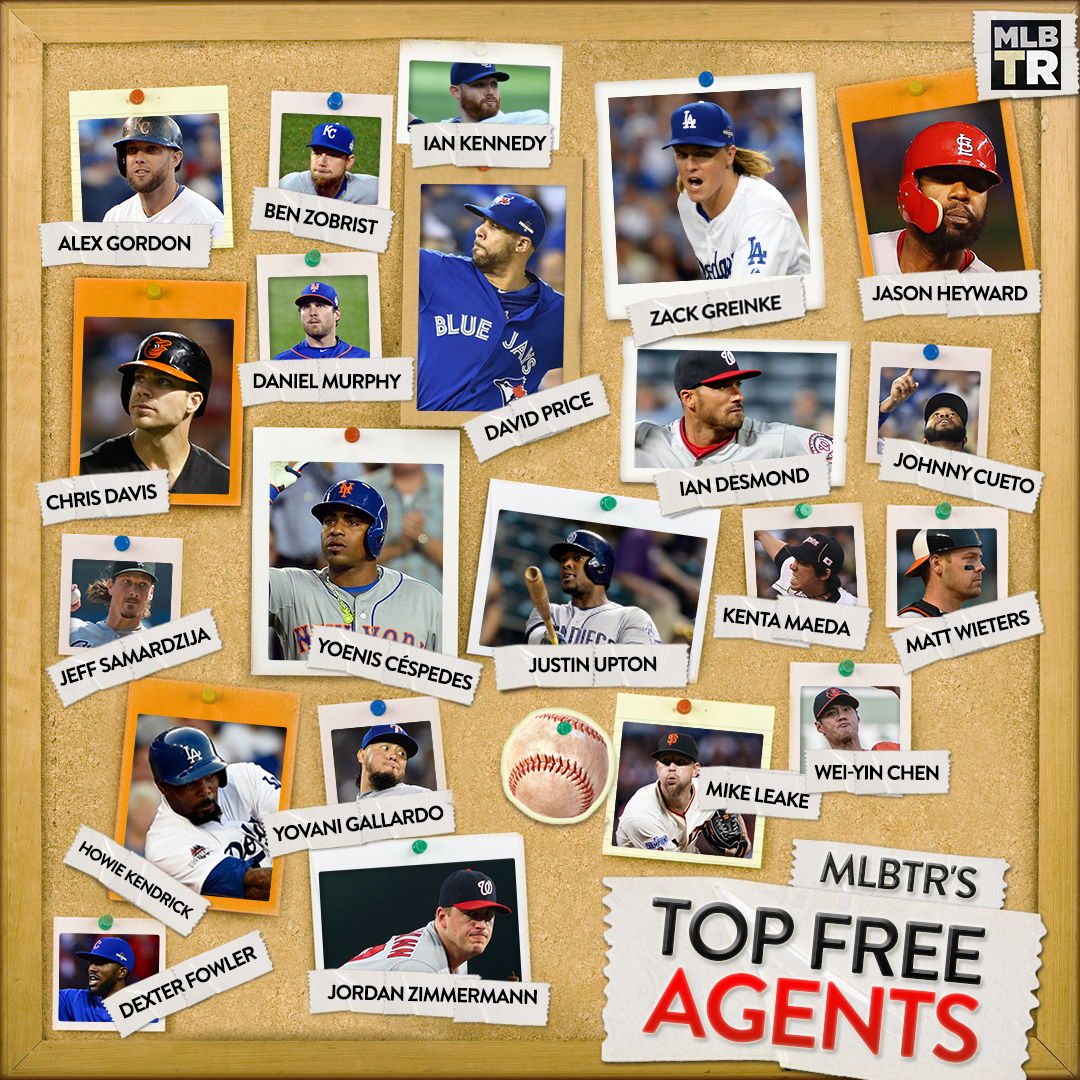
Just in time for the tenth anniversary of MLB Trade Rumors, our Top 50 Free Agents list has arrived! The entire list of available free agents can be found here, and you can filter by position, signing team, and qualifying offer status with our free agent tracker here.
New to MLBTR? You can follow us on Twitter, download our free app for iOS and Android, listen to our podcast, and sign up for our free weekly newsletter.
This is the fifth year for our free agent prediction contest, which allows you to test your prognostication abilities against those of the MLBTR writing team as well as other readers. Last year 3,469 people entered, with Carson Pennington taking home the batting title with 15 correct picks out of 49, a .306 average. Mark Polishuk topped MLBTR writers with 14 correct. The contest is back for 2016 and is open now! You can enter your picks anytime between now and November 13th at 11:59pm central time, and you’re free to make changes up until that point. A Facebook account is required to participate in the contest. Once all top 50 players have signed, the winners will receive cash prizes.
This year, I asked MLBTR writers Steve Adams, Jeff Todd, Mark Polishuk, Charlie Wilmoth, Zach Links, and Brad Johnson to send me their picks so I could compare to my own. Discussions with the MLBTR writing team, especially Steve and Jeff, helped inform the predictions found below. Each player’s team was picked in a vacuum, so we’re not predicting the Nationals will sign both Justin Upton and Gerardo Parra. Additionally, we’ve added our contract predictions to the mix. We vetted these as much as possible, but with 50 predictions and a volatile free agent marketplace, we know we’ll be off on some. Still, the contract predictions give a more clear criteria, as players are ranked by earning power. Without further ado, we’re proud to present MLBTR’s Top 50 Free Agents!
Rockies Have Considered Signing Daniel Murphy
The Rockies have considered the possibility of signing Daniel Murphy to play first base, Ken Rosenthal of FOX Sports tweets. The Mets did, of course, extend Murphy a qualifying offer. The Rockies’ top pick — fourth overall — is protected, although they would have to give up their Comp Round A pick he rejects the qualifying offer and they sign him.
The timeline of the Rockies’ interest in Murphy is unclear, but if they’ve seriously considered signing him, it’s possible they could be planning to make a surprising impact this winter. Murphy doesn’t figure to be cheap — MLBTR’s Tim Dierkes predicts he’ll get four years and $56MM. The market at first is rather thin, though, and Murphy does figure to be less expensive than the top first base option, Chris Davis, who should get at least twice as much. Korean slugger Byung-ho Park is another possibility, although it’s not yet clear which team won the rights to negotiate with him.
The Rockies headed into 2015 with Justin Morneau topping their depth chart at first base, but they declined their mutual option on him after he hit .310/.363/.458 in 49 games but struggled to stay healthy. Ben Paulsen ended up playing at first for much of the year, but the Rockies’ interest in Murphy suggests they won’t be wedded to Paulsen as their starting first baseman.
Murphy, of course, figures to draw interest from any number of teams, many of whom want him to play second or third, where his bat will have a greater impact. (The average first baseman last year hit .259/.336/.444, not significantly worse than Murphy’s .281/.322/.449, although Murphy did hit in a tough home park.) It will be interesting to see whether the Rockies are willing to pay a premium for Murphy’s bat (and postseason heroics) when other teams might be able to get better value from him by having him play elsewhere on the diamond.
Nexen Heroes Accept $12.85MM Posting Fee For Byung-ho Park
SATURDAY: Neither the Indians nor the Tigers submitted the winning bid for Park, via MLB.com’s Jordan Bastian and MLive.com’s Chris Iott (on Twitter). The Indians did bid for Park, although their bid came up short; the Tigers did not bid for him. The Rangers are not the team either, via a tweet from MLB.com’s T.R. Sullivan. The Orioles, who looked like a potential fit for Park, were outbid and will not be signing him, Dan Connolly of the Baltimore Sun tweets. The Padres did not win the bidding either, according to Dennis Lin of the San Diego Union-Tribune (on Twitter). Meanwhile, Jeff Passan of Yahoo tweets that the Red Sox did not win the bid and will stick with Hanley Ramirez at first base.
FRIDAY: Korea’s Nexen Heroes have decided to accept a $12.85MM bid on the rights to negotiate a big league contract with first baseman Byung-Ho Park, the club said in an announcement. (The news comes via Korean outlet Naver Sports, at a Korean language link. Han Lee of Global Sporting Integration tweeted the key portion of the report in English.)
It is not yet known what MLB club won the posting process, but the as-yet-unidentified team will have thirty days to work out a contract with the first baseman. Nexen technically has until Monday afternoon to make its formal decision on the bid, at which point the clock will begin to run.
If Park and his new club are not able to reach agreement on a contract, all involved would lose something. Nexen would not receive the posting fee, Park would not be able to play in North America, and the winning team would not only miss out on the player but also the time spent in talks. It’s far from certain that a contract will be agreed upon, but the incentives are aligned to make it happen.
The reported $12.85MM fee would fall well shy of the $25MM+ posting amount commanded by lefty Hyun-Jin Ryu. But it steadily outpaces what the Pirates paid Nexen last year (around $5MM) for the rights to reach a deal with infielder Jung-Ho Kang. After the team-to-team transfer was arrived at, Kang and the Bucs agreed to a four-year, $11MM guarantee.
Surely, the success of the latter this year in the majors helped boost the appeal of Park. Both had similarly outlandish numbers in the KBO, though Park has done it more consistently over several seasond. Of course, he’s also a first baseman.
In the just-released list of MLBTR’s top fifty free agents, Tim Dierkes predicted that Park would command a $10MM posting fee and a five-year, $40MM contract from the winning team. The first part of that was close, but it remains to be seen how negotiations will proceed.
Twenty Free Agents Receive Qualifying Offers
Today marked the deadline for players to receive one-year, $15.8MM qualifying offers, and we saw a record 20 players receive them. There were only nine recipients in 2012-13, followed by 13 the next year and a dozen last winter. This winter’s slate of free agents has long been considered robust, but that’s still a remarkable increase in the use of the QO.
Here are this year’s free agents who were extended a qualifying offer by their teams (in alphabetical order)
- Brett Anderson, SP (Dodgers)
- Wei-Yin Chen, SP (Orioles)
- Chris Davis, 1B (Orioles)
- Ian Desmond, SS (Nationals)
- Marco Estrada, SP (Blue Jays)
- Dexter Fowler, OF (Cubs)
- Yovani Gallardo, SP (Rangers)
- Alex Gordon, OF (Royals)
- Zack Greinke, SP (Dodgers)
- Jason Heyward, OF (Cardinals)
- Hisashi Iwakuma, SP (Mariners)
- Howie Kendrick, 2B (Dodgers)
- Ian Kennedy, SP (Padres)
- John Lackey, SP (Cardinals)
- Daniel Murphy, 2B/3B (Mets)
- Colby Rasmus, OF (Astros)
- Jeff Samardzija, SP (White Sox)
- Justin Upton, OF (Padres)
- Matt Wieters, C (Orioles)
- Jordan Zimmermann, SP (Nationals)
The rules regarding the qualifying offer are set forth in full detail right here. In brief, though, should these players reject the offer and sign with a new team, their former team will stand to receive a “sandwich” round draft pick as compensation. Those new teams, in turn, will have to forfeit their top unprotected draft pick (or picks, if they sign multiple QO-rejecting players). If a player rejects a QO but ultimately re-signs with the same team, no draft pick shuffling occurs.
The net result is that players who reject qualifying offers enter the market with the requirement of draft compensation weighing them down. The players listed above will now have one week to decide whether or not to accept the QO and play on a one-year deal worth $15.8MM, or instead to or reject the offer in search of a larger guarantee on the open market.
The word “guarantee” is the key to that sentiment: while many will focus on whether or not the players can top that average annual value on the free agent market, more often than not, a player is concerned primarily with maximizing the amount of money he can earn over his prime seasons. Few players are ever sold on the idea of playing on a one-year deal when a multi-year guarantee can be had. Single-year contracts, on the free agent market, are often reserved for older players who don’t know how long they wish to continue playing (e.g. Torii Hunter last year), players coming off significant injuries (e.g. Brett Anderson last winter) or players who have underperformed in a contract year (e.g. Colby Rasmus last offseason).
Indeed, we’ve yet to see a single player accept a qualifying offer. While upon first glance it might make sense to suggest a player with a spotty track record, such as Anderson, should accept the offer, there’s quite possibly more downside for him in accepting than in rejecting. Even if Anderson is faced with a cold market, he’d likely be able to find a one-year contract at an AAV north of $10MM — which is what he got last year after an injury-shortened season — if not a one-year offer commensurate with the total sum of the qualifying offer, as Ervin Santana did previously when signing a one-year, $14.1MM contract (that year’s QO value). Whereas the downside in accepting is “settling” for a one-year deal a few ticks below the QO level, the upside in rejecting is finding perhaps a three-year deal that could more than double the guarantee he’d otherwise receive. This risk/benefit calculus generally points toward testing the market.
Reports on whether or not any player will accept the offer should be filtering in over the next week, but those looking for a quick resource to check the status of each can use MLBTR’s Free Agent Tracker (the provided link is already filtered to show only free agents that have received the QO, and their status will change from “Received” to “Rejected” or “Accepted” upon a decision being reached).
Players To Receive Qualifying Offers
The deadline for players to extend qualifying offers to their free agents is 5pm ET today. The value of this year’s qualifying offer — which is equated by taking the average salary of the game’s 125 highest-paid players — is $15.8MM. Teams can extend the QO to free agents who spent the entire year with that club (i.e. were not midseason signings/trade acquisitions), giving the player one week to accept or decline the deal. Should the player accept — and to this point, no one has ever accepted a QO — he is immediately under contract for the following season at that $15.8MM salary and cannot be traded without his consent until the following June. If a player rejects and signs with a new club, his former team is awarded a compensatory draft pick at the end of the first round the following year. Any team that signs a player that has rejected a QO must forfeit its top unprotected draft pick. (The top 10 picks in next year’s draft are protected under the collective bargaining agreement.) Those wishing to drill down deeper into the specifics of the qualifying offer can check out MLBTR’s full explanation of the qualifying offer system.
The previous one-year record for number of player to receive a QO is 13, but with a deep crop of free-agent talent this offseason, a new record will absolutely be set. I see as many as 22 realistic QO candidates in this year’s free agent class, though some of those are admittedly borderline calls whose teams may decide not to make the risk. To this point, the Royals have already made the obvious decision to extend a QO to Alex Gordon (as they announced yesterday). That was the lone formal announcement prior to Friday.
All that said, here’s the list of formal qualifying offers to be extended (we’ll update accordingly throughout the day)…
- The Orioles announced that they’ve issued qualifying offers to first baseman Chris Davis, lefty Wei-Yin Chen, and catcher Matt Wieters. Though reports at times questioned whether Baltimore would extend the $15.8MM offer to Wieters, it always seemed a near-lock that that the team would do so (with expectations that he’ll reject it and look for multiple years in free agency).
- The White Sox have officially announced their qualifying offer to Jeff Samardzija, which was essentially a foregone conclusion. It’s been known that Samardzija will receive a qualifying offer and widely reported that he will reject said offer for quite some time.
Earlier Updates
- Hisashi Iwakuma (Mariners), Dexter Fowler (Cubs) and Daniel Murphy (Mets) will all receive qualifying offers, writes Jon Heyman of CBS Sports. Each of the moves was widely expected, although Heyman also hears that the Padres have made up their mind and will make a qualifying offer to Ian Kennedy. That situation was a bit more up in the air, though Dennis Lin of the San Diego Union-Tribune said two nights ago that it was a “likely” outcome, and we at MLBTR have voiced the belief that the Padres should and would make the QO on multiple occasions.
- The Blue Jays have now announced that Marco Estrada will receive a qualifying offer on the strength of his impressive 2015 regular season and playoff performance. (A full breakdown of Estrada’s qualifying offer can be read here.)
- The Cardinals announced that they have extended the qualifying offer to both Jason Heyward and John Lackey. Each decision was widely anticipated, as they 26-year-old Heyward is poised to cash in on an enormous contract due to his youth, defensive prowess and solid contributions at the plate and on the bases. Lackey recently turned 37, but he’s completely rejuvenated his career over the past three seasons and is well-positioned to land a sizable multi-year deal this winter even with draft pick compensation attached to his name
- As noted above, the Royals announced their qualifying offer to Alex Gordon on Thursday afternoon.
Astros Make Qualifying Offer To Colby Rasmus
The Astros have announced that they made a qualifying offer to outfielder Colby Rasmus. The 29-year-old will have a week to decide whether to take the one-year, $15.8MM offer or instead hit the open market with draft compensation weighing him down.
Rasmus joined Houston on a one-year, $8MM pact last winter and obviously boosted his stock over the course of the season. Working in a semi-regular capacity, he slashed .238/.314/.475 with 25 home runs over 485 plate appearances.
Truth be told, Rasmus wasn’t that bad in 2014 with the Blue Jays. Though his on-base percentage fell below .300, he still contributed plenty of pop and carried an above-average overall batting line. A three-year look-back on Rasmus reveals a cumulative 116 OPS+ and 65 long balls spread over 1,319 plate appearances.
Better still, Rasmus seemingly remains young and mobile enough to play center field. He rated as a roughly average player there after posting poor metrics in an injury-plagued 2014. And both Defensive Runs Saved and UZR felt that Rasmus played a capable left and right field, adding to his versatility.
All told, that blend of youth, power, and defensive capability makes Rasmus seem like a good bet to receive a three or four-year deal as a free agent. (And it doesn’t hurt that he had a monster post-season run.) If the takes that route, though, the need for a signing team to sacrifice a draft pick could hurt his market. It’s certainly possible to imagine him (and other mid-tier free agents) landing with clubs that have already punted their top pick for a bigger fish.
Blue Jays Make Qualifying Offer To Marco Estrada
The Blue Jays will make the one-year, $15.8MM qualifying offer to right-hander Marco Estrada, reports Shi Davidi of Sportsnet (via Twitter). Estrada, like all other free agents to receive the QO, will have one week to accept or decline the offer. Should he reject the offer, any club would have to forfeit its top unprotected draft pick to sign him as a free agent. Additionally, the Blue Jays would net a compensatory pick at the end of the first round in next year’s draft.
A qualifying offer for Estrada wasn’t even a consideration heading into the season, especially considering the fact that the 32-year-old opened the year in the bullpen. However, Estrada joined the Toronto rotation in early May and proceeded to deliver the best performance of his career, logging a 3.13 ERA in 180 innings and continuing with an outstanding postseason that saw him surrender just five runs with an 11-to-1 K/BB ratio in 19 1/3 innings.
Estrada will now be faced with an interesting decision. He’s banked a relatively modest $10MM in his career, so the qualifying offer alone could pay him one-and-a-half times his career earnings in just one season. However, Estrada has also never been on a multi-year deal and enjoyed the security that such a pact would afford him, and it’s likely that he’d have received significant multi-year interest without the QO.
The draft pick forfeiture will add to what was already an air of uncertainty surrounding Estrada. Prior to the 2015 season, he’d enjoyed a few quality seasons, but his strikeout and walk rates had trended in the wrong direction — and they did again in 2015 — as he bounced back and forth between the Milwaukee bullpen and rotation. Estrada unquestionably benefited from a minuscule .218 BABIP this season, but it’s also not fair to assume that mark will regress toward the league-average of about .300. As an extreme fly-ball pitcher, Estrada naturally has a lower BABIP (fly-balls are easier to convert into outs but also beget more home runs) and has maintained a .261 career mark in that regard.
A team that believes it can find a way to restore Estrada’s strikeouts while also maintaining a bit of the improved home-run prevention he displayed in 2015 may well think he’s worth the forfeiture of a draft pick — especially if the team has a protected (or late) first-round pick and/or plays in a spacious ball park. Ultimately, the bet here is that he turns the offer down in search of a long-term pact. It’s also possible that Estrada and the Blue Jays compromise and work out a long-term pact in the coming week as he weighs the decision.
Mariners, Rays Swap Miller, Morrison, Farquhar For Karns
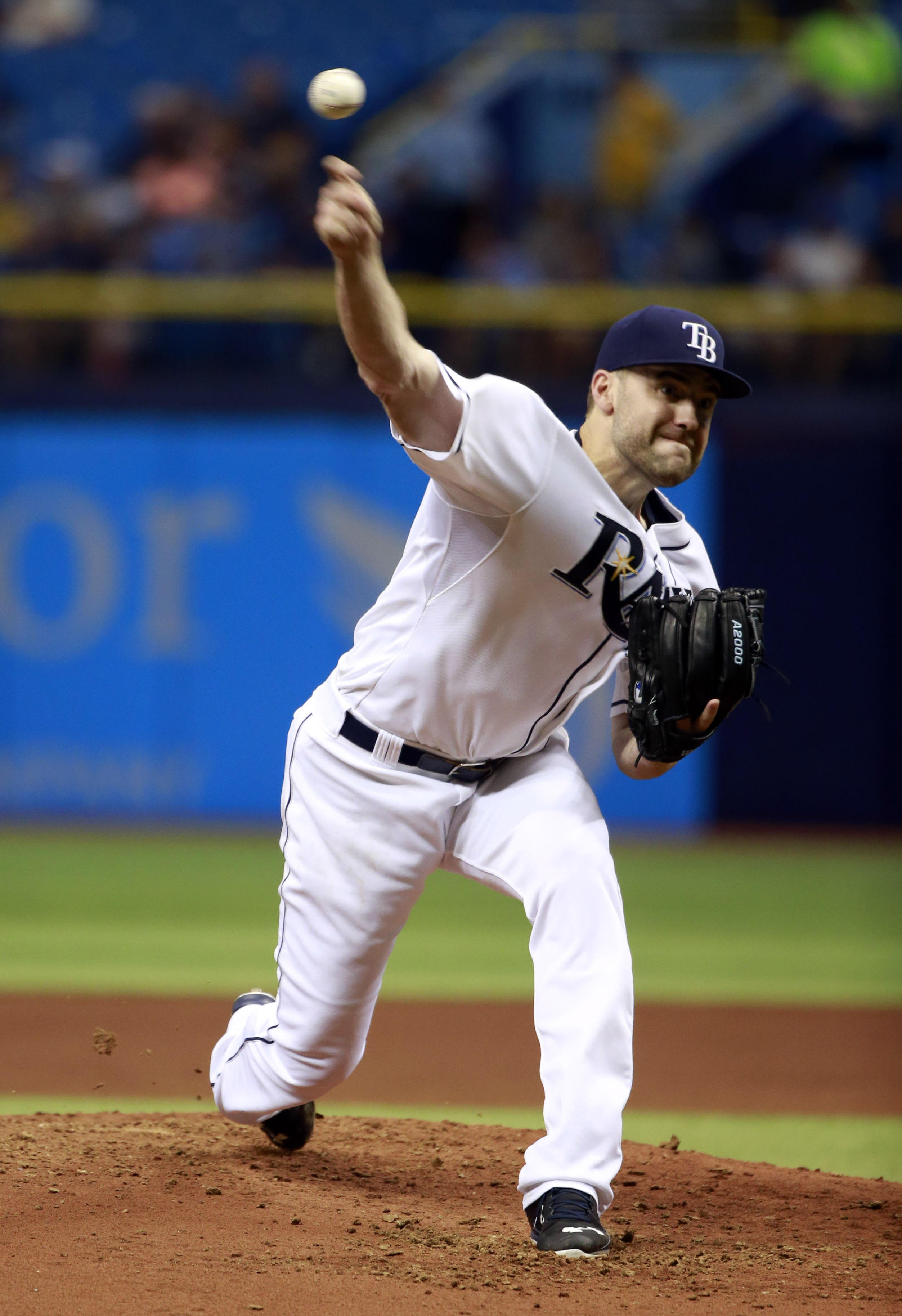
The Mariners and Rays have announced a three-for-three trade that sends infielder/outfielder Brad Miller, first baseman Logan Morrison, and reliever Danny Farquhar from Seattle to Tampa in exchange for righty Nate Karns, lefty C.J. Riefenhauser, and minor league outfielder Boog Powell.
With the trade, new Mariners GM Jerry Dipoto has made a striking first major move. The key piece, of course, is the 27-year-old Karns, who put up a solid 147-inning campaign last year, working to a 3.67 ERA with 8.9 K/9 and 3.4 BB/9. He’ll bring ample, cheap control with him to the Mariners, even if he regresses (and/or fails to progress). Evaluative statistics such as SIERA (3.90) were not terribly high on his first complete big league season, though he’d still be quite a productive asset if he pitches at that level. It’s worth noting that Karns was shut down late in the year with a mild forearm strain, though he also obviously passed a medical exam since the trade is now official.
Seattle also gets Riefenhauser, a 25-year-old southpaw. He has yet to do much of use in the big leagues (6.30 ERA in twenty innings), but has put up stellar run prevention numbers in the upper minors.
And Powell is not an inconsequential piece of the deal, either. He had been rated 13th on MLB.com’s list of the best Tampa Bay prospects. That publication credited him for excellent plate discipline and on-base skills, as well as solid defensive versatility across all three outfield positions. Powell, 22, slashed a productive .295/.385/.392 while splitting time evenly between Double-A and Triple-A (though he was better at the lower-level stop).
Prying Karns loose required Dipoto to part with some appealing assets. Miller, a talented 26-year-old, won’t be eligible for free agency until after the 2019 season. He had been unable to hold down the everyday shortstop job with the M’s but did product an above-average (when park-adjusted) batting line of .258/.329/.402 last year. He also contributed 11 home runs and 13 steals. Miller has some experience in the outfield (as well as at second and third), and figures to be a versatile piece for Tampa. Defensive metrics are not fond of his work in center field, though they have viewed him as an average (1.9 career UZR) to slightly below-average (-9 career Defensive Runs Saved) fielder at short.
Morrison has had his ups and downs, and didn’t exactly light the world on fire at the plate last year with a .225/.302/.383 slash and 17 home runs over 511 plate appearances. But he has shown more at times, including in 2014, and ought to provide a first base/DH option for the Rays. He is projected by MLBTR to earn $4.1MM in his final season of arbitration eligibility.
Farquhar, 28, is another interesting player. He has shown the ability to put up big strikeout totals out of the pen, racking up double-digit K-per-nine tallies in both 2013 and 2014 and contributing 71 innings of 2.66 ERA ball in the latter of those seasons. But he struggled badly last season, dropping back to 8.5 K/9 while permitting 5.12 earned runs per nine in his 51 frames. Farquhar was more effective in Triple-A, though he tallied 38 innings at that level, making for rather a heavy usage over the course of the year.
For the Mariners, Karns will obviously slot into a rotation that figured to be in need of at least one or two more arms with Hisashi Iwakuma hitting the open market. He fits the profile — young, controllable, power arm — of the pitchers that Dipoto had been busy adding with the Angels. It’s unclear as of yet whether the addition of Karns will impact the team’s efforts to bring back Iwakuma.
Meanwhile, parting with Miller and LoMo takes away two regular contributors from last year’s Seattle roster, though it also frees up the payroll commitment that the latter would have required. The team could go with highly-regarded prospect Ketel Marte and/or the still-young Chris Taylor at short. Slugger Mark Trumbo sits atop the first base depth chart for now, but he’s projected to take home a $9.1MM arb payday before hitting the open market after the season. The resurgent Jesus Montero, who also hits from the right side, represents another option at the position. And it’s still possible to imagine the club exploring the free agent and trade markets for an upgrade.
On the Tampa Bay side of things, Karns was one of several quality young starters on the staff, which can still run out Chris Archer, Jake Odorizzi, Drew Smyly, Matt Moore, and Erasmo Ramirez. (Ramirez, of course, came to the Rays in yet another trade with the Mariners last winter.) Alex Cobb will eventually re-join that group, which will ultimately be supplemented by other promising pitchers who are rising through the ranks.
Miller joins Logan Forsythe and another former Mariner, Nick Franklin, in the middle infield mix. (While Forsythe thrived last year, Franklin scuffled in the majors — though he put up good numbers during his time at Triple-A.) It’s certainly possible that Miller will step in at short for the departing Asdrubal Cabrera, though Tim Beckham and (eventually) Daniel Robertson could also factor there.
Adding Morrison is certainly an interesting element of this trade. He’s not exactly cheap for the budget-conscious Rays, who are losing DH John Jaso to free agency. But he could be a better value proposition than the team might’ve found on the open market. It’s also possible to imagine him stepping in at first base if the club tries to find a taker for James Loney and some of his $8MM salary.
This was not the first trade for several of the names involved in tonight’s deal. Karns went to the Rays from the Nationals before the 2014 season in exchange for a package that included Jose Lobaton, Felipe Rivero, and Drew Vettleson. That same winter, the Mariners added Morrison from the Marlins in a swap for righty Carter Capps. Powell was a part of last winter’s Ben Zobrist/Yunel Escobar deal. And Riefenhauser has changed hands several times, by way of trade and waiver claim.
Photo courtesy of USA Today Sports Images.
Alex Gordon Declines Player Option, Will Receive Qualifying Offer
NOV. 5: The Royals announced on Thursday that Gordon, unsurprisingly, will receive a $15.8MM qualifying offer. Gordon is a virtual lock to reject that one-year offer in favor of a multi-year deal on the open market, but the QO ensures that the Royals will receive a compensatory pick at the end of the first round in next year’s draft, should Gordon sign elsewhere. Any team that signs Gordon will have to forfeit its top unprotected draft pick. (The first 10 picks of next year’s draft are protected.)
NOV. 4: Royals left fielder Alex Gordon has declined his $14MM player option and is now officially a free agent, the team announced today. The 31-year-old Gordon, a client of Excel Sports Management, will now be able to test the open market for the first time in his career.
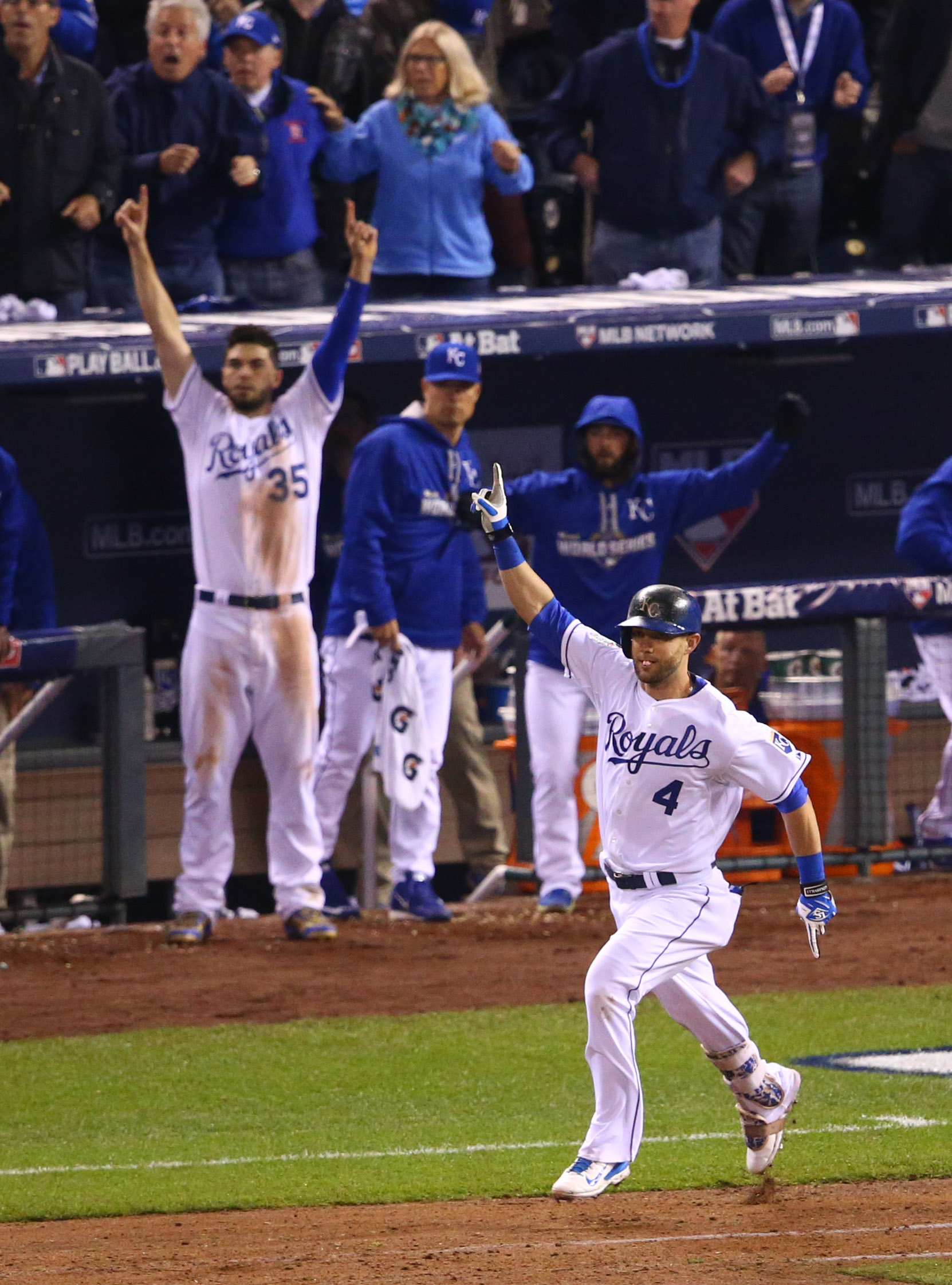
For now, the Royals have a couple of days of exclusive negotiation rights with Gordon, as teams are granted those exclusive rights for five days following the World Series. It’d be surprising if a contract of this magnitude were able to be hammered out in such a small window, and it’d also be unusual for Gordon to accept an offer without at least gauging his value on the open market, so he seems likely to solicit interest from other clubs beginning Saturday. That means the Royals will at least be able to extend Gordon a one-year, $15.8MM qualifying offer, which would net the team a compensatory draft pick at the end of the first round in next year’s draft, should Gordon ultimately sign with another club.
Gordon missed nearly two months with a strained groin this season but enjoyed a characteristically strong overall campaign both at the plate and in the field. The lifetime Royal hit .271/.377.432 with 13 home runs and was seven runs above average in left field despite the layoff, according to both Defensive Runs Saved and Ultimate Zone Rating.
The former No. 3 overall draft pick arrived on the scene with big expectations in 2007, with many hoping Gordon to become the team’s third baseman of the future. His infield work didn’t pan out, and for awhile, his swing didn’t, either. Gordon hit just .229/.319/.365 in 470 plate appearances from 2009-10, leading many to apply the dreaded “bust” label when referencing him. However, Gordon moved to the outfield full-time in 2011 and broke out with an outstanding .303/.376/.502 batting line and 23 homers.
Since that time, Gordon has batted .281/.359/.450 despite his spacious home environs, leading park-adjusted metrics like OPS+ and wRC+ to peg his offense at about 20 percent better than a league-average hitter. Over that incredible stretch, Andrelton Simmons and Jason Heyward are the only players in baseball who have carried more defensive value, according to both Ultimate Zone Rating and Defensive Runs Saved.
With a strong track record at the plate, in the field and on the basepaths, Gordon will be one of the most in-demand free agents this offseason and could command a five-year deal worth roughly $20MM annually. That would shatter the Royals’ franchise record for largest contract, which currently stands at five years and $55MM. While that type of spending is far beyond Kansas City’s typical capacity, one has to wonder if the team would make an exception for Gordon, who has become the face of the Royals franchise and whom fans would undoubtedly like to see in Royals blue for the entirety of his career.
Photo courtesy of USA Today Sports Images.
Aramis Ramirez Announces Retirement From MLB
Veteran third baseman Aramis Ramirez has formally announced his retirement from baseball today, as was expected (Ramirez announced prior to the season that this year would be his final in the Majors). Ramirez told Dominican media outlet Grandes en los Deportes (Twitter links 1; 2; 3; 4; 5; 6; 7 all in Spanish) that his career will come to an end beginning in Spring Training, but he’s going to try to remain in good enough shape to take one more tour through the Dominican Winter League with los Tigres del Licey.
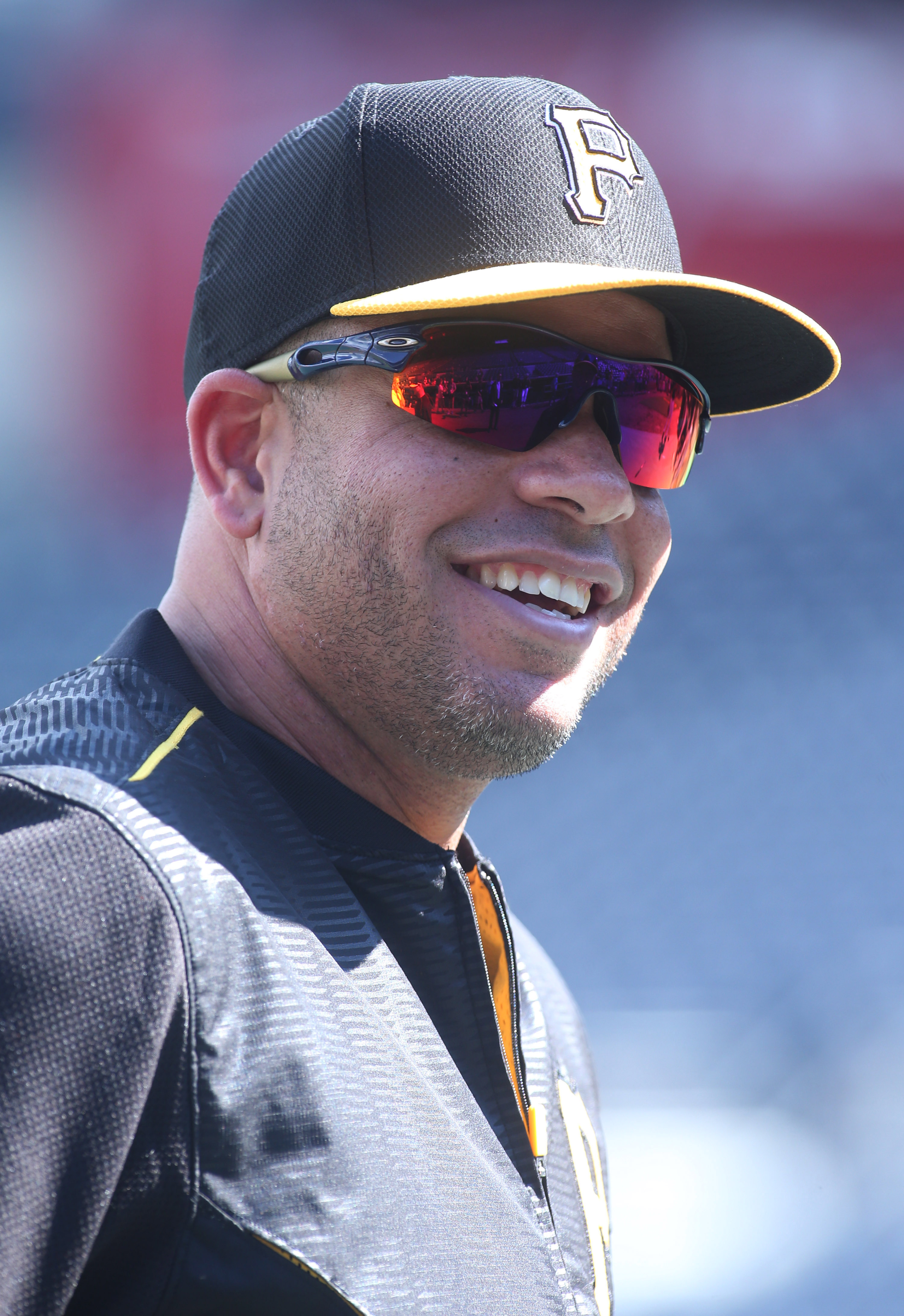
Ramirez also said that his plan is to remain involved in baseball, but he’s not sure entirely in which capacity. He doesn’t see himself as a coach or manager but is open to the idea of doing some front office work, specifically referencing the role Moises Alou recently occupied with the Padres, serving as a special assistant to the team’s player development staff. It’s also unclear as to when Ramirez would have his sights set on that type of work, as one of the key reasons he cited behind his decision to retire was a desire to spend more time with his family after an 18-year Major League career.
The 37-year-old Ramirez signed as an amateur free agent with the Pirates back in 1994 at the age of 16 and quickly earned a reputation as one of the top prospects in the game. Baseball America rated him as the No. 5 prospect in all of the minors prior to the 1998 season when he debuted with the Buccos as a 20-year-old. It took three years of back-and-forth trips between the Majors and minors for Ramirez to break out, but he did so in a huge way in 2001 when he hit .300/.350/.536 with 34 home runs as the Pirates’ everyday third baseman.
From that point forth, Ramirez was a regular player in the Majors. Though he struggled quite a bitin the 2002 season that followed, he rebounded to some extent in 2003 and found himself traded, alongside Kenny Lofton, to the division-rival Cubs, where he would spend nine years of his Major League career. Ramirez was a two-time All-Star with the Cubs and received MVP votes in four of his nine seasons with Chicago. His overall batting line of .294/.356/.531 and average of 27 homers per season with the Cubs set the stage for a free-agent deal with the Brewers that would carry on through this past summer, when Milwaukee traded him back to where it all began — Pittsburgh — in exchange for minor league righty Yhonathan Barrios.
All told, Ramirez will retire from the Major Leagues as a .283/.341/.492 hitter with 386 home runs, 495 doubles, 1098 runs scored and 1417 RBIs. While he was never a great defender at third base, he managed to play the position through his final season and enjoyed some nice years there, often outperforming his reputation as a sub-par defensive player. Fangraphs values Ramirez’s career at 38.3 wins above replacement, while Baseball-Reference has him at 32.1 WAR. Ramirez’s significant power and ability to handle the hot corner adequately earned him just shy of $148MM over the life of a very strong career that spanned parts of 18 years in the Majors and saw him accumulate 16 years, 111 days of Major League service time.
Whatever is next for Ramirez in his post-playing days, we at MLBTR wish happiness for both him and his family.
Photo courtesy of USA Today Sports Images.