
Giants Decline Options On Nori Aoki, Marlon Byrd
The Giants have declined their club options over outfielders Nori Aoki and Marlon Byrd, according to tweets from Andrew Baggarly of the San Jose Mercury News (link) and CSN Bay Area’s Alex Pavlovic (link). Aoki’s $5.5MM option will be bought out for $700K, while Byrd’s option did not come with a buyout.
San Francisco is open to re-signing Aoki, Baggarly notes, also adding in a second tweet that Aoki was completely cleared of the concussion symptoms that cut his 2015 season short. Pavlovic quotes Giants GM Bobby Evans as saying that right now, the club’s focus is on “keeping our options open in a number of areas.”
While the Giants can maintain interest in bringing Aoki back into the fold, that strikes me as an unlikely scenario, as it’s difficult to envision Aoki receiving a smaller guarantee than the $5.5MM base rejected by the team. Though the concussion symptoms are cause for concern, Aoki enjoyed a productive season with the Giants, batting .287/.353/.380 with five homers and 14 stolen bases in 93 games (392 plate appearances). Defensive Runs Saved pegged Aoki’s work in left field as roughly average, whereas Ultimate Zone Rating felt he saved between three and four runs with his glove. While that adds up to more of a useful regular than a star outfielder, Aoki certainly produced a good deal of value and would figure to be a candidate for either a multi-year deal or a one-year pact with a bigger guarantee, health permitting.
Admittedly, we saw last winter that the market didn’t necessarily place full value on Aoki’s low-power, high-contact skill set (hence the $4.7MM guarantee with the Giants), and perhaps that will be the case again this year. Even if that’s true to some extent, I’d imagine that the five homers hit by Aoki quieted at least some of the concerns over his dip in power after he homered just once in 132 games with the Royals in 2014.
Plus, the large amounts of success the Royals have experienced by deploying a contact-oriented lineup — of which Aoki was a part in 2014 — would seem to help the 33-year-old’s case. Among players with at least 350 plate appearances, Aoki’s 6.4 strikeout rate was easily the lowest in baseball, with Daniel Murphy checking in second-lowest at 7.1 percent. It’s probably not surprising, in light of that stat, to see that Aoki ranked third in contact percentage, connecting in some regard on 91.6 percent of his swings this past season.
In the end, though, Baggarly writes that the Giants simply weren’t comfortable committing to Aoki as their regular left fielder this early in the offseason. Evans explained to Baggarly: “The timing is bad because we have a lot of things to address this winter and a lot of things we want to look at, and it’s about keeping our options open. To predetermine left field today is just premature.” That’s a valid stance. Aoki is a nice player, but it’s not as if he cannot be upgraded upon, and with the team expected to pursue pitching upgrades, all the payroll space they can get is important. I can’t help but wonder if the option could’ve been exercised with the intention of trading Aoki, but the team didn’t have much time to explore that market before making the final call on the option, and Aoki’s concussion probably did make that more difficult.
Byrd, meanwhile, began the year in a huge slump with the Reds and found himself hitting just .169/.188/.273 at the end of April. The 38-year-old turned things around from that point on, however, batting .261/.308/.485 with 21 homers over his final 114 games. Byrd suffered a minor fracture in his wrist early this summer but returned quicker than expected and without a stint on the disabled list. To the surprise of many (myself included), Byrd showed little to no ill effect from the injury and continued producing at a solid clip.
Cincinnati traded Byrd to the Giants in an August waiver deal, receiving minor league right-hander Stephen Johnson in return. While the thought at the time of the acquisition was that Byrd would hold down the fort until Aoki and/or Hunter Pence were healthy enough to step into more regular roles, their injuries kept them on shelf longer than expected, leading to regular playing time for Byrd until the season’s final week.
That led to some drama surrounding the veteran Byrd, whose contract had an $8MM vesting option that came extraordinarily close to triggering. Byrd needed to reach 550 plate appearances in the 2015 season to lock in that $8MM payday, but he ultimately fell six plate appearances shy after the Giants decided not to start him in the final few games of the year. Evans was up-front with both Byrd and the media, explaining that as long as the team had a theoretical shot at the postseason, Byrd would continue to play. However, once the Dodgers eliminated the Giants from playoff contention, the Giants turned to younger options such as Jarrett Parker and Mac Williamson in order to get a look at the pair of prospects in game action.
San Francisco was said at the time to be open to bringing Byrd back next season, but I’d imagine that the rather uncomfortable end to the season will lead Byrd to explore his options on the open market, where he should draw plenty of interest as a platoon outfield bat, albeit probably at a guarantee that falls shy of the $8MM value of his option. Byrd fared quite well against left-handed pitching in 2015, as he typically does, posting a strong .271/.324/.476 line against southpaws.
J.P. Howell To Exercise Player Option
Left-hander J.P. Howell will exercise his $6.25MM player option with the Dodgers, reports ESPN’s Buster Olney (via Twitter). The 32-year-old Legacy Agency client will forgo free agency this offseason in order to return to the L.A. bullpen for a fourth consecutive season.
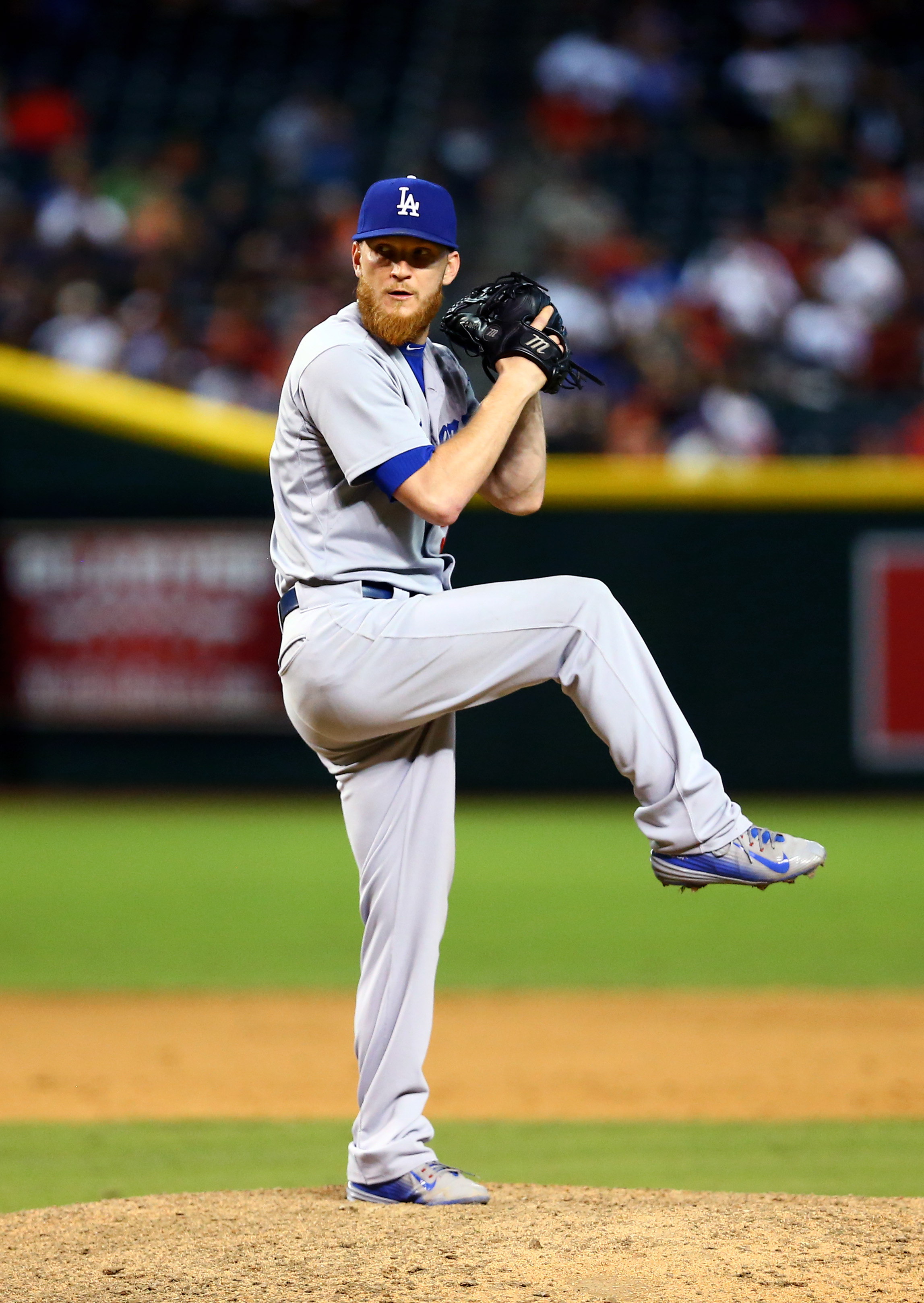
Howell is coming off an excellent season in the Dodgers’ bullpen, having logged a 1.43 ERA with 8.0 K/9, 2.9 BB/9 and a 60.3 percent ground-ball rate in 44 innings of work. His strong production continued what has been a dominant run since joining the Dodgers prior to the 2013 season, as Howell has compiled a brilliant 1.97 ERA in his 155 innings with Los Angeles.
That strong track track record makes it at least worth wondering if Howell could’ve landed a multi-year deal in a market that is thin on left-handed relievers with lengthy track records of success — Antonio Bastardo and Tony Sipp were likely his top competition — but it’s also probably fair to assume that he wouldn’t have received as large of an annual salary. And, there’s something to be said for returning to a familiar situation that has led to personal success and three consecutive division titles for the team.
Howell did have his struggles in 2015, specifically when it came to facing right-handed hitters. While he hadn’t dealt with platoon issues in his two prior years with the Dodgers, right-handed hitters knocked Howell around to the tune of a .318/.368/.455 batting line. Perhaps that split played a role in his decision to accept the option, although there’s certainly a case to be made that it was more a function of poor luck than anything skill-related. Right-handed hitters posted a sky-high .368 BABIP against Howell in 2015 that was worlds higher than his career mark of .293.
Howell’s return to Los Angeles means that he’ll again help serve as a bridge to one of the game’s best closers in the form of Kenley Jansen. Exactly which other names will constitute the back end of the Dodger bullpen is unclear, as the team has myriad options in the late innings. Luis Avilan and Ian Thomas serve as left-handed options to potentially complement Howell, while right-handers such as Chris Hatcher, Pedro Baez, Juan Nicasio and Yimi Garcia, among others, could constitute the right-handed setup crew. Of course, given the active nature of president of baseball operations Andrew Friedman and GM Farhan Zaidi, it certainly won’t be surprising to see the Dodgers shuffle their relief corps, to some extent, by dealing some of those arms and possibly bringing in external help in order to solidify a bullpen that is deep in options but lacking in proven arms.
Photo courtesy of USA Today Sports Images.
Nationals Hire Dusty Baker As Manager
NOV. 4: Baker’s contract is a two-year, $4MM contract that comes along with $3MM worth of incentives, Nightengale now reports (via Twitter).
NOV. 3, 9:48am: Baker will be paid “less than half” of his old salary (reportedly around $3.5MM) with the Reds, Bob Nightengale of USA Today tweets. His contract does, however, contain “substantial incentives.”
7:05am: The Nationals have officially announced the hiring of Dusty Baker to “a multi-year contract.” It will reportedly guarantee two seasons of salary.
While Baker had been considered one of two finalists to take over the Nats dugout, the club was reportedly set to go instead with Bud Black. Indeed, Black and the Nats are said to have agreed to move forward with a relationship before contract negotiations stalled. Black was reportedly shocked at Washington’s first offer, which was for one year and $1.6MM. Washington then increased its offer to two years at a “lowball” salary, but talks never gained traction.
In Baker, 66, the Nationals are getting an amply experienced skipper — as they said they hoped to do in undertaking the search. Baker has previously been in charge of the field operations of the Giants (1993 to 2002), Cubs (2003 to 2006), and Reds (2008 to 2013). With three National League manager of the year awards already in his trophy case, Baker will look to guide D.C. to his first-ever World Series crown as a skipper.
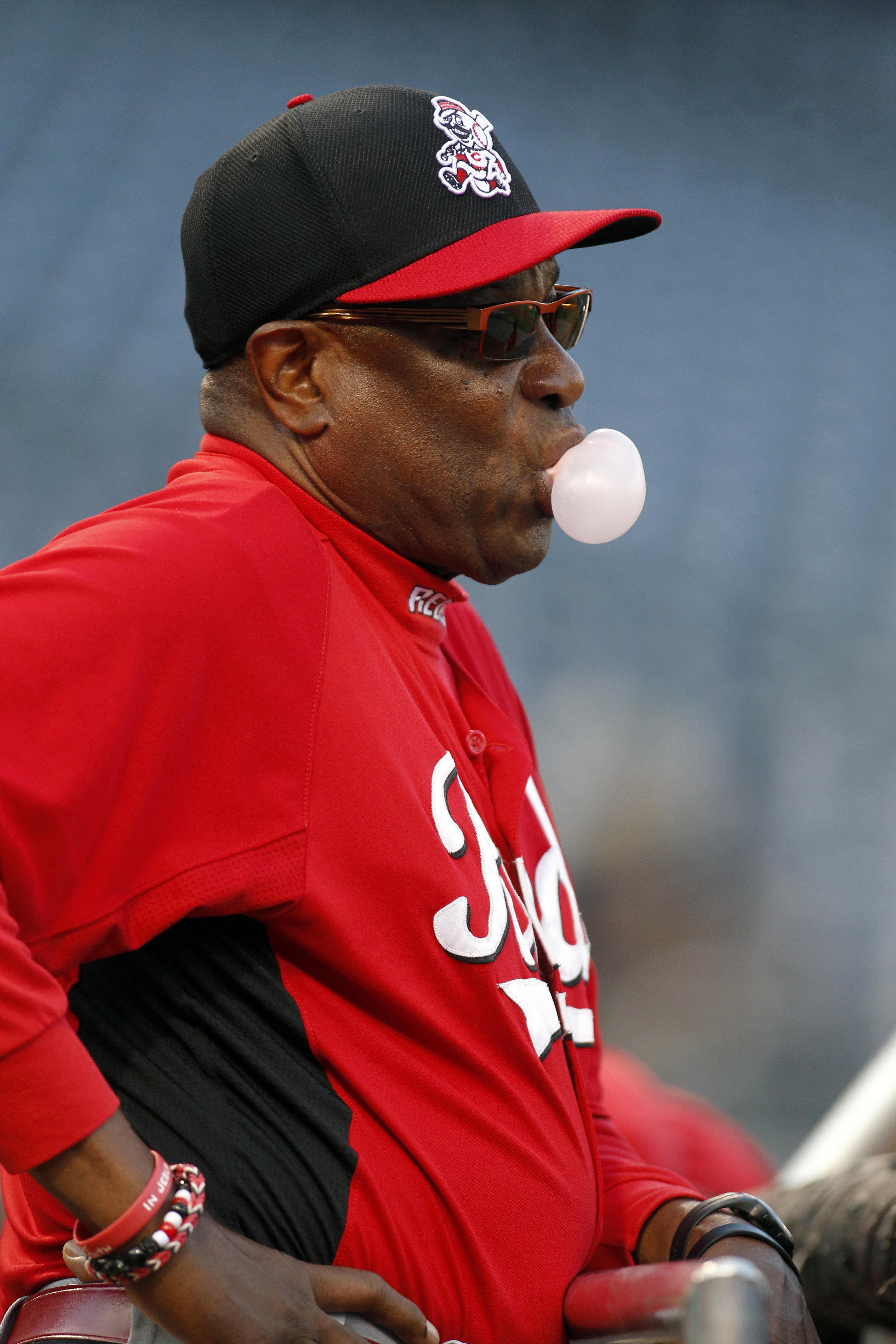
Baker has piloted his teams to an overall record of 1,671 wins against 1,504 losses. He secured division championships at each stop, five in total, and led teams into the post-season seven times. Baker was at the helm of the Giants for their 2002 run to the World Series, which the club dropped in seven games.
Long before he became one of the league’s higher-profile skippers, Baker was an accomplished outfielder in the majors. He played 19 total seasons, spending time with the Braves, Dodgers, Giants, and Athletics while compiling a lifetime .278/.347/.432 batting line with 242 home runs. Baker compiled just under forty wins above replacement in his playing career and appeared in the World Series three times.
“We were looking for a manager to help us achieve our ultimate goal of competing for a World Series championship,” managing owner Ted Lerner said in a prepared statement. “During our broad search process we met with many qualified candidates, and ultimately it was clear that Dusty’s deep experience was the best fit for our ballclub.”
President and GM Mike Rizzo also put his name to a statement in the release. “In getting to know Dusty and identifying what we wanted in the next on-field leader of our team,” he said, “we are excited to have him on board. Dusty’s experience, as a winning player, coach, and manager, is vast and varied. We are excited to bring him to Washington and put his steady demeanor, knowledge and many years in the game to work in our favor. I think I speak for the entire organization when I say I am very much looking forward to working with him.”
While the organization was said to have been impressed with Baker from the start, the very public breakdown with Black marks an ugly start to the offseason. Rizzo and the Nats have had some issues in the dugout in recent years. Jim Rigglemen resigned in the middle of the 2011 season in protest over his lack of an extension. The club had a fairly smooth run with Davey Johnson, though even in his case there was a long delay in reaching a new deal after the breakout 2012 season. And the team’s most recent skipper, Matt Williams, was roundly criticized before being fired at the end of 2015.
The Nats can be hopeful that Baker will help to stabilize things after the organization endured a messy 2015. He is, after all, deeply experienced and comes with a reputation as a first-class players’ manager. Motivating players and managing clubhouse personalities is a key part of the job, of course, and arguably one where Williams failed.
On the other hand, Baker has long been a prime analytical example of in-game decisionmaking problems. As Neil Weinberg wrote near the end of Baker’s tenure in Cincinnati, his lineup construction, bullpen management, and proclivity to bunt all can and have been questioned. And Baker was blamed in many quarters for over-using young arms with the Cubs, though it’s hard to imagine that becoming an issue in D.C., which drew fire for its late-season shutdown of Stephen Strasburg.
It’s not clear yet whether Baker’s approach has evolved as he takes up his fourth big league managerial position. There have been suggestions that he’s worked to learn more about modern analytical thinking, though we’ll need to await his comments and actions to know more. Rizzo has never hired a sabermetric darling as his club’s skipper, though it’s worth wondering whether he and Baker will work to correct some of the late-inning pen usage issues that cropped up this year under Williams.
Jon Heyman of CBSSports.com reported that Baker would be offered the job last night, and said early this morning that agreement appeared imminent. Nightengale tweeted that it was a two-year deal. The TalkNats.com blog first reported issues in the contract negotiations. Heyman reported that Baker was back in the mix. Adam Kilgore of the Washington Post (via Twitter), Bob Nightengale of USA Today (on Twitter and in this post), and Scott Miller of Bleacher Report (in a tweet) all reported on the details of talks with Black.
Photo courtesy of USA Today Sports Images.
Joaquin Benoit, Adam Lind Available In Trade Talks
Though each player just had his option exercised yesterday, Padres right-hander Joaquin Benoit and Brewers first baseman Adam Lind are both available in trade talks right now, tweets ESPN’s Buster Olney.
While the news isn’t necessarily unexpected, especially in Lind’s case, it could certainly have an impact on the offseason direction of multiple clubs. A team that acquires Lind in the near future — and it’s worth keeping in mind that he was traded from Toronto to Milwaukee on Nov. 1 last year, making a near-future deal plenty possible — would likely be plugging a hole at first base or designated hitter, thereby removing them from the free agent market at said positions. Clubs in possible need of first base/DH help could include the Pirates, Orioles, Rockies, Mariners, White Sox, Astros and A’s, depending on roster decisions made by each club early in the offseason.
Olney further tweets that catcher Jonathan Lucroy and closer Francisco Rodriguez “are available for trade talks” as well, as new Milwaukee GM David Stearns aims to make his team younger and build for the future. Any of the three Brewers players mentioned by Olney would have value to another team, with Lind controlled for one year at $8MM, Rodriguez owed $7.5MM this coming season (plus a $2MM buyout or $6MM club option for 2017) and Lucroy owed $4MM in 2016 (plus a $5.25MM club option for 2017).
As for Benoit, the Padres exercised a $7.5MM club option over him yesterday rather than paying a $1MM buyout. The 38-year-old is coming off three exceptionally strong seasons split between the Tigers and Padres, having worked to a 1.98 ERA with 9.6 K/9, 2.8 BB/9 and a 41.7 percent ground-ball rate. Although metrics such as FIP, xFIP and SIERA feel that Benoit has overperformed, he’s been able to sustain abnormally low BABIP levels and high strand rates, suggesting that there’s some degree of skill involved in those atypical marks. While there’s been a good deal of talk about the Padres potentially trading Craig Kimbrel this winter, and Benoit then closing for the team next season, it appears that Benoit will be marketed prior to any theoretical Kimbrel talks. A trade of Benoit wouldn’t rule out the possibility of dealing Kimbrel, of course, but moving both would create quite a bit of work for the Padres in the bullpen, as right-hander Shawn Kelley is also up for free agency this winter.
Reds Promote Dick Williams To GM; Jocketty To Serve As President Of Baseball Ops
4:00pm: Williams signed a three-year deal to serve as GM, MLB.com’s Mark Sheldon tweets. C. Trent Rosecrans of the Cincinnati Enquirer adds that Jocketty will remain with the Reds for two years beyond the 2016 season in an advisory capacity (Twitter link).
1:55pm: The Reds have announced that Dick Williams has been promoted to the general managerial role. Prior GM Walt Jocketty will remain with the club as its president of baseball operations.
Williams, not to be confused with the long-time big league ballplayer of the same name, had served previously as the organization’s assistant GM. In other words, it appears that this move largely tracks other recent promotional trends around the game.
It’s not always easy to determine whether and when title changes come with shifts in job responsibilities, of course, and it remains to be seen what the case will be in Cincinnati. Per the team’s announcement, though, it does appear that the 44-year-old Williams will take on more day-to-day duties even as Jocketty “continue[s] to oversee the department.”
Jocketty indicated in his comments that there would be a tangible change in the organization’s structure. “As is the case with any business,” he said, “it’s critical to have a succession plan in place. Dick has been here for 10 years, he’s learned the business, and we are confident he is ready to take on the GM responsibilities.“
But that handoff won’t be dramatic, at least at first, as C. Trent Rosecrans of the Cincinnati Enquirer reports in a series of tweets (links: 1; 2; 3; 4). Jocketty said that he organization has been “grooming” Williams for the role for some time, so much so that it was part of the discussion when he reached an extension with the team a few seasons back. Jocketty said he’ll only be taking and making phone calls for another year and will shift to an advisory role next year.
Notably, Williams is not the only person by that surname on the upper reaches of the Cincinnati front office chart. As this article from the passing of former club owner William J. Williams Sr. indicates, the new GM is intimately related with the organization’s key family.
He’ll be tasked with continuing to help guide the organization through a tough stretch on the ballfield. The Reds have already begun cashing in veteran assets, though the focus has been on moving pending free agents. This winter will pose a difficult test, with opportunities and risks that are magnified by the club’s major commitments (e.g., Joey Votto, Homer Bailey) and lower-middle-class spending capacity.
Judge Rules In Orioles’ Favor In MASN Dispute
New York Supreme Court Judge Lawrence Marks has ruled in favor of the Orioles and against the Nationals in a long-running dispute relating to the rights fees owed to the latter team by the jointly-owned Mid-Atlantic Sports Network (MASN). (Hat tip to James Wagner of the Washington Post, on Twitter.) MASN, which is controlled and majority-owned by the Orioles, brought the lawsuit to challenge an arbitration award that purported to settle the annual television broadcast fees owed by the network to the Nationals (who own a minority share of MASN).
Today’s ruling vacates that award. If the decision is upheld on appeal, it would require the parties to renegotiate and/or re-arbitrate the rights fees. Importantly, the decision does not address the underlying substantive dispute, let alone decide that in favor of the Orioles/MASN.
The root of the dispute dates back to the dealmaking that paved the way for the Expos-turned-Nationals organization to move to D.C. The Orioles opposed the intrusion on their market, of course, and the compromise ultimately included a deal in which the O’s would maintain a significant ownership percentage of MASN.
Annual fees for the Nationals’ broadcast rights were also covered in the resulting set of contracts, with the first several seasons’ fees pre-established at fairly low rates. Pursuant to the agreement, the annual rights value was to be re-negotiated after 2011 (and every five years thereafter) to arrive at a fair market value of those rights.
When that negotiation failed, the arbitration was initiated, with the Orioles proposing a $34MM payout for 2012 and the Nationals requesting $109MM. The panel hearing the case was a league committee known as the Revenue Sharing Definitions Committee (RSDC). Its members, at the time, were Rays owner Stuart Sternberg, Pirates president Frank Coonelly, and Mets COO Jeff Wilpon. MLB itself, including now-commissioner Rob Manfred, also played a major role in the arbitration.
The panel ultimately decided upon a $53MM rights fee value for the 2012 season, which would rise steadily to $66MM in 2016 (thus covering the five-year period in question). But it held off on formally issuing its decision for about two years, allowing then-commissioner Bud Selig to attempt to work out a compromise, which (per the ruling) would have involved a $1B+ sale of MASN to Comcast (which obviously never occurred). In the meantime, MLB fronted the Nationals the difference between the fees they were receiving from MASN and the value that the panel had determined.
A formal decision was issued on June 30 of last year, and the Orioles instituted the present litigation shortly thereafter. Baltimore challenged a number of aspects of the arbitration, including the involvement of the league at the time and its decision to advance money to the Nationals.
Though overturning an arbitration award is an exceedingly difficult task, the court sided with MASN and the Orioles. Interestingly, though, none of the above factors played into the decision, which focused on the highly deferential standard of review and noted that the agreement had contemplated an “inside baseball” arbitration panel.
The ultimate basis cited by the court in vacating the award — and the issue that will presumably be tested on appeal — is the involvement of the law firm Proskauer Rose LLP. Not only was Proskauer representing the Nationals in the arbitration, the court explained, it was currently representing Major League Baseball in numerous other matters — with four particular attorneys sharing responsibility for both clients. Though MASN and the Orioles repeatedly raised this issue, the panel didn’t take “any step at all” to deal with the potential bias that resulted.
Applying the relevant standard of “evident partiality,” the court determined there was sufficient cause to overturn the decision of the panel. Judge Marks explained (quoting a prior case): “[T]his complete inaction objectively demonstrates an utter lack of concern for fairness of the proceeding that is ‘so inconsistent with basic principles of justice’ that the award must be vacated.”
The actual basis for the ruling is important in several regards. For one, it narrows the issues to be addressed on appeal, though the Orioles could attempt to challenge the judge’s refusal to offer relief on the other grounds argued. (Notably, the court noted in its ruling that the factual setting it considered was without precedent, making this case ripe for consideration in an appellate proceeding.) And it also leaves open the possibility that the parties could return to the same panel that decided the dispute in the first place in a second arbitration.
All said, the ruling represents a significant victory for the Orioles’ side of things — in large part because of the leverage it gives the organization in negotiations. Continued litigation and re-arbitration will, obviously, be quite expensive. And the Nationals now have no argument to demand immediate payment of a vacated award, keeping the cash in Baltimore’s pocket. It’s notable, also, that the original five-year rights fee period is now almost up, meaning the parties will soon need to sort out fees for the 2017-2021 time frame as well.
White Sox Decline Option On Alexei Ramirez
The White Sox have declined their $10MM club option on shortstop Alexei Ramirez, the team announced. Instead, Chicago will pay him a $1MM buyout.
Ramirez represented one of the most difficult option decisions in this year’s market. The 34-year-old veteran has been a solid contributor for years in Chicago, and the organization has needs all over its infield. Now, Chicago figures to be in the market for a shortstop to help bridge the gap to top prospect Tim Anderson.
As MLBTR’s Tim Dierkes explained in his offseason outlook piece on the club, Ramirez may not be worth the $9MM spread between his value and the option price, but he could earn something close to it as a free agent. He’s coming off of a disappointing, .249/.285/.357 season, with declining defensive metrics. But he had been a consistent two-to-four WAR performer for many seasons before (even while generally carrying slightly below-average batting lines).
Teams looking for additions at short can now consider Ramirez alongside the rest of a market that isn’t exactly bursting with sure things. Ian Desmond will no doubt draw the most interest, with Asdrubal Cabrera also a reasonably young option. Ramirez and Jimmy Rollins figure to be the most appealing options among the older players available.
MLB Trade Rumors Turns 10
Back in June 2005, I worked at a search engine marketing company in Chicago. It was about the coolest job a kid fresh out of college could hope to have. I remember being impressed that it was normal to be on the Internet all day at work, and that people communicated with each other using AOL Instant Messenger. I had been at the company for about a year and it was a fun and interesting job. I became friends with a consultant named Jeff, and naturally we chatted about baseball. I had a lot of ideas, and he suggested I start a blog. I barely knew what that was, but he had one.
So I fired up a free blog using Blogger. The next day, I registered my own domain, rotoauthority.com, and soon moved to a more serious platform, TypePad. RotoAuthority would be where I would write a bunch of fantasy baseball posts. I was all over the forums promoting my blog, and I remember my future wife waiting patiently as I chalked the name of it all over the quad at the University of Illinois at Urbana-Champaign when we visited our alma mater. I also had the novel idea of mailing out packages of Big League Chew to baseball reporters I liked, to get RotoAuthority on their radar. I sent out a bunch of them, to Peter Gammons, Jerry Crasnick, Rob Neyer, and the like. Years later, Rob told me he chewed the gum immediately.
I mentioned to Jeff that I was thinking about naming my new company The Roto Authority, and he told me I should think bigger, I may want to start a second site at some point. The 2005 MLB season was over, and I found myself writing a bunch of stuff on RotoAuthority that had only a loose connection to fantasy baseball, including my first-ever Top 50 Free Agents list.
I still thought RotoAuthority was my meal ticket to becoming self-employed, as I used it as a vehicle to sell self-created projection spreadsheets for $9.99. I was also making a few bucks writing the Waiver Wired column for RotoWorld. Nonetheless, I was drawn to all the rumors and deals of the 2005-06 MLB offseason, and wanted to write about Bobby Abreu, Billy Wagner, and Juan Pierre without the constraints of fantasy baseball. So, so many posts about Juan Pierre. So, ten years ago on this date, I registered a new site, mlbtraderumors.com, and wrote this post about the Yankees potentially pursuing Torii Hunter. The site’s design looked like this. Raise your hand if you remember it!
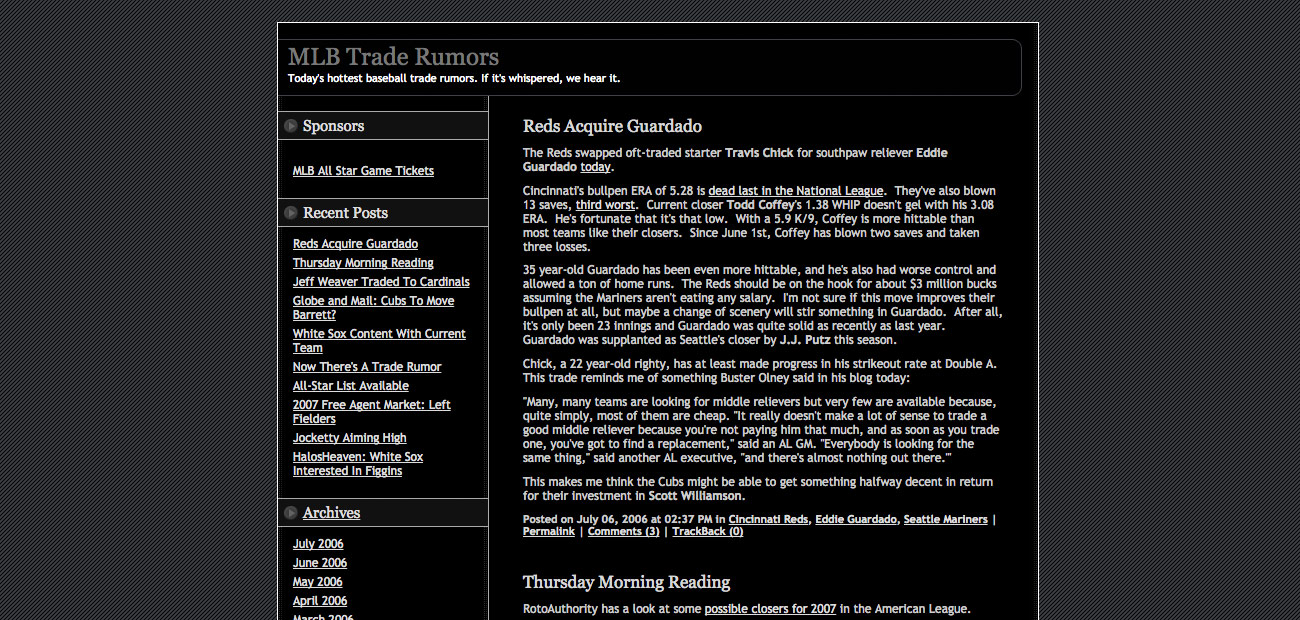
MLB Trade Rumors quickly passed up RotoAuthority in traffic, and started to take up more of my time. During busy times like the July trade deadline or the Winter Meetings, our posts went viral in an old school way, with links on forums and perhaps carrier pigeons. It certainly wasn’t succeeding because of my journalistic integrity. In the early years of MLBTR I was completely naive about the hard work and years of trust-building that goes into getting most baseball scoops. So, if someone emailed about having the same barber as Octavio Dotel and therefore knowing where he might sign, I believed it and printed it.
A major turning point came during the 2007 Winter Meetings. Someone pretended to be a Mets beat reporter (one I knew of but had not interacted with) and sent me a whopper of a trade rumor. He was happy to let me write an exclusive post on MLBTR about the potential three-team deal sending Johan Santana and Bobby Crosby to the Mets, Jose Reyes and Kevin Mulvey to the A’s, and Dan Haren to the Twins. I was not present at those Winter Meetings, but this bogus rumor spread like wildfire after I posted it, and of course was shot down.
Shot down is an understatement, actually. Here are the choice quotes from A’s GM Billy Beane:
“There’s a better chance of me breeding unicorns than there is of that deal happening.” – ESPN
“It’s ridiculous. All-time most ridiculous. Of all the trade rumors the whole time I’ve been coming here, because of the genesis and how quickly it went around, that was the finest, or the worst, whatever you like.” – San Francisco Chronicle
“I’m on the bike, and (Zaidi) is on the treadmill, and he figures out a way to get on the Internet, and he says, ‘Hey look at this.’ Of all the trade rumors in all my career, that one’s the furthest from the truth.” – Contra Costa Times
I was mortified at what I’d done and that it was on Beane’s radar to that degree. I finally realized that I had to take sourcing much more seriously, and also stop worrying about trying to break stories.
Soon after, I quit my job to focus on MLBTR full-time. A parade of great writers and friends joined me on our team and helped make the site better each year. The core of what we do hasn’t really changed since 2008. We collect, organize, and analyze everything related to MLB transactions in a timely manner, filtering out anything lacking in credibility. The format and means of sharing the information have changed, but the idea remains the same.
Thank you for indulging my trip down memory lane. I am forever grateful for the opportunity to run MLBTR for a living, and I don’t intend to stop anytime soon. I would like to express my gratitude to our many contributors over the years, and to the journalists on the beat. And of course, thanks to our readers, whether you were here for the black background days or you just discovered the site this week. Here’s to the next ten years!
Mets, Terry Collins Agree To Extension
TODAY: The team has announced the deal, making it official.
YESTERDAY, 6:37pm: Collins’ will earn roughly $3MM over the life of the contract, reports Jon Heyman of CBS Sports (Twitter link).
3:42pm: The Mets have agreed to a two-year contract extension with manager Terry Collins, reports Kristie Ackert of the New York Daily News. Collins’ new contract, which provides the skipper with a raise, will be formally announced tomorrow, Ackert adds. Collins’ previous contract expired at the end of the 2015 season, but he’ll now have job security through the 2017 season. Collins reportedly doesn’t want to manage too much longer but was said to be open to continuing for at least the next two seasons.
The 66-year-old Collins is an oft-mentioned NL Manager of the Year candidate after leading the Mets to a surprising 90-win season and World Series run. He’s been managing the Mets since the 2011 campaign, though the 2015 season marked his first winning campaign. Collins dealt with a number of injuries early in the season plus questions as to when top prospects Noah Syndergaard, Steven Matz and Michael Conforto would be promoted, and he was also tasked with keeping the club focused during the Matt Harvey innings limit saga late in the season.
Collins has a lifetime managerial record of 838-850 and has seen time at the helm with both the Astros and Angels, though the Mets represent his longest stint as a big-league manager. Collins’ job security has been called into security many times over the past few seasons, but New York’s unlikely World Series run and his handling of the pressures of managing in a major market have earned him additional time to attempt to finish what he started in 2015.
Zack Greinke Opts Out Of Contract
Dodgers righty Zack Greinke has officially opted out of his contract with the Dodgers, Bill Shaikin of the Los Angeles Times reports on Twitter. The widely-expected move puts him onto the open market as one of the league’s most appealing free agents.
Greinke signed with Los Angeles as a free agent before the 2013 season, locking up a $147MM guarantee over six seasons. That was a nice enough payday as it was, but his representatives at Excel Sports Management were also wise to negotiate a provision allowing the veteran to opt out after the 2015 season. He’ll give up a guarantee of three years and $71MM, but Greinke figures to earn quite a bit more than that on the open market.
While Greinke is now 32 years of age, he’s also coming off of a sublime 2015 campaign. He led the league with a 1.66 ERA over 222 2/3 frames. Greinke retired 8.1 batters per nine via strikeout and induced a 48.0% groundball rate while permitting only 1.6 BB/9 and a league-low 0.844 WHIP.
There were some fortunate elements to Greinke’s campaign, to be sure. He allowed a .228 BABIP, 86.5% strand rate, and 7.3% HR/FB rate, all of which were on the beneficial side as against his career norms. Unsurprisingly, ERA estimators did not quite support the incredible run prevention that resulted.
That’s not to take away from Greinke’s accomplishment or his value. He’s long been one of the league’s better pitchers, and always seemed destined to opt out and cash in. But it’s fair to say, too, that he timed his career-best season perfectly.