
Red Sox Sign Danny Coulombe
The Red Sox announced the signing of lefty reliever Danny Coulombe to a one-year deal. Boston placed utilityman Romy Gonzalez on the 60-day injured list in a corresponding move. Coulombe, a client of ALIGND Sports Agency, is reportedly guaranteed $1MM.
Coulombe lands a big league contract for his age-36 season. The southpaw is coming off an excellent 2.30 earned run average across 43 innings between the Twins and Rangers. Coulombe punched out an above-average 24.4% of batters faced behind an excellent 13.1% swinging strike rate.
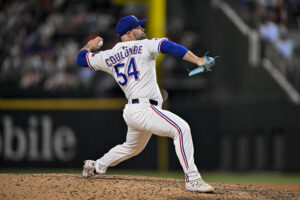
It was the third consecutive sub-3.00 ERA showing for the veteran reliever. Coulombe’s age and lack of velocity have nevertheless limited him to a series of modest one-year contracts. With a fastball that checks in around 90 mph, Coulombe leans most heavily on a mid-80s cutter. It’s a relatively platoon neutral profile, though he was more aggressive in attacking the strike zone against left-handed hitters.
Assuming he’s able to ramp into game shape within the next two weeks, Coulombe will slot into Alex Cora’s middle relief group. Boston was light on left-handed bullpen help in front of Aroldis Chapman. The out-of-options Jovani Morán and trade pickup Tyler Samaniego, who has yet to make his MLB debut, are the other lefty relievers on the 40-man roster. Coulombe should raise the floor over the less established southpaws.
Boston still has up to three bullpen spots for grabs. Morán’s lack of options could give him a leg up on one of those. Rule 5 pick Ryan Watson can’t be optioned but seems a longer shot to break camp after giving up six runs in as many innings this spring.
Gonzalez will be out at least until late May. The Sox announced that the righty-hitting utilityman underwent an arthroscopic debridement procedure on his left shoulder. Chris Cotillo of MassLive reports that it’s a cleanup surgery that could come with a 2-3 month recovery timeline. Gonzalez should be back midseason to reprise his role as a short side platoon bat.
Ken Rosenthal of The Athletic first reported Coulombe and the Red Sox had a major league deal. Chris Cotillo of MassLive reported the $1MM salary.
Image courtesy of Jerome Miron, Imagn Images.
Offseason In Review: San Diego Padres
Despite some in-fighting among ownership, the Padres brought back one of their key free agents. The Friars took their usual approach of signing a notable player from an Asian league and adding a bunch of cheap veteran free agents just before Spring Training. As has frequently been the case, they’re also heading into the season with a new manager.
Major League Signings
- RHP Michael King: Three years, $75MM (includes opt-outs after ’26 and ’27 seasons)
- 2B/3B Sung-mun Song: Four years, $15MM (includes opt-out after ’28 season and mutual option for ’30)
- DH/LF Miguel Andujar: One year, $4MM (including buyout of ’27 mutual option)
- RHP Griffin Canning: One year, $2.5MM (including buyout of ’27 mutual option)
- RHP Germán Márquez: One year, $1.75MM (including buyout of ’27 mutual option)
- LHP Kyle Hart: One year, $1.2MM (including buyout of ’27 club option)
- 1B/OF Nick Castellanos: One year, $780K league minimum (Phillies covering remainder of $20MM salary)
- RHP Daison Acosta: Major league deal (later outrighted)
- RHP Ty Adcock: Major league deal (pre-arbitration)
2026 commitments: $24.5MM
Total future commitments: $99.45MM
Trades and Claims
- None
Option Decisions
- RHP Robert Suarez opted out of two years and $16MM
- RHP Michael King declined $15MM mutual option in favor of $3.75MM buyout (later re-signed)
- LHP Wandy Peralta exercised two-year, $8.9MM player option (can opt out after ’26)
- Team exercised $6.5MM club option on LF Ramón Laureano
- Team declined $7MM mutual option on C Elias Díaz in favor of $2MM buyout
- Team declined $5MM club option on LHP Kyle Hart in favor of $500K buyout (later re-signed)
- Team declined $1MM club option on SS Tyler Wade in favor of $50K buyout
Notable Minor League Signings
- Jase Bowen, Sean Boyle, Walker Buehler, Omar Cruz, Ty France, Marco Gonzales, Blake Hunt, Triston McKenzie, Jose Miranda, Pablo Reyes, Carlos Rodríguez, Nick Schnell, Nick Solak, Samad Taylor, Alex Verdugo, Justin Yeager
Extensions
- None
Notable Losses
- Dylan Cease, Robert Suarez, Ryan O’Hearn, Luis Arraez, Jose Iglesias (still unsigned), Elias Díaz, Tyler Wade, Martín Maldonado (retired), Nestor Cortes (still unsigned), Sean Reynolds (non-tender)
The Padres’ offseason began in usual fashion. Immediately after being bounced by the Cubs in the Wild Card Series, San Diego faced questions about their leadership continuity. President of baseball operations A.J. Preller was headed into the final year of his contract. Manager Mike Shildt had led the team to consecutive playoff appearances, but that didn’t ensure he’d be back.
After initial reporting that the Padres planned to retain Shildt, he stepped down in the middle of October. Excellent reporting from Kevin Acee of The San Diego Union-Tribune contextualized that decision. Acee’s column goes into detail about how Shildt’s managerial style wound up alienating many of his assistant coaches, while the 57-year-old skipper said he’d become worn down by the position. (Shildt would remain in baseball but in a lower-profile role by accepting a player development job with the Orioles six weeks later.)
This wasn’t quite the same situation as the Padres’ previous two managerial changes. The 2024 move to allow Bob Melvin to leave for the Giants reportedly stemmed from an acrimonious relationship between Melvin and Preller. Jayce Tingler’s ouster at the end of 2021 came after he’d seemingly lost the clubhouse amidst a second half collapse. In any case, the result was a fourth managerial hiring process in seven years — and a remarkable sixth full-time skipper during Preller’s lengthy run at the top of baseball operations.
Preller’s own contract status would linger over the offseason, but it was apparent early on that he’d be back for 2026 at least. The Padres conducted their managerial search throughout the postseason and into the first few days of the offseason. They settled on former reliever Craig Stammen, who had been in the organization’s player development department but had no coaching or managerial experience. It was an unexpected hire considering initial reporting suggested the likes of Ryan Flaherty, Nick Hundley, Ruben Niebla, and Albert Pujols were in the running.
San Diego kept the well-regarded Niebla on staff as pitching coach despite passing on him for the managerial vacancy. The Padres brought in Randy Knorr as bench coach and tabbed former outfielder Steven Souza Jr. as a first-time hitting coach. Stammen had ties to both men (Knorr as a coach, Souza as a teammate) from his time in the Nationals bullpen.
Once the manager was settled, the front office could turn its attention to the roster. They faced a handful of free agent losses. Dylan Cease and Robert Suarez obviously weren’t coming back. Cease was going to price himself out of San Diego, while the Padres had prepared for Suarez’s departure by trading for Mason Miller last summer.
The Padres had a number of option decisions. Most of them were obvious: Suarez’s opt-out, Michael King declining a mutual option, the team exercising a bargain $6.5MM option to keep left fielder Ramón Laureano. The club bought out depth starter Kyle Hart but quickly circled back on a cheaper one-year deal. They dropped Elias Díaz and Tyler Wade, while lefty reliever Wandy Peralta passed on the chance to opt out of the remaining two years and $8.9MM on his deal.
San Diego issued qualifying offers to Cease and King, both of which were expected. They opted not to make a QO to Luis Arraez, setting the stage for him to join the division rival Giants on a $12MM deal. Ryan O’Hearn was ineligible for a qualifying offer as a midseason trade pickup, not that the Padres would have given much thought to offering him a $22.025MM salary. O’Hearn’s production after the trade was just alright and it doesn’t seem like San Diego made much effort to bring him back before he signed a two-year deal with Pittsburgh.
Of their impactful free agents, King became the priority. Some of that was driven by a glaring need for rotation help beyond Nick Pivetta and Joe Musgrove, the latter of whom missed all of last season rehabbing Tommy John surgery. Although San Diego’s interest in re-signing King was natural, it came as a moderate surprise they got the deal done. The Padres have curtailed free agent spending since Peter Seidler’s 2023 passing. Even last offseason’s four-year, $55MM deal with Pivetta came late in the winter when the righty was amenable to a heavily backloaded contract with opt-outs after the second and third seasons.
The Padres were also facing some geographic disadvantages. King attended high school in Rhode Island, played collegiately at Boston College, and spent the first five seasons of his career with the Yankees. He said he entered the offseason preferring to land with an East Coast team. That changed when the Padres put forth a three-year, $75MM offer that included opt-out chances after the first and second seasons. King might’ve been able to land a bigger guarantee elsewhere, but he’s able to remain with a team he knows well with a chance to cash in next offseason.
King pitched at a borderline ace level during his first season in San Diego. He was out to an even stronger start to the ’25 campaign before encountering a troublesome nerve issue in his throwing shoulder. That shelved him for nearly three months, and he battled knee inflammation upon his late-season return. Although a fully healthy King is clearly one of the team’s three best starters, the Padres used him out of the bullpen in their playoff series.
It’s an upside play for pitcher and team alike. The Padres are hopefully paying King $22MM ($12MM signing bonus, $5MM salary, and a $5MM option buyout) for one excellent season. He’d be positioned to retest the market at age 32 without being attached to a qualifying offer. He’d likely try to max out the contract length and guarantee at that point.
Slotting King back into the #2 spot in the rotation is far more valuable to the Padres than the fourth round pick they would have received as compensation for his departure. They did land one compensatory draft choice when Cease signed his seven-year deal with the Blue Jays — a deal that shattered whatever the Padres would have been willing to offer.
Even with King in the fold, the rotation remained the roster’s biggest question. Yu Darvish missed a couple months last season with an elbow issue. He looked a shell of his former self when healthy enough to pitch, allowing a 5.38 ERA in 15 regular season starts (plus two runs on four hits in one playoff inning). There were early whispers that the 39-year-old Darvish could walk away from the remaining three years on his contract.
That may still be the case, but all that’s known for now is that the righty won’t be available in 2026. Darvish underwent an internal brace surgery to address UCL damage in his elbow. He made his most recent statement on his long-term future in January, saying that he and the team have had conversations about terminating his contract (presumably with some kind of deferral or buyout structure). He hasn’t made any decisions on retirement. Darvish is signed through his age-41 season for a combined $43MM: $15MM this year, followed by $14MM salaries in 2027-28.
The Padres poked around the market for a second significant rotation move. They reportedly made a three-year, $50MM offer to Merrill Kelly. He opted to return to Arizona on a two-year deal at a higher annual rate. The Padres were loosely tied to Framber Valdez as his free agency lingered but never seemed likely to make the money work.
They’ll round out the rotation with internal arms and reclamation projects. Randy Vásquez is expected to get the fourth starter role on the heels of a decent 2025 season. They added Griffin Canning on a $2.5MM deal after last June’s Achilles tear. Canning had posted a 3.77 ERA across 16 starts with the Mets before the injury. He’ll probably be on the injured list into May but should be locked into a rotation spot once he’s healthy.
San Diego signed longtime Rockies righty Germán Márquez to a $1.75MM contract to round out the staff until Canning returns. Márquez hasn’t been good since undergoing Tommy John surgery in 2023. He’s coming off a near-7.00 ERA over 26 starts last season. He was bombed for a 7.32 mark outside Coors Field. The big league deal is less about projecting improved performance at normal altitude and more a flier on a fastball that still sits around 95 mph.
It’s a similar situation for Walker Buehler, who came aboard on a minor league contract. Buehler’s fastball sat around 94 mph last season, well down from the upper 90s heat he brought before undergoing his second Tommy John procedure in 2022. He’s in the 92 mph range this spring, though it’s common for pitchers to add a tick or two as they build up into game shape.
Buehler isn’t guaranteed a roster spot but could push Márquez for the fifth starter role. It’s also possible the Padres start Musgrove on the injured list to avoid pushing him too quickly, which would open another early-season rotation spot. The Padres tendered JP Sears a $2.75MM arbitration contract even though he was a non-factor after coming over in the Miller trade. He’s on the 40-man roster and likely starting the season in the minors. That’s also true of Hart and minor league signee Marco Gonzales, while they’ll face a decision on the out-of-options Matt Waldron once he’s back from the injured list.
The Padres understandably felt good about the bullpen despite losing Suarez. Miller is probably the best closer in MLB. Jeremiah Estrada, Jason Adam, Adrian Morejon, David Morgan and Bradgley Rodriguez could all find themselves in setup roles. Peralta and Yuki Matsui are under contract as lefty middle relievers. San Diego’s only 40-man roster moves were depth fliers on Daison Acosta and Ty Adcock, both of whom will open the season in Triple-A.
There was more work to do on the position player side. The Padres have one of the most top-heavy offensive groups in the league. That isn’t going to change, but they made a few moves to deepen a lineup losing Arraez and O’Hearn.
The most notable was a four-year deal for KBO infielder Sung-mun Song. The 29-year-old has had an excellent last two seasons for the Kiwoom Heroes after a middling career until that point. Scouting reports project him as a utility player at the MLB level. That’s the role he’ll play in San Diego at a modest $2.8MM average annual value.
Song, a lefty hitter, has spent most of his career at second or third base. He’ll back up Jake Cronenworth and Manny Machado at those respective positions. The Padres also planned to get him shortstop and outfield work this spring, though that’s been halted by some oblique trouble that seems likely to delay his team debut by a few weeks.
The Padres wanted to balance the lineup by adding a pair of veteran right-handed bats. San Diego signed lefty masher Miguel Andujar to a one-year, $4MM deal. He’s coming off an excellent .318/.352/.470 showing between the A’s and Reds. The market was nevertheless cold on him because of his lack of defensive value, injury history, and aggressive offensive approach.
Andujar will get the majority of the designated hitter work while backing up Laureano and Fernando Tatis Jr. in the corner outfield. The Padres wanted another righty hitter to platoon with Gavin Sheets at first base. Paul Goldschmidt would have been an ideal fit, but he declined an offer from San Diego to return to the Yankees. The Padres pivoted to Nick Castellanos after he was released by the Phillies.
The move comes at literally no cost financially. Castellanos is playing for the league minimum salary in San Diego (which the Padres would have paid to whoever else was taking that roster spot regardless). The Phillies are eating the rest of his $20MM salary. Castellanos should still be a decent power bat against lefty pitching. Any risk is in adding a player who had no first base experience until this spring and whose time in Philadelphia ended with a highly publicized rift with manager Rob Thomson.
The Padres opted not to make a move behind the plate, where they’ll rely on the Freddy Fermin/Luis Campusano pair. They don’t have clear backups behind Xander Bogaerts and Jackson Merrill at shortstop and in center field, respectively. They’d been hoping to get Song up to speed for that role by Opening Day. A season-opening injured list stint would create a spot for one of Will Wagner, Mason McCoy or minor league signee Ty France as a utility infielder. The out-of-options Bryce Johnson probably wins the fourth outfield role.
They could benefit from one more depth move in the final two weeks of Spring Training, but it doesn’t seem to be a priority. San Diego didn’t make a single waiver claim for a second straight offseason. They also didn’t make any trades despite Preller’s affinity for massive swings. There was a rumor out of the Winter Meetings about talks with the Mets concerning a potential blockbuster involving Miller, Pivetta and Laureano. There’s no indication that progressed, and the Padres stood pat from a trade perspective.
That surely won’t be the case this summer. The Padres mostly sat out last offseason’s trade activity as well before making three big deadline trades (Miller/Sears, Laureano/O’Hearn, and Fermin). If they’re in the running for a playoff spot, it’s in their nature to be aggressive. With Pivetta and King both able to opt out next winter, adding a controllable starting pitcher figures to be a priority. If the team underperforms, either or both veteran righties could be on the trade block themselves.
Preller will lead the deadline with long-term financial comfort. He and the organization finally reached agreement on a multi-year extension last month. That’s of particular importance given the likelihood of a major shakeup at the ownership level. In early February, the Seidler family resolved most of their litigation against one another. That paves the way for the family to move forward with a sale that could be in place as soon as Opening Day. The most recent reporting indicated they were weighing five offers and could pull north of $2.5 billion for the franchise.
The repercussions of a potential sale won’t really be felt until next offseason at the earliest. Last winter was a fairly typical Padres offseason, one they’ll hope was sufficient to maintain their status as the Dodgers’ top challenger in the NL West.
How would you grade the Padres' offseason?
Brewers Notes: Priester, Henderson, Quero
Quinn Priester has battled lingering wrist soreness throughout the spring. The Brewers will place him on the 15-day injured list to begin the season. The timeline beyond that isn’t entirely clear, but Adam McCalvy of MLB.com reports that Priester will visit a specialist on Wednesday to try to identify the source of the problem.
Priester described the injury last week as intermittent soreness rather than any acute injury. It traces back to the second half of last season. Priester has been able to continue playing catch but hasn’t pitched in a game this spring. They’ll hope that tomorrow’s evaluation can give them a clearer path forward. There’s no indication yet it’s a serious injury. According to the MLB.com injury tracker, the team is still hoping he’ll make his season debut at some point in April.
Manager Pat Murphy said last week that Jacob Misiorowski and Chad Patrick were the only locks for the Opening Day rotation. Brandon Woodruff will obviously be in there as well if he’s sufficiently built up from last year’s lat issue. He threw two innings and 32 pitches in his Spring Training debut over the weekend. Priester would have been a lock if healthy after turning in a 3.32 ERA across 157 1/3 innings last year.
His injury leaves at least two spots up for grabs to begin the season. Logan Henderson has a good chance to win one of them after pitching to a 1.78 ERA while striking out a third of opponents over his first five career starts.
Henderson, who finished last season on the injured list with elbow inflammation, reported minor elbow discomfort over the weekend. Fortunately, the Brewers don’t seem concerned. McCalvy relays that the 24-year-old is feeling better and scheduled to return to mound work tomorrow. He could be back in Cactus League action as soon as this weekend. Henderson has pitched four innings of two-run ball with one strikeout across two spring appearances. It’s a situation to monitor but one that isn’t currently trending towards an IL stay.
Offseason trade acquisitions Brandon Sproat and Kyle Harrison are probably competing with Henderson and lefty Robert Gasser for the rotation jobs. Murphy has also left open the idea of using Aaron Ashby or DL Hall as starters, though they profile better in relief roles.
Hall and Harrison — each of whom has only logged three Spring Training innings so far — are the respective scheduled starters for the next two games. Sproat has surrendered three runs despite striking out seven of 21 opponents. Gasser has been hit around for seven runs on a trio of homers across 6 1/3 frames.
The Brewers also made a few camp cuts this week, most notably optioning catching prospect Jeferson Quero. He’ll begin the season back in Triple-A, where he hit .255/.336/.412 across 250 plate appearances last season. That was the expectation after the Brewers signed Gary Sánchez to a cheap one-year deal to work behind William Contreras.
Non-roster invitee Reese McGuire is also in camp but has an uphill path to a roster spot barring injury. He has gone 2-14 with a homer and six strikeouts. Sánchez has also struggled, hitting .208 without an extra-base knock in 27 trips to the plate. Contreras, Sánchez and Quero are the three catchers on the 40-man roster. McGuire, who cannot be sent to the minors without his consent if he secures a 40-man spot, could attract interest from another team with more flexibility in the backup role later in camp.
Latest On Angels’ Rotation Mix
The Angels entered camp with three-fifths of their rotation set. Yusei Kikuchi, José Soriano and Reid Detmers were locked in. Offseason reclamation pickups Grayson Rodriguez and Alek Manoah started the spring as the favorites for the final two spots.
Neither has made a great first impression. Rodriguez has allowed seven runs with a 7:6 strikeout-to-walk ratio through eight innings. He has at least had encouraging velocity, averaging 95 mph on his fastball. He’s a wild card after missing the past season and a half to shoulder issues.
Manoah has had an even tougher time, giving up five runs with eight walks and only four strikeouts through 7 1/3 frames. The former Cy Young finalist, who also hasn’t made an MLB appearance since 2024, has been in the 91-92 mph range with his fastball. His velocity was in a similar spot last season in the minor leagues. Manoah threw 93-94 on average before undergoing elbow surgery two seasons ago.
Both pitchers still have a pair of minor league option years remaining. Rhett Bollinger of MLB.com writes that Manoah’s struggles, in particular, have opened the door to him beginning the season in the minors. That’d obviously open a rotation spot for someone else. Jack Kochanowicz and Sam Aldegheri seemingly represent the top two challengers.
Kochanowicz was arguably the worst regular starter in MLB last season. Among pitchers with 100+ innings, no one had a higher earned run average than his 6.81 mark. Only Erick Fedde had a lower strikeout/walk rate differential. Kochanowicz finished the season on optional assignment to Triple-A Salt Lake.
The sinkerballer has put a stronger foot forward in camp. Kochanowicz has only allowed two runs in 8 2/3 innings spanning three appearances. He has recorded five strikeouts with one walk while keeping the ball on the ground at a 60% clip. That shouldn’t outweigh last year’s struggles, but it could be enough to jump the struggling Manoah on the depth chart.
Aldegheri is one of the team’s more talented pitching prospects. He has been knocked around for a 6.41 ERA in his first seven big league appearances but is coming off a 3.78 ERA season in Triple-A. Aldegheri has only made two Spring Training outings for the Halos. His most impressive performance to date came for the surprisingly undefeated Team Italy in the World Baseball Classic. Aldegheri struck out eight over 4 2/3 scoreless frames against Brazil (admittedly one of the worst teams in the tournament).
Mitch Farris has had a slight velocity uptick this spring, but he has been rocked for 12 runs in six innings. Caden Dana is behind in camp after an offseason mononucleosis diagnosis. Walbert Ureña has made one career Triple-A start, while Victor Mederos has already been optioned out of MLB camp. Prospect George Klassen leads their group of non-roster invites. The 24-year-old has only made one Triple-A start but has bigger stuff than any of the depth pitchers on the 40-man roster.
It’s a rough group, but the Angels showed little interest in making a significant free agent upgrade. That’s essentially off the table at this point. Lucas Giolito, whose previous brief stint as an Angel couldn’t have gone worse, is the only unsigned starter who’s guaranteed to command a big league contract. Patrick Corbin and old friend Tyler Anderson are probably looking at minor league deals as they enter their respective age-36 seasons.
Rays Bullpen Notes: Uceta, Gómez, Rock
The Rays have had a fairly uneventful camp so far. They haven’t lost anyone to what appear to be major injuries. Their expected rotation is on schedule, while the majority of their projected starting lineup has been locked in since the beginning of camp.
The bullpen is the one area of the roster that’s more in flux. They announced a couple weeks ago that middle reliever Steven Wilson will begin the season on the injured list with a back issue. Meanwhile, righty Edwin Uceta has yet to pitch this spring after being delayed by shoulder inflammation.
Marc Topkin of The Tampa Bay Times unsurprisingly writes that Uceta is not expected to be ready by Opening Day. The 28-year-old doesn’t appear to be facing a long-term absence, however. Uceta has been playing catch without issue. It’s not clear if he’ll make it into an exhibition game before camp closes. He shouldn’t need a ton of time to build up for regular season game readiness after that.
A season-opening injured list stint for Uceta would open another middle relief spot. Tampa Bay has three locks for high-leverage relief roles: Garrett Cleavinger, Griffin Jax and Bryan Baker. No one else is firmly locked into the Opening Day mix. Righties Cole Sulser and Yoendrys Gómez are out of minor league options. They need to break camp or be exposed to waivers.
Gómez was an offseason trade pickup alongside Wilson in a deal that sent outfielder Everson Pereira to the White Sox. The Rays wouldn’t have made that trade if they didn’t expect Gómez to have a strong chance of breaking camp. His case for a roster spot is bolstered by his ability to work multiple innings.
Topkin writes that the Rays plan to carry multiple long relievers to begin the season. That’ll give them some cover for starters Shane McClanahan and Steven Matz. McClanahan hasn’t thrown an MLB pitch since 2023 because of various injuries. Matz is building back to rotation work after pitching out of the bullpen for the Cardinals and Red Sox last year. He only threw 76 2/3 innings. They’ll be in the rotation, but the Rays will exercise caution with their workloads early on.
Gómez made nine starts in 21 appearances a season ago, tossing 62 2/3 innings overall. He threw five innings of two-run ball over his first four appearances this spring. Gómez stepped away from the team to pitch for Venezuela during pool play of the World Baseball Classic. He tossed two scoreless innings with three strikeouts against Nicaragua on Monday.
Although Venezuela qualified for the quarterfinals, Gómez returned to Rays camp this week as he tries to nail down a roster spot. Ian Seymour and Joe Boyle are also capable of shouldering multiple innings out of the bullpen or working as rotation depth at Triple-A Durham.
Left-hander Joe Rock worked as a multi-inning depth arm last season. The 25-year-old tossed 7 2/3 innings of two-run ball over his first three big league appearances. He had shakier numbers in Triple-A, where he allowed a 5.21 earned run average across 96 2/3 innings.
Rock will begin this season back in Durham after being optioned out of MLB camp this afternoon. He’ll do so in a different role, as Adam Berry of MLB.com writes that the Rays are converting the former second-round pick to short relief. Rock worked exactly one frame in each of his five Spring Training appearances. He struck out nine and only allowed three hits and one run, though he walked six of the 23 hitters he faced.
Latest On Padres’ Rotation
The Padres entered camp with Nick Pivetta, Michael King and Joe Musgrove penciled into the top three rotation spots. They felt reasonably confident that Randy Vásquez would claim the fourth starter role. They took a volume approach to the fifth starter job, signing a handful of veterans to cheap free agent deals.
Musgrove is working back from a 2024 Tommy John surgery that wiped out all of last season. King was limited to 15 starts last year by a nerve issue in his shoulder and a knee injury. While King is pitching without any restrictions this spring, the Padres are playing things more cautiously with Musgrove. The righty last pitched in a game on March 4, when he threw 60 pitches in an exhibition game against the British World Baseball Classic team.
Kevin Acee of The San Diego Union-Tribune writes that Musgrove has thrown one bullpen session within the past week. The Padres are understandably bringing him along slowly and haven’t announced when he’ll make his next game appearance. Both Acee and AJ Cassavell of MLB.com suggest he may not be fully built up by Opening Day.
A brief season-opening injured list stint wouldn’t necessarily represent a setback. The Padres will need to keep an eye on Musgrove’s workload over the course of the season. They have two off days within the first eight days of the regular season, meaning they could theoretically get by with a four-man rotation if Musgrove had a minimal IL stint. The likelier outcome is that they’d turn to one of their depth starters to fill out a five-man starting staff.
That could open an opportunity for Walker Buehler, who is in camp as a non-roster invite. If there’s only one rotation spot available, that’s likelier to go to Germán Márquez. Márquez signed a big league contract and is guaranteed $1.75MM. He’s going to make the team, and the Padres don’t have a ton of roster flexibility in the bullpen to carry him as a long reliever.
Buehler can opt out at the end of Spring Training if the Padres don’t add him to the roster. Buehler has made two starts this spring. He has allowed four runs in 6 2/3 innings with a solid 6:2 strikeout-to-walk ratio.
Márquez has recorded five punchouts without a walk while allowing three runs across five frames. Marco Gonzales, in camp on a minor league deal, has given up five runs despite recording eight strikeouts in 7 2/3 innings. JP Sears is on the 40-man roster but has had a rough spring and has a minor league option remaining, so he’s probably ticketed for Triple-A El Paso regardless of Musgrove’s status.
Mets Notes: Tong, Lindor
The Mets optioned right-hander Jonah Tong to Triple-A Syracuse this afternoon. The touted prospect was always a long shot to break camp, as he entered the spring no higher than seventh on the rotation depth chart.
Tong, one of the organization’s top pitching prospects, debuted last August. He got the call roughly two weeks after the Mets brought up Nolan McLean. While the latter dazzled over his first eight starts, Tong had a rockier debut showing. He surrendered 20 runs over his first 18 2/3 innings. Tong had two solid starts but was hit hard in his other three outings.
McLean slots behind Freddy Peralta as the highest-upside arms in Carlos Mendoza’s rotation. Kodai Senga and David Peterson are back despite coming up in some offseason trade speculation. Sean Manaea and Clay Holmes also have spots in what’ll probably be a six-man rotation.
Tong will continue to build up in Triple-A as injury insurance. He made one start in MLB camp, allowing three runs across 2 2/3 innings. Tong has only made two career starts at the Triple-A level. He dominated Double-A opposition to a 1.59 ERA with a 41% strikeout percentage over 20 starts earlier in the season.
In another bit of Mets news, Francisco Lindor played four innings during a minor league Spring Training game on Tuesday. Anthony DiComo of MLB.com relayed the news, noting that the minor league camp allowed Lindor to work solely as a defensive player without needing to bat. Lindor, who is exactly one month removed from sustaining a hamate fracture in his left wrist, has been hitting in the batting cage but isn’t ready to bat in games. He has maintained optimism he’ll be available for Opening Day, which is a little over two weeks away.
Cardinals Notes: Nootbaar, Baez, Catcher
Lars Nootbaar still hasn’t played this spring as he works back from heel surgeries. Jeff Jones of The Belleville News-Democrat noted yesterday that the left fielder is trending towards beginning the season on the injured list. There’s no clear timetable for his season debut.
An injured list stint has been a possibility since the Cardinals announced that Nootbaar had surgery to address Haglund’s deformities on both heels in early October. The health uncertainty seemingly took the outfielder off the trade block over the winter. Nootbaar was loosely tied to the Rangers, Mets and Pirates at points throughout the offseason. There was too much uncertainty in his health outlook for the Cardinals to net a strong enough return to move him.
The Cardinals have two years of arbitration control over Nootbaar. The lefty hitter posted above-average offensive numbers over his first three and a half MLB seasons. He had a career-worst .234/.325/.361 showing across 583 plate appearances last year. Nootbaar is making $5.35MM this season and seems likely to be available at the deadline as long as he’s healthy.
Nootbaar’s injury leaves the Opening Day left field job available. The Cardinals were in the market for a right-handed hitting outfielder late in the offseason but didn’t come away with any MLB additions. They signed Nelson Velázquez to a minor league deal. He’s mashing at a .333/.440/.524 clip with four walks and two strikeouts in 25 plate appearances this spring. They’re also getting utility infielders Thomas Saggese and José Fermín outfield work in camp. One of those players could split time with lefty-hitting Nathan Church as a stopgap left field platoon.
One idea not under consideration: carrying highly-regarded outfield prospect Joshua Báez on the Opening Day roster. The Cardinals optioned the 22-year-old to Triple-A Memphis yesterday. Báez had an excellent camp, slugging three homers while going 7-21 in 10 games. Báez has no Triple-A experience, though, so it’s hardly a surprise that he’ll begin the season in the minors.
A former second-round pick, Báez floundered early in his minor league career. He firmly put himself back on the prospect radar last season. Báez combined for a .287/.384/.500 slash with 20 homers between High-A and Double-A. Even more impressively, he cut his strikeout rate to a league average 21.4% clip after fanning in more than 34% of his plate appearances in his first three professional seasons. He’ll look to follow up his impressive Spring Training by maintaining that improved contact rate in his first look at Triple-A pitching.
St. Louis also optioned catching prospects Jimmy Crooks and Leonardo Bernal over the weekend. That leaves Ivan Herrera, Pedro Pages and Yohel Pozo as the three catchers on the 40-man roster who remain in camp. Derrick Goold of The St. Louis Post-Dispatch writes that the team intends to carry all three on the Opening Day roster. Pages will be the primary option behind the dish, while Pozo will work in a traditional backup role. Herrera will continue seeing more time as a designated hitter than at catcher, though the Cardinals aren’t moving him off the position entirely.
Julio Teherán Announces Retirement
Veteran righty Julio Teherán announced this afternoon that he’s officially retiring from baseball (Spanish-language video provided by Francys Romero). The 35-year-old was on the roster for his native Colombia during this year’s World Baseball Classic. Unfortunately, he had to be scratched from his scheduled start against Canada on Saturday after experiencing shoulder discomfort during warm-ups.
Although Teherán hasn’t been a factor at the MLB level in recent seasons, he had a strong career. A two-time All-Star, he pitched parts of 13 years in the big leagues. Teherán spent the bulk of his career with the Braves, who signed him for $850K as an amateur in 2008. He moved quickly through the minors and was one of the sport’s top pitching prospects within a couple years.
Atlanta called Teherán up for his first major league start in May 2011, less than four months after his 20th birthday. He made a handful of appearances over that season and the following year. By 2013, the Braves felt he was ready for a full-time rotation opportunity.
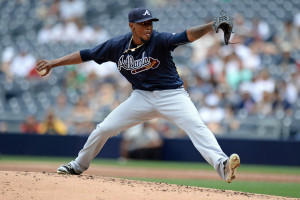
Teherán made 30 starts and turned in a 3.20 earned run average across 185 2/3 innings. He finished fifth in NL Rookie of the Year balloting on a 96-win team that won the NL East. Teherán was hit hard in his one appearance during the Division Series, but he signed a six-year extension that winter and entered the following season as Atlanta’s staff ace.
He’d hold that title for the next few seasons. Teherán made his first of six straight Opening Day starts for the Braves in 2014. Although the mid-2010s were a rough stretch for the team, that wasn’t any fault of Teherán’s. He established himself as a durable and reliable mid-rotation caliber starter.
Teherán topped 200 innings in consecutive seasons between 2014-15. He tossed a personal-high 221 frames of 2.89 ERA ball during his second full MLB campaign, earning an All-Star selection in the process. Teherán was selected back to the Midsummer Classic two years later. He turned in 188 innings of 3.21 ERA ball that year.
The 6’2″ righty only had two minimal injured list stints during his run in Atlanta. He made at least 30 starts every year from 2013-19. He got to 175 innings in all but the last of those seasons (in which he came just one out away from that mark). Teherán posted a combined 3.64 ERA with nearly 1200 strikeouts while ranking ninth in MLB in innings over those seven seasons. The Braves would return to the postseason during his final two years with the club, though he’d pitch out of the bullpen in October.
Atlanta declined a club option after the 2019 season, sending Teherán to free agency for the first time. He landed a $9MM contract from the Angels but was knocked around for 35 runs across 31 1/3 innings during the shortened schedule.
That pushed him into journeyman territory, as he bounced around via minor league deals and spent time in independent ball and the Mexican League. Teherán made brief appearances with the Tigers, Brewers and Mets between 2021-24. His final major league outing came as a member of the Mets against his old club at Truist Park in April 2024. He spent last season in Mexico.
Teherán wasn’t able to pitch in this year’s WBC, but he did earn a win for his home country in the 2017 tournament. He pitched professionally for almost two decades and retires with a sub-4.00 ERA in the big leagues despite his rocky results after leaving Atlanta.
He steps away with a 3.85 mark in nearly 1500 innings. Teherán recorded 1260 strikeouts and posted a near-.500 record (81-82). Baseball Reference credited him with roughly 20 wins above replacement, including 4-5 WAR showings during both of his All-Star seasons. He made north of $45MM in career earnings. Congratulations to Teherán on an excellent run and all the best in retirement.
Image courtesy of Jake Roth, USA Today Sports.
Padres Outright Daison Acosta
The Padres announced they’ve outrighted pitcher Daison Acosta. The team hadn’t previously designated the right-hander for assignment. That opens a spot on their 40-man roster, which is now at 39. San Diego also reassigned catching prospect Ethan Salas to minor league camp.
Acosta, 27, has never pitched in the big leagues. He divided most of last season between the top two minor league levels in the Washington system. Acosta qualified for minor league free agency at year’s end. He impressed the Padres enough to command a big league contract and a 40-man spot throughout the offseason.
The Dominican-born reliever has not appeared in any Spring Training games. The Padres evidently placed him on waivers over the weekend. He went unclaimed and will remain in the organization. Acosta should begin the season with Triple-A El Paso. He struggled at that level last year, posting a 4.71 ERA while walking 15% of opponents. He had dominated Double-A opposition, firing 30 innings of 0.90 ERA ball with a strikeout rate above 40%.
It’s not clear if San Diego plans to replace Acosta on the 40-man roster in the coming days. They may simply have been confident that he’d clear waivers. The Padres already had essentially one free spot on the 40-man roster, as they can transfer Yu Darvish to the 60-day injured list as a corresponding move. They have a number of non-roster invitees battling for jobs, with righty Logan Gillaspie among those impressing the club in camp.
Salas received his first invitation to MLB camp this year. The 19-year-old obviously wasn’t under consideration for the Opening Day roster after spending most of last year in High-A. He went 2-9 with a trio of walks. He’ll likely begin the season at Double-A San Antonio.