
Nationals, Jacob Barnes Agree To Minor League Deal
The Nationals and right-handed reliever Jacob Barnes are in agreement on a minor league contract, reports Mark Zuckerman of MASNsports.com. The Vayner Sports client will presumably be in big league camp as a non-roster invitee.
Barnes has pitched in the majors every year since 2016, suiting up for eight different teams along the way. The 33-year-old had a strong start to his career with the Brewers from 2016-18, when he pitched to a 3.54 ERA and matching 3.55 FIP over the life of 147 1/3 frames, but he’s struggled in the five years since and slipped into journeyman status. Dating back to the 2019 season, Barnes has pitched 115 1/3 innings for the Brewers, Royals, Angels, Mets, Blue Jays, Yankees, Tigers and Cardinals — logging a combined 6.32 ERA with a 20.8% strikeout rate and 9.4% walk rate.
Despite those big league struggles, Barnes has produced at a steadily excellent clip in the upper minors. He’s pitched 134 innings over parts of six Triple-A seasons and turned in a stellar 2.15 earned run average. He’s fanned 24.1% of his opponents at that level against a 9% walk rate and has yielded only six total home runs — an average of just 0.4 round-trippers per nine innings pitched. The right-hander has above-average grounder rates and still averages better than 95 mph on his four-seamer. He’s been a two-pitch reliever throughout his career, typically leaning on a fairly standard four-seamer/slider profile.
The Nationals have largely sat out of the free agent market this offseason, with righty Dylan Floro standing as their only bullpen addition. The relief mix behind closer Kyle Finnegan and setup man Hunter Harvey is generally wide open, particularly with this week’s revelation of an injury to right-hander Mason Thompson. Floro and a returning Tanner Rainey (who underwent Tommy John surgery in 2022) will give manager Davey Martinez another pair of experienced arms on which to rely, but there’s plenty of opportunity in the Washington ‘pen, should Barnes impress either in camp or in Triple-A Rochester to begin the season.
Daniel Bard Undergoes Arthroscopic Knee Surgery
February 15: While Bard did undergo an arthroscopic knee procedure, the injury did not require a meniscus repair as initially expected. MLB.com’s Thomas Harding reports that the Rox are hopeful that Bard could be back in around a month as opposed to the initial 5-7 week recovery timeline.
February 13: Rockies right-hander Daniel Bard tells Patrick Saunders of the Denver Post that he suffered a torn meniscus in his left knee during a throwing session last week. He’s slated to undergo arthroscopic surgery today, meaning he’ll likely miss the entirety of spring training and be delayed in his start to the 2024 season.
Bard, 38, is entering the second season of a two-year, $19MM contract extension to which the Rockies signed him prior to the 2022 trade deadline. The Rox had received widespread interest in Bard, who was in the midst of a dominant comeback season, but opted to instead hang onto the righty for another two seasons. He finished out that ’22 campaign with a stellar 1.79 ERA, a 28.2% strikeout rate, 10.2% walk rate and a hefty 34 saves. The contract extension has not played out as either party hoped, however.
Bard opened the 2023 season on the injured list while focusing on his long-running battle with anxiety. He returned in mid-April but experienced significant command issues similar those he’d faced nearly a decade ago, prior to his remarkable and inspiring late-30s comeback. The flamethrowing righty kept his ERA to a passable 4.56 in 2023 but did so in spite of a sky-high 21.1% walk rate that checked in higher than his diminished 20.3% strikeout rate. He finished out the season back on the injured list, this time owing to a flexor strain.
That injury didn’t require surgery, and Bard was expected to compete for a leverage role in camp with the Rockies this year. Instead, he’ll now presumably open the season on the injured list and ramp back up on a minor league rehab assignment once the 2024 campaign is underway. Righties Justin Lawrence and Tyler Kinley are the favorites for late-inning work in manager Bud Black’s bullpen, and Lawrence ought to have the leg up in terms of closing opportunities after saving 11 games in 2023 and posting a 3.72 ERA, 23.9% strikeout rate and 11% walk rate in 75 innings of relief.
Braves Not Planning To Platoon Jarred Kelenic
The Braves traded 2022 second-rounder Cole Phillips and ate the majority of Marco Gonzales‘ contract and the remainder of Evan White‘s contract in order to acquire Jarred Kelenic from the Mariners earlier in the offseason. They took on just shy of $26MM in salary and luxury tax obligations in order to facilitate the deal. It was a fairly big bet on a once-elite prospect whose bat hasn’t yet come around at the big league level.
A good portion of Kelenic’s struggles in the big leagues thus far have come against left-handed pitching — he’s hit just .189/.255/.311 against fellow southpaws — but Atlanta president of baseball operations Alex Anthopoulos said Thursday that his team is leaning toward everyday at-bats for Kelenic rather than a platoon role (X link via The Athletic’s David O’Brien).
The remainder of the Braves’ lineup is a powerhouse, so the team can afford to give Kelenic some leash and see if regular at-bats and a change of scenery can help to unlock some of the potential that made him a top-10 draft pick and one of the sport’s top five overall prospects prior to his debut. Kelenic touts a .304/.372/.567 slash in 580 Triple-A plate appearances but is a career .204/.283/.373 hitter in 974 MLB plate appearances.
Kelenic got out to a big start in 2023, hitting .297/.350/.564 with 10 homers in his first 180 plate appearances. He was benefiting from a .375 average on balls in play and striking out at a lofty 29% clip, but it was nonetheless an encouraging showing. He fell into a prolonged slump soon after, however, hitting .205/.291/.311 in a near-identical sample over his next 182 trips to the plate. Frustration boiled over, and Kelenic suffered a broken foot upon kicking a water cooler after striking out in a key ninth-inning at-bat against Minnesota’s Jhoan Duran. He landed on the injured list, returned in mid-September and hit .261/.370/.283 in his final 54 plate appearances of the season (and of his Mariners tenure).
The Braves are light on platoon options for Kelenic anyhow, although designated hitter Marcell Ozuna or non-roster invitee Jordan Luplow could conceivably have filled such a role. Atlanta only played Ozuna in left field for two games last year, however. He spent his other 141 games at designated hitter. It seems clear they prefer to avoid using him in the outfield. Luplow could still make the club as a pure bench bat, but the team’s decision to give Kelenic a full-time look in left field is a significant roadblock to what previously appeared to be his likeliest role. An everyday role for Kelenic also lessens the chances of the Braves adding a veteran outfielder in free agency or via trade, though there haven’t been any recent rumors suggesting they were pursuing that type of move anyhow.
Atlanta’s bench has at least two spots all but spoken for. Travis d’Arnaud will once again be a backup catcher and occasional designated hitter. Luis Guillorme was signed to a low-cost one-year deal after being non-tendered by the Mets. He’s out of minor league options and thus likely to hold a utility role.
That move clouded the outlook for infielder David Fletcher, who isn’t on the 40-man roster after being outrighted over the offseason. At the time, Fletcher’s outright looked like a procedural move. The Braves knew his contract would go unclaimed and that he wouldn’t reject an outright assignment in favor of free agency, as doing so would’ve required forfeiting the $14MM remaining on his deal. Fletcher is just four days shy of the five years of MLB service needed to reject an outright and retain his full salary. It looked as though that technicality allowed the team to temporarily free up his roster spot, but in Guillorme the Braves acquired a versatile infielder with a similar skill set. Fletcher could still be added back to the roster in a utility role, but the presence of Guillorme makes that far less certain.
O’Brien further adds that one of the ostensibly “open” bench spots will go to someone who can offer speed. That bodes well for 28-year-old outfielder Forrest Wall, who swiped 57 bags in 65 tries (87.7%) between Triple-A and the big leagues last season. Wall appeared in 15 games with the Braves but tallied only 15 plate appearances, typically entering as a pinch-runner or defensive replacement. He swiped another 52 bases with the Mariners’ Triple-A club the prior season. Wall is already on the Braves’ 40-man roster.
Harris: Tigers Unlikely To Add “Another Everyday-Type Bat”
The Tigers’ acquisition of Mark Canha from the Brewers was the first trade of the offseason for any team, but it seems it’ll also be the team’s only addition of a veteran hitter who’s expected to have a regular role. President of baseball operations Scott Harris tells Evan Petzold of the Detroit Free Press that he doesn’t envision adding anymore veteran hitters who’d be in the lineup on an everyday basis, citing a desire to ensure playing time for younger hitters whom the organization needs to evaluate against big league pitching.
Harris notes that the Tigers have a young hitter either at every position on the diamond or on the cusp of debuting. “We got to commit to those guys,” says Harris. “There aren’t a ton of at-bats available for another everyday-type bat.”
That’s largely true. Spencer Torkelson (first base), Riley Greene (right field), Kerry Carpenter (DH/left field), Parker Meadows (center field) and Jake Rogers (catcher) have all generally staked claims to jobs. The Tigers signed top prospect Colt Keith to a six-year deal with a trio of club options before he even made his debut with an eye toward him winning the second base job in camp. Third base could be a platoon between Zach McKinstry and one of Matt Vierling or Andy Ibañez early in the season, but 22-year-old Jace Jung isn’t far from the big leagues after the 2022 first-rounder torched High-A and Double-A pitching last season.
The veteran Canha will be the primary left fielder, though he could mix in at designated hitter as the season wears on. The Tigers have 23-year-old Justyn-Henry Malloy coming off a .277/.417/.474 showing in Triple-A. He’s played third base and the outfield in the minors, but the team now plans for him to focus solely on outfield work, per Evan Woodbery of MLive.com (X link). Given his outstanding showing in Toledo, Malloy will be in the mix for an Opening Day roster spot. If he doesn’t make the club, he figures to get his first MLB call at some point this season. Javier Baez will reprise his role at shortstop, as his contract is all but untradeable and leaves the club with little choice but to hope for a rebound.
It’s a young lineup, and the Tigers aren’t likely to convert on each and every young player they’re penciling in around the diamond. But the vast majority of their young hitters haven’t even received a full season’s worth of big league at-bats, and they’re all knocking on the door at roughly the same time. It’s sensible to take an extended look at several of their potential cornerstone pieces before blocking them with an experienced veteran. If the club is in contention but sees a young hitter or two falter in the season’s first half, it stands to reason that the Detroit front office could look to augment the lineup on the summer trade market. And if poor performance or injury changes the organization’s view of any of their young hitters in 2024, the Tigers will have ample payroll space to make an addition next winter.
The Tigers have been loosely connected to veterans like J.D. Martinez and Matt Chapman over the course of the winter, but Harris’ comments quash what already looked to be longshot odds of either player landing in Detroit.
It should be noted that Harris’ comments don’t expressly rule out any subsequent additions, be they via the trade or free agent market. The Tigers have a veteran backup catcher, Carson Kelly, but the rest of their projected bench (Vierling, Andy Ibanez, Akil Baddoo) has minor league options remaining. Bringing in a seasoned bench bat who could step into a larger role in the event of an injury or struggles from a young hitter would be reasonable enough, but the team hasn’t tipped its hand that even a smaller-scale move of that nature should be expected.
Whit Merrifield Deal Expected This Weekend
It’s been a quiet offseason for three-time All-Star Whit Merrifield in his first trip through free agency, but the 35-year-old has been in contact with as many as five teams recently and expects to make a decision by the end of the weekend, MLB Network’s Jon Morosi reports.
Merrifield has twice led the American League in hits and has also paced the league in stolen bases on three different occasions. He’s coming off an uneven year at the plate, having enjoyed an excellent four-month stretch to begin 2023 before a sluggish two-month finish weighed down his end-of-season numbers.
Merrifield batted .272/.318/.382 overall, with 11 home runs, 27 doubles and 26 steals, but his production looked far more impressive before the calendar flipped to August. As of July 31, Merrifield boasted a robust .303/.351/.430 slash (118 wRC+). Over the final two months of the season, though, he fell into perhaps the most prolonged slump of his career, hitting just .212/.250/.288 in his final 196 trips to the plate for the Blue Jays.
That downturn at the plate, paired with his age, has likely tempered some of Merrifield’s earning power. On the one hand, he had some poor fortune on balls in play down the stretch, evidenced by a .247 BABIP that’s nowhere near his career mark of .321 or the .347 mark he posted through the season’s first four months. On the other, chalking the slump up to “bad luck” wouldn’t be accurate.
Merrifield’s already-low 85.4 mph average exit velocity and 26% hard-hit rate dipped to 83.4 mph and 20.4% from August onward. He didn’t see a marked uptick in strikeouts but did hit nine hapless infield flies over those final 196 trips to the dish after hitting just six such balls throughout the season’s first four months. More than a quarter of Merrifield’s batted balls from Opening Day through the end of July were line drives; over the final two months of the season, his line-drive rate was just 15.2%.
That tough finish to the season derailed what was shaping up to be a bounceback season for Merrifield. He’d still been a productive player in the 2021-22 seasons, but his offensive output had fallen off from his 2017-20 peak, when he batted a combined .297/.345/.452 (111 wRC+). Instead, his 2023 output wound up closely in line with the .265/.309/.386 slash he posted in 2021-22.
Beyond Merrifield’s lengthy track record of piling up hits and stolen bases, his defensive versatility has long been an appealing aspect of his game. He’s spent more time at second base than any other position, but Merrifield also has 2775 career innings in the outfield (where he’s played all three slots) in addition to briefer looks at first base (97 innings) and third base (31 innings).
With the Jays in 2023, Merrifield evenly split time between second base (595 innings) and left field (594) in addition to a handful of innings in right field (37). Defensive Runs Saved pegged him as a plus-plus defender at second base as recently as 2021 but has given him negative grades in each of the past two seasons. Statcast’s Outs Above Average metric remains bullish and has pegged him as an above-average second baseman in each of the past four seasons, including a +4 mark in ’23. Defensive metrics tend to agree that while Merrifield had some solid defensive showings in the outfield earlier in his career, he was below-average last season (-4 DRS and OAA alike).
That versatility is undoubtedly still part of Merrifield’s appeal, though he spoke earlier this offseason about the pros and cons of moving around the diamond as much as he has. Back at the Winter Meetings, Merrifield sat down with Matt Vasgersian and Harold Reynolds on MLB Network’s Hot Stove to discuss free agency and his versatility (video link).
“I’ve said for a long time now — second base, I feel, is my best position,” Merrifield explained in early December. “When I get to play second base every day, I feel defensively I’m as good as anybody, when I can stay there and play sharp. But I know there’s value to being able to bounce around now, especially in today’s game. The versatility aspect of it is big, but then again … when you start talking about a player’s value, when you bounce around, you’re just not as sharp in certain areas. … There’s give and take. I can bounce around, but I can also be a pretty good second baseman.”
Those comments speak to a preference for second base, but Merrifield has also emphasized that he’s open to playing anywhere and recognizes how that willingness can benefit him in the free agent process. There aren’t many clubs at this stage of the offseason with a glaring hole at second base specifically — the White Sox, Brewers and Pirates could all potentially use help there, speculatively speaking — but the majority of contenders could easily fit a hitter with Merrifield’s track record into that familiar second base/outfield hybrid role in which he’s excelled in recent seasons.
Kyle Bradish Diagnosed With UCL Sprain, Will Begin Season On Injured List
Pitchers and catchers reported to camp for the Orioles today, but report date has brought unwelcome news for O’s fans. General manager Mike Elias announced to the team’s beat writers this morning that right-hander Kyle Bradish has been diagnosed with a sprained ulnar collateral ligament in his right elbow (X link via Danielle Allentuck of the Baltimore Banner). He’s already received a platelet-rich plasma injection and will begin a throwing progression tomorrow, but he’ll open the season on the injured list.
Elias also revealed that Gunnar Henderson is behind schedule due to an oblique injury that’ll still need another two to three weeks of downtime, though the team isn’t concerned that he’ll miss much, if any time. Top catching prospect Samuel Basallo, meanwhile, has a stress fracture in his throwing elbow and will be limited to DH work in camp. He could begun throwing again by late April (X link via the Banner’s Andy Kostka). In even more injury news, lefty John Means is about a month behind the rest of the O’s starters, as the team had him delay the start of his offseason program after an elbow flare-up prior to last year’s ALDS (via Jacob Calvin Meyer of the Baltimore Sun).
The Bradish injury is a brutal blow for the defending AL East champions, who saw the right-hander emerge as their clear No. 1 starter in a breakout performance last season. The 27-year-old Bradish made 30 starts and pitched 168 2/3 innings with a 2.83 ERA, 25% strikeout rate, 6.6% walk rate and 49.2% ground-ball rate. He’d been expected to open the season as Baltimore’s No. 2 starter behind newly acquired ace Corbin Burnes, but that clearly won’t happen now.
The injury occurred when Bradish began throwing in January, Elias added (X link via Meyer). The GM struck an optimistic tone, noting that “everything is pointing in the right direction” for the talented right-hander.
Still, any UCL injury for a pitcher is going to be met with immense levels of both trepidation and caution, given the potential for Tommy John surgery. The O’s, to be clear, have made no mention that a Tommy John procedure is a consideration at the moment — but a sprain, by definition, involves some degree of tearing in the ligament. We’ve seen plenty of pitchers diagnosed with a UCL sprain avoid surgery in recent years (Aaron Nola, Ervin Santana, Anthony DeSclafani to name a few), but the majority of UCL injuries eventually result in surgery of some kind. Again, that outcome hasn’t yet been broadcast by the team, and Bradish will clearly hope to add his name to the list of pitchers who’ve managed to rest/rehab a ligament injury without going under the knife.
With Bradish and Means both likely to begin the year on the injured list, Baltimore’s rotation outlook is radically altered. Burnes is surely still penciled in to take the ball on Opening Day, and he’ll presumably be followed by righties Grayson Rodriguez and Dean Kremer. The final two spots on the staff are far less certain. Options on the 40-man roster include righties Tyler Wells and Jonathan Heasley as well as lefties Cole Irvin and Bruce Zimmermann. Wells’ success as a starter early in the ’23 season and Irvin’s track record in Oakland could give them a leg up in what will presumably be a spring competition.
That said, it was already arguable that the O’s could benefit from an aggressive push to further bolster the starting staff, and uncertainty regarding their No. 2 starter and Means, their former top starter (prior to Tommy John surgery) will only rekindle speculation. Top free agents like Blake Snell and Jordan Montgomery remain unsigned, and the free-agent market also has several solid back-of-the-rotation veterans, including Michael Lorenzen and Hyun Jin Ryu. Trade candidates like Dylan Cease, Shane Bieber, Jesus Luzardo, Edward Cabrera and Braxton Garrett have not changed hands this winter. If the club is more pessimistic about Bradish’s injury than has been let on thus far, there’s an uncommonly large supply of potential reinforcements to consider.
Obviously, any additions will require further spending, whether financial or in terms of prospect capital (or both). But the Orioles are generally well positioned to make some kind of addition, should they find a deal to their liking. The team’s long-term payroll outlook is pristine, with only $1MM in guarantees on the books beyond the current season. Their projected 2024 payroll (per Roster Resource) is just $96MM — nearly $70MM shy of the franchise-record mark for Opening Day payroll. And even after trading Joey Ortiz and DL Hall to acquire Burnes, the O’s are still ranked by both Kiley McDaniel of ESPN and Keith Law of The Athletic as the game’s No. 1 farm system.
A’s Sign Scott Alexander
The Athletics announced the signing of free agent left-hander Scott Alexander to a one-year contract. Left-hander Ken Waldichuk, who’s recovering from a flexor strain and UCL sprain, has been transferred to the 60-day IL to open a 40-man roster spot. Alexander, a client of Apex Baseball, is reportedly guaranteed $2.25MM. The deal includes up to $300K in performance incentives and an unspecified assignment bonus in the event of a trade.
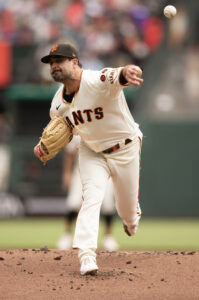
The 34-year-old Alexander is the third recent member of the Giants pitching staff to head across the bay to Oakland, joining righty Ross Stripling and lefty Alex Wood. Stripling was traded to the A’s earlier this month in a deal that sent 2023 sixth-rounder Jonah Cox back to the Giants. Wood inked a one-year, $8.5MM deal at that same time. They’ll both pitch out of the rotation, whereas Alexander figures to head to the Oakland bullpen.
Alexander spent the past two years in the Giants’ bullpen and has appeared in parts of four seasons with the Dodgers (where he was also teammates with Stripling and Wood) and another three with the Royals as well. He sports a career 3.29 ERA in 270 2/3 big league innings, though last year was a down season that saw the southpaw turn in a career-high 4.66 ERA in 48 1/3 frames for San Francisco.
Alexander has never missed many bats, instead relying on a sinker that’s produced a mammoth 68.4% ground-ball rate to help him neutralize opposing lineups. He battled command issues earlier in his career but has reined in the walks over the past three seasons, issuing a free pass to just 4.7% of his opponents during that time. He’s also recorded a 14.5% strikeout rate that ranks among the lowest in the league. Even with the lack of punchouts, fielding-independent metrics feel Alexander’s 3.56 ERA dating back to 2021 is generally in line with his skill set. He touts a 3.47 FIP and 3.53 SIERA in that time, both right in line with his earned run average.
Throughout his career, Alexander has shown a noticeable platoon split. Left-handed hitters have mustered a miserable .218/.274/.311 batting line against him through 442 plate appearances, while right-handed hitters have turned in a far better .275/.349/.377 slash.
With this signing, Alexander joins righty Trevor Gott and fellow southpaw Sean Newcomb as the most experienced relievers in the Oakland bullpen. The Giants tended to use him in lower-leverage spots and even deployed Alexander as an opener on eight occasions in 2023, but he’s worked in higher-leverage spots in the past, including a 2018 season that saw him pile up a career-high 21 holds for the Dodgers. Given the youth and inexperience in Oakland’s bullpen, Alexander ought to get some more leverage opportunities with the A’s than he did with the Giants. Flamethrowing 25-year-old Mason Miller, who made his MLB debut in 2023, is perhaps the favorite to take the closer’s role in 2024 after GM David Forst announced he’d work out of the ‘pen this coming season, but Alexander could be a notable piece of Oakland’s setup corps in 2024.
Martín Gallegos of MLB.com first noted that Alexander had a locker in the Oakland clubhouse. MLBTR’s Steve Adams reported the sides had agreed to a major league deal. The Associated Press reported the $2.25MM base salary and the bonuses.
Young: Rangers Do Not Expect Further Additions
Rangers fans have been holding out hope for a reunion with left-hander Jordan Montgomery, but general manager Chris Young threw plenty of cold water on that possibility Wednesday, telling the team’s beat that any notable acquisitions are unlikely at this point (link via Evan Grant of the Dallas Morning News).
“I don’t think there are any additions coming at this point,” Young candidly stated. While he maintained that the Rangers will “keep an open mind” on free agents (including Montgomery), he also noted that long-term uncertainty regarding the team’s television contract “is real” and has impacted spending this offseason — even on the heels of a World Series win.
The lack of marquee additions has frustrated some fans who’ve grown accustomed to lavish free agent expenditures in recent years. The Rangers famously spent more than a half billion dollars to sign Corey Seager, Marcus Semien and Jon Gray two offseasons ago and followed that with a pitching-heavy attack in free agency last winter, signing Jacob deGrom, Nathan Eovaldi and Andrew Heaney for a combined $234MM. Texas also picked up two high-profile arms at last year’s deadline when acquiring Montgomery and future Hall of Famer Max Scherzer. Montgomery, of course, is a free agent and remains unsigned. Scherzer will be sidelined into June or July following offseason back surgery.
Currently, Roster Resource projects the Rangers for a franchise-record $220MM payroll. That comes with $243MM worth of luxury tax obligations, setting the stage for Texas to be a luxury payor for the second straight season. Texas only paid $1.8MM in luxury fees last year, but as a second-time payor they’ll face steeper penalties for eclipsing this year’s $237MM threshold.
Right now, sitting about $6MM over the first barrier, the Rangers are only on the hook for a 30% overage fee. They’ll pay roughly that same $1.8MM penalty if no further deals are made, but between small-scale signings, late trade acquisitions and/or in-season pickups near the trade deadline, that figure will likely rise.
The ostensible lack of willingness to meet Montgomery’s asking price in free agency has proved the greatest point of consternation among fans. Where that asking price stands at present isn’t clear, but it’s fair to expect that Montgomery and his reps at the Boras Corporation are still eyeing a nine-figure contract and an annual salary ranging from $20-25MM.
The Rangers, as second-time luxury payors, would be on the hook for a good bit more than that. They’d owe a 30% tax on the next $14MM worth of AAV (average annual value) added to their payroll and another 42.5% on subsequent spending. Just setting a speculative AAV of $23MM on Montgomery, that would position the Rangers to pay an additional $8.025MM in taxes on top of Montgomery’s salary. Texas could try to backload the deal or defer salary, but that would do nothing to change the luxury tax hit. In other words, depending on where exactly Montgomery’s AAV lands, he’d cost the Rangers something in the vicinity of an extra $7-9MM on top of what he’s earning.
That theoretical Montgomery signing would also make it far likelier that they’ll be third-time payors in 2025. A Montgomery deal would likely push Texas to around $170MM worth of luxury obligations in ’25, and that’s before factoring in arbitration raises for Nathaniel Lowe (earning $7.5MM this season), Jonah Heim ($3.05MM in ’23), Dane Dunning ($3.325MM in ’23), Leody Taveras ($2.55MM in ’23), Brock Burke ($1.035MM in ’23) and Josh Sborz ($1.025MM in ’23).
A conservative estimate for the Rangers’ 2025 arb class would clock in around $30MM, meaning with a theoretical Montgomery deal they’d be over $200MM in tax considerations before making a single addition to the 2025 roster. Long-term deals for core players like Adolis Garcia, Josh Jung, Evan Carter or even top prospect Wyatt Langford would only push that luxury number further north.
It’s fair to debate just how much Rangers ownership should fret over the luxury tax, of course. The team is still entering its fourth season (with fans) in a new stadium that provided a revenue boost, and last year’s World Series win provided ample additional revenue as well. Texas needn’t worry about sacrificing any draft value unless the team is more than $40MM over the threshold — the point at which a club’s top pick is dropped by 10 places in the following year’s draft. It’s unlikely they’d hit that level even if they were to re-sign Montgomery, and they’d be a long ways from that level next offseason as well, even with Montgomery on the books.
Still, every ownership group has its limits, and it seems the Rangers’ group has reached — or is at the very least approaching — its own limits for the upcoming season. If that’s indeed the case, Texas will rely on a patchwork starting staff in the season’s first half with an eye toward potential returns for deGrom, Scherzer and right-hander Tyler Mahle (who inked a two-year, $22MM deal earlier this winter) following the All-Star break.
At the moment, the Rangers’ rotation will likely include Eovaldi, Gray, Heaney, Dunning and left-hander Cody Bradford. Right-hander Yerry Rodriguez and non-roster invitees like Jose Ureña and Adrian Sampson could factor into the group as well. There are a handful of notable arms who could be signed to low-cost one-year deals, and the Rangers could continue stockpiling veterans on non-roster pacts, just as they’ve done with Ureña and Sampson — the latter of whom only signed yesterday.
More broadly, it’ll be a big year for the development of former touted prospects like Jack Leiter, Owen White and Cole Winn. All three are former top-60 draft picks — Leiter was selected second overall — who’ve ranked among the game’s top-100 prospects. However, all three struggled through ugly seasons in the upper minors in 2023 and have seen their stock drop amid those struggles.
Rizzo: Nationals Unlikely To Make Additional Major League Signings This Offseason
The bulk of the shopping in a quiet Nationals offseason looks to be complete. General manager Mike Rizzo told the team’s beat writers Wednesday the Nats aren’t likely to add any more free agents on guaranteed deals between now and Opening Day (X link via Andrew Golden of the Washington Post). It’s still possible that they’ll add some veterans on minor league deals with spring training invitations.
Rizzo’s comments seemingly close the door on any potential late additions of note to a Nationals club that has been poking around the starting pitching market. “I just couldn’t find that starting pitcher that was going to impact us at this time, for not only the right amount of years but the right salary at this time,” Rizzo said Wednesday (via MASNsports.com’s Mark Zuckerman).
The Nationals have only signed three players to big league deals this offseason — none for more than Joey Gallo‘s $5MM (as can be seen in MLBTR’s Contract Tracker). Beyond Gallo, the Nats signed reliever Dylan Floro and infielder/outfielder Nick Senzel to one-year deals worth $2.3MM and $2MM, respectively. They’ve also added outfielder Jesse Winker, lefty Richard Bleier and first baseman/outfielder Juan Yepez on minor league pacts this winter.
As it stands, the Nationals will deploy a rotation including Patrick Corbin, Josiah Gray, MacKenzie Gore, Jake Irvin and Trevor Williams. That group combined to start all but 19 of Washington’s games in 2023 — Chad Kuhl, Joan Adon and Jackson Rutledge started the others — a season in which the Nationals ranked 25th in the Majors with a 5.02 ERA and 29th in each of FIP (5.30), SIERA (4.95) and K-BB% (9.7%).
The Nats are surely hoping for better performances from young starters like Gore and Gray, both of whom were lauded as top prospects prior to breaking into the big leagues. Both hurlers posted respectable ERAs with middling grades from fielding-independent metrics, in no small part due to sub-par walk rates and (in Gore’s case especially) struggles with the long ball. Gore is the only Nationals starter who posted an above-average strikeout rate in 2023 (26%). Corbin and Williams are the only two who had better-than-average walk rates (7.2% and 8%, respectively).
Washington also has several more arms on the rise, with the aforementioned Rutledge, lefty DJ Herz and right-hander Cade Cavalli among them. Cavalli would likely have been in the Nats’ rotation in 2023 were it not for a spring elbow injury that led to Tommy John surgery.
Rizzo didn’t provide much of an update on Cavalli beyond the fact that his rehab is progressing nicely. An early-summer return seems like a best-case scenario for the hard-throwing 25-year-old, and Zuckerman indeed notes that he’s shooting to be MLB-ready sometime in June.
Rutledge tossed 20 innings in last year’s debut after delivering solid run-prevention numbers between Double-A and Triple-A — albeit with sub-par command. Herz, acquired from the Cubs in exchange for Jeimer Candelario, posted a 3.43 ERA in 22 Double-A starts last year, fanning an impressive 32.4% of his opponents. He too struggled with command issues, however, walking opponents at a grim 13.9% clip.
On the bullpen front, the Nats could be down at least one candidate early in the season. Skipper Davey Martinez said Wednesday that righty Mason Thompson will be shut down for the next two weeks before being reevaluated for an elbow injury (X link via Golden). Martinez conceded that the team is “a little concerned” about the issue but declined to go into further details.
Thompson, 26 next week, has spent the majority of the past three seasons with the Nationals and pitched 100 1/3 innings of 4.57 ERA ball with a 17.8% strikeout rate, 10% walk rate and 50.6% ground-ball rate.
Liam Hendriks Weighing Multiple Offers
Three-time All-Star reliever Liam Hendriks is weighing multiple offers from interested clubs, reports ESPN’s Jeff Passan. Hendriks, who’s recovering from Tommy John surgery and aiming to return to action around the trade deadline this season, has set a deadline of tomorrow to sign with a team, per Passan. If he doesn’t sign by tomorrow — presumably meaning, if a team doesn’t meet whatever asking price he’s set — he’ll rehab on his own for the next several months and look to sign with a club closer to his return date.
Hendriks turned 35 last week. His ascension from a fringe arm riding the DFA carousel back in 2013-15 to one of the sport’s premier relievers is one of the most remarkable turnarounds in recent memory. Hendriks was designated for assignment four times and placed on waivers without a public DFA on another occasion and traded in three different minor swaps along the way. In 2018, the A’s not only designated him for assignment for the fourth (and final) time in his career — they succeeded in passing Hendriks through waivers unclaimed.
Hendriks posted solid but unremarkable numbers as a low-leverage reliever for the A’s from 2016-18 but returned from that outright in 2019 as an entirely different pitcher. He scrapped his sinker, leaned far more heavily into a four-seamer that had jumped by more than 1.5 mph in average velocity, and became a two-pitch powerhouse who flummoxed opponents with his four-seamer/slider combo.
That devastating pair of pitches quickly catapulted Hendriks to the ranks of baseball’s elite bullpen arms. From 2019-22, he pitched 239 innings with 114 saves, an overwhelming 38.8% strikeout rate and a pristine 5.1% walk rate. In addition to his trio of All-Star nods, Hendriks twice won the Mariano Rivera American League Reliever of the Year Award and inked a huge three-year, $54MM contract with the White Sox.
The 2023 season brought about a sobering bit of disheartening news, as Hendriks announced last offseason that he’d been diagnosed with non-Hodgkins lymphoma and would immediately embark on a wave of chemotherapy treatment. Just three and a half months later, Hendriks triumphantly announced that he was cancer-free. He began a rehab assignment in early May and returned to the Majors on May 29 — remarkably less than four months after making his original announcement.
It was a feel-good story for White Sox fans amid a disastrous start to the season, but the good vibes didn’t last long. Hendriks was placed back on the injured list just two weeks later, this time due to inflammation in his right elbow. While the issue was initially believed to be relatively minor — Hendriks at first expressed optimism he’d be back in a matter of weeks — damage to his ulnar collateral ligament was either discovered shortly thereafter or developed over the course of his rehab. There’d been no prior public indication that surgery was even a consideration, but the Sox announced on Aug. 2 that Hendriks was slated for Tommy John surgery.
Hendriks’ track record is strong enough that he ought to be a clear candidate for a big league deal — likely a two-year arrangement that’ll allow him the opportunity to rehab with a team’s medical staff for the bulk of this season with an eye toward either a second-half return or a 2025 return. This type of contract is relatively common, though the fact that Hendriks is entering his age-35 season perhaps complicates the scenario to some extent.
There’s not a team in baseball that couldn’t use a healthy Hendriks in its bullpen. That won’t be an option until late August at the earliest and perhaps not until Opening Day 2025, depending on how his rehab progresses, but the track record alone should lead to plenty of interest.