
Offseason Outlook: Oakland Athletics
The A’s spent the 2023 season more focused on relocating from Oakland to Las Vegas than on attempting to compete. They’ll finish with one of the six worst records of any team in the past 20 seasons. It’ll be another bleak offseason for a fan base that feels betrayed by ownership and has little to look forward to before the team’s likely departure.
Guaranteed Contracts
- Aledmys Diaz, INF/OF: $8MM through 2024
Option Decisions
- Drew Rucinski, RHP: $5MM club option (no buyout)
Other Financial Commitments
- $2MM owed to D-backs as part of July’s Jace Peterson trade
Total 2024 commitments: $10MM
Total long-term commitments: $10MM
Arbitration-Eligible Players
Non-Tender Candidates: Newcomb, Pruitt, Perez, Rios
Free Agents
Just as A’s brass has spent much of the past year focused on their attempted relocation to Las Vegas, the forthcoming offseason will further center around that move. The other 29 owners will vote on the Athletics’ move to Vegas between Nov. 14-16 — a vote that needs 75% approval and is widely expected to pass with little to no issue. The A’s will then turn their attention to securing funding, formalizing vendor contracts and other steps necessary to begin construction of their reported Las Vegas ballpark, with an eye toward finalizing the move in 2027. The A’s could share Oracle Park with the Giants from 2025 until the new facility is built. At this point, ownership is intent on moving away from the team’s longtime home. Any fans clinging to hope of some kind of sale of the team and reversal of course had those hopes dashed last month when chairman John Fisher plainly indicated he has no interest in selling the club.
All the while, the on-field product has suffered. The Athletics have been “rebuilding” for the past two years, though there’s virtually no Major League talent that’s been established despite trading away the core of a team that won 97 games in both 2018 and 2019, won the AL West in the shortened 2020 season (36-24) and won 86 games in 2021.
Matt Olson, Matt Chapman, Frankie Montas, Sean Manaea, Chris Bassitt, Sean Murphy, Lou Trivino, A.J. Puk, Cole Irvin and Sam Moll have all been traded. The only fruits of those trades to blossom at the MLB level so far have been lefty JP Sears (4.54 ERA in a team-leading 172 1/3 innings this season) and outfielder Esteury Ruiz, who lead the AL with 67 steals but batted just .254/.309/.345. Catcher Shea Langeliers popped 22 home runs and played strong defense in his first full MLB season, but his overall .205/.368/.413 batting line was well shy of even the league average. Arguably the best player to come out of the rebuild has been first baseman Ryan Noda, whom the A’s selected in last December’s Rule 5 Draft.
Had the A’s focused solely on lower-minors talent as part of this rebuilding effort, perhaps the lack of MLB contributors would be explainable. That hasn’t been the case. The A’s have largely targeted players in the upper minors. That strategy has worked for them in the past, but the collection of Kyle Muller, Ken Waldichuk, Luis Medina, Cristian Pache, Joey Estes, Kevin Smith, Adam Oller, Adrian Martinez, Zach Logue and Kirby Snead has generally struggled in the Majors. Pache, Oller and Logue aren’t even in the organization anymore. Pache was traded to the Phillies for minor league reliever Billy Sullivan, who walked 52 hitters in 57 1/3 Triple-A innings this year. Oller and Logue were lost on waivers after being designated for assignment.
The A’s have four players on Baseball America’s top 100 list at the moment, but none of the four were acquired from the slate of trades that constitute the current rebuild. Darell Hernaiz, acquired from the Orioles for Irvin and ranked ninth among Oakland prospects at both Baseball America and MLB.com, is the top-ranked yet-to-debut talent produced by the rebuild. BA ranked Oakland’s farm system 24th among the sport’s 30 teams in mid-August. MLB.com ranked them 26th. For a team that’s torn down an entire perennial contender via a series of aggressive trades netting largely upper-level minor league talent, the results should be unacceptable.
Some of the fire sale continued on over the summer, with Moll going to the Reds and offseason signees Shintaro Fujinami (Orioles) and Jace Peterson (D-backs) also being shipped out. Had Oakland’s other offseason veteran pickups — Trevor May (free agent), Aledmys Diaz (free agent), Jesus Aguilar (free agent) and Manny Pina (Murphy trade) — performed better, they’d surely have been shipped out, too. Things didn’t play out that way. Aguilar and Pina were both released over the summer. Diaz had the worst season of his career and is signed through 2024. May rebounded after spending time on the IL with anxiety early in the year but is now a free agent.
The long-running sale could continue this winter. However, because the A’s haven’t developed much talent or signed anyone who’s been particularly productive, they’re running low on names to dangle.
Right-hander Paul Blackburn posted a mid-4.00s ERA but with a more frequently used slider and uptick in velocity that helped him turn in a career-high strikeout rate. With two years of club control remaining and an arbitration trade looming, there’s a very good chance he’ll be moved, even if the return won’t be franchise-altering. First baseman/outfielder Seth Brown had a terrible first half but posted a more respectable .235/.301/.432 slash from July onward. Brown swatted 25 homers with the ’22 A’s and has shown good power against right-handed pitching in his career (.237/.305/.471, .234 ISO). A team looking for an affordable lefty half of a first base/outfield platoon could show interest. Again, the return wouldn’t be all that strong.
Aside from that pairing, there aren’t many obvious trade candidates. Brent Rooker, 29 in November, had a breakout year after being picked up off waivers, though it was a wildly uneven season overall. He was one of the best hitters on the planet in April, excellent in July and September, roughly average in August, and well below average in both May and June. On the whole, he hit .246/.329/.488 with 30 home runs but a 32.7% strikeout rate and shaky defense in the outfield corners. A 30-homer bat with four years of club control remaining could draw interest though, and the A’s aren’t in position to turn away interest on anyone who’s exhausted multiple years of team control.
With virtually nothing in the way of established talent on the roster, it should come as no surprise to hear that the Athletics’ payroll is practically blank. Diaz’s $8MM salary is the only guaranteed contract for a player still on the roster. The A’s will also send $2MM to the D-backs as part of the Peterson trade. Their arb class consists of more non-tender candidates than locks to return, and the players to whom they do tender contracts (e.g. Blackburn, Brown) could well be traded.
That should set the stage for some degree of free agent spending, although as last offseason showed, it’s not really something for A’s fans to get excited about. Oakland isn’t going to commit the necessary resources to any productive, big-name free agents. Even most free agents in the second, third and fourth tiers of the market will likely have little interest in signing on for what is assured to be a non-competitive season played in front of even more sparse crowds than usual. Those same factors led to a 2022-23 slate of signings that was comprised of utilitymen for whom they probably overpaid (Diaz, Peterson) and injury/NPB/KBO rolls of the dice (May, Fujinami, Aguilar, Drew Rucinski).
Assuming more of the same this winter, the market has several rebound hopefuls who can play multiple positions — thus accommodating the Athletics’ general lack of established position players — who can likely be signed at a low cost. Names like Isiah Kiner-Falefa, Paul DeJong, Brian Anderson, Adam Frazier, Eduardo Escobar and old friend Joey Wendle all come to mind. On the pitching side of things, names like Jake Odorizzi, Julio Teheran and Martin Perez could be in Oakland’s price range.
As bleak as things look in Oakland, there are a few spots on the diamond where they appear largely set. Noda had a tough finish to the season but still wound up with a .229/.364/.406 batting line and 16 home runs in 495 plate appearances. He’s not going to hit for much average with a 34.3% strikeout rate, but his massive 15.6% walk rate and above-average power will keep him productive enough to remain in the lineup (and give him a very vintage “Moneyball” Athletics vibe).
At second base, former second-rounder Zack Gelof debuted and turned in one of the strongest showings of any American League rookie in 2023. His performance might’ve gone largely under the radar, given that it came in just 69 games for a historically bad A’s team, but he slashed .267/.337/.504 with 14 home runs, 20 doubles, a triple and 14 steals in 300 plate appearances. Strikeouts are a concern (27.3%), but Gelof walks, hits for power, runs well and played good defense. He has the look of a clearly above-average regular and was far and away the brightest spot on this year’s team. He’s controlled for six more seasons.
Behind the plate, Oakland will likely give another look to Langeliers, whose glove and power are MLB-caliber but whose hit tool was lacking. Langeliers chased off the plate far too often and popped the ball up to the infield way too often when he did make contact (27 times). He still maintained strong exit velocity and hard-hit rates despite that penchant for harmless pop flies, but his work at the dish remains a work in progress. Fellow backstop Tyler Soderstrom is one of the sport’s top offensive prospects but struggled on both sides of the ball. An inexpensive free agent could join this mix.
In the outfield, Ruiz will get another look in center after stealing 67 bases, but he’ll need to improve his offense to remain in the lineup. The lackluster production at the plate and blistering speed are reminiscent of early-career Billy Hamilton, but Ruiz is nowhere near that caliber of defender, so he’ll need to improve either his general offensive output or his glovework to be a credible regular. Former No. 4 overall pick JJ Bleday, acquired from the Marlins for Puk, hit .195/.310/.355 but posted huge numbers in a smaller sample at Triple-A. Lawrence Butler‘s first 129 plate appearances didn’t go well. All three will get more chances in 2024 — Ruiz in particular — but adding a low-cost outfielder like Travis Jankowski, Joey Gallo or Hunter Renfroe (to name a few speculative examples) seems feasible.
Some type of addition on the left side of the infield also seems likely, whether that’s buying low on a trade for someone who’s been squeezed out of his current organization (e.g. Nick Senzel) or signing more utility infield types. None of Nick Allen, Jordan Diaz, Kevin Smith and Jonah Bride have been able to stake a claim to a long-term job at either third base or shortstop. Much of that group will be given more chances, but Allen and Smith have struggled in multiple seasons now. Hernaiz could factor into the left side mix at some point midseason after a strong showing in the upper minors.
The pitching staff doesn’t create much more room for optimism. Blackburn and Sears both turned in passable performances, but the former is perhaps the team’s top remaining trade candidate, as previously mentioned. Top prospect Mason Miller impressed in a few short looks but has been oft-injured throughout his minor league career and spent much of the season on the big league injured list.
There’s a huge number of in-house candidates to take rotation jobs, but most have pitched poorly and/or been hurt in multiple MLB auditions to date. Muller, Waldichuk, Medina, Estes, Adrian Martinez, Freddy Tarnok and Joe Boyle are among the options on the 40-man roster. Journeyman southpaw Sean Newcomb could be in the mix as well, if he survives the winter on the 40-man after undergoing knee surgery recently. Waldichuk finished out the season decently and probably has the inside track among this bunch.
Somehow, there’s even less certainty in the bullpen. Dany Jimenez is the most experienced reliever slated to return. His 3.43 ERA in 57 2/3 innings over the past two seasons is solid, but he’s also walked 13.4% of his opponents during that time. Zach Jackson, who missed most of the year with a flexor strain, has a similarly impressive ERA but ugly walk rate. Waiver pickup Richard Lovelady might have done enough in 23 1/3 innings to earn himself a decent chance at a spot in 2024, but his season ended in July to a forearm strain.
It’s unlikely the A’s make any high-profile additions, but the dearth of quality arms and lack of anything resembling a big league pitching staff likely points to at least a few veteran additions. The A’s could dangle the ninth inning to a veteran looking for a bounceback season, as they did with May last winter. It’ll be a low bar for the 2024 staff to clear. Despite playing their home games in MLB’s most pitcher-friendly stadium, A’s hurlers ranked 29th in the Majors in ERA (5.48), 26th in strikeout rate (20.4%), last in walk rate (10.9%) and 27th in homers per nine innings (1.35).
This offseason will represent one of the darkest chapters in franchise history for an increasingly tortured A’s fan base. It appears all but certain that the team will be leaving the Bay within the next few years, and the 2024 campaign could represent the final year they play home games at the Coliseum. Yet lifelong fans hoping to enjoy perhaps the final year of their beloved Green & Gold at the Coliseum won’t see that appreciation returned by an ownership group that has no interest in competing between now and the time the team moves to Las Vegas. The A’s will spend some money on free agents, if only to ensure they retain their status as a revenue-sharing recipient, but they’ll also probably trade away a few of the familiar faces remaining on the roster.
The A’s posted winning records in 15 of Billy Beane’s 25 years atop the baseball operations hierarchy and never had more than three consecutive losing years, despite frequent rebuilds and perennial payroll constraints. Despite that success — including the aforementioned 97-win seasons in 2018-19 and the 2020 division title — Fisher has suggested that a winning franchise simply isn’t feasible in Oakland. It’s a self-fulfilling prophecy, and one that appears to be entering its final years while leaving the few fans who remain high and dry with little reason for optimism.
In conjunction with this post, Anthony Franco held an A’s-centric chat on 10-03-23. Click here to view the transcript.
Offseason Outlook Chat Transcript: Pittsburgh Pirates
MLBTR is holding live chats specific to each of the 30 teams as the offseason nears. In conjunction with this morning’s Pirates Offseason Outlook, Steve Adams hosted a Pirates-centric chat this morning. Click here to read the transcript!
Offseason Outlook: Pittsburgh Pirates
In conjunction with this installment in our Offseason Outlook series, Steve Adams will be hosting a Pirates-centric chat today at 1pm CT. Click here to ask a question in advance, and be sure to check back to participate live!
The Pirates’ blistering start to the season gave way to another year of losing baseball and deadline selling. With many members of their vaunted farm system now on the cusp of their first full season in the Majors, they should be set for a more active offseason than in recent years.
Guaranteed Contracts
- Bryan Reynolds, OF: $100MM through 2030 (includes buyout of 2031 club option)
- Ke’Bryan Hayes, 3B: $50MM through 2029 (includes buyout of 2030 club option)
2024 commitments: $17MM
Total future commitments: $150MM
Option Decisions
- Jarlin Garcia, LHP: $3.25MM club option (no buyout)
Arbitration-Eligible Players
- Miguel Andujar
- Ryan Borucki
- Mitch Keller
- JT Brubaker
- David Bednar
- Connor Joe (likely Super Two)
- Non-tender candidate(s): Andujar, Joe
Free Agents
The beginning of the offseason is often a time for changes in the front office or in the dugout, particularly among losing clubs, but there’s no real risk of that among the Pittsburgh brass. Manager Derek Shelton was extended earlier this season, with his new deal beginning next year. There’s been no indication that general manager Ben Cherington is in any kind of jeopardy after a third losing season. Cherington was hired to embark on a full-scale rebuilding effort, and ownership knew from the start that it’d be a lengthy process.
The first and most straightforward decision of the winter will come on lefty Jarlin Garcia’s $3.25MM club option, which will surely be declined after he missed the year due to injury. There’s no buyout on the option, so the Bucs will let him go after a season spent on the injured list.
A larger and more pressing issue for Bucs fans pertains to franchise icon Andrew McCutchen. The former National League MVP returned to the organization that drafted him last offseason, signing a one-year deal worth $5MM. McCutchen has been vocal about the fact that the Pirates and Pittsburgh feel like home to him, and with his 37th birthday just two weeks away as of this writing, he’s made clear that he has little appetite to continue his career elsewhere.
Cherington has been candid about his desire to bring McCutchen back in 2024, stating earlier this month that the two parties would discuss a new contract this offseason. McCutchen’s 2023 campaign ended early due to a partial Achilles tear, but he picked up his 2000th career hit and 400th career double this year in black and gold. The overwhelming likelihood is that he’ll return to the Pirates on another short-term deal in 2024, this time taking aim at his 300th career home run — he’s currently at 299 — and again serving as a veteran mentor for a young Bucs club. Of course, Cutch brings more than just leadership to the table; he batted .256/.378/.397 with a dozen homers and 11 steals in 112 games this year.
Assuming McCutchen is back, he’ll be the primary designated hitter. The Pirates gave him just 64 innings in right field this year, and that was before the aforementioned Achilles injury. He’ll be locked into a largely regular lineup role, joining third baseman Ke’Bryan Hayes and outfielders Bryan Reynolds and Jack Suwinski in that regard. Hayes had a rough first half but continued to provide elite defense through his struggles at the plate. And, in the second half of the season, he’s erupted with a .307/.345/.556 slash line. Suwinski strikes out too much to hit for a high average but draws tons of walks (14.6%) and has thus far swatted 26 homers and swiped 13 bags. Reynolds’ bat is down a bit from peak levels, but he turned in his third straight season of 20-plus homers and was still a well above-average offensive performer.
At least one other spot on the diamond seems all but solidified. It’s been a lost year for Oneil Cruz, who suffered a fractured ankle in a home plate collision with White Sox catcher Seby Zavala in early April. The 6’7″ Cruz has long been lauded as one of the top prospects in the game due to his near-unparalleled raw power and plus speed. Losing his entire age-24 season to injury is a blow to his development, but he’s still controllable for five years. In his first 410 MLB plate appearances, he’s batted .237/.302/.449 with a jarring 33.7% strikeout rate, but Cruz has some of the loudest tools in the game and possesses star potential. He’ll treat the 2023 season as a mulligan as he looks to realize his upside.
As far as position players go, the Pirates don’t necessarily have anyone else firmly entrenched just yet. Top catching prospects Endy Rodriguez and Henry Davis both made their MLB debuts this year, but both struggled at the plate. Davis saw the vast majority of his time in right field, and a move out from behind the plate has long been viewed as a possibility for the 2021 No. 1 overall pick. The Bucs only gave him two big league innings at catcher, though they’ve not yet said he won’t play the position at all in the future. Still, it seems that Rodriguez could well be the preferred option there, with Davis sliding into an outfield/first base/DH/part-time catcher role if the bat picks up.
Both Rodriguez and Davis will play big roles with the Bucs next year, but it might still be prudent to bring in some veteran competition, even if only on a minor league deal. Jason Delay is a fine backup catcher, but if one or both of Rodriguez and Davis wind up needing time in the minors, having another backstop (e.g. Curt Casali, Sandy Leon, Luke Maile) on hand would hold value.
In the outfield, Connor Joe and Alfonso Rivas are options if Davis needs some Triple-A time. But Joe is likely to be arb-eligible and saw his bat wilt after a torrid start to the season (.217/.309/.351 in his past 356 plate appearances). Rivas, 27, has huge Triple-A numbers but has yet to carry them to the Majors in parts of three seasons. Miguel Andujar is a non-tender candidate, and Joe could be as well. There are plenty of affordable corner outfielders on the market if the Bucs want to go outside the organization to provide some competition for Davis. Randal Grichuk, Hunter Renfroe and David Peralta will all be free agents, as will Travis Jankowski and Michael A. Taylor, if the preference is for someone more defensive-minded.
As far as areas that are in clear need of work, the right side of the infield stands out. Last offseason’s first base acquisitions, Carlos Santana and Ji Man Choi, were both traded at the deadline. The previously mentioned Joe wound up playing a significant amount at first base but has seen his season-long batting line dip below the league average despite his hot start to the year. Rivas presents another option here.
Rookie Jared Triolo is a third baseman who’s gotten a few brief looks at first base. He could be an option, but his .292/.382/.385 slash seems bound to regress when his .419 BABIP comes back down to Earth. And given his 29% strikeout rate, it’s fair to harbor some concerns. Prospect Malcom Nunez had a tough showing in his Triple-A debut this year, though he’s still just 22. Garrett Cooper and C.J. Cron are among the short-term options available in free agency,
At second base, none of Ji Hwan Bae, Liover Peguero or Nick Gonzales have forcefully staked their claim to the position. All three are former prospects of note who have minor league options remaining, but second base is another area where the Bucs could at least bring in some veteran competition to steady the position in 2024 and serve as a bridge to top prospect Termarr Johnson. The free agent market at second base is thin behind Whit Merrifield, but the trade and non-tender markets could open up additional avenues.
Turning to the pitching staff, there’s some degree of a foundation in place. Mitch Keller will be back to lead the staff. There could be trade rumors surrounding the righty, as has been the case for much of the past two years, but Keller has stepped up as a solid mid-rotation arm over the past two seasons, often showing flashes of an even higher ceiling. With two years of club control remaining, he could well be an extension candidate. (More on that in a bit.) Keller and fellow righty Johan Oviedo — acquired from the Cardinals alongside Nunez in exchange for Jose Quintana — have cemented themselves on the staff. It’s been a rollercoaster season for Oviedo, but the end result will be 175ish innings with an ERA in the low 4.00s. He’s currently at 172 2/3 frames with a 4.12 mark and one start remaining.
There are both depth options and rising prospects who can factor into the starting pitching mix. Righty JT Brubaker will return from Tommy John surgery at some point early next summer. Deadline pickup Bailey Falter has had a tough year but logged a 3.86 ERA in 84 innings with the 2022 Phillies. He’ll be out of options next year, so he’ll have to make the club as either a fifth starter or long reliever — or else be traded or designated for assignment. Right-hander Roansy Contreras entered the year looking like a rotation building block but has struggled in Pittsburgh and in Triple-A. He’ll get additional opportunities in the future, though it’s always possible they come in the bullpen.
Prospects like Quinn Priester and Luis Ortiz have already gotten their feet wet, and there’s more help on the horizon. Anthony Solometo, Jared Jones and 2023 No. 1 overall pick Paul Skenes could all debut next year. Skenes’ eventual arrival will be one of the most eagerly anticipated pitching debuts since Stephen Strasburg first took the mound for the Nationals in 2010.
In-house options notwithstanding, the Bucs figure to add at least one arm this year. They’ve added a low-ceiling veteran stabilizer in each of the past three offseasons, bringing Tyler Anderson, Jose Quintana and Rich Hill aboard on one-year deals — and trading all three at that season’s respective deadline. There’s merit to making a similar play for some bulk innings this winter, with Kyle Gibson, Wade Miley and Martin Perez among the options who’d fit that bill.
Even if the Pirates do make such an addition, however, it’s quite arguable that the time has come for them to do something a bit more on the pitching front. A long-term play for a young ace like Japanese star Yoshinobu Yamamoto isn’t going to be in the cards for a club with such a modest annual payroll, and no one is going to predict the Pirates to sign Blake Snell on the heels of a Cy Young-caliber season. But the market offers plenty of upside plays, be it a multi-year pact for a still-young pitcher like Jack Flaherty or a shorter-term pickup of a pitcher looking to rebound from injury. Frankie Montas and Luis Severino both fit that description and would both bring substantially higher upside to the Pirates than their prior offseason pickups.
The bullpen, outside of David Bednar, is lacking in household names but not in quality. Bednar is a star and one of the game’s best bullpen arms, but Pittsburgh also got strong results out of less-heralded names like Colin Holderman, Dauri Moreta, Carmen Mlodzinski and even waiver/DFA pickups like Ryan Borucki and Thomas Hatch.
Some of the rotation candidates who don’t stick as starters will inevitably end up here, but there will also be injuries and regression among 2023’s quietly solid group. There’s certainly room to bring in a veteran arm here, though any veteran seeking closing opportunities will likely look elsewhere, as Bednar won’t be displaced — nor (to the chagrin of other fan bases) will he likely be traded with the Pirates hoping to emerge from their rebuild sooner than later. Phil Maton, Keynan Middleton, Ryne Stanek, Michael Fulmer and Brent Suter are among the many, many relief options available this winter.
Of course, repeated suggestions of the Pirates spending money will be met with anything ranging from skepticism to jokes and mockery. But the Pirates have just two players under contract beyond the current season, Reynolds and Hayes, and they’ll pay that pair a combined $17MM in 2024. There are a handful of players due raises in arbitration, but the prices figure to be modest. Keller will be due a raise on this year’s $2.375MM salary and figures to be the most expensive of the bunch. Brubaker will likely repeat last year’s $2.275MM salary after missing the year due to Tommy John surgery. Bednar is in his first trip through arbitration, and Borucki won’t cost much as a minor league signee.
Even after those arb raises, the Pirates could have under $30MM on the books. That doesn’t include league-minimum players to round out the roster, but it’s nevertheless a gap of more than $40MM from where their 2023 payroll began. And with increased expectations, it’s eminently plausible that ownership will give Cherington & Co. a bit more latitude in terms of spending (albeit not too much more).
Just as there’s room to look into free agency more extensively than in seasons past, there’s also payroll space to consider locking up key long-term pieces. Keller hasn’t reached ace status but holds a strong 3.82 ERA in 54 starts and 318 innings since incorporating a sinker into his repertoire in May 2022. That includes a poor finish to his 2023 season, which will surely be a factor the Pirates consider, but Keller’s workload is at career-high levels and the overall body of work the past two seasons remains strong. He’s logged better-than-average strikeout, walk and ground-ball rates in that time (23.5%, 7.5%, 46.1%) and is just 27 years old.
There are plenty of parallels between Keller and Twins righty Pablo Lopez, who inked a four-year, $73.5MM deal with Minnesota earlier this year when he was in the same service class that Keller will be in this coming offseason. Perhaps Keller’s slightly lesser track record and shaky finish will prevent him from quite reaching that annual value, but it’s certainly a relevant comparison.
Bednar, too, stands as a possible extension candidate — though multi-year deals for relievers are rare, particularly once they’ve reached their arbitration years. He has a healthier track record and more saves than Rays righty Pete Fairbanks, who back in March signed a three-year, $12MM deal that bought out his arbitration seasons and gave Tampa Bay control over one free agent year. Bednar is poised to do quite well in arbitration and might command close to double that commitment to put pen to paper, but it’s a concept worth exploring for an excellent reliever who’s popular with his hometown fans.
The Bucs could also look into a long-term deal with Cruz, though that’ll be a tall task as Cruz might want to put this year’s freak injury behind him and prove himself on the field before talking years and dollars.
It’s been a long time since Pirates fans got to follow a playoff-caliber club in Pittsburgh, but the latest rebuilding effort under a still relatively new front office regime is likely moving toward a conclusion. A lot rides on the continued development of high-end prospects like Davis, Rodriguez, Skenes, Jones, Solometo and Priester, but everyone from that group could contribute as soon as next season. Hayes, Reynolds, Suwinski, Cruz, Keller and Bednar give some immediate optimism, and they’ll be joined by that group of promising prospect as well as some veteran additions in an increasingly competitive NL Central next year.
Offseason Outlook Chat Transcript: Kansas City Royals
MLBTR is holding live chats specific to each of the 30 teams as the offseason nears. In conjunction with yesterday’s Royals Offseason Outlook, Steve Adams hosted a Royals-centric chat this morning. Click here to read the transcript!
Offseason Outlook: Kansas City Royals
In conjunction with this installment in our Offseason Outlook series, Steve Adams will be hosting a Royals-centric chat tomorrow morning at 9am CT. Click here to ask a question in advance, and be sure to check back to participate live!
The Royals haven’t had a winning record since their storybook World Series victory back in 2015. Their first season in the wake of Dayton Moore’s firing as president of baseball operations yielded more of the same dismal results. They’ve now lost 100-plus games in three of the past six seasons, and it’ll be incumbent upon J.J. Picollo to turn things around in his second year atop the baseball operations hierarchy.
Guaranteed Contracts
- Salvador Perez, C/DH: $44MM through 2025 (including buyout of 2026 club option)
- Jordan Lyles, RHP: $8.5MM through 2024
- Jake Brentz, LHP: $1.05MM through 2024 (Brentz will remain arb-eligible through 2026)
Additional Financial Commitments
- $10MM still owed to INF/OF Hunter Dozier through 2024 season
Option Decisions
- None
Arbitration-Eligible Players
- Taylor Hearn
- Taylor Clarke
- Josh Taylor
- Josh Staumont
- Brady Singer
- Kris Bubic
- Edward Olivares
- Carlos Hernandez
- Non-tender candidates: Hearn, Clarke, Taylor, Staumont
Free Agents
While last offseason brought about sweeping change with the firing of Moore and hiring of manager Matt Quatraro, the 2023-24 offseason should be quieter in terms of such big-picture machinations. Picollo won’t be supplanted one year into his tenure, and the Royals aren’t going to move on from Quatraro after one tough season. It’s possible that Picollo will continue to make changes further down the baseball operations ladder, however. One such move is already in place, as The Athletic’s Keith Law recently reported that Kansas City is hiring former Braves scouting director Brian Bridges. Holding that position from 2015-18, Bridges oversaw high-profile selections of talents like Austin Riley, A.J. Minter and Michael Soroka, in addition to some late-round bullpen finds like Evan Phillips and Jacob Webb.
Improvements in the scouting and draft process are a long-term play, of course. In terms of more immediately righting the ship in Kansas City, there’s no shortage of work to do. Royals starting pitchers have MLB’s fourth-worst ERA (5.16) and fifth-fewest innings (760 1/3). That ERA is practically an identical match with a 5.15 team bullpen ERA that ranks 28th in MLB.
At the plate, the Royals are 24th in the Majors with 651 runs scored. Their collective 6.9% walk rate is second-worst among all MLB teams, and Kansas City ranks near the bottom of the barrel in terms of batting average (.243, 21st in MLB), on-base percentage (.302, 27th), slugging percentage (.396, 23rd) and home runs (156, 26th).
Complicating this year’s dismal across-the-board performance is the fact that the Royals were relying heavily on young players they hope (or hoped) can bring the team back to relevance in the near future. Many of those players largely failed the test.
Bobby Witt Jr. has proven himself to be a cornerstone player at shortstop, belting 29 homers and swiping 48 bases while playing premium defense. Third baseman Maikel Garcia hasn’t hit for power — nor was he projected to — but has swiped 23 bags and played good defense at the hot corner. He’s put the ball in play enough to help overcome a below-average walk rate and looks like he can have a long-term role in the infield, be it as a regular or as someone who eventually shifts to a heavily used utility player between third base, shortstop and second base. Assuming Vinnie Pasquantino‘s recovery from surgery on a torn labrum in his right shoulder goes according to plan, he’ll be back at first base after hitting .272/.355/.444 in his first 133 MLB games.
With regard to the infielders, that’s about the extent of the development. Pasquantino’s injury opened more time for fellow first baseman Nick Pratto, but he’s yet to carry his huge 2021-22 minor league production over to the big leagues. Michael Massey has popped 14 homers, but his .225/.270/.375 slash is nowhere near strong enough to seize the second base job. Infield/outfield hybrids like Nate Eaton and Samad Taylor did not produce in small samples.
The Royals could well keep things in house here, as it’s a dismal market for second base options. Old friend Whit Merrifield presents the best potential option in free agency, but he’ll likely garner interest from contending clubs (assuming either he or the Jays decline half of his 2024 mutual option). The rest of the market is comprised of rebound candidates (e.g. Amed Rosario, Kolten Wong) or utility players (e.g. Enrique Hernandez, Donovan Solano). The trade market presents alternatives, but Kansas City may not have the pitching coveted by teams with infield talent to market such as the Cardinals (Nolan Gorman) or Reds (Jonathan India).
We’ll get to that lack of pitching in a bit, but the rest of the lineup also bears mentioning. The Royals don’t have a single outfielder who they can count on as a well-rounded performer heading into the 2024 season. Drew Waters and Kyle Isbel have yet to hit big league pitching. Edward Olivares has provided roughly average offense at the plate but is not a strong defender. Catcher/outfielder MJ Melendez worked almost exclusively in the latter of those two roles this year, and while he’s having a big second half at the dish, he grades out as one of the worst defensive outfielders in the sport. Deadline pickup Nelson Velazquez has erupted with 14 homers in 131 plate appearances and surely locked in a job in the process — but even he grades as a sub-par defender.
The Royals should add at least one outfielder this offseason — if not two. As with second base, it’s a thin market. Kansas City isn’t going to play at the top of the market for Cody Bellinger and Teoscar Hernandez, so unless the plan is to offer rebound opportunities to a Hunter Renfroe or Joey Gallo, this could be another area to focus on in the trade market. Their 2022 acquisition of Waters has yet to pan out. Their deadline pickup of Velazquez has been outstanding so far. Targeting similar young outfielders lacking in clear paths to playing time with their current organizations could prove shrewd.
Even behind the plate, the outlook isn’t as strong as it once was. While Salvador Perez still carries plenty of name recognition, this year’s .252/.291/.419 batting line is nowhere near the .273/.311/.526 output he turned in from 2020-22. And Perez may be a five-time Gold Glove winner, but he hasn’t taken that award home since 2018 — in large part because his defense continues to wane. He’s thwarted just 14% of stolen base attempts against him this winter (league average is 21%), and Statcast pegs him below-average in terms of both blocking pitches in the dirt and framing pitches.
It’d frankly be surprising if Perez’s name didn’t pop up in a trade rumor or two this winter — he almost always does — but such talk is generally brought about by media speculation rather than earnest chances of him being moved. There’s never been any strong chance that Perez will actually be traded. The Royals love him — they named him just the fourth captain in team history — and Perez has 10-and-5 rights that grant him full veto power on any deal. Further, given the $44MM remaining on his contract and aforementioned decline on both sides of the ball, Perez simply doesn’t have the trade value many would assume based on his track record and name.
There’s also no clear immediate heir apparent to Perez, and thus no great urgency to move him. The use of Melendez almost exclusively in the outfield this year suggests the Royals don’t believe he’s a viable full-time option there. Twenty-eight-year-old Freddy Fermin could be an option to begin cutting into Perez’s workload after a nice rookie showing, but a broken finger ended his season. Pursuing some veteran catching depth, even if just on a minor league deal, seems wise.
The previously mentioned lack of pitching is the most glaring problem for Kansas City, particularly considering the heavy investment in college arms that the Royals hoped would fill out their pitching staff in the long run. Their ballyhooed 2018-20 selections of Brady Singer, Kris Bubic, Daniel Lynch, Jackson Kowar, Asa Lacy and Alec Marsh has yet to produce a clearly above-average starter. Singer has certainly looked the part at times, most notably in 2022, and he drew interest from the Reds (among others) at this year’s trade deadline despite some first-half struggles. His performance has only gotten shakier (6.87 ERA in his past seven starts), and at this point any trade of Singer would be selling low.
The composition of next year’s rotation is at least in part dependent on Zack Greinke’s plans. After signing a pair of one-year deals to return to his original organization, it seems like Greinke prefers to play out his final days in Kansas City. If he wants to come back for his age-40 season next year — which would allow him to take a run at multiple milestones, including 3,000 career strikeouts — the Royals might well give him the chance to do so. If not, they’ll be looking to replace roughly 200 innings between Greinke and Brad Keller, who is a free agent and is facing a cloudy outlook due to thoracic outlet symptoms.
While none of Singer, Lynch, Kowar or Bubic has developed as hoped, all are still in the organization. Singer and Lynch are the likeliest to have rotation jobs waiting. Kowar has already moved to the bullpen (and continued to struggle). Bubic is recovering from Tommy John surgery. Marsh has also debuted this year, pitching 70 innings in his MLB debut but recording a 5.66 ERA.
Despite the stalled nature of those college arms, the Royals aren’t without some hope in terms of success for their pitching development. Trade acquisition Cole Ragans, who came over from the Rangers in the Aroldis Chapman deal, has gone from a squeezed-out former first rounder in Texas to a focal point in the Kansas City rotation in no time at all.
Ragans had been relegated to bullpen work with Texas, but the Royals plugged him right into the rotation and have reaped immense benefits. After some slight tweaks to his repertoire, Ragans has pitched 65 1/3 innings of 2.34 ERA ball with a huge 31.3% strikeout rate and an 8.9% walk rate. He’s faced a generally weak slate of opponents, but even if you expect some regression, it’s hard not to be encouraged by the turnaround.
Ragans, who’ll turn 26 this winter and is controllable for another five years, has punched his ticket to the 2024 rotation. Singer and Lynch figure to be back in there as well. Last offseason’s surprising two-year investment in Jordan Lyles should assure him a spot despite poor 2023 results (6.24 ERA in 30 starts).
The Royals need to add some arms, but they also need to focus on more than bulk innings. Last winter’s signings of Lyles and Ryan Yarbrough didn’t meaningfully raise the team’s ceiling. Kansas City still has Lyles’ bulk innings in the bank, so to speak, and Ragans gives them one potentially strong performer. The goal this time around should be to add some upside, and unlike the position-player market, free agency has several such candidates this offseason.
No one should expect the Royals to outbid the field for NPB ace Yoshinobu Yamamoto — although their need for prime-aged pitching and largely blank payroll outlook arguably makes them an ideal team to take such a risk — but there are several interesting injury reclamation projects. Frankie Montas, Luis Severino and Tyler Mahle could all fit the bill, although Mahle will miss the first half of the season following Tommy John surgery. Jack Flaherty has had a down year overall but will pitch next season at just 28. Notably, the Royals had trade interest in Montas back in the 2021-22 offseason.
A similar gamble on the bullpen side of things would make sense. The Royals have gotten a quietly interesting run from righty James McArthur in recent weeks, as the righty has reeled off 13 1/3 shutout innings with three hits, no walks and 14 strikeouts since moving to the ‘pen. Carlos Hernandez, armed with a triple-digit heater, was quite good through the end of July before hitting a rough patch down the stretch. Lefty Austin Cox has pitched decently in a bullpen role.
By and large, however, the Royals are lacking in established, dependable relievers. With Chapman and Scott Barlow both traded, they can offer a ninth-inning role to any free agent reliever they want to try to steer to Kauffman Stadium. They could give a longtime setup man like Reynaldo Lopez or Joe Jimenez a full-time closing gig. They could also roll the dice on any number of high-end injury reclamations (e.g. Drew Pomeranz, Blake Treinen, Joe Kelly) or perhaps just a former closer who’s had some struggles down the stretch in ’23 (e.g. old friend Will Smith). Any additions along those lines would give the Royals a chance at doubling down on their wildly successful signing of Chapman from last offseason.
Whichever specific targets Kansas City pursues, the resources should be there for Picollo and his staff. The Royals still owe since-released corner man Hunter Dozier $10MM, but there are only three other contracts on the books (Perez, Lyles, Jake Brentz). In all they have just $39.55MM in guaranteed money to be paid out. Arbitration raises will push that number forward, but any of Taylor Hearn, Taylor Clarke, Josh Taylor or Josh Staumont could conceivably be non-tendered. Other arb-eligible players like Singer, Lynch, Bubic and Hernandez aren’t going to break the bank. Their current contracts combined with arb raises should still total under $50MM.
That leaves at least a $40MM gap between the current group and this past season’s Opening Day payroll of about $91-92MM — perhaps a bit more, depending on trade scenarios and non-tenders. The Royals aren’t going to play at the very top of the market, and it bears emphasizing that free agency is a two-way street; they’re going to have a hard time selling Kansas City as a preferred destination to even second- or third-tier free agents who have any kind of demand. It might mean overpaying (as they did with Lyles) or delving even deeper into the free agent waters.
As is to be expected with any 100-loss team, the areas in need of improvement outweigh those where the team appears set. The Royals have some money to splash around in free agency a bit, but don’t expect any marquee additions. Upside plays for pitchers — where their spacious park is surely a bonus — and perhaps some additional trades to acquire controllable names in need of a change of scenery figure to follow. The Royals have more work to do than a team should after enduring eight straight losing or .500 seasons, and it’s going to take multiple years to get them back on track.
Poll: Aaron Boone’s Future
Aaron Boone‘s future with the Yankees has been a talking point among Yankees fans throughout the season. He’s wrapping up his sixth season as the team’s manager and is signed through the 2024 campaign — with a club option for the 2025 season. The Yanks have had plenty of regular-season success under Boone, including a pair of 100-win seasons (100 and 103) in 2018-19 and a 99-win campaign just last year.
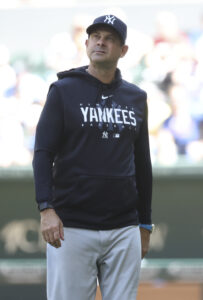
However, the 2023 season will be the first under Boone in which the Yankees don’t reach the postseason. They’ve gone to the ALCS twice under his leadership but haven’t advanced to the World Series.
A string of five consecutive postseason appearances followed by one miss generally wouldn’t be viewed as grounds for a potential managerial change in most markets, but the Yankees perennially operate on one of the sport’s largest payrolls and have higher expectations than just about any club in the sport. Add in the possibility that this could be the team’s first sub-.500 season way back in 1992 — a stunning statistic in and of itself — and the calls for a managerial change among the fan base only become louder.
If a change is made, it seems likely it’ll be the result of a decision directly from ownership. SNY’s Andy Martino reported late last month that the only way Boone would be ousted would be if managing general partner Hal Steinbrenner overruled general manager Brian Cashman on a managerial decision — which he has not done before. Boone told Yankees beat writers within the past hour that he has not yet been definitively told whether he’ll return for the 2024 season or not (link via The Athletic’s Chris Kirschner). Any such decision seems unlikely to come prior to the end of the regular season, though USA Today’s Bob Nightengale wrote this weekend that the club now expects to retain Boone.
On the one hand, it’d be unfair to lay the blame squarely at Boone’s feet, as is the case with any manager and a team that underperforms expectations. Boone has been hamstrung by significant injuries to Carlos Rodon, Frankie Montas, Nestor Cortes, Luis Severino and Lou Trivino, among others, on the pitching side of things. Reigning AL MVP Aaron Judge spent nearly two months on the injured list this summer, while first baseman Anthony Rizzo‘s season will finish at 99 games due to concussion issues and Jose Trevino‘s season will end at just 55 games due to wrist surgery. The club also entered the season with several question marks around the roster, most notably in left field, where they’ve cycled through a carousel of journeyman options including Jake Bauers, Willie Calhoun and Billy McKinney.
On the other, those injury troubles and some roster shortcomings don’t entirely absolve Boone of any and all blame, of course. All managers deal with injuries to star players, and every club has its share of roster imperfections to navigate. Boone is still the one filling out the lineup card and pulling the strings with regard to bullpen and bench decisions. The composition of the team’s coaching staff, any sloppy play or questionable effort, and any other number of tougher-to-quantify shortcomings tend to fall at a manager’s feet as well.
The Yankees have only had three managers in the past 28 years. Joe Torre helmed the club from 1996 through 2007, capturing four World Series titles and another pair of AL pennants along the way. Torre gave way to Joe Girardi, who skippered the club from 2008-17. Girardi won a World Series title himself in 2009.
Boone made the playoffs in each of his first five seasons on the job but will fall short in 2023. That in and of itself isn’t necessarily grounds for an immediate dismissal in the Bronx; Girardi’s Yankees missed the playoffs entirely in three of his final five seasons. Boone hasn’t advanced to a World Series in any of his six seasons in the manager’s chair, though his predecessor also missed the World Series in his final eight seasons on the job.
At the same time, that increasingly lengthy layoff from appearing in a Fall Classic surely leads to mounting frustration both among fans and the team’s ownership. The lowest payroll the Yankees have had relative to the rest of the league since their last World Series appearance came in 2018, when they opened the season with the sixth-largest mark in baseball. They’ve ranked higher than that every year since 2009 — including seven seasons with the game’s second-largest payroll and four with the largest. That level of investment inherently comes with lofty expectations, and they’re now up to 14 seasons without a World Series appearance — let alone a title.
Time will tell whether Boone returns for a seventh season at the helm. If he does, with no additional guaranteed years on his contract beyond the ’24 season, his job status will be a hot-button issue for the Yankees throughout the upcoming season (even more so than it is now).
It’s generally clear where the majority of Yankees fans land on this issue, but let’s open it up for MLBTR readers to weigh in, asking both if the Yankees should move on and whether they actually will (which, of course, are two very different questions):
*Will* the Yankees fire manager Aaron Boone?
-
No 57% (5,261)
-
Yes 43% (3,892)
Total votes: 9,153
*Should* the Yankees fire manager Aaron Boone?
-
Yes 59% (5,016)
-
No 41% (3,496)
Total votes: 8,512
Previewing The 2023-24 Free Agent Class: Lefty Relievers
We’ve been covering the upcoming free agent class at MLBTR. After covering the starters yesterday, we’re on to the relief group. We’ll begin with the southpaws.
Note: only players who have been on an MLB roster in 2023 are included. Ages listed are for the 2024 season.
Top of the Class
- Josh Hader (30)
Long one of the game’s most dominant relievers, Hader now finds himself on the precipice of free agency, where he’ll be among the most sought-after talents on the market this winter. He’s no longer the premier strikeout arm in baseball but still sports the fifth-best strikeout rate of any qualified reliever in 2023 at 36.7%. The dip from his days of fanning around 45% of his opponents hasn’t made him any less effective, however. Hader boasts a sensational 1.21 ERA and has allowed all of three earned runs since Memorial Day.
There was some hand-wringing about the lefty’s struggles in the run-up to the 2022 trade deadline and about his early performance following a trade to the Padres. Hader quieted those concerns with a dominant showing both in September and in the postseason. Since being blown up for six runs on Aug. 28, 2022, Hader’s numbers look like this (postseason included): 68 2/3 innings, 1.05 ERA, 37.3% strikeout rate, 11.2% walk rate, two home runs allowed (0.26 HR/9).
Hader has been a veritable bullpen cheat code this season and for much of his career. He’s a lock to receive and reject a qualifying offer, and he’ll reach free agency with his sights set on topping Edwin Diaz‘s $102MM guarantee — the largest ever for any reliever — and should have a legitimate chance to do so.
High-Leverage Relievers
- Aroldis Chapman (36)
It’s been a resurgent year for Chapman both in terms of velocity and overall results. His heater’s 99.1 mph average is at its highest point since the 2017 season, and Chapman has unsurprisingly seen notable improvement in his strikeout rate (42.9%) and swinging-strike rate (17.6%). Among 439 relievers who’ve pitched at least 10 innings this year, Chapman trails only Baltimore’s Felix Bautista in terms of strikeout rate.
Overall, the former Reds, Yankees and Cubs closer has pitched to a 2.75 ERA in 55 2/3 innings of work. Chapman’s command is always going to be shaky, and this year has been no exception; he’s allowed a free pass to 14.2% of his opponents. His sky-high strikeout rate has offset that, however, as he’s found success working primarily in a setup role between Kansas City and Texas. Chapman signed a one-year, make-good deal with the Royals this past offseason that guaranteed him $3.75MM. He’ll be in line for a considerably heavier payday this time around — quite possibly on a multi-year deal. He should have closing opportunities available to him.
- Matt Moore (35)
It’s been quite the career arc for Moore. A top prospect and burgeoning star with the Rays early in his career, he underwent Tommy John surgery in 2014, returned looking more like a fourth starter and, after being traded two different times, eventually settled into journeyman status. Moore had to settle for a minor league deal with the Rangers in 2022, but he’s found new life as a bona fide late-inning reliever over the past two seasons.
Moore’s 2022 breakout in Texas (1.95 ERA in 74 innings) led to a one-year, $7.55MM deal with the Angels in 2023, and he’s continued to demonstrate his efficacy in leverage situations. In 48 2/3 frames between the Angels and Guardians, the southpaw has a 2.77 ERA, 28.5% strikeout rate and 7% walk rate. He’s picked up 21 holds as well.
Claimed off waivers by the Marlins this week, he’ll spend the final week-plus of the season in Miami and hope to help push them to a postseason spot, even though he won’t be eligible for the playoff roster. Dating back to 2022, Moore has a 2.27 ERA and 35 holds in 122 2/3 innings with a well above-average strikeout rate. He’s shown that his 2022 season wasn’t a fluke, and there ought to be multi-year offers waiting for him in free agency.
- Wandy Peralta (32)
Acquired in an April 2021 trade that sent 2019 cult hero Mike Tauchman to the Giants, Peralta wound up providing the Yankees with two and a half seasons of quality bullpen innings. In 153 innings with the Yankees dating back to that ’21 trade, Peralta has turned in a sharp 2.83 ERA with a 21% strikeout rate and 10.3% walk rate. He’s overwhelmed left-handed opponents, held his own against righties, and kept the ball on the ground at a roughly 55% clip — all while sporting a heater that averages better than 95 mph.
Peralta isn’t a household name, but he’s been a quietly solid big league reliever dating back to his 2020 season with the Giants — evidenced by a 3.01 ERA over 188 2/3 innings in that time. He could find a two-year deal in free agency this winter.
- Will Smith (34)
After an up-and-down tenure in Atlanta over the course of his prior three-year deal, Smith lingered on the free agent market into March this past offseason. He’d turned things around following a trade to the Astros but still seemed to be met with skepticism, as he commanded a modest one-year, $2MM deal in free agency.
Through late August, the deal looked to be a bargain. Smith pitched to a 2.96 ERA with excellent strikeout and walk rates, but he’s hit a rocky stretch in the 2023 campaign’s final two months. Over his past 18 1/3 innings, Smith has been charged with 17 earned runs on 22 hits (three homers) and eight walks with 15 strikeouts. It’s ballooned his ERA from 2.96 all the way to 4.55. The veteran lefty’s 24.2% strikeout rate, 7.3% walk rate, 13% swinging-strike rate and 35.4% chase rate are all strong marks, but this recent rough patch could result in him settling for another one-year deal in his return to the market this winter.
Middle Relievers
- Scott Alexander (34)
A ground-ball machine with good command who doesn’t miss many bats, Alexander has tossed 48 1/3 innings of 4.66 ERA ball for the Giants this year. San Francisco has used him as an opener on eight occasions as well. From 2016-22, Alexander notched 216 1/3 innings with a 2.95 ERA and mammoth 70.1% ground-ball rate. This year’s results aren’t great, but he should get a big league deal this winter.
- Jake Diekman (37)
Stop me if you’ve heard this one before: the veteran Diekman struggled through rough showings with the White Sox in both 2022 and early 2023 before bouncing back upon signing with the Rays. In 42 1/3 innings, the Diekman has pitched to a 2.34 ERA with a 28.6% strikeout rate and 13.7% walk rate. Command has been a problem for Diekman throughout his career, but he still throws hard and still misses bats at a high level. Tampa Bay hasn’t used him in high-leverage spots, but he’s had success more often than not there and should be in line for another big league deal this winter.
- Brent Suter (34)
A waiver claim out of the Brewers organization early in the 2022-23 offseason, Suter hasn’t been fazed by pitching at altitude. In 64 2/3 innings with the Rox, he’s pitched to a 3.48 ERA — a near mirror image of the career 3.51 mark he carried into the 2023 campaign. Suter’s 18% strikeout rate is the second-lowest of his career, and his 8.8% walk rate is a career-high. However, the soft-tossing lefty has long been one of the game’s best at avoiding hard contact, and that’s true again in 2023: 83.6 mph average exit velocity, 3% barrel rate, 25.9% hard-hit rate. Opponents just don’t square the ball up against Suter, and he’s made a fine career out of that knack for weak contact.
Club Options
- Andrew Chafin (34)
Chafin posted big strikeout numbers with the D-backs but has struggled since being traded to the Brewers, for whom he has a 7.82 ERA in 12 2/3 innings. The veteran southpaw was sporting a 3.06 ERA and matching FIP at the All-Star break — a number that falls right in line with the collective 3.05 ERA he posted in 289 innings from 2017-22. The recent rough patch stems from a small-sample spike in homers (three) and walks (eight) in his short time with Milwaukee. The poor results seem like they’ll lead to the Brewers opting for a $725K buyout rather than Chafin’s $7.25MM option price, but he should get a big league deal again in free agency this winter.
- Jarlin Garcia (31)
Garcia didn’t wind up pitching at all with the Pirates after signing a one-year deal, as a biceps injury incurred in spring training ended up shelving him for the season. The Bucs will surely buy out his $3.25MM option.
- Brad Hand (34)
Hand’s $7MM club option actually converted to a mutual option when he was traded from the Rockies to the Braves, but that’s a moot point. The former All-Star has limped to a 6.00 ERA with Atlanta, and the team will likely pay a $500K buyout.
- Aaron Loup (36)
Loup pitched decently in 2022 — the first season of a two-year, $17MM free agent contract. He’s been roughed up to tune of a 6.10 ERA in 2023, however. A bloated .373 average on balls in play has surely played a role in that, but his strikeout, walk and grounder rates have all also continued to trend in the wrong direction since his career year with the Mets in 2021 (0.95 ERA in 56 2/3 innings). The Halos figure to pay the $2MM buyout on his $7.5MM option.
- Brooks Raley (36)
Raley parlayed a successful three-year KBO run into a big league return in 2020, and he’s since solidified himself as a quality reliever. He’s sporting a 2.94 ERA and 25.9% strikeout rate this season, albeit against a questionable 10.3% walk rate. Given Raley’s 2.81 ERA, nine saves and 46 holds in his past 105 2/3 innings, his $6.5MM club option seems like a good value. That’s especially true given that it comes with a $1.25MM buyout, making it a net $5.25MM call. Even if the Mets don’t want to pay that price plus the associated luxury tax fees, he should have trade value.
- Joely Rodriguez (32)
Injuries have limited Rodriguez to only 11 innings this year, during which time he has a 6.55 ERA. The Red Sox shut him down from throwing due to a hip injury back in August. They’re a virtual lock to pay the $500K buyout rather than pick up Rodriguez’s $4.25MM option.
- Justin Wilson (36)
Wilson signed a big league deal last winter while rehabbing from Tommy John surgery. The Brewers were likely intrigued by the new slider he’d unveiled with the Reds in a tiny sample of 3 2/3 innings during the 2022 season. Wilson whiffed seven of his 13 opponents with a mammoth 18.5% swinging-strike rate before hitting the injured list and requiring surgery. Wilson completed a 14-month rehab only to suffer a lat strain while warming up in the bullpen for his return to a big league mound. That injury ended his season, and it’s likely the Brewers will decline his $2.5MM option in favor of a $150K buyout.
Veteran Depth and Bounceback Hopefuls
- Fernando Abad (37), Richard Bleier (37), Amir Garrett (32), T.J. McFarland (35), Daniel Norris (31), Drew Pomeranz (34), Chasen Shreve (33)
All of these 30-something hurlers have had big league experience in the past. Abad was a quality middle reliever from 2013-17 but has just 37 big league innings since (6 1/3 coming with the Rockies this year). The soft-tossing Bleier was rocked in Boston this year but had a 3.09 ERA with the O’s and Marlins from 2020-22. Garrett has a history of missing bats for the Reds, but his longstanding command issues worsened with the Royals over the past two seasons. McFarland is a ground-ball specialist with good command but one of the game’s lowest strikeout rates. Norris has missed bats in the past but also been quite homer-prone. Pomeranz was one of the game’s best lefty relievers but hasn’t pitched since 2021 due to injury. Shreve’s career 3.97 ERA is solid, but he’s been inconsistent on a year-to-year basis recently.
This group figures to draw plenty of interest in minor league free agency over the winter but might have a hard time finding a guaranteed deal due to recent struggles and/or health woes.
Previous installments: catcher, first base, second base, third base, shortstop, corner outfield, center field, designated hitter, starting pitcher.
All stats through play Thursday.
Rays Place Luke Raley On Injured List, Designate Trevor Kelley For Assignment
The Rays announced Friday that they’ve placed slugger Luke Raley on the 10-day injured list with a cervical strain and designated right-handed reliever Trevor Kelley for assignment. That pair of moves paves the way for top prospect Junior Caminero to be formally selected to the 40-man roster and called up for his Major League debut — a move first reported to be in the works last night. Caminero’s call to the big leagues is now official, and he should make his debut tonight.
Raley, 29, has just one plate appearance since Sept. 15 due to ongoing discomfort stemming from this injury. His placement on the IL is retroactive to Sept. 21, so he’ll be eligible to return on the final day of the regular season. The hope is surely that the additional downtime will allow him to heal up for the postseason.
A former Dodgers and Twins farmhand, Raley has had a late-blooming breakout during his age-29 campaign with the Rays. In 118 games and 406 plate appearances, the lefty-swinging outfielder/first baseman touts a .249/.333/.490 batting line with 19 home runs, 23 doubles, three triples and 14 steals. His 6.9% walk rate is below the league average, and his 31.4% strikeout rate is about eight percentage points above it. Raley has also been largely shielded from left-handed pitching, though he’s held his own in the 43 plate appearances he’s received.
Limited as the skill set may be, there’s no denying that Raley has been a huge contributor for Tampa Bay this season. A Rays club that entered the year looking quite right-handed was in need of just such a breakout, and he’s provided a sorely needed left-handed bat who’s emerged as a potent threat against opposing righties. In 363 plate appearances with the platoon advantage, Raley has turned in a .247/.337/.497 batting line with 17 of his 19 longballs. He’ll finish out the year with one-plus season of big league service under his belt, so the Rays can control him for another five years via arbitration if they choose — and he won’t even be arb-eligible until after the 2025 campaign.
Kelley, 31 next month, signed a minor league deal with Tampa Bay over the winter but was added to the 40-man roster as soon as the Rays were eligible to create roster space via a 60-day IL placement for an injured player. He’s appeared in 10 games and pitched 15 1/3 innings this season but struggled to a 5.87 earned run average in that small sample. Kelley has pitched in the Majors in each of the past four seasons now, also spending time with the Red Sox, Brewers and Phillies. In 50 2/3 big league innings, he’s recorded a 6.75 ERA with a 19.1% strikeout rate and 8.9% walk rate.
Although his 2023 struggles extend to Triple-A — 5.23 ERA in 32 2/3 frames — Kelley entered the year with an outstanding track record at the top minor league level. From 2019-22, he turned in a 1.81 ERA, 25.7% strikeout rate and 8.7% walk rate in 164 1/3 innings at the level. Even with this year’s shaky results in Durham, Kelley carries a lifetime 2.38 ERA in 197 innings of Triple-A work.
The Rays will have no recourse but to either place Kelley on outright waivers or unconditional release waivers. He’ll be out of minor league options in 2024, but a team in need of some controllable bullpen depth could place a claim if they’re willing to open a spot on the 40-man roster.
Brian O’Halloran Accepts New Role With Red Sox
When the Red Sox announced last week that chief baseball officer Chaim Bloom had been fired, the team also added that general manager Brian O’Halloran had been offered a new role within the baseball operations department. Jen McCaffrey of The Athletic now reports that O’Halloran has decided to accept a new role and will move forward as the team’s executive vice president of baseball operations. O’Halloran will report to whomever the Red Sox eventually hire to oversee the baseball ops department.
O’Halloran joins assistant GMs Eddie Romero and Raquel Ferreira as longtime staples of the Red Sox front office who’ll remain with the club even after the recent restructuring. He’s spent more than two decades with Boston’s baseball operations department, originally joining the club as an assistant back in 2002 and gradually working his way up the ladder. He’d previously held titles of assistant general manager, vice president of baseball operations and director of baseball operations.
As a Boston-area native, O’Halloran surely found some additional appeal in remaining with the Red Sox even amid the turnover. Given his considerable front office experience and years working alongside names like Theo Epstein, Ben Cherington and Dave Dombrowski, he’d likely have drawn plenty of interest from other teams had he opted to explore opportunities in other organizations for the first time since 2001, when he was breaking into the business as an intern with the Padres. He’ll instead remain with his hometown organization in a high-ranking position and continue to work to get the Red Sox back on track in future seasons.
Sean Doolittle Announces Retirement
Veteran left-hander Sean Doolittle announced on Instagram this morning that he’s retiring after 17 years in professional baseball. He spent the season with the Nationals organization, hoping for a comeback bid in the Majors after undergoing UCL surgery last summer, but the recovery from that procedure and a subsequent knee injury limited him to just 10 2/3 minor league innings this season. He’s been on the minor league injured list since late June.
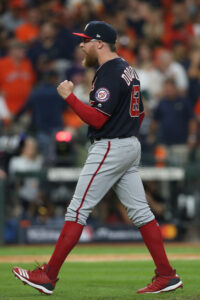
“After 11 incredible seasons playing the sport I love, I can say with gratitude and a full heart that I am retiring from baseball,” Doolittle wrote in announcing his decision.
“Seventeen years ago the Oakland Athletics drafted me as a first baseman out of the University of Virginia. However, as some of you may know, my career nearly ended before it began. After a spate of early injuries, I was nearly ready to hang it up. But then the team approached me and asked if I’d be willing to give pitching a try. With the direction and unwavering support of A’s farm director Keith Liepmann and pitching coach Garvin Alston, I found my second chance. I am forever grateful to them for helping me turn a second chance into a career.”
Doolittle went on to issue heartfelt thank yous to his family, fans of the A’s and Nationals, his managers, his teammates, his coaches, and to the Reds and Mariners for his time spent with each organization (and, as the always-humorous southpaw notes, for “increasing [his] chance for getting on the Immaculate Grid”).
Doolittle’s second chance indeed became a career — and a very fine one at that. The No. 41 overall pick in the 2007 draft debuted with the 2012 A’s and hit the ground running, pitching 47 1/3 innings of 3.04 ERA ball with a huge 31.4% strikeout rate and excellent 5.8% walk rate. Doolittle almost immediately cemented himself as one of the top lefty relievers in the game, and by his third MLB season in 2014, he’d seized the closer’s role in Oakland and been named to his first of two All-Star teams.
For five and a half seasons, Doolittle anchored the Oakland bullpen, posting a 3.09 ERA in 253 innings with 68 holds and 36 saves. He and righty Ryan Madson were traded to the Nationals in a July 2017 swap that sent a struggling (at the time) Blake Treinen, then-prospect Jesus Luzardo, and minor league infielder Sheldon Neuse back to Oakland. It was a steep price for the Nats to pay, but it’s doubtful Washington has any regrets.
Doolittle stepped back into a ninth-inning role in D.C. and thrived, saving 21 games and pitching to a 2.40 ERA down the stretch with his new club before tossing three brilliant frames in the postseason. From 2017-19, the left-hander logged a 2.87 ERA and saved 75 games for the Nationals. The 2019 campaign saw Doolittle finish an NL-best 55 games and pick up a career-high 29 saves.
Despite a rocky month of August, he played a significant role in the Nationals’ now-legendary 2019 turnaround, particularly once the postseason rolled around. Doolittle was one of manager Davey Martinez’s most trusted arms during the Nationals’ playoff run, tossing 10 1/3 innings with a 1.74 ERA and 8-to-1 K/BB ratio. While it was teammate Daniel Hudson who threw the iconic final pitch of the Nationals’ World Series win, Doolilttle saved two games and collected three holds over the course of the 2019 postseason. That includes three shutout frames in the World Series itself, highlighted by Doolittle nailing down a four-out save when he set down Michael Brantley, Alex Bregman, Yuli Gurriel and Carlos Correa in order in a Game 1 victory.
Injuries have marred the final few seasons of Doolittle’s career, but he’ll nevertheless retire as a two-time All-Star and a World Series champion. He totaled 450 2/3 innings of 3.20 ERA ball in parts of 11 big league seasons, adding in another 22 1/3 innings with a 2.42 mark in the postseason. Doolittle also logged 112 saves (115 including postseason play) and 82 holds (plus five more in the playoffs). Between his trips to free agency and an early $10.5MM extension that included a pair of club options for another total $12.5MM, Doolittle earned $26MM over the course of his career.
Beloved for his clutch performances, candid and often eccentric personality, and thoughtful approach to pitching, Doolittle would likely have myriad opportunities to continue his career in baseball as a coach, scout or executive if he aspires to do so. Congratulations on an outstanding career and best wishes to the southpaw in his post-playing days, whichever path he chooses to take.