
Buck Showalter Interested In Managing Mets
The Mets, currently on the heels of their third straight non-playoff season, are on the hunt for a new manager. In what could be fortunate news for the club, one of the most respected skippers of the past couple decades, Buck Showalter, has interest in the job.
In regards to the position, Showalter told Steve Somers of WFAN: “Yeah, I’d like to be talked about it, but I’m not going to campaign about it, and I’m real uncomfortable even talking about it with you now because there’s a lot of good people out there and they’re going to make a good decision. They’ll have reasons why and why not, and, you know, I respect that.”
The 63-year-old Showalter would give the Mets a proven manager, which is something they didn’t have in the just-fired Mickey Callaway, who came with no experience in the role when they hired him. Showalter has guided the Yankees, Diamondbacks, Rangers and Orioles for a combined 20 years, amassing a 1,551-1,517 regular-season record with five playoff berths and three Manager of the Year awards. He sat out this season after the Orioles, who were in the incipient stages of a full rebuild, ousted him in the wake of a 47-win showing in 2018.
The O’s were blowing it up when they got rid of Showalter, whereas the Mets are trying to ascend as quickly as possible. The team rebounded from a horrendous start this year to finish with 86 wins in 2019, though that wasn’t enough to save Callaway. Now, after turning to the neophyte Callaway in its previous managerial search two years ago, it wouldn’t be a surprise to see the Mets opt for an experienced hand to steer the ship this time. As of now, though, there’s no word on whether general manager Brodie Van Wagenen & Co. are interested in speaking with Showalter.
NL Notes: Giants, Cole, Mets, Cone, Rockies
It’s up in the air whether the Giants are in for a big-spending offseason, though it appears arguably the game’s top soon-to-be free agent would be open to playing for them. Astros right-hander Gerrit Cole has interest in the Giants, Henry Schulman of the San Francisco Chronicle reports. While Cole’s brother-in-law, shortstop Brandon Crawford, plays for the Giants, Schulman notes he’s not the source of this information. A Cole signing, which could require a commitment in the neighborhood of $200MM, would give a San Francisco team that could lose pending free agent Madison Bumgarner a much-needed ace. Considering the cost, it would also be somewhat of an out-of-character transaction for Giants president of baseball operations Farhan Zaidi. Back when Zaidi was the general manager of the ultra-rich Dodgers, they never even inked anyone to a nine-figure guarantee. However, in Zaidi’s first offseason with the Giants last winter, they did make an effort to reel in free-agent outfielder Bryce Harper. The Giants reportedly discussed a decade-long pact with Harper before he signed a 13-year, $330MM contract with the Phillies.
Here’s more on a couple other NL teams…
- Retired right-hander and current YES Network announcer David Cone told Joel Sherman of the New York Post he’s interested in becoming a major league manager or pitching coach, though he’s not “actively campaigning” for a job. Specifically, Cone would like to take over for the fired Mickey Callaway as the manager of the Mets, with whom Cone starred from 1987-1992 and finished his playing career in 2003. “If someone asks you for an interview with the Yankees or Mets, it is simple, you say, ‘yes,’” said Cone, who did have a phone conversation with general manager Brian Cashman in regards to the Yankees’ then-vacant managerial position in 2017. That was not a formal interview, though, and the role ultimately went to Aaron Boone. Cone has since remained in the YES booth, where he regularly incorporates analytics into his work. The 56-year-old’s modern approach to the game could potentially put him on teams’ radars, though his lack of coaching and front office experience may give clubs pause. As of now, there’s no indication any team is considering Cone for one of his desired roles.
- Rockies reliever Bryan Shaw just wrapped up his second straight disappointing season, but there was “some deadline interest” in him over the summer, Thomas Harding of MLB.com writes. Just as no trade came together then, it seems doubtful to happen going forward. For one, Shaw has logged a brutal 5.61 ERA/5.07 FIP with 7.96 K/9 and 4.05 BB/9 in his two-season, 126 2/3-inning Rockies tenure. He’s owed another $9MM in 2020 on top of it, and there’s an incentive in his deal that could turn a $9MM club option for 2021 into a guarantee. That’ll happen if Shaw appears in 40 games next year and finishes the season healthy. The 31-year-old racked up 70 appearances in 2019, so it would take a drastic fall in usage to prevent his ’21 option from vesting.
Managerial Rumors: Kapler, Maddon, Ausmus, Beltran
Rumors have swirled that Gabe Kapler could be finished as the Phillies‘ manager, though club ownership is taking its time in determining Kapler’s fate, as NBC Sports Philadelphia’s Jim Salisbury tweets that a decision “likely” won’t be made until next week. The Phils have a 161-163 record in two seasons under Kapler’s leadership, with both the 2018 and 2019 squads fading out of contention down the stretch. This past season’s 81-81 record is particularly disappointing given the many high-profile roster additions made by the club last winter, though in Kapler’s defense, the Phillies also suffered through significant injuries to Andrew McCutchen and virtually every member of their bullpen.
The latest rumblings on dugout vacancies from around the sport….
- Joe Maddon has widely been linked to the Angels‘ job and “is set to interview with” the club, ESPN.com’s Buster Olney reports (subscription required). As of Tuesday, there reportedly hadn’t yet been any contact between the Halos and the former Cubs skipper, though many expected it was only a matter of time before Maddon emerged as a candidate in Anaheim, given his longstanding history with the organization. Maddon spent 31 seasons with the Angels as a player, minor league manager and coach, and member of the MLB coaching staff.
- Brad Ausmus, the Angels’ former manager, is expected to interview with the Padres, according to MLB Network’s Jon Heyman (Twitter link). A hiring would represent something of a homecoming for Ausmus, who began his 18-year playing career with 303 games for San Diego. Ausmus is still owed two years’ worth of salary after being — rather surprisingly — fired by the Angels after the season, though it’s also understandable that he would pursue other opportunities for a quick return to managing.
- The Padres had interest in interviewing Carlos Beltran for their managerial vacancy but the former outfielder declined the request, MLB.com’s Mark Feinsand reports (Twitter link). Since retiring after the 2017 season, Beltran was interviewed for the Yankees’ managerial opening that eventually went to Aaron Boone, and had worked for the past season as a special advisor in the Yankees’ front office. Beltran had long expressed interest in working in a front office and potentially even as a manager, though it isn’t known why he turned down the chance to speak with the Padres.
- Given the links between Beltran and the Mets, Feinsand wonders if Beltran could potentially be a candidate to replace Mickey Callaway, though Olney feels Beltran “seems like a total long shot” to be the next Mets’ manager given some of the hard feelings that exist between he and the organization dating back to his playing days. As per Joel Sherman of the New York Post, Beltran’s “relationship with [Mets] COO Jeff Wilpon is not good.”
Mets To Replace Jim Riggleman As Bench Coach
Mickey Callaway’s firing has drawn most of the headlines out of Queens today, though the Mets will also be making a change at bench coach, as MLB.com’s William Ladson (Twitter link) reports that Jim Riggleman will not return to the club in 2020.
Riggleman was hired as bench coach last winter, making the Mets the latest stop in a 46-year career as a player, coach, and manager all over the baseball world. Riggleman is best known for his time as a manager, posting a 726-904 record over five stints with the Padres, Cubs, Mariners, Nationals, and Reds, most recently serving as Cincinnati’s interim manager during the 2018 season. His vast experience in MLB dugouts was seen as a key factor in his hiring with the Mets, who were looking for a veteran voice to assist Callaway, who had just completed his first season as a Major League manager (and indeed, as a manager at any level).
Van Wagenen: Syndergaard, Diaz Will Not Be Traded In Offseason
An offseason free of trade rumors swirling around right-hander Noah Syndergaard will almost feel strange at this point, but Mets general manager Brodie Van Wageen said in a conference call to address today’s dismissal of manager Mickey Callaway that the team will not trade Syndergaard or embattled closer Edwin Diaz this winter (Twitter link via The Athletic’s Tim Britton):
“Edwin Diaz is going to be on this team next year. Noah Syndergaard is going to be on this team next year,” said Van Wagenen. Notably, that was an unprompted assertion from the GM, who is entering his second offseason at the post.
Syndergaard has been a fixture on the rumor circuit for the better part of two seasons, as teams have persistently inquired about the right-hander’s availability amid postseason misses and uncertain offseason approaches. While most expected the Mets to take a seller’s approach at the 2019 trade deadline, though, Van Wagenen & Co. loaded up for the 2020 season with a surprise acquisition of Marcus Stroman. Today’s comments not only emphatically double down on the fact that the Mets view themselves as contenders but also preemptively put to bed any speculation about moving Syndergaard for MLB-ready help in other areas.
As for Diaz, the once-dominant Mariners closer looked like a potential change-of-scenery candidate after the 2019 season proved to be an unmitigated disaster. The 25-year-old’s strikeout percentage dropped from 44.3 percent in 2018 to 39 percent in 2019 as his walk percentage jumped from 6.1 to 8.7. But Diaz’s true downfall was his alarming susceptibility to the long ball. After allowing an average of just 0.61 homers per nine innings pitched with Seattle in 2018, Diaz’s HR/9 rate soared to an untenable 2.33 with the Mets in 2019. The flamethrowing righty maintained his velocity, but the uptick in walks and home runs serve as clear indicators of trouble locating the ball.
The bottom-line results — a 5.59 ERA, seven blown saves and an eventual removal from the closer’s role — were about as poor an outcome as one could’ve forecast following the trade that brought Diaz to Queens. However, it seems there’s no thought to parting ways a la Sonny Gray and the Yankees, as the Mets remain confident they can get Diaz back on track. He does have three remaining seasons of club control, so the upside with Diaz is enormous if he can right the ship. Syndergaard, meanwhile, is controlled through the 2021 season.
With both Syndergaard and Diaz seemingly written in ink on next season’s roster, the question for the Mets will become one of who’ll slot in alongside them. Jacob deGrom, Steven Matz and Stroman will join Syndergaard in the rotation, but with Zack Wheeler hitting free agency, the Mets will need to add a fifth starter (plus some depth to stash in the upper minors). That’s especially true given that Anthony Kay, perhaps the organization’s most MLB-ready rotation prospect, was sent to the Blue Jays as part of the trade to acquire Stroman.
In the bullpen, Jeurys Familia had a similarly disappointing year to the one through which Diaz struggled. Robert Gsellman had his own struggles before going down with a partially torn lat that ended his season. That trio will return alongside righty Seth Lugo and lefty Justin Wilson, both of whom pitched well, but the Mets will surely be in the market for some bullpen reinforcements once again.
Mets Fire Mickey Callaway
The Mets announced Thursday that they have fired manager Mickey Callaway. The decision comes two-thirds of the way through a three-year deal for the former Indians pitching coach, who compiled a 163-161 record in his two seasons as the Mets’ skipper.
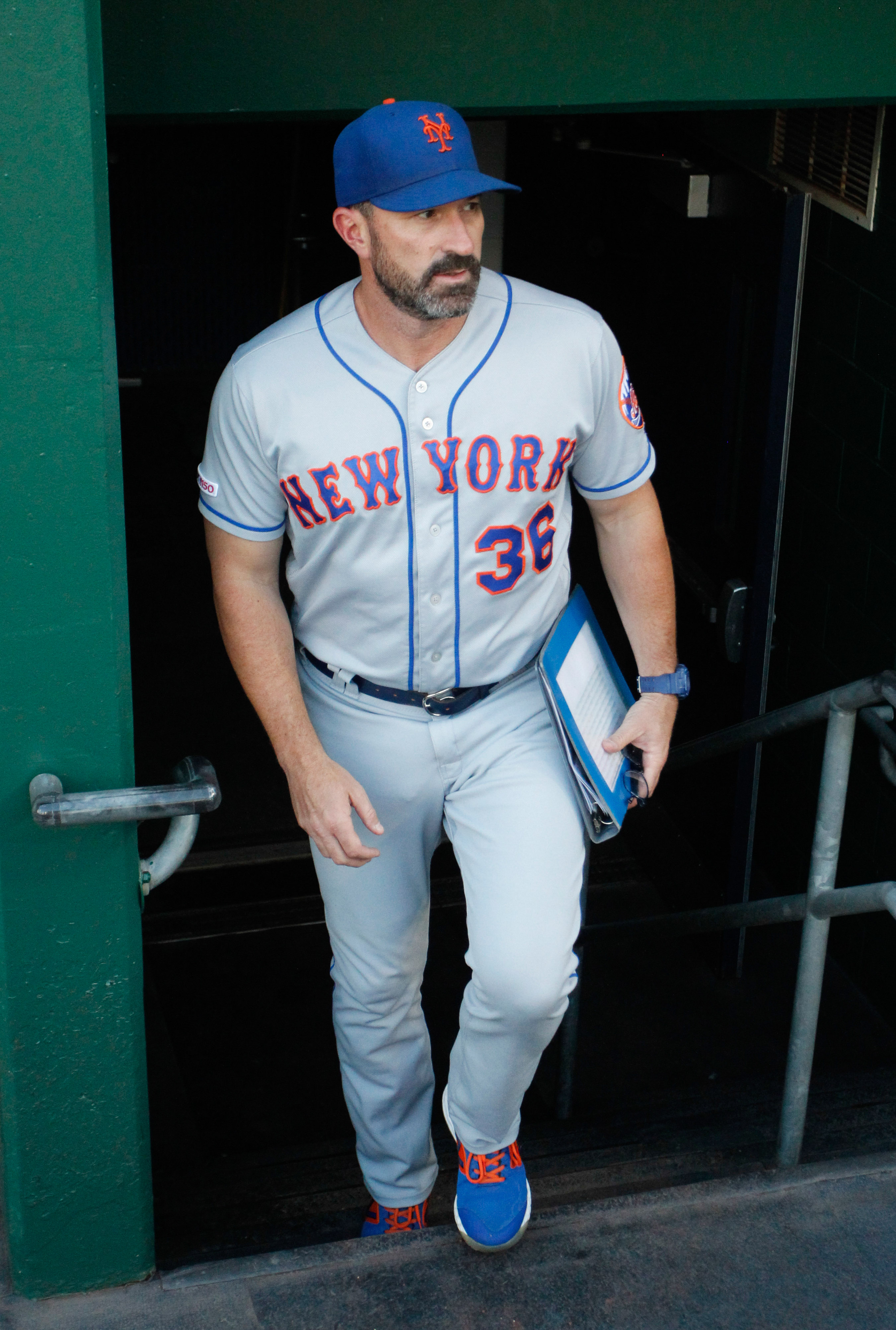
“We want to thank Mickey for his consistent work ethic and dedication over the last two seasons and I’m certain these characteristics will serve him well in his next opportunity,” Mets general manager Brodie Van Wagenen said in a statement accompanying today’s press release. “A decision like this is never easy, however, we believe it is in the best interest of the franchise at this time.”
Callaway’s departure from the Mets creates a seventh managerial vacancy throughout the league, as two managers (Kansas City’s Ned Yost and San Francisco’s Bruce Bochy) have opted to retire while Callaway joins Brad Ausmus (Angels), Andy Green (Padres) and Clint Hurdle (Pirates) as managers who were fired despite having time left on their current contracts. The Cubs, meanwhile, opted not to re-sign Joe Maddon after the expiration of his contract.
Generally speaking, the Mets have underperformed in each of the past two seasons, although injuries and roster construction missteps by a pair of different front-office regimes have obviously contributed to the team’s consecutive playoff misses. The 2019 season proved to be particularly tumultuous, as the team got out to an awful start and found itself 10 games under .500 at the time of the All-Star break. A torrid run to open the second half thrust the Mets back into the Wild Card mix, however, and although a Cinderella second half didn’t prove to be in the cards, the Mets improbably finished the season ten games above the .500 mark — good for third place in the division.
Along the way, however, there was no shortage of discord. Stories about Noah Syndergaard‘s preference to pitch to Tomas Nido leaked out into the public eye, while Callaway made numerous conflicting statements about usage restrictions on embattled closer Edwin Diaz. Callaway himself came into a particularly negative spotlight for cursing out a reporter in the clubhouse and subsequently refusing to apologize for his actions the next day — only to then seemingly be forced into doing so by the organization a short time later. Former Mets left-hander Jason Vargas had to be physically restrained during that particular altercation, and the entire incident obviously did not sit well with Mets’ higher-ups.
Of course, things aren’t always as they seem in the public eye, either. The New York Post’s Mike Puma reports, for instance, that Callaway’s early insistence on saving Diaz for the ninth inning and refusing to use him for more than three outs was a “direct order” from COO Jeff Wilpon. But, Puma also details some player feelings on Callaway’s communication skills and his lack of hands-on instruction with the pitching staff (despite a half decade building a reputation as one of the game’s better pitching coaches in Cleveland).
Regardless of one’s thoughts on Callaway and whether he deserved to stay or go, it’s become increasingly difficult to ignore the near-constant state of turmoil surrounding the Mets as an organization in recent years. From myriad reports about the Wilpon family’s habitual involvement in nearly every aspect of the club (e.g. Diaz’s usage) to the repeated vague and conflicting medical updates provided under former manager Terry Collins, to the aforementioned Vargas debacle this past summer, a general sense of chaos seems to permeate the organization each year. While one could argue that a strong, veteran voice is needed to command the respect of both the clubhouse and ownership, it’s also fair to wonder whether some seasoned managers would prefer not to be caught up with the drama.
Van Wagenen To Speak With Callaway Before Managerial Decision
The Mets continue to mull their next steps after falling short in 2019, but it seems some decisions will come down soon. GM Brodie Van Wagenen is slated to chat with skipper Mickey Callaway today before reaching a final decision on who’ll run the dugout next year, per Joel Sherman of the New York Post.
MLBTR readers are ready to see Callaway depart, but the team has taken its time deciding. The skipper has one year left on a three-season pact. With several other organizations already making firm calls on their own managers, the Mets are on the clock. They also now have a bit of a better idea of what alternatives might be out there.
That it isn’t seen as a cut-and-dry decision is now obvious. Otherwise, the plug would already have been pulled. And perhaps that’s a reasonable stance. Callaway did enjoy the confidence of Van Wagenen and ownership all year long. He rewarded the decision not to fire him in the middle of the season — our readers were out for blood then, too — by overseeing a strong performance down the stretch. It wasn’t enough, but the front office can’t reasonably have expected more under the circumstances.
The decision on Callaway is obviously of great importance to the organization. But it’s also one that shouldn’t be allowed to distract from the many other challenges facing Van Wagenen and company. It remains to be seen how the club will address its needs after having already dedicated significant resources to building out a roster that wasn’t quite good enough in the just-completed campaign.
Managerial/Coaching Notes: Callaway, Cubs, Ibanez, Bucs, Shelton, Reds
Let’s take a look at several managerial and coaching updates from around the majors…
- The Mets could decide beleaguered manager Mickey Callaway’s fate as soon as Wednesday, David Lennon of Newsday reports. Callaway just wrapped up his second season in New York, which improved from 77-85 to 86-76. The Callaway-led Mets were a mess prior to a second-half tear, though, and indications are the ax will fall on him in the wake of a another non-playoff season.
- The Cubs will consider Raul Ibanez for the managerial post Joe Maddon just lost, according to Jon Morosi of MLB.com. Ibanez, a former major league outfielder, has no managerial experience. However, the 47-year-old has stayed in the game since his playing days ended in 2014 by serving as a special assistant in the Dodgers’ front office and a broadcaster. The work Ibanez has done in his post-playing career has made him an appealing possibility to skipper-needy teams over the past couple years, though he turned down managerial interview requests from clubs last offseason.
- The Pirates, who fired manager Clint Hurdle on Sunday, will “likely” consider hiring Twins bench coach Derek Shelton as his replacement, Morosi tweets. Currently in his second season with the Twins, the 49-year-old Shelton has garnered extensive coaching experience over the past decade and a half. Plus, as Morosi notes, Shelton has an important Pittsburgh connection in general manager Neal Huntington. The two of them worked in the Cleveland organization together from 2005-07.
- The Reds’ player development system is undergoing significant changes, Bobby Nightengale of the Cincinnati Enquirer details. Outfield/baserunning coordinator Billy Hatcher, Triple-A manager Jody Davis, Triple-A pitching coach Jeff Fassero, Double-A pitching coach Danny Darwin and hitting coordinator Milt Thompson are all on the way out. The longest-tenured Red of the bunch was Hatcher, who was one of the organization’s coaches for 14 years.
NL East Notes: Brinson, Phillies, Mets
Marlins outfielder Lewis Brinson has faced steep expectations after he was acquired as the centerpiece of the trade that sent Christian Yelich to Milwaukee. But after back-to-back disappointing seasons in Miami, the 25-year-old may be running out of chances, writes Wells Dusenbury of the South Florida Sun Sentinel. While manager Don Mattingly has been at times willing to sacrifice winning in exchange for player development, he hopes to turn the corner and begin the transition out of mediocrity in year three of the complete rebuild. For Brinson, that means he will have to capitalize on his opportunities and start to translate his undeniable tools into on-field production. In particular, he’ll need to cut down on the strikeouts and improve his walk rate; it bears mentioning that he’s begun to show some progress in that department in September. However, the overall batting line still leaves much to be desired, including a complete power outage: Brinson hasn’t homered once in 2019 after tallying 11 just a year ago. After more than 650 plate appearances with the Marlins, next season may be his last chance to actualize the potential that made him a highly-touted prospect.
More from around the NL East…
- A pair of Phillies infielders may have played their final game in the City of Brotherly Love, cutting the final tie between today’s Phillies and the powerhouse teams of the late-2000s, writes Meghan Montemurro of The Athletic. With Maikel Franco and Cesar Hernandez eligible for arbitration, both are strong candidates to be non-tendered: It would cost a considerable price to keep Hernandez around when Scott Kingery exists as a cheaper, more productive option; likewise, Franco has been streaky and is likely not viewed as a long-term solution for the club. However, they remain as the only links to the days of Chase Utley, Jimmy Rollins, and Ryan Howard, bridging the team through the doldrums of 2014-2015 and into a new era of Bryce Harper-led Philly baseball.
- Joel Sherman of the New York Post offers a look towards the Mets’ offseason, advocating for an uptick in payroll as the team seeks to vault itself into contention in the hyper-competitive NL East. With franchise cornerstones like Pete Alonso and Jeff McNeil playing under affordable pre-arbitration contracts, now might be the time to hike up the spending elsewhere to capitalize on existing young talent. The Mets will have to navigate the impending free agency of Zack Wheeler, who could be retained in order to preserve the rotation depth, as well as make decisions on Edwin Diaz and Noah Syndergaard. Sherman proposes a two-year payroll allocation, which would allow general manager Brodie Van Wagenen to, say, go all-in on 2020 under the promise that expenditures will drop the following season, when David Wright and Yoenis Cespedes come off the books.
Managerial Rumors: Angels, Callaway, Bochy
The Padres have already moved on from skipper Andy Green, whereas Ned Yost has announced that this’ll be his final year managing the Royals. There’s been some recent chatter surrounding the fate of Pirates manager Clint Hurdle, as well, which stemmed largely from none other than Hurdle himself. It’s the time of year that’s typically filled with managerial/coaching/front office turnover, and there won’t be any shortage of rumblings on that front over the next several days. Here’s some of the latest from that arena…
- Although Ken Rosenthal of The Athletic recently suggested that the Angels would “consider” moving on from Brad Ausmus after just one season in order to pursue Joe Maddon (should he become available, as many expect), Maria Torres of the Los Angeles Times writes in her latest Angels mailbag column that Ausmus is will be back in 2020. Torres adds that she’s received no indication that any members of the coaching staff are in particular danger of being replaced, either. Ausmus is signed through the 2021 season under a three-year contract he agreed upon just last offseason.
- The Mets‘ second-half Wild Card push fell short but was enough to at least raise speculation about Mickey Callaway surviving the offseason and returning for a third year. Nevertheless, SNY’s Andy Martino writes that multiple people connected to the team will still be surprised if Callaway is retained after the season. New York won’t make any final announcement on the matter until after the season has wrapped up, however, and team decision-makers are expected to discuss the manager’s future into early next week. Callaway himself campaigned a bit for his job prior to last night’s loss, per Mike Puma of the New York Post, telling the Mets beat: “I think a manager’s job is to get guys going in a direction and I think these guys never wavered from that, so I am definitely proud about that. … I understand the rigors of the job and I try to deal with it the best I can and try to stay even-keeled for the organization’s sake and for our players’ sake.”
- There’s been speculation that Bruce Bochy could pursue other managerial jobs once he steps away from the Giants — some from his own players, even — and the future Hall of Famer discussed that speculation with John Shea of the San Francisco Chronicle this week. While Bochy doesn’t have any immediate plans to seek out other opportunities, he conceded that there’s no telling what the future holds. “Later on, when you get away from the game, who knows how you’ll react?” Bochy asked rhetorically. “I’m good with my call. I’d be lying if I didn’t say it’s been tough here at the end of the season realizing it’s ending. No, I’m fine with it. I can’t tell you what’s going to happen in the future because I don’t know.”