
MLBPA Files Grievance Against Four Teams Over Revenue Sharing Funds
The Major League Baseball Player’s Association has initiated a grievance proceeding against the Athletics, Marlins, Pirates, and Rays regarding those teams’ spending of revenue sharing dollars, according to a report from Marc Topkin of the Tampa Bay Times.
This general issue has been percolating for some time, even as additional concerns have arisen as to the pace of free-agent signings over the 2017-18 offseason. The MLBPA reportedly engaged with the league office over the Miami and Pittsburgh organizations’ spending earlier this year.
At the time, MLB and the teams at issue rejected the idea that there was any issue worth exploring further. Clearly, the union disagrees and also feels that two other organizations’ practices merit examination. Per Topkin, the complaint relates to spending both last year and over the present offseason.
Revenue-sharing dollars — which will be phased out for the A’s under the current Basic Agreement — are required to be spent for improving the MLB performance of recipient clubs. That doesn’t necessarily mean it all must go to player salaries, but though teams are required to report on how they use the money. And as JJ Cooper of Baseball America notes on Twitter, successive collective bargaining agreements have tightened the permissible uses.
Enforcing the provisions relating to these funds falls in the domain of commissioner Rob Manfred. He can issue penalties, require the submission of a two-year plan, and even order changes with that plan (“after consultation with the Players Association”).
As Topkin notes, it is not immediately clear what the MLBPA is seeking in relief. The collectively bargained provisions do seem to give the union an interest in ensuring the provisions are followed, though, and perhaps the situation is seen as drastic enough to merit a test of their meaning before an arbitrator.
In a statement to the Times, the league confirmed receipt of the grievance but stated that MLB “believe[s] it has no merit.” Pirates president Frank Coonelly responded with a combative tone, issuing a statement labeling the action “patently baseless” (via MLB.com’s Adam Berry, on Twitter). Rays owner Stuart Sternberg defended his own organization in less strident terms (via Topkin, on Twitter).
Blue Jays Sign Seung-Hwan Oh
Feb. 26, 5:58pm: The Toronto organization has announced the signing. He’ll earn $1.75MM for 2018, per Bob Nightengale of USA Today (via Twitter), with a $250K buyout on a $2MM option that vests upon seventy appearances. The deal also includes $1.5MM in possible incentives.
12:08pm: Oh has passed his physical, tweets Nicholson-Smith. The move, then, should be officially announced in the near future.
Feb. 25: The Blue Jays have agreed to sign right-hander Seung-hwan Oh, FanRag Sports’ Robert Murray reports (Twitter link). The deal is a one-year contract that will guarantee Oh $2MM in 2018, Sportsnet.ca’s Ben Nicholson-Smith reports (Twitter links), plus there is a vesting option for 2019. Oh is a client of Rosenhaus Sports Representation.
The contract is contingent on Oh passing a physical, which could still be a notable obstacle given that a deal between Oh and the Rangers fell through earlier this month. The Rangers’ deal with Oh called for a $2.75MM guarantee, plus a $4.5MM club option (with a $250K buyout) for 2019. As per Sung Min Kim of the Sporting News (via Twitter), however, Oh’s MRI revealed some inflammation in his throwing elbow that wasn’t considered serious enough to scuttle the deal altogether, though the Rangers tried three times to re-work the terms. Oh’s representation didn’t want to re-open talks, and thus no contract was finalized.
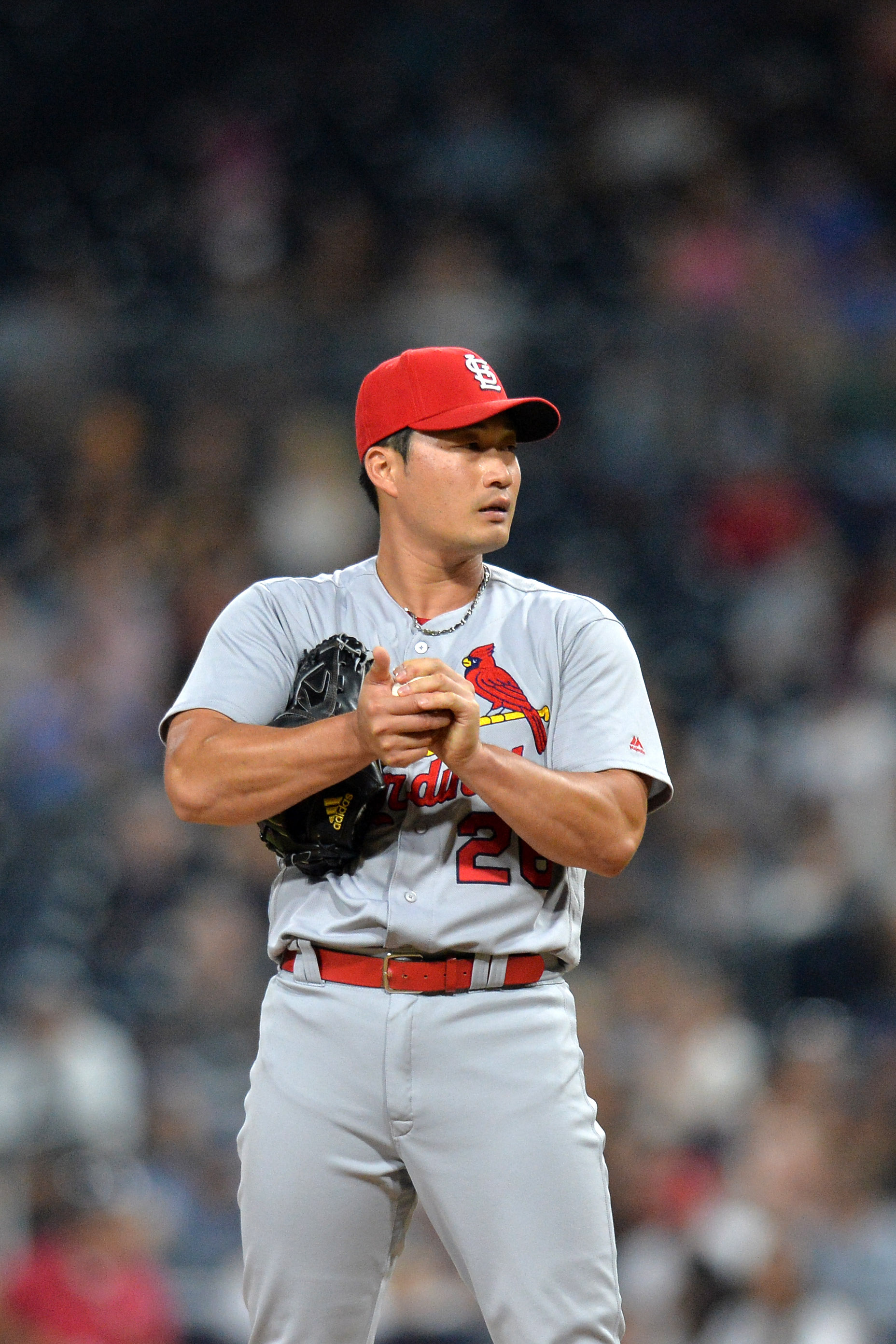
Oh came to Major League Baseball in the 2015-16 offseason after 11 seasons as a top closer in both the Korean Baseball Organization and Nippon Professional Baseball. He made an immediate impact on the Cardinals’ bullpen, posting a 1.92 ERA, 11.6 K/9, and 5.72 K/BB rate over 79 2/3 innings and taking over the Cards’ closer job. Oh’s follow-up campaign, however, wasn’t nearly as successful, as his troubles with the home-run ball (1.5 HR/9) led to his removal from ninth-inning duty last summer. Beyond just the increase in homers, Oh also saw his grounder rate (40% to 28.7%), strikeout rate (down to 8.19 K/9), and swinging strike percentage (18% to 12.9%) drop from his 2016 numbers, and he posted a 4.10 ERA over 59 1/3 IP.
While it was a tough year for Oh, his stats didn’t crater to the point that a turn-around isn’t out of the question, or that his problems weren’t due to a normal sophomore slump. His hard-hit ball rate actually dropped from 2016 to 2017, for instance, even though his overall contact rates increased. Moving to Rogers Centre and the AL East might not be much help to Oh’s home run issues, of course, and since he is 35 years old, there’s also the chance that Oh is simply starting to decline.
[Updated Blue Jays depth chart at Roster Resource]
Still, the reasonable $2MM price tag makes Oh a decent risk for a Jays team that was known to still be looking around for bullpen help. Oh won’t be asked to be a “Final Boss” (his old KBO nickname) in Toronto with Roberto Osuna firmly holding down the closer’s job, though he’ll step right into the setup mix alongside Ryan Tepera and Danny Barnes (not to mention longer-shot non-roster invites like John Axford or Al Alburquerque). Joe Biagini could also again step into a meaningful bullpen role, though the Jays are currently stretching the righty out as a starter in Triple-A to provide depth and occasional spot-start duty.
Photo courtesy of USA Today Sports Images
Red Sox Sign J.D. Martinez
After months of negotiations, and another weak of final tweaking, the Red Sox have officially signed slugger J.D. Martinez. ESPN.com’s Pedro Gomez first tweeted that a deal was in place; Jon Heyman of FanRag Sports had tweeted that the sides were close. Martinez is represented by the Boras Corporation.
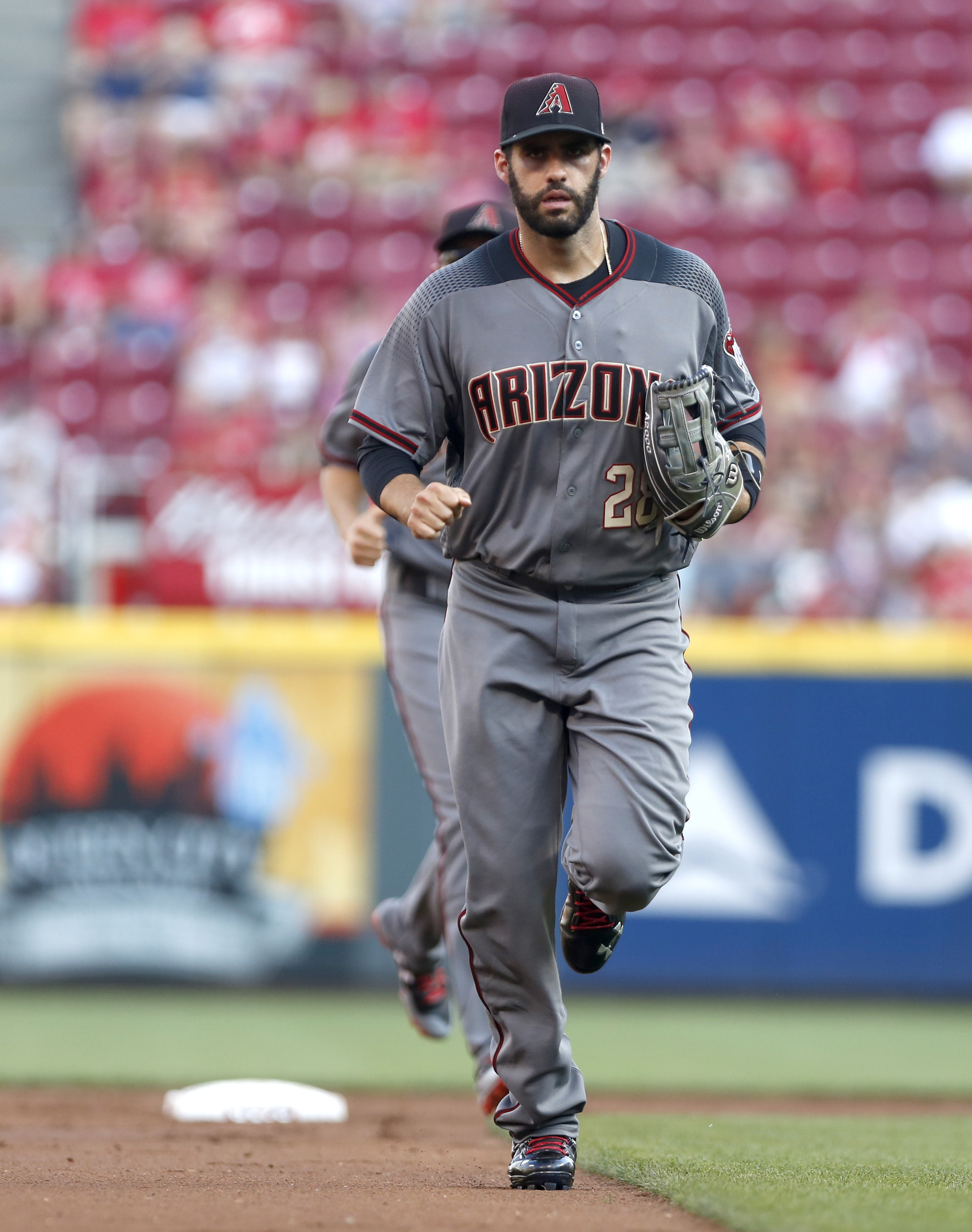
The contract is for five years and $110MM, per reports. Notably, it includes three opt-out opportunities — after the second, third, and fourth seasons of the deal. As Evan Drellich of NBC Sports Boston tweets, Martinez will receive $23.75MM annual salaries for the first two years and is promised a $2.5MM buyout if he opts out of the remainder of the deal. He’ll also earn $23.75MM for the third season of the contract. At that point, he’ll choose between a return to the open market (with no buyout) and $19.35MM salaries for 2021 and 2022.
But that’s not all. The original deal only included two opt-outs and did not protect the Red Sox in the event of injury. After a physical and ensuing additional negotiations, the pact now contains not only a third opt-out but also some language allowing Boston to avoid certain obligations if Martinez’s prior Lisfranc injury recurs, as we detailed here. There’ll also be some limited no-trade protection, as Heyman tweeted originally. Martnez can designate a “small” number of teams to which he cannot be moved without his consent.
Boston has been the primary suitor connected to Martinez for virtually all of the offseason — especially since their decision to re-sign Mitch Moreland effectively took them out of the Eric Hosmer sweepstakes. Martinez figures to slot in as the primary DH for the Sox but should see some occasional time in the outfield when any of Andrew Benintendi, Jackie Bradley or Mookie Betts needs a breather. His addition calls the role of Hanley Ramirez with the Red Sox into question, as Ramirez now appears to be, at best, a backup DH and a part-time first baseman that is on the short side of the platoon.
[RELATED: Updated Red Sox Depth Chart]
Though the Sox have a substantial commitment to Ramirez already in place, that didn’t stop them from making a sizable offer to bring Martinez into the fold, and it’s not difficult to see why they felt he was a key piece to pushing into World Series contention. Martinez slashed a Herculean .303/.376/.690 with 45 home runs and 26 doubles in just 489 plate appearances last offseason. In all, an out-of-the-blue breakout with the 2014 Tigers, Martinez has been one of the game’s most feared hitters — as evidenced by the .300/.362/.574 batting line he’s logged in that four-year period.
Context-neutral metrics like OPS+ (149) and wRC+ (148) feel that the 30-year-old Martinez has been nearly 50 percent better than the league-average hitter in that time, when adjusting for park and league. That 148 wRC+ ties him with Bryce Harper and now-former teammate Paul Goldschmidt for fourth in all of baseball over the past four years; only Mike Trout, Joey Votto and Giancarlo Stanton have posted better wRC+ marks in that time.
The Red Sox ranked 10th in the Majors in runs scored last season as it was, though their combined .258/.329/.407 batting line was below-average on a rate basis, and they ranked 27th in the Majors with 168 homers. Martinez will serve as a particularly potent upgrade in the DH department, as Boston designated hitters combined to hit just .244/.327/.419 last year.
Clearly, the contract isn’t quite as massive as many had anticipated coming into the season. Martinez’s camp was said to be seeking over $200MM at the outset of free agency; MLBTR predicted that Martinez could reach $150MM in guaranteed money. As things developed, there just wasn’t sufficient demand around the game to drive a real bidding war. The Diamondbacks reportedly made a real run to keep Martinez, but never figured to have a war chest large enough to really push Boston’s offer up.
Martinez’s new deal also reflects a broad devaluation of one-dimensional sluggers. For instance, Edwin Encarnacion — an equally gifted hitter who became a free agent last year at a more advanced age — did not earn as large or long a deal as had been expected.
To be fair, Martinez offers more function on defense than does Encarnacion, as he’s still capable of lining up in the corner outfield. But metrics have soured on his glovework. Though both UZR and DRS viewed Martinez as an above-average presence in 2015, they graded him as one of the game’s worst fielders in the ensuing campaign. He bounced back last year, but still drew below-average marks in right field. Fangraphs’ BsR measure also values Martinez as an exceedingly poor baserunner.
Those aspects of Martinez’s game created some drag on his market value. But the Sox surely aren’t that concerned with how good Martinez will be in the outfield. Presumably, he’ll stay fresh by limiting his exposure to the grass, which may boost his output when he is asked to take the field. Regardless, the contract values Martinez for his anticipated contributions with the bat.
Contract details were reported by Alex Speier of the Boston Globe (contract length; Twitter link), ESPN.com’s Pedro Gomez (opt-out clause, on Twitter), Jon Morosi of MLB Network (total guarantee, via Twitter), Jon Heyman of Fan Rag (salary in first two years & second opt-out, via Twitter), Jason Mastrodonato of the Boston Herald (second opt-out details), and Evan Drellich of NBC Sports Boston (second opt-out details; Twitter link).
Photo courtesy of USA Today Sports Images.
Tigers Sign Francisco Liriano
3:08pm: Liriano is officially a member of the Tigers.
12:44pm: The Tigers have agreed to a one-year, $4MM contract with lefty Francisco Liriano, reports FanRag’s Robert Murray (Twitter link). The deal also contains another $1MM in available incentives tied to significant awards, Jon Heyman of Fan Rag tweets. Murray had recently tweeted that the market for Liriano, a client of the Legacy Agency, was picking up some steam.
Liriano, 34, enjoyed a resurgence as a key member of the Pirates from 2013-15, somewhat quietly reestablishing himself as a considerably above-average big league starter.
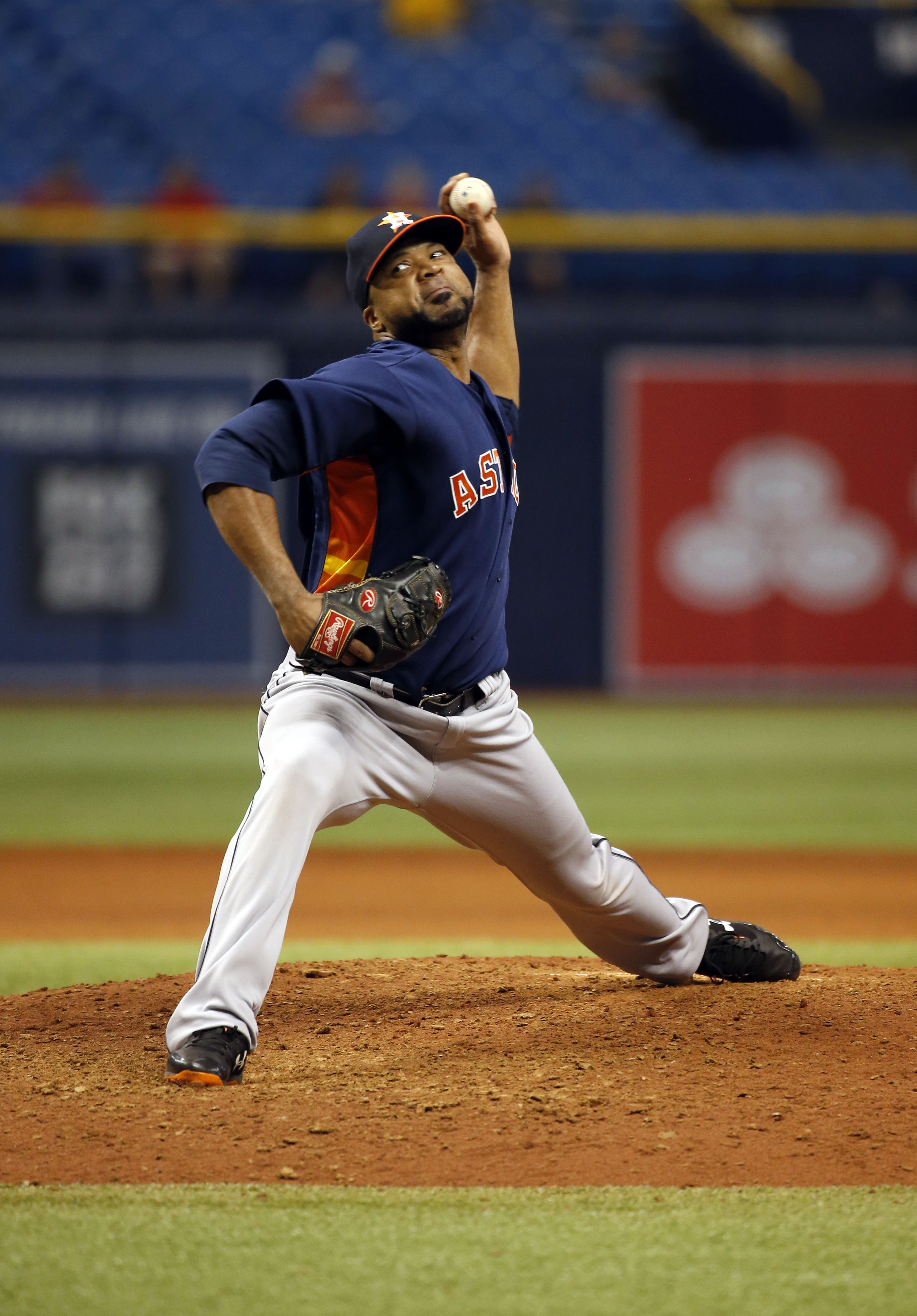
The past two seasons, though, have been another story. Liriano has bounced from Pittsburgh to Toronto to Houston, working to a combined 5.05 ERA through 260 innings as the control issues that hounded him earlier in his career resurfaced (4.8 BB/9, 1.3 HR/9). Accordingly, Liriano’s swinging-strike rate dropped to 11.4 percent in 2016 and 9.6 in 2017 — the worst marks of his career.
Liriano still averages better than 92 mph on his fastball and can induce grounders at an average or better rate. He also held lefties to a fairly feeble .247/.300/.355 slash last season, though one would typically prefer to see a bit more dominance against same-handed opponents when considering a pitcher as a left-handed specialist. It’s not clear at this time whether he’ll function as a starter or a reliever with his new club, though in his run with the Astros last season, he worked exclusively out of the bullpen.
At present, though, the Tigers certainly seem like a team that could use some rotation depth. Ace Michael Fulmer is coming off surgery to re-position the ulnar nerve in his pitching arm, while Jordan Zimmermann battled neck and back injuries in what was a dismal overall season in his second year with Detroit.
Young lefties Daniel Norris and Matt Boyd have yet to cement themselves as quality big league options, even though each has flashed potential on more than one occasion. And righty Mike Fiers, signed earlier this winter to be the fifth starter, is coming off a poor season himself, which led to a non-tender from the Astros. Longtime setup man Alex Wilson is being stretched out as a potential starter this spring as well, and veteran non-roster invitee Travis Wood could also vie for a starting spot.
If Liriano is used in relief, he’ll join Blaine Hardy and Daniel Stumpf as southpaws in a bullpen, where Wood could also compete for a spot. The current composition of the Tigers’ bullpen is thin beyond closer Shane Greene, to put things delicately. Jason Martinez of MLBTR and Roster Resource currently projects Wilson (assuming he doesn’t start), Drew VerHagen, Hardy, Stumpf, Joe Jimenez and Buck Farmer to round out the relief corps behind Greene. Johnny Barbato, Zac Reininger and Jairo Labourt are all 40-man options in Triple-A, while Wood, Enrique Burgos and Victor Alcantara headline the non-roster invitees competing for jobs this spring.
Liriano is a known commodity for much of the Tigers coaching staff, as first-year Detroit manager Ron Gardenhire served as his skipper from 2005-12 with the Twins. Tigers bullpen coach Rick Anderson was Liriano’s pitching coach during his Twins days, while bench coach Steve Liddle and quality control coach Joe Vavra were also on Gardenhire’s staff when Liriano was with Minnesota.
Photo courtesy of USA Today Sports Images.
Pirates Acquire Corey Dickerson From Rays
1:17pm: The Pirates are sending the Rays $1MM as part of the trade, reports Rob Biertempfel of The Athletic (Twitter link). In essence, then, they’ll spend an additional $1.45MM to turn Hudson into Dickerson, while the Rays will add a reliever to their ‘pen, a prospect to the lower levels of their farm system, and trim $1.45MM from their 2018 payroll.
12:24pm: The Pirates announced that they’ve acquired outfielder Corey Dickerson from the Rays in exchange for reliever Daniel Hudson, minor league infielder Tristan Gray and cash.
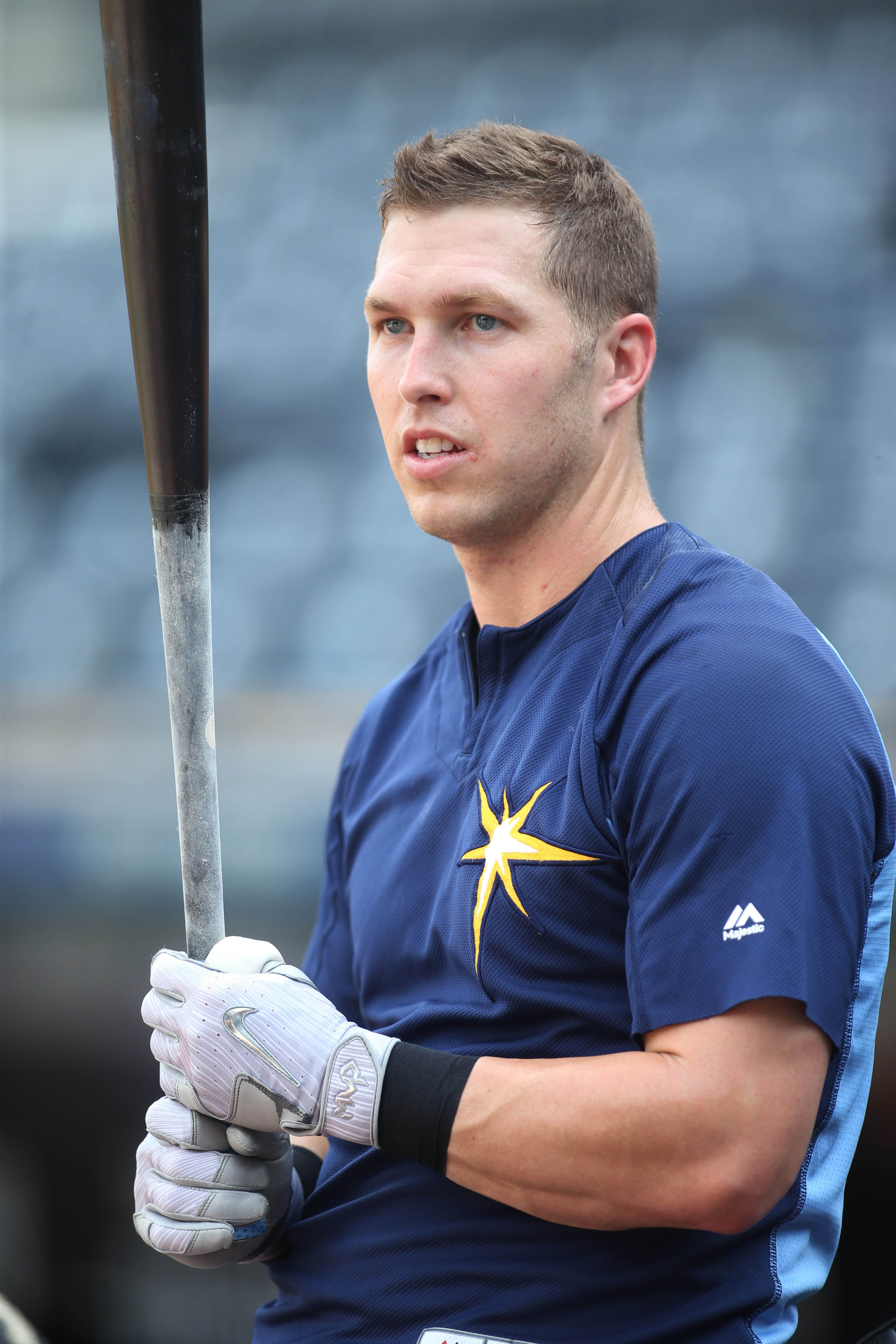
Tampa Bay recently designated Dickerson, 28, for assignment in a move that came as a surprise to many. Dickerson posted solid overall numbers in 2017, hitting .282/.325/.490 with 27 homers in 629 trips to the plate. Dickerson, though, faded badly after a strong start to the season.
Though Dickerson hit .326/.369/.570 with 17 homers through the season’s first three months, that production was supported by a .374 BABIP that he didn’t seem especially likely to maintain. That number came back down to earth from July through season’s end as Dickerson’s strikeout rate rose to nearly 29 percent, and he batted just .232/.273/.397 with 10 homers and an 82-to-16 K/BB ratio in the final three months of the season.
That said, Dickerson still has an overall track record as a quality bat, as evidenced by a lifetime .280/.325/.504 slash and 119 OPS+. He’ll earn $5.95MM in 2018 and is controllable for one more year via arbitration before he can reach free agency.
The Pirates desperately needed some outfield help following this offseason’s trade of former face of the franchise Andrew McCutchen, and Dickerson should slot into the organization as the team’s new everyday left fielder. Defensive metrics aren’t exactly bullish on his glovework in the outfield, though he’s graded out as generally average or slightly above-average in left field over the past two seasons after drawing poor marks early in his career with the Rockies. He’ll be joined in the outfield by Starling Marte and Gregory Polanco, each of whom is looking to bounce back from a disappointing 2017 season.
[Related: Updated Pittsburgh Pirates depth chart]
Though Dickerson isn’t likely to recreate the massive performance he rode to his first career All-Star appearance in the first half last season, he should nonetheless serve as an offensive upgrade over the Pirates’ internal options in left field. Adam Frazier and Jordan Luplow were two of the main candidates for that gig on the 40-man roster, while veterans Michael Saunders and Daniel Nava are in camp as non-roster invitees to Spring Training. Certainly, the Dickerson pickup places a significant roadblock to either veteran making the roster, and it’s fair to wonder if they’ll ultimately be allowed to seek other opportunities.

In Hudson, the Rays will pick up a hard-throwing veteran reliever looking for a rebound season of his own. Hudson’s contract calls for him to earn $5.5MM this season, so the two contracts nearly cancel each other out. However, the Pirates are also sending cash to the Rays in the deal, so it appears that Tampa Bay will come out ahead, financially speaking, in the swap.
Hudson, 31 early next month, posted a 4.38 ERA with 9.6 K/9, 4.8 BB/9, 1.02 HR/9 and a 43.3 percent ground-ball rate while averaging 95.6 mph on his fastball through 61 2/3 innings last year. A converted starter that has twice undergone Tommy John surgery in his career, Hudson has a 4.59 ERA in the ‘pen over the past three-plus seasons since making the switch, but secondary metrics have been considerably more optimistic based on his strikeout rates and, outside of last season, his control. In 192 1/3 frames as a reliever, Hudson has a 3.84 FIP and 3.78 SIERA.
Tampa Bay executives Erik Neander and Chaim Bloom recently downplayed the possibility of the Rays trading closer Alex Colome before the season begins, so it seems that Hudson will pair with recently re-signed Sergio Romo to give the Rays another experienced arm in their setup corps.
The addition of that pair of veteran arms will allow the Rays to lean less heavily on what had looked to be a largely inexperienced group of relievers outside of Colome and southpaw Dan Jennings. Andrew Kittredge, Chaz Roe, Austin Pruitt, Ryne Stanek, Jose Alvarado and Chih-Wei Hu wiill be among the names vying for the remaining bullpen spots with the Rays this spring now that Hudson is on board.
[Related: Updated Tampa Bay Rays depth chart]
Gray, meanwhile, was Pittsburgh’s 13th-round pick in last year’s draft and posted a .269/.329/.486 slash with seven homers and five steals in 53 games for the Pirates’ short-season Class-A affiliate last year. The second baseman was an honorable mention on Fangraphs’ list of the Pirates’ Top 25 prospects, with Eric Longenhagen pointing to a long track record of production as an amateur but also labeling his overall offensive profile as “middling.”
All told, it’s a fairly underwhelming return for Dickerson, though that’s largely indicative of the manner in which bat-first corner outfielders have been devalued in the current economic climate of baseball. The Rays surely tried to trade Dickerson for much of the winter but seemingly found no takers before designating him for assignment, and even in this swap it seems that Tampa Bay had to agree to take on some salary to work out a deal. Jay Bruce managed to score a three-year, $39MM pact with a similar, albeit superior overall profile at the plate, but both the trade and free-agent markets for good-not-great corner outfielders have been rather tepid over the past couple of seasons.
It seems plausible that the Rays simply felt they could utilize a full season of Mallex Smith in a corner outfield spot without losing much in the way of overall value, and elected to turn Dickerson into an alternative Major League asset. The surprising trade of Steven Souza that followed Dickerson’s DFA, as the Rays’ front office told it recently, was more or less a function of an unexpected and aggressive pursuit of Souza by the Diamondbacks, who promised a prospect package the Rays felt they could not afford to turn away. The Rays were then able to capitalize on a weak free-agent market and bring in Carlos Gomez at a bargain rate — a move that further reflects the dwindling value of above-average offensive outfielders that aren’t premium defensive assets.
Photos courtesy of USA Today Sports Images.
Orioles Re-Sign Chris Tillman
Feb. 21: Tillman will earn a $1MM bonus for reaching 125 innings and 150 innings, reports FanRag’s Jon Heyman (Twitter link). He’d earn $1.5MM upon reaching 175 and 190 innings and an additional $2MM for crossing the 200-inning barrier for the first time since 2014. Heyman adds that some of the incentive payments are deferred, but any deferrals would be voided with a trade.
Feb. 19, 10:42am: Kubatko tweets that Tillman can earn another $7MM via incentives, meaning the deal can max out at $10MM.
10:18am: The Orioles are in agreement on a contract that will bring right-hander Chris Tillman back to Baltimore, reports Jon Heyman of FanRag Sports (via Twitter). Eduardo A. Encina of the Baltimore Sun tweets that it’s a big league contract, and Dan Connolly of BaltimoreBaseball.com adds that it’s a one-year deal.
Tillman, a client of the Beverly Hills Sports Council, receives a $3MM guarantee, according to Roch Kubatko of MASNsports.com (all Twitter links). Kubatko adds that Tillman is taking his physical this morning and, unsurprisingly, can boost his salary via performance bonuses for innings pitched.
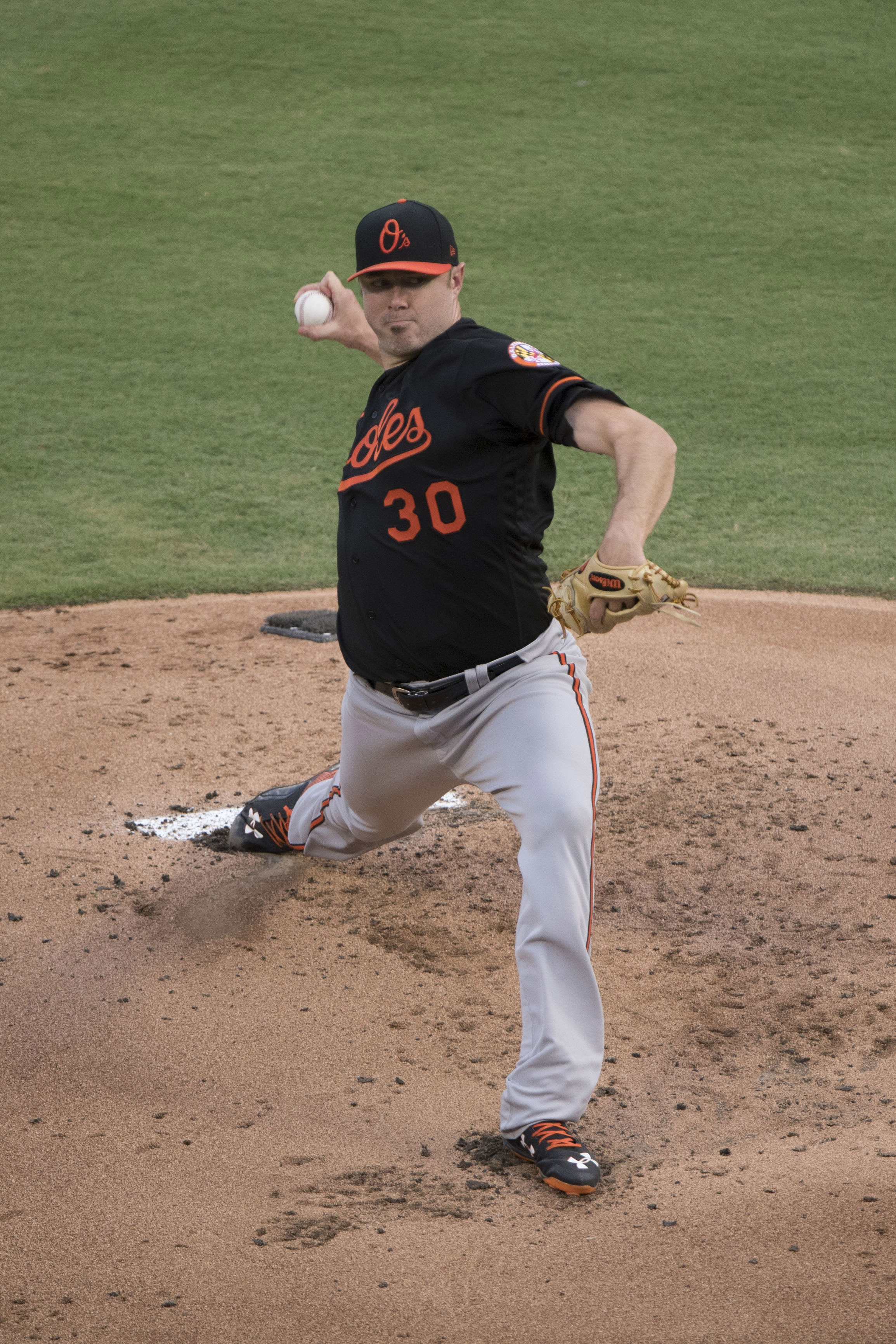
The 29-year-old Tillman will return to the only organization he’s known as a Major Leaguer. The former second-round pick (Mariners, 2006) has spent parts of the past nine big league seasons pitching for the Orioles since coming to Baltimore alongside Adam Jones in the 2008 Erik Bedard blockbuster.
Last season was the worst full season of the veteran Tillman’s big league career, as the long-time rotation stalwart opened the year on the disabled list due to bursitis in his throwing shoulder and seemingly never made a full recovery. Tillman struggled to a ghastly 7.84 ERA in just 93 innings due to that ailment, posting the worst full-season averages of his career in strikeouts (6.1 K/9), walks (4.9 BB/9) and home runs (2.3 HR/9). His average fastball velocity (90.7 mph) dropped by a full mile per hour from 2016 as well.
Those undesirable results notwithstanding, the Orioles did well to bring Tillman back on a modest $3MM base. Last offseason, for instance, rotation rebound candidates such as Tyson Ross and Derek Holland each landed $6MM contracts, while Andrew Cashner took home a $10MM guarantee from the Rangers. That said, shoulder issues tend to throw up significant red flags for clubs, and several potential suitors for Tillman have already made rotation acquisitions this offseason (e.g. Mike Fiers to the Tigers, Jake Odorizzi to the Twins, Jaime Garcia to the Blue Jays).
Tillman joins Cashner, whom the Orioles signed to a two-year deal worth $16MM last week, as the second arm added to a rotation that was in dire need of some veteran additions entering the offseason. Baltimore had as many as three vacancies to fill, and GM Dan Duquette has said in the past that he’d like to add a left-hander to the mix, so it’s possible that there’s another addition yet to come. Assuming he passes his physical, Tillman will slot into the rotation behind Kevin Gausman, Dylan Bundy and the newly signed Cashner, giving Baltimore a fairly experienced quartet of arms on which to rely.
If he’s healthy, Tillman could very well be among the best of that bunch, too. From 2012-16, he started 143 games for the Orioles and worked to a 3.81 ERA with 7.0 K/9 against 3.1 BB/9 and 1.1 HR/9 with a 40.2 percent ground-ball rate. He doesn’t need to replicate those numbers to justify a commitment ranging from $3MM to $10MM, of course; if he can merely provide 30 mostly serviceable starts, he’ll be well worth the investment for the O’s.
Even with Tillman and Cashner on board, the team still faces an uphill battle in competing with the Red Sox and Yankees for a division crown. A healthy Tillman increases their chances of remaining competitive but also gives the team a potential trade chip midway through the year should Baltimore find itself facing a sizable deficit in the standings. The team’s ability to compete in the season’s first half will be among the most fascinating storylines to follow, as if the Orioles are out of contention come July, they’ll have tough decisions to make not only on Tillman but on free-agents-to-be Brad Brach, Zach Britton, Adam Jones and Manny Machado.
Photo courtesy of USA Today Sports Images.
Astros Prospect Forrest Whitley Suspended For 50 Games
Astros pitching prospect Forrest Whitley has been suspended for fifty games, according to Buster Olney of ESPN.com (Twitter link). The ban is drug-related, per the report, though it is not clear just what improper substance Whitley was deemed to have used.
Whitley, a 20-year-old right-hander, greatly elevated his stock in 2017. Indeed, many outlets now consider him one of the best pitching prospects in all of baseball, with only the uniquely situated Shohei Ohtani drawing greater plaudits. Baseball America, MLB.com, Baseball Prospectus, ESPN.com, and Fangraphs all rated Whitley within the top ten overall pre-MLB players in the game in their most recent rankings.
Typically, fifty-game bans are handed out for drugs of abuse or amphetamines rather than performance-enhancing substances. In this case, Chuck Miketinac of FOX San Antonio says (Twitter link) a source told him that Whitley took an “unknown stimulant” to help keep him awake on a drive. The youngster intends to challenge the suspension, per that report. JJ Cooper of Baseball America notes (Twitter links) that the official release on the suspension does not follow the typical template utilized either for drugs of abuse or PED bans and also stands out because it does not state there was a positive test.
Clearly, there’s still quite a lot that is not known about the situation. Whitley himself released a statement through his agent (via MLB.com’s Brian McTaggart, on Twitter) in which he accepted responsibility and apologized. Astros GM Jeff Luhnow says he’s disappointed in what has transpired but also says he believes Whitley will learn from the situation. (Video via Twitter, also from McTaggart.)
Whitley, a 2016 first-rounder, reached the Double-A last year, compiling 92 1/3 innings of 2.83 ERA ball with 13.9 K/9 and 3.3 BB/9 across three levels of the minors. He will be eligible to return around the end of May and will likely work out in the meantime at the organization’s spring facilities, per Jake Kaplan of The Athletic (Twitter links).
Yankees Acquire Brandon Drury, D-Backs Acquire Steven Souza In Three-Team Trade With Rays
The Rays, Yankees and D-backs have agreed to a significant three-team trade that will send outfielder Steven Souza from Tampa Bay to Arizona, infielder/outfielder Brandon Drury from Arizona to New York and prospects to Tampa Bay. The Rays will receive left-hander Anthony Banda and two players to be named later from the D-backs as well as minor league second baseman Nick Solak from the Yankees. Additionally, the Yankees will send right-hander Taylor Widener to the Diamondbacks. The teams have announced the trade.
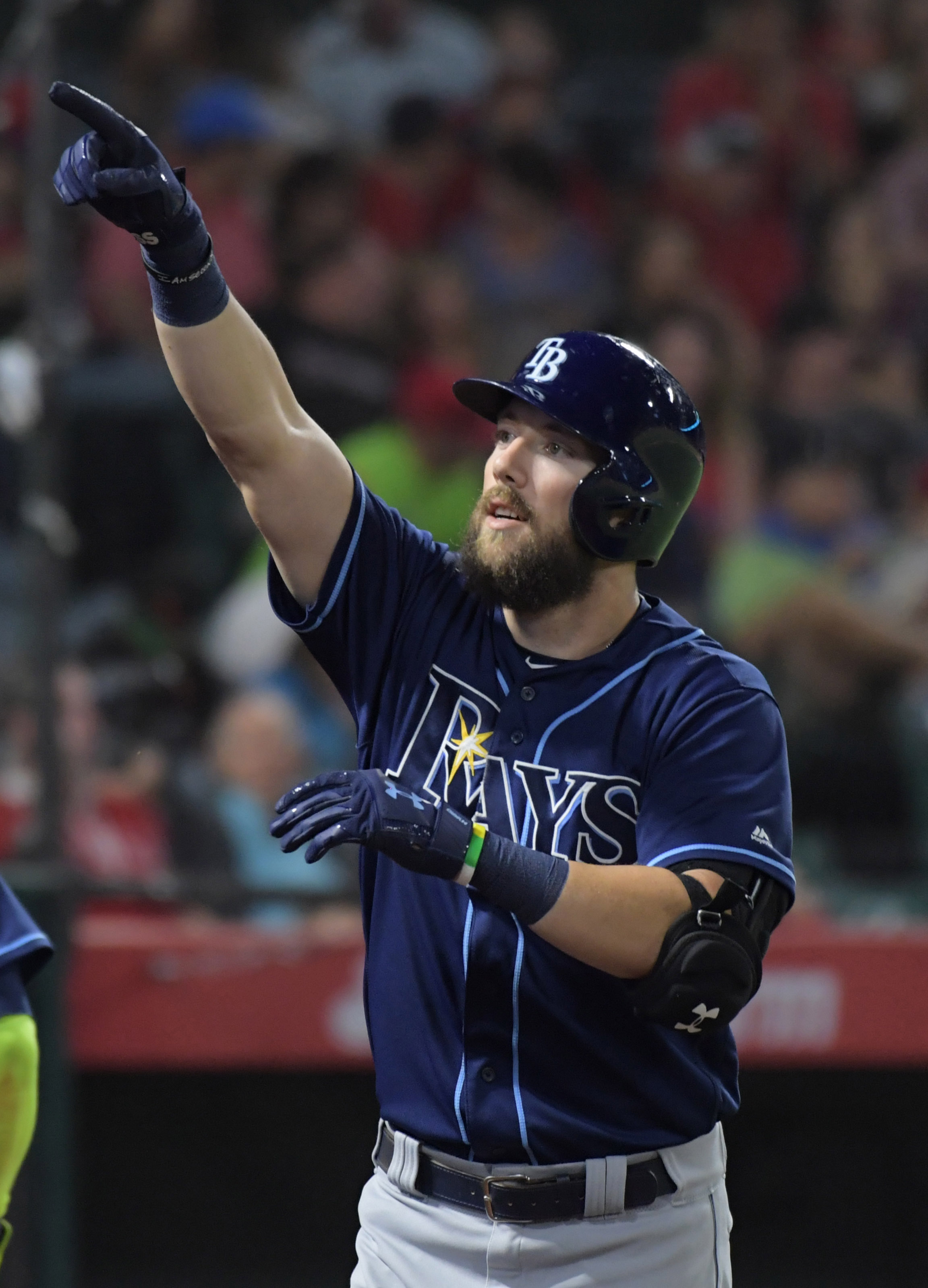
The acquisition of Souza will be the second notable outfield pickup for the D-backs in as many days, as the Snakes added Jarrod Dyson on a two-year deal yesterday just minutes after losing out on J.D. Martinez, who signed a five-year deal with the Red Sox. Souza is a solid consolation price to that failed pursuit, as he’ll give the D-backs a right-handed bat with lesser power but superior defense to Martinez — and it’s certainly notable that he’s coming off a 30-homer season himself.
Souza, set to turn 29 in late April, hit .239/.351/.459 with 21 doubles, a pair of triples and 16 stolen bases in addition to his 30 home runs last season. While he can’t make up for the loss of Martinez’s bat on his own, he’s long shown plenty of pop at the plate and last season walked at a career-best 13.6 percent clip as well. He is, of course, not without red flags. Even if he’s able to sustain the uptick in walks, Souza figures to continue to hit for a questionable batting average so long as he continues to struggle with his overall contact skills. Souza whiffed at a 29 percent rate in 2017, and that actually represented an improvement over 2016’s alarming 34 percent strikeout rate.
That said, he comes to the D-backs with three years of club control remaining, meaning he’ll be a fairly long-term option for them in an outfield mix that also includes Dyson, impending free agent A.J. Pollock, David Peralta and Yasmany Tomas (though the D-backs would surely love to escape the remainder of Tomas’ onerous financial commitment).
Arizona will also add a former 12th-round pick, Widener, that turned in a strong season in Class-A Advanced last season when he tossed 119 1/3 innings of 3.39 ERA ball with a 129-to-50 K/BB ratio over the life of 27 starts. He’s had some durability issues in the past, with Jim Callis and Jonathan Mayo of MLB.com noting last summer that he had ulnar transposition surgery in 2015 and dealt with back and knee injuries in college. There’s starter potential for Widener, but he’ll need to prove capable of handling a regular workload in the rotation.
[Updated Depth Charts: Tampa Bay Rays, New York Yankees, Arizona Diamondbacks]
The 25-year-old Drury, meanwhile, will give the Yankees the infield depth they’ve been seeking as they currently make evaluations of Miguel Andujar at third base and Gleyber Torres at second base. After trading Chase Headley and Starlin Castro this offseason, the Yanks lacked certainty at both of those positions, but Drury presents a more experienced option than any of their infield prospect that has seen plenty of Major League action at both slots. If Andujar and/or Torres prove ready to handle a full workload in 2018, then Drury can shift into a super-utility role and provide depth at a number of spots around the diamond.
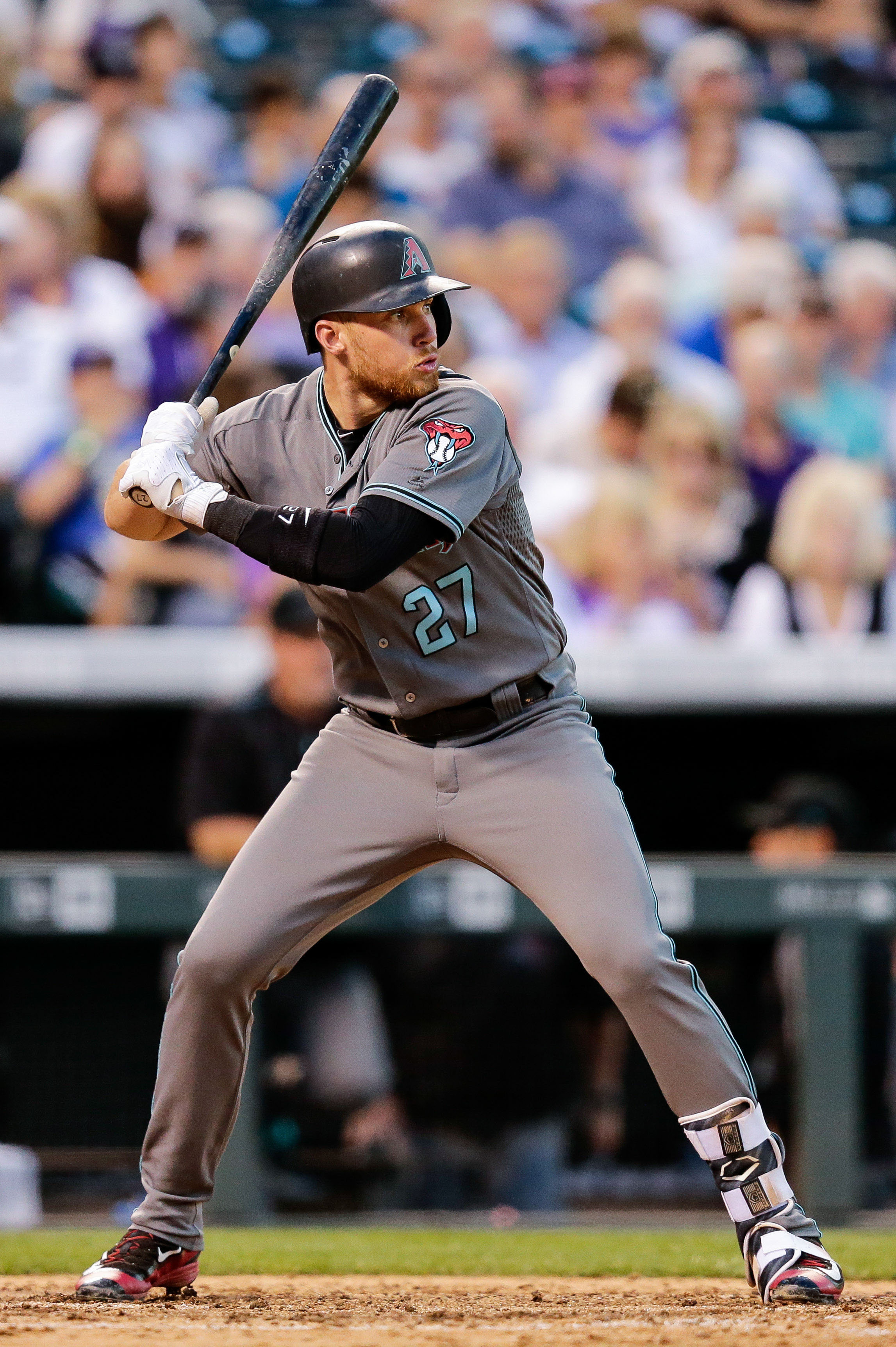
Drury is fresh off a solid, if unspectacular .267/.317/.447 slash with 13 homers through 480 plate appearances this past season. Since establishing himself as a regular in the D-backs’ infield/corner outfield rotation in 2016, Drury has batted .275/.323/.453 with 29 home runs. He’s controllable for another four seasons and should factor into the Yankees’ Opening Day lineup, though which position he plays will likely be determined over the course of Spring Training.
Drury, a rumored target for the Yankees dating back to December, comes to the Yankees with more than 1000 innings of MLB experience at second base and more than 300 innings at third base; that division of labor was flipped during his minor league career, as he logged more than 3000 innings at the hot corner in the minors and just 620 at second base prior to reaching the Majors.
He drew above-average marks from Defensive Runs Saved and Ultimate Zone Rating for his work in 947 innings at second base this past season, though both metrics feel his limited big league work at third base has been below average. Drury also has 700 innings of corner outfield work under his belt (where he’s drawn below-average marks as well) and has even played six innings at shortstop in the Majors.
The acquisition of Drury likely puts an end to the oft-speculated possibility of a Mike Moustakas signing for the Yankees. And, because he’s not eligible for arbitration until next winter, Drury allows the Yankees to maintain plenty of financial flexibility, leaving room for in-season moves, which was reported to be a priority for GM Brian Cashman.
As for the Rays, the trade sends the latest of several signals that the team is looking to retool its current group and scale back payroll. Souza avoided arbitration by agreeing to a one-year, $3.55MM deal earlier this winter, and he’ll now join Corey Dickerson ($5.95MM) and Jake Odorizzi ($6.3MM) as arbitration-eligible players whom the Rays have shipped out in recent days. The subtractions of Odorizzi and Souza leave the Rays with a projected payroll of just $78.77MM, and that’ll further drop once it’s determined how much (if any) of Dickerson’s salary they’ll need to pay in 2018. The Rays would owe Dickerson 30 days of his non-guaranteed arbitration salary for the 2018 season if he clears waivers and is released — roughly $975K — so this trio of moves should dip their payroll into the $73MM range.
Cost savings notwithstanding, the Rays also look to have bolstered their farm system in a meaningful way with today’s trade. Baseball America rated Banda second among D-backs farmhands (albeit in a weak minor league system), while the publication considered Solak to be the 10th-best second base prospect in the game.
The 24-year-old Banda entered the 2017 season as BA’s No. 88 overall prospect, but he struggled through a down year in 2017, pitching to a 5.39 ERA with 8.6 K/9, 3.8 BB/9 and a 42 percent ground-ball rate in 122 innings in the extremely hitter-friendly confines of Triple-A Reno. The former 10th-rounder also made his MLB debut in 2017, allowing 17 runs in 25 2/3 innings with a 25-to-10 K/BB ratio. Even with that rough run in Triple-A and the Majors, Banda still has a potential future as a mid-rotation starter, per BA, whose scouting report also noted that he also showed the skills to be a quality late-inning reliever.
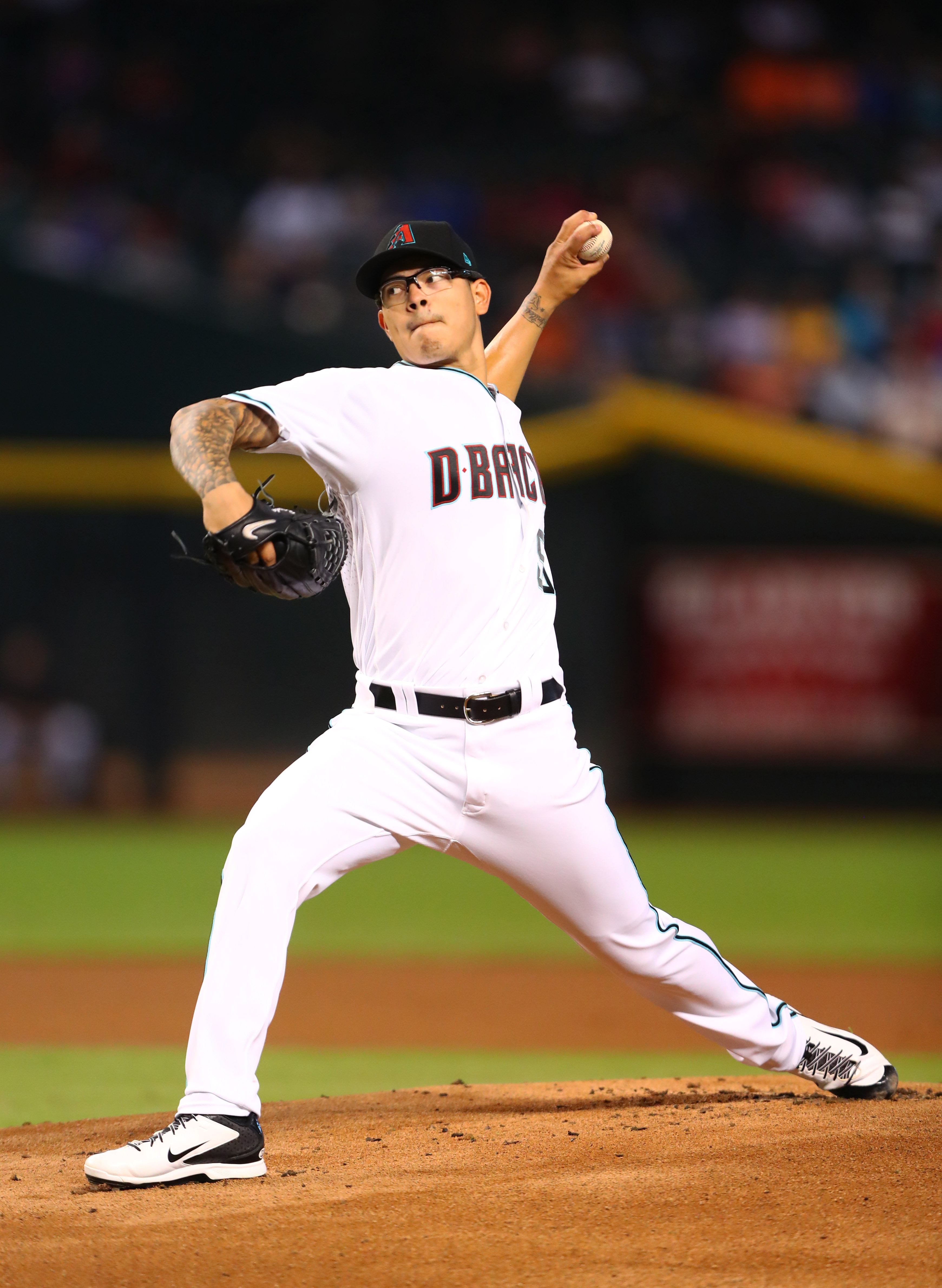
Solak, meanwhile, batted .297/.384/.452 with 12 homers and 14 steals through 130 games / 538 plate appearances split between Class-A Advanced and Double-A in his first full season in 2017. He also displayed strong K/BB ratios, striking out at an 18.5 percent pace to go along with a quality 11.7 percent walk rate.
It remains to be seen whether the trades of Souza, Odorizzi and Dickerson will serve as the catalyst for a full-scale fire sale in St. Petersburg, where the Rays still have highly appealing assets such as Chris Archer and Alex Colome. Technically speaking, the Rays have MLB-ready assets that can plausibly step into the fold in the place of Odorizzi, given the presence of pitching prospects like Brent Honeywell, Jose De Leon, Banda and Ryan Yarbrough, among others. Mallex Smith, meanwhile, is an option to step into the outfield in place of Souza or Dickerson, while veteran Denard Span can handle another outfield spot.
But, it’s also true that the Rays face an uphill battle in a competitive AL East — especially following the subtraction of two of their better hitters from 2017 and a rotation mainstay in Odorizzi. Viewed through that lens, there’s good sense for the Rays to continue to at least explore trade possibilities for the likes of Archer and Colome as they look to bolster their farm, improve their draft/international pools for the 2019 season and establish a new wave of controllable, pre-arbitration assets that can help their lower-revenue organization form a core in the next competitive cycle.
That type of thinking has drawn the ire of agents and the Major League Baseball Players Association this offseason, given the diminished number of teams that are even entertaining the thought of signing veteran free agents. But, it’s also factual that the system, as currently constructed in the latest CBA, favors aggressive tear-downs more than it does trying to walk the line between rebuilding and contending — a reality that could conceivably push the Rays into further action on the trade market.
FanRag’s Robert Murray got the ball rolling on the story by reporting that Solak was headed to the Rays for an unknown return (via Twitter). FanRag’s Jon Heyman tweeted that Drury had been traded to the Yankees. Nick Piecoro of the Arizona Republic broke the three-team nature of the swap, including that Souza was going to the D-backs (Twitter link). Marc Topkin of the Tampa Bay Times reports that Banda was coming to the Rays in the deal. Joel Sherman of the New York Post reported Widener’s inclusion in the deal (Twitter link). MLB.com’s Steve Gilbert added that there were a pair of PTBNLs going to the Rays in the swap as well (via Twitter).
Photos courtesy of USA Today Sports Images.
Padres Sign Eric Hosmer
MONDAY: The deal is official, with the Padres announcing the signing of Hosmer as well as the key terms.
SATURDAY: The Padres have agreed to sign first baseman Eric Hosmer, Kevin Acee of the San Diego Union-Tribune reports. The contract is an eight-year deal that includes an opt-out clause after the fifth season, according to MLB Network’s Jon Morosi (via Twitter). The deal contains a full no-trade clause for the first three seasons and then limited no-trade protection afterwards, Bleacher Report’s Scott Miller reports (Twitter links). Hosmer will be paid $20MM in each of the first five seasons and $13MM in the three remaining years, plus a $5MM signing bonus. The $144MM total figure represents the largest contract in the history of the Padres franchise. Hosmer is represented by the Boras Corporation.
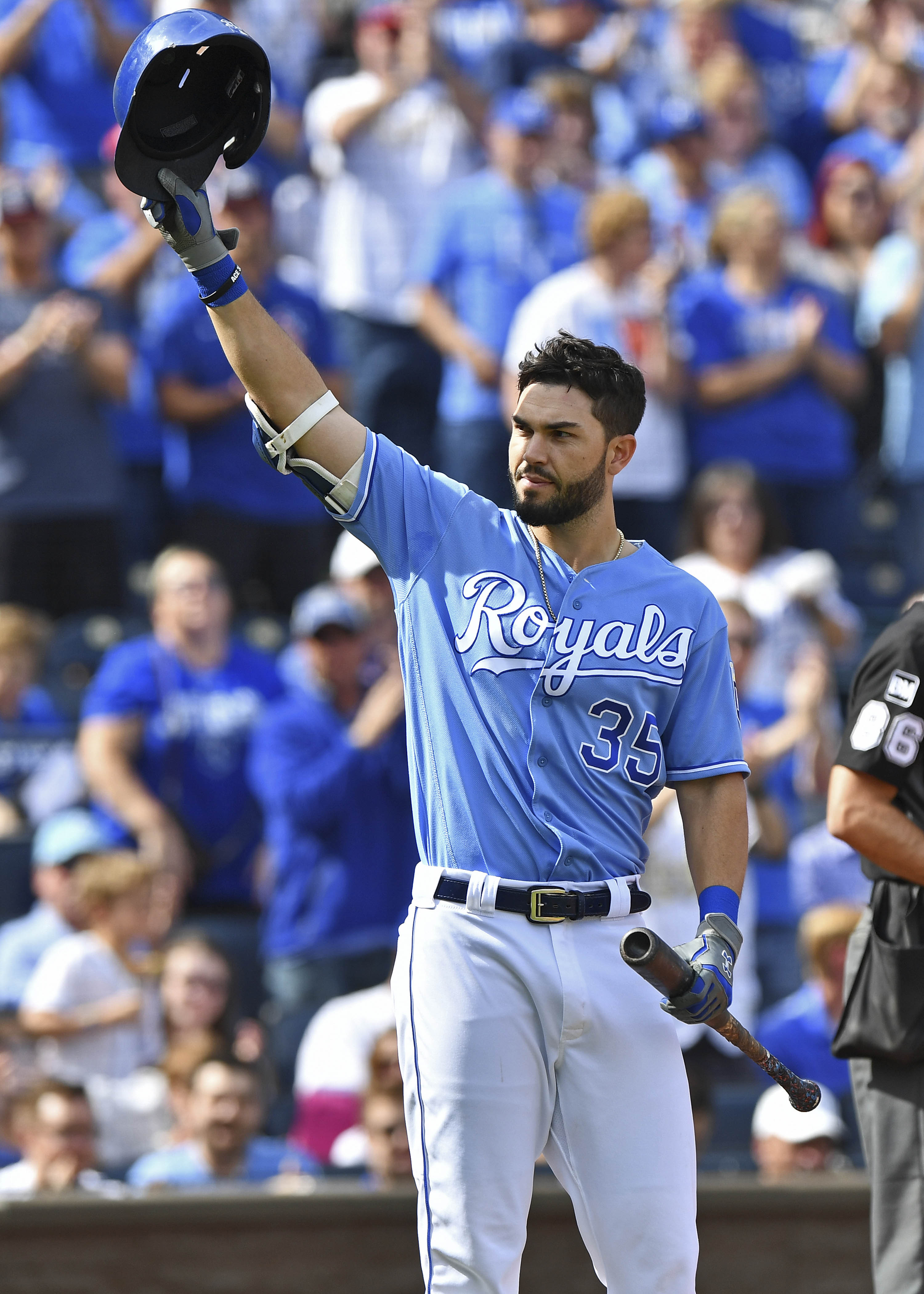 The agreement concludes a rather unusual trip through the open market for Hosmer, and he winds up on a team that nobody could’ve predicted as a potential suitor last fall. With a rebuild underway and Wil Myers safely locked in at first base, the Padres didn’t at all appear to fit as a landing spot for Hosmer’s services. Instead, San Diego rather quickly emerged as an interested party in Hosmer, as the team felt that his young age (he turned 28 last October) indicated that he could still be a productive cornerstone player when the Padres were again ready to contend. With Hosmer now signed, in fact, it’s possible that the Friars could push that contention timeline forward by at least one season.
[Updated Padres depth chart at Roster Resource]
Hosmer is the second major free agent first baseman to join a surprise team this winter, after Carlos Santana‘s deal with the Phillies. Both signings represent aggressive moves by rebuilding clubs, and while Philadelphia has been widely expected to kickstart their ride back into contention with a big splurge in the 2018-19 free agent market, the Padres were seen to be at least a couple of years away since most of the top names in their well-regarded farm system were still in the lower minors. General manager A.J. Preller is no stranger to aggressive moves, so it wouldn’t be surprising if he tried to deal some of those young blue-chippers for players that could help the Padres as soon as 2019.
The lackluster San Diego lineup has now added three notable veteran upgrades this offseason, though obviously Hosmer is a long-term asset in a way that Chase Headley and Freddy Galvis (potential trade chips and both signed through only 2018) are not. Myers will shift into a corner outfield spot, leaving Jose Pirela, Hunter Renfroe, Alex Dickerson, Cory Spangenberg, and Matt Szczur all battling for regular at-bats in the other corner position or in bench roles. The Padres could also look to deal from this surplus to add pitching depth in the rotation or bullpen.
Hosmer entered free agency on the heels of a career year that saw him hit .318/.385/.498 (all career bests) with 25 homers and 98 runs scored over 671 plate appearances with the Royals last season, and he was also one of five players who appeared in all 162 of his team’s games in 2017. As good as he was, however, Hosmer is still looking to string together consecutive quality seasons as a big leaguer — he has alternated between strong years and replacement-level performances in each of the last six seasons. Hosmer’s grounder-heavy offensive attack seems to leave him prone to a wide variance in production, as he has been pretty average in the power and walks department. It has been theorized that Hosmer’s approach at the plate would differ if he left Kauffman Stadium, though moving to another pitcher-friendly stadium in Petco Park will make it interesting to see what adjustments, if any, Hosmer makes.
These question marks surrounding Hosmer’s status as a top-tier player, plus the general chill surrounding the free agent class as a whole this offseason, may have contributed to a relative lack of teams in his market. With other possible first base-needy teams (i.e. the Red Sox, Mariners, Cardinals) turning to other lineup options, Hosmer’s market was seemingly limited to just the Padres and Royals.
A Hosmer reunion also seemed somewhat curious for a K.C. team that appears to be entering a rebuild stage, though the Royals also valued Hosmer’s youth and potential as a long-term building block, particularly since he has already contributed to one World Series title and is hugely popular within both the Kansas City community and the Royals’ clubhouse. The Royals had reportedly offered Hosmer a seven-year deal in the nine-figure range, though the exact dollar figure wasn’t quite certain.
Instead, the Royals will now receive an extra pick after the first round of the June amateur draft as compensation for Hosmer (who rejected a qualifying offer) signing elsewhere for more than $50MM. Combined with their other compensation pick for Lorenzo Cain‘s deal with the Brewers, plus their Competitive Balance Draft selection, the Royals currently have four of the top 40 picks in the draft, setting them up for a strong reload of their farm system. Another pick will be coming their way if Mike Moustakas signs elsewhere, as well. For the Padres, since they are revenue-sharing recipients and didn’t exceed the luxury tax, they’ll only have to surrender their third-highest draft pick as penalty for signing Hosmer.
The Padres had reportedly issued a seven-year offer worth under $140MM to Hosmer, so it looks like the extra year and the extra bit of cash sealed the deal. Hosmer is guaranteed to make at least $105MM as a Padre, and he’ll have the option of testing the free agent market again after his age-32 season. MLBTR projected Hosmer for a six-year, $132MM deal this winter (ranking third on our list of the offseason’s top 50 free agents), so Hosmer’s actual deal fell short in average annual value ($18MM per year to our $22MM per year) but contained more potential years and a larger overall dollar figure. If Hosmer does opt out, he’ll have earned an average of $21MM per season over the first five years.
Photo courtesy of USA Today Sports Images
Diamondbacks Sign Jarrod Dyson
7:06pm: Arizona has announced the signing. Dyson will earn $3.5MM per year and also receives a $500K signing bonus, per Bob Nightengale of USA Today (via Twitter).
4:52pm: The Diamondbacks have agreed to a two-year deal with free-agent outfielder Jarrod Dyson, according to ESPN.com’s Jerry Crasnick (via Twitter). Dyson will be promised $7.5MM, per Jon Heyman of Fan Rag (Twitter link).
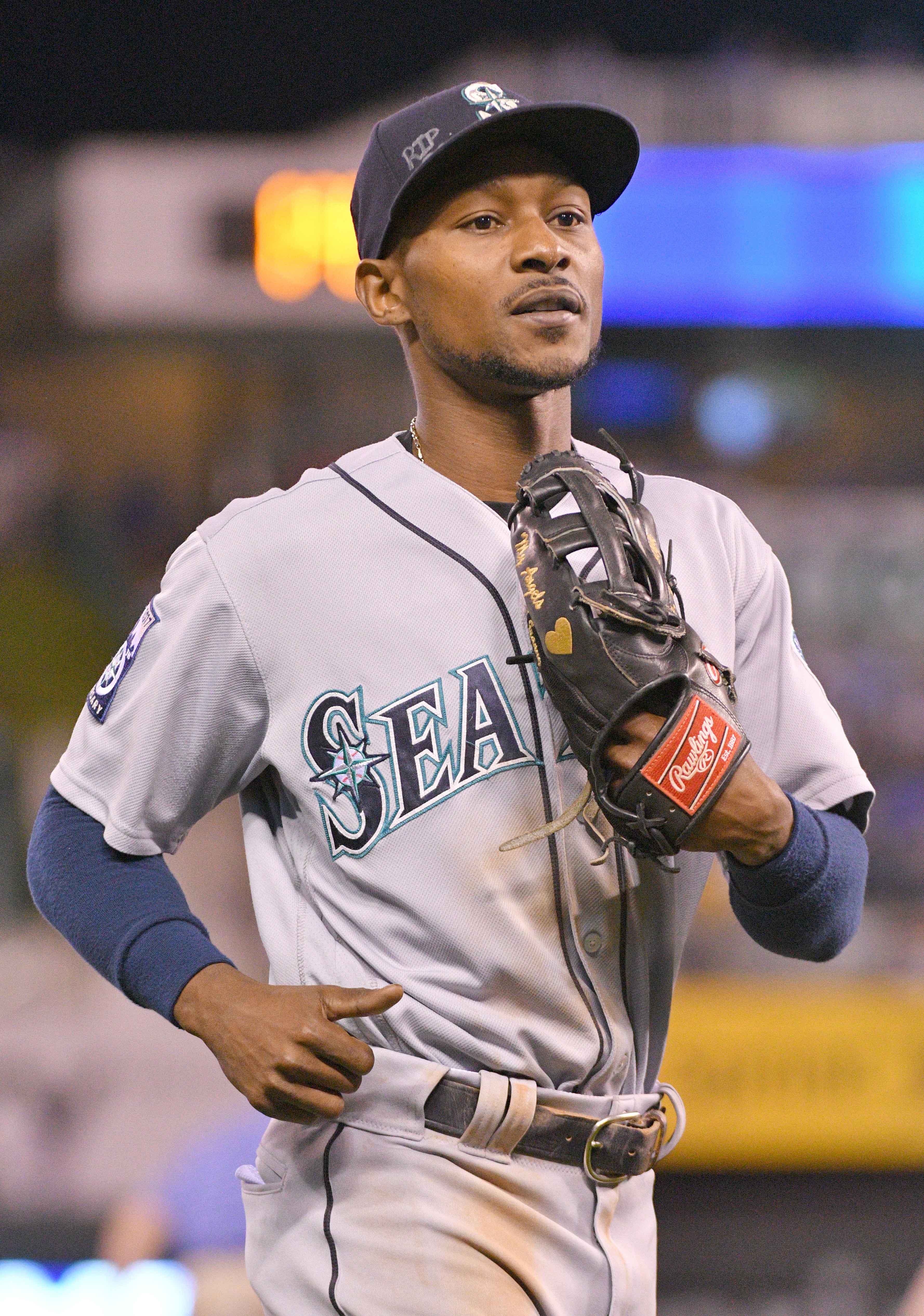
The physical has already been completed, Crasnick notes. Dyson will be able to boost his earnings a bit through incentives, per MLB.com’s Mark Feinsand (via Twitter). He’ll earn $50K apiece upon reaching 100 and 125 games played, as well as at 350, 400, and 450 plate appearances.
While it’s easy to see this as a reaction to the fact that Arizona has reportedly lost out on J.D. Martinez, MLB.com’s Steve Gilbert says that’s not the case (via Twitter). Rather, he says, the D-Backs were slated to add Dyson regardless of the outcome of the Martinez situation and will continue to shop for outfielders.
[RELATED: Updated Diamondbacks Depth Chart]
The move looks like a high-value addition for the Snakes, who can now utilize Dyson as a big part of an outfield rotation that has its share of questions. Dyson is more than capable of spelling A.J. Pollock in center and will also function as a nice platoon match with Yasmany Tomas — a lumbering, right-handed-hitting slugger who is more or less the exact opposite player from Dyson.
To be sure, Dyson is best utilized in less than an everyday role. Notably, he has never hit against left-handed pitching, with an abysmal .215/.293/.259 slash. Dyson’s prior organizations have recognized this, as he has never once even reached 400 plate appearances in a given season.
When deployed properly, however, Dyson is a highly useful player. He has averaged more than 2 WAR annually over the past six seasons while barely topping three hundred plate appearances per campaign. The formula is well-established by this point: elite glovework in any outfield position, top-of-the-line baserunning ability, and near-league-average batting output against right-handed pitching.
The Diamondbacks will no doubt appreciate the many ways that Dyson can help a roster win a ballgame. It helps, of course, that he can be utilized frequently against right-handed starters. His rather extreme positives and negatives make him an obvious player to bring in or remove in particular late-inning situations, too, increasing his overall roster utility.
Dyson did undergo surgery to end the 2017 season. And it’s fair to wonder how long his legs will remain among the most valuable in baseball. But he has shown no signs of slowing down to this point, and Dyson seems to make for an excellent fit on the Arizona roster — whether or not the team ends up adding another piece or instead relies on Tomas to provide some right-handed corner pop.
Photo courtesy of USA Today Sports Images.