
Orioles Re-Sign Mark Trumbo
11:20am: Jon Meoli of the Baltimore Sun reports that Trumbo will earn $11MM per season on the deal, and he’ll also receive annual payments of $1.5MM from 2020-22 in the three years immediately following the completion of his contract.
10:05am: Mark Trumbo had a fairly lengthy saga in free agency, but he won’t be going anywhere anytime soon. The Orioles announced on Friday that they’ve re-signed the 2016 MLB home run leader to a new three-year contract that will reportedly guarantee him $37.5MM (with some deferred money). Trumbo, a Wasserman client, also reportedly picks up a partial no-trade clause that will allow him to block deals to seven clubs.
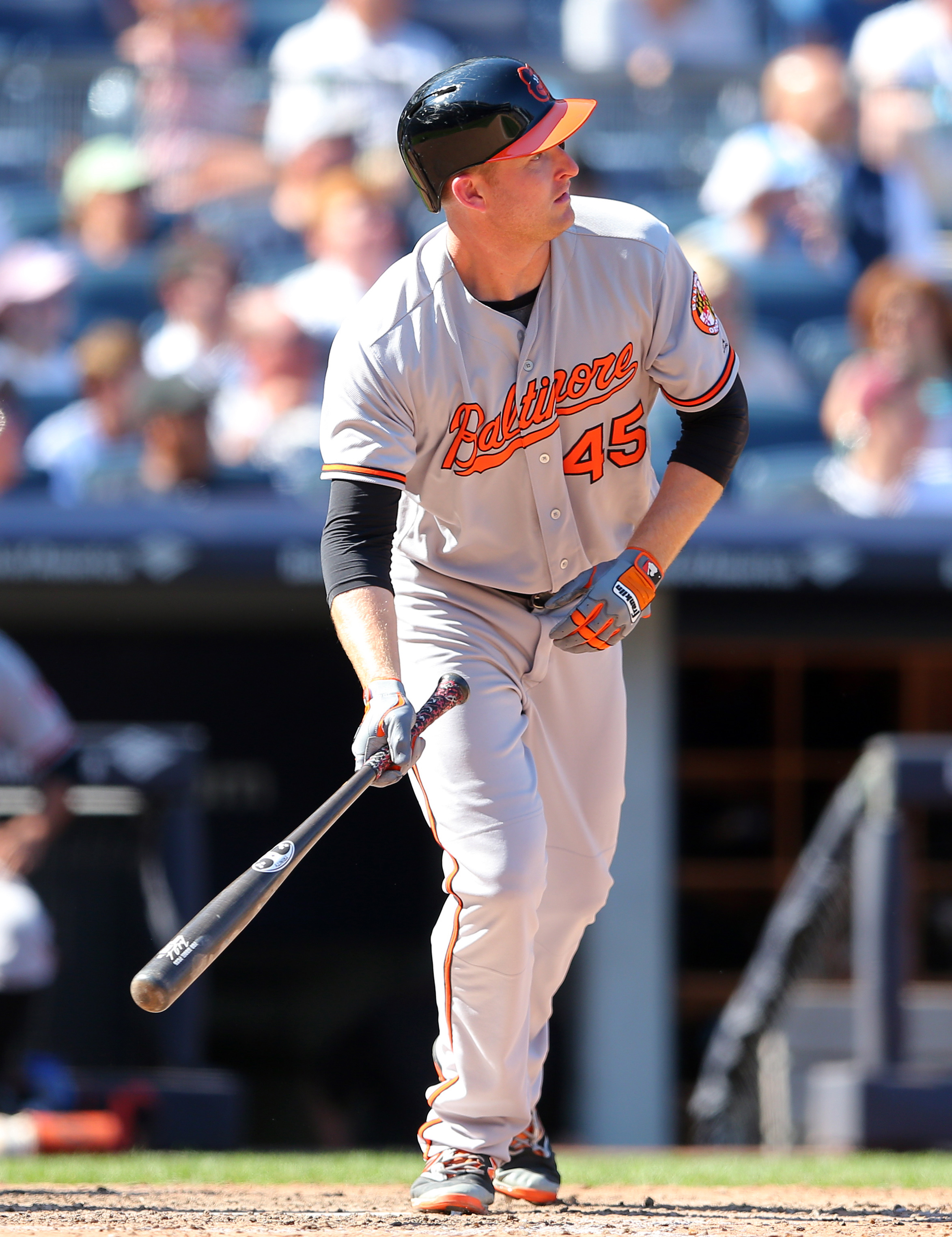
By signing Trumbo, the O’s will lose a chance to recoup a draft pick, as he had declined a qualifying offer from the team at the outset of the offseason. It’s hardly a surprise to see the sides link up for a return, as Baltimore has long been seen as the most aggressive suitor for Trumbo, who just turned 31. Though earlier talks did not progress, Trumbo never seemingly gained much traction with other organizations, likely due to a market filled with power bats and to the rejected qualifying offer.
Baltimore acquired Trumbo last offseason from the Mariners in a deal that worked out excellently for the O’s. He ultimately provided the club with 667 plate appearances of .256/.316/.533 hitting and an MLB-best 47 home runs.
Though that represented a notable step forward in terms of the number of long balls that Trumbo launched — he was a 30-homer threat earlier in his career but had hit just 36 over the past two seasons — his overall output mostly fit within his career norms. Trumbo has long delivered well-above-average pop combined with anemic on-base numbers (.303 lifetime). In 2016, he struck out in 25.5 of his plate appearances while walking 7.6% of the time, right at his career norms.
In the aggregate, Trumbo is more an above-average offensive producer than a true force in the lineup. But there’s no doubt he’s a quality major league hitter, at least so long as he is able to continue squaring up enough balls to post .200+ isolated slugging marks.
The question, though, is just where Trumbo can play in the field. He has consistently rated as one of the game’s worst corner outfielders, no longer plays third, and is blocked at first in Baltimore by fellow slugger Chris Davis. With Hyun Soo Kim and Seth Smith providing left-handed-hitting options for the O’s, though, perhaps Trumbo will only be exposed to the outfield when southpaws take the hill for the opposition. If that’s the team’s approach, then Trumbo will presumably take most of his plate appearances in the DH slot.
Trumbo’s defensive limitations no doubt played a role in the relatively underwhelming interest he seemingly received on the open market. It also surely mattered that several other major power bats were (and are) floating around. Jose Bautista only just signed, receiving less than most expected. Chris Carter was non-tendered by the Brewers despite popping 41 homers in 2016, and is a rather comparable hitter to Trumbo. He has yet to sign; neither have Brandon Moss, Pedro Alvarez, Adam Lind, and Ryan Howard, all of whom hit at least twenty long balls in their most recent seasons.
Though he’ll ultimately fall a fair sight shy of the four-year, $60MM deal that MLBTR predicted, we did note that his limitations as a player and the presence of the qualifying offer could drive his market downward. That’s just what happened here. While Trumbo reportedly turned down more money earlier in the winter from the O’s — reports have variously suggested that the team made a three or four-year offer of around $14MM per season — it’s not clear that he ever had a chance to make substantially more than he’ll end up with.
Jon Heyman of FanRag Sports was the first to report that the two sides had resumed negotiations and were nearing a deal. He also tweeted that a deal was “all but done,” and Eduardo A. Encina of the Baltimore Sun tweeted that an agreement had been reached, pending a physical. Yahoo’s Jeff Passan (Twitter link) and Heyman (Twitter link) reported the terms of the agreement. Jim Bowden of ESPN and MLB Network Radio on SiriusXM reported that Trumbo received a partial no-trade clause (via Twitter).
Photo courtesy of USA Today Sports Images.
Rangers Sign Tyson Ross
JANUARY 19: The Rangers have announced the one-year deal with Ross, who can earn up to $3MM in incentives, per Jeff Wilson of the Fort Worth Star-Telegram (via Twitter).
JANUARY 13, 5:04pm: The deal guarantees Ross $6MM and also comes with available incentives, Jeff Passan of Yahoo Sports tweets.
3:42pm: The Rangers have agreed with free-agent starter Tyson Ross, as Jeff Wade of 105.3 The FAN in Dallas/Fort Worth first reported. Ross’ contract is a one-year deal, per MLB.com’s T.R. Sullivan (Twitter link). Salary terms are not yet reported.
[Related: Updated Texas Rangers Depth Chart]
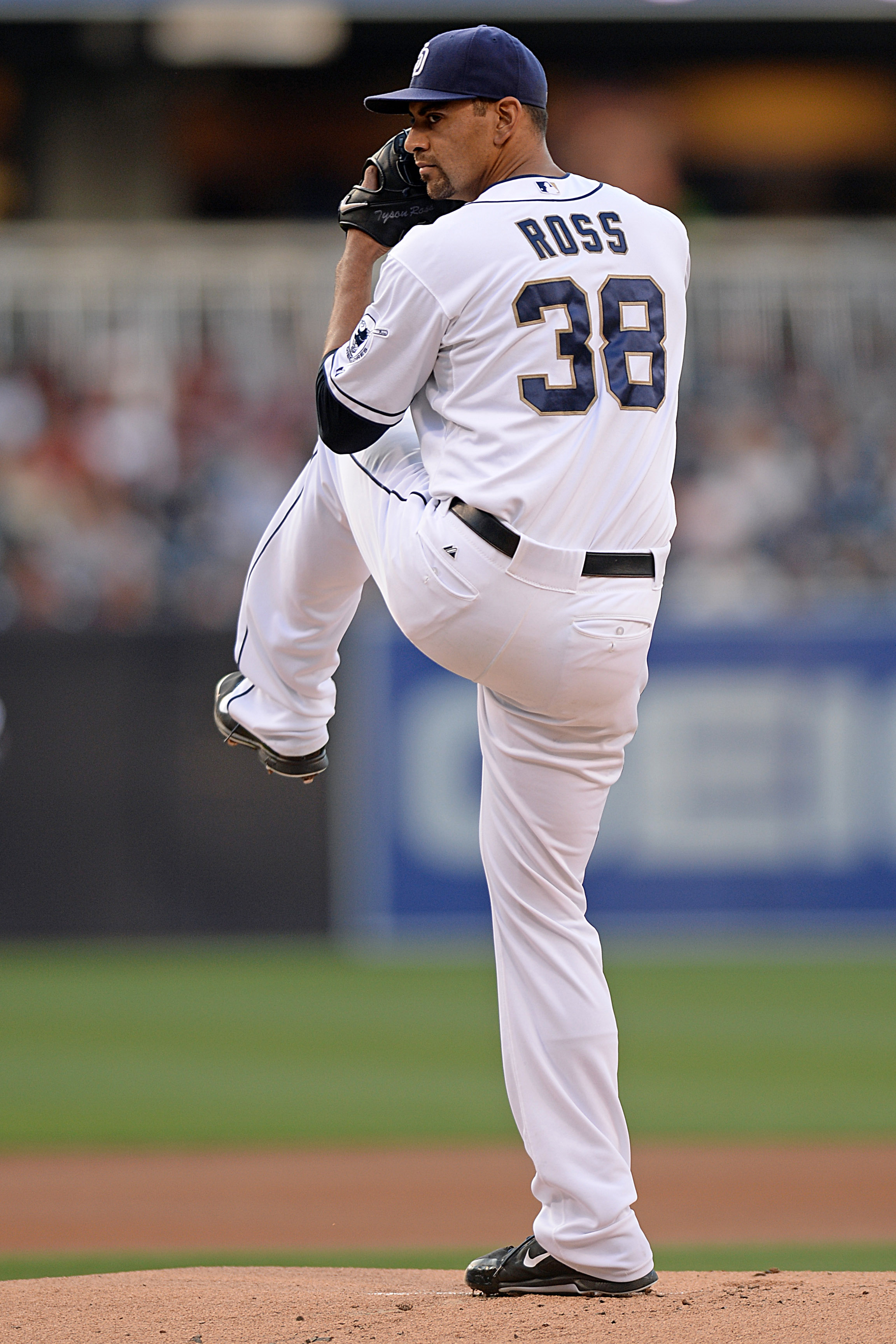
Ross is set to turn 30 in April and is coming off a season in which shoulder troubles limited him to one lone appearance — that which he made on Opening Day. Ross attempted to rehab the injury all season without success, ultimately undergoing surgery to alleviate thoracic outlet syndrome.
The Padres, not wishing to pay him a repeat of last year’s $9.6MM salary, non-tendered Ross last month. Nearly two-third of the league showed some level of interest in Ross as a free agent, but in recent weeks it’s been reported that the Rangers and Cubd were his two likeliest landing spots, with the Nats also floating on the periphery of his market.
Because of the aforementioned TOS surgery, Ross isn’t a lock to be ready for Opening Day. Durability concerns have long accompanied Ross, but prior to the 2016 season he’d been a largely healthy and effective starter atop the San Diego rotation. From 2013-15, Ross tossed 516 2/3 innings for the Padres, logging to a 3.07 earned run average with 9.2 K/9 against 3.5 BB/9 to go along with a superlative 58.2 percent ground-ball rate.
That level of upside is what led to the widespread interest in Ross and is what will likely lead the Rangers to plug him directly into their rotation once he’s healthy enough to take the hill. As it stands, A.J. Griffin is slotted in as the Rangers’ fifth starter behind Yu Darvish, Cole Hamels, Martin Perez and fellow offseason signee Andrew Cashner. However, Griffin tossed 119 innings with a 5.07 ERA last year and seems the likeliest to be ousted from the starting five once Ross completes his rehab. (Alternatively, the Rangers could deploy a six-man unit as a means of keeping everyone in the rotation healthy, though that’s simply speculation.)
Photo courtesy of USA Today Sports Images.
MLBTR Seeking Freelance Writers For Feature Articles
In 2016, MLB Trade Rumors featured articles from former MLB players Burke Badenhop, Ryan Spilborghs, and John Baker. We also had former Cubs executive Chuck Wasserstrom interview GMs and draft prospects, and former White Sox beat writer Brett Ballantini interview Rick Hahn and Dave Stewart. In 2017, we aim to continue bringing our readers diverse, original articles of this nature.
Are you a former MLB player or executive pondering the next phase of your career? Writing freelance articles for MLB Trade Rumors is an excellent way to dip your toe into the water while enjoying a large platform. Rather than analysis of current trades and signings, we’re looking for unique, untold stories from your MLB experience that you’re willing to share with our readers.
Are you an MLB beat writer who is between full-time jobs, or currently making a living as a freelancer for multiple outlets? We’re seeking baseball writers with experience interviewing players and executives, as well as the connections to land new interviews for MLBTR. Aside from earning a few extra bucks, we’ll tweet about your articles with your handle included, to help grow your following.
If you fit either of these descriptions, please email us at mlbtrhelp@gmail.com, explaining your background and a few ideas for articles you’d like to write for MLBTR.
Phillies Sign Michael Saunders
The Phillies deepened their lineup and added a veteran bat to the outfield mix on Thursday, announcing the signing of free agent Michael Saunders to a one-year deal with a club option for the 2018 season. Saunders will reportedly be guaranteed $9MM in the form of an $8MM salary and a $1MM buyout on an $11MM option for 2018. His contract is also said to contain escalators that can push the option’s value to $14MM.
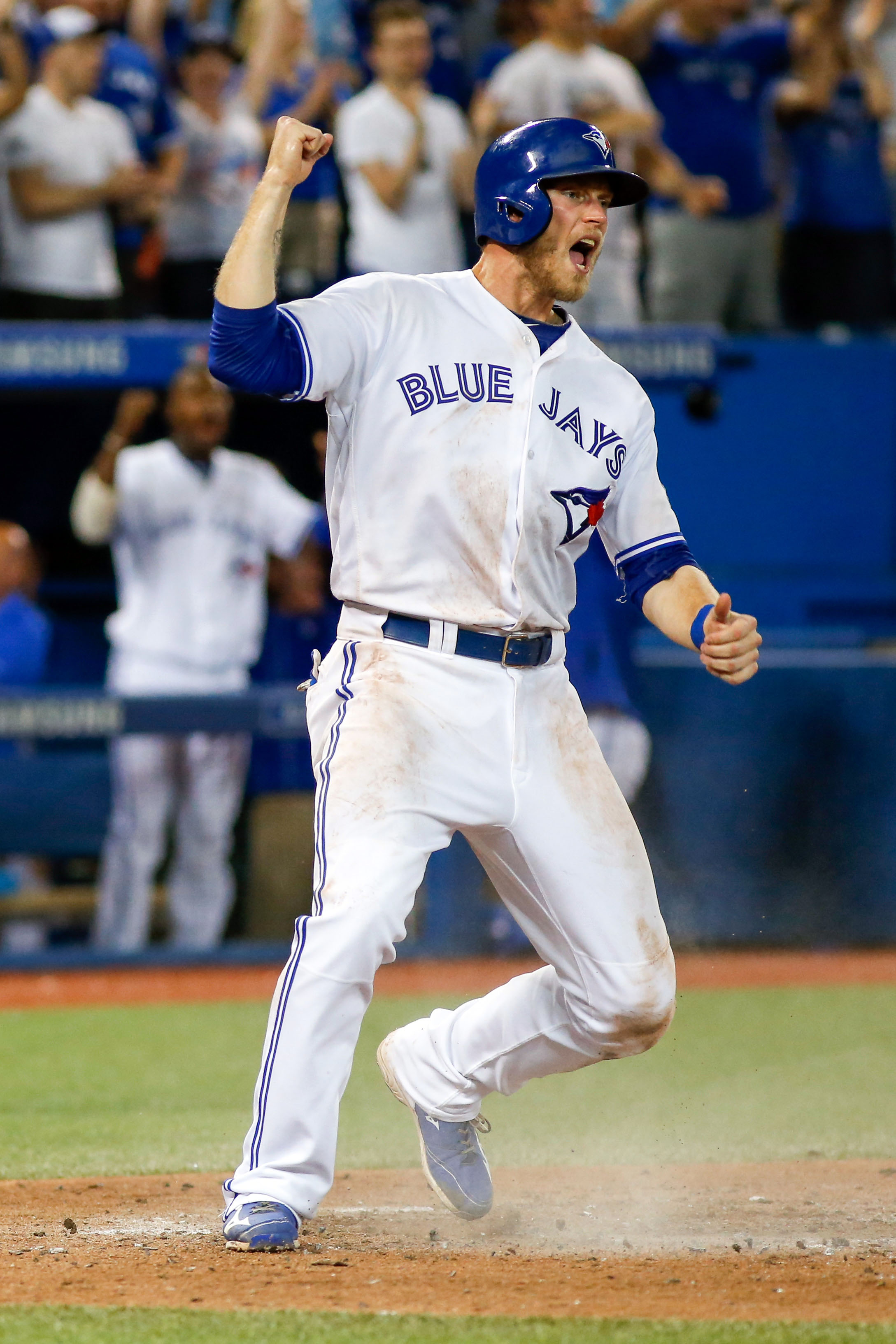
The 30-year-old Saunders, a client of Meister Sports Management, has been linked to the Phillies on multiple occasions over the past several weeks. Philadelphia has had its eye on a number of outfield bats and reportedly has a preference to add a left-handed bat to its lineup. Saunders checks both of those boxes and will deepen a Philadelphia lineup that scored the fewest runs in all of Major League Baseball last year.
[Related: Updated Philadelphia Phillies Depth Chart]
Saunders turned in his first full, healthy season since 2013 last season, playing in a career-high 140 games and tallying a career-high 558 plate appearances. The overall results — a .253/.338/.478 batting line with 24 homers, 32 doubles and a pair of triples — look very strong on paper, although Saunders’ season was fairly dichotomous in nature. The first half of the 2016 season saw Saunders break out and perform at a superstar level. In 344 first-half plate appearances, Saunders hit a ridiculous .298/.372/.551 with 16 home runs — all of which was impressive enough to merit his first All-Star selection.
However, Saunders’ production fell off a cliff early in the second half. Over the final two and a half months of the season, he batted a woeful .178/.252/.357 with eight homers in 214 plate appearances. Certainly, there was some poor luck at play, as Saunders watched his BABIP plummet. While his first-half mark of .377 was never sustainable, his second-half mark of .221 seems equally fluky. The poor second half can’t be solely attributed to luck, though; Saunders’ strikeout rate spiked from 26 percent to more than 30 percent, and his infield-fly rate more than doubled as well (3.8 percent first half to 7.2 percent second half). He also saw his hard-contact rate drop by about six percent while his weak-contact rate rose accordingly.
Saunders once rated as a plus defender in the outfield corners, but his work in both left field and right field checked in below-average last season (per Defensive Runs Saved and Ultimate Zone Rating). Saunders will enter the 2017 campaign one more year removed from surgery on his left knee, however, and he won’t have to play half of his games on artificial turf next season. As such, it’s possible that his glovework could experience a rebound. It should also be noted that Saunders has had shoulder troubles in the past as well, so durability has to be at least somewhat of a concern.
While there are a number of red flags with Saunders, the bottom line is that he’s been a decidedly above-average bat when healthy enough to take the field. Dating back to the 2012 season, Saunders owns a .249/.325/.435 batting line, which is more impressive than it first appears when considering the fact that the majority of those games have come in Seattle’s cavernous Safeco Field. Park-adjust metrics like wRC+ and OPS+ grade Saunders’ overall offensive output at 10 percent and 11 percent better than the league-average bat, respectively, in that span.
Saunders averaged 21 homers per 162 games in that time, and as he demonstrated last year when hitting 24 home runs, there’s the potential for a greater total in a more hitter-friendly setting than Seattle. He’s also hit quite a bit better against left-handed pitching in recent years than he did early in his career (.277/.364/.486), although that improved production has come across just 200 plate appearances, so it’s perhaps worth taking with a grain of salt. If he struggles against southpaws like he did earlier in his career, Saunders could potentially platoon with the right-handed-hitting Aaron Altherr.
Assuming Saunders’ deal is pushed across the finish line, he’ll slot into right field alongside trade acquisition Howie Kendrick in left field and recently extended Odubel Herrera in center field. The Phils do have a number of young options to whom they could’ve entrusted the right field job, but none comes with any degree of certainty. Fleet-footed Roman Quinn, for instance, looked respectable in a brief September cameo last year but hasn’t even played at the Triple-A level. Altherr showed very poorly in his return from a wrist injury, hitting .197/.300/.288 in 227 plate appearances. Top prospect Nick Williams, meanwhile, had a dismal year in Triple-A, while slugger Dylan Cozens, like Quinn, has yet to play in Triple-A.
MLB Network’s Jon Paul Morosi first reported that an agreement was close (Twitter link). Jim Salisbury of CSNPhilly.com tweeted that medical reviews were underway. FanRag’s Jon Heyman tweeted that there’s an agreement in place. Ken Rosenthal of FOX Sports reported the terms (Twitter links). ESPN.com’s Jerry Crasnick gave a timeline for Saunders’ physical and added some details on the incentives (Twitter links).
Photo courtesy of USA Today Sports Images.
Marlins Acquire Dan Straily
11:45am: The Reds and Marlins have both announced the trade. Cincinnati has yet to announce a corresponding roster move, though they’ll need to make one shortly, as both Castillo and Brice are on the 40-man roster, pushing Cincinnati’s total to 41.
7:55am: The Marlins and Reds have reportedly agreed to a trade that will send right-hander Dan Straily from the Cincinnati to Miami in exchange for right-handed pitching prospects Luis Castillo and Austin Brice as well as outfield prospect Isaiah White.
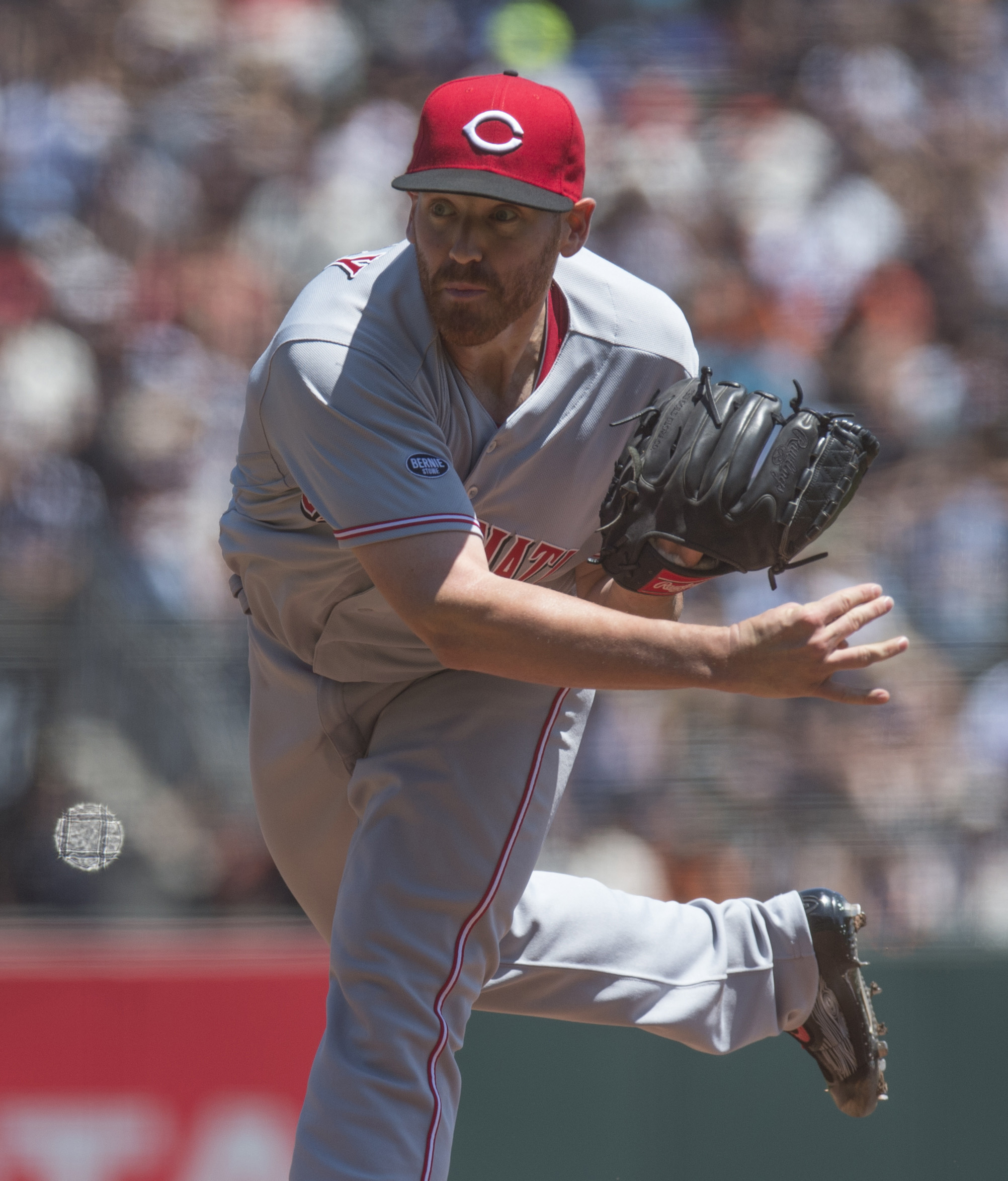
The trade represents a significant flip for the Reds, who acquired Straily free of cost when they claimed him off waivers from the Padres last spring. Cincinnati subsequently enjoyed a season in which Straily, who had bounced around the league following a promising 2012-13 debut with the A’s, logged 191 1/3 innings with a 3.76 ERA, 7.6 K/9, 3.4 BB/9 and a 32 percent ground-ball rate and reestablished himself as a Major League rotation piece.
[Related: Updated Miami Marlins Depth Chart and Cincinnati Reds Depth Chart]
Exactly how much of that strong season is repeatable remains up for debate; Straily has long been homer-prone and last year saw his fly-ball rate check in at 48 percent. A move to the much more spacious Marlins Park should help his cause, but he’ll also need to demonstrate that last season’s step forward in his control is sustainable. Straily’s BABIP was a lowly .239 as well, but fly-ball pitchers tend to maintain lower marks in that regard than their ground-ball counterparts, so the regression in that department may not be as sizable as one would assume upon first glance. (Straily’s career .255 BABIP in the Majors is considerably below the league average.)
The 28-year-old Straily finished out the year with two years, 126 days of Major League service time, meaning he fell just shy of Super Two designation. He’ll earn scarcely more than the league minimum this coming season and can be controlled by Miami for another four years in arbitration.
For the Reds, parting with Straily opens a spot in the rotation for one of the team’s many young arms. As it stands, Straily would’ve joined top starter Anthony DeSclafani, veteran Homer Bailey (if healthy) and left-hander Brandon Finnegan in Cincinnati’s starting five. A competition for the fifth spot in the deal would’ve likely included left-handers Cody Reed and Amir Garrett as well right-handers Robert Stephenson and Tim Adleman, though it’s now possible that two of those three could make the Opening Day rotation. Alternatively, the Reds could see the rotation vacancy as an opening to add a veteran arm that can provide some stability and leadership early in the season before possibly becoming a summer trade chip.
Straily joins a Marlins rotation that is also set to feature left-handers Wei-Yin Chen and Adam Conley, newly signed right-hander Edinson Volquez and longtime Marlins righty Tom Koehler. The addition of Straily seems likeliest to bump offseason signee Jeff Locke from the fifth slot in that rotation to the bullpen, which could have a trickle-down effect and bump an out-of-options player like Jose Urena off the roster.
Locke, however, would give Miami a much-needed southpaw option in the ‘pen, as Miami previously stood to potentially deploy an all-right-handed relief corps. A.J. Ramos, Kyle Barraclough, David Phelps, Brad Ziegler, Junichi Tazawa and Dustin McGowan all seem like locks to open the season in manager Don Mattingly’s bullpen. The former three constituted an outstanding late-inning trio in 2016, while the latter trio all signed Major League contracts this winter.
The price Miami is paying to acquire Straily is a steep one. Castillo, 24, rates as their No. 2 prospect according to Baseball America and their No. 5 prospect according to MLB.com. The hard-throwing righty is said to have a fastball that can touch triple digits and sits in the upper 90s, and he’s fresh off an excellent season with Miami’s Class-A Advanced affiliate in the Florida State League (plus a brief Double-A appearance late in the year). Castillo posted a scintillating 2.07 ERA with 7.0 K/9 against just 1.4 BB/9 in 117 2/3 innings in High-A, and he kicked in another 14 innings of 3.86 ERA ball at Double-A for good measure.
BA praised Castillo’s “easy velocity” and “smooth delivery” in their offseason scouting report on him, noting that he’s made the jump from power bullpen arm to potential mid-rotation starter. Per their write-up, his slider projects as an above-average offering, and he’s working to develop a changeup that still needs some fine-tuning. The Marlins originally landed him in the trade that sent Casey McGehee to the Giants, and his stock has risen quite a bit since that time.
However, it’s also worth noting that this is the second time the Marlins have agreed to trade the right-hander. Castillo was originally one of the prospects that went from Miami to San Diego in the Andrew Cashner/Colin Rea trade, but the Marlins reacquired him from the Padres after Rea suffered a UCL tear in his first start as a member of the Marlins. That, of course, doesn’t necessarily indicate that the Marlins have soured on him in any way, but Miami knows more about him than any other organization and seems comfortable parting ways with Castillo so long as it nets them a long-term rotation cog.
As for Brice, the 24-year-old gives the Reds an immediate, MLB-ready option to plug into their bullpen if he shows well in Spring Training. Brice made his Major League debut in 2016, and while he struggled to the tune of 11 earned runs in 14 innings, he also allowed only nine hits against five walks with 14 strikeouts. Add to that a composite 2.74 ERA in 102 minor league innings (93 1/3 frames at Double-A plus 8 2/3 in Triple-A), and there’s a chance that Brice could open the year in Cincinnati’s bullpen.
MLB.com’s Jonathan Mayo and Jim Callis rank Brice ninth among Miami farmhands, noting that he looked to improve upon his longstanding control problems in 2016. Per MLB.com’s free scouting report, he throws a “heavy” fastball in the low to mid 90s and boasts an above-average slider that was newly added to his repertoire. Their report notes that Brice does still have some upside as a potential starter but adds that he could have a quicker impact as a two-pitch reliever that can dominate same-handed opponents.
White, meanwhile, ranks 15th on MLB.com’s list of top 30 Marlins prospects. The 2015 third-rounder spent last season with Miami’s short-season Class-A affiliate, hitting .214/.306/.301 in 51 games and 201 plate appearances. While those numbers clearly aren’t eye-catching, Callis and Mayo call him a plus-plus runner (70-grade speed on the 20-80 scale) with the potential to be a premium defender in center field. White only just turned 20 years of age and is less than two calendar years removed from playing in high school, so he’s raw and represents something of a wild card for the Reds at this point. However, that’s not a bad third piece to add to a pair of more established arms that could conceivably impact the Cincinnati pitching staff within the next two years.
Jeff Passan of Yahoo Sports first reported that a Straily trade was close, adding that Castillo and Brice were involved (via Twitter). Jon Heyman of FanRag Sports tweeted that a deal was in place, pending medical reviews. Jim Bowden of ESPN and MLB Network Radio on SiriusXM reported that White was the third prospect in the deal (Twitter link).
Photo courtesy of USA Today Sports Images.
Brewers Sign Neftali Feliz
The Brewers bolstered their bullpen on Thursday, announcing the signing of right-hander Neftali Feliz to a one-year contract. Feliz, a client of BTI sports, is reportedly expected to close for Milwaukee and will be guaranteed $5.35MM. His contract reportedly contains incentives as well, which can boost the value of the deal to $6.85MM.
[Related: Updated Milwaukee Brewers Depth Chart and Brewers Payroll Info]
The 28-year-old Feliz was the 2010 American League Rookie of the Year with the Rangers and served as the closer in Texas for two seasons before shifting back to the rotation and ultimately requiring Tommy John surgery in 2013. He returned to Texas and logged a 1.99 ERA in 2014 but with considerably diminished peripherals. The Rangers cut him loose midway through the 2015 campaign after 19 2/3 innings of a 4.58 ERA, and he fared worse down the stretch with the Tigers that season (7.62 ERA in 28 1/3 innings).
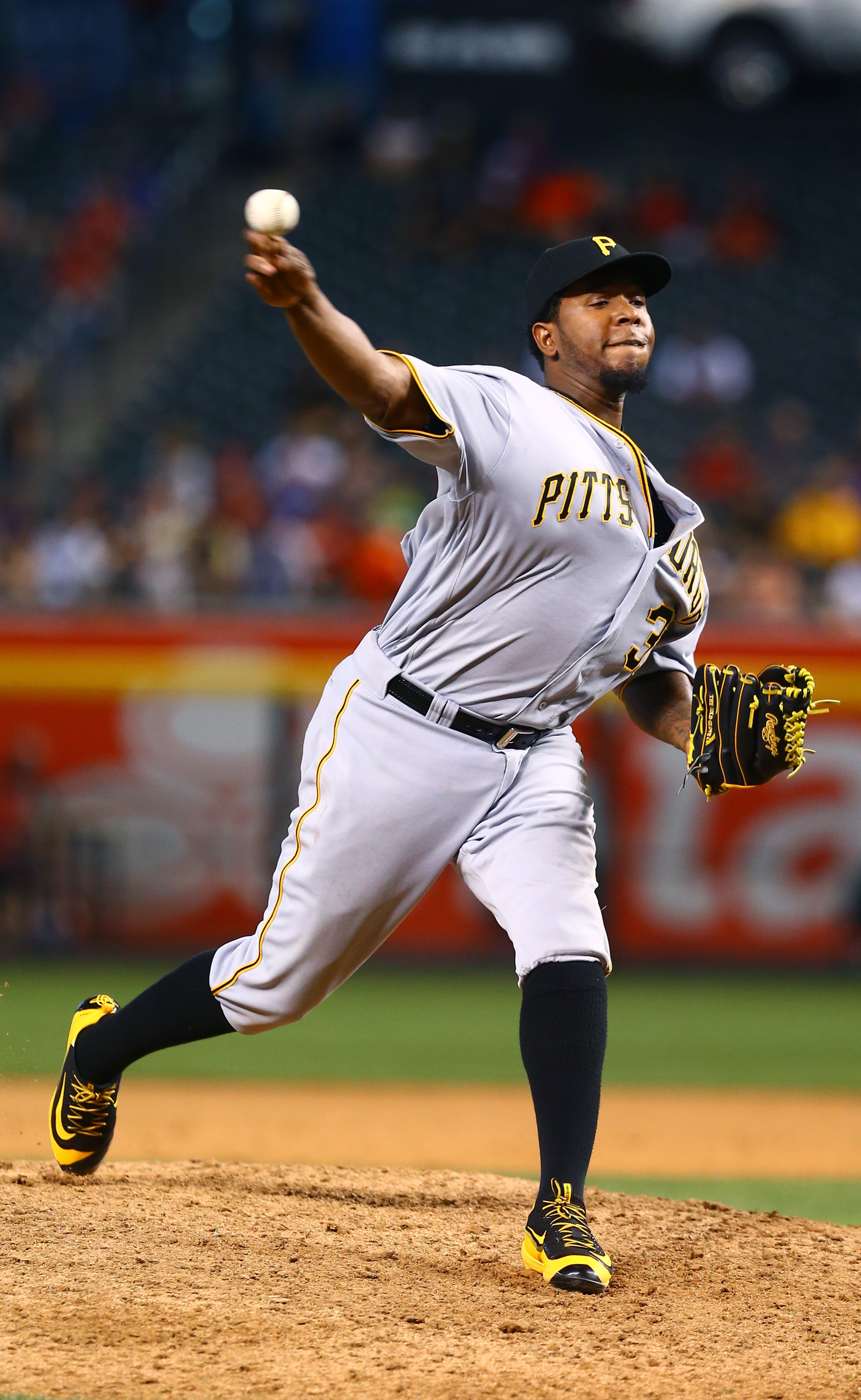
Like so many others, though, Feliz found renewed success with the Pirates, for whom he tossed 53 1/3 innings of 3.52 ERA ball last season. His fastball velocity, which had been diminished since coming back from Tommy John, spiked back up to an average of 96.1 mph, and his strikeout and swinging-strike rates jumped accordingly. Feliz averaged 10.2 K/9 last season and posted a career-best 14.2 swinging-strike rate that ranked 24th among 135 qualified relievers. He also averaged a manageable 3.5 walks per nine innings pitched and posted a 37.9 percent ground-ball rate.
Had Feliz finished the season in better health, a multi-year deal may very well have been in the cards. However, his season unofficially came to an end on Sept. 3 with an arm injury that was never disclosed in full and remains nebulous to this day. That likely gave plenty of teams pause over the course of the winter, though the Brewers are comfortable enough with his medicals to bring him on board. The fact that Milwaukee has a seemingly wide-open ninth-inning picture following the trade of Tyler Thornburg to the Red Sox likely enhanced the appeal of the Brewers for Feliz, who can re-enter the open market next season and conceivably cash in on a substantial contract if he remains healthy in 2017.
If Feliz does ultimately end up closing games in Milwaukee, he’ll push right-handers Corey Knebel and Carlos Torres down the pecking order. Rob Scahill, Michael Blazek, Jhan Marinez, Jacob Barnes and Taylor Jungmann will be among the relievers competing for middle relief work in manager Craig Counsell’s bullpen, and left-hander Tommy Milone looks like a solid bet to break camp as the team’s long man (if he’s not able to claim a rotation spot in Spring Training).
Jeff Passan of Yahoo Sports first reported the agreement and the terms (Twitter links). FanRag’s Jon Heyman said the two sides were nearing a deal over the weekend after BrewerFan.net’s Jim Goulart linked to the two sides.
Photo courtesy of USA Today Sports Images.
Tim Raines, Jeff Bagwell, Ivan Rodriguez Elected To Hall Of Fame
Tim Raines, Jeff Bagwell and Ivan Rodriguez have been elected to the Major League Baseball Hall of Fame, per an announcement from the Baseball Writers Association of America (full balloting available at that link). Both Raines and Bagwell had to wait for their enshrinement among baseball’s all-time elite, as Raines was on his 10th (and final) ballot this year, while Bagwell was on his seventh. Rodriguez, meanwhile, will receive the call to Cooperstown as a first-ballot Hall of Famer — just the second catcher to ever receive that honor (joining the great Johnny Bench).
Raines, now 57, spent the majority of his career with the Expos, suiting up for Montreal in 13 of the 23 seasons during which he played a Major League game. One of baseball’s greatest leadoff hitters during his peak, the former fifth-round pick played in 2502 Major League games and tallied 10,359 plate appearances while batting .294/.385/.425 with 170 home runs, 808 stolen bases, 1571 runs scored and 980 runs batted in. Not only did Raines rack up stolen bases in bunches during his career — including four straight league-leading seasons of 71+ steals in 1981-84 — he was also extremely efficient in doing so, as evidenced by a career 84.6 percent success rate. The seven-time All-Star spent the bulk of his career playing left field, though he did have cameos in center field and at second base over the life of his illustrious career. Baseball-Reference pegs that career at 68.4 wins above replacement, while Fangraphs credits him for 66.4 WAR.
Now 48 years of age, Bagwell spent his entire 15-year career in an Astros uniform and is widely regarded as one of the greatest Astros of all time (if not the greatest). In 2150 games and 9431 plate appearances, Bagwell batted .297/.408/.540 with 449 home runs, 202 stolen bases, 1529 RBIs and 1517 runs scored. Bagwell was a near-unanimous (one vote shy) National League Rookie of the Year in 1991 when he batted .294/.387/.437 as a 23-year-old, and he was the unanimous NL MVP in a strike-shortened 1994 season that saw him hit .368/.451/.750 with 39 homers and a league-leading 116 RBIs. Bagwell earned four All-Star nods, a Gold Glove at first base and three Silver Sluggers in his brilliant career. In addition to his ’94 MVP win, he finished as second to future Hall of Famer Chipper Jones in 1999 and third behind MVP Larry Walker (who many believe should be in Cooperstown) and runner-up Mike Piazza (another Hall of Famer) in 1997. Baseball-Reference credits Bagwell with 79.6 WAR in his career, while Fangraphs is ever so slightly more bullish at 80.2 WAR.
Rodriguez, 45, spent parts of 20 seasons in the Major Leagues and finished his career as one of the most decorated catchers of all-time. A 14-time All-Star, “Pudge” also won the American League MVP Award in 1999 and was the recipient of an incredible 13 Gold Glove Awards, to say nothing of seven Silver Slugger Awards. In 10,270 career trips to the plate, Rodriguez batted .296/.334/.464 with 311 home runs, 1332 runs batted in and 1354 runs scored. He also prevented an incredible 46 percent of stolen base attempts against him in his career (661 of 1447), leading the league in caught-stealing percentage on nine occasions (including a ridiculous 60 percent mark in 2001).
Falling painfully shy of the 75 percent of votes needed to be immortalized in Cooperstown was Padres legend Trevor Hoffman, who fell just five votes and one percent short of joining this trio. Hoffman’s near-election came in just his second time on the ballot, which suggests that he’ll likely be bestowed with this honor in the years to come. Vladimir Guerrero, too, falls just shy at 71.7 percent in his first year on the ballot, though it seems exceptionally likely that he’ll eventually join Hoffman in the Hall.
Edgar Martinez (58.6 percent), Roger Clemens (54.1 percent), Barry Bonds (53.8 percent) and Mike Mussina (51.8 percent) round out the players to receive more than 50 percent of the vote from the BBWAA. Meanwhile, legendary closer Lee Smith will fall well shy (34.2 percent) of election in what was his 15th and final time on the Hall of Fame ballot.
Angels Extend Kole Calhoun
The Angels have agreed to a three-year contract extension with right fielder Kole Calhoun, per a club announcement, covering the 2017 through 2019 seasons. Importantly, the deal includes an option for 2020, which means that the team will pick up an added season of control while buying out all of Calhoun’s remaining arbitration eligibility.
Calhoun will be guaranteed $26MM in the agreement, while the option is valued at $14MM, per Jeff Fletcher of the Orange County Register (via Twitter). He will be paid annual salaries of $6MM in 2017, $8.5MM in 2018, and $10.5MM in 2019, per SB Nation’s Chris Cotillo (via Twitter). There’s also a $1MM buyout on the option year.
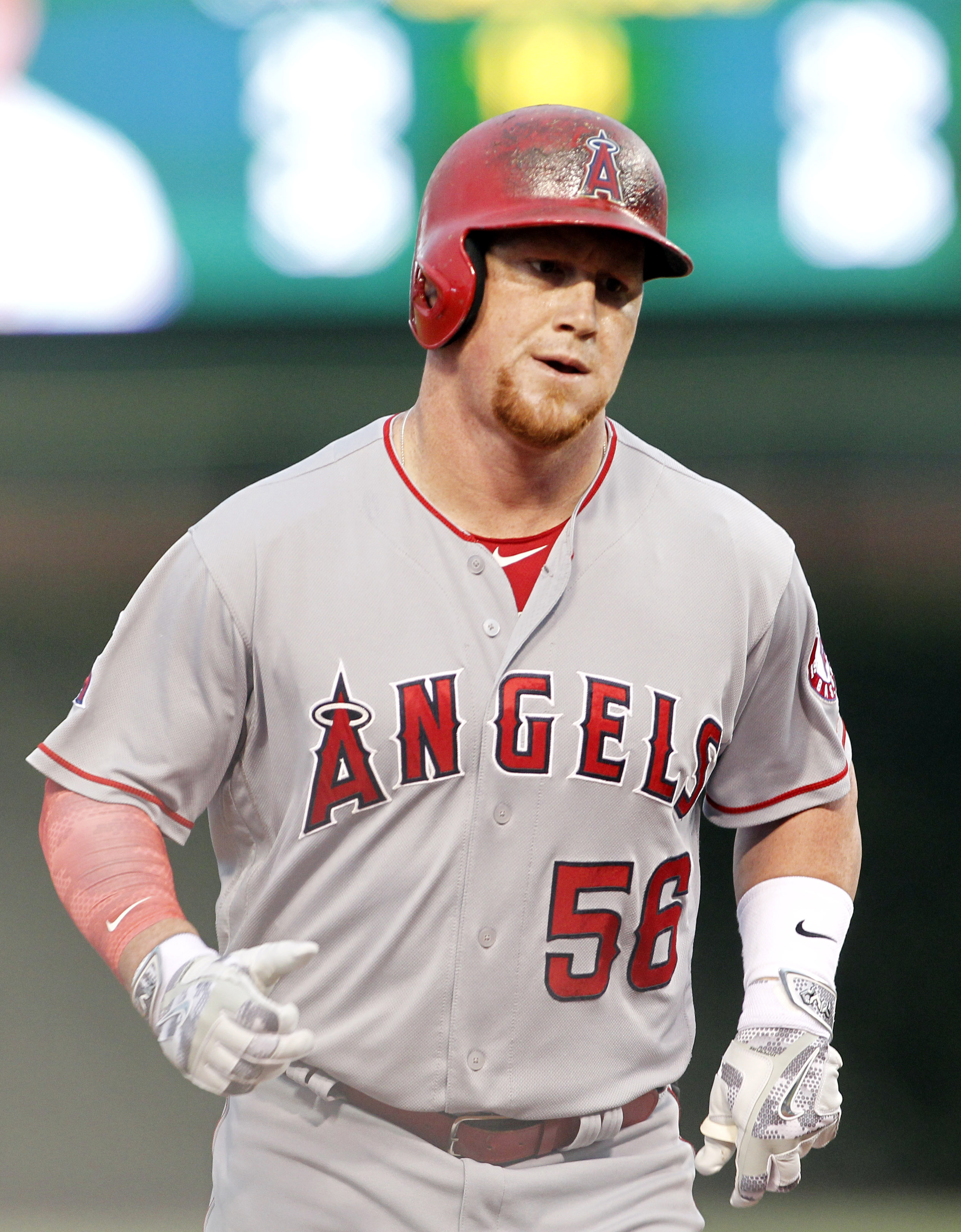
The deal represents a bit of a surprise given its structure. The sides had already agreed upon a $6.35MM arbitration salary for the coming season after Calhoun earned $3.4MM in 2016 as a Super Two. While arb-only agreements do occur from time to time, it’s not often that a mid-arbitration, high-quality regular gives up the rights to a free-agent eligible season just to lock in two more seasons of guarantees over arb-eligible years.
While it’s important to note that Calhoun’s future free-agent earnings were limited somewhat by his age — he’d have hit the market in advance of his age-32 season — this still looks to be a rather notable bargain for the Halos. There’s relatively little risk in the deal, given Calhoun’s track record and relative youth (he just turned 29). And promising just under $20MM for his final two arb years likely represents a discount on what he’d have earned through arbitration — barring a total fall-off in play. Adding a reasonably priced free-agent season, without taking on any lengthy commitment, provides a lot of value to the organization.
Though he was never hyped as a prospect, the former eighth-round draft pick has done nothing but perform as a professional. Calhoun showed plenty of promise during his first extended stay in the majors, back in 2013, and hasn’t looked back since. In over 2,000 trips to the big league plate, he carries a .266/.328/.436 batting line with 69 home runs. With solid glovework and baserunning added into the mix, he has steadily checked in with between 3 and 4 wins above replacement annually, making him one of the Angels’ best players.
With this move, the Angels have two-thirds of their outfield under control through 2020 at very appealing rates, given the quality of the players involved. That’s also the last season of the organization’s six-year deal with star center fielder Mike Trout. For a club that is attempting to remain highly competitive while managing some significant salaries, not all of which have gone according to plan, these extensions both represent strong values.
Photo courtesy of USA Today Sports Images.
Blue Jays Re-Sign Jose Bautista
12:05pm: The deal includes attendance bonuses as well, per Jon Heyman of Fan Rag (via Twitter). In each year of the deal, Bautista can earn up to $900K depending upon how the club draws. He’ll take home $150K for every hundred-thousand fans through the gate between 3.5 and 4.0 million.
It’s not known just how attendance will be calculated, but per ESPN.com, the Jays drew 3,392,299 guests to the Rogers Centre last year.
9:58am: The Blue Jays have now formally announced that they’ve re-signed Bautista (via press release). One of the few teams to publicly disclose the financial details of their contracts, the Jays announced that Bautista will earn $18MM next season. His 2018 option is a mutual option worth $17MM which comes with a $500K buyout that is paid out if either side declines their half of the option. Bautista’s deal also contains a $20MM vesting option for the 2019 season.
JAN. 18, 7:36am: The final guarantee is $18.5MM, Passan tweets. An official announcement is expected in short order.
JAN. 17, 3:45pm: Jeff Passan of Yahoo Sports reports that Bautista’s 2017 salary will be $18MM, but the buyout on the second-year option will tack another $500K to $1MM onto the overall guarantee (Twitter links). Bautista will have mutual option for the 2018 season and a vesting option for the 2019 season, according to Passan. The two sides are still finalizing the details surrounding the vesting option, he notes, but there’s a framework in place for the agreement.
2:35pm: Bautista receives an $18MM guarantee, per Steve Phillips of MLB Network Radio on Sirius XM (Twitter link). The maximum value of the deal — with incentives and the consecutive mutual options — is $60MM.
The 2017 salary remains unknown, but buyouts on the option years help contribute to the total guarantee, Bob Nightengale of USA Today notes on Twitter.
1:53pm: The Blue Jays have agreed to a deal with free-agent outfielder Jose Bautista, according to reports from Baseball Prospectus Toronto (Twitter link) and Ken Rosenthal of FOX Sports (via Twitter). It’s a one-year deal that includes at least one mutual option, and could reportedly extend to three total seasons in duration. Bautista will receive a guarantee that exceeds the $17.2MM qualifying offer value, per Jon Heyman of Fan Rag (via Twitter), assuming he passes his physical.
[RELATED: Updated Blue Jays Depth Chart]
Bautista was said to be nearing a reunion with the Jays, who’ll plug his bat back into the middle of their order for at least one more season. At the outset of the offseason, Bautista had declined a QO from the organization, which set the stage for Toronto to recoup draft compensation if he signed elsewhere. Instead, the team will give up that possible first-round pick in order to fill the noticeable void that remained in right field.
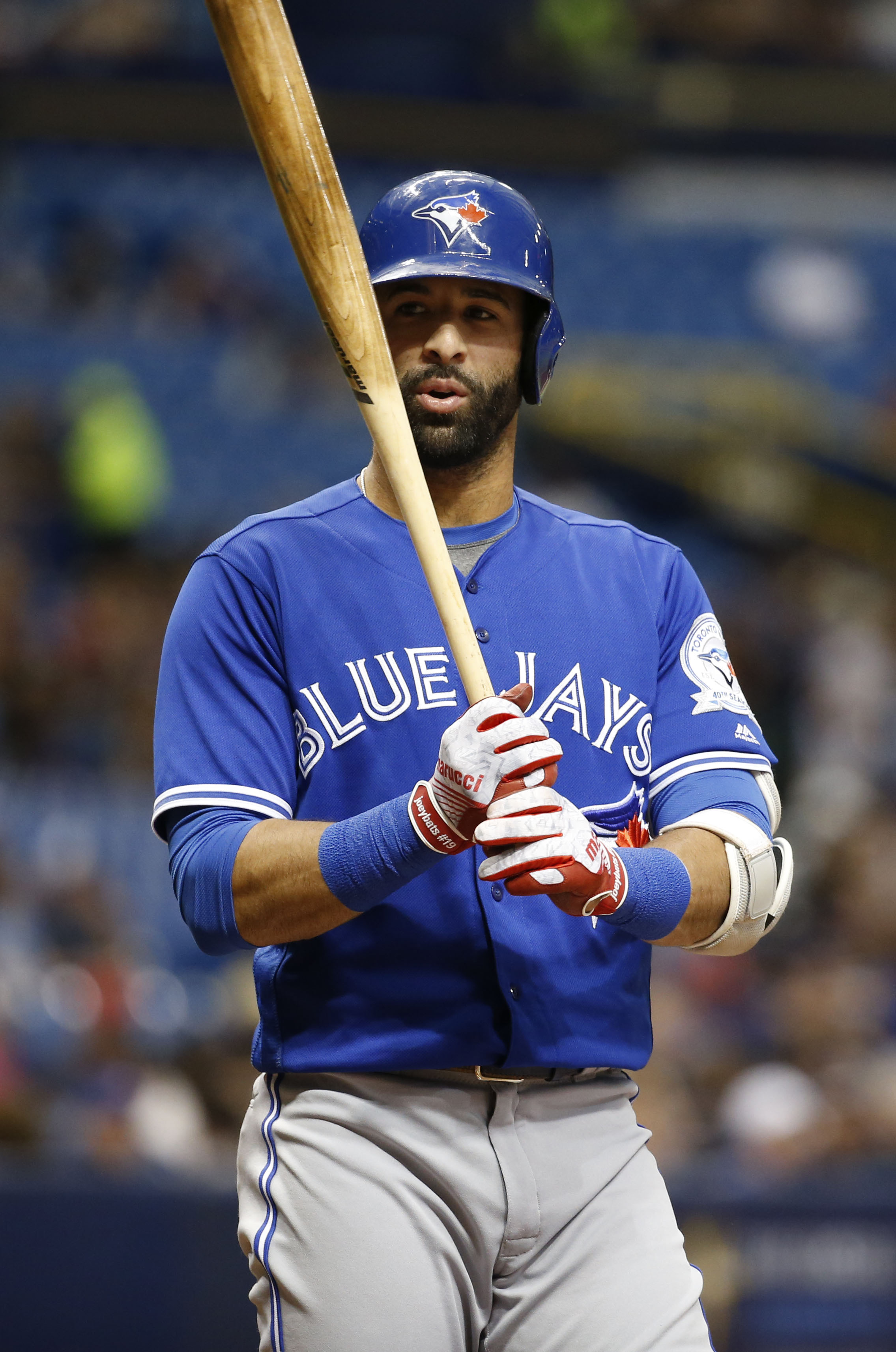
The signing brings to an end — for now, at least — what has been a lengthy dance between the organization and the player who was perhaps most singularly associated with it. Both Bautista and fellow slugger Edwin Encarnacion were reclamation projects that turned into stars in Toronto. After performing admirably under their respective extensions, both hit the market when they were unable to reach new long-term accords. Though the Jays pursued Encarnacion, he spurned their initial efforts and ended up joining the Indians when Toronto pivoted to add DH Kendrys Morales.
Bautista, though, will be back in the fold. Now, the attention will turn back to the field of play. The 36-year-old has long delivered a potent blend of top-end plate discipline and outstanding power. But while he maintained the former in 2016, his power output dipped. He ended the year with 22 home runs and a .217 isolated slugging percentage — each of which represented his lowest marks since 2009, the year before his remarkable breakout.
Of course, that was still a plenty productive offensive campaign; Bautista checked in at about 20% above the league-average hitter. Though he made more soft contact than has been his custom (21.3%), he also posted a career-best 41.0% hard-contact rate. If he’s able to maintain the lion’s share of his pop while continuing to display an impeccable batting eye and excellent contact ability, then Bautista ought to continue to produce. If he can boost the power back to its typical levels, then there’s plenty of upside here for the Jays. Of course, there’s also a slight downside scenario — though it’s curbed by the nature of the arrangement — in the event that 2016 represents a turning point for an aging player.
Really, there’s plenty of reason to bet on Bautista’s bat, at least to some extent. The real question is whether there’s enough left there to make up for his declines elsewhere. Typically a solid defender in right, Bautista has drawn negative reviews from both UZR and DRS for his glovework in each of the last two seasons. And he checked in with a very poor -5.2 BsR rating for his efforts on the bases last year.
Bautista did need to rehab and return from a mid-season toe injury, which surely didn’t help. Aside from that malady and a 2012 wrist injury, both of which were acute issues, he has been a pillar of fitness and durability. Though there has been plenty of debate about the wisdom of a long-term investment, given Bautista’s age, those concerns largely go out the window in that shorter-term, flexible scenario that the sides seemingly landed at.
Of course, Bautista was long said to be hoping for a much greater guarantee. He and the Jays’ then-new front office engaged in extension discussions this time last year, but he wasn’t willing to move off of a number well in excess of $100MM over five years. While there was little chance that he’d reach that level of contract after his relatively unsuccessful 2016 season, Bautista still seemed a reasonable bet to achieve a strong, multi-year commitment heading into the offseason. MLBTR predicted he could command $51MM over three years, while noting that a one-year, make-good scenario remained a plausible outcome.
Toronto seems likely to plug Bautista back into right field, though perhaps he’ll also see time at first base — which is currently set to be manned mostly by Justin Smoak, who typically struggles against left-handed pitching. Fellow signee Steve Pearce might also get some time in right and at first, with Morales likely occupying the DH slot on a more-or-less full-time basis while Ezequiel Carrera and Melvin Upton form a platoon in left alongside regular center fielder Kevin Pillar.
Photo courtesy of USA Today Sports Images.
Athletics Sign Trevor Plouffe
JANUARY 18: The A’s have announced the deal. Plouffe gets a $5.25MM guarantee, per Jon Heyman of Fan Rag (Twitter link). He can also earn $150K upon reaching 350 plate appearances, another $300K if he gets to 450, and then $300K more if he reaches 525 trips to the plate, per Ken Rosenthal of FOX Sports (via Twitter). There’s also a one-time, $250K trade bonus.
JANUARY 11: Plouffe is expected to receive around $5MM of guaranteed money in the deal, per Jon Heyman of Fan Rag (via Twitter). There are also incentives, though details remain unknown.
JANUARY 10: The Athletics have an agreement in place with free agent infielder Trevor Plouffe, reports Ken Rosenthal of FOX Sports (via Twitter). The deal, which is pending a physical, will be a one-year agreement, per Susan Slusser of the San Francisco Chronicle (Twitter links). She adds that Plouffe is likely to see the bulk of the playing time at third base for the A’s next season, with Ryon Healy shifting to designated hitter and first base. Plouffe is represented by CAA Baseball.
[Related: Updated Oakland Athletics Depth Chart]
Prior to this new deal with the A’s, the 30-year-old Plouffe had spent his entire career in the Twins organization. A first-round pick by Minnesota back in 2004, Plouffe took quite some time to blossom into an everyday Major Leaguer but cemented himself as the Twins’ everyday third baseman beginning in 2012. That season saw Plouffe belt 24 homers in 119 games, and while that mark still stands as a career-best, Plouffe has consistently shown solid pop from the right side of the plate over the life of his big league career. In his first four seasons as a regular, he proved to be a roughly league-average bat, hitting .248/.312/.426 and averaging 23 homers per 162 games played. A right-handed hitter, Plouffe has been significantly more productive against lefties (career .268/.344/.465) than righties (.239/.294/.403).
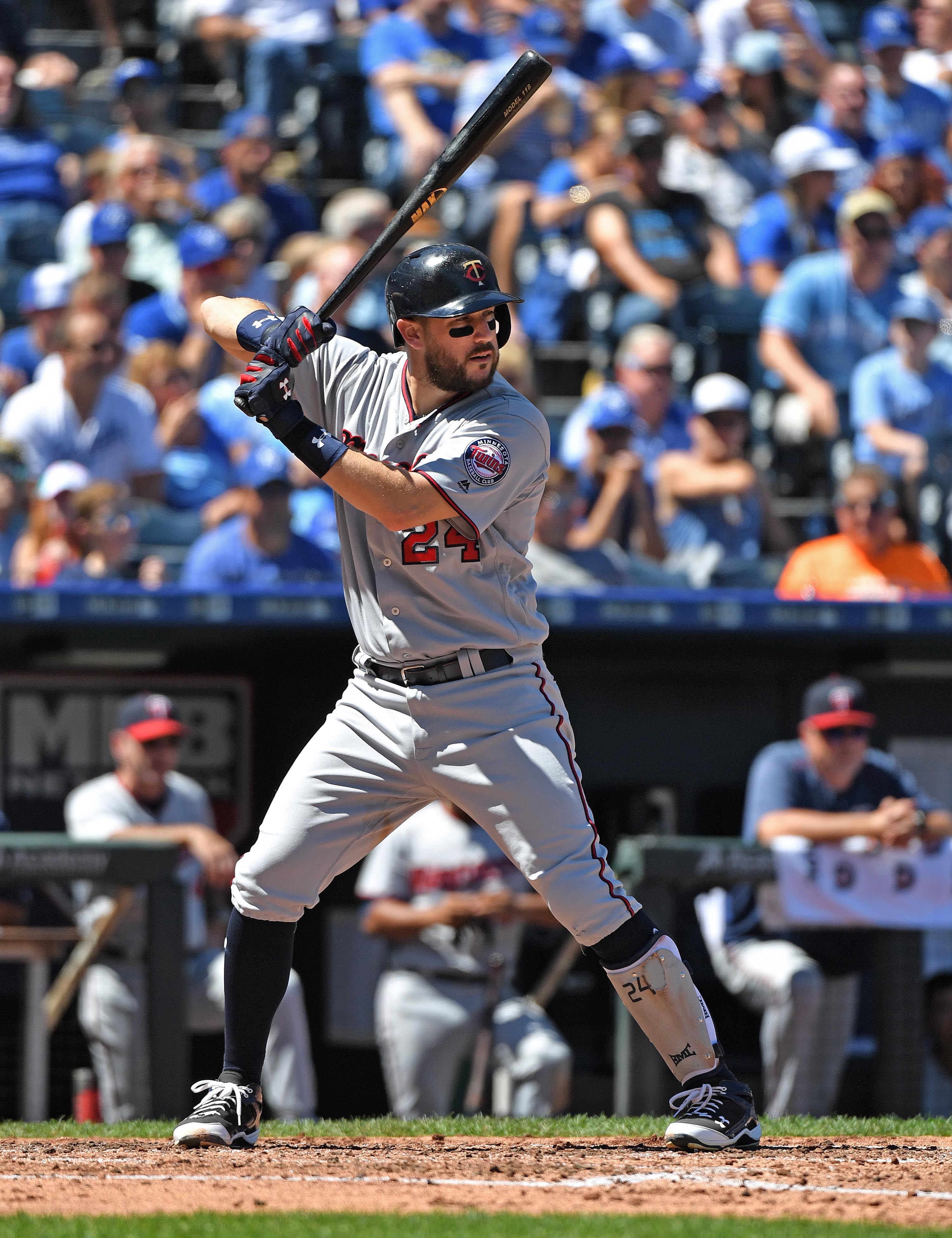
This past year, Plouffe hit .260/.303/.420 with 12 homers in an injury-ravaged season that included three trips to the disabled list for an intercostal strain, a fractured rib and an oblique strain. Those three maladies combined to limit Plouffe to just 84 games and 344 plate appearances — both his lowest marks since establishing himself as a regular with the Twins. The three trips to the DL, Plouffe’s projected $8.2MM price tag in arbitration (courtesy of MLBTR contributor Matt Swartz) and a stacked corner infield/DH scene in Minnesota prompted the new Twins front office to part ways with Plouffe following the season rather than tender him a contract in arbitration.
Despite possessing fairly notable platoon splits, it seems that Plouffe will be in line for near-everyday at-bats, as was the case during his tenure with the Twins. Plouffe never rated as an exceptional defender at the hot corner, but the converted shortstop went from dreadful Defensive Runs Saved and Ultimate Zone Rating marks to above-average grades over the course of his time in Minnesota as he grew more accustomed to his new position. (His 2016 defensive metrics were poor, though certainly one can imagine his persistent injuries impacting his mobility on the field.)
From 2014-15, Plouffe posted a +5 DRS and +8.4 UZR, so with better health there’s reason to believe he can return to form with the glove. That would be an improvement over the younger Healy, who was below average per DRS (-2) and UZR (-9.4). Though Healy may not see many reps at third base in 2017, it seems logical to expect that the A’s will want to keep his bat in the lineup as much as possible. The 25-year-old compiled a .305/.337/.524 slash with 13 homers through 72 games as a rookie, suggesting that he could be a 20-homer bat for the A’s even if his .352 BABIP is bound to regress to some extent.
Plouffe also reportedly drew interest from the Red Sox, Braves and Royals, and he was speculatively linked to the Marlins as well. Instead, he’ll opt for a homecoming of sorts, returning to his home state (albeit a few hundred miles north of his Los Angeles area roots) and a presumably larger role as he takes aim at a healthier season in 2017.
Photo courtesy of USA Today Sports Images.