
Mets Re-Sign Yoenis Cespedes
While he might have originally been acquired as a rental piece at the non-waiver trade deadline, Yoenis Cespedes is staying with the Mets, who announced a three-year deal with the slugging outfielder on Tuesday evening. Cespedes will reportedly be guaranteed $75MM, though he can also opt out after the first season, at which point he’ll have earned $27.5MM on the front-loaded contract. He’ll reportedly earn $23.75MM in both 2017 and 2018 if he does not opt out, and the new deal is also said to include a full no-trade clause.
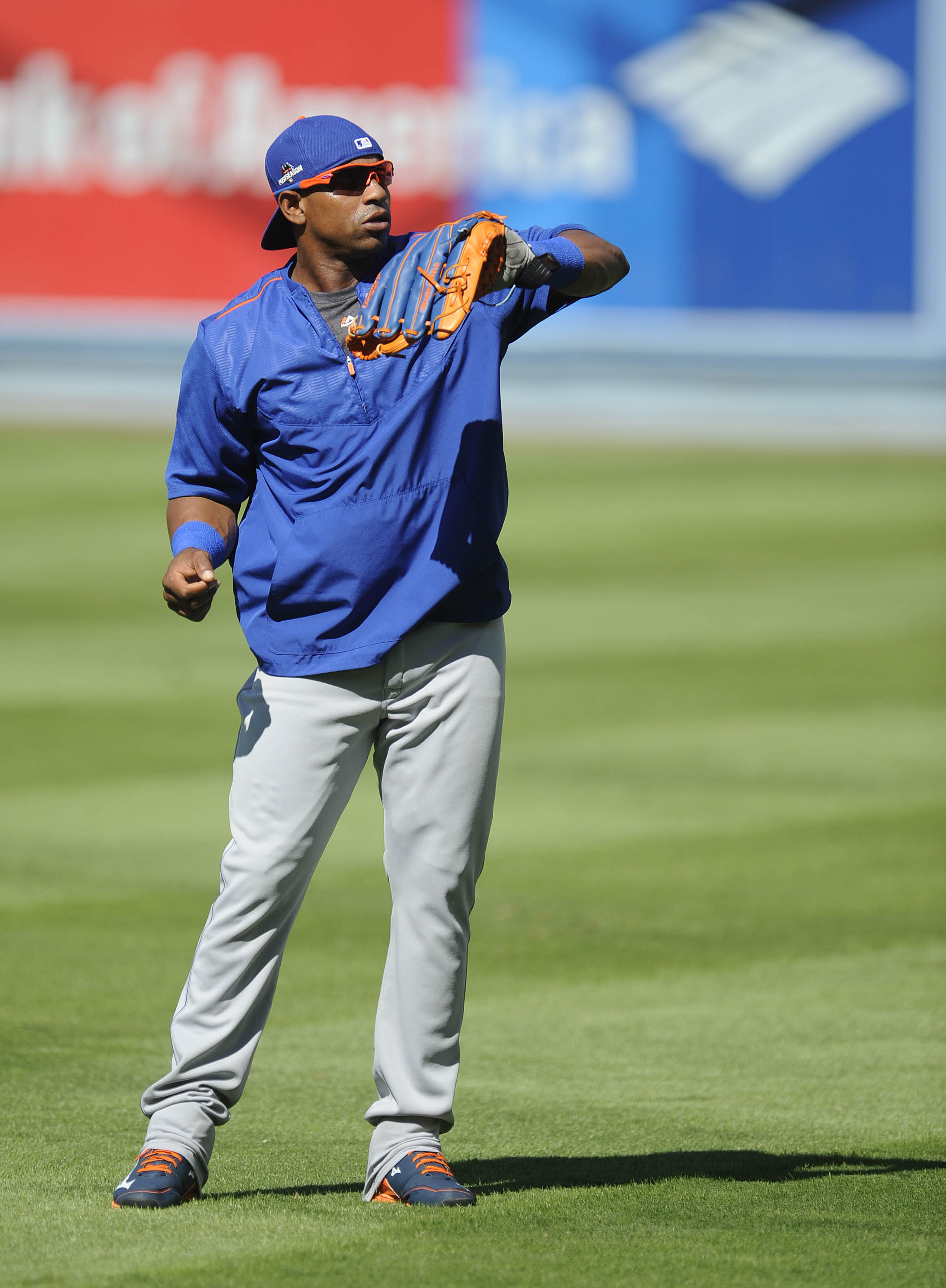 While a return to the Mets has always seemed plausible, it’s also appeared at times to be a long shot. That’s due in large part to the fact that Cespedes seemed destined to land a much greater, longer-term commitment than Sandy Alderson and co. were willing and able to make.
With Michael Conforto and Curtis Granderson at the corners, and Juan Lagares and recent addition Alejandro De Aza available up the middle, there wasn’t a need, strictly speaking. But Michael Cuddyer‘s retirement opened a roster spot and some capital, and the Mets stayed in position as the winter progressed. The team’s payroll will approach the $140MM mark with Cespedes in tow, but the somewhat surprising World Series run last year and an impressive crop of young pitchers certainly justified such an advance.
It remains to be seen what New York will do in crafting an outfield alignment. A trade of Lagares makes some sense at first glance, though it isn’t clear what they’d be looking for in return, and selling low isn’t appealing either. Then there’s the fact that the gifted fielder might be of importance not only down the line, but also in 2016. Granderson could surely stand to avoid left-handed pitching, while Conforto is still somewhat unproven despite an impressive debut. And, Cespedes did not look terribly comfortable in center field last year, so some late-game shifting could be in order at times.
Any way you cut it, the signing looks to represent a major coup for the Mets, who’ll look to defend their NL East title with the man who helped lead them there in the first place. Cespedes, 30, put up a huge .287/.337/.604 slash down the stretch after coming to New York in a deadline deal that sent minor league right-handers Michael Fulmer and Luis Cessa back to the Tigers. Although Cespedes dealt with some injuries and wasn’t a major force in the postseason, there’s no question of the impact he made on the Mets last year.
Looking forward, the Mets will hope that Cespedes can continue to provide top-notch overall value. Though he’s not much of an on-base threat, he’s made huge contributions with his power stroke and high-quality corner outfield defense. To be sure, Cespedes was more solid than great in the two preceding seasons his elite 2015 campaign. But with the chance to head back to the open market after the season, he’ll surely have all the incentive necessary to fuel a repeat performance, and the downside here is far less worrisome than those found in many player option scenarios. Plus, New York stands to gain a draft pick through the qualifying offer system if Cespedes triggers his opt-out clause.
The concept also makes good sense as a fall-back for the Roc Nation Sports client. It certainly carries a high-end annual salary, with the larger portion due up front, though the term does fall well shy of expectations. MLBTR’s Tim Dierkes had pegged his earning capacity at $140MM over six years entering the winter. It appeared he’d have a good chance of reaching it after Jason Heyward inked a monster, opt-out-laden $184MM deal with the Cubs and Justin Upton went for six years and $132.75MM to the Tigers.
While the overall guarantee pales in comparison to those contracts, Cespedes adds an enormous amount of upside through his own contract. The early opt-out provision means that he’ll have a chance to re-enter the market in just one year’s time in search of yet another big payday. The structure ultimately falls into what we’ve discussed here quite a bit in recent weeks (both in the MLBTR Newsletter and on the MLBTR Podcast), as a supercharged short-term deal that includes a significant guarantee but cabins the team’s risk and leaves plenty of earning potential for the player.
Barring a catastrophe in 2016, it’s hard to imagine that Cespedes won’t hit free agency again next year. There’s an excellent chance he’ll be the top outfielder available next winter in a much less robust market, and he won’t be so old that he won’t be able to cash in.
Cespedes was said to have interest from the White Sox on a three-year deal, though there was no mention of a first-year opt-out in those reports. The Orioles had interest in the five-year, $90MM range before ultimately agreeing to re-sign first baseman Chris Davis. The division-rival Nationals appeared to be the strongest competition in the end, but their reported five-year, $110MM offer (which contained an opt-out provision after the 2017 season) reportedly came with 10 years of heavily deferred payments, thereby reducing the present-day value of the contract to about $77MM.
Ultimately, with what’s been reported thus far, it isn’t surprising that Cespedes chose to take this offer to return to the bright lights of New York. And while there’s plenty of work yet to be done, the Mets will enter the coming season as a popular choice to challenge once again for a trip to the World Series.
Jim Bowden of ESPN.com (via Twitter) first said a deal was close. Ken Rosenthal of FOX Sports (links to Twitter) reported the financial details. Jon Heyman first said a deal was done (Twitter links). Heyman later tweeted the year-to-year breakdown of the deal.
Photo courtesy of USA Today Sports Images.
Braves, Nationals, Padres Expected To Exceed 2016-17 International Pools
The Braves, Nationals, and Padres are all expected to bust their international spending allocations for the upcoming July 2 period, Ben Badler of Baseball America reports. With many other clubs serving the first or second year of their own bans on doling out $300K+ bonuses to pool-eligible players, and other organizations not heavily invested internationally, it appears these three clubs are prepared to enter the void.
As Badler explains, the teams don’t yet know exactly how much cash they’ll have to spread, but the general spending capacity won’t come as a surprise since it’s based on prior year’s record. Teams can also acquire individual spending allotments from other clubs via trade, and with many organizations unable to spend all of their slots, there should be plenty available. But a club can only increase its total allocation by 50%, so even adding in some new capacity presumably won’t keep the teams from avoiding the penalties.
The disincentive for going over the pool, of course, is a 100% tax on overages above 10% as well as up to a two-year timeout (after a 15% excess) on future bonuses of over $300K. But it’s long been expected that changes could be coming to the international amateur market — as commissioner Rob Manfred just addressed yesterday — and it’s certainly possible (but hardly certain) that budget-busting organizations won’t end up being handicapped under a new system.
Atlanta, especially, is expected to attack the market, per Badler. He says that the rebuilding organization is lining up a series of signings that could equal or exceed the Yankees’ spree from 2014-15. Their biggest targets are top-shelf infield prospect Kevin Maitan and fellow Venezuelan standout Abrahan Gutierrez, a catcher.
Meanwhile, the Nats are looking to build on their success at low-budget international signings with some real cash at their disposal. A pair of middle infielders — Dominican Yasel Antuna and Venezuelan Jose Sanchez — are near the top of their list.
Likewise, the Padres have not only been laying the groundwork for a series of deals with Dominican and Venezuelan players in the $1MM range, but are eyeing a major strike on the burgeoning market for young Cuban talent. Badler says that the San Diego organization is attempting to convince several players who may soon become free agents to wait for the new signing period to ink their deals.
Indians Agree To Two-Year Deal With Josh Tomlin
The Indians have reached a two-year contract extension with righty Josh Tomlin, Paul Hoynes of the Plain Dealer reports (Twitter links). The SSG Baseball client will receive a $5.5MM guarantee in the deal, which includes a club option for a third campaign.

Tomlin had already agreed to a $2.25MM, fully guaranteed salary for the coming season, and that remains intact. The new deal will buy up Tomlin’s first season of free agent eligibility and give the club a $3MM option (with a $750K buyout) on another.
The deal could top out at $12MM over three seasons. Tomlin is guaranteed the aforementioned $2.25MM, then a modest raise to $2.5MM for 2017 to go with the buyout on the option. He can also reach a variety of incentives in 2017 and 2018, potentially reaching $2MM per year, based on games started and innings pitched, Hoynes adds on Twitter.
It seems clear that Tomlin, 31, prioritized the maximization of guaranteed money after a strong showing in limited MLB action last year. He’s bounced up and down a fair bit, never quite sticking in the majors, and the opportunity to cash in was surely worth the sacrifice of some upside.
Tomlin worked 65 2/3 innings of 3.02 ERA pitching in his 10 starts in 2015, putting up a solid 7.8 K/9 and outstanding 1.1 BB/9 in that time. He benefited from a low BABIP and high strand rate, and continued to post low ground-ball rates and a troubling predilection to the long ball, but xFIP and SIERA still quite liked the effort. Furthermore, the 2015 campaign marked the second straight season in which Tomlin showed a newfound ability to record strikeouts at an above-average rate. Tomlin’s career 4.9 K/9 rate jumped to 8.1 in 2014, and he was able to sustain much of the improvement in that area this past season.
Anything approaching that output would make this contract a clear win for the Indians. The club is locking in a low rate of pay for a useful pitcher who could factor in the rotation or the pen. And adding a year of non-committed, cheap control is a rare chance. While Tomlin lacks a clear track record of major league success, it’s a relatively easy bet to make for the club.
Photo courtesy of USA Today Sports Images.
Manfred On International Draft, Expansion, DH, CBA
We’re just over one year into the official tenure of Major League Baseball commissioner Rob Manfred, and the (relatively) newly appointed executive took some time to chat with Jeff Passan of Yahoo Sports and with Jerry Crasnick of ESPN to reflect on his first year in that role. While I’d recommend reading each Q&A in its entirety — Manfred offers interesting thoughts on matters such as his leadership style, interaction with collegiate baseball, and the future of MLB Advanced Media — here are some particularly relevant highlights from the pair of interviews …
- Manfred tells Passan that he is still “one hundred percent” in favor of adding an international draft in the future. “I just think you’ve got to follow the fundamentals on this one,” Manfred explained. “Getting into a single method of entry into the industry will be the most effective in terms of promoting competitive balance.” Manfred didn’t commit to a firm timeline in terms of implementing the draft, but Manfred has spoken in the past about the fact that the influx of high-priced Cuban free agents has “put a stress test” on the international bonus system that was collectively bargained in the last wave of negotiations. While adding an international draft in the upcoming CBA is an ambitious goal, it doesn’t strike me as far-fetched to have a framework drawn up for the following round of negotiations.
- Both Passan and Crasnick asked Manfred about the possibility of eventually expanding beyond the 30 teams currently in the league, and Manfred spoke in favor of doing so. “We’re a growth business,” he told Passan. “Sooner or later, growth businesses expand. Having said that, I do not have a timetable. It’s not a short-term project for us.” Crasnick asked, more specifically, about the possibility of expanding internationally, and Manfred told him that there are indeed international sites that “would be intriguing” as the league looked to expand. However, Manfred also noted that expansion is “not a this-week or this-year issue,” rather characterizing the concept as a longer-term goal.
- Manfred said that he did not mean to invite speculation about the addition of the DH to the National League in some recent comments. “The most likely result on the designated hitter for the foreseeable future is the status quo,” he told Crasnick. “I know [Cardinals general manager] John Mozeliak talked about it, and when you have any National League club talking about it, it’s interesting. But I think the vast majority of clubs in the National League want to stay where they are.” As Manfred went on to note to Passan, it’s important to remember that the DH issue is something that could (but may not) come up in the upcoming collective bargaining talks.
- As for the CBA more generally, Manfred called himself “a CBA optimist” and said he expects to find common ground with the player’s association. “We’ve developed a strong and mature relationship with the MLBPA,” he told Crasnick. “I think the players are doing great, and the owners are happy with the economics. I think there’s enough money in the game that we can find a way to make a new agreement.” When asked by Passan whether a work stoppage would be on the horizon, Manfred said he’d “do everything humanly possible to make sure that doesn’t happen.”
- Regarding the as-yet-untested domestic violence policy reached between the league and the players, Manfred provided some interesting background. The decision was made to pursue a collectively bargained arrangement, he said, in order to ensure a “complete approach to the issue” and also because “collectively bargained policies in disciplinary areas generally have more acceptance among the players because they provide them with certain safeguards that our players have been used to over time.”
Latest On Yovani Gallardo
Reports suggest that there are three teams currently pursuing free agent righty Yovani Gallardo. We heard yesterday that the Rockies were lining up to participate in talks, and SB Nation’s Chris Cotillo suggested today on Twitter that the Orioles and Astros have also remained involved.
But Baltimore executive VP of baseball operations Dan Duquette said earlier this morning that the club is strongly disinclined to part with its top draft choice (currently 14th overall). And the club does not appear willing to go to a fourth year for Gallardo, Roch Kubatko of MASNsports.com reports. Houston, too, would need to punt a valuable pick (18th overall). While it’s long been expected that those clubs would consider starting pitching additions, and could still stand to do so, that added disincentive poses a significant barrier.
As for the Rockies, Gallardo’s agent, Bobby Witt, tells MLB.com’s Thomas Harding that his client would “be happy pitching for any of the three teams” — apparently suggesting that the specter of Coors Field won’t deter the veteran. Indeed, the Rockies are participating in “serious” talks with Gallardo, Patrick Saunders of the Denver Post reports on Twitter. But he adds that the club does not currently have an offer outstanding, and GM Jeff Bridich downplayed the link in public comments.
Unlike the other two teams, the Rockies would not have to give up their top choice — the fourth selection in this summer’s draft — to add Gallardo, who requires compensation because he turned down a qualifying offer from the Rangers. Attracting pitchers to throw at altitude has always been a challenge, of course, but that beneficial draft situation and a somewhat slow-to-develop market for Gallardo could leave the Rockies in solid position to make a move.
The fit for Colorado is obvious: while the organization has some potentially valuable arms, their rotation is as unsettled as any in the majors. There are questions up and down the staff: Jorge De La Rosa is steady but aging; Jordan Lyles and Tyler Chatwood are coming off of significant injuries; and Chad Bettis had a surprisingly solid 2015 but hardly has a deep track record. Younger options such as Jon Gray, Eddie Butler, and Tyler Matzek have shown talent but are hardly sure things, while Jeff Hoffman, Tyler Anderson, and others may be in need of further seasoning before they’re considered at the MLB level.
From a payroll perspective, the Rockies already have about $91MM on the books for the coming season and will still need to add the arbitration salaries of Charlie Blackmon (between $3.9MM and $2.7MM arb filings) and DJ LeMahieu ($3.3MM vs. $2.8MM). Of course, after signing Gerardo Parra, the club seems in position to deal an outfielder, and that could bring some salary relief along with a return in players. The team has never reached the $100MM threshold on an Opening Day roster.
Gallardo, who’ll soon turn 30, has turned in excellent results of late and is quite durable. But his peripherals are on the decline — in particular, a plummeting strikeout rate — and he’s now one of only three starters among MLBTR’s top fifty free agents who have yet to sign. (The others, Mat Latos and Doug Fister, figure to be available on shorter deals.) MLBTR’s Tim Dierkes predicted a four-year, $52MM salary entering the winter. It is fair to note that we’ve seen other pitchers — Ubaldo Jimenez, Matt Garza — reach that level of salary at this stage of the offseason or later. And there’s no denying that the market for starting pitching has been robust.
Mets Sign Antonio Bastardo
FRIDAY: The Mets have announced the signing. Bastardo gets a $250K signing bonus and will then earn salaries of $5.25MM (2016) and $6.5MM (2017), Heyman tweets.
WEDNESDAY: The Mets and left-hander Antonio Bastardo are in agreement on a contract, reports Jon Heyman (Twitter link). It’s a two-year, $12MM contract, according to Baseball Essential’s Robert Murray (on Twitter). Bastardo is represented by the Legacy Agency.
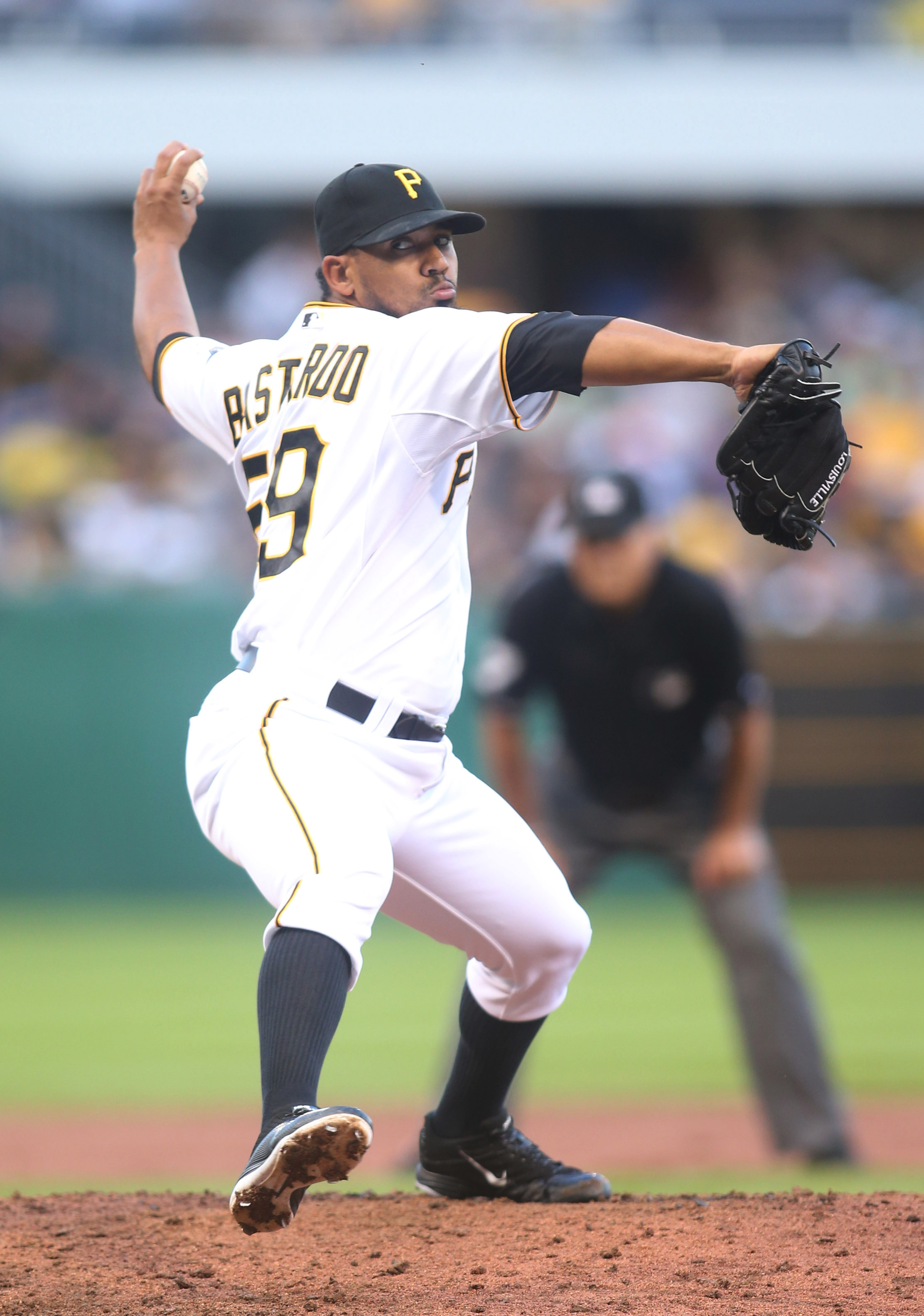
Murray reported yesterday that things were picking up in the Bastardo market, though the three-year deal mentioned in that report ultimately wasn’t attained. The two-year pact represents a departure from the Mets’ previously reported plans, as the team was said earlier this month to be seeking relief help on a one-year deal. In that regard, the agreement between the two parties represents a compromise, as Bastardo was said to be seeking a three-year deal in the $18MM range (similar to the one Tony Sipp landed with Houston earlier this year).
Bastardo, 30, has turned in generally strong results across the past three seasons between the Phillies and Pirates, working to a 3.18 ERA with 10.5 K/9, 4.4 BB/9 and a 30.8 percent ground-ball rate in 164 innings of work. He’s dominated left-handed opponents in that stretch, holding same-handed batters to a paltry .167/.273/.295 triple-slash. However, Bastardo is more than a specialist, as he’s also been plenty effective against right-handed batters, limiting such opponents to a .204/.310/.314 line. As such, he can be deployed as a setup man, regardless of matchup, alongside Addison Reed and Jenrry Mejia. That trio, of course, will help bridge the gap from the club’s excellent young rotation to breakout closer Jeurys Familia, who saved 43 games for the Mets in 2015.
With Bastardo in the fold, the Mets will now have a wealth of quality left-handed options for manager Terry Collins to utilize. The team re-signed Jerry Blevins this offseason, and he’ll look for better health after twice fracturing his forearm in a pair of fluky accidents in 2015. Sean Gilmartin, whom the Mets selected in the 2014 Rule 5 Draft, enjoyed a brilliant season with New York, recording a 2.67 ERA in 57 1/3 innings in his Major League debut. And southpaw Josh Edgin, who missed the 2015 campaign in the wake of Tommy John surgery, will likely be ready to return to a big league mound at some point during the 2016 season as well.
The Mets deserve some praise for waiting out what was an exceptionally aggressive relief market in the earlygoing this offseason. Five relievers scored contracts of three or more years in the earlier phase of the offseason, and many — we at MLBTR included — believed Bastardo would find such a pact as well. However, while his average annual value is commensurate with many of the multi-year deals given to setup men this winter, the Mets’ patient approach allowed them to knock a year off the price in the end.
Bastardo drew interest from a number of teams, including the Orioles, Dodgers, Pirates, Blue Jays and Twins, per various reports this offseason. With his departure from the open market, teams could turn to one-year deal candidates such as Neal Cotts, Franklin Morales and Matt Thornton as they look to supplement their bullpens with left-handed relievers.
Photo courtesy of USA Today Sports Images.
Padres Sign Alexei Ramirez
The Padres have officially added veteran infielder Alexei Ramirez, who’ll presumably slot in as the team’s regular shortstop. He reportedly receives a $4MM guarantee, with a $3MM salary for 2016 and a $4MM mutual option that comes with a $1MM buyout.
Ramirez, 34, had spent his entire career with the White Sox after coming over from Cuba before the 2008 season. He’s been a reliable, albeit rarely spectacular, performer ever since.
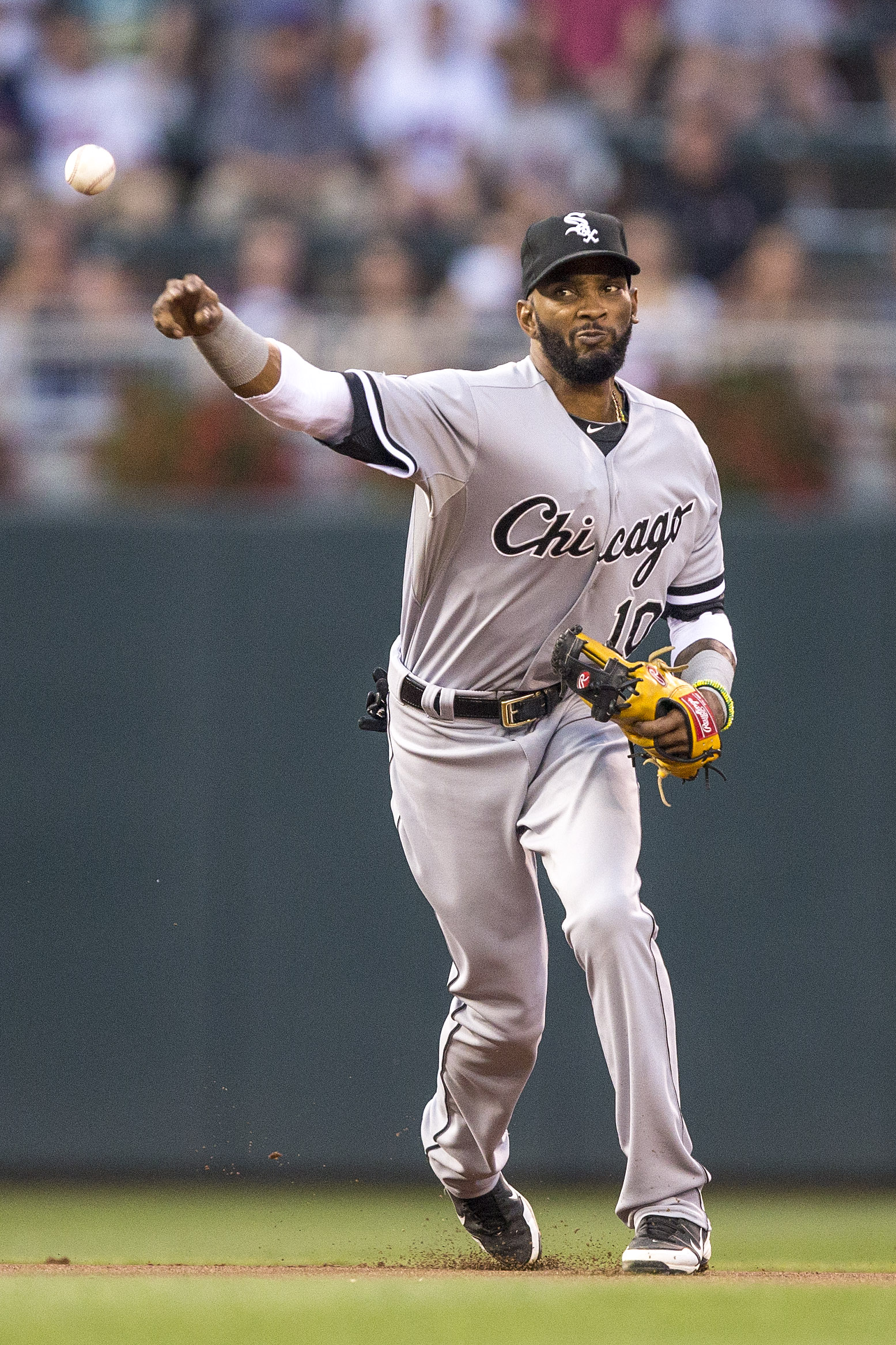
The first plate appearance that Ramirez takes in San Diego will be the 5,000th of his career. In the ones that precede it, he’s hit a cumulative .273/.310/.399 while adding about 14 home runs and 17 stolen bases annually.
Ramirez’s work at the plate has fluctuated somewhat year to year, of course, but he generally featured as a 3-or-more-win player for most of his tenure in Chicago. That’s because he also generated consistently strong overall baserunning ratings and above-average defensive metrics.
It all adds up to a nice, veteran package — except for the fact that Ramirez seemed to hit a wall in 2015. He posted a .249/.285/.357 batting line that set personal lows in all three triple-slash categories. And his work on the basepaths and with the glove drew negative overall ratings for the first time since his debut season.
San Diego will be banking on a turnaround, or at least a bounce back toward his career numbers. After all, he did suffer from an uncharacteristically low .264 BABIP while otherwise maintaining a K:BB ratio at his career norms and putting up more-or-less typical batted ball numbers. And things turned up markedly in the second half at the plate.
It’s certainly an understandable move for an organization that received dismal production at the shortstop position last year. While Ian Desmond would have been a bigger upgrade, he comes with plenty of risk and still seems likely to command a much larger contract. And it’s eminently arguable that Ramirez makes for a better fit, as San Diego has some younger players moving through the minor league ranks, led by Javier Guerra but also including names like Jose Rondon and Ruddy Giron. It’s not clear that any will be prepared by the time Ramirez’s deal is up, but at least there’s little chance that the organization will be paying big money to a player who is clogging the depth chart and reducing flexibility at a key position.
Jon Heyman reported the signing and financial details (Twitter links). Eno Sarris of Fangraphs first reported the guarantee and deal structure.
Photo courtesy of USA Today Sports Images.
Orioles Re-Sign Chris Davis
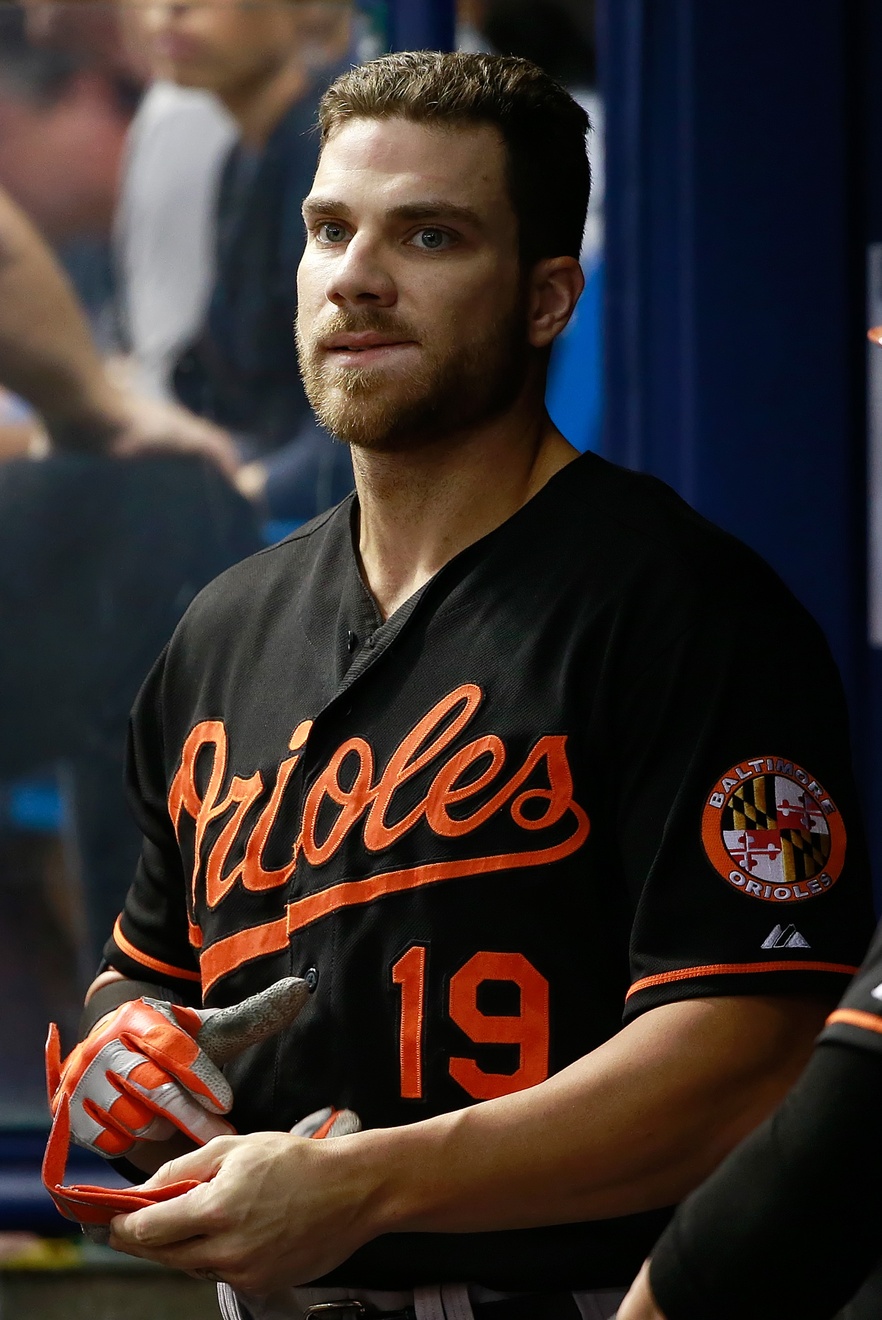
It took a team record, as expected, but the Orioles have officially re-signed Chris Davis to a seven-year deal. The Scott Boras client will reportedly receive $161MM over that span, though there’s more to it than adding up the annual salaries.
Davis will receive $17MM per season over the life of the contract. He will then receive $3.5MM a year from 2023 through 2032, then $1.4MM a year from 2033 through 2037. And there will be no interest on that $42MM total in deferred money.
The length of the deferrals in Davis’ contract is unusual, calling to mind the Mets’ 25 years in deferred payments to former star Bobby Bonilla. Obviously, though, their effect is that they reduce the present-day value of Davis’ contract, even though he will, in fact, receive a total of $161MM.
There’s other value in the deal for Davis, though. He doesn’t gain an opt-out opportunity, but will pick up a partial no-trade clause. And as USA Today’s Bob Nightengale notes (via Twitter), Davis could also receive a large tax break on the deferred $42MM since Texas is one of seven states without an income tax. (Of course, it’s impossible to predict if that will persist through 2037 or even if Davis will continue living in Texas.)
The deal represents a huge investment for the Orioles — as CSNmidatlantic.com’s Rich Dubroff notes, it’s almost twice as large as the team’s largest previous commitment to a single player (Adam Jones‘ current $85.5MM contract). It’s also the fourth-largest contract handed out this offseason, behind those of David Price, Zack Greinke and Jason Heyward. As Rosenthal notes, the $23MM average annual value of Davis’ deal matches Heyward’s, although Heyward received an extra guaranteed year and an opt-out.
Out of context, that Davis would receive such a lucrative deal is perhaps not so surprising. In November, MLBTR’s Tim Dierkes ranked Davis the fifth best free agent available this offseason, behind those three players and Justin Upton, who remains unsigned. But the Orioles had previously reportedly offered Davis a $150MM deal, and there had been few or no indicators that other teams were serious suitors for Davis. Late this week, it emerged that the Orioles had offered another top free agent bat, Yoenis Cespedes, a five-year deal worth around $90MM. That offer might have helped motivate Davis’ camp to hammer out a deal with the O’s, and given the circumstances, perhaps it’s a bit surprising Davis was able to get significantly more than the team had reportedly previously offered.
In agreeing to terms with Davis, the Orioles will, of course, be retaining one of the game’s most prolific power hitters, and one who, at age 29, could have many productive seasons left. Davis has led the AL in home runs in two of the last three seasons, and his 126 homers over those three years are a tremendous total in an era largely dominated by pitchers. Davis does have his drawbacks as a hitter, and those will be worth watching as his contract progresses — he’s always struck out frequently, but in 2015 he topped himself by whiffing 208 times (although he did actually reduce his strikeout rate from 33.0% in 2014 to 31%). He has generally been able to keep his batting averages at reasonable levels despite his very high whiff rates, mostly because he hits nearly everything hard — his hard contact percentage last year was fourth among MLB hitters, behind only J.D. Martinez, David Ortiz and Matt Kemp. But some big sluggers with high strikeout rates have struggled as they’ve aged, with Ryan Howard as a prime example. Davis’ new contract will carry him through his age-36 season, the same age Howard is now.
Davis is a better and more versatile defender than Howard was, though, insuring him somewhat against a precipitous decline. (In addition to his work at first base, Davis fared reasonably well in 30 games in right field last season, and he’s played a bit of third in the recent past.) And for the time being, Davis is a tremendously valuable part of the Orioles’ lineup. The O’s were -34 runs last season in FanGraphs’ Offensive Runs Above Average statistic; that total would have been scarily low were it not for Davis and Manny Machado, who combined for about 65 runs above average between them. Davis ranked first on the Orioles in home runs, RBI, walk rate, on-base percentage, and slugging percentage.
Davis’ deal makes Upton and Cespedes the clear best hitters remaining on the free agent market, and could help clear the way for Upton and Cespedes to find deals of their own. A report from earlier this week had indicated that the impasse between Davis and the Orioles was stunting the development of the rest of the top of the market for power bats.
At the beginning of the offseason, Davis rejected the Orioles’ qualifying offer. Because they re-signed him, they will not receive a draft pick as compensation.
Jon Heyman reported the agreement, as well as its length and total guarantee (Twitter links). ESPN’s Buster Olney detailed the deferrals (on Twitter) that FOX Sports’ Ken Rosenthal first reported (Twitter links). Rosenthal (in a tweet) and Roch Kubatko of MASNsports.com (via Twitter) added other details.
Photo courtesy of USA Today Sports Images.
White Sox Re-Sign Matt Albers
The White Sox have officially brought back free-agent righty Matt Albers, as Ken Rosenthal of FOX Sports reports (links to Twitter). Per the report, the SSG Baseball client will earn $2MM in 2016. The deal also includes a $3MM club option with a $250K buyout.
Albers, 32, has dealt with injuries at times in recent years — most notably, a lengthy struggle with shoulder issues that cost him most of 2014. And a freak broken finger also landed him on the DL last year.
But the most recent work on his record is quite impressive. He threw 37 1/3 innings of 1.21 ERA pitching last year for Chicago, with only 6.8 K/9 but a strong 2.2 BB/9 and 58.6% groundball rate to back his efforts. Truth be told, Albers has put up outstanding run-prevention numbers dating back to the start of the 2012 campaign. He’s posted a sterling 2.32 ERA over his 170 2/3 frames since that time.
While metrics don’t quite support that level of production, SIERA has viewed him as a mid-3.00 ERA performer or better for quite some time. Though his velocity dipped rather sharply last year, Albers tells MLB.com’s Scott Merkin that changes to his change-up helped him to end the year with 22 1/3 scoreless innings despite the lack of his typical ~93 mph heat.
Certainly, Chicago can make out on this signing even if Albers takes a fairly significant step back in terms of results. He’ll join a seemingly well-stocked pen that will be needed to ease the burden on a rotation that has some question marks at the back end.
2016 Non-Waiver Trade Deadline Moved To Aug. 1
Because the typical non-waiver trade deadline of July 31 would have fallen on a Sunday this summer, Major League Baseball has pushed the deadline back 24 hours, reports USA Today’s Bob Nightengale (via Twitter). This year’s non-waiver trade deadline will come on Monday, Aug. 1 as a result of the switch. Nightengale doesn’t include a specific time, but it’ll presumably be the same 4pm ET. MLB.com’s Richard Justice explains that the league did not want the trade deadline to occur on a Sunday afternoon, when games were still being played (links to Twitter). The Aug. 1 switch will be in effect only for 2016, Justice notes.
While the change isn’t drastic, the shift does afford teams an extra day to assess its chances at landing a Wild Card playoff berth or making a late run up the divisional ranks. As we saw this past July, many teams wait as long as possible before ultimately deciding whether to buy, sell or stand pat at the deadline, and this year’s extra time, however slight, figures to be a welcome addition for teams.
For those wondering, Aug. 31 falls on a Wednesday this year, so there shouldn’t be any sort of adjustment in terms of the deadline for newly acquired players to be eligible for a team’s postseason roster.