
Twins To Sign Carlos Quentin To Minors Deal
The Twins have agreed to a minor league contract with outfielder Carlos Quentin, according to Jon Heyman (Twitter links). He’ll receive an invitation to MLB camp, per Heyman, and would earn $750K if he makes the MLB roster, Darren Wolfson of 1500 ESPN tweets. Quentin also picks up a June 1 opt-out opportunity if he hasn’t been added to the roster, per Mike Berardino of the St. Paul Pioneer Press (via Twitter).
It had appeared that the veteran was headed toward retirement, though more recent indications were that he would pursue a return to the majors. His representatives have suggested he could factor in at first base or DH in addition to his usual corner outfield role.
Quentin, 33, was released last winter after he was shipped from the Padres to the Braves as part of the contract balancing equation in the (first) Craig Kimbrel trade. He caught on with the Mariners on a minor league deal, but appeared only briefly at Triple-A Tacoma before calling off his attempt to work back.
We last saw Quentin in the majors in 2014, when he scuffled to a .177/.284/.315 batting line while dealing with a steady progression of injuries. Of course, he’s done much more previously. Over the 2009 through 2013 campaigns, Quentin posted a strong .252/.346/.485 slash. While he’s never rated well as a defender, that robust production shows that the bat has never been much of an issue.
Minnesota certainly has little to lose by giving Quentin a shot at a return, but it’s not immediately clear how he’d fit in the club’s plans. The organization made a fairly significant investment in Byung-ho Park, who also profiles as a defensively-limited, right-handed slugger. And the club seemingly has the corner outfield covered with Miguel Sano (who’ll convert from third base), Eddie Rosario, prospect Max Kepler, and the still-youthful Oswaldo Arcia. First base remains occupied by Joe Mauer, with Park factoring as a part-time stand-in.
There’s always the possibility that Quentin could squeeze onto the roster as a veteran bench piece. But players such as Eduardo Nunez and Danny Santana look to be favorites to grab 25-man spots, given their youth and defensive flexibility for a club that has some questions in center and at short. Both Nunez and Santana are out of options, as is the left-handed-hitting Arcia, who may be facing his final shot in Minnesota.
For what it’s worth, though he hits from the right side, Quentin has actually been somewhat better against opposing righties over his career. If nothing else, he’ll provide a veteran option and some competition for the less-established players currently on hand.
Greg Bird Requires Shoulder Surgery, Will Miss 2016 Season
2:22pm: During an October check-up on Bird’s shoulder, two different doctors recommended against surgery, tweets Chad Jennings of the Journal News. However, the injury flared up in the past 10 days or so, he adds.
1:38pm: Though the season hasn’t even started, the Yankees have already been bitten by the injury bug in notable fashion, as Joel Sherman of the New York Post reports that top prospect Greg Bird will miss the 2016 season due to shoulder surgery (links to Twitter). Bird will undergo the procedure tomorrow for what has been diagnosed as a torn labrum, per Sherman. The Yankees have since confirmed Sherman’s report, announcing that Bird suffered a recurrence of a shoulder injury that he initially sustained in May of 2015 (although, clearly, he did not damage the shoulder to this extent the first time he suffered the injury).
While Bird didn’t necessarily have a clear path to at-bats on the Opening Day roster, he figured to serve, at the very least, as a highly valuable depth piece and perhaps the first line of defense in the event of an injury to either Mark Teixeira or Alex Rodriguez. Teixeira, in particular, was prone to injuries in 2015, which is the reason that Bird was even called upon to make what turned out to be an impressive rookie season. In 178 plate appearances, Bird batted .261/.343/.529 with 11 home runs.
Some might speculate that this makes the Yankees more likely to add a left-handed-hitting first base/DH option, and while that may make sense on a minor league deal, it’s tough to see the team now fitting an additional bat onto its 25-man roster when Bird wasn’t even expected to open the season there. In the event of an injury to Rodriguez, the team could simply move Carlos Beltran to DH and use Brett Gardner, Jacoby Ellsbury and the newly acquired Aaron Hicks in the outfield as well.
DBacks Acquire Jean Segura, Tyler Wagner From Brewers For Chase Anderson, Aaron Hill, Isan Diaz
The Diamondbacks have acquired shortstop Jean Segura and reliever Tyler Wagner from the Brewers in exchange for starting pitcher Chase Anderson, second baseman Aaron Hill, and prospect Isan Diaz, tweets Keith Law of ESPN. The Brewers will also receive $5.5MM to partially cover the $12MM owed to Hill, hears Nick Piecoro of the Arizona Republic (tweet). The Diamondbacks and Brewers have confirmed the deal.
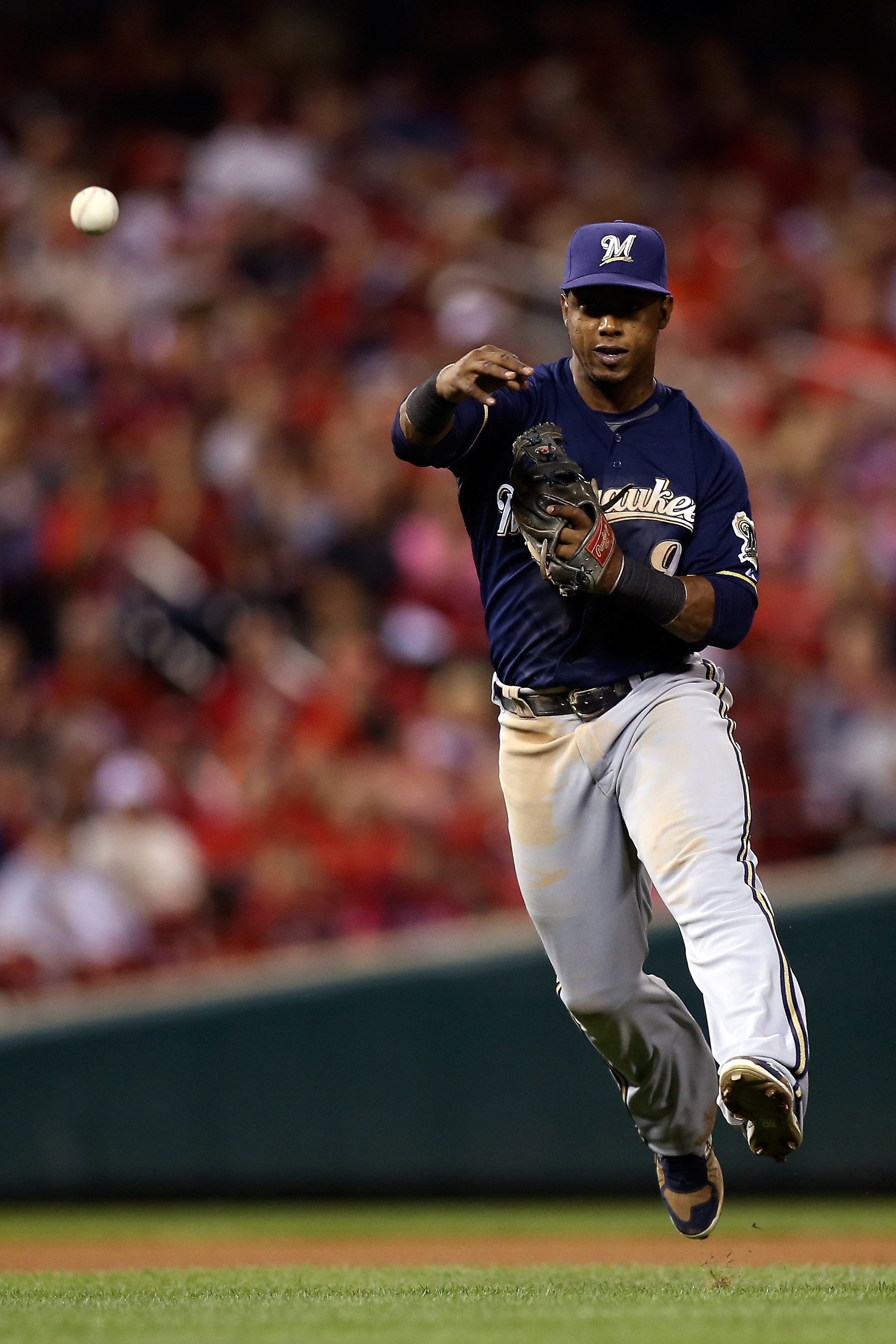 Segura, soon-to-be 26, was an oft-rumored trade candidate for the rebuilding Brewers. He broke out in 2013 as a 23-year-old with a 3.5 WAR season. He hit a solid .294/.329/.423 with 12 home runs, 44 stolen bases, and league average defense. However, he slumped steeply in the second half of that season, foreshadowing his struggles over the next two campaigns. Since his first full season, Segura has offered replacement level production in 1,141 plate appearances.
In Arizona, Segura will join the defensively-minded Nick Ahmed and Chris Owings. Ahmed is coming off a solid 1.7 WAR season, but his .226/.275/.359 leaves a lot to be desired at the plate. Owings spent most of 2015 at second base where he was expected to return this year. The addition of Segura not only gives the club more depth up the middle, it will give them the opportunity to mix and match offensive and defensive skill sets as needed.
Interestingly, the Angels once included Segura in a package for Zack Greinke (h/t Bill Shaiken of the LA Times). He’ll now have an opportunity to play alongside the ace. Per Bob Nightengale of USA Today (tweet), Segura will start for the DBacks – probably at second base. However, GM Dave Stewart told reporters including Nick Piecoro of Arizona Central Sports (tweet) that Segura would compete for the shortstop job. Segura has three more seasons of club control. He avoided arbitration with Milwaukee earlier this offseason, signing for $2.6MM. He’s a future non-tender candidate if he does not rebound this season.
The trade creates an opportunity for the Brewers to fully evaluate Jonathan Villar before top prospect Orlando Arcia is ready to join the club. GM David Stearns confirmed that Arcia will begin the year in Triple-A. Villar, who the Brewers acquired from the Astros earlier in the offseason for Cy Sneed, has played in parts of three major league seasons. He’s offered replacement level production to date, but he features an intriguing combination of power and speed for a middle infielder.
Wagner, 25, is a starting pitcher prospect. The righty averaged roughly 90 mph with his fastball in a three start debut last season. In the minors, he was said to top out at 95 mph with his sinker. He has a solid command and control profile but lacks big swing-and-miss stuff. The DBacks have plenty of pitching depth so Wagner will likely report to Triple-A or revert to the bullpen – he was a college closer.
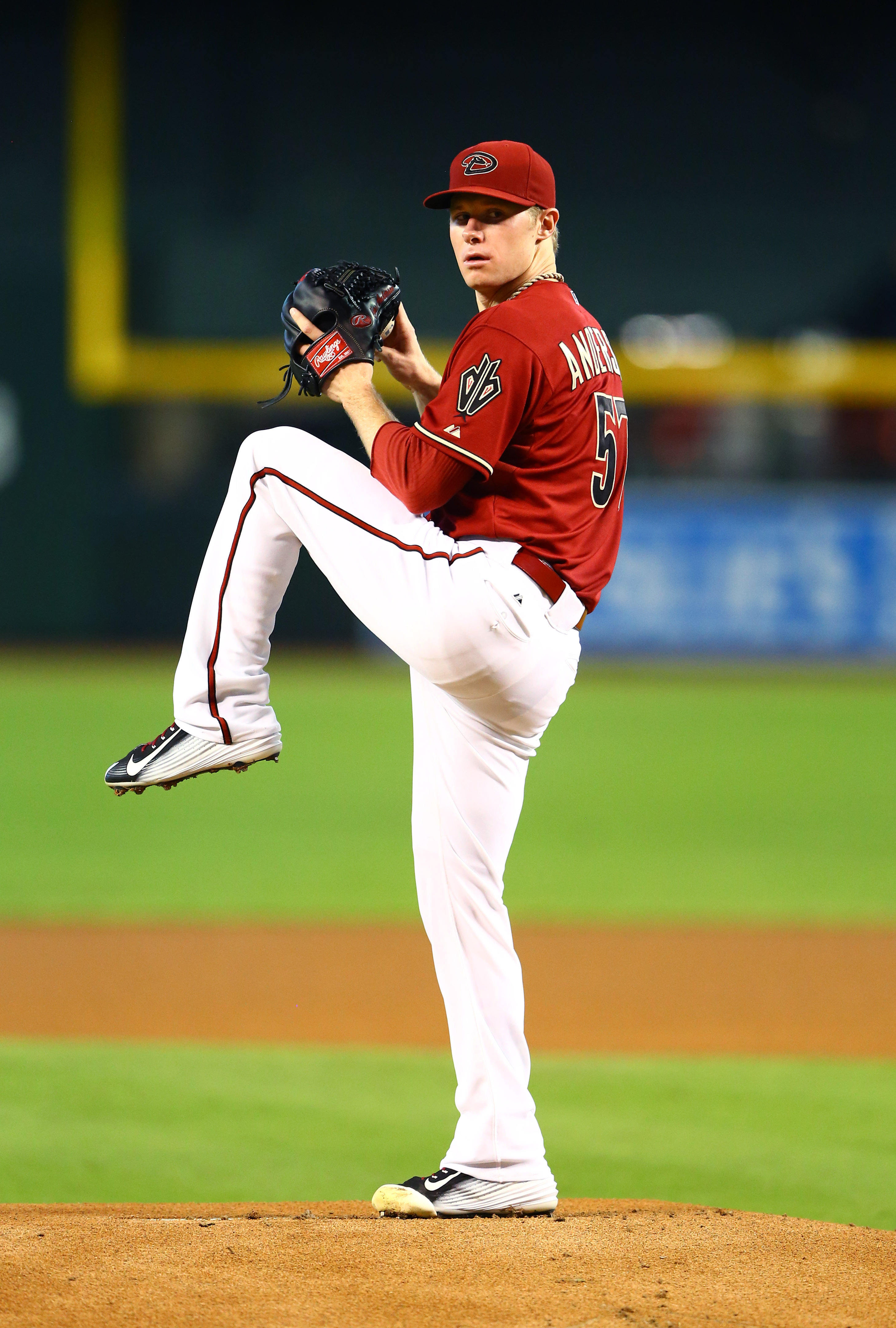 On the Brewers end of the haul, Anderson is the jewel of the trade. The 28-year-old is a reliable changeup specialist. In 267 career innings, he has a 4.18 ERA (4.17 FIP) with 7.28 K/9 and 2.70 BB/9. His stuff performed slightly better in 2014 than 2015 as evidenced by superior strikeout and swinging strike rates. As a slightly homer prone fly ball pitcher, he’s not a great fit for power happy Miller Park (the same was true at Chase Field). Anderson comes with five seasons of club control and will be a member of the rotation.
Hill, the veteran of the trade, has declined steadily since a peak season in 2012. Injuries and playing time battles held him to 353 plate appearances last season. He hit just .230/.295/.345. Entering his age 34 season, he’s owed $12MM in the final year of his contract. Per Haudricourt (tweet), Stearns envisions an active role for Hill mentoring the club’s many young middle infielders. He’s an obvious fit as a platoon mate for Scooter Gennett who rarely plays against left-handed pitching.
The Brewers also acquired a high quality prospect in the form of Diaz. Baseball America rated Diaz the ninth best prospect in the Arizona system. 20 in May, Diaz is coming off a strong season in rookie ball in which he was dubbed the MVP of the Pioneer League. He hit .360/.436/.640 with 13 home runs and 12 stolen bases in 312 plate appearances. The former second round pick will remain at shortstop for the time being, although his future home may be farther down the defensive spectrum.
Photos courtesy of USA Today Sports Images.
Andruw Jones Likely To Retire
Veteran outfielder Andruw Jones says he will soon announce his retirement, Cory McCartney of FOX Sports South tweets. In November, Jones had reportedly been hoping to sign with an MLB team, but it appears likely he’ll hang up his cleats instead.
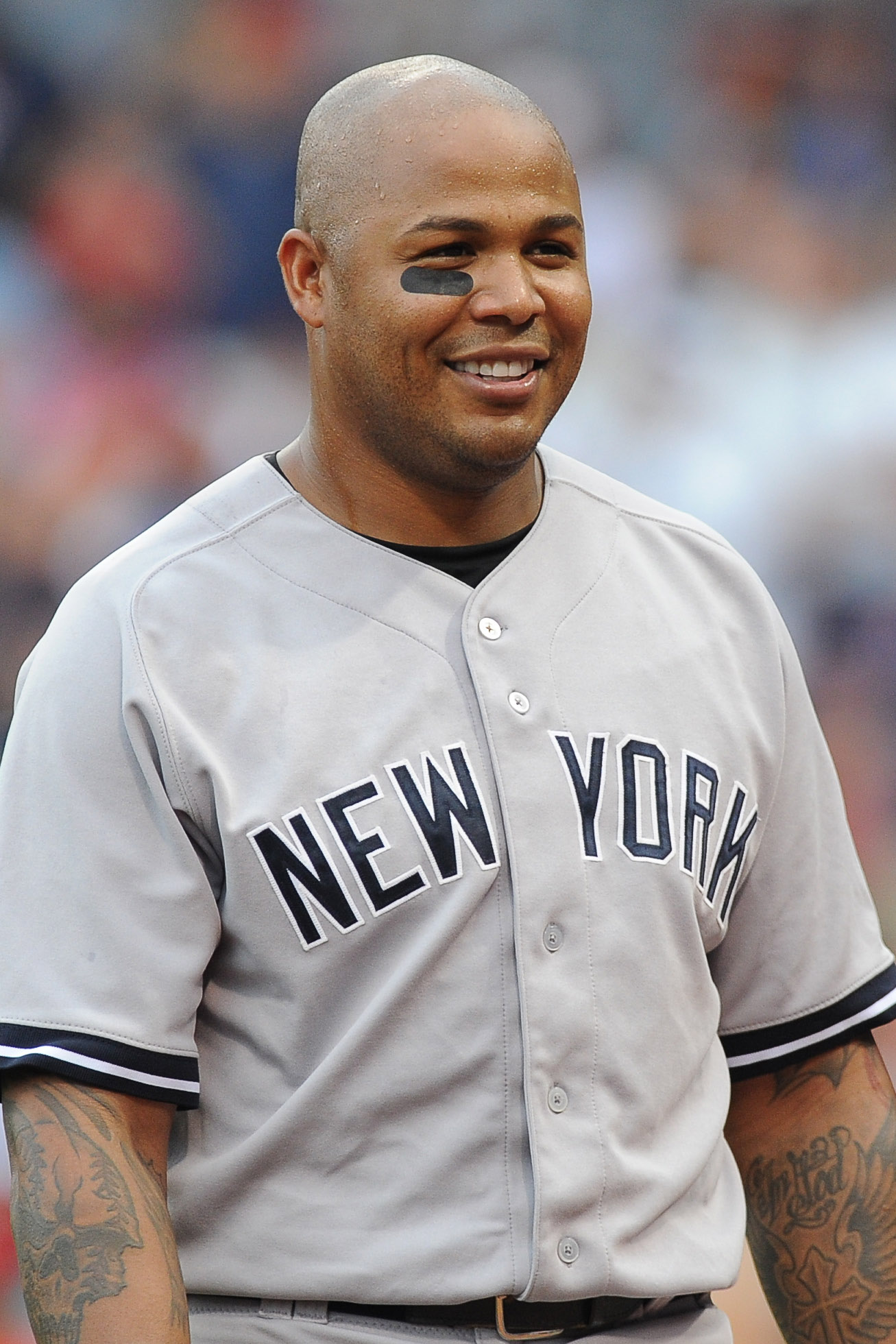 It’s been awhile since Jones has played in the Majors, of course — he last appeared in the big leagues with the Yankees in 2012. After that, he played two seasons with Rakuten in Japan. He did not play last season.
The MLB team with which Jones will be most strongly associated, of course, is the Braves, for whom he played from 1996 through 2007, joining Chipper Jones, John Smoltz, Tom Glavine and Greg Maddux in a group of elite players on a long string of highly successful Braves teams. (As Sports Illustrated’s Jay Jaffe tweets, Andruw and Chipper will both be eligible for the Hall of Fame in 2018.)
After emerging as a consensus top prospect in the Braves’ farm system, Andruw debuted with Atlanta at the tender age of 19 and soon became one of baseball’s top outfielders, creating tremendous value with both his outstanding defense and his power. Beginning in 1998, Jones won ten straight Gold Gloves for his work in center field. He also quickly became a serious home run threat, hitting 26 or more homers in nine straight seasons and peaking with a remarkable 51-homer performance in 2005, when he finished second in NL MVP balloting.
After the 2007 season, when he was still just 30, he left Atlanta and began an itinerant phase of his career, playing for the Dodgers, Rangers and White Sox before heading to the Bronx for two seasons. He declined steeply in his early thirties as his ability to hit for average rapidly diminished, although he did hit well in his two seasons in Japan.
Jones finishes his 17-season big-league career with a .254/.337/.486 line, 434 career homers and five All-Star appearances. Via Baseball Reference, his career Defensive WAR of 24.1 ranks 20th all-time. He made upwards of $130MM in his baseball career.
Photo courtesy of USA Today Sports Images.
Dodgers To Re-Sign Howie Kendrick
The Dodgers have reached agreement on a two-year deal with second baseman Howie Kendrick, according to Ken Rosenthal of FOX Sports (Twitter links). Kendrick gets a $20MM guarantee over the two years, Jon Heyman tweets.
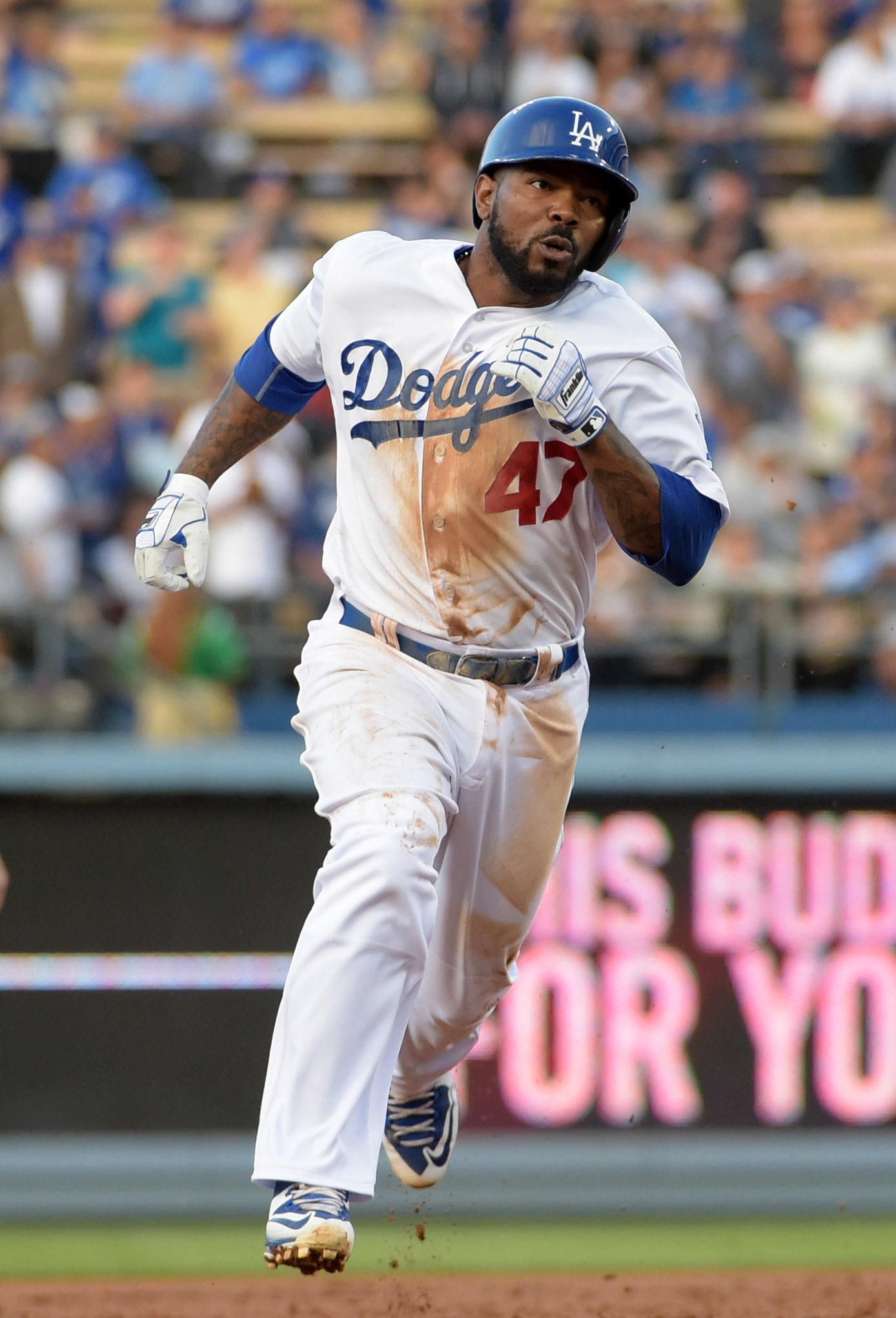
With the move, Los Angeles will sacrifice its chance to tack on an additional draft selection. Kendrick, 32, turned down a $15.8MM qualifying offer from the club earlier in the offseason. As MLBTR’s Steve Adams explained earlier today, the Dodgers stood to increase their draft pool had Kendrick headed elsewhere.
Instead, the club will add Kendrick right back into a crowded mix of position players. Presumably, he’ll see the bulk of the time at second, displacing an anticipated Enrique Hernandez/Chase Utley platoon. But Hernandez could also spell Corey Seager at short and Joc Pederson in center, while Utley can not only spend time at second but also might fill in for Justin Turner at third. Players such as Micah Johnson, Charlie Culberson, and Alex Guerrero could also feature in the infield mix.
Coming into the winter, MLBTR’s Tim Dierkes had predicted that Kendrick could land $50MM over four years. Clearly, he stands to fall well shy of that after his market failed to develop as anticipated. It’s not difficult to see that market developments played a huge role, along with the qualifying offer.
The older Ben Zobrist hit on a $56MM guarantee, besting his own projection. He didn’t carry draft compensation requirements since he was traded in mid-season. Meanwhile, the younger but also QO-bound Daniel Murphy came closer to his expectations with a three-year, $37.5MM pact. But Kendrick was left without an obvious place as the board began to clear. As Steve Adams and I discussed just yesterday on the MLBTR podcast, even the best apparent landing spots all had complications. Indeed, he’ll ultimately take home a guarantee that barely tops that reached by the less-accomplished Asdrubal Cabrera.
At the end of the day, the acquisition cost was much lower than Los Angeles paid the last time they added Kendrick. The Dodgers sent young lefty Andrew Heaney last year for Kendrick (and his $9.5MM salary). And as the qualifying offer shows, the team was willing to pay him over three-quarters of the total value of his new contract for just one season.
As things shook out, it looks like a nice get for the depth-focused Dodgers. While Kendrick dealt with some injuries late last year, and is certainly not the youngest open market option, he’s been a steadily excellent performer for quite some time. Since taking over full-time duties at second with the Angels back in 2010, Kendrick has carried a sturdy .289/.332/.418 batting line. And he’s rarely varied too far from that production level, making him one of the more reliably above-average hitters in the league.
It’s been a while since Kendrick put up his career best of 18 long balls, but he’s a reasonable bet to approach or exceed double digits in that area. And the same holds in the stolen base department, though he’s more of an average overall baserunner than a plus in that area. It’s tough to judge the defensive component for the respected veteran. Kendrick undoubtedly slipped last year, with roundly negative overall glovework in the eyes of both UZR and DRS. But he’s generally been at least an average defender over his career, and even if his loss of range proves permanent, he is still reliable on more easily-made plays.
Photo courtesy of USA Today Sports Images.
Royals Sign Ian Kennedy
11:40am: MLB.com’s Jeffrey Flanagan tweets that if Kennedy does opt out after two years, he receives a $6MM buyout, so he would actually be opting out of three years and $43MM, as opposed to three years and $49MM.
11:17am: After reportedly agreeing to a deal nearly two weeks ago, the Royals announced on Friday that they have signed right-hander Ian Kennedy to a five-year contract. The Scott Boras client will reportedly be guaranteed a total of $70MM and is said to have secured an opt-out clause that would allow him to re-enter the free agent market after the 2017 season. Kennedy’s contract, however, is significantly backloaded; he’ll earn $7.5MM in 2016 and $13.5MM in 2017, meaning he’d have to forgo a guaranteed $49MM from 2018-20 in order to again test free agency (entering his age-33 season).
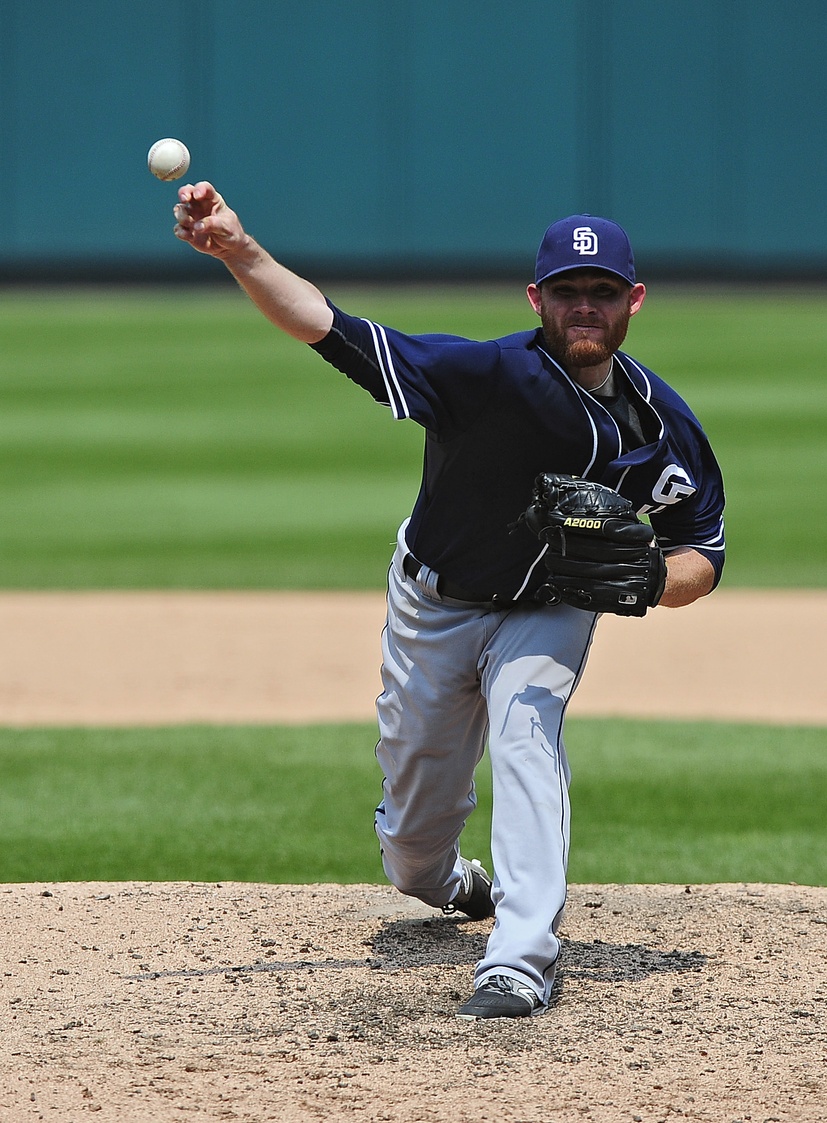 Kennedy notably rejected a qualifying offer from the Padres earlier this offseason, a decision that now looks astute, as he will receive a lucrative long-term deal despite a somewhat sketchy recent history and the fact that he’ll cost his new team a top draft pick. Kennedy posted mediocre numbers in 2015, with a solid 9.3 K/9 and 2.8 BB/9 but with a 4.28 ERA and 31 home runs allowed in 168 1/3 innings.
Kennedy did allow only 11 homers in the second half versus 20 in the first. His home run totals throughout the 2015 season were also perhaps somewhat high given his underlying numbers, and he had a strong season in San Diego in 2014. But his struggles to control the long ball last year were still hard to ignore.
Kennedy’s qualifying offer, his underwhelming performance and the large number of good free agent pitchers available did not prevent him from receiving a lucrative contract, however. And the opt-out is icing on the cake, adding considerable value to the deal by potentially giving Kennedy one more chance to land a big free agent contract at age 33, should his first two years in Kansas City go well. Opt-outs have, of course, become increasingly common this winter, and even a non-top-tier free agent in Scott Kazmir received one. But it’s still a bit surprising that Kennedy would get one on a $70MM deal, as the financial outlay of the deal looks rather generous even before considering the opt-out.
For the Royals, the appeal of adding a starting pitcher is obvious. Despite winning the World Series in 2015, the team’s 4.34 rotation ERA was fourth-worst in the American League. They had not yet significantly upgraded that rotation this offseason, and they projected to open with a staff consisting of Edinson Volquez, Yordano Ventura, Kris Medlen, Danny Duffy and veteran Chris Young. Kennedy should, at the very least, significantly improve their rotation depth.
To some extent, also, K.C. is betting that there’s positive regression to come. Metrics such as SIERA (3.61 last year) could be a better gauge of Kennedy’s true talent than his underwhelming earned run average. His weaknesses might also be somewhat minimized in Kansas City. While Kauffman Stadium is by no means a pitcher’s park, it does limit home runs, and the Royals’ strong outfield defense should help Kennedy turn his fly balls into outs.
But the organization is also simply continuing a well-established strategy of seeking durability in its starters, as it has in the past with pitchers like Edinson Volquez, Jason Vargas, and Jeremy Guthrie. Kennedy has made at least thirty starts in every season dating back to 2010. Though he hasn’t always reached 200 innings annually, the length of his outings is probably of less importance to the Royals — with their deep and excellent pen — than is his ability to take the ball every fifth day.
The deal also marks somewhat of a milestone for the Royals, who appear to be heading into 2016 with a set of commitments that are, for them, unprecedented. With Alex Gordon now back under contract, Kansas City already had $113MM in commitments. Add in Mike Moustakas‘ as-yet-undetermined arbitration-year salary and Kennedy’s deal, and the Royals’ 2016 Opening Day payroll could top $130MM, as MLB.com’s Jeffrey Flanagan tweets. That figure will fly past their $113MM Opening Day payroll in 2015, to say nothing of their series of eight-figure Opening Day payrolls before that.
For yet more evidence of Kansas City’s enhanced willingness and ability to spend, it bears noting that Kennedy becomes the second record-breaking deal the organization has struck this winter. Gordon’s contract was (and still is) the largest single obligation ever entered into the Royals’ payroll ledger, topping the much earlier Mike Sweeney and Gil Meche contracts, while Kennedy takes over for Meche with the team’s top overall commitment to a pitcher.
Due to the qualifying offer, the Royals will give up the No. 24 overall pick in the draft. The Padres will receive a pick at the end of the first round.
Jon Heyman first reported the agreement and the terms (Twitter link). ESPN’s Jerry Crasnick reported the opt-out clause (also via Twitter). Heyman later added further details on the contract’s backloaded nature (Twitter link).
Photo courtesy of USA Today Sports Images.
Dodgers “Making Progress” On Howie Kendrick Deal
10:18am: The Dodgers are “making progress” on a new contract with Kendrick, reports Rosenthal (via Twitter).
8:02am: Despite having already signed Chase Utley this offseason and possessing considerable infield depth, the Dodgers are considering a reunion with Howie Kendrick, tweets Ken Rosenthal of FOX Sports. There are additional factors to consider, as well, he notes, namely that the Dodgers would effectively be surrendering a draft pick by re-signing Kendrick. Despite the fact that they won’t lose an existing pick, Los Angeles would not receive the compensatory pick they’d have landed had Kendrick signed elsewhere after rejecting their qualifying offer back in November. That pick, as it stands right now, would slot in around No. 33 in the draft and give the Dodgers four of the top 36 picks this June — joining their natural No. 22 overall selection, the No. 32 pick they obtained when the D-backs signed Zack Greinke and the No. 36 selection they received as compensation for failing to sign Kyle Funkhouser out of Louisville last year.
While the Dodgers figure to have one of the larger bonus pools in this year’s draft as it is simply by the virtue of those three selections, adding a fourth to the mix would give the club a significant amount of money to implement a creative strategy in the 2016 draft. Going off of last year’s slot values in the draft — and I should note that there was an 8.77 percent increase in slot values between 2014 and 2015 — the Dodgers’ currently projected picks at Nos. 22, 32 and 36 would carry a value of $5.72MM. Adding in a fourth pick in that No. 33 slot, the Dodgers would have $7.55MM in bonus money from their first four picks alone. Based on an estimated slot growth of six percent in 2016 (reflective of MLB’s six percent revenue increase in 2015), Baseball America projects the Dodgers to currently have a bonus pool of $9,296,370 — 10th-largest in the league. Adding in the No. 33 pick and accounting for that same six percent inflation in value, the Dodgers’ draft pool would increase to about $12.15MM — the fifth-largest in the league. The Dodgers, then, would be able to spend roughly $12.76MM on draft bonuses without losing a first-round pick in the future. (The current structure allows a team to overshoot its pool by up to five percent before losing a future pick; the initial 0 to 5 percent overage is taxed at a rate of 75 percent, however.)
Perhaps that’s overthinking the matter at this juncture, but these are factors that the Dodgers, to be certain, have already considered in weighing whether or not to seriously pursue a reunion with Kendrick. Beyond that, though, could simply be where the team would work Kendrick into the lineup and at what rate he is currently willing to sign. Utley currently sits atop the Dodgers’ depth chart at second base, but the team also has the highly versatile Enrique Hernandez as an option at second base, and well-regarded prospect Micah Johnson — acquired in the three-team Todd Frazier trade — is nearly ready for a full-time look in the Majors as well. Alex Guerrero also remains on the roster, though he was used sparingly in the season’s second half and didn’t appear in a big league game at second last season despite it being his most frequently manned position in the minors.
As Rosenthal notes, Justin Turner underwent offseason knee surgery, but he’s said in the past that his expectation is to be 100 percent for Spring Training, and the team has quite a bit of positional depth already; Utley himself is already somewhat of an insurance policy that one can envision eventually moving around the diamond in somewhat of a utility role, and adding Kendrick to either expedite that transition or to fill a similar capacity would make for some high-priced assets lacking a clear opportunity for everyday at-bats over the course of the year.
Of course, the longer Kendrick remains on the market, the easier it is to see him returning to the Dodgers on what some could end up considering a club-friendly deal. While Rosenthal doesn’t specify an asking price for Kendrick, his price has almost certainly dropped since the offseason began. There’s been little in the way of teams connected to Kendrick recently, though the D-backs are said to have some interest. GM Dave Stewart, however, said recently that he wouldn’t part with a second draft pick after surrendering his No. 13 overall pick to sign Greinke. The Angels certainly make some sense as a landing spot for Kendrick, but owner Arte Moreno appears entirely unwilling to surpass the $189MM luxury tax threshold, and adding Kendrick would certainly cause the team to do so. Following an interview with Brewers GM David Stearns on this week’s MLBTR Podcast, Jeff Todd and I took a look at Kendrick’s market and tried to peg some dark-horse suitors for him late in the offseason. Kendrick and fellow middle infielder Ian Desmond were the subjects of a recent poll in which 70 percent of MLBTR readers picked Desmond to earn more than Kendrick in the late stages of free agency.
Rays Sign Steve Pearce
The Rays announced on Thursday that they have signed corner outfielder/first baseman Steve Pearce to a one-year deal. The Excel Sports Management client will reportedly receive a $4.75MM guarantee with a the opportunity to earn more through playing time incentives. Pearce can earn $125K for reaching 400 and 425 plate appearances and an additional $250K for reaching 500, 525, 550 and 575 plate appearances. All told, he can earn a total of $6MM between his base salary and playing-time incentives, and he’ll also pick up a $250K bonus if he’s traded.
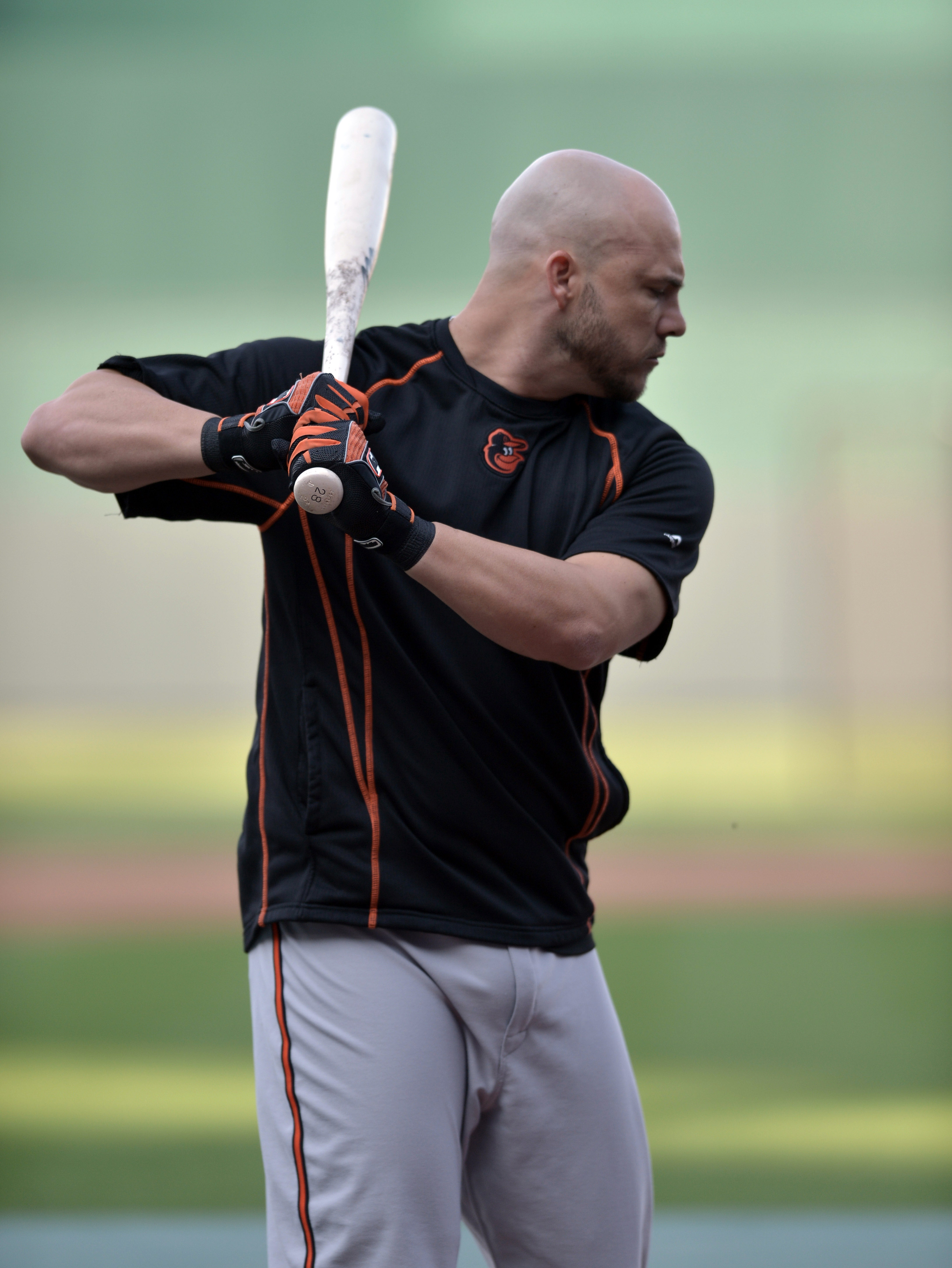
A deal with the Rays represents a homecoming of sorts for the 33-year-old Pearce, who is a native of Lakeland, Fla. — about an hour northeast of Tropicana Field in St. Petersburg. Pearce enjoyed a monster 2014 season with the Orioles but saw his production come back down to Earth in 2015. His strikeout and walk rates trended in the wrong direction this past season, but the larger factor behind Pearce’s 2015 struggles was likely a 90-point drop in BABIP. Pearce did see a fairly notable dip in his percentage of hard contact (34.6 percent in 2014, 30.1 percent in 2015), but that shouldn’t result in such a drastic drop in his fortune on balls in play, so there’s good reason to believe that he can bounce back to some extent in 2016.
While expecting a return to 2014’s mammoth .293/.373/.556 levels of production isn’t realistic, the cumulative sum of his efforts across the past two seasons is a .258/.335/.494 batting line, and if Pearce can approach anything resembling that production, he’d be an excellent pickup for the Rays on a one-year pact. Pearce’s track record, admittedly, is rather spotty, but as a player with 31 homers over his past 592 Major League plate appearances, there’s certainly upside to be had.
Pearce gives manager Kevin Cash a platoon option with either Logan Morrison or James Loney at first base/designated hitter, and he can see time in the outfield as well in the event of further injuries to Desmond Jennings, Steven Souza and the newly acquired Corey Dickerson. Pearce also spent some time at second base last season in Baltimore, although that was a rather curious decision considering the fact that Pearce had never started a regular season game at that position prior to 2015. Nonetheless, Pearce added 18 games’ worth of experience at second to his bag of tricks and could conceivably be used there on occasion in a pinch. It should also be noted that Pearce isn’t necessarily just a platoon option. While he’s done more damage against left-handed pitching over the past two seasons, he’s also hit right-handers quite well, slashing .258/.336/.481 against same-handed opponents.
While he’s entering his age-33 season, the upcoming campaign could be an important one for Pearce, who has spent the entirety of his career playing on one-year deals to this point. If he’s able to produce at a consistent level, he’ll enter a weak class of free agents coming off a three-year stretch that includes a pair of highly productive seasons. Heading into his age-34 campaign in 2017, a multi-year deal wouldn’t be out of the question.
Because the Rays traded two players that were on the 40-man roster — Jake McGee and German Marquez — in the Dickerson trade and only received one 40-man player in return (Dickerson), the Rays do not need to make a move to clear space for Pearce.
Marc Topkin of the Tampa Bay Times first reported the agreement (Twitter link). Ken Rosenthal of FOX Sports reported the financial terms (Twitter link).
Photo courtesy of USA Today Sports Images.
Rays Acquire Corey Dickerson For Jake McGee, German Marquez
After two weeks of strong speculation about the possibility of the Rockies trading an outfielder, the club has announced the trade of left fielder Corey Dickerson and third base prospect Kevin Padlo to the Rays in exchange for left-hander Jake McGee and right-handed pitching prospect German Marquez.
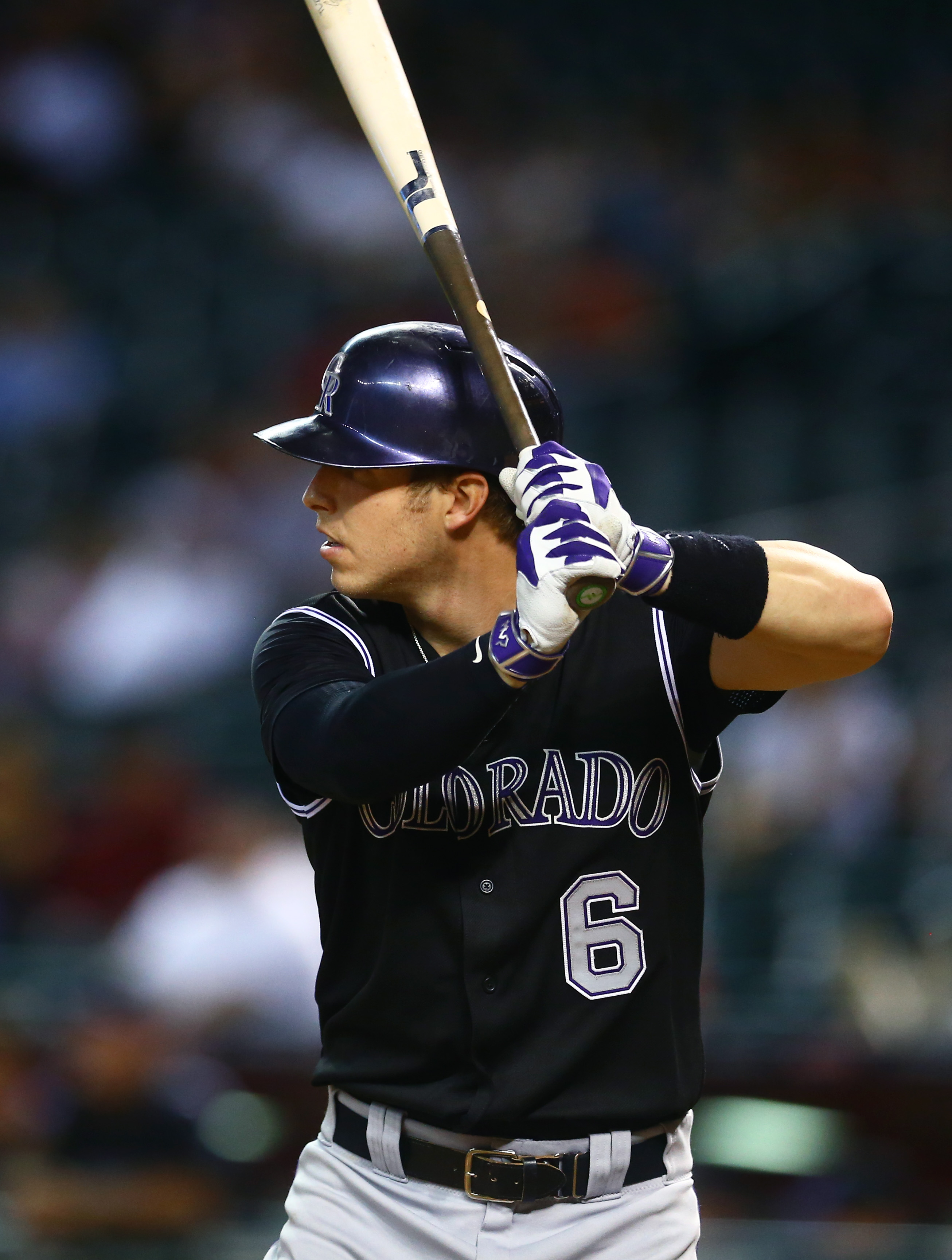
The trade accomplishes multiple goals for the Rays, who will add a high-upside young bat in the form of Dickerson and also clear a bit of money from the payroll by shedding McGee’s $4.8MM salary in the deal. That’s not to suggest in any way that this is a salary dump, of course, as McGee has quietly emerged as one of the better left-handed relievers in the game in recent years.
Dickerson, 26, is not yet arbitration eligible and comes with four years of club control remaining. The former eighth-round pick missed most of the 2015 season as he dealt with plantar fasciitis in his left foot and, later, a broken rib, but he should be healthy enough to take regular at-bats for Tampa Bay in 2015. The left-handed hitter is a career .299/.345/.534 hitter with 39 home runs in just 925 big league plate appearances, although those impressive numbers do come with some caveats. For one, Dickerson has crushed right-handed pitching at a .313/.358/.577 clip in his time as a Major Leaguer, but lefties have given him a fair amount of difficulty, limiting to a .246/.299/.377 slash. Beyond that, there’s a nearly 400-point difference between his OPS at the hitter-friendly Coors Field and his mark on the road. Then again, as MLB.com’s Mike Petriello explained back in December, there’s reason to believe that the so-called “Coors Field Effect” is overblown, and Rockies hitters can excel once leaving the team even if they initially possessed gaudy home/road splits. Dickerson’s troubles against lefties, then, could be the greater cause for concern.
Defensively, Dickerson has spent the bulk of his Major League time in left field, though he’s seen 200 innings in center as well. Defensive Runs Saved and Ultimate Zone Rating are down on his work in left, although his worst ratings in the eyes of those metrics came in 2015, when he endured multiple DL stints due to the aforementioned plantar fasciitis. It’s easy to imagine that such a painful condition in one’s left foot could hamper outfield range and lead to considerably diminished contributions with the glove.
From a broader perspective, it’s not entirely clear how Dickerson will fit with the Rays’ roster. Tampa Bay already has a wealth of outfielders, with Desmond Jennings slotted into left field, Kevin Kiermaier in center field and Steven Souza in right field. With Brandon Guyer and Mikie Mahtook as possible reserve options and the yet-formally-announced newcomer Steve Pearce also carrying significant corner outfield experience, the Rays didn’t have a clear need for an outfield upgrade. Then again, positional depth is a trademark of the Rays, and the team is never shy about adding controllable young talent — especially in instances like this, where the cost of acquisition (at least at the big league level) is a player with just two years of club control remaining.
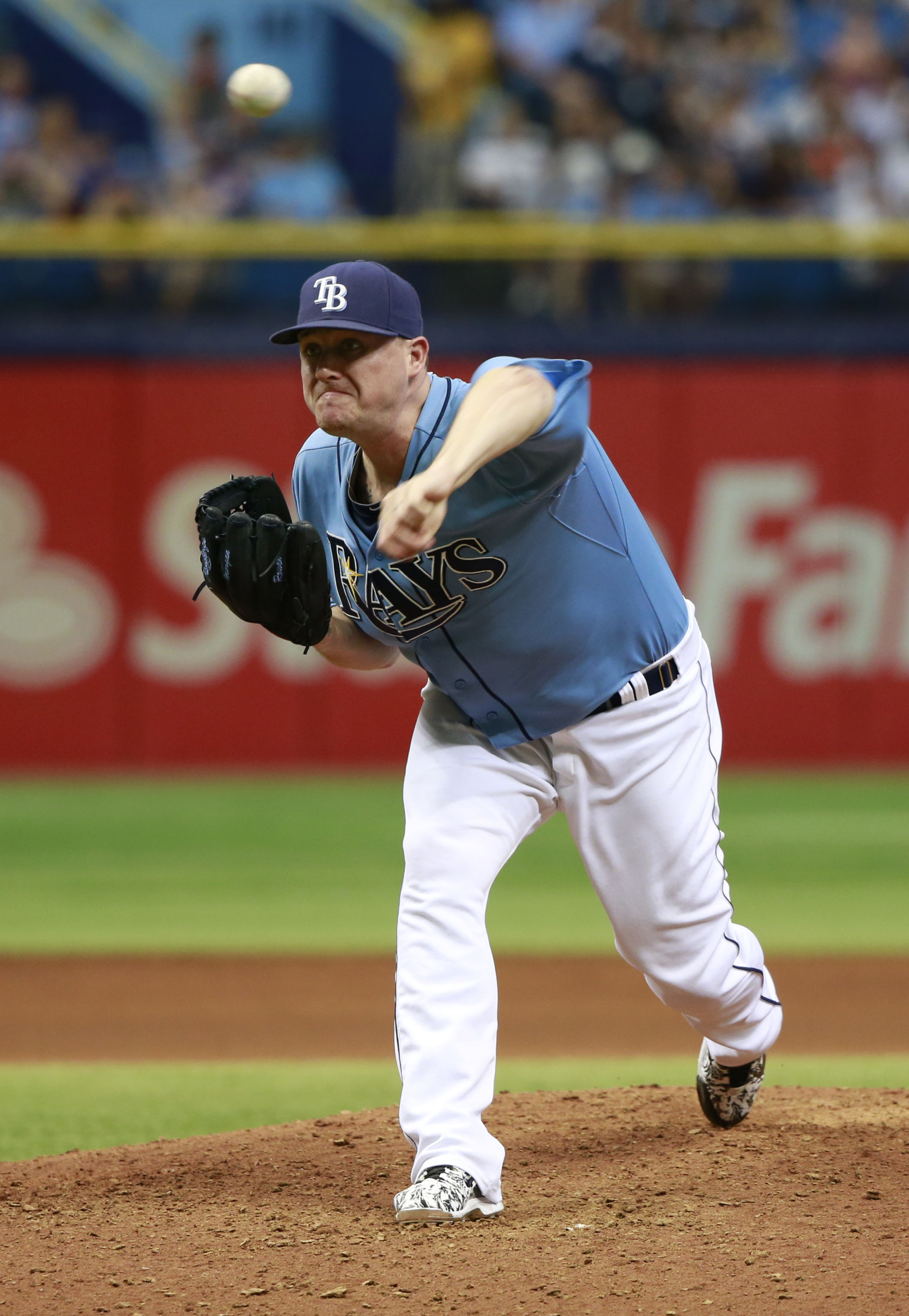
The 29-year-old McGee missed the beginning of the 2015 campaign after undergoing offseason surgery to remove a bone spur from his left elbow. He returned in mid-May, however, and showed no ill effects from the operation, cruising to a 2.41 ERA with outstanding strikeout and walk rates of 11.6 and 1.9 per nine innings pitched, respectively. A partial tear in his left meniscus cost McGee another month later in the season, but he did return at the end of the year to fire 2 1/3 scoreless innings. Over the past four seasons, McGee has been terrific, pitching to a combined 2.58 ERA with 11.4 K/9, 2.3 BB/9 and a 40.9 percent ground-ball rate. He’s exhibited dominance against not only left-handed batters in that time but right-handed opponents as well. In fact, lefties have actually hit McGee harder than opposite-handed opponents, although neither has mustered much in the way of meaningful offense against him.
McGee could enter the season as the favorite to close games in Colorado as right-hander Adam Ottavino recovers from 2015 Tommy John surgery. McGee has saved 25 games across the past two seasons and looked to have cemented himself as Tampa Bay’s primary ninth-inning option prior to last winter’s elbow surgery. (In his early-season absence, righty Brad Boxberger seized the role and never looked back.) The Rockies will have control of him for at least two seasons, although the possibility of course exists that Colorado will flip him either in July if the team is not contending or perhaps next offseason, when he gets another bump in his $4.8MM salary via arbitration and is only one year removed from free agency.
The Rockies have long been expected to trade an outfielder — in spite of the front office’s suggestion that a deal wasn’t a necessity — due to their own surplus of left-handed-hitting outfielders that was created upon signing Gerardo Parra to a three-year deal. In Dickerson, Parra, Charlie Blackmon and Carlos Gonzalez, the Rockies were carrying four somewhat redundant assets, with each of the three incumbent options representing an appealing option to clubs in search of a bat. Given Colorado’s own need for pitching, a trade certainly seemed plausible, even if, as GM Jeff Bridich said on several occasions, a deal was far from a given.
Turning to the prospects in the deal, Padlo was a fifth-round selection by the Rockies in the 2014 draft. Selected out of high school, Padlo hit .257/.372/.447 across two Class-A levels in 2015 and has amassed a composite batting line of .271/.388/.494 with 19 homers and 41 stolen bases early in his pro career. Baseball America rated Padlo 14th among Rockies farmhands last offseason, noting that he had “impressive power” for a high school player in the draft but has a thick lower half and can get flat-footed at third base, so he’ll need to work on his agility and be conscious about his weight.
Marquez, who was on the Rays’ 40-man roster, rated 25th among Tampa Bay farmhands, according to MLB.com’s most recent prospect rankings (a new version of the list will be out soon, as will Baseball America’s full Top 30). The 20-year-old Venezuelan right-hander that spent last season pitching at Class-A Advanced, where he worked to a 3.56 ERA with 6.7 K/9 against 1.9 BB/9 in 139 innings. MLB.com notes that Marquez has been consistently challenged by facing older competition — he was three years younger than the league average this past season, for instance — and has succeeded despite being one of the younger players in each league in which he’s pitched. Marquez offers a low- to mid-90s fastbal with the makings of an average or better curveball and a changeup that’s still a work in progress. His control has improved with each season in the minors as well.
Nonetheless, it’s somewhat surprising, in my eyes, that the Rockies felt comfortable parting with four years of Dickerson for two years of a reliever, however excellent he may be, and one mid-level pitching prospect. Colorado, of course, may see considerably more in Marquez than others in the industry, and they may also have had concerns about Dickerson’s diminished plate discipline and increased strikeout rate.
Ken Rosenthal of FOX Sports first reported that Dickerson was going to the Rays in a trade (Twitter link). Joel Sherman of the New York Post added that McGee would go to Colorado, and prospects were also involved (Twitter link). Rosenthal further tweeted some additional details on the structure of the deal, and Jon Heyman reported that Marquez was going back to the Rays as well (on Twitter). Rosenthal later tweeted that Padlo was the fourth player in the trade.
Photos courtesy of USA Today Sports Images.
Astros Sign Doug Fister
The Astros have announced the signing of righty Doug Fister to a one-year deal. The PSI Sports Management client will receive a $7MM guarantee in the contract, which includes incentives that can boost its total value to $12MM, Chris Cotillo of SB Nation tweets.
Heading into the winter, MLBTR’s Tim Dierkes predicted a one-year pact in the $10MM range for the towering right-hander. While he falls shy of that, in terms of guarantee, Dierkes rightly pegged Houston as the landing spot.
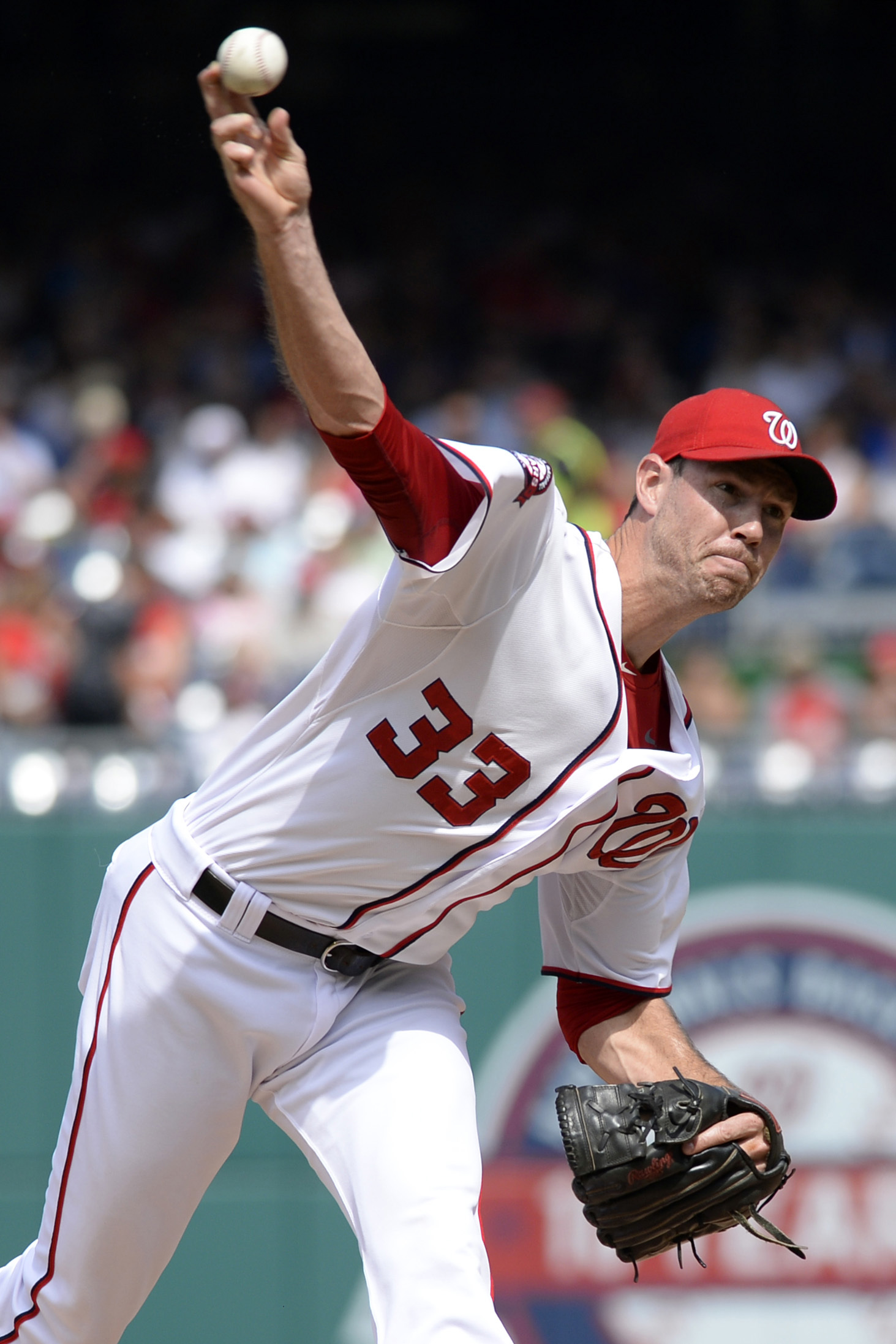
It’s easy to see the appeal for an Astros club that has plenty of rotation options, but still carried some uncertainty. Fister will presumably slot in toward the back of a staff fronted by Dallas Keuchel and Collin McHugh. It’s not exactly clear how things will line up otherwise, but the depth looks solid. Youngster Lance McCullers Jr. showed so much promise last year that it’s hard not to imagine him in the rotation. Scott Feldman is still facing some injury uncertainty after he was shut down late last year, though he says he’s healthy. And Mike Fiers had good results upon joining Houston, including a no-hitter, though he also could feature as a high-end swingman.
Fister, who’ll soon turn 32, is a classic bounceback candidate. After several strong years in Detroit, he put up a stellar 2.41 ERA over 164 frames in 2014, his first season with the Nationals. But things took a turn south last year, as he dealt with injury issues and lost his rotation spot after he was tagged for a 4.60 ERA and .302/.341/.471 batting line in 15 starts.
Though he showed better form working out of the pen, there are some concerns that extend beyond the results. Fister has never been reliant on velocity, but his average sinker lost 1.7 ticks in dropping all the way to 86.1 mph in 2015. Typically a reliable groundball producer, Fister induced grounders on just 44.6% of the balls put in play against him.
Fister also allowed home runs at a much higher rate than usual in his final season in D.C. And while he’s never been a strikeout pitcher, his 5.5 K/9 against 2.1 BB/9 represented the worst K:BB ratio he’s logged since his debut season. Advanced metrics have always lagged results for the veteran, but they were especially down on him last year. He ended up with a 4.55 FIP, 4.46 xFIP, and 4.47 SIERA to accompany the 4.19 ERA that he tallied over his 103 total frames.
Of course, Fister battled through a forearm strain to open the year, which could go a long way towards explaining his struggles. If he can build up in camp at full strength, it isn’t hard to imagine that he might return to being a quality rotation piece — even if it would be a bit optimistic to expect a repeat of that 2014 effort. While he hasn’t always put up huge innings tallies, Fister has generally been rather durable over his career, and the Astros will surely hope he can fill up some frames with average-or-better run prevention numbers in 2016.
Photo courtesy of USA Today Sports Images.