
Reds Exercise Club Option On Freddy Galvis
Nov. 1: The Reds have formally announced that Galvis’ option has indeed been picked up.
Oct. 31: The Reds will exercise their $5.5MM club option on Freddy Galvis for the 2020 season, MLB Network’s Jon Heyman reports (Twitter link). The Reds had a $4.5MM decision to make on the veteran shortstop, as Galvis’ contract contained a $1MM buyout.
Galvis hit .260/.296/.438 with a career-best 23 homers over 589 plate appearances last season, coming over to Cincinnati in a midseason trade from the Blue Jays. He was one of many players to benefit from inflated power numbers in the homer-happy 2019 season, as his batting average, OBP, and even his slugging percentage weren’t too far removed from career norms. Playing mostly at shortstop in Toronto and then mostly as a second baseman with the Reds, Galvis posted decent defensive statistics at both positions, making him a flexible bench piece for next season as Cincinnati decides on its next step in the middle infield.
Jose Peraza and Derek Dietrich are also on hand as potential infield candidates, and Nick Senzel could also potentially factor back into the second base mix if the Reds opt to acquire an everyday center fielder rather than continue to deploying Senzel on the grass. Galvis’ $5.5MM is more than either Peraza ($3.6MM) or Dietrich ($3.1MM) are projected to earn in arbitration, making one or both players expendable as non-tender candidates. With the Reds firmly intent on a postseason berth next year, they could be aggressive in looking for an everyday shortstop AND center fielder, thus making Senzel the new second baseman and keeping Galvis in a utility infield role.
Offseason Outlook: Detroit Tigers
The Tigers found their low point in 2019 … or so they hope. It’s far too soon to envision this organization contending, but the Detroit front office has some payroll space to work with.
Guaranteed Contracts
- Miguel Cabrera: $132MM through 2023 (includes buyout of 2024-25 options)
- Jordan Zimmermann: $25MM through 2020
- Prince Fielder: $6MM (final payment owed as part of trade with Rangers)
Arbitration-Eligible Players (service time in parentheses; projections via MLBTR contributor Matt Swartz)
- Daniel Norris (4.073) – $2.9MM projected salary
- Michael Fulmer (3.157) – $2.8MM
- Matthew Boyd (3.136) – $6.4MM
- Buck Farmer (3.083) – $1.1MM
- Drew VerHagen (3.126) – $900K
- JaCoby Jones (2.125) – $1.4MM
- Non-tender candidates: VerHagen
Free Agents
- Gordon Beckham, Blaine Hardy (elected FA after outright), John Hicks (elected FA after outright), Edwin Jackson, Jordy Mercer, Matt Moore, Tyson Ross, Daniel Stumpf (elected FA after outright)
[Detroit Tigers depth chart | Detroit Tigers payroll outlook]
How rough was the 2019 campaign for the Tigers? They ran away with the rights to next year’s top overall draft pick by a whopping seven games, matching the ’18 Orioles with a 47-win effort. Not so hot, particularly given that the organization still opened the campaign with $115MM of payroll. Then again, it’ll be handy to have the 1-1 selection for the second time in three campaigns; no doubt the Tigers wish they had managed to secure the intervening top choice as well.
Last year’s hot stove session was more or less a complete bust. GM Al Avila and his charges spent $15.5MM on veteran additions but got little in contributions and nothing back via trade for that spend. Some of the specific moves were defensible on their own, but it’s nevertheless a disappointing outcome. Otherwise, the club did little to take chances on potentially interesting young talent. The Tigers picked up only a few marginal players in waiver claims and minor-league signings, not one of whom appears to be part of a contending future.
That’s not to cast a pall over the entire organization. It’s in large part a reflection of a typical rebuilding effort after an extended effort at contention. And there’s some legitimately interesting talent on the rise in the Detroit farm, some of it beginning to press toward the MLB level. But that fact only increases the urgency of making strides now, to install some pieces that complement the good young talent as it reaches the majors — thus helping the Tigers open a new window for winning as soon as possible, while Casey Mize and co. are at their most cost-efficient.
So, the Tigers organization needs to make greater progress this time around. How to do it? Frankly, there really aren’t many limitations on Avila and his charges. Having already scraped along the bottom of the league for the past several seasons, the pain of poor outcomes is by now familiar and accepted. The present roster is free of impediments; Cabrera will DH and play first and the front office can pretty much otherwise use its roster spots in whatever way it wishes.
Plus, there ought to be some money to work with — even if we don’t yet know quite what payroll levels this organization will operate at now that ownership has passed from Mike to Christopher Ilitch. The Tigers have largely unwound the remnant obligations of their last contending stretch, though the misguided Miguel Cabrera extension will blot the books for a while longer. Jordan Zimmermann and Prince Fielder will be settled up fully after the coming season. The Tigers have yet to promise a dime to anyone else, so they’ll start their 2020 roster with $61MM in obligations and a modestly priced slate of remaining arbitration-eligible players (after parting with three such players after the end of the season).
Looking over the existing roster for needs feels somewhat beside the point. But there are some areas with greater opportunity available than others.
The pitching staff is relatively stable, particularly the rotation (as far as rebuilding clubs go). There were ups and downs last year for Matthew Boyd, Spencer Turnbull, and Daniel Norris, but all threw well enough to warrant jobs in 2020. (Norris was particularly effective when transitioned to a three-inning “opener” role, so perhaps he’s best deployed with a piggyback option.) Tyler Alexander could also factor, with Zimmermann of course still on board if he’s healthy. Speaking of notable injury situations, this is shaping up to be a big season for Michael Fulmer, who’ll be working back from Tommy John surgery. He’s now about seven months out from the procedure, which took place just before the start of the ’19 season. Odds are the club will target a return early next summer.
There’s room for another veteran signing in the mold of last year’s additions of Tyson Ross and Matt Moore. Those didn’t pan out, but they were a sensible tandem to try out in hopes of unearthing an eventual July trade chip. Youthful, reasonably high-upside hurlers such as Michael Wacha or Alex Wood could be targets this time around if the Tigers want to try that same approach. There are loads of possibilities for veteran depth and wisdom, which would be nice to have on hand as the top prospects arrive.
The rotation need will increase dramatically if the Tigers gain traction on talks involving Boyd, who faded down the stretch after an eye-opening early showing last year. Yeah, he ended up with a middling earned run average and allowed a stunning 39 home runs. But Boyd is a durable, youthful, high-K starter who comes with three years of cost controlled campaigns. The trade market for starters doesn’t look to have much else of interest, so it wouldn’t be surprising at all to see analytically minded contenders poking around for a bargain. The Tigers shouldn’t accept just anything, but ought to explore the possibilities. If something gets done, the open rotation spot and salary capacity can be given to a bounceback target that could be utilized as a trade chip.
It doesn’t seem as if the Tigers need to go wild in the bullpen, either. No, this was not a top-tier unit — far from it. The Tigers relief corps landed in the bottom third of baseball last year by most measures and doesn’t seem especially likely to be much better in 2020. But that’s just not a core area to focus on for a team in this situation. The Detroit organization can afford to allow in-house such as Buck Farmer, Joe Jimenez and David McKay to continue to learn on the fly, even in higher-leverage spots, with some starting pitching depth perhaps also spilling into the relief unit.
Adding at least one veteran to the pen mix might be sensible, but the Tigers shouldn’t tie up relief roles on low-upside arms. Just look at the Marlins’ Nick Anderson bonanza: added in a minor swap in the 2018-19 offseason, the righty threw well enough in his debut season to become a major mid-season trade piece. It’s tough to score that kind of a player, but it’s easier to dig for gold in the relief arena than any other. The Tigers should utilize their reliever roster spots and MLB opportunities to chase ceiling.
There’s obviously work yet to be done on the pitching staff. But with a host of highly regarded arms moving toward the Majors, there’s help on the way. And the near-term problems pale in comparison to the issues on the other half of the roster. Outside of Cabrera and the departing Mercer, only Victor Reyes, Niko Goodrum, and JaCoby Jones posted offensive numbers in spitting distance of average for the Tigers.
Goodrum is capable of playing just about anywhere, which helps with flexibility. (Somewhat curiously, he graded out much better at shortstop than in left field.) Reyes and Jones can both play center, though the latter’s defensive grades strangely plummeted in 2019. While none of these players has shown a particular likelihood of turning into anything like a core piece, it’s nice to have such a reasonably flexible trio to work with.
The other players that had 2019 trials all turned in duds. Jeimer Candelario and Dawel Lugo scuffled at third base. Brandon Dixon launched 15 homers but did little else with the bat during his time at first base. Corner outfielders Christin Stewart, Travis Demeritte didn’t hit. Neither did middle infielders Willi Castro and Ronny Rodriguez or utilityman Harold Castro. Behind the dish, Jake Rogers holds promise but he and Grayson Greiner … you guessed it, didn’t hit in 2019.
These players are all still available to draw from. Some have greater promise than they’ve shown to this early stage of their MLB careers. And the Detroit farm has a few pieces that could pop up in 2020, including infielder Isaac Paredes and outfielder Daz Cameron. But it would frankly be difficult to say that the Tigers are remotely precluded from adding at any specific position except, perhaps, center field — which is just as well given the state of the market. The positional flexibility on hand only adds to the sense that the Tigers can and should explore upside opportunities wherever they can find them.
What the Tigers should probably not do is settle for another version of the Mercer-Harrison middle-infield combo (whether there or anywhere else on the diamond). It is valuable to have some veteran leadership, to be sure, but you’d like to see it come from somewhat more youthful players that have some hope of delivering future value (via trade, future arbitration control, or otherwise). It’s one thing to add a solid part-time catcher or fourth outfielder, but tying up significant playing time with short-term, low-ceiling pieces is of dubious merit.
If the Tigers want the veteran presence and performance, then they’d be better served making a more significant investment in a more youthful, higher-end player. Didi Gregorius, Jonathan Schoop or Yasiel Puig are the sort of players that could plausibly be attracted by multi-year offers if they can’t get them elsewhere. The Tigers can also look at the trade market, which could conceivably feature personnel on the order of Nomar Mazara, Michael Taylor, Maikel Franco, and Albert Almora. We don’t yet know for sure what opportunities might arise and whether they’ll be worth the price. But the Tigers ought to be seeking situations that come with some real upside — both in terms of performance and control rights — even if it means taking on financial obligations that extend past the 2020 season.
Latest On Rays’ Free Agents
The Rays have begun the offseason facing the potential exits of three notable free agents in catcher Travis d’Arnaud, outfielder Avisail Garcia and infielder/outfielder Eric Sogard. The low-budget club’s interested in re-signing all three, though any new deal would have to come at the right price, according to Marc Topkin of the Tampa Bay Times.
Among the trio, it may be d’Arnaud who’s in line for the richest contract. A somewhat lucrative offseason payday for d’Arnaud looked highly unlikely when the Rays acquired him from the Dodgers for $100K back on May 10. D’Arnaud was then coming off a fleeting run in Los Angeles, which claimed the former star prospect off waivers from the Mets after a disappointing, injury-filled tenure in New York.
Once d’Arnaud got to Tampa Bay, not only did his health hold up, but he gave the team a solution behind the plate. The 30-year-old slashed a respectable .263/.323/.459 with 16 home runs in 365 plate appearances as a Ray. He also threw out 28 percent of would-be base stealers, though Baseball Prospectus graded d’Arnaud as a below-average overall defender. Still, it wouldn’t be a surprise to see d’Arnaud land a two-year contract worth at least $5MM per season in the coming weeks, especially considering he’s among the most impressive choices in a so-so class of free-agent catchers.
Aside from d’Arnaud, Jason Castro and Robinson Chirinos, it’s slim pickings beyond the undisputed top backstop available, Yasmani Grandal. The lack of appealing and affordable alternatives could make it all the more important for the Rays to re-sign d’Arnaud, as Mike Zunino may be a non-tender candidate after a horrid year and Michael Perez has just 135 big league plate trips to his name.
Meanwhile, even if they lose Garcia, the Rays look to be in better shape in the corner outfield than they are at catcher. Austin Meadows and Tommy Pham should make for a more-than-capable top two in 2020, though Garcia looks like a solid option in his own right. After signing a $3.5MM guarantee with the Rays last winter, the former White Sox outfielder batted .282/.332/.464 with 20 homers and 10 steals across 530 PA. Along the way, the 28-year-old, righty-hitting Garcia held his own against both same-handed and southpaw pitchers alike. He was also something of a Statcast favorite, evidenced in part by a .344 expected weighted on-base average (compared to a .338 real wOBA) and a sprint speed that surprisingly ranked in the majors’ 90th percentile. The big-bodied Garcia’s athleticism helped him log quality production in the outfield, where he accounted for a pair of Defensive Runs Saved, a 2.2 Ultimate Zone Rating and three Outs Above Average.
Despite his strong work as a Ray, Garcia’s likely to face skepticism on the market from at least some teams. Age and 2019 performance are on Garcia’s side, but he hasn’t been particularly steady during his career. The White Sox, despite obvious holes in their outfield, non-tendered Garcia just a year ago. It was an understandable decision at the time, as Garcia was then coming off a replacement-level 2018 showing. Furthermore, in five of his seven extensive major league seasons, Garcia has racked up less than 1.0 fWAR. On the other hand, he was a 4.2-fWAR player in 2017. And while this year’s 1.8 doesn’t look spectacular, it’s satisfactory in light of the relatively low-cost deal Tampa Bay gave him.
Garcia’s now a member of a free-agent corner outfield class that also features the likes of Nicholas Castellanos, Marcell Ozuna, Corey Dickerson, Yasiel Puig and Brett Gardner. Sogard, meantime, is part of a jam-packed group of noteworthy unsigned players at the keystone, but he quietly enjoyed one of the best 2019 seasons of any free-agent second basemen. The 33-year-old easily recorded a career campaign, hitting .290/.353/.457 with 13 HRs and 2.6 fWAR over 442 PA. While Sogard did see his offensive production dive after the Rays acquired him from the Blue Jays in July (.839 OPS versus .732), he was still an adequate option in Tampa Bay.
Sogard’s just an offseason removed from having to settle for a minor league contract, but he just made a legitimate case for a guaranteed deal this winter. Whether the Rays will be the team that gives Sogard his next pact is up in the air, though. Brandon Lowe‘s sure to start at second for the club in 2020 after an excellent but injury-plagued rookie season, but there could still be room for Sogard in a multi-positional role.
Latest On Angels’ Coaching Staff
11:47pm: It’s “likely” the Angels will promote prior third base coach Mike Gallego to bench coach, Jeff Fletcher of the Orange County Register tweets.
11:26pm: Newly minted Angels manager Joe Maddon is poaching a couple members from his previous staff in Chicago, Bruce Levine of 670 The Score reports. Cubs third base coach Brian Butterfield will take on the same position with the Angels, while strength and conditioning coach Tim Buss will serve in a quality assurance role with the Halos. Buss had been with the Cubs since 2001, Levine notes.
The 61-year-old Butterfield, a major league assistant since 1994, spent the previous two seasons overseeing third base for the Cubs’ offense and serving as the team’s infield coach. But the Cubs parted with Maddon in favor of David Ross after the season, paving the way for Butterfield to follow Maddon to Anaheim.
Butterfield’s the third major coaching hire for Maddon since the Angels chose him Oct. 16. Maddon previously brought in John Mallee to be the club’s assistant hitting coach and Mickey Callaway to work as its pitching coach.
Gerrit Cole Discusses Future
The 2019 season came to a sad end Wednesday for the Astros, who watched their 2-0 lead over the Nationals in Game 7 of the World Series evaporate during the latter stages of the contest. The club may now be on the verge of losing one of its best players, free-agent right-hander Gerrit Cole, who did not factor into its Game 7 loss. Speaking to reporters afterward, Cole sounded like someone who believes his Astros tenure is over.
“I’m not an employee of the team,” Cole said to an Astros spokesperson (via Hunter Atkins of the Houston Chronicle). “I guess as a representative of myself…”
Cole was wearing a hat representing his agency, the Boras Corporation, at the time. But Cole indicated Thursday (per Atkins) that didn’t mean anything, calling the cap “a good luck charm.” He also walked back his comments from Wednesday, saying: “I was upset, and my tone did not come off quite the way I wanted it to. One win away. We had the lead with eight outs to go. It’s just a tough pill to swallow.”
After starter Zack Greinke exited with a 2-1 lead, one out and a runner on first in the top of the seventh inning, the Astros could have subbed in Cole and attempted to ride to the finish line with the potential AL Cy Young winner. However, in fairness to manager A.J. Hinch, Cole has not pitched in relief since his days at UCLA. With that in mind, Hinch turned to Will Harris – who was brilliant for most of the postseason – and then closer Roberto Osuna, Ryan Pressly, Joe Smith and Jose Urquidy. In the end, the team’s relief corps failed miserably in what wound up as a 6-2 year-ending implosion for the Astros.
Of course, even a championship-clinching win Wednesday wouldn’t have changed the fact that the Astros have their work cut out for them in trying to keep Cole. At the outset of the playoffs, owner Jim Crane admitted he’s unsure whether Houston will be able to put a legitimate bid on the table for Cole, who seems more and more likely to blow past David Price‘s seven-year, $217MM contract and sign the richest deal ever for a pitcher. Concerns over the luxury tax could help bring an end to Cole’s run with the Astros after two extraordinarily productive seasons, but despite the frustration the 29-year-old showed Wednesday, he’s not closing the door on a potential new agreement with Houston.
“I’m really grateful for this experience. I’ve loved every minute of it. I’m not saying goodbye, by any means,” Cole said Thursday. “I truthfully don’t have a crystal ball. I could speak to what I know. And I know that I’ve loved every second here and I loved competing with the guys.”
Coaching Notes: D-backs, A’s, Rays, Indians
The latest notable coaching news from around the majors…
- Diamondbacks bench coach Jerry Narron has elected to leave the team’s staff, Steve Gilbert of MLB.com tweets. Narron spent the previous two-plus years as manager Torey Lovullo’s top lieutenant in Arizona, though the club moved Luis Urueta into that role after the season. It’s unclear at this point if Narron has an opportunity lined up elsewhere. Now 63 years old, Narron’s a former big league catcher who has managed the Rangers (2001-02) and Reds (2005-07).
- The Athletics have made a few changes to their staff, Susan Slusser of the San Francisco Chronicle details. First base coach Al Pedrique is moving across the field to take over for third base coach Matt Williams, who will manage in Korea next season. Matt Aldrete will go from assistant hitting coach to first base coach to fill Pedrique’s void. Meanwhile, Eric Martins will assume the role of assistant hitting coach after coaching in the A’s minor league system for half a decade.
- Longtime Rays coach Tom Foley has decided to retire at the age of 60, Marc Topkin of the Tampa Bay Times reports. Foley, a professional infielder from 1983-1995, spent a combined 16 years in multiple coaching positions for the Rays. He worked as a special assistant with the club over the previous two seasons.
- Along with the previously reported decision to promote Brian Sweeney to bullpen coach, the Indians have moved Ruben Niebla to assistant pitching coach, Mandy Bell of MLB.com relays. A former minor league right-hander, Niebla will enter his 20th year as an Indians coach in 2020. He spent the previous seven seasons as the Indians’ minor league pitching coordinator. Niebla’s “big on analytics” and widely respected in the organization, per Zack Meisel of The Athletic.
Latest On Mets’ Managerial Search
OCT. 31: Bogar is no longer in the running for the job, Joel Sherman of the New York Post reports. Bogar’s elimination from the race “raises the chances” the Mets will hire Beltran, Perez, Shelton or Murphy, per Sherman.
OCT. 29: Depending upon one’s perspective, the Mets have either been exceedingly thorough or maddeningly indecisive in choosing their next skipper. As of yesterday, the club had advanced to a third round of interviews with at least five candidates still under consideration by ownership and GM Brodie Van Wagenen.
We’ll use this post to track the day’s developments in the hiring search. There are two threads of reporting on the topic at the moment.
Jon Heyman of MLB Network sees things beginning to move towards a conclusion. He tweets that only four men appear still to be under consideration: Tim Bogar, Eduardo Perez, Derek Shelton, and Carlos Beltran. That would indicate that recent entrant Pat Murphy has been dropped from the search — and that there aren’t any other candidates floating around.
That is decidedly not the take of Andy Martino of SNY.tv (links to Twitter). He suggests that there are other candidates in play and that the process remains rather open-ended.
Specifically, per Martino, Triple-A skipper Tony DeFrancesco has interviewed and may still be in the mix. The long-time minor-league manager took over the Mets’ top affiliate for Pedro Lopez, who had lasted only one season after replacing the inimitable Wally Backman.
By Martino’s reckoning, that may not be the only wrinkle left. He suggests there may still be “more going on than we know” behind the scenes in Queens. That could yet include “high-profile names” on the “periphery” of the process.
As we noted yesterday, there’s no real reason that the Mets need to rush through the final decision here. Several other teams have already lined up skippers and the other remaining searches appear to be focused on other names (or, in the case of the Pirates, temporarily stalled out). Still, it’s rather interesting to see such a lengthy and free-ranging hiring process, the well-publicized nature of which is sure to invite plenty of questions (and perhaps, ultimately, second-guessing) once the organization finally does set its course.
Brewers To Exercise Manny Pina’s Option
The Brewers are set to exercise catcher Manny Pina‘s $1.85MM club option for 2020, Jon Heyman of MLB Network tweets. The club could have bought him out for a meager $150K.
At least for now, Pina’s in line for his fifth season as a Brewer. The 32-year-old is coming off a season in which he batted .228/.313/.411 with seven home runs in 179 plate appearances as a backup to the excellent Yasmani Grandal. Along with providing decent offense (relative to his position), Pina gave the playoff-bound Brewers high-end defense in 2019. Just 13 catchers, including Grandal, outranked Pina in Baseball Prospectus’ Fielding Runs Above Average metric. Pina also threw out 25 percent of would-be base stealers, placing him right in line with the league-average mark (26 percent).
Now, with Grandal on the verge of becoming one of baseball’s most coveted free agents, Pina stands as the Brewers’ de facto starting catcher. The club also has fellow backstops David Freitas and Jacob Nottingham on its 40-man roster, though those two don’t have much major league experience on their resumes. So, whether the Brewers re-sign Grandal or acquire a different No. 1-caliber catcher, the position does figure to be a priority for the team this offseason. At the very least, though, Milwaukee seems to have a capable backup in Pina.
Braves To Decline Option On Billy Hamilton
The Braves will decline their end of the $7.5MM mutual option on outfielder Billy Hamilton‘s services for 2020, according to MLB Network’s Jon Heyman (Twitter link). Hamilton will instead receive a $1MM buyout.
Hamilton was a late-season pickup by the Braves, claimed off waivers from the Royals in mid-August when Atlanta was suffering from a spate of outfield injuries. Hamilton ended up appearing in 26 regular season games (with a .692 OPS over 48 PA) for the Braves and two postseason games, coming off the bench twice in the NLDS. Since Hamilton was acquired purely out of necessity and $7.5MM is a hefty price for a player of Hamilton’s limited hitting ability, there was never any doubt that Atlanta would decline the mutual option, though the Braves are in the market for some outfield help this winter.
Over 353 total plate appearances for the Royals and Braves, Hamilton batted only .218/.289/.275, with a 50 OPS+ and 50 wRC+. After seven years in the big leagues, Hamilton is little more than a speed-and-defense specialist at this point, though to his credit he is still one of the sport’s very best baserunners and defensive outfielders. The 29-year-old’s skillset is sure to land him a bench job somewhere, though his days of being an everyday player are likely at an end barring a late-career turn-around at the plate.
Indians Exercise Kluber’s Option, Decline Options On Kipnis, Otero
TODAY: The moves are now official, as per the Associated Press. Kluber’s option was exercised, while the Indians bought out Kipnis and Otero.
OCTOBER 2: Indians president of baseball operations Chris Antonetti announced at the beginning of today’s meeting with the media that the team intends to exercise its $17.5MM club option on right-hander Corey Kluber (Twitter link via Ryan Lewis of the Akron Beacon-Journal). The Indians are planning to decline their $16.5MM option on second baseman Jason Kipnis in favor of a $2.5MM buyout, however, and they’ll also decline righty Dan Otero‘s $1.5MM option in favor of a $100K buyout.
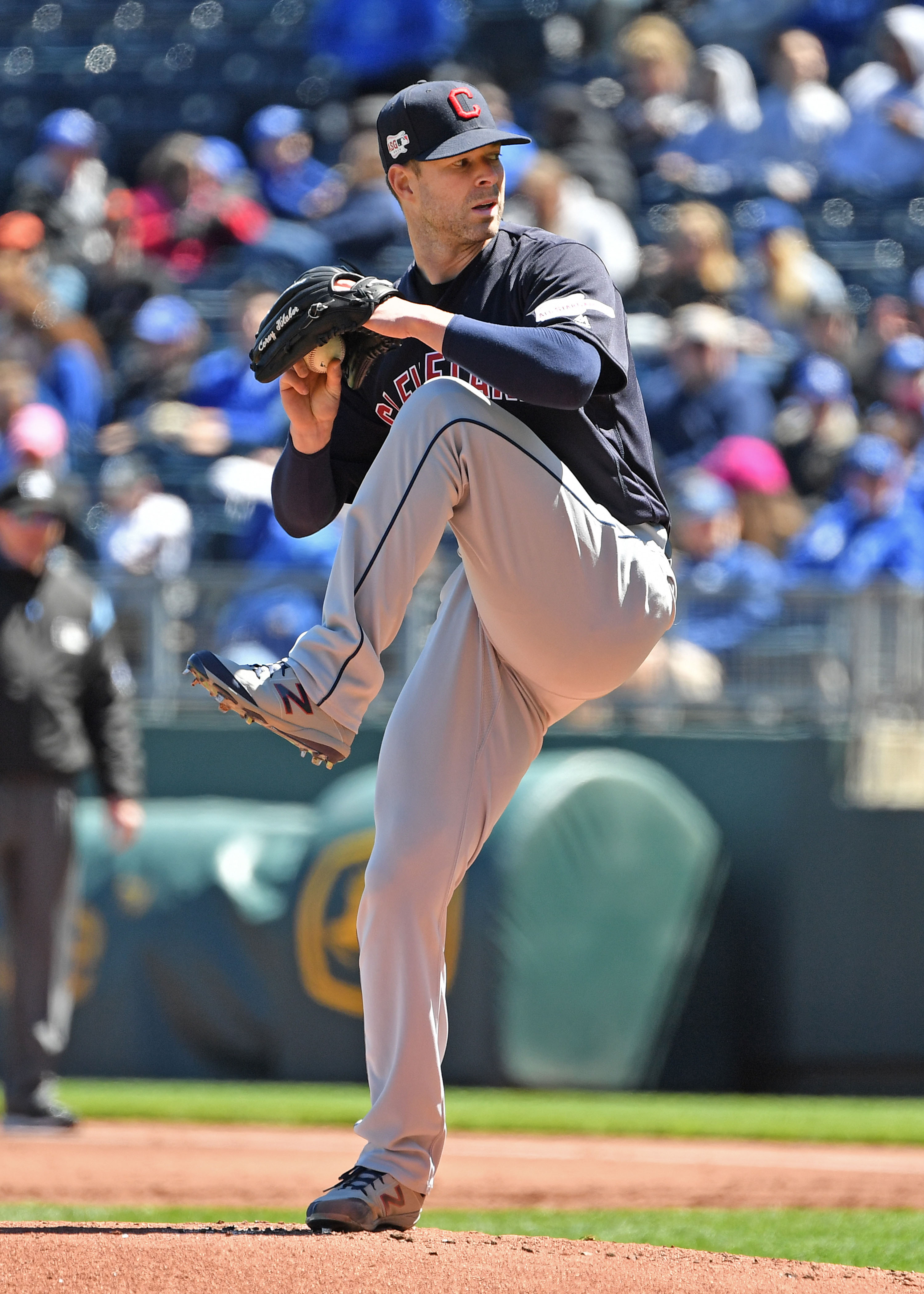
Although the 2019 season was a disaster for Kluber, it was never plausible that the Indians would move on from the two-time AL Cy Young winner. Kluber’s 2019 season was truncated by a forearm fracture suffered when a comeback line-drive struck him back in May. He missed nearly three months of the season and, when he was nearing a return, sustained an oblique injury that ultimately ended his year.
Even when healthy, Kluber turned in an alarming 5.80 ERA in 35 2/3 innings. However, he was plagued by a lofty .370 average on balls in play and a low 63.8 percent strand rate (career 74.7 percent), both of which seemed due for regression. His average fastball velocity was down a bit from his 2018 totals, but a look at Kluber’s readings through the beginning of May in 2018 reveals a 91.7 mph average fastball that aligns with his 91.6 mph average in 2019. Put another way: there was minimal evidence to suggest that Kluber is suddenly on a decline of this magnitude just one year after his fourth Top 3 Cy Young finish in five seasons.
Perhaps if he’d been due to become a free agent after the 2020 season, the organization would’ve given slightly more consideration to moving on (doubtful), but Kluber’s contract contains an $18MM option for the 2021 season. The Indians have been working to pare back their payroll since the beginning of last offseason, but there’s no realistic scenario in which they shy away from a $16.5MM decision on Kluber — he’d have been owed a $1MM buyout regardless — that comes with a similarly priced option for an additional season.
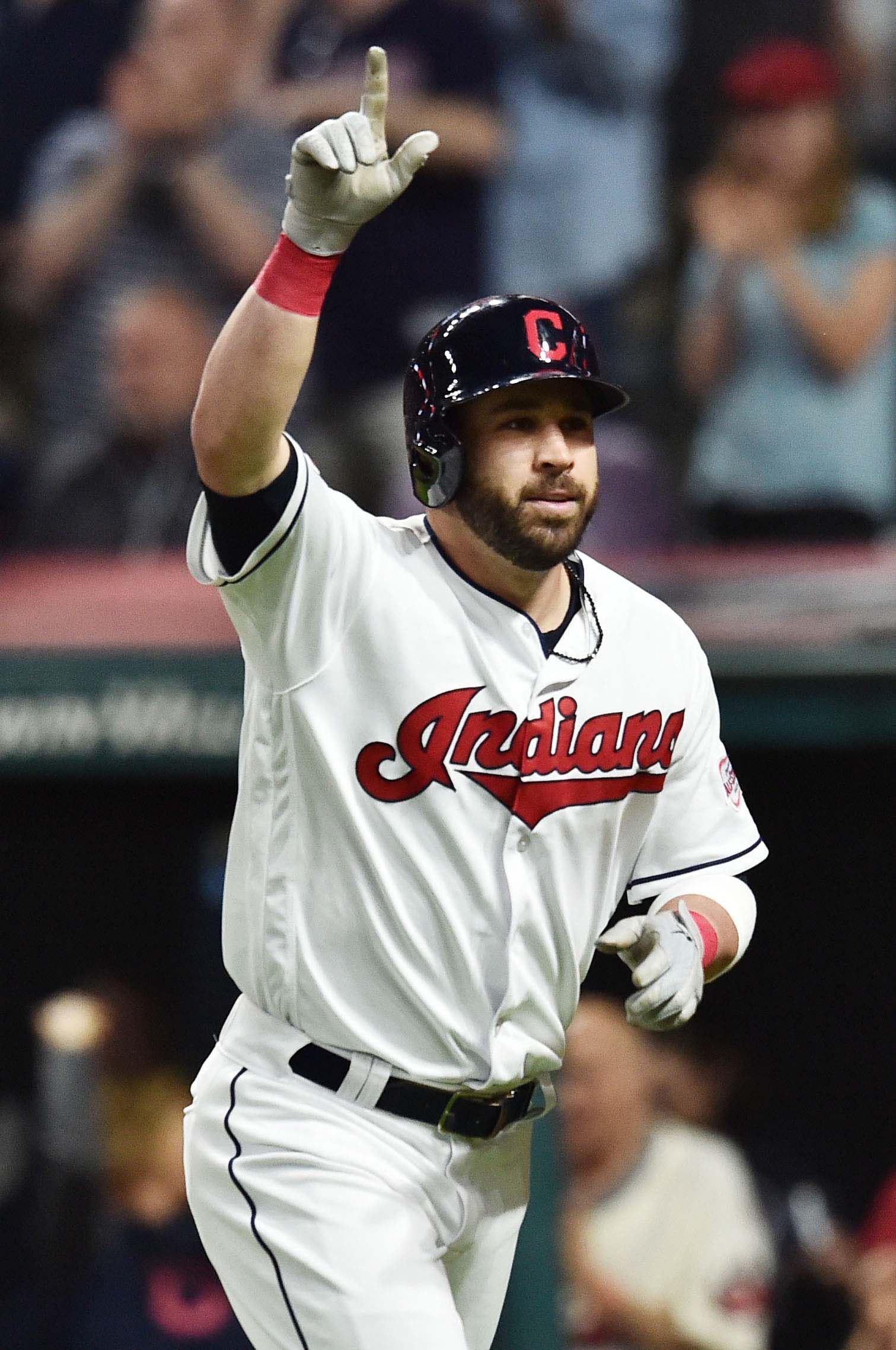
In the case of Kipnis, the decision was similarly straightforward. Although he briefly ranked among the game’s best second baseman, the now-32-year-old Kipnis (33 on April 3) hasn’t had an above-average season at the plate since 2016. Over his past 1485 plate appearances, he’s managed just a .236/.305/.403 batting line (86 OPS+). Add in the fact that his season ended with a fractured hamate bone that required surgical repair, and Kipnis surely saw the writing on the wall.
Lewis tweets that the team is still open to a reunion with Kipnis at a lower price, but that will depend on the level of interest expressed by other teams. Given the number of second base alternatives both in free agency and on the trade market, it’s quite possible that Kipnis will eventually have to settle for a one-year deal, so perhaps a reunion shouldn’t be ruled out. Kipnis does have a bit of experience in the outfield, which could enhance his appeal to new clubs, but he’s graded out poorly in his limited work away from second base.
It’s similarly unsurprising to see the team move on from Otero, despite the affordable nature of his option. He’ll turn 35 this February and has seen a sharp decline of his own since a brilliant run in 2016-17. Otero gave the Indians 130 2/3 innings of 2.14 ERA ball with a 95-to-19 K/BB ratio and only eight homers allowed in that ’16-’17 peak, but he’s been rocked for a 5.09 ERA with 18 home runs in 88 1/3 innings since that time. Otero still possesses superlative control, as he’s averaged less than one walk per nine innings pitched over the past two seasons, but he’s also seen his sinker dip to an average if 89.5 mph.
As far as the coaching staff is concerned, manager Terry Francona announced that the team has dismissed bullpen coach Scott Atchison but will retain the rest of his staff for the 2020 season (Twitter link via Zack Meisel of The Athletic).