
Reactions To & Fallout From Friedman Joining Dodgers
Earlier today, the Dodgers and Rays announced the stunning news that Rays GM Andrew Friedman would leave his post to become the new president of baseball operations for the Dodgers. The move shook the baseball world and, obviously, comes with some significant ramifications not only for the teams involved but for the entire game.
MLBTR’s Zach Links participated in the conference call after the announcement, and reported on the thoughts and observations of owner Stuart Sternberg and new GM Matthew Silverman. Hare are some more reactions and fallout from the news of the day …
- For the Dodgers, the move to add Friedman is a part of a broader shift towards modernizing baseball operations, Mark Saxon of ESPNLosAngeles.com reports. If the launch of big spending and major moves was phase one of the new ownership group’s plans, then Friedman will be entrusted to engineer phase two: a bid to make the Dodgers the powerhouse franchise and brand of the 21st century, driven by a traditional scout-and-develop approach that is informed and supplemented by analytics and a robust war chest.
- Baseball America’s John Manuel opines that Friedman got out of the Rays organization at the right time (Twitter link). The Rays have had some rough drafts in recent years, resulting in a thin farm system, while the Dodgers’ minor league system has far more high-end prospects, he writes.
- ESPN’s Buster Olney suggests that Friedman is likely to hire a GM to work underneath him, much like the Theo Epstein/Jed Hoyer pairing with the Cubs (Twitter link). Olney speculates that Red Sox assistant GM Mike Hazen and Yankees assistant GM Billy Eppler are candidates.
- One Dodgers source told Ramona Shelburne of ESPNLosAngeles.com that the Dodgers’ failed pursuit of David Price this summer, ironically, heightened their interest in Friedman. Said the source: “They always asked for the right prospects. Not just the guys everybody knows, either.”
- On the managerial front, the Dodgers are expected to stick with Don Mattingly for next year, Bill Shaikin of the Los Angeles Times tweets. Meanwhile, Joe Maddon said he remains committed to steering the Rays, and even said he expects to talk extension over the coming offseason, as Roger Mooney of the Tampa Tribune reports on Twitter.
- Sam Miller of Baseball Prospectus writes (subscription required) that Friedman will bring his “black box” of subtle tricks with him to Los Angeles, and will likely make his impact in many nuanced ways. Dave Cameron of Fangraphs says that the Dodgers seem likely to launch into a tighter spending model more reminiscent of the recent-vintage Red Sox, with Friedman hopefully delivering continued on-field results at a lower price tag.
Offseason Outlook: New York Mets
The Mets hope that 2015 represents the start of a window of contention that has seemed in planning for some time. But cracking that window open without compromising its structural integrity could require some careful handling.
Guaranteed Contracts
- David Wright, 3B: $107MM through 2020
- Curtis Granderson, OF: $47MM through 2017
- Bartolo Colon, SP: $11MM through 2015
- Jon Niese, SP: $16.6MM through 2016 (including buyout of 2017 option)
Arbitration Eligible Players (service time in parentheses; projections via Matt Swartz)
- Bobby Parnell, RP (5.132): $3.7MM projected salary
- Daniel Murphy, 2B (5.109): $8.3MM
- Eric Young Jr., OF (4.123): $2.3MM
- Dana Eveland, RP (4.029): $1.0MM
- Dillon Gee, SP (4.028): $5.1MM
- Ruben Tejada, SS (3.171): $1.7MM
- Lucas Duda, 1B (3.137): $4.3MM
- Buddy Carlyle, RP (3.096): $1.0MM
- Jenrry Mejia, RP (2.140, Super Two): $3.1MM
- non-tender candidates: Young, Tejada, Carlyle
Free Agents
The first order of business is already in the books: Sandy Alderson will not only be back as GM, but received an extension that keeps him under contract through 2017. Barring a disastrous season to come, then, it appears that Alderson will have the chance to see through the rebuilding process that he started back before the 2011 season. Terry Collins will also keep his seat as skipper, reflecting the generally positive vibes surrounding the club last year.
While cautious and hopeful optimism has held sway in Queens of late, expectations could go through the roof this spring. After a dominant start to his career, Matt Harvey was shelved for Tommy John surgery and missed all of 2014. He is expected to be a full go, and if he shows his typical form down in Port St. Lucie, visions of grandeur will not be far behind.
True, Harvey is only one player, but he’s both a really good one and not the only reason to hope that the rotation could be a unique strength. Zack Wheeler came with nearly as much prospect hype, and has not disappointed – even if he has not been a true ace out of the womb. Jacob deGrom just wrapped up a stunning rookie campaign in which he tossed 140 1/3 innings of 2.69 ERA ball with peripherals to match. He may be somewhat old for his MLB debut — deGrom is now 26 — but the fact remains that he was outstanding over a lengthy stretch, and is under control for six more years. New York can round out its starting five from amongst a trio of solid-to-decent starters who are all playing under solid-to-decent contractual situations: Jon Niese, Dillon Gee, and Bartolo Colon. And there is both depth and upside ascending the ladder underneath this group, led by top prospect Noah Syndergaard, the touted Rafael Montero (who made his big league debut in 2014), and the rising Steven Matz.
This bunch of starting pitching assets – and bunching of qualified starters at the MLB level – has led to speculation that a trade could be forthcoming. Unless a young player at a position of need were dangled, New York seems highly unlikely to part with its most valuable arms. But Colon, Gee, and perhaps even Niese could potentially be had, particularly if Alderson decides it would be useful to re-allocate some payroll to address other needs.
Of course, the most strident trade suggestions have revolved around the idea of the Mets sending some of its hurlers to a shortstop-rich team like the Cubs or Diamondbacks. The idea of adding a controllable shortstop certainly has facial appeal. And while common wisdom holds that young players (especially prospects) tend not to be traded for one another, there are exceptions; recently, several deals have involved exactly that type of exchange. (E.g., D’backs get Didi Gregorius, give Trevor Bauer; Tigers acquire Jose Iglesias, give Avisail Garcia; Padres get Andrew Cashner, give Anthony Rizzo.) But indications out of Chicago and Arizona are that both clubs are generally content waiting to see how their middle infield situations shake out before making moves. Likewise, the Mets’ seeming MLB-level pitching logjam does not directly involve the team’s most valuable pitchers; after already going through the TJ process with Harvey, the club will surely be in no rush to move arms.
Barring a trade, the Mets will face a somewhat familiar situation at short. After passing on veteran Stephen Drew last year, following months of rumors, the Mets gave nearly all of the playing time to Ruben Tejada and Wilmer Flores. Neither grabbed hold of the job, but both played above replacement level. Each had defensive metrics that ranged from about average to substantially above-average (a surprise for Flores, who was expected to move off the position). At the plate, the pair showed their respective strengths and weaknesses, as Tejada slashed .237/.342/.310 over 419 plate appearances and Flores went for a .251/.286/.378 line over 274 trips to the plate. As with last year, but this time with more urgency, Alderson must decide whether to continue the audition process or instead acquire a veteran who could boost the club’s chances of making a postseason run. The Mets could pursue the still-young Asdrubal Cabrera, Jed Lowrie, or Drew – this time on a fairly modest one-year deal – or go after a veteran platoon/reserve option.
Behind the plate, young Travis d’Arnaud was quite productive in the second half and figures to have the starting role again. He could, however, be pushed by rising prospect Kevin Plawecki. That duo is also good enough, perhaps, that a trade could ultimately make sense, though the likelier scenario is for the Mets to let it play out before committing to a single option.
Otherwise, the infield appears largely set, for different reasons. David Wright is the face of the franchise and is going nowhere at third. The team will hope for a return to form. First baseman Lucas Duda rewarded the Mets’ faith in dealing away Ike Davis with a breakout campaign. And Daniel Murphy had another strong year at second entering his final year of arb eligibility.
Though that alignment could be kept in its present form, Murphy remains worth watching. He has come up repeatedly as a trade or extension candidate, with the idea that New York should either deal him while it can achieve value or commit to him long-term. The team does have plausible replacements, and could give a chance to one or more of Flores, Dilson Herrera, or Matt Reynolds. But that would not represent a bet on the present, and another productive year from Murphy could make him a mid-season trade chip or even a qualifying offer candidate after the year.
One other possibility for improvement straddles the infield dirt and the outfield grass (which, it bears noting, will be somewhat less voluminous after the Citi Field fences are again brought in this offseason). Duda’s big year came in spite of worsening splits against lefties. As MLBTR’s Steve Adams rightly pointed out to me, it could make sense to add a right-handed bat to spend some time both at first and in the outfield. Adams suggests that free agent Michael Cuddyer would make a good fit for that role, particularly if he can be had on a short-term deal and paired with another right-handed hitting corner outfielder. Over at MetsBlog, Matthew Cerrone discusses a scenario of that kind, ticking through a few available options.
As things stand, one corner spot is wide open, with possibilities ranging from a signing or trade to some kind of platoon. (Internal options include the switch-hitting Eric Young Jr. and left-handed-swinging Matt den Dekker and Kirk Nieuwenhuis.) Certainly, there are a fair number of intriguing bats floating around that may not require massive commitments — Cuddyer, Colby Rasmus, and Alex Rios among them. Otherwise, the remaining two starting roles are accounted for, as Juan Lagares has shown enough that he will be trusted to hold down the job in center and Curtis Granderson will look to restore hope in the remaining $47MM left on his deal.
What’s left is the bench and the bullpen. Most of the position reserves will likely be drawn from amongst the names discussed above, as New York has a host of young infielders and outfielders who can be expected to provide reasonable production (with some upside) for a league-minimum rate. Many decisions will be driven by the team’s coming 40-man roster crunch.
The pen, too, is not likely to see much change, barring a trade. Bobby Parnell will return from Tommy John surgery and look to unseat Jenrry Mejia from the closer’s role, though he may not be ready to start the year after going under the knife in April. Jeurys Familia will presumably join those two as the late-inning favorites. Others in the mix include righties Vic Black, Carlos Torres, and Buddy Carlyle. There is somewhat less depth on the current 40-man from the left-handed side, with Josh Edgin and Dana Eveland being the likeliest options. In the aggregate, the Mets have plenty of arms to choose from and could just take what emerges out of the spring. Depending upon how the free agent market moves, it would not be terribly surprising to see Alderson add a veteran arm, but that can be said of most teams and is not a top priority.
Some reports indicate that total spending is likely to remain in the ballpark of last year’s mid-$80MM Opening Day payroll. Of course, as Adam Rubin of ESPNNewYork.com explains, that number looks somewhat implausible given the current slate of contracts. And the Mets seemingly operate with a flexible budget for player spending, anyway. With $54MM in contractual guarantees and about $30MM in potential arbitration spending still to go, the tab is already set to outstrip last year’s starting point, even before accounting for any new additions. Beyond simply adding some cash to the ledger, the club could potentially free more dollars by reallocating resources: a sacrifice of some pitching depth, for instance, might well be worth the commensurate risk to achieve near-term upside by upgrading in the outfield or middle infield.
In the end, the Mets have the talent in place to make the fabled “meaningful games in September” a reasonable expectation. And the possibility of a full-on breakout cannot be discounted, though that would require several things to turn in New York’s favor. (Interestingly, there are plenty of parallels to the 2012 Nationals.) Alderson now seems to have many of the cards in hand that he set out to find; all that remains is to play them.
Rays Ponder Life Without Andrew Friedman
With Andrew Friedman heading west, the Rays are confident that the newly-promoted Matthew Silverman can continue to work creatively with a limited budget to field a competitive team. At the same time, it’s clear that Friedman will be sorely missed on both a professional and personal level. Silverman, still just 38 years old, got the promotion of a lifetime, but he isn’t exactly doing cartwheels down the aisles of Tropicana Field tonight.
“It’s a difficult day for me,” the former team president and new president of baseball operations admitted on today’s conference call. “It’s one filled with sadness as one of my best friends in life has moved away and taken a different job. That’s the primary emotion, though I’m sure I’ll feel differently a few days or a few weeks from now.”
For those of us outside of the Rays and Dodgers organizations, whispers that Friedman could leave for Los Angeles only surfaced late last week when Bill Plaschke of the Los Angeles Times reported that he would be the Dodgers’ top target if Ned Colletti was ousted. Rays owner Stuart Sternberg indicated that talks started up earlier than that, though he declined to “put a timetable on it.” The Rays will receive no compensation from the Dodgers for their top exec thanks to Sternberg’s no-contract policy for the upper crust of club officials. I asked Sternberg if he ever considered altering his policy for Friedman considering the interest he could garner from rival clubs.
“That’s our policy, for better or for worse. There are positives with it and negatives with it,” Sternberg said, emphasizing that most employees within the organization have contracts, just not the top baseball people. “It’s a unique situation with Andrew and Matt and [new team president Brian Auld]…I put my reputation in their hands and they in mine as well and we have a real level of trust. When it comes to the contract that’s what it’s really all about and it was never really a consideration with Andrew.”
When asked if he fears Friedman taking other Rays employees with him to L.A., Sternberg referred back to the level of trust that they share. Whether it’s through a handshake or just a tacit understanding, both Sternberg and Silverman expressed confidence that Friedman won’t poach anyone from Tampa Bay. That extends to manager Joe Maddon who told the owner that he wants to stay on board despite Friedman’s departure. “I don’t expect anyone to be joining him in L.A.,” Sternberg flatly stated. Reading between the lines, it appears that the owner doesn’t have poaching protection in writing. If that’s the case, he doesn’t sound the least bit concerned about it.
Sternberg will miss Friedman, whom he entrusted with the GM role at the age of 28, and Silverman learned that watching your best friend move to a new town doesn’t get any easier when you’re in your late 30s. Still, the Rays aren’t throwing themselves a pity party. Sternberg knew that, eventually, a team with deeper pockets would whisk Friedman away. When the Dodgers came calling, he didn’t think about looking out-of-house for a second. All along, he knew that he had a highly capable understudy in Silverman who was ready to take the reins.
Offseason Outlook: San Diego Padres
After another season as also-rans in the NL West – their fourth-straight year with a sub-.500 mark – the Padres have installed a new GM in hopes of turning things around in short order.
Guaranteed Contracts
- Jedd Gyorko, 2B: $35MM through 2019
- Cameron Maybin, OF: $16MM through 2016
- Seth Smith, OF: $13MM through 2016
- Joaquin Benoit, RP: $9.5MM through 2015
- Carlos Quentin, OF: $8MM through 2015
- Cory Luebke, SP: $7MM through 2015
- Will Venable, OF: $4.25MM through 2015
Arbitration Eligible Players (Service time in parentheses; projections via Matt Swartz)
- Ian Kennedy (5.124): $10.3MM
- Blaine Boyer (5.069) : $1.0MM
- Everth Cabrera (4.144): $2.9MM
- Andrew Cashner (4.126): $4.3MM
- Eric Stults (4.075): $4.6MM
- Tyson Ross (3.126): $5.7MM
- Yonder Alonso (3.116): $1.6MM
- Rene Rivera (3.082): $1.3MM
- Dale Thayer (3.071): $1.3MM
- Alexi Amarista (3.053): $1.5MM
- Joe Wieland (2.161): league minimum
- Non-tender candidates: Stults, Alonso
Contract Options
- Josh Johnson, SP: $4MM club option
Free Agents
Back in June, the Padres relieved Josh Byrnes of his duties amidst reports that his relationship with ownership had deteriorated. There were candidates aplenty at the outset but Rangers assistant GM A.J. Preller emerged from a final four that included Red Sox assistant GM Mike Hazen, Yankees assistant GM Billy Eppler, and league executive Kim Ng. The 37-year-old has his work cut out for him in a division that includes the Giants and the big-budget Dodgers, but ownership might be willing to make things easier by loosening the purse strings.
The quickest fix for the Padres’ offense might be spending big on hotly pursued Cuban talent Yasmany Tomas. The soon-to-be 24-year-old is said to boast tremendous power and is surprisingly agile for his size, as Tim Dierkes recently noted. Still, there are questions about Tomas. Over the summer, Ben Badler of Baseball America wrote that Tomas appeared to regress in Cuba and even lost playing time in the latter part of the year. And, of course, we know very little about Tomas when compared to the rest of this year’s free agent class, but then again, fellow countrymen Yasiel Puig, Jose Abreu, and Yoenis Cespedes rose from relative obscurity to make colossal impacts at the major league level. Will the usually cost-conscious Padres splurge to land Tomas? Based on what we know today, the answer is a definitive maybe.
“We have definitely expanded our international focus under A.J.,” Padres executive chairman Ron Fowler said in an email to Dennis Lin of U-T San Diego last week. “That said, we will continue to be balanced in looking at all opportunities.”
At this stage, it appears the Padres will have to vie with the Rangers, Giants, Phillies, Mariners, and, for some reason, the Dodgers, who already have plenty of outfielders. Despite the competition and an expected price tag that could exceed Rusney Castillo‘s $72.5MM deal with the Red Sox, the Padres have scouted Tomas three times in three weeks, so they’re obviously serious about the young slugger. Where they might tap out in the bidding process remains to be seen, however.
Tomas would look great in the outfield but how the club approaches him will be largely dependent on what they do with the guys that are already in-house. Preller might want to move Carlos Quentin, but he’d have to eat most of his $8MM salary to find a home for him thanks to his .177/.284/.315 batting line in 2014 and unfortunate injury history. Quentin also has a no-trade clause, a condition he demanded upon signing a (then) team-friendly extension, but he was reportedly open to waiving it over the summer. With two years to go and $16MM guaranteed on his deal, the once-promising Cameron Maybin will also be a tough sell. Will Venable, who regressed in 2014 and is owed $4.25MM in ’15 doesn’t hold a ton of trade value either. In a perfect world, the Padres might find two new outfield mates to go along with Seth Smith, but that’s easier said than done. If the Padres can trot out an outfield of Smith, the defensively-solid Maybin, and another corner outfielder with pop, they’ll probably be high-fiving at Petco.
The Padres would like to shake things up in the infield as well and that could be an easier task. First baseman Yonder Alonso is due a bump from $980K to an estimated $1.6MM in arbitration. He may not be worth it when considering his iffy production and health woes, though his capable defending, youth, and former promise would make that a difficult choice. Ditto for Everth Cabrera (.232/.272/.300 in 90 games last season) who has a history of off-the-field troubles on top of his poor hitting and hamstring injury, though a non-tender seems less likely for him. Veteran first baseman Michael Cuddyer had his own health issues in 2014, but he could be an upgrade at first if he fits in the budget. Notable shortstops on the open market include Asdrubal Cabrera, Jung-ho Kang, and Jed Lowrie, but teams like the Cubs and Diamondbacks could have shortstops to spare. The D’Backs are a particularly interesting match if the divisional rivals can get on the same page as they need pitching, something the Padres have in spades. Alternatively, the Padres could roll with Alexi Amarista as their starter if they have enough confidence in him.
This season, the Padres finished dead last in runs scored with 535, a full 38 behind the next-to-last Braves, and slashed .226/.292/.342 as a team. But, as usual, their pitching was solid as they finished top five in both runs allowed and team ERA. Predictably, the consensus is that Preller will have to deal some of his arms to get the offense up to speed. After all, we can’t expect that great of a payroll bump when considering that last year’s $90MM invoice was a franchise watermark.
First-time All-Star Tyson Ross was one of a few bright spots for the Padres in 2014 but he could be in play as a trade candidate if the Friars want to land a big bat. The 27-year-old posted a 2.81 ERA with 9.0 K/9 and 3.3 BB/9 and is under club control through 2017, so there would be no shortage of interested clubs, but San Diego would demand a substantial haul in return. Andrew Cashner, 28, battled injuries but still managed to have a strong showing in ~123 innings and has two years of club control remaining. Though, by the same token, trading Cashner this winter could be selling low given his recent health troubles. Ian Kennedy, who pitched to a 3.63 ERA with 9.3 K/9 and 3.1 BB/9, is projected to earn $10.3MM in his final trip through arbitration, so the cost-conscious Padres may be willing to move him, even if his return wouldn’t be quite as heavy as that of Ross or Cashner.
San Diego also has an interesting trade chip in reliever Joaquin Benoit. Benoit was dominant in 2014 but he’s 37 and will earn $8MM in 2015. That’s a big salary for a team like the Padres, but that wouldn’t be hard to swallow for team with a larger payroll. On top of that, his $8MM team option for 2016 makes him more than just a one-year rental. Teams that don’t want to give David Robertson a potentially record-setting deal or gamble on the next tier of available closers will want to take a good look at Benoit. In the event of a Benoit deal, the Padres can also be expected to look into late-inning options, though they could have a solid closer already in Kevin Quackenbush.
The Padres could package in prospects from their highly-regarded farm system, but teams will be hard pressed to pry away talents like right-hander Matt Wisler, outfielder Hunter Renfroe, or catcher Austin Hedges.
Even though the Padres sound inclined to give Preller a bit more in allowance than Byrnes had, much of San Diego’s offseason shopping is likely to happen on the trade market.
Steve Adams contributed to this post.
Latest On Rangers’ Managerial Search
Here’s the latest on the Rangers’ search for a new manager:
OCTOBER 14:
- The finalists are Tim Bogar, Jeff Banister, and Kevin Cash, the Rangers announced today.
OCTOBER 13:
- Torey Lovullo and Alex Cora have been informed that they are no longer in the running, tweets Rob Bradford of WEEI.com. As Evan Grant of the Dallas Morning News reported yesterday, the club was expected to winnow the field this week.
OCTOBER 9:
- The Rangers interviewed Indians bullpen coach Kevin Cash today, according to Jeff Wilson of the Fort Worth Star Telegram (Twitter link).
OCTOBER 8:
- The Rangers announced today that they interviewed Pirates bench coach Jeff Banister and White Sox third base coach Joe McEwing for the position.
- MassLive.com’s Jason Mastrodonato previously reported that Lovullo’s interview was conducted Tuesday of this week. Mastrodonato provides an excellent profile of Lovullo’s journey to his current status and desire to manage at the big league level.
OCTOBER 3:
- After already having interviewed Buechele and Maddux, the Rangers announced six additional candidates today: Bogar, Lovullo, White Sox third base coach Joe McEwing, former big leaguer Alex Cora, Indians bullpen coach Kevin Cash, and Pirates bench coach Jeff Banister.
OCTOBER 2:
- The Rangers will interview Red Sox bench coach Torey Lovullo, WEEI.com’s Rob Bradford reports. The 49-year-old has been a candidate for multiple managerial openings in recent years, including the just-filled Astros job.
Free Agent Profile: Melky Cabrera
A benign spinal tumor was learned to be a significant factor in Melky Cabrera‘s disappointing 2013 campaign, and the switch-hitter regained his form in 2014 as he prepared to hit the open market for the second time in his big league career.
Strengths/Pros
Cabrera hit a strong .301/.351/.458 with 16 homers, 35 doubles and three triples in 621 plate appearances this season. In three of the past four seasons, he’s batted above .300 and context-neutral stats such as wRC+ and OPS+ have each pegged him as at least 18 percent better than a league-average hitter in each of those campaigns.
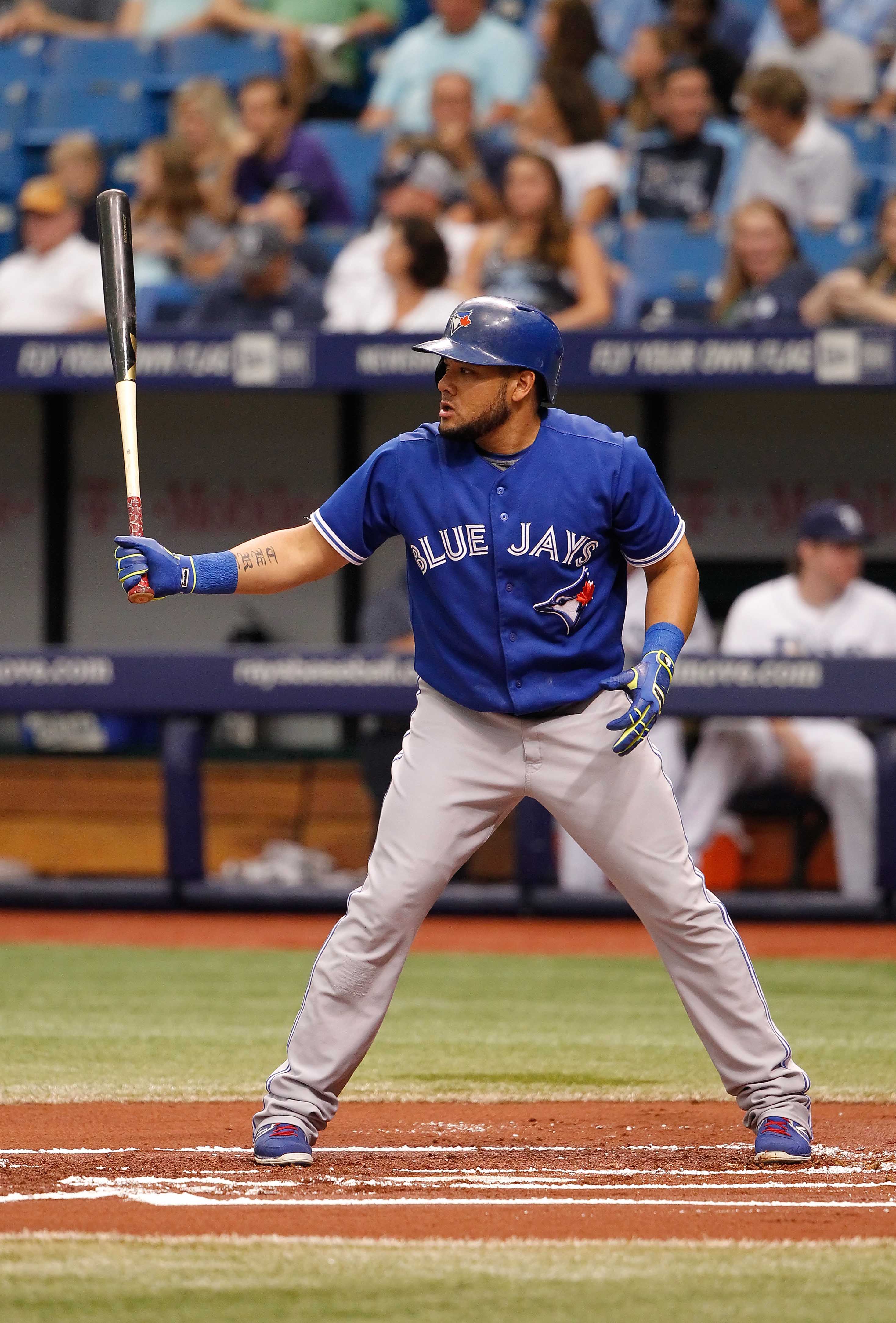 A switch-hitter, Cabrera is a bit stronger as a right-handed bat, but his platoon split is minor. Over the past four seasons, Cabrera has batted .308/.350/.477 as a right-handed hitter and .309/.352/.451 as a left-handed hitter. In terms of average and OBP he’s about the same from each side, but he does offer a bit more pop against lefty pitchers.
He’s never been one to strike out much (career 12 percent), and he posted a career-best 10.8 percent strikeout rate in 2014. Cabrera’s swinging-strike rate (5.1 percent) was the 21st-lowest strikeout rate among qualified hitters this season, and his 88.3 percent contact rate ranked 16th.
Cabrera will play the majority of next season at the age of 30, so he’s a relatively young bat. Even a five-year contract would only run through his age-34 season, so it’s possible that a team could buy mostly prime years without worrying about too much of the decline phase with this deal.
Weaknesses/Cons
The elephant in the room when discussing Cabrera’s free agent stock, of course, is his past suspension for PED usage. Cabrera was hit with a 50-game suspension near the end of his tenure with the 2012 World Champion Giants, and he admitted at the time that his punishment was “the result of my use of a substance that I should not have used.” That test called the validity of his excellent 2012 numbers into question, and naysayers exuded a sense of almost vindication in 2013 when his numbers went into the tank. While the tumor can now clearly be noted as a strong factor in those struggles, some will always question how much of Cabrera’s production is legitimate.
Back to his on-field characteristics, Cabrera may not strike out much but he also doesn’t walk much or show excellent plate discipline. He’s an aggressive hacker who despite rarely swinging and missing at a pitch averaged just 3.69 pitches per plate appearance in 2014 — a figure that tied him for 105th in Major League Baseball among qualified hitters.
Cabrera once had value on the basepaths as a potential 20-steal threat, but Fangraphs pegged him with negative baseruning value in each of the past two seasons. Perhaps last year can be written off, but Cabrera stole just six bags and provided negative baserunning value even in a healthy 2014 season.
Both Ultimate Zone Rating and Defensive Runs Saved feel that while Cabrera’s arm is a plus asset in left field, he is overall a below-average defender at the position. Given his decreased speed, it would seem a stretch to suggest that he could still handle center field, even on a limited basis. Indeed, Toronto only played him there for nine innings this past season. He also ended the season on the DL for a minor injury — a broken pinkie finger sustained while sliding back into first base. The injury did require surgery.
Finally, the Blue Jays reportedly plan to extend a qualifying offer to Cabrera, so a team will have to surrender its top unprotected pick in order to sign him.
Personal
Cabrera has fit in well to a Blue Jays clubhouse that features a number of his countrymen in Edwin Encarnacion, Jose Reyes, Jose Bautista and Juan Francisco, among others. He was also well-liked in San Francisco, even after his suspension. At the time, Sergio Romo made it clear that Cabrera would have been welcomed back with open arms, asking, “Why wouldn’t we want him on our team?” and referring to Cabrera as “a great teammate.”
Cabrera has taken an active role in the community in his native Dominican Republic, organizing youth league tournaments (Spanish link) and encouraging children to stay diligent with their studies while chasing their baseball dreams. Cabrera also donated both cash and food to his home country following the hurricanes of 2007 and was honored with the 2008 Munson Award for his “excellence and philanthropic work in the community,” per the Blue Jays’ media guide.
Market
Cabrera made his desire to return to the Blue Jays perfectly clear late this season, stating plainly, “I stay in Toronto.” Of course, that thinking can obviously change if the Blue Jays’ offer to Cabrera — and GM Alex Anthopoulos has said he expects to make a “competitive” bid — doesn’t stack up with those that he receives from other clubs.
A number of teams will be looking for offense in a thin market for bats, and Cabrera’s will be one of the best out there. The Orioles, Tigers, Royals, White Sox, Twins, Mariners, Rangers, Giants, Padres, Reds, Phillies and Mets could all be in the market for an outfield upgrade, so Cabrera’s representatives at the Legacy Agency will have no shortage of teams with which to converse. Among those clubs, the White Sox, Twins, Rangers and Phillies would have a protected first-round pick.
Perhaps most importantly, Cabrera will find himself near the top of a thin free agent crop of hitters. Among his chief competitors will be Nelson Cruz, Victor Martinez and Yasmany Tomas — an aging slugger with questionable defense, a pure DH entering his age-36 season and a 24-year-old that has yet to play in the Majors, respectively. Cabrera’s power doesn’t stack up to those players, but he’s shown a consistent ability to hit for average with respectable pop, and he offers more certainty than someone like Michael Cuddyer or Colby Rasmus.
Expected Contract
Cabrera is in the unenviable position of hoping to set a precedent. Through this offseason, no player has hit the open market with the stigma of both a PED suspension and a qualifying offer and been able to cash in on a sizable deal. Jhonny Peralta secured a four-year, $53MM pact last offseason fresh off a suspension, but he was not the recipient of a qualifying offer from the Tigers. Any number of free agent bats have cashed in after receiving a qualifying offer, including Curtis Granderson, Nick Swisher and Carlos Beltran. While none of those deals looks enticing at this point, that’s certainly not to say that second-tier free agents with qualifying offers will continue to struggle.
Cabrera’s agents will look to make their client the first to receive a strong multi-year deal in spite of that QO and in spite of a past suspension. He does have the benefit of having performed well in a season two years after his suspension, and more importantly, there’s a case to be made that he’s the safest bat on the market. Cruz is four years older with less defensive value, Martinez’s age and lack of position will limit his market, and though Tomas is tantalizing, he’s unproven.
Ultimately, Cabrera’s contract is difficult to project, but I feel the $36-45MM figure floated past the Toronto Star’s Brendan Kennedy in a survey of rival agents was low. Cabrera can rightly claim that he’s one of the best bats on the market at a relatively young age, and that’s enough for me to predict a perhaps unnecessarily specific five-year, $66.25MM contract (Peralta’s contract with an extra year at the same AAV).
Photo courtesy of USA Today Sports Images.
AL East Notes: Duquette, Napoli, Minaya, Long
Peter Abraham of the Boston Globe examines Dan Duquette’s unusual journey to becoming the Orioles‘ GM. A Boston-area native, Duquette realized his dream at 36 years of age when he was named GM of the Red Sox, but that came to an abrupt end in 2002 when he was dismissed by new owners, only to see the Sox — anchored by a number of players he drafted or acquired — win the World Series two years later. Duquette spent 10 years away from the game, coaching his kids’ teams, founding a league in Isarael and running a college summer team, Abraham notes. Duquette revealed to Abraham that he was offered multiple jobs that he turned down — including a position with the Braves and an adviser role with the Red Sox — because he believed he’d get another crack at a GM role. Duquette feels the time away has made him friendlier and put things into perspective; his cousin, Jim Duquette (an analyst for MLB Network), says there are distinct differences between how Dan was with the Red Sox and how he is with the O’s. He isn’t bothered as much by “little things” and is less guarded. “Baltimore isn’t Boston. It isn’t New York. That aspect has been good for him. He doesn’t take himself so seriously,” said Jim.
More from the AL East…
- Mike Napoli has dealt with injuries to his finger, back and toe, writes Rob Bradford of WEEI.com, but despite all of those issues he’ll be undergoing surgery for a different procedure on Nov. 4 . Napoli will undergo Bimaxillary Advancement surgery in an attempt to end a career-long battle with sleep apnea. “I’ve tried numerous things and none of them worked,” Napoli told Bradford via text. “Dental mouth piece, CPAP machine, medicines … It’s just gotten to the point where I have to get this done.”
- The Yankees have had serious dialogue about hiring Padres senior VP of baseball operations and former Mets GM Omar Minaya, multiple sources tell Newsday’s Erik Boland. Andy Martino of the New York Daily News tweets that the team would be interested in Minaya in a scouting or advisory role — not as a replacement for farm director Mark Newman. As Boland notes, GM Brian Cashman has brought former GMs into the fold before, hiring Kevin Towers as a special assignment scout in 2009 and hiring Jim Hendry to fill the same role since 2012.
- Recently fired Yankees hitting coach Kevin Long is generating quite a bit of interest from other clubs, reports Mark Feinsand of the New York Daily News (Twitter links). To this point, Long has already spoken with the Mets, Braves and Blue Jays, including a meeting with Mets GM Sandy Alderson. The D’Backs, Brewers and Pirates are all possibilities as well, per Feinsand.
Hiroshima Carp, Kenta Maeda Undecided On Posting
Hiroshima Carp owner Hajime Matsuda said today that his club is not yet sure whether it will make top pitcher Kenta Maeda available through the posting system, as the Japan Times reports. “We have the right,” said Matsuda. “We would like to let him go, but based on his production this year it will be difficult.”
For his part, Maeda said that he has not decided his own preference at this point. He is reported to have informed the Carp last year of his desire to be posted, however.
Maeda did put up a rather pedestrian 11-8 record. But by most measures valued in today’s MLB, he was far from unproductive: the 26-year-old worked to a 2.56 ERA with 7.7 K/9 against 2.0 BB/9, stats that are largely in line with his career figures. To be sure, he did not return to the stellar 1.53 earned run mark he put up in 2012, but a brief glance at his stat line shows that Maeda allowed half the number of home runs that year that he did this year and last, which alone probably accounts for much of the discrepancy.
Ben Badler of Baseball America recently published a scouting report suggesting that Maeda’s stuff remains as intriguing as ever. Though he is not viewed as a top-of-the-rotation starter, Maeda is seen as a good bet to be a valuable rotation piece at the MLB level. His solid repertoire is matched, it should be noted, by a track record of durability (at least 175 innings a year since 2009).
Remember that Maeda will be posted, if at all, under new rules agreed to in the midst of last year’s Masahiro Tanaka drama. Among other things, the release fee can be set no higher than $20MM, and any major league team willing to pay the established release fee is permitted to negotiate with the posted player.
In large part, those rule changes tend to discredit the notion that Maeda will not be posted because the Carp could always make him available for the maximum fee and then pull him back if no deal is struck. Though the above-cited story suggests a posting is “unlikely,” the only quote from Matsuda hardly implies that the club has made any decision against posting.
Trade Candidate: Evan Gattis
Once just a fascinating story, Braves catcher Evan Gattis is now unquestionably a legitimate big league piece. He is only just 28, has just two years on his service clock, and is probably one of the ten or so best-hitting catchers in baseball (if not, arguably, somewhat better).
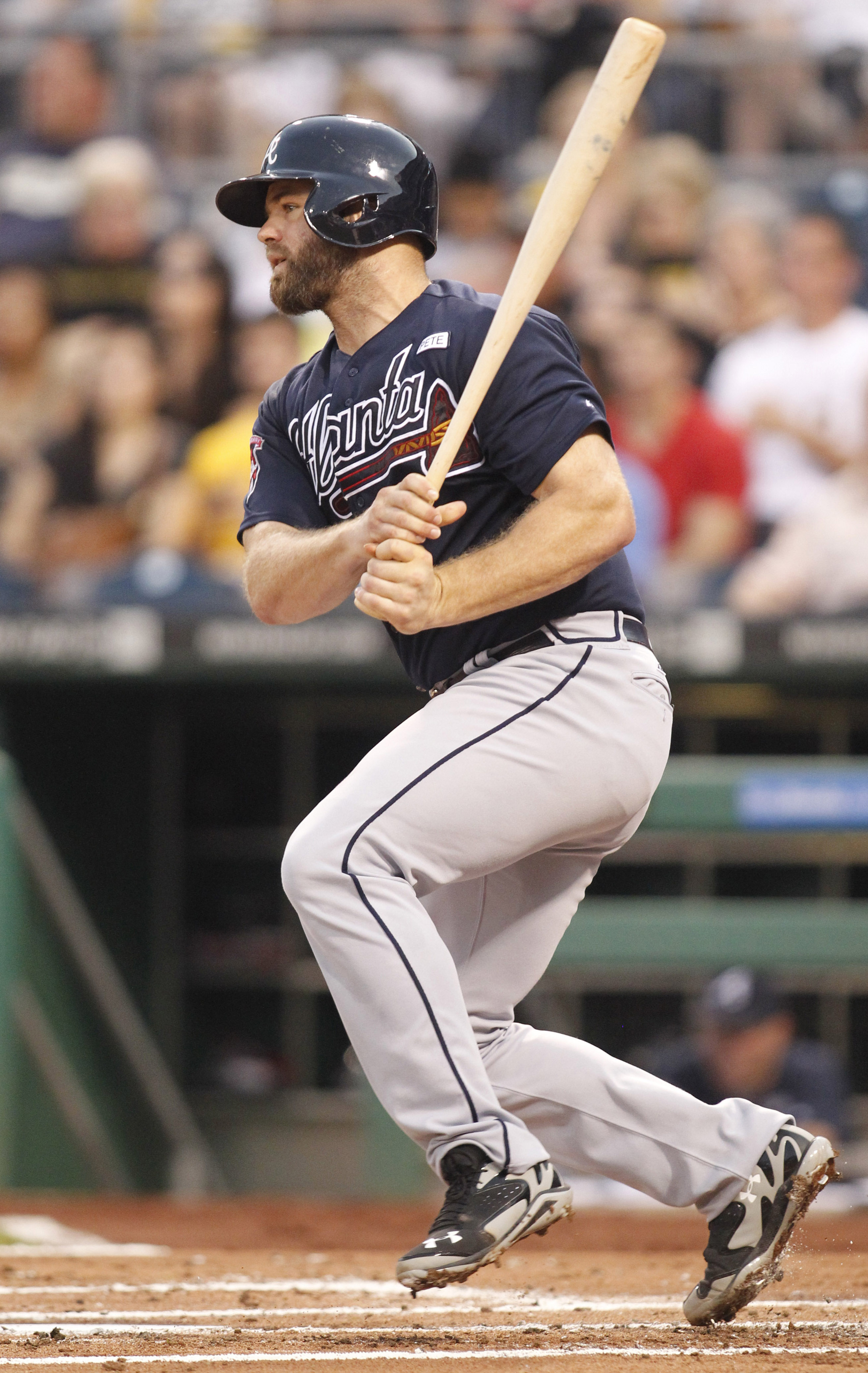 For a Braves team looking to improve but seemingly lacking the present payroll capacity to do it, Gattis seems at first glance to be an obvious keeper. But a look below the surface reveals why recent rumors have labeled him a possible trade chip. Specifically, Atlanta has already groomed (and promoted) an even cheaper, probably more defensively-reliable replacement in 23-year-old Christian Bethancourt.
So, if the Braves choose to shop Gattis, what might he be worth, and what kinds of teams might be interested? The bat certainly has played. Gattis introduced himself to the league with a .243/.291/.480 slash and 21 home runs over 382 plate appearances in 2013, leading some to suggest that he would never make enough contact for his power to be valuable. But Gattis answered with a .263/.317/.493 line and 22 long balls while taking 19 more trips to the plate. His walk and strikeout numbers were similar (5.5% walk rate with a K% in the low-20’s), while his BABIP jumped from .255 to .298.
While there is certainly some risk that Gattis slides back to his rookie numbers, Atlanta would doubtless be loath to deal him were that the complete story. While he is a decent enough baserunner considering his size (he is listed at 6’4/260), Gattis does not enjoy the best defensive reputation and may perhaps not be far off from deteriorating further in the field.
Let’s take a closer look at his defensive work. Gattis threw out just 13 runners while allowing 53 swipes. Though that .197 caught-stealing rate actually rated just ahead of other bat-first catchers like Rosario, Derek Norris, and Jarrod Saltalamacchia, it is not good. And Gattis fell well behind Bethancourt and backup Gerald Laird, so perhaps we cannot pin the blame on the Atlanta staff. And Baseball Prospectus figures indicate that Gattis is one of the very worst blockers in the game, costing the Braves about 18 additional wild pitches or passed balls over his 93 games of action behind the plate.
While these aspects of the catcher’s job description are perhaps the most visible, however, they are probably not the most impactful. Indeed, the gap between Gattis and Bethancourt/Laird in gunning down would-be basestealers pales in comparison to the separation observed among that trio in pitch framing. Only here, Gattis comes out ahead, profiling as an average or better strike-winner while Bethancourt (slightly below average) and Laird (well below average) do not. (Stat Corner and Baseball Prospectus concur on this general ordering, though the latter is more bullish on this group as a whole.) Pitch-calling and staff-handling are much more subjective, of course, but I am not aware of any reports painting him as a disaster in those areas.
In the aggregate, BP tabbed Gattis as the league’s 8th most-valuable backstop last year. Despite pinning him with one of the worst overall defensive WAR tabs among his peers (with statistics that do not account for pitch framing), Fangraphs still valued Gattis as the league’s 14th-most productive catcher.
While it is generally assumed that Gattis would hold most of his appeal to an American League club, then, it could be that talk of Gattis’s impending shift from intriguing, power hitting catcher to slightly above-average DH are premature. And that expands his market, because it is at least plausible for acquiring teams to believe that Gattis will provide serviceable-enough innings behind the plate for at least a portion of his control. (All while comfortable in the knowledge that a shift to DH or a non-tender can prevent the kind of long-term burden that a free agent contract could bring.)
It remains somewhat unlikely that another National League team would top the bidding, though it is at least possible to imagine a team like the Pirates having interest. More likely, Gattis would draw the most attention from American League teams that saw the Athletics extract plenty of value from a defensively-deficient group of backstops who were good enough on offense to DH or play elsewhere. The Astros, Orioles, Tigers, White Sox, Blue Jays, and perhaps even the Mariners and Rangers could at least be imagined as landing spots, depending upon how the rest of their offseasons shake out. None of these is a slam dunk, of course, and on the whole Gattis’s market is not terribly clear.
As always, it is hard to forecast a return on a trade. But there is one fairly recent, fairly solid comp: the pre-2013 John Jaso deal. Jaso, a (lefty) bat-first catcher then entering his age-29 season and coming off of a huge campaign, was shipped to the Athletics in a three-team swap that saw Michael Morse go from the Nationals to the Mariners and prospects move back to D.C. from Oakland. While the arms that moved in that trade — A.J. Cole, Blake Treinen, and Ian Krol — have seen their stock rise rather significantly since that deal, at the time it was considered a substantial-but-fair price for the A’s to pay to acquire Jaso. (The Morse element of the deal, of course, has been the subject of plenty of criticism.)
In some ways Gattis is less useful than Jaso, who kills righties and has a clear, if limited role. On the other, he has more potential as an everyday option, as he not only mashes lefties but puts up good numbers against same-handed pitchers and is perhaps a better all-around defender. And Gattis possesses a power-based skillset that many teams still desire, especially as it continues to diminish in availability.
So, can Atlanta improve on the Jaso return — a legitimate outlay of talent, to be sure, but one that had plenty of risk and did not contribute immediately to the MLB roster — or will it face the tough choice of taking a potentially significant hit to its likelihood of contention in the next year or two in exchange for speculative future value? That probably depends on how many teams have interest in Gattis as at least a semi-regular backstop.
Outrighted: Stephen Fife, Doug Bernier, Yohan Pino
Here are today’s minor moves and outright assignments from around the league…
- Righty Stephen Fife was reinstated from the 60-day DL and outrighted to Triple-A by the Dodgers, the club announced on Twitter. Fife, a depth starter for Los Angeles who just turned 28, underwent Tommy John surgery late in the season and will likely miss most or all of 2015. He owns a 3.66 ERA in 91 career big league innings over the last three years, with 6.9 K/9 against 3.3 BB/9.
- The Twins have outrighted journeyman shortstop Doug Bernier and right-hander Yohan Pino to Triple-A Rochester, tweets Mike Berardino of the St. Paul Pioneer Press. Bernier has already elected free agency, Berardino reports, and Pino is expected to do the same. The 34-year-old Bernier has batted .233/.352/.283 in 73 PA with the Twins over the past two seasons. He was outrighted last year at season’s end as well but returned on a minor league deal and saw another brief callup late in the year. Pino, 30, made his big league debut with Minnesota this season and posted a 5.07 ERA with 7.5 K/9 and 2.1 BB/9 in 11 starts (60 1/3 innings). He was much better in 73 Triple-A innings, registering a 2.47 ERA with 8.9 K/9 and 3.0 BB/9.