
Twins Sign Josh Donaldson
JANUARY 22: The signing is now official. Donaldson’s pact also includes a five-team no-trade clause, Dan Hayes of The Athletic tweets.
JANUARY 15: The Twins have reportedly agreed to a four-year, $92MM contract with free agent third baseman Josh Donaldson. It’s said to include a $16MM club option for a fifth season, which comes with a $8MM buyout. Donaldson is represented by the MVP Sports Group.
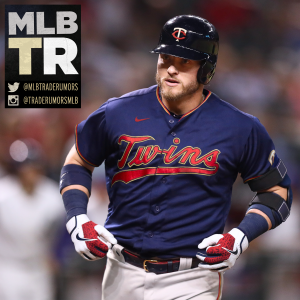
The $92MM guarantee makes this the largest free-agent signing in team history and the second-largest contract the franchise has ever given out, trailing only Joe Mauer‘s eight-year, $184MM mega-deal.
Minnesota has long been reported to hold interest in Donaldson after missing out on higher-end upgrades in the starting rotation earlier in the winter. By bringing Donaldson aboard, the Twins will shift the recently extended Miguel Sano across the diamond to first base, upgrading their infield defense substantially while adding one of the game’s most potent bats to what was already one of MLB’s best lineups in 2019.
Donaldson, 34, bounced back from an injury-ruined 2018 season to hit .259/.379/.521 with 37 home runs in 155 games/659 plate appearances with the Braves last season. That marked his fourth season of at least 33 home runs in the past five years, with the lone exception coming in 2018 when a calf injury held him to 52 games. His addition, incredibly, will give the Twins six players who hit 30 or more home runs in 2019; Sano, Nelson Cruz, Max Kepler, Eddie Rosario and Mitch Garver also crossed the 30-homer threshold on a team that Rosario nicknamed the “Bomba Squad.” While that type of output can’t be expected to be repeated — at least, assuming the league corrects last year’s juiced ball — the Twins should still be in possession of perhaps baseball’s most powerful lineup.
For the Twins, Donaldson’s glove at third base is arguably as important as his offensive prowess. Despite playing last season at age 33, Donaldson tied for 17th among MLB infielders with +8 Outs Above Average (per Statcast). Sano, conversely, checked in at -5 in that same category, so shifting him across the diamond in favor of Donaldson will represent a marked upgrade to the team’s infield defense, which was quietly one of its most significant needs. Shortstop Jorge Polanco graded out poorly, as did rookie second baseman Luis Arraez. The team’s infield defense surely won’t be a strength in 2020, but it figures to be considerably better with Donaldson than it otherwise would have.
Given the Twins’ inability to upgrade their rotation in a notable way this winter, that improved defense will be all the more important. Minnesota has signed Homer Bailey and Rich Hill to affordable one-year deals but will otherwise rely upon a very similar starting staff to the one that looked overmatched in the 2019 American League Division Series. Jose Berrios remains under club control as an arbitration-eligible player, while Jake Odorizzi accepted a qualifying offer and Michael Pineda re-signed on a two-year, $20MM deal. There’s still room for the Twins to make an addition, of course, but the free-agent market has been largely picked over and the trade market doesn’t offer a clearly available top-of-the-rotation arm.
The addition of Donaldson should push the Twins to a new franchise record in payroll, eclipsing the previous mark of $129MM by a good margin. Assuming an even $21MM breakdown of the first four years of the deal, the Twins’ 2020 payroll will clock in at just shy of $140MM. Large as that number may be, the Twins’ total commitments will plummet to about $55MM in 2021; Odorizzi, Cruz, Bailey, Hill, Marwin Gonzalez, Alex Avila, Tyler Clippard, Trevor May and Ehire Adrianza are all lined up to become free agents.
Signing Donaldson, who rejected a qualifying offer from the Braves, will cost the Twins their third-highest pick in the 2020. That’s their Competitive Balance Round B selection — currently slotted to come in at No. 73 overall. The Braves, conversely, will receive a compensatory selection between the end of Competitive Balance Round B and the beginning of Round 3. Coincidentally, the comp pick they’ll receive will land in the exact same range as the pick that Minnesota is surrendering.
Certainly, given Donaldson’s age, there’s some risk with the deal. He’s generally been a durable commodity outside of that 2018 season, but Donaldson’s ability to remain an elite player into the middle years of this contract is more in question than is typical with younger free agents. Of course, with Cruz among the Twins’ many free agents next winter, Donaldson could eventually begin seeing some extra time at DH to help keep him productive. And, in the final season or two of the deal, it’s possible that he could even serve as the team’s primary designated hitter if that becomes necessary.
Looking ahead to the remainder of the offseason, it seems likely that the Twins will continue to at least parse the market for available pitching upgrades. The bullpen is in better shape than it was at the onset of free agency, but there’s potentially some room for another ‘pen addition and certainly room for another starter to be brought into the fray. Just how much further owner Jim Pohlad is willing to push payroll and how willing president of baseball ops Derek Falvey is to part with young talent will ultimately dictate whether another splash is in the offing.
The Twins, of course, aren’t the only team impacted by this signing. The Braves now have a glaring hole in the middle of their lineup and a need at the hot corner. The Nationals, another finalist in the Donaldson mix, can turn to some combination of Starlin Castro, Asdrubal Cabrera or prospect Carter Kieboom at third base. That Donaldson landed in Minnesota also bodes well for both the Cubs and Rockies, if either plans to seriously entertain offers for their respective star third basemen, Kris Bryant and Nolan Arenado. The Twins wouldn’t necessarily have made a push to add a different third baseman had Donaldson signed elsewhere, having Sano already in the fold. But the Braves now appear to have a significant need at third base — creating a clear avenue to a potential trade for a third baseman of some type.
Mark Feinsand of MLB.com tweeted news of the signing. Darren Wolfson of 1500 SKOR North Radio (via Twitter), Do-Hyoung Park of MLB.com (via Twitter), and Ken Rosenthal of The Athletic (via Twitter) all reported contract details. This post was originally published on 1-14-20.
Phillies To Sign Francisco Liriano
The Phillies have reached agreement on a deal with veteran lefty Francisco Liriano, per Robert Murray (via Twitter). Jon Heyman of MLB Network had tweeted that a deal was close.
It’s said to be a minor-league pact and will obviously include an invitation to MLB camp. Liriano can earn $1.5MM in the majors and double that through incentives.
The 36-year-old Liriano spent last year working exclusively as a reliever, but had previously functioned primarily as a starter. Odds are he’ll be looked at primarily as a pen candidate by the Philadelphia organization, but his wealth of experience in multi-inning situations surely doesn’t hurt.
While he pitched to a 3.47 ERA over seventy frames in 2019, it’s not hard to see why Liriano was forced to settle for a minor-league arrangement. He posted 8.1 K/9 against 4.5 BB/9 along with a 50.3% groundball rate. Fielding-independent pitching metrics weren’t overly enthused (4.52 FIP; 4.92 xFIP; 4.76 SIERA) and Statcast indicates that Liriano gave up loads of hard contact.
Then again, it wouldn’t be much of a surprise to see Liriano in the picture with the Phils. He was able to generate a 13.5% swinging-strike rate last year, his loftiest mark since 2015. And lefties that can handle right-handed batters are perhaps more in demand than ever before, given the onset of the 3-batter minimum rule.
Tigers Sign Hector Santiago
The Tigers have announced a minor-league deal with lefty Hector Santiago. He’ll receive an invitation to participate in MLB Spring Training.
Santiago had some rather productive campaigns earlier in his career. But at 32 years of age, he has settled into the existence of a journeying southpaw swingman.
Over the past three years, Santiago has transitioned from membership in a 5-man rotation to long relief duties. He carries only a 5.20 ERA in the 206 innings he has thrown during that span. Santiago has struck out 8.5 batters per nine over that time but has also handed out excessive numbers of walks (4.9 per nine) and home runs (1.7).
It’s tough to imagine Santiago having much of a shot at the Detroit rotation in camp. But he could challenge for a bullpen role or otherwise slot into the Triple-A staff to provide depth.
Cubs Sign Danny Hultzen, Rex Brothers, Noel Cuevas
The Cubs have minor-league deals lined up with southpaws Danny Hultzen and Rex Brothers as well as outfielder Noel Cuevas, per the latest minor-league deal log from Baseball America’s Chris Hilburn-Trenkle. Ken Rosenthal of The Athletic had previously reported the Cuevas signing, via Twitter.
Hultzen had been dropped from the Chicago 40-man roster in December after making his long-awaited big-league debut late in 2019. The former second overall draft pick saw his career with the Mariners derailed by a series of debilitating arm injuries, but he reemerged with the Cubs organization.
Though Hultzen didn’t throw many innings in 2019, he did turn in some interesting numbers. In 18 total frames (3 1/3 in the majors and the balance at Triple-A), he racked up 28 strikeouts against 11 walks and permitted just a pair of earned runs on eight hits. During his MLB action, Hultzen worked in the 93 to 94 mph range with his fastball and got swings and misses on 12.3% of the pitches he delivered.
As for the flamethrowing Brothers, he spent the ’19 campaign turning in typically high-K, high-walk outings for the Yankees’ top affiliate. In 45 2/3 innings at Triple-A, the former Rockies and Braves hurler struck out 81 opposing hitters but also doled out 36 free passes. He ended the year with a 4.93 ERA. Once a fixture in the Colorado bullpen, Brothers has seen his big-league opportunities dwindle in more recent seasons.
Cuevas has a more recent track record with the Rockies organization. He struggled in the majors during his 2018 debut and was injured in his first game up in 2019. He ended up spending most of the just-completed campaign at Triple-A, where he turned in uninspiring numbers. But Cuevas has at times produced at an above-average rate at the plate in the upper minors. The 28-year-old is capable of playing all three outfield positions.
Angels Sign Jacob Barnes, Jake Thompson
The Angels have inked a pair of former MLB righties to minor-league deals, according to the latest round-up of deals from Baseball America’s Chris Hilburn-Trenkle. Jacob Barnes and Jake Thompson will both be in camp trying to impress the Halos.
Barnes was once seen as a part of the long-term pitching picture in Milwaukee, Barnes is now looking for a bounceback opportunity after a rough 2019 season. Through his first three MLB campaigns, Barnes carried a 3.54 ERA with 153 strikeouts and 62 walks in 147 1/3 innings, all while producing grounders on about half the balls put in play against him.
That’s a pretty appealing overall statistical profile. But Barnes couldn’t keep things going in 2019. He was tagged for 27 earned runs and seven home runs in just 32 2/3 innings, split between the Brewers and Royals. He lost about two ticks of fastball velocity (though still averaged 94 mph) and saw his swinging-strike rate dive from the 13-15% range to 9.3%.
Thompson, who’s still just shy of his 26th birthday, will also be trying to get back on track. The former second-round draft pick washed out with the Phillies and didn’t perform as hoped in 2019 with the KBO’s Lotte Giants, working to a 4.74 ERA in 62 2/3 innings.
KBO’s LG Twins Purchase Roberto Ramos’ Contract From Rockies
The LG Twins of the Korea Baseball Organization have purchased first baseman Roberto Ramos‘ contract from the Rockies, Ken Rosenthal of The Athletic reports. Ramos can earn up to $500K in 2020, MLBTR has learned.
This ends a five-season tenure in the Colorado organization for Ramos, whom they chose in the 16th round of the 2014 draft. Ramos worked his way up to the Triple-A level for the first time last year and raked. Across 503 plate appearances, the 25-year-old slashed .309/.400/.580 with 30 home runs. Ramos did have the benefit of playing in the offense-happy Pacific Coast League, but his production was still 35 percent better than the PCL average, according to FanGraphs’ wRC+ metric.
Thanks in part to his powerful showing in 2019, Ramos recently earned spots on a couple Rockies prospect lists. MLB.com placed him as the team’s 27th-best farmhand after the season. FanGraphs’ Eric Longenhagen and Kylie McDaniel had Ramos No. 31 in Colorado’s system in rankings released last month, crediting his “gigantic raw power.” However, they wrote that Ramos has “Quad-A hitter written all over him.”
Mets, Rene Rivera Agree To Minors Deal
The Mets have agreed to a minor league contract with catcher Rene Rivera, Bob Nightengale of USA Today tweets. The deal includes an invitation to major league spring training for Rivera, who will earn a $1MM salary with up to $300K in incentives if he makes the Mets’ roster.
This is the third time since 2016 and the second offseason in a row in which the Mets have added Rivera on a minors pact. The well-traveled 36-year-old ended up playing in just nine games with the club last season. He spent the majority of the year as a member of the Mets’ Triple-A affiliate, with whom he batted .254/.319/.501 and smacked 25 home runs in 396 plate appearances.
Historically, Rivera hasn’t been all that successful at the plate in the majors, where he has hit .221/.272/.354 in 1,547 tries. However, he’s a well-regarded defender who has thrown out an excellent 36 percent of would-be base thieves during his time in the majors and earned the trust of Mets starter Noah Syndergaard.
Rivera will now attempt to work his way back to the bigs with a team whose catching situation isn’t ideal. Wilson Ramos is entrenched as the starter, though he had a somewhat disappointing 2019, and the leading candidate to back him up remains the extremely light-hitting Tomas Nido.
White Sox Outright Dylan Covey
The White Sox have outrighted hurler Dylan Covey to Triple-A Charlotte, per the International League transactions page. Covey has been outrighted before, so he’ll be allowed to decline the assignment in favor of free agency if he wants. It’s unclear if that will happen.
The right-handed Covey lost his spot on Chicago’s 40-man roster when the team designated him Jan. 14 to clear space for newly signed reliever Steve Cishek. Covey had been a fairly regular option in the White Sox’s pitching staff over the previous three seasons, but his time in the majors hasn’t gone well.
So far, Covey has combined for 250 1/3 innings (63 appearances, 45 starts) of 6.54 ERA/5.57 FIP ball in the bigs. Despite boasting a fastball that averages upward of 94 mph, Covey has struggled to limit home runs (1.62 per nine) and miss bats, having fanned just over six hitters per nine while walking more than four. Dating back to 2017, his K/BB ratio (1.52) ranks fifth worst among 193 pitchers who have thrown at least 200 innings.
While Covey has made double-digit starts in each of his three MLB seasons, he almost certainly won’t total that many in 2020 even if he does remain with the White Sox organization. The club has been aggressive in upgrading its rotation this winter, having signed southpaws Dallas Keuchel and Gio Gonzalez. They’re part of a group that should also include a mix of Lucas Giolito, Reynaldo Lopez, Dylan Cease, Michael Kopech and Carlos Rodon (when he returns from Tommy John surgery) during the upcoming season.
Regardless of whether Covey sticks with his current franchise, it appears he’ll have to improve his stock in the minors. The 28-year-old has been quite effective in Triple-A ball, where he owns a 2.63 ERA with 7.9 K/9 and 2.4 BB/9 in 95 2/3 frames.
Giants Sign Rob Brantly To Minor League Deal
The Giants announced Tuesday that they’ve signed catcher Rob Brantly to a minor league deal and invited him to Major League Spring Training. San Francisco also confirmed its previously reported minor league deals with righty Tyson Ross and left-hander Jerry Blevins.
Brantly, 30, has appeared in parts of five big league seasons, including the briefest of stints with the Phillies in 2019, when he appeared in one game and tallied one plate appearance. He’s a career .229/.294/.332 hitter in 127 games and 429 plate appearances at the MLB level. Brantly struggled through a dismal 2018 season in Triple-A but bounced back with a .314/.404/.464 showing with Philadelphia’s top affiliate in 2019. Overall, he’s a .264/.310/.388 hitter in parts of eight Triple-A campaigns.
Last season, Brantly threw out 35 percent of runners who attempted to steal against him in the minors — up from his career mark of 32 percent. He has a lifetime 27 percent caught-stealing rate in the Majors. Framing statistics at Baseball Prospectus have him hovering at slightly below average over the past few seasons combined.
The Giants will head into 2020 with Buster Posey and Aramis Garcia likely to shoulder the workload behind the plate, with Brantly and fellow offseason signee Tyler Heineman presumably in line to handle catching duties in Triple-A. Of course, the Giants have Joey Bart, the No. 2 overall pick in 2018 and one of the top prospects in all of baseball, working his way up the minor league ladder. He’ll be in big league camp as well this spring and surely draw on the experience of Posey and others, but he’s only played 22 games above Class-A Advanced, so he’s likely destined for Double-A to begin the 2020 season.
Braves Sign Marcell Ozuna
6:06pm: The Braves have announced the deal and confirmed the terms of the agreement.
6:01pm: The Braves have agreed to a one-year deal with free-agent outfielder Marcell Ozuna, reports Jeff Passan of ESPN.com. The MDR Sports Management client will receive an $18MM salary that slightly exceeds the $17.8MM qualifying offer from the Cardinals that he rejected back in November.
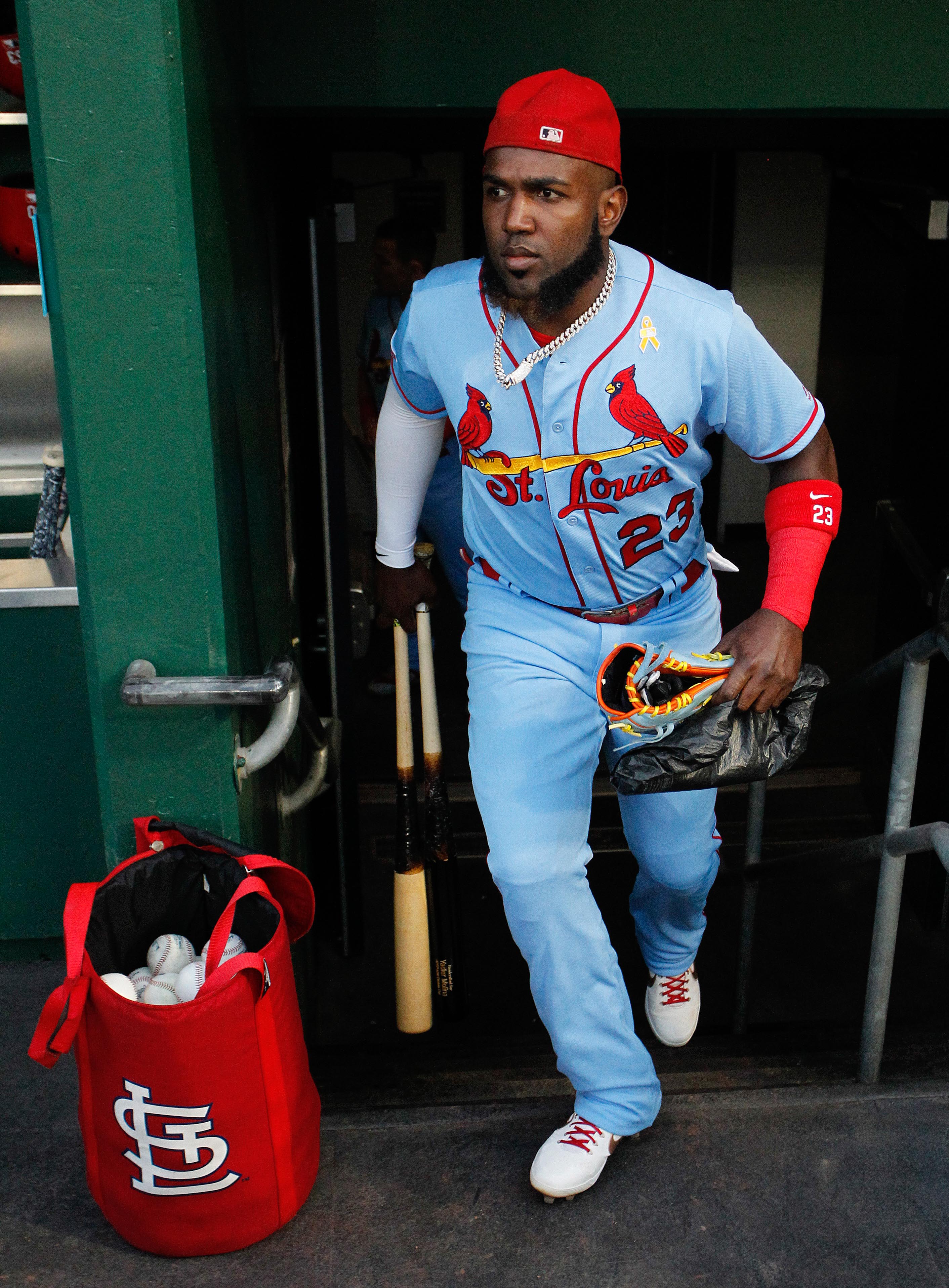
The market for Ozuna has been tepid, with the Cardinals and Rangers reported as the primary suitors for much of the winter. That likely changed when Atlanta missed out on third baseman Josh Donaldson, who agreed to a four-year deal with the Twins last week. Adding Ozuna to the lineup won’t account for the loss of Donaldson’s production, but it nonetheless bolsters a lineup that already won the division in 2018 and 2019.
Ozuna will presumably join Ender Inciarte (center) and Ronald Acuna Jr. (right) in comprising the Braves’ regular outfield trio. Inciarte and fellow outfielders Nick Markakis and Adam Duvall will likely lose some at-bats as a result of the signing, which gives the Braves a deep and talented mix from which to draw.
When the Cardinals originally acquired Ozuna from the Marlins in the 2017-18 offseason, it looked as though the club had acquired one of the game’s burgeoning top power threats. Ozuna swatted 37 home runs in ’17 and turned in a scintillating .312/.376/.548 line through 159 games. But shoulder problems slowed him over his two seasons in St. Louis — particularly in 2018. Ozuna did turn in a .262/.327/.451 batting line with 52 home runs, 39 doubles, three triples and 15 steals in 1177 trips to the plate (106 OPS+, 108 wRC+), but he wasn’t the heart-of-the-order force the Cardinals had presumably hoped to acquire.
That 2018-19 production aligns with the output that Ozuna showed in 2014-16 — raising the question of whether the 2017 season is repeatable or simply an outlier. Notably, there are some encouraging factors that suggest Ozuna could have more in the tank than he showed during his time with the Cardinals. His average exit velocity and hard-hit rate were both elite, per Statcast, as were his expected batting average, expected slugging percentage and expected wOBA. Ozuna also posted a career-high 11.3 walk rate that easily topped his previous career-best of 9.4 percent and trounced the 6.9 percent career mark he carried into 2019.
Defensively, Ozuna comes with plenty of uncertainty. He won a Gold Glove in 2017 with the Marlins, but his ongoing shoulder troubles completely sapped his throwing ability in 2018. Defensive Runs Saved and Ultimate Zone Rating both still graded him as an above-average fielder thanks to his range, although Statcast’s Outs Above Average metric pegged him at -9 over the duration of his two-year stint in St. Louis. At the very least, he should’t be a major liability for the Braves, and there’s the potential that he’ll actually deliver plus glovework if he’s at full strength.
The other ripple effect for the Braves is that bringing Ozuna into the fold cements Austin Riley‘s return to the infield mix. He and Johan Camargo are now the likeliest options for the Braves at third base, but it’s at least plausible that the club could look into options on the trade market. However, Ozuna’s contract pushes the Braves up to a franchise-record $158MM projected cash payroll, and perhaps even more surprisingly, they’re at $186MM in payroll as calculated for luxury tax purposes, per Roster Resource’s Jason Martinez. A Nolan Arenado acquisition has long appeared unlikely but looks even less plausible now, as acquiring him would push the Braves over the luxury threshold for the first time in franchise history. Even a deal to bring Kris Bryant over from the Cubs would leave Atlanta just a couple million shy of the $208MM barrier.
While the deal is a sensible one for the Braves, it’s hard to view it as anything other than a disappointing outcome for Ozuna. He’ll take home the largest salary of his career and slightly beat the qualifying offer value, but this isn’t the multi-year deal that most envisioned for the 29-year-old at the outset of free agency. We at MLBTR expected that he could struggle to secure the type of four- or five-year pact that some had forecast, but our prediction of a three-year, $45MM deal still proved too aggressive.
On the plus side for Ozuna, he’ll pocket that hefty one-year salary and reenter the free-agent market next winter at a relatively youthful 30 years of age. There’ll be even greater competition on the outfield market next time around, when Mookie Betts and George Springer are among the top-ranked free agents on the market, but Ozuna won’t have a qualifying offer hanging over his head. Additionally, it’s possible that some big-spending clubs who are in the midst of quiet offseasons — e.g. Cubs, Red Sox, Giants — will be more apt to engage in the open market.
As for the Cardinals, the fact that Ozuna settled on a one-year deal backs up recent reporting from Derrick Goold of the St. Louis Post-Dispatch indicating Ozuna wasn’t a priority for the team. Other reports of the St. Louis organization’s interest in keeping Ozuna in the fold appear to have been overstated, and the outfielder’s ultimate price point only reinforces recent comments from Cardinals owner Bill DeWitt Jr. which suggested that another splash might not be in the forecast.
It’s hard not to point out that Ozuna’s 2020 salary will line up almost perfectly with the $18.5MM owed to Matt Carpenter, who signed a two-year extension last spring that now looks to be regrettable for the Cardinals. Keeping Ozuna or acquiring a third baseman might’ve been more of a priority had Carpenter hit free agency this winter, as he would’ve without signing that new contract. Instead, the organization is left hoping for a rebound from the 34-year-old Carpenter, who slashed .226/.334/.392 in 2019.
The Cardinals won’t be left entirely empty-handed with Ozuna out the door, though. They’ll get a compensatory draft pick following Competitive Balance Round B in this summer’s draft — a selection that should fall in the upper-70s. The Braves, meanwhile, will surrender their third-best pick in next year’s draft in order to sign Ozuna, although they’re also set to acquire a compensatory pick for the loss of Donaldson, which helps to mitigate the damage.
With Ozuna off the market, Nicholas Castellanos is the clear-cut top free agent remaining. He and fellow free-agent Yasiel Puig represent the top two options on the market for clubs still seeking corner outfield upgrades. Ozuna’s subtraction from the pool of available talent could help the market for one or both outfielders move closer to a resolution.