
Cubs Designate Cody Poteet For Assignment
The Cubs announced Thursday that they’ve designated right-hander Cody Poteet for assignment. His spot on the roster will go to righty Brad Keller, who has now formally been selected to the roster. The Cubs also placed righties Tyson Miller (left hip impingement), righty Ryan Brasier (groin strain) and infielder/outfielder Vidal Brujan (elbow sprain) on the injured list and recalled righty Eli Morgan from Triple-A Iowa.
Poteet, 30, was the lone player the Cubs received in the trade sending Cody Bellinger to the Yankees. That swap was always more about dumping Bellinger’s salary than adding to the system, and today’s DFA only further underscores that reality.
A fourth-rounder by the Marlins in 2015, Poteet has pitched in parts of three big league seasons between Miami and New York. He posted a 2.22 ERA in 24 1/3 frames for the Yanks last year and carries an overall 3.80 mark in 83 MLB innings. He was sharp in 53 minor league innings last year as well, recording a 3.40 ERA. Poteet isn’t a flamethrower, sitting 93.8 mph with his four-seamer and 92.6 mph with his sinker. He complements those fastballs with a slider, curveball and changeup, rounding out a five-pitch arsenal.
Poteet has punched out 20.2% of his big league opponents against a 10.2% walk rate. Both are worse than average, though not necessarily by wide margins. In parts of five Triple-A campaigns, he’s logged a 4.47 ERA with a 21.7% strikeout rate and 8.1% walk rate. Poteet still has a pair of minor league options remaining, so if a team acquires him in a trade or claims him off waivers, he can be optioned directly to Triple-A. That could make him an appealing target for clubs seeking affordable rotation depth.
The Cubs owed Bellinger $52.5MM over the next two seasons, though he can opt out of the contract this year and trim $20MM off that guarantee if he feels there are greener pastures in free agency. Chicago paid $5MM of that sum to help facilitate the swap but saved $47.5MM overall. Bellinger was seen as a poor fit on the roster, with Ian Happ, Pete Crow-Armstrong, Kyle Tucker and Seiya Suzuki in the outfield mix and Michael Busch at first base. Time will tell whether the club is better off for it, but for the moment the only thing they have to show for the trade is salary relief and about $25MM of breathing room between the current payroll and the luxury tax threshold.
White Sox Designate Jake Eder, Dominic Fletcher For Assignment
The White Sox announced this morning that they’ve designated left-hander Jake Eder and outfielder Dominic Fletcher for assignment. They’ve also placed righty Drew Thorpe on the 60-day injured list while he recovers from Tommy John surgery. That trio of moves clears the way for righty Mike Clevinger, infielder Nick Maton and outfielder Travis Jankowski to be selected to the big league roster. (Maton and Jankowski were already known to have made the club.) All three had been non-roster invitees in camp this spring.
Eder, 26, was a fourth-round pick by the Marlins out of Vanderbilt back in 2020. He was considered one of the best prospects in Miami’s system when the Sox acquired him in a straight-up swap for slugger Jake Burger back at the 2023 trade deadline. Prior to Eder requiring Tommy John surgery late in the 2021 season, he’d even begun to garner some attention on midseason iterations of top-100 prospect rankings at Baseball America (No. 68) and MLB.com (No. 81).
At the time of the trade, Eder was just making his way back from that UCL repair. He’d pitched 39 1/3 innings in the Marlins’ minor league system and showed well. He was rocked in five starts with the White Sox’ Double-A club following the swap, but for a then-24-year-old just returning from major surgery, it wasn’t necessarily a shock to see him fade down the stretch.
Eder’s 2024 struggles, however, were more concerning. The left-hander split last season between Double-A and Triple-A, working to a combined 6.61 earned run average with glaring command troubles. Eder fanned a quality 24.4% of his opponents but also walked 11.6% of the batters he faced — including a sky-high 16.1% of his opponents in nine Triple-A starts. He also plunked five hitters and was charged with 10 wild pitches. His spring work wasn’t any better; Eder faced 13 hitters in 2 1/3 innings, allowing three runs on a pair of hits and three walks with four strikeouts.
Fletcher, 27, came over from the D-backs last offseason in a one-for-one swap that sent pitching prospect Cristian Mena to Arizona. He got a decent look in the South Siders’ outfield but turned in only a .206/.252/.256 slash in 241 trips to the plate. He’d been coming off a strong 2023 showing that saw him hit .291/.399/.500 in Triple-A and .301/.350/.441 in 102 plate appearances during his MLB debut.
Fletcher not only struggled in the majors, however, but also hit poorly in the minors. He clearly fell out of favor, as the Sox instead signed both Mike Tauchman and Michael A. Taylor to big league deals, pushing Fletcher down the depth chart. Even with Tauchman opening the season on the injured list due to a right hamstring strain, Fletcher didn’t make the cut and now is off the 40-man roster entirely.
The Sox will have the next five days to trade Eder and/or Fletcher. If no deal is reached by then, the pair would be placed on waivers, which is another 48-hour process. Either could be waived before that point, but the maximum length of their DFA window will seven days. Eder still has two minor league option years remaining. Fletcher has one.
As for Clevinger, he’ll return for a third stint with the ChiSox, this time in a bullpen role. The 34-year-old fired six shutout innings as a reliever during camp, fanning eight of 21 opponents (38.1%) against just one walk (4.8%). He’s far and away the most experienced pitcher in Chicago’s bullpen and could find his way to late-inning work early on, given the youth of the Sox’ bullpen. Clevinger, Bryse Wilson and Penn Murfee are the only Sox relievers with even a year of major league service (and much of Murfee’s MLB service has been spent on the 60-day IL).
Blue Jays DFA Zach Pop, Tommy Nance, Nick Robertson
The Blue Jays revealed their Opening Day roster this morning and, in the process, announced that they have designated three right-handed pitchers for assignment: Zach Pop, Tommy Nance, and Nick Robertson. The three DFAs make room for right-hander Jacob Barnes and outfielders Alan Roden and Myles Straw on the 40-man roster. The Blue Jays had already confirmed their intention to select Barnes, Roden, and Straw, and today, they made the decision official. In addition, the Blue Jays formally placed right-handers Erik Swanson and Ryan Burr on the 15-day IL and center fielder Daulton Varsho on the 10-day IL. The team had already announced that Swanson, Burr, and Varsho would miss the beginning of the season.
Pop, 28, has pitched for the Marlins and Blue Jays throughout his four-year MLB career. In that time, he has a 4.45 ERA and 3.94 SIERA across 155 2/3 innings of work. He was electric after Toronto acquired him at the 2022 trade deadline, pitching to a 1.89 ERA in 17 appearances down the stretch. However, he has struggled at the big league level in each of the past two seasons, pitching to a 5.81 ERA in 73 total appearances. His 4.31 SIERA is better but still not especially promising. The righty is a groundball pitcher who does not miss many bats. His home run rate over the past two years (1.89 HR/9) is far too high for a pitcher who also issues his fair share of walks. To make matters worse, Pop was set to begin the season on Toronto’s injured list with elbow discomfort that arose this spring.
Nance, now 34, made his MLB debut with the Cubs at age 30 in 2021. He has had somewhat of an up-and-down career to this point. His rookie season was rough, but he looked like a capable low-leverage reliever over 43 2/3 innings with the Marlins in 2022. Then, injuries kept him out for much of 2023. He signed a minor league deal with the Padres last offseason and failed to make his way back to the majors in San Diego. Yet, after a late-summer trade to Toronto, he looked perfectly serviceable once again, pitching to a 4.09 ERA and 3.96 SIERA in 22 innings of lower-leverage work. He leads with a curveball and a sinker, a good approach for inducing groundballs, but hasn’t been able to consistently induce outs and strand baserunners at the highest level.
Robertson, 26, has already pitched for four different teams over his two MLB seasons, suiting up for the Dodgers and Red Sox in 2023 and the Cardinals and Blue Jays in 2024. He also pitched in the Angels’ system in between his stints with St. Louis and Toronto. The right-hander has a 5.30 ERA but a 3.52 SIERA in 35 2/3 career MLB frames. He has shown the ability to pitch multiple innings out of the bullpen as needed, but his performance has been poor at both the major and minor league levels since he left the Dodgers organization as part of the Enrique Hernández deadline trade in 2023. At times in the minors, Robertson has shown sharp strikeout stuff, but he has struggled in recent years to consistently rack up strikeouts and limit walks. He has one option year remaining, which could make him a bit more appealing to a club in need of bullpen help.
The Blue Jays will enter 2025 with something of a new-look bullpen, led by free agent acquisition and 2024 All-Star Jeff Hoffman. Other new pieces include Yimi García, who is back after a brief stint with the Mariners; Nick Sandlin, whom the Blue Jays acquired as part of the Andrés Giménez trade; and Richard Lovelady, who, like Barnes, signed a minor league deal with the club this offseason. Toronto selected his contract last week.
Phillies Designate Buddy Kennedy For Assignment
The Phillies announced this morning that they’ve designated infielder Buddy Kennedy for assignment. President of baseball operations Dave Dombrowski had already signaled earlier in the week that Kennedy, who’s out of minor league options, wouldn’t make the team’s Opening Day roster. He’s been discussing potential trades of the infielder already. Today’s DFA doesn’t change that. He can still be traded for the next five days, though if no deal is reached by that point, he’ll be placed on outright waivers and made available to the other 29 teams.
Kennedy, 26, has played 54 big league games with three teams — D-backs, Tigers, Phillies — across the past three seasons. He’s a career .203/.295/.313 hitter in a small sample of 149 major league plate appearances. Kennedy hasn’t gotten any real extended shot at playing time in the big leagues, however, despite a strong Triple-A track record. He’s played in parts of three seasons at the top minor league level and turned in a .281/.392/.435 batting line. He’s walked in a massive 14.4% of his plate appearances against an 18.2% strikeout rate that’s significantly lower than league average.
A fifth-round pick out of the same Millville High School that produced Mike Trout, Kennedy is a right-handed hitter who’s played all four infield positions and left field in his professional career. The vast majority of his time has been spent at third base (3470 innings) and second base (1285 innings), but he’s played 110 innings at first base, 93 innings in left field and 10 innings at shortstop. Kennedy had no platoon splits at the plate in 2024 and has been productive against both lefties and righties in each of the past three seasons (2023-24 in particular).
Rangers Release Cody Thomas
The Rangers released outfielder Cody Thomas from his minor league contract. Texas also officially selected Kevin Pillar onto the 40-man roster after announcing yesterday that he’d make the team. They had an opening after outrighting Dane Dunning earlier in the week. Additionally, the Rangers reassigned a number of minor league signees to Triple-A Round Rock: Joe Barlow, Tucker Barnhart, Caleb Boushley, David Buchanan, JT Chargois, Matt Festa, Adrian Houser, Patrick Murphy (minor league injured list), Hunter Strickland, Alan Trejo and Chad Wallach.
Thomas signed a minor league deal after spending the ’24 season in Japan. The lefty-hitting outfielder spent most of the season with the minor league affiliate of the Orix Buffaloes. He only appeared in 10 NPB games and went 0-18 with seven strikeouts. Thomas went 2-18 this spring. He walked three times with six strikeouts.
An Oklahoma product, Thomas appeared in 29 MLB games with the A’s between 2022-23. He has hit well over parts of three seasons in the Pacific Coast League. The 6’4″ outfielder owns a .292/.356/.585 slash with 42 homers in 176 Triple-A games.
In other Rangers news, Patrick Corbin will begin the season in Triple-A. The veteran southpaw has more than enough service time to refuse any minor league assignments, but he agreed to be optioned because he didn’t sign his one-year free agent deal until March 18. That nearly coincided with the birth of his third child, so he did not pitch in any games this spring.
GM Chris Young told reporters on Tuesday that Corbin will start two games with Round Rock before being recalled (relayed by Shawn McFarland of The Dallas Morning News). Young identified April 11 as the target date for Corbin’s team debut. Texas will go with Nathan Eovaldi as their Opening Day starter. Jacob deGrom, Tyler Mahle, Jack Leiter and Kumar Rocker round out the season-opening starting five.
Rockies, Mickey Moniak Agree To Major League Deal
The Rockies are in agreement with Mickey Moniak on a one-year, $1.25MM contract, report Mark Feinsand and Thomas Harding of MLB.com. The Angels released the former first overall pick yesterday. Moniak, a Wasserman client, has a little over three years of service time and is technically controllable through 2027 via arbitration. Colorado has not announced the signing. They opened a 40-man roster spot by waiving Greg Jones, who was claimed by the White Sox this afternoon.
Moniak had gone to an arbitration hearing with the Halos. He prevailed and was awarded a $2MM salary. However, arbitration salaries are only fully guaranteed if the player and team mutually agree to them without a hearing. The distinction was introduced in the most recent collective bargaining agreement, at least partially to incentivize players to agree to deals without going to hearings.
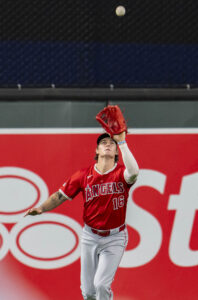
Players who go to a hearing (regardless of whether they win or lose) are only guaranteed termination pay until the beginning of the regular season. Players released before or early in Spring Training receive 30 days termination pay; those released within 15 days of Opening Day are guaranteed 45 days termination pay. Moniak obviously fell into the latter bucket, so he received roughly $484K from the Angels when he was cut loose.
That’s on top of the money he’s guaranteed from the Rockies, meaning he has now locked in around $1.73MM for this season. That’s about $270K below what he had won in the hearing, but it’s roughly $230K above the Angels’ $1.5MM filing figure during the arbitration process. Moniak lands just shy of the midpoint between his and the Halos’ respective filing numbers.
Moniak, a lefty-hitting center fielder, has spent the last two seasons playing a semi-regular role with the Angels. He had a productive 2023 season, hitting .280/.307/.495 with 14 homers in 85 games. A massive 35% strikeout rate made it unlikely he’d be able to keep up that production. His numbers indeed fell off last season, as he hit .219/.266/.380 over 418 plate appearances. Moniak cut his strikeout rate to a slightly more palatable 27.3% mark, but that came with a dramatic drop to his ball-in-play results.
The Angels are moving Mike Trout to right field this season. That reopened the path for Moniak and another former top prospect, Jo Adell, to work as a center field platoon. Moniak had a terrible Spring Training, batting .191 while striking out 18 times in 58 plate appearances. Adell’s numbers were even worse (.172/.194/.375 in 67 PAs), but the Angels decided to move on from Moniak and cut a little more than $1.5MM from their payroll.
Moniak projects as a fourth outfielder in Colorado. Brenton Doyle is one of the better all-around center fielders in MLB. Jordan Beck, Sean Bouchard and minor league signee Nick Martini round out the corner outfield after last week’s Nolan Jones/Tyler Freeman swap. The signing probably doesn’t bode well for Sam Hilliard, another left-handed hitter who was slated to work as the fourth outfielder. Moniak and Hilliard are both out of options, so they’ll need to break camp or be exposed to waivers. Moniak is clearly going to make the team. Hilliard batted .137 while striking out nearly half the time this spring.
Image courtesy of Jesse Johnson, Imagn Images
Giants Select Christian Koss
The Giants announced that they’ve selected infielder Christian Koss onto the 40-man roster. He’ll break camp and will make his major league debut once he gets into a game. San Francisco optioned Grant McCray and Brett Wisely while reassigning non-roster invitees Joel Peguero and Max Stassi to Triple-A Sacramento. The Giants also placed Jerar Encarnacion on the 10-day injured list with a fracture in his left hand that’ll require surgery. They placed catcher Tom Murphy on the 60-day injured list to open a 40-man roster spot for Koss.
Koss, 27, is entering his second season in the San Francisco organization. The Giants acquired him from the Red Sox in a minor league deal on the eve of the ’24 campaign. It was the second trade of his career. Koss was initially a 12th-round pick by Colorado and went to the Red Sox in a minor trade in 2020. He reached Triple-A in the Boston system before being traded.
The UC-Irvine product divided his first season with San Francisco between the top two minor league levels. He raked at a .386/.453/.627 clip over 25 Double-A games but posted a more modest .257/.332/.415 line across 197 Triple-A plate appearances. Koss played quite well in Spring Training, hitting .341 with five walks and seven strikeouts through 47 trips to the plate. He can bounce around the infield and provides a speed element off the bench. Koss and Casey Schmitt will work as utility players behind Tyler Fitzgerald, Willy Adames and Matt Chapman.
Murphy, who has dealt with plenty of injuries throughout his career, is currently shelved with a herniated disc in his back. He has received multiple epidural injections. He’ll miss at least the first two months of the season. Sam Huff will begin the season as the backup catcher behind Patrick Bailey.
Mariners Sign Cal Raleigh To Six-Year Extension
The Mariners announced that they’ve signed catcher Cal Raleigh to a six-year extension that starts this year. It’s reportedly a $105MM guarantee for the Excel Sports Management client. He had previously agreed to a $5.6MM salary in 2025 to avoid arbitration, so this deal adds five years and $99.4MM in terms of new money. He was slated to hit free agency after 2027, so this deal buys out three free agent seasons and there’s also a vesting option for 2031. Raleigh gets full no-trade protection.
The specific breakdown is a $10MM signing bonus and $1MM salary in 2025, followed by salaries of $11MM and $12MM in 2026 and 2027. He will then make $23MM salaries for three straight years. For 2031, there is a vesting player option valued at $20MM with a $2MM buyout. The option would vest if Raleigh appears in 100 games behind the plate in at least four of the six guaranteed seasons.
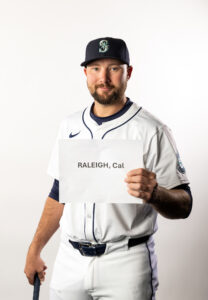
Raleigh, now 28, was a third-round pick of the M’s in the 2018 draft. As a prospect, he drew attention as a switch-hitting catcher with notable power. His 2021 debut wasn’t great but he has since established himself as one of the best two-way catchers in the game.
Over the past three seasons, Raleigh has stepped to the plate 1,612 times. His 28.3% strikeout rate in that time is a bit on the high side, but he’s also drawn walks at a 10% clip and hit 91 home runs. The end result is a .222/.303/.457 line, which translates to a 117 wRC+. That indicates he’s been 17% better than the league average hitter, but that’s even more impressive for a catcher, since they are usually about 10% below average.
The switch-hitter hasn’t been totally balanced in his production. 73 of his 93 career homers have come against righties and he has a .223/.304/.454 line when hitting from the left side. When he turns around to bat right-handed against southpaws, his line drops to .202/.271/.410, though the 94 wRC+ on that latter line is still passable.
Defensively, he’s received strong marks for all aspects but especially his framing. FanGraphs gave him the third-best framing mark last year, behind only Patrick Bailey and Jake Rogers. Statcast had him second only to Bailey.
The overall package is quite strong. FanGraphs has credited him with between 4.2 and 5.3 wins above replacement in each of the past three seasons. That means he was worth a total 13.9 fWAR over the 2022-24 period. That was tops among all catchers in the league and in the top 20 of all position players. It’s difficult to quantify a catcher’s contributions to a pitching staff but Seattle has had strong results from the mound during Raleigh’s time as well.
He just crossed the three-year service line in 2024, qualifying him for arbitration for the first time. As mentioned, he and the club settled at $5.6MM for this year. He would have been slated for two more arbitration passes before hitting free agency after 2027, his age-30 season.
Had he stayed healthy and productive between now and then, he could have perhaps been in line for a strong trip to free agency. However, the earning power of catchers at that age isn’t tremendous, as shown on MLBTR’s Contract Tracker.
While shooting into nine-figure territory and beyond is common for other players, the wear-and-tear of the catching positions make it rare for that group. J.T. Realmuto is actually the only free agent catcher to get to nine figures. He and the Phillies agreed to a five-year, $115.5MM deal going into 2021. Only four other free agent catchers have gone beyond $53MM. Willson Contreras got $87.5MM from the Cardinals, Brian McCann $85MM from the Yankees, Russell Martin $82MM from the Blue Jays and Yasmani Grandal $73MM from the White Sox.
Extensions have been the path for the top deals for catchers. Joe Mauer and Buster Posey are tops on that leaderboard, though those deals are both over a decade old. More recently, some rough comps for Raleigh can be found in Will Smith and Sean Murphy. Smith’s $131.5MM guarantee is larger than Raleigh’s, though he was one year closer to free agency, therefore giving him a bit more earning power. The nine-year term is a bit eye-popping but that was largely viewed as a way to lower the average annual value for tax purposes.
Murphy was in the same three-to-four service window as Raleigh and got $73MM over six years plus a $15MM option. The two players had a broadly similar profile as strong two-way backstops. Raleigh’s deal shoots well beyond that one.
For the Mariners, they generally struggle to attract top free agents. That’s perhaps somewhat due to the pitcher-friendly nature of T-Mobile Park but more generally about the club not having massive payrolls. Since Jerry Dipoto has been atop the baseball operations department, this is now the eighth contract the club has given out worth more than $24MM. Of those eight, only two of those were free agent deals. They went to Robbie Ray and Yusei Kikuchi, both pitchers.
The six extensions have gone to Raleigh, Julio Rodríguez, Luis Castillo, Jean Segura, J.P. Crawford and Marco Gonzales. There are couple of pitchers in there but four of the six have gone to position players, showing that to be a preferred way of spending money for the club, particularly the lineup.
Perhaps not coincidentally, Raleigh’s salary jumps up at a time when the club should have some extra payroll capacity down the line. He will almost double his salary from 2027 to 2028, going from $12MM to $23MM. By that time, Castillo’s deal will be done the guaranteed portion, though there is a vesting option for 2028. Castillo would need to throw 180 innings in 2027 and be verified as healthy by an independent surgeon. Even if Castillo is still around in ’28, the deals for Mitch Haniger, Mitch Garver, Crawford, Polanco and Víctor Robles will all finish between now and then.
It’s surely an exciting day for Raleigh, the Mariners and their fans. “Big Dumper” has become one of the better backstops in the league and a fan favorite. He’ll now be slated to stick around for six or maybe even seven more years, instead of just three. He’ll be 33 years old in the final guaranteed year of the deal and 34 in 2031, the vesting option year. Barring a future trade, he will eventually spend the majority or perhaps his entire career in Seattle.
Jeff Passan of ESPN first reported that the two sides had agreed to six-year, $105MM deal. Ken Rosenthal of The Athletic relayed the no-trade clause. Ryan Divish of The Seattle Times first reported on the vesting option that could push the total to $123MM. Passan reported the specific salary breakdown. Rosenthal reported the vesting condition.
Photos courtesy of Mark J. Rebilas, Imagn Images.
Nationals Place Four Players On Injured List
The Nationals announced a series of roster moves to set up their Opening Day roster, including four injured-list placements retroactive to March 24. Right-handers Derek Law (forearm inflammation) and Zach Brzykcy (right quad strain) are both headed to the 15-day IL, infielder Andres Chaparro (oblique strain) is going to the 10-day IL, and right-hander Cade Cavalli was placed on the 15-day IL as he enters the final stages of his recovery from Tommy John surgery.
DJ Herz was moved from the 15-day to the 60-day IL as he could be facing a Tommy John procedure of his own in the wake of a UCL tear. Herz’s transfer opens up a 40-man roster spot the Nats to select the contract of right-hander Brad Lord, in a move that was reported earlier today. Finally, D.C. also optioned first/baseman outfielder Juan Yepez and righty Jackson Rutledge to Triple-A, and catcher Andrew Knizner was reassigned to Triple-A.
As Spencer Nusbaum of the Washington Post wrote last weekend, Law’s injury dates back to last season, when the reliever missed just under three weeks in late August and early September due to a flexor strain in his throwing elbow. Though Law was able to return in relatively short order, the discomfort lingered through the winter and into Spring Training, and Law pitched in only one game during the Nationals’ Grapefruit League schedule. The team had already planned to limit Law’s spring workload in the wake of his 90-inning campaign last season, but the forearm issue kept him off the mound almost entirely.
Manager Davey Martinez said Law’s MRI came back clean and the injury isn’t thought to be too serious, with Law saying he believes he’ll be back when first eligible for activation on April 8. Law was one of the game’s most valuable workhorses last season, tossing 90 innings of 2.60 ball over 75 appearances for the Nationals.
Brzykcy also pitched just once this spring, as his quad strain has kept him out of game action for over a month. The righty has started throwing bullpens again, so he is at least partway through the ramp-up process even if it seems like Brzykcy could miss more than the 15-day minimum given how little he pitched in the spring.
Brzykcy was an undrafted free agent from the 2020 class (the year the draft was shortened to five rounds due to the pandemic) who signed with the Nats that summer. He made his MLB debut last season, and was hit hard to the tune of a 14.29 ERA over the small sample size of 5 2/3 innings and six appearances. Brzykcy didn’t pitch in 2023 due to a Tommy John surgery, but his overall impressive minor league numbers made him a candidate to win a job in the Nationals’ bullpen this winter before his quad strain ended his bid.
Chaparro is another player who made his big-league debut in 2024, and he hit .215/.280/.413 with four home runs in his first 132 plate appearances in the Show. While the presence of the newly-acquired Nathaniel Lowe and Josh Bell may have hurt Chaparro’s chances of winning a bench job as a backup first baseman and outfielder, he was posting big numbers in camp before hurting his oblique during a batting practice session. The uncertain nature of oblique injuries leaves Chaparro’s recovery timeline somewhat up in the air, but a best-case scenario would probably see him activated by mid-April.
Without Chaparro, Yepez, or Knizner, Washington’s bench now consists of Riley Adams in the backup catcher role, veteran Amed Rosario, Jose Tena as the primary backup infielder, and Alex Call as the fourth outfielder. Between Law’s injury and the Nationals’ decision to option Rutledge, the Nationals went with Lord and rookie Orlando Ribalta for the last two bullpen spots.
Note: The initial version of this post erroneously stated that Cavalli was placed on the 60-day injured list. MLBTR apologizes for the error.
Pirates To Designate Peter Strzelecki, Select Ryan Borucki
Pirates general manager Ben Cherington told reporters (including Noah Hiles of the Pittsburgh Post-Gazette) that right-hander Peter Strzelecki will be designated for assignment. The move opens up a 40-man roster spot for Ryan Borucki, as reports over the weekend indicated that the southpaw’s contract would be selected.
This is the third time Strzelecki has been designated for assignment within the last 366 days, and his first two trips into DFA saw the righty get traded elsewhere. It was almost exactly a year ago that the Guardians acquired Strzelecki for cash considerations after the Diamondbacks designated him, and Strzelecki went on to post a 2.31 ERA in the small sample size of 11 2/3 big league innings out of Cleveland’s bullpen. The Guards DFA’ed Strzelecki in November, and he then went to the Pirates in another cash deal.
With only a 7.00 ERA to show from nine innings (across nine appearances) this spring, Strzelecki didn’t make a great case for himself in trying to win a job on Pittsburgh’s roster. Strzelecki is out of minor league options and thus couldn’t have been sent down to the minors without first being DFA’ed, and yet the the Pirates still decided to go with Borucki, who posted far better numbers in Grapefruit League action.
Strzelecki has pitched in each of the last three MLB seasons, delivering a respectable 3.44 ERA, 24% strikeout rate, and 8.4% walk rate across 83 2/3 frames with the Brewers, D’Backs, and Guardians. He spent most of the 2024 season at Cleveland’s Triple-A affiliate, posting a 5.01 ERA and pretty solid peripherals over 46 2/3 innings, as a .352 BABIP may have been the chief reason for Strzelecki’s inflated ERA.