
KBO’s NC Dinos Sign Taylor Widener
The NC Dinos of the Korea Baseball Organization have signed right-hander Taylor Widener, reports Jiheon Pae, relayed by Sung Min Kim.
Widener, 28, was a Yankees draft pick who got dealt to the Diamondbacks in the three-team trade that sent Brandon Drury to the Bronx. Widener’s first year with his new organization went quite well, as he posted a 2.75 ERA in 137 1/3 Double-A innings in 2018. However, the move to Triple-A in 2019 was far less rosy, as he was lit up for an 8.10 ERA in 100 innings.
He was still able to make his MLB debut the following year and appeared in each of the past three seasons. Through 107 2/3 MLB frames thus far, he has a 4.26 ERA, with a 22.3% strikeout rate, 11% walk rate and 34.1% ground ball rate. Last year, he spent most of his time in Triple-A, tossing 36 2/3 innings for the Reno Aces. He struck out 29.6% of batters faced there and walked just 7.5%, but his ERA was 5.40. That was probably elevated by a .368 batting average on balls in play in the notoriously hitter-friendly Pacific Coast League, with advanced metrics feeling he deserved better, such as a 4.05 FIP and 4.59 xFIP.
The D-Backs designated him for assignment in December when they acquired infielder Diego Castillo from the Pirates. The other 29 clubs passed on the opportunity to grab Widener off waivers and he was outrighted in January. Now he’ll head overseas to see if the change of scenery can help him unlock some better results. He’ll also get a better salary than he would if he were languishing in the minors in North America. The Google translation of the Korean tweet linked above says that Widener will make $743K this year, which is actually more than the MLB minimum of $720K. Many pitchers have parlayed success overseas into a return to the majors, such as Miles Mikolas, Drew Rucinski and Widener’s former teammate Merrill Kelly. If Widener can have a good run in the KBO, he could follow a similar path in the years to come.
Rays Extend Yandy Diaz
Jan. 31: The Rays have formally announced their extension with Diaz. Marc Topkin of the Tampa Bay Times tweets that Diaz will be paid $6MM in 2023, $8MM in 2024 and $10MM in 2025. There’s a $12MM option for a fourth season, which does not contain a buyout.
Jan. 28: The Rays and infielder Yandy Diaz are close to finalizing a contract extension, MLB.com’s Mark Feinsand reports (Twitter link). The deal is a three-year, $24MM pact that contains a club option for the 2026, according to Feinsand and his MLB.com colleague Juan Toribio (via Twitter). Diaz is represented by ACES.
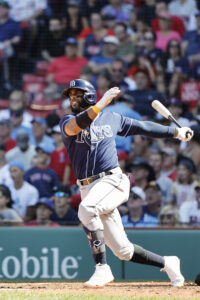
The extension would cover Diaz’s final two years of arbitration control and at least one of his free agent-eligible seasons. Diaz and the Rays were slated for an arbitration hearing to determine his 2023 salary after not reaching an agreement by the filing deadline — Diaz was looking for $6.3MM and the club countered with $5.5MM.
Instead, it now looks like Diaz will be the third hearing-bound Tampa Bay player to sign an extension this week. Jeffrey Springs signed a four-year, $31MM extension on Wednesday, while Pete Fairbanks agreed to a deal worth $12MM over three guaranteed years on Friday. An arb hearing is usually the result when the two sides don’t agree on a one-year salary prior to the figure-exchange deadline, yet clubs often try to pursue multi-year deals as something of a loophole around the self-imposed “file and trial” strategy deployed by most of the league.
Diaz, Springs, and Fairbanks were three of seven Rays players that didn’t agree to terms by the deadline, and even the remaining group of four (Harold Ramirez, Colin Poche, Ryan Thompson, Jason Adam) still represents an unusually large number of players to be headed for hearings. It certainly wouldn’t be surprising to see the Rays work out at least one more extension before hearings start taking place in the coming weeks.
For Diaz, the new contract locks in some long-term security and the first major payday for a player who turned 31 last August. Beginning his career in his native Cuba, Diaz was twice arrested before finally defecting on his third attempt, and then signed with Cleveland for a $300K bonus. Diaz didn’t make his MLB debut until 2017, when he was already 25 years old.
Back in December 2018, a headline-grabbing three-team trade between the Rays, Indians, and Mariners saw Diaz head from Cleveland to Tampa as part of the five-player swap. The Rays had interest in Diaz’s ability to make contact and draw walks, and those skills have certainly translated as Diaz’s career has progressed. Since the start of the 2020 season, Diaz ranks sixth among all qualified hitters in walk rate (13.7%) and ninth in strikeout rate (13.1%).
Diaz hit .266/.359/.418 over his first three seasons with the Rays, good for a solid 117 wRC+ over 1026 plate appearances. However, Diaz took the production up a level last season, posting a 146 wRC+ while hitting .296/.401/.423 with nine home runs over 558 PA, and finishing with elite percentiles in several major Statcast categories. For a right-handed batter, Diaz’s career numbers against left-handed pitchers had been relatively modest heading into 2022, but last year he crushed southpaws to the tune of an .892 OPS over 145 PA.
One flaw in Diaz’s performance was a lack of glovework, as public defensive metrics have indicated that he has been well below average over 1282 1/3 innings as a third baseman over the last two seasons. This stands out even more on a defense-conscious club like Tampa Bay, though the Rays might ideally look to use Diaz more often as a first baseman in 2023 or over the course of the longer-term deal.
In the big picture, locking up Diaz seems like a shrewd move for Tampa. While a 146 wRC+ is a high-water mark for Diaz, there wasn’t much (apart from a spike in hard-hit ball rate) to suggest that his 2022 numbers were a departure from his prior career numbers, so it’s reasonable for the Rays to expect roughly similar production going forward over the life of Diaz’s deal.
Perhaps the most intriguing element is that the Rays have now extended a 31-year-old player, as it is fairly common for the team to shop players as they get increasingly expensive. There hadn’t been any real trade buzz surrounding Diaz, however, and thus the Rays have now locked up three members of their infield (Diaz, Wander Franco, and Brandon Lowe) though possibly the 2026 season, depending on the status of club options for Diaz and Lowe. Of course, the Rays could still end up shopping Diaz, Lowe, or conceivably even Franco down the road, especially if the club continues to generate quality infield prospects from its minor league pipeline.
Between the yet-unknown specifics of Diaz’s contract numbers and the unresolved arbitration cases, the Rays are likely to match or exceed their previous franchise high for payroll, even if their overall spending is still quite modest by league-wide standards. Tampa Bay’s Opening Day payroll last season was approximately $83.86MM, and Roster Resource currently (without a Diaz extension involved) projects the Rays for around $76.86MM on the books in 2023.
Nationals Sign Wily Peralta To Minor League Deal
The Nationals announced Tuesday that they’ve signed veteran right-hander Wily Peralta to a minor league contract. He’s been invited to Major League camp this spring, per the team.
Peralta, 33, was a starter early in his career with the Brewers but has pitched primarily out of the bullpen dating back to 2017. He’s spent the past two seasons with the Tigers — ’21 in the rotation and ’22 in the ‘pen — for whom he’s logged a combined 2.93 ERA in 132 innings of work.
It’s rare to see a healthy pitcher with an ERA that impressive over a sample that large sign a non-guaranteed pact, but Peralta’s well below-average 15.8% strikeout rate and lofty 10.9% walk rate surely gave clubs some pause. Peralta has also benefited from a .268 average on balls in play and a massive 80.2% left-on-base rate, both of which are likely to regress. Metrics like FIP (4.93) and SIERA (5.15) feel he’s highly unlikely to sustain anything close to the level of performance he displayed in Detroit.
That said, the contract still represents a nice add for a rebuilding Nationals club that is light on established arms — particularly in the bullpen. Closer Kyle Finnegan has stepped up as Washington’s top reliever over the past couple seasons, and he’ll be joined by Carl Edwards Jr., veteran swingman Erasmo Ramirez and oft-injured but talented arms like Hunter Harvey and Victor Arano.
If the Nats are viewing Peralta as more of a rotation option than a bullpen arm, he’ll have opportunity there as well. On paper, Washington’s rotation looks full with Stephen Strasburg, Patrick Corbin, Trevor Williams, Josiah Gray and prospects Cade Cavalli and MacKenzie Gore among the in-house options. However, Strasburg’s career has been calamitously derailed by injuries over the past several seasons; he’s pitched in eight games since re-signing in Washington after the 2019 season, due largely to a bout with thoracic outlet syndrome that wiped out his 2021 season and led to a stress reaction developing in his ribcage in 2022. Neither Gore nor Cavalli has established himself in the big leagues, meanwhile, and Gray is still working to curtail the massive home run issues that have thus far prevented him from living up to his former top prospect status.
Peralta is one of several non-roster invitees of note who’ll have a chance to open the season on the Nationals’ pitching staff. Sean Doolittle and Alex Colome will both vie for bullpen spots in camp this spring, as will less-experienced NRIs like Anthony Banda, Anthony Castro and Francisco Perez.
D-backs, Jandel Gustave Agree To Minor League Deal
The Diamondbacks have agreed to a minor league contract with right-hander Jandel Gustave, tweets Robert Murray of FanSided. He’ll be invited to big league camp this spring.
The 30-year-old Gustave has spent the past two seasons with the Brewers, turning in solid bottom-line results despite some shakier secondary marks. Gustave carries a 3.69 ERA in 46 1/3 innings over 41 games with Milwaukee dating back to 2021, and he’s averaged a hearty 96.7 mph on his heater during that time. Fielding-independent marks are a bit more skeptical of his efforts, albeit not overwhelmingly so (4.52 FIP, 3.94 SIERA).
Despite his strong velocity, Gustave owns a sub-par 20.1% strikeout rate since 2021. His 8% walk rate during that time is a bit better than average. It’s worth noting that he did up his strikeout rate in 2022 (22.5%), but that was accompanied by an uptick in walks as well (9.2%). Gustave wasn’t particularly homer-prone with the Brewers (1.17 HR/9), and his overall 48.2% ground-ball rate (50% in ’22) is also comfortably ahead of the 42.9% league average.
Injuries played a part in Gustave’s departure from the Brewers. A strained right hamstring cost him more than a month in the first half of the 2022 season, and he was placed on the injured list on Aug. 2 with a forearm injury that wound up ending his season. Gustave never wound up requiring surgery, but his final pitch of the 2022 season nonetheless came on July 31. The Brewers non-tendered him back in November despite the fact that he had two years of club control remaining and a projected salary of just $900K (via MLBTR contributor Matt Swartz).
Assuming he’s healthy, Gustave figures to have a decent chance to crack the D-backs’ bullpen at some point, whether it be on Opening Day or early in the season. Arizona has a generally unsettled mix of relievers, with a few exceptions. Lefty Joe Mantiply had a breakout showing in 2022, and the Snakes will hope for better results from veteran Mark Melancon in the second season of a two-year deal. Veteran Miguel Castro was signed a to a one-year deal earlier in the winter, and 28-year-old righty Kevin Ginkel (29 in March) impressed in 29 1/3 innings down the stretch after posting rough results in 2020-21. The Diamondbacks also once again tapped into the NPB/KBO market by signing former Marlins righty Scott McGough to a two-year contract on the heels of a terrific four-year run in Japan.
Beyond those names on the 40-man roster, Gustave will join Jeurys Familia as a non-roster invitee of particular note this spring. Other minor league signees with varying levels of MLB experience in the bullpen include Austin Adams, Austin Brice, Jesse Biddle, Sam Clay, Ryan Hendrix, Zach McAllister and Eric Yardley.
Mets Sign Jeff McNeil To Four-Year Extension
Jan. 31: The Mets formally announced McNeil’s extension this morning. He’ll be paid $6.25MM in 2023, $10.25MM in 2024 and $15.75MM in both 2025 and 2026, tweets Jon Heyman of the New York Post. The club option for 2027 is also valued at $15.75MM, and it comes with a $2MM buyout.
Jan. 27: The Mets and second baseman Jeff McNeil are in agreement on a four-year, $50MM contract extension, ESPN’s Jeff Passan reports. The contract contains a club option for a fifth season, which could allow the extension to max out at $63.75MM over five years. The deal buys out the final two arbitration seasons for the Paragon Sports International client, and the Mets will gain control over what would’ve been McNeil’s first three free-agent seasons.
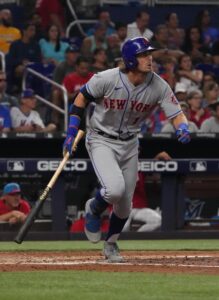
Unable to come to terms on a one-year salary for the upcoming season, McNeil and the Mets appeared headed toward an arbitration hearing. He’d filed for a $7.75MM salary on the heels of his first National League batting title in 2022, whereas the Mets had countered with a $6.25MM figure. Those sums can now be thrown out, as McNeil’s final two arbitration years are locked in. If we count 2023 at the $7MM midpoint of those two sums and figure McNeil could’ve earned anywhere from $12-13MM in what would’ve been his final arbitration season, the Mets are guaranteeing somewhere in the vicinity of an additional $30MM to lock in two more free-agent seasons and secure a reasonably priced club option on a third free-agent year.
McNeil, 31 in April, is now locked in through at least his age-34 campaign and possibly his age-35 season. He’s fresh off one of the finest seasons of his career, having turned in a .326/.382/.454 batting line with nine home runs, 39 doubles, a triple and four stolen bases in 589 plate appearances. Unsurprisingly, that season earned him a second career All-Star nod and won him Silver Slugger honors in the National League — his first such award.
McNeil was one of the toughest strikeouts in the Majors, fanning in a career-low 10.4% of his plate appearances. He’s never walked much and didn’t change that in 2022 (6.8%), but it’s difficult to argue with the results. McNeil benefited to an extent from a career-high .353 average on balls in play, but even if that mark regresses toward the .324 mark he carried into the 2022 season, his bat-to-ball skills and penchant for finding the gaps will allow him to remain the well above-average hitter he was for the majority of the 2018-21 seasons.
The 2022 season was also very arguably the finest defensive season of McNeil’s career. Each of Defensive Runs Saved (3), Ultimate Zone Rating (3.5) and Outs Above Average (7) pegged him as a strong handler of the glove at second base. He also logged some brief time in the outfield corners (278 innings) and drew average or better reviews for his work there, and he even chipped in a lone inning at third base for good measure. Second base will continue to be his primary home on the diamond, but McNeil has shown in the past that he’s a capable third baseman, left fielder or right fielder, which only adds to his value for the Mets.
Of course, since we’re discussing the Mets, the financial ramifications of the contract extend well beyond the $50MM that McNeil himself will receive. The Mets are already over the fourth and final luxury-tax barrier this season, meaning any dollars they spend are taxed at a 90% clip. Had McNeil won his arbitration hearing and secured a $7.75MM salary, that would’ve meant the Mets would’ve paid $6.975MM in taxes on his salary — bringing the total expenditure to $14.725MM. Instead, the Mets will now be taxed based on the $12.5MM average annual value of McNeil’s contract. That means they’ll pay $11.25MM in taxes on McNeil’s contract this year — an increase of $4.275MM over what they’d have paid him had he won an arbitration hearing.
There’s some down-the-road tax benefit to extending McNeil — even beyond the obvious value in keeping an excellent player at a reasonable rate for the next half decade. Had McNeil won an arbitration hearing next month — and coming off a batting title, he’d have had a strong case — he’d have landed that $7.75MM salary. With another strong season, he’d quite possibly have been in for a raise beyond the $12.5MM AAV of his current contract in his final arb season, when the Mets will likely again be in the top tier of luxury penalization (with overages being taxed at a 110% clip). The extension, then, could wind up saving the Mets $1MM or so off their luxury ledger for the 2024 season — assuming McNeil has a healthy and productive 2023 campaign.
Setting aside any such minutiae, the primary benefit to the Mets is simply keeping a two-time All-Star and paying an annual rate that, with good health for McNeil, will likely clock in below his true open-market value by the time the 2024-25 offseason rolls around. There’s certainly some risk for the Mets, as one need only look at McNeil’s pedestrian .251/.319/.360 batting line from 2021 to see that his lack of power (outside of the juiced ball campaign in 2019) leaves him with a fairly tepid floor. The Mets already had control over McNeil’s age-31 and age-32 seasons, and it’s always possible that preemptively buying out a player’s age-33 through age-35 seasons could look regrettable in hindsight.
That said, the aforementioned ’21 campaign is the lone below-average offensive season of McNeil’s career, and his contact skills and defensive aptitude at multiple positions figure to make him a perennially useful player even into his mid-30s. It’s not realistic to expect him to replicate his 2022 production in the years ahead, but there’s little reason to think this deal will turn into some form of egregious misstep, either.
McNeil now joins Max Scherzer ($43MM), Justin Verlander ($43MM), Francisco Lindor ($34.1MM), Brandon Nimmo ($20.5MM), Starling Marte ($20.75MM), Edwin Diaz ($21.25MM), Kodai Senga ($15MM), Jose Quintana ($13MM) and Tomas Nido ($2.1MM) as players locked into their 2024 salaries.
Assuming an even distribution of McNeil’s salary, that’d come out to just over $225MM guaranteed to 10 players, with another four club options (Mark Canha, Eduardo Escobar, Brooks Raley, Darin Ruf), two player options (Omar Narvaez, Adam Ottavino) and a nine-player arbitration class headlined by Pete Alonso all potentially adding to the bill.
Red Sox, Marlins Swap Matt Barnes For Richard Bleier
The Red Sox and Marlins swapped relievers Monday afternoon, with righty Matt Barnes dealt to Miami for southpaw Richard Bleier. Boston is also reportedly sending a little more than $5.5MM in cash in the deal to make the transaction nearly cash-neutral.
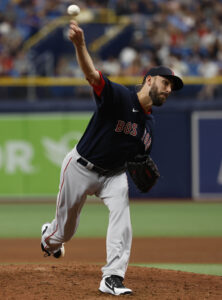
Barnes, 32, was designated for assignment by the Red Sox last week following the completion of a one-year, $7MM agreement with outfielder Adam Duvall. He served as Boston’s primary closer in 2021, earning a team-leading 24 saves. The 2021 campaign, however, was something of a tale of two seasons for Barnes. He dominated to the tune of a 2.25 ERA and a 42% strikeout rate through Aug. 4. Barnes was impressive enough that the Sox inked him to a two-year, $18.75MM extension in early July.
Over the final two months of the 2022 season, however, Barnes not only struggled but melted down in catastrophic fashion. He pitched just 10 2/3 innings from Aug. 5 onward, yielding a dozen runs on 17 hits and nine walks with 16 strikeouts along the way. It was a calamitous end to a what had begun as one of the best seasons among all Major League relievers.
Barnes hoped to right the ship in 2022 but promptly lost the closer’s job early in the year when he stumbled to a 7.94 ERA through the end of May. The right-hander was always going to be much lower among the team’s high-leverage considerations in 2023, following the December additions of Kenley Jansen and Chris Martin — a pair of moves that was in large part necessitated by Barnes’ struggles.
Nonetheless, it’s worth pointing out that Barnes finished on a high note that likely intrigued Miami and other clubs. He was on the injured list from early June through early August due to shoulder inflammation, and upon returning, he looked much more like the Barnes of old. Beginning on Aug. 4 — the same point at which he began to struggle a year prior — Barnes pitched 22 2/3 innings of 1.59 ERA ball and picked up four saves. His 21.1% strikeout rate was half that of his dominant 2021 form, but it was still an encouraging note on which to end the season.
Barnes might eventually get a fresh chance to carve out some save opportunities in Miami, though Dylan Floro is the current projected frontrunner for that gig. Floro worked to a 3.02 ERA across 53 2/3 innings with the Marlins in 2022, and he has successfully converted 25 save attempts over the last two years. Barnes tallied only eight saves in 2022 and finished with a 4.31 ERA in 39 2/3 frames. He’ll add quite a bit more bat-missing potential to a team that ranked 13th among MLB clubs with a 24% strikeout rate from its relief corps in 2022, though the downside is obvious.
Bleier, meanwhile, can fill the Sox’s need for left-handed bullpen help, even as he enters his age-36 season. The veteran southpaw has registered a 3.09 ERA in 125 1/3 innings since the beginning of 2020, and he’s held left-handed batters to a .225/.260/.313 slash line since he first reached the major leagues with the Yankees in 2016. Boston traded lefty Josh Taylor to the Royals in exchange for Adalberto Mondesi, sent veteran Jake Diekman (signed through 2023) to the White Sox at last year’s trade deadline and lost Darwinzon Hernandez to the Orioles via waivers earlier this offseason — all of which had thinned out the team’s left-handed depth in the ‘pen.
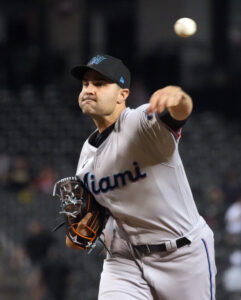
They’ll get some quality left-handed innings out of Bleier, although despite his strong track record there are some red flags of note. The soft-tossing southpaw has never missed many bats, but last year’s 14.4% strikeout rate was his lowest since 2019. Bleier has, in the past, offset his lack of whiffs with enormous ground-ball rates. However, while last year’s 52.5% mark was strong relative to the league-average, it was nowhere close to the 63.5% career mark he carried into the 2022 season. Bleier has also regularly avoided hard contact, but last year’s 89.6 mph exit velocity and 40.8% hard-hit rate were both his worst showings since the aforementioned 2016 debut.
Barnes will make $7.5MM in 2023 and is due at least a $2.25MM buyout on a 2024 club option valued at $8MM. Bleier is due $3.25MM for the upcoming season and has a $3.75MM club option with a $250K buyout for next year. Barnes is guaranteed $9.75MM from here on out while Bleier will make at least $3.75MM. The Sox are covering the bulk of that $6MM gap with the $5.5MM+ cash consideration.
The Sox will save a minuscule amount of money and bring in a middle reliever with a solid overall track record and some particularly encouraging numbers against fellow lefties — even if Bleier comes with some potential areas of concern. That he can be controlled through 2024 via that affordable $3.75MM option is icing on the cake.
As for the Marlins, they’ll add more late-inning upside to their bullpen with this swap at almost no additional cost. Fans may bristle at shipping out the reliever with better surface-level numbers for what amounts to a Barnes reclamation project, but the Fish are willing to gamble on the younger, harder-throwing Barnes in hopes of unlocking a high-leverage reliever who can be controlled affordably through the 2024 season via that $8MM option. And, if Barnes is indeed able to round back into form, he’ll give Miami an interesting arm to put on the market this summer if they’re decisively out of postseason contention.
Ken Rosenthal of the Athletic first reported the Marlins were acquiring Barnes. Craig Mish of SportsGrid reported that Boston was acquiring Bleier in return. Jordan McPherson of the Herald was first to relay that Miami was receiving cash considerations, which Mish pegged in the $5MM range. Chris Coitllo of MassLive was first to report the cash involved was a little above $5.5MM.
Braves Agree To Minor League Deals With Adeiny Hechavarria, Magneuris Sierra
The Braves recently agreed to minor league contracts with a number of players, according to an announcement from Double-A broadcaster Chris Harris (Twitter link). Among those joining the organization: infielder Adeiny Hechavarria, outfielders Magneuris Sierra and Forrest Wall, and reliever Brian Moran. All four players will get non-roster invitations to Spring Training. Kiley McDaniel of ESPN first reported Wall’s signing yesterday.
Hechavarria, 33, has the most MLB experience of the group. An everyday shortstop early in his career with the Marlins, he settled into a utility role after being traded to the Rays midway through the 2017 campaign. He played for five different clubs between 2018-20, including 51 games for Atlanta over the latter two seasons that marked his most recent big league action.
The Cuban-born infielder has decent bat-to-ball skills but has primarily been a bottom-of-the-lineup hitter due to modest power and below-average walk rates. He’s compiled a .253/.291/.351 line in just under 3300 big league plate appearances over parts of nine seasons. Hechavarria posted plus defensive grades at shortstop during his time with the Fish but saw those marks drop off by 2019, when he started to see increased work at second and third base.
Hechavarria signed with the Chiba Lotte Marines of Nippon Professional Baseball during the 2020-21 offseason. He limped to a .213/.238/.307 line in 473 combined plate appearances at Japan’s highest level over two seasons. He split his NPB defensive work between shortstop and third base and offers some additional infield depth in Braves’ camp.
Atlanta has Ozzie Albies and Austin Riley cemented at second and third base, respectively, while Vaughn Grissom and Orlando Arcia are set to battle for the shortstop job. Arcia would assume a utility role if Grissom wins that job as most outside observers anticipate, while Braden Shewmake is also on the 40-man roster as a depth option. Hoy Park, Ehire Adrianza and Joe Dunand also figure to get non-roster camp invites.
Sierra, 26, has appeared at the MLB level in each of the last six years. The lefty-swinging outfielder was a highly-regarded prospect thanks to his speed and defensive acumen and was part of the package the Marlins received from the Cardinals in the Marcell Ozuna trade. He played parts of four years with the Fish but never hit enough to cement himself as a regular. A complete lack of power has kept Sierra from making an offensive impact, as he still has yet to collect a big league home run in 636 plate appearances.
Last season, Sierra got into 45 contests for the Angels as a depth outfielder. He hit .165/.200/.242 through 96 trips to the dish but had posted a roughly league average .297/.358/.437 showing in 76 games with their Triple-A affiliate in Salt Lake. Sierra’s just a .228/.273/.272 hitter as a big leaguer. He’s swiped 29 bases in 38 MLB attempts while playing above-average defense in center field.
Rookie of the Year Michael Harris II is obviously locked into center field on an everyday basis for Atlanta. Sierra joins fellow non-roster invitee Kevin Pillar in offering some upper level depth to compete for reps in Spring Training and potentially with Triple-A Gwinnett.
The 27-year-old Wall also steps into that mix, though he has yet to reach the highest level. Selected by the Rockies as a supplemental first-rounder in the 2014 draft, he drew some prospect attention for his contact skills and speed. Wall hit well through his first few minor league campaigns and was dealt to the Blue Jays in 2018 for reliever Seunghwan Oh. After a quality 2019 season in Double-A, the lefty-swinging outfielder saw his bat stall out at the top minor league level.
Wall played the 2022 season with the Mariners as a minor league free agent. He mustered just a .255/.333/.354 line with six home runs over 467 plate appearances in the hitter-friendly Pacific Coast League. That wasn’t enough to earn him a big league look, although he continued to demonstrate the athleticism that had made him an interesting prospect. Wall led all Triple-A players with 52 stolen bases, though he was also thrown out 12 times (the third-highest total at the level). He played mostly center field last year but could be a better fit in left thanks to a below-average throwing arm.
Moran, a sidearming left-hander, joined Sierra in the Angel organization in 2022. Like Hechavarria and Sierra, he’s also a former Marlin. The 34-year-old has pitched in 18 big league games over parts of three seasons, allowing ten runs with 17 strikeouts but nine walks in 11 1/3 innings. He made one MLB outing for the Halos last April, surrendering a couple runs while recording one out against the Rangers.
He had a solid season for Salt Lake, logging 48 2/3 innings of 4.07 ERA ball in the PCL. Moran punched out 24.6% of batters faced against a tiny 6.6% walk percentage. The UNC product was surprisingly hit hard by left-handed batters but limited righties to a putrid .286 on-base percentage in Triple-A. He’ll add some depth behind A.J. Minter, Dylan Lee and Lucas Luetge.
Reds, Chad Pinder Agree To Minor League Contract
The Reds are signing utilityman Chad Pinder to a minor league deal, reports Robert Murray of FanSided. The Ballengee Group client will be in big league camp as a non-roster invitee once the deal is finalized, tweets Mark Sheldon of MLB.com.
Pinder, 31 in March, joins the Reds after parts of seven seasons with the Athletics. A Competitive Balance Round B draftee in 2013, the Virginia Tech product got to the big leagues for the first time three years later. Pinder’s first couple seasons were productive, as he hit .248/.313/.447 with 28 home runs in 193 games as a part-time player between 2017-18.
The 2019 season saw him connect on 13 more homers in 370 trips to the plate, but his on-base percentage fell to .290. It has hovered in that range for the past few years, with the right-handed hitter only reaching the .300 OBP mark once in the past four seasons (exactly .300 in 2021). In a little more than 1000 plate appearances since 2019 began, he’s compiled a .239/.283/.402 line — offense that checks in 10 percentage points below league average by wRC+ after accounting for Oakland’s cavernous park.
Pinder narrowly set a career high in plate appearances last season, getting to the plate 379 times. He struggled to a .235/.269/.385 clip, striking out a career-worst 31.1% of the time while walking in only 3.7% of his trips. While he managed another 12 homers, he had the seventh-worst OBP among the 246 hitters with 350+ plate appearances.
It certainly wasn’t the kind of platform year Pinder was envisioning. Nevertheless, he’ll add some defensive flexibility and a potential platoon bat to David Bell’s bench in Cincinnati if he can crack the MLB roster. Pinder spent most of his 2022 innings in the corner outfield, but he has a fair bit of experience at each of second base, third base and shortstop. Public defensive metrics haven’t rated his infield work highly, though he’s gotten strong reviews for his corner outfield play.
He also has a solid offensive track record when holding the platoon advantage. Pinder has hit 31 homers in 756 career plate appearances against left-handed pitching, compiling a .264/.322/.456 line against southpaws overall. Even as his production has dipped over the past few years, he’s remained a solid power threat against left-handed arms. That would likely be magnified in Cincinnati’s Great American Ball Park, one of the sport’s most favorable venues for hitters.
With a career .225/.272/.388 mark in a bit less than 1000 plate appearances against righty pitching, Pinder is best deployed in a matchup capacity. He’d make for a potential platoon partner for lefty swingers like TJ Friedl, Jake Fraley and Joey Votto in the corner outfield/first base mix if he can reach the MLB roster. Cincinnati brought in Wil Myers via free agency and Nick Solak through trade to potentially play into that group as well. Catcher Tyler Stephenson seems likely to shoulder plenty of the designated hitter reps, with Pinder perhaps also offering some cover on the left side of the infield for presumptive starters Kevin Newman and Spencer Steer.
Diamondbacks Re-Sign Jake Hager To Minor League Deal
The Diamondbacks have re-signed infielder Jake Hager to a minor league contract with an invitation to Spring Training, as announced over the weekend by the Triple-A Reno Aces.
Hager spent the majority of the 2022 season with Reno and slashed .261/.342/.391 with five home runs and eight stolen bases in his 303 plate appearances at the Triple-A level. He also got into 28 games at the MLB level and batted .240/.345/.280 with zero homers and zero steals across 59 plate appearances with the D-backs.
The 29-year-old journeyman — 30 in March — has proven capable of handling every position on the infield defensively, but he will lug a rough .197 career major league batting average and a .531 career major league OPS into camp in Arizona. Hager is probably going to be viewed as organizational depth leading into the 2023 campaign, an option to step in and at least provide competent a glove should something go awry with the Diamondbacks’ projected infield starters and bench fillers.
The current Arizona roster outlook has Josh Rojas and Emmanuel Rivera platooning at third base, Nick Ahmed handling shortstop duties and Ketel Marte locked in at second. Evan Longoria is an additional candidate for playing time at the hot corner, though it sounds like the D-backs mostly want to use him as their DH. 23-year-old switch-hitter Geraldo Perdomo is a good bet for an active backup role between third, short and second. Perdomo still has two options remaining and could see more regular action at Triple-A as well after a rough rookie season at the plate.
Brewers Sign Monte Harrison To Minor League Deal
The Brewers have signed outfielder Monte Harrison to a minor league deal, reports Todd Rosiak of the Milwaukee Journal Sentinel. Harrison has received an invitation to major league Spring Training.
Harrison, 27, returns to his original organization, as the Brewers selected him in the second round of the 2014 draft. He drew a lot of attention as he moved up the minor leagues due to his speed-power-defense combination. He split 2017 between Class-A and High-A, hitting 21 home runs and stealing 27 bases. That was enough to get him onto Baseball America’s list of the 100 best prospects in the league and included in the Christian Yelich trade prior to 2018.
Unfortunately, mounting strikeout numbers have been an issue for Harrison since reaching the upper levels of the minors. He’s gone down on strikes in more than 30% of his Double-A and Triple-A plate appearances as well as getting punched out at a 48.7% rate in the majors. That latter number is in a small sample of just 76 trips to the plate but also highlights why he hasn’t been given an extended run of play there.
The Marlins released him in March of last year and he signed a minor league deal with the Angels. He did get 14 plate appearances in the big leagues for the Halos but spent most of his time in Triple-A. In 82 games down there, he hit nine homers and swiped 28 bags but struck out in 34.1% of his trips to the plate. He was outrighted in the middle of the season and elected free agency in October.
The Brewers have plenty of outfield options on the 40-man roster, with Yelich, Garrett Mitchell, Tyrone Taylor, Jesse Winker, Brian Anderson and Blake Perkins all in the mix. They also have some highly-touted prospects near the majors, such as Sal Frelick and Joey Wiemer, with Jackson Chourio not far behind. That will probably make it challenging for Harrison to work his way back to the big leagues, though the new rules could potentially work in his favor. The upcoming season will see bans on defensive shifts and limits on pick-off moves, with those changes theoretically making speed and defense more impactful. Should Harrison manage to get onto the roster, he’s out of options but he still has less than a year of service time, giving the club plenty of affordable control over his services.