
This is the latest entry in MLBTR’s Offseason In Review series. The full index of Offseason In Review posts can be found here.
The Pirates’ offseason didn’t feature the kinds of decisive signings or trades that might convince fans the Bucs are ready to follow up on their terrific 98-win 2015 season, but that’s par for the course for an organization whose recent successes have been built more on sly under-the-radar moves than on heavy spending.
Major League Signings
- 1B John Jaso: two years, $8MM
- P Neftali Feliz: one year, $3.9MM
- P Juan Nicasio: one year, $3MM
- IF David Freese: one year, $3MM
- UT Sean Rodriguez: one year, $2.5MM
- P Ryan Vogelsong: one year, $2MM
- P Trey Haley: Major League contract
- 1B/OF Jake Goebbert: Major League contract
Notable Minor League Signings
Trades And Claims
- Acquired P Jon Niese from Mets for 2B Neil Walker
- Acquired P David Whitehead from Phillies for P Charlie Morton
- Acquired IF Jason Rogers from Brewers for OF Keon Broxton and P Trey Supak
- Acquired P Trevor Williams from Marlins for P Richard Mitchell
- Acquired P Kyle Lobstein from Tigers for cash
Extensions
- Chris Stewart, C: two years, $3MM (plus 2018 option)
Notable Losses
- Walker, Morton, A.J. Burnett (retired), J.A. Happ, Pedro Alvarez, Antonio Bastardo, Joakim Soria, Joe Blanton, Aramis Ramirez (retired) Vance Worley, Travis Snider
Needs Addressed
Critiquing a Pirates offseason is intimidating, because you feel like the team is daring you to admit you don’t really know what you’re talking about. Many commentators greeted recent past Pirates offseasons with ambivalence or even derision for being built around seemingly off-brand additions of players like A.J. Burnett, Russell Martin, Francisco Liriano, Mark Melancon and Francisco Cervelli … who then turned out to be core members of excellent teams. Whoops.
So what to make of the Pirates’ past winter, which featured the departures of key players like Burnett, Neil Walker and J.A. Happ and additions of a slew of low-cost replacements like Ryan Vogelsong, Juan Nicasio and John Jaso? Your guess is as good as mine. On the surface, it doesn’t look like the Pirates did nearly enough. But then, that’s how previous offseasons have looked too, and the last several have mostly turned out brilliantly.
The 2016 Bucs will have a new-look infield, with Pedro Alvarez and Walker departing to make room for Jaso and Josh Harrison (who will take over for Walker at second). Alvarez hit 27 home runs in 2015, but the Pirates non-tendered him anyway, a move that was entirely justified — Alvarez struck out frequently and hit for low batting averages, and his defense was inexplicably awful after moving across the diamond to first base. He was unlikely to produce enough value to earn the $8.1MM he was set to make in arbitration, so he had no trade value, and it’s not surprising the Bucs opted to let him depart.
To replace him, they signed Jaso to a cheap two-year deal. Like Alvarez last year, Jaso will be new to first base, but most players’ efforts to move to first from another position go better than Alvarez’s did. Also, as FanGraphs’ Jeff Sullivan has pointed out, catchers have generally fared well in transitioning to first base — think of Scott Hatteberg, Jason Phillips or Joe Mauer. Jaso doesn’t have nearly the power Alvarez did, but he does have a career .361 on-base percentage that should play well at first, particularly at just $4MM per season. Jaso, a left-handed hitter, needs to be platooned, but the Pirates already had righty first baseman Michael Morse under contract and top prospect Josh Bell in the minors, and their acquisitions of David Freese and Jason Rogers this offseason give them plenty more righty first base depth should Morse falter.
The Bucs then sent Walker to the Mets for Jon Niese. At first glance, this move makes less sense than the Alvarez/Jaso swap did. Walker, unlike Alvarez, is a genuinely good player, a consistent hitter with a broad offensive skill set who will generally produce two to three wins per season. (As a Pittsburgh native, he was a fan favorite to boot.) Niese, meanwhile, is a competent but uninspiring lefty whose strikeout rate dropped to 5.8 batters per nine innings last season. Walker and Niese also have similar salaries, so the Pirates didn’t even really save money in the deal.
Walker, though, was a below-average defender, and was only one year from free agency. Niese, meanwhile, gets ground balls — a skill the Pirates love — and has two options at the end of his contract, potentially allowing the Bucs to keep him for two more years than they could have kept Walker. The Pirates’ acquisitions of starting pitchers have generally gone quite well in recent years, so if pitching coach Ray Searage and company are able to rejuvenate Niese, the Bucs will be able to keep him through 2018 — but also aren’t required to guarantee those seasons if it doesn’t work out.
The long-term plan in Walker’s absence is to use Harrison (who played five positions in 2015) as their regular second baseman and Jung-Ho Kang at third. That plan set them up well defensively, but reduced their depth and wouldn’t work in April, when Kang figured to be battling back from a knee injury he suffered late last season. And so, in a late-breaking move, the Bucs signed Freese to a cheap contract. He’ll man third base until Kang returns, and will likely occupy a variety of roles after that, perhaps eventually displacing Morse as Jaso’s platoon partner. Freese, who’s been an average or better player in five of the last six seasons, was a bargain at $3MM.
The same can’t necessarily be said of some of the Pirates’ other cheap contracts. Sean Rodriguez can, at least theoretically, play seven different positions, but he hits so poorly that his versatility is of limited use. It would have been easy to imagine him signing a minor-league deal this offseason, rather than a $2.5MM Major League contract. Perhaps Rodriguez has value in the clubhouse that isn’t easy for outsiders to see.
Ryan Vogelsong, too, was a questionable use of funds, even though he’ll only make $2MM this season. Vogelsong is 38, has been replacement-level or below in two of the last three seasons, and was demoted to the bullpen last year. He’s in competition for one of the Pirates’ last two rotation jobs, and perhaps with some attention from Searage, he can improve upon his 4.67 ERA last season. Given his age and recent history, however, his upside appears limited.
The Bucs also signed Neftali Feliz for $3.9MM, which seems like a lot to pay a reliever who flamed out badly last season, has persistent control issues and hasn’t had an unambiguously good season (with both good results and good peripherals) since 2010. Feliz is just 27, though, and has good velocity working for him (although he doesn’t throw quite as hard as he did in his first few seasons with the Rangers). He’s also done well in Spring Training thus far, so perhaps he can be a Pirates reclamation project.
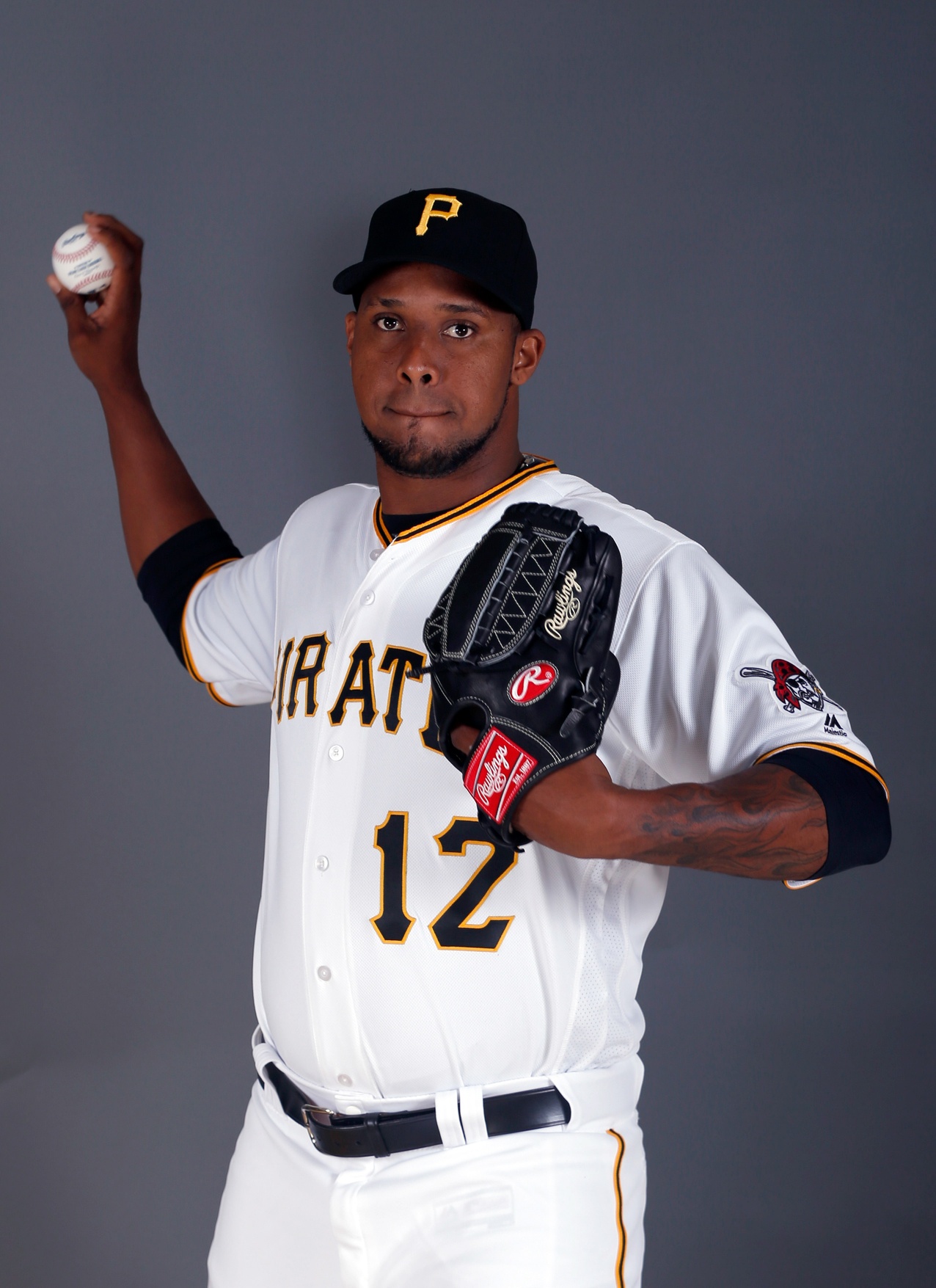 A more interesting cheap pitching deal was that of Juan Nicasio (pictured), who has a good fastball and slider (although not much of a changeup) and whiffed 10.0 batters per nine innings in the Dodgers’ bullpen last year. Given his stuff, age (29), service time (4.084 years, allowing the Pirates to control him for 2017 if they like) and ability to start, $3MM for Nicasio seemed like a reasonable gamble, and there are already signs it could pay off, with Nicasio whiffing 24 batters in 15 shutout innings so far in Spring Training. He’s still in competition for a job in the back of the rotation.
The Pirates also made a number of even less costly depth acquisitions. They got starting pitching prospect Trevor Williams in a lopsided, but minor, deal with the Marlins compensating the Bucs for the Marlins’ hires of Pirates executives Jim Benedict and Marc DelPiano. (In particular, the loss of Benedict, who was widely credited with helping many of the Bucs’ pitchers, could potentially be significant for the organization.) A reliever, Trey Haley, arrived from the Indians on a big-league deal but is likely to begin the season in the minors, where he’ll hone his mid-90s fastball, with the Pirates hoping he can improve his control enough to eventually contribute. There’s still some hope that Cory Luebke (who was signed to a minor league deal) can regain his former promise after a long battle with injuries. And fellow lefty Kyle Lobstein, acquired in a minor trade after the Tigers designated him for assignment, could serve as rotation depth or as a lefty out of the bullpen.
More analysis after the break …
The Bucs also acquired two corner infield types in Jason Rogers and Jake Goebbert who were buried by the later acquisitions of Jaso and Freese. (Both can also play outfield but aren’t likely to do so much with the Pirates.) Rogers, who performed well in his first extended stint in the Majors last year, is the more interesting of the two, and the one for whom the Pirates paid the most heavily, giving up speedy bench outfield candidate Keon Broxton and lottery-ticket pitching prospect Trey Supak. Due to the presence of Freese and Morse on the Pirates’ active roster and the fact that Rogers has an option left, though, he’ll probably begin the season with Triple-A Indianapolis.
Along the way, the Bucs quietly extended backup catcher Chris Stewart, a 34-year-old singles hitter with good framing ability who’s had two decent seasons in Pittsburgh, although his total extra-base output in that time amounts to 13 doubles and no triples or homers. Stewart will receive a total of $3MM for his final year of arb eligibility and one free agent campaign, while also giving away an option for another. It’s a tiny guarantee for the Pirates, but a lot for Stewart, who has never made more than $1.225MM in a season.
The Stewart extension suggests (but perhaps does not conclusively prove) that the club is set to move on from Cervelli after the 2016 season, when he’ll be a free agent — Cervelli says the Bucs haven’t discussed an extension with him despite his brilliant 2015 season, and they have a potential replacement in the wings in Triple-A catcher Elias Diaz. Diaz is already a big-league caliber defender, and the Pirates have another excellent defensive catching prospect in the minors in Reese McGuire, but it remains to be seen how they’ll replace Cervelli’s offense if he departs. (Then again, the same could have been said this time last season, when Cervelli was replacing Martin.)
Questions Remaining
Much of the talk around Pittsburgh this offseason focused on another extension for Andrew McCutchen, who will be eligible for free agency after 2018. Both McCutchen and the Pirates have expressed interest in striking a deal, but it seems highly unlikely they’ll consummate one. The Bucs already control McCutchen through his age-31 season at bargain prices, and a meaningful extension beyond 2018 would effectively buy out what are likely to be decline years. A declining Andrew McCutchen could still be a very good player, but a market-value contract would surely cost upwards of $20MM a year, and the always-thrifty Pirates don’t seem likely to spend what could amount to 20% of their payroll on a player in his 30s. (A more realistic extension candidate, perhaps, is toolsy outfielder Gregory Polanco, who maintains he is open to a long-term deal.)
Meanwhile, the 2016 team has more immediate issues, beginning with its rotation. The Pirates could have a very good group starting in the summer, when Tyler Glasnow and perhaps Jameson Taillon could arrive (with the Bucs likely delaying both promotions due not only to development reasons but to the Super Two threshold). But first the Pirates will have to get through the first couple months with at least one and perhaps two of Jeff Locke and Vogelsong in the rotation.
The shortstop position is perhaps another issue. Jordy Mercer can handle the position defensively, but he’s coming off a season in which he hit .244/.293/.320 with just three home runs. He hit 12 in 2014, so perhaps he’ll rebound somewhat offensively in 2016, but if not, maybe it shouldn’t be taken for granted that he’s really a big-league starter. The next man up would likely be Kang, with Freese taking over at third. That alignment would likely cost the Pirates a few runs defensively, but the offensive improvement could make it worthwhile.
Deal Of Note
In mid-December, the Pirates sent Charlie Morton to the Phillies for minor-league pitcher David Whitehead. After the deal, the Pirates insisted they were fans of Whitehead, a former late-round draft pick who posted a 4.44 ERA, 6.2 K/9 and 3.4 BB/9 in 135 2/3 innings at Class A+ Clearwater in 2015. But the deal was plainly a salary dump. The Bucs had owed Morton $8MM in 2016, plus a $1M buyout on his 2016 option.
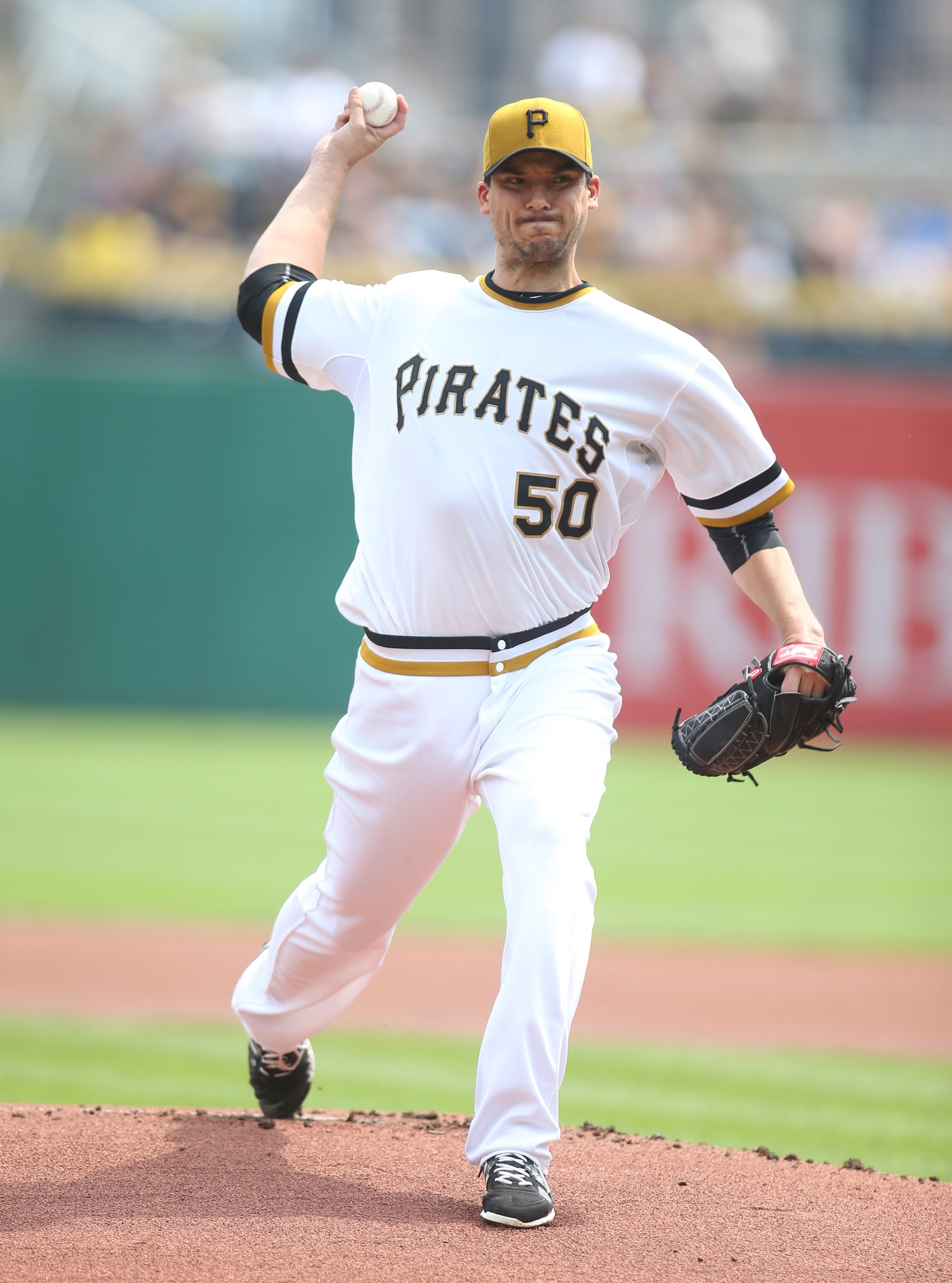 Morton’s seven-year Pirates tenure was uneven, despite being an extreme ground-ball pitcher in an organization designed to help ground-ball pitchers succeed. But the deal left a vacuum in the Pirates’ rotation. At the time, the move suggested that the Bucs intended to replace Morton with one of the many good free-agent and trade options then available, but they acquired Vogelsong six days later and didn’t make any more significant rotation additions. (They’d already signed Nicasio.)
The Morton trade, then, might have been connected to the Pirates’ decision to keep closer Mark Melancon, who will make $9.65MM in 2016 before becoming eligible for free agency. Ordinarily, a reliever like Melancon, the 2015 Trevor Hoffman NL Reliever of the Year award winner, might have netted the Bucs a considerable return in a trade, but perhaps that wasn’t the case this year. Unlike other top relievers who changed teams this winter, like Craig Kimbrel, Aroldis Chapman, Ken Giles and Carson Smith, Melancon doesn’t have a stratospheric strikeout rate, and while he got dominant results with a high ground-ball rate last year, his velocity and other peripherals sagged. “We went into the offseason thinking Mark would be a part of the bullpen until somebody compelled us to think differently,” said Bucs GM Neal Huntington, via the Pittsburgh Post-Gazette’s Stephen A. Nesbitt. “No one did.” Had the Pirates traded Melancon (and elevated the capable Tony Watson to the closer role), perhaps they would have kept Morton, or pursued additional starting pitching help.
Overview
The Pirates’ offseason wasn’t an impressive one on paper, but that’s not a huge surprise. Many fans remain annoyed at the organization’s apparent unwillingness to spend heavily to contend, but given how successful they’ve been with cheap veteran additions lately, perhaps it’s best to wait and see how players like Jaso, Nicasio and Feliz do before critiquing them too harshly.
In the short term, the Bucs will continue to face tough divisional competition from the Cardinals and especially the Cubs. But they have McCutchen for three more seasons, and with a solid core in place, strong lines of communication with which to integrate cutting-edge data into their decision-making, and players like Glasnow and Bell on the way, their short- and long-term futures still appear bright.
What’s your take on the Pirates’ winter? (Link to poll for mobile app users …)
How would you grade the Pirates' offseason?
-
C 42% (805)
-
B 36% (690)
-
D 14% (266)
-
A 5% (96)
-
F 3% (65)
Total votes: 1,922
Photos courtesy of USA Today Sports Images.
MLB is more fun when the Pirates are relevant. Raise the Jolly Roger !
Another stat-oriented moneyball team that overthinks things instead of using proven baseball methods that have worked in the past and are still working. Can get into the playoffs but not far in them.
As a caller to our local radio station said a few weeks ago, “moneyball works for large market teams with massive payrolls”.
The playoffs are a crap shoot. The way you win a World Series is maximize your opportunities. The Pirates are doing that. They ran into pitchers on a tear the last two seasons in a one game Will Card, that doesn’t take anything away from what a great team they are.
I have to admit … trying to figure out how anyone can give the Pirates a B or C. This is an F. The starting rotation is a mess. Niese, Locke and Vogelsong are the answers? We don’t have a first baseman. Another year of a non-first base starter. The two most pressing needs weren’t filled. Instead of getting viable options on the mound, the Pirates are looking to be bailed about by Searage again with reclamation projects. Could have traded away the next to last pick in the first round (our farm system is deep) and sign Gallardo. Instead, we have three number six pitchers for the rotation.
Just curious…what grade did you give the team for the last few offseasons? And I mean when they occurred, not in hindsight. Feel free to give them an F, just realize we have actual proof they know what they’re doing.
You know, everyone’s hyping the Cubs, but it seems like few remember Pittsburgh. They’re a very solid team, much respect for them.
Cardfan2011, Pittsburgh’s starting rotation after Cole and Liriano is garbage. They have three six starter types. Again, they should have traded its first round pick, next to last pick, and signed Gallardo. They will once again have to rely on Searage, the best pitching coach in the business to do his magic once again. Offensively, the lineup should be able to score. They will need to … to offset this starting rotation. It was a “F” offseason.
Do you remember when Liriano, Burnett, and Happ were not that long ago considered garbage?
Gotta love buy-high fans.
Fans in the Burgh seem to parrot the sports talk guys and the print writers. All bemoaned the lack of a huge splash signing for the pitching staff. What many miss is the fact that the Bucs have several young guys that will be ready for the majors early in the season. Glasnow will be first. People forget that the Mets got to the Series last year on the backs of guys like Glasnow & Taillon. cxcs is correct. Liriano, Burnett, Happ, Volquez, and Blanton were all guys that the Pirates acquired that the talking heads and hence the fans all moaned about those guys when they were brought on board. All then moaned when they were not all given huge contracts (except for Liriano) to stay on the board. Big money is not the answer all the time. See the Yanks, Angels, White Sox etc. Rather, I like the Cards model. They spend but do not seem to overspend much on FA. They develop young guys and trade off older guys that are replaced by younger guys who are equal to the older guy at the older guys present production but since they are young, are cheaper and more of an upside. Pirates are finally on the cusp of being able to use that model to keep the team productive and yet the fans here complain. It is what Pittsburgh fans do.
This is the guy who thinks the Pirates should go out and sign medium range free agents to 10-20m a year contracts and clearly doesn’t understand how the Pirates payroll works
Yep you are 100% right. People like to spit out crap that Mark Madden says thinking they are talking smart. All last year the talking heads (therefore most fans) called out Neil Walker for his defense and Pedro Alvarez for basically his whole game. Now that those guys are gone now that is the new complaint.
Next year I can;t wait for gems like “Man how can this organization not sign Juan Nicasio to a 5 year 85 million deal, what cheapskates”
I cant see them consistently producing enough runs without Pedro and Walker. Jaso wont hit nearly as much, tho he is a better defender, u need runs on the board to make saving runs a relevant piece of data. The inclusion of Freese somewhat negates the loss of Walker, however, I think they shouldve got at least a mid-rated prospect to complement i Niese in the trade.
I agree with ammiel. I would’ve liked a prospect in the Walker deal, but Niese can be controlled two more seasons I guess. Rotation is kind of shaky, but Nicasio might just save the day. This season will be interesting to say the least.
Ignorant
Awesome perspective! I can’t remember the last time I had so much laughter in a positive way for a sporting article! This was brilliant work that I am sure exceeded all expectations of the fans, your co-workers and especially MLBTR readers! I could not agree more with your perspective on how the Bucs are such a hard team to read! I hope that this is the year that their under-the-radar moves falter so that the Cubs can waltz into the playoffs, But it is always great to see the Pirates as a good team, as it is always great for the history of the sport and makes things even more fun! Great read and hopefully the pitching brain-trust that headed to Miami cause the Pirates to fall back just slightly. Good luck to the Pirates… as long as their luck falls short of the Cubs success!
Thanks so much! The check’s in the mail.
Why don’t you think Aramis Ramirez was a significant loss for the Pirates? He kind of played a lot and I think batted cleanup down the stretch.
LOL! Seriously great read!
Rodriguez can also dispose of any offending beverage coolers handily.
I think all you commenters are forgetting that these are actual people we’re scrutinizing. Who’s to say that a surprise candidate in the Pirates rotation isn’t on the rise? These guys have been busting their tails all offseason trying to make the cut/ or improve. That’s the problem… Everybody hastily prejudges before anything actually plays out. Just you wait. This team will be just fine.
It is because we are baseball fans! Analyzing is what we do. It sets us apart from football people, who just sit around and jabber about a player’s 40-yard dash time. The Bucs will be ok, though it is hard to pick them over the Cubs at this point. I think it will be fun to watch a healthy Kang.
Wishful thinking on the part of a Cub fan:
Chicago Cubs………… 100-62
Pittsburgh Pirates …97-65
St. Louis Cardinals…90-72
Pirates will be fine… they seem to have something figured out that keeps putting digits in the left column…..
I hope that the central division has the top 3 records in all of baseball again this year like it did last year. I don’t have a clue why I want any other team to be close to the Cubs in that division, but as long as the Cubs come away with the most victories, I guess i will be fine.
Call me weird…. But that’s ok…. I been called much worse…. today.
Wow, ok…where to begin…
aberdeen101-
Everyone is entitled to there own opinions, but I don’t think that you are properly informed to have a better opinion on the situation. So I will try to help you understand the situation with the pitching staff and offense.
I understand that you are frustrated that the organization didn’t go out and spend a bunch of money on a big named pitcher or a “legit 1B” but you need to remember how much those types of players cost! The Pirates can’t afford to go out and throw 35-40 million dollars away to fill 2 roster spots.
As far as the starting rotation goes, Jon Niese is a fine pitcher, and a SOLID #3 guy behind Cole and Liriano for the time being. Nicasio has looked fantastic and will most likely a lot in as the #4 and Locke/Vogelsong will be the #5 to start the season. HOWEVER, make no mistakes about it, by the second week in June (once the Super Two date has passed) either Glasnow, Taillion, or BOTH will be called up and placed into the rotation. THAT is exactly why you don’t run out and throw away draft picks and ridiculous market value contracts to established starters! Because what we have coming up will be better, and won’t cost us but a fraction of the amount! This rotation will not only be fine, but it will be one of the best in MLB by years end.
Next, the first base issue is temporary until Josh Bell is called up. (Most likely in June as well once the Super Two date has passed) then Jaso turns into a bench player. But until that happens, Jaso’s on base percentage will absolutely lead to runs being scored that would have never been scored if Pedro were still playing first…
I personally rated this off season a “C” because I would have done several things differently, however, the largest upgrades to the team and it’s roster have nothing to do with the off season, it has to do with internal promotions and calling up the organizations top prospects…THAT is what is going to make this team as good if not better than last years team.
FINALLY,
TheChiGuy-
Your team is STACKED bro…no two ways to look at it, however, with so much youth, growing pains and sophomore slumps are always a possibility. Don’t count the Buccos out this year, and NEVER underestimate the Cardinals (we have learned that the hard way for the last several years).
We are coming to win this division this year and make someone else play in the wild card game…should be a fun and entertaining season of Hurdle, Madden, and Matheny trying to outsmart one another all year long! The games amongst those 3 teams are going to be like playoff games because everyone realizes that at the end of the year, 1-2 games will probably be the difference between getting a 7 game series or a 1 game wild card game!
Best of luck to you guys!
The Pirates are going to be a better team this year than last and it’s not really that difficult to project why. They lost Neil Walker, but picked up David Freese who is, at the very least, an equivalent player. I’d call that moneyball – trading an $8MM salary for one of $3MM and staying equivalent with talent. Jaso is clearly an upgrade over Alvarez. Forget the 27 homers. The poor defense, high number of strike outs and poor on base percentage just killed us. Jaso should be a big improvement. Moneyball? Trade Pedro’s $8MM for Jaso’s $4MM. Can Nicasio and Niese combine to be at least the equivalent of Morton and Burnett/Happ? Can’t be too sure about that one, but you have to be excited about the spring that Nicasio had and the fact that there are two young, electrifying arms on the way in June with Glasnow and Taillon. Most teams would like to have one young pitcher like this on the way. The Pirates have two. And, the Pirates bench strength and talent hasn’t been better for decades. The Pirates look solid in all phases of the game and have an offensive line-up that most opposing pitchers will not enjoy slogging their way through. Will they win the division? With a little luck on their side, sure. But, for certain, they will be a very, very competitive team.