
The baseball world is abuzz about the controversial recent comments of Yankees president Randy Levine, who criticized Dellin Betances’ $5MM filing in his losing arbitration case this past week. After emerging victorious in arbitration, Levine described the filing as a “half-baked attempt” to “change a well-established market” for setup men, further noting that Betances was not a closer — the reliever type that typically commands big arbitration salaries — any more than Levine himself was an astronaut.
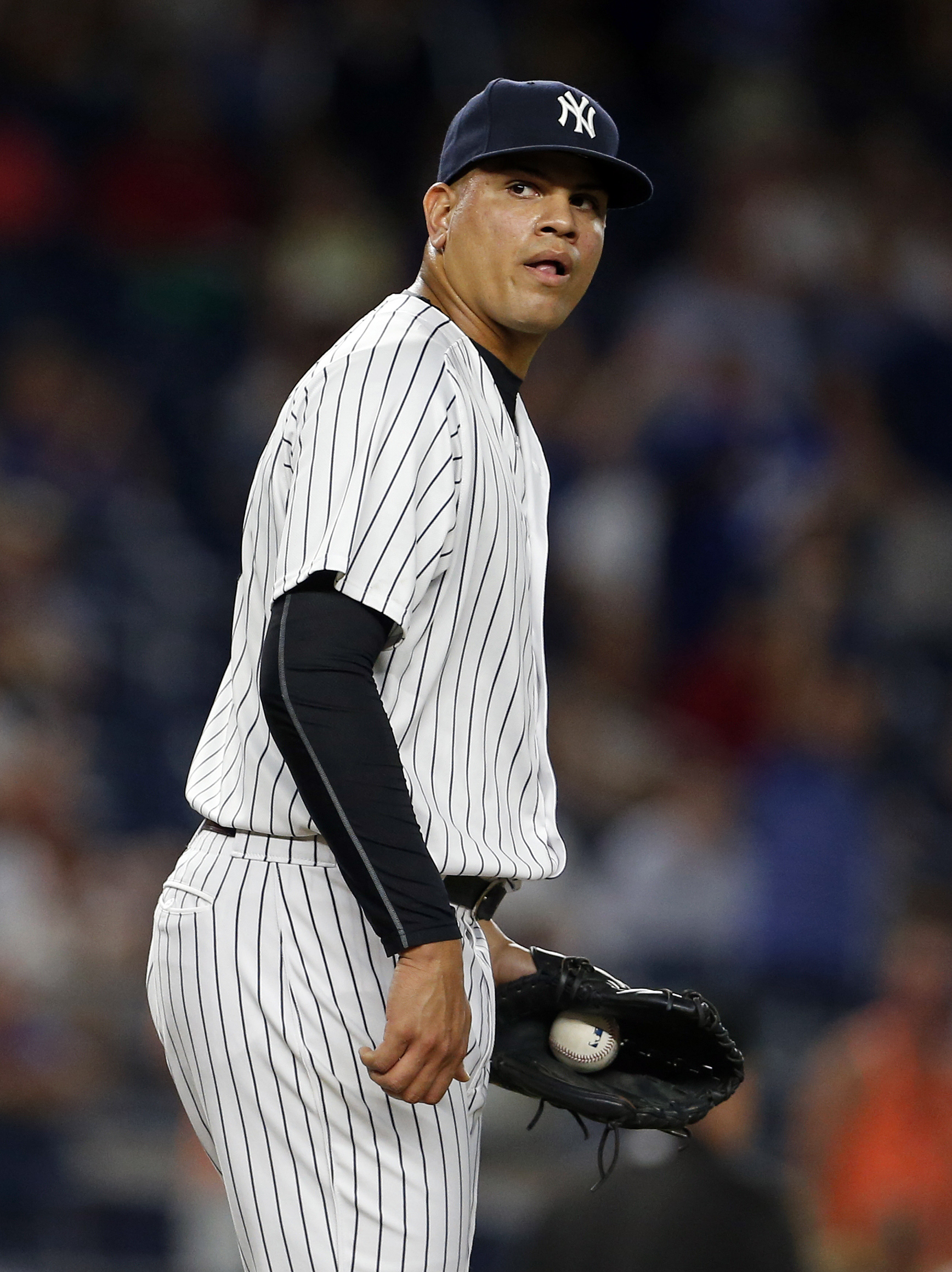 Levine’s decision to call out Betances after defeating him in a case was questionable, but he was right that arbitration pays relievers based on their role rather than their value. Indeed, my arbitration model forecasted Betances would land at $3.4MM, only a few ticks higher than the Yankees’ $3MM filing, and probably very close to where Betances could have bargained had he and the Yankees opted to negotiate a one-year deal to avoid arbitration.
Setting aside the decorum or business wisdom of the quote, the least accurate part of Levine’s comment was his description of Betances’ filing as an attempt to “change a well-established market.” Arbitration is not a market, or at least it is not a market in the way that people generally mean when they talk about markets. There are no multitudes of buyers and sellers trying to exchange the services of relievers in arbitration. Free agency is a market. Arbitration is a manufactured system of loosely defined rules that players and owners have agreed upon as part of the Collective Bargaining Agreement.
The difference is more than semantic. On the free agent market, Betances would be priced like a closer, in the sense that he pitches as well as one. Left up to a free market for his services, Betances could be paid like a closer. This happened just a couple years ago when Andrew Miller, with one career save, received a four-year deal for $36MM from none other than the New York Yankees.
Arbitration, on the other hand, follows a system of rules. Relievers are paid in arbitration based on a series of imperfect retrospective metrics that do not quite estimate value of a performance, rather than a prospective set of metrics designed to estimate the value of a performance, as teams attempt to use in free agency. Each player and team bargain independently, with no other buyers or sellers allowed to enter negotiations like in a typical market.
The most compelling comparables for Betances are those who primarily held setup roles, rather than closer roles, in the bullpen. Limiting to relievers in the last five years who had fewer than 20 saves in their platform year, we only get four pitchers who earned more than $2MM, and all four earned between $2.5MM-2.9MM. Even within that group (Neftali Feliz, Kris Medlen, Mark Melancon, and Drew Storen), all four pitchers had either been closers for longer periods of time than Betances. Medlen had been a starter for a period of time as well.
Looking only at setup men who accumulated large numbers of holds, the comps get even bleaker for Betances. Only four pitchers have gone into arbitration with 70 career holds (Betances has 78 career) in the last five years, and all have received less than $2MM.
Where Betances does differentiate himself is the fact that he has 22 career saves—he does have some closing history—and that he has struck out a whopping 404 hitters in 254 2/3 innings with a career ERA of 2.16. No one discussed in the part-time closer group above or the group with a significant number of career holds could touch those statistics.
And while detailed sabermetric statistics are unlikely to be persuasive in arbitration, Betances’ three All-Star berths were probably one of the better hopes for Betances and his representation. In fact, in recent years, only Craig Kimbrel entered his first year of arbitration with three career All-Star selections, and although he signed a multi-year deal, that only came after the Braves filed at $6.55MM, conceding quite a high value for a player recognized as Betances has been. Only two other players in the last five years even had two All-Star selections going into their first year of arbitration: Aroldis Chapman in 2014 and Andrew Bailey in 2012, who received $5MM and $3.9MM, respectively.
The catch is that Kimbrel had 139 career saves by the time he initially filed for arbitration, while Chapman had 77 and Bailey had 75. At just 22 career saves, Betances was bound to be paid mostly like a setup guy. My model estimates that had Betances’ 28 holds in 2016 all been saves (giving him 40), he would have been estimated to receive $4.5MM instead. If we turn his 50 holds in his pre-platform seasons into saves, that projection shoots up to $6.3MM. But turn those 78 relief appearances back from saves to holds, and we are left with his $3.4MM projection. Levine is, in fact, not an astronaut, and despite Betances’ performance being out of this world, he himself is neither an astronaut nor a closer.
So Betances does not in fact have the halo that typically accompanies a ninth-inning role. In the strictest sense of the word, he is not a closer. Okay … so he does not get coffee. Fine. But let’s discuss how Betances compares to other great relievers and figure out where he stands when we divorce ourselves from the role-based approach to paying arbitration-eligible players.
If arbitration were to reward relievers based on their performance, rather than their context-based statistics, Betances would have entered arbitration in a much more favorable position. Betances has 404 career strikeouts, which is more than any relief pitcher ever to enter arbitration for the first time in the modern era. In the last five years, only Kimbrel himself has even come close with 381 strikeouts, followed by Kenley Jansen at 347. Jansen received a one-year deal for $4.3MM back in 2014.
Limiting to pitchers with 300 career strikeouts and career ERAs under 2.50 (Betances is at 2.16), the only pitchers that emerge are closers already discussed above: Kimbrel, Chapman, and Jansen. From this perspective, Betances filing at $5MM would seem reasonable. Another potential comparable in terms of skill set would be Trevor Rosenthal, who received $5.6MM a year ago from the Cardinals with a 2.66 career ERA and 303 career strikeouts.
Of course, if we know that arbitration is based on retrospective performance, it stands to reason that looking at pitchers based on context-free numbers was unlikely to be persuasive. After all, a lights-out minor league pitcher gets paid the league minimum for his first three-plus seasons. Context matters. What might have been more compelling to an arbitration panel is a statistic like WPA or “Win Percentage Added” as presented by FanGraphs. This statistic simply uses a rough estimate of what the probability a team would win when a pitcher enters an inning (based on inning, score, and base-out situation) and again after he leaves or the inning ends.
For example, when Betances entered with a one-run lead in the bottom of the ninth inning on August 31 against the Royals, the Yankees had a 79% chance of winning. After he saved that game, that 79% chance reached 100%, which gave him 0.21 WPA that day. But when Betances came in with a one-run lead and a runner on first in the seventh inning of an April 12 hold opportunity against the Blue Jays, and struck out Jose Bautista before retiring the side in the eighth en route to a one-run victory, Betances got a nearly identical 0.20 WPA combined for the seventh and eighth innings, because of his large effect on the Yankees’ probability of winning that game as well.
String together Betances’ entire career thus far, and he has 9.30 WPA. That would stand right next to Kimbrel himself, who had 9.29 WPA through 2013 when he first entered arbitration. It would top Jansen, who stood at 7.46 WPA upon reaching arbitration, and well ahead of Chapman, Rosenthal, and Bailey, who had 5.77, 5.72, and 5.05 WPA, respectively at those points in their careers.
I doubt that would have made a strong enough case given the historical importance of saves and holds (in that order), but it might have helped a panel see an alternative way of valuing what Betances has added to the Yankees’ win totals, without resorting to the same old stat columns.
In the narrow sense, Levine is right that Betances has not been a closer. That is almost entirely why the Yankees won this case, because everything else would have shined a brighter light on Betances’ performance.
Photo courtesy of USA Today Sports Images.
This is like a U.S. Supreme Court case for relievers.
lolololol
Lmao
Simple solution is to get rid of the terminology. I’d rather have the best set up man in the game instead of a good but not elite closer. The closer would likely get paid more even though the set up mans better.
I just can’t see the terminology ever going away. Wins, Losses, Saves, RBI, Runs Scored, etc. will always be around.
No they wont, only old people care about those stats and we have found and created new ones that better show how good a player is.
Why did baseball get saddled with this mentality of “things are not allowed to change”? We changed the rules, the game has changed, but the old fangled stats have to stay? RBI and pitcher W-L are the two most nonsensical stats in all of professional sports. They reward players for not doing a good job.
“…only old people care about those stats…”
[Sigh]
You’ve got your words mixed up. RBI’s don’t “reward people for not doing a good job”, they just aren’t a great indicator of when they are doing a good job. Two very different things.
Unless you’re actually trying to argue that RBI’s indicate poor performance – I’ve never heard that one before.
If one player has 80 RBI and another has 120, who is the better player?
Please tell me you aren’t being serious?
Player A in 2016 had 108 RBI
Player B in 2016 had 100 RBI
Player C in 2016 had 72 RBI
You would take A right? Well Player A is Matt Kemp. Players B and C are Mike Trout and Corey Seager
You can’t treat future Hall of Famers the same as other players.
lol, Eck and his trolling are back. The future HOFers are your REd Sox players. Yankee fans/writers don’t call their young players future HOFers.
See here about future HOF Red Sox players (though 2 are vets and 1 is retired) masslive.com/redsox/index.ssf/2015/01/the_next_fiv…
You can’t use a joke that’s on your own team and use it for another. What’s next, am I as a Yankee fan going to laugh at another team’s payroll?
Actually, yes, you totally could laugh at another team’s payroll. You could laugh about a low payroll team being so low, for example, or you could laugh at Boston for being treated as payroll equals to the Yankees despite always being a good tier or so below Yankee spending. I’m not sure that you’d want to, but it’s an option!
He’s getting at how hypocritical the first poster is being and saying should he also be hypocritical.
Sure I can but I’d look stupid in doing so. I should have been more clear and say laugh about another team’s high payroll (Dodgers, Red Sox, etc.), but since my fav team has a high payroll, I might as well laugh at them (ehh, sometimes I do anyway. Especially the team’s president)
I’m actually laughing at the deals the Red Sox gave to Cuban players recently. That Castillo deal is amazing and the Red Sox are one of a few teams to get away with it. But here’s the big difference, if the Yanks made that Castillo signing and stashed him in AAA the media would be killing the Yanks.
You’re right on the latter part for sure.
While Betances is not a closer he is the best of all the other relievers and would be top 5 if a closer.
Leading baseball in war
Innings pitched and strikeouts.
He’s basically the definition of a fireman after Miller(before he ever was one)
Very good and informative article though. Great read
Closers are man made monsters.
Incredible post. MLB needs to read this and restructure arbitration to avoid this happening in the future so its based on metrics not raw stats.
I also don’t think enough is being made of Betances being a late bloomer who’s the same age as Aroldis Chapman, so he kind of needs to be getting paid sooner than later – arbitration has been long doing late bloomers wrong, denying them free agency until they are well into their 30’s. But also being a pitcher he could disrupt or lose his career on any singular throw.
Logic would say that a supposedly “proud” team like the Yankees would go out of their way to help out this elite local guy who (I think) grew up a fan of the team and bleeds the colors by not making him earn min wage at 27-28. You would think the classy move would be to go “Yes we know we could beat you in arbitration, but being that you are great and we love you, we are going to agree that your somewhat unique case of being an elite non-closer reliever is worth the same amount of money as we gave Chris Capuano two years ago”.
I wonder what Jerome Holtzman (Chicago sports columnist who “invented” the Save) would have to say about the devaluing of Saves and Closers these days.
He would blast anyone who even dared question where he placed a comma. It would have been a searing bombardment of words.
“Devaluing of saves” – um, what? Saves are one of the only reliever pitching stats that has actual monetary value. That’s why this article exists.
Devaluing or reevaluating their worth using advanced metrics.
And I did read it. And my comment stands. You are free to disagree.
Right, but you are skipping ahead here – as it stands right now, pitchers get paid for saves so that literally means saves = money. The whole point of this is conversation is that saves have too much monetary value and Betances and pitchers like him and Andrew Miller, who being an elite non-closer are kind of a new thing, and arbitration screws over this type of particularly good baseball player.
No, JAFan, you are the one skipping ahead.
The point of my post was about Jerome Holtzman.
But he was one of those “old people”, so I guess his opinion wouldn’t count.
Very nice article and like how you cite WPA too. Somewhere I read that one of the creators in WAR said it shouldn’t be used for relievers (why they have it then, I don’t know). But I did hear WPA for relievers is very good to use.
Lol everyone freaks out because the guy is earning $2 million less than he wanted
I don’t think that people are freaking out over the money as much as the way the dipshit Randy Levine handled the arbitration decision. He ticked off a loyal, homegrown player with his totally unnecessary comments. What kind of message does that send to the young guys like Judge, Torres and Frazier? Betances was going to live with the decision until Levine opened his stupid mouth. No executives have done more to tarnish the Yankee “brand” than Levine and Lonn Trost. Not sure how Levine even has his job still.
Using eyeballs & plain english- Everyone knows Betances is worth more than 3 mil a year but Yanks used stats in their favor to diminish his value. Looking at past few years the guy is clearly a dominant reliever!
Cubs as an example waited the 10 days or whatever it was to call up Bryant to gain another year of control. He really needed to “work on some things” for those 10 days because a year later he’s basically the best player in baseball. I think Cubs let Arrieta walk after ’17 season and then should sign Bryant to mega deal. PED’s and the disparity among team spending is what needs to change in MLB.
Maybe Betances is worth more ON THE OPEN MARKET but since this is arbitration, he’ll get ONLY what the decision says he gets.
The Bryant example is a poor comp. There has to be some kind of line drawn regarding what counts as a season, and teams will always factor that in to their decision-making. It isn’t that the way a “season” was counted for Bryant was not representative of reality and so he deserved to not give up that extra year of control – he literally was not playing for long enough for it to qualify as an additional season, period.
Betances is now set to be woefully underpaid by arbitration because its process for determining value is outright flawed. Betances DID perform at a level deserving better pay; Bryant did not play long enough to gain an extra year of service time, and there is no objective flaw in the manner with which a season is determined.
Levine may be right that Betances hasn’t technically been a closer, but he’s wrong about everything else, most especially that this is a Yankee victory. Up until now, it has been to the Yankees’s benefit that Betances has both not been a closer AND has been willing to embrace his role; now, Levine has ground into Betances’s face that to the team he deserves to be worth less due to the way the TEAM uses him, and not because of his own lack of merit. Now Betances has absolutely no reason to be a team player about this, as it is costing him money and he is taking illogical insults on top.
If I were Betances’s agent, I would research what a closer with Betances’s numbers would be worth in his fifth and sixth pre-FA seasons in arbitration, what a setup man would be worth, and I would split the difference about 2/3 in favor of the closer’s salaries would be worth each of those seasons. I would then demand a contract extension that covers only those seasons – no FA seasons – at those salaries, and in return Betances will continue to pitch in whatever role the team desires of him. If not, I would say “don’t expect full willingness from him going forward, and you risk the outcomes that would result from that lack of willingness”.
Betances loses his arb hearing but still gets $3M a year. I think he could have lived with that, but now he has to go out there and give his best performance for an organization that takes such an obviously dim view of him. Betances should challenge Levine: “Why burden yourself with a substandard setup man? If you believe in what you’re saying, you should be making every effort to rid this organization of my services. To do otherwise is hypocrisy.”
Look at the first time Bryce Harper made 5M, a roy and mvp everyday player. Same with A-Rod, he didn’t make 5M until he left the Mariners. That’s just using two of the best players in different decades. Yes, the game is more flush now but asking for 5M when he made 507K last year wasn’t a reasonable ask. The Yankees paying even 3M was unprecedented.
How about replacing arbitration with a an agreed statistical formula (both traditional and sabremetic) to determine salary which insures appropriate compensation. Who says no – players or owners?
Players unfortunately, system right now overpays players for accumulating a single stat, think of guys like Matt Capps etc. Who aren’t that valuable but got paid for saves
Bottom line is that the arbitrator decided Betances’ agent over-shot the mark both on characterizing his role and on the financial reward that he deserved. MLB arbitration is a “one-side wins all” hearing and there is no middle ground. That said both sides have to be smart about how they approach negotiating these salary years and in my opinion, should do everything possible to avoid arbitration. Players and their agents are going to tout how great they performed and teams are going to highlight all of the players faults and failures. In the end, the bitter feelings can outweigh the financial gain from either side. Good players who are worth their salt will eventually get the payday they deserve when they become a free agent.
I think maybe the comments Levine was making were directed more at the agent asking for such a big jump in pay. Rather than dellin betances worth to the team
Two minor points.
First, I don’t think Levine was saying that arbitration is a market, only that if Betances for paid $5 M it would change the market for setup men.
Second, as far as sabermetric analysis having an effect in arbitration hearings goes, Bill James has done a lot of work in these hearings, so I would deduce that, yes, sabermetric analysis is used and is effective in many hearings.
I don’t think sabre metrics matters
So wrong. In any sabre, the length, weight, sharpness, materials, and heft are vital factors in its value.,
That’s why they are called “cutting edge”. Haha….
whatever
Yankees would be smart to move him while the market is good for relievers. He will flame out soon. They got A ton for chapman and miller! They could get a nice return for him!
They would be better to use him for 100 innings each of next couple years while they have control and cheap then trade before his free agent year. He will be pitching his best with free agency lurking. He will not hurt the team financially and the manager is his boss which tells him when and what innings he pitches. His ego is a bit ahead of his career. I don’t remember Mo having big problems with what he was paid in contracts in his early years.
excellent article
no I still don’t understand