
Teams scouring the open market for help at the hot corner would likely agree that Mike Moustakas and Todd Frazier stand out as the best unsigned third basemen in the majors. This winter’s class of free agents isn’t brimming with established starters at the position, but Moustakas and Frazier are obvious exceptions, having generally served as above-average players throughout their careers. Moustakas, 29, is likely to score a much richer contract than his soon-to-be 32-year-old peer (MLBTR projects a five-year, $85MM deal for Moustakas and a three-year, $33MM pact for Frazier), though the players’ big league performances suggest that shouldn’t be the case.
Both Moustakas and Frazier were part of the same draft class, 2007, a year in which the former went second overall to the Royals and the latter came off the board 32 picks later to the Reds. Unsurprisingly, Moustakas received much more fanfare as a farmhand, ranking among Baseball America’s top 100 prospects three times (he topped out at No. 9 in 2010, while Frazier peaked at No. 43 in 2010). But since the pair debuted in 2011, Frazier has been the more productive player. As a member of three different teams – the Reds, White Sox and Yankees – Frazier has slashed .245/.321/.459 and racked up 21.2 fWAR in 3,766 plate appearances (approximately 3.3 per 600 PAs). Moustakas, a lifetime Royal to this point, has batted a more modest .251/.305/.425 with 12.1 fWAR in 3,318 trips to the plate (2.2 per 600 PAs).
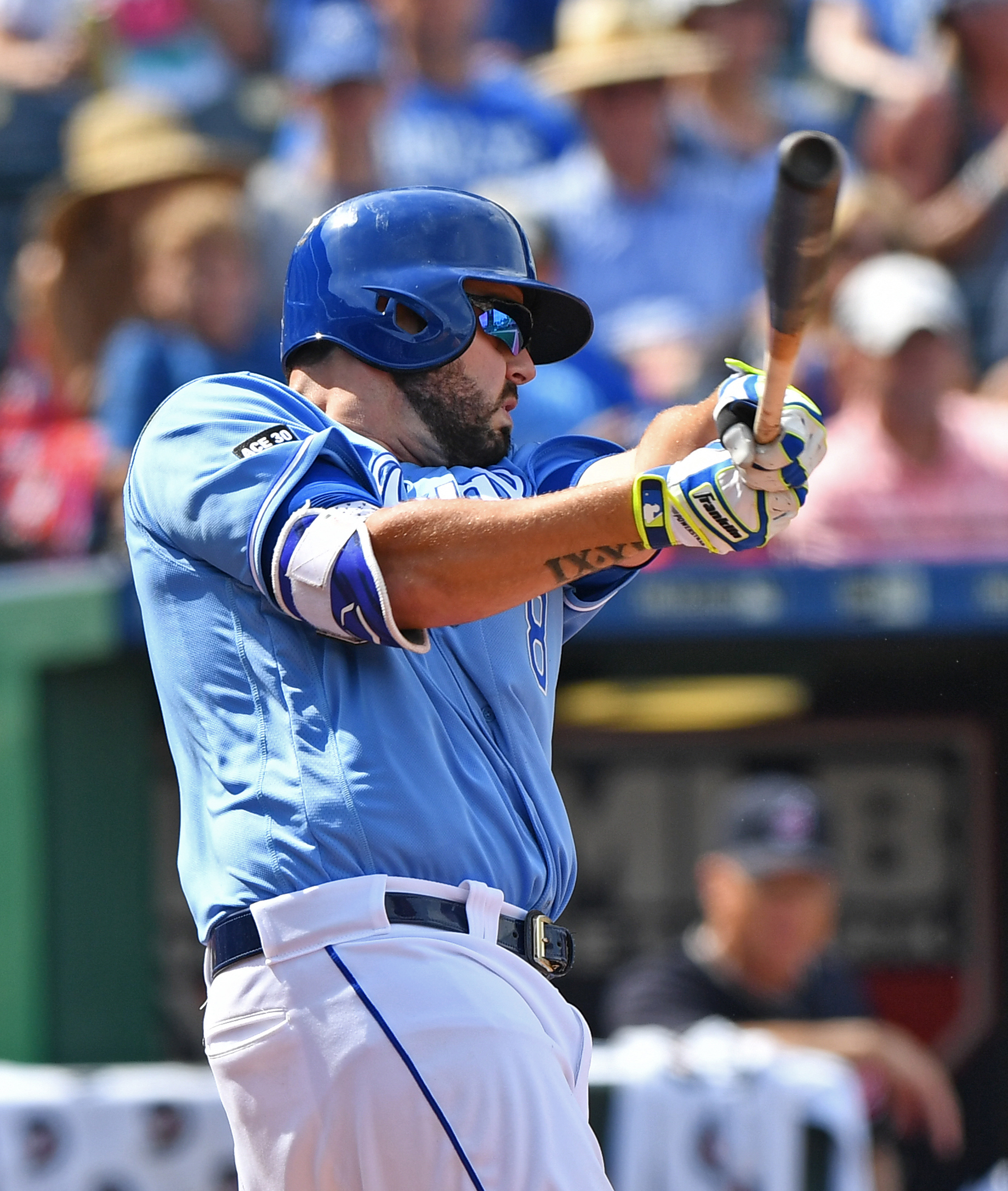
When analyzing Moustakas’ career, it would be unwise to ignore the fact that the lefty-swinger didn’t truly burst on the scene as a hitter until 2015. Teams that bid on him in free agency will expect to acquire the Moustakas they saw from 2015-17, during which he batted .279/.329/.496 across 1,325 PAs, not the 2011-14 version who limped to a .236/.290/.379 line in 1,993 trips. It’s also worth pointing out that missing nearly all of 2016 with a torn ACL took a toll on his statistical output.
Aside from that 27-game season, Moustakas has made between 136 and 149 appearances in each of his five full campaigns. In his most recent showing, Moustakas accumulated 598 PAs and slugged 38 home runs – trumping the previous career high of 22 he set in 2015 – to go with a .249 ISO (a marked improvement over his .174 lifetime figure).
Moustakas established new high-water marks as a power hitter in 2017, but he also walked a career-worst 5.7 percent of the time, thanks in part to a chase rate that climbed from 34.1 percent between 2011-16 to 40.3 percent. All told, he offered at 55.6 percent of pitches – up from 48.2 percent over the previous six years. Neither Moustakas’ more aggressive approach nor his penchant for hitting infield pop-ups (16 percent, tied for 10th worst in the majors) did him any favors in the on-base department. His .314 OBP easily fell below the .330 league average and somewhat offset his prodigious power. Still, his offensive production was a respectable 14 percent better than average, per FanGraphs’ wRC+ metric. He was less effective in the field, with minus-8 Defensive Runs Saved and a minus-3.1 Ultimate Zone Rating. In the eyes of those metrics, Moustakas has been a plus defender for the majority of his career, so a bounce back may be in order as he continues to distance himself from his serious knee injury.
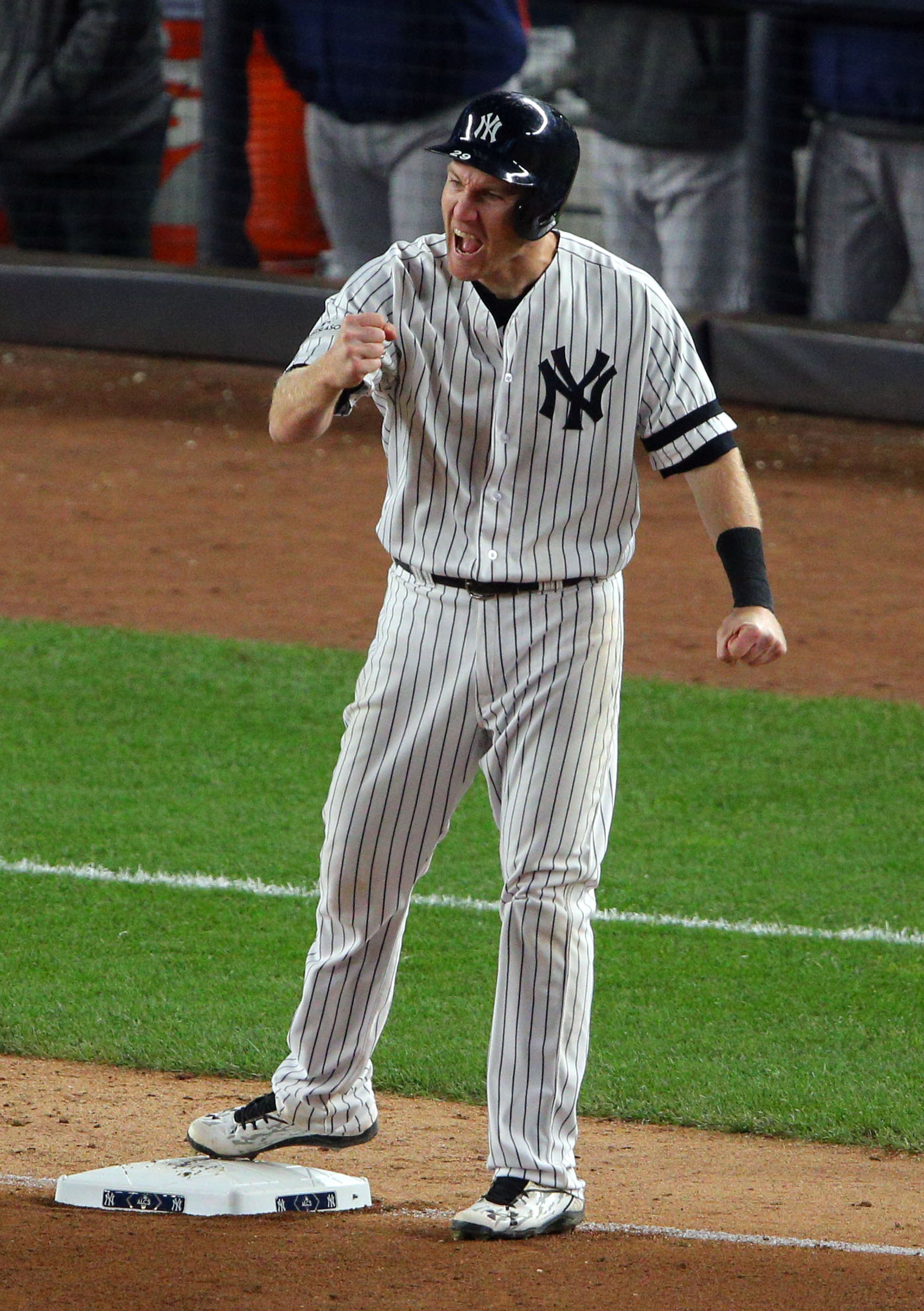
Frazier, meanwhile, has been a paragon of consistency since his rookie campaign, 2012, the only one of his full seasons in which he appeared in fewer than 147 games. Frazier has been an above-average player every year dating back to then, having notched seasonal fWARs ranging from 2.5 (2016) to 4.8 (2014), and his defensive work has played a role in that. He thrived in the field during a 3.0-fWAR 2017, tallying 10 DRS and a 6.7 UZR. Only once (in 2016) has Frazier logged negative numbers in those categories.
Frazier is better known for his offense than his glove, of course, and he contributed a quality .213/.344/.428 line (108 wRC+) with 27 homers and a .215 ISO in 576 attempts in 2017. As was the case with Moustakas, Frazier hit a boatload of infield flies – a league-worst 18.5 percent, in fact – which helps explain his unsightly batting average. Although Frazier is only a lifetime .245 hitter, the right-hander has never been worse than an average offensive producer in any season, according to wRC+. With 131 homers since 2014, most of Frazier’s offensive value has come from his power, but his patience trended in the right direction last season. Frazier was more selective than usual, with a chase rate of 25 percent (compared to 34 percent from 2011-16) and a swing rate of 40.2 percent (down from 49.2 percent over the prior six seasons), leading to a career-best 14.4 percent walk rate that shattered the previous personal high (9.2) he put up in 2016.
In addition to marketing Frazier’s two-way reliability to third base-needy teams (the Giants, Mets, Braves and Angels, to name a few), his reps at CAA Sports are sure to note that he won’t cost draft pick compensation to sign. That’s not the case with Moustakas, a Scott Boras client who will reject the Royals’ qualifying offer by the Nov. 16 deadline. While Moustakas is a fine player who’s still on the right side of 30, there are legitimate reasons to believe the team that signs Frazier will end up more satisfied with its investment.
Photos courtesy of USA Today Sports Images.
Sign me up for team Frazier. I like on base and defense. Those skills tend to age well. I don’t Moose’s sudden homer output.
Defense doesn’t age well. But i do agree with your opinion on Moose.
For natural 3B it does. They may lose a little range, but they are always in the right position. Guys that move to 3B later in their career don’t age well because they are learning the position as their skills decline.
Funny how 1 year can change people’s opinions so drastically. Up until last year, Frazier had been horrible at getting on base. His career OBP through 2016 is less than Moose’s has been over the last 3 years.
That being said, neither one of them is a high OBP kind of guy. If that’s what a team is looking for, they should look elsewhere. Moose is the better hitter of the 2 though.
Whatever team gives Moose a big contract is in for a rude awakening. Every time I see a homer total spike like his did, I see visions of Brady Anderson all over again (no, I’m not suggesting roids, just saying it probably won’t continue).
Exactly.
Other sites say that Moose is looking for 5/$95 M…….No chance.
Moustakas = Jedd Gyorko. Look up the stats, then comment (even I was surprised). That doesn’t make him a Bad Player by any means…..it’s just good to know “what you’re buying”…..They’re both worth around 5/65 Tops
Hosmer = Wil Myers. Same deal….check out the stats. Myers just signed a 6/$83M contract. Hosmer MIGHT be worth a couple extra dollars, but not “2X as much”…..Not even close. Hosmer should max out at 6/$110……any more will be tragic.
Moose is Gyorko this year, Gyorko’s walk year in SD was much worse.
Also Myers deal was a pre-arb extension, not an open market deal.
5 fon95 actually is cheap for him if someone sign him for that they did well
Moose output didn’t just randomly spike. He completely overhauled his approach before the 2015 season. There were 20 stories written about it in spring training 2015. He was a DEAD pull hitter before, and in ST 2015 he made the adjustment to start taking pitches to left field and center when people pitched him outside. Check his spray charts. If you come in, then he jumps on you and tries to pull it out of the yard. He’s also hitting homers off lefties now.
I would not any part of frazier has not hit for average for 3-4 years until free agent years, who ever signs him will regret it.
Average? Who give a crap about averages?
While I mostly agree with you, you can’t score a man from second/third on a walk unless the pitcher throws a wild pitch/bases loaded. Singles are still more valuable then walks.
that depends on the price…..Todd Frazier is certainly no world beater and personally I would prefer my team’s top prospect play 3b over giving Todd Frazier a rich long term payday……That being said, Frazier is a slightly above average overall MLB player who can help some teams given that he is acquired at the right price…..
If we were talking about a hitter batting first or second, ok I would want the higher on base guy. But talking about a guy for driving in runs, I want the guy who can get a hit. That definitely isn’t Frazier. Hell Frazier is a slightly better Luis Valbuena. And will cost twice as much.
Frazier it twice the 3B Valbuena is. Valbuena isn’t worth 1/2 his contract
Look at their numbers from this past season. Not much different. Yes the advantage goes to Frazier. But it’s not that much different. Frazier hasn’t been the same player since getting traded from that ban box in Cincinnati. Frazier also has played in more hitter friendly parks than Moustakas has.
I don’t follow your logic. Frazier has been an above average power hitter for his career. He’s averaged 33 hrs a year for the last 4 years and became a much more patient hitter in terms of working the count and taking a walk.
in the last 4 years…
Frazier was 3rd in HRS behind Donaldson and Arrenado and 5th behind those two mentioned, Seager and Longoria. Valbuena ranks 11th and 24th in both categories. Frazier and Valbuena are about the same in terms of walks, kos and obp in the last 4 years overall but Valbuena had a horrible year in 2017 with a slash line of .199/.244/.432. Defensively Frazier has scored a +17 Def WAR in the last 4 years. Valbuena a -8.4.
Frazier is far better 3b and overall hitter than Valbuena and I don’t think any would disagree.
My point which most of you ignored is, I would take Moustakas. His batting average homers and RBI’s have been going up. Frazier numbers have went down since being traded from a hitter friendly park. The Angels other than Calhoun are a right handed hitting lineup. Moustakas in every since fits the Angels needs more than Frazier does. Frazier can go to the Roid Sox after they strike out adding anyone else.
Your words are your words…
a) You said Frazier is just a “little bit” better than Valbuena and that’s not true. He’s been MUCH better than him over the last 4 years and most certainly last year.
b) When one of the commentors said Valbuena isn’t worth half the contract that Frazier deserves, you doubled down and said there wasn’t much different than the year they (Frazier vs Valbuena) had in 2017. And that’s not close to being true.
.213/344/.428 w/ 27 hrs and 88 walks vs .199/.294/.432 w/ 22 hrs and 48 walks. Bat avg and hrs are negligible in difference but there’s a huge difference in obp and defense.
c) You implied that Frazier’s hrs have gone down since leaving the “band box” in CIncy yet Frazier had his best power numbers his 1st year in Chicago where he hit 40 hrs, He hit 27 in total in 2017 but his HR rate was about the same but hit total PA were 100 less than the year before.
d) Even if you compare Mouse vs Frazier in 2017 and 2015 and exclude 2016 when Mous was injured he still falls short of what Frazier does.
2017 Frazier .213/.344/.428 w/ a 6.3 Def WAR and 3 overall WAR vs Mouse’s .272/.314/,521 w/ a -3.1 Def WAR and a 2.2 WAR. In 2015 they were a bit closer in WAR w/ Frazier at a 4.5 WAR and Mouse at a 3.7 and they were both above average defensively. Frazier has a 35 to 22 hr advantage.
Mouse’st only real advantage is the fact he’s 3 years younger than Frazier.
You lost me when you kept referring to Moose as Mouse. If you can’t get the names right, no one’s going to read it.
Yeah everyone read it and moose or mouse no one cared because he was laying facts on not opinions
Why don’t we have a poll as to who will get more monies?
The poll should be: who delivers better value for their contract?
Because this one would be 100% to 0%, assuming everyone on MLBTR has a functioning brain.
I think Moose gets a bigger contract bur Frazier proves to be more productive.
My thoughts exactly
I’d take Frazier over Moustakas any day. Frazier has a lot of raw power and has hit for power more consistently than Moustakas, who has just started hitting for power this season. Frazier plays better defense, and is much less of an injury threat. Team leadership means a lot too and it was very clear that Frazier absolutly changed the team around when he was traded to the yankees last summer.
How is Moose an “injury threat”? His injury was from a collision. It was a freak accident, not any sign of conditioning or anything.
And his injury this year (which he played through and was the cause of his power outage in September) was from a 99 mph Bruce Rondon fastball to the knee.
Frazier’s the better bet. Solid player, consistent, and much cheaper, in all likelihood. Neither one are stars, so the fact that we are talking about this much money for Moose tells you something about the market.
I see 5/65 as the max that Moose should get……and even that might hurt if the improvements don’t continue.
Todd is my favorite player in baseball and I’m truly hoping he goes back to NYY let’s hope he just gets the deal he deserves!
Prediction. Frazier to the Mets, Moose to the Angels. Both need 3B and have the dollars.
Moustakas is better player but Frazier better bargain
Agree
Mets need a sure fired 3baseman. Wright though I love him is done. Frazier will come at half price of moustakas but will deliver more
Wright’s contract extension was a disaster for the Mets. He’s still owed 3/$47 Million, and he’ll probably never step to the plate again. He was a great player when healthy…….no doubt…….but the Mets are screwed for 3 more years (unless his contract was insured….??)
I believe 75% of it was
I would love it if the Yanks brought Frazier back. We need to have a back up to Bird if he is injured or struggles and a rotation of Frazier, Headley and Bird between 3b, 1b and DH can work since both Frazier and Headley can both play 1b too.
I️ would to. They need to move someone to make room for Gleyber. Castro has more value than Headley.
I don’t think teams are going to care about Moustakas’ walk rate if he hits them 38 home runs. The team that signs him will be signing him for his power, not his walks. .I feel the Giants & Angels will be more inclined to go after Moustakas than Frazier. The Mets are a perfect fit for Frazier because he fits what that team needs in regards to a clubhouse leader. He is also a local guy and that fits too..
Yes however it will take much more money than the Wilpon’s are capable of forking over.
But can she play 3rd Base?
Moose will be an Angel…
Bring back the Toddfather! I️ like his intangibles
Posted this in “Assessing Yankees third base ” Oct. 23 Jeff article, “Yankees Notes: Girardi, Holliday, Frazier” Oct. 22 Connor article.
“Among all third basemen in MLB, Todd Frazier is ranked:
Second best UZR/150 (9.7)
Third best UZR (6.7)
Third best Def (8.6)
Third best RngR (3.0)
Third best DPR (1.3)
Fourth best: Defensive Runs Saved (10)”
It’s not just power, he’s an elite defensive player and gets on base. (.344 OBP, 83 walks)
If Mets could get him, I’d be impressed. Yankees haven’t lost this big FA to the Mets, since Granderson (4 years $60M, Dec. 2013)
Todd Frazier is Not a bad backup prize to Moose, for ANY team!!
Gleyber has to wait… he hasn’t played lately
Andujar has to wait… maybe next year
I take Frazier over Moose…
Cheaper option while we wait for Gleyber and Andujar
I think Frazier will be a priority for the Yankees. They like his leadership and the Pop in his bat
I think it’s pretty clear that Toddfather is going to end up the better bargain. His age will limit the yrs and defense is grossly underappreciated on the FA market.
I believe the true question is who will be the better player over the length of their contract. Let’s say they both score a 3yr/$50 deal (remember this is hypothetical) who would you rather have? At that point I think I go with Moose. IIRC I read an article on KCs hitting philosophy and how they encouraged aggression at the dish. A change in approach could go a long ways towards reducing his chase rate and IFFB% thus improving his OBP (at the cost of some HRs). I think most would love that trade-off. His D could improve to around average once he’s fully over knee surgery.
The athletic ability (or lack thereof) is what scares me most though. Guys 29yrs old and is a terrible baserunner who’s slower than molasses in January. He somehow graded out as slower than Pujols last season. YIKES. Pretty worrying
Interesting that you give him credit for still recovering from knee surgery on defense, but not baserunning. Moose isn’t going to win a foot race, but as someone who has watched basically every game he’s played in the majors, he’s a smart base runner who gets the most out of what speed he has.
Defensively, I’ve always felt he gets a bad rap. I know what DRS says, and I do like defensive metrics but to me they’re still new enough to only supplement the eye test. Moose is a capable defender who makes a lot of really great plays, the one area his defense is lacking is he sometimes rushes the throw (usually after making a good stop on what should’ve been a hit and tries to make a throw that isn’t there). Hos has saved him a lot of errors over the years. His range is good, his hands are good, his footwork is good and his arm strength is good. He’s far from the second coming of Brooks Robinson, but I’ve never felt he was a defensive liability or even close to it.
That’s why I’m optimistic when it comes to the glove rebounding but not the wheels. Moose has graded out as a plus defender as recently as 13 and was average in the following yrs excluding last. He’s never been a good baserunner pre or post surgery.
I would want him on my Mets, as he can also help back up Dom Smith at first, but the investment would look really bad if he didn’t pull that batting average back up to the .240 range
Frazier has made it very obvious he’s only going to try when he plays for the Yankees, so buyer beware.
Also Moose’s power numbers are held back by playing 81 games at The K. He would’ve had 45-50 this year if he played his home games at Yankee Stadium.
Idk 5+ year commitment, over 100 mill, and having to give up a draft pick. Moose might still be a free agent come spring training. Angels and Giants are the only teams that make sense but that is a steep price to pay for someone that is no sure thing. Other than the 40hrs this year, nothing about moose’s game stands out to me. Frankly I’d pass on both of them, unless Frazier would be willing to sign a 2year deal with a club option.
Can someone get Frazier a helmet that fits? Dude looks ridiculous.