
The Nationals on Thursday announced the signing of free-agent righty Anibal Sanchez, to a two-year contract with a club option for a third season. Sanchez is said to be guaranteed $19MM on the contract, which reportedly contains some relatively minimal deferrals. Sanchez is represented by agent Gene Mato.
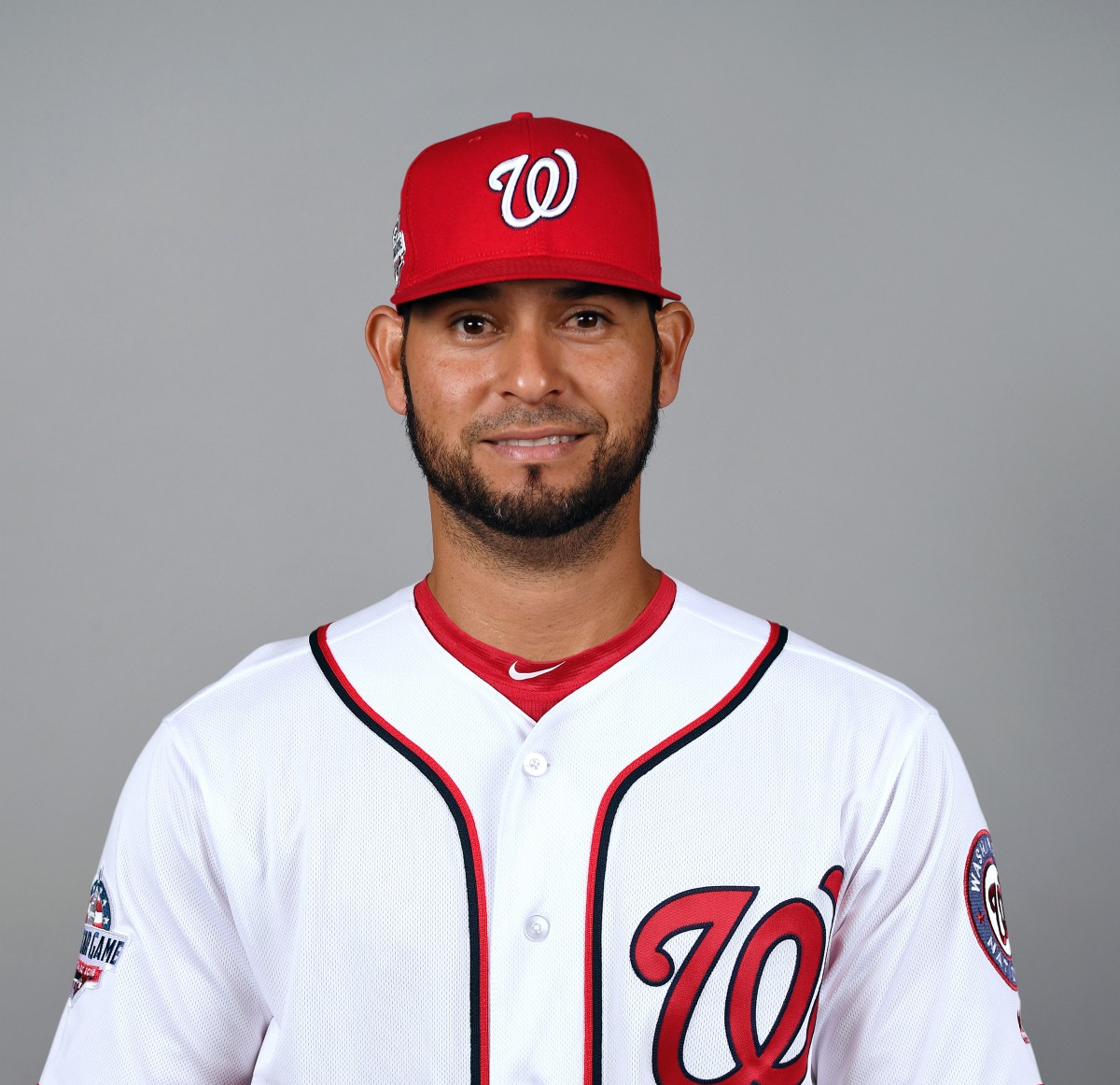
Sanchez, 35 in February, will reportedly earn a $6MM salary in 2019, $7MM in 2020 and will have the additional $6MM of his $19MM guarantee deferred to 2021. That leaves the Nats with more financial breathing room as they look to continue adding to the 2019 roster, although it doesn’t lower the luxury tax hit that comes with Sanchez’s contract. The 2021 club option is valued at $12MM, and Sanchez can reportedly earn another $4MM of incentives.
Sanchez steps into the rotation spot that was recently vacated when Tanner Roark was traded to the Reds. While Sanchez, it seems, won’t come to the Nats at a significantly lower rate than the $9.8MM at which Roark was projected (via MLBTR contributor Matt Swartz). However, unlike Roark, who exhibited numerous red flags in 2018 (e.g. diminished velocity, strikeout, home-run and ground-ball rates), Sanchez enjoyed a legitimate renaissance with the Braves in 2018 and looks in many regards to be trending back up.
After joining the Braves on a minor league contract in Spring Training, the veteran Sanchez not only worked his way onto the roster but emerged as one of Atlanta’s most reliable arms. In 136 2/3 innings, the former Marlins/Tigers hurler worked to a terrific 2.83 ERA with 8.9 K/9, 2.8 BB/9, 0.99 HR/9 and a 45 percent ground-ball rate.
While Sanchez undoubtedly has his skeptics given the dreadful manner in which his time with the Tigers ended, a look at his secondary metrics and pitch selection gives every reason to continue to be optimistic in 2019. Sanchez dramatically ramped up the usage of his cutter this past season, leading to increases in both his swinging-strike and opponents’ chase rates. Where Sanchez truly shined, however, was not necessarily in terms of missing bats (though his strikeout rate was strong) but rather in terms of generating weak contact. Per Statcast data, no qualified starting pitcher in baseball had a lower average exit velocity on balls in play than Sanchez, and no pitcher in the game allowed less hard contact than the minuscule 25.8 percent clip that Sanchez yielded.
Clearly, the Nationals are buying the new and improved version of Sanchez. While there’s likely some regression in store — it’s not reasonable to expect him to replicate a league-best ability to minimize hard contact, and Sanchez did benefit from both a 79 percent strand rate and .255 average on balls in play — at two years and a total of $19MM, the Nats aren’t exactly paying him to be the dominant buzzsaw that he was in Atlanta this past season. If Sanchez can even function as a competent mid-rotation piece, that’d be a more than acceptable price to pay. And, if he outperforms Roark by any appreciable sum, then the decision to jettison him in favor of Sanchez will look all the more shrewd, given the comparable salary figures.
[Related: Updated Washington Nationals depth chart and Nationals payroll outlook]
Sanchez will slot into the Nationals’ rotation behind a stacked top three that features three-time Cy Young winner/future Hall of Famer Max Scherzer, former No. 1 overall pick Stephen Strasburg and 2018 breakout star Patrick Corbin — another offseason addition for general manager Mike Rizzo and his staff. That quartet, paired with one of Joe Ross, Erick Fedde or perhaps another yet-to-be-acquired starting pitcher, should comprise one of the game’s most formidable starting staffs as the Nationals look to reemerge as contenders in an increasingly difficult division on the heels of a down year for the organization.
From a 2019 payroll vantage point, this deal won’t likely change much from the way things looked a week ago, prior to the trade of Roark, and the same is largely true with regard to the Nationals’ luxury tax ledger. As such, the addition of Sanchez shouldn’t have any impact on the Nationals’ ability to make another run at retaining Bryce Harper, though recent comments from managing principal owner Mark Lerner suggest that Harper’s time with the Nats may indeed be up.
If that’s indeed the case, the organization will have essentially spread out much of the money that could’ve gone to Harper across a number of offseason additions, having already signed Corbin, Sanchez, Kurt Suzuki and Trevor Rosenthal in addition to trading for Kyle Barraclough and Yan Gomes. With Sanchez now in the fold, the Nationals project at just north of $200MM in terms of both actual 2019 payroll and luxury tax payroll. That leaves about $6MM to work with to remain under the luxury barrier, though they exceeded that threshold last season, so there’s clearly no ownership mandate not to cross that point.
Sanchez’s deal may seem steep to some, given the lasting impression from his final years in Detroit. However, the general parameters of this contract align with the two years and $22MM forecast on MLBTR’s Top 50 free agent rankings/contract predictions. For those who played along in MLBTR’s Free Agent Prediction Contest, just 1.88 percent of participants correctly pegged Sanchez as a future National.
Anthony Fenech of the Detroit Free Press broke the news that Sanchez was signing with the Nats (Twitter links). Fancred’s Jon Heyman added information on the third-year option (Twitter links), and Jesse Dougherty of the Washington Post tweeted the yearly breakdown of the contract.
Scherzer-Strasburg-Corbin-Sanchez-Ross? That’s pretty freaking solid
And expensive
So. Coming out of your check?
*Nats raise ticket prices*
Take off Murphy, Harper, Roark, and González and you’re close to even on money.
No but for a team that wants to stay under the tax and already has 3 starters making 20 million its a lot for another guy that just came off 1 good season.
Bingo Kensley. One rebound year does not make you forget his rather “forgettable” recent past. Not saying he won’t again be good but who else was offering him $19m guaranteed plus incentives for two years (forgetting year three)? I would have thought one year at $6m max or two for $12m. plus incentives was the best he could expect to get.
Some team must have been interested or his price would not have been that high.
I would trust that their must have been other teams with competitive offers.
Or that’s just the going rate? Cahill just signed 1 year $9m, has been even more inconsistent, and had a worse year last year.
Technically, yes, should they decide to support the team.
They will continue to raise them to whatever the market will bear.
Not even close.
Nats get 2 years of Anibal Sanchez at about same price Scott Boras (aka Bore-áss) wants for half a year of #BryceHarper. 4 WAR from 2 years of Sanchez will surely top whatever Harper would deliver in 3, or even 4, months.
You can’t compare the impact of a 3 WAR position player who is on the field for 145 games to a pitcher that can only influence the game he starts 25-33 games, and maybe the wear and tear on the bullpen if he’s an innings eater.
They got Sanchez for less than Roark’s projected arbitration salary.
Astute
Not this year. They have considerable salary deferred, which means a collective cost of just over 60 million in 2019 for their rotation.
but the rotation has been “solid” for like 5 years now. its really Cy young, injury, ?,?,?
Nats can sign Kuechel too … might as well and push Ross, Fedde, McGowin, Henderson Alvarez to AAA Fresno (Fresno!!!??? Devin Nunes yikes!) for needed depth. Sign Jed Lowrie too …
Because Harper is playing right field in Chavez Ravine for the Dodgers. Pretty clear after today’s trade.
Seriously??
The Nationals are gonna suck this year.
That’s a really good rotation if Sanchez can look anything like he did last season.
He had as good of a season because he was pitching against the Nats. 2019 will not be a contract year for him.
just yesterday I posted that I wished the Braves would offer him a contract to keep him away from the Nats… but for 19M or more for 2 years, they can have him!
And Nats have one of the best catching receivers in the game. Imagine the potential of the Nats staff after having to pitch to one of the worst rated defensive catchers for the last 2 years
Nats also have the braves old catcher…..
glad Braves let him walk..$19mill …good lord
If he duplicates 2018 for the next two years it’s a good deal.
That’s a big IF. Yes he made a lot of improvements, but I think anything over $10 million for 2 years is a big risk.
Nats now have one of the best catchers in the game. Watch the whole staff have better numbers than last year
Sanchez can thank the Angels for overpaying Harvey and Cahill. Sanchez arguably outperformed both guys.
Yeah too much money. I expect he won’t do as well the next couple years as he did in 2018.
They’d rather pay $23-mil to an injury prone former MVP playing a position the team didn’t need to address.
I suck at this FA contest
Join the crowd.
Seems a bit steep ?
Maybe, but they won’t be spending $30mil a year on Harper.
Sanchez won’t repeat last year. His FIP is demanding regression. Still, even if he had pitched toward his peripherals, he would be a great choice for a #3. As it looks the Nationals only need him to he a #4 so if you are a Nationals fan you have to like the signing.
The sabermetric stats back him up repeating:
“Anibal Sanchez, reportedly signing with the @Nationals, had the lowest 2018 hard-hit rate, 25.8% (min 200 batted balls) of any currently healthy pitcher. (Sorry, Brent Suter.)” (mobile.twitter.com/mike_petriello/status/107588180…)
“Most Ks on pitches < 70 mph, 2018
37 — Zack Greinke
21 — James Shields
15 — Anibal Sanchez” (mobile.twitter.com/AndrewSimonMLB/status/107588468…)
I think he re-invented himself, despite atrocious 2017
His FIP is 3.62. His xFIP is 3.81. Metrics do not. Those are pretty good numbers but he isn’t going to put up an ERA bellow 3 next season.
Whoever you are quoting is incorrect. He would have been 7th in hard hit %.
Hes always kept that rate low, though, and it sure didnt help him from 2015-17
Thank god the Giants didn’t go for this. Glad to see Farhan is avoiding the 2015-2017 FO style of overpaying for players on the decline.
He’s getting the same AAV basically as Harvey and Cahill, without a longer than necessary commitment. What are the Angels doing? Much rather have Sanchez than either of those two.
I’m looking forward to their panic moves next offseason as they try desperately to make the ALCS in Trout’s last season.
It’s looking like that’s what is going to happen. Panic mode will definitely be on if they stay in the low 80’s win range…. might even be another 2012-13 splurge that got them into this mess to begin with
Their complete lack of urgency at winning while they have Trout is shocking to me. Maybe they’ll re-sign him, but they’re really not doing anything to take advantage of having the best player in the game.
Man… Wish he was a Brewer. Really good pitcher, really re-invented himself this year
Was hoping the Brewers would nab him as well. It seems that they’re more actively exploring trades than free agent SPs.
I saw Jeff Suppan all over again. Now even more at the price. The brewers need a front of the rotation guy. The bullpen needs a guy that can blow through a good 8 innings on occasion.
I think Sanchez landed in a perfect situation with Washington.
Sanchez really impressed me last season. All time low H9 at 7.0 for his career. That is pretty darn good. And he continued to strike guys out decently with a 8.9 K9 while limiting walks at 2.8 BB9.
He is back to his old form again. What happened to him from ‘15-‘17?
Like CC he had to learn how to pitch with diminished stuff
Lotta money for a meatballer.
One of the best in the league at limiting hard contact…
I wonder if Jon Lester would eat pizza with Sanchez.
I wonder if Lester will ever be able to throw to first.
Yeah wow that’s really hurt him so far.
I heard Lester is getting help from Chuck Knoblauch.
Wow, knoblauch really can’t live those throwing woes down can he?
Mackey Sasser is behind the plate during these lessons.
Is Rick Ankiel waiting to pitch in relief?
That is definitely shaping up to be the scariest rotation in all of baseball if injuries don’t have a say. If Washington can add an impact offensive player, they may finally be able to get over their playoff hump.
They spent HOW MUCH on Anibal Sanchez? Jeez they better hope last year wasn’t an outlier.
but but but weak contact rate makes all his bad years go away
I’m all for using the advanced stats and all but he had three atrocious years before this past one. I can’t believe he got this deal.
Developed a top notch cutter and used it a lot. You can’t really got by those 3 bad years unless he falls off a cliff again.
It’s literally the going rate for starting pitchers. Cahill and Harvey just got nearly the same deal and they’ve been less consistent and had much worse years last year. Sanchez is a better bet to relatively repeat last year than Roark would’ve been to get nearly anywhere close to what Sanchez did last year and they’re paying less for Sanchez than what Roark was projected to make
Animal got paid
Well let’s not too excited, it’s not exactly Matt Harvey or Trevor Cahill.
That nationals Rotation is looking awfully good even if Sanchez doesn’t repeat last season. At worst he can be in the pen for the post season if the nats make it (which they probably will at this point
Lol they’ll finish 3rd behind Philadelphia and Atlanta. They won’t even sniff the wildcard
put money on that. i dare you
The same Phillies that absolutely ranked in September ? I’m sorry but right now the nats overall look better than them at this point
*tanked
Atlanta has got some holes to plug & if they do it the way they usually do, they will be the ones finishing third….
they finish 2nd behind ATL
Must have come with a $1 million buyout for the option. #mathrulez
Cant say that I have any faith he will repeat last year’s results. Not a move I’d be happy about if I were a Nats fan…
Good deal for both sides. I’m sorry Anibal isn’t going to be a Brave. I wish him well, except when he pitches against Atlanta.
Sanchez was a Free Agent.
Yes, he was. What’s your point?
How is it “a good deal for both sides”? It wasn’t a trade.
Anibal and the Nationals.
They’re definitely raising the white flag on Harper now but I wouldn’t be surprised if they signed a guy like Pollack or bring back Daniel Murphy.
There went your Murphy theory.
Murphy wasn’t coming back anyway.
not the move i was hoping for after the Roark trade. Last year better not be a fluke for that guarantee.
Still need to solidify the pen.
Britton or miller
Some under the radar signing
Trade for yates and stammem or an under the Radar reliever.
Nats could push for contention if Robles lives up to the hype Eaton stays healthy and they get a pen.
Bad signing, Sanchez is trash and will get hurt.
I’m glad the nationals aren’t doing a lot to remain a good team. This is such a safe move but not one that’s gonna take them to the next lvl. Good pitcher though
If he had sighed with anyone else I would wish him well…..Oh hell, I can’t help it, I still wish him well! Just not in Atlanta. No
Nats will sign Harper for 30M a year for 10 years with 20M deferred each year until stardate 2021.5……..Jean Luc Picard will handle the financials……
Is it ever a good idea to invest this much money in starting pitching? I just don’t see how all of these moves make sense in a year or two. You have to find a cheap starter or two somewhere but whatever.
No just look at the cubs. Throwing money at Yu Darvish and Tyler Chatwood. Hopefully they have bounce back years, but Its not looking too bright. Even John Lackey wasn’t a huge success. Granite we did when a world series but his 2017 Season was awful. The only SP free agent that has worked out for us was Jon Lester.
So will it be Ross or Fedde, or a combination of them, at #5?
The Nationals are spending like they don’t expect Harper to return.
And this Nats fan applauds it.
Once Anibal got healthy, he was money. I always felt confident the Braves would win when he was on the mound. He definitely passed the eye test.
Health is a huge factor for any pitcher and Sanchez has learned to pitch over the years. My only real concern going into a mid 30s age season for any pitcher. is his durability
i saw this coming about a week ago once they signed corbin
He didn’t get obese in ’15-’17 but he didn’t look the same. Showed some added padding after signing a big Detroit contract. It became horrifying to watch him pitch, and Detroit ran out the string on his very bad contract.
Kudos to him for reinventing. He sure appeared finished. But, try to find a shell-shocked Tiger fan who trusts this success to repeat. That plus, what the heck? Where was this?
Hiding out in the NL East helps.
Roto is shaping up, with Scherzer, Strasburg, Corbin, Sanchez, Ross. Still not much depth behind them, if one gets injured. Fedde hasn’t proven he’s ready yet. Hopefully, he’s continued to improve over the winter.
I’m guessing Rizzo will be looking for pre-Spring Training bargains in late Jan and early Feb. Find this year’s version of Hellickson.
But, I guess all this will be for nothing, since the Mets are going to win the division (according to their GM).
How ya doin’ Papa
I like what I see so far. I am really curious what the STI signings are going to be like. Looks like Danny Boy 2 cashed in with the Rox for a two year with option deal. Hope he’s finally healthy now.
Happy Solstice Papa
STI for SP:
Hellickson?
Foster?
Tillman?
Colon?
Ha, who knows. As long as it’s not EJax again, anybody else.
Happy Holidays!!
Line up taking shape: Eaton, Turner, Soto, Rendon, Zimmerman, Kendrick, Gomes, Robles?
Bench: Adams, Difo, Taylor, Suzuki, ?
The Braves get top-tier production for pennies on the dollar, then let him walk to a divisional rival that pays a premium and will get minimal production. Brilliant!
Looking at it from the Nationals perspective, they got a better pitcher in Sanchez for less money than Roark would have received via arbitration.
Meanwhile, the Rangers gave Lance Lynn (4.77 ERA in ‘18) three years for $30M.
By today’s standards, that contract is not paying a premium. I’m a little surprised the Braves didn’t resign him, especially for that price. I wonder if they saw something they didn’t like.
Probably that he’s had one good season in the last 4 years.
I don’t like this staff. Sure the top three are strong but, Stratsburg always finds himself injured. If that so happens then the Nats will be lift very thin. Honestly, the Nats need to trade Stratsburg to the Yankees for G. Torres plus that solves the problem at 2nd base. Then trade Kieboom as part of a package for Kluber or Bauer.
Nats should make a decision on Rendon too. If they can’t get him locked up then you trade him to the highest bidder. If they know they are moving him then get the 3rd baseman back from the Yankees too.
Rendon would have great value has he is one of the top 3rd basemen in the game.
The Nats need to make the decision to either lock up Rendon now or trade him. They can’t risk waiting out the year.
You could probably say the same thing about 90% of all MLB pitching staffs: If one pitcher goes down, then the whole house of cards tumbles. IPs for Stras are duly noted, however, and he has not exceeded 175 IP since 2014.
Torres would make for an interesting addition; not sure why the Yanks would send him for Stras and his contract instead of dealing with the Indians separately.
I had hoped to see news on Rendon in this offseason but we have a ways to go.
Nats should find a taker for Zimmerman too. Get his $18 million of the books would be a great move too.
NTC