
Quick Hits: Britton, Harper, Ramos, Bregman, McCullers, Rasmus, Abad
Orioles closer Zach Britton has turned in a season to remember, and it’s not all that surprising given his recent excellence. Still, it wasn’t long ago that such a showing seemed highly improbable, as Danny Knobler of Bleacher Report writes. Britton was no lock to make the O’s roster out of camp in 2014, but the refinement of his unbelievable power sinker that year has turned the southpaw into arguably the game’s most dominant reliever. Knobler takes an interesting look at Britton’s transformation as a pitcher, as well as his earlier path toward the majors.
Here are a few more stray notes from around the game:
- Nationals star Bryce Harper suffered a thumb injury that caused some concern, but manager Dusty Baker said tonight that X-rays were negative, as Dan Kolko of MASNsports.com reports (Twitter links). Washington is suddenly facing a variety of significant health concerns as it readies for the NLDS, though at least in Harper’s case the prognosis seems promising. Catcher Wilson Ramos is a new concern after leaving tonight’s game following a play at the plate. He’s due for an MRI tomorrow, the results of which could have huge implications for both the team and his coming run through free agency.
- Burgeoning Astros infielder Alex Bregman could be back sooner than expected after a “leap forward” in his recovery from a hamstring strain, MLB.com’s Brian McTaggart reports. Indeed, he could appear as soon as this week. While the timetable isn’t quite as promising for righty Lance McCullers Jr., he might be ready to go for the postseason if Houston can sneak in. Meanwhile, there’s said to be little chance that outfielder Colby Rasmus will return to uniform before qualifying for free agency.
- It’s possible that Red Sox deadline addition Fernando Abad won’t even crack the team’s postseason roster, as Evan Drellich of the Boston Herald reports. The veteran southpaw has largely been quite good against opposing lefties since coming to Boston, but he has still coughed nine earned runs with a dozen strikeouts and eight walks in his 12 2/3 innings of work. Though nothing has been decided, manager John Farrell did acknowledge that the club is assessing both Abad and rookie lefty Robby Scott for the postseason pen. Scott, 27, has just six MLB appearances on his ledger, though he has yet to allow a run.
Wilson Ramos Departs Game With Leg Injury
The Nationals are holding their collective breath after seeing Wilson Ramos land awkwardly on a play at the plate. The big catcher was helped off of the field with an apparent right leg injury.
It’s far too soon to know whether the injury is a serious one, but it comes at an awful time for player and team. Washington is preparing for a postseason run in early October, while Ramos is not only playing to help the team but also to set up his free agent market after the year.
Washington is not particularly well-equipped to deal with any missed time from Ramos, who has carried a big load this year. Switch-hitting reserve Jose Lobaton has taken just 104 plate appearances, with a decent but unexciting .220/.317/.363 slash. Intriguing prospect Pedro Severino has shown well in his 11 game stint, but his Triple-A numbers don’t suggest that he’s ready for a regular role.
Meanwhile, the 29-year-old Ramos has already logged 130 games for the Nats entering tonight’s action. He has been nothing short of outstanding, finally realizing his talent fully. In 520 plate appearances, Ramos owns a .307/.354/.497 slash with 22 long balls.
That output has Ramos primed to hit the open market with a chance to take his pick from a wide variety of suitors. MLBTR’s Tim Dierkes recently ranked him fifth in earning power among pending free agents, with Ramos standing out as the top catcher available.
Rubby De La Rosa To Undergo Stem Cell Treatment In Bid To Avoid Tommy John
Diamondbacks righty Rubby De La Rosa will receive a stem cell injection tomorrow, Nick Piecoro of the Arizona Republic reports on Twitter. The hope is that the treatment will allow him to stave off what would be a second Tommy John procedure.
De La Rosa’s rehab has been something of a rollercoaster: he was able to return briefly, then seemed destined to be shut down, and then seemed like he might be headed back to the major league mound by the end of the season. Now, the situation seems a fair bit more dire than had previously been suggested.
Stem cell and other alternatives to surgery have increasingly been utilized by pitchers hoping to reinforce, rather than replace, their ulnar collateral ligaments. The risk of a TJ procedure failing to produce the desired results is heightened significantly in the case of a second trip under the knife, so the stakes are high in De La Rosa’s case.
Given the timing, a TJ procedure in the near-term would clearly keep De La Rosa out for all of 2017. Second-time UCL replacement recipients tend to take longer to make it all the way back, though he’d at least be reasonably likely to make it back for ’18.
De La Rosa is due a raise — though it won’t be a large one — on his $2.35MM arbitration salary. He’s set for free agency before the start of the 2019 campaign, so the next two campaigns are the final ones of team control for Arizona.
All said, then, there’s a lot riding on De La Rosa’s ability to return. Over his 50 2/3 innings this year, he worked to a useful 4.26 ERA and also showed quite a bit of promise with a rising 9.6 K/9. That makes De La Rosa a critical part of the D-Backs’ rotation picture.
Marlins To Retire #16 In Honor Of Jose Fernandez
As baseball mourns the untimely loss of one of its brightest lights, 24-year-old pitcher Jose Fernandez, the Marlins will retire the number 16 in his honor, owner Jeffrey Loria told reporters including Craig Davis of the Sun-Sentinel (Twitter link).
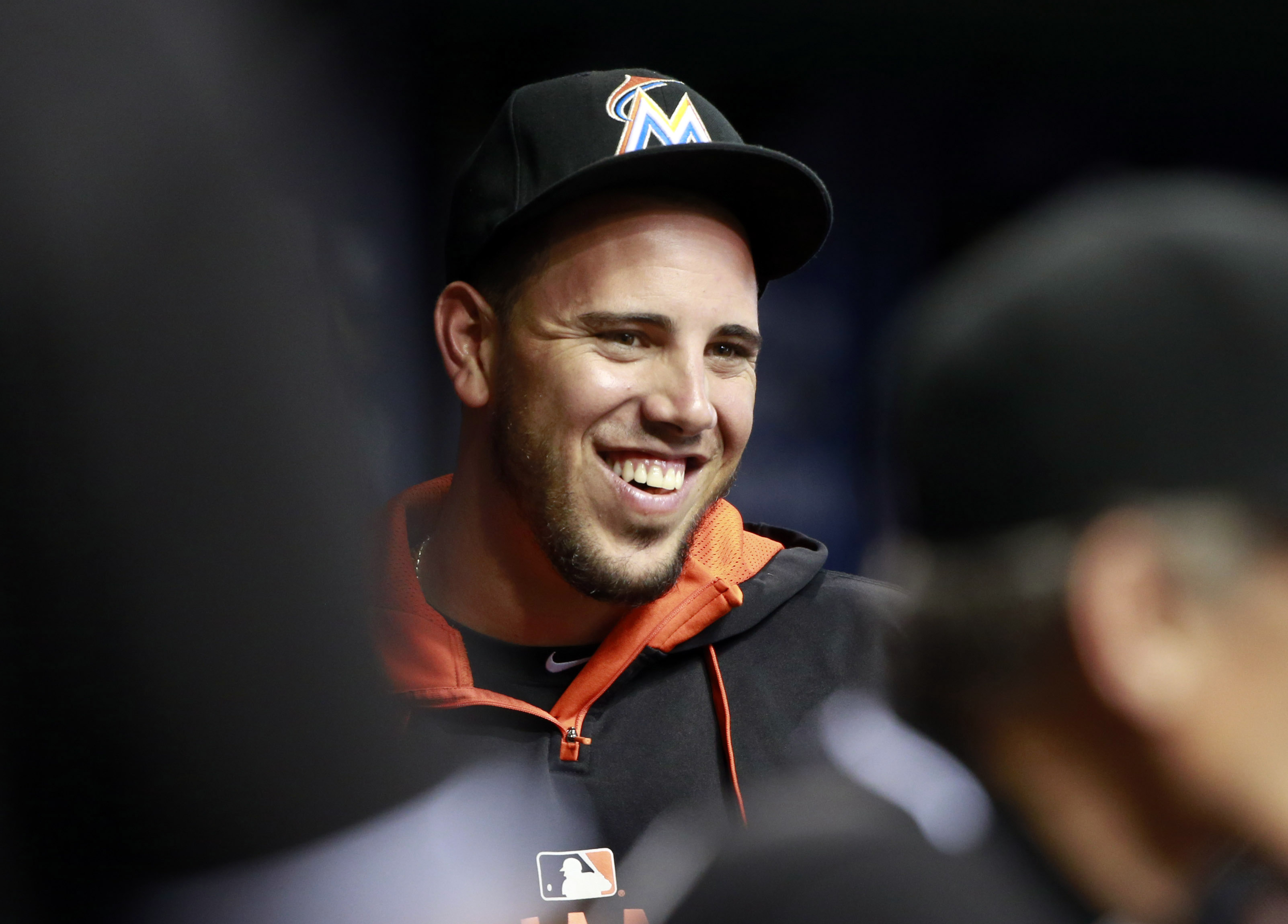
That’s certainly just one of the many tributes that will continue to be unveiled over the coming days and long into the future. The Marlins cancelled yesterday’s scheduled game, and all the team’s players will wear Fernandez’s #16 in tonight’s ballgame at Marlins Park.
Most anyone with even a passing interest in baseball is familiar with Fernandez’s pitching greatness, personal vivacity, and remarkable path to the United States and Major League Baseball. It remains difficult to accept that he is gone.
In trying to come to terms with Fernandez’s death, we would do well to remember how he lived. His joy seemed to outweigh his talent, and that is truly saying something. Many wise and good words have already been written on this somber matter, but I would recommend in particular this touching piece from Dave Cameron of Fangraphs, which well explains why Fernandez’s tragic passing represents such a singular loss.
RIP, Jose.
Photo courtesy of USA Today Sports Images.
Zack Greinke’s Season Likely Over
SATURDAY: Manager Chip Hale says he does not believe Greinke will pitch again this season, Nick Piecoro of the Arizona Republic tweets.
FRIDAY 10:26pm: The MRI cleared Greinke of structural damage, as Piecoro tweets, though he’ll likely miss his next scheduled start. That’s obviously good news for Arizona, though it would certainly be preferable if Greinke is able to return for at least one more outing before shutting things down for the offseason.
7:12pm: The Diamondbacks will send righty Zack Greinke in for an MRI on his right shoulder, Nick Piecoro of the Arizona Republic reports. He isn’t with the team at present and it remains to be seen whether he’ll be able to make his final two starts of the year.
Greinke did not show any indications of a problem during his last outing — he was effective, though it was his third-straight with at least four walks — but reported shoulder inflammation thereafter. He did report improvement as of today, per manager Chip Hale, but the team is obviously concerned enough to order up imaging.
Needless to say, this isn’t the way Arizona hoped that Greinke’s already-rough season would wrap up. The soon-to-be 33-year-old sports an uncharacteristic 4.37 ERA with 7.6 K/9 and 2.3 BB/9 over his 158 2/3 innings on the year. He missed time previously with an oblique strain.
While most of Greinke’s peripherals fell within range of his career norms, he was particularly susceptible to the long ball this year, allowing 1.3 dingers per nine. His average fastball largely held steady, dropping about half a mile an hour from his prior three campaigns, but both his four-seam and two-seam offerings were markedly less effective than in the recent past (by measure of Pitch F/X pitch values).
Greinke still profiles as a highly useful starter — he’d surely secure the largest contract in this winter’s weak free agent class were he again eligible — but the remainder of his massive contract looks to be under water at this point in time. Greinke is owed $157.5MM over the next five years, a monumental sum for a hurler his age, which has led some to suggest that the D-Backs ought to seek a trade partner. While the club’s current front office has stated that it isn’t inclined to take that path, organizational change could shift the calculus. Any uncertainty in Greinke’s shoulder, though, would largely scuttle any such ideas — at least until he can demonstrate that he is healthy.
Three Needs: Arizona Diamondbacks
MLBTR will provide a broader view of each club’s winter plans when our annual Offseason Outlook series kicks off at the end of the regular season. Until then, the Diamondbacks are the latest team to be featured in our quick look at this season’s non-contenders. We’ve already covered the Angels, Brewers, Twins, and Rays.
Arizona’s struggles this year are well documented, and need not be canvassed yet again here. Not much went right, leaving a host of areas to address, but these three are most pressing:
1. Sort out the front office.
Turnover in the baseball operations department is nothing new for the D-Backs, but this winter could again see change up top. Tony La Russa was brought in to provide overarching guidance in the sui generis position of chief baseball officer, and he oversaw the hiring of Dave Stewart as general manager and De Jon Watson as senior VP of baseball ops. With Watson already having been shown the door, the team is still holding out on deciding the fates of La Russa and Stewart, neither of whom is under contract past this season.
The longer Arizona waits, the less time a new hire will have to prepare for an important offseason to come. Club CEO Derrick Hall has suggested that a decision will come “relatively quickly,” and that certainly seems to be a wise approach — though an earlier call would arguably have been preferable. After all, roster decisions on current players and potential targets will begin in earnest about one month from now.
Whether the team should change horses right now is up for debate, though certainly there’s a growing body of evidence to suggest that’s in order. Regardless, two things seem clear: first, that some measure of certainty in personnel and approach is needed as soon as possible; and second, that some changes in the decisionmaking process ought to be made that allow the organization to better understand and navigate the ever-changing landscape of baseball transactions and player analysis. While the traditional approach has resulted in the identification of some nice assets — chiefly, Robbie Ray, Jean Segura & Welington Castillo — the D-Backs seem out of step in many instances in their market valuations.
2. Make the best out of the Zack Greinke contract.
That seeming market disconnect was as apparent in the handling of Zack Greinke as it was in the acquisition of Shelby Miller — and that’s before accounting for the struggles of both pitchers (particularly the latter) in 2016. Adding rotation talent and betting on a fairly talented core made plenty of sense, but the way that Arizona went about doing so was questionable at best.
The Greinke decision represented an unbelievable risk on a pitcher of his age for an organization that has carried about $100MM in overall payroll, about one third of which is gobbled up by Greinke’s annual obligation. His middling season wasn’t exactly the worst-case scenario — a debilitating injury — but in concert with the fall-off elsewhere, it changes the calculus for the organization moving forward.
It would be silly for the Snakes to dump Greinke for the highest offer while his value is down and he’s still on the relatively youthful side of his contract. Unlike Miller, the veteran hurler was mostly himself — with some expected regression, added home runs, and perhaps a bit of poor fortune and park effects combining for a dud of a season. It’s reasonable to think that he could still boost his value and hold significant appeal at the 2017 trade deadline, if not sooner.
Still, the organization’s apparent approach on Greinke — so far as has been reported — seems a bit concerning. A report in late July suggested that Arizona was not only demanding “a great return of players” in trade talks, but wouldn’t consider eating any of the salary. And the most recent word is that the La Russa/Stewart front office isn’t interested in listening on Greinke over the winter.
To reiterate, I’m not advocating here for any specific course of action. And there could certainly be some public posturing at play. But the fact is, Greinke the player isn’t worth the contract ($157.5MM, some of it deferred, through 2021) — which was arrived at in a highly competitive bidding situation after the righty had wrapped up a career-best season. Even accepting that he remains a top-quality starter, it’s not reasonable to value him as a player asset the way that the reports have suggested.
The bottom line: whether or not the team ends up trading Greinke, it needs to approach the matter with a realistic assessment in order to make appropriate decisions. After hopefully getting him righted, I’d argue, the team needs to begin thinking about how it can get out from under what could end up being a disastrous financial commitment.
3. Work around the edges.
There’s just under $60MM on the D-Backs’ books for 2017, but that will balloon with arbitration raises for players like Miller, Castillo, Segura, Patrick Corbin, Rubby De La Rosa, and Chris Owings. Assuming that ownership doesn’t authorize a big move up over the approximately $100MM current roster spend, there probably won’t be much room to add major pieces.
Really, though, the team isn’t desperately in need of one or two big pieces — as it thought it was last winter. Just finding solid players in a few areas would go quite a long way. Adding even 1.5 to 2 WAR types of assets is harder than it sounds, but those kinds of incremental gains ought to be the focus.
Thus far in 2016 for the Diamondbacks, only four positions — first base, second base, third base, and catcher — have featured average or better production. Just two members of the rotation cracked 1.5 fWAR, and the team already has or will soon part with a few of its better relievers. In many ways, it has turned out to be a top-heavy roster.
The good news is that the team can hope for healthier and/or more productive campaigns from players such as A.J. Pollock, David Peralta, Owings, De La Rosa, and Paul Goldschmidt — as well as Greinke and Miller — while banking on continued strides from a few young hurlers, including Archie Bradley, who actually turned in a reasonably promising campaign despite an unsightly 5.02 ERA. But injuries and performance variations are inevitable, and Arizona must do a better job of having options on hand both to share time when appropriate and to fill in when necessary.
Despite taking 200 or more plate appearances in 2016, Owings, Yasmany Tomas (who ought to be in the A.L.), Nick Ahmed, Michael Bourn, Rickie Weeks, and Phil Gosselin were all approximately replacement-level performers. In the rotation, hurlers such as Miller, Patrick Corban, Zack Godley, and Braden Shipley were marginal in nine or more starts. (I won’t endeavor to name all of the club’s middling relief performances.)
Again, Arizona will surely hope that some of those names will turn up on the stat sheet as positives in the season to come. But a few well-placed trades and signings, as well as well-conceived decisions on less-established players, could transform the supporting cast into one capable of supporting a winner (assuming, at least, that the core can restore its former luster).
While the Snakes may not have much money to brandish, they do have the ability to offer roster space and opportunities for playing time, which are important assets in their own right when properly deployed. That’s especially true in the outfield, which was easily the worst unit in the majors this year with Pollock gone, Peralta hurt, and Ender Inciarte playing in Atlanta. Such a piecemeal strategy may not be terribly likely to result in a full-blown turnaround, but that’s probably the only way that the organization can hope to squeeze through its self-appointed window of contention.
NL Notes: Giants’ Pen, Garcia, Murphy, McCarthy, Rodriguez
As the Giants have struggled to lock up the ninth inning down the stretch, GM Bobby Evans discusses his decision not to push harder for a top-tier closer at this year’s deadline, as Henry Schulman of the San Francisco Chronicle reports. Evans told Jon Heyman of Fan Rag that the struggles have made him feel like a “knucklehead,” though he notes to Schulman that he was saying that in jest. The San Francisco general manager went on to explain a bit more about the team’s efforts to acquire Mark Melancon, who ended up with the Nationals, from the Pirates. “It was very comparable to what they ultimately got,” he said of the Giants’ offer. “You think about it. ‘Was there something else I could have done? Was there another name I could have pushed across the table?’ They ended up getting one guy who throws 100 and another who throws 98.” But as Evans went on to discuss, it’s ultimately a matter of hindsight. “Those are just reflections,” he said. “… All I can do is think about how I handled it and how far I went.”
- The Cardinals are still tinkering with their pitching mix, and will now re-insert Jaime Garcia into the rotation in the place of Luke Weaver, as Jenifer Langosch of MLB.com reports. Garcia has shown well in his brief move to the pen, while Weaver has struggled in his most recent outings after an excellent start to his major league career.
- Nationals second baseman Daniel Murphy has been diagnosed with a strained glute, as MLB.com’s Jamal Collier reports on Twitter. Murphy last played a full game on September 17th and will rest for a few more contests before returning to action. Obviously, the Nats will be sure to rest him well with the NL East in hand, as Murphy figures to be a key piece of the team’s postseason hopes after posting a remarkable .347/.391/.596 batting line thus far.
- Brandon McCarthy will become the latest Dodgers pitcher to return to action on Saturday, when MLB.com’s Ken Gurnick says the veteran righty will be activated (Twitter link). The 33-year-old has produced strong results despite allowing over six walks per nine in his eight starts on the year, with a 9.9 K/9 mark and just twenty hits allowed helping to offset the free passes. It remains to be seen what role he’ll play in the postseason for Los Angeles after working back from a hip injury.
- Phillies reliever Joely Rodriguez looks to be a keeper, as Matt Gelb of the Philadelphia Inquirer writes. Acquired in the Antonio Bastardo trade, the 24-year-old southpaw has developed upper-nineties heat in a relief capacity. He has allowed just a single hit in his first 5 1/3 major league innings, with four strikeouts and two walks also on his ledger.
Poll: Should The Mets Issue Neil Walker A Qualifying Offer?
Certainly, the Mets have more pressing matters at the moment than deciding whether to issue a $16.7MM qualifying offer to second baseman Neil Walker. Keeping pace in the Wild Card race takes priority over keeping Walker in town for 2017.
That being said, the team doesn’t have much time until it’ll make a tough call on Walker, who’ll qualify for free agency just after turning 31. The QO was all but a given before Walker’s recent back surgery — he provided New York with 458 plate appearances of .282/.347/.476 production and 23 home runs before going down — but that procedure throws some uncertainty into the matter.
Let’s look at the scary side first. Walker’s back surgery addressed a herniated disk that was causing numbness in his toes and carried a risk of worsening problems. Any back issues are obviously concerning for a big league player of any kind, especially when teams haven’t had a chance to see how the player looks upon his return.
On the other hand, Walker says he’s already progressing nicely and is pain-free for the first time in quite a while. It’ll be three months until he can participate in baseball activities, but that’s plenty of time to allow him to prepare for a full Spring Training. Indeed, he seemingly suggests that it should be viewed as a net positive, as he’ll no longer be saddled by the pain. Plus, it’s hard to ignore Walker’s straight seasons of above-average offensive production from an up-the-middle position — one that he fielded at an average (per DRS) to above-average (per UZR) level in 2016 despite posting below-average metrics in prior years.
Certainly, the Mets are privy to much more detailed information about Walker’s health than we are. But the question seems to boil down to one of financial risk versus the evident upside, which could come in one of two ways. If Walker declines the QO, then the Mets would stand to recoup draft compensation if he signs elsewhere. And if he accepts, but returns to health, he could well represent an appealing investment — even at that high rate — on just a single season commitment. That’s all the more true given that New York would arguably we well-served to retain an additional veteran infielder given the ongoing back and neck-related questions surrounding David Wright and the still-undetermined tender status of first baseman Lucas Duda (who just returned in part-time duty from his own back troubles).
While Sandy Alderson and co. bat things around, let’s see where the MLBTR readership stands (link for app users):
Should The Mets Issue Neil Walker A Qualifying Offer?
-
Yes 70% (3,308)
-
No 30% (1,423)
Total votes: 4,731
Pirates Aggressive In Extension Talks With Ivan Nova
The Pirates are “aggressively trying” to come to agreement with righty Ivan Nova on an extension that would keep him out of free agency, according to Travis Sawchik of the Pittsburgh Tribune-Review (Twitter links). We learned recently that Pittsburgh had opened dialogue with the 29-year-old.
Things do not seem to be progressing quite as smoothly as the Bucs might have hoped, though. Agent Greg Genske confirms that there have been “multiple offers” and says that “there is mutual interest,” but also made clear that “no agreement is imminent.”
Though Genske did not address his client’s asking price, prior reports put it at five years and $70MM. It remains hard to imagine the Pirates going near that amount, but the fact that discussions remain open certainly suggests that they put a high value on their most recent reclamation project. The report suggests that the organization is mindful of a weak upcoming market for pitching.
Nova has undeniably been spectacular since coming to Pittsburgh at the trade deadline — even as the organization sold some veteran pieces. His 2.93 ERA over 55 1/3 innings doesn’t really tell the true story. Nova has permitted only three walks in that span while picking up 45 strikeouts, meaning that he carries an outstanding 15.0 K/BB ratio.
With perhaps only a pair of starts to go before he’ll reach the open market, Nova doesn’t have a ton of risk at this point. A few duds could put a damper on his market, as could any kind of injury, but it isn’t as if he’s facing a full season at this point. And the Bucs can’t slap a qualifying offer on him, limiting the team’s leverage. All told, it would be surprising to see a deal come together, as there’s little downside and plenty of upside in testing the market in this case.
Latest On Twins’ Front Office Search
9:34pm: ESPN’s Jerry Crasnick reports (via Twitter) that while Mets assistant GM John Ricco has recently been linked to the Twins’ job, Ricco is no longer in the running at this point. Berardino adds to that report, tweeting that Ricco was never under heavy consideration.
9:28am: The Twins appear to be homing in on a handful of possibilities for their open president of baseball operations position, as Mike Berardino of the St. Paul Pioneer-Press reports. Though the team could still conduct interviews with additional executives, it may be that the slate of candidates is already set, he adds on Twitter.
One outside option who has impressed, per Buster Olney of ESPN.com (Twitter link), is Cubs vice president of player development and amateur scouting Jason McLeod. He is “well-regarded” and “well-positioned” in the Twins’ search after impressing in his early interactions with Minnesota’s top brass, according to the report.
McLeod obviously isn’t the only highly-regarded young executive under consideration. Prior reports have suggested that Rays AGM Chaim Bloom, Indians AGM Derek Falvey, and Royals AGM J.J. Picollo are also in the discussion.
Then, there’s sitting Twins interim GM Rob Antony, who rounds out the five names known to be in the hunt. Per Berardino, he’s the only internal candidate who will receive an interview. The club did consider VP of player personnel Mike Radcliff, scouting director Deron Johnson, and special assistant (and former Reds GM) Wayne Krivsky, but elected not to hold meetings with them.