
Yuli Gurriel Has Drawn Interest For 2024 Season
Veteran first baseman Yuli Gurriel has drawn interest from MLB clubs ahead of the 2024 season, reports Francys Romero. “Soon, a decision must be made,” Gurriel told Romero.
After seven seasons with the Astros, Gurriel spent the 2023 season with Miami. The Marlins inked him to a minor league pact late in the 2022-23 offseason, and Gurriel won a roster spot in spring training. He got out to a strong start, hitting .291/.350/.440 through his first 157 trips to the plate. However, Gurriel’s bat went cold in mid-June and never really recovered. Over his final 172 plate appearances, he slashed just .204/.262/.287 with only one home run.
That marked the second straight lackluster season at the plate for the now-39-year-old Gurriel, who posted a .242/.288/.360 output in his final season as an Astro. As recently as 2022, he’d turned in a robust .319/.383/.462 slash with 15 home runs, but Gurriel’s age, slow finish and back-to-back shaky seasons seem likely to limit him to another minor league deal — assuming he indeed plans to continue playing for what would be a ninth MLB season.
It’s not clear which clubs have shown interest in the Cuban-born veteran, though a few speculative landing spots come to mind. The Twins had interest in Gurriel last winter, and president of baseball operations Derek Falvey suggested earlier this winter that he could look to bring in a first base option from outside the organization. The D-backs have been tied to several right-handed-hitting DH options, and Gurriel’s younger brother of course re-signed in Arizona earlier this winter. The Mariners have been linked to more expensive righty-swinging DH options but are working with some known financial restrictions. The Guardians gravitate toward low-strikeout hitters like Gurriel (career 11.4%) and have a very left-handed lineup. Gurriel could be a right-handed addition to a first base/DH mix that includes lefties Josh Naylor and top prospect Kyle Manzardo.
On a minor league deal, there’s any number of fits that could be drawn up for Gurriel, who carries a career .281/.326/.440 batting line in 3634 plate appearances. He’s just two home runs shy of 100 for his career and is 61 hits away from 1000, so there are some round numbers in his future if he can latch on with another big league team. Gurriel, of course, didn’t make his MLB debut until age 32. He’d previously starred in his native Cuba since making his pro debut as a 17-year-old back in 2001. Gurriel is one of the most prolific hitters in the history of the Cuban National Series, evidenced by a career .320/.425/.599 batting line in nearly 5300 plate appearances in his home country’s top league.
Kendall Graveman Expected To Miss 2024 Season Following Shoulder Surgery
Astros right-hander Kendall Graveman underwent shoulder surgery last week and is expected to miss the 2024 season as a result, the team announced Tuesday. The team did not specify the nature of the procedure.
Graveman, 33, missed the 2023 postseason due to shoulder troubles. Doctors recommended a rest-and-rehab approach to the injury, and that proceeded well enough for the right-hander to begin throwing from flat ground as he ramped up for spring training. However, Graveman experienced renewed discomfort at some point upon resuming a throwing a program, leading to last week’s surgery.
Houston reacquired Graveman in a deadline trade that sent young catcher Korey Lee back to Chicago. The veteran Graveman had thrived with the Astros down the stretch in 2021 before signing as three-year, $24MM contract with the ChiSox in free agency. He returned to Minute Maid Park and posted a 2.42 ERA over 22 1/3 innings down the stretch. The performance wasn’t without its red flags, however; Graveman maintained a strong 25% strikeout rate but also posted an uncharacteristic 16.7% walk rate following the trade. Whether that was just an anomaly in a relatively small sample of an indicator that he wasn’t pitching at 100% can’t be fully known, but the end result is the same regardless of when the shoulder troubles initially became apparent.
The loss of Graveman is significant for the Astros. His acquisition was expected to fill a key role both in the 2023 and 2024 bullpen, but their relief corps will now be depleted further than anticipated. Houston has already seen righties Hector Neris, Ryne Stanek and Phil Maton become free agents this winter. With Graveman shelved, the setup bridge to closer Ryan Pressly becomes murkier. Bryan Abreu was brilliant in 2023 for a second straight season, but the rest of the setup corps is suspect.
Rafael Montero is entering the second season of a three-year, $34.5MM contract that looks regrettable after he limped to a 5.08 ERA in 67 1/3 frames during year one of the deal. The veteran righty did improve in the season’s second half, but it clearly wasn’t the year owner Jim Crane envisioned when signing Montero early last offseason before he had a general manager in place to take over for James Click.
Other setup options on the 40-man roster lack an established MLB track record. Each of Ronel Blanco, Bennett Sousa, Seth Martinez, Dylan Coleman, Oliver Ortega and Parker Mushinski has some MLB experience, but there are no proven options among the bunch.
For an Astros club that has seemingly been operating on a tight budget this winter, the Graveman injury is all the more problematic. General manager Dana Brown candidly acknowledged earlier in the offseason that he wasn’t working with much payroll flexiblity.
Graveman is set to earn an $8MM salary this coming season, and that money will still count against the team’s luxury ledger. Houston is right up against the luxury-tax threshold and ostensibly prefers not to cross that line. Perhaps that’ll push the team more toward the trade market if the plan to is to bring in some bullpen help from outside the organization, but an $8MM hit for a player who likely won’t pitch at all in 2024 is an unwelcome development for a front office that’s already been dealing with budgetary restrictions.
KBO’s Kiwoom Heroes Plan To Post Infielder Hye Seong Kim For MLB Teams Next Offseason
For the second time in five years, the Kiwoom Heroes of the Korea Baseball Organization will post an infielder for MLB clubs. The Heroes announced this week that they’ll post second baseman/shortstop Hye Seong Kim for big league clubs following the 2024 campaign (English-language link via Jee-ho Yoo of South Korea’s Yonhap News Agency).
Kim (no relation to former Heroes infielder Ha-Seong Kim, who was his double-play partner in the KBO) will be 25 years old and have seven seasons of pro experience in the KBO, thus exempting him from amateur status under MLB’s international free agency rules. He’ll be able to sign a Major League contract of any length with any team, though he’ll still fall under the purview of the MLB/KBO posting system — meaning any team to sign him will need to pay a posting/release fee to the Heroes.
Kim doesn’t possess the power that many prominent KBO free agents have been able to market when seeking to jump to the Majors. However, he’s batted .300 or better in each of the past three seasons while continually whittling down his strikeout rate and improving his walk rate. Over the past three years, Kim is a .319/.380/.405 hitter — including a .335/.396/.446 slash in 2023. He’s connected on just 14 homers since 2021 but also touts 67 doubles, 16 triples and a hefty 105 steals in 119 tries (88.3% success rate). Kim walked at a 7% clip with a 25.2% strikeout rate as a rookie in 2018, but he walked at a 9.2% rate with just a 12.4% strikeout rate in 2023. That marked his third straight year with a strikeout rate of 15% or lower.
Prior to the 2023 World Baseball Classic, Kyle Glaser of Baseball America ranked Kim ninth among international prospects to watch in that year’s tournament. Glaser called Kim a plus defender at second who can handle shortstop on occasion, adding that he has strong pitch recognition skills, a “preternatural feel for contact” and an ability to catch up to good velocity. Kim has a Gold Glove at shortstop and two at second base. As one might expect for a player with Kim’s minimal home run totals, BA’s scouting report paints him as a line-drive hitter with a knack for finding the barrel but a lack of over-the-fence power.
While the lack of power will limit Kim’s appeal in MLB free agency, he’s at the very least a high-contact left-handed bat who can handle multiple positions and deliver value on the bases. At 24 years old (25 later this month), it’s not out of the question that Kim develops a bit more power this season, though his swing doesn’t appear geared for substantial power (as seen in this 35-minute compilation of highlights from Kim at the plate this past season). He’s listed at 5’10” and 170 pounds, so Kim certainly doesn’t have a prototypical slugging frame.
There’s a ways to go before Kim is legitimately on MLB radars in free agency next winter; it stands to reason that with a major injury and/or down season at the plate, he might not test the free-agent waters at all. Still, Kim made clear that his ultimate goal is to secure an opportunity to test himself in MLB. “Just challenging myself to make it to such a big stage means a lot to me,” he told reporters (via Yoo).
Lack of power notwithstanding, Kim could draw interest as a speed/contact-oriented second baseman next winter. Glaser tabbed him as a potential big league utilityman. His age will surely hold appeal, and Kim will likely be an affordable alternative to MLB free agents like Gleyber Torres, Jose Altuve and, coincidentally, his own former teammate and double-play partner (Ha-Seong Kim), who’ll become a free agent next winter when the mutual option on his contract with the Padres is inevitably declined (likely by the player). As a potential, if not likely entrant into next winter’s free-agent class, Kim’s production will be worth keeping an eye on during the 2024 KBO campaign.
Giants Sign Jordan Hicks
The Giants announced that they have signed a four-year, $44MM contract with free agent right-hander Jordan Hicks. The righty will get a one-time signing bonus of $2MM, a $6MM salary in 2024, followed by a $12MM salary in the three subsequent years. Jeff Passan of ESPN first reported the deal and added that the Giants plan to utilize Hicks as a starter rather than a reliever. Hicks, who is represented by the Ballengee Group, can also earn an additional $2MM of annual incentives based on innings pitched, reports Susan Slusser of the San Francisco Chronicle. Those incentives begin kicking in at the 100-inning mark, she adds.
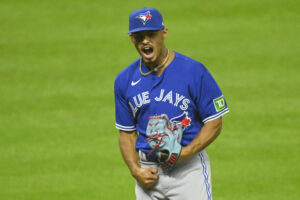
A move back to the rotation is surprising, but it won’t be an entirely unfamiliar role for the flamethrowing 27-year-old. Hicks worked as a starter in the minors before debuting in the Cardinals’ bullpen during the 2018 season, and St. Louis briefly experimented with a move back to the rotation early in the 2022 campaign. That didn’t pan out — he yielded 16 runs in 24 2/3 innings before moving back to a relief role — but the Giants will try their hand at maximizing Hicks’ explosive arsenal out of their own rotation. The Giants have indeed shown a knack for helping pitchers break out — Kevin Gausman chief among them — and Hicks clearly has the type of raw stuff to intrigue clubs in a larger role.
Few pitchers can rival Hicks in terms of sheer velocity. He’s averaged 100.8 mph on his four-seamer and 100.2 mph on his two-seamer to this point in his career and has topped out at borderline comical 105 mph. The former third-round pick couples that blistering velocity with a slider that sits at 86.5 mph, and he’s thrown very occasional “changeups” in the past (never higher than at a 4% clip) — sitting 91.8 mph on that pitch overall.
Given the uncommonly young age at which he reached the open market and the overpowering nature of his raw arsenal, Hicks has long felt like a pitcher who’d command substantial interest despite a more modest track record. MLBTR ranked him 21st on our Top 50 Free Agent list, predicting a four-year, $40MM contract from a club believing it could unlock another gear in the righty.
As one might expect for a pitcher with this type of superhuman velocity, durability has been an issue. Hicks has never pitched more than 105 innings between the big leagues and minors combined in any season of his career. He underwent Tommy John surgery in 2019, had a 60-day IL stint due to inflammation in that same elbow in 2021, and missed more than a month of the 2022 season due to a flexor strain. Hicks returned from that injury in early July and was placed back on the injured list in mid-September due to arm fatigue.
Of course, when he’s healthy and at his best, Hicks can be flat-out overpowering. He sports a career 3.85 ERA, but that’s skewed by 10 ugly innings prior to his UCL tear in 2019 and by his rough work as a starter in 2022. In 2023, Hicks turned in a 3.29 ERA with a 28.4% strikeout rate, 11.2% walk rate and a 58.3% ground-ball rate in 65 1/3 innings between the Cardinals and the Blue Jays, who acquired him from St. Louis at the trade deadline in exchange for minor league pitchers Adam Kloffenstein and Sem Robberse. That ground-ball rate is nothing new; Hicks boasts a sensational 60.4% grounder rate in his career. Unfortunately, last year’s command troubles aren’t new either. He’s issued a free pass to an unsightly 12.8% of his opponents in the Majors.
Given last year’s innings count — and totals of 66 1/3 and 13 frames in the two preceding seasons — it’s difficult to imagine Hicks simply stepping into a rotation and firing off 30-plus starts, even if he’s able to remain healthy. The Giants figure to place him on some kind of innings limit in 2024, whether that means capping him at five innings per start, using him to piggyback with another starter, or simply giving him some occasional spells in the bullpen to keep his arm fresh.
An ideal setting might see Hicks move to the bullpen late in the season right as recent trade acquisition Robbie Ray returns from Tommy John surgery, though a lot needs to go right before that’s a legitimate consideration. If Hicks is able to both remain healthy and pitch effectively as a starter this coming season, the team could give him a larger workload come 2025. At that point, plugging Hicks and Ray into the rotation behind ace Logan Webb could give San Francisco a formidable trio. That’s a major “if,” but the upside is intriguing.
For the time being, Hicks will add another question mark to a rotation that’s teeming with uncertainty behind Webb, a 2023 Cy Young Award finalist. Webb led the Majors with 216 innings pitched last year, but Alex Cobb and Sean Manaea were the only other Giants pitchers to reach even 100 innings. Manaea has since signed with the Mets in free agency, and Cobb will open the 2024 season on the injured list while he recovers from hip surgery.
Hicks joins veteran swingman Ross Stripling, top prospect Kyle Harrison and young righties Keaton Winn and Tristan Beck as candidates to fill out the rotation behind Webb. Twenty-five-year-old righty Kai-Wei Teng, who walked nearly 14% of his opponents in Triple-A last year, is the only other starting pitcher on the 40-man roster. Top prospect Carson Whisenhunt is surely viewed as a potential rotation mainstay by Giants brass, but he’s pitched just 19 2/3 innings above A-ball and in all likelihood won’t be an option until the 2025 campaign.
It seems fair to envision the Giants making further additions to their rotation, given all that instability, although with both Cobb and Ray on the mend, there will be veteran reinforcements filtering in as the season wears on. Still, the Giants entered the offseason with question marks on the pitching staff and throughout the lineup, and many of those needs remain unaddressed. Adding a more established arm — be it a mid-tier arm in the Mike Clevinger/Michael Lorenzen/Hyun Jin Ryu vein or a top-tier starter like Blake Snell or Jordan Montgomery — still seems both prudent and well within the Giants’ budgetary capacity.
As it stands, the Giants’ payroll currently projects to about $167MM, per Roster Resource, while their luxury-tax ledger sits nearly $30MM shy of the $237MM first-tier threshold. San Francisco opened the 2023 season with a $188MM payroll and has previously put forth a $200MM roster in the past, so there ought to be considerable room for further augmentation on the free agent and/or trade markets.
Mets Designate Cooper Hummel For Assignment
The Mets designated catcher/outfielder Cooper Hummel for assignment, as first reported by Anthony DiComo of MLB.com. The Mets announced the move a couple minutes later. Hummel’s spot on the 40-man roster will go to righty Max Kranick, whom the Mets are claiming off waivers from the Pirates.
Hummel, 29, was claimed off waivers from the Mariners earlier in the offseason. He appeared in 10 MLB games last year and came to the plate 26 times with Seattle. He also received a brief look with the D-backs in 2022, and he’s posted an overall .166/.264/.286 line in 227 career plate appearances.
Ugly as that small-sample slash line may be, Hummel turned in a .262/.409/.435 batting line in Triple-A last year and drew walks at a massive 18% clip. The Mets were surely attracted to that output and to his versatility; he’s logged more than 1800 innings in left field, 1054 frames behind the plate, 508 innings at first base and another 296 innings in right field. Add in that he has a minor league option remaining, and he’s an interesting depth piece even if he hasn’t yet been able to produce at the big league level.
Hummel is also a known commodity for Mets president of baseball operations David Stearns, who was the Brewers’ general manager in 2016 when Hummel was drafted by Milwaukee. Stearns traded Hummel to the D-backs in the 2021 Eduardo Escobar swap, and he’ll now have a week to trade Hummel again or else attempt to pass him through outright waivers.
Mets, Danny Young Agree To Minor League Deal
The Mets have agreed to a minor league deal with left-handed reliever Danny Young, MLBTR has learned. He’ll be in big league camp this spring and would earn an $825K salary in the majors. Young is repped by Dynamic Sports Group.
The 29-year-old Young has seen big league time with the Mariners and Braves over the past two years, logging a combined 14 2/3 innings with a 2.45 ERA, a 25.4% strikeout rate, a 6% walk rate and a healthy 48.8% ground-ball rate. He was particularly sharp with Atlanta, yielding just one run in 11 innings as a Brave and posting a 12-to-2 K/BB ratio. However, Young missed the bulk of the 2023 season due to hip injury. He pitched just 15 2/3 Triple-A frames and 8 1/3 MLB innings before landing on the injured list and ultimately undergoing surgery.
Young has a 4.70 ERA in parts of four Triple-A seasons. He’s fanned 28% of his opponents at the top minor league level against an 11% walk rate, though his command has been better in his limited MLB looks. He has a minor league option remaining as well, so if he makes the Mets’ roster out of spring training or at any point during the 2024 season, he could be optioned freely for the remainder of the season.
The Mets are known to be on the lookout for bullpen help and have specifically been focused on adding some left-handed depth. New York reportedly had interest in former Brewers and Rockies southpaw Brent Suter, but Suter agreed to a one-year pact with his hometown Reds yesterday.
Drew VerHagen To Sign With NPB’s Nippon-Ham Fighters
Free agent right-hander Drew VerHagen is returning to the Nippon-Ham Fighters of Japan’s Nippon Professional Baseball, reports Robert Murray of FanSided. The Vayner Sports client is signing a two-year pact, the second season of which is a player option. He can earn close to $8MM in total over those two years, but the 33-year-old righty’s player option will ensure him an opportunity to again test MLB free agency next winter if he pitches well in his return to Japan.

It’ll be VerHagen’s second stint in Japan and his second with the Fighters. The right-hander spent the 2020-21 season with the Fighters as well, parlaying his 3.51 ERA in 207 2/3 innings there into a two-year, $5.5MM deal with the Cardinals in the 2021-22 offseason. (Anecdotally, VerHagen was the first player to sign a Major League contract after MLB’s 99-day lockout lifted.)
VerHagen’s first season in St. Louis didn’t go well, as injuries limited him to 19 appearances and 21 2/3 innings of 6.65 ERA ball. He underwent season-ending hip surgery midway through that 2022 campaign. The former Tigers righty rebounded nicely in 2023, however, piling up 61 innings out of Oli Marmol’s bullpen while notching a solid 3.98 ERA. VerHagen fanned 22.4% of his opponents against a 9.7% walk rate and kept the ball on the ground at a 42.2% clip.
VerHagen has more than five years of MLB service accrued over parts of eight seasons, but last year’s showing with the Cardinals was the best of his career. His 61 innings were a career-high, as were his 14 holds, and his 3.98 ERA was the lowest of his career outside of a 2.05 mark in 26 innings back with the 2015 Tigers.
It’s not especially common to see a player debut in the Majors, head overseas to NPB or the KBO, find success, come back to MLB, and then return to NPB or the KBO. VerHagen could take an even more atypical arc if he’s indeed able to once again leverage a strong season in Japan into another MLB offer.
Players generally don’t bounce back and forth from continent to continent in this manner, but VerHagen has primarily been a swingman and middle reliever in MLB, and that role tends to come with limited earning power. His openness to a globetrotting lifestyle could end up earning him more than $15MM when factoring in his previous two seasons with the Fighters, his two years in St. Louis, and this pending contract to return to Japan. It may not be a common course to chart, but it’s one that’s been quite lucrative for the righty.
VerHagen was a starter during his previous NPB stint, and if the Fighters plug him back into their rotation, he could conceivably use year one of this two-year pact to showcase himself as a rotation option for teams next winter. And, even if his performance dips or he incurs another injury and he chooses not to opt out, he’ll have the safety net of another strong seven-figure salary in year two of the deal.
Braves Extend Alex Anthopoulos Through 2031
The Braves announced this morning that they’ve signed president of baseball operations Alex Anthopoulos to an extension that will keep him with the team through the 2031 season. Anthopoulos had previously been entering the final season of a three-year contract extension that spanned the 2022-24 seasons. He’ll now be in Atlanta for an additional seven years.
“Alex and I have enjoyed a wonderful working relationship, and I look forward to that continuing for many years to come,” Braves CEO Terry McGuirk said in the team’s press release announcing the extension.

“I have been around this game a very long time and know that Alex’s track record of success is truly something special. There is simply no one better in the business. This extension gives Alex the runway to make long-term decisions and the opportunity to continue his track record of assembling teams that are perennial contenders. I have the utmost confidence in his ability to deliver championship baseball for our fans well into the future.”
The seven-year term of the contract extension is massive in relation to Anthopoulos’ baseball operations peers throughout the sport; most president of baseball operations and/or general manager contracts are three to five years in length. Given the unparalleled young core that the Braves have not only developed but also largely managed to sign to club-friendly contract extensions under Anthopoulos’ watch, however, it’s not surprising to see the team reward him with an uncommonly lengthy contract of his own — one that’ll allow him to see the bulk of those player extensions play out in full.
The 46-year-old Anthopoulos’ ascension to the top of the sport’s executive sphere is one rooted in the humblest of beginnings. His first job in baseball came with the Expos, where he was an unpaid intern working in their mail room and printing stat sheets. Expos scouts eventually took Anthopoulos under their wing, and he was moved to the team’s scouting department before being hired by the Blue Jays in 2003. From there, Anthopoulos climbed the ranks of Toronto’s baseball operations staff, rising all the way to general manager — a role he’d hold through 2015 before rejecting an extension under incoming president and CEO Mark Shapiro.
The Dodgers quickly added Anthopoulos to their front office, hiring him as a vice president of baseball operations working alongside president of baseball ops Andrew Friedman and then-GM Farhan Zaidi. That proved to be less than a two-year stop, as Atlanta hired Anthopoulos away from Los Angeles and named him general manager after former GM John Coppolella was dismissed and banned from baseball following reported violations on the international free agent market and in the MLB draft. (Major League Baseball lifted Coppolella’s “lifetime” ban after six years, in 2023.)
While some of the core pieces comprising the Braves’ roster were signed or drafted under the former regime — most notably, Ronald Acuna Jr., Ozzie Albies, Austin Riley and Max Fried — it was Anthopoulos who oversaw the extensions for each of Acuna (eight years, $100MM), Albies (seven years, $35MM) and Riley (ten years, $212MM). While Anthopoulos himself doesn’t necessarily oversee the draft, he did hire now-former scouting director Dana Brown — who’s since been hired as Houston’s general manager — and set the stage for a remarkable run of success in the amateur draft. (Brown and Anthopoulos worked together both in Montreal and in Toronto.)
From 2019 onward, Atlanta drafted names like Michael Harris II, Spencer Strider, Bryce Elder, Vaughn Grissom and Shea Langeliers (among others), each of whom has either emerged as a core contributor or been included in a trade to help build out the club’s current roster. (Langeliers was sent to Oakland in the Matt Olson trade; Grissom recently was traded to the Red Sox for Chris Sale.)
In addition to Acuna, Albies and Riley, Anthopoulos has succeeded in brokering long-term deals with the majority of Atlanta’s core. While Freddie Freeman and Dansby Swanson did ultimately depart in free agency — and Fried could well do the same next winter — the Braves have had more success on the extension front than any team in the game. Harris inked an eight-year, $72MM deal midway through his rookie season. Strider followed suit with a six-year, $75MM contract.
Less than 48 hours after acquiring Olson in what’s now a wildly lopsided trade with the A’s (who received Langeliers, Cristian Pache, Joey Estes and Ryan Cusick in return), Anthopoulos signed his new first baseman to an eight-year, $168MM extension. A year later, Anthopoulos again pried a star away from Oakland on the trade market, acquiring catcher Sean Murphy in a three-team deal that sent William Contreras to Milwaukee. As with Olson, Murphy quickly put pen to paper on a new contract: a six-year, $73MM deal.
The Braves, under Anthopoulos, have also made veteran Charlie Morton a fixture in the rotation, repeatedly signing him and extending him on a series of short-term contracts. Morton, originally drafted by Atlanta back in 2002, is now entering his fourth straight season as a Brave and has given the team 521 innings of 3.77 ERA ball and was a key part of the team’s 2021 postseason staff (3.24 ERA in 16 2/3 innings). Similarly, catcher/designated hitter Travis d’Arnaud has become a veteran staple on the club, winning a Silver Slugger in 2020 and making the 2022 All-Star team while combining for a solid .256/.315/.446 slash in four seasons since originally signing.
That 2021 postseason run, of course, is the crowning achievement of Anthopoulos’ career thus far. The Braves, powered by a juggernaut core and buoyed by deadline acquisitions like Jorge Soler and Eddie Rosario, blitzed through the second half of the season as the sport’s hottest team and rode that momentum all the way to a 2021 World Series title.
As with any baseball operations executive, not every move Anthopoulos has made has worked out. The three-year, $40MM deal for lefty Will Smith and the four-year, $65MM signing of Marcell Ozuna have had mixed results, at best, and the trade to swap out Smith for Odorizzi played out poorly as well. Smith rebounded in Houston, while Odorizzi struggled in Atlanta before being sent to the Rangers, with the Braves remaining on the hook for the bulk of his 2023 salary after Odorizzi exercised a player option. The Braves also acquired Kevin Gausman at what now looks like a bargain rate from the Orioles in 2018 but cut him loose via waivers a year later after he struggled in Atlanta. Gausman signed with the Giants the following offseason, broke out in San Francisco, and has since become a bona fide No. 1 starter in Toronto, where he signed a five-year free agent deal.
In comparison to the litany of successes under Anthopoulos, however, those misses are relatively minor in nature. And, while perhaps the Braves would like mulligans on some of those decisions, the simple fact of the matter is that none of them have stood as roadblocks to success. The Braves have won the NL East in all six of Anthopoulos’ seasons as general manager, and the team’s unrivaled collection of talent under long-term contract has positioned Atlanta as a legitimate dynasty in the division.
We’re reminded each year of the MLB postseason’s intrinsic randomness, but it’d be a surprise if the Braves didn’t reach the playoffs in the majority of the seasons under this new contract for their president — and another World Series appearance (if not victory) wouldn’t be a bad bet, either. It’s somewhat fitting that an executive known for his ability to hammer out club-friendly extensions now secures his own long-term deal — one that’ll assure him the opportunity to reap the benefits of the incredible crop of talent that’s been drafted, acquired, developed and signed long-term under his watch.
“I’d like to thank Terry for his continued support and trust,” Anthopoulos said in his own statement this morning. “The Braves are an incredible organization to be a part of, and I’m proud of the success we’ve achieve together. I am grateful for the opportunity to continue to lead baseball operations and to strive to bring another World Series to Atlanta.”
2024 Arbitration Tracker
Today is the deadline for players and teams to exchange figures in arbitration — an annual deadline that leads to a slew of one-year deals and, typically, a handful of multi-year deals. Today should see upwards of 100 players agree to salaries for the 2024 season, although the majority of clubs and players now wait until the very last minute to agree. The deadline for agreements is noon CT, and we’ll see terms on plenty of last-minute/buzzer-beating deals filter in shortly thereafter. Players and teams that do not reach an agreement will exchange salary figures at 7pm CT tonight.
Each player’s service time is in parentheses, and you can of course check back to see each player’s projected salary from MLBTR contributor Matt Swartz. We’ll keep this updated as deals come in — refresh for updates — and break off some of the larger, more prominent agreements in separate entries. All agreements are for one year unless otherwise noted.
Angels
- Griffin Canning (4.075): $2.6MM agreement today (via MLB.com’s Rhett Bollinger)
- Luis Rengifo (4.043): $4.4MM agreement today (via ESPN’s Kiley McDaniel)
- Taylor Ward (3.164): Did not reach agreement, will likely exchange figures (via MLB.com’s Mark Feinsand)
- Patrick Sandoval (3.149): $5.025MM agreement today (via Bollinger)
- Jose Suarez (3.084): Did not reach agreement, figures exchanged (via Feinsand)
- Jose Quijada (3.046): $840K agreement today (via Bollinger)
Astros
- Framber Valdez (4.163): $12.1MM agreement today (via The Athletic’s Chandler Rome)
- Kyle Tucker (4.079): $12MM agreement today (via Rome)
- Jose Urquidy (4.049): $3.75MM agreement today (via Rome)
- Mauricio Dubon (3.162): Did not reach agreement, will likely exchange figures (via KPRC-2’s Ari Alexander)
- Luis Garcia (3.083): $1.875MM agreement today (via Alexander)
- Bryan Abreu (3.022): $1.75MM agreement today (via Alexander)
- Chas McCormick (3.000): $2.85MM agreement today (via Rome)
Athletics
- Sean Newcomb (4.113): $1MM agreement in November
- Miguel Andujar (4.053): $1.7MM agreement in November
- Paul Blackburn (4.018): $3.45MM agreement today (via the San Francisco Chronicle’s Susan Slusser)
- Seth Brown (3.104): $2.6MM agreement today (via FanNation’s Marc Delucchi)
- Abraham Toro (3.011): $1.275MM agreement in November
Blue Jays
- Trevor Richards (5.084): $2.15MM agreement today (per The Athletic’s Kaitlin McGrath)
- Danny Jansen (5.050): $5.2MM agreement today (via FanSided’s Robert Murray)
- Vladimir Guerrero Jr. (4.157): Did not reach agreement, will file figures (per Feinsand)
- Tim Mayza (4.156): $3.59MM agreement today (via Sportsnet’s Ben Nicholson-Smith)
- Cavan Biggio (4.129): $4.21MM agreement today (via Morosi)
- Erik Swanson (4.096): $2.75MM agreement today (via Nicholson-Smith)
- Jordan Romano (4.051): $7.75MM agreement today (via McDaniel)
- Genesis Cabrera (4.011): $1.5125MM agreement today (via MLB.com’s Jon Morosi)
- Santiago Espinal (3.149): $2.725MM agreement today (via Morosi)
- Daulton Varsho (3.128): $5.65MM agreement today (via Feinsand)
- Alejandro Kirk (3.047): $2.8MM agreement today (via Sportsnet’s Shi Davidi)
- Nate Pearson (3.005): $800K agreement today (per McGrath)
Braves
- A.J. Minter (5.154): $6.22MM agreement today (via McDaniel)
- Max Fried (5.148): $15MM agreement today (via Murray)
- Huascar Ynoa (3.011): $825K agreement last week
Brewers
- Willy Adames (5.105): $12.25MM agreement today (via Murray)
- Corbin Burnes (5.049): $15.6375MM agreement today (via Jon Heyman of The New York Post)
- Taylor Clarke (4.120): $1.25MM agreement in November
- Hoby Milner (4.068): $2.05MM agreement yesterday
- Devin Williams (4.056): $7.25MM agreement today, including buyout of 2025 option (per Jeff Passan of ESPN)
- Jake Bauers (3.084): $1.35MM agreement today (via the Milwaukee Journal-Sentinel’s Curt Hogg)
- Bryse Wilson (3.036): $1.000025MM agreement today (via MLB.com’s Adam McCalvy)
- Joel Payamps (3.027): $1.65MM agreement today (via Feinsand)
Cardinals
- Andrew Kittredge (5.070): $2.63MM agreement today (via the St. Louis Post-Dispatch’s Derrick Goold)
- Tommy Edman (4.114): No agreement reached, will exchange figures, per team announcement
- Ryan Helsley (4.105): $3.8MM agreement today (via MLB.com’s John Denton)
- Dylan Carlson (3.104): $2.35MM agreement today (via Goold)
- JoJo Romero (3.045): $860K agreement today (via Feinsand)
- John King (2.148): $1.005MM agreement today (via Feinsand)
Cubs
- Yency Almonte (4.143): $1.9MM agreement in November; acquired in trade with Dodgers today
- Nick Madrigal (3.163): $1.81MM agreement today (via Morosi)
- Mike Tauchman (3.143): $1.95MM agreement today (via Morosi)
- Julian Merryweather (3.109): $1.175MM agreement today (via 670 The Score’s Bruce Levine)
- Patrick Wisdom (3.058): $2.725MM agreement in November
- Adbert Alzolay (3.050): $2.11MM agreement today (via ESPN’s Jesse Rogers)
- Mark Leiter Jr. (3.031): $1.5MM agreement today (via Rogers)
- Justin Steele (2.143): $4MM agreement today (via Rogers)
Diamondbacks
- Christian Walker (5.124): $10.9MM agreement today (via Murray)
- Paul Sewald (5.072): $7.35MM agreement today (via Murray)
- Zac Gallen (4.100): $10.011MM agreement today (via Feinsand)
- Ryan Thompson (3.095): $1.35MM agreement today (via Feinsand)
- Kevin Ginkel (3.032): $1.225MM agreement today (via Alexander)
- Joe Mantiply (3.029): $925K agreement today (via Feinsand)
Dodgers
- Walker Buehler (5.168): $8.025MM agreement today (via Murray)
- Ryan Yarbrough (5.117): $3.9MM agreement today (via McDaniel)
- Caleb Ferguson (5.093): $2.4MM agreement today (via The Athletic’s Fabian Ardaya)
- Will Smith (4.090): $8.55MM agreement today (per MLB.com’s Juan Toribio)
- Dustin May (4.059): $2.135MM agreement today (via the L.A. Times’ Jack Harris)
- Brusdar Graterol (3.167): $2.7MM agreement today (via Ardaya)
- Evan Phillips (3.136): $4MM agreement today (via Ardaya)
- Gavin Lux (3.114): $1.225MM agreement today (via Harris)
- J.P. Feyereisen (3.108): $770K agreement today (via Harris)
- Alex Vesia (3.078): $1MM agreement today (via Ardaya)
Giants
- Austin Slater (5.147): $4MM agreement in November
- J.D. Davis (5.137): Did not reach agreement, likely to file (via Feinsand)
- Mike Yastrzemski (4.128): $7.9MM agreement in November
- LaMonte Wade Jr. (4.035): $3.5MM agreement today (via Slusser)
- Tyler Rogers (4.034): $3.2MM agreement today (via Delucchi)
- Thairo Estrada (3.169): $4.7MM agreement today (via Slusser)
Guardians
- Shane Bieber (5.097): $13.125MM agreement today (via McDaniel)
- Scott Barlow (5.030): $6.7MM agreement today (per Paul Hoynes of Cleveland.com)
- Ramon Laureano (4.165): $5.15MM agreement in November
- Josh Naylor (4.127): $6.5MM agreement today (per Hoynes)
- James Karinchak (3.099): $1.9MM agreement today (per Hoynes)
- Triston McKenzie (3.074): $1.6MM agreement today (per Hoynes)
- Sam Hentges (2.157): $1.1625MM agreement today (per Hoynes)
- Nick Sandlin (2.157): $1.075MM agreement today (per Hoynes)
Marlins
- Tanner Scott (5.059): Did not reach agreement, will exchange figures (via Feinsand)
- Luis Arraez (4.121): Did not reach agreement, will exchange figures (via Feinsand)
- JT Chargois (4.101): $1.285MM agreement today (via SportsGrid’s Craig Mish)
- Christian Bethancourt (4.038): $2.05MM agreement today (per Feinsand)
- Jesus Luzardo (3.165): $5.5MM agreement today (via Feinsand)
- A.J. Puk (3.124): $1.8MM agreement today (via Mish)
- Steven Okert (3.109): $1.0625MM agreement today (via Christina De Nicola of MLB.com)
- Trevor Rogers (3.094): $1.53MM agreement today (via Delucchi)
- Jazz Chisholm Jr. (3.075): Did not reach agreement, will exchange figures (via Jordan McPherson of the Miami Herald)
- Anthony Bender (2.153): Team announced one-year agreement, terms not known
- Jesus Sanchez (2.118): $2.1MM agreement today (per Feinsand)
Mariners
- Luis Urias (4.098): $5MM agreement today (via McDaniel)
- Ty France (4.089): $6.775MM agreement today (via MLB.com’s Daniel Kramer)
- Trent Thornton (3.148): $1.2MM agreement today (via Morosi)
- Josh Rojas (3.126): $3.1MM agreement today (via Morosi)
- Sam Haggerty (3.044): $900K agreement today (via Morosi)
- Justin Topa (3.044): $1.25MM agreement today (via Kramer)
- Logan Gilbert (2.144): $4.05MM agreement today (via Morosi)
Mets
- Drew Smith (5.034): $2.225MM agreement today (per MLB.com’s Anthony DiComo)
- Adrian Houser (5.010): $5.05MM agreement today (via Murray)
- Pete Alonso (5.000): $20.5MM agreement today (per Passan)
- Joey Lucchesi (4.112): $1.65MM agreement today (via the New York Post’s Joel Sherman)
- Tyrone Taylor (3.093): $2.025MM agrement today (via Feinsand)
- David Peterson (3.089): $2.15MM agreement today (via Sherman)
- DJ Stewart (2.168): $1.38MM agreement in November
- Phil Bickford (2.134): Did not reach agreement, number filed (per Feinsand)
Nationals
- Victor Robles (5.033): $2.65MM agreement in November
- Tanner Rainey (4.127): $1.5MM agreement in November
- Hunter Harvey (4.047): $2.325MM agreement today (per Feinsand)
- Lane Thomas (4.014): $5.45MM agreement today (via the Washington Post’s Andrew Golden)
- Ildemaro Vargas (4.007): One-year agreement in September
- Kyle Finnegan (4.000): $5.1MM agreement today (per Feinsand)
- Luis Garcia (2.142): Team announced one-year agreement, terms not known
Orioles
- Anthony Santander (5.162): $11.7MM agreement today (via Murray)
- Danny Coulombe (5.008): Did not reach agreement, likely to exchange figures (via MLB.com’s Jake Rill)
- John Means (5.007): $3.325MM agreement today (via Morosi)
- Ryan O’Hearn (5.002): Did not reach agreement, will exchange figures (via the Baltimore Banner’s Andy Kostka)
- Cedric Mullins (4.078): $6.325MM agreement today (via MASNsports.com’s Roch Kubatko)
- Austin Hays (4.057): Did not reach agreement, will exchange figures (via the Baltimore Banner’s Andy Kostka)
- Dillon Tate (4.048): $1.5MM agreement today (via Morosi)
- Jorge Mateo (4.000): $2.7MM agreement in November
- Ryan Mountcastle (3.105): $4.1375MM agreement today (via Morosi)
- Sam Hilliard (3.094): $800K agreement in November
- Cionel Perez (3.085): Did not reach agreement, will exchange figures (per Sherman)
- Cole Irvin (3.083): $2MM agreement today (via Kostka)
- Keegan Akin (3.079): $825K agreement in November
- Jacob Webb (3.046): Did not reach agreement, will exchange figures, MLBTR has learned
- Ramon Urias (3.025): $2.1MM agreement today (via Feinsand)
- Tyler Wells (2.132): $1.9625MM agreement today (via Feinsand)
- Ryan McKenna (2.123): $800K agreement in November
Padres
- Kyle Higashioka (5.005): $2.18MM agreement today (via Jeff Sanders of the San Diego Union-Tribune)
- Michael King (4.004): $3.15MM agreement today (via Morosi)
- Adrian Morejon (3.140): $850K agreement today (via Jeff Sanders of the San Diego Union-Tribune)
- Enyel De Los Santos (3.015): $1.16MM agreement today (via Jeff Sanders of the San Diego Union-Tribune)
Phillies
- Jeff Hoffman (5.084): $2.2MM agreement today (via The Athletic’s Matt Gelb)
- Ranger Suarez (4.112): $5.05MM agreement today (via Gelb)
- Gregory Soto (4.102): $5MM agreement today (via Alexander)
- Jake Cave (4.071): $1MM agreement in November
- Edmundo Sosa (3.140): $1.7MM agreement today (via the Philadelphia Inquirer’s Scott Lauber)
- Dylan Covey (3.138): $850K agreement in November
- Garrett Stubbs (3.120): $850K agreement in November
- Alec Bohm (3.106): Did not reach agreement, will exchange figures, per club announcement
Pirates
- Ryan Borucki (5.006): $1.6MM agreement in November
- Mitch Keller (4.026): $5.4425MM agreement today (via the Pittsburgh Post-Gazette’s Jason Mackey)
- JT Brubaker (4.000): $2.275MM agreement yesterday
- David Bednar (3.076): $4.51MM agreement today (via Mackey)
- Edward Olivares (3.049): $1.35MM agreement today (via Mackey)
- Connor Joe (2.136): $2.125MM agreement today (via Mackey)
Rangers
- Nathaniel Lowe (3.145): $7.5MM agreement today (per Kennedi Landry of MLB.com)
- Jonathan Hernandez (3.131): $1.245MM agreement today (per Landry)
- Jonah Heim (3.097): $3.05MM agreement today (per Bob Nightengale)
- Adolis Garcia (3.095): Did not reach agreement, will exchange figures (per Sherman)
- Dane Dunning (3.083): $3.325MM agreement today (via Morosi)
- Brock Burke (3.065): $1.035MM agreement today (per Landry)
- Josh Sborz (3.055): $1.025MM agreement today (per Landry)
- Leody Taveras (2.124): $2.55MM agreement today (via Sherman)
Rays
- Shawn Armstrong (5.113): $2.05MM agreement today (via Morosi)
- Harold Ramirez (4.124): Did not reach agreement, likely to file (via Feinsand)
- Colin Poche (4.114): $2.375MM agreement today (via Feinsand)
- Aaron Civale (4.058): $4.9MM agreement today (via Sherman)
- Tyler Alexander (4.058): $1.95MM agreement in November
- Zack Littell (4.043): $1.85MM agreement today (via Feinsand)
- Jason Adam (3.132): Did not reach agreement, likely to file (via Feinsand)
- Randy Arozarena (3.129): $8.1MM agreement today (via Francys Romero)
- Drew Rasmussen (3.111): $1.8625MM agreement today (via Feinsand)
- Isaac Paredes (2.160): $3.4MM agreement today (via Feinsand)
- Shane McClanahan (2.158): Agreed to two-year, $7.2MM deal (via Murray)
Red Sox
- Nick Pivetta (5.166): $7.5MM agreement today (via Alex Speier of the Boston Globe)
- Tyler O’Neill (5.059): $5.85MM agreement today (via Murray)
- Reese McGuire (4.027): $1.5MM agreement today (via Morosi)
- John Schreiber (3.027): $1.175MM agreement today (via Rob Bradford of WEEI)
Reds
- Lucas Sims (5.014): $2.85MM agreement today (via the Cincinnati Enquirer’s Gordon Wittenmyer)
- Tejay Antone (4.000): $830K agreement today (via Wittenmyer)
- Alex Young (3.143): $1.16MM agreement today (via Morosi)
- Jake Fraley (3.097): $2.15MM agreement today (via Wittenmyer)
- Tyler Stephenson (3.056): $2.525MM agreement today (via MLB.com’s Mark Sheldon)
- Jonathan India (3.000): Did not reach agreement, likely to exchange figures (via Feinsand)
Rockies
- Jalen Beeks (5.003): $1.675MM agreement in November
- Cal Quantrill (4.132): $6.55MM agreement yesterday
- Austin Gomber (4.111): $3.15MM agreement today (via MLB.com’s Thomas Harding)
- Brendan Rodgers (4.075): $3.2MM agreement today (via Harding)
- Peter Lambert (3.128): $1.25MM agreement today (via Harding)
- Lucas Gilbreath (2.148): $760K agreement today (via Feinsand)
Royals
- Nick Anderson (4.153): $1.575MM agreement today (via USA Today’s Bob Nightengale)
- Josh Taylor (4.118): $1.1MM agreement in November
- Brady Singer (3.156): $4.85MM agreement today (via MLB.com’s Anne Rogers)
- Kris Bubic (3.135): $2.35MM agreement in December
- Kyle Wright (3.062): $1.8MM agreement today (via Rogers)
- Carlos Hernandez (2.145): $1.0125MM agreement today (via Rogers)
Tigers
- Tarik Skubal (3.114): $2.65MM agreement today (via Morosi)
- Casey Mize (3.111): Didn’t reach agreement, likely headed to hearing (via the Detroit Free Press’ Evan Petzold)
- Jake Rogers (3.040): $1.7MM agreement today (via Petzold)
- Akil Baddoo (2.119): $1.55MM agreement today (via Morosi)
Twins
- Caleb Thielbar (5.131): $3.225MM agreement today (via McDaniel)
- Kyle Farmer (5.129): $6.3MM agreement today, including buyout of 2025 mutual option (via Dan Hayes of The Athletic)
- Willi Castro (4.017): $3.3MM agreement today (per Hayes)
- Jorge Alcala (4.014): $790K agreement today, including buyout of 2025 mutual option (via Hayes)
- Ryan Jeffers (3.089): $2.425MM agreement today (via SKOR North’s Darren Wolfson)
- Alex Kirilloff (2.141): $1.35MM agreement today (via Wolfson)
- Nick Gordon (2.136): No agreement reached, likely headed to hearing (via Bobby Nightengale)
White Sox
- Nicky Lopez (4.139): $4.3MM agreement today (via Morosi)
- Michael Soroka (5.009): $3MM agreement, per a team announcement
- Dylan Cease (4.089): $8MM agreement today (via Murray)
- Michael Kopech (4.041): $3MM agreement today (via Bob Nightengale)
- Matt Foster (3.093): $750K agreement in November
- Touki Toussaint (3.071): $1.3MM, per a team announcement
- Garrett Crochet (3.028): $800K, per a team announcement
- Andrew Vaughn (3.000): $3.25MM agreement today (via Bob Nightengale)
Yankees
- Gleyber Torres (5.162): $14.2MM agreement today (per Sherman)
- Juan Soto (5.134): $31MM agreement today (per Sherman)
- Alex Verdugo (5.078): $8.7MM plus performance bonuses agreement today (per Feinsand)
- Clay Holmes (5.031): $6MM agreement plus performance bonuses today (per Sherman)
- Jonathan Loaisiga (5.022): $2.5MM agreement today (per Sherman)
- Nestor Cortes (4.094): $3.95MM agreement today (per Sherman)
- Jose Trevino (4.063): $2.73MM agreement today (per Heyman)
- Trent Grisham (4.060): $5.5MM agreement today (via Murray)
- Victor Gonzalez (3.058): $860K agreement today (via Sherman)
- Clarke Schmidt (2.148): $2.025MM agreement today (via Sherman)
Mariners, Michael Chavis Agree To Minor League Deal
The Mariners and free-agent infielder Michael Chavis have agreed to a minor league contract, reports ESPN’s Kiley McDaniel. He’ll in big league camp as a non-roster invitee this spring.
Now 28 years old, Chavis was the Red Sox’ first-round pick back in 2014 and was considered one of Boston’s top prospects prior to his big league debut. He got out to a hot start in his 2019 rookie showing, and while he faded a bit at season’s end, Chavis’ overall .254/.322/.444 slash and 18 home runs gave him the look of someone who’d be a long-term piece in Boston.
Instead, the late-season struggles from 2019 trickled into 2020. Chavis batted just .212/.259/.377 in the pandemic-shortened 2020 campaign, and he’s struggled to regain his footing during brief stops with the Pirates and Nationals. Overall, since that mostly productive rookie effort, Chavis owns a tepid .231/.265/.382 batting line. He’s popped 42 home runs in 1186 MLB plate appearances and shown particular power against lefties (.200 ISO), but he’ll be a depth piece and a project for the Mariners at this point.
Chavis has experience all around the diamond. He’s spent the bulk of his time at first base but also has more than 800 innings at second base, 133 innings at the hot corner and 102 innings of corner outfield work in his MLB career. He’ll give the M’s a potential righty bat off the bench, and if he doesn’t land a roster spot this spring he’ll likely open the year in Triple-A Tacoma.