
Twins Sign Josh Donaldson
JANUARY 22: The signing is now official. Donaldson’s pact also includes a five-team no-trade clause, Dan Hayes of The Athletic tweets.
JANUARY 15: The Twins have reportedly agreed to a four-year, $92MM contract with free agent third baseman Josh Donaldson. It’s said to include a $16MM club option for a fifth season, which comes with a $8MM buyout. Donaldson is represented by the MVP Sports Group.
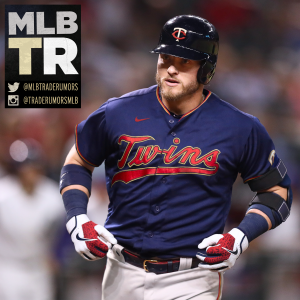
The $92MM guarantee makes this the largest free-agent signing in team history and the second-largest contract the franchise has ever given out, trailing only Joe Mauer‘s eight-year, $184MM mega-deal.
Minnesota has long been reported to hold interest in Donaldson after missing out on higher-end upgrades in the starting rotation earlier in the winter. By bringing Donaldson aboard, the Twins will shift the recently extended Miguel Sano across the diamond to first base, upgrading their infield defense substantially while adding one of the game’s most potent bats to what was already one of MLB’s best lineups in 2019.
Donaldson, 34, bounced back from an injury-ruined 2018 season to hit .259/.379/.521 with 37 home runs in 155 games/659 plate appearances with the Braves last season. That marked his fourth season of at least 33 home runs in the past five years, with the lone exception coming in 2018 when a calf injury held him to 52 games. His addition, incredibly, will give the Twins six players who hit 30 or more home runs in 2019; Sano, Nelson Cruz, Max Kepler, Eddie Rosario and Mitch Garver also crossed the 30-homer threshold on a team that Rosario nicknamed the “Bomba Squad.” While that type of output can’t be expected to be repeated — at least, assuming the league corrects last year’s juiced ball — the Twins should still be in possession of perhaps baseball’s most powerful lineup.
For the Twins, Donaldson’s glove at third base is arguably as important as his offensive prowess. Despite playing last season at age 33, Donaldson tied for 17th among MLB infielders with +8 Outs Above Average (per Statcast). Sano, conversely, checked in at -5 in that same category, so shifting him across the diamond in favor of Donaldson will represent a marked upgrade to the team’s infield defense, which was quietly one of its most significant needs. Shortstop Jorge Polanco graded out poorly, as did rookie second baseman Luis Arraez. The team’s infield defense surely won’t be a strength in 2020, but it figures to be considerably better with Donaldson than it otherwise would have.
Given the Twins’ inability to upgrade their rotation in a notable way this winter, that improved defense will be all the more important. Minnesota has signed Homer Bailey and Rich Hill to affordable one-year deals but will otherwise rely upon a very similar starting staff to the one that looked overmatched in the 2019 American League Division Series. Jose Berrios remains under club control as an arbitration-eligible player, while Jake Odorizzi accepted a qualifying offer and Michael Pineda re-signed on a two-year, $20MM deal. There’s still room for the Twins to make an addition, of course, but the free-agent market has been largely picked over and the trade market doesn’t offer a clearly available top-of-the-rotation arm.
The addition of Donaldson should push the Twins to a new franchise record in payroll, eclipsing the previous mark of $129MM by a good margin. Assuming an even $21MM breakdown of the first four years of the deal, the Twins’ 2020 payroll will clock in at just shy of $140MM. Large as that number may be, the Twins’ total commitments will plummet to about $55MM in 2021; Odorizzi, Cruz, Bailey, Hill, Marwin Gonzalez, Alex Avila, Tyler Clippard, Trevor May and Ehire Adrianza are all lined up to become free agents.
Signing Donaldson, who rejected a qualifying offer from the Braves, will cost the Twins their third-highest pick in the 2020. That’s their Competitive Balance Round B selection — currently slotted to come in at No. 73 overall. The Braves, conversely, will receive a compensatory selection between the end of Competitive Balance Round B and the beginning of Round 3. Coincidentally, the comp pick they’ll receive will land in the exact same range as the pick that Minnesota is surrendering.
Certainly, given Donaldson’s age, there’s some risk with the deal. He’s generally been a durable commodity outside of that 2018 season, but Donaldson’s ability to remain an elite player into the middle years of this contract is more in question than is typical with younger free agents. Of course, with Cruz among the Twins’ many free agents next winter, Donaldson could eventually begin seeing some extra time at DH to help keep him productive. And, in the final season or two of the deal, it’s possible that he could even serve as the team’s primary designated hitter if that becomes necessary.
Looking ahead to the remainder of the offseason, it seems likely that the Twins will continue to at least parse the market for available pitching upgrades. The bullpen is in better shape than it was at the onset of free agency, but there’s potentially some room for another ‘pen addition and certainly room for another starter to be brought into the fray. Just how much further owner Jim Pohlad is willing to push payroll and how willing president of baseball ops Derek Falvey is to part with young talent will ultimately dictate whether another splash is in the offing.
The Twins, of course, aren’t the only team impacted by this signing. The Braves now have a glaring hole in the middle of their lineup and a need at the hot corner. The Nationals, another finalist in the Donaldson mix, can turn to some combination of Starlin Castro, Asdrubal Cabrera or prospect Carter Kieboom at third base. That Donaldson landed in Minnesota also bodes well for both the Cubs and Rockies, if either plans to seriously entertain offers for their respective star third basemen, Kris Bryant and Nolan Arenado. The Twins wouldn’t necessarily have made a push to add a different third baseman had Donaldson signed elsewhere, having Sano already in the fold. But the Braves now appear to have a significant need at third base — creating a clear avenue to a potential trade for a third baseman of some type.
Mark Feinsand of MLB.com tweeted news of the signing. Darren Wolfson of 1500 SKOR North Radio (via Twitter), Do-Hyoung Park of MLB.com (via Twitter), and Ken Rosenthal of The Athletic (via Twitter) all reported contract details. This post was originally published on 1-14-20.
Giants Sign Rob Brantly To Minor League Deal
The Giants announced Tuesday that they’ve signed catcher Rob Brantly to a minor league deal and invited him to Major League Spring Training. San Francisco also confirmed its previously reported minor league deals with righty Tyson Ross and left-hander Jerry Blevins.
Brantly, 30, has appeared in parts of five big league seasons, including the briefest of stints with the Phillies in 2019, when he appeared in one game and tallied one plate appearance. He’s a career .229/.294/.332 hitter in 127 games and 429 plate appearances at the MLB level. Brantly struggled through a dismal 2018 season in Triple-A but bounced back with a .314/.404/.464 showing with Philadelphia’s top affiliate in 2019. Overall, he’s a .264/.310/.388 hitter in parts of eight Triple-A campaigns.
Last season, Brantly threw out 35 percent of runners who attempted to steal against him in the minors — up from his career mark of 32 percent. He has a lifetime 27 percent caught-stealing rate in the Majors. Framing statistics at Baseball Prospectus have him hovering at slightly below average over the past few seasons combined.
The Giants will head into 2020 with Buster Posey and Aramis Garcia likely to shoulder the workload behind the plate, with Brantly and fellow offseason signee Tyler Heineman presumably in line to handle catching duties in Triple-A. Of course, the Giants have Joey Bart, the No. 2 overall pick in 2018 and one of the top prospects in all of baseball, working his way up the minor league ladder. He’ll be in big league camp as well this spring and surely draw on the experience of Posey and others, but he’s only played 22 games above Class-A Advanced, so he’s likely destined for Double-A to begin the 2020 season.
Braves Sign Marcell Ozuna
6:06pm: The Braves have announced the deal and confirmed the terms of the agreement.
6:01pm: The Braves have agreed to a one-year deal with free-agent outfielder Marcell Ozuna, reports Jeff Passan of ESPN.com. The MDR Sports Management client will receive an $18MM salary that slightly exceeds the $17.8MM qualifying offer from the Cardinals that he rejected back in November.
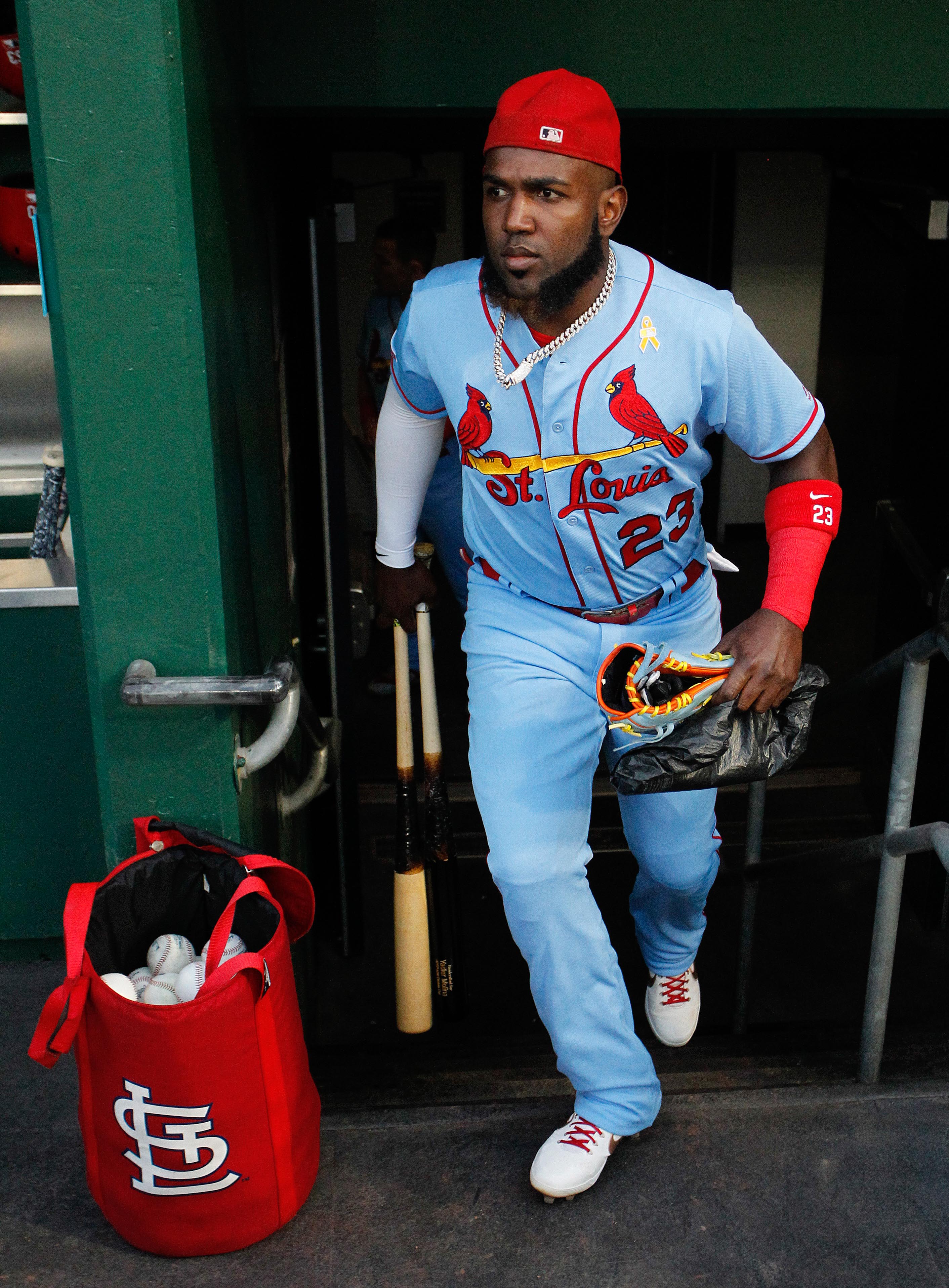
The market for Ozuna has been tepid, with the Cardinals and Rangers reported as the primary suitors for much of the winter. That likely changed when Atlanta missed out on third baseman Josh Donaldson, who agreed to a four-year deal with the Twins last week. Adding Ozuna to the lineup won’t account for the loss of Donaldson’s production, but it nonetheless bolsters a lineup that already won the division in 2018 and 2019.
Ozuna will presumably join Ender Inciarte (center) and Ronald Acuna Jr. (right) in comprising the Braves’ regular outfield trio. Inciarte and fellow outfielders Nick Markakis and Adam Duvall will likely lose some at-bats as a result of the signing, which gives the Braves a deep and talented mix from which to draw.
When the Cardinals originally acquired Ozuna from the Marlins in the 2017-18 offseason, it looked as though the club had acquired one of the game’s burgeoning top power threats. Ozuna swatted 37 home runs in ’17 and turned in a scintillating .312/.376/.548 line through 159 games. But shoulder problems slowed him over his two seasons in St. Louis — particularly in 2018. Ozuna did turn in a .262/.327/.451 batting line with 52 home runs, 39 doubles, three triples and 15 steals in 1177 trips to the plate (106 OPS+, 108 wRC+), but he wasn’t the heart-of-the-order force the Cardinals had presumably hoped to acquire.
That 2018-19 production aligns with the output that Ozuna showed in 2014-16 — raising the question of whether the 2017 season is repeatable or simply an outlier. Notably, there are some encouraging factors that suggest Ozuna could have more in the tank than he showed during his time with the Cardinals. His average exit velocity and hard-hit rate were both elite, per Statcast, as were his expected batting average, expected slugging percentage and expected wOBA. Ozuna also posted a career-high 11.3 walk rate that easily topped his previous career-best of 9.4 percent and trounced the 6.9 percent career mark he carried into 2019.
Defensively, Ozuna comes with plenty of uncertainty. He won a Gold Glove in 2017 with the Marlins, but his ongoing shoulder troubles completely sapped his throwing ability in 2018. Defensive Runs Saved and Ultimate Zone Rating both still graded him as an above-average fielder thanks to his range, although Statcast’s Outs Above Average metric pegged him at -9 over the duration of his two-year stint in St. Louis. At the very least, he should’t be a major liability for the Braves, and there’s the potential that he’ll actually deliver plus glovework if he’s at full strength.
The other ripple effect for the Braves is that bringing Ozuna into the fold cements Austin Riley‘s return to the infield mix. He and Johan Camargo are now the likeliest options for the Braves at third base, but it’s at least plausible that the club could look into options on the trade market. However, Ozuna’s contract pushes the Braves up to a franchise-record $158MM projected cash payroll, and perhaps even more surprisingly, they’re at $186MM in payroll as calculated for luxury tax purposes, per Roster Resource’s Jason Martinez. A Nolan Arenado acquisition has long appeared unlikely but looks even less plausible now, as acquiring him would push the Braves over the luxury threshold for the first time in franchise history. Even a deal to bring Kris Bryant over from the Cubs would leave Atlanta just a couple million shy of the $208MM barrier.
While the deal is a sensible one for the Braves, it’s hard to view it as anything other than a disappointing outcome for Ozuna. He’ll take home the largest salary of his career and slightly beat the qualifying offer value, but this isn’t the multi-year deal that most envisioned for the 29-year-old at the outset of free agency. We at MLBTR expected that he could struggle to secure the type of four- or five-year pact that some had forecast, but our prediction of a three-year, $45MM deal still proved too aggressive.
On the plus side for Ozuna, he’ll pocket that hefty one-year salary and reenter the free-agent market next winter at a relatively youthful 30 years of age. There’ll be even greater competition on the outfield market next time around, when Mookie Betts and George Springer are among the top-ranked free agents on the market, but Ozuna won’t have a qualifying offer hanging over his head. Additionally, it’s possible that some big-spending clubs who are in the midst of quiet offseasons — e.g. Cubs, Red Sox, Giants — will be more apt to engage in the open market.
As for the Cardinals, the fact that Ozuna settled on a one-year deal backs up recent reporting from Derrick Goold of the St. Louis Post-Dispatch indicating Ozuna wasn’t a priority for the team. Other reports of the St. Louis organization’s interest in keeping Ozuna in the fold appear to have been overstated, and the outfielder’s ultimate price point only reinforces recent comments from Cardinals owner Bill DeWitt Jr. which suggested that another splash might not be in the forecast.
It’s hard not to point out that Ozuna’s 2020 salary will line up almost perfectly with the $18.5MM owed to Matt Carpenter, who signed a two-year extension last spring that now looks to be regrettable for the Cardinals. Keeping Ozuna or acquiring a third baseman might’ve been more of a priority had Carpenter hit free agency this winter, as he would’ve without signing that new contract. Instead, the organization is left hoping for a rebound from the 34-year-old Carpenter, who slashed .226/.334/.392 in 2019.
The Cardinals won’t be left entirely empty-handed with Ozuna out the door, though. They’ll get a compensatory draft pick following Competitive Balance Round B in this summer’s draft — a selection that should fall in the upper-70s. The Braves, meanwhile, will surrender their third-best pick in next year’s draft in order to sign Ozuna, although they’re also set to acquire a compensatory pick for the loss of Donaldson, which helps to mitigate the damage.
With Ozuna off the market, Nicholas Castellanos is the clear-cut top free agent remaining. He and fellow free-agent Yasiel Puig represent the top two options on the market for clubs still seeking corner outfield upgrades. Ozuna’s subtraction from the pool of available talent could help the market for one or both outfielders move closer to a resolution.
Derek Jeter, Larry Walker Elected To Hall Of Fame
Derek Jeter and Larry Walker have been inducted into the National Baseball Hall of Fame, the Baseball Writers Association of America announced Tuesday evening. Jeter, predictably, has been enshrined in his first year of eligibility. However, the longtime Yankees shortstop was not unanimously elected, as he was omitted from one lone ballot. Walker, meanwhile, has at last reached the 75 percent vote threshold in his 10th and final season of eligibility on the BBWAA ballot. He appeared on 76.6 percent of this year’s ballots.
Among notable misses, Curt Schilling saw another increase, appearing on 70 percent of this year’s ballots — up from 60.9 percent in last year’s balloting. Roger Clemens (61 percent), Barry Bonds (60.7 percent) and Omar Vizquel (52.6 percent) were the only others to secure a vote on even half of this year’s ballots. That marks a bit more than a one percent increase for both Clemens and Bonds but represents a notable jump up from 42.8 percent for Vizquel.
There was never a shred of doubt that Jeter, a former AL Rookie of the Year, five-time World Series champion, five-time Gold Glover, five-time Silver Slugger and 14-time All-Star would be enshrined in Cooperstown. The 45-year-old, now the CEO of the Miami Marlins, played in 20 Major League seasons and compiled a .310/.377/.440 batting line along the way.
In that time, Jeter racked up 3465 hits, scored 1923 runs, knocked in 1311 men, clubbed 260 home runs and swiped 358 bases. Those 3465 hits rank Jeter sixth in Major League history, trailing only Pete Rose, Ty Cobb, Hank Aaron, Stan Musial and Tris Speaker. Jeter also ranks 11th all-time in runs scored and 35th in doubles (544).
Of course, Jeter is known every bit as much for his postseason excellence as his regular-season dominance. He appeared in an incredible 158 postseason games and tallied 734 plate appearances in that time, hitting .308/.374/.465 with 20 home runs, 32 doubles and five triples. Jeter was named the MVP of the 2000 World Series after he went 9-for-22 with two homers, two doubles and a triple to lead the Yankees past the Mets. His 2001 postseason is arguably even more memorable, however, as it was in the ALDS against the Athletics that Jeter’s heady “flip play” was a pivotal moment, and his iconic walk-off home run against the D-backs in Game 4 of the World Series earned him the nickname “Mr. November.”
In all, Jeter’s brilliant regular-season career was valued by Baseball-Reference.com at 72.4 wins above replacement. FanGraphs pegged him at an even 73 WAR. Coupled with his legendary postseason track record, that made Jeter among the most obvious Hall of Famers in recent balloting history — although it’s nevertheless a shocking to see him omitted from a ballot. Once Jeter’s longtime teammate, Mariano Rivera, finally set the precedent for unanimous enshrinement, the expectation had been that others would follow. Perhaps that’ll still be the case, but Jeter was clearly a worthy recipient of such an honor and still fell shy by the slightest of margins.
Turning to Walker, the longtime Rockies and Expos star might’ve been voted in years ago were it not for many voters taking his stats with a grain of salt thanks to the hitter-friendly nature of Coors Field, where he played his home games from 1995-2004. It’s become increasingly difficult to vote against Walker, however. The Canadian-born superstar’s list of accolades certainly feel Cooperstown-worthy.
The National League MVP in 1997, Walker is a seven-time Gold Glover, three-time Silver Slugger and three-time batting champ. Many feel that he was a frequent All-Star snub — only appearing in the Midsummer Classic on five occasions — but Walker’s production arguably speaks even louder than his awards history. In 8030 plate appearances over the life of 17 MLB seasons, Walker hit .313/.400/.565 with 383 home runs, 1355 runs scored, 1311 runs batted in and 230 stolen bases.
Beyond his three batting titles, Walker twice led the Senior Circuit in on-base percentage, slugging percentage and OPS. That outstanding slash line translates to a tremendous 141 OPS+ and 140 wRC+, suggesting that the ultra-consistent Walker’s bat was about 40 percent better than that of a league-average hitter over the course of his career. Even at the end of his career, in his age-37 and age-38 seasons with the Cardinals, Walker’s .286/.387/.520 slash was nothing short of brilliant. Baseball-Reference’s version of WAR put Walker right alongside Jeter (72.7), while FanGraphs valued his career at 68.7 WAR.
Both Jeter and Walker are highly deserving of the honor they’ll receive this July when they take their place alongside the elite and entrench themselves in the annals of baseball’s history. Congratulations to the game’s two newest Hall of Famers.
Giants Claim Luis Madero, Designate Jake Jewell
The Giants have claimed right-hander Luis Madero off waivers from the Angels, per an announcement from the Angels. In order to create a roster spot for Madero, the Giants announced that fellow righty Jake Jewell has been designated for assignment. Madero himself was designated for assignment last week when the Angels acquired right-hander Matt Andriese in a trade with the Diamondbacks.
The 22-year-old Madero logged a combined 105 2/3 innings between Class-A Advanced and Double-A in 2019 but struggled with a 5.03 ERA. He did notch more solid rate stats, including 8.3 K/9, 2.6 BB/9 and a 47 percent grounder rate. Scouting reports on Madero peg his curveball as his best pitch and credit him with a low-90s heater as well. Eric Longenhagen and Kiley McDaniel of FanGraphs tabbed him as a potential fifth starter heading into the 2019 season, although that was before the the 6’3″, 185-pound righty endured a rough season.
Jewell, meanwhile, was only just claimed off waivers — also from the Angels organization — at the time the Giants parted ways with Zack Cozart. The 26-year-old has been hit hard in a small sample of 28 big league innings but enjoyed a solid season in the minors in 2018. His 2019 effort was a rough one across the board (6.84 ERA in the Majors, 5.26 in Triple-A), but scouting reports on Jewell have long credited him as a potential two-pitch reliever thanks to his fastball/slider combo. He’ll need to throw more strikes and command the ball within the zone more effectively, however, as both walks and home runs have been an issue for him.
Jewell’s time with the Giants organization could come to a close quickly, although this sort of move has been typical on for president of baseball operations Farhan Zaidi. Both during his time with the Dodgers and so far with the Giants, Zaidi has been willing to frequently turn over the fringes of his 40-man roster, regularly claiming players and quickly designating them for assignment and then seeking to pass them through waivers to keep them without dedicating a 40-man roster spot. That tactic can lead to a dizzying number of minor transactions but also has been an effective way of stockpiling depth.
Phillies, Bud Norris Agree To Minor League Deal
The Phillies have agreed to a minor league contract with right-hander Bud Norris, tweets Robert Murray. He’s the second well-known veteran to join the organization on such a pact today, as the club reportedly agreed to a minor league deal with Drew Storen this morning. Norris is represented by the Ballengee Group.
Norris, 34, didn’t pitch in the Majors or minors in 2019. He went to Spring Training with the Blue Jays on a minor league pact and received a $100K retention bonus, but the two sides agreed to a release when Norris felt he was ready to join the big league roster but the Blue Jays wanted him to spend more time in the minors building up arm strength. He was in talks with the Nationals not long after, but the two sides never finalized their agreement due to similar reasons; the Nats felt Norris was as much as a month away from being ready.
Ultimately, Norris didn’t sign anywhere else, so he’ll now be aiming for an MLB return after a yearlong absence from the Majors. The right-hander posted solid numbers from 2017-18 with the Angels and Cardinals, working to a combined 3.91 ERA and nearly identical 3.94 FIP with 141 strikeouts against 48 walks in 119 2/3 innings.
White Sox Sign Adalberto Mejia, Drew Anderson, Matt Skole
The White Sox announced a series of minor league signings Tuesday, including the yet-unreported additions of left-hander Adalberto Mejia, right-hander Drew Anderson, corner infielder Matt Skole and outfielder Jaycob Brugman. They’ll all be in Major League camp this spring.
Mejia, formerly of the Twins, Angels and Cardinals, was a top-100 prospect at his best but has yet to put things together at the game’s top level. Now 26 years old, Mejia was unscored upon in 9 1/3 minor league innings across multiple organizations this year but was hit hard in the Majors, logging a 6.61 ERA (4.97 FIP, 5.98 xFIP) with an ugly 30-to-21 K/BB ratio in 31 1/3 innings.
Mejia did make 21 respectable starts for the Twins in 2017 (4.50 ERA, 7.8 K/9, 4.0 BB/9) at just 24 years of age, creating some optimism that he could settle in as the fourth starter he’d been projected as in the upper minors. But blister issues and a left wrist injury shortened Mejia’s 2018 season, and he wasn’t able to regain his footing in 2019. The White Sox don’t look to have room for him in the rotation, but he could provide depth in Triple-A or look to carve out a bullpen spot.
Anderson, 25, enjoyed solid numbers in Double-A and Triple-A in 2017-18 but hasn’t found success in the big leagues yet. He’s thrown 21 innings for the Phillies but been hammered for 18 earned runs on 29 hits and nine walks with 19 strikeouts. He’s only yielded one home run in that time, but he’s been plagued by a sky-high .389 BABIP in the Majors. Anderson notched a combined 3.72 ERA in 111 1/3 innings in Triple-A from 2017-18 but slumped to a 5.77 mark in 48 1/3 frames there in 2019.
The 30-year-old Skole appeared in 27 games for the White Sox in 2019, hitting .208/.275/.236 in 80 plate appearances. He posted a .248/.384/.497 batting line with 21 long balls in Triple-A Charlotte this past season — his second in the White Sox organization. Skole has a generally productive track record throughout the minors thanks largely to his persistent knack for drawing walks.
Brugman, 28, hasn’t appeared in the big leagues since his 2017 debut with the A’s, when he batted .266/.346/.343 in 162 plate appearances. He’s been with the Orioles and Mariners since that time, including a terrific .283/.363/.601 slash in 331 plate appearances with Seattle’s Triple-A club in 2019. Brugman, though, has never shown that type of power in the past, so those numbers should be taken with a grain of salt considering the juiced ball in Triple-A this past season; the outfielder’s 24 homers in 2019 matched his combined total from 2016-18. Brugman has long had solid walk rates, though, and he’s a solid defender who can play all three outfield spots even though he’s consistently posted below-average power numbers excluding the 2019 surge.
Red Sox Trade Travis Lakins To Cubs, Outright Bobby Poyner
The Red Sox traded right-hander Travis Lakins to the Cubs in exchange for a player to be named later or cash, both teams announced Tuesday afternoon. The Sox added that left-hander Bobby Poyner went unclaimed on outright waivers and has been assigned to Triple-A Pawtucket. Both teams now have full 40-man rosters.
Lakins, 25, was designated for assignment last week. Although he’d consistently ranked in the No. 15-25 range of a thin Boston farm system, the Ohio State product has yet to put together a particularly strong showing in the Majors or in the upper minors. Lakins made his big league debut this past season, yielding a 3.86 ERA with a lackluster 18-to-10 K/BB ratio in 23 2/3 innings for Boston. His work in Triple-A has been rather similar, as he’s compiled a 3.82 ERA with 8.4 K/9, 4.1 BB/9 and slightly below-average grounder rates in parts of two seasons there.
Scouting reports on Lakins praise his curveball as a potential above-average offering, and he did average 93.8 mph on his heater in his brief MLB work. Clearly, the new Chaim Bloom-led front office isn’t enthralled with the right-hander, but the Cubs and their ongoing quest to stockpile ‘pen depth without actually adding to the payroll in a meaningful way saw enough upside to take a flier.
Poyner, meanwhile, limped to a 6.94 ERA in just 11 2/3 innings last year. He posted solid numbers for the BoSox in his debut campaign (2018) and has averaged nearly 10 punchouts per nine innings pitched over the life of his minor league career. Having gone unclaimed, Poyner will remain in the organization without requiring a 40-man roster spot, so the Sox could take another look at him down the line in 2020.
MLBTR Chat Transcript
Click here to read a transcript of Tuesday’s chat with MLBTR’s Steve Adams.
Astros To Interview Eduardo Perez For Managerial Vacancy
The Astros are interested in former big leaguer Eduardo Perez as they seek a new manager to replace the recently fired A.J. Hinch, reports Andy Martino of SNY.tv (Twitter link). Perez will interview tomorrow, per Ken Rosenthal of The Athletic (via Twitter).
Perez, 50, should be plenty familiar with the organization after serving as former manager Bo Porter’s bench coach during the 2013 season. He was lined up to serve as Houston’s first base coach in 2014 but ultimately opted to step away from that role, citing a desire to spend more time with family. He also spent two years as the hitting coach in Miami (2011-12) and has managed in the Puerto Rican Winter League in addition to managing Team Colombia in the 2013 World Baseball Classic.
Beyond his coaching experience and his 13-year MLB career (1993-2006), Perez is of course well-known for his time as a host and analyst on ESPN and for MLB Network Radio on SiriusXM. It’s been more than five years since he suited up in a big league dugout, although he’s been a popular managerial candidate over the past couple of offseasons. The Blue Jays interviewed Perez before hiring Charlie Montoyo last winter, and Perez was reportedly the runner-up when the Mets hired Carlos Beltran back in November. Like Hinch and Alex Cora, Beltran was ousted from a managerial job following his role in the 2017 sign-stealing scandal.
Among the other candidates for the Astros’ opening are veteran skippers Buck Showalter, John Gibbons and Dusty Baker. Cubs coach Will Venable, too, is reportedly set to interview.