
Arbitration Eligibles: Los Angeles Dodgers
Matt Swartz has developed a very accurate model that MLBTR uses to project arbitration salaries, as explained in this series of posts. We've heard from many MLB teams and agencies that reference the projections in their work. The Dodgers are next in our series. Estimated service time is in parentheses, and estimated 2014 salary follows.
- Clayton Kershaw (5.105): $18.2MM
- Kenley Jansen (3.073): $4.8MM
- A.J. Ellis (3.151): $3.2MM
- Ronald Belisario (3.151): $2.3MM
- Drew Butera (3.018): $700K
- Scott Elbert (3.069): $600K
- Mike Baxter (2.129, Super Two): $500K
Kershaw easily has the largest projected salary of the 200+ arbitration eligible players. Furthermore, his projection tops the largest arbitration reward in MLB history, Prince Fielder's $15.5MM in 2011. Cole Hamels set the record for a pitcher with $15MM in 2012. We had to invoke the Kimbrel Rule in limiting Kershaw's raise to $6.9MM.
There seems to be a general feeling that Kershaw has little chance of reaching the open market, because the Dodgers have the money and intent to sign their ace long-term within the next 12 months (and preferably before the 2014 season begins). The largest contract ever given to a pitcher remains the seven-year, $161MM deal C.C. Sabathia signed with the Yankees nearly five years ago. Ken Rosenthal of FOX Sports reported progress in June between the Dodgers and Kershaw on a seven-year deal worth more than $180MM, with other proposals under discussion such as $250MM over 10 years and $300MM over 12 years. In August, Rosenthal reported that the Dodgers and Kershaw were close to a seven-year, $210MM deal that would have included a player opt-out clause after five years, from which the Dodgers backed off. This month, ESPN's Buster Olney wrote about a $300MM lifetime contract the Dodgers had offered earlier in the season, perhaps the same one to which Rosenthal referred in June. Players must file for arbitration on January 14th next year, with figures to be exchanged on the 17th, but I imagine the Dodgers and Kershaw will be willing to talk about a long-term deal up until Opening Day.
Closer Kenley Jansen posted another fine season, though perhaps his first 30-save campaign will come in 2014 assuming he owns the job from the start of the season. There is no extension model for three-plus closers, so the Dodgers and Jansen would have to forge new territory to get a deal done.
Ellis' production declined from 2012, to .238/.318/.364 in 448 plate appearances. The team could consider trading Ellis to open up a pursuit of Brian McCann or Jarrod Saltalamacchia. Butera, a backup type acquired for depth at the trade deadline, will likely be non-tendered.
The Dodgers picked up Baxter from the Mets on a waiver claim this month, suggesting they'll consider tendering him a contract. He'll make something around the league minimum, so it's really about how they want to use the roster spot. Elbert, a 28-year-old lefty reliever, had Tommy John surgery in June and is a non-tender candidate. Belisario was not particularly good this year, with ERAs around 8.00 in June and September. He did have a 3.97 ERA overall and the Dodgers liked him enough to use him in the playoffs, so he's probably safe.
Assuming the Dodgers tender contracts to Kershaw, Jansen, Ellis, Belisario, and Baxter, they're looking at an estimated $29MM for five arbitration eligible players.
Arbitration Eligibles: Atlanta Braves
Matt Swartz has developed a very accurate model that MLBTR uses to project arbitration salaries, as explained in this series of posts. We've heard from many MLB teams and agencies that reference the projections in their work. The Braves are next in our series. Estimated service time is in parentheses, and estimated 2014 salary follows.
- Craig Kimbrel (3.066): $7.25MM
- Kris Medlen (4.137): $5.9MM
- Freddie Freeman (3.033): $4.9MM
- Jason Heyward (4.000): $4.5MM
- Chris Johnson (3.144): $4.2MM
- Mike Minor (2.138, Super Two): $3.5MM
- Jonny Venters (4.000): $1.625MM
- Jordan Walden (3.043): $1.5MM
- Jordan Schafer (3.121): $1MM
- Elliot Johnson (3.028): $900K
- Brandon Beachy (3.014): $900K
- Cristhian Martinez (3.158): $750K
- Paul Janish (4.115): $725K
- Ramiro Pena (3.089): $600K
Kimbrel's arbitration case is so incredible, we created a rule around it to limit his salary. Since his salary could escalate like no other reliever's has before, the Braves could try to get out in front of the situation and sign him to a multiyear deal. It's difficult to imagine buying out his three arbitration years for less than $25MM, and free agent years could cost $13MM apiece. There is no template here, and the safe bet for the Braves is to go year-to-year.
Medlen followed up his stellar 2012 with a strong 3.11 ERA in 197 regular season innings. A Tommy John survivor, Medlen is quietly closing in on free agency after the 2015 season. If the Braves want to lock him up, Matt Harrison's five-year, $55MM deal could be a starting point. The arbitration cases of Jeff Samardzija, Ian Kennedy, Mike Leake, and Doug Fister will be relevant to Medlen this winter, as all of them are in the four-plus service class.
The Braves may also want to look into locking up Minor, who achieves Super Two status after posting a 3.21 ERA in 204 2/3 innings. Gio Gonzalez, also a Super Two at the time, signed a five-year, $42MM deal prior to the 2012 season, which is still a record for a two-plus pitcher.
Beachy doesn't project to earn much his first time through arbitration, as he has only 267 2/3 career innings and only 111 over 2012-13 due to Tommy John surgery. He's still not all the way back, with arthroscopic elbow surgery being done in September. He'll be in the Braves' rotation mix next year if healthy.
Freeman put together an MVP-caliber year at first base, hitting .319 with 23 home runs and 109 RBI. On an extension, he'd easily be able to top Billy Butler's four-year, $30MM deal, which will be four years old come January. RBIs pay in arbitration and free agency, and Freeman has 203 over the last two years. He may just go year-to-year and watch his salary rise rapidly from our already-solid projected starting point of $4.9MM. Though the Braves have traditional extension candidates in Kimbrel, Medlen, Minor, and Freeman, they have rarely done these types of deals. Brian McCann's 2007 contract is the most recent example.
A year ago, Heyward was one of the game's best young players not signed to a multiyear extension. Though he had another strong season, he missed time due to an appendectomy, hamstring strain, and fractured jaw in 2013. He'll play at age 24 next year and seems primed for a big season. Johnson, meanwhile, contended for the NL batting title and finished with a .321 average. Unlike this year, he won't have to worry about having a platoon partner at third base to begin the 2014 season.
Turning to the Braves' bench, Schafer battled injuries but was a useful fourth outfielder. Infielder Ramiro Pena was off to a nice start until a shoulder injury ended his season in June. He hopes to be ready for spring training after having surgery. Elliot Johnson joined the Royals as the player to be named later in the James Shields–Wil Myers deal, after being designated for assignment. He was the team's regular second baseman at times, but was designated for assignment again in August. The Braves claimed him off waivers, and he was their starter in the playoffs at second base over Dan Uggla. Though Johnson wasn't particularly good in 2013, I think the Braves will keep him given the uncertainty with Pena. Janish has a low salary projection, but seems likely to be non-tendered after giving way to Johnson this year.
Finishing up the Braves' sizeable group, Walden, Venters, and Martinez are also up for arbitration. Walden is secure after posting a 3.45 ERA with a 10.3 K/9 in 47 innings. Venters had his second career Tommy John surgery in May, and faces a lower success rate than those who had the procedure once. We project his salary to stay at the $1.625MM he earned in 2013, though as we saw with the Royals and Felipe Paulino, a slight pay cut is possible. Venters stands a decent chance of being non-tendered. Also on thin ice is Cristhian Martinez, who had shoulder surgery in July.
Assuming the Braves tender contracts to Kimbrel, Medlen, Freeman, Heyward, Chris Johnson, Minor, Walden, Schafer, Elliot Johnson, Beachy, and Pena, they're looking at an estimated $35.15MM for 11 arbitration eligible players.
Arbitration Eligibles: Oakland Athletics
Matt Swartz has developed a very accurate model that MLBTR uses to project arbitration salaries, as explained in this series of posts. We've heard from many MLB teams and agencies that reference the projections in their work. The Athletics are next in our series. Estimated service time is in parentheses, and estimated 2014 salary follows.
- Brett Anderson (5.000): $5.5MM. Arbitration eligible if team chooses $1.5MM buyout over $8MM option.
- Jed Lowrie (5.111): $4.8MM
- Seth Smith (5.119): $4.3MM
- Brandon Moss (3.160): $3.8MM
- John Jaso (4.032): $2.2MM
- Josh Reddick (3.050): $2.2MM
- Jerry Blevins (4.081): $1.5MM
- Daric Barton (4.030): $1.4MM
- Pat Neshek (5.159): $1.2MM
- Jesse Chavez (3.108): $600K
- Scott Sizemore (3.046): $600K
- Fernando Rodriguez (2.142, Super Two): $500K
Anderson is the team's most interesting case. After a 6.04 ERA in 44 2/3 innings, we are not projecting an arbitration raise for the 25-year-old southpaw, so we're going with his 2013 salary of $5.5MM. His 2013 salary, however, was part of a four-year deal Anderson signed in 2010. For 2014, the A's have the choice of an $8MM option or a $1.5MM buyout, and GM Billy Beane told reporters including Susan Slusser of the San Francisco Chronicle it's likely the option will be exercised. If the A's instead decline the option and pay the buyout plus our projected arbitration salary, they could save around a million dollars. However, declining the 2014 option would nullify a 2015 option for $12MM (which also has a $1.5MM buyout). It appears, then, that the A's find it worth $1MM or so now to have the ability to retain Anderson for 2015 at $12MM. That's curious for a guy who hasn't reached 100 innings since 2010 due to injuries, but perhaps the A's will end up trading Anderson this winter anyway.
Position players Lowrie, Moss, and Jaso are on solid ground for 2014. Lowrie stayed healthy for a full season for the first time in his career, and enters his contract year looking for a repeat. The A's could look into a team-friendly extension, if Lowrie prefers financial security over playing out 2014 and reaching free agency. Even shielded against lefties, Moss smacked 30 home runs as the team's primary first baseman. Also avoiding southpaws, Jaso did his job, ranking second in on-base percentage among all catchers with at least 200 plate appearances. His season ended with a late July concussion, but he should be OK for 2014.
Reddick saw his power sapped by an April wrist injury, for which he is having offseason surgery. The A's will retain him. Smith's production slipped this year, and even against righties his slugging percentage slipped to .408. He came up big in the division series with a home run against Anibal Sanchez, but at $4.3MM next year I think the A's will non-tender him.
Blevins and Chavez have modest salary projections and should be part of next year's bullpen. Neshek's ERA was down to 2.10 at the end of June, after which point he posted a 6.75 ERA in 12 innings and was designated for assignment. He remained in the organization and had his contract purchased in September, but seems likely to be non-tendered. Rodriguez joined the A's from the Astros in the February Jed Lowrie deal, but needed Tommy John surgery in late March. Though he's arbitration eligible as a Super Two, he doesn't project to make more than the league minimum, so the A's just have to decide if they want to use a 40-man roster spot on him.
The A's retained Barton through arbitration last offseason for $1.1MM, but designated him for assignment as spring training ended. He was outrighted to Triple-A, found his way back to the Majors in May, and then was designated and outrighted again. He came back in August and even made the postseason roster over Nate Freiman. Barton posted another OBP over .400 in Triple-A this year, but I think the 28-year-old will be non-tendered this time. Sizemore is also on the bubble after re-tearing his ACL a few games into the season.
Since the A's expect to pick up Anderson's option, we won't include him in our arbitration estimate. If the A's tender contracts to Lowrie, Moss, Jaso, Reddick, Blevins, and Chavez, they're looking at an estimated $15.1MM for six arbitration eligible players.
Arbitration Eligibles: Texas Rangers
Matt Swartz has developed a very accurate model that MLBTR uses to project arbitration salaries, as explained in this series of posts. We've heard from many MLB teams and agencies that reference the projections in their work. The Rangers are next in our series. Estimated service time is in parentheses, and estimated 2014 salary follows.
- Neftali Feliz (4.064): $3MM
- Mitch Moreland (3.067): $2.7MM
- Alexi Ogando (3.114): $2MM
- Neal Cotts (5.041): $1.5MM
- Craig Gentry (3.084): $1.1MM
- Adam Rosales (4.049): $900K
- Travis Blackley (3.026): $600K
Feliz had Tommy John surgery in August 2012, and was activated from the DL in September this year. He's expected to remain in the bullpen in 2014, and could ascend back to the closer role at some point. His salary remains low for now. Ogando's role is undecided for 2014, but injury issues could relegate him to the bullpen again. Cotts was an incredible story, and should again be an asset in the Rangers' pen as he enters his contract year at age 34. Cotts hasn't earned much in the game and seemed close to retirement at one point, so it's possible the Rangers could tack on a year at a modest salary.
Moreland, 28, is a tough tender decision. With a .232/.299/.437 line in 518 plate appearances, plus a DL stint for a hamstring injury, he didn't have the breakout year in 2013 for which the Rangers had hoped. Jose Dariel Abreu is off the market, but the team could look at free agents like Kendrys Morales, James Loney, Corey Hart, and even Mike Napoli for first base. If they make an acquisition prior to the December 2nd non-tender deadline, a trade or non-tender of Moreland will become more likely. Gentry had an excellent season in limited duty, and will have a role in next year's outfield.
Rosales bounced around between the A's and Rangers multiple times this year, and will probably lose his 40-man roster spot again. Blackley was removed from the Astros' 40-man roster in August, but was acquired by the Rangers and had his contract purchased. He's likely to be non-tendered as well.
Moreland is an unknown at this point, but if the Rangers tender contracts to him, Feliz, Ogando, Cotts, and Gentry, they're looking at an estimated $10.3MM for five arbitration eligible players.
Free Agent Profile: Suk-min Yoon
Suk-min Yoon is a 27-year-old right-handed pitcher who intends to jump from the Korea Baseball Organization to MLB this offseason. Hyun-jin Ryu was the ace of KBO and had success in his first MLB season, but what can we expect from the second best pitcher out of Korea?
Strengths/Pros
After bouncing between the rotation and bullpen for most of his career, Yoon had a breakout 2011 season, posting a 2.45 ERA, 9.3 K/9, 2.3 BB/9, and 0.52 HR/9 in 172 1/3 innings, winning the MVP award. Yoon's 2012 was excellent as well: a 3.12 ERA, 8.1 K/9, 1.9 BB/9, and 0.53 HR/9 in 153 frames. Check out all of his stats at MyKBO.net. Yoon has experience as a closer, so a relief role could be possible if necessary.
According to report two years ago from Yahoo's Jeff Passan, Yoon's fastball sat at 93 miles per hour and one scout deemed his change-up above average. Yoon has been represented for several years by Scott Boras, who told George A. King III of the New York Post, "He’s a 91 to 92 [mph] guy. He’s a good pitcher … not an overpowering arm." King says Boras sees Yoon as a Kyle Lohse type, though it's not clear if Boras or King drew the comparison. One source I spoke to feels Yoon has the potential for three above average pitches.
Yoon will pitch next year at age 27, meaning he's the youngest free agent starter available and one of few in his 20s.
As an international free agent, Yoon will not require a draft pick to sign. Additionally, unlike Ryu, Yoon is a free agent and will not require a posting fee.
Weaknesses/Cons
Yoon dealt with a shoulder injury in 2013, about which not much is known publicly. Jee-ho Yoo of the Yonhap News Agency tells me the injury "seemed serious." Yoon made 11 starts with a 4.16 ERA, as well as 19 relief appearances with a 3.60 mark. Yoon's coaches asked him to close for the Kia Tigers in their time of need in August, prompting his move to the bullpen. At any rate, Yoon's 172 1/3 innings in 2011 was a career-high, so 30 big league starts would be a new level for him. The increased travel may have worn on Ryu this year and could affect Yoon as well. After an off year, it may have made sense to rebuild value in Korea, but Yoon wants to come over now.
Yoon has certainly been accessible to scouts over the years in Korea, and he has pitched in the 2008 Summer Olympics and the 2009 and 2013 World Baseball Classics. However, we haven't seen much in the way of scouting reports in the public arena yet, and it's unclear if he even rates as an MLB starter. One MLB executive I spoke to sees Yoon as a reliever.
Personal
Yoon is a single guy, and Yoo tells me the pitcher enjoys driving and fishing (and perhaps driving to go fishing). Yoo says Yoon is "not a rah-rah guy in the clubhouse," but in Korean sports culture age and seniority matter a great deal in determining the clubhouse leader. There was one maturity issue in 2010, when Yoon broke his right pinkie after punching his locker.
Market
Yoon rumors have been light in the early going. In mid-October, Darren Wolfson of ESPN 1500 said the Twins would scout Yoon's showcase, but Boras later told King no showcase was happening. And while Boras intends to engage Yankees GM Brian Cashman about Yoon, there's no indication whether the team is interested. Along with the Twins, the Cubs, Rays, Royals, and Orioles are among the teams with Korean scouts, so they may have extra information on Yoon.
Expected Contract
Of my contract predictions so far, I have the least confidence in this one, due to the lack of public information on Yoon. He's a bit of a wild card, but I'm going with a two-year, $10MM deal.
Thanks to Dan Kurtz of myKBO.net and Jee-ho Yoo of the Yonhap News Agency for insight.
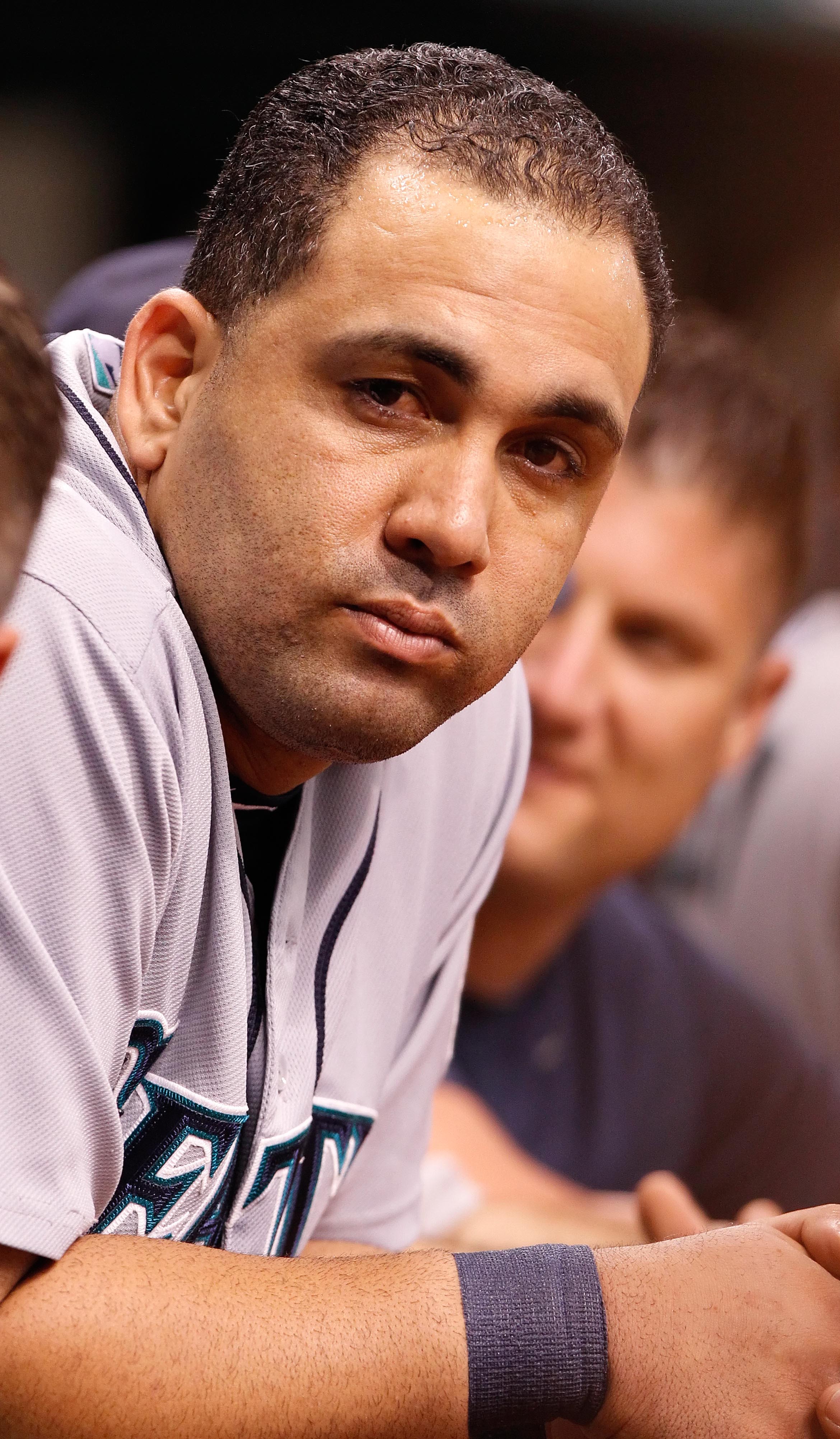
Free Agent Profile: Kendrys Morales
Kendrys Morales is one of the 15 best hitters on the free agent market this offseason. And among proven middle of the order hitters on the market, only Morales can boast of playing the 2014 season at age 30.
Strengths/Pros
Offensively, Morales doesn't stand out in any one aspect, but he doesn't have any major holes either. He owns a .280 career average, .275 over the last two seasons. He doesn't strike out a ton like Mike Napoli, and he's shown acceptable power unlike Justin Morneau or James Loney have in recent years. Morales tied Napoli with 23 home runs in 2013, sixth among all free agents. His power has been consistent since becoming a full-timer in '09, with a slugging percentage that never dipped below .449 and isolated power of .171 or better.
A switch-hitter, Morales doesn't have an extreme platoon split. Over the last two years, he's hitting .269/.338/.448 against lefties and .278/.326/.460 against righties.
Morales has one particularly impressive offensive season to his credit, as he hit .306/.355/.569 with 34 home runs and 108 runs batted in in 2009 and finished fifth in the AL MVP voting.
Morales has youth on his side, having turned 30 in June. He's younger than Napoli, Robinson Cano, Curtis Granderson, Carlos Beltran, Marlon Byrd, Shin-Soo Choo, and Nelson Cruz. The only younger free agent bat is Jacoby Ellsbury, who is viewed as a leadoff hitter and isn't in the same price bracket.
Weaknesses/Cons
Morales has a .275/.329/.457 batting line since 2012. His OBP is slightly below-average for a first baseman or designated hitter, and his power production has been about average. Agent Scott Boras blames the Mariners' home park, telling Geoff Baker of the Seattle Times in August, "A 20-homer season in Safeco is like a 30-homer season somewhere else." I'm not sure if Boras was literally suggesting Morales' park cost him ten home runs. I spoke to Dave Cameron of FanGraphs and U.S.S. Mariner, who suggested it would be more likely for the park to have cost Morales one or two home runs in 2013, especially with the fences having been moved in this year. Furthermore, Morales actually hit for more power at Safeco than on the road in 2013.
Morales provides no value defensively and is likely limited to American League teams with an opening at the designated hitter spot. He played 28 games at first base in 2012 and 31 in 2013, serving as DH the majority of the time. An inability to play the field regularly sets the bar extra-high for offense, which is part of the reason Morales was valued by FanGraphs at just 1.7 wins above replacement in 2012 and 1.2 in 2013. Among free agent position players this year, Morales' WAR isn't in the top 20. Fangraphs' WAR pegs him as a $6-8MM player, yet the price tag will surely be higher.
Morales is one of the slowest players in baseball. He cost the Mariners 5.5 runs on the basepaths in 2013, sixth-worst in the game. Even in his standout 2009 season, he was the worst baserunner in MLB.
Morales' career took a major turn on May 29th, 2010. He hit a walkoff grand slam against Brandon League, fracturing his ankle and lower tibia in his celebratory leap onto home plate. His recovery required two surgical procedures, and he didn't return until the beginning of the 2012 season. Morales seems fully recovered now, having played 134 games in 2012 and 156 in 2013.
In early October, Mariners GM Jack Zdurenick said his team will definitely make Morales a qualifying offer, which is worth $14.1MM for 2014. A week later, Jon Heyman of CBS Sports wrote that Morales will turn down that offer.
Personal
Morales played for the Cuban national team as a teenager, and successfully defected in 2004 at age 20 after more than ten failed attempts. He drew interest from teams such as the Mets, Marlins, Indians, and Rangers before landing with the Angels. Morales told Jorge L. Ortiz of USA Today in 2009 he found the culture shock jarring, but became used to the lifestyle change. In that article, which I should stress is four years old, Ortiz notes that Morales was hesitant to speak English and had limited but friendly communication with non-Spanish-speaking teammates. More recently, I've heard that Morales leads by example in the clubhouse and gets along well with teammates. Ortiz also mentions in the article that Morales is an only child who lost his father early in his life. He is married and has three children.
Market
The Mariners expressed interest in extending Morales before the trade deadline, according to Ken Rosenthal of FOX Sports, who says the team "balked at contract figures suggested by Boras and never made the player a formal offer." "I would love to bring Kendrys back," Zduriencik said on ESPN 710's Bob and Groz show in early October. Since the Mariners already consider Morales a $14MM player, they seem the team most likely to meet Boras' demands.
As a good player and not a great one, Morales' market could be hurt greatly with the draft pick cost attached. Team like the Rangers and Orioles won't be keen on losing their first-round pick to sign Morales, while a club like the Twins may not even want to surrender their second-rounder. Perhaps Boras will attempt to piggyback onto another free agent, aiming for a team that already lost a draft pick, as happened with Boras, the Indians, and Michael Bourn last winter.
Since pure designated hitters are rare in general, Morales' competition in terms of bat-only players is light, with names like Ibanez and Luke Scott. If we include first basemen, players such as Mike Napoli, Morneau, Loney, Mike Morse, and Corey Hart enter the mix.
Expected Contract
Boras will likely set out seeking a four-year contract for Morales, aiming high as a starting point. Contracts given to Cody Ross, Michael Cuddyer, and Josh Willingham the past two offseasons lend credence to the possibility of a three-year contract for Morales, though none of them were as far down the path toward full-blown DH nor did the signing teams lose a draft pick. The best comparable might be Adam LaRoche, who was tied to draft pick compensation last offseason and was unable to get a third year. Ultimately I think Morales will beat LaRoche's contract and sign a two-year, $28MM deal with a third-year vesting option.
Photo courtesy of USA Today Sports Images.
Arbitration Eligibles: Kansas City Royals
Matt Swartz has developed a very accurate model that MLBTR uses to project arbitration salaries, as explained in this series of posts. We've heard from many MLB teams and agencies that reference the projections in their work. The Royals are next in our series. Estimated service time is in parentheses, and estimated 2014 salary follows.
- Luke Hochevar (5.151): $5MM
- Greg Holland (3.028): $4.9MM
- Eric Hosmer (2.146, Super Two): $4.1MM
- Emilio Bonifacio (5.066): $3.3MM
- Felipe Paulino (5.163): $1.75MM
- Aaron Crow (3.000): $1.9MM
- Chris Getz (5.035): $1.3MM
- George Kottaras (4.149): $1.2MM
- Justin Maxwell (3.017): $1.2MM
- Luis Mendoza (3.063): $1MM
- Tim Collins (3.000): $1MM
- Brett Hayes (3.017): $900K
In Holland, Hochevar, Collins, and Crow, four mainstays of the Royals' excellent bullpen are arbitration eligible. Holland was flat-out dominant, earning an All-Star nod while posting a 1.21 ERA with 47 saves and 103 strikeouts in 67 innings. With a few more seasons near that level, he could get expensive in a hurry. There aren't any recent closers who signed extensions with three years of service, but Brian Wilson received about $19.5MM for his three arbitration years. Hochevar finally found his calling in the bullpen and was almost as good as Holland. While he's approaching the market price for a setup man, keeping him in front of Holland and shortening games to seven innings again next year is surely appealing to the Royals.
Collins and Crow had problems with free passes and scuffled at times in 2013, but are penciled into next year's pen as well. Collins is a southpaw, but otherwise the Royals are deep in right-handed relief and may be able to use part of the surplus in a trade.
Mendoza won the Royals' fifth starter job out of Spring Training, but was demoted to the bullpen in July. He was used sparingly in a mop-up role and was hit hard in his six relief appearances to close out the season. A non-tender is possible despite his low projected salary, or he could be traded. Paulino underwent Tommy John surgery in July 2012, allowing the Royals to pull off the rare salary decrease in arbitration. His rehab efforts this year were cut short due to a cyst in his shoulder, on which he had surgery in September. The Royals will be able to bring him back one more time for around the same salary, and if his recovery is going well, it's probably worth doing.
After a lousy 2012, Hosmer bounced back with a strong campaign just in time for the first of four potential arbitration years. I'd suggest an Allen Craig or Billy Butler type of extension, but Hosmer is represented by Scott Boras, and he's never done that type of deal. Elsewhere among the Royals' position players, Bonifacio and Maxwell will have roles on next year's team, with strong showings after coming over in summer trades.
Though they would be cheap to retain, Getz, Hayes, and Kottaras are non-tender candidates. Getz won the Royals' starting second base job out of Spring Training, but was optioned to Triple-A in June and missed time with a knee injury upon his return to the Majors. Hayes, a November waiver claim from the Marlins, was on and off the 40-man roster this year and was third on the Royals' catching depth chart. Kottaras, a January waiver claim from the Athletics, won the backup catcher job out of camp and held it for the season. It seems likely Hayes will lose his 40-man spot again, while Kottaras may stay on as Salvador Perez's backup unless the Royals decide they need an upgrade.
Assuming the Royals tender contracts to Hochevar, Holland, Hosmer, Bonifacio, Paulino, Crow, Kottaras, Maxwell, and Collins, they're looking at an estimated $24.35MM for nine arbitration eligible players.
Free Agent Profile: Shin-Soo Choo
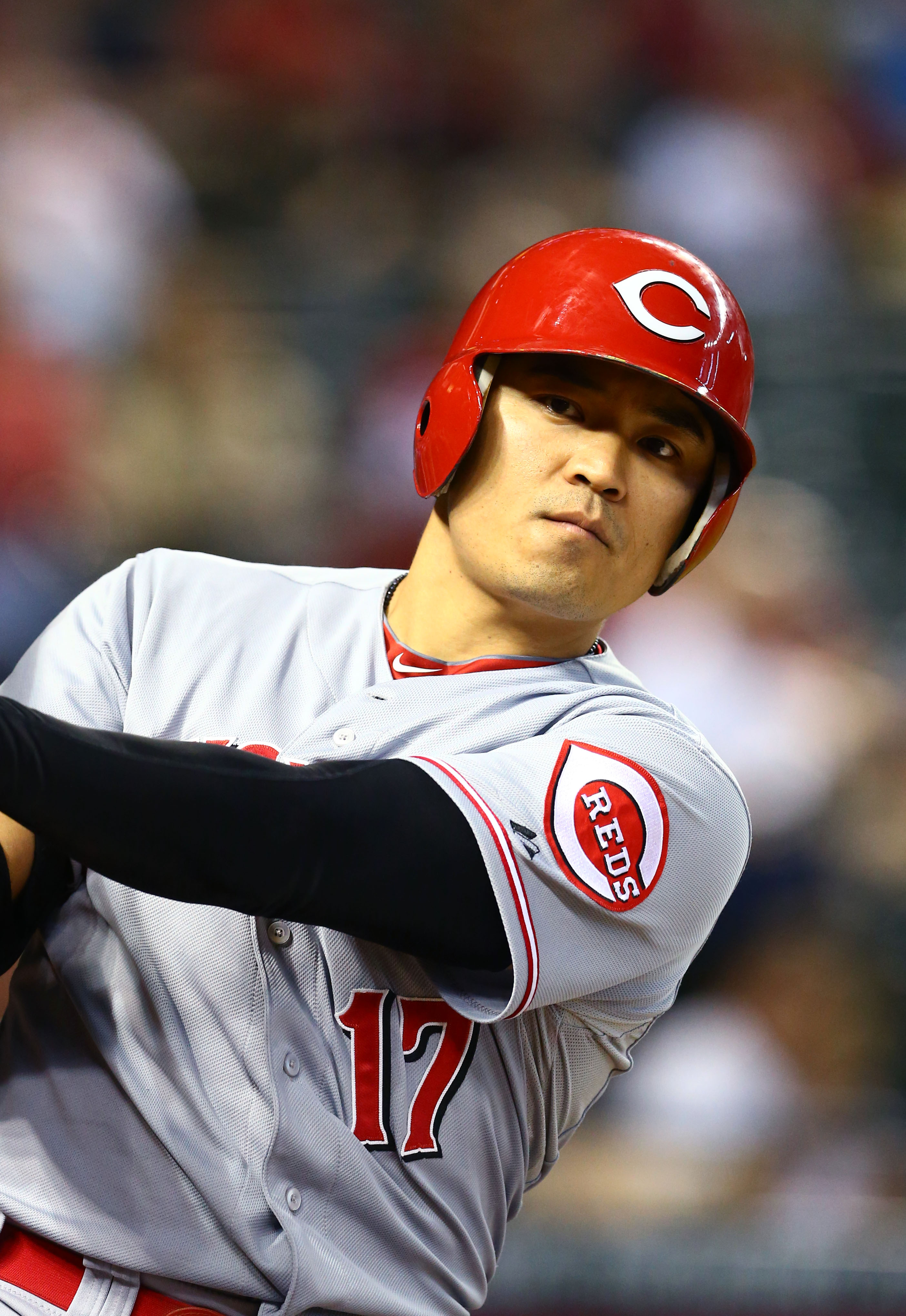
Shin-Soo Choo's .423 on-base percentage ranked fourth in all of baseball this year, and easily topped Robinson Cano for the best among all free agents. The 31-year-old South Korea native hits free agency at an ideal time, and ranks third overall on our Free Agent Power Rankings.
Pros/Strengths
Choo was the quintessential leadoff man for the Reds this year, parlaying a career-best 15.7% walk rate and a career-high 26 times hit by a pitch into that fantastic OBP. Aside from an injury-marred 2011 season, Choo has never posted an OBP below .373 in a full campaign, regularly tallying 160+ hits, 70+ walks, and around 15 HBPs. The average outfielder posted a .323 OBP this year, by comparison. Choo has batted .284 over the past two seasons and has consistently hit for average. He also hit 21 home runs this year, the third time in his career he's hit at least 20. Assuming options are picked up on Coco Crisp and Adam Lind, only seven free agents hit more homers than Choo.
Choo has generally been quite durable outside of 2011, regularly playing in 150+ games. He showed himself as a team player this year in accepting a center field assignment from the Reds, never having played the position regularly in the Majors.
Choo's baseball card numbers were excellent this year, with 107 runs scored, 21 home runs, and 20 stolen bases. It was the third 20/20 season of his career, so he can be a power/speed threat.
Weaknesses/Cons
Choo struggles against left-handed pitching, with a .207/.332/.276 line in 463 plate appearances since 2012. If the situation worsens, a platoon could be in the cards in the latter half of his contract.
Though Choo has stolen 41 bases over the past two seasons, he's also been caught 18 times. That 69% success rate suggests he should get the green light less often. Overall, his baserunning has been a mild negative in each of the past two seasons.
Choo's defense has been a large detriment in recent years, whether in his natural right field in 2012 or in center field in 2013. He had a fine offensive season in 2012, but his defense knocked his FanGraphs wins above replacement down to 2.4. Overall, that's solid but not elite performance, and it stands to reason that Choo's defense could become an even bigger problem over the next four or five years. Agent Scott Boras disagrees, telling Jon Heyman of CBS Sports Choo is a "Gold Glove type defender" in right field.
Signing Choo will require sacrificing a draft pick, as he's expected to receive and turn down a qualifying offer from the Reds.
I don't generally consider All-Star appearances as a great barometer for a player's abilities, especially with a player with Choo's skillset. But, it should be noted that Choo has never made an All-Star team.
Personal
Choo resides with his wife, two sons, and daugther in Arizona. He is the all-time batting leader from Korea in all notable categories, and is a celebrity there. He was known as one of the Indians' hardest workers, wrote Amy K. Nelson for ESPN in 2009. In 2010, he helped Korea to the gold medal in the Asian Games, earning exemption from a mandatory two-year military stint. On the negative side, Choo disappointed the Indians several months later with a DUI that included a blood-alcohol level of .201. Teammate Jack Hannahan commented after Choo's apology, "He's a great guy and a great teammate. Choo's a big leader on this team. He's tough as nails. He's being a man about it and accepting it."
Market
Choo is among the top free agent outfielders, and is joined by Jacoby Ellsbury, Curtis Granderson, Carlos Beltran, Marlon Byrd, and Nelson Cruz. "There are so many teams that need a leadoff hitter," Boras told Heyman in September. The general belief is that the Reds won't be able to afford Choo, while the Cubs, Mets, Astros, and Yankees have been named early as likely suitors. The Mets' first-round pick is protected, and while they might be willing to let their second-round pick go to sign Choo, Adam Rubin of ESPNNewYork.com says they "are not believed to be willing to give more than a Michael Bourn-type contract — four years." The Cubs may be wary of surrendering their second-round pick, plus the outfield is one of their farm system's biggest strengths. The Astros connection seems speculative at best, while the Yankees seem like a viable contender for Choo.
The Mariners, Rangers, Royals, Pirates, and Orioles also could be in the market for a corner outfielder this offseason, but not necessarily at top of the market money.
Expected Contract
Boras is the game's toughest negotiator and one of its biggest talkers. Asked by Heyman about one GM's $100MM prediction, Boras replied, "As a custom of the industry, prognostications by executives this time of year are dramatically divergent from the real market. I don't think anyone correctly predicted what Jayson Werth or Carl Crawford got." Boras also took issue with the idea of Choo being limited to five years.
A five-year deal would cover Choo's age 31-35 seasons, and those are hard enough to come by for position players. In the last five years, we've seen multiyear free agent deals for Josh Hamilton (5), B.J. Upton (5), Albert Pujols (10), Prince Fielder (9), Jose Reyes (6), Crawford (7), Werth (7), Adrian Beltre (5), Matt Holliday (7), and Mark Teixeira (8). We've seen many more on the extension front, with Hunter Pence's five-year deal the most relevant and recent comparable for Choo. Boras deserves credit for Werth's contract, but it was an outlier rather than a model, especially since no other team was clearly offering even five years. Crawford, Upton, and Reyes were significantly younger, with the latter two playing premium positions. Boras does not always succeed in his contractual goals, failing to secure a fifth guaranteed year for Michael Bourn last winter.
With Choo, I can see a lot of teams willing to offer four years, a handful willing to offer five, and perhaps one willing to guarantee six. The Pence contract seems to raise the bar for Choo, who I ultimately have signing a six-year, $100MM deal. At a reasonable $16.67MM AAV, such a deal may appeal to teams with luxury tax concerns.
Photo courtesy of USA Today Sports Images.
Arbitration Eligibles: Los Angeles Angels
Matt Swartz has developed a very accurate model that MLBTR uses to project arbitration salaries, as explained in this series of posts. We've heard from many MLB teams and agencies that reference the projections in their work. The Angels are next in our series. Estimated service time is in parentheses, and estimated 2014 salary follows.
- Mark Trumbo (3.027): $4.7MM
- Jerome Williams (5.049): $3.9MM
- Tommy Hanson (4.114): $3.9MM
- Ernesto Frieri (3.101): $3.4MM
- Kevin Jepsen (3.163): $1.4MM
- Juan Gutierrez (4.035): $1.1MM
- Peter Bourjos (3.062): $1.1MM
- Chris Nelson (2.122, Super Two): $1MM
Trumbo projects for a healthy salary his first time through arbitration, with career numbers of 95 home runs and 284 RBI and a platform year with 34 homers and 100 knocked in. His flaw is a .299 career on-base percentage, which should improve if he holds onto gains in his walk rate and his batting average recovers. There is value in a player with Trumbo's profile, especially at $4.7MM. I wouldn't be too aggressive about a long-term deal, though, and a healthy Albert Pujols would give the Angels the depth to consider trading Trumbo.
Bourjos is another trade candidate. This year a hamstring injury and wrist fracture each cost him over a month, with September wrist surgery ending his season. Angels GM Jerry Dipoto showed faith in Bourjos as his starting center fielder entering the season, and if Trumbo, Pujols, and Josh Hamilton are rotated through the designated hitter spot in 2014, there's room for everyone to start. On the other hand, MVP candidate Mike Trout is more than capable of handling center, making a Bourjos trade possible. Bourjos' value is at a low point after the injuries limited him to just 55 games in 2013, but he's also quite affordable his first time through arbitration and should remain cheap beyond 2014.
Frieri notched 37 saves in 2013, so he'll get paid through arbitration despite allowing 11 home runs with a 3.80 ERA. Agents of relievers like Joe Nathan, Grant Balfour, Joaquin Benoit, Edward Mujica, and Brian Wilson are surely hoping the Angels will throw some money at the ninth inning this winter, pushing Frieri to a setup role. Regardless, he's worth retaining at his projected salary.
The Angels' bullpen also includes arbitration eligible relievers Jepsen and Gutierrez. Jepsen, 29, averaged almost 96 miles per hour on his fastball and whiffed a batter per inning in 2013. He also allowed 41 hits in 36 innings, missing time due to a lat strain and emergency appendectomy. With a $1.4MM projection, he's worth retaining. Gutierrez, another hard thrower, won a spot in the Royals' bullpen out of Spring Training but was designated for assignment in July. The Angels added him on a waiver claim, and he posted a 5.19 ERA for them in 26 innings despite striking out 9.7 per nine innings. His spot on the 40-man roster seems tenuous, even with a low projected salary.
Williams was again a useful swingman, but with his salary projected to nearly double, the Angels might consider non-tendering him and using the funds elsewhere. Hanson is a certain non-tender, after missing significant time due to a personal matter, hitting the DL for a forearm strain, and getting a demotion to Triple-A. At just 27 years old, Hanson's former promise may earn him a big league contract on the free agent market, if his health checks out.
With two years and 122 days of Major League service, Nelson represents the unofficial Super Two cutoff for 2013. With a projected salary only $500K over the league minimum, that's not a big factor in the Angels' tender decision. Nelson joined the Angels from the Yankees on a May 18th waiver claim, but was designated for assignment less than a month later. He remained in the organization after accepting an outright assignment, and after finding his way back to the bigs hit the DL for a hamstring injury. Expect him to be cut loose by the Angels.
If the Angels tender contracts to Trumbo, Frieri, Jepsen, and Bourjos, they're looking at a projected $10.6MM for four arbitration eligible players.
Arbitration Eligibles: Baltimore Orioles
Matt Swartz has developed a very accurate model that MLBTR uses to project arbitration salaries, as explained in this series of posts. We've heard from many MLB teams and agencies that reference the projections in their work. The Orioles are next in our series. Estimated service time is in parentheses, and estimated 2014 salary follows.
- Jim Johnson (5.165): $10.8MM
- Chris Davis (4.061): $10MM
- Matt Wieters (4.129): $7.9MM
- Bud Norris (4.068): $5MM
- Tommy Hunter (4.066): $3.1MM
- Brian Matusz (3.156): $2.1MM
- Nolan Reimold (4.004): $1.2MM
- Troy Patton (3.150): $1.2MM
- Steve Pearce (4.116): $1.1MM
- Chris Dickerson (3.133): $700K
- Dan Johnson (3.168): Contract includes $800K club option for 2014. If declined, MLBTR's projected arbitration salary is equal to the league minimum $500K.
Davis put together a monster, MVP-caliber season: .286 average, 53 home runs, 138 RBI, and 103 runs scored as the Orioles' first baseman. It wasn't from completely out of nowhere, as he hit 33 home runs in 2012. Only 16 other players in baseball history have hit as many home runs in a season, and Davis led MLB in RBI this year as well.
This year Matt and I created what we call the Kimbrel Rule in our arbitration projections: a player's raise cannot be more than $1MM more than the previous record raise. Normally Davis' stats would justify a salary close to $11MM, meaning a raise of $7.5MM. The largest raise on record we've found is Jacoby Ellsbury's $5.65MM bump, so with our new rule we're capping Davis' raise at $6.65MM to put him at $9.95MM. We'll call it an even $10MM, since that's a nice benchmark for agent Scott Boras. Can Boras get there? After hitting 54 home runs in 2010, Jose Bautista sought an $8.1MM raise in arbitration, with the Blue Jays countering at $5.2MM for a midpoint raise of $6.65MM, exactly where we've capped Davis. Bautista ultimately signed a five-year, $65MM deal instead, which I don't think is going to happen with Davis and Boras. Boras has done some two-year arbitration year deals, which is more feasible if the Orioles want to avoid the arbitration process after 2014.
On the strength of a second consecutive 50 save season, closer Jim Johnson is due a large raise as well. This one is more difficult to stomach, as Johnson's salary would exceed our predicted average annual value of free agent closers Grant Balfour and Joaquin Benoit, and approach that of an elite closer in Joe Nathan. Johnson led MLB in saves in 2012 and tied for the lead in 2013, but he also led MLB in save opportunities each year. This year, in particular, his 84.7% success rate was pedestrian, ranking 23rd among those with at least 15 opportunities. There's an argument to be made that if Kevin Gregg, Brad Ziegler, or Ernesto Frieri received 59 opportunities this year, they would have saved 50 games as well.
That's not to say Johnson is a bad reliever — his ERA has been under 3.00 in each of the past three seasons, he maintains a low walk rate, and he gets tons of groundballs. Though he blew nine saves in 2013, any team would be happy to have him in their bullpen in a late inning role. The problem is the salary inflation brought about by saving 101 games over the last two seasons. This doesn't seem to concern Orioles executive vice president Dan Duquette, who told Roch Kubatko of MASNSports.com in September the O's will tender Johnson a contract and intend to bring him back in 2014. "He's established himself as one of the top closers in the game," explained Duquette, and I suppose a one-year, high-salary deal is more favorable than the three years he might get on the open market.
Wieters is another big Boras case, a year after beating our most aggressive salary projection by almost 20%. The Orioles offered an extension of at least five years around April, but it seems to have fallen short of the player's requirements. Though his counting stats and durability were good in 2013, Wieters' already-low batting average took a dip, as did his walk rate. The result was an unimpressive .287 on-base percentage. Still, Wieters is in line for another solid raise, with free agency looming after 2015. It might be time to consider a trade, if only the Orioles had a ready replacement behind the dish.
Norris, acquired from Houston at the trade deadline, bumped his strikeout rate significantly with Baltimore but also saw his rates of walks, home runs, hits allowed, and ERA rise. He's still penciled in for a 2014 rotation spot. Hunter's first full year in relief went well, with 21 holds. He'll be joined again in the bullpen by Matusz and Patton, who remain affordable.
The Orioles removed Pearce from their 40-man roster in December, and he rejoined the club on a minor league deal and made the team out of Spring Training. He had two DL stints for a wrist injury, but was otherwise solid with a .261/.362/.420 line in 138 plate appearances. I think he'll stick around.
Reimold, Dickerson, and Dan Johnson are non-tender candidates. Reimold has been limited to 56 games over the last two seasons due to neck issues. Dickerson joined the big club in April after signing a minor league deal in the offseason. He was designated for assignment in July and accepted an outright assignment, getting his 40-man roster spot back in September. Johnson spent most of the year with the Yankees' Triple-A club, landing a minor league deal with the Orioles in late August and later getting into three September games for the Major League team.
If the Orioles tender contracts to Jim Johnson, Davis, Wieters, Norris, Hunter, Matusz, Patton and Pearce, they're looking at an estimated $41.2MM for eight arbitration eligible players.