
Al Avila: “Changes Are Coming” To Tigers
Tigers GM Al Avila told team reporters in his end-of-year press conference today that the organization will be looking to shake up its approach to roster building this winter. While Avila was largely and understandably vague on specifics, he made clear that “changes are coming” to how Detroit does business, as Evan Woodberry of MLive.com reports on Twitter.
The central issue, Avila suggested, is to avoid the ongoing reliance on high-priced veterans, as Jason Beck of MLB.com reports (Twitter links). “We want to get younger,” he said. “We want to get leaner. We want to run the organization without having to go over our means. We want to stay competitive, but at the same time, this organization has been working way above its means for some time.”
The notion that the Detroit organization has been spending “above its means” is certainly notable. Unquestionably, the club — under the leadership of owner Mike Ilitch — has committed huge sums of money to acquire and retain numerous talented players at market prices. That includes not only large extensions for players like Justin Verlander and Miguel Cabrera, but also major free agent outlays for Prince Fielder (who was later traded for Ian Kinsler), Anibal Sanchez, Victor Martinez, and — most recently — Justin Upton and Jordan Zimmermann.
Many of those big contracts were handed out while the Tigers’ baseball operations were being run by Dave Dombrowski, who Avila replaced last summer. But he oversaw the signings of Upton and Zimmermann last offseason, along with acquisitions of veterans Mike Pelfrey, Francisco Rodriguez, Cameron Maybin, and Mark Lowe. And the front office reportedly talked down Ilitch from a budget-busting offer to slugger Chris Davis. While the club improved to an 86-75 record, it failed to make the postseason for the second consecutive season despite an Opening Day payroll of nearly $200MM.
Ultimately, Avila was not willing to label the team’s upcoming approach as a rebuilding effort, as Anthony Fenech of the Detroit Free Press reports (Twitter links). And he did not specifically chart a course for how the team will accomplish the stated aim of infusing youth and trimming costs. But he did suggest that some tweaks could be coming, and that they may require some changed expectations for a team that has fashioned itself a perennial contender. “It’s not going to be easy,” said Avila. “But it has to be done.”
The overall thrust of the comments appears to indicate that Detroit may look to reallocate resources as soon as the coming winter. Avila left the impression that the organization won’t be looking to add impact free agents, as Woodberry tweets. And the GM made clear that payroll won’t go up, as Fenech tweets. He also didn’t promise a decline, but seemingly suggested as much. “Usually it will be the opposite,” he said. It’s not immediately clear whether the Tigers could pursue trades of quality veterans in a bid to add younger, controllable talent, but that certainly seems to be a natural course to pursue given Avila’s statements.
Detroit may not pursue a dramatic tear-down, but the precise strategic direction remains to be seen. Avila did note that the Tigers will likely need to add a reserve catcher to pair with James McCann, suggesting his son — Alex Avila — could be considered for a return, as Fenech tweets. The organization has yet to decide on club options over Maybin ($9MM with a $1MM buyout) and Rodriguez ($6MM with a $2MM buyout), the veteran executive added and Fenech tweeted.
MLB Pushing For International Draft In CBA Negotiations
Major League Baseball is pushing hard to implement an international draft in the current wave of collective bargaining negotiations with the MLB Players Association, reports ESPN’s Buster Olney. The international draft would be a centerpiece in the changes brought forth with the new CBA, per Olney. The current agreement, which was collectively bargained in the 2011-12 offseason, expires in December.
According to Olney, current proposals have the first 10-round international draft slated for March 2018, and by the year 2021, the minimum age requirement for international draft eligibility would be 18 — a departure from the current system, which allows players to sign as early as their 16th birthday. The league would also operate facilities in the Dominican Republic where international talent could hone their skills before reaching the age of draft eligibility. Under MLB’s proposal, Olney reports that international draftees would receive bonuses that are comparable to those received by players currently selected in the annual June amateur (Rule 4) draft.
The current international signing system has come under great scrutiny, as the unregulated nature of negotiations with teams often leads to corruption. Trainers and handlers for prospects often are able to lay claim to a significant portion of prospects’ signing bonuses and, as Olney writes, at times to extract fees from teams in exchange for delivering talent. He adds that with no testing for international prospects, many teenagers are motivated to use performance enhancing drugs in order to secure a higher signing bonus on their first deal. Beyond that, there have been several harrowing tales of human trafficking to smuggle Cuban players into the country in exchange for exorbitant payments. In writing about this matter earlier this spring, Olney’s colleague Pedro Gomez cited an anonymous player that defected from Cuba within the past few years who said that he would be on the hook for payments to a cartel for the remainder of his Major League career.
As Olney notes, an international draft would be welcome by a number of small- and mid-market clubs due largely to the fact that the current measures implemented in the most recent CBA haven’t fostered the level of competitive balance for which the involved parties strove. The current CBA implemented slots and allotted bonus pools for both the amateur draft as well as international free agency, but only the penalties relating to the amateur draft have curbed spending as had been hoped.
The current international system bans any team that exceeds its league-allotted bonus pool by more than 15 percent from signing an international amateur for more than $300K for the next two signing periods — that penalty was only for one year in the first year of the system’s existence — but that hasn’t prevented teams from determining that the upside is greater than the punishment. To date, the Cubs, Red Sox, Rangers, Yankees, Dodgers and others have gone on extensive international spending sprees in order to bolster their farm systems in one fell swoop. While some small-market/lower-payroll clubs have also exceeded their limits — e.g. the Rays and Reds — the level at which they’ve exceeded international spending limitations hasn’t come close to the levels at which others have over-spent. The Red Sox, for interest, issued a $31.5MM signing bonus to Yoan Moncada (which came with a 100 percent luxury tax, bringing the total to $63MM) despite only possessing a $1.881MM bonus pool that season. The Dodgers, meanwhile, spent upwards of $90MM during that same international signing period (including luxury tax penalization).
Certainly, there are hurdles to be cleared in agreeing to any sort of international draft. Incorporating players from multiple countries, age and identity verification, PED testing/regulation and a number of other roadblocks figure to require a great deal of work, but there are incentives for all parties involved to standardize the means by which teams acquire amateur talent. MLB commissioner Rob Manfred has long been an advocate for eventually finding a way to implement an international draft, stating during Spring Training 2015: “I am of the view that at some point, for the good of the game, for the good of competitive balance, we are going to have an international draft.”
Diamondbacks Hire Mike Hazen As Executive VP, General Manager
The Diamondbacks have announced the hiring of Mike Hazen as the team’s new general manager and executive vice president. Hazen’s contract with the club is for at least four years, according to Nick Piecoro of the Arizona Republic (Twitter link). He will be officially introduced at a press conference tomorrow at Chase Field.
“Mike’s background is the perfect balance of scouting, player development and analytics, which will all play an important role going forward,” D’Backs president and CEO Derrick Hall said in a statement released by the club. “He’s a natural leader, who we feel fortunate to have been able to hire, and we welcome him and his family to Arizona.”
Hazen has spent just over one full year as the Red Sox general manager, serving as the point man under Boston president of baseball operations Dave Dombrowski. Hazen’s new job will put him in charge of Arizona’s baseball ops, as according to MLB.com’s Steve Gilbert (Twitter link), Hazen will report directly to Hall. Tony La Russa, formerly the Diamondbacks’ chief baseball officer, is still with the organization and will remain as an advisor, Gilbert reports.
Prior to becoming Boston’s GM, Hazen had worked with the Red Sox since 2006, first as the team’s director of player development and then as the assistant GM under Ben Cherington. Prior to joining the Sox, Hazen worked for five seasons in the Indians’ scouting and player development departments.
As noted by Hall, Hazen brings a wide range of executive, scouting, development and even on-the-field (he played two seasons in the Padres’ system in 1998-99) experience. At just 40 years of age, Hazen brings a decidedly new perspective to the D’Backs in the wake of the decidedly old-school methods of La Russa and former general manager Dave Stewart.
Counting the interim tenures of Bob Gebhard and Jerry Dipoto, Hazen will be the Diamondbacks’ seventh general manager since 2005. This revolving door and rumors of ownership interference with front office moves led some executives to wonder if Arizona would have trouble landing top-caliber talent to fill the position. Alex Anthopoulos and Chaim Bloom, VPs of baseball operations with the Dodgers and Rays respectively, both declined interviews. FOX Sports’ Ken Rosenthal reports that Anthopoulos and Jason McLeod, Cubs VP of player development and amateur scouting both had informal talks with the D’Backs, though not actual interviews.
That being said, the D’Backs ended up landing a highly-regarded baseball mind in Hazen, and also interviewed several other notable candidates during their hiring process. Other contenders for the job included incumbent D’Backs assistant GM Bryan Minniti, D’Backs farm director Mike Bell, former Dodgers GM Ned Colletti, Royals’ assistant GM J.J. Piccolo, MLB executives Kim Ng and Peter Woodfork and Brewers VP of scouting Ray Montgomery.
Hazen takes over an organization that finished a very disappointing 69-93 in 2016, its eighth non-winning season in the last nine years. A.J. Pollock‘s near season-long stint on the DL, Zack Greinke‘s down year and Shelby Miller‘s disastrous season were the big headline issues, not to mention an overall lack of production from the rotation and bullpen. While the Major League roster certainly still has some impressive players on hand, Hazen’s big-picture challenge will be rebuilding a farm system thinned out by ill-advised trades (i.e. the Miller deal) and a lack of international talent. Arizona was limited to signings of $300K or less for the last two international signing periods following their pool-breaking signing of Yoan Lopez in January 2015, though they’ll be able to spend freely on international players come this July 2, barring any changes to the international spending system in the new CBA.
The first order of business for Hazen will be to hire a new manager to replace Chip Hale, and a familiar Boston name could be a top contender. Red Sox bench coach Torey Lovullo is a “strong candidate” to take the Arizona job, USA Today’s Bob Nightengale reports (Twitter links), though the D’Backs also have an impressive internal candidate in Triple-A manager Phil Nevin.
Braves, Jim Johnson Agree To Two-Year Extension
TODAY: Johnson’s contract is worth $10MM in guaranteed money, The Associated Press reports. He will be paid $4.5MM in 2017 and 2018, with a $1MM signing bonus. The righty can earn up to $1.75MM in performance bonuses each season based on games finished. Johnson earns $250K for finishing 30 games, and then another $250K for hitting each of the 35, 40, 45, 50, 55 and 60-game thresholds.
OCTOBER 2: Braves reliever Jim Johnson could have hit free agency during the offseason, but the 33-year-old will instead continue his career in Atlanta. He and the Braves have agreed to a two-year contract extension, according to a team announcement. Financial details are not yet available, but the deal will keep the Moye Sports Associates client under Atlanta’s control through the 2018 season.
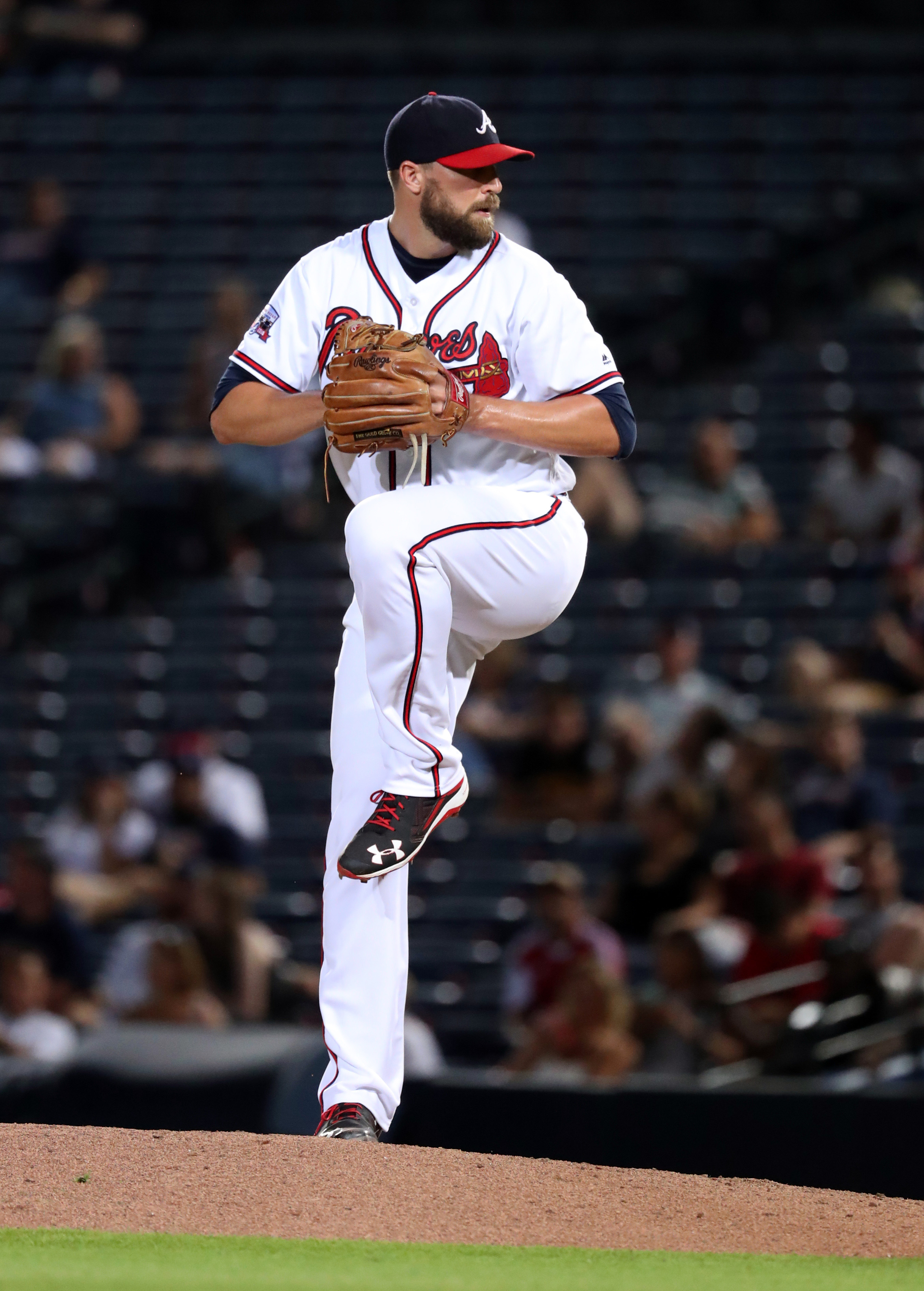
Johnson is amid his second stint as a Brave after signing a one-year, $2.5MM deal with the club last offseason. That ended up being a bargain for the rebuilding Braves, as Johnson has logged a 3.11 ERA, 9.33 K/9 and 2.83 BB/9 over 63 2/3 innings. Johnson has also kept up a career-long trend of inducing ground balls, having posted a 55 percent mark, and added 19 saves on 22 chances. Overall, 2016 has been a major bounce-back season for Johnson, who fared poorly with the Tigers, Athletics and Dodgers during the previous two campaigns.
Despite his struggles elsewhere, Johnson has clearly found a home in Atlanta. Previously, he recorded a 2.25 ERA over 48 innings with the team in 2015 before it traded him to Los Angeles in July. Part of the reason for Johnson’s success with the Braves is his strong relationship with pitching coach Roger McDowell, per Mark Bowman of MLB.com (Twitter link). Going forward, the longtime Oriole – who has 153 career saves – said Sunday the plan is for him to remain as the Braves’ closer, according to David O’Brien of the Atlanta Journal-Constitution (via Twitter). That means Johnson will continue leading a bullpen cast that should include the likes of Ian Krol, Arodys Vizcaino and Mauricio Cabrera, among others, in 2017.
It’s unknown how much interest Johnson would have garnered as a free agent, of course, but playoff contenders were zeroing in on him as a trade target over the summer. In fact, a deal nearly came to fruition in late July, and the Blue Jays, Mets and Rangers were among the clubs that eyed Johnson in advance of the Aug. 1 non-waiver trade deadline. An unidentified team also claimed Johnson on revocable waivers in August, but the Braves pulled him back after they and the other club weren’t able to agree on a trade. Now, after nearly joining his sixth major league team over the summer, he’s primed to stay in Atlanta for the next couple years.
Photo courtesy of USA Today Sports Images.
Garrett Richards Expects To Be Ready For 2017 Season
6:31pm: Richards has indeed been cleared by Yoon, meaning he’ll now prepare for Spring Training as usual rather than undergoing Tommy John surgery, Fletcher reports.
1:11pm: The news that both Garrett Richards and Andrew Heaney had damaged ulnar collateral ligaments back in May was a dagger to the hearts of Angels fans everywhere, but it now appears that Richards’ decision to elect for stem cell treatment over Tommy John surgery may have been prudent. Jeff Fletcher of the Orange County Register writes that Richards made another successful start in the instructional league yesterday, throwing 55 pitches in front of a large contingent of Angels decision-makers, including GM Billy Eppler, pitching coach Charles Nagy and owner Arte Moreno. Richards reported no issues following the start, and the team, according to Fletcher, now believes that he can return to anchor the rotation in 2017.
“The ball felt like it was coming out of my hand as good as it ever has,” said Richards. “It was cutting and sinking. I was throwing my slider for strikes and balls, same as my curveball. If I can go do that, there’s no worry in my mind. … I’m excited about pitching next year.”
Richards is set to meet with Dr. Steve Yoon for a final examination of his elbow today (including an MRI), per Fletcher. Richards may receive an additional stem-cell injection to continue to strengthen the ligament while he rests between now and the resumption of his throwing program in January. Fletcher suggests that today’s exam is little more than a formality, noting that Richards’ velocity was up to 96 mph in yesterday’s outing.
If Richards is able to successfully rehabilitate a partially torn UCL via this stem cell therapy, it could indeed be a significant development not just for him and the Angels but for future victims of UCL injuries. Richards tells Fletcher that he’s hopeful that what he believes will be a successful recovery will persuade other pitchers in his situation to try an alternative method to Tommy John before undergoing surgery.
For the Angels, the importance of an unexpected rebound for Richards can’t be emphasized enough. The team already lost both Heaney (who attempted the same stem cell treatment without the same success) and Nick Tropeano to Tommy John surgery, and both C.J. Wilson and Jered Weaver are free agents at season’s end. Not long ago, it looked like the Halos would head into the 2017 season with Ricky Nolasco and Matt Shoemaker as the only sure things in their rotation, with a hopefully healthier Tyler Skaggs and an unproven Alex Meyer as rotation options for the upcoming year as well. If Eppler and his staff can pencil Richards into that equation with any form of certainty, it should make the Angels’ offseason navigation markedly easier. Certainly, the team will still need to focus on accumulating further rotation options, but a healthy Richards is the most cost-effective impact move the Angels could make to next year’s rotation, based on his $7MM projected arbitration salary (via MLBTR contributor Matt Swartz).
Zach Duke Undergoes Tommy John Surgery
Cardinals lefty Zach Duke has undergone Tommy John surgery and also had work done to his flexor muscle, according to MLB.com’s Jenifer Langosch (via Twitter). He’ll miss all of the 2017 season, after which time he is set to reach free agency.
Duke, 33, reinvented himself as a reliever after beginning his career as a mediocre starter. A redemptive 2014 season earned him a three-year, $15MM contract with the White Sox. He had delivered 98 1/3 frames of 3.11 ERA ball to Chicago heading into this year’s trade deadline, striking out 9.9 but walking 4.4 batters per nine in that span.
St. Louis didn’t make any major splashes in the summer trade market, but did ship outfielder Charlie Tilson to the White Sox to add Duke. In doing so, the club sought not only to bolster its pen from the left side down the stretch in 2016, but also to get out ahead on its shopping list heading into 2017.
Duke provided the Cards with 23 1/3 quality frames, posting a 26:13 K/BB ratio and allowing just five earned runs on 17 hits. He has been brutal for opposing lefties in recent years, and continued that trend in 2016.
While St. Louis won’t enjoy Duke’s presence in the 2017 pen, it will remain obligated to him for the final $5.5MM of his deal. While there are internal options available, led by Kevin Siegrist, the loss could well have a rather substantial impact on the team’s offseason plans. It squarely puts the club in the market for another southpaw, and perhaps even adds to the case for picking up the option of southpaw Jaime Garcia — who could conceivably be utilized in a swingman role.
Tyson Ross Undergoes Thoracic Outlet Surgery
OCT. 13: Lin tweets that Dr. Thompson told Green he was pleased with the operation, indicating that no complications arose and no additional damage was found in Ross’ shoulder. Ross had one of his ribs removed to alleviate some pressure, as is common in TOS operations.
OCT. 12: Padres right-hander Tyson Ross, who made only one appearance during the 2016 season due to persistent shoulder troubles, will undergo surgery to relieve thoracic outlet syndrome, manager Andy Green tells Dennis Lin of the San Diego Union-Tribune. The surgery comes with a projected recovery timeline of four to six months, leaving the Friars hopeful that Ross will be ready for Spring Training. Lin adds that Dr. Robert Thompson, who is considered the nation’s leading expert on thoracic outlet syndrome, will perform the surgery on Thursday.
While not as prevalent as the dreaded Tommy John surgery, thoracic outlet surgery (TOS) isn’t uncommon. Just this season, Mets right-hander Matt Harvey and Twins right-hander Phil Hughes have undergone the procedure, which alleviates a compression of blood vessels and nerves near the shoulder — often by removing a rib from the patient. Lin notes that Ross’ teammate, Clayton Richard, underwent the surgery in 2014, as did former Padres right-hander Chris Young. Other recent TOS patients include Cardinals lefty Jaime Garcia, former NL Cy Young winner Chris Carpenter and former big league reliever Mike Adams, to name a few.
Ross, 29, was an oft-speculated trade candidate both at the 2015 non-waiver deadline and in the 2015-16 offseason, but the Padres hung onto their top starter rather than deal him for what one can only assume would have been a strong package of prospects. Acquired in a what looked to be a fairly forgettable trade back in November 2012 (Oakland sent Ross and A.J. Kirby-Jones to San Diego in exchange for infielder Andy Parrino and left-hander Andrew Werner), Ross broke out with a terrific 2013 season in San Diego. From 2013-15, the former second-round pick pitched to a 3.07 ERA with 9.2 K/9, 3.5 BB/9 and a hefty 58.2 percent ground-ball rate across 516 2/3 innings — including a pair of 195+ inning seasons in 2014-15.
That performance netted Ross a notable $9.625MM salary for the 2016 campaign, but he managed just 5 1/3 innings this season — all of which came on Opening Day for the Padres. His lost season obviously won’t result in any type of raise in arbitration, so San Diego figures to control him for the same amount in 2017 as well. If Ross is able to demonstrate his health and return to his previous levels of excellence, he could yet become an appealing trade asset for the Padres next July. Of course, he’ll be a pure rental at that point, as Ross is slated to hit free agency following the 2017 season. That fact makes the success of this surgery and a return to form next year all the more important for Ross, as a rebound would position him for a nice payday as he enters the open market on the brink of his age-31 season.
2017 Qualifying Offer Set At $17.2MM
3:36pm: Joel Sherman of the New York Post hears that one adjustment that has been discussed is that no player would be allowed to be tagged with a qualifying offer in consecutive seasons (Twitter links). That, of course, isn’t a lock to implemented this offseason — if at all — but could be applied from this point forth.
Of course, that adjustment would come with its own potential pitfalls. Many teams that part with a first-round pick to sign a free agent to a one-year deal, as the Rangers did with Desmond and the Cubs did with Fowler last offseason (technically speaking, anyhow, as they’d have netted a pick had he signed elsewhere), do so knowing that the sting will be lessened by the ability to extend a QO the following season in the event that the player performs well. Removing that incentive could make teams even more reluctant to sign borderline free agents coming off of a down season.
2:27pm: The qualifying offer is expected to rise to $17.2MM this offseason, according to Ken Rosenthal of FOX Sports (via Twitter). He adds that the QO system is likely to “remain in place,” under the new CBA, albeit with certain “adjustments.”
The specific nature of said adjustments, of course, remains to be seen, but the new figure represents a fairly significant boost to last year’s qualifying offer value of $15.8MM. In fact, that $1.4MM jump in value is the largest single-year increase in the qualifying offer’s value since the system was first implemented in the 2012-13 offseason. In that first year of the system’s existence, the QO was valued at $13.3MM — a figure that rose to $14.1MM in the 2013-14 offseason, $15.3MM in the 2014-15 offseason and $15.8MM last winter. The stark increase in this year’s total is reflective of the overall rise in salaries throughout the game, as the QO’s value is determined by averaging the salaries of Major League Baseball’s 125 highest-paid players.
For those who aren’t familiar with the QO system or need a quick refresher, it’s fairly simple. Teams that wish to receive a compensatory draft pick for the departure of a free agent must extend a one-year “qualifying offer” to that free agent, who has a week to decide whether to accept or reject the QO. If the player accepts, he is considered signed for the following season and cannot be traded without his consent until the following June (as is the case with any free agent who signs a Major League contract in the offseason). If the player rejects the QO, then he may negotiate with all 30 teams, and the team that ultimately signs him must forfeit its top unprotected draft pick. (The top 10 selections in each year’s draft are protected, so some clubs may only need to part with a second-round pick.) If a team signs multiple free agents that rejected a qualifying offer, they forfeit their top remaining unprotected pick in each instance. Players are only eligible to receive a qualifying offer if they spent the entire season with the same team. (In other words, traded players and midseason signees cannot receive a QO.)
Until the 2015-16 offseason, no player had accepted a qualifying offer. Generally speaking, the downside to rejecting had been fairly minimal, at least in relation to the upside, as even those who rejected and found reluctance when negotiating with potential suitors still found one-year deals at or near the value of the qualifying offer (e.g. Ervin Santana signing for one year at $14.1MM with the Braves late in the 2013-14 offseason). However, last winter, the trio of Matt Wieters, Colby Rasmus and Brett Anderson accepted their QOs and locked in one-year, $15.8MM salaries for this season. With the continued rise of the offer’s value, it becomes more and more enticing for free agents to accept the deal — particularly those whose free-agent earning capacity is limited to a two- or three-year contract.
MLBTR’s Steve Adams recently ran down a list of potential qualifying offer candidates in the latest MLBTR Mailbag, noting that a handful of players — Yoenis Cespedes (once he opts out of his contract), Edwin Encarnacion, Kenley Jansen, Justin Turner, Jeremy Hellickson, Jose Bautista, Dexter Fowler and and Mark Trumbo — are locks to receive the offer. While not all of those players will necessarily receive a contract worth more than $17.2MM on an annual basis, each has a strong case for a free-agent deal of at least three years at a significant annual value — more than enough to outweigh the risk of playing one year at a higher rate but incurring an injury or notable downturn in performance that would cause his stock to diminish the following offseason.
There are plenty of other elements of the system, of course, and you can check out this old but comprehensive overview of the system for more. For an understanding of why the qualifying offer matters so much, you can refer to MLBTR owner Tim Dierkes’ previous explanation of why avoiding the qualifying offer is so important for a free agent’s value.
Braves Name Brian Snitker Manager, Hire Ron Washington As Third Base Coach
The Braves announced on Tuesday morning that they’re dropping the “interim” label from Brian Snitker’s title and naming him their full-time manager. Additionally, the Braves announced that Ron Washington has been hired as the team’s new third base coach, as Bo Porter will become a special assistant to general manager John Coppolella. Snitker receives a one-year deal for the 2017 season with a club option for the 2018 campaign as well.
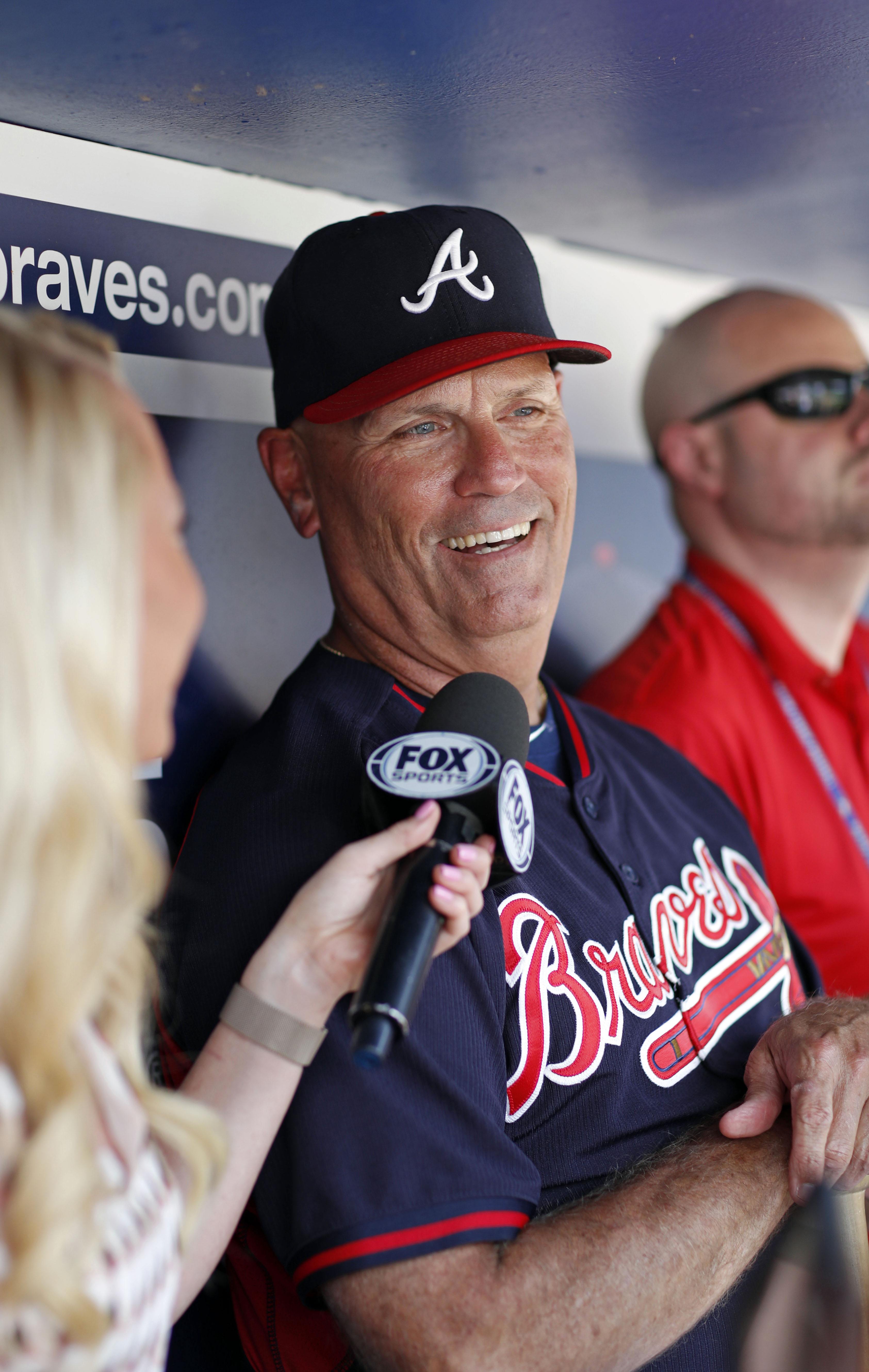
In addition to those moves, the Braves exercised their 2017 options on bench coach Terry Pendelton, first base coach Eddie Perez, hitting coach Kevin Seitzer and assistant hitting coach Jose Castro, adding that bullpen coach Marty Reed will return to the team in 2017 as well. Pitching coach Roger McDowell is the only 2016 coach that won’t remain with the club, as was reported last week, and he’ll be replaced internally by minor league pitching coordinator (and former Rays pitching coach) Chuck Hernandez.
“Brian earned this opportunity through his dedication to the Braves and to our players,” said Coppolella of his new full-time manager, via press release. “We are excited for the energy and momentum he will bring into SunTrust Park next season.”
The 60-year-old Snitker (61 next week) was named interim manager earlier this season after the Braves dismissed Fredi Gonzalez from the post that he had occupied since the 2011 campaign. The 2017 season, incredibly, will be the 41st year that Snitker has spent with the Atlanta organization, Atlanta notes in its release. He’s spent 20 of those seasons as a manager at the minor league level, overseeing clubs in Triple-A, Double-A, Class-A Advanced, Class-A and Rookie ball.
Suffice it to say, while Snitker may not have been a household name at the time he was named interim skipper earlier this year — and may still not be a household name now — he’s been a mainstay in the Braves organization and has earned the trust of Coppolella, president of baseball operations John Hart and vice chariman John Schuerholz over the life of his lengthy career with the team. Beyond his four decades of loyalty, the turnaround to which Snitker guided the rebuilding Braves in 2016 was indeed impressive. Inheriting a 9-28 club, Snitker saw the Braves finish at a much-improved 59-65 pace — including a 37-35 record in the season’s second half. While some of that success, certainly, can be attributed to the arrival of players like Dansby Swanson and Matt Kemp, in addition to rebounds from veterans Nick Markakis, Jim Johnson and others, David O’Brien of the Atlanta Journal-Constitution and Mark Bowman of MLB.com have repeatedly reported on how well respected Snitker became in the clubhouse early on as they began to report over the past week that he had emerged as the favorite to land this position.
Snitker’s primary competitors in the search were longtime Padres manager Bud Black and the man who will now serve as his third base coach: Washington. O’Brien and Bowman have been suggesting that Snitker was the likeliest candidate to come away with the job over the past week, however, and multiple reports yesterday indicated that Snitker was the favorite, with an announcement expected in the very near future. Washington will depart the Athletics organization, where he also served as third base coach, to join the Braves, and Coppolella expressed excitement over the addition of the former Rangers skipper to his coaching staff in the aforementioned press release:
“Ron’s background and success as a Major League manager will be an asset to everyone on the club,” said Coppolella. “His tireless work ethic, up-beat attitude and tremendously high baseball IQ will benefit our players and our staff.”
Black, meanwhile, will have to wait a bit longer to find himself at the helm of another big league club, though his reputation, experience and industry-wide respect make it likely that he’ll land such a post at some point in the future if he remains interested in pursuing such opportunities.
Photo courtesy of USA Today Sports Images.
Athletics Outright Henderson Alvarez, Jarrod Parker, Felix Doubront
SUNDAY: Alvarez, Parker and Doubront have all elected to become free agents, Susan Slusser of the San Francisco Chronicle reports (Twitter link).
FRIDAY: The Athletics have outrighted pitchers Henderson Alvarez, Jarrod Parker and Felix Doubront to Triple-A Nashville, reports MLB.com’s Jane Lee (Twitter link). Each of the three was a likely non-tender candidate, as Alvarez recently underwent shoulder surgery, while Parker underwent a UCL/flexor tendon repair back in April and Doubront underwent Tommy John surgery in April as well. Though they can technically accept the outright assignments, each of the three is able to reject in favor of free agency, and that’s the likeliest outcome in each instance.
Alvarez inked a one-year, $4MM pact with Oakland after being non-tendered by the Marlins last offseason but was never able to fully get back on track following his first shoulder surgery. Ultimately, it was determined that he required a second procedure to attempt to repair a balky shoulder that has allowed him to pitch just 22 1/3 innings since a brilliant 2014 campaign (2.65 ERA in 187 innings) that now looks like a distant memory. He’ll draw interest as a free agent again due to the upside he brings, but securing a Major League contract isn’t a given this time around.
Parker, meanwhile, was once one of the more promising young arms in the game and looked like a mainstay in the Oakland rotation before a pair of Tommy John operations derailed his career. Now 27 years old (28 next month), Parker has battled through both of those procedures and an olecranon fracture and underwent what was said to be an experimental procedure to repair (but not replace) his ulnar collateral ligament and flexor tendon this spring. The hope, of course, is that he can work his way back to a big league mound, but to call that goal an uphill battle in light of his myriad arm injuries is perhaps an understatement.
As for Doubront, he could theoretically be ready to return to the mound next April or May, as his TJ procedure was performed in the first half of this past April. Of course, it’s far from certain that his recovery from the procedure will go smoothly and allow that presumptive target date to be realized. Parker and many others in recent years (including New York’s Zack Wheeler in 2016) serve as reminders that while many arms are able to bounce back and return to a mound in 12 to 14 months, Tommy John surgery is by no means a guarantee and is often accompanied by setbacks that lead to considerably lengthier absences.
With these moves, the A’s have now shed an incredible 12 players to whom they had committed either 40-man roster spots or 60-day DL spots in a span of roughly 48 hours. Yesterday, Oakland outrighted Eric Sogard, Fernando Rodriguez, Andrew Lambo, Tyler Ladendorf, J.B. Wendelken and Donn Roach, while Matt McBride and Chris Smith were outrighted on Wednesday this week. And, on top of those players that went unclaimed by other clubs, versatile infielder/outfielder Arismendy Alcantara failed to make it through outright waivers and was claimed by the Reds.