
Tigers Exercise Brad Ausmus’ Option
TODAY: Detroit has formally announced that Ausmus will be back next season. The press release makes no mention of any additional contract years, so it doesn’t seem that he has received any longer-term assurances.
YESTERDAY: The Tigers will exercise manager Brad Ausmus’ option for 2017, reports Chris McCosky of the Detroit News (Twitter link). Under Ausmus, the Tigers have gone 250-234 – including 86-75 in 2016 – with one playoff appearance in three seasons.
Detroit fell 2.5 games short of an American League wild-card spot this year, and there have been questions over the past several months regarding Ausmus’ job security. Ausmus seemed frustrated with his status over the weekend, telling reporters to “ask whoever’s managing next year” when they inquired about how the Tigers plan to use reliever Bruce Rondon in 2017. Ausmus also said he has “kind of been an interim manager for like two years.” Nevertheless, the former big league catcher expressed a desire to continue as Detroit’s skipper.
“It’s going to be between me and Al,” he said, referring to general manager Al Avila. “If Al thinks he would rather have someone else, I would respect his decision. If Al would like me to do it, I would love to do it. But to speculate over it is a waste of time.”
Avila was scheduled to meet with Ausmus sometime this week to discuss the latter’s job. It now appears Ausmus will get another chance with a Detroit team that has gone back-to-back years without a playoff berth.
Tony La Russa Won’t Run D-Backs’ Baseball Ops; Future With Org Uncertain
The Diamondbacks continued a massive organizational overhaul today, firing GM Dave Stewart and manager Chip Hale after previously parting ways with VP DeJon Watson. Chief Baseball Officer Tony La Russa remains with the team at this point, but as MLB.com’s Steve Gilbert reports, he’ll no longer run the team’s baseball operations department.
A new decisionmaker — whether a president of baseball operations, general manager, or both — will take over the reins in molding the team’s roster. At this point, it’s not known when or how the organization will go about filling the void, but president and CEO Derrick Hall says that the new hire will be expected to put greater emphasis on analytics.
Statistical analysis was one of several areas that observers have cited in criticizing the most recent iteration of the D-Backs’ oft-changing front office mix. La Russa was brought on as CBO in hopes that he’d oversee a successful organizational decisionmaking structure, but things haven’t turned out as hoped (as detailed in the post on the firing of Stewart and Hale). In the statistical arena, La Russa has been openly skeptical of the role of analytics, and raised many eyebrows with his hiring of long-time acquaintance — and first-time baseball front office man– Ed Lewis as director of baseball analytics and research.
Arizona’s top brass — Hall, who just inked an eight-year extension, and managing general partner Ken Kendrick — claimed a share of the responsibility for the failings. But they suggested that it was necessary “to turn the page and hit reset and see if we can’t get going in the right direction,” as Hall put it, by starting fresh with a new GM and manager. Per Kendrick, the organization “did not see the trend line at present moving in the right direction.”
Whether La Russa will be a part of the reshaped front office is an open question that was apparently not fully resolved in a lengthy meeting this morning (as Jon Heyman of Fan Rag notes on Twitter). Talks will continue as to what, if any, role may make sense for the Hall of Fame manager, whose foray into the D-Backs’ front office was his first in that capacity.
Diamondbacks Fire Dave Stewart, Chip Hale
The Diamondbacks have announced that they’ve fired GM Dave Stewart and manager Chip Hale. There was no immediate word on whether the Snakes intended to retain chief baseball officer Tony La Russa. “We are still discussing what the appropriate role for Tony La Russa will be going forward,” Kendrick said in a statement.
The decision on Stewart comes as little surprise, as it had previously been reported that owner Ken Kendrick was slated to meet with La Russa today to discuss the statuses of both Stewart and La Russa, both of which seemed to be in jeopardy. Hale’s departure, meanwhile, will allow Stewart’s successor to be involved in choosing a replacement.
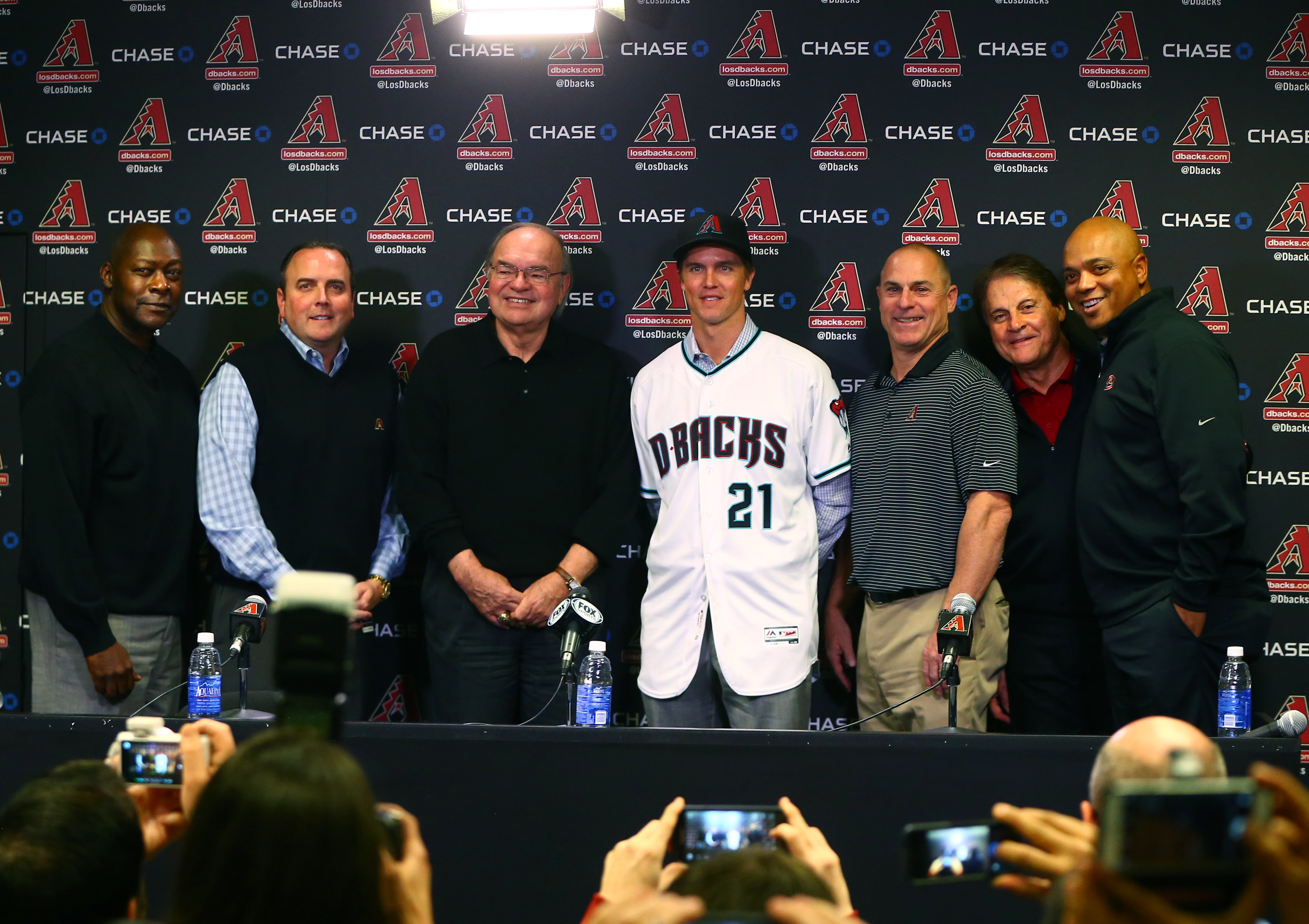
The Diamondbacks hired Stewart in September 2014, so his tenure with the team was very short for a GM. During that time, however, the team’s front office made a number of questionable moves, chief among them the trade that sent 2015 first overall pick Dansby Swanson, along with outfielder Ender Inciarte and pitcher Aaron Blair, to Atlanta for starter Shelby Miller and minor leaguer Gabe Speier. Miller has struggled terribly thus far in Arizona, posting a 6.15 ERA, 6.2 K/9 and 3.7 BB/9 in 101 Major League innings in 2016. Swanson, meanwhile, made it all the way to the big leagues in just his second pro season and played well, batting .302/.361/.442 down the stretch for the Braves.
Perhaps just as important as the actual result of the deal was the view of player valuation it represented. Swanson alone would been a very steep price to pay for Miller, since Swanson was a premium prospect who had done nothing to sully his status as a former top overall pick. Stewart’s approach was also widely questioned earlier in his tenure after a less consequential deal in which he traded Bronson Arroyo and another former first-round pick, Touki Toussaint, to Atlanta for Phil Gosselin in a deal designed to clear about $10MM in Arroyo’s salary from the Diamondbacks’ books.
The Diamondbacks hoped to position themselves as contenders for 2016, not only acquiring Miller but also signing Zack Greinke to a massive $206.5MM deal. Greinke was serviceable but underwhelming for Arizona, posting a 4.37 ERA, 7.6 K/9 and 2.3 BB/9 in his first season there. The Diamondbacks also suffered a number of other setbacks (beginning with a costly injury to star outfielder A.J. Pollock) and they won just 69 games, miles below expectation. (Stewart himself had gone so far as to say preseason projections that the team would win 78 or 79 games were “a joke.”)
Earlier in his tenure, Stewart’s Diamondbacks also signed Yasmany Tomas to a $68.5MM deal that, so far, has led to underwhelming results. The 25-year-old Tomas did bat .272/.313/.508 this season, but struggled so much defensively that his value was limited. For his career in the big leagues, Tomas has -1.2 fWAR.
Not all of Stewart’s moves have been unsuccessful. He acquired shortstop Jean Segura in a swap that has worked out well so far, and his trade for Robbie Ray has also mostly been a success. On balance, though, his decisions have arguably left the organization in worse shape than when he took office. While others share significant responsibility for some of those moves — the Greinke signing, in particular — there are many questions with the organization’s direction.
The process, even more than the decisions themselves, has come under fire since La Russa took command and hired Stewart. Arizona took a notably different approach from the get-go, but increasingly it seemed that the unique operating philosophy was not only potentially problematic in its own right, but also came with other concerns. ESPN.com’s Keith Law detailed a long list of missteps, some of which reflected an apparent failure to grasp rules and contemporary valuation principles. That includes the mismanagement of draft and international funds, such as the bonus pool-busting signing of Yoan Lopez — which cost Arizona a chance to acquire other talent to add a prospect who outside observers aren’t terribly fond of.
Now that change is afoot, a new dugout chief will also be sought — presumably, after the baseball ops department is sorted out. Hale, after all, was the hand-chosen skipper of La Russa and Stewart, though they may not have ended up being supporters. Reports suggested that Arizona’s ownership group intervened to prevent La Russa and Stewart from sending the now-former skipper out of town earlier this summer.
That proved only to be a temporary hold, though, and Hale will wrap up his first stint in charge of a dugout after a rough 2016 campaign. His original contract only promised two years — both of which are now in the books with a 148-176 overall record — but also included an option year. The organization exercised that provision at the outset of spring camp this year, so Hale will be entitled the guaranteed money.
It isn’t immediately clear what led to Hale’s dismissal beyond the fact that it affords a clean slate. But whatever the particular internal considerations were in this case, it’s not often that a manager survives the kind of season that the D-Backs just wrapped up — in which sky-high expectations (whether or not they were reasonable) went entirely unmet.
Photo courtesy of USA Today Sports Images.
Walt Weiss Resigns As Rockies Manager
Walt Weiss has resigned his post as manager of the Rockies, the team has announced. Weiss’ three-year contract expired at the end of the season. Glenallen Hill, the Rockies’ Triple-A manager, could be a candidate to replace him, MLB.com’s Tracy Ringolsby tweets.
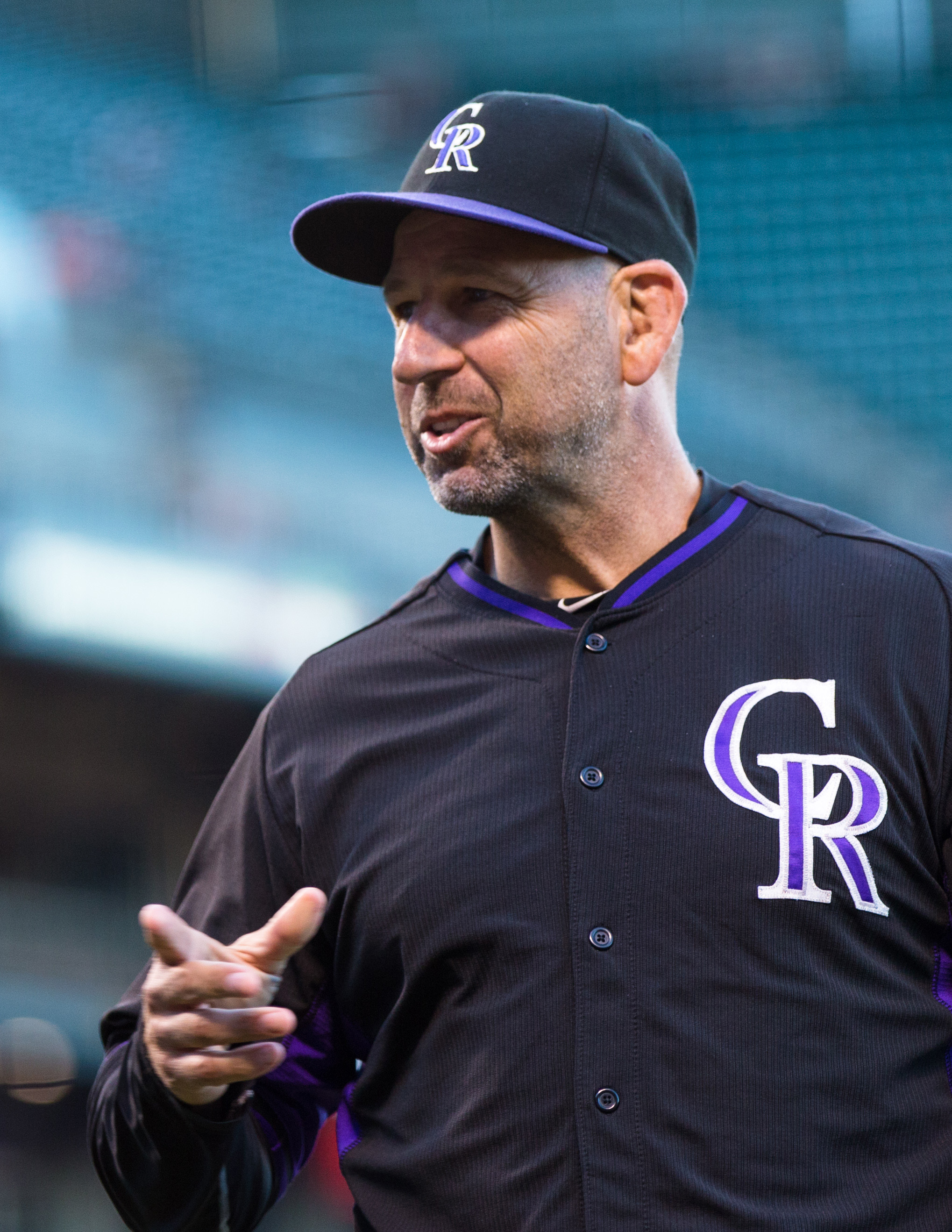 Weiss and GM Jeff Bridich have not always had a strong working relationship, leading to reporting yesterday from Patrick Saunders of the Denver Post that Weiss was not long for his job as manager. Notably, Saunders reported, Weiss was not a part of the decision-making that led to the acquisitions of Jake McGee, Chad Qualls, Jason Motte and Gerardo Parra, all of whom have struggled this year.
“The working relationship is evolving and continues to evolve,” said Bridich. “There has been mostly good communication, some great communication and some periods where he’s busy and I’m busy and we haven’t communicated as well as we could have. That’s a natural thing for the job that he has and the job that I have.”
Weiss, for his part, says his relationship with Bridich “wasn’t healthy, wasn’t productive,” according to FOX Sports’ Ken Rosenthal (Twitter links). He spoke to Rockies owner Dick Monfort yesterday and tried to find compromises that would allow him to stay on the job, but ultimately elected to step aside instead.
Weiss was not Bridich’s hire — Weiss replaced Jim Tracy prior to the 2013 season, when Dan O’Dowd helmed the Rockies’ front office and Bridich was their senior director of player development. Weiss has posted a 283-365 record in four years in Denver. This year’s 75-87 record was his best.
The Rockies’ failures during that period, however, surely are not entirely Weiss’ fault, as the team did not figure to be a serious contender heading into any of his four seasons. With some exceptions (particularly Nolan Arenado, Trevor Story, Jon Gray and David Dahl), the team has struggled to assemble a young core in which to build, and it seemingly stalled in choosing a direction once it became clear that the team it had built around Troy Tulowitzki and Carlos Gonzalez wasn’t a winner. This season, the Rockies were dragged down by poor performances from Parra, Cristhian Adames, Ryan Raburn and much of their bullpen.
“I think Walt has done everything he can do, with what he’s had to work with,” said infielder DJ LeMahieu, via Saunders. “I think he’s done a good job, but I don’t know what’s going to happen. In my opinion, things have improved a lot over past years and I think we are going to be very good next year.”
Before becoming manager, the 52-year-old Weiss had worked as a special instructor and adviser in the Rockies organization. He played for 14 seasons in the big leagues, suiting up with the Athletics, Marlins, Rockies and Braves.
Photo courtesy of USA Today Sports Images.
Twins Hire Derek Falvey To Oversee Baseball Operations
The Twins have officially announced that they’ve hired Indians assistant GM Derek Falvey as their executive vice president and chief baseball officer. Falvey will join the Twins once the Indians’ season is over. Rob Antony will continue as interim GM until then. Twins Daily’s Jeremy Nygaard and ESPN’s Keith Law were among the first to tweet that the Twins would hire Falvey, with Yahoo! Sports’ Jeff Passan tweeting that Falvey had emerged as a favorite.
“I believe the addition of Derek Falvey to the Minnesota Twins will markedly enhance our organizational excellence and bring championship baseball back to Minnesota,” says Twins Owner Jim Pohlad.
“It’s a tremendous honor to have the opportunity to lead the Twins baseball operation. This is a proud, resilient franchise, and I’m eager to return championship-caliber baseball to the Twin Cities,” says Falvey. “We will work diligently and collectively to select and develop top-performers, advance our processes, and nurture a progressive culture that will make fans across Twins Territory proud.”
The Twins had been linked to a number of young executives as they look for a replacement for recently dismissed GM Terry Ryan. Among the other names known to have been in the mix were Rays vice president of baseball operations Chaim Bloom, Royals assistant GM J.J. Picollo and Cubs senior vice president of player development Jason McLeod.
The 33-year-old Falvey will become one of baseball’s youngest executives and represents a significant departure from the status quo for Minnesota. His rise to the position of president is a surprise, to say the least, as he’s spent less than one full season as an assistant GM. Falvey was promoted to that post last October in conjunction with the promotions of Chris Antonetti to president of baseball operations and Mike Chernoff to general manager. Prior to that, he spent four seasons as Cleveland’s director of baseball operations. The Boston native holds a degree in economics from Trinity College, where he also played baseball, and has contributed to the Cleveland front office in many capacities. In addition to his longstanding role in the team’s player development process, Falvey has overseen the advanced scouting department and worked with Antonetti and Chernoff on “financial, statistical and contractual dealings,” per the Indians’ media guide.
Falvey figures to be the first of multiple new hires for the Twins, who reportedly will allow their new president to hire a general manager to work underneath him as well. Beyond that, changes atop a baseball operations hierarchy often lead to personnel shuffling further down the pecking order, and it shouldn’t come as a surprise if further new faces join the Minnesota front office. One name that won’t be changing, however, is manager Paul Molitor, whom owner Jim Pohlad has already stated will remain his manager in 2017.
White Sox Replace Robin Ventura With Rick Renteria
The White Sox have officially announced that bench coach Rick Renteria will replace Robin Ventura as their manager. Daryl Van Schouwen of the Chicago Sun-Times was the first to report the move. The White Sox had a meeting with Ventura last night, at which he intended to resign, according to USA Today’s Bob Nightengale (Twitter link).
[RELATED: Three Needs: White Sox]
“Rick is incredibly well respected within the game as one of the top baseball men,” said GM Rick Hahn in a statement (via Colleen Kane of the Chicago Tribune on Twitter). “He is a knowledgeable teacher of the game who loves to develop players and spends hours watching video looking for any nuance that gives us an edge. He is well respected within the clubhouse, and his ability to communicate in English and Spanish is a real plus as he interacts with our players.”
Nightengale reported Wednesday that the White Sox were hoping to re-sign Ventura, whose contract would expire at season’s end, if he wanted to return. But Ventura is content to move on, per Van Schouwen, who adds that the 49-year-old’s relationship with the organization is “amicable” and devoid of hard feelings.
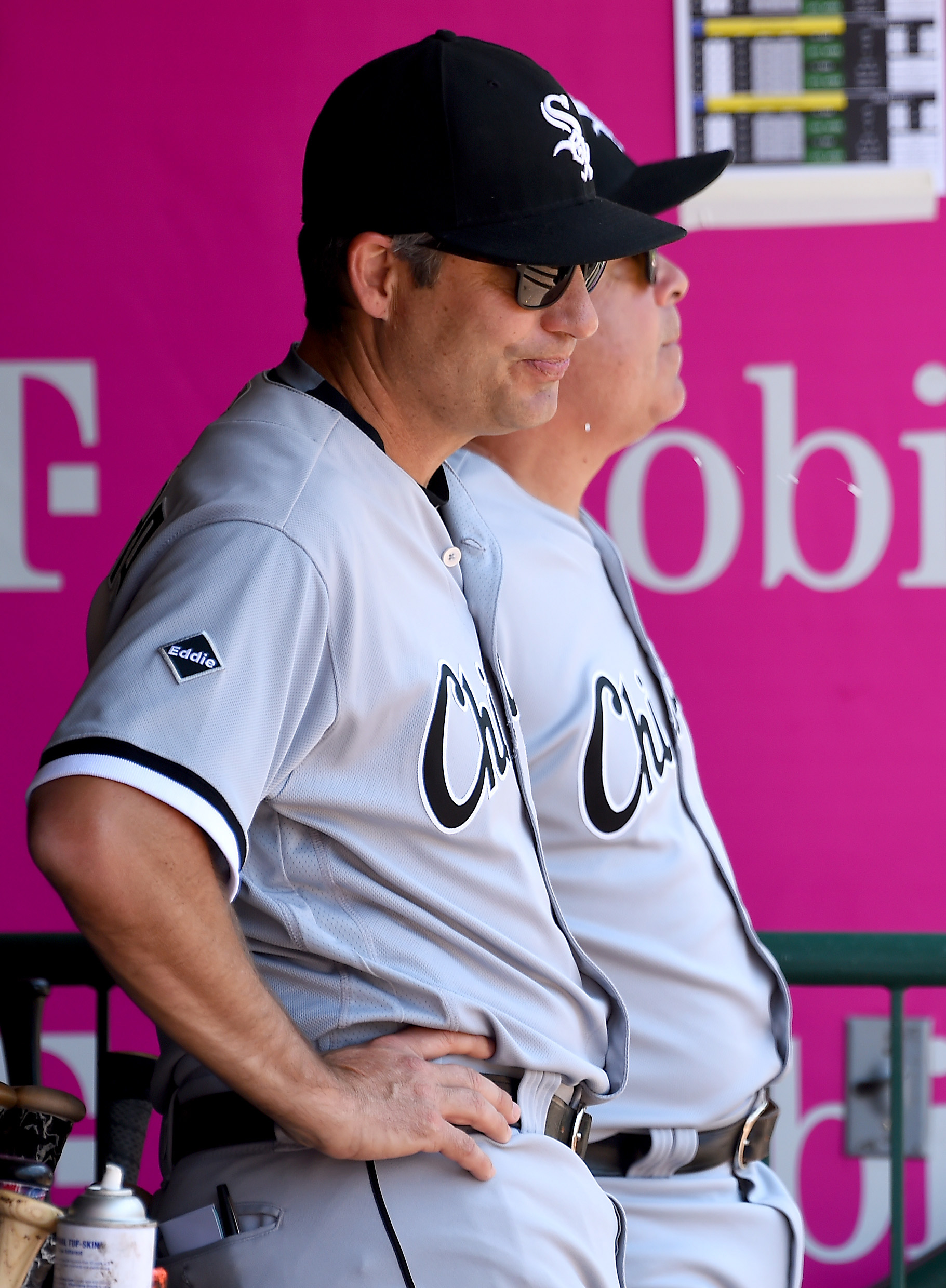
Ventura, a former third baseman who spent the majority of his 16-year major league career with the White Sox, took over their dugout in 2012. Unfortunately for Ventura and the club, his stint as its manager hasn’t been nearly as successful as his playing days were, though it’s not as if Ventura has been given excellent rosters during his five years as Chicago’s skipper.
Under Ventura, the White Sox have gone 375-433 with only one above-.500 campaign and no playoff berths, thereby extending their postseason drought to eight years. The Ventura-led Sox got off to an excellent start this year with a season-best 24-12 mark on May 13, but they’ve gone just 54-71 since and now own the American League’s fifth-worst record (78-83).
In Renteria, the White Sox have someone with previous managerial experience in the city of Chicago. Renteria oversaw a rebuilding Cubs team that finished 73-89 in 2014, and the 54-year-old has drawn praise this season from Ventura and other White Sox coaches, notes Van Schouwen. Renteria is also a fluent Spanish speaker, which is an obvious asset.
“He’s just a good baseball guy,’’ Ventura said of Renteria. “You see the work he puts in, all the little things he does and [what he can do for] our Latin guys. His interaction. He does a lot of stuff people don’t see. Gets there early, does video work. It’s been great.’’
While the White Sox are set to move forward with Renteria, it remains unknown which approach they’ll take during the offseason. A rebuild is possible, it seems, as left-handers Chris Sale and Jose Quintana would command enormous returns if the Sox were to trade one or both. However, owner Jerry Reinsdorf is reportedly reluctant to take that route, meaning Renteria could be at the helm of a team that aims to end its lengthy skid next season.
Kane was first to note (via Twitter) that Ventura had confirmed he would not return as the White Sox’ manager. FOX Sports’ Jon Morosi tweeted that the White Sox planned to announce Renteria as their manager on Monday.
Photo courtesy of USA Today Sports Images.
Cardinals Will Decline Matt Holliday’s 2017 Option
5:53pm: Holliday has issued a statement thanking the organization, his teammates, and the fans for his time with the Cards, via MLB.com’s Jenifer Langosch. He, too, kept the door cracked for a return but acknowledged that this could be the end of his tenure. (The statement, notably, does not seem to indicate whether or not Holliday has decided whether he’ll continue playing.)
“It has been an honor to play in front of such great fans and for such an historic organization,” says Holliday. “I can honestly say it has been a dream come true. While I’m disappointed this could be it here in St. Louis, I understand that it might be time to move on.”
5:38pm: The Cardinals anticipate declining the club’s 2017 option over outfielder Matt Holliday, per GM John Mozeliak, as Derrick Goold of the St. Louis Post-Dispatch was among those to report. (Jon Heyman of Today’s Knuckleball noted earlier this week that the Cardinals do not plan to pick up the option.) Holliday will, however, be activated from the DL in the hopes that he can make at least one final appearance before the St. Louis faithful.
That doesn’t necessarily mean that Holliday won’t return, of course, but it’s not really known whether there’s serious interest on either side in negotiating a new contract. That the team appears to be giving the long-time star a sendoff suggests the sides could be preparing for a split, but GM John Mozeliak wasn’t willing to rule out a continuation of what has been a productive relationship.
“Speaking in absolutes and saying there’s no chance of him coming back — I’m not prepared to do that,” said Mozeliak. “We haven’t had our offseason meetings.”
Ulimately, the Cards were never particularly likely to pick up the option for the veteran’s age-37 season at a heavy $17MM salary. But the decision to pay a $1MM buyout instead became clear given Holliday’s middling output and injury troubles down the stretch.
Holliday remains an above-average hitter, though his .242/.318/.450 batting line represents a rather stark falloff in overall productivity from the consistently excellent batting results he logged for most of a dozen prior seasons. With poorly-rated fielding and baserunning added to the uncertainty at the plate, the cost was just too great.
Still, there’s plenty of reason to think that Holliday could remain a useful player — even if a trip to the American League, with frequent or even full-time DH usage, makes the most sense at this stage. Odds are that there would be plenty of organizations with at least some interest in that kind of arrangement, particularly given the high regard in which Holliday is held around baseball.
For the Cards, who say they’re looking to improve on defense, Holliday is something of an odd fit moving forward. If he is willing to accept a reduced role, he might still remain a plenty useful piece by sharing time at first base, appearing occasionally in the corner outfield, and otherwise functioning as a bench bat. But regular playing time probably won’t be on the table, as the team seems lined up to add a replacement or instead to acquire a new center fielder while bumping Randal Grichuk to the corner.
It has been something of an odd final two seasons in St. Louis for Holliday. Both have been limited by injuries, and both have involved very different types of performance issues. Last year, his power disappeared, but he was able to maintain a robust .394 OBP. That mark fell by 76 points in 2016, but he significantly upped his power output (.450 slugging, 19 home runs).
No matter where things go from here, it has been a great run for Holliday with the Cards. In eight years and over 4,000 plate appearances, Holliday carries an outstanding .292/.379/.493 batting line with 155 long balls. Ultimately, he was worth every penny of the seven-year, $120MM contract he signed before the 2010 season.
Cubs Extend Theo Epstein, Jed Hoyer, Jason McLeod
FRIDAY: The Cubs have now announced the Hoyer and McLeod contracts, which run through 2021.
“Jed and Jason are simply the best at what they do and have played fundamentally important leadership roles in helping the Cubs build a healthy and thriving organization,” said Epstein. “We feel honored to have the stability and support that we enjoy throughout Baseball Operations and look forward to many years of working together in Chicago.”
WEDNESDAY, 8:13pm: FanRag’s Jon Heyman reports that Epstein’s deal actually guarantees him a bit less than $50MM, but it can exceed the $50MM threshold based on incentives. ESPN Chicago’s Jesse Rogers tweets that both Hoyer’s deal also goes through 2021, and Heyman tweets the same regarding McLeod.
3:12pm: USA Today’s Bob Nightengale tweets that Epstein’s contract is believed to be worth more than $50MM in total, which would make him the highest-paid baseball executive on record. Additionally, Jeff Passan of Yahoo Sports reports that both Hoyer and McLeod have received extensions with the Cubs as well (Twitter link).
3:06pm: The Cubs announced this afternoon that president of baseball operations Theo Epstein has signed a five-year contract extension that will run from 2017-21. Epstein had been in the final season of his current contract and was widely expected to receive an extension to keep him in his current position atop Chicago’s baseball operations hierarchy. In the press release announcing the extension, Cubs chairman Tom Ricketts offered the following statement:
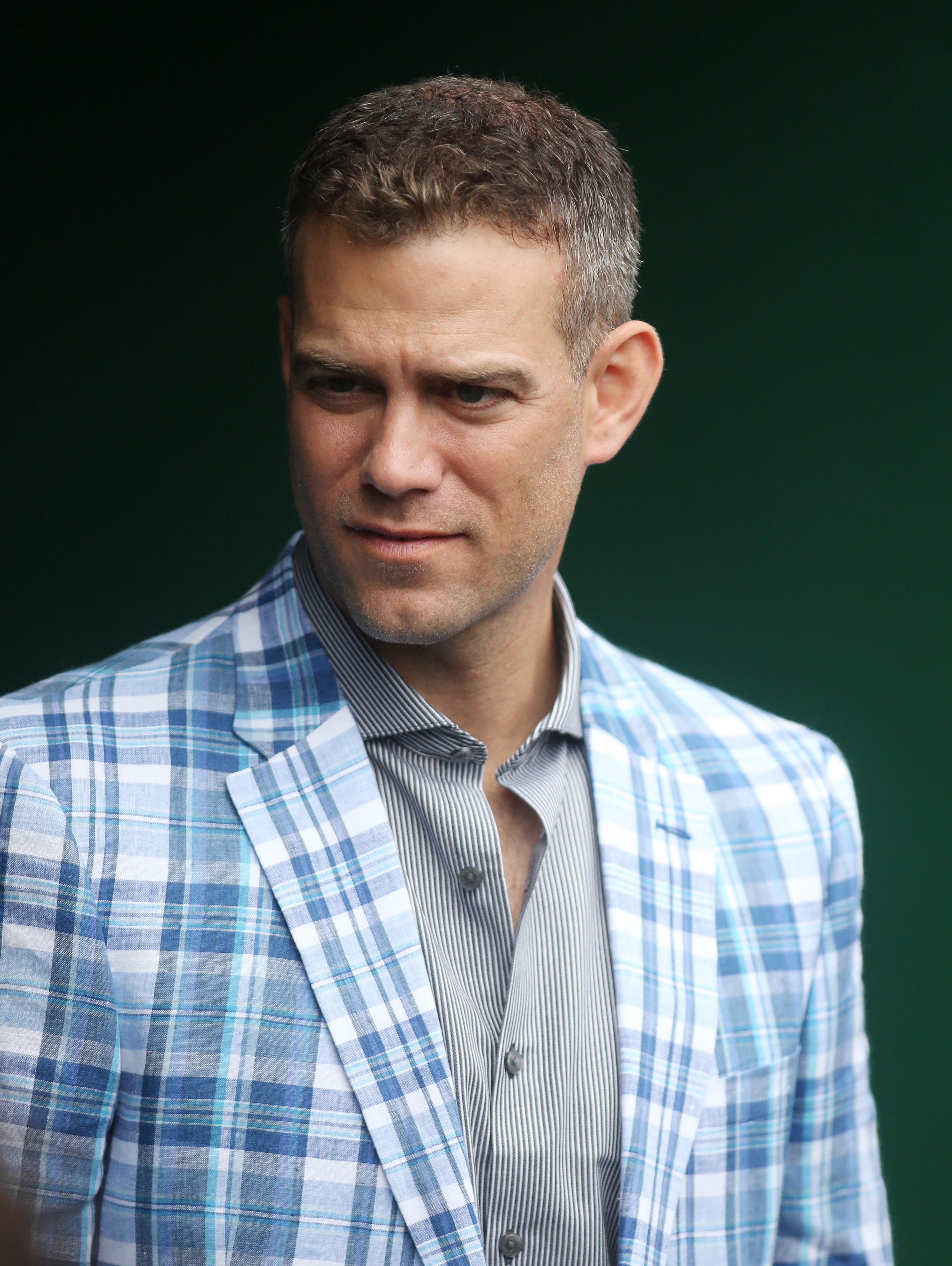
“In the five years under Theo’s leadership, he has brought in a strong executive team and acquired and developed some of the best players in the game. Now, the results are on the field. My family and I have no doubt that we have moved closer to our goal of delivering Cubs fans the World Series Championship they deserve.”
Ricketts also added that the extension “ensures the baseball operations team assembled by Epstein will continue its remarkable tenure of building a consistent championship contender.”
Epstein, 42, has been at his current post with the Cubs since Oct. 2011. While the early stages of his tenure were mired with losing clubs, he, alongside general manager Jed Hoyer, senior vice president of player development Jason McLeod and the rest of the Chicago front office have taken the Cubs from a cellar-dwelling team to a powerhouse that will finish with the best record in baseball this season after finishing with 97 wins a year ago.
The Cubs appear poised not only for success in 2015-16, but for the foreseeable future, as the core of Kris Bryant, Addison Russell, Anthony Rizzo, Willson Contreras, Kyle Schwarber, Javier Baez, Kyle Hendricks and Jon Lester, among others, are all controlled through at least the 2020 campaign. While certainly not all of those players are locks to remain productive — specifically Lester, who will be 36 by the time his current contract expires — the Cubs have the payroll capacity to supplement that enviable core group of players as needed.
While the Epstein/Hoyer/McLeod regime has had the occasional misstep (see: Edwin Jackson and, so far anyway, Jason Heyward), the Epstein-led Cubs have been largely successful in their moves, be they free-agent signings, trades or draft selections. Since Oct. 2011, the Cubs have acquired Hendricks and Christian Villanueva in exchange for half a season of Ryan Dempster; acquired Carl Edwards and Justin Grimm for half a season of Matt Garza; acquired Addison Russell in exchange for a year-and-a-half of Jeff Samardzija and a half season of Jason Hammel (whom they later re-signed with solid results); and, of course, most notoriously, acquired 2015 NL Cy Young winner Jake Arrieta and setup man Pedro Strop in exchange for a half season of Scott Feldman and Steve Clevenger.
The team has also picked up Hector Rondon in the Rule 5 Draft and made a number of savvy free-agent additions including Hammel (twice), Lester, John Lackey, Ben Zobrist, Dexter Fowler (after initially acquiring him for Luis Valbuena and Dan Straily) and David Ross. Beyond that, the Cubs have drafted well, landing Bryant and Schwarber as well as top prospects such as Ian Happ and Albert Almora. Chicago has also been active on the international front, outbidding the competition for Jorge Soler and spending aggressively on prospects such as Eloy Jimenez and Gleyber Torres, the latter of whom was used as the centerpiece of the trade that brought Aroldis Chapman to Chicago this past summer.
McLeod has been an oft-rumored candidate to join another organization in a higher role and was recently one of the prime candidates for the Twins as they search for a new president of baseball operations. And Hoyer, conceivably, could have drawn interest elsewhere for a team willing to bestow the president title upon an experience general manager. While the length of the extensions for Hoyer and McLeod aren’t yet known, the trio of extension ensures that the same brain trust that architected the current Cubs roster will be in place for several years to come.
Photo courtesy of USA Today Sports Images.
Wilson Ramos Diagnosed With Torn ACL
SEPT. 29: Surgery will reveal the full extent of Ramos’ knee injury, but it’s possible there are also some tears in his meniscus, tweets Ken Rosenthal of FOX Sports.
SEPT. 27: Nationals catcher Wilson Ramos has received the devastating news that he has again torn his right ACL, manager Dusty Baker told reporters (via CSN Mid-Atlantic, on Twitter). Ramos previously suffered that injury — which isn’t exactly typical for a catcher — back in 2012.
With just a week left in the regular season, and the division already locked up, the Nationals now face a void at the catching position entering the postseason. Ramos’s huge season — a .307/.354/.496 slash with 22 home runs over 523 plate appearances — was among the factors that helped drive the Nats’ success this year after both player and team disappointed in 2015.
Of course, the injury also casts a massive shadow over Ramos’s upcoming free agency. It had seemed all but certain that he’d receive and decline a qualifying offer, then enter the market in search of four or five years at over $10MM per season. Instead, in all likelihood, he’ll now likely be looking for an entirely different sort of contract.
Washington had reportedly just taken a crack at extending Ramos, though the team’s reported offer (something a bit north of three years and $30MM) didn’t seem all that likely to result in a deal. As I noted in that post, Ramos had already taken on basically all of the risk of performance and injury decline, reducing his incentive to sell his future seasons at a discount. But the relatively meager odds didn’t prevent the catastrophic injury, which is all the more concerning given that Ramos has already had that ligament replaced.
The Nats will go with Jose Lobaton and Pedro Severino for now, and will simply have to make do with that pair for the playoffs. It’s now certain that the organization will need to replace Ramos after the season — there would seem to be little chance that he’ll be ready for the start of 2017 — though it could also sign a gap-filler and explore some kind of multi-year arrangement to keep him around for the future.
Just how things will play out remains unknown, with Ramos’s anticipated timeline still yet to be determined. The repeat nature of the surgery likely increases the uncertainty surrounding his recovery, and the situation as a whole only adds to concerns about how the large-bodied receiver would age, particularly with the litany of leg injuries he has suffered.
On the positive side, “the Buffalo” — as he is affectionately and appropriately known — just turned 29 in early August, so he’s still rather youthful. He has already proved capable of working back from an ACL tear, and has held up to an immense amount of abuse before this hard-luck injury, appearing in 259 games since the start of 2015.
All said, it’s extremely disappointing to see such misfortune for a universally respected player who has already been through so much. Hope remains that he’ll be able to return to being a productive big league receiver, but it won’t be in 2016.
The injury also creates some added opportunity for other catchers on the free agent market, such as Matt Wieters and Jason Castro, who may see their demand increase. And it could shift the trade winds, potentially enhancing the Yankees’ bargaining position with veteran Brian McCann and adding to the appeal of struggling Padres receiver Derek Norris.
Dodgers Release Bud Norris
SEPT. 28: The Dodgers have released Norris, reports MLB.com’s Ken Gurnick (via Twitter).
SEPT. 20: The Dodgers announced today that they have designated right-hander Bud Norris for assignment in order to clear a spot on the roster for left-hander Alex Wood, who has been reinstated from the 60-day disabled list.
Norris, 31, signed a one-year, $2.5MM deal with the Braves this offseason and recovered from a brutal month of April to deliver a dominant performance in May and June (2.08 ERA in 47 2/3 innings between the rotation and bullpen). That strong run allowed the Braves to trade Norris, Dian Toscano and a PTBNL (Alec Grosser) to Los Angeles in exchange for minor league pitchers Caleb Dirks (originally drafted by Atlanta and reacquired in this deal) and Phil Pfeifer.
Norris started out quite well for the Dodgers and made a handful of very effective starts during his time in L.A., but he also mixed in his fair share of clunkers and was torched in four separate bullpen appearances. Ultimately, his Dodgers tenure will finish with a 6.54 ERA in 42 2/3 innings split between the rotation and the ‘pen. While that’s not a terrific stepping stone back into the free-agent market for Norris, his impressive run with the Braves should pique the interest of some clubs looking for a buy-low candidate. Norris, after all, received a Major League deal this past winter on the heels of an even more disappointing 2015 campaign, and free agency will present teams with even fewer rotation options this coming winter.