
MLB Trade Rumors Arbitration Model
Salaries for arbitration eligible players eclipsed $1 billion in 2015, making the arbitration process more important to team building than ever. At MLB Trade Rumors, we are entering our fifth year of modeling arbitration salaries and have improved the model again for the 2015-16 offseason.
Being able to accurately predict salaries is crucial for teams, and it’s important for MLBTR readers who want to understand the rationale behind teams’ decision-making processes. Teams typically sign free agents before reaching agreements with arbitration eligible players, so budgeting effectively requires a reasonable estimate of how much they will spend on the complete roster once arbitration raises are determined.
Forecasting arbitration salaries is also important for signing young players to long-term deals. Teams have increasingly used such deals to achieve payroll certainty and to avoid the risk of crippling free agent contracts. As a result, teams have used arbitration forecasts many years into the future to determine appropriate spending levels on extensions. Understanding the arbitration process in general is also important for teams seeking to find inefficiencies. Teams succeed by finding bargains on the free agent market, but finding players who will be bargains in the arbitration process is helpful as well.
The basic structure of the arbitration model to be used for this year is the same as in past years. Players are compared to recent players who went through the arbitration process, who played similar positions and who had similar MLB service time. Typically, players qualify for arbitration upon reaching three full years of Major League service time. The top 22 percent of players from the group that has between two and three years of service time also becomes eligible. These players are designated as “Super Two” players and can be arbitration eligible four times before reaching free agency.
A player’s first arbitration salary is based primarily on his most recent season, but on overall career statistics are considered as well. Beyond the first year, players receive raises based more heavily on the most recent season’s performance. Historical performance is only factored in to the extent that it affected a player’s most recent salary. While that may seem counter-intuitive, those familiar with the process have confirmed that this is usually the case in actual arbitration hearings.
Another quirk to the arbitration process is that it usually only factors in “baseball card statistics” rather than more sophisticated metrics. While teams signing free agents are typically up to speed on sabermetrics, the arbitration process does not account for them. Counting stats are important, as is playing time in general. Since labor lawyers typically sit on arbitration panels, the concept of “making it to work every day” is something that holds value.
Hitters are typically evaluated using batting average, home runs, runs batted in, stolen bases and plate appearances. There are some positional adjustments, but typically the added defensive value of a shortstop relative to a first baseman is not as important in arbitration hearings as it is on the free agent market. Hitters also can receive larger arbitration awards if they have unique accomplishments, such as winning an MVP award. Pitchers typically are evaluated using innings pitched and earned run average. Starting pitchers are rewarded for wins, and relievers are rewarded for saves and holds. Unique accomplishments, such as Cy Young Awards, matter for pitchers as well.
In addition to factoring these statistics into the process, the arbitration model also accounts for salary inflation—players are expected to receive more money in 2016 for the same performance than they would have in 2015. Precedents are also important, as we learned when we developed the “Kimbrel Rule.” The Kimbrel Rule limits the maximum margin for a player to exceed the previous record for his player type to $1MM (and similarly, the maximum raise for a non-first time eligible player is $1MM greater than the previous record raise as well). This was developed because Craig Kimbrel’s eye-popping save and ERA numbers entering his first year of arbitration would have led to a projected salary that was unrealistically high. Historically speaking, players do not typically break arbitration records by much greater magnitudes than $1MM.
The arbitration model we use at MLB Trade Rumors has improved over the years. The typical average error is generally around $300K or slightly below, but it does vary significantly based on how many big misses there were in a given year. The more useful metric that we track is the number of players who ultimately earned a salary within 10% of our salary projection. This has steadily increased from 55% in 2012 to 65% in 2015 and hopefully will continue increasing going forward. We have added some other adjustments for this year’s model. Such bells and whistles usually increase predictive efficiency of the model but can hurt in some cases. As a result, our adjustments typically mimic the way that the arbitration process works.
An additional feature of our model at MLB Trade Rumors is that I also pen roughly ten articles each year on unique arbitration cases in a series we’ve previously titled Arbitration Breakdown. Within that series, I look at historical comps for the players in question to determine whether the model is likely to be accurate in a particular case. I personally look forward to not having to write about the challenges of predicting David Price’s salaries anymore, now that he is a free agent. This Price-less set of articles will be released in the coming months, while the actual forecasted salaries for every arbitration eligible player will appear on MLB Trade Rumors during the middle of this week.
Nationals Fire Matt Williams, Coaching Staff
10:45am: The Nationals announced that not only has Williams been fired, but the entire coaching staff has been let go as well. Bench coach Randy Knorr, pitching coach Steve McCatty, hitting coach Rick Schu, third base coach Bobby Henley, first base coach Tony Tarasco, bullpen coach Matt LeCroy and defensive coordinator Mark Weidemaier are all out, as the Nats will hire a new skipper and an entirely new field staff.
10:17am: The Nationals dismissed manager Matt Williams earlier this morning, a source tells James Wagner of the Washington Post (Twitter link). Jon Heyman of CBS Sports wrote last Friday that his fate was sealed, and reports of communication issues from Heyman, the Post’s Barry Svrluga and others have been circulating for quite some time.
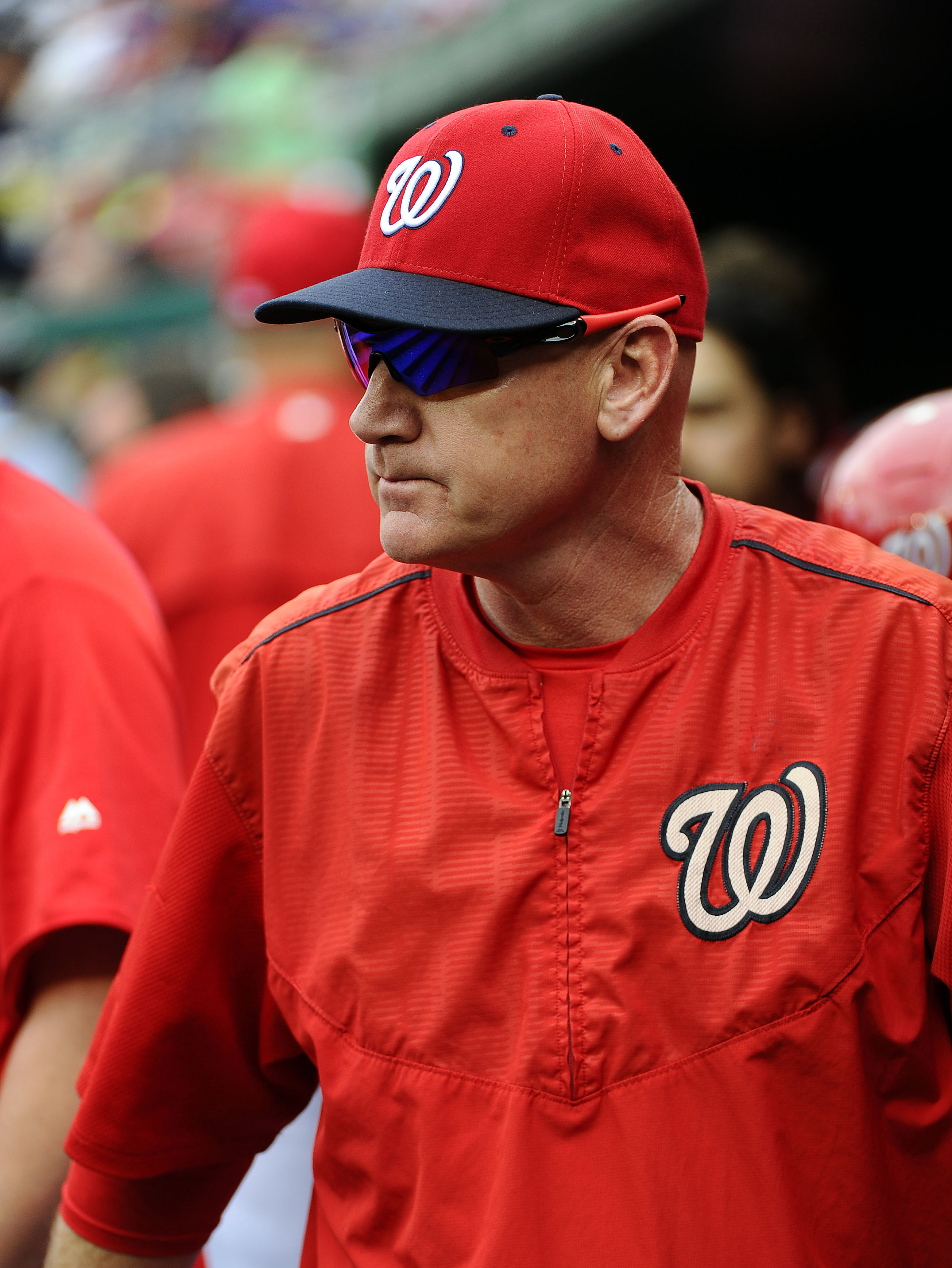
Believed by many to be the division favorite entering the season, the Nationals instead finished the year second place in the NL East by a wide margin and also failed to secure a Wild Card spot in the playoffs. Of course, injuries played a large role in the team’s underperformance — Anthony Rendon, Ryan Zimmerman, Denard Span, Jayson Werth, Stephen Strasburg and Doug Fister were among those to spend time on the DL — and an unexpectedly dreadful first half from Ian Desmond did the team little favors.
However, reports late in the season surfaced that suggested Williams’ cold demeanor didn’t sit well with players, and the aforementioned Svrluga report in particular chronicles a significant altercation with Werth while also mentioning communication issues with a number of veteran players. Bryce Harper gave Williams a vote of confidence late in the season, but shortly thereafter, the manager seemed inexplicably oblivious to a physical confrontation between Harper and trade acquisition Jonathan Papelbon. Harper called Papelbon’s antics “tired” after the closer threw near Manny Machado‘s head, telling the media that if anyone on the club was going to pay for it, it’d be Harper himself the following day in the form of retaliatory plunking. Days later, Papelbon would take issue with Harper, supposedly for not running out a fly-ball (though, as many have pointed out, Harper did reach first base prior to the ball being caught) and ultimately grab Harper by the throat and shove him after a heated exchange. Unaware of what had transpired at the other end of the dugout, Williams sent Papelbon out to pitch the next inning.
Williams won National League Manager of the Year honors in 2014 despite persistent questions regarding his bullpen management, which were highlighted in last year’s playoffs. His two-year tenure with the Nationals will conclude with a 179-145 record that looks impressive on paper but serves as a reminder that there’s much more to evaluating a manager than simply checking the win/loss column.
Photo courtesy of USA Today Sports Images.
Angels Name Billy Eppler GM
11:59pm: The Angels have officially announced the hiring of Eppler, who receives a four-year contract to become the team’s GM. Eppler will report directly to owner Arte Moreno and, according to the team’s release, will “oversee all aspects of the club’s baseball operations.”
7:12pm: The Angels will announce tomorrow that Yankees assistant general manager Billy Eppler will be their next GM, Bill Shaikin of the Los Angeles Times tweets. Eppler will replace Jerry Dipoto, who resigned in July.
The Angels were, of course, eliminated from playoff contention today, so they won’t be playing the Yankees in the AL Wild Card game. FOX Sports’ Ken Rosenthal noted yesterday that the possibility of an Angels/Yankees matchup might be one reason the Angels were waiting to officially hire a top Yankees executive.
The Angels had been connected to a number of other candidates, including Dodgers executive Josh Byrnes (who had reportedly been the other top candidate), Red Sox assistant GM (and now GM) Mike Hazen, Blue Jays assistant Tony La Cava, Indians VP of player personnel Ross Atkins, Rangers assistant Thad Levine, Mariners farm director Chris Gwynn, and internal candidates Hal Morris, Matt Klentak and Scott Servais. Several reports, however, had previously named Eppler as the front-runner.
Eppler worked as a scout in the Rockies organization before being hired by the Yankees in 2004. In 2005, the Yankees promoted him to director of pro scouting, and he became assistant GM following the 2011 season. He had long been considered a future GM, and he interviewed for the Angels job in 2011 before it was ultimately awarded to Dipoto. Last year he interviewed for the Padres GM position, and he was also a potential candidate for the Diamondbacks job that went to Dave Stewart, although he declined to formally interview for that position. Eppler is a native of San Diego.
Eppler, 40, is generally regarded as likely to be statistically savvy, although he also has a scouting background, and it’s difficult to tell how a GM might make decisions until he or she actually becomes a GM. “He checks all the boxes,” Brian Cashman said of Eppler last year. “He’s got the analytics side checked off, he’s got the administrative side checked off and he’s got the scouting side checked off. He’s got the leadership side checked off because he’s a great communicator.”
Eppler will inherit a situation in Los Angeles that is in some ways envious and some ways not. Tension between Dipoto and manager Mike Scioscia led to Dipoto’s departure, and the fact that Scioscia remained while Dipoto left suggests that Eppler will have to find a way to work with Scioscia, regardless of any differences that might arise. Owner Arte Moreno has a reputation for being heavily involved with baseball decisions. Also, the Angels don’t have a particularly strong farm system.
On the other hand, he Angels won 85 games this season and have a relatively strong talent base led by one of the one or two best players in baseball in Mike Trout. That’s a rare starting point for an incoming GM. Eppler will also have access to a big budget, as Moreno has rarely been shy about spending on top-tier free agents.
Mike Scioscia Not Yet Commenting On Opt-Out
Now that the season is over, Angels manager Mike Scioscia can exercise an opt-out in his ten-year contract, but he isn’t saying whether he’ll do so, Jeff Fletcher of the Orange County Register writes. “I’m going to see,” Scioscia said. “I’m not going to comment on anything.”
Of course, the Angels’ season ended today, so that Scioscia would receive a question about this matter today isn’t surprising, and it’s not necessarily meaningful that he’s not yet willing to commit to an answer. MLB.com’s Alden Gonzalez reported last week that Scioscia was expected to remain in his position, and Bill Shaikin of the Los Angeles Times tweets tonight that Scioscia will not exercise his opt-out.
Still, Scioscia’s situation is worth noting, given the news this evening that the Angels plan to hire Billy Eppler as their GM. The Angels’ previous GM, Jerry Dipoto, departed in July after clashing with Scioscia. As Fletcher notes, Eppler likely wouldn’t have the authority to fire Scioscia, but perhaps it’s possible Scioscia might not want to work with a new GM.
Scioscia has three years left on the ten-year, $50MM contract to which he agreed prior to the 2009 season. He will be paid $6MM in each of the next three seasons. Scioscia has managed the Angels for 16 seasons, posting a 1416-1176 overall record and winning the World Series in 2002.
Padres To Hire New Manager To Replace Pat Murphy
The Padres have formally announced that interim manager Pat Murphy will not return to the team as manager next season, and that they’ll look for a new manager to take his place. The decision was widely expected, with a report last night indicating that the team was already considering Triple-A manager and former Padres star Phil Nevin for the position.
Following a splashy offseason, the Padres got off to a disappointing 32-33 start and fired longtime manager Bud Black. Murphy took over in June and didn’t fare any better, going 42-54 as the team fell further out of contention. 2015 was Murphy’s first season as a big-league manager. Previously, he’d served as a head coach at Notre Dame and Arizona State before joining the Padres organization in 2010 and serving for several years as a manager in the minors.
It’s currently unclear whether Murphy will stay with the organization in some capacity. If he doesn’t, the Brewers might well have interest in him — as Tom Haudricourt of the Journal Sentinel notes (Twitter links), new Brewers manager Craig Counsell tried to hire Murphy earlier this season.
GM A.J. Preller will now have the opportunity to hire a manager for the first time. The Padres finished 74-88 after Preller traded away a number of top prospects to remake them last winter, and now they face the departures of Justin Upton and Ian Kennedy. One would think that the Padres manager position would not be a highly desirable one at this point, except insofar as any of the 30 managerial positions are desirable.
Giants, Eddy Julio Martinez Agree To $2.5MM Deal
The Giants and highly-touted center field prospect Eddy Julio Martinez have reached agreement on a $2.5MM pact, according to MLB.com’s Jesse Sanchez (on Twitter).
Martinez, regarded by some as the top free agent on this year’s international market, has flown under the radar of late after generating quite a bit of buzz late in the spring and early this summer. It was written on multiple occasions that the 20-year-old center fielder was expected to command a bonus in excess of $10MM, but he will reportedly sign a deal worth only 25% of that. The Giants have already spent heavily enough on international free agents to incur the maximum penalties, so the only further repercussion they’ll face with the Martinez deal is further luxury taxation. Their high-priced class includes $6MM shortstop Lucius Fox, who is also rated as one of this year’s top international players.
The Dodgers, Reds, Cubs, Astros and Rangers were also linked to Martinez at various times. As Sanchez noted in his free scouting report, Martinez has a compact and powerful stroke plus the ability to hit home runs to all fields. His speed gives him base-stealing upside, and he should be able to remain in center field thanks to good range in the gaps and an accurate throwing arm. Baseball America’s Ben Badler (subscription only) is less bullish, suggesting Martinez’s power leads more to doubles than home runs and noting that not all scouts believe he’ll stick as a starter in center field.
Reds To Retain Bryan Price
2:53pm: GM Walt Jocketty has officially announced that Price will return next season, according to C. Trent Rosecrans of the Cincinnati Enquirer (Twitter links). Decisions on the Reds’ coaches will be made in the coming weeks.
9:44am: The Reds plan to keep manager Bryan Price for 2016, Bob Nightengale of USA Today tweets. Ken Rosenthal of FOX Sports reported earlier this week that the Reds were considering retaining Price, although changes could be made to his coaching staff.
The Reds have suffered through an ugly 63-97 season and are currently in the midst of a 13-game losing streak, and Price himself attracted headlines earlier this season for a profanity-laced tirade directed at a reporter. They also finished just 76-86 in 2014, Price’s first year on the job.
Via Rosenthal, however, the idea behind keeping Price might be that he is not responsible for trades of veterans like Johnny Cueto, Mike Leake and Marlon Byrd, and neither is it his fault that the Reds haven’t gotten full, healthy seasons from key players like Devin Mesoraco, Homer Bailey, Billy Hamilton and Zack Cozart. The Reds’ rotation currently consists entirely of rookies, so perhaps it’s not surprising that they’re struggling.
The Reds promoted Price from pitching coach to manager following the 2013 season, when they dismissed Dusty Baker. Price is signed to a three-year deal that continues through 2016. There has been no indication yet that the Reds plan to extend Price.
Marlins Front Office To Undergo “Significant Changes”
2:22pm: As has been previously reported, the Marlins have offered Jennings a spot in their front office. He’s still deciding what to do, however, as Clark Spencer of the Miami Herald writes. “From a standpoint of if I’m asked to go back upstairs, then there are conversations that are going to have to take place because I want to understand where things are, because I’ve been removed for 4 1/2 months,” says Jennings. “There’s catch-up that I have to be involved in and conversations that need to take place so that I’m up to speed as to how things have evolved in the front office.”
12:02pm: The Marlins have talked to Rays director of player personnel Matt Arnold about a front office job, Ken Rosenthal of FOX Sports tweets.
10:12am: There will be “significant changes” in the Marlins’ front office, Jeff Passan of Yahoo! Sports tweets. Current assistant GM Mike Berger will take over a role similar to that of GM, although it’s unknown at this point what his actual title will be. It’s not clear what role, if any, current manager and former full-time GM Dan Jennings will occupy. Lately, owner Jeffrey Loria has reportedly listened to Berger and others more closely than Jennings. Also, the Marlins recently fired pro scout Mickey White and reassigned vice president of player personnel Craig Weissmann, both close associates of Jennings.
The Marlins are also currently interviewing candidates for their managerial job. It had previously been reported that they had offered Jennings a job in their front office, although perhaps he’ll go elsewhere, with the Phillies being one possibility.
It has, of course, been a disappointing season in Miami. The Marlins acquired Mat Latos, Martin Prado, Dee Gordon, Dan Haren, Michael Morse, Ichiro Suzuki and others last winter in an attempt to contend, but they struggled out of the gate, fired manager Mike Redmond, and have slouched to a 69-90 season so far amidst injuries to key players like Giancarlo Stanton and Jose Fernandez.
Manfred Interested In MLB Expansion To Mexico
MLB commissioner Rob Manfred was in Mexico this week to meet with baseball officials there, and it appears the addition of an MLB team south of the border is a possibility. If MLB were to expand, it could consider expanding into Mexico, Manfred tells Maury Brown of Forbes. “We see Mexico as an opportunity internationally,” says Manfred. “We also think a team in Mexico and a larger number of Mexican players in the big leagues could really help us continue to grow the Hispanic market in the United States.”
Expansion into Mexico is not likely to happen immediately, however, Manfred tells MLB.com’s Jesse Sanchez. Manfred says he would like to start by having exhibition and Spring Training games in Mexico. (He toured a new stadium in Culiacan this week and says he’s excited to have exhibition games there.) MLB would then progress to having occasional regular-season games in Mexico before settling on a location for a full-time MLB team. In the meantime, MLB will open an office in Mexico City next year. “The prospects of having a Major League team here in Mexico are realistic. The difficult issue is the time frame,” Manfred says.
In his interview with Brown, Manfred also notes that MLB could add a team or teams in the US, and that Montreal is interested in having a team again. Television territories would not be a significant obstacle to expansion, Manfred says, as long as the new teams aren’t too close to existing ones. If MLB were to expand to 32 franchises, teams would continue to play 162-game schedules, but would be realigned in eight four-team divisions, Manfred says, noting that would actually make scheduling easier.
This isn’t the first time Manfred has suggested that expansion into Mexico or Canada could be a possibility. “Mexico and Canada present the most fertile ground just in terms of the level of baseball interest and the proximity to our existing franchises,” Manfred told Frederic Daigle of the Canadian Press in March. He voiced similar sentiments in an interview with Bill Shaikin of the Los Angeles Times in February. He told Daigle that he was more interested in expansion than in relocating an existing franchise, although he did not rule out the possibility of relocation.
Braves Name John Coppolella General Manager
1:03pm: The Braves have announced the promotion, adding that Coppolella signed a four-year contract that runs through the completion of the 2019 season.
12:02pm: The Braves will promote assistant general manager John Coppolella to the role of general manager later today, reports MLB.com’s Mark Bowman. Coppolella has been serving as the second-in-command to president of baseball operations John Hart while holding the title of AGM, as the Braves did not formally name a GM last offseason after firing Frank Wren and bringing Hart on board on a permanent basis. Hart will remain in his role as president of baseball ops, per Bowman.
As Bowman writes, while Hart had final say over a number of key trades in the past year, it was Coppolella who did much of the legwork in structuring those franchise-altering transactions. Among the deals architected by Copplella were the trades of Jason Heyward, Evan Gattis, Justin Upton and Craig Kimbrel as well as the swap that brought Hector Olivera over from the Dodgers.
Coppolella has served as the Braves’ assistant GM since 2012, and it’s been widely believed that he was being groomed to become the next Atlanta GM, though many reports indicated that he’d rise to the post when the team’s new stadium opened in 2017. Coppolella has been with Atlanta since 2006 and has previously held the titles of director of baseball operations and director of pro scouting.
Bowman reports that both the Brewers and Mariners had interest in Coppolella to fill their GM vacancies last month, however, and interest in the rising 37-year-old executive led the Braves to promote him now as a means of ensuring that he would remain in the team’s baseball operations hierarchy for the foreseeable future.