
Yankees Sign DJ LeMahieu
Jan. 14: The Yankees have now announced the deal.
Jan. 11, 7:50pm: The deal promises LeMahieu $12MM in each of its two seasons, Jon Heyman of Fancred tweets.
11:43am: LeMahieu is heading to the Yankees, tweets Ken Rosenthal of The Athletic. His contract is believed to be a two-year deal with a guarantee in the range of $24MM.
11:40am: The Yankees are closing in on a two-year contract with free-agent second baseman DJ LeMahieu, reports Jack Curry of the YES Network (Twitter links). New York’s plan for LeMahieu is to use him as a multi-positional asset, where he’ll see time at second base, third base and even at first base, per Curry.
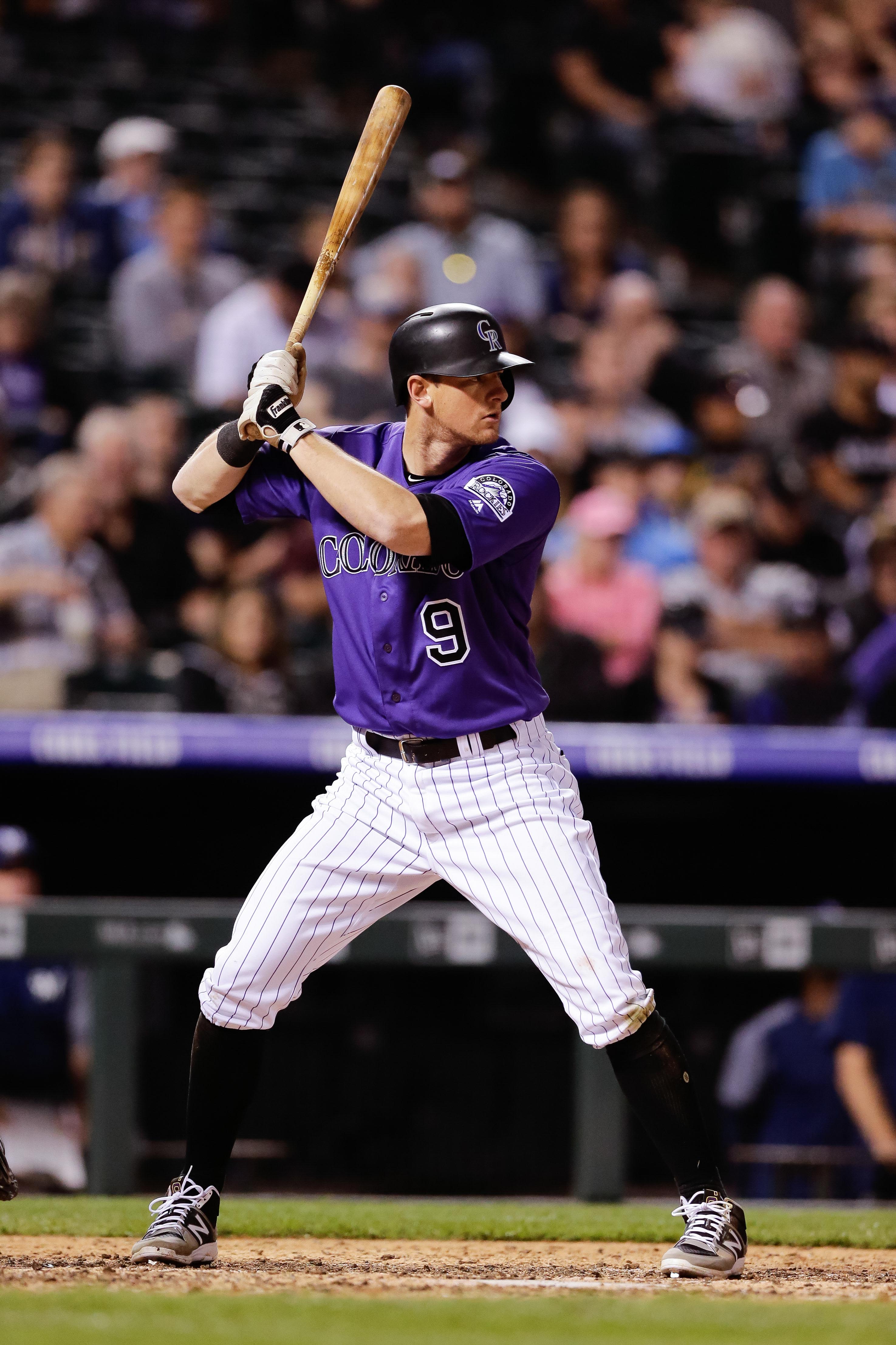
With LeMahieu and Troy Tulowitzki now in the fold, Manny Machado looks to be less of a fit in the Bronx than ever, although the addition of those two players certainly doesn’t preclude a signing. There’s been talk earlier this winter of the possibility that the Yanks could yet move an infielder, and Tulowitzki’s league-minimum salary doesn’t represent much of an impediment if the Yankees decide to alter their course. That said, there’s no denying that today’s agreement with LeMahieu does seem to make that long-speculated match with Machado considerably less plausible.
The Yankees’ infield now likely consists of Miguel Andujar at third base, Tulowitzki at short, Gleyber Torres at second base and Luke Voit at first, with LeMahieu filling in as a versatile super-sub and Greg Bird also on hand as an option at first base. Didi Gregorius, of course, will join that mix later this season when he is sufficiently recovered from Tommy John surgery. It’s a crowded mix but a deep and highly talented one that should provide the Yankees plenty of insurance against injury while also allowing them to field a strong lineup even on days when their top bats are resting.
LeMahieu, 29, is perennially among the game’s premier defensive second baseman and has consistently hit for average, though his overall production has wavered somewhat on a year-over-year basis. LeMahieu won a surprise National League batting title when he hit .348/.416/.495 in a career year back in 2016, but while he followed that up with a high-quality .310 average in 2017, his power fell off, as he slugged just .409 that season and posted a .099 ISO (slugging minus batting average). This past season, most of his pop returned, but his overall output checked in at .276/.321/.428 — rather pedestrian production when considering his hitter-friendly home setting (86 wRC+).
All in all, LeMahieu generally rates as an average or better overall hitter with premium defensive skills. He’s batted a combined .309/.369/.429 across the past four seasons and been one of the toughest strikeouts in the league over that span, punching out in just 14.2 percent of his plate appearances. And while some will make a point to note that his home/road splits are rather pronounced, he’ll be moving from Coors Field to yet another one of the game’s premier hitters’ parks, Yankee Stadium.
MLBTR Chat: Harper And Machado Edition
As you might expect, today’s live chat with MLBTR owner Tim Dierkes included many questions involving Bryce Harper and Manny Machado. Click here to read the transcript. You can catch Tim’s chats every Monday at 2pm central time.
Twins Designate John Curtiss For Assignment
The Twins announced Monday that they’ve designated right-handed reliever John Curtiss for assignment. His spot on the 40-man roster will go to Blake Parker, whose one-year contract is now official.
A sixth-round pick by the Twins back in 2014, Curtiss was considered one of the organization’s more promising relief prospects for much of the past few seasons but hasn’t found big league success to date — albeit it in a tiny sample of work. Through 15 MLB frames, Curtiss has a 7.20 ERA but a more promising 17-to-6 K/BB ratio. He averaged better than 95 mph on his heater with the Twins during a nine-game MLB debut, but that average dropped off to 93.9 mph in eight games this past season. Curtis has also posted an alarmingly low 18.6 percent ground-ball rate in the big leagues, though he’s previously posted considerably higher marks in the minors.
It’s quite possible that Curtiss will draw some interest from other organizations — either in trade or via the waiver wire. He has a pair of minor league options remaining and has been quite good in Triple-A to this point in his career, sporting a 2.49 ERA with 10.6 K/9 against 4.6 BB/9 in 79 2/3 innings. Curtiss’ walk rate is a bit problematic and has risen steadily in the upper minors, but as a reasonably hard-throwing reliever with strong strikeout numbers and multiple option years remaining, it’s easy to see another team taking a look.
Kyler Murray Declares For NFL Draft
Athletics outfield prospect and Oklahoma quarterback Kyler Murray announced today that he has formally declared for the NFL Draft. While this is a largely procedural move that was widely anticipated and does not preclude him from opting to continue as a professional baseball player, ESPN’s Adam Schefter reports that Murray “has informed the Oakland A’s of his intention to follow his heart to the NFL” (Twitter link).
It’s not feasible for Murray to endure the rigors of playing quarterback in the NFL and then also playing baseball in the spring and summer; reports from the San Francisco Chronicle’s Susan Slusser and Henry Schulman indicated last week that there was no scenario in which Murray would play both sports professionally. Schefter tweets today that Murray’s mind “has been made up,” though there is of course still time for a late change of heart.
The Athletics have reportedly been discussing signing Murray to a Major League contract and adding him to the 40-man roster as a means of swaying him away from a football career. While ESPN’s Jeff Passan reported last night that the league would not stand in the way of Murray signing a Major League deal so quickly despite the fact that the collective bargaining agreement ruled out MLB contracts for draftees back in 2012, Schefter’s reports today suggest that Murray isn’t all that likely to be swayed. He does technically still have a few weeks to decide, and the Athletics, it seems, can continue to negotiate with agent Scott Boras in the meantime.
As I noted last week when looking at the situation, if Murray is drafted in the first round of the NFL Draft, he stands to earn more than double the $4.66MM signing bonus that the Athletics gave him when selecting him with the ninth overall pick in last year’s MLB Draft. Last year’s No. 32 pick in the NFL Draft, Lamar Jackson, signed for nearly $9.5MM and will earn every bit of that sum; beyond that, he quickly ascended to a starter’s role in the NFL. On the flip side, even after signing a theoretical Major League deal, Murray would still need to spend at the very least one to two seasons developing in front of sparse minor league crowds before reaching the big leagues.
Should Murray pursue his career in football, Slusser and Schulman reported last week that the Athletics will not receive a compensatory pick in this June’s draft. Murray would have to return that $4.66MM bonus to Oakland, though he’d quite likely be setting himself up to earn substantially more money in the very near future.
Twins Sign Blake Parker
2:50pm: The Twins have announced the signing.
Jan. 14, 12:05pm: Fancred’s Jon Heyman tweets that Parker is not actually guaranteed $3.2MM but rather can max out his contract at that level. He’ll be guaranteed $1.8MM and will earn $500K upon spending 130 days on the active roster, another $400K for reaching 140 days and $250K for reaching both 150 and 160 days. Minnesota has yet to formally announce the deal, though Rosenthal suggests that could happen today (Twitter link).
Jan. 7, 5:13pm: Parker and the Twins have agreed to a deal, per Rosenthal (via Twitter). He’ll receive a $3.2MM guarantee if his physical checks out.
4:21pm: A deal is indeed close at hand, per Jeff Passan of ESPN.com (via Twitter), who says the sides are closing in on a pact that’ll promise Parker “slightly more than $3MM” on a one-year term.
1:00pm: Free-agent right-hander Blake Parker is close to finalizing an agreement, reports Ken Rosenthal of The Athletic (via Twitter). The Twins are “believed to be” his landing spot, Rosenthal adds.
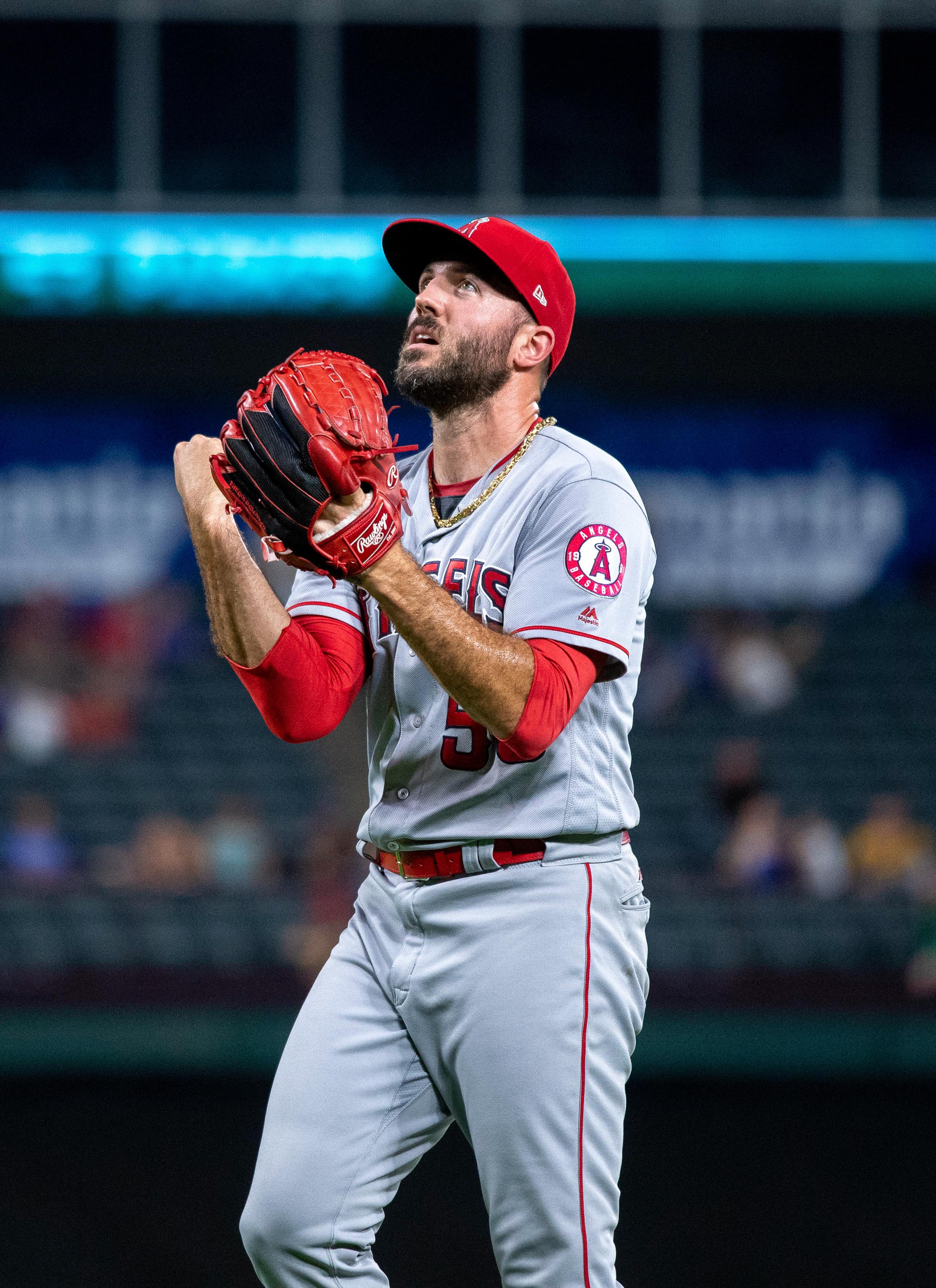
Parker, 33, was somewhat surprisingly non-tendered by the Angels in late November. He’d been projected to earn a fairly modest $3.1MM salary, which seemed more than reasonable for a pitcher who’d notched a 2.90 ERA (3.55 FIP) with 10.5 K/9, 2.4 BB/9, 1.3 HR/9 and 22 saves in 133 2/3 innings with the Halos from 2017-18. Parker did see his velocity drop by a bit more than a mile per hour, averaging 93.5 mph on his heater in 2017 but 92.2 mph in 2018, and his swinging-strike rate also took a downturn (13.8 percent in 2017; 10.7 percent in 2018).
Those red flags may have turned the Angels away, but Parker nevertheless posted solid numbers last season and would bring an experienced arm with recent success to the Twins’ bullpen mix — perhaps for the next two seasons. Parker only has four years, 36 days of MLB service time, meaning the Twins (or any team) could sign him to a one-year deal and then retain his rights next winter through the arbitration process.
Presently, the back of the Minnesota ‘pen will feature veteran Addison Reed, whose 2018 season was marred by elbow issues, as well as Trevor May and Taylor Rogers — both of whom finished out the season in impressive fashion. May turned in a 36-to-5 K/BB ratio through 25 1/3 innings in his return from Tommy John surgery, while Rogers rode a newly adopted slider to 28 consecutive scoreless outings and a 29-to-3 K/BB ratio (26 innings total). Righty Trevor Hildenberger, too, should get another look despite fading considerably in the second half. Hildenberger turned in a 3.27 ERA with 8.9 K/9, 2.0 BB/9 and a 52.5 percent grounder rate through his first 87 MLB innings from 2017 through this year’s All-Star break but was clobbered for 27 runs in 27 innings in the second half of the 2018 season. Minnesota has several in-house options who could also be in the mix, but there’s certainly room for a veteran addition or two, as well.
Phillies Sign Lane Adams To Minor League Deal
The Phillies announced Monday that they’ve signed outfielder Lane Adams to a minor league contract and invited him to Major League Spring Training.
Obviously, it’s not the free-agent outfield addition that Phils fans were hoping they’d hear about today, but Adams will give the club a useful depth piece and a potential bench option for the 2019 campaign. The 29-year-old is a career .263/.333/.467 hitter with seven homers and 11 steals in 154 Major League plate appearances — most of which have come with the division-rival Braves across the past two seasons.
Adams struggled through an ugly season in Triple-A last year but, as noted above, have been fairly productive in the big leagues and did notch a quality .264/.320/.461 slash in 199 Triple-A plate appearances with the Braves in ’17. Adams is 11-for-11 in MLB stolen-base attempts and has four seasons with 30 or more steals in the minors under his belt — highlighted by a 44-steal campaign in 2016. He’s capable of playing all three outfield slots and has spent the bulk of his Triple-A time in center field in recent seasons.
Giants Re-Sign Derek Holland
The Giants have made the first addition to their rotation under new president of baseball operations Farhan Zaidi, announcing on Monday that they’ve re-signed left-hander Derek Holland to a one-year deal with a club option for the 2020 season.
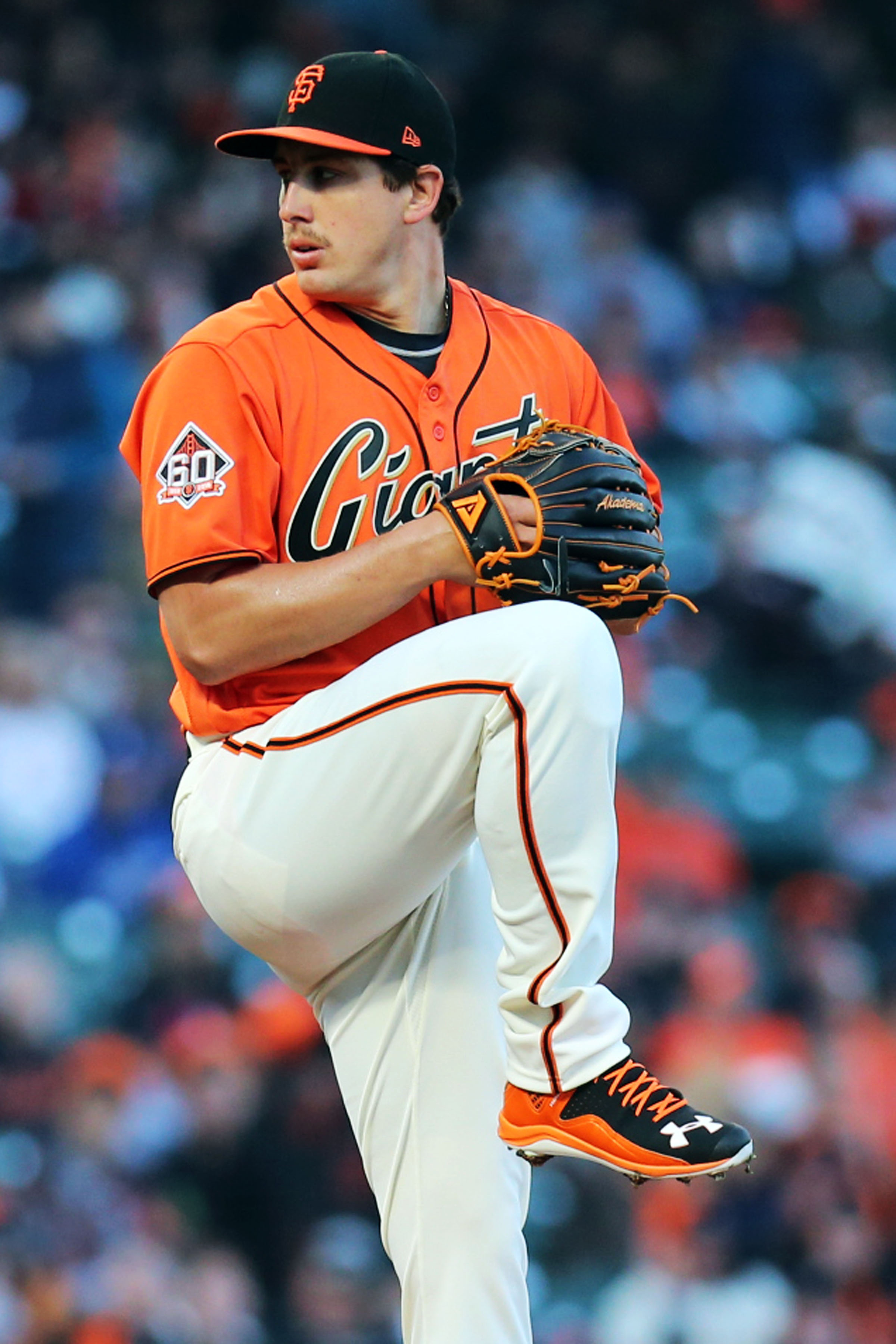
Holland’s contract reportedly comes with a $7MM guarantee in the form of a $6.5MM base salary for the 2019 season and a $500K buyout on a 2020 option that has the same $6.5MM base. The option year’s base salary will increase to $7MM if he makes 24 starts in 2019, $7.5MM if he makes 28 starts and $8.5MM if he makes 32 starts. All told, the Martini Sports Management client can earn $15MM over the next two seasons if he remains healthy and the option is exercised.
Holland, 32, enjoyed a career revival with the Giants last season. Once a promising young lefty with the Rangers, Holland missed the vast majority of the 2014 season due to microfracture surgery in his left knee, and shoulder issues plagued him in each of the next two seasons. A one-year deal to rebuild his stock with the White Sox in 2017 didn’t pan out, but last year’s minor league deal with the Giants proved to be one of the season’s most productive minor league signings.
Holland led Giants pitchers in games started (30) and in total innings (171 1/3), pitching to a 3.57 ERA with 8.9 K/9, 3.5 BB/9, 1.00 HR/9 and a 39.8 percent ground-ball rate. Holland’s velocity didn’t return to it peak levels (94.3 mph) and probably never will, as he averaged just 91.6 mph on his heater last season. However, that’s not to say his success isn’t sustainable; the lefty’s swinging-strike rate jumped from 7.1 percent to 10.1 percent from 2017 to 2018, and his opponents’ chase rate on out-of-zone pitches jumped by a hefty 5.6 percent (from 25 percent to 30.6 percent).
Mutual interest between the two sides was no secret, with Holland saying near the end of the season that he would like to return to the Giants in 2019 and beyond. The lefty also drew interest from other clubs, most recently including the Mets and the Reds, and the Rangers were also said to have interest in a reunion. Instead, he’ll return to one of the game’s premier pitchers’ parks — the recently re-named Oracle Park — for at least the forthcoming season.
With Johnny Cueto likely out for the season following Tommy John surgery, Holland will slot in behind top starter Madison Bumgarner and line up alongside the likes of Dereck Rodriguez, Andrew Suarez and a hopefully healthier Jeff Samardzija in 2019. Left-hander Ty Blach and righties Tyler Beede and Chris Stratton represent alternate rotation options on the 40-man roster, should the need arise.
The addition of Holland pushes the Giants’ projected Opening Day payroll north of $167MM and brings their luxury tax ledger north of $172MM. It seems likely that some additional moves — be they trades or further free-agent signings — will change that calculus, although Farhan Zaidi strongly downplayed the chances of an offseason Bumgarner trade over the weekend. Of course, if Holland is able to replicate last season’s success but the Giants are unable to rebound as a collective unit, then both he and Bumgarner could find themselves being marketed to contending clubs come July.
Ken Rosenthal of The Athletic first reported the agreement and the terms of the contract (Twitter links).
Cubs Hire Craig Breslow As Director Of Strategic Initiatives For Baseball Operations
The Cubs announced Monday that they’ve named former big league reliever Craig Breslow director of strategic initiatives in their baseball operations department. That, it seems, will put an end to a playing career that dates all the way back to the 2002 season for the 38-year-old Breslow, who spent the 2018 campaign pitching in the Blue Jays’ minor league ranks.
Per the Cubs’ release, Breslow “will help to evaluate and implement data-based processes throughout all facets of Baseball Operations” and will also “support the organization’s pitching infrastructure in Player Development and the major leagues.”
A Yale graduate with a degree in molecular biophysics and biochemistry, Breslow has long been heralded as one of the game’s brightest minds. The lefty spent parts of 12 seasons in the Major Leagues, pitching to a combined 3.45 ERA with 442 strikeouts against 226 walks in 570 2/3 innings. That body of work was spread out over seven organizations, including the Red Sox, Twins, Athletics, Indians, D-backs, Padres and Marlins.
Breslow enjoyed what was arguably his most successful season in the big leagues with the Red Sox back in 2013, when he tossed 59 2/3 innings of 1.81 ERA ball for the eventual World Series champions. That season marked Breslow’s lone year of postseason experience, assuredly making the ring he won all the more treasured.
Few, if any, can match Breslow’s combination of education and a playing career that spanned more than a decade and a half, so he’ll being a unique blend of skills and experience to a Cubs front office that is already regarded among the game’s most progressive groups. Best of luck to Breslow in the next chapter of his baseball journey.
NL East Rumors: Rendon, deGrom, Straily
It’s well known that the Nationals hope to work out a long-term deal with third baseman Anthony Rendon before he reaches free agency next winter, and Ken Rosenthal of The Athletic wrote over the weekend (subscription required) that Rendon and agent Scott Boras have been eyeing something in the vicinity of Jose Altuve‘s extension from a year ago. Altuve was already under contract for two years and $12.5MM at the time he signed for an additional five years and $151MM, which brought his current contract to a total of $163.5MM over seven years. The Nats are already just a few million dollars shy of the luxury tax threshold, and bumping Rendon’s annual value from the reported $18.8MM figure to which he agreed on Friday would likely take them over the limit. The Nats have been willing to exceed that threshold for Bryce Harper, however, and perhaps the allure of keeping Rendon from reaching the open market would be incentive enough to do the same. As Rosenthal explores, the two situations are also somewhat related, as fitting both players onto the payroll would come with luxury repercussions — even when factoring in the likely stream of subsequent moves that would follow a new contract for Harper (e.g. trading a current outfielder).
More from the NL East…
- There’s still mutual interest in a contract extension between Jacob deGrom and the Mets, writes Mike Puma of the New York Post. The 2018 NL Cy Young winner agreed to a record-setting arbitration raise on Friday when he inked a $17MM contract for the upcoming season, and Puma notes that there’s a belief that any extension would need to cover at least five seasons at rates roughly commensurate with the annual salaries afforded to Clayton Kershaw ($31MM), David Price ($31MM) and Zack Greinke ($34.4MM). That’s a lofty annual price to pay, of course, though after receiving nearly a $10MM raise in arbitration this time around, deGrom’s price tag could approach that point in his final trip through arbitration next season anyhow. He’s controlled through the 2020 season.
- Other teams have been in touch with the Marlins regarding right-hander Dan Straily throughout the offseason, writes MLB.com’s Joe Frisaro in his latest mailbag column, and it’s possible that Straily could yet be moved before Opening Day. The right-hander agreed to a $5MM salary for the upcoming season on Friday and can be controlled through the 2020 season before reaching free agency. While the 30-year-old Straily was limited to just 122 1/3 innings last season, he’s pitched to a respectable 4.03 ERA over his past 495 1/3 innings at the big league level. Fielding-independent metrics don’t necessarily back that output, but Straily has outperformed his FIP throughout his career and, at the very least, is likely looked upon as a viable back-of-the-rotation option for a team in need of a fourth or fifth starter.
Minor MLB Transactions: 1/13/19
Catching up on some recent minor league moves from around the baseball world….
- The Cubs signed catcher Francisco Arcia to a minor league deal, as originally reported by the Cubs Prospects Twitter feed. Originally signed as a teenager by the Yankees in 2006, the 29-year-old Arcia finally cracked the big leagues last season, appearing 40 games for the Angels and hitting .204/.226/.427 with six homers over 106 plate appearances. Arcia will provide the Cubs with some depth behind backup Victor Caratini, and Arcia could also battle for the backup role himself in Spring Training.
- The Rays signed right-hander Luis Santos to a minors contract, Baseball America’s Matthew Eddy reports. Santos posted a 5.15 ERA over 36 2/3 innings out of the Blue Jays’ bullpen over the last two seasons, though a big problem with the long ball (2.0 HR/9) belied some better peripherals, such as a 9.8 K/9 and a 2.86 K/BB rate.
- Also from Eddy, the Rockies re-signed left-hander Sam Howard to a minors deal, after originally non-tendering Howard at the start of December. Howard was a third-round pick for the Rockies in 2014, and he made his Major League debut last season, tossing four innings over four games with Colorado. MLB.com ranks Howard as the 24th-best prospect in the Rockies’ farm system, describing him as a potential fourth starter in the big leagues “if he can improve his slider and command.”
- The Padres signed left-hander Eric Stout to a minor league contract, according to Zone Coverage’s Brandon Warne (Twitter link). Stout posted a 3.68 ERA, 2.63 K/BB rate, and 7.4 K/9 over 269 1/3 career innings in the Royals’ farm system, appearing as a reliever in all but five of his 153 career games. Stout also made his MLB debut in 2018, appearing in three games for Kansas City.
- Also from Warne, the Royals inked infielder Taylor Featherston to a minors contract. After playing in 137 games with the Angels, Phillies, and Rays from 2015-17, Featherston didn’t see any Major League action last season, spending time in the farm systems of the Twins and Reds, plus a short stint in independent ball. Featherston has offered more with the glove than his bat over his career, with a lot of experience at second base, third base, and shortstop, plus some time as a left field and first baseman.
- The Giants have signed righty Keyvius Sampson to a minors deal. Sampson makes his return to North American baseball after spending 2018 with the Hanwha Eagles of the Korea Baseball Organization, posting a 4.68 ERA over 161 2/3 IP for the Eagles and posting a league-best 195 strikeouts. Sampson has pitched for five different MLB organizations during his 10-year pro career, though he only reached the majors for 91 2/3 innings with the Reds in 2015-16.
- The Giants also signed second baseman Donovan Solano to a minors deal, as per the Giants Prospects Twitter feed. Solano was a regular for the Marlins in his first three MLB seasons, though he appeared more sporadically for the Marlins and Yankees in 2015-16 and hasn’t since returned to the Show, playing for the Yankees’ and Dodgers’ Triple-A affiliates over the last two seasons. Playing mostly as a second baseman but with some experience around the infield, Solano has a .257/.306/.331 slash line over 1168 MLB plate appearances.