
Reds Name Dick Williams President Of Baseball Ops; Walt Jocketty Moves To Advisory Role
The Reds announced on Tuesday that general manager Dick Williams is moving up the ladder and is now also the president of baseball operations, with former president Walt Jocketty now serving as an executive advisor to CEO Bob Castellini (as C. Trent Rosecrans of the Cincinnati Enquirer chronicles in greater detail). The move has been expected for quite some time, as Jocketty himself suggested a year ago (when Williams was first promoted to GM) that he’d be shifting into an advisory role following the 2016 campaign.
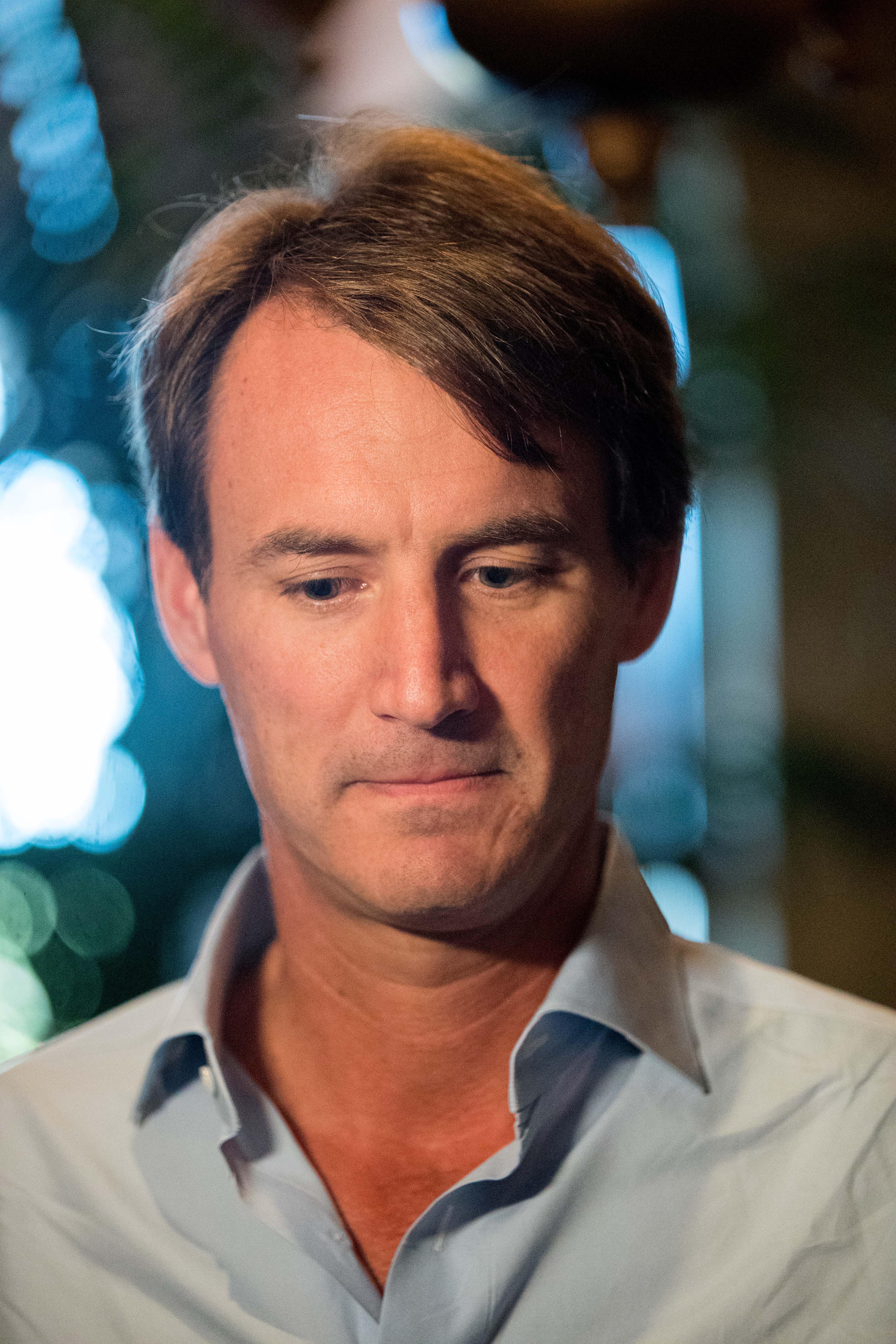
Williams — who sat down for an interview with MLBTR last spring to discuss his college days and his path to a Major League front office — will now have final say over any and all baseball operations decisions for the Reds, who have been rebuilding for the past 18 months or so.
In that time, Williams and Jocketty have traded Johnny Cueto, Mike Leake, Aroldis Chapman, Todd Frazier and Jay Bruce for Brandon Finnegan, Cody Reed, John Lamb, Adam Duvall, Keury Mella, Rookie Davis, Eric Jagielo, Tony Renda, Caleb Cotham, Jose Peraza, Scott Schebler, Brandon Dixon, Dilson Herrera and Max Wotell. Some of those prospects — Finnegan, Duvall, Peraza, Schebler and possibly Herrera — already look to have significant roles on the 2017 Reds, while others such as Lamb and Cotham are no longer with the organization. Jocketty and Williams have also explored trades of Brandon Phillips, though the veteran second baseman has invoked his no-trade protection to nix multiple would-be deals.
Elsewhere in the Cincinnati front office, assistant GMs Sam Grossman and Nick Krall as well as amateur scouting director Chris Buckley each had “vice president” added to his title, among a slew of other promotions and title changes. Cincinnati also announced eight new hires that will add to its player development, analytics, amateur scouting and international scouting departments, including a pair of new additions that will focus on scouting the top professional leagues in Asia.
Photo courtesy of USA Today Sports Images.
MLBTR College Series: Reds GM Dick Williams (University of Virginia)
MLBTR is beginning a series where we interview top baseball executives about their college years. We’ll ask about why those chose their school, memorable moments, their favorite professor, important connections made, college learnings they still use today, etc.
Leading off the question-and-answer series is Cincinnati Reds Senior Vice President/General Manager Dick Williams – a graduate of the University of Virginia.
* * * * *
First off, sorry about the basketball game Sunday. Why did you choose Virginia?
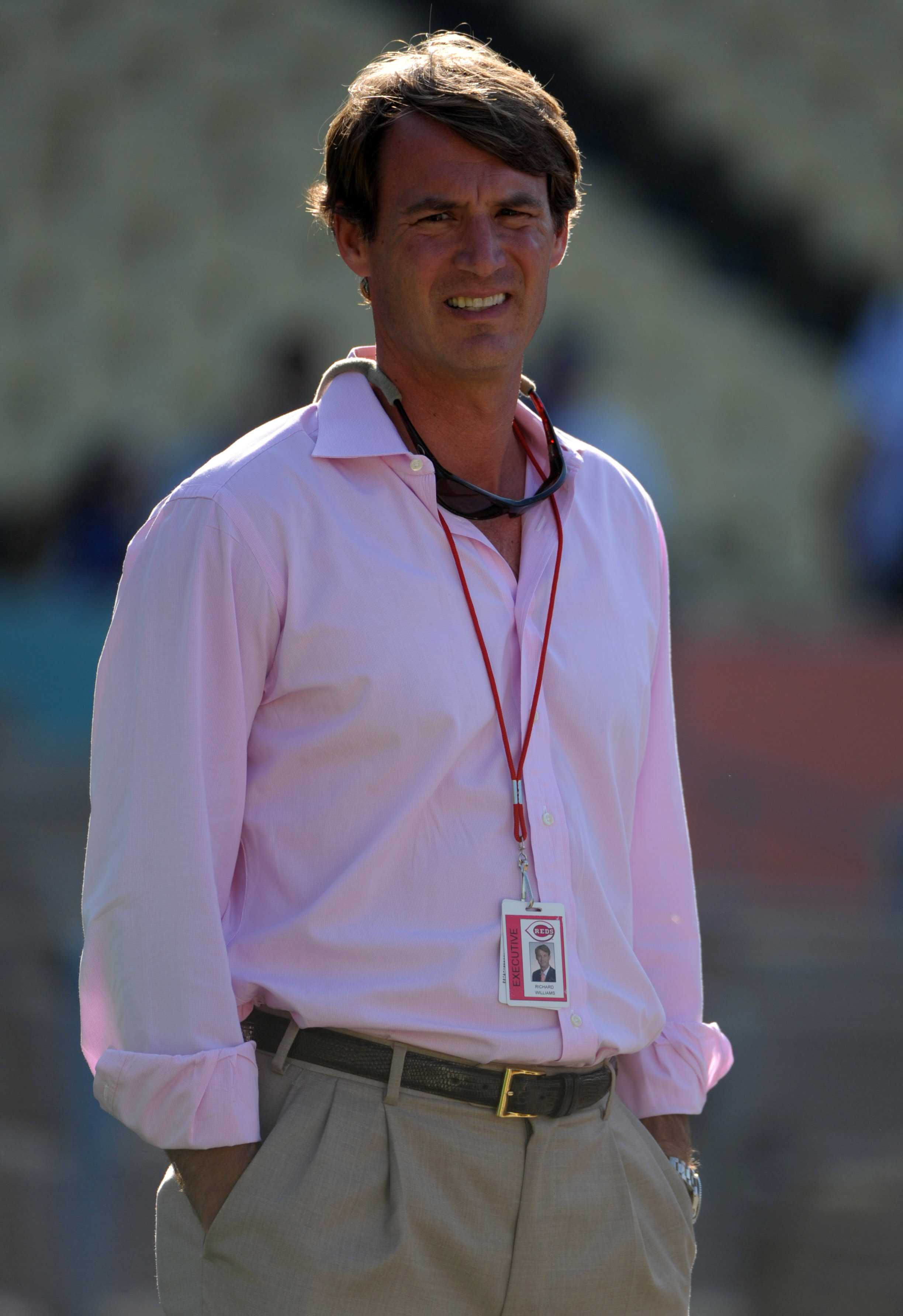
“I’m still reeling from the loss. Feel free to put that in the article. It was tough. I was so bummed. It’s been a while since we’ve gone to the Final Four. Why Virginia? It’s tough to pinpoint exactly. I went to boarding school in the northeast and I loved it. After two years in the northeast, I thought I would try a different part of the country. I’ve always been a bit of a wandering soul, and I wanted to try something new. So I applied to some northeastern schools, but I also applied to schools in the southeast and on the West Coast. I kind of had it in my mind that I was going to try a new part of the country.
The real tipping point was that I was a finalist for an award called the Jefferson Scholar, and they award a handful of these each year to incoming freshman. It’s a prestigious academic leadership award. They invite the finalists down their senior year to participate in a multi-day forum. They interview you and they have you participate in activities … and take tests … and they observe you. Then they award the scholarships for the next year. I didn’t get picked as a Jefferson Scholar, but I got to go down there for three days in March of my senior year in high school. And I spent three days on the Charlottesville campus – which was more than I spent on any other college visit. I think I just got more familiar with it. It didn’t hurt that it was St. Patty’s Day while I was there, so they had all these fraternity parties and all of the social activity going on. This beautiful campus … it was spring … it was gorgeous … and we’re just running around having the time of our lives. I really got a good feel from being there. I think that just gave it a leg up over other great schools that I was looking at. I think going there for that long weekend made all the difference.”
Although you weren’t selected a Jefferson Scholar, you did decide to go to UVA. Did you end up going there on an academic scholarship?
“They have another program called the Echols Scholars, and that’s for the top incoming freshmen academically. It is not a monetary scholarship. What it allows you to do is it gives you academic freedom when you get there. And I was an Echols Scholar. It gives you priority to sign up for any classes. Instead of classes based on age or what your major was, if you were an Echols Scholar, you got a free pass into any class you wanted to take. That really shaped my experience there, because I made it a point of trying to take classes in every discipline. I took a class from the engineering school. I took classes from the nursing school. I took classes from the architecture school. I did a little bit of everything – just because I was given that freedom. You didn’t have to meet typical major requirements as an Echols Scholar. You could build your own field of study. So you could really spread it around, and I took full advantage of it. I just took a lot of things that interested me that I would never get a chance to study again. When I look back on my transcript, it wasn’t all finance or all politics. It really was a melting pot of things I was interested in.”
So, what was your major?
“Well, my diploma says Echols Scholar Interdisciplinary Studies. So I had to explain that in job interviews for years. Just telling people that I really didn’t have a major. But I majored in being a liberal arts student – taking a little bit of everything.”
Looking back, should you have focused on a specific major – or are you comfortable with the route you took?
“I’m really comfortable with the route I went. I loved doing it the way I did. And when I got out of college, I went right into investment banking on Wall Street – and they put us through a training program of accounting and finance. I had a very good base in that. I learned plenty there and on the job. I ended up getting my chartered financial analyst designation – my CFA – a few years later, and that was self-study. Once my career took me on a path, then I began to do a lot of that follow-up work on my own.”
Did you have a favorite class or favorite professor?
“I would have to say my favorite class was what they called ‘Bice Psych.’ Professor Bice. Everybody took that. It was Intro to Psychology. Every class was like a Broadway show. He always brought something very interesting to class. A lot of practical examples. A lot of funny stories. A lot of interactive exhibits. It also didn’t hurt that it was a pretty easy ‘A’ … For me, you got out of high school and you get to college – and you don’t know what to expect. I received some good advice to sign up for this class. It reminded you that academics could be fun and interesting. Not every class was big textbooks that you can’t read and worrying about copying down notes. ‘Bice Psych’ was like going to recess.”
Can you share any memorable moments from your college days?
“I went abroad for a semester. I went to Australia; that was one of my formative experiences. I had a great time going down there. It’s kind of different being on the other side of the world. It was more about the travel and being able to travel around Australia and New Zealand. I kind of cheated a little bit … I went abroad, but there was no language barrier. That made it easier to meet people.”
Any college learnings that you utilize today?
“Statistics and probability – I took them there and really got a good understanding of them. I was surprised at how much that played into my business career, both in baseball and investment banking. Just the foundation for statistics and probability. It really affects everything you do in your daily life.”
Keep reading after the break for more …
NL Central Links: Brooks, Soler, Williams, Morse, Wilkins
Newly-acquired Cubs righty Aaron Brooks is looking forward to playing for his new team, though as he told reporters (including MLB.com’s Carrie Muskat), he’s already run into some online confusion. The Aaron Brooks who has played guard for the Bulls for the last two NBA seasons has dibs as the most famous Chicago athlete with that name. “I’ve talked to [the basketball player] on Twitter before because everybody thinks I’m him,” the Cubs’ Brooks said. “People keep tagging me….All they have to do is look at the profile picture and they’ll know it’s not me.” Here’s more from the NL Central:
- The Padres, Rays and Indians all offered various pitching and outfield prospects to the Cubs in Jorge Soler trade packages, but Chicago decided to stick with the highly-touted outfielder, CBS Chicago’s Bruce Levine reports. While Tampa and Cleveland were linked to Soler multiple times this winter, this is the first time the Padres have been mentioned in connection with Soler. San Diego’s outfield currently features Matt Kemp, Melvin Upton and Jon Jay slated for most of the playing time with Travis Jankowski, Jabari Blash and Alex Dickerson in the mix for bench and platoon jobs. Had Soler been acquired (depending on when the Padres/Cubs talks took place), it’s fair to assume that the Padres wouldn’t have acquired Jay from St. Louis and Soler would’ve been playing every day in either left or right field. This is just my speculation, but since the Cubs were known to be targeting young pitching for Soler, I would guess Chicago floated the names of Tyson Ross and Andrew Cashner in return.
- From that same Levine item, Soler said he isn’t concerned about how the Cubs‘ acquisitions of Dexter Fowler and Shane Victorino will impact his playing time. “I will get my opportunity and chance. I will do my job and try to help the team,” Soler said through a translator.
- In a recent talk with MLB.com’s Mark Sheldon and other media about the Reds‘ trades of pricey veterans over the last year, Cincinnati GM Dick Williams stressed that “we’re not saving to create a profit, we’re saving to invest in the future, for sure. We’ve got the biggest amateur signing pool this year, when you combine domestic and international….I talked about investing in the analytics and sports science. We’ll be investing in personnel, scouting personnel, new player development initiatives. I’ll be talking a lot about that over the course of this year as we roll things out, but we’ll put that money [to] work for sure.”
- Mike Morse took some grounders at third base, though it’s safe to say he’s not expecting to do the same for the Pirates during the season. “We’re not trying to get me to play over there — unless the game goes 28 innings and no one’s left,” Morse told reporters (including Rob Biertempfel of the Pittsburgh Tribune-Review), noting that he routinely spends a bit of time around the infield every year in camp. Morse has played nine games at third at the MLB level, though none since 2009.
- If you’re wondering why it’s been over two months without a new Andy Wilkins transaction here on MLB Trade Rumors, it’s because he has seemingly settled down (finally) with the Brewers. Wilkins discussed his wild 2015 with reporters (including MLB.com’s Adam McCalvy) and how he coped with six different transactions that made him a member of seven different organizations — the White Sox, Blue Jays, Dodgers, Orioles, Mariners, Rangers and Brewers — within roughly nine months’ time. Speaking of nine-month spans, these moves came while Wilkins and his wife were expecting their first child, who was born in December just two days before Milwaukee claimed the first baseman on waivers.