
2021-22 Qualifying Offer Candidates
With the trade deadline in the rearview mirror and a little more than six weeks remaining in the regular season, plenty of front offices are turning their attention towards the upcoming offseason. The first notable decision for many clubs will be to decide whether to tag one or more of their top impending free agents with a qualifying offer.
As a reminder, the qualifying offer is a one-year contract offer teams can make to certain impending free agents. The precise value of the QO has yet to be calculated, but it’s determined as the average salary of the game’s 125 highest-paid players. Last season, the QO value was set at $18.9MM. If the player accepts the offer, he returns to his current team on that one-year deal. If he rejects, his previous team would receive draft pick compensation should he sign elsewhere.
Last season, six players (George Springer, Trevor Bauer, J.T. Realmuto, DJ LeMahieu, Kevin Gausman and Marcus Stroman) received qualifying offers. Gausman and Stroman accepted the QO, while Realmuto and LeMahieu re-signed with their current clubs as free agents. The Reds and Astros received compensatory picks (used on Jay Allen and Chayce McDermott, respectively) when Bauer and Springer departed.
The collective bargaining agreement prohibits a player from being tagged with a qualifying offer multiple times in his career. (A list of every active big leaguer who has previously received a QO is available here). Similarly, in order to be eligible, the player must have spent the entire preceding season on the same team. Players traded midseason cannot be tagged with a QO.
With the majority of the 2021 season in the books, we can take a look at the upcoming free agent class to predict which players might wind up receiving qualifying offer this winter.
Locks
- Carlos Correa, Freddie Freeman, Clayton Kershaw, Robbie Ray, Carlos Rodón, Corey Seager, Marcus Semien, Trevor Story
This group is fairly straightforward, as there’s very little chance any of these players would accept a qualifying offer. Correa, Seager and Freeman all have MVP-caliber upside and are locks to pull in long-term deals this winter. Semien didn’t receive a QO from the A’s after a down year in 2020, took a pillow contract with the Jays for almost the value of the QO ($18MM), and has essentially replicated his 2019 form that earned him a third place finish in AL MVP voting. He should find a big multi-year deal this time around.
Story is having a bit of a down year, but there’s no doubt the Rockies will make him a qualifying offer after not trading him at the deadline. Nick Groke of the Athletic wrote this week that Colorado hasn’t given up hope of convincing him to sign a long-term extension, but that seems unlikely given Story’s own bewilderment he wasn’t moved to a contender this summer. Whether Story is willing to return to Denver or not, he’ll receive a QO.
Kershaw, Ray and Rodón will be among the top pitchers on the market. Kershaw has spent the past couple months on the injured list due to forearm soreness, but he’s expected back in September and is in the midst of another fantastic season. So long as he’s healthy, he’s a lock for a QO. Ray and Rodón both had to settle for one-year deals after poor 2020 seasons, but they’ve each been among the best pitchers in the American League this year.
Likely
- Michael Conforto, Jon Gray, Yusei Kikuchi, Eduardo Rodríguez, Noah Syndergaard, Chris Taylor, Justin Verlander
Over the past two seasons, Taylor has somewhat quietly been one of the game’s top 25 qualified hitters by measure of wRC+ and he’s versatile enough to cover any non-catcher position on the diamond. He’s not a true everyday player at any one spot and he’s making contact at a career-worst rate this season, so he falls just short of being an absolute lock for a QO. But the Dodgers would be as willing as any team to shoulder a significant one-year salary were Taylor to accept, and his body of work should be sufficient to warrant a multi-year deal regardless.
The Mets’ players in this group are two of the more interesting free agents in the class. Conforto entered the season looking like a lock for a QO and seemingly having a chance at landing nine figures with a strong platform year. He missed a month with injury, though, and hasn’t made anywhere near his typical level of impact at the plate. He’s shown some life over the past few weeks, and between his track record and age (28), Conforto still seems a good bet to land a long-term deal.
Syndergaard was a top-of-the-rotation starter at his peak, but he hasn’t pitched since 2019 because of Tommy John surgery. He’s eyeing a September return — likely in relief, given his dwindling time to build up arm strength — and his late-season form will obviously be critical to his market. The Mets should run one of the higher payrolls in the league, and Syndergaard has the upside to be an ace if healthy, so New York still seems more likely than not to make the offer.
Similarly, Verlander has essentially missed two full seasons because of his own Tommy John procedure. That’s a scary development for a pitcher who’ll be 39 on Opening Day 2022, but he was still every bit an ace when we last saw him in 2018-19. The Astros are a win-now club that runs high payrolls, so Verlander accepting a QO wouldn’t be the worst thing in the world. If he declines and signs elsewhere, Houston would recoup some much-needed draft compensation after losing their past two first-round picks as punishment for the sign-stealing scandal.
Colorado reportedly showed even less interest in trading Gray than they did with Story at the deadline. There’s apparently mutual interest about working out a multi-year extension, and the QO could serve as a temporary measure to keep Gray in Denver while the Rockies and Gray’s representatives work on a long-term deal.
Rodríguez has bounced back to take the ball every fifth day this year after a scary bout with myocarditis cost him all of 2020. His ERA’s pushing 5.00, but his peripherals are far better than that bottom line run prevention and the southpaw has an established track record of mid-rotation production.
The Mariners are facing a difficult decision regarding Kikuchi, as MLBTR’s Steve Adams explored last month. Seattle must decide whether to exercise a package deal of four successive club options at $16.5MM apiece (essentially a four-year, $66MM extension) this winter. If the Mariners don’t exercise their four-year option, Kikuchi has a $13MM player option to return to Seattle for 2022. If both parties decline their ends, the 30-year-old would hit free agency this offseason, although the M’s could then tag Kikuchi with a qualifying offer.
Given that Kikuchi will only be a free agent if he passes on a $13MM player option, the Mariners would likely make him a QO worth a few million dollars more if it comes to that — either with the expectation he’ll decline in search of a longer-term deal, or with the hope he accepts and Seattle can keep him in the fold next season without committing themselves to the additional three years of guaranteed money.
Possible
The Giants have plenty of payroll space this offseason and seem likely to try to keep most of this season’s core together. Belt has been one of the sport’s most productive offensive players on a rate basis over the past two years. But he’s also 33 years old, has a long injury history and is striking out at the highest rate of his career.
San Francisco bought low on DeSclafani over the winter after he had a tough 2020 season with the Reds. He’s bounced back to post a very strong 3.26 ERA, although his peripherals are closer to average and he’s benefitted from opponents’ .257 batting average on balls in play. The Giants will likely see 4/5 of their starting rotation hit free agency this winter, so they could be eager to bring DeSclafani back, even if that comes via a lofty 2022 salary.
Morton has had another productive season in his first year as a Brave, but his previous two teams (the Astros in 2018 and the Rays in 2020) let him reach free agency without making a qualifying offer despite his consistently strong track record. That’s presumably due to concerns about his past injury history and age. He’ll turn 38 this winter and might check his potential earning power by limiting himself to teams in the Southeastern part of the country — as he reportedly did last offseason. That could inspire the Braves to pass on a QO, but Morton continually reels off above-average performances, and this is an Atlanta front office that has been eager to dole out hefty single-year salaries for key veteran upgrades in recent years.
Iglesias looks like the top impending free agent reliever (assuming the White Sox exercise their option over Craig Kimbrel). He’s sporting an ERA under 3.00 for the fifth time in his six seasons since moving to the bullpen, and he’s never had a single-season SIERA above 3.55. Home runs have been an issue, but Iglesias gets above-average results year in and year out and has some of the best strikeout and walk numbers in the game in 2021.
Long Shots
The Giants hold a $22MM club option (with a $3MM buyout) over Posey’s services for next season. If the front office is willing to commit him a significant salary, they’ll just exercise the option rather than going the QO route. Indeed, they’re reportedly planning to do exactly that (or to potentially pursue a multi-year extension with the franchise icon). Either way, there’s no real reason to involve the qualifying offer here.
Canha would be a very plausible qualifying offer candidate on many teams. He’s been a well above-average hitter and overall performer three years running and is generally one of the game’s more underrated players. The A’s, though, didn’t make a QO to either of Semien or Liam Hendriks last season. Canha’s a Bay Area native, and his age (33 in February) will cap the length of offers he receives from other clubs. Given that, it’s not hard to envision him accepting a QO if offered. The A’s, who perennially run low payrolls and will have a loaded class of arbitration-eligible players this winter, don’t seem likely to take that risk.
Wainwright has had a fantastic 2021 season, and the Cardinals figure to be motivated to keep the franchise icon in St. Louis in some capacity. But that also looked to be true after his strong 2020 campaign, and Wainwright only wound up landing a one-year, $8MM deal. He’d be well-deserved in demanding a raise over that sum to return next season, but it remains to be seen if the Cardinals would be willing to chance more than doubling his salary — particularly if they feel Wainwright’s motivated to remain in St. Louis rather than pursue the highest possible offers in free agency.
Kluber signed an $11MM deal with the Yankees last offseason after back-to-back seasons wrecked by injury. He pitched well through ten starts but has been out since late May with a shoulder strain. Kluber’s nearing a return to action, but his missing nearly three months only adds to prior concerns about his ability to handle a significant workload at this stage of his career.
Kim, García and Wood are all having strong 2021 seasons and could plausibly land solid multi-year deals this winter. Each has enough question marks that their teams don’t seem especially likely to offer a salary in the range of the qualifying offer, though. Kim doesn’t miss many bats; García has had extreme highs and lows throughout his career; Wood has a checkered injury history. García’s contract contains a $12MM club option that vests into a mutual option if he reaches 492 plate appearances this season. If that option doesn’t vest, the Brewers would obviously have no incentive to decline the option only to make a qualifying offer at a higher price point.
Opt-Out Clauses
Each of Arenado (six years, $179MM), Castellanos (two years, $34MM) and Martinez (one year, $19.35MM) has significant guaranteed money remaining on their contracts but can opt out of those deals this winter. Arenado and Castellanos would be locks to reject qualifying offers if they trigger their opt-out provisions, since they’d be foregoing bigger guarantees to test the market.
Martinez’s player option is of similar enough value to the projected value of the qualifying offer that he could plausibly trigger the opt-out but then accept a QO. Even if that proved to be the case, the Red Sox would probably be happy to keep him in the middle of the lineup for another season.
Ineligible
- Javier Báez (midseason trade), Kris Bryant (midseason trade), Alex Cobb (previous QO), Nelson Cruz (previous QO/midseason trade), Danny Duffy (midseason trade), Eduardo Escobar (midseason trade), Kevin Gausman (previous QO), Kendall Graveman (midseason trade), Zack Greinke (previous QO), Kenley Jansen (previous QO), Starling Marte (midseason trade), Anthony Rizzo (midseason trade), Max Scherzer (previous QO/midseason trade), Kyle Schwarber (midseason trade), Marcus Stroman (previous QO)
Blue Jays Designate Rafael Dolis For Assignment
2:28pm: The Blue Jays have now formally announced each of the moves.
1:25pm: The Blue Jays are expected to designate right-hander Rafael Dolis for assignment in order to open a spot on the roster for infielder/outfielder Kevin Smith to be selected to the 40-man and 26-man rosters, Sportsnet’s Ben Nicholson-Smith reports (via Twitter). The Jays won’t formally announce the move until they’re certain tonight’s game will not be rained out, tweets Gregor Chisholm of the Toronto Star. Toronto is also expected to place rookie right-hander Alek Manoah on the bereavement list and reinstate southpaw Tim Mayza from the 10-day IL, Nicholson-Smith adds.
Dolis, 33, returned to the big leagues with the Jays in 2020 after a strong four-year run in Japan and posted a 1.50 ERA in 24 frames. However, he did so with a concerning 14.3 percent walk rate, and fielding-independent metrics were understandably less bullish than that bottom-line earned run average. Things have indeed gone the other direction for Dolis in 2021, as his walk rate has spiked to an even less tenable 17.3 percent and his strong 31 percent strikeout rate has dipped to 25 percent.
In 32 frames this season, Dolis has been tagged for a 5.63 ERA. He’s plunked three hitters and tossed four wild pitches in addition to a sky-high 27 walks through those 32 innings of relief. The right-hander’s fastball velocity is up to an average of 94.8 mph on average, but his control issues have proven to troublesome for the Jays. That’s been particularly true of late, as Dolis has totaled just one inning across his past three outings, yielding a total of five runs on six hits and five walks in that time.
Dolis is playing the 2021 season on a reasonable $1.5MM salary, so it’s not out of the question that a team would place a speculative claim when he hits waivers. He’s still owed about $371K of that base salary for the remainder of the season, though the contract also contains some performance incentives, which are generally tied to games pitched, total innings and/or games finished.
Turning to the 26-year-old Smith, he’ll make his big league debut the first time he takes the field. Baseball America ranked him as the game’s No. 91 prospect a couple years back in the 2018-19 offseason, and while his stock has dipped to an extent since that time, Smith has had a terrific season with the Jays’ Triple-A club — his first time reaching that level. Through his first 352 Triple-A plate appearances he’s notched a .286/.371/.576 batting line with 19 home runs, 23 doubles, four triples and 16 stolen bases.
The versatile Smith has spent the bulk of his time this season at shortstop but has also seen action at third base and in both outfield corners. He’s also seen time at second base as recently as 2019 and even made a pair of appearances at first base back in his college days at the University of Maryland, although that was way back in 2015. He’ll give the Jays a right-handed bat off the bench to bounce around the diamond and, along with fellow big league newcomer Otto Lopez, is a candidate to step into a utility role for the Jays for years to come.
Blue Jays Place George Springer On Injured List
Aug. 18: Springer has been diagnosed with a Grade 1 sprain in his left knee, the Blue Jays announced. While it’s encouraging that he’s dealing with a low-grade sprain, it’s still not clear when the Jays expect him to be able to return to the field.
Aug. 17: The Blue Jays are placing outfielder George Springer on the 10-day injured list with a sprained left knee, manager Charlie Montoyo announced to reporters (Twitter link via TSN’s Scott Mitchell). Springer recently complained of discomfort in his knee, and an MRI revealed the current issue. There’s no timetable being provided for his return at the moment. Toronto is calling up infield/outfield prospect Otto Lopez to replace Springer on the active roster.
It’s a major blow to the Blue Jays, particularly given the lack of timeline on Springer’s return. The 31-year-old slugger inked a franchise-record six-year, $150MM contract with the Jays over the winter and has spent considerable time on the IL this season owing to a prior quadriceps strain. He’s looked every bit like the high-end slugger the Jays hoped to be acquiring when he’s been healthy enough to take the field, however; in 49 games and 211 plate appearances, Springer has posted a .269/.362/.610 batting line with 16 home runs, 12 doubles, a triple and a pair of steals.
Springer’s return to the injured list likely means the Jays will go with a combination of Lourdes Gurriel Jr., Randal Grichuk, Teoscar Hernandez, Corey Dickerson and Lopez between the outfield and designated hitter slots in the lineup. The trio of Gurriel, Grichuk and Hernandez was quite productive early in the 2021 campaign while Springer mended that quad injury, but Grichuk’s bat has wilted considerably over the past couple months. Still, he’s the only real center field option on the roster at present, although the Jays could select the recently acquired Mallex Smith to the MLB roster as an alternative.
Lopez, 22, ranks as the Blue Jays’ No. 23 prospect over at FanGraphs and has enjoyed a strong season split between Double-A and Triple-A. In 359 plate appearances, mostly coming in Double-A, he’s slashed .324/.398/.451 with three home runs, 25 doubles, three triples and a dozen stolen bases (in 15 tries).
Springer’s new injury comes at a time when the Jays are nine games over the .500 mark but nevertheless eight games behind the division-leading Rays in the American League East. They’re a more manageable four games out of the hunt for the second AL Wild Card spot. The loss of Springer, even for a short time, puts a serious dent in their hopes of overcoming that deficit. Eleven of Toronto’s next 15 games come against clubs with sub-.500 records, but Springer’s absence will surely be quite palpable.
Blue Jays Acquire Mallex Smith
The Blue Jays have acquired outfielder Mallex Smith from the Reds, per Baseball America’s Chris Hilburn-Trenkle. Presumably, as is the case with most post-deadline swaps, the Jays simply sent cash back to Cincinnati in return.
Smith was eligible to be traded by virtue of the fact that he’s playing the 2021 season on a minor league deal and had not been summoned to the Majors or previously outrighted by another club this season. The 28-year-old opened the season on a minor league deal with the Mets but didn’t appear in a game for them. He suffered a broken foot early in his tenure with the organization and was cut loose in mid-June. He signed with Cincinnati quickly thereafter and was soon ready to suit up for the Reds’ top affiliate in Louisville.
It hasn’t been an especially productive season so far for Smith in Triple-A, as he’s posted just a .231/.296/.292 batting line in 22 games and 71 plate appearances since healing up enough to take the field. He’s swiped four bases in six tries with Louisville, and his ability to continue piling up those steals is his primary asset.
From 2017-19, Smith batted .262/.332/.367 in 356 games with the Rays and Mariners, connecting on 10 home runs, 54 doubles, 23 triples and stealing 102 bags in 128 attempts (79.7 percent). He posted back-to-back 40-steal seasons in 2018-19 — including a ’19 season in which his 46 stolen bases led all of Major League Baseball.
Smith isn’t likely to be an immediate option for the Jays in the outfield. Toronto has Lourdes Gurriel Jr., George Springer, Teoscar Hernandez, Corey Dickerson and Randal Grichuk all on the Major League roster at the moment, so outfield isn’t exactly a position of need. That said, rosters will expand to 28 players in September, and Smith will not only provide some cover in the event of injuries but also a potential pinch-running and defensive specialist if the Jays see fit to use one of those extra roster spots in that manner.
George Springer Leaves Game With “Mild” Ankle Sprain
9:43PM: In more positive news on Springer’s condition, Montoyo told The Toronto Star’s Gregor Chisholm and other reporters that the outfielder has improved enough that the team hasn’t needed to do further tests on the ankle.
TODAY, 2:08AM: X-rays were negative on Springer’s leg, as manager Charlie Montoyo told reporters (including Sportsnet’s Arden Zwelling) that Springer is day-to-day with a mild left ankle sprain.
AUGUST 14: Blue Jays center fielder George Springer left tonight’s game with an apparent injury to his lower left leg. Springer made an awkward landing while attempting to catch a Ty France triple to the wall in the seventh inning, and Springer immediately grabbed at his ankle area after hitting the ground. He was able to walk off the field under his own power, albeit gingerly.
It certainly looks like another trip to the injured list is coming for Springer, who has already missed a big chunk of his first Blue Jays season. Springer has played in only 49 games due to an oblique strain and a pair of quad strains, and it isn’t surprising that Springer’s eventual return resulted in a big uptick in the Jays’ performance.
When Springer has played, he has lived up to the expectations created by his six-year, $150MM free agent deal. Springer has hit .269/.362/.610 with 16 home runs over 211 plate appearances, good for a 158 wRC+. Over a full season, this would represent a new career best for Springer, who had a 157 wRC+ in 556 PA and 122 games with the Astros in 2019.
This type of production can’t really be replaced, and losing Springer for any amount of time will represent a major blow to Toronto’s playoff chances. The Jays do at least have some outfield depth, as without Springer, the new alignment would likely be Teoscar Hernandez in right field, Randal Grichuk in center field, and Lourdes Gurriel Jr. and Corey Dickerson sharing time in left field and probably also DH duty. Cavan Biggio and rookie Josh Palacios can also factor into the outfield mix when they return from the injured list.
Nationals Claim Patrick Murphy Off Waivers From Blue Jays, Release Rene Rivera
The Nationals have claimed Patrick Murphy off waivers from the Blue Jays, per Mark Zuckerman of MASNsports.com. Murphy was designated for assignment by the Blue Jays earlier in the week. Additionally, the club has released Rene Rivera, per Jessica Camerato of MLB.com.
Murphy worked as a starter in the minors through the 2019 season. At Double-A that year, he logged 84 innings with an ERA of 4.71. In 2020, with the minor league season wiped out, he was only able to get actual game action in the big leagues, pitching six innings out of Toronto’s bullpen, allowing one earned run on six hits and two walks.
A consistent issue with Murphy has been injuries, which continued this year. He was placed on the 60-day IL back in February and began a rehab assignment in late May. Since that time, he bounced between the majors and minors, being optioned three times. He’s dominated Triple-A hitters in 14 2/3 scoreless innings, with a strikeout rate of 29.3%. Though that also came with a concerning walk rate of 13.8%. At the big league level, he has a 4.82 ERA, but in a small sample size of just 9 1/3 innings. The 26-year-old is in his last option year, meaning Washington can keep him in the minors for the remainder of the season. But once the 2022 season begins, they would have to either keep him in the majors or designate him for assignment again.
As for Rivera, this brings a very short Nationals tenure to an end. The 38-year-old journeyman catcher was released by Cleveland just over a month ago and signed on with Washington in mid-July. He was able to appear in just four games with the Nats. Between the two clubs, his slash line for the season is .232/.293/.362. He will now be free to sign with other clubs. However, Washington had placed him on the IL just last week with an elbow contusion. The severity of that injury could determine the level of interest from other teams.
The Blue Jays Bought Low And Struck Gold
With the exception of a major injury, nearly everything that could wrong in a pitcher’s season went wrong for Robbie Ray in 2020. The longtime D-backs lefty posted a career-worst 17.9 percent walk rate, logged his lowest strikeout rate since 2015 and gave up home runs not only at the highest rate of his career — but at the second-highest rate of any pitcher to throw at least 50 innings last year. Things got a bit better following a trade from Arizona to Toronto, but Ray still surrendered 13 runs in 20 2/3 innings, yielded four homers and walked 14 of the 97 batters he faced.
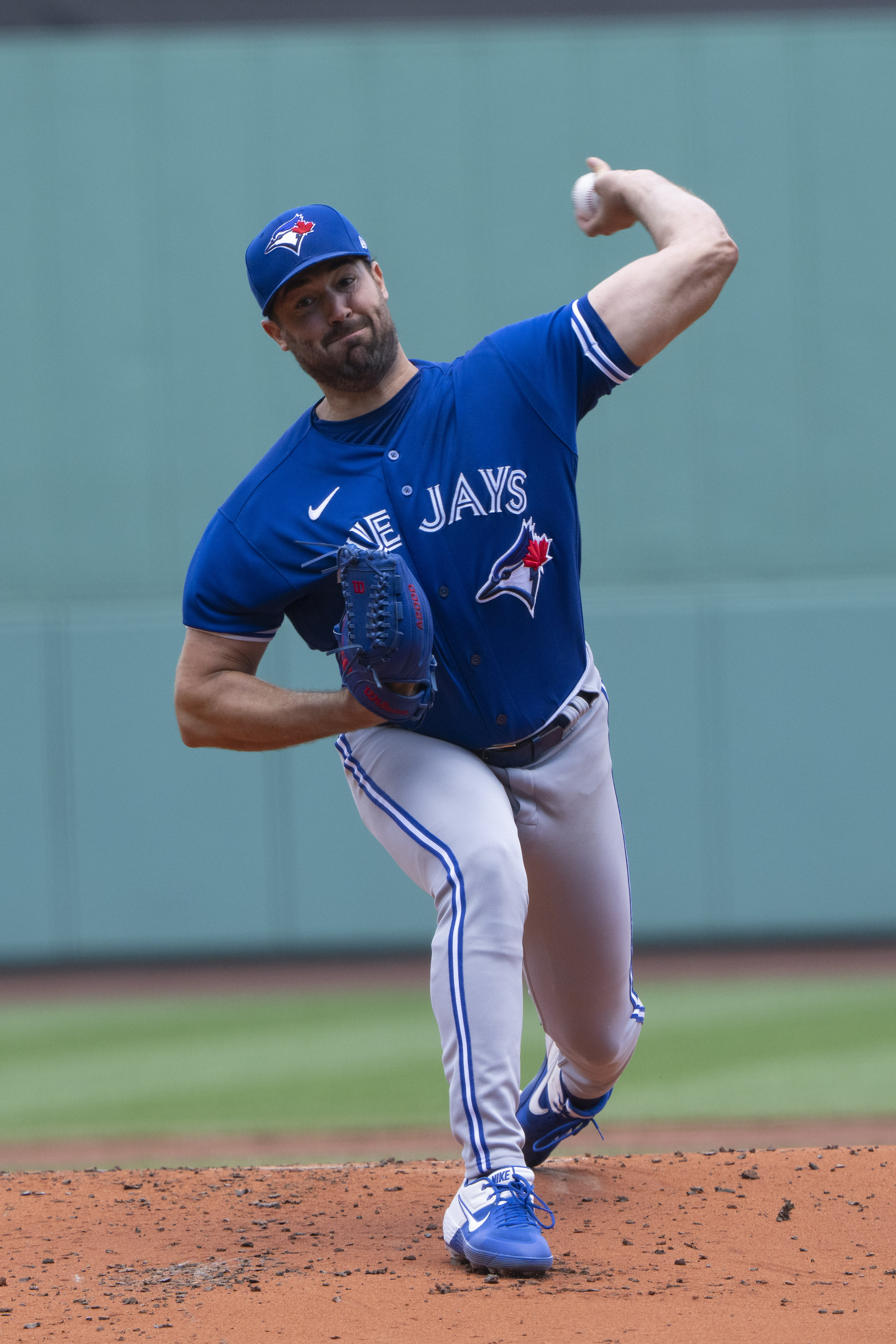
The subsequent 6.62 ERA marked an alarming decline for a lefty who’d previously solidified himself as a durable mid-rotation arm in Arizona. He’d always been a high-strikeout, high-walk, high-home-run rate pitcher, but from 2015-19 Ray tossed 762 innings of 3.96 ERA ball. That ERA was supported by fielding-independent marks such as FIP (3.92), SIERA (3.80) and xFIP (3.68). All of those numbers went in the wrong direction in 2020.
Prior to last spring’s league shutdown, Ray placed sixth on the initial version of MLBTR’s 2020-21 Free Agent Power Rankings. He landed ahead of Marcus Stroman on that February ranking, with MLBTR’s Tim Dierkes writing at the time that both would likely be eyeing deals north of the four-year, $68MM pacts inked by Miles Mikolas and Nathan Eovaldi. Five years seemed plausible with a big platform year. Instead, Ray’s poor 2020 showing turned him into a clear rebound candidate, which led to him re-upping with the Blue Jays on a one-year deal worth $8MM.
The Jays struck quickly to re-sign Ray, inking that $8MM pact on Nov. 7 of last offseason. Ray was the first free agent of note to sign a Major League deal, and the signing was met with some skepticism when it came to jumping the market to pay him at a relatively strong rate. No one, however, is questioning the signing now.
Ray has been nothing short of brilliant in his second go-around with the Jays. He’s not only bounced back and reestablished himself as a quality big league hurler — he’s elevated his status to another level entirely. Ray’s 2.90 ERA on the season is right in line with his 2.89 mark from a career-best 2017 season, but the other elements of his game suggest this is the best version of the lefty we’ve ever seen.
First and foremost, the strike-throwing issues that have previously plagued Ray with such great frequency have dissipated. He’s walking 6.8 percent of his opponents in 2021 — a career-low mark and an astonishing drop of more than 12 percent from last year’s rate. Ray’s 62.5 percent first-pitch strike rate is the best of his career, as is his 14.9 percent swinging-strike rate and 32.5 percent opponents’ chase rate. His 94.9 mph average fastball, meanwhile, is back in line with peak levels from 2016 after dipping to 92.5 mph as recently as 2019.
As one might expect, the drop in walks and the increasing frequency with which Ray is getting ahead in the count has allowed him to pitch deeper into games. While he’s long been a solid mid-rotation arm, Ray previously averaged about 5 1/3 innings per start (5.44), regularly running up high pitch counts and leaving plenty of outs for his bullpen to pick up. This year, he’s averaging just shy of six inning per outing (5.92) — and getting stronger as the season goes on. He’s completed five frames in all but two of his starts this year and, since June 1, he’s averaging better than six innings per outing with six-plus frames completed in 11 of those 13 appearances.
An extra couple of outs per game might not sound that substantial, but it’s the difference between a starter pitching 175-180 frames or pitching about 195-200 innings over the course of a full season. And, at a time when other starters are pitching fewer innings than ever before, that extra handful of outs every time Ray takes the mound goes a long way toward helping to keep the team’s relief corps fresh.
So, what’s driving the changes? Ray’s pitch mix has changed somewhat, as he’s throwing his four-seamer at a career-high 60.6 percent rate and has upped his slider usage to 27.6 percent. He’s largely a two-pitch starter at this point, although he throws his curveball and changeup just enough — 7.5 percent and 4.2 percent — to keep those offerings in the back of his opponents’ minds. It’s a definite change from recent years, where Ray was throwing his curveball anywhere from 15 to 21 percent of the time.
Ray also spoke in Spring Training of how he suspected that changes to his arm slot early in the 2020 campaign contributed to his struggles. A look at his profile on Brooks Baseball indeed supports that thinking; both the horizontal and vertical release points on Ray’s four-seamer and slider have changed considerably since his early 2020 work. During his current hot streak (since June 1), the vertical release point on Ray’s four-seamer, in particular, has dipped to previously unseen levels. It’s always possible that hitters will adjust to these mechanical changes, but it’s easier to buy into a rebound when there are tangible changes to a player’s approach, which is the case in this instance.
It should be noted that Ray, like most pitchers, still has his flaws. He’s far too homer prone, yielding 1.59 long balls per nine innings pitched, and no one should expect him to sustain a 90.1 percent strand rate when the league average is 72 percent. His .264 batting average on balls in play is also a career-low and is probably due to tick upward toward his career .307 mark — particularly since Ray’s hard-hit rate and opponents’ exit velocity are higher than the league average.
That said, Ray also ranks alongside some of the game’s best pitchers — and among the upcoming class of free agents — with his brilliant strikeout/walk profile. Among pitchers who have thrown at least 100 innings this season, Ray ranks eighth with a 30.2 percent strikeout rate and is tied for 35th with that better-than-average 6.8 percent walk rate. His 23.4 K-BB% sits tenth in that same set of pitchers. He’s leading American League pitchers with 4.4 wins above replacement, per Baseball-Reference’s version of the stat.
There will undoubtedly be some skeptics when Ray returns to the open market this offseason. His 2020 season was an unmitigated disaster, and we only have one season’s worth of data showing this newfound command of the strike zone and ability to work six-plus innings on the regular. That said, even the 2015-19 version of Ray was a very solid starter, and it’s the 2020 campaign that looks like the clear outlier at this point.
Outside of 28 2/3 innings as a rookie with the Tigers back in 2014, he’s also spent his entire career pitching in rather hitter-friendly settings. A club in a more spacious park would surely be intrigued by whether the move to a more advantageous home setting might help to curb some of that penchant for serving up the long ball, at least to a slight extent. He’s given up 1.50 homers per nine when pitching at home in his career, compared to 1.22 on the road. Unsurprisingly, there’s a spacious gap in ERA as well (4.54 at home, 3.65 on the road).
With a strong, healthy finish to the season, Ray should return to the market as one of the most in-demand arms. It’s a deep crop of free-agent starters, as he’ll join the likes of Max Scherzer, Clayton Kershaw, Kevin Gausman, Justin Verlander, Zack Greinke, Marcus Stroman, Anthony DeSclafani, Noah Syndergaard, Jon Gray and the breakout Carlos Rodon. At 30 years old, Ray will be among the youngest of the bunch, however, and he’s never been on the injured list with a major arm injury.
There’s a good chance the Jays will make a qualifying offer and that he’ll reject said offer in search of a lucrative multi-year deal. Even with draft compensation attached to him, Ray ought to have a wide range of suitors this time around. The four- or five-year deal that seemed feasible back in Spring Training 2020 looks more plausible than ever.
Blue Jays Release Tommy Milone
The Blue Jays have released left-hander Tommy Milone, per a club announcement. He’s spent the bulk of the 2021 season on the injured list due to inflammation in his left shoulder but had gone out on a minor league rehab assignment recently.
Milone, 34, allowed 10 runs on 20 hits and three walks with 17 strikeouts through 14 innings with the Jays earlier in the season. His initial IL placement came back on May 2, and the club moved him to the 60-day IL later that month. He’s tossed 13 2/3 innings in Triple-A since beginning his rehab assignment, holding opponents to four earned runs on nine hits and five walks with nine punchouts.
It’s been a rough few seasons for Milone overall, although he got out to a strong start with the 2020 Orioles, notching a 3.99 ERA with a 24 percent strikeout rate against just a 3.1 percent walk rate in six starts (29 1/3 innings) before being traded to the Braves. Things didn’t go well in Atlanta, as Milone yielded 16 runs in three starts before heading to the injured list with inflammation in his left elbow.
Despite a rough patch in recent years, Milone is an experienced lefty with a lifetime 4.59 ERA in 927 2/3 big league innings. He’s never been a prolific strikeout pitcher (17.7 percent) and was averaging just 84-85 mph on his heater in his limited time with the Jays early in the season, but even at his best Milone only sat in the 87-88 mph range. Milone also has excellent control (5.6 percent career walk rate) and has had enough big league success that a team in need of pitching depth down the stretch could take a look on a minor league deal — assuming he’s healthy, of course. The trade deadline has passed, and elimination of revocable August trade waivers gives contending clubs very few avenues to stockpiling veteran depth at this point in the season.
Blue Jays Place Ross Stripling On Injured List, Select Connor Overton
The Blue Jays announced they’ve placed right-hander Ross Stripling on the 10-day injured list with a left oblique strain. Trent Thornton is being recalled from Triple-A Buffalo, while the Jays selected the contract of right-hander Connor Overton. To create 40-man roster space for Overton, Toronto designated righty Patrick Murphy for assignment.
Stripling has been a regular in the Jays starting five for much of the season. He’s made twenty appearances (nineteen starts) and worked 93 1/3 innings of 4.34 ERA/4.21 SIERA ball. Stripling has bounced back a bit from a 2020 season that saw him post a 5.84 ERA between the Dodgers and Jays, but he’s yet to regain the above-average form he showed during his best years in Los Angeles.
Toronto has been rolling with a six-man rotation recently. With Stripling out, it seems Hyun-jin Ryu, José Berríos, Robbie Ray, Alek Manoah and Steven Matz will get the ball more frequently over the coming days. The team didn’t provide a timetable on Stripling’s potential return.
Overton will be making his major league debut when he first gets into a game. Selected by the Marlins in the 15th round of the 2014 draft out of Old Dominion, Overton was released the following season. He’d go on to spend time in the Nationals’ and Giants’ organizations but didn’t get to the big leagues with either club.
The 28-year-old hooked on with the Jays on a minor league contract over the winter. He’s had a great season with the Bisons, working to a 2.03 ERA over 57 2/3 frames as a swingman. Overton has worked multiple innings in 17 of his 21 appearances in Triple-A, so he’ll serve as a long relief option for manager Charlie Montoyo. He’s never run particularly high strikeout rates, but Overton has been adept at avoiding walks and keeping the ball on the ground this season.
It’s a bit of a surprise to see the Jays designate Murphy, who will find himself on waivers in the coming days. The 26-year-old has long been regarded as one of the more talented pitching prospects in the organization, but a series of injuries has impeded his progress up the ladder. Murphy has had brief stints in the majors in each of the past two seasons, working 15 1/3 innings of 3.52 ERA ball.
While his peripherals in that limited work haven’t been particularly impressive, he’s averaged north of 96 MPH on his sinker. Murphy has typically posted groundball rates approaching or exceeding 50% at each minor league level. A starting pitcher throughout much of that time, Murphy has worked exclusively out of the bullpen this season. He’s in his final minor league option year, so any team that claims him could keep him in Triple-A through the end of the season but would have to break camp with him beginning in 2022.
AL East Notes: Schwarber, Bichette, Arozarena, Kiermaier, Johnson
Although the Red Sox got some very good news today, in the form of Chris Sale‘s imminent return, there’s also some not-so-great news. Kyle Schwarber‘s rehab has hit a snag, according to Jen McCaffrey of The Athletic. According to McCaffrey’s sources, “Schwarber has suffered a minor setback with left groin tightness in the midst of his rehab from a right hamstring strain.” Before the injury, Schwarber having his best offensive season to date, putting up a wRC+ of 137. The Red Sox acquired him at the trade deadline with the idea to transition him to playing first base. Any increase to his time on the shelf will put a squeeze on the amount of time he has to get acquainted with his new position as the end of the season creeps closer.
Elsewhere in the AL East…
- Blue Jays shortstop Bo Bichette is out of today’s lineup because of shin contusions, reports Scott Mitchell of TSN. Ben Nicholson-Smith of Sportsnet connects the injury to Bichette fouling balls off himself yesterday. Bichette is in the midst of an excellent season at the plate, slashing .293/.342/.478, for a wRC+ of 123 over 473 plate appearances. At the start of today’s games, the Jays were three games back of Oakland for the AL’s final wildcard playoff spot and will surely be hoping for Bichette to return in short order, as he’s been one of their most valuable contributors this year.
- Randy Arozarena could be activated on Tuesday, per Marc Topkin of The Tampa Bay Times. The outfielder was placed on the COVID-IL on Friday because of a close contact. If he is expected back so quickly, it can be assumed that he has not tested positive himself. After a huge breakout in 2020, Arozarena is having another excellent season, with a wRC+ of 125 over 427 plate appearances.
- Kevin Kiermaier left last night’s game with knee soreness but appears to have avoided serious injury, per Topkin. The outfielder is having a fourth-consecutive subpar season at the plate, slashing .232/.297/.324, producing a wRC+ of 77. Though on account of his excellent defensive work, he’s still been worth 1.1 fWAR this season.
- DJ Johnson left today’s game with right shoulder discomfort, per Topkin. The 31-year-old was just acquired from Cleveland before the trade deadline and has had seen very limited MLB action this year. In Triple-A, he has a 3.32 ERA over 21 2/3 innings, with an excellent strikeout rate of 34% but an elevated walk rate of 10.7%.