
Phillies Sign Corey Knebel
The Phillies announced the signing of reliever Corey Knebel to a one-year contract this afternoon. It’s reportedly a $10MM guarantee. Knebel is represented by Excel Sports Management.
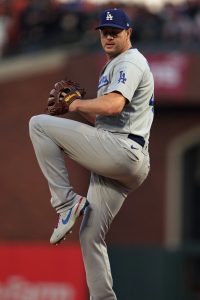
The bullpen has been a major weak spot for the Phillies in each of the last two seasons, and Knebel now provides some much-needed late-game help for the club, potentially even in the closer role. Knebel has previous experience as the Brewers’ closer (including a 39-save, All-Star season in 2017) before injuries derailed his career.
Phillies president of baseball operations Dave Dombrowski is very familiar with Knebel, as back when Dombrowski was running the Tigers front office, Detroit selected Knebel 39th overall in the 2013 draft. Knebel began his MLB career in a Tigers uniform, but after a pair of trades from Detroit to Texas to Milwaukee, he emerged as a very intriguing arm out of the Brew Crew’s bullpen.
Knebel underwent Tommy John surgery in March 2019 and returned to toss only 13 1/3 innings of rather shaky 6.08 ERA ball, though such struggles aren’t uncommon for a pitcher returning from such a layoff. The Brewers opted to trade Knebel to the Dodgers rather than face the question of whether or not to tender him a contract in his final arbitration-eligible year, and to some extent, Milwaukee’s concerns were realized, as Knebel ended up missing almost four months of the 2021 campaign due to a right lat strain.
When he did pitch, however, Knebel looked much closer to his old form. He posted a 2.45 ERA over 25 2/3 innings, with a 29.7% strikeout rate and 8.9% walk rate and dominant numbers against both right-handed and left-handed batters. Velocity-wise, Knebel’s heater was back up to 96.4mph —- still a tick below his 97.4mph career high in 2017, but a nice step up from the 94.4mph velo he showed in 2020. Knebel’s fastball spin rate also rebounded from 2020, and he posted a career-best spin rate on his curveball that topped his already-strong past numbers.
The contract is a nice late birthday present for Knebel, who turned 30 years old last week. While he has already had a lot of ups and downs in his career, that age is a reminder that Knebel is still in his veritable prime, and might resume his status as a frontline relief arm if he is able to stay healthy. The one-year contract may be a nod to both his lengthy injury history, and perhaps Knebel’s own desire to showcase himself in advance of a larger multi-year commitment next winter. MLBTR projected Knebel for a two-year, $18MM pact, and he sat 38th on our ranking of the offseason’s top 50 free agents.
Knebel is by far the biggest of the Phillies’ bullpen adds this winter, topping a list that includes Ryan Sherriff, Nick Nelson, Yoan Lopez, Kent Emanuel, and Scott Moss. The relief corps also took a hit when former closer Hector Neris departed to sign a free agent deal with the Astros.
Jeff Passan of ESPN was first to report the Phillies and Knebel were in agreement. Jim Salisbury of NBC Sports Philadelphia reported the sides were “in advanced talks” this morning. Jon Heyman of the MLB Network was first with contract terms.
Image courtesy of USA Today Sports.
Tigers Sign Jacob Barnes To Minors Contract
The Tigers have signed right-hander Jacob Barnes to a minor league deal. The club also announced that Barnes will receive an invitation to the Tigers’ big league Spring Training camp.
Barnes elected free agency in October rather than accept an outright assignment to the Blue Jays’ Triple-A team. Barnes is in his second year of arbitration eligibility and was projected for a $1.2MM salary, but the Jays’ outright assignment was essentially a non-tender that allowed Barnes to get an early jump on the free agent market.
After posting a 3.54 ERA and 11.6% homer rate over 147 1/3 innings out of the Brewers’ bullpen from 2016-18, Barnes’ numbers began to sail north thanks in large part to an increase in his home run rate. In 79 1/3 innings since the start of the 2019 season, Barnes has a 6.58 ERA and an 18.8% homer rate, which has caused him to bounce around to five different clubs over that three-season span.
In 2021, the 31-year-old posted a 6.28 ERA over 28 2/3 combined innings with the Mets and Blue Jays in 2021, along with a 25.8% strikeout rate and 8.6% walk rate. Barnes has continually gotten some strong spin rates on his mid-90s fastball, but apart that four-seamer, he has had trouble finding consistent results with any of the other pitches in his arsenal.
Barnes will get another chance in the Tigers’ camp, as Detroit will likely audition more than a few veteran arms during their spring camp. The Tigers bullpen wasn’t particularly good in 2021, yet as aggressive as the team has already been with its winter shopping, it wouldn’t be surprising to see them turn their attention to more established relief options now that some of their bigger-ticket additions (Javier Baez, Eduardo Rodriguez, and Tucker Barnhart) have been added to the roster.
Giants Sign Alex Wood
TODAY: The signing is official. According to multiple reporters (including John Shea of The San Francisco Chronicle), Wood will get $25MM over the course of the two-year contract, with an even $12.5MM in each season. Based on games pitched, Wood can also earn up to $2.5MM in additional bonuses.
NOVEMBER 22: The Giants are closing in on an agreement with free agent southpaw Alex Wood, reports Robert Murray of FanSided (Twitter link). The sides are discussing a two-year deal that would pay the ACES client more than $10MM annually, reports Jeff Passan of ESPN (on Twitter). Should a deal come to fruition, he’d join 2021 rotation mate Anthony DeSclafani in returning to San Francisco. The Giants announced a three-year pact with DeSclafani just minutes before news of Wood’s near-agreement with the club broke.
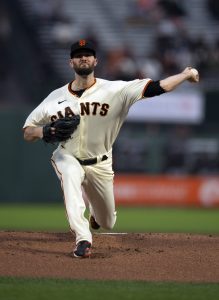
Wood signed with San Francisco for a $3MM guarantee last offseason and more than made good on the club’s fairly small investment. The left-hander worked to a 3.83 ERA across 138 2/3 innings and 26 starts, taking on his heaviest workload since 2018. ERA estimators were even more bullish on his performance, as Wood posted a 3.48 FIP and a 3.60 SIERA that are both a fair bit better than his bottom line numbers.
The deceptive southpaw punched out 26% of batters faced this past season, a mark that’s more than three points north of the league average. That came on the strength of an above-average 12.5% swinging strike rate, with Wood generating plenty of whiffs on both his sinker and slider. While he doesn’t throw especially hard, he’s consistently proven capable of missing bats based on his combination of movement, command and atypical look for hitters.
That impressive profile has also enabled Wood to post robust ground-ball numbers. He typically induces grounders on around half the balls in play against him (the average for starters is just under 43%), and that was again the case this past season. Wood racked up worm-burners at a 50.8% clip, a top twenty mark among the 129 hurlers with 100+ innings pitched. It’s rare to find pitchers capable of pairing that kind of strikeout and ground-ball proclivities, and Wood also owns high-end control. The southpaw has never had a season with a walk rate north of the league average, and his 6.7% mark in 2021 was more than a point lower than the league figure.
There’s little question about Wood’s effectiveness. Since debuting in 2013, he’s yet to post a season in which he’s exceeded 40 innings with an ERA north of 4.00. That’s supported by the underlying numbers, with the Georgia native typically offering the production of a #2 or high-end #3 starter when he takes the mound. At his best, Wood is capable of posting All-Star caliber numbers. He even earned a Midsummer Classic nod with the Dodgers in 2017, and his 152 1/3 innings of 2.72 ERA ball that year earned him some down-ballot Cy Young support.
The bugaboo throughout his career has been health. While Wood tossed 361 1/3 innings between 2014-15, he’s struggled to log full rotation workloads in the years since. The southpaw has only twice eclipsed 150 frames in the past six seasons, and his 2019-20 seasons were largely derailed by back and shoulder issues. He combined for just 48 1/3 innings over that two-year stretch, and those issues seemed to have a pronounced effect on his performance. Despite his typically strong track record, his ERA over those couple seasons was just under 6.00.
Wood mostly stayed healthy in 2021, although his season debut was delayed a couple weeks by a minor back surgery. Nevertheless, injury and/or workload concerns have kept Wood from cashing in on a long-term contract to this point in his career. The former second-round pick turns 31 years old in January, and his rate performance would seemingly warrant a strong three or four year deal were teams confident in his ability to consistently log 150+ innings.
Instead, it seems he’ll land a two-year pact to return to the Bay Area. That’s shy of the three-year, $30MM deal MLBTR projected entering the offseason, although he’s seemingly in line to top that estimated average annual value. The Giants can certainly afford to take on that kind of eight-figure investment over the next two seasons. San Francisco currently has just $106MM in commitments for next season, in the estimation of Jason Martinez of Roster Resource. That number dips to $45MM in 2023, when only three players (Brandon Crawford, DeSclafani and Tommy La Stella) have guaranteed deals on the books.
The rotation has been a priority for president of baseball operations Farhan Zaidi, general manager Scott Harris and the rest of the front office. The need to rebuild the starting staff this offseason has been evident for a while now, as Logan Webb was the only one of San Francisco’s top five starters remaining under club control entering the day. DeSclafani’s return locks in a second member of that group, and Wood would have a spot lined up as well if/when his deal is finalized. Susan Slusser of the S.F. Chronicle reported this morning the club was also making a strong run at free agent Alex Cobb. It remains to be seen whether those talks will result in an agreement, but there’d certainly be room in the rotation and on the payroll for such a move.
Of course, it also stands to reason the Giants would still like to hammer out a long-term agreement with Kevin Gausman. While a Webb – DeSclafani – Wood trio would make for a solid top three, reinstalling Gausman behind Webb and knocking DeSclafani and Wood into the mid-rotation roles in which they thrived in 2021 would make San Francisco’s rotation one of the more formidable units in the league on paper. The front office has worked to retain as much of this year’s 107-win team as possible, signing Crawford, DeSclafani and likely Wood to multi-year deals and bringing back Brandon Belt via the $18.4MM qualifying offer.
Image courtesy of USA TODAY Sports.
Marlins Sign Avisail Garcia
TODAY: The Marlins officially announced the signing. The contract details are provided by Jon Heyman, who notes that Miami’s 2026 club option is worth $12MM, with a $5MM buyout. Garcia will earn an even $12MM in each of the 2022-25 seasons, and he will also donate $120K per year to the Marlins’ team charity.
NOVEMBER 28: The Marlins have agreed to a four-year contract with free agent Avisail Garcia, SportsGrid’s Craig Mish reports (via Twitter). Garcia will earn $53MM, according to MLB Network’s Jon Heyman. Garcia is represented by Mato Sports Management.
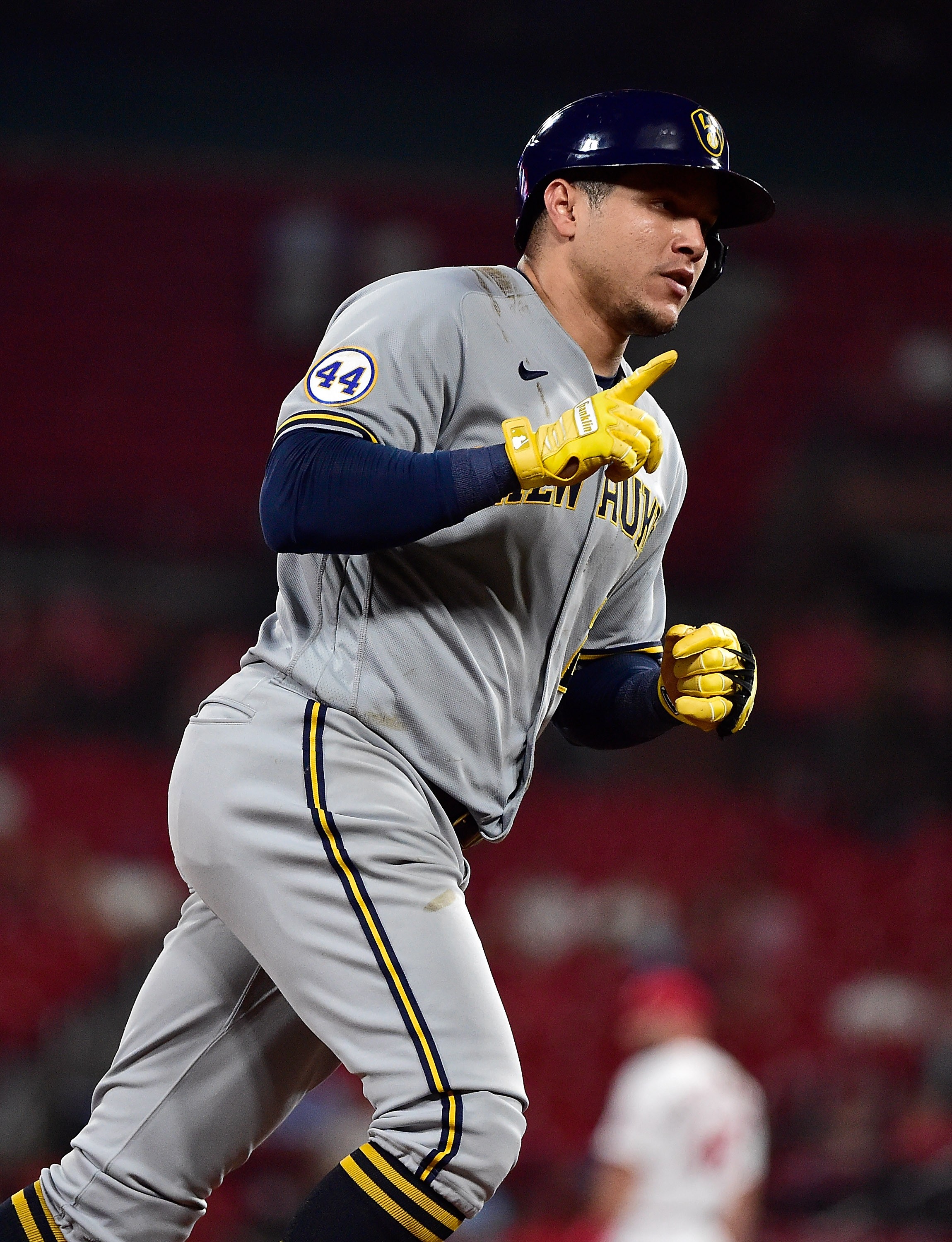 Mish notes that this is the largest contract the Marlins have handed out under owners Bruce Sherman and Derek Jeter, who purchased the team more than four years ago. The Marlins are “far from done,” tweets Mish. Garcia joins Jesus Sanchez in the Marlins’ outfield, after the club reportedly made a strong push to bring Starling Marte back before he signed with the Mets. The Marlins continue to sit on perhaps the game’s best starting pitching surplus, suggesting GM Kim Ng may solve some of the team’s other needs on the trade market.
MLBTR had predicted a three-year, $36MM contract for Garcia, who managed to snag an extra year and a better average annual value. Garcia’s contract is exactly double that of Mark Canha, who signed with the Mets two days ago at the same $13.25MM AAV. Garcia, 31 in June, posted a fine 115 wRC+ in 135 games for the Brewers this year. Garcia’s two-year, $20MM contract with the Brewers included a provision that converted a $12MM club option into a mutual one once he reached a certain plate appearance threshold in September. That allowed Garcia to become a free agent. Likely fearing acceptance, the budget-conscious Brewers elected not to make the one-year, $18.4MM qualifying offer.
Garcia has had an up-and-down career since signing with the Tigers for $200K as a 16-year-old out of Venezuela back in 2007. The toolsy outfielder reached the Majors as a 21-year-old in 2012 and was traded to the White Sox the following year as part of a three-team deal that sent Jake Peavy to the Red Sox and Jose Iglesias to Detroit. Garcia fell short of expectations in Chicago until a BABIP-driven 138 wRC+ in 2017. After a down 2018 season that culminated in knee surgery, the White Sox chose not to tender Garcia a contract with a projected $8MM arbitration salary looming.
The Rays swooped in with a one-year, $3.5MM free agent contract for Garcia, who rode a 113 wRC+ in 2019 to the aforementioned two-year contract with Milwaukee. It’s fair to question why, two years later, Garcia is coming off a similar season and managed to secure $33MM more than last time. Interestingly, Marte was reportedly “seeking a three- or four-year deal in the $50 million range” back in July when the Marlins attempted to extend him, according to Jordan McPherson and Craig Mish in the Miami Herald. The Marlins didn’t get there, trading Marte for Jesus Luzardo before attempting to sign him back last week. It’s been an odd sequence of events for the Marlins, who ended up with Garcia for a similar price to what Marte might have cost.
The answer to Garcia’s appeal might lie in Statcast, where his top of the charts numbers have always hinted at something more. This year, he ranked in the 73rd percentile for average exit velocity, 98th for maximum exit velocity, 78th for hard hit percentage, and 80th for barrel rate. Garcia simply hits the ball very hard, even if this year’s 29 home runs represented a career best. Garcia pairs his hard-hitting with 88th percentile sprint speed, so his is a rare blend of athleticism. Defensively, Garcia has been a bit below average in Outs Above Average over the past few years.
We’ve seen a flurry of hot stove activity today with three days remaining until the collective bargaining agreement expires, with December 1st serving as a transaction deadline of sorts. Today alone, we’ve seen free agent contracts for Marcus Semien, Corey Kluber, and Garcia, as well as an extension for Byron Buxton. After the CBA expires, ownership is widely expected to lock out the players and freeze free agency, speculatively until the eve of spring training in February. This has created an unprecedented urgency from teams in free agency, resulting in many November contracts that have exceeded expectations.
Rangers Sign Corey Seager
The Rangers’ huge offseason continues, as Texas has agreed to terms with free agent shortstop Corey Seager on a ten-year deal, the team announced today. According to various reports, it’s a massive $325MM guarantee for the Boras Corporation client. He’ll reportedly receive a $5MM signing bonus and a $32.5MM salary in 2022. Seager will make $35MM in 2023, $34.5MM in 2024 and $32MM in 2025 before settling in at $31MM annually from 2026-31 as part of the front-loaded pact. The deal also contains limited no-trade protection but does not feature any opt-out clauses.
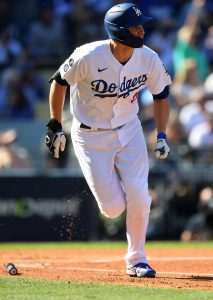
It’s the Rangers’ second big-ticket free agent infield pickup of the offseason, as they also agreed to terms with Marcus Semien on a seven-year, $175MM deal. The Rangers announced Semien’s signing at the same press conference. Huge as the Rangers’ investment in Semien is, the Seager deal is on a whole other level. The $325MM guarantee will tie Giancarlo Stanton’s November 2014 extension for the sixth-highest sum in MLB history (and Stanton’s was distributed over a thirteen-year term). The $32.5MM average annual value checks in eleventh all-time.
It’s an incredible investment, although that’s a testament to Seager’s blend of productivity and youth. He’ll turn 28 years old next April, making him one of the younger options available in free agency. More importantly, Seager’s one of the game’s best players — a middle-of-the-order lineup presence capable of playing shortstop. A former first-round pick and top prospect, he’s more than lived up to lofty expectations.
Seager has been an above-average bat in every season of his career, and he’s been far better than most at the plate for the bulk of that time. By measure of wRC+, he’s been at least 27 percentage points above the league average in four of his five seasons with 200+ plate appearances. Seager has been especially productive over the past two years, combining for a .306/.381/.545 line over 641 regular season trips to the plate since the start of 2020. That’s the eighth-best offensive production leaguewide (minimum 500 plate appearances) and that’s before considering Seager’s huge showing in the 2020 postseason. He was perhaps the single greatest driver of the Dodgers’ World Series run that year, winning NLCS and World Series MVP honors after popping seven homers over 57 combined plate appearances between the two rounds.
Those great bottom line results are supported by Seager’s underlying metrics. He has never struck out at a higher-than-average rate in a season, and he rarely chases pitches outside the strike zone. Seager’s 11.7% walk rate in 2021 was the highest of his career, around three percentage points better than the league mark. The left-handed hitter pairs that plate discipline with high-end raw power, consistently rating well above-average in terms of average exit velocity, hard contact rate and barrel rate (essentially how often a hitter makes hard contact at the optimal angles for power).
Any player with Seager’s offensive acumen would be in high demand, but that kind of production is particularly impressive from a shortstop. Aside from a brief stint at third base in his 2015 rookie season, Seager has exclusively played the infield’s most demanding position. Advanced defensive metrics have been mixed on his work. Defensive Runs Saved has pegged him just a touch below-average in each of the past few seasons; Statcast’s Outs Above Average rated Seager fairly well in 2019 and 2020 but pegged him as a fair bit below par in 2021.
Those metrics seem to align with the general understanding of Seager’s defense. He’s a competent if unexceptional shortstop, unlikely to either win a Gold Glove nor immediately have to move off the position. His 6’4″, 215-pound frame has led to some speculation he might kick over to third base at some point down the line, but it’s likely the Rangers envision him as a franchise shortstop for at least the next few seasons. Even if Seager eventually has to assume a less demanding defensive role, he should be more than capable of living up to the higher offensive demands of positions further down the defensive spectrum.
While there’s not much to nitpick about Seager as a player, he has dealt with a couple of significant injuries over the past few seasons. He missed the bulk of the 2018 campaign recovering from a UCL sprain that required Tommy John surgery. This past season, he suffered a right hand fracture on a hit-by-pitch that cost him two months. Seager absolutely mashed at a .335/.417/.592 clip upon returning from that most recent issue, though, likely assuaging any fears on the part of teams about his current level of health.
Seager now becomes the centerpiece of an incredible offseason for the Rangers and their fanbase. Texas brass has hinted at the potential for an active winter for months, but it wasn’t until a few weeks ago it became clear ownership might sign off on an historic spending spree. Evan Grant of the Dallas Morning News reported earlier this month that the Rangers could add $100MM to their 2022 books alone, and between the recent deals for Seager, Semien, starter Jon Gray (four years, $56MM) and corner outfielder Kole Calhoun (one year, $5.2MM), they’ve added around $76.7MM to next year’s payroll within the past 36 hours alone.
That’s in part due to the wide open payroll outlook the Rangers carried into the winter. José Leclerc ($5.25MM) is the only other player with guaranteed money on the books for 2022; Seager, Semien and Gray are the club’s only long-term commitments. Active as they’ve been, it’s certainly possible the Rangers aren’t done yet. Texas currently has around $125MM in 2022 player expenditures, in the estimation of Jason Martinez of Roster Resource. (That assumes the Seager, Semien and Gray deals are paid out relatively evenly; specific contract terms on each have yet to be reported). For a franchise that spent around $160-165MM on players in both 2016 and 2017, there could still be more funds in reserve.
Regardless of what’s to come, the past two days have marked an incredible turnaround for a franchise coming off three last-place finishes in the past four years. That’s not to say the Rangers are certain to contend in 2022. The roster still has plenty of holes, particularly in the starting rotation. Still, installing Seager and Semien into the middle infield and Gray near the top of the rotation locks in some certainty at key areas of the roster.
At the very least, the 2022 Rangers should be far better than the 60-102 team they trotted out in 2021. And Semien, Seager and Gray will all be key pieces of a club that could legitimately contend in 2023 — particularly if top third base prospect Josh Jung hits the ground running as an above-average player alongside their star middle infield.
Until Jung’s arrival, Isiah Kiner-Falefa looks likely to kick back over to third base. The 26-year-old broke in as a third baseman but acclimated well upon a move up the defensive spectrum to shortstop this past season. While the Rangers likely didn’t see displacing Kiner-Falefa as a must, the opportunity to add two members of this offseason’s stacked shortstop class ultimately proved too tempting to pass up. Semien, meanwhile, looks likely to stay at second base, where he spent the 2021 season with the Blue Jays after a lengthy run as the A’s shortstop.
The Rangers already forfeited their second-highest 2022 draft choice and gave up $500K in international bonus pool space to sign Semien, who rejected a qualifying offer from Toronto. They’ll lose another pick to sign Seager, who declined a QO from the Dodgers. Signing multiple qualified free agents in the same offseason actually makes some amount of sense, though.
Under the terms of the collective bargaining agreement, teams that sign multiple qualified free agents pay a diminishing penalty. A team that already forfeited its second-highest pick on one qualified player (like the Rangers) lose their third-highest pick to sign another qualified free agent. That’s less costly than the second-highest pick other clubs in the Rangers’ revenue bucket would have had to forfeit to land Seager, a small benefit for teams concentrating their big free agent investments in the same offseason.
The primary appeal, though, is in simply adding a pair of star players to the 2022 roster. That’s the position in which the Rangers find themselves, while Seager’s former team finds itself in the opposite situation. The Dodgers have seen both Seager and Max Scherzer (who landed a record-setting three-year deal with the Mets) land elsewhere within the past few days. Los Angeles’ acquisition of Trea Turner from the Nationals at this past summer’s trade deadline gives them another All-Star caliber shortstop capable of stepping into Seager’s place.
Of course, the Dodgers aren’t likely to sit idly by for the rest of the offseason. Particularly as they battle with the Giants (and potentially Padres) in a loaded NL West, it’s likely Los Angeles will continue to explore ways to bolster a still-stacked roster. In the meantime, they’ll receive a compensatory pick after the fourth round in the 2022 draft for Seager’s departure as a team that exceeded the luxury tax threshold in 2021.
Seager’s signing is the latest in a transactions flurry getting in before the looming expiration of the current CBA on Wednesday night. Seager’s and Scherzer’s departures from L.A. could have a massive impact on the NL West race, while the Rangers’ run of big-ticket acquisitions and the Mariners’ agreement on a nine-figure deal with Robbie Ray will have reverberations in the AL West for years to come.
Finally, Seager’s deal becomes a key data point for the rest of the free agent shortstops remaining, particularly Carlos Correa. While Seager and Correa were the clear top two names in this winter’s class, Correa is generally expected to command a loftier deal based on his superior defense at shortstop. Seager’s guarantee, however, comes in above MLBTR’s ten-year, $305MM estimate entering the winter. In light of the robust market we’ve seen in recent weeks, it wouldn’t be a surprise if Correa also tops his ten-year, $320MM projection whenever he puts pen to paper. That’s particularly true in light of the Rangers signing two of the top five shortstops. The Yankees, Phillies, Mariners and Astros are among the other clubs who could still be motivated to land a long-term infielder.
Jeff Passan of ESPN first reported the Rangers and Seager were in agreement on a ten-year, $325MM guarantee. Jon Heyman of the MLB Network reported the limited no-trade protection and the $5MM signing bonus, as well as the absence of any form of opt-out clause. Levi Weaver of the Athletic was first with the specific contract breakdown.
Image courtesy of USA Today Sports.
Tigers Sign Javier Baez
The Tigers have landed their new franchise shortstop. Detroit announced on Wednesday they’ve signed Javier Baez to a six-year contract. According to reports, it’s a $140MM guarantee for the Wasserman client, who also lands some other perks in the deal. Baez can opt out after the 2023 campaign and has limited no-trade protection that allows him to block a move to 10 teams each year.
Baez’s salaries break down as follows: $20MM in 2022, $22MM in 2023, $25MM each in 2024-25 and $24MM each in 2026-27. He also receives assorted incentives based upon finishes in MVP and other awards’ voting. Baez is guaranteed $42MM over the first two seasons of the slightly backloaded deal. That means he’ll have four years and $98MM in remaining guarantees after the 2023 campaign, when he’ll need to decide on his opt-out possibility.
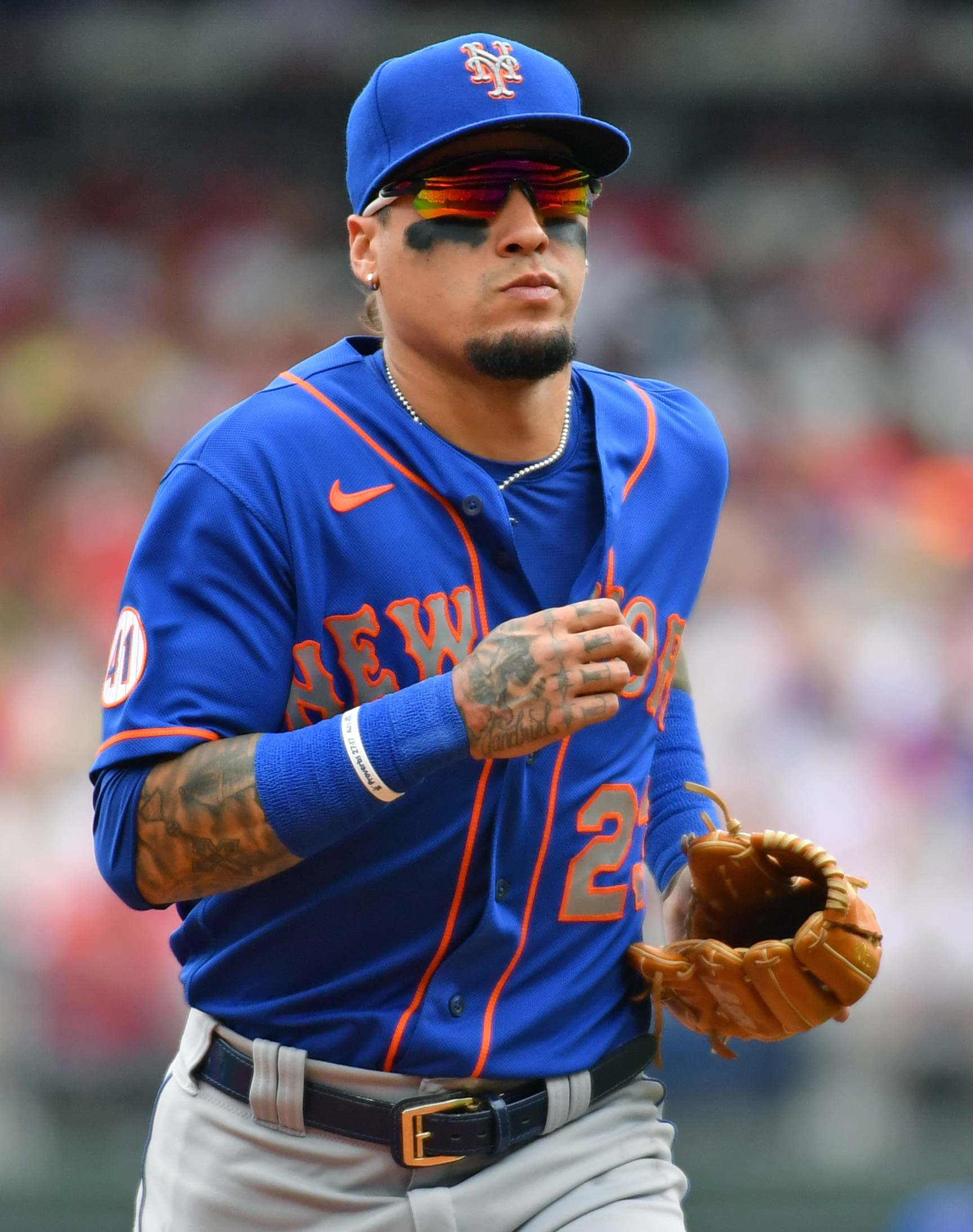
Shortstop has been a glaring need for the Tigers since the onset of free agency, with general manager Al Avila plainly stating his intentions to improve at the position not long after the season’s conclusion. While many speculated that Carlos Correa, who knows Detroit skipper AJ Hinch quite well from the pair’s time in Houston, would be the likeliest candidate to step into that role, Avila & Co. have preached a more measured approach since the offseason commenced. The Tigers already inked lefty Eduardo Rodriguez to a five-year, $77MM contract early in free agency, and adding Baez to the fold would effectively satisfy multiple needs at what figures to be a fair bit less than the cost of Correa on his own.
Detroit shortstops were quite nearly the worst in Major League Baseball from an offensive standpoint in 2021, hitting a combined .201/.275/.321. The resulting 62 wRC+ (i.e. 38 percent worse than league-average production) was the second-lowest mark in the sport, leading only a tanking Pirates club in overall offensive output at the position.
The Tigers have already moved on from their leader in shortstop innings over the past few seasons, bidding adieu to Niko Goodrum after passing him through waivers unclaimed and watching him elect free agency. Baez would represent an across-the-board improvement over Goodrum, providing lights-out, frequently highlight-reel defense in addition to considerable power and baserunning skills for his position.
The 2020 campaign was a season to forget for Baez, but the end result of a roller-coaster 2021 season was a .265/.319/.494 batting line with 31 homers and 18 steals (in 23 tries) for the two-time All-Star and 2018 NL MVP runner-up. Generally speaking, Baez (who’ll turn 29 tomorrow) is a power-hitting but free-swinging shortstop whose penchant for putting the ball over the fence is at least somewhat mitigated by an anemic walk rate that typically lands him near the bottom of the league in on-base percentage. This year’s .319 OBP was actually the second-highest single-season career mark for Baez, who has drawn a free pass in just 4.8% of his 3255 MLB plate appearances.
That said, it’s worth pointing out that there were some positive strides shown by Baez following a trade from the Cubs to the Mets at the July 30 deadline. After whiffing in a whopping 36.3% of his plate appearances in Chicago, Baez cut that figure to a more tolerable (albeit still too lofty) 28.5% in Queens. He also walked at a 7% clip with the Mets — a mark that’s a good bit shy of the 8.8% league average but also well north of 4.7% mark he carried throughout his years with the Cubs. After a rocky run with the Cubs in 2021, Baez finished the season on a heater and posted a composite .299/.371/.515 batting line as a Met.
Inconsistent as Baez may be at the plate, it’s hard to argue with the bottom-line results at the end of the day. Even including 2020’s woeful season, Baez is a .270/.311/.508 hitter (113 wRC+) with 102 home runs over his past 1988 plate appearances, dating back to 2018. He’s one of baseball’s premier defenders — regardless of position.
Since Opening Day 2018, Baez ranks third among all Major League players with 52 Outs Above Average, per Statcast, and his 44 Defensive Runs Saved place him ninth among 4053 defenders who’ve taken the field. While the now-former incumbent Goodrum was a solid defender in hiss own right, Baez is a game-changer with the glove who’ll serve as a pronounced improvement to the Detroit defense.
The Mets were reportedly interested in retaining Baez, who is close friends with New York shortstop Francisco Lindor, but it now seems he’ll instead head to the Motor City and serve as one of the faces of a team looking to emerge from a rebuilding cocoon and announce its return to contention in the American League Central.
Detroit has spent most of the past five years in a prolonged rebuilding effort but has managed to stockpile an enviable farm system that now leaves the team on the precipice of turning the corner. Young starters Casey Mize, Tarik Skubal and Matt Manning will be expected to team with Rodriguez in leading the starting staff, while 2020 No. 1 overall pick Spencer Torkelson and 2019 No. 5 overall pick Riley Greene are both viewed as top-10 leaguewide prospects and potential lineup anchors.
That blossoming young core makes it easy for Detroit, a team that has previously trotted out Opening Day payrolls north of $200MM, to spend heavily in free agency this winter. Miguel Cabrera is signed through the 2023 season, but the only player on the books beyond that point is the aforementioned Rodriguez. Roster Resource’s Jason Martinez projects a $104MM payroll without Baez next season, and that’s before the likely non-tender of Matthew Boyd and his $7.3MM projected salary (courtesy of MLBTR contributor Matt Swartz).
With that in mind, even if this is the last marquee move of the offseason for the Tigers — and, to be clear, there’s no indication that’s the case — the additions of Baez and Rodriguez clearly set the stage for a return to aggressive adding in Detroit. The Tigers will have one more high-end draft pick in 2022, but the goal for the team is clearly to shift into win-now mode, and the additions of both Baez and Rodriguez are notable steps in that direction. Baez has averaged a hefty 4.6 wins above replacement (per Baseball-Reference) per season over the past four years, even including that ugly 2020 campaign, and the Tigers will count on him for more of the same as a linchpin both in the lineup and on defense as they turn the page from a rebuild the fans are all too ready to leave in the rear-view mirror.
Jon Morosi of MLB.com first reported the Tigers and Baez were nearing agreement on a six-year contract. Mark Feinsand of MLB.com first reported the $140MM guarantee. Evan Petzold of the Detroit Free-Press reported the two sides had reached an agreement and that Baez’s deal included an opt-out provision. Ken Rosenthal of the Athletic first reported the opt-out was after 2023 and was first with the limited no-trade protection. Jon Heyman of the MLB Network reported the specific salary breakdown.
Photo courtesy of Imagn/USA Today Sports.
White Sox Re-Sign Leury Garcia
11:05AM: The White Sox have officially announced both the signing and Garcia’s $16.5MM salary, with the additional detail that Garcia will receive $5.5MM in each season of the deal.
TODAY, 12:57AM: Garcia receives a $16.5MM guarantee, Heyman reports.
NOVEMBER 30: The White Sox have agreed to re-sign infielder/outfielder Leury Garcia, reports MLB Network’s Jon Heyman (Twitter link). It’ll be a surprising three-year commitment for MDR Sports Management client.
Garcia, 30, tallied 474 plate appearances with the South Siders in 2021 — the second-highest total of his career — and posted a .267/.335/.376 batting line with five homers, 22 doubles, four triples and six stolen bases (in eight attempts). Dating back to 2017, when Garcia established himself as a fixture on the White Sox’ roster, he’s batted .273/.317/.388 while seeing time at second base, shortstop, third base and all three outfield spots.
Despite a need for an everyday second baseman in Chicago, it seems Garcia’s role won’t change much on his new contract. The Athletic’s James Fegan tweets that Garcia will continue as an oft-used backup around the diamond and, when injury necessitates, a temporary everyday option.
The ChiSox already have Yoan Moncada installed at third base, Tim Anderson at shortstop, Eloy Jimenez in left field and Luis Robert in center. Andrew Vaughn and Gavin Sheets saw some time in the outfield this year but are better suited at first base — where Jose Abreu is locked in — and/or designated hitter. Garcia is a competent backup just about anywhere, with 200-plus innings at every position other than first base, catcher and (of course) pitcher. It still seems likely that Chicago will make an addition at second base, and an upgrade in the outfield is also quite possible.
It’s uncommon, albeit not unprecedented, to see a free-agent bench player of this nature receive a deal of three or more years in length. Ben Zobrist landed four years as a free agent with the Cubs, and the general expectation is that reigning super-utility star du jour Chris Taylor will eclipse Zobrist’s $56MM guarantee. Both Zobrist and Taylor, however, hit the market as above-average hitters with everyday upside; that hasn’t been true of Garcia. The deal is in some ways reminiscent of the Padres’ three-year contract with Jurickson Profar, though Chicago will hope for better results than that deal provided for San Diego in year one.
Mariners Extend Andres Munoz
TODAY: The Mariners officially announced Munoz’s extension.
NOVEMBER 30: The Mariners are finalizing agreement on a four-year extension with reliever Andrés Muñoz that guarantees at least $7.5MM, report Daniel Kramer and Jesse Sanchez of MLB.com (Twitter link). The deal contains three club options, reports Jon Morosi of MLB.com (on Twitter).
Muñoz, a client of Hector Gomez, had been controllable via arbitration through 2025. The deal buys out his final pre-arb season in 2022, as well as all three arb years. The Mariners extend their window of control by three seasons via the club options.
It’s a fascinating agreement, as Muñoz has made exactly one appearance in a Seattle uniform. He recorded two outs during the M’s season finale against the Angels, his first big league work since his time with the Padres in 2019. Those two seasons mark the entirety of Muñoz’s big league career, as he has just 23 2/3 innings of 3.80 ERA ball under his belt at the highest level.
That limited track record is on account of both youth and injury. The Mexico native is still just 22 years old (23 in January), having reached the big leagues at age-20. He blew out his elbow in Spring Training with San Diego in 2020, requiring a Tommy John procedure. While he was rehabbing, Seattle acquired him as part of the seven-player Austin Nola deal. He spent the next year recovering under the eyes of Mariners’ medical personnel before returning to health in time for the season’s final game.
That lack of track record makes Muñoz a rather atypical extension candidate, but it’s also easy to understand why the Seattle front office jumped at the opportunity to lock in some eminently affordable rates over the coming seasons. Muñoz possesses electric stuff, including one of the game’s hardest fastballs. He averaged triple digits on the pitch during his 2019 rookie campaign. Upon his return from injury, that average heater had “dipped” to 99.6 MPH. Were Muñoz to emerge as a potential closer or even simply a high-leverage relief arm, he’d stand to earn far greater than a cumulative $7.5MM through arbitration. And that’s before considering the most appealing part of the deal from a team perspective — the opportunity to extend their window of control an additional three seasons.
From Muñoz’s perspective, the deal affords him the opportunity for up-front financial security. It’s possible he’ll wind up underpaid, if he lives up to his immense upside. Yet it’s difficult to fault a player his age for locking in this kind of money, particularly given that he’s yet to establish himself within a big league bullpen. Even independent of injury concerns, Muñoz comes with questions about his strike-throwing ability. He routinely walked upwards of 11% of opponents in the minors until 2019, and there’s a chance he never develops adequate command to match his power arsenal.
While the team can shoulder that kind of risk with relatively minor cost, Muñoz struggling early in his career could have had a significant impact on his earnings. He’ll forfeit a fair bit of ceiling in order to avoid that downside. All told, it’s a fascinating gambit for Seattle — one that, while unconventional, has the opportunity to pay off handsomely if Muñoz emerges as a late-game weapon.
Red Sox Avoid Arbitration With Kevin Plawecki
The Red Sox announced that catcher Kevin Plawecki has agreed to a new contract for the 2022 season, thus avoiding salary arbitration. The Boston Globe’s Alex Speier reports that Plawecki signed for $2.25MM, which tops MLBTR’s projected for a $2MM salary in Plawecki’s final year of arb eligibility.
Entering his third season as Boston’s backup catcher, Plawecki has hit .305/.364/.414 over 262 plate appearances with the Red Sox, an unexpectedly big step up from the .636 OPS he posted over his first 978 PA and five Major League seasons with the Mets and Guardians. While Plawecki hit better than 2020 than in 2021, his bat helped prop up production from Boston’s catching position last season in the wake of a down year from starter Christian Vazquez. Baseball Prospectus‘ numbers rate Plawecki’s defense as pretty average across the board, while Fangraphs’ catching metrics give him -4 Defensive Runs Saved over his two years with the Sox.
Ryan Brasier also agreed to a deal with the Red Sox yesterday, so Boston has six players remaining (Rafael Devers, Hunter Renfroe, Nick Pivetta, Alex Verdugo, Christian Arroyo, and Josh Taylor) left on its list of arbitration eligibles.
Mets Sign Eduardo Escobar
The Mets announced Wednesday they’ve signed free agent infielder Eduardo Escobar to a two-year guarantee with a 2024 club option. It’s reportedly a $20MM guarantee for the DJ Rengifo y Associates client. Entering the offseason, MLBTR ranked Escobar the game’s #35 free agent, forecasting him for the two-year, $20MM guarantee he ultimately landed.
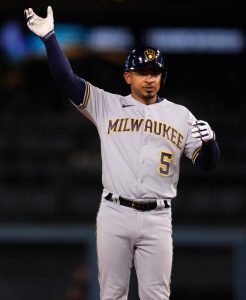
Escobar gives the Mets cover at three infield positions, as he’s coming off a season in which he logged 100+ innings at each of first base, second base and third base. He also had extended run as a shortstop earlier in his career, but he’s only played two innings there over the past three years. Escobar doesn’t rate as a particularly strong defender anywhere on the diamond, but he’s at least capable of bouncing between a few spots on the dirt.
While that defensive versatility is a nice bonus, the calling card with Escobar has been his bat. He’s been an above-average hitter by measure of wRC+ in each of the last three full seasons, unexpectedly morphing into a power threat late in his career. While he hit just 27 home runs over his first 1620 major league plate appearances, Escobar found another gear in that department in 2017. He hit 21 homers in 499 trips to the dish that season, and he’s knocked between 23 and 35 longballs with an above-average ISO (slugging minus batting average) in all three full campaigns since then.
Escobar has gotten to that increased impact without sacrificing much in the way of contact. He’s kept his strikeout rate right around 20% over the course of his career, around three percentage points below the league mark. His contact and swinging strike rates have also hovered right around average. And the switch-hitting Escobar has fared well from both sides of the plate. Going back to the start of 2018, he’s a .283/.333/.482 batter against left-handed pitching; his .249/.311/.473 mark against righties over that same stretch isn’t as impressive, but it’s still around league average output from his weaker side.
There’s a lot to like about Escobar’s offensive game, although he’s not completely without flaws. The Venezuela native had an awful .212/.270/.335 showing over 222 plate appearances in the truncated 2020 season. He bounced back to offer more typical .253/.314/.472 output between the D-Backs and Brewers in 2021. That clearly erased some doubts about Escobar’s 2020 struggles, but he’ll turn 33 years old in January. And even at his best, Escobar has an aggressive approach that tamps down his walk rate and leads to on-base percentages right around the league average.
Escobar is coming off his first career All-Star selection, but that nod was also influenced by the rule requiring an All-Star rep from every team and his presence on a lackluster Arizona club. He’s more solid regular than star, but Escobar was valued around three wins above replacement by each of Baseball Reference and FanGraphs in 2018, 2019 and 2021. The Mets will hope for more of that same steadiness over the coming seasons, and Escobar’s versatility enables Eppler and his staff to be flexible in building the infield around him.
Francisco Lindor and Pete Alonso are ensconced at shortstop and first base, respectively. Second and third base are less settled, though, with Jeff McNeil and J.D. Davis the respective in-house favorites at those spots. Both players can also man the corner outfield, and neither is without question marks. McNeil didn’t make his typical level of offensive impact in 2021, while Davis is a below-average defender at the hot corner. Davis, in particular, has been frequently mentioned as a speculative trade candidate — so much so that he’s even expressed some doubt about whether he’ll be back in Flushing next season. Robinson Canó is also slated to return from a season-long performance-enhancing drug suspension and could factor into the second base mix, although it remains to be seen how much faith a new front office head and manager will have in the 39-year-old veteran.
Jon Heyman of the MLB Network first reported that Escobar and the Mets were in agreement on a two-year contract. Joel Sherman of the New York Post was first to report the $20MM guarantee as well as the presence of a 2024 club option.
Image courtesy of USA Today Sports.