
Do not adjust your screens — the Yankees did, in fact, actually go the entire offseason without signing a Major League free agent. New York instead relied on the trade market for upgrades as the team looks for a much lengthier postseason visit even as it continues to keep a close eye on future payroll commitments.
Major League Signings
- None
- Total spend: $0
Trades And Claims
- Acquired RP Aroldis Chapman from Reds for 3B Eric Jagielo, RP Caleb Cotham, SP Rookie Davis and 2B Tony Renda
- Acquired 2B/SS Starlin Castro from Cubs for SP/RP Adam Warren and IF Brendan Ryan
- Acquired OF Aaron Hicks from Twins for C John Ryan Murphy
- Acquired SP Luis Cessa and SP Chad Green from Tigers for RP Justin Wilson
- Acquired RP Tyler Olson and IF Ronald Torreyes from Dodgers for IF Rob Segedin and cash/player to be named later (Torreyes was later re-claimed off waivers after a brief stint with the Angels)
- Acquired RP Kirby Yates from Indians for $78K
- Acquired SP Ronald Herrera from Padres for IF Jose Pirela
- Claimed OF Lane Adams off waivers from Royals
Notable Minor League Signings
- Donovan Solano, Carlos Corporan, Anthony Swarzak, Chris Parmelee, Pete Kozma, Vinnie Pestano, Jonathan Diaz, Tyler Cloyd
Notable Losses
- Chris Young, Stephen Drew, Chris Capuano, Chris Martin, Andrew Bailey, Warren, Ryan, Murphy
Needs Addressed
The Yankees have dealt from their catching depth by trading Francisco Cervelli and Chris Stewart over the last two offseasons, and New York moved yet another backstop by sending John Ryan Murphy to the Twins in exchange for Aaron Hicks. It was an interesting one-for-one swap of young talent that filled a need for both clubs — Minnesota now has a long-term answer behind the plate, while Hicks can back up all three outfield positions and has good numbers against southpaws. It was only a few years ago that Hicks was seen as one of baseball’s better minor leaguers, so it’s certainly not impossible that Hicks can still break out at age 26.
When Hicks was acquired in early November, the Yankees could’ve had an eye on him as not just a fourth outfielder, but perhaps a platooner or everyday starter in left as Brett Gardner‘s replacement. Gardner’s name reportedly surfaced in talks with several teams, including the Cubs as part of a potential swap for Starlin Castro.
As it turned out, the Yankees did indeed land Castro, though at the cost of swingman Adam Warren and veteran backup infielder Brendan Ryan. Second base has been a problem area for New York since Robinson Cano‘s departure, and adding Castro is a potential long-term answer. The 26-year-old already has three All-Star appearances under his belt and is signed through the 2019 season (for $38MM), though as we’ll cover later, this is not quite a slam-dunk upgrade for New York.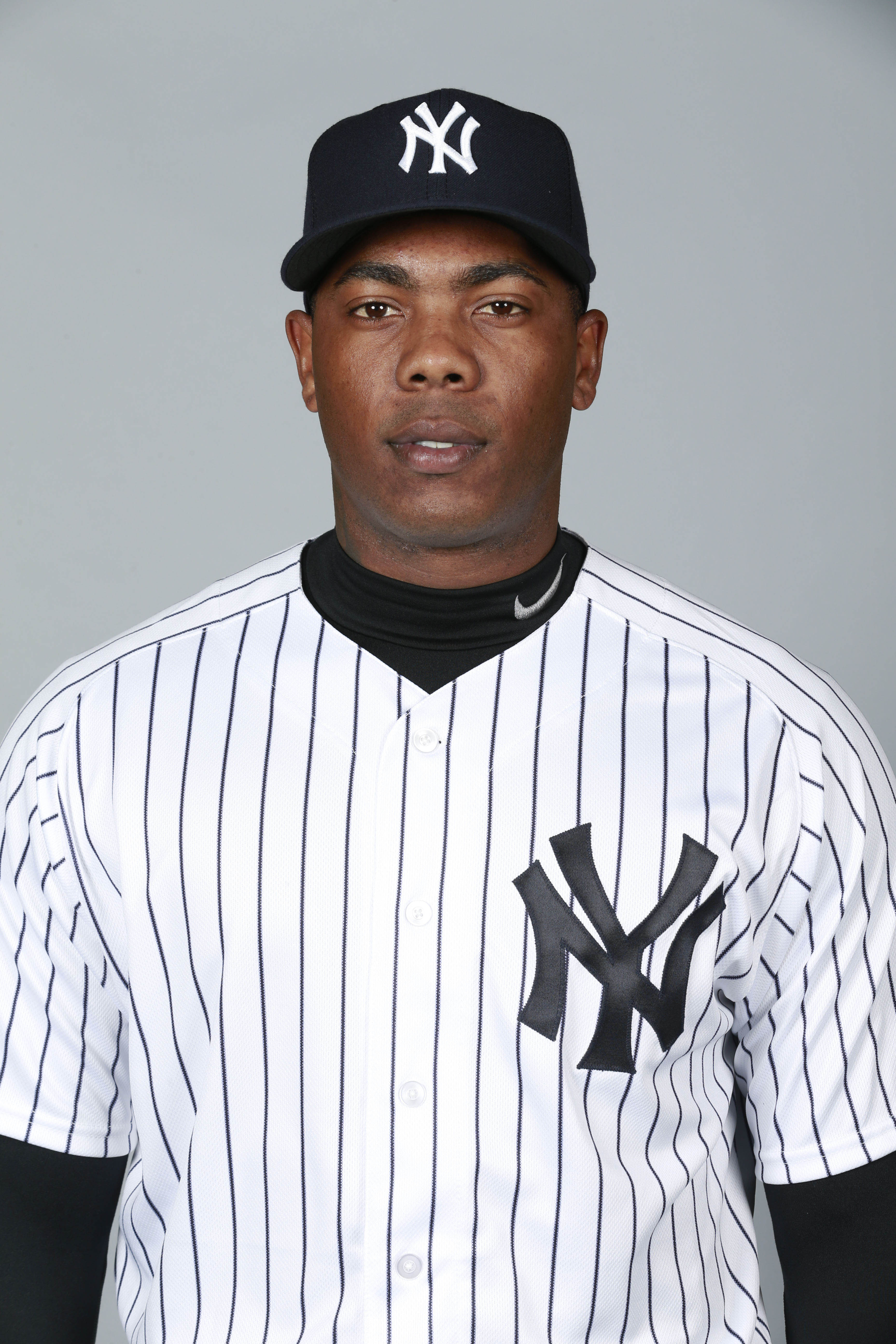
Trading four prospects for one year of a relief pitcher usually isn’t considered a steal, and yet Aroldis Chapman has been so dominant over his career that four non-elite prospects was, in pure baseball terms, a very reasonable price to pay. Of course, there was a huge reason the Reds’ price was so relatively low — the domestic violence allegations that scuttled one trade between the Reds and Dodgers for Chapman, and led to Chapman’s 30-game suspension under the league’s newly-established domestic violence policy. The Yankees faced criticism from several quarters for acquiring Chapman while the allegations were still being investigated, and while no criminal charges were ultimately filed against the reliever, the trade still left a bad taste in the mouths of many fans and pundits.
Once Chapman returns from suspension, he’ll become the closer of what could be one of the best bullpen trios in baseball history. The combination of Chapman, Andrew Miller and Dellin Betances goes a long way towards assuaging concerns about the Yankees rotation. The Yankees clearly had the idea of an uber-bullpen in mind for months, dating back to the July trade deadline and their interest in both Chapman and Craig Kimbrel, though it’s interesting to note that they also explored trading Miller this winter for starting pitching.
Infield depth is still a concern for the Yankees, though they did make some moves to address the backup situation with a number of minor signings and acquisitions that led to Ronald Torreyes earning a bench spot. Torreyes and Dustin Ackley will be tasked with stepping in should veterans be in need of rest days.
Keep reading for more analysis after the break …
Questions Remaining
Nobody really expected the Yankees to be big players in this winter’s free agent market, as the club is widely assumed to be waiting for several of their current big contracts to expire before eyeing another splurge (possibly in the vaunted 2018-19 free agent class). Not signing any free agents at all, however, is a little surprising.
Signing a veteran or two on even a modest one-year contract might have been a better long-term strategy than filling roster holes by dealing away promising and controllable young talent. Murphy and Warren may not seem like huge losses on such a star-studded roster, yet were both sneaky-valuable parts for the 2015 Yankees, able to step in when Brian McCann needed to play first or take an off-day, or make a spot start when a Yankee pitcher was unavailable.
The Yankees are hoping that Austin Romine can successfully step in as backup catcher, with top prospect Gary Sanchez waiting at Triple-A after a rough Spring Training.) New York’s bench projects as Romine, Torreyes, Ackley and Hicks, which may not have the experience or ability to hold the fort if more than one of the Yankees’ several veterans hits the DL for any extended period of time. Greg Bird‘s absence due to season-ending shoulder surgery is a big loss to the Yankees depth chart, as the possible first baseman-of-the-future looked to build on an impressive rookie year.
Beyond Bird’s surgery, the Yankees were dealt two more injury blows in the same Spring Training game. Bryan Mitchell, tabbed as Warren’s successor in the swingman role will now miss several months due to a fractured toe. Miler received a chip fracture in his non-throwing wrist after being hit by a line drive, though he plans to pitch through the injury. If Miller needs time off, however, the late-game relief juggernaut will suddenly be down to just Betances until Chapman’s suspension ends in May.
It’s easy to have 20-20 hindsight in the wake of injuries, yet even if everyone was available, the trades of Warren and Justin Wilson were still somewhat unusual given that the Yankees were clearly putting a premium on a strong bullpen. New York did have another bullpen addition (and their only free agent signing) seemingly lined up in the former of righty reliever Tommy Hunter, though that reported two-year deal worth $11.5-$12MM fell through after the Yankees had concerns with the results of Hunter’s physical.
The Yankees’ need for a deep relief corps became even more pressing since they weren’t able to land any rotation help. They were speculatively linked to free agent arms like Jeff Samardzija and Wei-Yin Chen, though there was never any sense that New York was hotly pursuing either those two or really any top free agent starters. Rather than signings, the Bronx Bombers were known to be looking to trade for pitching, dangling Miller, Gardner and Ivan Nova as possible trade chips for rotation upgrades.
Gardner’s inclusion in that list is interesting, as the veteran had a bit of a down season both offensively and defensively in the first year of the four-year, $52MM extension he signed with New York in 2014. Of all the high-priced veterans on the roster, the front office might’ve felt Gardner had the most trade value given how the others are even more expensive, older or have more injury baggage. While Gardner’s subpar 2015 has been blamed on a wrist injury in the second half of the season, teams obviously weren’t willing to meet the Yankees’ asking price on a 32-year-old who’s owed $38MM through the 2018 season.
With no starting help to be found, Nova will be the first line of defense should injury or performance issues befall any of Masahiro Tanaka, Michael Pineda, Luis Severino, Nathan Eovaldi, or C.C. Sabathia (who was just named the fifth starter). The rotation could be excellent if everyone is healthy and effective, though there are enough injury question marks that expecting 30+ starts from everyone is simply unrealistic. If the Yankees are in the hunt at the trade deadline, the rotation stands out as the likeliest area of need. Needless to say, it would help the Yankees greatly if Severino builds on his strong rookie season and emerges as a top-of-the-rotation arm.
Deal Of Note
The eight players who have seen time at second base for the Yankees over the last two seasons combined for a total of 0.6 fWAR as second basemen. By that measure, Castro looks like a clear upgrade…until you consider that Castro posted just 0.8 fWAR in 2015 and 0.1 fWAR in 2013. Those two rough seasons came the midst of two productive seasons (3.1 fWAR in 2012, 2.8 fWAR in 2014), which adds to Castro’s enigma.
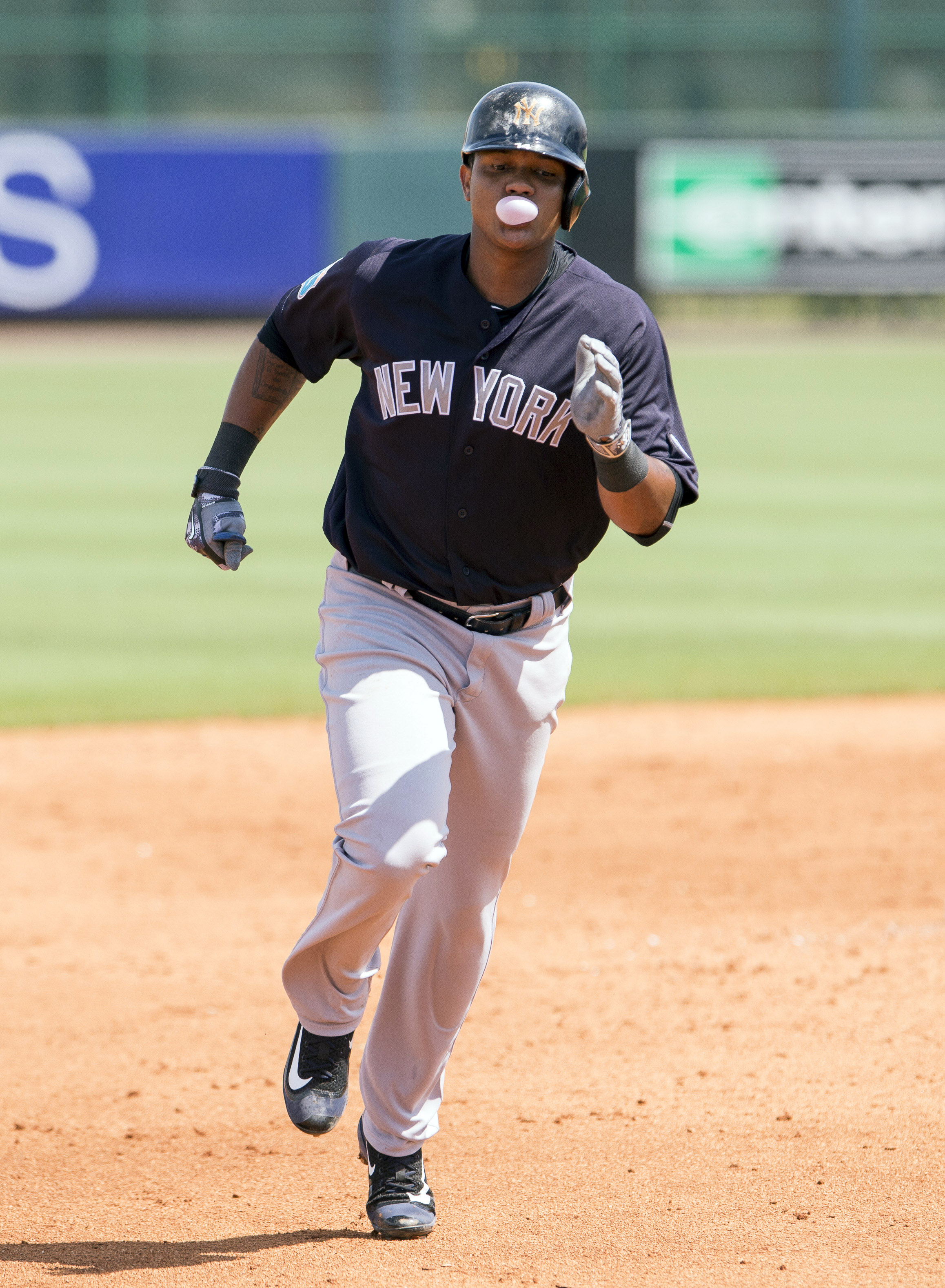 This inconsistency — and, obviously, the presence of Addison Russell and Ben Zobrist — is why the Cubs were willing to part ways with a player who seemed to be a cornerstone for the Theo Epstein era just a few years ago. On the flip side, it’s also easy to see why the Yankees would be interested in Castro, especially since his bat woke up after being moved from shortstop to second last season (.941 OPS in 121 PA at second, .597 OPS in 443 PA at short).
Defensively, Castro was pretty average in his brief time at the keystone, with +2 Defensive Runs Saved but a -4.1 UZR/150. That’s not bad considering that prior to last year, he’d played just 27 games at second in his pro career and none since 2009. The Yankees would happily take average defense if Castro’s bat keeps producing, though Castro’s history of low on-base percentages is a bit of an awkward fit with the team’s usual focus on plate discipline.
GM Brian Cashman spoke openly about how he hated to give up Warren in the Castro deal, and the Cubs badgered him about the right-hander for a month before finally agreeing. A Gardner-for-Castro swap would’ve been the club’s preferred choice of a Cubs trade, as the two are owed an equal amount in future salary and New York could’ve then used extra money to pursue other needs. Still, if Castro bounces back again and finally solidifies second base, the Yankees will consider that extra $38MM well spent.
Overview
Every season is a “win-now” season in the Bronx, though the Yankees feel particular pressure to strike in 2016. McCann, Alex Rodriguez, Carlos Beltran and Mark Teixeira all bounced back to deliver productive and generally healthy seasons last year, so the Yankees are trying to capitalize while these veterans still have something left in the tank. This may explain the short-term addition of Chapman, though in Castro and Hicks, New York also added two pieces that can help both now and in future seasons.
Of course, with just so many aging players on the roster, it’s impossible for the Yankees to expect everyone to be in good form at the same time. While the aforementioned four veterans are coming off good years, for instance, New York is now hoping for bounce-backs from Gardner, Jacoby Ellsbury and Chase Headley. The Yankees had one of the better overall offenses in baseball last year, though keeping that consistency going over the entire year proved to be difficult to manage throughout the lineup.
Despite all the inevitable injury concerns and all of the injuries that have already occurred, if this club gets even slightly above-average health the rest of the way, it wouldn’t be a surprise to see the Yankees make some noise in the postseason. The Chapman/Miller/Betances trio is so dominant on paper that if all three are available and healthy, the Yankees will find themselves playing a lot of six-inning games. Between that relief corps, an experienced lineup of star hitters and a potential breakout rotation, there are a lot of positives on the roster. The Yankees have won pennants after free-agent spending sprees on several occasions; could they now win one with no FA spending?
How would you evaluate the Yankees’ winter? (Link to poll for mobile app users)
How Would You Grade The Yankees' Offseason?
-
B 53% (1,259)
-
C 25% (582)
-
A 12% (292)
-
D 6% (146)
-
F 3% (77)
Total votes: 2,356
Photos courtesy of USA Today Sports Images
Why is Castro going to bounce back? He was one of the worst offensive players 2 of the last 3 seasons? If there is hope for Castro, why isn’t there hope for Panda? Hanley?
Nobody’s saying that there’s no hope for either of those players, but Castro is younger than both of those players (he also doesn’t have the weight problems that Sandoval does either) so there is obviously more of a reason to believe that he can get better.
wow you couldn’t even keep up with your own shtick.
Its weird you would balance comments about Castro against two players not mentioned in the article.
Castro had a great September, is only 26 a 3 time all-star with close to 1k hits. He’s always shown great bat to ball skills. There is a lot of nuance to his mlb career that Starlin has dealt with over the years that not many players have ever dealt with, a rookie savior, playing for Lou then Quade, then Sveum(who clearly didn’t like him) to Rentiria to Maddon. That poor kids head has been spinning for YEARS, practically every year someone trying to change his approach at the plate. Castro has always played best when they let him do his thing, and Yankee’s and Giradi are a great fit for a kid who just needs a role and a chance to be himself on the field.
But the other players you mentioned have no bearing on if Castro will bounce back.
100% Agree. I am one who always thought starlin got waaay more criticism than he deserved (yes, he earned his share). But if you look at his maturity 2 years ago and how he handled he 2nd half of last year, you have to respect that fact that at 26, the Yankees are going to get starlin’s highest upside years.
Funny how he gets so much criticism even though he has been an all star 3 times (before the age of 25), led the league in hits in his 2nd year… We fail to remember that he was 16 years old when he became a pro and has lived his ‘high school and college years’ in the public..
Anyway, if you don’t like him, put him on waivers and see if he clears. I suspect you are going to have a 3-4 year (honest) solution for 2nd base..
Have to remember that most Red Sox fans are unaware that they have to play other teams that do not happen to be the Yankees, and as such feel that any positive comment about a Yankee is a slight to their own.
Funny… (Because it ‘is’ so often a common thread with Red Sox fans…)
So is Castro 50 pounds overweight?
Rare is it that I would say acquiring two “low-character” players warrants an “A” grade for an off-season. But I am grading the Yankees an “A” for just that. Aroldis Chapman is a great rental and they were able to buy low due to his off the field melt down. Compare him to what the Red Sox had to pay to get Kimbrel, and Aroldis is a great bargain if fans are not offended by giving him a chance due to the off the field stuff. Starlin Castro also fails to impress. But the Yankees were able to acquire him at a reasonable cost (Warren) and salary compared to free agents. The Yankees left themselves in a position to spend to rebuild over the next couple years. With AROD and CC ending their careers soon, the Yankees need to get younger and more athletic. Severino, Betances and Miller will be key over the long term. Miller’s wrist injury a couple days ago should not keep him out too long into the season.
I am sure that “soon” the Yanks will return to great, but in 2016 they are going to have to struggle to be above average.
Miller isn’t missing any time. He’s ready for Opening Day.
They’ll go crazy in 2018 with free agency and judge, Sanchez and sevy in their primes.
As long as the Yankees avoid too many injuries they have a good chance in the AL East. I would have liked more improvement done for the rotation but before the injuries the bullpen looked great on paper. One of the best moves I think was not spending money needlessly.
Enough with the fWAR garbage comparing Castro to the second baseman the Yankees have used the past couple of years. Drew was an absolute black hole with the bat. Castro has looked perfectly capable at 2nd this spring and hit over .400.
Starting pitching is a worry this year. I have no confidence in anybody but Tanaka and I have a suspicion that this is the year his elbow finally blows. Eovaldi, Pineda and Severino have potential but are no lock to win 15 games each.
No doubt the Yankees are going after Strasburg next winter. They have a ton of money coming off the books and Strasburg is by far the best pitcher that will be available. Going to be an interesting year in the Bronx, for sure.
It’s going to be an interesting season. With this lineup they could win the World Series or finish 4th in the AL East.
I like the fact that the Yanks didn’t pay a big money, long term contract for a free agent about to hit his declining years. I also like the fact they did not trade for that same type of player. Clear the books, develop the prospects, then go after Harper and pitcher in a few years.
I also think that Ellsbury is going to have a good year. He worked hard this off season to get over his injuries. He won’t have an MVP caliber season but he’ll have a lot better season than most people are forecasting for him.
I am still baffled as to why the Yankees traded Wilson for what looks like a future middle reliever and a AAAA starter. He was very solid last year and Wilson/Betances/Miller/Chapman would have been the best bullpen in baseball by far. Sure its lefty heavy but Wilson is a much better option than Shreve who is also a lefty and should have been the one traded. Shreve looked good for most of the year but had a complete meltdown in September. The addition of Chapman and his big salary would not have been necessary had they kept Wilson. I can’t figure it out..
I gave them a C only because I think Castro is a big upgrade over what they had at second base last year. They did not acquire a starter, and while it was clear from the start that they would not go after someone like Price, Greinke or Cueto, a guy like Chen or even a reclamation project like Latos should have been signed.
I do not like the fact that they got rid of Wilson, who would have been under control for 4 more seasons, and got Chapman, who cost a lot (money+prospects) and will not even be available for the first month or so. With Warren gone, their pitching staff still looks not good enough to me except for of course their 3 closers.
Finally, the bench is weak and most guys are a good bet to miss 20-40 games. I think they will not finish above .500 this year.
Pretty intelligent string guys (southpaw-coffinnail-koz-rbase)…. Thanks for sharing your insights
I don’t agree with your comment about their bench. I think now that Ackley is out of the Seattle organization he’ll start to reach his potential and hit about .300 this season in 400+ AB’s. Remember, the guy was a first round pick and he’s been raking all spring.
Hicks is another one that should thrive in a platoon role. Refsnyder can hit and he should be back from AAA as soon as he learns to use his glove and not his face to stop the ball. You also have guys like Heathcott, Williams, Judge, and Sanchez that should be ready to contribute later this year. I think any of those can also be a valuable contributor if someone goes down to injury.
Don’t forget about future aces Kap and Cessa in the wings. Mateo could be in the majors by August swiping his 100th base on the season.
Is Cessa going to be a future ace? Judging by the numbers (which is not the best method for evaluating prospects) he has struggled in the past two years. I don’t know much about him, but according to pinstripe prospects he is projected by most to be a reliever or a fringe starter.
He’s a troll
I must admit I forgot to put in the Hicks trade, which I like for both sides. I judged the bench using the players projected to be on there from the start of the season, not the prospects they have, even though most are close to major-league ready judging by reports from this and other websites.
Furthermore (and as an addition to my last post) it’s not all bad news though. They have money to spend in the coming years with Texeira, Chapman, A-rod, Beltran and Sabathia coming off the books. Add that to the aforementioned prospects (if they succeed) and they could be quite a scary team in the future. I just don’t see it in 2016.
I agree that the bench on opening day is not ideal. I think Ref got sent down because he was getting frustrated in the field and needed to get his confidence back. Plus, if players have options the Yanks will be using the Scranton-WB shuttle all season long.
If the Chapman-Miller-Betances trio works out this year I expect the Yankees to make an offer to Chapman either before or after the season.
BTW, nice to have a civilized discussion on an open forum 🙂
I expect that trio to at least match what KC did in the past couple of years.
I have only seen Ref play a couple of times last year (hard to see many games when not from the US), but the Yankees do not seem to be all that high on him. However, I have read many blogs which argue that he should have been in the starting lineup last year instead of Drew.. With Castro , Gregorius and Headley, he has no spot in the infield. I guess we (and he) will have to wait and see.
And yes, I have seen a lot of crap happening here lately, which kind of ruined the fun of reading other people’s opinions. Let’s hope it will stay the way it is right now,
The Yankees have been amazingly self disciplined over the past 2-3 years. The payroll you guys are going to have freed up puts you in a ‘creepy’ position to go after ‘anyone’ you want after this season (chapman, Strasburg, Bautista, etc) or the ‘mother load’ after next season (mccutcheon, kershaw, Harper, Donaldson, Harvey, rosenthal, Fernandez…)
Combine that with the depth of your farm system and that makes the Yankees ‘scary’..
Man, as someone who’s spent my entire life in NY, it’s insane to see that 0 next to the amount the Yankees spent this offseason. It’s really the smart move though – they may have given up some decent players to get Chapman & Castro but it’s not like any of them were guys thought to become superstars.
I saw someone ask about Luis Cessa earlier – as a Mets fan I can say he was always viewed more of a guy that would eventually wind up in the bullpen but could be stretched out if you needed a 5th starter.
Definitely an interesting offseason for the Yankees, almost impossible to grade since each move to gain something wound up with an asset going the other way. For that, I’d give them a C (C+ if it was an option) – but as with any trade involving prospects we might look back at some of these trades in 3 years and completely revise that grade.
I had to give them an F for not seeing anything wrong with obtaining Chapman.
The Yankees are spending their money far more effectively now. As for the addition of Castro…good bounce-back candidate. I’ve never been a big fan of his, as he is basically replacement level when the peaks and valleys are averaged out. They needed a 2B and he has done a better job there than expected (albeit a small N). The Yankees have a great pen, few will argue that. However, their SP is in trouble. Severino looks like a nice young arm, but then the rest are question marks because of injury. *IF* healthy they’ll compete for the AL East or 2nd WC. If not…very possible to be .500 team and 4th in the AL East.