
Astros Make Qualifying Offer To Colby Rasmus
The Astros have announced that they made a qualifying offer to outfielder Colby Rasmus. The 29-year-old will have a week to decide whether to take the one-year, $15.8MM offer or instead hit the open market with draft compensation weighing him down.
Rasmus joined Houston on a one-year, $8MM pact last winter and obviously boosted his stock over the course of the season. Working in a semi-regular capacity, he slashed .238/.314/.475 with 25 home runs over 485 plate appearances.
Truth be told, Rasmus wasn’t that bad in 2014 with the Blue Jays. Though his on-base percentage fell below .300, he still contributed plenty of pop and carried an above-average overall batting line. A three-year look-back on Rasmus reveals a cumulative 116 OPS+ and 65 long balls spread over 1,319 plate appearances.
Better still, Rasmus seemingly remains young and mobile enough to play center field. He rated as a roughly average player there after posting poor metrics in an injury-plagued 2014. And both Defensive Runs Saved and UZR felt that Rasmus played a capable left and right field, adding to his versatility.
All told, that blend of youth, power, and defensive capability makes Rasmus seem like a good bet to receive a three or four-year deal as a free agent. (And it doesn’t hurt that he had a monster post-season run.) If the takes that route, though, the need for a signing team to sacrifice a draft pick could hurt his market. It’s certainly possible to imagine him (and other mid-tier free agents) landing with clubs that have already punted their top pick for a bigger fish.
NL East Notes: Toscano, Granderson, Molina, Alvarez, Marlins, Klentak
Braves outfielder Dian Toscano has finally been cleared to join the organization, David O’Brien of the Atlanta Journal-Constitution reports on Twitter. The Cuban had yet to receive full clearance from the government since signing last winter. (It’s never been entirely clear what the reason was for the hold-up.) Atlanta committed $6MM to Toscano over four years in hopes that he could develop into a reserve/platoon-type outfielder. He might see some winter ball action as he looks to get up to speed, O’Brien notes.
Here’s more from the NL East:
- Mets outfielder Curtis Granderson required surgery on his left thumb for a torn ligament, as Rubin reports. That may come as a surprise to those who watched Granderson perform well in the NLCS and World Series. He reportedly suffered the injury during the third game of the championship round. The 34-year-old had a highly productive all-around season, serving as a somewhat underappreciated element in the team’s successful campaign.
- In less promising Mets injury news, right-handed pitching prospect Marcos Molina underwent Tommy John surgery after the season, Matt Eddy of Baseball America reports on Twitter. Both Baseball America and MLB.com rate Molina the club’s sixth-best overall prospect at present, though he’ll obviously have some work to do to regain his standing now that he’ll miss all of 2016.
- Marlins righty Henderson Alvarez is expected to begin a throwing program on the first of December, Jeff Passan of Yahoo Sports reports on Twitter. If he can maintain the timeline that the organization has charted, Alvarez could return to action within the first month of the season, according to Passan. Alvarez had shoulder surgery this summer and is projected by MLBTR to earn $4MM in his second-to-last season of arbitration eligibility.
- As they wait to see how Alvarez progresses, the Marlins will work to increase the organization’s financial flexibility, MLB.com’s Joe Frisaro reports. On the revenue side, Miami is hoping to find a corporate sponsor to put its name on the side of Marlins Park and also to get a new TV deal in place.
- The Marlins acknowledge that they haven’t done the best job of putting their payroll to use in building around their young core in recent years, as Barry Jackson of the Miami Herald writes. Pitching is the major need, according to president David Samson, who says he feels the organization has “three of the top ten players in baseball” — referring to Giancarlo Stanton, Jose Fernandez, and Dee Gordon. Per Jackson, Miami would go up to $15MM a year on the right starting pitcher, though the team is more likely to spend in the $12MM to $15MM range. (He calls Yovani Gallardo an “interesting option in the high end of that range.”) Of course, trades are also possible, and Marcell Ozuna appears to represent a big chip with the organization seemingly unconvinced that he’s a piece worth keeping. Miami is chasing two pitchers, says Jackson, one of whom could come from a deal involving Ozuna.
- New Phillies GM Matt Klentak said that he’s getting acclimated with the organization’s still-new information system, “PHIL,” as Matt Breen of the Philadelphia Inquirer writes. That system is a key part of the club’s efforts to advance its modern analytical capabilities. “Basically it’s a place to house all of our information and synthesize it and try to manage it and pool it and bring all together,” Klentak said. “That’s what PHIL will provide. I’m new to it. I was not involved in the design of it, but I’m getting more and more familiar with it. We’re making some tweaks to it to make sure it suits what we’re looking to do and what we’re hoping to achieve. It’s close to its official launch.”
- Klentak is still settling into his new digs, but says he’s gotten a lot done already as he prepares for the upcoming GM Meetings, as MLB.com’s Todd Zolecki reports. Generally, he says, the club will be looking to continue building its talent base over the winter. “We really want to raise the floor and add some depth,” Klentak said. “Kind of at every turn, that’s what we’re going to be focused on. And in the pitching department, I think we really need to work on just — again, I say raise the floor — but kind of establish sort of a firm foundation of pitching. That’s not going to end when we break camp at the end of Spring Training. That’s something we’re going to be committed to for a long time.” He continued to reiterate that he views free agency as a way to “augment or supplement” a contending team more than a means to building a core.
- Be sure to check out MLBTR’s offseason outlook for the Phils for more on the opportunities and challenges facing Klentak and co. (I’ve also written a Braves outlook and am working my way through the rest of the NL East.)
Nationals Notes: Baker, Papelbon, Manager Hiring, Rizzo
The Nationals introduced Dusty Baker as the club’s new manager today, bringing a close to a surprising hiring saga. As James Wagner of the Washington Post writes, the veteran baseball man brought plenty of pizzazz to his press conference. The club also announced the hiring of Mike Maddux as its new pitching coach and Davey Lopes as the first base coach.
It was a busy week in D.C., with the Nats also losing an important court battle relating to TV revenue. Here’s more:
- Despite starting a nearly-unthinkable dugout brawl with star Bryce Harper, closer Jonathan Papelbon is nevertheless expected to stay with the club and handle late-inning duties alongside Drew Storen, team sources tell Tom Boswell of the Washington Post. Harper has reached out to Papelbon in an effort to improve their relationship, says Boswell, with the team indicating that they don’t expect any issues regarding the clubhouse interactions of any of the above players. Of course, as he notes, there may be some pre-winter posturing in the expression of those views.
- There were lots of negative reactions to the Nationals’ unconsummated dalliance with Bud Black prior to agreeing with Baker. We’ve already covered that episode in some detail, but here are some more sources to consider if you want to read further: Boswell writes that the club’s ownership (the Lerner family) has yet to fully adapt to conducting business in the world of baseball. Though the organization eventually offered Black three years at a strong annual rate, says Boswell, it had already botched the negotiations (which were, seemingly, largely conducted by ownership). Jon Heyman of CBSSports.com provides a detailed timeline of what went down with Black and Baker. In his account, the maximum offer only “may have gotten up to two guaranteed years at some point.” Talks failed, then were re-started, before Washington finally told Black late Monday night that the club was going in another direction.
- The Post’s Barry Svrluga adds that the botched Black negotiations are not the first time the ownership group has ruffled feathers. “Internal morale … is low,” sources tell him, with one explaining that GM Mike Rizzo is “handcuffed in so many ways” by the organization’s top leadership. And their colleague Adam Kilgore says that Rizzo’s “situation can be considered tenuous.”
- The Nationals, of course, are among the many clubs facing difficult qualifying offer decisions tomorrow at 4pm CST. We’ve yet to hear whether D.C. will make the one-year, $15.8MM offer to outgoing free agents such as Jordan Zimmermann, Ian Desmond, Denard Span, and Doug Fister. Only Span, perhaps, presents a difficult decision, though, as the first two of those names seem like virtual locks to receive the offer while Fister’s rough season makes him an unlikely candidate.
Mariners, Rays Swap Miller, Morrison, Farquhar For Karns
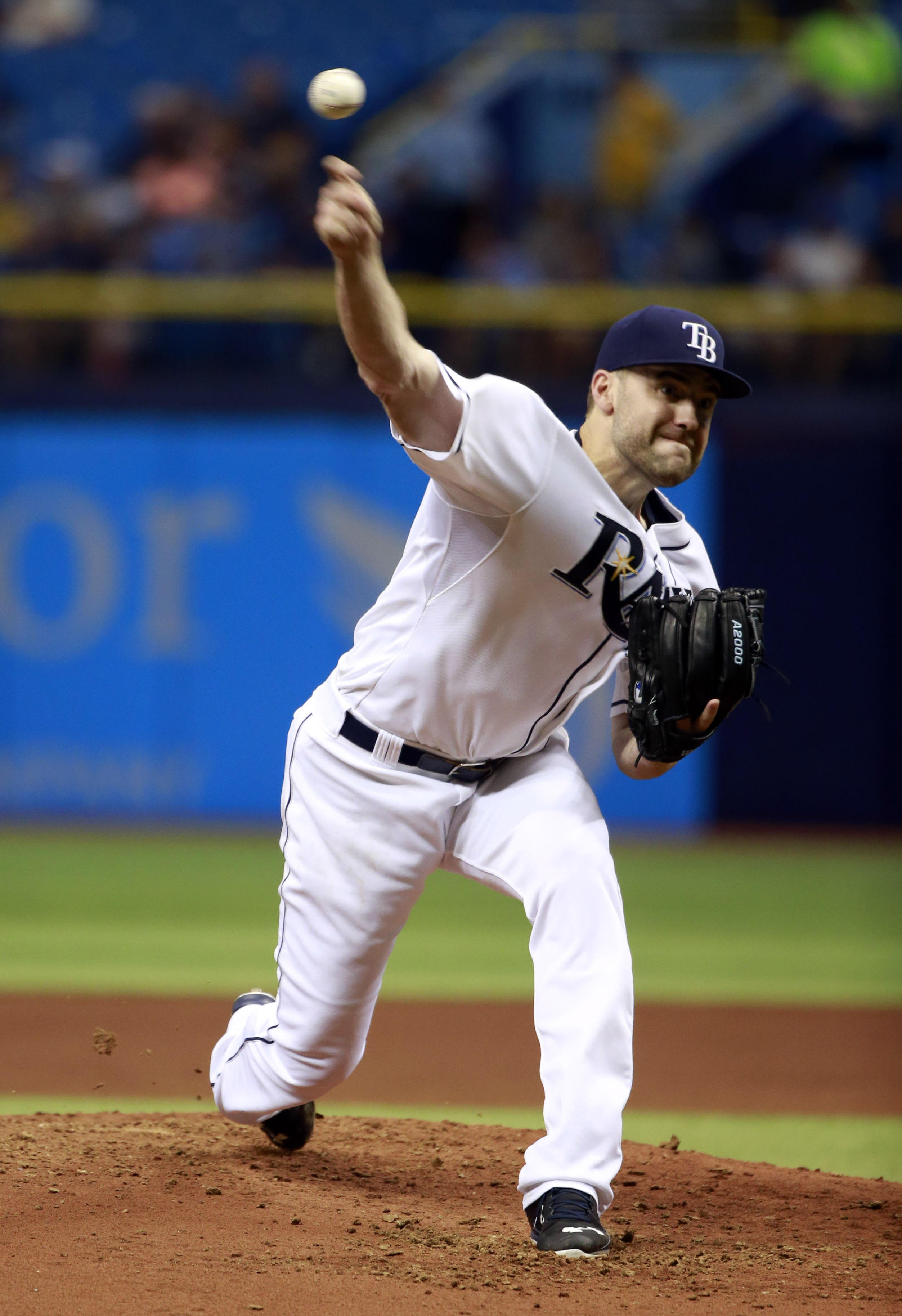
The Mariners and Rays have announced a three-for-three trade that sends infielder/outfielder Brad Miller, first baseman Logan Morrison, and reliever Danny Farquhar from Seattle to Tampa in exchange for righty Nate Karns, lefty C.J. Riefenhauser, and minor league outfielder Boog Powell.
With the trade, new Mariners GM Jerry Dipoto has made a striking first major move. The key piece, of course, is the 27-year-old Karns, who put up a solid 147-inning campaign last year, working to a 3.67 ERA with 8.9 K/9 and 3.4 BB/9. He’ll bring ample, cheap control with him to the Mariners, even if he regresses (and/or fails to progress). Evaluative statistics such as SIERA (3.90) were not terribly high on his first complete big league season, though he’d still be quite a productive asset if he pitches at that level. It’s worth noting that Karns was shut down late in the year with a mild forearm strain, though he also obviously passed a medical exam since the trade is now official.
Seattle also gets Riefenhauser, a 25-year-old southpaw. He has yet to do much of use in the big leagues (6.30 ERA in twenty innings), but has put up stellar run prevention numbers in the upper minors.
And Powell is not an inconsequential piece of the deal, either. He had been rated 13th on MLB.com’s list of the best Tampa Bay prospects. That publication credited him for excellent plate discipline and on-base skills, as well as solid defensive versatility across all three outfield positions. Powell, 22, slashed a productive .295/.385/.392 while splitting time evenly between Double-A and Triple-A (though he was better at the lower-level stop).
Prying Karns loose required Dipoto to part with some appealing assets. Miller, a talented 26-year-old, won’t be eligible for free agency until after the 2019 season. He had been unable to hold down the everyday shortstop job with the M’s but did product an above-average (when park-adjusted) batting line of .258/.329/.402 last year. He also contributed 11 home runs and 13 steals. Miller has some experience in the outfield (as well as at second and third), and figures to be a versatile piece for Tampa. Defensive metrics are not fond of his work in center field, though they have viewed him as an average (1.9 career UZR) to slightly below-average (-9 career Defensive Runs Saved) fielder at short.
Morrison has had his ups and downs, and didn’t exactly light the world on fire at the plate last year with a .225/.302/.383 slash and 17 home runs over 511 plate appearances. But he has shown more at times, including in 2014, and ought to provide a first base/DH option for the Rays. He is projected by MLBTR to earn $4.1MM in his final season of arbitration eligibility.
Farquhar, 28, is another interesting player. He has shown the ability to put up big strikeout totals out of the pen, racking up double-digit K-per-nine tallies in both 2013 and 2014 and contributing 71 innings of 2.66 ERA ball in the latter of those seasons. But he struggled badly last season, dropping back to 8.5 K/9 while permitting 5.12 earned runs per nine in his 51 frames. Farquhar was more effective in Triple-A, though he tallied 38 innings at that level, making for rather a heavy usage over the course of the year.
For the Mariners, Karns will obviously slot into a rotation that figured to be in need of at least one or two more arms with Hisashi Iwakuma hitting the open market. He fits the profile — young, controllable, power arm — of the pitchers that Dipoto had been busy adding with the Angels. It’s unclear as of yet whether the addition of Karns will impact the team’s efforts to bring back Iwakuma.
Meanwhile, parting with Miller and LoMo takes away two regular contributors from last year’s Seattle roster, though it also frees up the payroll commitment that the latter would have required. The team could go with highly-regarded prospect Ketel Marte and/or the still-young Chris Taylor at short. Slugger Mark Trumbo sits atop the first base depth chart for now, but he’s projected to take home a $9.1MM arb payday before hitting the open market after the season. The resurgent Jesus Montero, who also hits from the right side, represents another option at the position. And it’s still possible to imagine the club exploring the free agent and trade markets for an upgrade.
On the Tampa Bay side of things, Karns was one of several quality young starters on the staff, which can still run out Chris Archer, Jake Odorizzi, Drew Smyly, Matt Moore, and Erasmo Ramirez. (Ramirez, of course, came to the Rays in yet another trade with the Mariners last winter.) Alex Cobb will eventually re-join that group, which will ultimately be supplemented by other promising pitchers who are rising through the ranks.
Miller joins Logan Forsythe and another former Mariner, Nick Franklin, in the middle infield mix. (While Forsythe thrived last year, Franklin scuffled in the majors — though he put up good numbers during his time at Triple-A.) It’s certainly possible that Miller will step in at short for the departing Asdrubal Cabrera, though Tim Beckham and (eventually) Daniel Robertson could also factor there.
Adding Morrison is certainly an interesting element of this trade. He’s not exactly cheap for the budget-conscious Rays, who are losing DH John Jaso to free agency. But he could be a better value proposition than the team might’ve found on the open market. It’s also possible to imagine him stepping in at first base if the club tries to find a taker for James Loney and some of his $8MM salary.
This was not the first trade for several of the names involved in tonight’s deal. Karns went to the Rays from the Nationals before the 2014 season in exchange for a package that included Jose Lobaton, Felipe Rivero, and Drew Vettleson. That same winter, the Mariners added Morrison from the Marlins in a swap for righty Carter Capps. Powell was a part of last winter’s Ben Zobrist/Yunel Escobar deal. And Riefenhauser has changed hands several times, by way of trade and waiver claim.
Photo courtesy of USA Today Sports Images.
Offseason Outlook: Philadelphia Phillies
The deck has been cleared in Philly, and now it’s time for the new front office to chart a course.
Guaranteed Contracts
- Ryan Howard, 1B: $35MM through 2016 (including buyout of 2017 option)
- Matt Harrison, SP: $28MM through 2017 (including buyout of 2018 option)
- Carlos Ruiz, C: $9MM through 2016 (including buyout of 2017 option)
- Miguel Gonzalez, SP/RP: $4MM through 2016 (contract includes 2017 vesting option)
Arbitration Eligibles
- Andres Blanco (5.007) – $1.0MM
- Jeanmar Gomez (4.063) – $1.5MM
- Freddy Galvis (3.021) – $1.9MM
- Non-tender candidates: none
Options
- Cliff Lee, SP: $27.5MM club option ($12.5MM buyout) — option already declined by club
Free Agents
The Phillies constitute a fairly blank slate, in more than one respect. Heading out of the 2015 season after a year that featured an unusual amount of change, it’s hard to predict exactly how the club will proceed.
Philadelphia also features a brand new, hard-to-predict leadership group. Plurality owner John Middleton has been around for some time, but has steadily increased his ownership share and only recently stepped into the public spotlight for the first time. Incoming president Andy MacPhail has been running teams for quite a while, but was last at the helm in 2011 with the Orioles. He made the first big move of his tenure by firing long-time Phillies executive Ruben Amaro Jr. and replacing him with Matt Klentak. The youthful executive got his start under MacPhail in Baltimore, and more recently served as Jerry Dipoto’s assistant GM with the Angels, but has never functioned as a general manager. Philadelphia also decided to retain veteran baseball man Pete Mackanin as manager — his first permanent post after serving as an interim skipper on several occasions. The organization is even rolling out a new data and information system — the aptly-named “PHIL” — which is expected to assist the organization’s fledgling sabermetric efforts.
The fresh-look front office will inherit little in the way of future commitments. After sporting $100MM+ payrolls for each of the last seven years, the Phils have less than $65MM in obligations written in ink for 2016 and just a shade over $25MM thereafter. That’s quite a turnaround for a club that carried over $200MM in future promises in advance of the 2014 campaign.
As that wide-open future payroll would suggest, there aren’t many veteran pieces left. Ryan Howard has $35MM left on his deal, but that includes the buyout on a 2017 option, so he’s almost certainly entering his last year with the team (if he’s not moved beforehand). Veteran catcher Carlos Ruiz is in the same boat, though he only costs another $9MM. Cliff Lee‘s buyout is included in the 2016 tally, as is the remainder of the money promised to Miguel Gonzalez. And the only other commitment that the team has is to lefty Matt Harrison, who was included as part of the salary workout undertaken in the summer’s Cole Hamels trade.
Neither is there much to worry about on the arbitration side of things. Just before Klentak was hired, the club outrighted former top prospect Domonic Brown, bringing his disappointing tenure with the organization to an end. He wouldn’t have earned much more than the $2.6MM he received through arbitration last year, and comes with another season of control thereafter, but the organization decided to cut bait after he put up back-to-back .634 OPS campaigns while delivering poor glovework in the corner outfield.
The remaining arbitration cases seem fairly easy. Jeanmar Gomez is a cheap and solid middle reliever. Andres Blanco, a historically light-hitting utilityman, had a career-best .292/.360/.502 batting line over 261 plate appearances (with most of the damage coming against lefties). There’s little harm in keeping him around on a cheap salary. It won’t be expensive to retain Freddy Galvis, either. While he’s not much of a hitter, he’s a good and versatile defender and strong baserunner.
Some would argue that it’s preferable to give a look to younger players rather than relying on the likes of Blanco and Galvis. But cheap veterans such as these allow teams to make promotions based upon developmental considerations rather than desperation. And it’s always good to have some experience and leadership in the clubhouse.
There are some other returning pieces that will factor into the offseason plans, of course. We’ll start in the infield, where Cesar Hernandez joined Blanco and Galvis in the middle infield (along with the since-traded Chase Utley). Like Galvis, he’s a light-hitting but versatile player who gives the organization flexibility. Youngster Darnell Sweeney, acquired in the Utley deal, will factor into the mix as well after making his MLB debut last year. The club could conceivably utilize those in-house options up the middle in 2016, or trade any one of them if an opportunity arises to add a new player who’s ready for big league action. Top prospect J.P. Crawford is the future at shortstop, and could end up as a mid-season call-up, but he has yet to play above the Double-A level. Third base is even easier: Maikel Franco will look to build off of his strong 2015 and make himself into a star.
The opposite scenario is in play at first and behind the plate. Philly could dump Howard and Ruiz for whatever salary relief it can find. Darin Ruf and Cameron Rupp are standing by as short-term replacements, or time-share options, depending upon what direction the team goes. Neither of those players is terribly exciting, of course, and both are much more useful against southpaws, but they could be paired with a variety of short-term free agents. There’s plenty of left-handed-hitting first base options, with Pedro Alvarez representing a somewhat interesting trade possibility, and catchers such as Jarrod Saltalamacchia and Alex Avila — both of whom are historically much better against righties — could be drawn by the promise of playing time.
In the outfield, too, Philly has somoe options but very few things etched in stone. Odubel Herrera was one of the more productive Rule 5 picks you’ll ever see last year, and he’ll get a chance to repeat in center. Aaron Altherr and Cody Asche are the only other 40-man outfielders under club control, though a number of the players discussed above (e.g. Galvis, Hernandez, Sweeney) have outfield experience. Altherr had an impressive debut, and could get a shot at regular playing time, while Asche has often been talked about as a trade piece since he might have more value to other teams that would put him back at third. There’s certainly room here to add a future-oriented piece, though it wouldn’t be surprising if the team simply brought back Jeff Francoeur and added another veteran free agent. This may be a place for the team to take a shot on a veteran who might like the idea of hitting at Citizens Bank Park and receiving everyday playing time. Austin Jackson comes to mind, as does Matt Joyce, a left-handed hitter who could platoon with Francoeur.
In the aggregate, a variety of positions — including, at least, second base, first base, catcher, and the corner outfield — remain unclaimed for the future. That’s not to say there aren’t down-the-line options in the organization, as prospects such as Scott Kingery (second base), Jorge Alfaro (behind the dish, if he can return to health and stick there), and Nick Williams, Cornelius Randolph, and Roman Quinn (in the outfield) are all filtering up. But those aren’t super-premium prospects of the Crawford variety, and prospect depth is always a good thing to have; if nothing else, of course, it provides trade chips when a team finally does reach contention (as the Astros and Mets both demonstrated this summer).
As with the position-player side of things, the rotation has a few interesting youngsters, some less-than-inspiring depth options, and an increasingly interesting group of prospects who might not quite be ready. Aaron Nola and Jerad Eickhoff were both solid in their late-season rotation runs, and ought to open the year with the big league staff. Beyond them, there’s little certainty. Adam Morgan should get a look this spring after posting a respectable-enough 4.48 ERA over his first 15 MLB starts. But ERA estimators suggest he was much worse, and his minor league track record isn’t terribly inspiring. None of the other returning pitchers who made starts last year for the Phils —Alec Asher, David Buchanan, and Severino Gonzalez — managed a big league earned run average of lower than 6.99. Matt Harrison could ultimately provide some frames, but his back issues are so serious that it’s hard to count on him for much.
There are more arms coming, some of whom (e.g., Jake Thompson, Zach Eflin, Ben Lively) could factor into the mix next year. But the Phillies don’t want to rush those pitchers to the majors — and start their service clocks — out of necessity. Dangling open rotation spots is a great way to attract buy-low free agents who’ll eat innings and could turn into summer trade chips. While CBP is a turn-off for pitchers, the leash should be relatively lengthy. Though last year’s choices of Aaron Harang and Chad Billingsley didn’t turn out so well, the organization will almost certainly add two or three rotation arms in free agency (and/or via trade). Doug Fister and Mat Latos might be drawn elsewhere, but pitchers like Mike Pelfrey, Trevor Cahill, Rich Hill, Alfredo Simon, Dillon Gee, Ryan Vogelsong, Kyle Lohse, Bud Norris, and Edwin Jackson are among the other hypothetical options. Some might require modest but not-insignificant comments, while others could even be minor league free agent targets.
There will be some open bullpen spots, too, though the unit had some useful performances last year. Young closer Ken Giles led the way, of course, taking over in the ninth after the departure of Jonathan Papelbon. Many have suggested that it could be an opportune time to cash in on Giles, and the club will have to consider it if a good offer can be procured. (It hurts to give up bright, young players, and it can be painful to part with a high-end closer, but Philly can move Giles if the Braves can trade Craig Kimbrel.)
Otherwise, the aforementioned Gomez joined pitchers like Luis Garcia, Elvis Araujo, and Hector Neris in posting sub-4.00 ERA campaigns. Dalier Hinojosa was even better, though he greatly outperformed his peripherals. The club just added Dan Otero from the A’s via waiver claim. Southpaw Mario Hollands, who underwent Tommy John surgery in April, could come back on line at some point in the year. All told, compared to the rest of the team’s issues, the bullpen looks plenty solid. But that’s not to say that a veteran addition or two wouldn’t be worthwhile. That’s especially true, of course, if Giles is dealt, in which case the Phils may be able to draw some free agents with late-inning experience who would be intrigued at the possibility of acting as closer.
Broadly speaking, it’s hard to imagine the new front office trying to spend its way into immediate contention, given that it’s starting with one of the league’s weakest current rosters. Indeed, the club finished with the game’s worst record in 2015.
On the bright side, Philadelphia was able to finish on a high note with a decent second half while still landing the number one overall pick in next summer’s draft. With plenty of bonus money to spend in the draft and on next year’s international market, much of the organization’s attention will remain on accumulating young talent. The Rule 5 draft could again prove fruitful. And the Phils’ incredible payroll flexibility could open the doors to more creative routes, such as taking on expensive veterans packaged with talented young players from other organization that need to shed salary.
That’s not to say that there’s no merit to considering MLB additions of more significance than were made last year. There’s plenty of appeal to the idea of spending money to improve competitiveness and — in some cases — to tamp down future arbitration earnings and add potential trade pieces. It would be surprising, really, were Philly to completely ignore that possibility this winter. I’d expect the team to look for opportunities as players fall through the cracks amongst a talented group of free agents.
In truth, though, it’s not yet known whether the Phils will follow a slower course (like the fellow big-market-dwelling Cubs) or instead try for nearer-term competitiveness with a more blended approach. Some have suggested a more aggressive approach to infusing MLB-level talent into the system: chasing younger free agents who will contribute when the club is ready to contend. There’s a new TV deal and fans to be appeased, and it’s hard to argue that the Phils don’t have the capacity to spend. In theory, that strategy could include position players such as Jason Heyward and Justin Upton and pitchers like Mike Leake, Brett Anderson, and Kenta Maeda (if posted by his NPB club). Should the club decide to dump Howard, moreover, a run at Korean slugger Byung-ho Park (who’s in the middle of the posting process as we speak) could make sense.
There’s certainly some merit to the idea, at least if good value can be achieved, but the new front office has said it doesn’t intend to build through open-market signings (at least yet). It will also be difficult to woo top players into a rebuilding situation. And it’s always dangerous to pre-commit. Though the organization has deep enough pockets to take some risks, it surely wants to avoid handcuffing itself again with bad contracts.
My own expectation is that a more modest offseason lies ahead, particularly since Hamels has already been shipped out. Creative trade concepts ought to be pursued, and value sought on the open market, but it wouldn’t be surprising if something like a Giles swap ended up being the biggest move of the winter. Then again, with brand new baseball ops leadership in place, anything seems possible again in Philly.
Nationals Hire Dusty Baker As Manager
NOV. 4: Baker’s contract is a two-year, $4MM contract that comes along with $3MM worth of incentives, Nightengale now reports (via Twitter).
NOV. 3, 9:48am: Baker will be paid “less than half” of his old salary (reportedly around $3.5MM) with the Reds, Bob Nightengale of USA Today tweets. His contract does, however, contain “substantial incentives.”
7:05am: The Nationals have officially announced the hiring of Dusty Baker to “a multi-year contract.” It will reportedly guarantee two seasons of salary.
While Baker had been considered one of two finalists to take over the Nats dugout, the club was reportedly set to go instead with Bud Black. Indeed, Black and the Nats are said to have agreed to move forward with a relationship before contract negotiations stalled. Black was reportedly shocked at Washington’s first offer, which was for one year and $1.6MM. Washington then increased its offer to two years at a “lowball” salary, but talks never gained traction.
In Baker, 66, the Nationals are getting an amply experienced skipper — as they said they hoped to do in undertaking the search. Baker has previously been in charge of the field operations of the Giants (1993 to 2002), Cubs (2003 to 2006), and Reds (2008 to 2013). With three National League manager of the year awards already in his trophy case, Baker will look to guide D.C. to his first-ever World Series crown as a skipper.
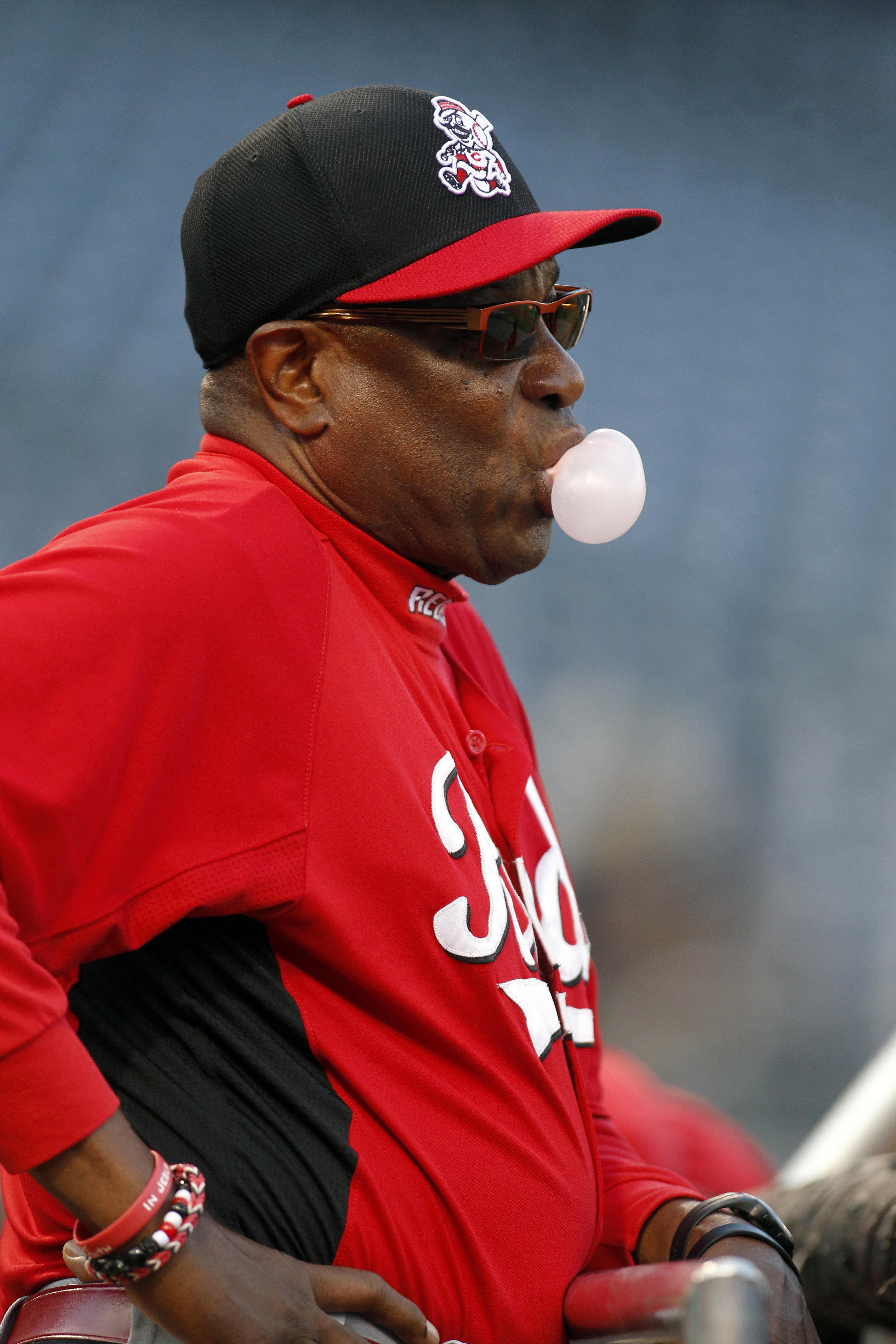
Baker has piloted his teams to an overall record of 1,671 wins against 1,504 losses. He secured division championships at each stop, five in total, and led teams into the post-season seven times. Baker was at the helm of the Giants for their 2002 run to the World Series, which the club dropped in seven games.
Long before he became one of the league’s higher-profile skippers, Baker was an accomplished outfielder in the majors. He played 19 total seasons, spending time with the Braves, Dodgers, Giants, and Athletics while compiling a lifetime .278/.347/.432 batting line with 242 home runs. Baker compiled just under forty wins above replacement in his playing career and appeared in the World Series three times.
“We were looking for a manager to help us achieve our ultimate goal of competing for a World Series championship,” managing owner Ted Lerner said in a prepared statement. “During our broad search process we met with many qualified candidates, and ultimately it was clear that Dusty’s deep experience was the best fit for our ballclub.”
President and GM Mike Rizzo also put his name to a statement in the release. “In getting to know Dusty and identifying what we wanted in the next on-field leader of our team,” he said, “we are excited to have him on board. Dusty’s experience, as a winning player, coach, and manager, is vast and varied. We are excited to bring him to Washington and put his steady demeanor, knowledge and many years in the game to work in our favor. I think I speak for the entire organization when I say I am very much looking forward to working with him.”
While the organization was said to have been impressed with Baker from the start, the very public breakdown with Black marks an ugly start to the offseason. Rizzo and the Nats have had some issues in the dugout in recent years. Jim Rigglemen resigned in the middle of the 2011 season in protest over his lack of an extension. The club had a fairly smooth run with Davey Johnson, though even in his case there was a long delay in reaching a new deal after the breakout 2012 season. And the team’s most recent skipper, Matt Williams, was roundly criticized before being fired at the end of 2015.
The Nats can be hopeful that Baker will help to stabilize things after the organization endured a messy 2015. He is, after all, deeply experienced and comes with a reputation as a first-class players’ manager. Motivating players and managing clubhouse personalities is a key part of the job, of course, and arguably one where Williams failed.
On the other hand, Baker has long been a prime analytical example of in-game decisionmaking problems. As Neil Weinberg wrote near the end of Baker’s tenure in Cincinnati, his lineup construction, bullpen management, and proclivity to bunt all can and have been questioned. And Baker was blamed in many quarters for over-using young arms with the Cubs, though it’s hard to imagine that becoming an issue in D.C., which drew fire for its late-season shutdown of Stephen Strasburg.
It’s not clear yet whether Baker’s approach has evolved as he takes up his fourth big league managerial position. There have been suggestions that he’s worked to learn more about modern analytical thinking, though we’ll need to await his comments and actions to know more. Rizzo has never hired a sabermetric darling as his club’s skipper, though it’s worth wondering whether he and Baker will work to correct some of the late-inning pen usage issues that cropped up this year under Williams.
Jon Heyman of CBSSports.com reported that Baker would be offered the job last night, and said early this morning that agreement appeared imminent. Nightengale tweeted that it was a two-year deal. The TalkNats.com blog first reported issues in the contract negotiations. Heyman reported that Baker was back in the mix. Adam Kilgore of the Washington Post (via Twitter), Bob Nightengale of USA Today (on Twitter and in this post), and Scott Miller of Bleacher Report (in a tweet) all reported on the details of talks with Black.
Photo courtesy of USA Today Sports Images.
MLBTR Mailbag: Profar, Papelbon, Moreland, Red Sox, Phillies
It’s time for another MLBTR mailbag. Thanks, as always, for your questions. If we couldn’t get to yours, you can try again in our weekly chats which run on Tuesday and Thursday afternoons of in next week’s mailbag.
With apologies for the delay in getting this edition published, here are this week’s questions and answers:
Jurickson Profar seems like a guy the Cards should target. Any ideas on what it would take to pry him from the Rangers? — Aaron B.
I don’t see Profar as a realistic trade piece right now for any team. There’s just too much uncertainty as to whether he’ll ever really be able to play in the field again. He’s yet to put his questionable shoulder to the test in game action. And from the Rangers’ point of view, he’s still just 22 and has that top prospect pedigree. Selling this low on a former No. 1 overall prospect doesn’t seem like a realistic course of action for the team. I think Texas will and should continue to try to get Profar back to full speed, then weigh its options once that’s (hopefully) come to pass.
If the Nationals don’t work out a trade for Papelbon by end of the winter meetings, how fast after the meetings will it take them to release him? — Chris M.
The dugout brawl was stunning, needless to say. But it always struck me as odd to say that the team would suddenly be looking to dump Papelbon for whatever it could get (or cut him loose otherwise). His actions were obviously unacceptable, but probably aren’t entirely unforgivable, and the Nats have a good bit invested in him. I’d still expect the club to explore its options, but there are indications that there could be room for reconciliation.
What value does Mitch Moreland have this offseason as a potential trade chip? With a seemingly endless supply of young pitching, are the Rays a good match to be trade partners with the Rangers this offseason? — Geoffrey S.
We’ve got Moreland projected at $5.6MM, which isn’t exactly cheap, and this is his final year of arbitration control. So I’d be surprised to see the Rays dropping any kind of well-regarded, controllable arm for the rights to roster him for a single season.
That’s not to say Moreland doesn’t have value after slashing .278/.330/.482 and hitting 23 bombs in 515 plate appearances last year. Given the volume of left-handed power available to Texas, a trade seems plausible. But it’s more likely that he’d bring back something like a higher-priced, short-term reliever than any kind of exciting future piece.
Do you believe it is more realistic to see the Red Sox sign a top free agent like David Price, or Zack Greinke, or trading for a pitcher like Chris Sale or Sonny Gray? — Matthew W.
I fully expect Dave Dombrowski to search the trade market high and low for a deal he likes, but Sale and Gray are two of the most valuable pitching trade assets in the game. Getting those kinds of arms would require a massive haul, probably including one or more names that Boston fans don’t want to hear (e.g. Betts, Bogaerts, Moncada). So, while I’m not personally predicting that they’ll add either Price or Greinke, I find that more plausible than a trade for controllable aces like Sale and Gray (or, if you prefer, Chris Archer and Gerrit Cole).
How do you see the Phillies front office approaching the rebuild? With a fan base that expects a winner on the field do you see them being big players in next years free agent market? Do they take their time and build from within or do they spend big money next year with an eye on contention for 2017? — Thomas C.
Well, that’s a good question, and it’s one that will be covered in my upcoming Offseason Outlook post on the Phils, which will be on the site before long. I feel like the organization has already committed itself to the pain of rebuilding and set the fans up for it. (Hence the very public comments before the season, from the outgoing front office regime.) Now that they are this far along, it wouldn’t make a ton of sense to risk a premature build-up. Taking a bit more time to turn things over is sort of the price they have to pay for trying to hold on and compete for an additional season or two.
All that being said, Philadelphia is very well suited to a high-powered turnaround. There’s talent in the organization, and some of it is at or near the big leagues. And the money will be there, especially with very little owed after this year. I expect Andy MacPhail and Matt Klentak will continue to look for ways to put the organization’s draft/international bonus position and deep pockets to work to stash talent this year. That could include signing short-term free agents who will keep things palatable on the field while turning into trade chips, “buying” prospects by taking on bad contracts in trade, and generally staying creative and flexible.
There’s a best-case scenario where it could make sense sooner rather than later to add younger free agents on more than just short-term contracts, but I think it’d be somewhat risky to do that this winter. But if a great opportunity strikes, then it’s still worth considering so long as the commitment is contained.
Reds Promote Dick Williams To GM; Jocketty To Serve As President Of Baseball Ops
4:00pm: Williams signed a three-year deal to serve as GM, MLB.com’s Mark Sheldon tweets. C. Trent Rosecrans of the Cincinnati Enquirer adds that Jocketty will remain with the Reds for two years beyond the 2016 season in an advisory capacity (Twitter link).
1:55pm: The Reds have announced that Dick Williams has been promoted to the general managerial role. Prior GM Walt Jocketty will remain with the club as its president of baseball operations.
Williams, not to be confused with the long-time big league ballplayer of the same name, had served previously as the organization’s assistant GM. In other words, it appears that this move largely tracks other recent promotional trends around the game.
It’s not always easy to determine whether and when title changes come with shifts in job responsibilities, of course, and it remains to be seen what the case will be in Cincinnati. Per the team’s announcement, though, it does appear that the 44-year-old Williams will take on more day-to-day duties even as Jocketty “continue[s] to oversee the department.”
Jocketty indicated in his comments that there would be a tangible change in the organization’s structure. “As is the case with any business,” he said, “it’s critical to have a succession plan in place. Dick has been here for 10 years, he’s learned the business, and we are confident he is ready to take on the GM responsibilities.“
But that handoff won’t be dramatic, at least at first, as C. Trent Rosecrans of the Cincinnati Enquirer reports in a series of tweets (links: 1; 2; 3; 4). Jocketty said that he organization has been “grooming” Williams for the role for some time, so much so that it was part of the discussion when he reached an extension with the team a few seasons back. Jocketty said he’ll only be taking and making phone calls for another year and will shift to an advisory role next year.
Notably, Williams is not the only person by that surname on the upper reaches of the Cincinnati front office chart. As this article from the passing of former club owner William J. Williams Sr. indicates, the new GM is intimately related with the organization’s key family.
He’ll be tasked with continuing to help guide the organization through a tough stretch on the ballfield. The Reds have already begun cashing in veteran assets, though the focus has been on moving pending free agents. This winter will pose a difficult test, with opportunities and risks that are magnified by the club’s major commitments (e.g., Joey Votto, Homer Bailey) and lower-middle-class spending capacity.
Judge Rules In Orioles’ Favor In MASN Dispute
New York Supreme Court Judge Lawrence Marks has ruled in favor of the Orioles and against the Nationals in a long-running dispute relating to the rights fees owed to the latter team by the jointly-owned Mid-Atlantic Sports Network (MASN). (Hat tip to James Wagner of the Washington Post, on Twitter.) MASN, which is controlled and majority-owned by the Orioles, brought the lawsuit to challenge an arbitration award that purported to settle the annual television broadcast fees owed by the network to the Nationals (who own a minority share of MASN).
Today’s ruling vacates that award. If the decision is upheld on appeal, it would require the parties to renegotiate and/or re-arbitrate the rights fees. Importantly, the decision does not address the underlying substantive dispute, let alone decide that in favor of the Orioles/MASN.
The root of the dispute dates back to the dealmaking that paved the way for the Expos-turned-Nationals organization to move to D.C. The Orioles opposed the intrusion on their market, of course, and the compromise ultimately included a deal in which the O’s would maintain a significant ownership percentage of MASN.
Annual fees for the Nationals’ broadcast rights were also covered in the resulting set of contracts, with the first several seasons’ fees pre-established at fairly low rates. Pursuant to the agreement, the annual rights value was to be re-negotiated after 2011 (and every five years thereafter) to arrive at a fair market value of those rights.
When that negotiation failed, the arbitration was initiated, with the Orioles proposing a $34MM payout for 2012 and the Nationals requesting $109MM. The panel hearing the case was a league committee known as the Revenue Sharing Definitions Committee (RSDC). Its members, at the time, were Rays owner Stuart Sternberg, Pirates president Frank Coonelly, and Mets COO Jeff Wilpon. MLB itself, including now-commissioner Rob Manfred, also played a major role in the arbitration.
The panel ultimately decided upon a $53MM rights fee value for the 2012 season, which would rise steadily to $66MM in 2016 (thus covering the five-year period in question). But it held off on formally issuing its decision for about two years, allowing then-commissioner Bud Selig to attempt to work out a compromise, which (per the ruling) would have involved a $1B+ sale of MASN to Comcast (which obviously never occurred). In the meantime, MLB fronted the Nationals the difference between the fees they were receiving from MASN and the value that the panel had determined.
A formal decision was issued on June 30 of last year, and the Orioles instituted the present litigation shortly thereafter. Baltimore challenged a number of aspects of the arbitration, including the involvement of the league at the time and its decision to advance money to the Nationals.
Though overturning an arbitration award is an exceedingly difficult task, the court sided with MASN and the Orioles. Interestingly, though, none of the above factors played into the decision, which focused on the highly deferential standard of review and noted that the agreement had contemplated an “inside baseball” arbitration panel.
The ultimate basis cited by the court in vacating the award — and the issue that will presumably be tested on appeal — is the involvement of the law firm Proskauer Rose LLP. Not only was Proskauer representing the Nationals in the arbitration, the court explained, it was currently representing Major League Baseball in numerous other matters — with four particular attorneys sharing responsibility for both clients. Though MASN and the Orioles repeatedly raised this issue, the panel didn’t take “any step at all” to deal with the potential bias that resulted.
Applying the relevant standard of “evident partiality,” the court determined there was sufficient cause to overturn the decision of the panel. Judge Marks explained (quoting a prior case): “[T]his complete inaction objectively demonstrates an utter lack of concern for fairness of the proceeding that is ‘so inconsistent with basic principles of justice’ that the award must be vacated.”
The actual basis for the ruling is important in several regards. For one, it narrows the issues to be addressed on appeal, though the Orioles could attempt to challenge the judge’s refusal to offer relief on the other grounds argued. (Notably, the court noted in its ruling that the factual setting it considered was without precedent, making this case ripe for consideration in an appellate proceeding.) And it also leaves open the possibility that the parties could return to the same panel that decided the dispute in the first place in a second arbitration.
All said, the ruling represents a significant victory for the Orioles’ side of things — in large part because of the leverage it gives the organization in negotiations. Continued litigation and re-arbitration will, obviously, be quite expensive. And the Nationals now have no argument to demand immediate payment of a vacated award, keeping the cash in Baltimore’s pocket. It’s notable, also, that the original five-year rights fee period is now almost up, meaning the parties will soon need to sort out fees for the 2017-2021 time frame as well.
White Sox Decline Option On Alexei Ramirez
The White Sox have declined their $10MM club option on shortstop Alexei Ramirez, the team announced. Instead, Chicago will pay him a $1MM buyout.
Ramirez represented one of the most difficult option decisions in this year’s market. The 34-year-old veteran has been a solid contributor for years in Chicago, and the organization has needs all over its infield. Now, Chicago figures to be in the market for a shortstop to help bridge the gap to top prospect Tim Anderson.
As MLBTR’s Tim Dierkes explained in his offseason outlook piece on the club, Ramirez may not be worth the $9MM spread between his value and the option price, but he could earn something close to it as a free agent. He’s coming off of a disappointing, .249/.285/.357 season, with declining defensive metrics. But he had been a consistent two-to-four WAR performer for many seasons before (even while generally carrying slightly below-average batting lines).
Teams looking for additions at short can now consider Ramirez alongside the rest of a market that isn’t exactly bursting with sure things. Ian Desmond will no doubt draw the most interest, with Asdrubal Cabrera also a reasonably young option. Ramirez and Jimmy Rollins figure to be the most appealing options among the older players available.