
Mariners Place Franklin Gutierrez On Restricted List
The Mariners have placed outfielder Franklin Gutierrez on the restricted list after he advised the team that he will not play in 2014, reports Bob Dutton of the Tacoma News Tribune (Twitter links). The move clears a 40-man roster spot for Fernando Rodney.
Gutierrez has had a relapse of the gastrointestinal issues that plagued him last year, and says he intends to focus on regaining his health. Soon to turn 31, Gutierrez managed only 141 plate appearances last year, over which he posted a .248/.273/.503 line with ten home runs. He had inked a one-year, $1MM deal with Seattle that included an additional $2MM in incentives.
With an outfield featuring several left-handed bats, Gutierrez had figured to provide an important platoon option from the right side of the plate. His loss could add even greater impetus to Seattle's rumored interest in Nelson Cruz. Of course, the greater issue might be the loss of Gutierrez as an option to share time in center alongside Dustin Ackley or Michael Saunders. While switch-hitter Abraham Almonte had a solid all-around season last year in the upper minors, he is unproven and has generally put up better numbers when hitting from the left side in his recent minor league campaigns. That being said, the list of remaining free agents does not appear to house any obvious solutions.
Mariners Sign Fernando Rodney
FEBRUARY 13: The deal is official, tweets Bob Dutton of the Tacoma News Tribune.
FEBRUARY 6: The Mariners have agreed to a two-year, $14MM deal with reliever Fernando Rodney, reports Jonah Keri of Grantland (via Twitter). Rodney, a client of MVP Sports Group, could earn up to $15MM if he meets the deal's incentives.
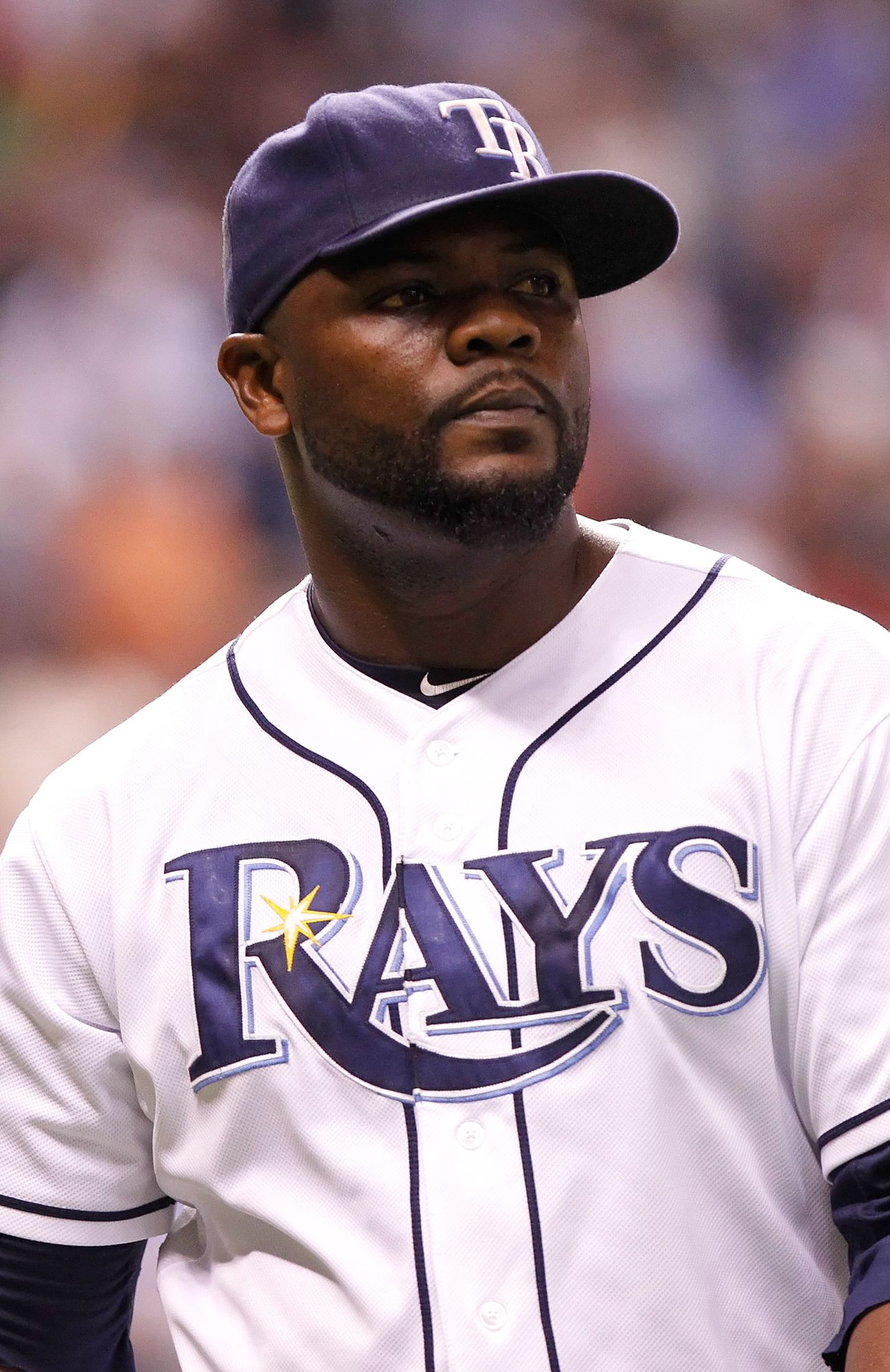
Soon to turn 37, Rodney established himself as one of the game's most dominant relievers during a 2012 career renaissance in Tampa Bay. Notching 48 saves for the Rays, Rodney threw 74 2/3 innings of 0.60 ERA ball that year, striking out 9.2 per nine while walking just 1.8 per nine. Though he was less dominant last year, Rodney still produced a 3.38 ERA over 66 2/3 innings, upping his strikeouts to a career-best 11.1 K/9 while surrendering 4.9 BB/9 (much closer to his career mark than the year prior).
As MLBTR's Steve Adams explained in his profile of Rodney at the onset of the off-season, Rodney had shown some of the most overpowering stuff of any of the free agent closers. Nevertheless, he was the last to sign of the premier bunch, and lands shy of the $18MM that Adams predicted he would get on a two-year pact. He checked in at 32nd on the list of the top fifty free agents, per MLBTR's Tim Dierkes.
Rodney's new deal bests that given by his former club to Grant Balfour (two years and $12MM), but falls short of the two-year, $15.5MM pact awarded Joaquin Benoit by the Padres. Amongst 2014 free agent closers, Joe Nathan (two years, $20MM) and Brian Wilson (two years, $19MM) have received the largest guarantees.
The Mariners were said to be one of the clubs most interested in Rodney, joining the Orioles and Mets in that regard. Though Danny Farquhar remains under team control for six more years after saving 16 games for Seattle last year, he will presumably bump down to a setup role now that Rodney is in the fold. Rodney represents the second-largest free agent commitment made by the Mariners this year, following Robinson Cano's massive ten-year, $240MM deal.
Seattle will hope that it gets the Rodney of the last two seasons rather than the less-than-stellar version of his earlier career. After strong seasons in 2005-06 in Detroit, Rodney posted five straight years in which he allowed over four runs per nine, though he saved 68 games for the Tigers and Angels over that stretch. Both the Steamer and Oliver projection systems like Rodney to produce solid results going forward, with each projecting him to post an ERA and FIP just north of 3.00.
In addition to control, one area to watch is Rodney's performance against left-handed batters. The righty has exhibited fairly minimal career platoon splits, allowing a .641 OPS to same-handed hitters and a .698 mark to lefties. Last year, however, those splits became more pronounced: he limited righties to a .169/.250/.288 line while posting a 3.00 K:BB ratio, but left-handers slashed .248/.363/.353 against Rodney and fared better in terms of true outcomes (1.92 K:BB). (Of course, the third true outcome — home runs — remains one of Rodney's calling cards: he has allowed just 0.32 long balls per nine over the last two years, one of the best rates in the game.)
Photo courtesy of USA Today Sports Images.
Indians Extend Michael Brantley
The Indians have announced a four-year extension with outfielder Michael Brantley via press release. First reported on Monday, the deal will guarantee Brantley $25MM over its four years, and comes with an $11MM club option for 2018. The 26-year-old is a client of the Legacy Agency.

Brantley has established himself as a solid ballplayer over his early career, though he has yet to post a true breakout campaign. Since becoming a full-time player in 2011, Brantley has posted a cumulative .280/.334/.394 triple-slash, with 23 home runs and 42 stolen bases over 1,716 plate appearances in that three-season period. Last year, he checked in with a .284/.332/.396 line, but did post a career-best 10 home runs and 17 swipes (he was caught only four times).
Making way for Michael Bourn, Brantley switched from center to left field last season and figures to remain there for the foreseeable future. Advanced defensive metrics view Brantley as an approximately average outfielder over the last few years, whether playing up the middle or in the corner. (In 2012, at center, Brantley posted a UZR of -0.7 and DRS of -1; in left last year, he notched a -4.1 UZR but was +2 per DRS.)
Brantley had been preparing to go to an arbitration hearing in his first year of eligibility, and was set up to qualify for free agency after the 2016 season. Instead, he will now be under team control through 2018. If Cleveland exercises that final-year option, Brantley will hit the open market after his age-31 season.
Brantley's contract calls for him to receive a $3.5MM signing bonus. His annual salary breakdown is as follows: $1.5MM (2014), $5MM (2015), $6.5MM (2016), and $7.5MM (2017). The 2018 club option is for $11MM and comes with a $1MM buyout. The structure of the deal gives Brantley a big payday up front, but spreads the $3.5MM signing bonus over the life of the deal for purposes of the CBA. That also means that Brantley's 2014 salary will not set a high bar for arbitration purposes: it lands at just $2.375MM, well under the respective $3.8MM and $2.7MM filing figures.
The most obvious comparable for Brantley's deal is the five-year, $25MM extension inked by Cameron Maybin with the Padres before the 2012 season. Though that deal covered an additional guaranteed year, Maybin was also a year further from free agency. Though featuring a Brantley-esque .264/.323/.393 triple-slash, Maybin's pre-extension season was better than anything that Brantley has put together: he also swiped 40 bags and played a stellar center that left him credited with better than four wins above replacement. Though Brantley has a longer track record, he has maxed out at about three WAR and is somewhat older than was Maybin.
But Maybin's deal is now two years out of date, a hugely significant factor given the observed increase in spending in the interim. (The four-year, $20.5MM Franklin Gutierrez extension signed in 2010 is even further out of date.) Viewed thusly, the Indians seem to have done fairly well to land Brantley for a term of years and amount of money that fits comfortably in the mold of earlier extensions.
Indeed, Brantley's extension is the first of three-or-more years signed by a player with less than six years of service since the massive extension signed by Freddie Freeman (and that of Clayton Kershaw, for that matter). As I wrote recently, though Freeman's deal potentially set the stage for less solid but non-premium young players to command somewhat greater extension guarantees, prior extension models remain valid until proven otherwise. The Brantley deal confirms that, as it seems to reflect mostly measured growth in the market.
Paul Hoynes of the Cleveland Plain Dealer first reported the deal, as well as its length and guaranteed money, via Twitter, and was also first to report that the sides were close. Jon Heyman of CBSSports.com was first to report the annual breakdown (on Twitter).
Photo courtesy of USA Today Sports Images.
Phillies Release Chad Gaudin
The Phillies released righty Chad Gaudin this morning when he failed his physical, reports Matt Gelb of the Philadelphia Inquirer (via Twitter). The 30-year-old swingman signed a minor league deal with a MLB Spring Training invitation back in January, and had been expected to provide a solid pen and rotation depth option. Instead, the Reynolds Sports Management client will return to the open market.
Depending upon the issues that led to the failed physical, Gaudin should still find takers for his services. He put up appealing numbers last year with the Giants. Throwing in his age-30 season, Gaudin put up a 3.06 ERA in 97 innings (including 12 starts). He reached those marks with 8.2 K/9, 3.7 BB/9 and a 38.4 percent ground-ball rate.
Gaudin has extensive experience working from the rotation and the pen: he made 34 starts with the A's in 2007 and has thrown the first pitch in 87 of his 344 career outings. His career 4.44 ERA does not reflect a significant difference in performance between the two roles: he has allowed a 4.56 ERA and .762 OPS as a starter, and a 4.30 ERA and .776 OPS as a reliever.
Phillies GM Ruben Amaro Jr. declined to comment on the details, but told reporters, including Matt Gelb of the Philadelphia Inquirer, that the club was disappointed to have to let Gaudin go. "It hurts," said Amaro. "Obviously the roles he can fill as a long guy, a guy who can sit for 10 days and not pitch and then pitch as a starter, all of those things you like to have a veteran guy to be able to do. We have to find out of that guy is in our camp."
Rays, Nats Discussing Trade Involving Lobaton, Karns
THURSDAY: The potential deal includes at least two other players, possibly minor leaguers that would head to Washington, reports Topkin. As of last night, however, Lobaton told Topkin that he had yet to hear anything and was planning to report for the spring with the Rays on Friday.
WEDNESDAY: The Rays and Nationals are again discussing a trade of catcher Jose Lobaton, tweets Marc Topkin of the Tampa Bay Times, with righty Nate Karns being contemplated as the return for the backstop. Topkin says that the deal could involve other players as well.
Lobaton, 29, has reportedly generated interest amongst multiple clubs, especially a Nationals team that would still like to add an established backup catcher. A switch-hitter, Lobaton has seen about twice as many plate appearances against righties than against lefties, maintaining fairly even splits from both sides of the plate. He is a fairly attractive asset, particularly given that he is owed just $900K this year and comes with three more years of control through arbitration. While Lobaton's contract profile makes him a fit for Tampa's general approach to roster-construction, he became expendable when the team picked up Ryan Hanigan from the Reds. Last year, in 311 plate appearances, Lobaton managed a .249/.320/.394 line, good for a league average OPS.
Karns, meanwhile, is a 26-year-old who has yet to see substantial MLB action, but has a big arm. Baseball America rates him at the back end of the club's top ten prospects, after several other young arms. But the Nats have already dealt one relatively advanced pitcher from that list in Robbie Ray, and Karns was said to have a shot at competing for the team's fifth rotation spot. (If that failed, Karns would presumably serve as depth, especially with the news that Taylor Jordan could be slow to start the spring after ankle surgery.) In 132 2/3 Double-A innings last year, Karns put up a 3.26 ERA and 10.5 K/9 against 3.3 BB/9. He received three MLB starts last year, struggling to a 7.50 ERA in just 12 innings.
Should a deal go down along the lines suggested by Topkin, it would follow a similar pattern (on a somewhat smaller scale) to other recent deals in which Nationals GM Mike Rizzo has swapped out pitching prospects for relatively youthful, established, cost-controlled big-leaguers. In addition to shipping Ray (and more) to the Tigers for starter Doug Fister, Rizzo sent Alex Meyer to the Twins last year in exchange for center fielder Denard Span. (The Nats also acquired reliever Jerry Blevins in exchange for prospect Billy Burns this off-season.)
Reactions To A.J. Burnett Signing
Today's signing of free agent starter A.J. Burnett by the Phillies (one year, $16MM, plus a mutual option) brings to an end a brief-but-interesting period of a fascinating free agent signing class. Long expected either to re-sign with the Pirates or instead retire, the 37-year-old threw a wrench into an already-straggling pitching market when it was revealed that he would not only return for another year, but would be open to alternative destinations. Having re-established himself as a top-end arm, but being available on a short-term deal, Burnett further downgraded the market outlook for draft-compensation-bound starters Ubaldo Jimenez and Ervin Santana. But by signing with the Phils, who had not figured to be in play for Jimenez or Santana, Burnett leaves the market much as he found it — albeit further slowed, perhaps. (Indeed, with Matt Garza going to another relatively unexpected landing spot with the Brewers, those hurlers may now be in a better position, timing notwithstanding.) Ultimately, the Phillies proved to be every bit the wild card I suggested they might be at the outset of the off-season, but in some respects functioned to restore the rest of the market to expectations.
- Of course, that is not to say that Burnett's signing is of little moment. To the contrary, it has important implications — in particular, for both of MLB's Pennsylvania-based franchises. As Ben Lindbegh of Baseball Prospectus writes, the Pirates may have learned a difficult lesson by failing to made Burnett a qualifying offer. Rejecting the hypotheses that the club did not want to sign him or was genuinely unable to do so financially, Lindbergh opines that the Pittsburgh likely mistakenly felt it would be readily able to get him back for less than the $14.1MM QO.
- Pittsburgh GM Neal Huntington weighed in again on the qualifying offer decision, as Travis Sawchik of the Pittsburgh Tribune-Review reports (Twitter links). Huntington acknowledged that such an offer arguably made quite a bit of sense from a "value standpoint." But, he explained, "the reality is in 10-15 markets a qualifying offer, if accepted, becomes a large chunk of payroll." As Huntington has stated previously, the team did not feel that it could take a $14.1MM payroll hit for Burnett.
- According to Huntington (links to Twitter, via Sawchik), Burnett "informed us it was family-based. The player made a decision to be closer to home." Declining to disclose whether the club made a competitive offer — he said that question was better posed to Burnett and his agent — Huntington said that "A.J. would have had the biggest single impact of any single move we made this off-season."
- From the Phillies' perspective, the deal runs the club's payroll up to approximately $189MM, a new club record, says Matt Gelb of the Philadelphia Inquirer (via Twitter). Though the final tally is somewhat unclear, that means that Philadelphia could well approach or exceed MLB's $189MM luxury cap. As WEEI.com's Alex Speier has explained, the impact of going over that mark comes not just in the tax owed on overages, but in sacrificing the ability to participate in revenue-sharing refunds. Even if the Phils remain under the $189MM level on Opening Day, moreover, the cap could play a role in how the club weighs mid-season moves.
- Burnett's substantial salary would hinder his trade value if the Phillies end up looking to move him, tweets ESPN.com's Buster Olney. The newly-reported inclusion of a limited no-trade clause, likewise, represents a barrier to such a possibility and could substantially limit Burnett's market.
- Several commentators have weighed in positively on the deal on the Phillies' end. CSNPhilly.com's Corey Seidman, for instance, argues that the signing makes better sense of the club's earlier moves to sign veterans like Carlos Ruiz, Marlon Byrd, and Roberto Hernandez in a bid to make a playoff push. As Seidman notes, most of those deals have the added benefit of not adding long-term money to the books. MLB.com's Richard Justice offers that Burnett joins a cast of veterans who still have plenty of talent, and could help push the team into contention.
- On the flip side, the deal could be seen as throwing good money after bad given the club's aging roster. In the view of ESPN.com's Keith Law (Insider link), Burnett looks to represent solid value at a one-year commitment of $16MM. But, he says, Philadelphia was the wrong team to take on that big salary. Even assuming that Cole Hamels is mostly healthy — he is reportedly dealing with shoulder and biceps discomfort and will likely not quite be ready for Opening Day — Law argues that the club still looks like a .500 outfit. And the Phillies cannot take full advantage of Burnett's ability to induce grounders, says Law, because they field a below-average defensive infield and do not employ an analytics-based infield alignment strategy like that utilized by the Pirates.
Astros Outright Brett Wallace
JANUARY 12: Wallace has cleared waivers and been outrighted, tweets Chris Cotillo of MLBDailyDish.com, who notes that Wallace will take part in big league camp.
JANUARY 6: The Astros have designated Brett Wallace for assignment to make roster space for newly signed pitcher Jerome Williams, the club announced via press release. Once the game's 27th overall prospect, Wallace never found sustained success in Houston.
Playing the corner infield (mostly first base) over four seasons with the Astros, Wallace never earned more than 379 plate appearances in a season and accumulated a .242/.313/.391 slash (including 29 home runs) in 1,077 plate appearances. Last year, he received 285 plate appearances and put up a .221/.284/.431 line, striking out over 100 times while drawing just 18 walks. (His 36.5% strikeout rate was the worst in the league amongst players with at least 150 plate appearances.)
On the other hand, Wallace is still just 27 years of age and has shown the ability to get on base in the upper minors, where his career Triple-A OBP has approached the .400 mark. And Wallace began to translate his power into production at the MLB level, hitting 22 long balls in his last 539 trips to bat over 2012-13. Wallace is out of options, notes Evan Drellich of the Houston Chronicle (via Twitter), which complicates his situation for clubs that might like to take a chance on his upside.
Brewers Outright Donovan Hand
FEBRUARY 12: Hand has cleared waivers and been outrighted, tweets Brewers Senior Director of Media Relations Mike Vassallo (hat tip to Chris Cotillo of MLBDailyDish.com). Hand will receive an invitation to the big club's Spring Training camp.
FEBRUARY 7: The Brewers have designated righty Donovan Hand for assignment to clear a roster spot for Francisco Rodriguez, the club announced. The 27-year-old got his first taste of the big leagues last year.
In 31 appearances, seven of them starts, Hand pitched to a 3.69 ERA in 68 1/3 innings for the Brewers in 2013. He posted 4.9 K/9 and 2.8 BB/9 in that stretch. Hand has been solid at all levels as a professional, never allowing more than four earned runs per nine in a given season. In 44 Triple-A appearances in 2012, he threw 79 2/3 innings of 3.84 ball; last year, in 35 2/3 innnings at the highest minor league level, he notched a 3.28 mark.
Derek Jeter To Retire After 2014
Legendary Yankees shortstop Derek Jeter announced today on his Facebook page that he will retire after the 2014 season (hat tip to Andy Martino of the New York Daily News, whose colleague Mark Feinsand tweets that agent Casey Close has confirmed the retirement). Jeter, who turns 40 in June, re-signed with the Yankees — the only franchise he's ever played for — earlier in the off-season.
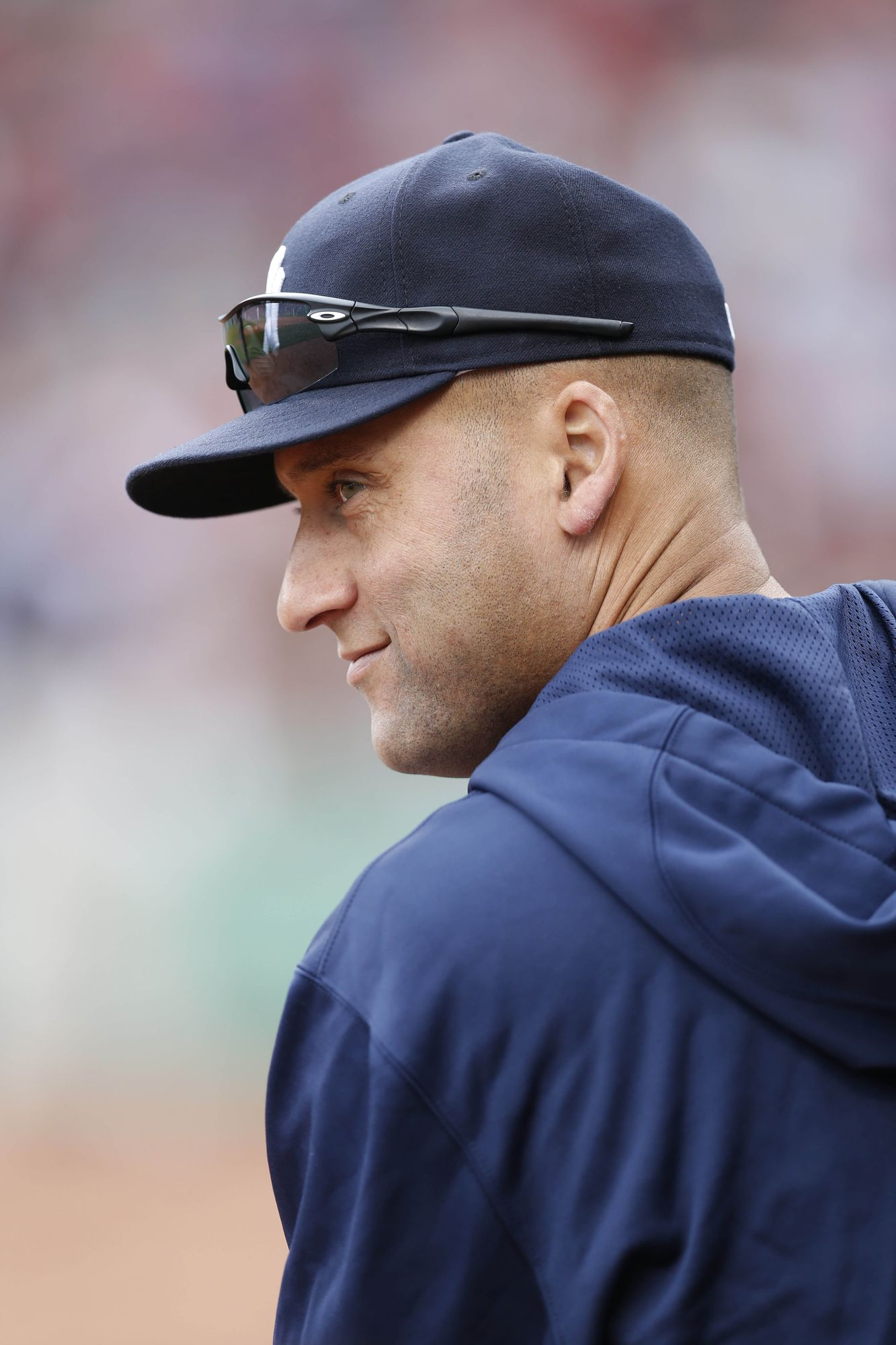
The coming season will be Jeter's 20th MLB campaign (though he saw just 51 plate appearances in his first taste of MLB action at age 21). Taken with the sixth overall pick of the 1992 draft, Jeter performed consistently in his rise through the system, and never looked back upon making the Yankees. Since becoming a full-time big leaguer in 1996, Jeter went 17 straight years with at least 542 trips to the dish. Over that stretch, Jeter posted a composite .313/.382/.448 line with 255 home runs and 348 stolen bases. Needless to say, his standard of consistent excellence has been matched by few others.
That run of good health came to an end last year, which Jeter says is a major reason for his decision today. "Last year was a tough one for me," said Jeter. "As I suffered through a bunch of injuries, I realized that some of the things that always came easily to me and were always fun had started to become a struggle."
Indeed, while things always did seem to come easily to the shortstop, he was perhaps better known for his hard work and leadership. The Yanks' emergence from mediocrity and notable run of success aligns quite clearly with his career: the team qualified for the post-season in all but two of Jeter's seasons (2008 and 2013). Over that span, the team won added five World Series victories to New York's tally. And Jeter was even better in the post-season, posting a lifetime .308/.374/.465 triple-slash in a remarkable 734 career post-season plate appearances.
Along the way, of course, Jeter racked up ample amounts of individual hardware, including 13 All-Star appearances, five Silver Sluggers, the 1996 AL Rookie of the Year Award, and the 2000 World Series MVP. Somewhat surprisingly, particularly given his high profile, he never took home an American League MVP nod.
He was also awarded five Gold Glove awards, somewhat more controversially. Proponents of advanced metrics argue that Jeter has actually been rather a poor defensive shortstop: though he makes few errors, neither does he have much range. (Jeter has been worth -147 Defensive Runs Saved and a -67.8 UZR.)
Whatever one thinks of Jeter as a defender, he has unquestionably put up a Hall of Fame-worthy career. That inevitability was likely sealed when he notched his 3,000th hit, but is also supported by the numbers. Jeter has racked up a total of 71.6 rWAR and 73.8 fWAR to date, which places him at 58th and 45th, respectively, on the all-time list of position players. As Dave Cameron of Fangraphs argues, Jeter falls short of only Cal Ripken in total production among full-time shortstops since Honus Wagner retired in 1917. (Though, to be fair, Jeter is quite close to several other shortstops in both fWAR and rWAR, and falls behind several of them according to the latter metric.)
Those wins did not come cheap, however. Once his 2014 earnings are in the bag, Jeter will have earned over $265MM over his career. For sake of comparison, Chipper Jones — who racked up 85.1 rWAR over 1995-2012 — took down nearly $100MM less in his time in the bigs. And Carlos Beltran, who has been worth 67.5 rWAR since 1998, will reach just under $206MM by the time his new contract expires after 2016.
For the Yankees, Jeter's retirement confirms what had been suspected: the team needs a new shortstop for 2015 and beyond. Though Brendan Ryan will remain under contract, he does not profile as a starter on a team that hopes to win championships. At least one team executive told Joel Sherman of the New York Post that he did not know that Jeter planned to retire (Twitter link), so it is at least conceivable that today's announcement could have some impact on whether New York looks to make any more moves before embarking on the 2014 season.
Twins Claim Brooks Raley From Cubs
The Twins have claimed lefty Brooks Raley off of waivers from the Cubs, reports Mark Gonzales of the Chicago Tribune (via Twitter). Raley, 25, had spent his entire career in the Chicago system.
Raley has thrown just 38 1/3 MLB innings over the last two seasons, and made his first go at relief in 2013. Previously, Raley had worked almost exclusively as a starter. In 141 1/3 innings at the Triple-A level last year, Raley posted a 4.46 ERA, with 6.0 K/9 against 2.9 BB/9. According to Pitch F/X data (via Fangraphs), Raley throws both a four-seam and two-seam fastball, each of which sit around 89 mph, and also offers a slider, curve, and change. Over his time in the upper minors, Raley has actually shown a relatively minor platoon split, though big league righties have hit him hard.