
J.A. Happ Retires
Veteran lefty J.A. Happ has retired after spending parts of 15 seasons in the Major Leagues. The 39-year-old discussed his career, his journey to pro ball and his decision to step away from the game in an appearance on the Heart Strong Podcast with Jessica Lindberg.
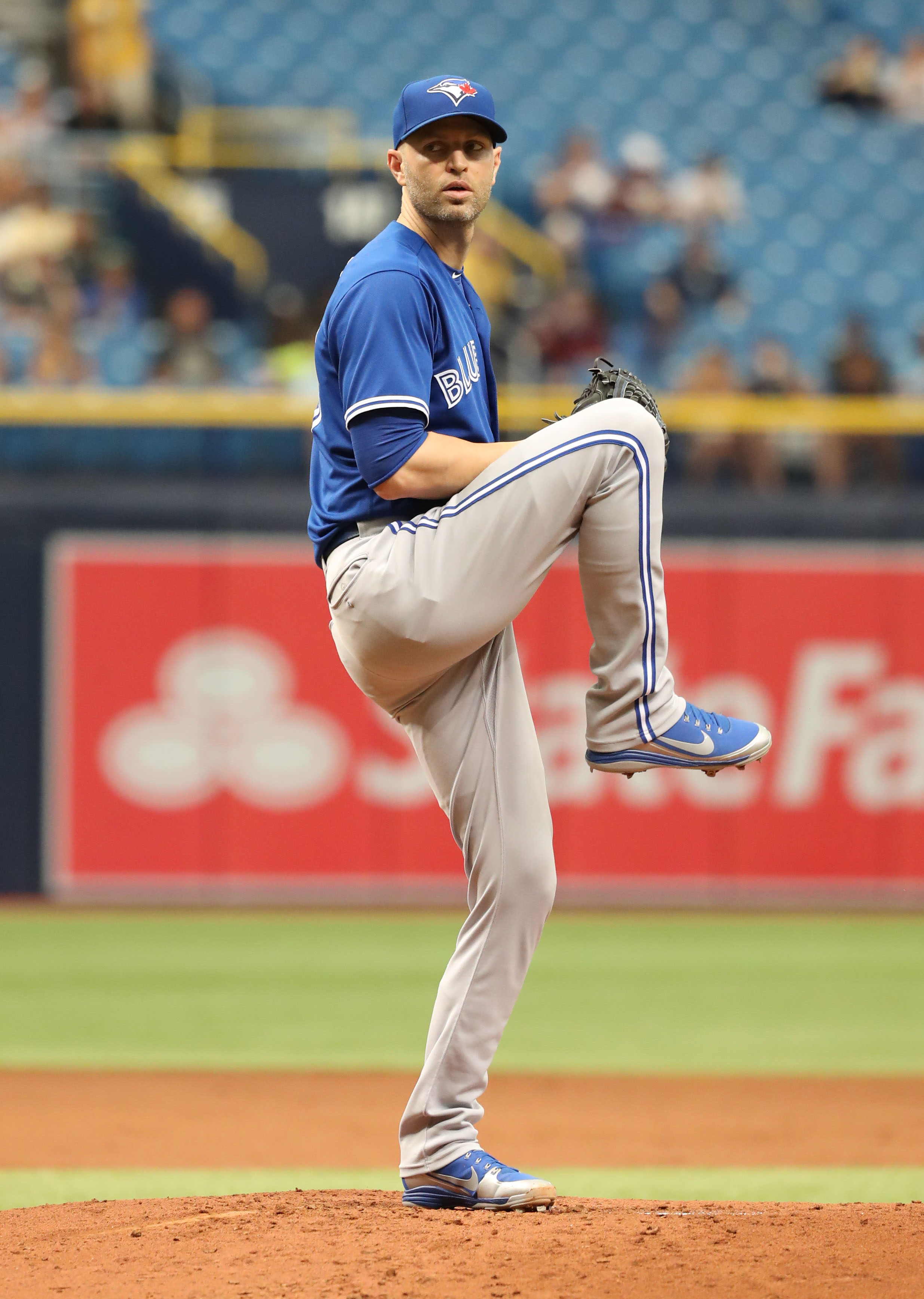
Happ acknowledges that he went “back and forth for pretty much the whole winter” trying to determine whether he wanted to return for another season, going through his usual training regimen to be ready in case he felt a pull to return to the mound.
“It got to the point where it was Opening Day, and I turned the first game on, and I talked to my wife, Morgan, and I said ‘What are you feeling?’ She just kind of looked at me and said, ‘A little anxiety.’ I wanted to turn it on to see what I felt, too, and I didn’t maybe feel what I needed to feel in order to think I wanted to keep doing this. I felt like that was a sign, like ‘OK, it’s time to go.’ Even though I had put the work in to be ready if the right situation came, I felt like it was time to move on and be a dad and dive into the kids. … It was emotional — something I didn’t expect. I called my agent that day, right after we turned that game on, and said, ‘I think this is it.’ I told the people I feel like I needed to tell. I think I’m still processing it, but I do wake up feeling good about it, and I’m happy to start the process of being a full-time dad, for the time being, at the very least.”
Originally a third-round pick by the Phillies back in 2004, Happ made his MLB debut with Philadelphia in 2007, appearing in just one game. He pitched in eight games the following year, earning enough trust to make the team’s NLCS roster and turn in three sharp innings of relief. By the 2009 season, Happ not only established himself as a member of the Phillies’ rotation but took home a second-place finish in NL Rookie of the Year voting after logging a 2.93 ERA in 166 innings of work. He began that year in the bullpen but moved into the rotation in late May, going on to hurl shutouts against the Blue Jays and Rockies in just the seventh and fourteenth starts of his big league career.
Strong as Happ’s early work was, the Phillies couldn’t resist the temptation to include him as part of the return for right-hander Roy Oswalt — a three-time All-Star and regular Cy Young contender at that point in his career. That 2010 swap proved to be the first of several notable trades in which Happ was involved over the course of his career. The Astros included him in a massive 11-player swap with the Jays that saw Happ land in Toronto and a then fresh-faced prospect named Joe Musgrove among the most notable names sent to Houston. Happ was also swapped straight up for outfielder Michael Saunders in 2014, and after returning to the Blue Jays on a three-year, $36MM deal as a free agent, he was flipped to the Yankees for Brandon Drury and Billy McKinney in the final season of that pact.
Happ was never a flamethrower or a perennial All-Star, but he carved out a lengthy career as a mid-rotation starter in the perennially dangerous American League East, spending six of his 15 years with the Jays and another three with the Yankees. From Happ’s peak in 2014-20, he notched 1058 2/3 innings of 3.81 ERA ball — a strong run that included an All-Star nod in 2018 and a sixth-place finish in 2016 American League Cy Young voting. His consistency netted him a trio of sizable free-agent contracts: his aforementioned $36MM deal with the Blue Jays, a two-year Yankees deal worth $34MM, and a one-year deal with the Twins that promised him $8MM just last season.
All in all, Happ steps away from the game with a lifetime 133-100 record, a 4.13 ERA, 1661 strikeouts, four complete games and three shutouts compiled while suiting up for eight teams: the Blue Jays, Phillies, Yankees, Astros, Twins, Mariners, Pirates and Cardinals. He reached the postseason six times, winning a World Series ring with the 2008 Phillies and pitching well in four of those six playoff runs. (He made one start with the Yankees both in 2018 and 2020, neither of which went particularly well.) Between the three previously referenced free-agent deals and his arbitration seasons, Happ earned more than $97MM in a career pegged at 21.5 wins above replacement by Baseball-Reference and 21.8 WAR by FanGraphs.
Photo courtesy of USA Today Sports Images/Imagn.
Kris Bryant Expected To Miss 2-3 Weeks
MAY 27: Colorado doesn’t seem particularly concerned about Bryant’s absence. General manager Bill Schmidt told Jon Heyman of the New York Post the former MVP is expected back in two-to-three weeks.
MAY 25: The Rockies announced Wednesday that left fielder Kris Bryant has once again been placed on the 10-day injured list due to a lower back strain. The IL placement is retroactive to May 23. Bryant missed nearly a month after being placed on the IL with this same injury in late April. He’d only been active for two games before being scratched from Monday’s contest and will now be out until at least June 2. Right-hander Ryan Feltner is up from Triple-A Albuquerque to take Bryant’s spot on the active roster.
Clearly, this isn’t the way that either Bryant or the Rockies envisioned his seven-year, $182MM contract beginning. The former National League Rookie of the Year, National League MVP and four-time All-Star has appeared in just 17 of the Rockies’ 42 games thus far and has yet to connect on his first long ball with the Rox. He’s hitting .270/.342/.333 through his first 73 plate appearances — well above league average in the first two of those three slash stats — but the lack of power and lack of time on the field are both glaring.
There’s no indication from the team as to just how long Bryant is expected to be shelved in this latest stint. It’s worth noting, however, that when Bryant originally hit the injured list back in late April, the Rockies suggested that he could be back on the field in a couple weeks’ time. Instead, as first reported by Nick Groke of The Athletic, Bryant required a cortisone injection a couple weeks into that original IL placement and was ultimately out of action for nearly four weeks. The Rox have a daytime tilt against the Pirates coming up in just under three hours, and it stands to reason that manager Bud Black will offer more information prior to gametime.
Colorado raced out to a 10-5 start to the 2022 season, igniting some hope among the fanbase that perhaps a turnaround of the team’s woeful 2019-21 performance was at hand. They’ve gone 10-17 since that start, however, and have been in a particular funk of late (just four wins in their past 15 games). The resulting 20-22 record and their -28 run differential are both the worst marks in the National League West.
With Bryant back on the shelf into early June, the Rockies will likely to turn to a combination of Connor Joe, Yonathan Daza and Sam Hilliard to cover the workload in left field. Joe has been in the lineup regularly, often as a designated hitter, but could see some extra outfield work now. Daza and Hilliard, meanwhile, figure to see an increase in at-bats with Bryant out.
In a strict platoon deployment, the left-handed-hitting Hilliard would see the bulk of the work, but he’s hitting just .160/.255/.296 to Daza’s .350/.404/.400 thus far in 2022, so perhaps the latter will receive a larger look. Daza’s batting line is being propped up by a .384 average on balls in play that he’s unlikely to sustain, but his minuscule 9.0% strikeout rate so far certainly gives him a chance to remain productive even as that BABIP trends back toward his career levels. Notably, Daza is starting in center field today against a right-handed opponent. Joe is in left field, with Hilliard available off the bench.
As for the 25-year-old Feltner, he’ll make his fourth career start later today when he takes the mound in Pittsburgh. His first three haven’t gone particularly well — he’s surrendered a dozen runs in 11 1/3 MLB innings to date — but the 2018 fourth-rounder is out to a solid start in Triple-A this year. Through 38 1/3 innings, Feltner carries a 3.76 ERA with a 30% strikeout rate, 7.5% walk rate and 38.9% ground-ball rate. With Antonio Senzatela on the injured list — also due to a back strain — Feltner could see an increase in his opportunities in the coming weeks, particularly if he shows well in today’s spot start.
2022-23 MLB Free Agent Power Rankings
We’re more than a quarter of the way through the 2022 season, which makes a look ahead to the forthcoming offseason and free agent class overdue. The 2022-23 free agent market can’t match this past winter’s market in terms of the sheer volume of available star power, but it’s a strong group nevertheless, with a few MVP candidates slated to reach free agency for the first time.
MLBTR will take periodic looks at the top of the class from now through the remainder of the season, and it’s of course worth noting that with about 75% of games left to be played, a lot can change. Our power rankings, compiled collaboratively by myself, Anthony Franco and MLBTR owner Tim Dierkes, are based on what we believe to be a player’s total earning power in free agency. As such, age plays a prominent factor in that equation. Players with opt-out clauses and player options are included, even if they’ve previously given strong indications they’ll forgo any such opportunity to return to the market (as Cardinals third baseman Nolan Arenado has in the past). Current performance is also, obviously, crucial. A strong platform year can elevate any player’s status in free agency, just as a poor walk year can tank their stock.
Here’s a look at our current top ten, as well as a handful of honorable mentions who could see themselves climb into the top ten by season’s end…
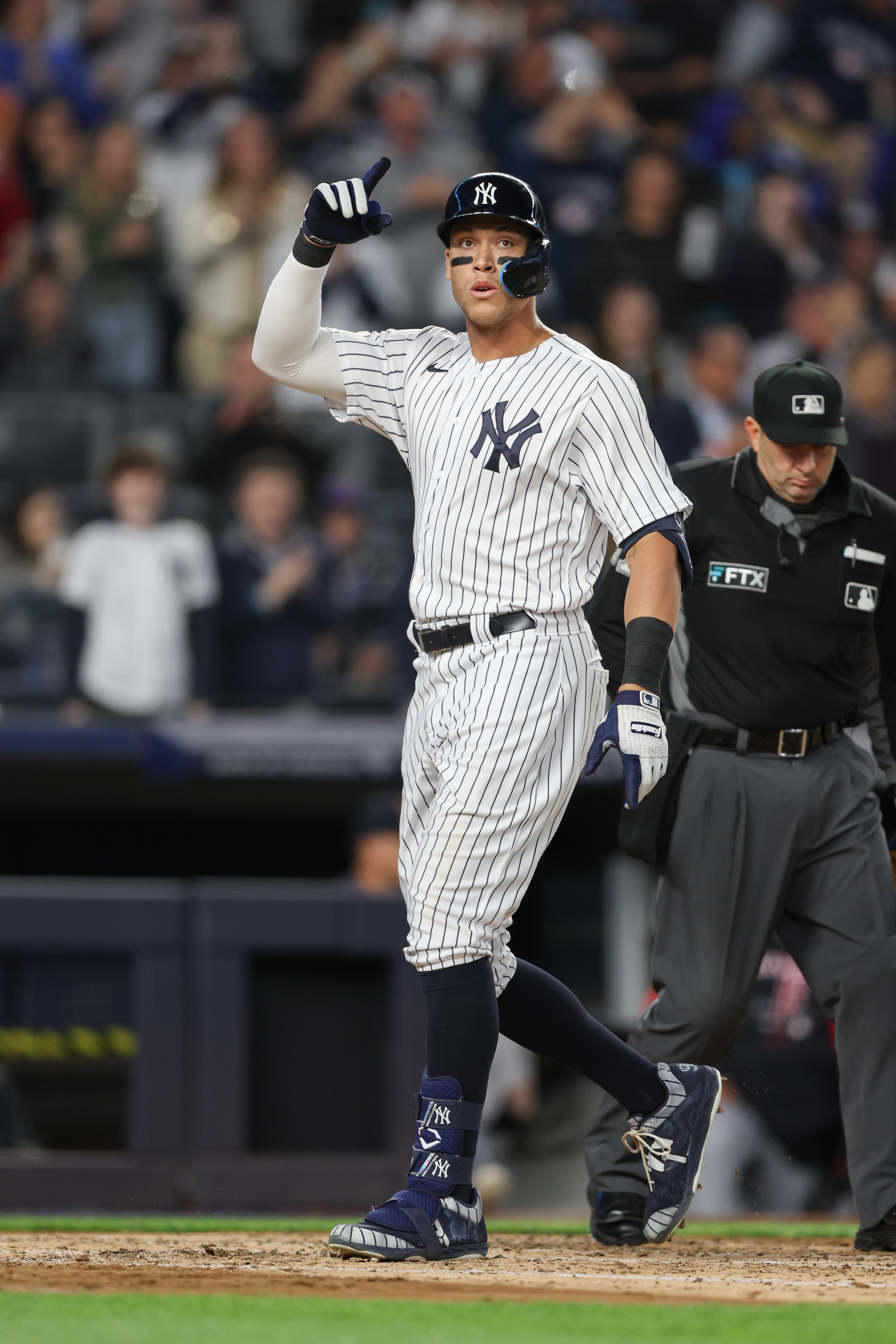
1. Aaron Judge, RF, Yankees: When Yankees general manager Brian Cashman made the surprising decision to announce the terms of the contract that was offered to (and rejected by) Judge — a seven-year, $213.5MM extension — there were plenty of onlookers convinced Judge had made a sizable misstep. A $30.5MM annual salary over seven years would place him among the game’s top earners but not quite in the elite tier.
A slow start might’ve made the decision look questionable, but Judge has gone the opposite route. He’s been the best qualified hitter in baseball aside from Mike Trout, by measure of wRC+, leading the Majors in homers and trailing only Trout in slugging percentage by the narrowest of margins (.693 to .692). Judge is walking at a 10.7% clip, his strikeouts (26.6%) are down a good bit from his earlier seasons when rates around 31% were his norm, and his batted-ball profile has practically broken Statcast. Judge is averaging a comical 96.9 mph off the bat this season, and he’s ripped 64% of his batted balls at greater than 95 mph.
Judge’s free-agent contract will begin with his age-31 season, and that’s one distinct disadvantage to him — particularly relative to younger free agents like the trio of shortstops who directly follow him on this ranking. That said, there’s simply no discounting the fact that Judge’s offense is on a new level this season, which is saying something given the high bar he’s previously established. If he maintains even 75% of this pace for the remainder of the season, that seven-year term and $30.5MM AAV are both going to feel light. Right now, an eight-year deal at a heartier AAV is easy to imagine, and the longer Judge keeps hitting like this, the more those numbers will increase.
2. Carlos Correa, SS, Twins: Correa was fortunate to dodge a broken finger when he was plunked on the hand recently, instead only sitting out a minimal 10-day stint due to a bone bruise. The former No. 1 overall pick shocked the baseball world by signing the fourth-largest AAV ever with the Twins ($35.1MM) — albeit on a three-year deal laden with opt-out provisions. The commonly held belief is that Correa will opt out after the 2022 season and return to the market in search of the long-term mega-deal that eluded him this past offseason.
Whether that contract is there will hinge both on how many games Correa plays and on how well he performs in his new environs. He got out to a slow start in Minnesota but repeatedly insisted that he wasn’t worried, and his confidence has begun to manifest into production. Correa is hitting .382/.443/.545 over his past 61 plate appearances, and even when he was struggling through poor results before that, he was making loads of hard contact. He’s not on pace to match last year’s career-best defensive numbers, but no one is disputing that the 2021 Platinum Glover is anything less than a top-notch defensive player.
It’s fair to wonder whether Correa will be able to secure a 10-year contract with a premium annual value after the closest he came this past offseason was a reported 10-year, $275MM offer from the Tigers prior to the lockout. Even if Correa “settles” for a seven- or eight-year contract, though, the fact that he’ll play nearly all of the 2023 season at age 28 is a huge point in his favor. An eight-year deal would only run through Correa’s age-35 season, and a lengthier pact can’t be ruled out if he continues to pick up the pace at the plate.
3. Trea Turner, SS, Dodgers: Turner and Correa could arguably be flipped in ordering here, but I’m listing him third due to the fact that he’s more than a year older. While he may be a lesser defender and possess less power than Correa, he’s still a good defensive shortstop with above-average pop. He’s also been more durable in recent years with better contact skills and more value on the basepaths. Some teams will prefer Correa. Some will prefer Turner. Both will be in demand. Both will get paid — a lot.
Broadly speaking, there are very, very few players who present as much all-around value as Turner. He’s unlikely to rip 30 home runs or lead the league in on-base percentage, but Turner is a perennial 20-homer, 40-steal threat with a track record of above-average defensive marks, a lower-than-average strikeout rate and a lifetime .302/.358/.488 batting line. He slugged a career-high 28 home runs in 2021 and was hitting at a similar pace in 2020’s shortened season, but he’s only left the yard thrice in 184 plate appearances this year.
Even if Turner reverts to his prior levels of power, there’s no real weakness in his game. He’s a dependable four- to five-WAR player who showed in 2021 that he has six- to seven-WAR upside when at his absolute best. Turner will turn 30 on June 30 in the first year of his new contract, and it’s reasonable to expect that he could find a lucrative eight-year deal in free agency. One thing worth keeping an eye on: defensive metrics are quite down on his early work (-3 DRS, -6 OAA).
4. Xander Bogaerts, SS, Red Sox: The most consistent hitter among this trio of shortstops, Bogaerts would top Correa and Turner were he even viewed as an average defender at the position. Instead, his glovework has struggled so much that there was a good bit of drama surrounding whether he’d move off the position upon Boston’s signing of Trevor Story.
Bogaerts can opt out of the final three years and $60MM on his contract, and he’s a lock to do so even with the shaky defensive skill set at shortstop. He’s hitting .323/.385/.458 as of this writing and carries a gaudy .300/.372/.518 slash (135 wRC+) dating back to 2018. Bogaerts’ career-high 33 home runs came during the juiced ball season, and he’s otherwise been more of a 20- to 25-homer bat. He’s been remarkably consistent in terms of his solid walk rates, lower-than-average strikeout rates and batting averages, though, and any team that signs him can feel confident it’s getting a true middle-of-the-order threat.
The question will be just what position he plays, as there won’t be many (if any) teams comfortable with the idea of playing Bogaerts at shortstop for the next six-plus years. A team could play him there in the early stages of a new contract, but Bogaerts will likely be viewed by some teams as a second baseman or third baseman only. He’s never posted a positive total in Defensive Runs Saved and only has once in Outs Above Average (back in 2017). For his career, he’s at -58 DRS and -42 OAA. His bat might still carry him to an eight-year deal, but Bogaerts’ days as a shortstop are likely dwindling — and the market could well reflect that reality.
5. Joe Musgrove, RHP, Padres: Musgrove, 30 in December, has improved his stock every year since 2017, either by improving his rate stats or his innings count. It’s been a steady march toward his current top-of-the-rotation status, and he’s now poised to cash in next winter with a blend of youth and general excellence that currently has him as MLBTR’s top-earning starter.
Since Musgrove ramped up his curveball usage in 2020, he’s pitched to a combined 3.03 ERA with a 27.7% strikeout rate and 7.1% walk rate in 273 innings. He’s not missing as many bats in 2022 as he did in 2020-21, but strikeouts are down leaguewide and he’s offsetting that with a career-best 4.4% walk rate in 52 innings so far. Musgrove currently boasts a microscopic 1.90 ERA in 52 innings. He ranks in the 82nd percentile or better in fastball spin rate (97th), curveball spin rate (82nd), opponents’ chase rate (93rd), walk percentage (89th), average exit velocity (84th), expected ERA (87th), expected wOBA (87th) and expected slugging percentage (83rd), per Statcast.
Musgrove might not be a household name whose track record is littered with All-Star appearances and Cy Young votes, but his current trajectory should change that. A five-year deal feels like the floor, and a healthier six-year pact seems likely.
6. Nolan Arenado, 3B, Cardinals: Arenado has said in the past that he plans to remain in St. Louis for the long haul after being traded over from the Rockies, so this could very well be a moot point. He made good on those promises by forgoing the first opt-out opportunity in his contract this past offseason, but the Cardinals tacked an extra year (at $15MM) and an extra opt-out provision onto his contract upon acquiring him.
If Arenado continues anywhere near his current pace, it’ll at least be more tempting to see what the market might bear. Shedding the “product of Coors Field” narrative in full this year, Arenado is raking at a .288/.351/.545 pace — all with his typical brand of elite defense (5 Defensive Runs Saved, 4 Outs Above Average, 3.5 Ultimate Zone Rating in just 324 innings).
Arenado has five years and $144MM remaining on his contract following the 2022 season and will turn 32 next April. The remaining five years will carry Arenado through his age-36 season at a rate that’s lighter than many of the game’s top-end stars. We’ve seen infielders Freddie Freeman, Corey Seager, Marcus Semien and Josh Donaldson all sign free-agent deals that run through their age-37 seasons in recent years. Again, the likeliest outcome is that Arenado stays put — based on the infielder’s own wording — but if he does choose to test the market, the earning power will be there.
7. Jacob deGrom, RHP, Mets: If deGrom were healthier, he’d be higher on this list, age be damned. However, deGrom hasn’t pitched since July 7, 2021 due to a forearm strain that ended his 2021 season and a stress reaction in his scapula (shoulder blade) that has prevented him from pitching so far in 2022.
No one needs much of a primer on just how dominant deGrom is when he’s healthy. He’s a two-time Cy Young winner and probably would’ve won a third in 2021 with better health. He posted a superhuman 1.08 ERA, 45.1% strikeout rate and 3.4% walk rate in 92 innings while averaging 99.1 mph on his fastball last year. A healthy deGrom is very arguably the best pitcher on the planet — evidenced by the 1.94 ERA he’s compiled over his past 581 innings.
DeGrom is signed through 2023 (plus a 2024 club option) but has said, even with his injury, that he’ll opt out of the contract and forgo the $30.5MM he’s guaranteed next year. If he can return in late June or early July and dominate down the stretch, a multi-year deal in the neighborhood of teammate Max Scherzer‘s record-setting $43.33MM annual salary is in play. Even if deGrom struggles or doesn’t throw a pitch in 2022, a team would likely top that $30.5MM salary to bring him in on a short-term, ultra-high-risk gamble.
8. Carlos Rodon, LHP, Giants: Drafted with the No. 3 overall pick back in 2014, Rodon was heralded as a potential top-of-the-rotation arm for the White Sox He eventually achieved that status, but not until the seventh year of his Major League career. For Rodon’s first six years, he was an oft-injured power arm who’d flash ace potential but lacked both the consistency and the durability to get there.
Durability remains a concern after Rodon pitched just 36 innings over the 2021 season’s final 10 weeks due to shoulder fatigue. He remained effective during that time but worked with a diminished fastball and was not given a qualifying offer by the White Sox — despite his elite production (on a per-inning basis). But what Rodon has done since that 2021 breakout is prove that he is, when healthy, a bona fide No. 1 starter.
Over his past 177 1/3 innings, Rodon has a 2.64 ERA with a dominant 34.5% strikeout rate against just a 7.4% walk rate. Since Opening Day 2021, Rodon leads all Major League pitchers (min. 100 innings) in strikeout percentage. He ranks 10th in swinging-strike rate and owns the eighth-lowest opponents’ contact rate on pitches inside the strike zone. Rodon can opt out of the second year and $22.5MM on his current contract if he pitches 110 innings this season. If he can make 30 starts this year, there’s probably a five-year deal waiting for him in free agency — especially when considering the fact that he won’t turn 30 until December.
9. Willson Contreras, C, Cubs: Clearly the top catcher on next winter’s market, Contreras has gotten out to a strong start in 2022, hitting at a .258/.382/.458 clip with five homers through his first 144 plate appearances. That puts him roughly on pace for what would be the fourth 20-homer season of his career. Contreras, a two-time All-Star, ranks fourth among all catchers (min. 500 plate appearances) in fWAR and fifth in wRC+ dating back to the 2019 season. He just turned 30 earlier this month, making the first season of a new contract his age-31 campaign.
Contreras’ reps will surely be looking to topple Yasmani Grandal‘s four-year, $73MM deal with the White Sox. With a strong enough finish, Contreras could reasonably push to join the likes of J.T. Realmuto, Yadier Molina and Buster Posey as catchers who earned $20MM-plus annually during their prime.
10. Brandon Nimmo, CF, Mets: Perennially underrated, Nimmo doesn’t get the love he deserves when looking at his career production. There’s no skirting the huge injury risk associated with him, but when he’s been healthy enough to take the field, Nimmo’s elite plate discipline and above-average power have resulted in production that’s 35% better than that of a league-average hitter, by measure of wRC+. Nimmo has walked in 14.6% of his career plate appearances en route to a .269/.392/.445 batting line. He’s only reached double-digit homers once in his career, though that’s due to injuries and to the shortened 2020 season (when he played in 55 of 60 games and popped eight homers). On a rate basis, however, Nimmo’s career .176 ISO (slugging minus average) is comfortably north of league average.
Like Contreras, Nimmo is the best player at his position and arguably the only free-agent option for a team seeking an everyday center fielder. He hasn’t graded out as an elite defensive center fielder, but Defensive Runs Saved, Ultimate Zone Rating and Outs Above Average all think he’s been an above-average defender there over the past two seasons. He’s not a huge stolen base threat, but Statcast credits Nimmo with 92nd percentile sprint speed dating back to 2021.
Some teams will balk at the injury history, while others may not be keen on promising a weighty guarantee to a player who’s never reached 20 home runs in a season. However, we’ve seen OBP- and defense-driven center fielders like Dexter Fowler and Lorenzo Cain cash in before. A fifth year may be hard to come by, but a strong four-year deal seems attainable. Another prolonged absence could quickly drop Nimmo off this list, but as things stand right now, Nimmo is the type of free agent who’ll probably surprise fans with the contract he ultimately signs.
Honorable Mentions: Justin Verlander, Sean Manaea, Edwin Diaz, Dansby Swanson, Josh Bell, Chris Bassitt, Nathan Eovaldi, Zach Eflin
MLBTR Chat Transcript
Click here to read a transcript of Tuesday’s chat with MLBTR’s Steve Adams.
Injury Notes: Bryant, Renfroe, Lynn
Rockies left fielder Kris Bryant was scratched from yesterday’s game about 90 minutes before first pitch due to continued discomfort in his back, writes Patrick Saunders of the Denver Post. He’ll be further evaluated today, but it’s an ominous scratch given that Bryant only just returned from a month-long absence due to a lower back injury.
Signed to a seven-year, $182MM contract in free agency this past offseason, Bryant was viewed by the Rockies as a potential lineup centerpiece who’d bolster a revamped outfield that also featured trade acquisition Randal Grichuk. Bryant, however, has gotten out to a tepid .270/.342/.333 start to the season and yet to put a ball in the seats. The Rox barely changed the rest of their roster but did sign four in-house players to multi-year extensions (Ryan McMahon, Antonio Senzatela, C.J. Cron and Elias Diaz). Ownership and the restructured/thinned-out front office group clearly had confidence that last year’s group could deliver better results, and while that’s been true to an extent, the Rox are currently at fifth place in the NL West with a 19-22 record.
Some more injury scenarios to keep an eye on…
- Brewers outfielder Hunter Renfroe exited yesterday’s game due to hamstring discomfort after scoring from first base on a double and is headed for an MRI to determine the extent of any damage he may have suffered, tweets MLB.com’s Adam McCalvy. Acquired in the offseason trade that saw the Brewers dump Jackie Bradley Jr.‘s contract on the Red Sox — Milwaukee also sent a pair of prospects to Boston in the deal — Renfroe is out to a solid .266/.303/.503 start this season. His nine homers place him in a three-way tie for the team lead alongside Rowdy Tellez and Willy Adames. However, like Renfroe, Adames is currently sidelined; the Brewers placed him on the 10-day injured list last week, owing to a high ankle sprain. If Renfroe is to join Adames on the injured list, that’ll mean 29% of the Brewers’ home runs are sitting out at a time when the team has generally been struggling to score runs. Milwaukee ranks seventh in the Majors with 195 runs (4.6 per game), but they’re averaging just 3.5 runs per contest over their past 10 games.
- Right-hander Lance Lynn has yet to make his 2022 debut with the White Sox after undergoing spring knee surgery, but he’ll throw to live hitters for the second time in his rehab process today, as noted by MLB.com’s Betelhem Ashame. Lynn, who also faced hitters this past Friday, inked a two-year, $38MM extension with the Sox last summer just prior to the trade deadline. The 35-year-old Lynn had a career year with the South Siders in 2021, pitching to a 2.69 ERA in 157 innings over the life of 28 starts, and he’s posted a terrific 3.26 ERA in 449 1/3 frames dating back to 2020.
D-backs Release Humberto Mejia, Ryan Meisinger
The Diamondbacks have released right-handers Humberto Mejia and Ryan Meisinger from their Triple-A affiliate in Reno yesterday, according to the transactions log at MiLB.com. Mejia was designated for assignment and outrighted to Triple-A earlier this season. Meisinger inked a minor league deal late in Spring Training and didn’t appear for the big league club this season.
Mejia, 25, was one of three players acquired in the 2020 trade that sent Starling Marte from Arizona to Miami. Lefties Caleb Smith and Julio Frias also landed in Arizona by way of that deal, which was largely driven by finances. The D-backs reportedly had no intention of picking up Marte’s $12.5MM option for the 2021 season on the heels of a shortened 2020 slate with no gate revenue.
At the time of the swap, Mejia was an interesting name. He’s posted huge numbers across two Class-A levels in 2019 and, due to a lack of a minor league season in 2020, made a brief big league debut with Miami that summer. He opened the 2021 season with Arizona’s Double-A affiliate and pitched reasonably well, logging a 4.22 ERA with far more impressive strikeout and walk rates, but Mejia has been clobbered both in Triple-A (86 2/3 innings, 6.23 ERA) and in the Majors (22 1/3 innings, 7.25 ERA) with the Diamondbacks. Mejia has solid strikeout and walk rates throughout his minor league career, but he’s also battled shoulder injuries and, since reaching the upper minors, become increasingly susceptible to home runs.
The 28-year-old Meisinger has now been with five organizations since being selected by the Orioles in the 11th round of the 2015 draft. He’s seen big league time in Baltimore (2018), St. Louis (2020) and with the Cubs (2021) but only tallied 31 total innings in the Majors. He’s been tagged for a grisly 7.26 ERA in that stretch, thanks to home-run troubles of his own as well as a bloated 13.8% walk rate.
Meisinger tossed 14 2/3 innings with Triple-A Reno this season and yielded 10 runs on 19 hits and seven walks with 16 strikeouts. It was a rough showing, but his broader track record in Triple-A remains strong. Even with this year’s 6.14 ERA, Meisinger carries a lifetime 3.37 mark through 117 2/3 innings in Triple-A and a 3.32 ERA in 81 1/3 Double-A frames. He’s fanned 29.7% of his opponents throughout his minor league career against a solid 7.9% walk rate. Things didn’t work out with the D-backs organization, clearly, but his strong minor league track record could earn him a look elsewhere.
Pirates To Promote Cal Mitchell
The Pirates are calling up outfield prospect Cal Mitchell, reports Rob Biertempfel of The Athletic (Twitter link). Mitchell isn’t on the 40-man roster, so he’ll need to have his contract formally selected (unless he’s being brought up specifically as a Covid-related substitute player). Pittsburgh’s 40-man roster is full at the moment, so they’ll need to make at some corresponding moves. It seems likely there’s a set of transactions on the horizon, as it was reported Sunday that right-hander Roansy Contreras was also being brought back to the big leagues — and Jason Mackey of the Pittsburgh Post-Gazette tweeted last night that a locker is indeed set up for Contreras.
Mitchell, 23, was the No. 50 overall draft pick back in 2017. He’s had something of a slow developmental arc and hasn’t been considered among the Pirates’ top tier of prospects. Prior to the season, he ranked 22nd among Bucs farmhands at Baseball America, 25th at MLB.com and 37th at FanGraphs. However, Mitchell’s early work in 2022 has surely elevated his status. So far in 2022, he’s hitting for more power, striking out far less and running more often (and more successfully) than in any season of his professional career.
Prior to 2022, Mitchell had never reached an .800 OPS and was generally an above-average but not excellent hitter, by measure of wRC+. This year, however, Mitchell has stormed out of the gate with a .306/.362/.500 batting line (128 wRC+) through his first 138 plate appearances. He’s homered five times and connected on nine doubles, and the resulting .194 ISO (slugging percentage minus batting average) is the best of his career by 39 points. He’s also gone a perfect 6-for-6 in stolen bases, already tying his career-high total, and has fanned in just 14.5% of his plate appearances — well south of his prior rate of 22.4%.
Mitchell has spent the vast majority of his professional career playing right field (2797 innings), though he’s also logged 488 frames in left field and 27 in center. The Bucs have gotten solid production from Ben Gamel in left field, so he’s unlikely to be displaced, barring injury. Over in right field, rookie Jack Suwinski has struggled to the tune of a .182/.232/.377 batting line in his first 82 big league plate appearances.
Astros Notes: Tucker, McCullers, Pena
Astros outfielder Kyle Tucker has quickly rebounded after a rocky couple weeks to begin the year, hitting .310/.402/.530 over the past month after getting out to a brutal .087/.192/.217 start through his first 13 games. That production only serves as a reminder that the 25-year-old is viewed as a building block in Houston. That fact is also backed up by the team’s apparent efforts to sign Tucker to a long-term extension. Mark Feinsand and Brian McTaggart of MLB.com reported recently that the ‘Stros approached Tucker’s camp about an extension this year but talks proved unsuccessful and are not active at this time (Twitter link).
Tucker confirmed the report when speaking with Chandler Rome of the Houston Chronicle. Tucker tells Rome that he’s open to continued negotiations, whether they take place during the current season or in future offseasons. The former No. 5 overall draft pick noted that he’s controlled through the 2025 season regardless, leaving plenty of time for a deal to come together, though he did voice a preference to “get it out of the way if something does happen, just to not prolong [talks] over a long period of time.” Tucker looked overmatched as a 21-year-old rookie in 2018 but has batted .278/.345/.526 in 1036 plate appearances from 2019-22. He’ll be arbitration-eligible for the first time this winter.
More out of Houston…
- Lance McCullers Jr. hit a milestone in his rehab from a flexor tendon strain in his right forearm, telling reporters that he threw off a mound for the first time yesterday (Twitter link, with video, via FOX 26’s Mark Berman). McCullers prepped for the mound session by throwing from 90 feet on flat ground and then tossed “about ten” pitches off the mound. The righty still didn’t offer a concrete timetable for his return, replying that his next step is to “just continue to build” as restores arm strength and works toward a minor league rehab assignment. McCullers, 28, pitched to a 3.16 ERA with a 27% strikeout rate and 11.1% walk rate in 162 1/3 innings last season in what would’ve been his final year of club control prior to reaching free agency. However, he inked a five-year, $85MM extension to remain in Houston last spring, and the 2022 season is the first year of that new pact. He’s eligible to come off the 60-day injured list in early June, but considering the fact that he hasn’t pitched yet this season and is only just getting on a mound, he won’t be activated when first eligible.
- General manager James Click spoke with Alex Speier of the Boston Globe about his team’s decision to move on from Carlos Correa and entrust the shortstop job to rookie and top prospect Jeremy Pena — a decision he knew might not be universally accepted, given Correa’s popularity in Houston. “[The fans] loved Correa and they wanted to keep him,” said Click. “But we have tried to make it clear to our fans here that our priority is winning. We would love to win and keep everybody together. But sometimes you have to make a difficult decision to move on in order to try to keep that championship window open as long as you possibly can.” Pena has softened the blow by outproducing his predecessor for the time being and slashing .287/.343/.504 with seven homers and quality defense at short.
Alex Reyes To Undergo Shoulder Surgery
Cardinals right-hander Alex Reyes is staring down yet another injury-related setback, as he’s scheduled for surgery on his shoulder late this month, tweets Katie Woo of The Athletic. MLB.com’s John Denton first reported that Reyes would require surgery to repair his right shoulder (Twitter link).
Reyes met with renowned surgeon Dr. Neal ElAttrache on Monday, and he confirmed a team recommendation that surgery will be required. The exact nature of the procedure has not yet been announced by the Cardinals. Woo adds that while the surgery is likely to end his season, there’s at least a small chance Reyes will be able to return late in the year.
It’ll be the third major surgery for Reyes in the past five years. The righty underwent Tommy John surgery back in Spring Training of 2019 and has since gone under the knife to repair a torn tendon in his latissimus dorsi muscle. Reyes also missed time with shoulder trouble back in 2020, though he didn’t require surgery at the time.
The expected shoulder procedure, then, is just the latest in a long line of physical ailments that have combined to derail what looked to be one of the sport’s most promising young talents. Reyes, for years, was heralded as a potential ace, frequenting top prospect rankings throughout his minor league tenure. Heading into the 2017 season, Baseball Prospectus ranked him as the No. 1 prospect in all of baseball, while Baseball America ranked him fourth and MLB.com ranked him sixth.
At that time, Reyes had barely retained his rookie and prospect status after an electrifying MLB debut in 2016, when he pitched 46 innings of 1.57 ERA ball. However, Reyes had Tommy John surgery before he had the chance to follow up on that debut. That surgery, paired with the previously mentioned lat and shoulder troubles, combined to limit Reyes to just 87 total innings from 2017-20 (big leagues and minors combined). He pitched a career-high 72 1/3 innings for the Cardinals in 2021, all coming as a reliever, leading the team with 29 saves. Reyes punched out more than 30% of his opponents but also issued walks at an untenable 16.4% clip.
The hope heading into the 2022 season was that Reyes, like Jordan Hicks, could potentially be stretched out to either again work as a starter or to provide a multi-inning option in high-leverage spots. This latest bout of shoulder trouble, however, nixed that possibility before it ever even truly began. Now, Reyes’ very future in the organization could be in question.
At 27 years of age (28 in August), Reyes has just 145 Major League innings under his belt. Despite that paltry total, he’ll reach five years of Major League service this season, due largely to the significant amount of time he’s spent on the Major League injured list. He’ll likely add another full season of IL time to that ledger. The Cards will be able to retain him via arbitration this winter, and given that he’s unlikely to pitch at all, he’d likely be in line for a repeat of this year’s $2.9MM salary. It’s a modest sum, but the Cards will still need to determine whether they’ll make that commitment to a player who has averaged 29 innings per year over his first five MLB campaigns.
Tigers Re-Sign Drew Hutchison
Right-hander Drew Hutchison is back with the Tigers on a new minor league deal after electing free agency last week, as indicated on the team’s transactions log at MLB.com. Detroit designated Hutchison for assignment on May 11, and he elected free agency a couple days later. He’s already made one appearance with the team’s Triple-A club, and with so many injuries on the big league pitching staff, it’s feasible he’ll get another opportunity in the Majors before too long.
The 31-year-old Hutchison showed some promise with the Blue Jays early in his career, but he’s settled into a journeyman career, having now pitched with five big league clubs (Jays, Phillies, Rangers, Pirates, Tigers) plus another four Triple-A affiliates for big league clubs (Twins, Dodgers, Angels, Yankees).
Hutchison has experience both as a starter and reliever, though the Tigers used him exclusively out of the ‘pen earlier this year. In 10 games, he tallied 15 2/3 innings of 4.60 ERA ball with a 20.8% strikeout rate against a bloated 16.7% walk rate. In 497 2/3 frames at the MLB level, Hutchison has a 4.96 ERA, a 20.2% strikeout rate and an 8.3% walk rate.
The Tigers have Eduardo Rodriguez, Casey Mize, Matt Manning, Tyler Alexander, Michael Pineda and Spencer Turnbull all on the injured list at the moment, while breakout lefty Tarik Skubal exited his last start after taking a 100 mph comebacker off his leg. With their entire Opening Day rotation, minus Skubal, now on the injured list, the Tigers have given looks to Alex Faedo, Beau Brieske and tonight’s starter, Elvin Rodriguez. Hutchison’s May 19 appearance with Triple-A Toledo only lasted 1 2/3 innings, but he did start that game, so it’s possible the Tigers will continue building him up to give them an additional option to make some starts while the rest of the rotation mends.