
Red Sox Designate Marwin Gonzalez For Assignment, Activate Kyle Schwarber
The Red Sox are reinstating trade deadline acquisition Kyle Schwarber from the injured list, manager Alex Cora announced to reporters Friday (Twitter link via MassLive.com’s Chris Cotillo). In order to clear roster space for Schwarber, who’s making his team debut tonight, Boston has designated infielder/outfielder Marwin Gonzalez for assignment.
Gonzalez, 32, found a rather frigid market for his services in free agency this past offseason, lingering on the market until inking a one-year, $3MM deal in Boston on the heels of a poor 2020 showing in Minnesota. The versatile switch-hitter posted just a .211/.286/.320 slash in 199 plate appearances with the Twins last year and hasn’t been able to improve upon that in 2021, batting just .201/.282/.285 in a larger sample of 271 trips to the plate.
Gonzalez has, at times, been an average or better offensive contributor, but his lone standout season at the plate came during the Astros’ sign-stealing scandal in 2017. Gonzalez posted a massive .303/.377/.530 batting line with a career-high 23 home runs in 515 plate appearances. He’s hit just .240/.310/.376 in nearly 1500 plate appearances since that season.
Defensively, Gonzalez has played solidly around the diamond in Boston, where he’s logged time at all four infield positions and both corner outfield slots. Gonzalez has more than 1000 career innings played at all four infield positions and in left field (plus another 402 in right field).
Given that he’s still owed about $839K of this year’s $3MM base salary and has produced a lowly .206/.284/.300 batting line in his past 470 MLB plate appearances, Gonzalez is a lock to go unclaimed on waivers. He’ll become a free agent at that point and be able to sign with any team for the prorated league minimum. Any pay he receives from another club would be deducted from the remainder of the salary still owed to him by the Red Sox.
Schwarber is now in line to make his team debut. The slugger rode an absurd month of June to a .253/.340/.570 line over 303 plate appearances with the Nationals. He suffered a significant hamstring strain in early July and landed on the injured list. Washington fell out of contention not long thereafter and traded away a huge swath of players before the deadline — including Schwarber, who’s an impending free agent. Now that he has returned to health, Schwarber figures to get plenty of run at first base, a position he’s never played in the major leagues, with Boston.
Sal Romano Elects Free Agency
Right-hander Sal Romano has declined an outright assignment to Triple-A Nashville from the Brewers and instead elected free agency, the team announced Friday. Milwaukee had designated him for assignment earlier in the week after just one appearance.
The 27-year-old Romano opened the season with the Reds organization, where he’d spent his entire professional career since being selected in the 23rd round of the 2011 draft. He found himself designated for assignment in early May, however, and went the free-agent route over an outright assignment at that point as well. He’s since made a pair of scoreless appearances with the Yankees (2 1/3 innings) and that lone appearance with the Brewers, during which he yielded three earned runs in an inning of work.
Romano had a solid showing as a rookie back in 2017, pitching to a 4.45 ERA in 87 innings. His 19 percent strikeout rate and 9.6 walk rate were both worse than the league average, but Romano notched a strong 50.4 percent ground-ball rate and generally limited hard contact well. It’s been a struggle for him in the big leagues since that time, however. Romano got a lengthy audition in the Cincinnati rotation the following year but struggled to a 5.48 ERA in 25 starts. On the whole, he’s posted a 5.52 ERA in 187 1/3 innings since that rookie campaign.
Romano does have a fairly solid track record in Triple-A (3.87 ERA in 142 innings), but he’s out of minor league options at this point, which has prompted three DFAs this season from the Reds, Yankees and Brewers. He’ll look for another organization where he can latch on as a depth option for the final weeks of the season. He’s worked primarily as a reliever this year, so he’s not stretched out to serve as a spot starter or long man just yet. He reached 27 pitches in his most recent outing with the Brewers.
The Blue Jays Bought Low And Struck Gold
With the exception of a major injury, nearly everything that could wrong in a pitcher’s season went wrong for Robbie Ray in 2020. The longtime D-backs lefty posted a career-worst 17.9 percent walk rate, logged his lowest strikeout rate since 2015 and gave up home runs not only at the highest rate of his career — but at the second-highest rate of any pitcher to throw at least 50 innings last year. Things got a bit better following a trade from Arizona to Toronto, but Ray still surrendered 13 runs in 20 2/3 innings, yielded four homers and walked 14 of the 97 batters he faced.
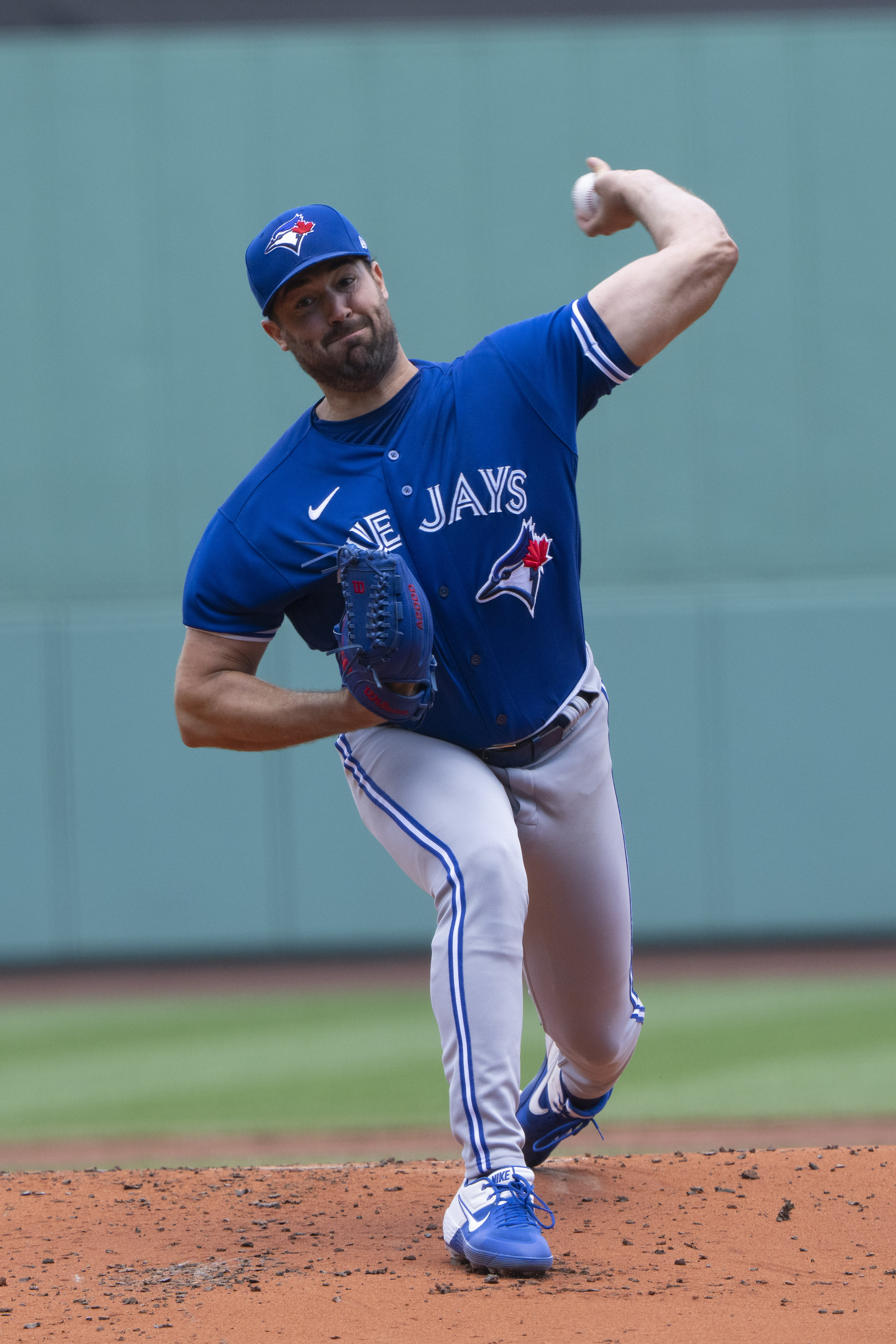
The subsequent 6.62 ERA marked an alarming decline for a lefty who’d previously solidified himself as a durable mid-rotation arm in Arizona. He’d always been a high-strikeout, high-walk, high-home-run rate pitcher, but from 2015-19 Ray tossed 762 innings of 3.96 ERA ball. That ERA was supported by fielding-independent marks such as FIP (3.92), SIERA (3.80) and xFIP (3.68). All of those numbers went in the wrong direction in 2020.
Prior to last spring’s league shutdown, Ray placed sixth on the initial version of MLBTR’s 2020-21 Free Agent Power Rankings. He landed ahead of Marcus Stroman on that February ranking, with MLBTR’s Tim Dierkes writing at the time that both would likely be eyeing deals north of the four-year, $68MM pacts inked by Miles Mikolas and Nathan Eovaldi. Five years seemed plausible with a big platform year. Instead, Ray’s poor 2020 showing turned him into a clear rebound candidate, which led to him re-upping with the Blue Jays on a one-year deal worth $8MM.
The Jays struck quickly to re-sign Ray, inking that $8MM pact on Nov. 7 of last offseason. Ray was the first free agent of note to sign a Major League deal, and the signing was met with some skepticism when it came to jumping the market to pay him at a relatively strong rate. No one, however, is questioning the signing now.
Ray has been nothing short of brilliant in his second go-around with the Jays. He’s not only bounced back and reestablished himself as a quality big league hurler — he’s elevated his status to another level entirely. Ray’s 2.90 ERA on the season is right in line with his 2.89 mark from a career-best 2017 season, but the other elements of his game suggest this is the best version of the lefty we’ve ever seen.
First and foremost, the strike-throwing issues that have previously plagued Ray with such great frequency have dissipated. He’s walking 6.8 percent of his opponents in 2021 — a career-low mark and an astonishing drop of more than 12 percent from last year’s rate. Ray’s 62.5 percent first-pitch strike rate is the best of his career, as is his 14.9 percent swinging-strike rate and 32.5 percent opponents’ chase rate. His 94.9 mph average fastball, meanwhile, is back in line with peak levels from 2016 after dipping to 92.5 mph as recently as 2019.
As one might expect, the drop in walks and the increasing frequency with which Ray is getting ahead in the count has allowed him to pitch deeper into games. While he’s long been a solid mid-rotation arm, Ray previously averaged about 5 1/3 innings per start (5.44), regularly running up high pitch counts and leaving plenty of outs for his bullpen to pick up. This year, he’s averaging just shy of six inning per outing (5.92) — and getting stronger as the season goes on. He’s completed five frames in all but two of his starts this year and, since June 1, he’s averaging better than six innings per outing with six-plus frames completed in 11 of those 13 appearances.
An extra couple of outs per game might not sound that substantial, but it’s the difference between a starter pitching 175-180 frames or pitching about 195-200 innings over the course of a full season. And, at a time when other starters are pitching fewer innings than ever before, that extra handful of outs every time Ray takes the mound goes a long way toward helping to keep the team’s relief corps fresh.
So, what’s driving the changes? Ray’s pitch mix has changed somewhat, as he’s throwing his four-seamer at a career-high 60.6 percent rate and has upped his slider usage to 27.6 percent. He’s largely a two-pitch starter at this point, although he throws his curveball and changeup just enough — 7.5 percent and 4.2 percent — to keep those offerings in the back of his opponents’ minds. It’s a definite change from recent years, where Ray was throwing his curveball anywhere from 15 to 21 percent of the time.
Ray also spoke in Spring Training of how he suspected that changes to his arm slot early in the 2020 campaign contributed to his struggles. A look at his profile on Brooks Baseball indeed supports that thinking; both the horizontal and vertical release points on Ray’s four-seamer and slider have changed considerably since his early 2020 work. During his current hot streak (since June 1), the vertical release point on Ray’s four-seamer, in particular, has dipped to previously unseen levels. It’s always possible that hitters will adjust to these mechanical changes, but it’s easier to buy into a rebound when there are tangible changes to a player’s approach, which is the case in this instance.
It should be noted that Ray, like most pitchers, still has his flaws. He’s far too homer prone, yielding 1.59 long balls per nine innings pitched, and no one should expect him to sustain a 90.1 percent strand rate when the league average is 72 percent. His .264 batting average on balls in play is also a career-low and is probably due to tick upward toward his career .307 mark — particularly since Ray’s hard-hit rate and opponents’ exit velocity are higher than the league average.
That said, Ray also ranks alongside some of the game’s best pitchers — and among the upcoming class of free agents — with his brilliant strikeout/walk profile. Among pitchers who have thrown at least 100 innings this season, Ray ranks eighth with a 30.2 percent strikeout rate and is tied for 35th with that better-than-average 6.8 percent walk rate. His 23.4 K-BB% sits tenth in that same set of pitchers. He’s leading American League pitchers with 4.4 wins above replacement, per Baseball-Reference’s version of the stat.
There will undoubtedly be some skeptics when Ray returns to the open market this offseason. His 2020 season was an unmitigated disaster, and we only have one season’s worth of data showing this newfound command of the strike zone and ability to work six-plus innings on the regular. That said, even the 2015-19 version of Ray was a very solid starter, and it’s the 2020 campaign that looks like the clear outlier at this point.
Outside of 28 2/3 innings as a rookie with the Tigers back in 2014, he’s also spent his entire career pitching in rather hitter-friendly settings. A club in a more spacious park would surely be intrigued by whether the move to a more advantageous home setting might help to curb some of that penchant for serving up the long ball, at least to a slight extent. He’s given up 1.50 homers per nine when pitching at home in his career, compared to 1.22 on the road. Unsurprisingly, there’s a spacious gap in ERA as well (4.54 at home, 3.65 on the road).
With a strong, healthy finish to the season, Ray should return to the market as one of the most in-demand arms. It’s a deep crop of free-agent starters, as he’ll join the likes of Max Scherzer, Clayton Kershaw, Kevin Gausman, Justin Verlander, Zack Greinke, Marcus Stroman, Anthony DeSclafani, Noah Syndergaard, Jon Gray and the breakout Carlos Rodon. At 30 years old, Ray will be among the youngest of the bunch, however, and he’s never been on the injured list with a major arm injury.
There’s a good chance the Jays will make a qualifying offer and that he’ll reject said offer in search of a lucrative multi-year deal. Even with draft compensation attached to him, Ray ought to have a wide range of suitors this time around. The four- or five-year deal that seemed feasible back in Spring Training 2020 looks more plausible than ever.
Mariners Release Taylor Guerrieri, David Huff, Ryan Dull
The Mariners have released former big leaguers Taylor Guerrieri, David Huff and Ryan Dull from the organization, tweets Triple-A Tacoma broadcaster Mike Curto. All three had been pitching out of the bullpen in Tacoma (although Huff initially worked out of the Rainers’ rotation upon signing).
Guerrieri, 28, had worked to a 4.61 ERA with a 22.6 percent strikeout rate against a 9.7 percent walk rate through 27 1/3 innings since joining the Mariners on a minor league deal. On the one hand, he’d scaled back his ERA considerably after a rocky start, holding opponents to just four runs in his past 14 1/3 innings. On the other hand, the strong strikeout and walk rates he posted early in Tacoma had swung the other direction; he’d punched out 12 hitters against nine walks and two hit batters in that stretch of 14 1/3 frames.
A former first-round pick of the Rays and longtime top pitching prospect, Guerrieri has faced multiple arm injuries over the course of a decade-long professional career — most notably Tommy John surgery that wiped out the majority of his 2013-14 seasons. He does have 36 MLB frames under his belt, split between the Blue Jays and Rangers, but he’s struggled to a 5.50 ERA with a 27-to-22 K/BB ratio in that time.
The 36-year-old Huff had some strong outings but lacked consistency, logging a 5.25 ERA in 48 innings with Tacoma. He’s never been a big strikeout arm, and that was the case in 2021 as well, punching out just 16.5 percent of his opponents, albeit against an excellent 4.5 percent walk rate.
Huff hasn’t pitched in the big leagues since 2016 but does have 393 1/3 MLB frames under his belt. The best of that work came from 2011-14, when he posted a 4.03 ERA in 174 innings split among three clubs (Indians, Yankees, Giants). Huff struggled in a short stint with the 2016 Halos but went on to carve out a nice career overseas, spending two years in the Korea Baseball Organization and another two in Nippon Professional Baseball in Japan. He returned to the U.S. and spent the 2020 season pitching independent ball.
Dull, 31, was a standout reliever with the A’s back in 2016 but has never managed to replicate anything close to the 2.42 ERA he logged through 74 1/3 innings that year. He’s posted a 6.08 mark in 80 MLB innings since that time and had been scuffling again in Triple-A this year, as evidenced by a 6.06 ERA in 35 2/3 innings. Dull started his time in Tacoma with five shutout innings and a 6-to-1 K/BB ratio, but he’s since been tagged for 26 runs (24 earned) in 30 2/3 innings.
Blue Jays Release Tommy Milone
The Blue Jays have released left-hander Tommy Milone, per a club announcement. He’s spent the bulk of the 2021 season on the injured list due to inflammation in his left shoulder but had gone out on a minor league rehab assignment recently.
Milone, 34, allowed 10 runs on 20 hits and three walks with 17 strikeouts through 14 innings with the Jays earlier in the season. His initial IL placement came back on May 2, and the club moved him to the 60-day IL later that month. He’s tossed 13 2/3 innings in Triple-A since beginning his rehab assignment, holding opponents to four earned runs on nine hits and five walks with nine punchouts.
It’s been a rough few seasons for Milone overall, although he got out to a strong start with the 2020 Orioles, notching a 3.99 ERA with a 24 percent strikeout rate against just a 3.1 percent walk rate in six starts (29 1/3 innings) before being traded to the Braves. Things didn’t go well in Atlanta, as Milone yielded 16 runs in three starts before heading to the injured list with inflammation in his left elbow.
Despite a rough patch in recent years, Milone is an experienced lefty with a lifetime 4.59 ERA in 927 2/3 big league innings. He’s never been a prolific strikeout pitcher (17.7 percent) and was averaging just 84-85 mph on his heater in his limited time with the Jays early in the season, but even at his best Milone only sat in the 87-88 mph range. Milone also has excellent control (5.6 percent career walk rate) and has had enough big league success that a team in need of pitching depth down the stretch could take a look on a minor league deal — assuming he’s healthy, of course. The trade deadline has passed, and elimination of revocable August trade waivers gives contending clubs very few avenues to stockpiling veteran depth at this point in the season.
Brewers Activate Josh Hader, Transfer John Axford To 60-Day Injured List
The Brewers activated closer Josh Hader from the Covid-19-related injured list Thursday, clearing roster space by optioning lefty Hoby Milner to Triple-A Nashville and transferring righty John Axford to the 60-day injured list, per a club announcement.
Hader, 27, is in the midst of yet another dominant season on the mound, having pitched to a career-low 1.83 ERA with a 45 percent strikeout rate that leads all qualified relief pitchers and a 9.4 percent walk that’s down more than three percent from his shaky levels in 2020. Devin Williams has been getting save chances in Hader’s absence, but Hader figures to again serve as manager Craig Counsell‘s go-to option in such situations now.
The news on Axford was to be expected. The Brewers already announced earlier this month that the 38-year-old right-hander sustained a season-ending elbow injury during his first big league appearance since 2018. Unfortunately, Axford indeed sustained an injury to his ulnar collateral ligament, Tom Haudricourt of the Milwaukee Journal-Sentinel reported this morning, and he’s weighing what the injury means for his career at this point. President of baseball operations David Stearns indicated that Axford is likely looking at a “reconstruction” surgery (i.e. Tommy John).
“It’s really unfortunate,” said Stearns. “We feel awful for John. I think he was very excited to come to this team. He was excited to pitch in a pennant race, hopefully pitch in the playoffs again. Unfortunately, it didn’t work out.”
Given the timing of the injury, a Tommy John procedure would very likely wipe out all of Axford’s 2022 season as well. If he did attempt a comeback, he’d be doing so in 2023 for what would be his age-40 season.
Rays Select Evan Phillips
The Rays announced Thursday that they’ve selected the contract of righty Evan Phillips. Lefty Dietrich Enns was optioned to Triple-A Durham to open a spot on the active roster. Tampa Bay had an open 40-man spot, so an additional corresponding move was needed.
Phillips, 26, recently inked a minor league deal with the Rays and will give the club a fresh arm to keep the bullpen fresh. He’s shown considerable strikeout potential in past MLB stints with the Orioles but has also given up far too many walks to remain effective. From 2019-20, Phillips pitched 42 1/3 frames with the O’s and fanned 28.7 percent of his opponents but also walked about 14.4 percent of them. Between that and a sky-high .398 average on balls in play, he was knocked around for a 5.95 ERA in that time.
This will be Phillips’ first big league stint of the season. He’s split the year between the Triple-A clubs for Baltimore and Tampa Bay, working to a 4.76 ERA in 28 1/3 innings. He’s spent parts of four seasons in Triple-A, compiling a 3.67 ERA with a 27.6 percent strikeout rate and a 10.7 percent walk rate. He averages just shy of 95 mph with his heater and also features a mid-80s slider and lesser used changeup (also clocked in the mid-80s).
Cubs Release Jake Arrieta, Designate Kyle Ryan For Assignment
The Cubs have requested unconditional release waivers on right-hander Jake Arrieta, per a team announcement. That move comes amid a series of transactions, as Chicago has also placed catcher Willson Contreras on the 10-day injured list with a sprained knee, reinstated catcher Austin Romine from the 60-day injured list, selected the contract of right-hander Ryan Meisinger from Triple-A Iowa, and designated lefty Kyle Ryan for assignment.
It’s been a miserable season for Arrieta in his return to Chicago. The former Cy Young winner got out to a nice start, working to a 2.57 ERA through April 25, but he’s been tattooed for 58 runs in 58 1/3 innings since that time. Opponents have racked up 91 hits, including 19 home runs, during that stretch. Last night’s outing was particularly non-competitive; Arrieta yielded seven runs in the first inning and ultimately departed after four frames with eight Brewers runs on the board.
The Cubs signed Arrieta to a one-year, $6MM deal over the winter with the hope that the injury troubles which plagued him during his three years with the Phillies were behind him. He’s avoided any notable arm troubles, but Arrieta’s fastball is sitting at a career-low 90.8 mph on the year and he’s seen across-the-board declines in swinging-strike rate, chase rate, home-run rate and walk rate. This marks the sixth straight season that he’s seen his ERA increase from the prior season.
Arrieta is still owed the balance of that $6MM salary — about $1.71MM between now and season’s end. He’s a lock to clear release waivers and become a free agent, but any team that signs him thereafter would only owe him the prorated league minimum for the remainder of the year. That sum would then be subtracted from the balance owed to him by the Cubs.
As for Contreras, the knee troubles that are currently hobbling him are believed to be minor. President of baseball operations Jed Hoyer told reporters this morning that the move was “precautionary” in nature (Twitter link via the Chicago Tribune’s Paul Sullivan). He’s seemingly not expected to require a lengthy stay on the injured list.
Romine, who has logged just six games and nine place appearances this season due to a left wrist sprain, will presumably pick up the bulk of the catching work in place of Contreras. The veteran 32-year-old was the Yankees’ backup catcher from 2016-19 before signing with the Tigers as a free agent for the 2020 season. He’ll now get the opportunity to team up with his brother, Andrew, for the first time in the big leagues. The Cubs inked Andrew to a minor league pact at the end of Spring Training and recently selected him to the Major League roster.
Meisinger, 27, has a 5.70 career ERA, albeit in a tiny sample of 23 2/3 innings between the Orioles and the division-rival Cardinals. He’s spent the 2021 season thus far with the Cubs’ top affiliate in Iowa, pitching to a 4.25 ERA with a huge 34.4 percent strikeout rate but also a concerning 12.2 percent walk rate (in addition to three hit batters).
The 29-year-old Ryan, meanwhile, has struggled to a 6.75 ERA in 13 1/3 innings this year. It’s the second straight season of struggles for Ryan, who posted similarly discouraging numbers in 15 2/3 frames with the 2020 Cubs.
That said, Ryan has been excellent in 25 innings of Triple-A ball this season, logging a 2.52 ERA with a 24-to-7 K/BB ratio. He’s also not terribly far removed from a 2019 season that saw him toss 61 frames of 3.54 ERA ball as one of the Cubs’ most heavily used relievers.
With the trade deadline in the rearview mirror, Ryan will be placed on either outright or release waivers in the coming days and be made available to all 29 other clubs. He’s playing on an $800K salary, so he’ll cost a bit more than the league minimum, but Ryan has a bit of track record and can be optioned for the remainder of the season, so he’d be a solid enough depth pickup for a team in need of some southpaws in the bullpen.
Phillies Select David Paulino
The Phillies announced Thursday that they’ve selected righty David Paulino‘s contract from Triple-A Lehigh Valley. Infielder Nick Maton was optioned to Triple-A to open a spot on the active roster, and right-hander Sam Coonrod is moving from the 10-day IL to the 60-day IL to open a spot on the 40-man roster.
Paulino, 27, was once one of the top pitching prospects in baseball, ranking prominently on top 100 lists at Baseball America, MLB.com, FanGraphs and other outlets from 2016-17. He made his big league debut with the Astros as a 22-year-old in 2016 but struggled on multiple occasions before being hit with an 80-game PED ban back in July 2017. He’s since undergone surgery to remove bone spurs in his elbow.
Paulino inked a minor league deal with the Phillies back in February and has had a solid season in an extremely hitter-friendly Triple-A setting. Through 25 appearances, including three starts, he’s worked to a 4.35 ERA with a 25.2 percent strikeout rate and a 10.4 percent walk rate. The Yankees’ Triple-A club tagged him for five runs in late June, but he’s since gone on to pitch at a 3.68 ERA clip with a 23-to-10 K/BB ratio in 22 innings.
Coonrod has been out since June 25 due to tendinitis in his forearm. He briefly went out on a minor league rehab assignment in mid-July, but that stint was put on hold after just two innings due to renewed discomfort. Coonrod would technically be eligible to return in late August, but he’d need to build up and work through another rehab assignment if he does ultimately make it back to the mound this year.
Chris Davis Announces Retirement
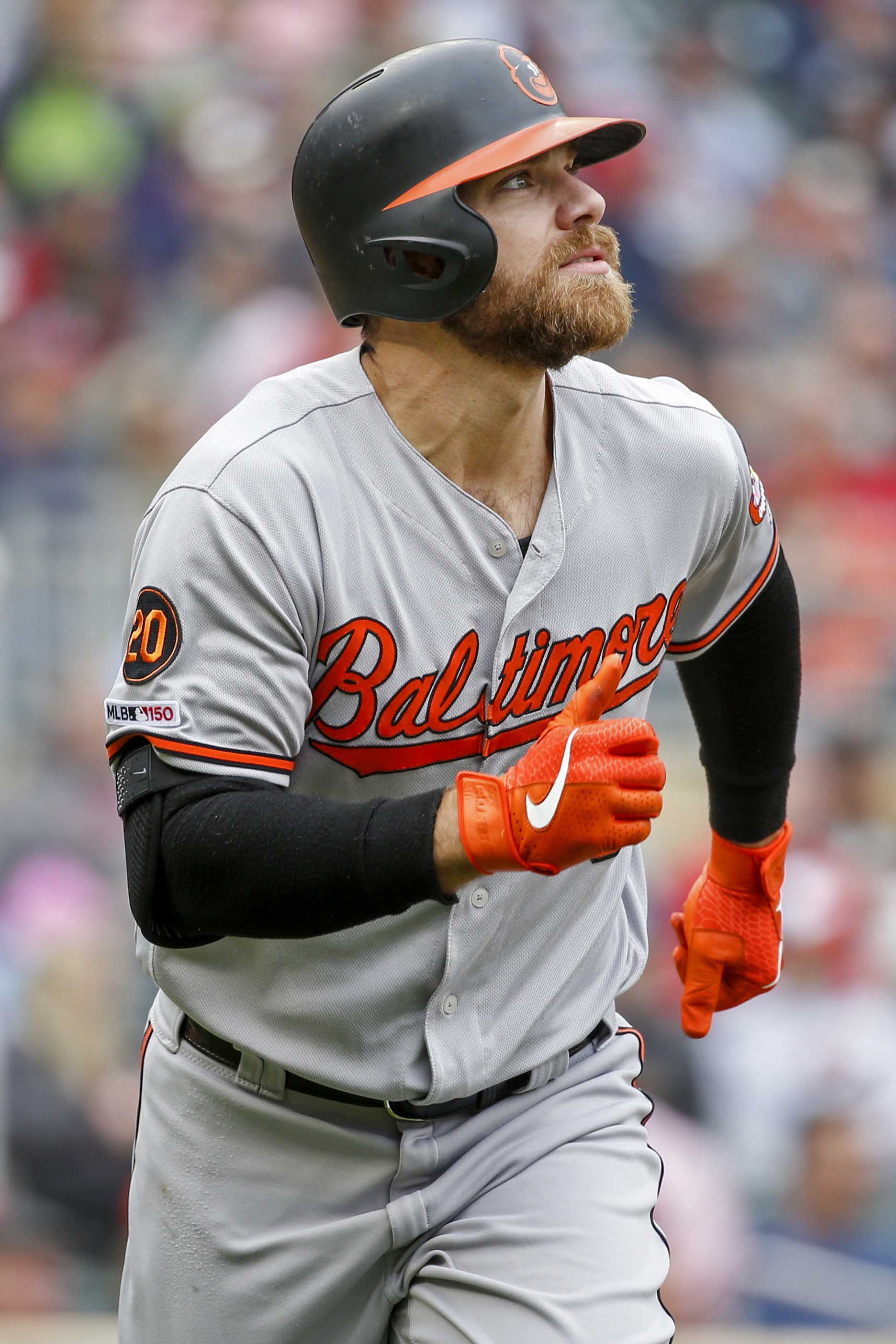
Orioles first baseman Chris Davis has announced his retirement from baseball. In a statement issued via the team, Davis said:
After an extended time dealing with my injury and recent hip surgery, I informed the Orioles about my decision to retire effective today. I want to thank the Orioles partnership group, led by the Angelos family, the Orioles organization, my teammates and coaches, the University of Maryland Children’s Hospital with whom I will continue to involved following my retirement and, of course, Birdland. Thank you for all the many memories I will cherish forever.
The Orioles issued a statement of their own, thanking Davis for the 11 years he’s given to the organization and his considerable charity work in the Baltimore community:
Athletes have the power to change lives and better their communities, and Chris and his family have done just that. We admire their dedication to those most in need, with hundreds of hours of community work completed, millions of dollars donated, and countless other charitable efforts performed, often without fanfare. For every inning played and home run hit, hour of service completed and amount donated, the Davis family has made an immeasurable impact on our city and on Orioles baseball. We send our best wishes to Chris, his wife Jill, and their daughters Ella, Evie, and Grace, each of whom will forever be part of our Orioles family.
The announcement from Davis comes at a time when he still has one year remaining on the franchise-record, seven-year, $161MM contract he signed with the Orioles in the 2015-16 offseason. That contract calls for a $23MM salary to be paid to Davis next year, and MLB Network’s Jon Heyman reports he’ll still receive that salary (Twitter links). As part of the agreement to pay out that final year, however, he’s agreed to some form of restructuring, per Heyman.
Davis’ deferral-laden contract had originally pushed out $6MM of his $23MM salary each year. He’d been set to receive $3.5MM payments on July 1 each year from 2023-32 and $1.4MM payments on July 1 from 2033-37.
While there’s no change to Davis’ 2021 salary and deferrals, a source tells MLBTR that the size of the 2022 deferral will increase from that previously scheduled $6MM mark. He’ll now have about half of next year’s salary deferred and paid out over the three subsequent years, further stripping down the payroll in 2022, lowering the present-day value of the contract and allowing them to free up a 40-man roster spot sooner than originally scheduled. Davis, meanwhile, will still get the full $23MM, albeit a bit more slowly than originally called for. He’ll also retain his benefits and insurance with the Orioles through the 2022 season.
It was a massive commitment to Davis, who was at the time one of the premier sluggers in all of baseball. Davis led the Majors twice — 53 in 2013 and 47 in 2015 — and was baseball’s top home run hitter by a wide margin in the four years leading up to that contract. From 2012-15, Davis hit 159 home runs, was eight more than Edwin Encarnacion‘s second-place mark of 151 and a whopping 24 more than Nelson Cruz, who was third-highest with 135.
Strikeouts were a clear concern for Davis, whose 2014 season looked to be a red flag. He slashed just .196/.300/.404 that year while fanning in 33 percent of his plate appearances. A huge rebound campaign in 2015, however, saw Davis turn in a .262/.351/.562 slash and position himself for a major payday upon reaching the open market.
The move hasn’t paid off, of course. Davis swatted 38 home runs in the first season of the contract but did so with a diminished overall .221/.332/.459 batting line. His production dipped below the league average in 2017 and continued a steady decline in subsequent years. Davis hasn’t batted above .200 or posted an OBP above .300 since 2017, and his hip condition has prevented him from taking the field at all in 2021. On the whole, he’s batted just .196/.291/.379 in 2118 plate appearances since putting pen to paper on that extension.
Injuries played a notable role in his decline, as in addition to the current hip issue he’s also spent time on the shelf with forearm, oblique, back and knee injuries. It’s been the recurring hip troubles that proved insurmountable, however. Davis has been bothered by left hip pain for years and underwent arthroscopic surgery earlier this season in hopes of putting the issue behind him. Unfortunately, doctors determined that Davis’ hip condition was degenerative, per Dan Connolly of The Athletic (Twitter link), leaving little to no chance of him returning to the condition necessary to take the field.
Davis will be remembered in many circles more for the ill-fated contract than his legacy on the field, which is frankly a bit of a shame. While his peak wasn’t especially lengthy, he spent a half decade as the league’s leading home run hitter and posted a combined .249/.340/.518 batting line in that time. The three-true-outcomes skill set which Davis embodied has grown increasingly common and increasingly polarizing in recent years, but even his detractors would have a hard time denying that during that five-year run, Davis was among the game’s most prominent offensive players.
That 2012-16 run coincided with some of the Orioles’ best years in recent memory, as the O’s made three postseason appearances along the way and reached the American League Championship Series in 2014.
In the end, Davis will retire as a career .233/.315/.459 hitter with 295 home runs, 228 doubles, five triples, 19 stolen bases, 707 runs scored and a 780 runs batted in. He made an All-Star team, won a Silver Slugger Award and finished third in 2013 MVP voting.