
Astros Sign Jared Hughes
FEBRUARY 18: Hughes would earn $1.5MM in the majors and has a March 18th opt-out opportunity, Bob Nightengale of USA Today tweets.
FEBRUARY 17: The Astros have signed right-handed reliever Jared Hughes to a minor league contract and invited him to Major League Spring Training, per Jake Kaplan of The Athletic (Twitter link). He’s repped by ISE Baseball.
Hughes, 34, pitched to a 4.04 ERA with 6.8 K/9, 3.4 BB/9, 1.64 HR/9 and a hefty 59.2 percent ground-ball rate in 71 1/3 innings between the Reds and Phillies in 2019. That ERA was his highest since way back in 2013, as Hughes has quietly racked up sharp bottom-line results for the Pirates, Brewers and Reds for much of the past decade.
From 2014-18, Hughes worked to a combined 2.41 ERA between those three NL Central foes. He totaled 329 innings in that time, but his lack of missed bats (5.8 K/9, 15.9 percent strikeout rate) seemingly limited his appeal. The Pirates released Hughes at the end of Spring Training in 2017, and after quickly signing with the Brewers, Hughes was non-tendered the following offseason. He posted nearly identical ERAs of 3.02 and 3.03 in each of the two seasons prior to being cut loose.
Hughes has never thrown particularly hard in the first place, but the 91.4 mph average on his sinker in 2019 was still a career-low. The spin on that sinker has been lower than virtually any other heater in the game (first percentile in ’18, second percentile in ’19), which is a good thing for sinkers (as opposed to with four-seamers, where a high spin rate is optimal). As such, it’s no surprise to see that Hughes has been a ground-ball machine throughout his career (61.5 percent). That should bode well for a team that boasts a quality group of defensive infielders in Alex Bregman, Carlos Correa, Jose Altuve and Yuli Gurriel. He’ll need to earn a spot in the bullpen first, of course, but there are enough inexperienced arms in the ‘pen mix to think that Hughes will have a solid shot at making the club with a good spring effort.
Red Sox Ownership Downplays Role Of Luxury Tax In Mookie Betts Trade
Apparently not content to let Jim Crane draw all the headlines for ownership comments worthy of skepticism, Red Sox principal owner John Henry, chairman Tom Werner and president/CEO Sam Kennedy on Monday all denied that the trade of Mookie Betts and David Price to the Dodgers was driven by a desire to dip south of the luxury tax barrier.
In a lengthy prepared statement released on Twitter, Henry appealed directly to Red Sox fans, speaking of the “extraordinary challenges” with which the team was faced this winter and praising the work of chief baseball officer Chaim Bloom, general manager Brian O’Halloran and the rest of the team’s baseball operations department.
Henry attempted to connect to the fan base by reminding that everyone in the ownership group was first a fan, thus making them empathetic toward the pain and frustration fans have voiced in the days since the trade. “I grew up a fan of the St. Louis Cardinals,” said Henry. “My favorite player was Stan Musial. My heart would have been broken if Stan the Man had ever been traded — for any reason.”
Sticking with the Musial thread, Henry went on to lament the unfair system that prevented Musial and other players from generations past from being paid at their market rate and present the decision to part with Betts as the type of choice all clubs are forced to make “in this economic system.” To quote Henry at greater length:
“We were faced with a difficult choice. You can talk about dollars. You can talk about metrics and value. But in the end, even though we are consistently among the highest-spending clubs in baseball — with this year being no exception — we have to make hard judgments about competing for the future as well as the present. … In today’s game there is a cost to losing a great player to free agency — one that cannot nearly be made up by the draft pick given. We’ve seen other examples of this recently. … We felt we could not sit on our hands and lose [Betts] next offseason without getting value in return to help us on our path forward. We carefully considered the alternative over the last year and made a decision when this opportunity presented itself to acquire substantial, young talent for the years ahead.”
Werner suggested that the team had other ways to shed salary if that had been the main goal, noting that they could “hypothetically” have traded Price without moving Betts as well (Twitter link via WEEI’s John Tomase). Kennedy at least appeared to acknowledge that the financial element of the trade played a role, noting that the trade wasn’t “exclusively” about resetting the team’s penalty level (Twitter link, with video, via NBC Sports Boston):
“There are clearly certain advantages by resetting and getting under [the luxury tax], but we’ve tried to be clear that this was not exclusively about the CBT and getting under that CBT threshold. There would’ve been other ways to have done that. You don’t trade Mookie Betts to get under the CBT. We traded Mookie Betts and David Price and got back significant value in return.”
Of course, all of this comes fewer than five months after Henry said unequivocally that the Red Sox “need to be under” the $208MM luxury tax threshold for the upcoming 2020 season (link via the Boston Globe’s Alex Speier). “We’ve known for some time now we needed to reset [the penalties by staying under the threshold], as other clubs have done,” Henry said as recently Sept. 27.
Months later, Henry tried to walk that statement back, emphasizing that the team was more focused on “competitiveness” than resetting its luxury penalty in 2020. Red Sox brass will surely argue that the team is indeed better-poised to compete over the next half decade with Alex Verdugo, Jeter Downs and Connor Wong now in the organization, but there’s no doubt that the Boston club is a demonstrably worse team in 2020 without Betts in right field and without Price in the rotation. Perhaps the Red Sox could chase a Wild Card spot if things break right, but they look to be squarely behind the Yankees and Rays, at the very least, and the competition for the Wild Card spots in the AL will be steeper after active offseasons from the White Sox, Blue Jays, Rangers and Angels.
It seems particularly important to point out that Red Sox brass has sought to paint this as an either-or scenario: either trade Betts (and, ahem, $48MM of the $96MM owed to Price) now or risk losing Betts as a free agent this winter. That seems to ignore the possibility of taking aim at a rebound effort in 2020 with Betts and Price in the mix, then trading Betts at the deadline if the division looks out of hand. The return, of course, would be diminished, but the Sox would surely have been able to extract some long-term pieces while endeavoring for a competitive 2020 season.
It would be inaccurate to call the Betts/Price trade a pure salary dump. Henry, Werner, Kennedy and other Red Sox officials have a legitimate point when highlighting the long-term value they received in dealing away that pair of highly paid stars. But it also feels disingenuous not to acknowledge that dropping below the CBT threshold was a key — perhaps even the key — in making this deal. After all, Boston has previously let key players walk as free agents for minimal or no compensation — Craig Kimbrel and Jacoby Ellsbury come to mind — and they traded Jon Lester midseason in 2014 after spring extension talks didn’t come to fruition.
As for where they stand in the 2020 season, Henry didn’t want to concede that the Sox might be taking a step back, instead rhetorically asking reporters (Twitter link via the Boston Herald’s Jason Mastrodonato: “Don’t you think this would be a record payroll for a bridge year?” That’s not exactly a declaration that the team is all-in on winning in 2020, but it’s also less than an acknowledgment that this diminished version of the Red Sox is clearly something less than a division contender.
White Sox Sign Gorkys Hernandez To Minor League Deal
The White Sox have signed outfielder Gorkys Hernandez to a minor league contract, Hernandez himself tells Daniel Parra of SportsVenezuela.com. He’ll head straight to minor league camp it seems.
Hernandez, 32, spent the 2019 season in the Red Sox organization but in a tiny sample of 57 Major League plate appearances (.143/.218/.243) and in a larger body of work for Triple-A Pawtucket. In 504 trips to the plate with Boston’s top minor league affiliate, Hernandez hit just .219/.319/.377.
Hernandez is only a season removed from hitting 15 home runs in a part-time role with the Giants, though. His overall .234/.285/.391 slash from that season aligns closely with his career stats in 1091 MLB plate appearances. Hernandez has had much better luck in Triple-A — even with last year’s numbers dragging him down — where he’s compiled a career .266/.342/.380 slash. He has experience playing all three outfield positions, and while his marks in center aren’t as sharp as those in the corners, he’s a capable glove at all three. Over the past four years, Hernandez has a cumulative 3.0 Ultimate Zone Rating, 11 Outs Above Average and -1 Defensive Runs Saved.
Chicago’s offseason extension of Luis Robert all but ensured that the ballyhooed 22-year-old will open the season as the Major League center fielder. With Robert ticketed for the big leagues, the White Sox’ outfield mix in Triple-A will likely feature prospects Luis Alexander Basabe, Luis Gonzalez and some combination of offseason minor league signees Daniel Palka, Nicky Delmonico and Jaycob Brugman. Hernandez adds a righty bat to an otherwise heavily left-handed mix and can capably give the White Sox’ Charlotte affiliate reps anywhere in the outfield.
Marlins Will Try Jonathan Villar In Center Field
The Marlins have talked about Jonathan Villar as a potential center field option since the day they acquired him, and manager Don Mattingly confirmed to reporters today that the organization’s plan is to work the speedster out as a potential center fielder this spring (Twitter link via Jordan McPherson of the Miami Herald). Villar will still get some work in the infield, and the club has other options to fall back on if the results aren’t favorable.
Villar, 29, started six games in center field for the Brewers in 2017 and has only 39 career innings at the position. He’s traditionally been a middle infielder, but with Miguel Rojas penciled in at shortstop, well-regarded prospect Isan Diaz hopefully emerging at second base and Brian Anderson lined up at the hot corner, the Marlins will hope that Villar can make the transition to the outfield.
The situation, of course, is still fluid. Diaz has yet to establish himself as a Major Leaguer, and if he doesn’t show well this spring, a move back to second base could be sensible for Villar. The mix in right field also features several unproven players — Lewis Brinson, Monte Harrison, Jesus Sanchez, Harold Ramirez — so the team could opt to move Anderson back to right field. In that case Villar could also yet be infield-bound. Alternatives in center include Brinson, Harrison, Sanchez, Jon Berti and Magneuris Sierra.
If Villar is able to make the move to center field, he could position himself quite favorably heading into free agency next winter. The switch-hitting Villar batted .270/.338/.438 with Baltimore in 216 games from 2018-19 before the tanking Orioles dumped in late November. Dating back to his first full season in 2016, Villar is a .268/.336/.423 hitter through 2344 plate appearances. He’s been able to provide league-average offense — and more, at times — in addition to excellent baseruning value. If he can add capable center field defense to his resume, that’d serve as a notable boost to his earning power.
Dodgers Sign Terrance Gore To Minor League Deal
The Dodgers announced Monday that they’ve signed outfielder Terrance Gore to a minor league deal and invited him to Major League camp this spring.
Gore, a client of the L. Warner Companies, seems to land on a postseason contender late every season one way or another. His blistering speed made him an ideal pinch-running specialist under the previous roster expansion rules, which allowed clubs to bring anyone on their 40-man roster to the Majors after Aug. 31. That’ll change in 2020, as September rosters will only grow to 28 players. However, the standard roster size will grow from 25 to 26 as well.
The 28-year-old Gore is out of minor league options, so the Dodgers — who utilize every edge possible in creating roster flexibility — seem unlikely to carry him in the Majors for the bulk of the season. He could be a 27th or 28th man in September, however, and could even be a postseason option if they deem such a move necessary.
Gore split the 2019 season between the Royals and Yankees organizations after Kansas City signed him to a surprising Major League contract last winter. Gore appeared in 37 games with the Royals but only came to the plate on 58 occasions. His lack of at-bats in the Majors is a testament to his typical role as a baserunning specialist; Gore has appeared in 100 regular-season games and another nine postseason contests but only come to the plate a combined 79 times. As a frequent pinch-runner, however, he’s swiped 45 bases (in 54 tries).
While Gore’s speed is tantalizing, his lack of Triple-A production is glaring; in 181 games there, he’s managed only a .213/.307/.261 slash line.
Angels, Ryan Buchter Agree To Minor League Deal
The Angels have signed left-handed reliever Ryan Buchter to a minor league contract and invited him to Major League camp this spring, tweets Fabian Ardaya of The Athletic. He’s represented by The L. Warner Companies.
Buchter, who turned 33 earlier this week, is making the rounds in California, as he’s also spent time with the Athletics and Padres organizations in the past few seasons. The late-blooming southpaw didn’t even make his big league debut until he was 27 and didn’t pitch a full campaign in the Majors until his age-28 season. However, Buchter has now racked up 214 innings in the big leagues and never posted a single-season ERA higher than last year’s 2.98 mark. He boasts a career 2.86 ERA with a 4.01 FIP, 9.9 K/9, 4.0 BB/9 and 1.1 HR/9.
It may be surprising to some that a pitcher with those run-prevention number was non-tendered and subsequently relegated to a non-roster invite after camp had opened. But Buchter’s effectiveness has waned a bit in recent years. His control in 2019 was the worst of his career, and while he was effective against both left- and right-handed hitters earlier in his big league tenure, right-handers clobbered Buchter at a .274/.420/.484 clip last year. Given the implementation of the new three-batter minimum, some clubs were surely skeptical of his ability to retire right-handed opponents.
That said, Buchter is an eminently reasonable flier for the Halos to take. The base salary he’ll receive upon making the big league roster won’t be particularly substantial, and if he performs well the Angels will have the opportunity to control him through the 2021 season via arbitration. Buchter even has a pair of minor league option years remaining, which would give the Angels all the more flexibility should he land a spot on the team.
Daniel Bard Reportedly Making Comeback Attempt
Six seasons have elapsed since Daniel Bard threw his last pitch in a Major League game, but the 34-year-old righty threw in front of scouts recently and is hoping to make a comeback, Pete Abraham of the Boston Globe reports (via Twitter).
Bard, for those who don’t recall or have only begun following baseball in recent seasons, at one point looked to be a high-end closer in the making. Selected with the 28th overall pick in 2006, Bard debuted for the Red Sox in 2009 and went on to post a 2.88 ERA with 9.7 K/9 against 3.5 BB/9 and 0.7 HR/9 in his first 197 innings at the MLB level. Were it not for Jonathan Papelbon‘s presence in the Boston bullpen, he’d surely have been afforded more save opportunities in the early stages of his career.
The 2012 season was an ugly one for Bard, however, as he was blown up for a 6.22 ERA through 59 1/3 innings. A sudden deterioration of his ability to locate the ball was the chief culprit, as Bard averaged 6.5 BB/9 and hit eight batters in 59 1/3 frames that season. Bard missed more than two months of the 2013 season with an abdominal strain and only tossed one inning in the Majors plus another 15 1/3 frames in the minors; he walked 27 batters in that time.
Winter ball in the 2013-14 offseason and a brief stint with the Rangers in 2014 only confirmed that Bard’s control had completely evaporated. Call it the Yips, Steve Blass disease or whatever moniker you prefer — Bard walked 18 of the 31 hitters he faced between the Puerto Rican Winter League and his quick run with the Rangers’ Class-A club. He embarked on comeback attempts with the Cardinals and Mets in 2016-17 but was met with similarly disheartening results.
Since calling it quits before the 2018 season, Bard has been working in as a “minor league player mentor” with the D-backs organization, where GM Mike Hazen and assistant GMs Amiel Sawdaye and Jared Porter know him well from their time in the Red Sox’ front office. Expectations on another comeback attempt should be measured, of course, given the long layoff and Bard’s prior, unsuccessful attempts. Still, it’s hard not to root for the 34-year-old. A successful renaissance after this much time off the radar would make for a wonderful story to follow and surefire Comeback Player of the Year favorite.
Braves Extend Alex Anthopoulos, Brian Snitker
The Braves announced Monday morning that they’ve promoted general manager Alex Anthopoulos to president of baseball operations and extended his contract through the 2024 season. The Atlanta organization also announced contract extensions for manager Brian Snitker and his entire coaching staff; they’ll now be in place through the 2021 season. Anthopoulos had previously bee under contract through the 2021 season, while Snitker was signed through 2020 with a club option for 2021.
“I am very pleased that Alex will be leading the Atlanta Braves’ baseball operations for years to come,” chairman Terry McGuirk said in the press release announcing the news. “Since he joined the organization, Alex has continued the winning tradition that Braves fans have come to expect.”
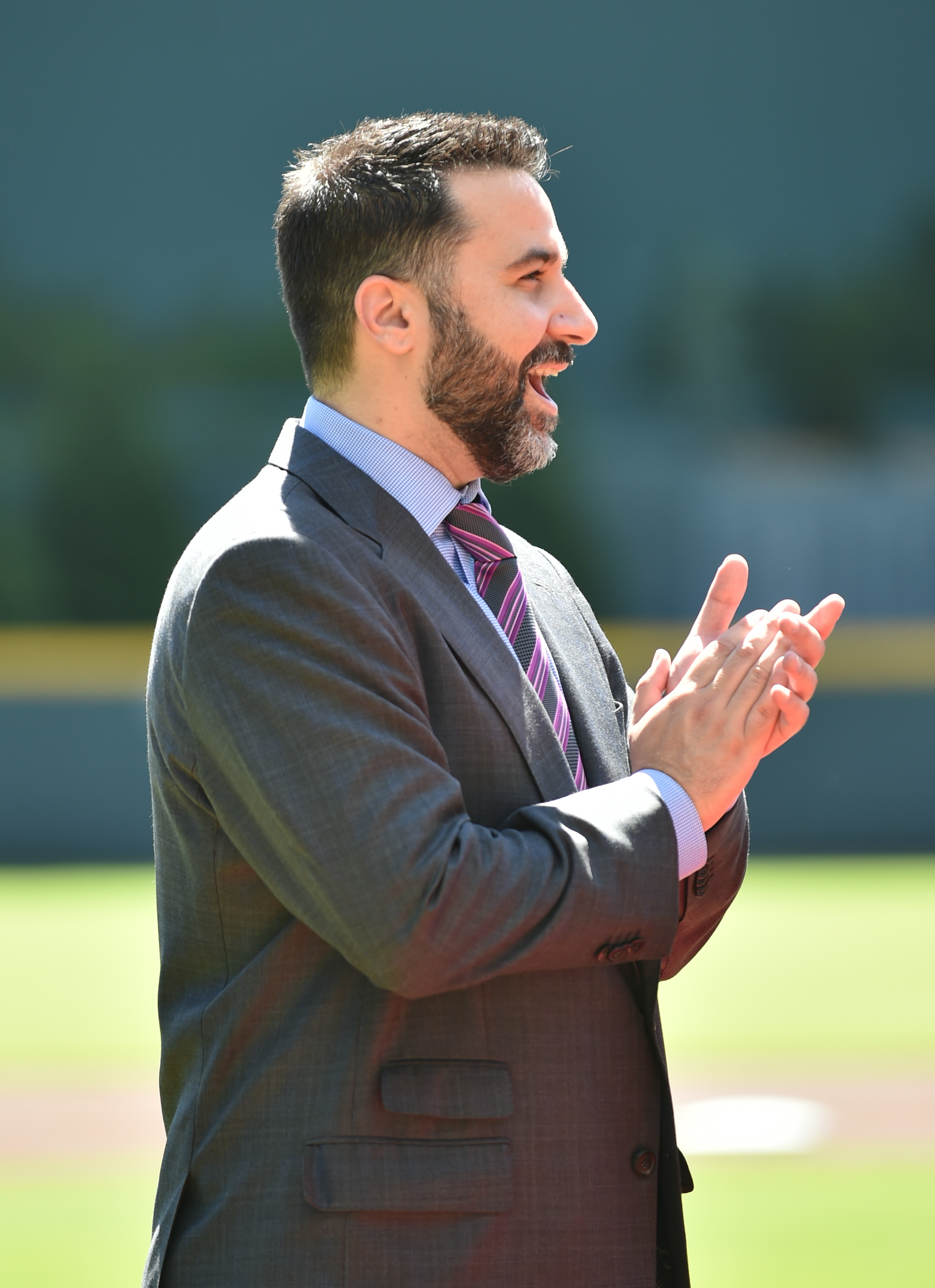
The 42-year-old Anthopoulos has been the Braves’ head of baseball operations since Nov. 13, 2017, when he was hired following the ousting of GM John Coppolella. The former Blue Jays GM and Dodgers vice president of baseball operations wasted little time in orchestrating a complex, financially motivated swap with one of his former clubs; in December 2017, Anthopoulos traded Matt Kemp and the remainder of his contract to the Dodgers in exchange for Adrian Gonzalez, Brandon McCarthy, Charlie Culberson, Scott Kazmir and $4.5MM.
The remainder of the 2017-18 offseason was a quiet one for Anthopoulos, although his spring pickup of Anibal Sanchez proved to be one of the minor league signings in recent memory, as Sanchez completely revitalized his career as a key rotation piece for the division-winning Braves.
Since that first offseason at the helm, Anthopoulos has become considerably more active both in trade and free agency. The Braves, under Anthopoulos, have shied away from long-term deals for aging veterans but have been aggressive in short-term pacts, signing the likes of Josh Donaldson, Dallas Keuchel, Marcell Ozuna, Cole Hamels, Travis d’Arnaud and Chris Martin to one- and two-year deals. Lefty Will Smith is the only free agent under this regime to sign a deal of three years. Anthopoulos has been active at both trade deadlines under his watch as well, acquiring pitchers Kevin Gausman, Shane Greene, Mark Melancon, Darren O’Day and the aforementioned Martin in a series of July swaps.
The best moves the Braves have made under Anthopoulos were surely locking down a pair of their own core pieces, however. Ronald Acuna Jr.‘s eight-year, $100MM contract and Ozzie Albies‘ seven-year, $35MM contract are two of the most extreme examples of club-friendly deals throughout the sport. That pairing surrendered a stunning eight would-be free-agent seasons (four apiece), giving the Braves control over the majority of their prime years at well below-market rates. In the long run, both deals should provide exceptional levels of flexibility both in terms of actual payroll and luxury-tax obligations.
Anthopoulos’ track record isn’t spotless, of course. The Gausman acquisition paid dividends in 2018 but yielded disastrous results in 2019. It’s still rather surprising that he agreed to take on all of the $14MM owed to Melancon for the 2020 season in last July’s trade. And time will tell whether the decision to let Donaldson walk rather than match (or at least come close to matching) the Twins’ $92MM guarantee. All of that said, there’s little question that Anthopoulos has helped to maintain a strong farm system while supporting the big league roster with sensible, short-term additions. The Braves are in position to contend for a third straight division title in the NL East, and there’s little reason to think that won’t be the case for years to come, thanks to a controllable core centered around Acuna, Albies, Dansby Swanson, Mike Soroka and Max Fried.
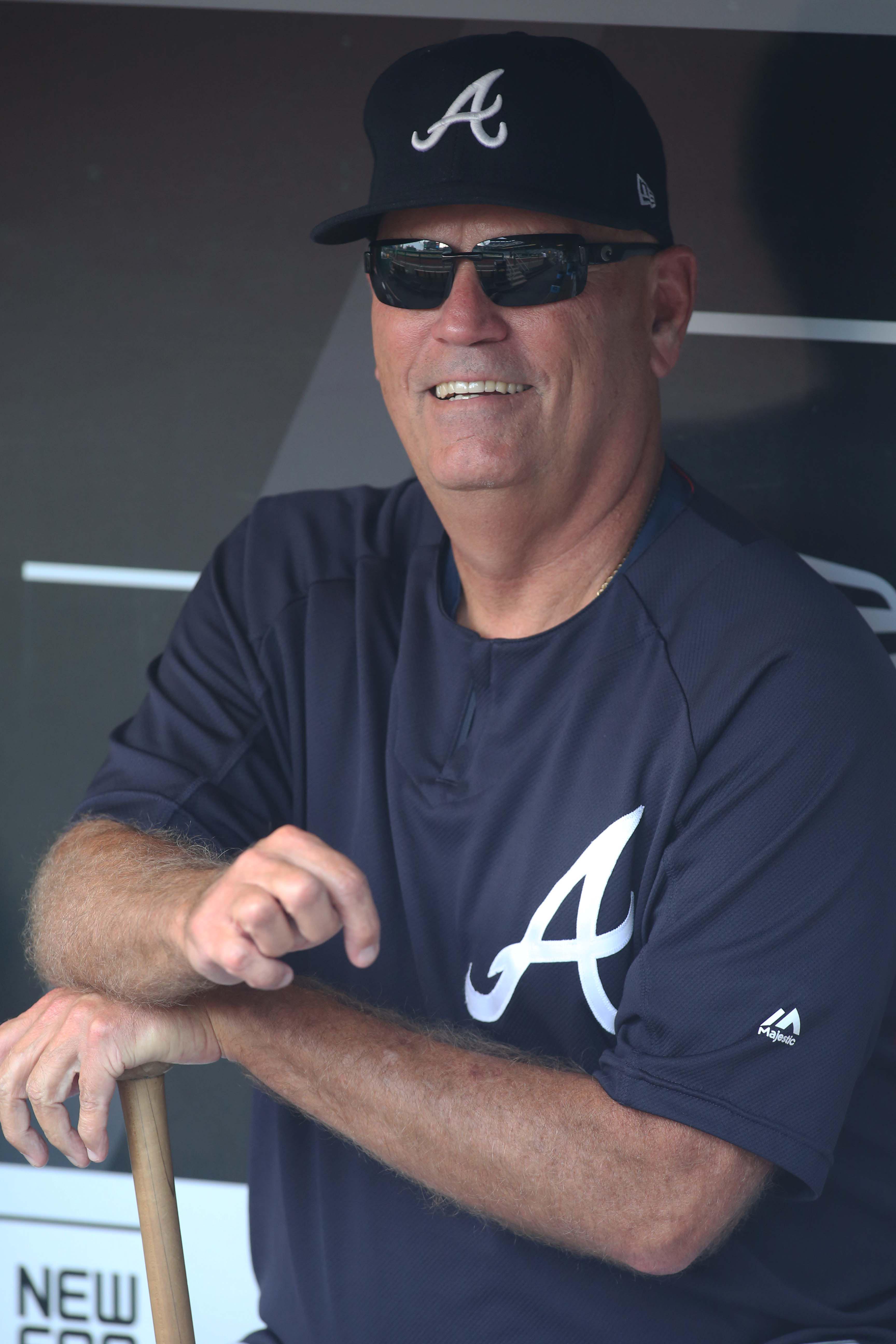
Turning to the 64-year-old Snitker, he’s now locked in for what will be his fourth and fifth full years with the reins in Atlanta’s dugout. A Braves lifer who has spent a staggering 40-plus years in the organization in some capacity, Snitker served as a minor league coach, minor league manager, Major League bullpen coach and Major League third base coach before taking over as interim manager in 2016. This is the second short-term extension he’s signed since being hired as the club’s full-time skipper.
“Winning consecutive division titles illustrates the leadership and impact of Brian and his staff,” Anthopoulos said of the extension. “We are happy to know they will be leading the Braves through the 2021 season.”
Under Snitker’s leadership, the Braves have played at a 318-292 clip (.521) — including a 187-137 showing over the past two seasons. His 90-72 record in 2018 helped him to win National League Manager of the Year honors. However, the Braves have also yet to advance in a postseason series under Snitker. They were bounced by the Dodgers in the 2018 NLDS and by the Cardinals in the 2019 NLDS.
Also receiving contract extensions through the 2021 season Monday were catching coach Sal Fasano, pitching coach Rick Kranitz, bullpen coach Marty Reed, hitting coach Kevin Seitzer, third base coach Ron Washington, bench coach Walt Weiss, first base/outfield coach Eric Young Sr. and assistant hitting coach Jose Castro.
Red Sox Sign Kevin Pillar
7:37pm: This one’s in the books, with the Sox announcing the signing.
5:25am: The Red Sox are reportedly in agreement on a one-year, $4.25MM deal with free-agent outfielder Kevin Pillar. The All Bases Covered Sports Management client is said to be set for a physical this weekend, after which the deal will be officially announced by the club (assuming all goes well).
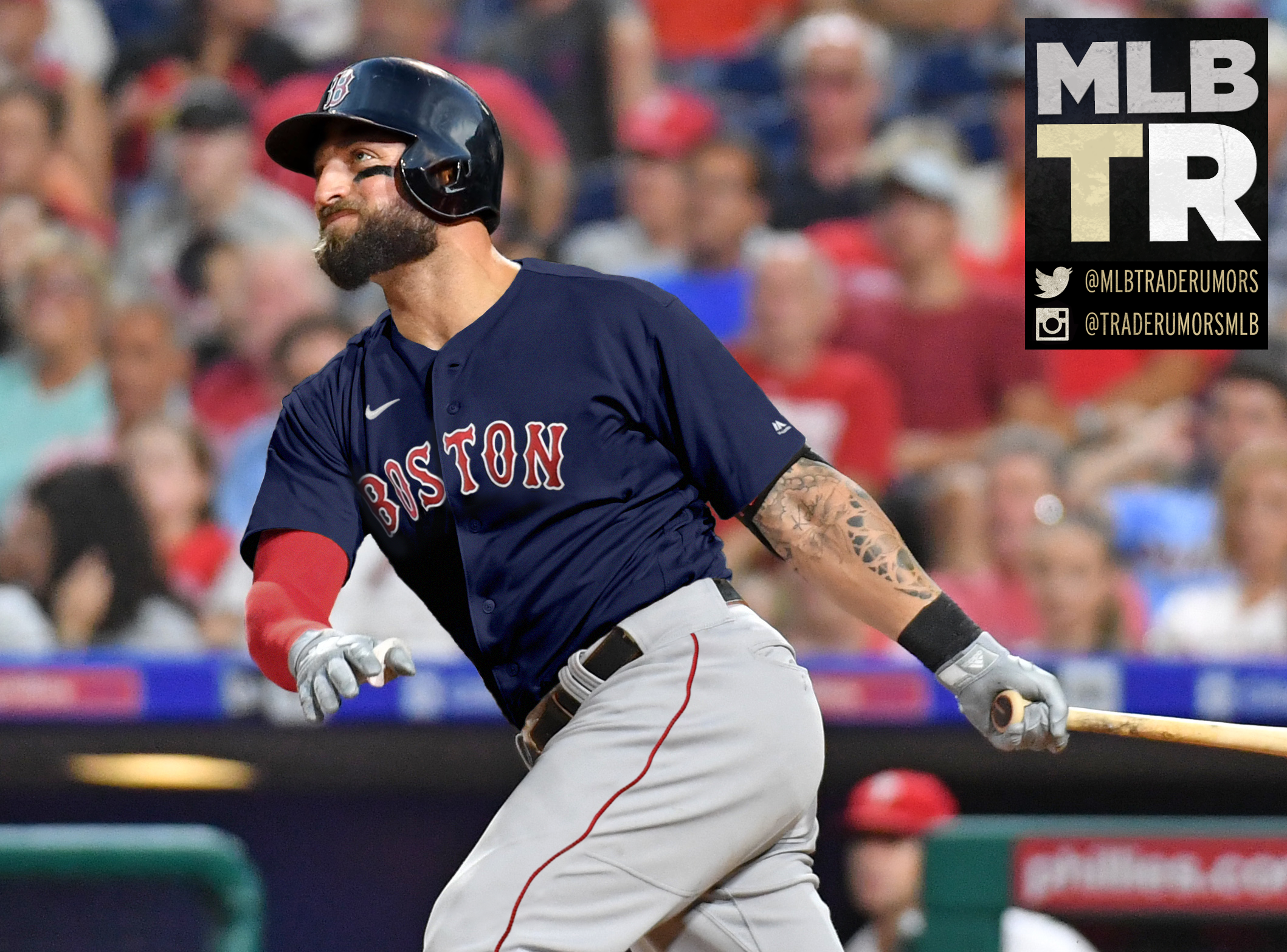
Pillar, 31, was non-tendered by the Giants earlier in the winter after hitting .259/.287/.432 with a career-high 21 home runs in 2019. He’d been projected by MLBTR contributor Matt Swartz to earn $9.7MM in arbitration. Pillar also swiped 14 bags — his fifth straight season with at least that many — and struck out in just 13.8 percent of his plate appearances. However, the longtime Blue Jays center fielder also only walked at a 2.8 percent clip — a career low — and the resulting .287 on-base percentage was one of the worst marks of any qualified MLB hitter.
Defensively, he played a roughly average center field by measure of metrics like Defensive Runs Saved, Ultimate Zone Rating and Outs Above Average. That’s a step back from the days when he graded out as one of MLB’s premier defensive players, but Pillar is still at least a serviceable option in center and likely an above-average glove in the corners.
Following the trade of Mookie Betts, the Red Sox had an all-left-handed-hitting outfield comprised of Andrew Benintendi, Jackie Bradley Jr. and newly acquired Alex Verdugo. Pillar will give them a right-handed hitting complement to that bunch as well as insurance against an injury (or perhaps an eventual trade of Bradley) at any of the three positions. He’s a career .281/.313/.453 hitter against southpaws, so while he’s not exactly a lefty masher, he’s still a bit above average in those situations.
Dumping the salaries of Betts and David Price (well, half of his deal) in the Dodgers trade dropped the Red Sox south of the $208MM luxury tax threshold by a bit less than $10MM. They should be able to bring Pillar aboard while maintaining ownership’s preference to remain south of that cutoff.
MLB Network’s Jon Heyman reported that the two sides were close to a deal. The Athletic’s Ken Rosenthal added that a Major League pact was in the works. Alex Speier of the Boston Globe reported that a deal had been reached, and Heyman tweeted the final guarantee.
Mike Clevinger To Undergo Knee Surgery
7:03pm: Clevinger is expected to be able to return to action in six to eight weeks, the team tells reporters including MLB.com’s Mandy Bell (Twitter link).
8:58am: Indians ace Mike Clevinger is slated to undergo surgery to repair a partial tear of the medial meniscus in his left knee, reports Zack Meisel of The Athletic (Twitter link). Clevinger has been on crutches after sustaining the injury while training earlier this week. A timetable for his return is not yet known.
While a meniscus tear typically isn’t a season-ender, it also seems highly unlikely that Clevinger would be ready to open the season in the Cleveland rotation. The extent of his rehab will be determined following the operation, but even a return on the short end of typical meniscus timelines would leave Clevinger with little (if any) time to ramp up for the season.
The Indians, for the first time in several years, will head into the season as underdogs in the American League Central — and the loss of Clevinger for any portion of the season will only dampen their hopes. The team is deep in pitching options, but Clevinger and fellow righty Shane Bieber were the two best options at manager Terry Francona’s disposal. (Carlos Carrasco, of course, is immensely talented but more of a wild card following last year’s battle with leukemia.)
Bieber and Carrasco figure to front the rotation now, and the Indians will likely choose among Zach Plesac, Aaron Civale, Adam Plutko, Jefry Rodriguez, Logan Allen and Scott Moss to round out the final three spots in the rotation. Both Plesac (3.81 ERA in 115 2/3 innings) and Civale (2.34 ERA in 57 2/3 innings) looked sharp in their respective MLB debuts in 2019, although fielding-independent pitching metrics considered both to be more than a full run worse than his eared run average. Plutko has been up and down with the Indians over the past three seasons, posting a combined 5.08 ERA/5.61 FIP in 189 2/3 frames. Rodriguez posted similar results to the rest of that group (4.63 ERA/4.54 FIP in 46 2/3 innings).
The 22-year-old Allen, meanwhile, is a well-regarded southpaw who came over in last summer’s three-team Trevor Bauer/Franmil Reyes/Yasiel Puig blockbuster. He’s light on big league experience but considered one of the organization’s more promising arms. Moss, too, was acquired in that swap. Unlike Allen, he’s yet to make his big league debut. He did post strong numbers in the upper minors in 2019, however, including a hearty 159 strikeouts in just 130 2/3 frames. Control is an issue for the 6’6″ lefty, but he’ll get a look as a potential option in the coming weeks.